The group of five major emerging national economies known as the BRICS has rejected the Western sanctions against Russia and the “hostile language” being directed at the country over the crisis in Ukraine.
“The escalation of hostile language, sanctions and counter-sanctions, and force does not contribute to a sustainable and peaceful solution, according to international law, including the principles and purposes of the United Nations Charter,” foreign ministers of the BRICS countries – Brazil, Russia, India, China and South Africa – said in a statement issued on Monday.
The group agreed that the challenges that exist within the regions of the BRICS countries must be addressed within the framework of the United Nations.
“BRICS countries agreed that the challenges that exist within the regions of the BRICS countries must be addressed within the fold of the United Nations in a calm and level-headed manner,” the statement added.
The White House said earlier on Monday that US President Barack Obama and the leaders of Britain, Canada, France, Germany, Italy and Japan decided to end Russia’s role in the G8 over the crisis in Ukraine and the status of Crimea.
Meanwhile, the G7 group of top economic powers has snubbed a planned meeting that Russian President Vladimir Putin was due to host in the Black Sea resort city of Sochi in June.
The G7 said they would hold a meeting in Brussels without Russia instead of the wider G8 summit, and threatened tougher sanctions against Russia.
Russia brushed off the Western threat to expel it from the G8 on the same day. The Autonomous Republic of Crimea declared independence from Ukraine on March 17 and formally applied to become part of Russia following a referendum a day earlier, in which nearly 97 percent of the participants voted in favor of the move.
On March 21, Putin signed into law the documents officially making Crimea part of the Russian territory. Putin said the move was carried out based on the international law.
India broke with the international community in acknowledging that Russia has legitimate interests in Ukraine.
On Thursday a senior Indian official endorsed Russia’s position in Ukraine in recent days, even as Delhi urged all parties involved to seek a peaceful resolution to the diplomatic crisis.
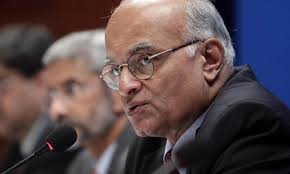
When asked for India’s official assessment of the events in Ukraine, National Security Adviser Shivshankar Menon responded:
“We hope that whatever internal issues there are within Ukraine are settled peacefully, and the broader issues of reconciling various interests involved, and there are legitimate Russian and other interests involved…. We hope those are discussed, negotiated and that there is a satisfactory resolution to them.”
The statement was made on the same day that Crimea’s parliament voted to hold a referendum for secession from Ukraine.
India is the second major nation to publicly lean toward Russia after China’s public statements.
Ukraine’s puppet government reacted to India’s endorsement of Russia’s legitimate interests with hostility.
India and Russia have long-standing ties and Moscow is Delhi’s top arms provider. Moreover, Russia and the former Soviet Union has been nearly alone in the international community in continue to back India during crucial moments such as following its 1974 and 1998 nuclear tests.
Delhi believes Russia’s intervention offers the best chance of stabilizing Ukraine. India’s Foreign Ministry on Thursday also released a statement noting that there are “more than 5,000 Indian nationals, including about 4,000 students, in different parts of Ukraine.” At the same time, India’s overall interest in Ukraine is fairly negligible—certainly less than China’s, for instance—and thus Delhi might assess that it has more to gain by publicly sticking by Moscow at a time when it desperately needs support.
India also has plenty of interests in certain regions along its peripheral, and at certain times—such as during the Sri Lanka Civil War—has intervened to protect various societal groups with strong ties to India.
Indian officials have told Telegraph India that, in the newspaper’s words, Delhi is “convinced that the West’s tacit support for a series of attempted coups against democratically elected governments — in Egypt, Thailand and now Ukraine — has only weakened democratic roots in these countries.”
This rationale would be consistent with India’s long-standing, deep-seated abhorrence to anything that merely resembles Western imperialism. At the same time, India has not historically made supporting democracy abroad a central tenet of its foreign policy.
Finally, the wait is over. The design of World’s first Thorium based nuclear reactor is ready.
India Today Online brings you the first look of design and prototype of the Advanced Heavy Water Reactor, also termed as AHWR.
It is the latest Indian design for a next-generation nuclear reactor that will burn thorium as its fuel ore.
The design is being developed at Bhabha Atomic Research Centre (BARC), in Mumbai, India and aims to meet the objectives of using thorium fuel cycles for commercial power generation.
The AHWR is a vertical pressure tube type reactor cooled by boiling light water under natural circulation. The unique feature of this design is a large tank of water on top of the primary containment of vessel, called the gravity-driven water pool (GDWP). This reservoir is designed to perform several passive safety functions.
Dr R K Sinha, chairman, Atomic Energy Commission, in an exclusive interview to India Today Online said, “This reactor could function without an operator for 120 days.”
The AHWR is a unit that will be fueled by a mix of uranium-233 and plutonium – which will be converted from thorium by previously deployed and domestically designed fast breeder reactors.
Thorium is an element that is three times more abundant globally than uranium. As all mined thorium is potentially usable to breed reactor fuel. India’s abundant reserves of thorium, constitute 25 per cent of the world’s total reserves.
Earlier, India produced the world’s first thorium nuclear reactor, the Kakrapar-1, in 1993, and as part of India’s three-stage fuel cycle plan, a new Advanced Heavy Water Reactor (AHWR) is being designed, slated for operation in 2016. The country hopes to use thorium-based reactors to meet 30 per cent of its electricity demands by 2050.
The AHWR is slated to form the third stage in India’s three-stag fuel-cycle plan. It is supposed to be built starting with a 300 MW prototype in 2016. Later, the first megawatt of electricity would be be generated by 2025. “To generate a single megawatt of electricity from this world’s first thorium based reactor it would take at least 7-8 years,” said Dr Sinha.
Dr Sinha said, “This will reduce our dependence on fossil fuels, mostly imported, and will be a major contribution to global efforts to combat climate change.”
It is also said to be the most secured and safest reactor, which in future, could be set up in populated cities, like – Mumbai or Delhi, “within the city”.
The latest AHWR design incorporates several passive safety features. These include: Core heat removal through natural circulation; direct injection of emergency core coolant system (ECCS) water in fuel; and the availability of a large inventory of borated water in overhead gravity-driven water pool (GDWP) to facilitate sustenance of core decay heat removal. The emergency core cooling system (ECCS) injection and containment cooling can act (SCRAM) without invoking any active systems or operator action.
The reactor also incorporates advanced technologies, together with several proven positive features of Indian pressurised heavy water reactors (PHWRs). These features include pressure tube type design, low pressure moderator, on-power refueling, diverse fast acting shut-down systems, and availability of a large low temperature heat sink around the reactor core.
The construction on the first AHWR is scheduled to start in 2016 – though no site has yet been announced. Sources says, “nothing has decided, it could be Tarapur in Mumbai or some other location in India”.
Stopping overpopulation is one way the dangers of climate change can be mitigated, according to two of the most prominent believers in global warming.
Former Vice President Al Gore and Microsoft founder Bill Gates said at the World Economic Forum in Davos that contraception is a key in controlling the proliferation of unusual weather they say is endangering the world.
“Depressing the rate of child mortality, educating girls, empowering women and making fertility management ubiquitously available … is crucial to the future shape of human civilization,” said Gore, who won the Nobel Peace Prize in 2007 for his work on global warming.
Gore said Africa’s population is expected to surpass India’s and China’s by the mid-21st century and will be more than both combined by the end of the century.
A Danish woman has alleged that she was gang-raped in the Indian capital of New Delhi – the latest high-profile case of sexual assault against women in the country.
Reports say the 51-year-old woman was in New Delhi for a week and had been visiting touristy sites in Agra and later the National Museum in the capital.
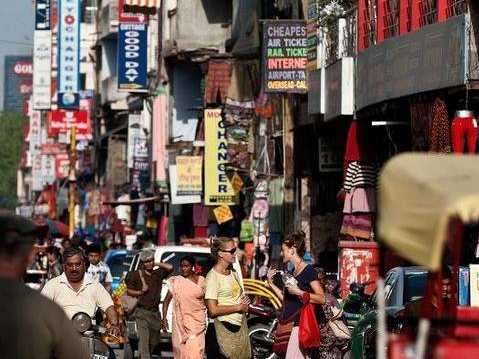
She had lost her way on Tuesday evening on the way to her hotel in Paharganj, a crowded locality in New Delhi where many foreigners stay in affordable lodgings. She was later accosted by a group of men who then assaulted her.
Police said the rapists were “vagabonds” and the tourist was assaulted and robbed of cash and valuables on her person. Her iPad, Euros were taken and she was also beaten. The police have registered a case of rape and robbery.
She had been taken to the Danish embassy in Delhi and she had expressed her wish to return home after a medical examination.
The Delhi police, according to news reports, have detained six suspects based on the complaint made by the woman.
The Danish woman left India on Wednesday morning, according to Delhi police.
Alarming assaults
Frequent news reports of rapes have given cause for alarm at the rate of violence against women in Indian metros.
In December 2012, the brutal gang-rape of a 23-year-old medical student in Delhi had angry citizens protesting across the streets for stringent rape laws and fast track courts to punish the perpetrators.
Political parties such as the Aam Aadmi Party have assured on public platforms to make safety for women a priority. – aljazeera.com
American actor Morgan Freeman is known for his portrayal of South African leader Nelson Mandela in the Clint Eastwood drama Invictus.
Perhaps Freeman’s performance in the 2009 was too good as it lead to some confusion for an Indian-based billboard artist.
An owner of a billboard dedicated to Nelson Mandela was red-faced on Thursday after the discovery that a photo of actor Morgan Freeman was used instead of one of the anti-apartheid hero.
The billboard was erected on the side of a road in Coimbatore as part of memorials across India and the world to Mandela, who died on December 5.
India’s Supreme Court on Wednesday overturned a lower court’s ruling that had decriminalized gay sex, a surprise setback for the gay-rights movement in this largely conservative country.
In 2009, the Delhi High Court ruled that a 19th-century provision in the nation’s penal code that effectively banned gay sex shouldn’t apply to consensual acts.
On Wednesday, the Supreme Court rejected that decision, saying the old law was still constitutionally valid and could only be changed or erased by Parliament, not the courts.
Rights groups say the law—known as Section 377 for its place in a 150-year-old Indian penal code—had been used for decades to harass homosexuals.
“We hold that Section 377 IPC does not suffer from the vice of unconstitutionality and the declaration made by the Division Bench of the High court is legally unsustainable,” the two supreme-court judges who presided over the case said in their 98-page judgment, released late Wednesday.
Gays across India were shocked by the decision. Most had expected the country’s highest court to uphold the landmark decision, which had been seen as a crucial first step in empowering India’s gay community.
“I think this is a dark day for the constitution,” said Gautam Bhan, a gay-rights activist and Delhi-based urban planner who came to India’s Supreme Court on Wednesday expecting to celebrate. “Never before has a Supreme Court taken away an expansion of rights to Indian citizens and reversed a move toward inclusion.”
The Indian government had no official reaction to the judgment Wednesday. Some officials said they needed more time to study the court decision.
“India’s reputation is taking a beating,” Madhu Mehra, the executive director of Partners for Law in Development, a New Delhi-based legal-advocacy group, said. “This is the last thing we needed, particularly after the movement for greater freedom and equality in India.”
The colonial-era law at the heart of the decision Wednesday has existed since 1860. It prohibits people from engaging in “carnal acts against the order of nature,” and was used against same-sex couples.
Many Commonwealth countries inherited the Victorian-era law during British colonial rule. Countries such as Malaysia, Indonesia, Pakistan and Sri Lanka, among others, still have some version of it on their statute books, said Meenakshi Ganguly, the South Asia director of the U.S.-based Human Rights Watch.
Australia, Fiji, Hong Kong and New Zealand are among Commonwealth countries that had the law, but abolished it, she said.
“Human-rights advocates were looking to India to take the lead on this so that similar changes could be made in other countries,” said Ms. Ganguly.
India’s retreat on the rules now in effect makes consensual sex between same-sex adults punishable by a fine and a prison term of up to 10 years. – WSJ
India is planning to put its rising population of primates on the pill to tackle the growing “monkey menace” in its towns and cities, government wildlife officials have confirmed.
Vasectomies and sterilisation programmes are also being developed as part of a broader plan to curb the chaos being caused by troupes of marauding monkeys as urban India expands into their traditional forests.
Thousands of red-bottomed Rhesus Macaques or Bhandar monkeys are the scourge of New Delhi, where they roam through government buildings, chew Internet cables, bite the unwary carrying food and steal from people’s homes.
Delhi’s deputy mayor was killed when he was knocked from his balcony by clambering monkeys in 2007.
Until earlier this year, the Indian capital’s employed “monkey catchers” deployed larger, black-faced Langur monkeys to scare away the macaques.
But since the use of and trade in Langur monkeys was banned earlier this year, the Indian government has been looking for a new solution.
Earlier this year officials from the Central Zoo Authority collaborated with the National Primate Centre in California to develop a new strategy with the Wildlife Institute of India. The researchers in California recommended a programme of oral contraceptives, female sterilisation and vasectomies, officials said.
Now Indian officials are exploring ways to administer the contraceptives and the likely impact of the drugs on primate behaviour before pressing ahead. One official said a mixed approach is likely to be adopted in Uttarakhand, in the Himalayan foothills where thousands of monkeys patrol the main roads and terrorise people in the hill towns.
Monkeys that can be caught will be sterilised while oral contraceptives will be put in food left for those primates that remain at large.
Professor P.C. Tyagi of the Wildlife Institute of India said he and his colleagues would move forward with the plans only when they are sure it will not have any harmful effect on the animals or their behaviour.
The need however is urgent, he said: “The population is increasing in the cities, they are causing a disturbance. People can’t come out of their houses, they’re taking clothes, biting people.
“One of the main advantages [of oral contraception] is that it is non-surgical. We’ll look at how it works in other countries, carry out a trial, then we’ll go ahead. If there are problems with the dosage, we’d need to work that out,” he said. – The Telegraph
BRICS countries are close to completing a brand new Internet backbone that would bypass the United States entirely and thereby protect both governments and citizens from NSA spying.
In light of revelations that the National Security Agency hacked German Chancellor Angela Merkel’s phone, in addition to recording information about 124 billion phone calls during a 30-day period earlier this year, the fallout against the NSA has accelerated.
Brazil is set to finalize a 34,000-kilometre undersea fiber-optic cable by 2015 that will run from Vladivostok, Russia to Fortaleza, Brazil, via Shantou, China, Chennai, India and Cape Town, South Africa.
According to the Hindu, the project will create, “a network free of US eavesdropping,” which via legislative mandates will also force the likes of Google, Facebook and Yahoo to store all data generated by BRICS nations locally, shielding it from NSA snooping.
“The BRICS countries have the muscle to pull this off,” notes Washington’s Blog. “Each of the BRICS countries are in the top 25 largest economies in the world. China has the world’s second largest economy, India is 3rd, Russia 6th, Brazil 7th, and South Africa 25th.”
However, some privacy experts fear that this will do little to stop the NSA, given that it has tapped undersea cables since the Cold War era. Others are more positive.
“Any alternative would be a positive thing, writes Michael Dorfman. “The more choice you have, the better. Yet no-one can say for sure whether this new Internet will be safer than its US counterpart and will be able to protect the rights of regular users, including the privacy of personal data and free access to resources, more effectively.”
The BRICS cable was already in development months before the revelations of whistleblower Edward Snowden first became public in June.
In September it emerged that the NSA had been spying on Brazilian government communications as well as Brazilian oil company Petrobras. Spooks hacked into the firm’s computer network to eavesdrop on conversations between CEOs.
The current Internet architecture is dominated by ICANN (the Internet Corporation for Assigned Names and Numbers), which is largely controlled by the United States.
Other entrepreneurs are also fighting back against NSA surveillance. Tech maverick John McAfee recently announced that he was to fund a $100 gadget named Decentral that would sync up with a modem to thwart NSA spying and provide total anonymity.
Asked what he would do if the US government banned the product, McAfee responded, “I’ll sell it in England, Japan, the Third World. This is coming and cannot be stopped.” – prisonplanet.com
India successfully test-fired for a second time a nuclear-capable missile yesterday that can reach Beijing and much of Europe, bringing a step closer production of a weapon designed to strengthen its nuclear deterrent.
“The test was successful,” said Ravi Kumar Gupta, spokesman for the Defence Research and Development Organisation (DRDO). “It hit the target in a predefined trajectory. It met all the mission objectives”
A video distributed by the DRDO showed the Agni-V rocket blasting off from a forest clearing on an island off India’s east coast state of Odisha.
India is trying to keep up with China’s growing military strength and wants to have a viable deterrent against its larger nuclear-armed neighbour.
The country is trying to keep up with China’s growing military strength
The two countries have generally warm relations, but they fought a brief Himalayan war in 1962 and a build up of conventional defences along their disputed border is a source of tension.
The Agni-V is the most advanced version of the indigenously built Agni, or Fire, series, part of a programme that started in the 1960s. Earlier versions could reach old rival Pakistan and western China.
Nuclear-armed Pakistan is increasing its arsenal of nuclear warheads and developing short-range, tactical nuclear weapons, raising concern about an escalating South Asian arms race, the International Institute for Strategic Studies said on Thursday.
The think-tank said in a report the race with Pakistan was increasing the risk of a nuclear exchange during a conventional conflict, perhaps sparked by an act of terrorism.
The Agni-V missile was first tested in April 2012. It is mostly domestically built and has a range of about 5,000 kilometres. Only the UN Security Council permanent members – China, France, Russia the United States and Britain – along with Israel, are believed to have such long-range weapons.
Gupta said India was now ready to start a process of production and subsequent induction of the missile. – Times of Malta
The BRICS bloc of large emerging economies have agreed on the capital structure for a proposed development bank that aims to reduce their reliance on Western financial institutions, the Wall Street Journal reported.
Officials from Brazil, China, India, Russia and South Africa agreed to set up the bank with a total capital of $50 billion, shared equally among them, it quoted an unnamed senior Indian government official as saying.
The decision was made at a meeting in New Delhi in the first week of August, the newspaper said. The move would likely end disagreements over the funding and management of the bank as China had earlier proposed total bank capital of $100 billion and sought a bigger share, it said.
The bank would support the financing needs in emerging and developing nations for roads, modern-day port facilities, and reliable power and rail services.
Officials have previously said the BRICS aimed to inject an initial $50 billion into the bank, but there was disagreement over whether each state should contribute $10 billion or if contributions should vary by the size of their economies.
China’s economy is about 20 times the size of South Africa’s and four times as big as Russia’s or India’s. Other key issues, such as proposals within the group to offer a stake to developed nations, needed further discussion, the Indian official said. The group is considering offering a stake of 40-45% to non-BRICS nations, the official added.
That would help the bank get a higher credit rating and enable it to raise cheaper funds from the market, the newspaper said. The bloc has yet to make a decision on where the bank would be located, the official added.
Those issues are likely to be discussed when finance ministers from the group meet on the side-lines of the annual meetings of the World Bank and International Monetary Fund in Washington in October, the official added.
The five countries represent a fifth of global GDP but have struggled to find common ground that would convert their economic weight into joint political clout. – Reuters
The march on Washington that took place on 28 August 1963. About 80% of participants were black and an estimated 250 000 people took part.
by Shaun Tandon
As 250,000 people packed central Washington to push for civil rights 50 years ago, the actor Burt Lancaster opened a scroll and read a petition brought in from Paris.
The statement, signed by 1,500 Americans in the French capital, saluted the March on Washington for providing “an example of what America aspires to become.”
“All Americans, traveling no matter where in the world today, are in the position of ambassadors and are very often made bitterly aware of our country’s reputation,” said the petition, read by Lancaster in his crisp delivery.
“It is not easy to be an American abroad,” said the petition, calling the movement for civil rights part of a “struggle toward freedom” being waged worldwide.
American students learn of the March on Washington for Jobs and Freedom as a defining moment in the nation’s history, with Martin Luther King Jr. delivering his “I Have a Dream” speech and Congress less than a year later banning laws that enforced racial segregation.
But the march also carried an international dimension, coming at a delicate moment in the Cold War in which the United States increasingly realized that its oppression of African Americans cost it dearly on the global stage.
The march was one of the first events to be broadcast live internationally, with the BBC and other networks in Europe fed from the then-revolutionary Telstar satellite. The now defunct Washington Evening Star reported that police issued media credentials to television crews from Canada, France, Germany and Japan.
The Americans in Paris, in an initiative organized partly by self-exiled novelist James Baldwin, walked to the US embassy ahead of the march to show solidarity. Similar gatherings took place in other cities, although — in one echo of how little has changed 50 years later — authorities prevented a demonstration in Cairo.
Mary L. Dudziak, a professor at the Emory University School of Law and author of the book “Cold War Civil Rights,” said that John F. Kennedy’s administration initially opposed the march but, unable to stop it, gave out talking points to US diplomats.
The message, she said, was to cast the march not as a protest against racial injustice but as a triumph of free expression that could not happen under Communism. Much of the global media embraced a similar narrative, other than in the Soviet bloc where newspapers were predictably critical.
“The US government felt like they had effectively used the story of the march to reinforce their Cold War message about the wonders of democracy,” Dudziak said.
The United States, which since its independence has prided itself on its values, has faced international pressure at various points of its history over its own human rights record.
Abolitionist Frederick Douglass campaigned in England before the US Civil War. In more recent times, the United States has faced European criticism over capital punishment and its prison camp for terror suspects at Guantanamo Bay in Cuba.
But Dudziak said that 1963 was a particularly sensitive moment, with much of Africa freshly independent and Cold War alliances not yet solidified.
“In this very dynamic and fluid environment, the US cared a lot about the American image. American diplomats and presidents thought that that was going to have an impact on their ability to develop alliances and keep countries on the democratic side of the column,” she said.
In a cause of deep embarrassment, African diplomats were routinely snubbed when traveling near Washington. A highway cafe in Maryland in 1961 refused to serve the ambassador of newly independent Chad as he was heading to Washington from New York to present his credentials to Kennedy.
Besides Africa, the United States paid close attention to coverage of the civil rights movement in India, a democracy which refused to take sides in the Cold War.
In an editorial at the time, The Indian Express said that African Americans “have every right to feel frustrated” with their conditions but lauded the “new mood” represented by the peace march.
In a news article, the newspaper said that the US ambassador, Chester Bowles, had sent a telegram to King voicing support for the march and noting that the civil rights leader was inspired by Mahatma Gandhi, India’s independence leader and apostle of non-violence. – AFP
Police say a young woman photojournalist has been gang raped while her male colleague was tied up and beaten in India’s business hub of Mumbai. The case was reminiscent of the December gang rape of a young university student in the Indian capital.
Police said the woman was on assignment to take pictures of an abandoned textile factory in south Mumbai late Thursday when five men confronted her, and offered to help her get permission to shoot inside the building. Police Commissioner Satyapal Singh told reporters that the men tied her colleague’s hands with a belt while she was gang raped. The woman, reported to be in her early 20s, is in stable condition in hospital.
The assault comes amid heightened concerns about sexual violence in India. – AP
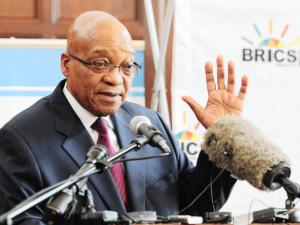
Total trade within the BRICS (Brazil, Russia, India, China, and South Africa) grouping amounted to $6.1 billion last year, President Jacob Zuma said on Tuesday.
“This represents 16.8 percent of global trade,” he told delegates at the BRICS business council meeting in Johannesburg.
“The presence and influence of the BRICS grouping continues to be felt.”
Zuma said the strength of BRICS was amplified by the fact that these countries accounted for 43 percent of the world’s population.
“Indeed, we are all gathered here because we see value in the BRICS partnership in many respects.”
In 2012, South Africa’s total trade with BRICS countries stood at R294bn, up from R264bn in 2011.
Total trade with Brazil grew from R18bn in 2011 to R20bn in 2012, and with Russia from R3bn in 2011 to R5bn in 2012.
Zuma said total trade with India, South Africa’s sixth largest trading partner, grew substantially from R53bn to R67bn.
Trade with China grew from R188bn in 2011 to R201bn in 2012.
“All these impressive statistics… should provide you with the determination and confidence to deliver on the imperatives…” he told delegates.
Trade and Industry Minister Rob Davies said the council meeting was intended to deepen the partnerships to enhance co-operation and development on the African continent.
BRICS council South African chairman Patrice Motsepe said it was crucial that the commitment to increase trade and investment was seen, and “quantifiable”.
“There’s a new sense of urgency,” Motsepe said.
He emphasised “value-added trade” and common objectives being sought.
“BRICS is not about excluding other countries,” said Motsepe.
“We want to see investments quantify… It is important to build on the BRICS partnership.” – Sapa
This website uses cookies to improve your experience. We'll assume you're ok with this, but you can opt-out if you wish. Cookie settingsACCEPT
Privacy & Cookies Policy
Privacy Overview
This website uses cookies to improve your experience while you navigate through the website. Out of these cookies, the cookies that are categorized as necessary are stored on your browser as they are essential for the working of basic functionalities of the website. We also use third-party cookies that help us analyze and understand how you use this website. These cookies will be stored in your browser only with your consent. You also have the option to opt-out of these cookies. But opting out of some of these cookies may have an effect on your browsing experience.
Necessary cookies are absolutely essential for the website to function properly. This category only includes cookies that ensures basic functionalities and security features of the website. These cookies do not store any personal information.
Any cookies that may not be particularly necessary for the website to function and is used specifically to collect user personal data via analytics, ads, other embedded contents are termed as non-necessary cookies. It is mandatory to procure user consent prior to running these cookies on your website.