Don’t laugh please, we’re black(face)!

Blackface not funny

Administrators in the Waverly Central School District have been fielding complaints all weekend after students involved in a Friday pep rally staged a skit critics say was racist and made light of domestic violence.

The issue is getting some national attention after a Waverly High School graduate posted a story on the CNN iReport website early Monday.

Three white students wearing blackface put on the skit, according to the post by 2006 graduate Matt Dishler, with two of the students representing singer Rihanna and her former boyfriend, entertainer Chris Brown, who were involved in a highly publicized domestic violence case in 2009.

A photo posted with the story shows one male restraining another male, with a student portraying Rihanna cowering on the floor. Students and others sitting on the bleachers in the background appear to be smiling and laughing as they watch the skit.

Dishler said he didn’t attend the rally, but heard about it from friends. After confirming the information, he decided to post an opinion piece.

“I can testify there’s not a lot of racial diversity in that school whatsoever. We’re not really exposed to that at that school,” Dishler said. “I felt like something should have been done about this. I don’t believe the kids had any vicious intentions, but the administrators should have said that’s not exactly OK.”

Waverly Superintendent Joseph Yelich said he was not aware that the students were planning to do the skit, but he has received plenty of complaints since then.

“The Waverly School District is committed to creating a positive atmosphere through all activities,” Yelich said. “I’ll be working with building administration, staff and students to develop future activities consistent with that commitment.

“There is a set of concerns that a number of individuals have had, and we want to address those concerns,” Yelich said. “I want to be sure administration and staff and students know what our expectations are.”

Yelich did not indicate what if any specific actions would result from Friday’s pep rally.

A New Hope Center, an Owego-based agency that assists victims of domestic and sexual violence, hate crimes, rape and other abuse, is already working with the Waverly School District on bullying issues, according to Assistant Director Francis J. Bialy.

Bialy wasn’t aware of Friday’s pep rally, but he said, in general, it’s disturbing to try to find humor in grave issues such as domestic violence.

“If it’s intended to be humorous or putting down people, it further perpetuates permission to engage in such behavior,” Bialy said.

“When you look at issues with race, the same thing holds true. If people act in racist ways or support racist behavior, they tell other people it’s OK to act racist.

“I hesitate to judge the intent of something,” Bialy said.

“There’s also a dynamic that well-intentioned actions are done without a full sense of understanding that also end up being damaging as well. I think it should be looked at.”

Dishler said he is still proud of his former high school and didn’t want to be too critical.

“I believe they will take steps to cure it. I just think sometimes things need to be brought to light,” Dishler said.

“(Domestic violence) is nothing to joke about. I wanted people to know this mistake was made and can we please rectify it so it doesn’t happen again.”  – stargazette.com

Blacks show blind loyalty to Barack

African Americans show blind loyalty to President Barack Obama.

Are black people supporting Obama mainly because he’s black? If race is just one factor in blacks’ support of Obama, does that make them racist? Can blacks’ support for Obama be compared with white voters who may favor his Republican challenger, Mitt Romney, because he’s white?

These questions have long animated conservatives who are frustrated by claims that white people who oppose Obama’s policies are racist. This week, when a black actress who tweeted an endorsement of Romney was subjected to a stream of abuse from other African-Americans, the politics of racial accusation came full circle once again.

Stacey Dash, who also has Mexican heritage, is best known for the 1995 film “Clueless” and the recent cable-TV drama “Single Ladies.” On Twitter, she was called “jigaboo,” “traitor,” “house nigger” and worse after posting, “Vote for Romney. The only choice for your future.”

The theme of the insults: A black woman would have to be stupid, subservient or both to choose a white Republican over the first black president.

Russell Simmons, the hip-hop mogul and Obama backer, called Dash’s experience “racism.” Said Barbara Walters on “The View”: “If she were white, this wouldn’t have happened.”

Twitter users are by no means representative of America, and many black Obama supporters quickly denounced the attacks. But the reason Dash was attacked is simple: She is a black woman supporting a white candidate over a black one.

There is racial bias amongst whites, and there is racial bias amongst blacks. But as far as the press is concerned, it only goes one way, says a white critic.

When people speak out against a symbol of black progress like Obama, African-Americans tend to feel hurt.

“We still have a civil rights (era) mentality, but we’re not living in a civil rights-based world anymore,” says a black man. “We want to say, `You’re black, you need to stand behind black people.'”

He said one reason he voted for Obama in the 2008 primary against Hillary Clinton was because Obama is black: “Yes, I will admit that.”

Is that racism? Not in his mind. “It’s voting for someone who would understand your side of the coin a lot better.”

Such logic runs into trouble when applied to a white person voting for Romney because he understands whiteness better. Ron Christie, a black conservative who worked for former President George W. Bush, finds both sides of that coin unacceptable.

“It’s not the vision that our leaders in the civil rights movement would have envisioned and be proud of in the era of the first African-American president,” Christie said.

Martin Luther King Jr. fought Jim Crow laws, which deprived blacks of political rights after Reconstruction, upheld by Southern Democrats. But black voters switched after Democratic President Lyndon B. Johnson pushed through the 1960s civil rights legislation and Republicans successfully pursued the votes of white people who disliked the civil rights agenda.

Since then, Democrats have persistently wooed black voters with programs and platforms that African-Americans favor, and the party has been rewarded every four years.

Clinton got 83 percent of the black vote in 1992 and 84 percent in 1996; the third-party candidate Ross Perot probably sliced away some of Clinton’s black support. Al Gore got 90 percent in 2000; John Kerry got 88 percent in 2004. Obama captured 95 percent in 2008, and 2 million more black people voted than in the previous election.

Christie says he, too, shares the sense of pride in Obama smashing what for blacks is the ultimate glass ceiling. He understands that black pride springs from a shared history of being treated as less than human, while the history of pride in whiteness has a racist context.

Christie says black men shifted from calling candidate Obama “half-white” and “not one of us” to demanding that Christie stop opposing the first black president.

He sees it in the comments of radio host Tom Joyner, who told his millions of listeners a year ago, “Let’s not even deal with facts right now. Let’s deal with our blackness and pride – and loyalty. . I’m not afraid or ashamed to say that as black people, we should do it because he’s a black man.”

The actor Samuel L. Jackson said much the same thing: “I voted for Barack because he was black,” he told Ebony magazine. “Cuz that’s why other folks vote for other people – because they look like them.”

In 2011, as black unemployment continued to rise, the chairman of the Congressional Black Caucus said that if Clinton was still president, “we probably would be still marching on the White House . (but) nobody wants to do anything that would empower the people who hate the president.”

And just last week, the rapper Snoop Dogg posted a list of voting reasons, written by someone else, on a social media account. No. 1 on his pro-Obama list: He’s black. Snoop’s top reason to not vote for Romney: He’s white.

Black voters feel like white people are attacking their dignity whwn they say negative things about Obama, and they are closing ranks around him.

There should not be this resistance to pride over the first black president, says many blacks. The USA should only elect blacks to that position in the future to eradicate racism. The GOP probably agrees, but would prefer an Uncle Tom. – AP

Affirmative action challenge in US Supreme Court

Abigail Fisher in the Supreme Court building

The US Supreme Court is hearing arguments Wednesday on a case that could affect how universities across the United States consider race in their admissions.

The case, one of the most high-profile of the court’s agenda this year, pits Abigail Fisher, a white woman, against the University of Texas at Austin, which denied her admission.

Fisher accuses the university of discriminating against her because of her skin color, violating her constitutional rights.

“I was taught from the time I was a little girl that any kind of discrimination was wrong,” she proclaimed in an interview posted on YouTube.

Fisher was not among the top 10 percent of Texas high school graduates — who are all guaranteed spots at the state university and who make up the majority of students there.

But she argues she was denied admission in favor of other applicants with lower test scores and grades, who were accepted on the basis of racial preference for under-represented minorities.

The plaintiff claimed in her court filing she “suffered an injury that falls squarely within the language and spirit of the Constitution’s guarantee of equal protection.”

She believes that the university’s admission program “favors two groups, African-Americans and Hispanics, in one of the most ethnically diverse states in the United States.”

Fisher, who ultimately earned her financial analysis degree in neighboring Louisiana, is appealing her case to the nation’s highest court after failing in the lower courts.

The Supreme Court last took up this controversial issue in 2003, reaffirming a 1978 decision that affirmative action’s race-based quotas did not violate the constitution.

The policy, aimed at correcting historic imbalances in education by favoring US minorities in public university admissions and other circumstances, has come under increasing scrutiny in the wake of a growing minority population.

Now — more than 60 years after the high court forced the University of Texas to enroll the first African-American ever in its law school — the school is urging the court to reconfirm that “racial diversity is a legitimate goal” in higher education, according to law professor David Cole.

The university is backed by more than 70 motions from universities, human rights groups and businesses — as well as by the US government — all attesting the court’s decision will have a far-reaching impact.

“There’s a lot at stake and plenty of reasons to be concerned,” stressed Alan Morrison of The George Washington University Law School. He called the affirmative action decision “crucial,” saying it would be felt at all US universities, both public and private.

But it is not clear the court will rule as it did nearly a decade ago.

Since the last ruling on affirmative action, the makeup of the high court has changed, turning it into “the most conservative in a lifetime,” noted Georgetown Law professor Louis Seidman.

What’s more, Elena Kagan, generally considered one of the court’s more liberal judges, has recused herself, after having come down in favor of affirmative action while serving in her previous post as Solicitor General under Obama.

The Supreme Court will give its decision in 2013, after the presidential election. President Obama’s challenger, Republican Mitt Romney, has said he is opposed to the quotas in public institutions.-AFP

Phoenix sends only non-white police to Washington

Downtown Phoenix, Arizona

They’re supposed to be the cream of the crop, going to Washington to protect the newly elected American president and represent Phoenix, Arizona.

But the police association said the Phoenix Police Department used race to determine who’s going – and that’s not all CBS 5 News, a local TV channel has learned.

One of the officers who’s set to pack up and head to Washington when we elect a new president is on the Brady List – a compilation of officers whose honesty and integrity is in question.

“I couldn’t believe it, because we sent officers back four years ago and that was done on seniority,” said William Buividas with the Phoenix Law Enforcement Association, or PLEA.

The Phoenix Police Department hand-picked a group of 40 or so officers to go, but the way they did so has PLEA up in arms.

“In this case the department decided to use ethnic and gender as a basis for selection,” Buividas said.

He showed CBS 5 News a group of officers from one division who were chosen. Buividas said several officers were passed up despite their seniority.

“The two alternates have seniority, are senior to every person who’s going on the list,” Buividas said.

He also showed CBS 5 News a string of emails with the department in which they admitted to using race, gender and ethnicity in their selection process, saying it was the expressed desire of the police chief.

“Why somebody with very little seniority gets to go but somebody with 20, 25 years on gets passed over because they’re the wrong color,” Buividas said.

But that’s not all. In this sample we found one officer, Diana Pineda, is on the Brady List. The Brady List is a group of officers within each department whose integrity has been called into question. CBS 5 News paid a visit to Pineda and asked her why she thought she was chosen to go to the capital.

“Oh, I have no idea,” Pineda told us.

Pineda is on the list stemming from an incident back in 2007. We asked her what happened.

“You know what? I can’t really talk right now, but why don’t you guys come back,” she said.

But when we returned, no one answered the door.

PLEA has filed a grievance but so far no changes have been made. We reached out to police for an interview, but they declined saying because they’re in the grievance process it would be inappropriate for them to comment.

Don’t poke fun at a black man!

The Pot Smokers

Credit R. Wallace “Wally” Hudson, chairman of the Mecklenburg County (Va.) Republican Committee, with demonstrating how new social media platforms can broadcast ancient hates.

The Post reported this week that the county GOP’s Facebook page had displayed for months photos portraying President Obama as a witch doctor, a caveman and a drug dealer.

Virginia’s Republican Party chairman, Pat Mullins, ordered the offensive photos be taken down. But Hudson, who acknowledged posting most of the images, stood his ground, saying he didn’t see what all the fuss was about. “We know our regular readers, who are good conservatives,” he told The Post on Tuesday. “They’re gonna get a kick out of it.”

Sadly, the Mecklenburg GOP’s disgusting images—which have since been removed—are not an isolated case of ugliness.

Baylor University assistant professor Mia Moody did a study of social media stereotyping of Barack and Michelle Obama; her findings appeared in the journal New Media & Culture.

Moody researched hundreds of Facebook groups and pages. She found numerous examples of the president and the first lady being targeted with racist and sexist rhetoric that, not surprisingly, also indirectly spread hatred toward women and blacks.

Moody found that some Facebook pages build on ideas that black people are different from members of the dominant group. Several photos showing Michelle Obama dancing drew comments about her “always jigging.”

One group called “Obama Sucks” primarily served as an outlet to post fake photos of the president. One picture featured him wearing a bandanna and gold teeth. The caption: “OBAMA Going For The African American Vote.”

Moody found that many Facebook hate pages also focused on cultural narratives. Some photos depict Obama or his family as animals, particularly apes. One picture showed male and female apes holding an infant ape with Obama’s face superimposed on it.

Tasteless. Disrespectful. – Colbert King, Washington Post

Chasing non-white votes

Trying very hard

Republican presidential candidate Mitt Romney says he would honor temporary work permits for young illegal immigrants who were allowed to stay in the U.S. because of a decision by President Barack Obama.

Romney told The Denver Post, in an interview appearing in Tuesday’s edition, that people who are able to earn the two-year visas to stay and work wouldn’t see them revoked under a Romney administration.

“The people who have received the special visa that the president has put in place, which is a two-year visa, should expect that the visa would continue to be valid. I’m not going to take something that they’ve purchased,” Romney told the Post, promising to put a comprehensive immigration reform plan into place before those visas expire.

In June, Obama issued a new policy that allows some young illegal immigrants who were brought to the U.S. as children to avoid deportation. Romney criticized Obama for circumventing Congress to make the change a few months before the presidential election.

During the Republican presidential primary, Romney said he would veto legislation to provide a path to citizenship for some of the young people who benefited from Obama’s new policy.

The Denver Post interview comes as Romney and Obama are fighting a heated battle for Colorado, whose significant Hispanic population could determine which candidate receives the state’s nine electoral votes.

Obama’s other race speech

The Entitlement Crowd

In a video obtained exclusively by The Daily Caller, then-presidential candidate Barack Obama tells an audience of black ministers, including the Rev. Jeremiah Wright, that the U.S. government shortchanged Hurricane Katrina victims because of racism.

“The people down in New Orleans they don’t care about as much!” Obama shouts in the video, which was shot in June of 2007 at Hampton University in Virginia. By contrast, survivors of Sept. 11 and Hurricane Andrew received generous amounts of aid, Obama explains. The reason? Unlike residents of majority-black New Orleans, the federal government considers those victims “part of the American family.”

The racially charged and at times angry speech undermines Obama’s carefully-crafted image as a leader eager to build bridges between ethnic groups. For nearly 40 minutes, using an accent he almost never adopts in public, Obama describes a racist, zero-sum society, in which the white majority profits by exploiting black America. The mostly black audience shouts in agreement. The effect is closer to an Al Sharpton rally than a conventional campaign event.

Obama gave the speech in the middle of a hotly-contested presidential primary season, but his remarks escaped scrutiny. Reporters in the room seem to have missed or ignored his most controversial statements. The liberal blogger Andrew Sullivan linked to what he described as a “transcript” of the speech, which turned out not to be a transcript at all, but instead the prepared remarks provided by the campaign. In fact, Obama, who was not using a teleprompter, deviated from his script repeatedly and at length, ad libbing lines that he does not appear to have used before any other audience during his presidential run. A local newspaper posted a series of video clips of the speech, but left out key portions. No complete video of the Hampton speech was widely released.

Obama begins his address with “a special shout out” to Jeremiah Wright, the Chicago pastor who nearly derailed Obama’s campaign months later when his sermons attacking Israel and America and accusing the U.S. government of “inventing the HIV virus as a means of genocide against people of color” became public. To the audience at Hampton, Obama describes Wright as, “my pastor, the guy who puts up with me, counsels me, listens to my wife complain about me. He’s a friend and a great leader. Not just in Chicago, but all across the country.”

By the time Obama appeared at Hampton, Jeremiah Wright had become a political problem. Wright told The New York Times earlier that year that he would no longer be speaking on the campaign’s behalf because his rhetoric was considered too militant. And yet later in the Hampton speech Obama explicitly defends Wright from unnamed critics, a group he describes as “they”: “They had stories about Trinity United Church of Christ, because we talked about black people in church: ‘Oh, that might be a separatist church,’” Obama said mockingly.

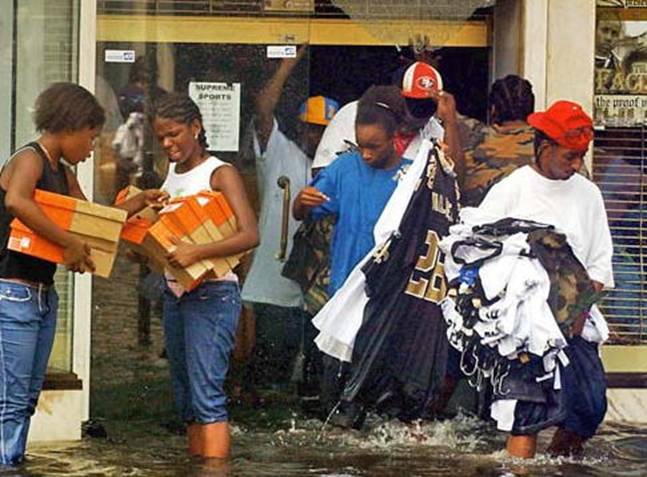
There was an article in the US World Report regarding the orderly behavior of the Japanese citizens and the absence of looting after the earthquake, tsunami and nuclear nightmare.

Social scientists were baffled by the total non-existence of looting and savage behavior in Japan considering the magnitude of this catastrophe. They conferred with human study organizations as well as sociology experts throughout the United States. Japan lacks diversity, was the conclusion.

Race dominates US election debate

Hampton University, a historically black institution

WASHINGTON (AP) — Conservatives on Tuesday used a speech President Barack Obama delivered as a candidate in 2007 to accuse him of using racially charged rhetoric.

“There’s no way you can listen to this speech and not hear it as a deliberately divisive speech that pits Americans against each other and does so largely with racial innuendoes that are very, very clear when you hear the speech,” former Republican presidential candidate Newt Gingrich said on Fox News, which aired segments of the videotaped speech.

At issue Tuesday, one day before the first presidential debate and as Republican presidential candidate Mitt Romney trails in polls, was a speech then-candidate Obama made to black clergy at Hampton University, a historically black institution in Virginia. Media outlets including The Associated Press and Fox News covered the remarks at the time.

Obama – now the nation’s first black president – said in the speech that the Bush administration did nothing to defuse a “quiet riot” among blacks that threatened to erupt in the aftermath of Hurricane Katrina. Then a U.S. senator from Illinois, Obama also said the Bush administration “was colorblind in its incompetence.”

Fox News host Sean Hannity said the speech “contains some of the most divisive class warfare and racially charged rhetoric ever used by Barack Obama.”

Conservative pundit Tucker Carlson of The Daily Caller, which posted video of the speech online, argued that the speech features “racial rhetoric designed to make people fearful.” And The Drudge Report, a regular Obama critic, predicted the video would “ignite accusations of racism – in both directions!”

Obama campaign spokesman Ben LaBolt quickly dismissed the criticism, accusing “Mitt Romney’s allies” of recirculating video of a widely covered speech in “a transparent attempt to change the subject” from Romney’s comments about 47 percent of Americans who don’t pay federal income taxes.

Romney’s campaign did not immediately respond to a request seeking comment. The Republican previously distanced himself from a conservative group considering an advertising campaign featuring Obama’s former spiritual adviser, the Rev. Jeremiah A. Wright Jr., whose race-related sermons stirred controversy in Obama’s first campaign.

Bursary for whites only legal, court finds

The Supreme Court of Appeal ruled it was within someone’s right give bursaries to only white students, according to a report on Saturday.

The ruling came after Daphne de Villiers from Stellenbosch in her last will and testament determined that the trustees of the Jean Pierre de Villiers Trust, which she created, must allocate R250,000 yearly to white students at four universities for certain degrees, Beeld reported.

These were the universities of Stellenbosch, Pretoria, the Free State and Cape Town.

Five appeal court judges found on Friday that it would not help to apply in court for the bursary to go to pupils of another race as it was not the person’s last wishes.

De Villiers was warned before her death that this might be problematic but she was insistent, according to the report.

[ad 1]

After her death all four universities refused to become involved with the bursaries due to the racial connotation.

The administrators approached the court to remove the word ‘white’ on grounds of discrimination.

It was ruled that if white student could not benefit from the bursaries that the money should go to a charity as De Villiers stipulated. – Sapa

‘Regional Equity’ – Obama’s coming war on whitopias

by Jesse Mossman

Paul Kersey recently reported on VDARE.com an emerging trend: for white suburbs to secede from larger urban jurisdictions and so form, in effect, whitopian enclaves.

But he did not mention that there are powerful forces on the other side pushing back hard—using a concept called “Regional Equity.”

Americans can be forgiven for not being familiar with Regional Equity. I had not heard the term myself until just a few weeks ago, when I caught Stanley Kurtz on the radio talking about his new book: Spreading the Wealth: How Obama is Robbing the Suburbs to Pay for the Cities.

Put Regional Equity into a search engine and the language of the collectivists surfaces: transportation equity, environmental equity, healthcare equity, social justice, smart growth, and especially, sustainable communities.

The essence of Regional Equity is the use of centralized political power make things equal over regions—disregarding jurisdictions.

President Obama is very much on board with the Regional Equity movement. The White House website  says:

“President Obama will also take a regional approach that disregards traditional jurisdictional boundaries [my emphasis—JM], setting policy that takes into account how cities, suburbs, and exurbs interact. President Obama’s urban policy agenda will use this integrated approach to enhance economic competitiveness, sustainability, and equity in our cities and metropolitan areas.”

[ad 1]

Furthermore, PolicyLink (a pro-minority think tank run by a woman graduate of Howard university who describes herself as “national leader for social justice and equity”)  states:

Under the Obama administration, a framework of regional equity has been a driving force behind the larger federal partnership for Sustainable Communities made up of HUD, the Department of Transportation (DOT), and the Environmental Protection Agency (EPA). The partnership has now issued a Notice of Funding Availability (NOFA) for a new Sustainable Communities Regional Planning Grant Program (SCRPG) that will formalize as federal policy the very strategies that equity advocates have been seeking to advance at the community level for years. [The Sustainable Communities Regional Planning Grant Guide | How to Link Equity to Each Rating Factor PDF]

In the past, secession could work—boundaries meant independence from the predatory desires of larger neighbors hungry for the resources and lifestyles of more prosperous suburbs.

But now, like a Black Hole whose irresistible gravity swallows nearby stars, central cities, the doctrine of Regional Equity could suck the cash from prosperous suburban cities, impose onerous laws, and even force them to become more diverse—negating the very reasons for moving to these former enclaves of sanity and safety.

Read the rest of this article on Vdare.com.

Theresa Reel sexually harassed by black, Hispanic boys

Theresa Reel, who received a settlement of $450 000 from the City of New York for suffering years of sexual harassmant from black and Hispanic students

A white high school teacher who said she was sexually tormented by her students and then punished for complaining has scored a $450,000 settlement from the city, reports the New York Daily News.

Theresa Reel, 52, who quit her job when she signed the deal, said the knowledge that she never has to set foot in the High School for Legal Studies again is just as sweet.

“I wasted six years of my life being treated like dirt — less than dirt,” Reel told the Daily News on Thursday. “I can’t put into words how happy I am.”

The Mississippi native started working at the Williamsburg, Brooklyn, school in 2005 and within a month, her job was a nightmare. The High School for Legal Studies is 62% black and 35% Latino.

In a lawsuit she filed three years later, she described how students called her filthy names, flung condoms at each other and even touched her breast.

Her pleas to school bosses were met with accusations that she showed too much cleavage, she charged.

When she told then-Principal Denise Morgan that she made a student leave the class for sexual comments, the official’s response was: “And how does that threaten you?”

Denise Morgan

Morgan defended her handling of Reel’s complaints.

“I am very comfortable with the professional manner in which I responded to this teacher’s concerns,” she told The New York Daily News.

After Morgan was replaced at the troubled school, the new principal, Monica Ortiz, gave Reel unsatisfactory ratings.

And a 2008 letter from the Department of Education chastised the social studies educator for “inappropriate attire,” described as a “low-cut, V-neck lace top.”

“It made me feel like I was worthless, like my own supervisors believed that I deserved to be treated like this,” Reel said at the Woodside, Queens, home she shares with her cat.

Reel’s court papers detail the barrage of X-rated insults she faced in the classroom and corridors.

One boy allegedly told her: “I’ve got rubbers — want to party?” Another student accused a classmate of performing a sex act on Reel for good grades, she said.

She recalled one male student crossing a hallway so he could graze her breast with his elbow and then “smirk” at her.

“I was screaming,” Reel said.

She said the harassment made it impossible to function some days.

“Sometimes I’d break down on the subway,” she said. “I would go home, sit in front of the TV and cry.”

At one point, she said, she was suicidal.

“I had a plan in mind,” she said, without elaborating. “It got so black and bleak I couldn’t see it getting any better.”

The city tried to get the federal discrimination suit tossed out, arguing Reel did not prove the school was a hostile environment, that she was singled out for her gender, or that she faced retaliation.

On each count, the judge ruled there was enough evidence to let a jury decide and set a trial date for Sept. 10.

On Aug. 31, the city agreed to pay Reel $450,000 and remove the poor ratings from her record if she resigned.

“We think she had a very strong case,” said lawyer Joshua Parkhurst of Cary Kane LLP. “We ultimately agreed to settle because it allows our client to get on with her life.”

Reel has been on an unpaid leave of absence for a year, spending down her pensions savings. She’s been looking for a new job, but was even turned down for a cleaning gig.

DOE had no comment on the case.

Morgan, the former principal, is now an assistant principal at the High School for Violin and Dance in the Bronx. Ortiz is still the head of Legal Studies, a D-rated school which had less than 60% of its students graduate in 2009.

Legal Studies made headlines in 2010 when teachers were caught taking a lavish, taxpayer-funded junket and students were busted for using cell phones to film brawls and sex acts.

Reel wasn’t the only person at the school who thought pupils were out of line. In a 2010 city survey, only 49% of the students said learners treated teachers with respect.

‘Racism’ ends Terry’s international career

Wrong move. Terry grabs black player

Former England Football captain John Terry has called time on his international career. He informed ‘Three Lions’ boss Roy Hodgson of his decision in a telephone call on Sunday evening.

The 31 year old faces a Football Association disciplinary hearing charged with using racist language against Queens Park Rangers defender Anton Ferdinand on Monday.

Terry was cleared of racially abusing Ferdinand in court in July and says the FA’s decision to pursue charges against him makes his position “untenable”.

Terry made his England debut in 2003 against Serbia and Montenegro and was initially made captain in 2006. He was one of the team’s star performers during recent years, but the end of his international career was mired in controversy.

“I would like to thank the England managers who have selected me for my 78 caps,” Terry said. “I have had great pleasure in sharing that honor with all the players that I’ve played with.”

[ad 1]

“I would like to thank them, the fans and my family for their support and encouragement during my international career. Representing and captaining my country is what I dreamed of as a boy and it has been a truly great honor,” he added.

American ‘research war’ over affirmative action

by Scott Jaschik, Inside Higher Ed

With the U.S. Supreme Court about to hear arguments in the Fisher v. University of Texas case that could decide the fate of affirmative action in admissions, a research war has broken out. Defenders and critics of the consideration of race are releasing new studies (some of which were submitted in briefs to the court) on the impact of affirmative action.

Several studies presented Friday at the Brookings Institution suggested that eliminating the consideration of race would not have as dramatic an effect on minority students as some believe, and that the beneficiaries of affirmative action may in fact achieve less academic success than they would otherwise. The studies were criticized by some present for being one-sided.

Yield Rates After a Ban

One of the studies explored the impact on the yield rate — the proportion of admitted students who enroll — of black, Latino and Native American students to the University of California after the state barred the consideration of race in admissions. Minority enrollments fell after voters adopted the ban, in part because greater proportions of white and Asian applicants, on average, have the academic and other credentials required for admission.

But the paper focused on a subset of minority students: those who gained admission after the ban on affirmative action. Many observers at the time predicted that these students would be less likely to enroll, as they would perceive the system to be hostile, and news articles quoted minority students to this effect.

But a paper by Kate Antonovics, an economist at the University of California at San Diego, and Richard Sander, a law professor at the University of California at Los Angeles, found that the ban on affirmative action didn’t produce “chilling effects,” but actually produced “warming effects” on the likelihood of minority students’ accepting offers of admission.

The paper examined the yield rates by students in the three years after Proposition 209 (the ban) took effect. Across the system, the yield rate increased by about 10 percent. The increase was the greatest at Berkeley and UCLA. At Berkeley, the pre-Proposition 209 yield rate for underrepresented minority groups was 37.9 percent, and that increased by 5.7 percentage points after affirmative action considerations were barred from the admissions process. At UCLA, a 38.8 percent yield rate increased by 3.9 percentage points.

Antonovics, who presented the paper, said that the findings were important. She said that critics of affirmative action might expect (and accept) that the end of the consideration of race would lead to an overall decline in minority enrollment rates, but that there would be “a layer of concern” if some of that drop could be attributed to students who met race-neutral admissions standards opting not to enroll. She said that she and Sander expected to find this “chilling effect,” and were surprised to find “no evidence for it” and instead see evidence showing the opposite impact.

[ad 1]

‘Mismatch’ Theory

The fear Antonovics expressed is that minority students might not be enrolling at highly competitive institutions at which they would be a good academic match. Another kind of “mismatch” has also been the focus of much research on affirmative action in recent years — and that idea (hotly debated) is that minority students who are admitted to better institutions because of affirmative action may end up with lower academic achievement as a result. (Sander, who helped organize the Brookings program, has been a leading proponent of the idea.)

On Friday, Doug Williams, chair of economics at the University of the South, presented a paper arguing that law schools provide solid evidence for the existence of mismatch. He said that because of the requirement that lawyers pass a bar exam, there is an independent measure of successful learning in law school. Because some minority students with similar academic credentials (judged by undergraduate grads and LSAT scores) enroll at more or less competitive law schools, he said it is possible to see whether there is a mismatch.

There has long been a gap between black and white law graduates on bar passage rates, he noted. Currently, about 97 percent of white law school graduates pass the bar, with 92 percent passing on the first try. For black law graduates, the figures are 78 and 61 percent, respectively. But Williams said that these gaps are partly explained by the differing academic credentials of black and white law students, and so by themselves don’t back mismatch theory.

But in comparing minority law graduates of comparable academic preparation who enroll in more or less competitive law schools, Williams said that those (from among those with comparable academic credentials) who enroll in the bottom two tiers of law schools pass the bar at a rate that is 14 percentage points higher than that of those who enroll at the top law schools. And he said that suggested a statistically significant mismatch.

Williams said that he would like more detailed information about law students — including the law schools that they apply to and are admitted to — but based on the information he does have, he said that he had “strong evidence” to back mismatch.

Sander said that panelists at the program were “ideologically diverse” and that there was no attempt to include only scholars of one point of view.

The debate will likely continue Thursday when a coalition of social science groups — the American Educational Research Association, the American Sociological Association, the American Statistical Association, the Association for the Study of Higher Education, the Law and Society Association and the Linguistic Society of America — hold a briefing on research those organizations cited in their brief to the Supreme Court encouraging the justices to uphold the legality of the consideration of race and ethnicity in admissions.

Fisher vs. University of Texas – one girl against Obama and corporate America

University of Texas Austin
The University of Texas at Austin

WASHINGTON — Last month the Obama administration threw its support behind the University of Texas’ use of race as a standard in its admissions policies, asking the Supreme Court not to interfere with the consideration of racial preferences in college admissions.

Abigail Fisher, who was denied admission to the Univerity of Texas in 2008 on the basis that she was white, has filed suit before the US Supreme Court in a bid to overturn affirmative action at the university level. In her submission before the court, she argues that the university has imposed a racial quota system that excluded her for the sake of admitting students of lesser ability. As a result, her civil and constitutional rights were violated.

Arguments in the case will start on October 10, not long before the US presidential election and are bound to attract national attention in America, as well as all other countries where affirmative action and racial quotas are being applied, such as South Africa.

According to a recent article in Forbes magazine, dozens of groups have weighed in as the Supreme Court prepares to hear oral arguments over the constitutionality of affirmative action.

Everyone from professors (one group calls itself the “Empirical Scholars,” another, the “Texas Association of Scholars”) to think tanks (the Cato Institute) to advocacy organizations (the NAACP) to universities (Brown University) to student groups (the National Black Law Students Association) to various state and local governments (California) and public officials (Senate Majority Leader Harry Reid) have submitted amicus briefs trying to influence the Court in what is likely to become one of the most controversial decisions of its upcoming term.

The present case seeks to overturn a previous ruling in Grutter v. Bollinger in 2003, which again opened the door wide for anti-white racial preference policies in America. In that case, Big Business also supported the argument for affirmative action. In a filing to the Court at the time, 65 corporations with more than a trillion dollars in annual revenues – including Intel, Merck, Boeing, and Coca-Cola – had underligned the importance of affirmative action in their “continued success in the global marketplace.”

The Court took notice of their concerns.  The 5-4 majority upholding the University of Michigan Law School’s admissions policy emphasized these efforts to establish a diverse workforce to meet the challenges of a global economy in Grutter v. Bollinger, the key ruling stemming from the pair of lawsuits.

“What is more,” former Justice Sandra Day O’Connor wrote in Grutter at the time, “high-ranking officers and civilian leaders of the United States military” also looked for a “racially diverse officer corps.”  O’Connor’s opinion elaborated on the military’s use of affirmative action to ensure “an officer corps that is both highly qualified and racially diverse.”  As several retired military leaders with decades of experience had urged the Court, she applied this line of reasoning from the military setting to the nation’s public universities.

Abigail Fisher
Abigail Fisher, who was denied admission to the University of Texas because of race preference

For Fisher v. University of Texas, the US Justice Department, in a court brief co-signed by several other government agencies, told the high court that a diverse college population was in the university’s — and the government’s — best interests. “The armed services and numerous federal agencies have concluded that well-qualified and diverse graduates are crucial to the fulfillment of their missions,” Solicitor General Donald B. Verrilli said.

The court brief was cosigned by lawyers from the departments of Defense, Education, Commerce, Labor and Health and Human Services.

The Supreme Court’s ruling on the University of Texas’ admission program will be its first ruling on affirmative action in higher education since 2003.

However, the same groups in the military and corporate America that supported race preference in 2003 have largely repeated their arguments in a new round of amicus briefs filed in response to Fisher.

“Fulfillment of the national security interest in officer corps diversity must not be imperiled by a sweeping ruling against race-conscious admissions,” argued the brief filed on behalf of General Anthony C. Zinni, Admiral Dennis C. Blair, General Wesley K. Clark, and dozens of other high-ranking former officials from all branches of the US armed forces.

Likewise, dozens of the nation’s largest companies – including Pfizer, Starbucks, and Wal-Mart to name a few – also echoed the arguments put forth nine years earlier by a similar list of corporations.

Texas admits most of its students because they rank among the top 10 percent in their high school classes. Fisher’s grades did not put her in that category. For other students, Texas officials say that race is considered among many factors, including academic record, personal essays, leadership potential, extracurricular activities, and honors and awards. The school says race is not used to set quotas, which the high court has previously rejected.

“Race is not considered on its own, and it is never determinative of an applicant’s admission by itself,” Verrilli said. “Rather, race is one of a number of contextual factors that provide a more complete understanding of the applicant’s record and experiences. That is a far cry from impermissible racial balancing.”

The Texas policy has been upheld by federal appeals courts, which said it was allowed under the high court’s decision in Grutter vs. Bollinger in 2003 that upheld racial considerations in university admissions at the University of Michigan Law School. But Fisher appealed to the current Supreme Court, which is considered to be more conservative than the one that ruled in 2003 and more likely to jettison that decision or at least limit when colleges may take account of race in admissions.

Before adopting race as part of its admission policy, Texas’ student body was 21 percent African-American and Hispanic. By 2007, the year before Fisher filed her lawsuit, African-Americans and Hispanics accounted for more than a quarter of the entering freshman class.

“Race is considered not on its own, but as a piece of information that provides valuable context in understanding an applicant’s achievements and his likely contributions to the university,” Verrilli said. “That individualized consideration is designed to work in conjunction with the Top 10 plan to enable the university to construct a class that is diverse in all ways valued by the institution.”

The case is Fisher v. University of Texas at Austin, 11-345.

– AP, Forbes and various other sources