South African ‘democracy’ spawns more faeces wars, now in East London

A 'faeces protestor' being arrested at Esplanade station, Cape Town
A ‘faeces protestor’ being arrested at Esplanade station, Cape Town

Human waste has been thrown at a Buffalo City ANC councillor’s house, the Eastern Cape local government department said on Sunday.

The incident last week was condemned by MuniMEC, a government co-ordination forum made up of all mayors and municipal managers who meet quarterly with MEC Mlibo Qoboshiyane.

It had noted the anger of some communities, and was committed to eradicating bucket toilets in the province, it said.

No amount of “splashing of human excrement” would help provide services to the people.

Only focused engagement would help deal with the underlying issues affecting delivery.

MuniMEC said the provincial government had so far provided sanitation to 1,275,204 people — about 74 percent of those needing it.

Earlier this month, human waste was dumped on the steps of the Western Cape legislature.

The next day a group of people in Khayelitsha threw human waste at a bus on which Western Cape premier Helen Zille and others had travelled to a green economy event.

A few days later, 184 people were arrested with buckets of human waste at the Esplanade railway station in Woodstock, Cape Town. They had allegedly planned to dump it in the city. – Sapa

Mandela remains critical: Zuma

Existing statue of Nelson Mandela on Sandton Square

Former president Nelson Mandela’s condition remains critical, President Jacob Zuma said on Monday.

“Mandela remains in a critical condition in hospital and doctors are doing everything possible to ensure his well-being and comfort,” Zuma said in Johannesburg.

Zuma and deputy ANC president Cyril Ramaphosa visited Mandela at the Medi-Clinic Heart Hospital in Pretoria on Sunday night.

“… I was told by the doctors, that Madiba’s health had changed in the past 24 hours and he was now critical,” Zuma said.

“They were doing everything… to make him feel comfortable.”

Mandela was asleep when Zuma visited.

“It was late when we got to the hospital and he was already asleep. We were there, looked at him, and we saw him,” he said.

“We had a discussion with the doctors and his [Mandela’s] wife, Graca Machel… and then we left.”

Zuma said he was not in a position to give further details.

Answering questions from reporters, Zuma said Mandela’s condition would not affect United States President Barack Obama’s planned visit to South Africa.

“If there was such a visit… and somebody fell sick, I don’t think we would stop the visit… So we [are] not going to stop because Madiba is sick,” Zuma said.

“So Obama is coming… ,” Zuma said.

Obama was due to arrive in South Africa on Friday.

In reply to another question about Mandela’s condition, Zuma reiterated: “I am not a doctor… when a person is critical, he is critical… I am not in a position to say how critical… .”

Mandela, 94, was admitted to hospital on June 8 for treatment of a recurring lung infection.

The briefing by Zuma was initially scheduled as an off-the-record editors’ briefing on the economy and youth, but evolved into a fully fledged press conference. – Sapa

France’s National Front scores ‘spectacular’ 46% in Villeneuve-sur-Lot by-election

Etienne Bousquet-Cassagne of the Front National

A 23-year old candidate from France’s right-wing Front National, Étienne Bousquet-Cassagne, has lost against the mainstream UMP candidate during a by-election in south western France, but scored an overall 46% of the votes, sending shivers through the Socialist government.

Jean-Louis Costes of the UMP yesterday obtained 53,76% of the votes and so prevented Mrs. Marine Le Pen’s Front National from sending a third MP to the French Assemblée. Adding to Socialist woes and causing the governing party to be eliminated during the first round of the contest, was a financial scandal surrounding its candidate and a former junior minister, Jérôme Cahuzac. Accused of tax fraud, Mr. Cahuzac admitted to maintaining a secret bank account abroad for 20 years.

During the first round, the young National Front candidate obtained 26,04% of the votes against Jean-Louis Costes’s 28,71%, ahead of the Socialist Bernard Barral’s 23,69%.  On the eve of the second round of voting, the secretary general of the Socialist Party and long-time anti-racist activist, Harlem Désir, called on all voters to “block the Front National candidate”. Both the French President, François Hollande  and Prime Minister Jean-Marc Ayrault repeated Désir’s message to voters.

Bousquet-Cassagne stated that the results of the second round showed “an electoral defeat but an ideological victory”. The leader of the Front National, Mrs. Marine Le Pen, said last night that the “primary lesson” to be drawn from this by-election was that the “so-called republican front against us was dead”. She noted the spectacular progress made by her party during the two rounds and maintained that “it shows that the combined left-liberal parties are no longer able to mobilise their electorate to prevent the Front National from gaining votes”.

80 percent of US packaged foods contain dangerous chemicals

Reuters
Reuters

Roughly 80 percent of all the packaged foods sold within the United States contain chemicals outlawed in other parts of the world, Britain’s Daily Mail reports.

Six common food additives found in an estimated 8-out-of-10 products sold in American stores are banned outside of the US, the Mail claims, putting millions of Americans at risk of consuming chemicals considered too dangerous for humans in other countries.

Grocery shop items including best-selling soft-drinks and cereal sold in the US contain additives such as brominated vegetable oil, olestra and others that have been banned in the European Union and elsewhere.

The Daily Mail cites ‘Rich Food, Poor Food,’ a recently published book by Jayson Calton and Mira Calton, as the source for their claim that the majority of American groceries contain the additives.

Among the common items containing the chemicals are Mountain Dew, Chex Mix and Hungry Man frozen dinners, which are made with additives outlawed overseas due to health risks. The Caltons say these products are filled with some of the six “Banned Bad Boys” that are used in America but absent in supermarkets overseas.

“One of the most common ‘Bad Boys’ is different variations of food coloring, which actually is made from petroleum and is found in everyday items like soda, sports drinks, mac and cheese, cake, candy and several other common, American products,” reports the Daily Mail. One of the chemicals in that food coloring, they add, has been proven to cause various different cancers. Those artificial dyes have been outlawed in Norway, Finland, Austria, France and the United Kingdom

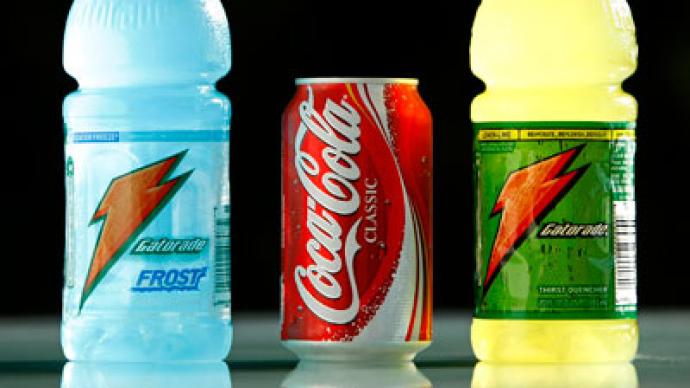
Another additive, brominated vegetable oil, has been banned in over 100 countries because it’s been linked to causing major organ damage, birth defects and hearing loss, among other side effects. Brominated vegetable oil, or BVO, is used in Mountain Dew, Gatorade, Powerade and Squirt — and around 10 percent of all drinks sold in the US.

A petition started earlier this year to get BVOs out of beverages sold in the US received over 206,000 signatures on the website Change.org.

“BVO is banned other places in the world, so these companies already have a replacement for it,” the petition’s author, Sarah Kavanagh, told The New York Times. “I don’t see why they don’t just make the switch.”

Another additive, potassium bromate, is used in American bakeries to speed up the process of preparing wraps, rolls and other bread products. It’s derived from the same chemical as BVO, though, and has been tied to causing kidney damage and cancer. That’s why it’s been outlawed in Europe, Canada and China, but not in the US.

Also on the Calton’s list is azodicarbonamide, a chemical the Daily Mail notes is used to make things like bleach and rubber yoga mats.

Azodicarbonamide is “approved to be a bleaching agent in cereal flour” and is “permitted for direct addition to food for human consumption,” according to the Food and Drug Administration. Along with waxy preservatives called butylated hydroxyanisole (BHA) and butylated hydroxytoluene (BHT) used in bubble gums, though, the additive has been banned in parts of Europe for potential health risks.

Rounding out the authors’ ‘Bad Boys’ list are Synthetic growth hormones rBGH and rBST and the chemical arsenic. They’ve both been banned in the EU for a variety of reasons, and perhaps for good reason: the arsenic put in American poultry can kill a human being if consumed in a high enough dosage.- RT

Snowden’s plane will pass through US airspace

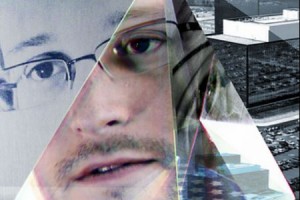
moscowsnowdenEx-CIA contractor, Edward Snowden’s plane to Cuba will pass through US airspace, an Interfax source reports. Washington has an extradition notice against Snowden on charges of espionage and could intervene if the plane enters US jurisdiction.

Aeroflot flight SU150, leaves Moscow at 14:04 local time (11:04 GMT) and will fly through US airspace a couple of kilometers from the coast of New York on its way to Havana, reported Russian news agency Interfax, citing a source in Sheremetevo airport air traffic control. Snowden is checked into the flight to Havana in seat number 17A, reports the Associated Press, citing Aeroflot.

The source added that US air traffic control can legally ground the plane and take Snowden into custody on charges of espionage, theft and conversion of government property. However, the pilot may change the course of the flight so as not to pass through American airspace.

“The pilot of the plane is within his rights to change the course of the flight and there should be enough fuel to do so,” said the source to Interfax.

The Ecuadorian government has confirmed that Snowden filed for asylum and is processing the request.
WikiLeaks has actively assisted Snowden in eluding the US extradition order, has confirmed the fugitive’s final destination will be Ecuador.

Mr Snowden is “bound for the Republic of Ecuador via a safe route for the purposes of asylum, and is being escorted by diplomats and legal advisers from Wikileaks.”

The news that former CIA contractor Edward Snowden had left Hong Kong emerged on Sunday. The city’s authorities published a statement saying that Snowden had legally and voluntarily left Hong Kong on Sunday on a flight to a “third country” with a stopover in Moscow. The statement also said that the documents for Snowden’s extradition submitted to the Hong Kong authorities by Washington were not sufficient to be able to “process the request.”

The White House said it was “disappointed” with Hong Kong’s move to let Snowden go and has urged Russia to consider every option to expel the fugitive.

“The US is advising these governments that Snowden is wanted on felony charges, and as such should not be allowed to proceed in any further international travel, other than is necessary to return him to the United States,” a state department official said.

Washington has stressed they will seek cooperation from whichever country Snowden arrives in.

Snowden initially fled to Hong Kong after leaking troves of classified data to UK newspaper the Guardian, including information of the US spy program Prism.- RT

Media crowd growing at Mandela’s Pretoria hospital

Journalists waiting for news during a previous Mandela hospitalisation

The number of journalists outside the Pretoria hospital where former president Nelson Mandela is in a critical condition increased significantly on Monday morning.

Reporters’ vehicles, including more than 10 broadcast vans, took up almost all the parking spots adjoining the Medi-Clinic Heart hospital.

Several police officers were manning the entrances to the hospital.

Before 6am, three police officers stood at the hospital’s entrance along the busy Park Street.

The officers searched cars entering the hospital premises. More officers were inside the facility.

The hospital’s other entrance along Celliers Street was opened before 6am. Police officers and hospital security searched all vehicles, including delivery vans.

Well-wishes adorned the hospital’s security wall with get-well cards, balloons, flowers, and paintings.

Some of the messages pasted onto the wall read: “Descendants of [former Ghana leader] Kwame Nkrumah wish u long life. Bernard [from] Ghana”.

Another message imprinted on an Ethiopian flag read: “We love you our father, Tata Madiba”.

A colourful card from a Montessori pre-school was decorated with tiny children’s palm prints and numerous pictures of Madiba holding the Fifa World Cup trophy.

Some passers-by, rushing to work on Monday morning, momentarily glanced at the huge artistic display.

Several news crews converged on the hospital on Sunday night after the presidency announced that Mandela’s condition had deteriorated. Most of them had left by 3am on Monday.

However, more than 20 vehicles, including the broadcast vans for local and international media, occupied the parking along Celliers Street on Monday morning.

A few reporters braved the biting early morning cold to chat near the hospital’s Park Street entrance. Some of them held cameras.

It was a quiet night outside Mandela’s home in Johannesburg with almost no movement on Monday morning.

Shortly after 2am, a silver Jeep arrived at the house. The driver pulled up outside the black gates, flashed the vehicle’s headlights and, when there was no response, hooted twice. The gates opened.

Two broadcasting teams arrived at the house on Sunday night, but left a short while later.

The street was otherwise quiet, with only the occasional armed response patrol.

After 6am the streets became busier as people started their daily routines. A black VW Polo parked outside the gate of the house and a woman entered.

On Sunday evening presidential spokesman Mac Maharaj said in a statement: “The condition of former president Nelson Mandela, who is still in hospital in Pretoria, has become critical.”

It was issued after a visit by President Jacob Zuma and African National Congress deputy president Cyril Ramaphosa.

“They were briefed by the medical team who informed them that the former president’s condition had become critical over the past 24-hours,” said Maharaj.

Zuma and Ramaphosa also met Mandela’s wife Graca Machel to discuss his condition.

“The doctors are doing everything possible to get his condition to improve and are ensuring that Madiba is well-looked after and is comfortable. He is in good hands,” Zuma said in the statement.

He appealed to South Africans to continue praying for Mandela and his medical team.

Mandela, 94, was admitted to hospital on June 8 for treatment of a recurring lung infection. – Sapa

‘Criminals are being exposed by Snowden’

gchqlisteningInformation that NSA leaker Edward Snowden is exposing can lead to trials against those involved in war crimes in Afghanistan or Iraq or in money laundering and that is why “the West is so afraid,” investigative journalist Tony Gosling told RT.

The 29-year-old whistleblower – who was charged with espionage in the US for revealing secret surveillance programs – arrived in Moscow from Hong Kong on Sunday. Snowden is on his way to a third country via Russia.

Gosling says Snowden’s got his options rather limited. “The real impact of what he’s done here is only now starting to be realized. Not only is he exposing the criminality of the GCHQ – the signals intelligence part of the British intelligence services – and the NSA, but he is also showing that much of that intelligence contains information which may bring criminal prosecutions. For example, of war crimes, or criminal prosecutions against bankers, people who’ve been doing money laundering, such as Lord Green who was in charge of HSBC. There’s a vast amount of information there.

“There’s one thing I can tell you though, is that he won’t be coming to London. He doesn’t want to end up in the Tower of London like Julian Assange, fugitive, is at the moment. 

“Here in Britain, we have a very poor record. Although the government and many of our media talk about protecting whistleblowers, the fact of the matter is if you blow the whistle on anything really big and important, or, in fact, even some trivial things, you’ll be bullied and you’ll be taken out of your job. And there’s total hypocrisy. One of the reasons for this is the way our entire network of government is paid –tax-payers money that is paying for all this intelligence service stuff. 

“Sir Malcolm Rifkind, for example, who chairs the Intelligence and Security Committee, is supposed to oversee all this secret stuff. He is actually also employed by financial services firm that works for defense contractors. We are losing any kind of proper democratic oversight of these intelligence services. And that’s one of the things that Snowden has started to expose.

“If I were him, I’d actually be thinking about maybe not going to South America but looking at Iceland. It has got a couple of very useful institutions. IMMI, the Iceland’s Modern Media Institute, which has been set up by the parliament to protect whistleblowers and to make sure that Iceland is seen is a safe heaven. There’s also the AWP, the Associated Whistleblowing Press in Iceland. These are really great institutions which have started to emerge now in Europe as a resistance to the intelligence, really, I suppose the military-industrial complex and the financial cults in the European world, taking over so much of our public life, essentially – leaving our democracies in tatters.” 

Gosling thinks Moscow will probably be a transit point, because maybe it would be a little too explosive for him to stay in Moscow for too long.

“I think what’s happening now is that there’s a lack of faith in much of what our intelligence services are up to. When we’ve got no proper democratic oversight of them they are running of on their own.

“The money system as well is involved in it. This is why I point out that much of this intelligence will be to do with economic warfare. We’ve got many new types of warfare in the world – economic is just one of them. Another one is psychological warfare which is using media wars, attacking the reputations of individuals and countries around the world. So, those are the sorts of information that contained in these PRISM leaks that we are now starting to see. 

“There have been serious crimes over the last ten years – particularly since 9/11 when the war on terror started – in Afghanistan, Iraq, in places like Yemen, Pakistan where many people were murdered through the use of drones and hellfire missiles completely illegally by mainly three countries – Israel, the US and the UK. But this is what people don’t necessarily understand: there will be information that Edward Snowden has that can actually bring some of these people to trial. That’s why the West is so afraid. If Britain was serious about any kind of real justice, we would be able invite him to London and say, ‘Yes, you can tell all your secrets or stories to people here in Britain, you’ll be safe here.’”

Gosling says Snowden is actually exposing criminals “and the criminals are going for him now”. – RT


UK tapping EU’s data flows a catastrophe – Germany

Sabine Leuthesser-Scharrenberger

The German Justice Minister has called the British spy agency’s massive eavesdropping of international fiber-optic cables ‘a catastrophe’. Sabine Leuthesser-Scharrenberger insisted European institutions should seek clarification “straight away”.

The exposure by former US National Security Agency contractor Edward Snowden of the global eavesdropping capabilities of the British Government Communications Headquarters (GCHQ) have sent European capitals into a stupor.

Having revealed the NSA’s PRISM global surveillance program, Snowden told the UK’s Guardian newspaper information about Britain’s top secret Tempora surveillance project under which the UK’s GCHQ spying agency intercepts and stores for 30 days huge volumes of data, like emails, social network posts, phone calls and much more, culled from international fiber-optic cables.

The most vociferous reaction has come from Berlin where politicians have demanded a thorough investigation of the activities of the British intelligence-gathering community.

“If these accusations are correct, this would be a catastrophe,” German Justice Minister Sabine Leutheusser-Schnarrenberger said in an email to the Reuters. She compared the news with a “Hollywood nightmare” and called on to the European institutions “to seek straight away to clarify the situation.”

“The accusations make it sound as if George Orwell’s surveillance society has become reality in Great Britain,” Thomas Oppermann, the leader of the opposition Social Democrats in the Bundestag told Reuters. German politicians called the situation ‘unbearable’ and demanded the government “act against a total surveillance of German citizens”.

A report in Britain’s Guardian newspaper has exposed that UK’s GCHQ has been spying on European capitals for at least 18 months intercepting data from over 200 fiber-optic cables.

Begun in 2008, by 2010 the Tempora project made GCHQ a true intelligence superpower, “’the biggest internet access’ of any member of the Five Eyes electronic eavesdropping alliance, comprising the US, UK, Canada, Australia and New Zealand,” The Guardian’s report claims.

By the end of 2012 the GCHQ agency reportedly had enough computational capacity to process information from 46 fibre-optic cables at a time, which amounted to 600 million international phone calls and internet messages daily.

While it was reported earlier that NSA shared classified information obtained through its tapping of the world’s largest internet providers with GCHQ, it became known that these were tit for tat relations and GCHQ shared the info it obtained with the NSA, too. The Guardian believes that the 850,000 NSA employees and US private contractors, like Edward Snowden, had access to GCHQ databases.

“The UK has a huge dog in this fight,” Snowden confirmed to the Guardian. “They [GCHQ] are worse than the US,” he stressed. – RT

Snowden: British are worse than US in spying

Satellite dishes at GCHQ's outpost at Bude in CornwallThe British spy agency GCHQ has access to the global network of communications, storing calls, Facebook posts and internet histories – and shares this data with the NSA, Edward Snowden has revealed to the Guardian in a new leak.

GCHQ’s network of cables is able to process massive quantities of information from both specific targets and completely innocent people, including recording phone calls and reading email messages, it was revealed on Friday.

“It’s not just a US problem. The UK has a huge dog in this fight,” Snowden told the Guardian. “They [GCHQ] are worse than the US.”

The Government Communications Headquarters agency has two different programs, aimed at carrying out this online and telephone monitoring – categorized under ‘Mastering the Internet’ and ‘Global Telecoms Exploitation.’ Both have been conducted in the absence of any public knowledge, reports the Guardian.

“If you remember, even the NSA said that they did not record phone calls, but according to these latest revelations by Edward Snowden, that up to ‘600 million’ telephone events last year were recorded a day by the GCHQ,” said RT’s Tesa Arcilla from London.

“There’s no doubt as to what the objectives of these programs were, having put them in place,” she said, emphasizing the titles.

The agency is able to store the volumes of data it amasses from fiber-optic cables for up to 30 days in an operation codenamed Tempora. The practice has been going on for around 18 months.

GCHQ which was handling 600m telephone ‘events’ a day, according to the documents, had tapped into over 200 fiber-optic cables and had the capacity to analyze data from over 46 of them at a time.

The cables used by GCHQ can carry data at 10 gigabits per second, which in theory, means they could deliver up to 21petabytes of information per day. The program is continuing to develop on a daily basis with the agency aiming to expand to the point it is able to process terabits (thousands of gigabits) of data at once.

“This appears to be dangerously close to, if not exactly, the centralised database of all our internet communications, including some content, that successive Governments have ruled out and Parliament has never legislated for,” said Nick Pickles of UK privacy campaign group Big Brother Watch.

“If GCHQ have been intercepting huge numbers of innocent people’s communications as part of a massive sweeping exercise then I struggle to see how that squares with a process that requires a warrant for each individual intercept. This question must be urgently be addressed in Parliament,” he stated.

By May last year, some 300 GCHQ-assigned analysts and 250 from the NSA had been specially allocated large quantities of data to trawl through as a result of the operations.

The Guardian reports that 850,000 NSA and outside contractors had potential access to the databases. However, the paper does not explain how it came to such an enormous figure

“These revelations reveal the scale of and the scope of cooperation between UK and US intelligence services,” said RT’s Gayane Chichakyan from Washington. “From these revelations we learned how dramatically it has expanded over the years.”

“The document shows the FISA court lets the NSA use data snagged ‘inadvertently.’ They basically give a warrant to target suspects,” she said, recalling Lieutenant General Keith Alexander’s quote after a 2008 visit to the Menwith RAF base in England: “Why can’t we collect all the signals all the time? Sounds like a good summer project for Menwith,” he had said.

The GCHQ project was first trialed in 2008. The intelligence organization has been labeled an ‘intelligence superpower’ on account of its technical capabilities, which by 2010 gave it the strongest access to internet communications out of the ‘Five Eyes’ – an international intelligence sharing  alliance, including Australia, Canada, New Zealand, the UK and US, brought into existence in 1946.

The mass-surveillance has seen the interception of data from transatlantic cables that also carry data to western Europe through ‘intercept partners’ commercial companies that had entered into private agreements with GCHQ. Many have been paid off for their cooperation.

GCHQ feared that exposure of the names of the companies involved could lead to “high-level political fallout,” and took measures to ensure names were kept secret. Warrants had reportedly been issued to compel the companies to cooperate so that GCHQ could engage in spying through them.

“They have no choice,” said a Guardian intelligence source.

Human rights groups have spoken out against the mass data collection: “They are exploiting the fact that the internet is so international in nature,” Shami Chakrabarti, director of Liberty, told BBC Radio 4’s ‘Today’ program. “I’m pretty sad in a democracy when all that appears to be holding back the secret state is its physical and technological capability and not its ethics or a tight interpretation and application of the law,” she added.

Snowden previously warned that he would be releasing further information pertaining to mass security operations carried out on the unwary public, stating in a previous  Q & A with the Guardian that the “truth is coming, and it cannot be stopped.” – RT

US warns countries against Snowden travel

snowdenagentFugitive former U.S. spy agency contractor Edward Snowden was seeking asylum in Ecuador on Sunday after Hong Kong allowed his departure for Russia in a slap to Washington’s efforts to extradite him on espionage charges.

In a major embarrassment for President Barack Obama, an aircraft thought to have carried Snowden landed in Moscow on Sunday, and the anti-secrecy group WikiLeaks said he was “bound for the Republic of Ecuador via a safe route for the purposes of asylum.”

Earlier, Ecuadorean Foreign Minister Ricardo Patino, visiting Vietnam, tweeted: “The Government of Ecuador has received an asylum request from Edward J. #Snowden.”

It was a blow to Obama’s foreign policy goals of resetting ties with Russia and building a partnership with China. The leaders of both countries were willing to snub the American president in a month when each had held talks with Obama.

The United States continued efforts to prevent Snowden from gaining asylum. It warned Western Hemisphere nations that Snowden “should not be allowed to proceed in any further international travel, other than is necessary to return him to the United States,” a State Department official said.

U.S. Senator Charles Schumer charged that Russian President Vladimir Putin likely knew and approved of Snowden’s flight to Russia and predicted “serious consequences” for a U.S.-Russian relationship already strained over Syria and human rights.

“Putin always seems almost eager to stick a finger in the eye of the United States – whether it is Syria, Iran and now of course with Snowden,” Schumer, a New York Democrat, told CNN’s “State of the Union” program. He also saw “the hand of Beijing” in Hong Kong’s decision to let Snowden leave the Chinese territory despite the U.S. extradition request.

Ecuador, which has been sheltering WikiLeaks‘ founder Julian Assange at its London embassy for the past year, once again took center stage in an international diplomatic saga over U.S. data secrecy.

Ecuador’s ambassador to Russia, Patricio Alberto Chavez Zavala, told reporters at a Moscow airport hotel he would hold talks with Snowden and Sarah Harrison, a WikiLeaks representative.

Hours later, shortly after midnight (2000 GMT Sunday), the ambassador emerged from a business-class lounge near the hotel and refused to say whether he had met Snowden or make any other comment. Shortly before he appeared, a cart with three plates of salmon and a Starbucks bag were rolled into the lounge.

Snowden, who had worked at a U.S. National Security Agency facility in Hawaii, had been hiding in Hong Kong, the former British colony that returned to China in 1997, since leaking details about secret U.S. surveillance programs to news media.

U.S. authorities had said on Saturday they were optimistic Hong Kong would cooperate over Snowden.

U.S. authorities have charged Snowden with theft of federal government property, unauthorized communication of national defense information and wilful communication of classified communications intelligence to an unauthorized person, with the latter two charges falling under the U.S. Espionage Act.

A source at Russian airline Aeroflot said on Sunday that Snowden was booked on a flight scheduled to depart for Havana on Monday at 2:05 p.m. (1005 GMT) from the same Moscow airport where the flight from Hong Kong arrived, Sheremetyevo.

The chief of Cuba’s International Press Center, Gustavo Machin, said he had no such information though pro-government bloggers heaped praise on Snowden and condemned U.S. spying activity.

Venezuela, Cuba and Ecuador are all members of the ALBA bloc, an alliance of leftist governments in Latin America that pride themselves on their “anti-imperialist” credentials.

In their statement announcing Snowden’s departure, the Hong Kong authorities said they were seeking clarification from Washington about reports of U.S. spying on government computers in the territory.

The Obama administration has previously painted the United States as a victim of Chinese government computer hacking.

At a summit this month, Obama called on his Chinese counterpart Xi Jinping to acknowledge the threat posed by “cyber-enabled espionage” against the United States and to investigate the problem. Obama also met Putin in Northern Ireland last week.

A spokesman for the Hong Kong government said it had allowed the departure of Snowden – considered a whistleblower by his supporters and a criminal or even a traitor by his critics – as the U.S. request for his arrest did not comply with the law.

However, a U.S. Justice Department official said at no point in discussions through Friday did Hong Kong raise issues about the sufficiency of the U.S. arrest request.

“In light of this, we find their decision to be particularly troubling,” the official said.

U.S. sources familiar with the issue said Washington had revoked Snowden’s U.S. passport. State Department spokeswoman Jen Psaki said revoking the passport of someone under a felony arrest warrant was routine and does not affect citizenship status.

“It’s a shocker,” Simon Young, a law professor with Hong Kong University said. “I thought he was going to stay and fight it out. The U.S. government will be irate.”

The issue has been a major problem for Obama, who has found his domestic and international policy agenda sidelined as he has scrambled to deflect accusations that U.S. surveillance practices violate privacy protections and civil rights. The president has maintained that the measures have been necessary to thwart attacks on the United States.

The White House had no comment on Sunday’s developments. – Reuters

Quiet at Mandela’s Johannesburg house

Nelson Mandela's houe in Houghton, Johannesburg
Nelson Mandela’s houe in Houghton, Johannesburg

All was quiet outside Nelson Mandela’s home in Johannesburg in the early hours of Monday morning, after the announcement that the former president’s condition was critical.

Shortly after 2am, a silver Jeep arrived at the house. The driver pulled up outside the black gates, flashed the vehicle’s headlights and, when there was no response, hooted twice. The gates opened.

Two broadcasting teams arrived at the house on Sunday night, but left a short while later.

The street was otherwise quiet, with only the occasional armed response patrol.

Stones bearing the messages “God Bless Madiba”, “Thanx father” and “I love you Madiba”, roses and cards shone under a streetlight in front of the house.

They have been left by well-wishers in the days since Mandela was hospitalised on June 8 for treatment of a recurring lung infection.

On Sunday night, the anti-apartheid icon and Nobel peace prize laureate’s house was dark with only an entrance light visible through the large windows facing the road.

“The condition of former president Nelson Mandela, who is still in hospital in Pretoria, has become critical,” the presidency said in a statement issued earlier on Sunday.

It made the announcement after a visit by President Jacob Zuma and African National Congress deputy president Cyril Ramaphosa.

“They were briefed by the medical team, who informed them that the former president’s condition had become critical over the past 24-hours,” said presidential spokesman Mac Maharaj.

Zuma and Ramaphosa also met Mandela’s wife Graca Machel to discuss Mandela’s condition.

“The doctors are doing everything possible to get his condition to improve, and are ensuring that Madiba is well looked after and is comfortable,” Zuma said in the statement.

After 10pm, more than 10 journalists and technical staff from various broadcasters milled outside the Medi-Clinic Heart hospital in Pretoria.

Some of the crews were off-loading and setting up broadcasting equipment, including lights and generators.

A Tshwane metro police car, with flashing blue lights was parked nearby.

It was quiet outside the Nelson Mandela Foundation a few streets from the former statesman’s house. Three cars were parked behind the closed gate. – Sapa

SA unions, parties to protest against Obama visit

Barack Obama
Barack Obama

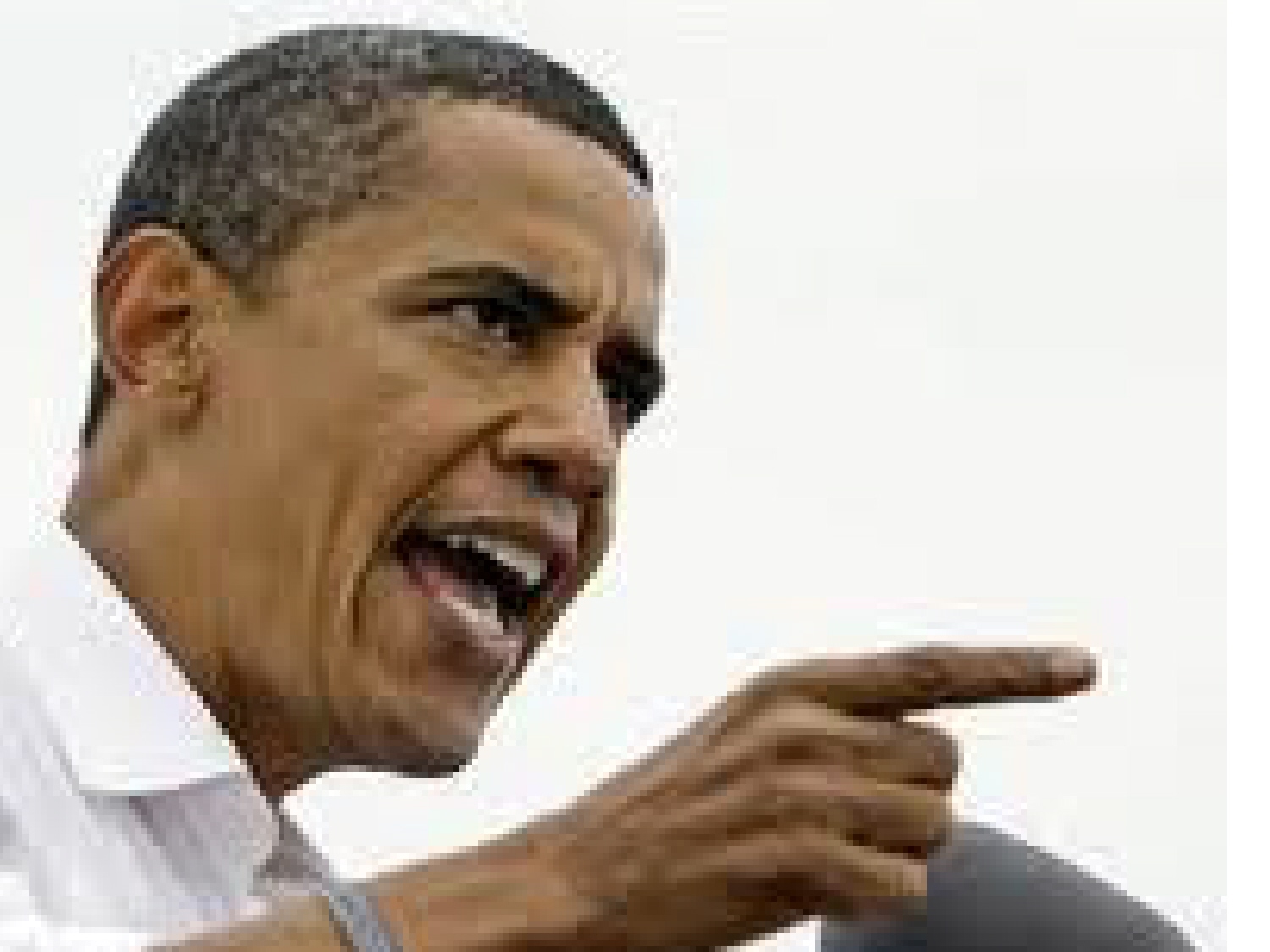
US President Barack Obama’s upcoming visit to South Africa was condemned on Sunday by some trade unions, political parties, and civil society bodies.

“We categorically make it known that the visit of the US president to South Africa is an unwelcome visit that will be protested, picketed and resisted by all justice and peace-loving peoples of this country,” the organisations said in a joint statement on Sunday.

“Friendship with South Africa must be based on values of justice, freedom and equality, and these the US has offended, undermined and ridiculed through its actions in the global front,” they said.

The statement was issued by the National Unions of Metalworkers of SA, the SA Communist Party, the Young Communist League of SA, the SA Students’ Congress, the Muslim Students’ Association, the National Education, Health and Allied Workers’ Union, the Congress of SA Trade Unions, the Friends of Cuba Society, Boycott, Divestment and Sanctions against Israel in SA, and the World Federation of Trade Unions.

“Our rejection is based the US’s arrogant, selfish and oppressive foreign policies, treatment of workers and international trade relations that are rooted in war-mongering, neo-liberal super-exploitation, colonial racism and the disregard and destruction of the environment, thus making the realisation of a just and peaceful world impossible,” they said.

Obama’s visit later this month would be his first to South Africa since he was elected head of state.

“The US, under his leadership, has escalated its assault on human rights, militarisation of international relations and continuing galloping of world resources at the absolute expense of the environment and oppressed peoples of the world,” the organisations said.

Issues such as the US’s use of world resources, its role maintaining the underdevelopment of the African continent, and its contribution to global warming would be highlighted in the protests.

The public was invited to participate in a national day of action on June 28, where there would be a protest march from the Union Buildings in Pretoria to the US embassy from 10am.

There would also be a demonstration on June 29 against the University of Johannesburg’s decision to award Obama an honorary doctorate. It would be held at the university’s Soweto campus at 11am. – Sapa

Xhosa king attacks Zuma, praises Mandela

Abathembu King Buyelekhaya Zwelibanzi Dalindyebo

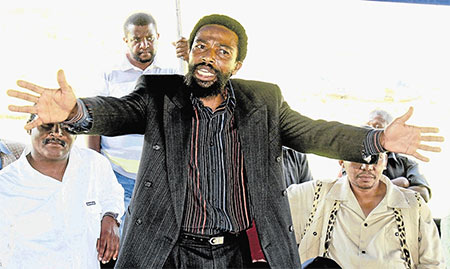
Abathembu King Buyelekhaya Zwelibanzi Dalindyebo has described the ANC and President Jacob Zuma as “corrupt hooligans” in Qunu in the Eastern Cape, The Times reported on Monday.

At a prayer service for former president Nelson Mandela, Dalindyebo reportedly said the African National Congress had distorted the anti-apartheid icon’s legacy and behaved arrogantly.

“Zuma’s leadership is distorting Madiba’s leadership, it’s distorting the ANC’s leadership.”

ANC spokesman Jackson Mthembu told the newspaper the king’s remarks were “unfortunate”.

“He can’t insult a head of state and then demand to be respected in turn.”

Mthembu said the king should allow his “subjects” to decide for themselves who they would vote for in elections.

Dalindyebo said if the party remained in power for another 10 years, South Africans’ freedom would be compromised.

He said: “I will stop smoking dagga the day Zuma stops being corrupt”. – Sapa

Agang to use Obama’s strategy team

agangThe newly-launched political party Agang SA is hoping that the same team which helped US President Barack Obama win in 2008 will help it to do well in next year’s election, City Press reported on Sunday.

Agang policy director Mills Soko said the party had appointed the Benenson Strategy Group “to advise us on elections strategy”, because it was “the best we could find”.

Soko refused to talk about how much it was costing.

“They are costly because they are professionals. They are not doing it for free,” he was quoted as saying.

City Press reported that the group had also done political strategy consulting in Nigeria for former president Umaru Yar’Adua’s winning campaign, and in Jamaica, Romania and Croatia.

Its corporate clients included Tampax, Pfizer, Verizon and JPMorgan Chase.

On the group’s website Benenson was described “an industry leader, which has successfully taken on some of the most complicated political, corporate and advocacy challenges over the past decade”.

Agang SA, led by former activist and businesswoman Mamphela Ramphele, was officially launched as a political party in Pretoria on Saturday. – Sapa