A pre-racial conception of humanity?

Anton Wilhelm Amo

by Justin E. H. Smith

In 1734, Anton Wilhelm Amo, a West African student and former chamber slave of Duke Anton Ulrich of Braunschweig-Wolfenbüttel, defended a philosophy dissertation at the University of Halle in Saxony, written in Latin and entitled “On the Impassivity of the Human Mind.” A dedicatory letter was appended from the rector of the University of Wittenberg, Johannes Gottfried Kraus, who praised “the natural genius” of Africa, its “appreciation for learning,” and its “inestimable contribution to the knowledge of human affairs” and of “divine things.” Kraus placed Amo in a lineage that includes many North African Latin authors of antiquity, such as Terence, Tertullian and St. Augustine.

Why have we chosen to go with Hume and Kant, rather than with the pre-racial conception of humanity?

In the following decade, the Scottish philosopher David Hume would write: “I am apt to suspect the Negroes, and in general all other species of men to be naturally inferior to the whites. There never was any civilized nation of any other complection than white, nor even any individual eminent in action or speculation.”

Hume had not heard of Amo, that much is clear. But we can also detect a tremendous difference between Hume’s understanding of human capacities and that of Kraus: the author of Amo’s dedicatory letter doesn’t even consider the possibility of anchoring what individual human beings are capable of doing to something as arbitrary as “complection.” For Kraus, Amo represents a continent and its long and distinguished history; he does not represent a “race.”

Another two decades on, Immanuel Kant, considered by many to be the greatest philosopher of the modern period, would manage to let slip what is surely the greatest non-sequitur in the history of philosophy: describing a report of something seemingly intelligent that had once been said by an African, Kant dismisses it on the grounds that “this fellow was quite black from head to toe, a clear proof that what he said was stupid.”

Kraus, the rector of Wittenberg, had been expressing an understanding of the nature of human diversity that was, in 1734, already in decline, soon to be thoroughly drowned out by the fundamentally racist view of human populations as dividing into a fixed set of supposedly natural, species-like kinds. This is the view lazily echoed by Hume, Kant, and so many of their contemporaries.

In his lifetime, Amo was principally known as a legal theorist. His first publication, in 1729, which has since been lost (or, one might suspect, intentionally purged), was a jurisprudential treatise, “On the Right of Moors in Europe.” Here he argues, on the basis of a reading of Roman history and law, that in antiquity “the kings of the Moors were enfeoffed by the Roman Emperor” Justinian, and that “every one of them had to obtain a royal patent from him.” This meant, in Amo’s view, that African kingdoms were all recognized under Roman law, and therefore all Africans in Europe have the status of visiting royal subjects with a legal protection that precludes their enslavement.

Historically, this is highly implausible, since much of the continent of Africa was unknown to Europeans at the time of Justinian. Still, Amo’s understanding is remarkably different from, say, Kant’s account of global history, on which black Africans stood, from the very beginning and as if by definition, beyond the pale of history, and therefore led lives of no intrinsic value, lives that could only be given value through absorption into a global system dominated by Europe.

Scholars have been aware for a long time of the curious paradox of Enlightenment thought, that the supposedly universal aspiration to liberty, equality and fraternity in fact only operated within a very circumscribed universe. Equality was only ever conceived as equality among people presumed in advance to be equal, and if some person or group fell by definition outside of the circle of equality, then it was no failure to live up to this political ideal to treat them as unequal.

It would take explicitly counter-Enlightenment thinkers in the 18th century, such as Johann Gottfried Herder, to formulate anti-racist views of human diversity. In response to Kant and other contemporaries who were positively obsessed with finding a scientific explanation for the causes of black skin, Herder pointed out that there is nothing inherently more in need of explanation here than in the case of white skin: it is an analytic mistake to presume that whiteness amounts to the default setting, so to speak, of the human species.

The category of race continues to be deployed, not just by racists, but by anti-racists as well.

The question for us today is why we have chosen to stick with categories inherited from the 18th century, the century of the so-called Enlightenment, which witnessed the development of the slave trade into the very foundation of the global economy, and at the same time saw racial classifications congeal into pseudo-biological kinds, piggy-backing on the divisions folk science had always made across the natural world of plants and animals. Why, that is, have we chosen to go with Hume and Kant, rather than with the pre-racial conception of humanity espoused by Kraus, or the anti-racial picture that Herder offered in opposition to his contemporaries?

Many who are fully prepared to acknowledge that there are no significant natural differences between races nonetheless argue that there are certain respects in which it is worth retaining the concept of race: for instance in talking about issues like social inequality or access to health care. There is, they argue, a certain pragmatic utility in retaining it, even if they acknowledge that racial categories result from social and historical legacies, rather than being dictated by nature. In this respect “race” has turned out to be a very different sort of social construction than, say, “witch” or “lunatic.” While generally there is a presumption that to catch out some entity or category as socially constructed is at the same time to condemn it, many thinkers are prepared to simultaneously acknowledge both the non-naturalness of race as well as a certain pragmatic utility in retaining it.

Since the mid-20th century no mainstream scientist has considered race a biologically significant category; no scientist believes any longer that “negroid,” “caucasoid” and so on represent real natural kinds or categories. [1] For several decades it has been well established that there is as much genetic variation between two members of any supposed race, as between two members of supposedly distinct races. This is not to say that there are no real differences, some of which are externally observable, between different human populations. It is only to say, as Lawrence Hirschfeld wrote in his 1996 book, “Race in the Making: Cognition, Culture, and the Child’s Construction of Human Kinds,” that “races as socially defined do not (even loosely) capture interesting clusters of these differences.”

Yet the category of race continues to be deployed in a vast number of contexts, and certainly not just by racists, but by ardent anti-racists as well, and by everyone in between. The history of race, then, is not like the history of, say, witches: a group that is shown not to exist and that accordingly proceeds to go away. Why is this?

Philosophers disagree. Anthony Appiah identifies himself as a racial skeptic to the extent that the biological categories to which racial terms refer have been shown not to exist. Yet at the same time he acknowledges that the adoption of “racial identities” may often be socially expedient, and even unavoidable, for members of perceived racial minorities. Ron Mallon has in turn distinguished between metaphysical views of race on the one hand, which make it out to describe really existent kinds, and normative views on the other, which take race to be useful in some way or other, but not real. Malon divides the latter into “eliminativist” and “conservationist” camps, supposing, variously, that the concept can only be put to bad uses, and must be got rid of, or that some of its uses are worth holding onto. On his scheme, one may very well coherently remain metaphysically anti-realist about race but still defend the conservation of the concept on normative grounds.

But given that we now know that the identity groups in modern multicultural states are plainly constituted on ethno-linguistic and cultural grounds, rather than on biological-essential grounds, it remains unclear why we should not allow a concept such as “culture” or “ethnie” to do the semantic work for us that until now we have allowed the historically tainted and misleading concept of “race” to do. We have alternative ways of speaking of human diversity available to us, some of which are on vivid display in Amo’s early life and work, and which focus on rather more interesting features of different human groups than their superficial phenotypic traits.

It is American culture that is principally responsible for the perpetuation of the concept of race well after its loss of scientific respectability by the mid-20th century. Even the most well-meaning attempts to grapple with the persistence of inequality between “blacks” and “whites” in American society take it for granted at the outset that racial categories adequately capture the relevant differences under investigation (see, for example: Thomas B. Edsall’s recent column, “The Persistence of Racial Resentment“) . This may have something to do with the fact that the two broad cultural-historical groupings of people in this country, which we call “white” and “black” and which have been constituted through the complicated histories of slavery, immigration, assimilation, and exclusion, tend at their extremes to correlate with noticeably different phenotypic traits.

An African-American is likely to look more different from an American of exclusively European descent than, say, an Orthodox Serb is likely to look from a Bosnian Muslim. This creates the illusion that it is the phenotypic difference that is causing the perception of cultural-historical distinctness, along with the injustice and inequality that has gone along with this distinctness. This also creates the illusion of American uniqueness: that our history of ethnic conflict cannot be understood comparatively or in a global context, because it, unlike conflict between Serbs and Bosnian Muslims or between Tutsi and Hutu, is supposedly based on “race” rather than history, politics, and culture. But where people are living with a different historical legacy, as in much of European history prior to the high modern period hailed in by Hume and Kant, the supposedly manifest phenotypic differences between “blacks” and “whites” can easily recede into the background as irrelevant.

Amo did not meet a happy end in Germany. His original manumission and education appear to have been a strategy on the part of Duke Anton Ulrich to impress Tsar Peter the Great of Russia, who had recently adopted his own chamber slave, Abram Petrovich Gannibal, as his own son. Gannibal would go on to a career as a brilliant engineer, military strategist, and politician; Amo, for his part, would be largely abandoned by his sponsors when the geopolitical winds shifted, and Russia fell off the duke’s list of priorities.

For a while the African philosopher eked out a living as a tutor in Jena and Wittenberg, and in 1747, after being made the butt of a libelous broadside accusing him of falling in love with a woman beyond his station, he returned to West Africa in disgrace. A French seafarer, David-Henri Gallandat, finds him there a few years later, and writes of meeting a man who “was very learned in astrology and astronomy, and was a great philosopher. At that time he was around 50 years old… He had a brother who was a slave in the colony of Suriname.”

The hopefulness of the 1734 dissertation was now long behind him. It is not known when Amo died, or under what circumstances. What we can say for certain is that he would not spend his final years as a successor to Augustine and Terence, but rather in the degraded position where someone like Kant supposed he belonged: outside of history, philosophically disenfranchised and entirely defined by something as trivial as skin color.

As long as we go on speaking as if racial categories captured something real about human diversity, we are allowing the 18th-century legacy of Kant and Hume, which was never really anything more than an ad hoc rationalization of slavery, to define our terms for us. We are turning our back on the legacy of Anton Wilhelm Amo, and of his European contemporaries who were prepared to judge him on his merits.


FOOTNOTES

[1] This is not to deny that there are limited contexts in which self-reporting of “racial” identity may be informative in a local or regional context. It is indeed helpful for a doctor to know, within the context of the American health-care system, the “race” of a patient. What it does mean to say that race is no longer a legitimate scientific category is that this limited, contextual helpfulness tells us nothing about a natural kind or real subdivision of the human species. The category of “race” can be useful in a local, medical context to the extent that it often correlates with other, useful information about tendencies within a given population. But this population need not be conceptualized in terms of race. Race is a dummy variable here, but not of interest as such.

Justin E. H. Smith teaches philosophy at Concordia University in Montreal.This piece appeared in the New York Times

100% horsemeat in UK ‘beef’ lasagne

Tests on beef lasagne have revealed that some of the ready meals were made entirely from horsemeat.

Findus analysed 18 of its beef lasagne products and found 11 meals contained between 60% and 100% horsemeat, the Food Standards Agency (FSA) said.

There is no evidence to suggest the horsemeat found in the Findus beef lasagne is a food safety risk, the FSA said.

However, the agency has ordered urgent tests on the lasagne for the veterinary drug phenylbutazone. Meat from animals treated with “bute” is not allowed to enter the food chain in Britain as it may pose a risk to human health.

All food companies have been told to test their beef products, with the FSA saying it was “highly likely” that criminal activity was to blame for the contamination.

Consumers who have purchased the ready meals – produced by French food supplier Comigel on behalf of Findus – have been advised by the FSA not to eat them and return them to the shop they were bought from.

Retail giant Tesco and discount chain Aldi have already withdrawn a range of ready meals produced by Comigel over fears they contained contaminated meat.

Findus UK has already started a full recall of its lasagne products. It withdrew its 320g, 360g and 500g lasagne meals from supermarket shelves as a precautionary measure earlier this week.

It came after Comigel alerted Findus and Aldi that their products “do not conform to specification”.

Findus UK apologised to customers “for any inconvenience caused” – and said anyone who bought the affected lasagne products could get a full refund.

A spokesman said: “We understand this is a very sensitive subject for consumers and we would like to reassure you we have reacted immediately. We do not believe this to be a food safety issue.

“We are confident that we have fully resolved this supply chain issue. Fully compliant beef lasagne will be in stores again soon.”

“We have had three weeks of damaging revelations about what is happening in the meat industry … there is evidence that criminal gangs are involved in this, and frankly I cannot believe that the Government hasn’t called in the police to investigate this in the UK.

“I don’t see how we get to the bottom of it without getting in specialist teams and working out who is behind this fraud and why it is happening.”

People must have confidence that the food they buy is properly labelled, legal and safe to eat, she added.

Falklands will be under Argentina’s control ‘soon’

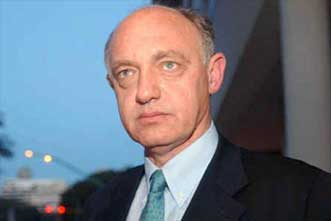
Hector Timerman

The Falkland Islands will be under Argentina’s control within 20 years, the country’s foreign minister told British press, claiming that the UK “has never missed an opportunity to miss an opportunity to find a solution” to the issue.

Speaking to reporters from The Guardian and The Independent, Hector Timerman stressed that “not one single country in the world” supports Britain’s claims to right of rule in the Falkands, to which he referred by their Spanish name, the Malvinas.

“I don’t think it will take another 20 years,” he said, talking about re-gaining Argentine control over the islands. “I think that the world is going through a process of understanding more and more that this is a colonial issue, an issue of colonialism, and that the people living there were transferred to the islands.”

In the interview, the Argentine foreign minister ruled out military action to resolve the issue, accusing the British government of militarizing the South Atlantic region in a grab for oil and natural resources.

“Wherever there is a smell of oil, big powers start to look around and they find a reason to stay there. I think probably oil will complicate the peaceful solution that is asked for by the United Nations. I think in history that Britain has had a tendency to stay in places where there are natural resources belonging to other people.”

Timerman expressed his willingness to discuss the issue with British Foreign Secretary William Hague, who refused to meet his Argentine counterpart in London. The Foreign Office insists that such a meeting will not take place without Falklands Islands representatives present.

Meanwhile Timerman underlined that “according to the United Nations, there are only two parties to the conflict – the United Kingdom and the Republic of Argentina,” and that by insisting on the introduction of a third party, that being the Falkland Islanders, London is ignoring more than 40 UN resolutions calling on the two countries to negotiate.

“I think the fanatics are not in Buenos Aires, [but] maybe in the United Kingdom because they are 14,000 kilometers away from the islands. And I think they are using the people living in the islands for political [reasons] and to have access to oil and natural resources which belong to the Argentine people,” the top Argentine diplomat said, as quoted by The Guardian. – RT

Native American confronts ‘anti-illegal immigration’

A Native American man criticized protesters at an Arizona rally against illegal immigration, calling them the real “illegals” for invading his country and killing Native Americans when Europeans first settled on US soil.

“You’re all f*cking illegal. You’re all illegal,” the Native American man yelled at the protesters, who had gathered in Tucson, Arizona to demonstrate their opposition to illegal immigration by Central and South Americans. “We didn’t invite none of you here. We’re the only native Americans here.”

Some have applauded the man for pointing out the protesters’ hypocrisy, who at one point immigrated to the US themselves or are descendants of immigrants. The Native American man, who was pushing his baby through town in a stroller, staged his own protest when he came across the rally.

“Get on with your bogus arguments. We’re the only legal ones here,” he yelled.

One protester was caught standing near the angry Native American and became the target of his criticism. The man was carrying a small American flag and a sign that read, “We should have put that sign up when you sons-of-bitches came.”

Pointing towards the American flag held by the protester, the Native American said that it “represents blood spilled by Native Americans, protecting this land from the invaders.”

“You don’t want to hear the God damn truth!” he yelled. “Get on, bitch! All the Native Americans you killed, you plant your houses here. That’s the truth.”

With Arizona’s proximity to the Mexican border, it has long been a hub for anti-immigration protests and initiatives. The state passed the “Support Our Law Enforcement and Safe Neighborhoods Act” in 2010, which is a strict anti-illegal immigration measure that has stimulated significant controversy. The law made it a misdemeanor crime for an “alien” to be in the state of Arizona without carrying registration documents. It also allows law enforcement officers to stop any individual that they suspect of being an illegal immigrant, thereby promoting racial profiling. It also imposes heavy penalties on those involved in sheltering or hiring unregistered aliens.

The law’s controversial provisions were blocked by the US Department of Justice, but the Supreme Court in 2012 ruled to uphold the “show me your papers” provision allowing law enforcement to stop anyone who looks like an illegal immigrant.

But the Native American man who staged his own protest at the rally considers it hypocritical for Americans to criticize others for immigrating into the US when everyone but Native Americans at one point did so themselves.

“That’s what [the American] flag stands for – all the Native Americans you killed to plant your houses here,” he said. “That’s the truth.” – RT

Critics of Michelle’s bum are racist

The Washington Post today published an article by a reporter who is not a member of the editorial staff suggesting in no uncertain terms that those who criticize First Lady Michelle Obama for holding too much weight in her derriere are racist.

While opening her article by reporting an obviously insulting remark by a high school football coach, reporter Krissah Thompson goes on to write statements and include quotes indicating a general racist intent on the part of those who find Michelle to be overweight if they believe she has excess weight in her posterior.

From the article:

But what is it with Michelle Obama’s critics and the fixation with her derriere?

“We have a history in this country of white people not showing adequate respect for and devaluing the bodies of black women, and this most definitely falls in line with that,” says Ayana Byrd, the co-editor of the anthology “Naked: Black Women Bare All About Their Skin, Hair, Hips, Lips and Other Parts . . . ”

The first lady’s critics “are reacting to the culture in which they’ve grown up or they are using it as a code to racialize Michelle Obama and remind people that she’s black,” says Andra Gillespie, an associate professor of political science at Emory University.

In her own analysis, Thompson, who covers race issues for the post, links comments about Michelle’s posterior to slavery.

The focus on this first lady’s posterior has historical antecedents. It reaches back to the imagery of Hottentot Venus, a woman from what is now South Africa whose naked body and pronounced posterior were paraded in shows throughout 19th-century Europe. On to the selling and trading of black women’s bodies through slavery.

Without question, some mentions of Michelle’s posterior are animated by racism and racial stereotyping. But the article suggests that any reference to the size of a portion of Mrs. Obama’s anatomy is racist.

The article includes no quotes or commentary that might provide balance by raising the topic of whether it is fair to discuss the first lady’s own weight as she leads a campaign to reduce the amount of fat kids are carrying around.

The piece also indicates a political bias in favor of the first lady and her agenda, calling a criticism of her Let’s Move program “the latest public rant” against low calorie lunches in schools that features “the usual protest against the federal government meddling in local business.” – whitehousedossier.com

First US city to ban drones

Charlottesville, Va., has become the first city in the United States to formally pass an anti-drone resolution.

The resolution, passed Monday, “calls on the United States Congress and the General Assembly of the Commonwealth of Virginia to adopt legislation prohibiting information obtained from the domestic use of drones from being introduced into a Federal or State court,” and “pledges to abstain from similar uses with city-owned, leased, or borrowed drones.”

The resolution passed by a 3-2 vote and was brought to the city council by activist David Swanson and the Rutherford Institute, a civil liberties group based in the city. The measure also endorses a proposed two-year moratorium on drones in Virginia.

Councilmember Dede Smith, who voted in favor of the bill, says that drones are “pretty clearly a threat to our constitutional right to privacy.”

“If we don’t get out ahead of it to establish some guidelines for how drones are used, they will be used in a very invasive way and we’ll be left to try and pick up the pieces,” she says.

The passed resolution is much less restrictive than the draft Swanson originally introduced, which would have sought to declare the city a “No Drone Zone” and would have tried to banned all drones over Charlottesville airspace “to the extent compatible with federal law.” The draft would have also banned all Charlottesville municipal agencies from buying, leasing, borrowing, or testing any drones.

Councilmember Dave Norris says the city has a “long tradition of promoting civil liberties.”

“It’s just part of our culture here,” he says.

Charlottesville is located 120 miles southwest of Washington, D.C., and has a population of about 43,000. The city is home to the University of Virginia, which has not tried to obtain a waiver to test drones from the Federal Aviation Administration.

The move earned praise from the Electronic Privacy Information Center. Amie Stepanovich, a lawyer with the group, says that the “Charlottesville resolution demonstrates that people care about protecting their civil liberties and Fourth Amendment rights and are willing to devote the time necessary to closely examine this issue.”

“Lawmakers should be looking at [drone privacy] issues now in order to ensure that there are safeguards in place to protect individual privacy from these invasive technologies,” she says.

Smith admits that the final legislation won’t do anything to prevent federal- or state-operated drones from operating over Charlottesville’s skies, but that the symbolic move could push other cities to follow suit.

“With a lot of these resolutions, although they don’t have a lot of teeth to them, they can inspire other governments to pass similar measures,” she says. “You can get a critical mass and then it does have influence. One doesn’t do much, but a thousand of them might. We want this on [federal and state lawmakers’] radars.”

Vice Mayor Kristin Szakos, who voted against the resolution, says she “can imagine ways in which drones might be used for positive things” and that the move was premature.

“I think drones have been used for bad things, but it’s like banning airplanes because they can drop bombs,” she says. “At this point, the city isn’t even talking about using drones. It seems premature to me to ban them altogether.”

Africa doesn’t need mediocre white coaches

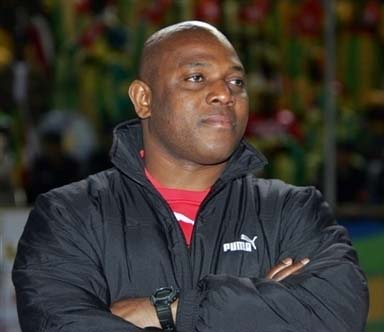
Stephen Keshi

Nigeria soccer coach Stephen Keshi has spoken out against the appointment of “mediocre” European coaches by African teams, ahead of his side’s tie with Mali

“I am never against white coaches in Africa,” said Keshi. “I am happy to work with a quality, experienced white coach, who is better than me, so that I can learn from him.

“But what I don’t accept is when you bring in a mediocre ‘carpentry’ coach from Europe, and tell me that he’s better than me. I won’t accept that. Meanwhile we have quality African former players, who can do the same thing, but you don’t give them the opportunity because they’re just black dudes. I don’t like that,” said Keshi, who has previously coached Mali and Togo.

Keshi qualified Togo for the 2006 World Cup, but was replaced before the finals by German Otto Pfister, who lost all three games.

Should Nigeria and James Kwesi Appiah’s Ghana prevail in Wednesday’s semifinals, the final will be the first to be contested by two African coaches since 1998, when Jomo Sono’s Bafana lost to Mahmoud El-Gohary’s Egypt. It’s been even longer since two sub-Saharan coaches squared off for the continental trophy.

Keshi will have great insight into Frenchman Patrice Carteron’s Malian side, having coached most of the players. “We need to realise that Mali is a footballing nation. They have great talent – I was there. Whatever they are doing, they should be doing it, because of the calibre of the players. Wednesday’s game will be as tough as the game against Côte d’Ivoire.”

‘Emotional fuel’
He said the civil war raging in Mali would provide emotional fuel for the Eagles.”It’s a shame what is going on in Mali, it’s a great country with wonderful people. It’s a place I love. But what is going on in the country is not something we should be proud of. The players are thinking about that, that’s where their force is coming from.”

The former Super Eagles captain also claimed he was indifferent to public criticism in Nigeria. “It doesn’t really matter what people think about what Stephen Keshi is doing. You can’t force someone to love you.”

Keshi, who has been his job since 2011, said this promising Nigerian side needed time to mature. “The progress is coming gradually. It’s a team in the making. But to build a very good team, you need three years. We just have to be patient to see the team grow. Some of us don’t have patience.”

But he also said he was open to offers beyond these finals. “If God grants me the tournament, the next day I could join another country. I’m a professional. It’s the same with Jose Mourinho, if he gets a call from a rich team, he goes. I’m here for now, but we’ll see if there’s anyone out there who wants me.”

South Africa’s Zuma equates mine layoffs with ‘blackmail’

South African President Jacob Zuma said on Monday that mining companies were almost engaging in “blackmail” when they announce plans to close mines and lay off workers.

Zuma’s pre-recorded comments broadcast on CNBC Africa come as the government, unions and ruling African National Congress have come out strongly against proposals by Anglo American Platinum (Amplats) to mothball two mines and lay off 14,000 workers as it strives to return to profit.

“When the miners say we are cutting down, we are closing … You see, that is almost blackmail,” Zuma said.

Zuma also said “lower wages in the mining industry has led us into trouble.”

South Africa’s platinum and gold sectors were rocked last year by violent strikes and labour violence that killed over 50 people and hit output.

Amplats, the world’s top platinum producer, said on Monday it had made its first annual loss last year because of the strikes and warned of growing labour unrest.

Zuma’s remarks coincide with an investor conference on mining in Africa being held this week in Cape Town.

Separately, Mines Minister Susan Shabangu told the conference proposals by the ruling ANC to introduce a “resource tax” would be carried out with an intent to keep South Africa competitive among other major mining countries.

“We’ve got to compete with Australia and Canada. So if there are any taxes which must be implemented we must be mindful,” she said. – Reuters

More U.S. troops died by suicide than in Afghanistan combat in 2012

Suicides by active duty U.S. troops last year exceeded the number of servicemen and women killed in combat in Afghanistan. More than half of the soldiers who killed themselves had already sought help from a mental health

The statistics are stunning. According to the Associated Press, suicides among active-duty troops reached a new high last year. The suicide rate has been rising since 2001. And last year, 349 service members took their lives, much more than the 295 killed in combat in Afghanistan. The suicide figures are tentative, pending completion of pathology reports later this year.

This is a rising trend.It’s an uptick that over the past several years, where we have seen more and more soldiers take their lives with suicide and unfortunately also die in other accidents.It’s the tip of an iceberg of a bigger problem affecting the force at large.

About 100,000 or so Army soldiers and Marines will be leaving the military. There are going to be budget cuts. And all these things are putting great burden on the leadership and great burden on the soldiers on the front lines.

What should be recognized is that this is an epidemic, in the sense that it’s across the Army. The whole Army has been — and Marine Corps and the other services.

An estimated 22 military veterans take their lives every day in America, according to the study helmed by Robert Bossarte, an epidemiologist and researcher who works with the Department of Veterans Affairs.

“While the percentage of all suicides reported as Veterans has decreased, the number of suicides has increased,” the conclusion of the study stated.

Specific trends were observed during the course of the study regarding the age and gender of veterans who most frequently committed suicide.

“A majority of Veteran suicides are among those age 50 years and older. Male Veterans who die by suicide are older than non-Veteran males who die by suicide,” the study’s findings stated. “The age distribution of Veteran and non-Veteran women who have died from suicide is similar.”

The study was conducted over the course of two years, and is, according to Bossarte, indicative mainly of veteran suicides playing a part in what is a national problem.

“There is a perception that we have a veterans’ suicide epidemic on our hands.”

The Washington Post is reporting that the rate of veteran suicides discovered by Bossarte is approximately 20 percent higher than 2007 figures offered by the VA.

The rise of the machine

Early in his first term Barack Obama joked that he would “keep an eye on the robots in case they try anything”. He should have known resistance is futile. During Mr Obama’s presidency, IBM’s Watson has proved computers can outfox the most agile minds, drones have become America’s weapon of choice, the driverless car is now a reality and the word “app” has been detached from its origin. No longer the realm of science fiction, the rise of robots now poses the central economic dilemma of the Obama era.

With each month, the US economy becomes steadily more automated. In January the US economy added just 4,000 manufacturing jobs, and the net increase since July is zero. Yet last month, manufacturing activity rose by its fastest rate since April, according to the Institute for Supply Management. The difference boils down to robots, which pose an increasingly nagging paradox: the more there are, the better for overall growth (since they boost productivity); yet the worse things become for the middle class. US median income has fallen in each of the last five years.

Things cannot continue as they are. Yet change is speeding up. Manufacturing employment is shrinking around the world. Among other countries, China is moving even faster towards industrial robotics, an area in which German and Japanese manufacturers dominate. Last year Foxconn, the Shenzhen-based assembler for Apple, Nokia and others, said it was buying 1m robots in the next three years to substitute for workers performing repetitive manual tasks. At the other end of the spectrum, a restaurant in Harbin, northern China, last year became the first to be entirely waited on by robots. Last month, China opened the world’s first museum of 3D printing.

The potential is huge. But in the developed world, the distribution of the benefits is unsustainable. The bulk of US jobs growth since mid-2009 has been in low-skilled areas, such as food preparation and domestic aides. In the second place is jobs growth in high-end services. Middle income jobs have cratered. According to the National Employment Law Project, low wage jobs (that pay between $7.69 and $13.83 an hour) formed 22 per cent of job losses in the recession but 58 per cent of recovery jobs since then – a mirror image of the picture for middle income jobs ($13.84 to $21.18).

Unsurprisingly, people are reverting to borrowing to stay in the game. Last week, Hero Wallet, a financial advisory firm, showed that one in four US workers were dipping into their retirement funds to meet current spending needs – in spite of the penalties that accrue. This usually involves taking out loans against their retirement accounts. The median income is almost 9 per cent lower today than when Mr Obama took office. It is unclear what he can do to prevent it from falling further, even if the US returns to a higher rate of economic growth.

The effects of technology are only just beginning to be felt in education and healthcare – the two most labour-intensive areas of the US economy that both suffer from productivity stagnation. Online education is beginning to spread. The mid-level private universities do not know what is about to hit them.

Even in healthcare, which reliably added jobs when every other sector was shedding them, technology is starting to look labour-saving.

But the spread of the robots will leave a large and growing chunk of the US labour force in the lurch. In their excellent primer, Race Against The Machine , Erik Brynjolfsson and Andrew McAfee point out that in the contest between changing technology and education, the former is winning. Too few Americans are prepared. Some, such as Mr Cowen, fear many never will be. He believes the federal government should pay a basic guaranteed income to all Americans – a despairing view that accepts there will be permanent losers.

Mr Obama is more optimistic. In his first term, he set a target that the US should graduate every American by 2020. Even if that were possible, it may not be a panacea. Incomes for those with only a college degree have also stagnated since 2000 (and fallen for men). Yet a healthy economy cannot for long be upheld by a minority of its workforce.

At some point, policy makers will be forced to grapple with what is intuitively obvious – that sustained growth is inconsistent with declining middle class incomes. In their book, Brynjolfsson and McAfee cite a meeting between Henry Ford and Walter Reuther, the union leader. Pointing at his new robots, Mr Ford says, “How will you get union dues from them?” Mr Reuther replied: “How will you get them to buy your cars?” – FT

Boer mystique? Paul Kruger wins US Super Bowl for Baltimore Ravens

Paul Kruger

With a name like Paul Kruger, the same as that of the famous Boer president, any football player is bound to make history. In a close match between the Baltimore Ravens and the San Francisco 49ers, Kruger swung the game in the Ravens’ favour, giving them a three-point win in America’s most important sporting competition.

Kruger hails, not from the Transvaal, but from Utah. Both of the former University of Utah star’s sacks came on third-down plays, forcing the 49ers to settle for field goals in Baltimore’s 34-31 victory in Sunday’s Super Bowl XLVII at the Superdome.

 After lining up on the left side, Kruger quickly blasted his way into the backfield and took down Kaepernick for a 10-yard sack on a play that started at the Baltimore 8-yard line on San Francisco’s second drive. He celebrated by swinging his arms, pretending to conduct an orchestra.

“That’s just what came to mind,” he said.

On the final possession of the first half, the 49ers reached the Baltimore 9 before Kaepernick rolled to his right and had to duck under Kruger, who officially was credited with a sack for no gain.

Former Utah defensive lineman Manny Fernandez recorded a total of three sacks in three Super Bowls for Miami in the 1970s, leaving Kruger something to shoot for in his next appearance. That may or may not come with Baltimore, as he’s becoming a free agent following his fourth NFL season. Kruger recorded 4.5 sacks in four playoff games and 13.5 sacks in 20 games, counting the regular season.

“We had to fight for everything we got,” Kruger said. “Nothing was given to us, and we played in so many tough games like that.”

Kruger, a quarterback at Timpanogos High School, and defensive lineman Haloti Ngata of Highland became the first pair of former Utah prep athletes to team up for a Super Bowl winner. Ngata made two tackles before spraining his knee in the third quarter and spending the rest of the game in the locker room.

“I’m just happy that they were able to finish off without me out there,” Ngata said.

Counting a loss for East’s Will Tukuafu, a 49ers defensive lineman, Utah preps now have a collective 6-20 record in Super Bowls.

Counterfeit goods gang arrested near Johannesburg

An alleged kingpin operating in counterfeit goods in the West Rand was arrested in Westonaria on Saturday morning, Gauteng police said.

“Police arrested 15 suspects and recovered goods with a street value of R10 million in the early hours of Saturday morning,” spokeswoman Captain Julia Claassen said.

She said the arrest followed a crime intelligence operation by the police in the Bekkersdal informal settlement.

“Seven properties were searched and police recovered illicit cigarettes and a range of counterfeit goods ranging from designer clothes, bags and sunglasses. Police also seized cash to the value of over R160,000.”

The man, 34, and his 24-year-old wife were amongst those arrested and were charged under the tobacco controls act and the Counterfeit Goods Act.

Thirteen other men were arrested and charged under the illegal immigrants act.

All 15 are Mozambican and are expected to appear in court soon, said Claassen. – Sapa

Mulder regrets passing away of Louis Luyt

Louis LuytThe passing away of Dr. Louis Luyt is a huge loss to South Africa. As a businessman, rugby administrator, Afrikaner leader and politician he consistently made contributions to the country.

Dr. Luyt played a huge role in South African rugby during the most important transfer period following 1994. He especially never received the necessary recognition for his important contribution to the huge success of the Rugby World Cup in 1995.

“In talks between the FF Plus and Dr. Luyt’ s Federal Alliance party in 2007, I experienced him as an honest person who was genuinely concerned about South Africa’s future. The talks resulted in a successful amalgamation of the two parties. Where there are often conflicts following such a joining of parties and leaders, we worked well together in the interest of the bigger issue of South Africa’s future, Dr. Pieter Mulder, FF Plus leader, said.

As a witness of Dr. Luyt’s strong leadership qualities, is his commercial history where he worked himself up from nothing into one of South Africa’s biggest businessmen.

I would like to, on behalf of myself and the Freedom Front Plus, express my sympathy with the family of Dr. Louis Luyt with his passing away.

The network that runs the world

Science may have confirmed our worst fears. An analysis of the relationships between 43,000 transnational corporations has identified a relatively small group of companies, mainly banks, with disproportionate power over the global economy.

The study’s assumptions have attracted some criticism, but complex systems analysts contacted by New Scientist say it is a unique effort to untangle control in the global economy. Pushing the analysis further, they say, could help to identify ways of making transnational corporations more stable.

The idea that a few bankers control a large chunk of the global economy might not seem like news to many. But the study, by a trio of complex systems theorists at the Swiss Federal Institute of Technology in Zurich, is the first to go beyond ideology to empirically identify such a network of power. It combines the mathematics long used to model natural systems with comprehensive corporate data to map ownership among the world’s transnational corporations (TNCs).

“Reality is so complex, we must move away from dogma, whether it’s conspiracy theories or free-market,” says James Glattfelder. “Our analysis is reality-based.”

Previous studies have found that a few TNCs own large chunks of the world’s economy, but they included only a limited number of companies and omitted indirect ownerships, so could not say how this affected the global economy – whether it made it more or less stable, for instance.

The Zurich team can. From Orbis 2007, a database listing 37 million companies and investors worldwide, they pulled out all 43,060 TNCs and the share ownerships linking them. Then they constructed a model of which companies controlled others through shareholding networks, coupled with each company’s operating revenues, to map the structure of economic power.

The work, to be published in PLoS One, revealed a core of 1318 companies with interlocking ownerships (see image). Each of the 1318 had ties to two or more other companies, and on average they were connected to 20. What’s more, although they represented 20 per cent of global operating revenues, the 1318 appeared to collectively own through their shares the majority of the world’s large blue chip and manufacturing firms – the “real” economy – representing a further 60 per cent of global revenues.

When the team further untangled the web of ownership, it found much of it tracked back to a “super-entity” of 147 even more tightly knit companies – all of their ownership was held by other members of the super-entity – that controlled 40 per cent of the total wealth in the network. “In effect, less than 1 per cent of the companies were able to control 40 per cent of the entire network,” says Glattfelder. Most were financial institutions. The top 20 included Barclays Bank, JPMorgan Chase & Co, and The Goldman Sachs Group.

John Driffill of the University of London, a macroeconomics expert, says the value of the analysis is not just to see if a small number of people controls the global economy, but rather its insights into economic stability.

Concentration of power is not good or bad in itself, says the Zurich team, but the core’s tight interconnections could be. As the world learned in 2008, such networks are unstable. “If one [company] suffers distress,” says Glattfelder, “this propagates.”

“It’s disconcerting to see how connected things really are,” agrees George Sugihara of the Scripps Institution of Oceanography in La Jolla, California, a complex systems expert who has advised Deutsche Bank.

Yaneer Bar-Yam, head of the New England Complex Systems Institute (NECSI), warns that the analysis assumes ownership equates to control, which is not always true. Most company shares are held by fund managers who may or may not control what the companies they part-own actually do. The impact of this on the system’s behaviour, he says, requires more analysis.

Crucially, by identifying the architecture of global economic power, the analysis could help make it more stable. By finding the vulnerable aspects of the system, economists can suggest measures to prevent future collapses spreading through the entire economy. Glattfelder says we may need global anti-trust rules, which now exist only at national level, to limit over-connection among TNCs. Sugihara says the analysis suggests one possible solution: firms should be taxed for excess interconnectivity to discourage this risk.

One thing won’t chime with some of the protesters’ claims: the super-entity is unlikely to be the intentional result of a conspiracy to rule the world. “Such structures are common in nature,” says Sugihara.

Newcomers to any network connect preferentially to highly connected members. TNCs buy shares in each other for business reasons, not for world domination. If connectedness clusters, so does wealth, says Dan Braha of NECSI: in similar models, money flows towards the most highly connected members. The Zurich study, says Sugihara, “is strong evidence that simple rules governing TNCs give rise spontaneously to highly connected groups”. Or as Braha puts it: “The Occupy Wall Street claim that 1 per cent of people have most of the wealth reflects a logical phase of the self-organising economy.”

So, the super-entity may not result from conspiracy. The real question, says the Zurich team, is whether it can exert concerted political power. Driffill feels 147 is too many to sustain collusion. Braha suspects they will compete in the market but act together on common interests. Resisting changes to the network structure may be one such common interest.

When this article was first posted, the comment in the final sentence of the paragraph beginning “Crucially, by identifying the architecture of global economic power…” was misattributed.

The top 50 of the 147 superconnected companies

1. Barclays plc
2. Capital Group Companies Inc
3. FMR Corporation
4. AXA
5. State Street Corporation
6. JP Morgan Chase & Co
7. Legal & General Group plc
8. Vanguard Group Inc
9. UBS AG
10. Merrill Lynch & Co Inc
11. Wellington Management Co LLP
12. Deutsche Bank AG
13. Franklin Resources Inc
14. Credit Suisse Group
15. Walton Enterprises LLC
16. Bank of New York Mellon Corp
17. Natixis
18. Goldman Sachs Group Inc
19. T Rowe Price Group Inc
20. Legg Mason Inc
21. Morgan Stanley
22. Mitsubishi UFJ Financial Group Inc
23. Northern Trust Corporation
24. Société Générale
25. Bank of America Corporation
26. Lloyds TSB Group plc
27. Invesco plc
28. Allianz SE 29. TIAA
30. Old Mutual Public Limited Company
31. Aviva plc
32. Schroders plc
33. Dodge & Cox
34. Lehman Brothers Holdings Inc*
35. Sun Life Financial Inc
36. Standard Life plc
37. CNCE
38. Nomura Holdings Inc
39. The Depository Trust Company
40. Massachusetts Mutual Life Insurance
41. ING Groep NV
42. Brandes Investment Partners LP
43. Unicredito Italiano SPA
44. Deposit Insurance Corporation of Japan
45. Vereniging Aegon
46. BNP Paribas
47. Affiliated Managers Group Inc
48. Resona Holdings Inc
49. Capital Group International Inc
50. China Petrochemical Group Company

* Lehman still existed in the 2007 dataset used

The New Scientist