Many civilians massacred in Congo, say U.N. officials

Rival armed groups may have killed hundreds of civilians in massacres and other “incomprehensibly vicious” attacks in eastern parts of the Democratic Republic of Congo (DRC), senior U.N. officials said on Wednesday.

The violence is focused in North Kivu province near the border with Rwanda where warring groups have targeted villages seen as supporting their opponents, while the national army has been diverted to fight a movement of mutineers known as M23.

“The deterioration of the overall security situation in North Kivu following the M23 mutiny and related ruthless attacks against civilians is extremely alarming,” said Roger Meece, special representative of U.N. Secretary General Ban Ki-moon.

Meece was cited in a United Nations report issued in Geneva as saying a new round of systematic killings of villagers appeared to have occurred in early August.

U.N. High Commissioner for Human Rights Navi Pillay said allegations of hundreds of killings were still being verified, but preliminary investigations suggested that a large number of people, mainly women and children, had been slaughtered.

“The sheer viciousness of these murders is beyond comprehension,” she said.

The Congo government in Kinshasa this month rejected calls by other countries in the region for an exclusively African force to tackle the insurgency in the east.

Congo says some of the insurgent groups have support from countries such as Rwanda and Uganda – a charge both those governments deny – and wants an expansion of the 17,000-member U.N. peacekeeping force in the vast, mineral-rich state.

Pillay’s office in Geneva said its mission in Congo had recorded 45 attacks on 30 North Kivu villages since May by a group dubbing itself “Democratic Forces for the Liberation of Rwanda” or FDLR, and another called Raia Mutumboki.

The FDLR is largely composed of ethnic Hutus, many of whom fled into the Congo after the defeat of a Hutu government widely viewed as responsible for the massacre of up to a million Tutsis and opponents of its policies in Rwanda in 1994.

The movement sometimes stages attacks in alliance with another armed group, Nyatura, the United Nations says.

Raia Mutumboki is a local militia group that says it is protecting the local population. It targets FDLR members and their families, and has been linked to other attacks against people in Congo perceived to be from Rwanda.

Marie Claire Bangwene Mwavita, administrator of North Kivu’s Masisi territory where much of the fighting has taken place, said that she did not know how many civilians had died so far in the violence, but that there was a risk of growing ethnic conflict.

“I can confirm there are several armed groups operating in Masisi, but I cannot confirm that hundreds have been killed,” she said. “As the armed groups are ethnically motivated, there’s a risk (of growing conflict). But the provincial government is already organizing meetings between different communities to put an end to the problem.”

The U.N. force, known as MONUSCO, focuses on protecting civilians but has been forced to divert resources to tackle the fallout from fighting between the Congolese army and M23.

That conflict has displaced nearly half a million people since the mutiny in April led to the formation of the rebel group that accuses Kinshasa of violating a 2009 peace accord. – Reuters

New York Times and UN at loggerheads over state of Zimbabwean agriculture

Rural Zimbabweans in need of UN food relief after Mugabe's 'successful land reform' Photo: WFP

Whereas the New York Times sang the praises of Zimbabwean “land reform” only a few weeks ago, the UN food agency has just said that hunger was worsening in Zimbabwe after erratic rains, shortages of seeds and fertiliser and “poor agricultural practices” in the troubled economy.

This, the UN said, had led to a reduction in fields planted with the main staple foods. The World Food Programme said cereal harvests in the current season were down by an estimated one-third compared with last year. It said about 1.1million rural people would need food aid up to December, rising to 1.6million in the traditionally “lean months” to March.

The agency’s latest bulletin yesterday said $119-million was needed for upcoming food assistance. It said food shortfalls were becoming especially critical in arid southern Zimbabwe where Matabeles live. The Zimbabwean leader has previously been accused of genocide in Matabeleland where 20 000 people were killed in the early 1990s, with a large proportion of the inhabitants fleeing to South Africa.

Irregular rains, poor agricultural practices and ongoing economic challenges have pushed Zimbabwe into an increasingly critical food security situation, the United Nations food relief agency warned.

Lydia Polgreen of The New York Times Photo: Twitter

However, the New York Times’s correspondent in Johannesburg, Lydia Pogreen, differs from the WFP assessment and sees a “golden lining” amid any dark clouds over Zimbabwean agriculture. On 20 July 2012 the New York-based liberal paper wrote:

“The success of these small-scale farmers has led some experts to reassess the legacy of Zimbabwe’s forced land redistribution, even as they condemn its violence and destruction. “

The paper also stressed that the illegal confiscation of white-owned land does not necessarily lead to greater farming productivity but creates greater equality. It quoted a Zimbabwean pro-Mugabe researcher as saying: “But does it share wealth more equitably? Does it give people a sense of dignity and ownership? Those things have value, too.”

According to the World Food Programme (WFP), the past several weeks have provided signs of growing distress across the African country with high food prices, empty silos and granaries, and a reduced cereal harvest, aggravating the country’s food security outlook.

“Late and erratic rains, poor agricultural practices, constrained access to inputs, and a reduction in planted area have all contributed to reducing the national cereal harvest by 33 per cent this year,” WFP said in a news release on its Zimbabwe Vulnerability Assessment (ZimVAC). It further noted that a lack of diversified livelihoods and the rising cost of living were combining to create a perfect storm of income and food insecurity.

WFP, in fact, pointed out that according to the ZimVAC, over 1.6 million Zimbabweans will be in need of food assistance during the peak hunger period spanning January to March 2013.

ZimVAC is an annual study conducted by the Government of Zimbabwe in collaboration with UN agencies and non-governmental organisations in order to estimate national food insecurity levels.

In response to the deteriorating food situation, the UN agency announced it was scaling up operations in conjunction with the Government and other stakeholders to provide a combination of food distribution and cash transfers to those in need.

The WFP further noted that it would require approximately $119 million to complete its operations in Zimbabwe until the end of March 2013, though it said that almost three-quarters of the funding has not yet been accounted for.

Amnesty International urges Gambia to stop mass executions

Amnesty International on Tuesday said it was appalled at the execution in Gambia of nine death row prisoners by firing squad and urged government not to kill an estimated 38 prisoners remaining.

“We are appalled that the Gambian authorities carried out the nine executions and urge them to ensure that no further executions take place,” said Paule Rigaud, Amnesty International’s deputy director for Africa.

Gambia’s interior ministry said Monday nine death row prisoners including a woman had been executed by firing squad on Sunday night, a week after President Yahya Jammeh vowed to carry out all death sentences by mid-September.

The president’s feared plain-clothed security officers could be seen on the streets of the capital Banjul Tuesday, and tension was palpable among citizens who are afraid to talk about the executions lest their words be recorded by Jammeh’s agents and punished.

In a televised address to mark this year’s Muslim feast of Eid al-Fitr Jammeh said: “By the middle of next month, all the death sentences will have been carried out to the letter.

“There is no way my government will allow 99 percent of the population to be held to ransom by criminals.”

Jammeh, a former military officer who seized power in a 1994 coup, rules the tiniest nation on the African mainland with an iron fist and brooks no dissent.

The regime of the man who claims he can cure AIDS is often pilloried for human rights abuses, enforced disappearances, extra-judicial killings, torture and the muzzling of journalists.

In November 2011, Jammeh won a fourth term in power, brought to power by an electorate who the Economic Community of West African States (ECOWAS) said was “cowed by repression and intimidation.”

While the last official execution took place in 1985, AFP’s correspondent in Banjul said that executions in Gambia, a sliver of land wedged into Senegal, have continued unofficially with the most recent before Sunday’s death squad firing taking place in 2007.

Amnesty International had considered Gambia to be among the 22 of Africa’s 54 states which are abolitionist in practice. Sixteen are abolitionist in law for all crimes.

Tutu decides Tony Blair is morally objectionable, pulls out of conference

Archbishop Emeritus Desmond Tutu has withdrawn from a leadership summit in Johannesburg because of the attendance of former British prime minister Tony Blair, his office said on Tuesday.

“The Archbishop has spent considerable time over the past few days wrestling with his conscience and taking counsel from trusted advisers with respect to his attendance at the event,” it said in a statement.

“Ultimately, the Archbishop is of the view that Mr Blair’s decision to support the United States’ military invasion of Iraq, on the basis of unproven allegations of the existence in Iraq of weapons of mass destruction, was morally indefensible.”

It said it was “inappropriate” for Tutu to share a platform with Blair.

“The Archbishop greatly regrets inconveniencing and disappointing the organisers and participants of the Discovery Invest Leadership Summit.”

Blair is one of the speakers at the summit at the Sandton Convention Centre on Thursday. Political activist Garry Kasparov was also expected to speak.

Muslim political party Al Jama-ah said on Monday it planned to hold a protest against Blair outside the convention centre during his address.

“The demonstration is being held to support a warrant of arrest to charge him for crimes against humanity relating to the invasion of Iraq which led to the killings of millions of Iraqis,” said Al Jama-ah leader Ganief Hendricks.

Hendricks said the City of Johannesburg was allowing the party to hold its demonstration.

“It is hoped that one or more demonstrators will be able to make a citizen’s arrest on the day and put Tony Blair in jail and extradite him to the Hague for trial.”

The website arrestblair.org has offered monetary awards to people who try to make a citizen’s arrest of Blair for alleged crimes against humanity.

Attempts to arrest him have been made in China, outside the Chilcot Inquiry into the Iraq war, and the European Parliament and in Dublin, Ireland. – SAPA

The failure of South African democracy

Let’s face it: South African democracy has failed. There may still be the trappings of people voting every five years and the annual ritual of parliament being opened, but it has turned out to be just a white elephant.

Every election is a racial census. The average “voter” is answering to a vague ethnic calling of voting ANC in order “to show those goddamn whites”, but has no inkling what the economy, foreign policy or the myriad laws streaming out of parliament are all about. You might as well ask him to vote on the latest theory in astrophysics. He is voting on the colour of the document’s cover, not on the contents thereof.

But the ignorance of the electorate is only the start of the problem. This system of government, the so-called Westminster system, was designed in Britain to suit British people. South Africa is a jumble of languages, races and ethnic groups, a real multiethnic society that has nothing in common with the British isles except that we use British spelling conventions. If anything, we should have had the Swiss cantonal system as Leon Louw and others have suggested, where each district could rule itself and even secede from itself if it no longer found the cantonal policies to its liking.

It is true that the National Party was stupid. But the stupidest thing it ever did was to concede to this insane political system that is destroying our country and leading to massive waste, corruption, genocidal violence, books in rivers or rubbish dumps and a small number of politically connected people living like the mediaeval Pope while the rest of us only scrape by.

Both Aristotle and Plato were skeptical of democracy and considered it even outright dangerous. There are other ways of deciding issues than having a bunch of would-be parasites put their faces on placards and making a cross next to their names, knowing full well that these people are going to steal from the very parliament where they are making laws that we are supposed to obey. I am here referring to the parliamentary travel scandal, of course. But the constant stream of scandals around South Africa’s “leaders” reads like a report from some pirates’ island in the Caribbean, in the days when being a buccaneer was nothing to be frowned upon.

There is no moral principle like “democracy”. An elected leader is no better than a king or an aristocrat or a dictator, unless he behaves better of course. Evidently, South Africa’s elected representatives comport themselves like robbers and the state is their Cave of Ali Baba.

Democracy, at least in theory, should lead to good government. With all the apartheid revisionism going on at the moment, most thinking, honest people are starting to agree that we actually had better government, education and health services when the Afrikaner minority governed South Africa from 1948 to 1994. A Canadian political scientist, Heribert Adam, actually called the thing by its name, an oligarchy. It would have warmed Aristotle’s heart. Or that of Nietzsche, who saw in democracy the most degenerate system ever devised by man.

The old system was an oligarchy and it served us fairly well, a lot better than the current, criminal free-for-all. Of course, in some respects it was slightly feudal and unfair. But no more unfair than the present system, with its “modern”, liberated appearance but dark, primitive underbelly.

The only concept that adequately describes the South African political system is sadism, or taking pleasure in hurting people. It is the rule of people over others who are aware that such rule will cause the others pain. You have to take the punishment and follow ever more complex rules, while they, being sadists, are above the rules.

Our South African rulers are a law unto themselves. Who could disagree with that statement?

Democracy, like any system, is a means to an end. It is not end in itself. To make it more understandable: a political system is like the operating system of your computer. You choose the most functional one that gives you the least problems. If Windows had to crash every second day, then you would change to a Mac or Linux or whatever. Ultimately, you need the system that will run the most smoothly. It must be there in the background and not bother you with constant error messages or sudden freezes, slowness and mood swings.

In the ancient Greek city of Athens democracy existed for less than 200 years before it was done away with under the Macedonians Phillip and Alexander. Even in modern Europe, democracy has not been universal. In Africa, as in South Africa, it remains an experiment and has caused more wars and problems than it has solved.

Apparently one third of all our taxes get lost due to corruption, “tenderpreneurs” and the like. Financially, democracy therefore costs us a third of the annual budget or about R330 billion. This must be the most expensive system we could ever think of, which is destroying the country bit by bit. Even a dictator like Idi Amin or Robert Mugabe would be cheaper as no dictator could possibly embezzle such a large amount every year. In a certain sense, South African democracy means having 5000 dictators raping the country all at once.

Democracy has failed us utterly. Whosoever would deny that, is either stupid or dishonest. Or both.

Grandmother raped, stabbed and robbed in South African province

KwaZulu-Natal – A 74-year-old woman was raped, stabbed and robbed in her granny flat in Bisley, Pietermaritzburg, the Witness reported on Tuesday.

Captain Thulani Zwane told the paper the woman was on her way to her room after having a bath on Saturday morning when she was attacked by an unknown man.

The man had entered through an unlocked gate.

“The suspect stabbed the victim on the head with a sharp object. He then dragged her on the floor to a room in the house where he raped her,” Zwane said.

The man stole R450 from the woman’s purse, her cellphone and a sewing machine.

He was arrested on Saturday afternoon in the Willowfountain area in Plessislaer.

The woman was in a stable condition at the St Anne’s hospital where she was recovering from the incident. – SAPA

Another painting with Zuma’s genitals exposed

Another painting of President Jacob Zuma with his private parts exposed went on display at the AVA Gallery in Cape Town on Monday night, according to a report.

According to the Star, artist Ayanda Mabulu’s painting of Zuma wearing traditional attire and his penis exposed, entitled “Umshini Wam” [weapon of mass destruction] is part of an exhibition — “Our Fathers”.

The exhibition also has works of artist Brett Murray whose controversial painting, “The Spear”, resulted in protests against Johannesburg’s Goodman Gallery in May.

The Spear, another painting depicting Zuma with his genitals exposed, was later removed by the Goodman Gallery and the City Press website. The artwork was also classified with a rating of “16N” by the Film and Publication Board because it displays nudity.

Mabulu’s painting is priced at R75,000.

“He is not naked; I did not paint him with an uncircumcised penis. This is a metaphor that shows he is not a boy; he is a man, an elder, a father, a leader,” Mabulu was quoted as saying.

“In this painting I’m engaging my elder in the language of my mother tongue, the language that carries the culture of my people, the language he understands the most.

“Through this painting, I respectfully, as one of his children, ask my father why he is starving us. Why he is negating his duties to his children, the citizens of South Africa.” – SAPA

Muslims want citizen’s arrest of Tony Blair in Johannesburg

The Muslim political party Al Jama-ah plans to protest against former British prime minister Tony Blair when he speaks in Johannesburg, it said on Monday.

“The demonstration is being held to support a warrant of arrest to charge him for crimes against humanity relating to the invasion of Iraq which led to the killings of millions of Iraqis,” said Al Jama-ah president Ganief Hendricks.

Blair is one of the speakers at the Discovery Leadership Summit at the Sandton Convention Centre on Thursday. Archbishop Emeritus Desmond Tutu and chess grandmaster and political activist Garry Kasparov are also expected to speak.

Hendricks said the City of Johannesburg was allowing the party to hold its demonstration.

“It is hoped that one or more demonstrators will be able to make a citizen’s arrest on the day and put Tony Blair in jail and extradite him to the Hague for trial.”

The website arrestblair.org has offered monetary awards to people who try to make a citizen’s arrest of Blair for alleged crimes against humanity.

Attempts to arrest him have been made in China, outside the Chilcot Inquiry into the Iraq war and the European Parliament; and in Dublin, Ireland.

Hendriks said Al Jama-ah would also march to the Burmese embassy in Pretoria on Friday to protest against the “ethnic cleansing of Muslims” in that country.

“Muslims are killed day in and day out [and] most of them [are] women, children and the elderly,” he said.

“We must not underestimate the power of dua [prayer] and protests which are a [form of] dua [prayer] in itself. Embassies of countries whose governments kill Muslims must not expect to be unchallenged in South Africa.”

Anders Breivik’s ideas ‘are almost mainstream in many European countries’

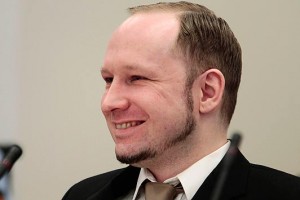
Anders Breivik in court in April 2012Norwegian mass killer Anders Behring Breivik may have failed to ignite a race war with Muslims, but he succeeded in stoking anxieties about the stability of Europe’s increasingly diverse societies.

Though his talk of an international underground of killers – latter-day Crusaders he called the Knights Templar – seemed to be mere fantasy, and while his methods place him far beyond the pale of mainstream politics, many of his beliefs are to be found within the fold of anti-Muslim, anti-immigrant populists.

“His ideological `manifesto’ is a distilled representation of a cultural crisis that pervades the European continent and finds expression in an increasingly xenophobic populism,” Kirsten Simonsen, a professor at Denmark’s Roskilde University, wrote in “Bloodlands”, a 2012 series of essays about Breivik.

Some notions – that Europe and its indigenous cultures are being weakened by immigration and multiculturalism – have been helping reshape the continent’s right-wing politics for years.

These beliefs occasionally find an echo on the margins of centre-right parties, among politicians seeking support from communities plagued by rising unemployment.

Mario Borghezio is a case in point.

The Italian politician set off a storm of outrage after Breivik’s gun and bomb massacre by declaring in a radio interview that its perpetrator had some “excellent” ideas.

Borghezio exemplifies a trend among populist anti-immigration groups – the use of the language of Western counter-terrorist efforts against al Qaeda to pursue what amounts to an anti-Islamic cultural campaign.

CALL FOR A “EUROPEAN SPRING”

Human rights groups are increasingly alarmed, not just at the far right, but at what many see as the pandering to its Islamophobic stereotypes by Europe’s mainstream parties.

“We need our own ‘European Spring’ to overcome old and emerging forms of racism and intolerance,” Nils Muiznieks, the Commissioner for Human Rights at the Council of Europe, a governmental human rights body, wrote in a July 2012 blog.

Muslims, he said, had become the primary “other” in right-wing populist discourse in Europe, and needed to be accepted as an integral part of society, entitled to equality and dignity.

Political parties in Austria, Bulgaria, Belgium, Denmark, France, Italy, the Netherlands, Norway and Switzerland had employed anti-Muslim rhetoric for political gain, he said.

Borghezio’s Breivik comment was denounced by his party, the pro-devolution, anti-immigrant Northern League, which apologized to Norway and temporarily suspended Borghezio from their ranks.

The European lawmaker argued the indignant reaction was misplaced, because he strongly condemned Breivik’s violence.

And yet, a year on, he still sees Breivik’s stance on some issues as attractive – particularly a perceived need to prevent Muslim immigration to Europe and combat Islamist extremism.

“Not all the ideas were criminal. It is the man who behaved in a criminal way,” Borghezio told Reuters.

CHEAP MUSLIM LABOUR

Tough regulation of immigrants, particularly Muslims, was essential, he said. In many mosques in Italy, he said, Muslims in economic difficulty were encouraged by extremist Islamist organizations “to carry out antisocial and illegal acts”.

His comments echo the public position of many in Europe’s far-right networks: a sense that the continent is under threat from Islamic extremists and is being betrayed by a rapacious political elite that values cheap Muslim labor above the economic welfare of its own communities.

Security specialists worry that far-right social media commentary stigmatizing Europe’s Muslims may help push enthusiasts towards militancy, much as al Qaeda propaganda opened pathways to violence for numerous Islamist radicals.

In a 2012 report, European police agency Europol stated the threat of violent right-wing extremism “has reached new levels in Europe and should not be underestimated. The threat will most likely come from lone actors, but organized, underground groups also have the capability and intention to carry out attacks.”

Some argue Breivik might have had more chance of setting off the kind of religious war he imagined if he had targeted Muslims, so as to create a cycle of revenge killings, rather than killing young white Norwegians from the pro-immigration Labour party, which encouraged a rallying behind common values.

“COUNTER-JIHADIST” MOVEMENT

On September 3, 2011, six weeks after Breivik’s Utoeya massacre, Stephen Lennon, a leader of the rightist English Defence League, took to a podium in central London and warned against any repeat of the 2005 attacks by British Islamists on London’s transport network that killed 52 people.

“The Islamic community will feel the full force of the English Defence League if we see any of our citizens killed, maimed or hurt on British soil ever again,’ he said.

U.S.-based researcher Arun Kundnani, in a June 2012 paper for the Hague-based International Centre for Counter-Terrorism, asserts that in the past two decades rightist violence in Europe has been comparable to Islamist bloodshed.

By his count, since 1990, at least 249 people had died in incidents of far‐right violence in Europe, compared to 263 who have been killed by jihadist violence.

A 2012 report by a left-wing anti-racist group, Hope Not Hate, identified more than 100 groups it said were part of a so-called counter-jihadist movement promoting anti-Islamic agendas in Europe, the United States, Canada and Australia, sharing anti-Islamic commentaries, photos, videos and rock music.

The groups, some of which Breivik quotes from in his manifesto, replaced the old racial nationalist politics of neo-Nazis with the language of cultural wars, Hope Not Hate said.

Immigration is an obsession with such groups.

Fifteen to 20 million Muslims, out of a total population of 500 million, are estimated to live in the 27-member European Union as well as non-EU members Norway and Switzerland.

France, a nation of 60 million people, is home to Europe’s largest Muslim minority, estimated at about 5 million. Norway estimates two percent of its 5 million population are Muslims.

A 2011 Pew survey of 50 European countries said the Muslim share of the population was expected to grow from six percent of the region’s people in 2010 to eight in 2030, due in part to higher birth rates among Muslims than non-Muslims.

“ADULTERATING” PURE NORWEGIAN BLOOD

Breivik argued his 77 victims, mostly teenagers at the ruling Labour Party’s summer camp on Utoeya, deserved to die because they supported Muslim immigration, which he said was adulterating pure Norwegian blood.

In Norway itself, Breivik’s deeds rebounded against the right. The mainstream but anti-immigration Progress Party, briefly joined by Breivik, suffered a huge blow in municipal elections two months after the attack.

But a growing number of opinion surveys show Europeans increasingly receptive to the notion that immigration, especially by Muslims, should be curbed or halted.

A July 2011 Pew Attitudes survey found that, when asked whether Muslims wanted to adopt local customs or stay culturally distinct, majorities of European populations chose the latter answer. A Populus research service poll in 2011 of more than 5,000 people in Britain for the Left-wing Searchlight Educational Trust found deep resentment among a range of communities about immigration.

“TOO MANY” IMMIGRANTS

In June 2012 an Ipsos MORI poll on attitudes to immigration found that in seven out of nine EU member states surveyed the majority regarded immigration as having had a negative impact on their country: Sweden and Poland were the only exceptions.

Mainstream centre-political parties have tried to keep up with the trend, enacting a variety of measures in the social sphere that have sometimes inflamed tensions on the street.

France banned clothing that covers the face in April 2011 and Belgium followed suit in July of the same year, while similar legislation has been proposed in the Netherlands, Italy and some Spanish regions. Switzerland barred the construction of new minarets following a referendum in 2009.

There is a broad European shift away from overt skin-color racism to prejudices about culture and religion shaped in part by the West’s war on al Qaeda.

“The whole focus of far right activity in Europe has shifted from race, the idea that ‘blacks are inferior’, to wider issues of identity,” said Ted Cantle, executive chairman of the Institute of Community Cohesion, a think tank.

Multiculturalism is another bugbear of the far right, which tends to define it as an excessive tolerance of immigrant communities that amounts to Western cultural suicide.

Centre-right politicians who have also questioned multiculturalism and advocated the primacy of Western liberalism in recent years include British Prime Minister David Cameron, German Chancellor Angela Merkel and former French President Nicolas Sarkozy. All did so facing domestic political pressure to take a tougher line on immigrants unwilling to adapt to host cultures.

Another example is Dutch populist Geert Wilders, head of the anti-immigration, anti-euro Freedom Party. Breivik’s manifesto reproduced anti-Islamic comments Wilders made to the Dutch parliament. Wilders has denounced Breivik and his actions.

Pepe Egger, head of Western European Forecasting for the UK-based Exclusive Analysis research house, says some of Breivik’s ideas are held quite widely among European political activists.

“The bizarre thing is that his ideas, as Islamophobic as they are, are almost mainstream in many European countries,” he told Reuters. “The perceived need to defend Europe against ‘Islamisation’ is not that far removed from what you can find in the opinion pieces in large daily newspapers.” – Reuters

South African lawlessness on the rise

Left-wing lawyer George Bizos

South Africa is in the grip of increasing lawlessness, according to a senior researcher at the Institute for Security Studies (ISS), Beeld reported on Monday.

According to an essay written by Dr Johan Burger more than a week before the Marikana mine shootings, blame for anarchy cannot simply be attributed to contempt for the law or the absence of law enforcement, but should include the failure of government, and its absence.

“It looks like vigilante attacks are also on the increase, and these are becoming more violent and deadly,” he was quoted as saying by the newspaper.

Academics and Wits University students took part in a march last week, to protest against the social inequalities they blame for tragedies like Marikana.

“This is what we did in 1948, 1949, 1950 when we protested against the apartheid laws,” weeping struggle veteran and advocate George Bizos told Beeld during the march.

“I never thought it would ever be necessary to take part in a march again,” he said.

When he was asked if he thought South Africa was becoming more violent, he said “I don’t just think so, it’s a fact.”

According to Burger, violent protests also make it necessary for the police to divert limited resources away from the battle against crime. – SAPA

Briton, 22, arrested for ‘racist Tweet’ aimed at black footballer

A 22-year-old man has been released on police bail in connection with racist tweets aimed at the West Ham striker Carlton Cole, police said.

The man, from Southend in Essex, was arrested on suspicion of a racially aggravated public order offence.

The footballer highlighted the messages on Twitter, which he received after his side’s defeat at Swansea at the weekend.

The 28-year-old player was targeted by the supposed Hammers fan in two foul-mouthed postings after West Ham lost 3-0 in south Wales.

The comments, which the player retweeted from his @CarltonCole1 account, questioned his performance and used a racist term to describe him.

A police spokesman said: “A man from Southend who was arrested in connection with racist football tweets has been released on police bail while the investigation continues.

“The 22-year-old man was arrested on Sunday August 26 following the tweets to West Ham player Carlton Cole. He has been released on police bail until Friday September 28 pending further inquiries.”

Cole took to Twitter to criticise his abuser.

He said: “Listen, i take racism a lot lighter than others and i do understand the banter that comes a long with it to get under peoples skin but…

“… it can sometimes be hurtful & insulting, i don’t mind when people criticise me for having a bad game or they think I’m crap at football…

“…but just say that, whether i am crap or had a bad game has nothing to with my race, creed or religion. lets just keep it FOOTBALL. Kapeesh? “

Fellow West Ham players Matt Jarvis, Kevin Nolan and Guy Demel were also subjected to abuse. – Press Association

Fashion designer John Galliano stripped of French award for ‘public racism’

John Galliano receiving his Legion d'Honneur from former French president Nicolas Sarkozy

ArtLyst reports that John Galliano 51, the former top British fashion designer, has been stripped of his French Legion d’Honneur award. Galiano was found guilty on a charge of “public racism” last year in September.

He was charged after verbally abusing curator, Geraldine Bloch, 35, and her Asian companion, 41-yr-old Philippe Virgitti. He  called Ms Bloch a “dirty whore”and “dirty Jewish face” several times. The incident that led to his arrest originated from this outburst and were the center for the investigation and charges and fines imposed. Bloch is also personally suing Mr Galliano over this outburst of anti-Semitic abuse, that lasted 45 minutes. He was charged with “public insults based on race or ethnicity”. She told the court he had mocked her appearance and clothing during the February incident, and that the word “Jewish” was “one of the most recurrent”. The designer, was fired by the Dior fashion house following the allegations. Galliano said he had no recollection of the events and denied being racist.

At the same time he was also accused of verbally attacking a 47-yr-old English language teacher, Fatiha Oummedour and subjecting her to a series of expletive-laced racist and anti-Jewish remarks. A third incident in the Café La Perle bar near Galliano’s home,resulted in the designer being filmed on a mobile phone slurring the words “I love Hitler”. The video shows him telling two Italian women, that he believed to be Jewish that their mothers and forefathers should have been gassed. Neither of the women pressed charges  But the video was a YouTube sensation and later used by the prosecution as evidence against the designer. The designer has apologised for the “sadness” of his behaviour and subsequently checked into rehab for his addictions. He has highlighted his personal struggle with drugs and claimed to the court that he had been out of control for some time. This did not have much influence on the judges decision.He was given suspended fines totalling 6,000 euros (£4,800; $7,500) over the incident.

The fashion house Dior sacked Galliano in March 2011, stating a zero-tolerance policy on racism. Galliano credited with revitalising the Dior brand, had been its creative director since 1996. He had also since been fired from his own eponymous label ‘John Galliano’, which is majority-owned by Dior. Galliano had been chief designer at Dior for 15 years and has won numerous British Fashion Designer of the Year award including the top award on four occasions. Despite the accolades he has spent the last sixth months excommunicated from the fashion industry. John has done the unspeakable and as talented as he is will find it tough to claw his way back from the last season racks at TJ Maxx and Century 21.  Both discount fashion chains are currently full of his clothes at knock down prices.

German president asks for ‘courage’ against racism

Joachim Gauck

German President Joachim Gauck on Sunday demanded courage from civilians and more action from officials to prevent a repeat of the orgy of racist violence that shook Rostock two decades ago. Commentators say the speech said too little on the amount of racism still prevalent in German society.

“We are strong. We know that we are strong. Our homeland will not fall into Nazi hands!” That was the central message delivered by German President Joachim Gauck on Sunday at events commemorating the 20th anniversary of the racist attacks on an asylum-seekers hostel on the outskirts of Rostock.

 “We can’t erase the biggest xenophobic riots in the history of post-war Germany,” he said. “As such, we are all the more obligated to prevent the incident from being forgotten.”

As he spoke, Gauck stood in front of the so-called “Sunflower House,” a concrete block building in the Rostock suburb of Lichtenhagen which was once used to shelter asylum seekers. For four days, from Aug. 22 to Aug. 26, 1992, a right-wing mob — supported by thousands of sympathetic locals — surrounded the building, chanted xenophobic slogans, threw rocks and, ultimately, set a neighboring building on fire where over 100 guest workers from Vietnam lived.

The police response was largely ineffective. Incredibly, nobody died in the attack, but the sheer scale of it came as a shock to post-reunification Germany and turned it into a symbol of the several, large-scale xenophobic attacks that marred the country in the early 1990s. Rostock became shorthand for similar riots in Hoyerswerda in 1991 and for the deadly arson attacks in Solingen and Mölln in 1992 and 1993.

‘We Need Courageous Citizens’

The president’s speech was the apex of a week of events, activities and discussions organized to mark the anniversary. And thousands turned out on Sunday for Gauck’s appearance, one of particular importance to the president. Gauck, after all, was born in Rostock and worked for many years as a pastor in a nearby town. Born during Nazi times, Gauck grew up in communist East Germany, getting to know two brands of totalitarianism in the process.

“Seldom in our recent history has an event made it so clear to me as the riots in Rostock that we need both: We need courageous citizens who don’t look away when our democratic and peaceful society is challenged,” Gauck went on. “But we especially need a state that is both willing and able to protect the dignity and lives of people.”

The president was speaking to the ineffectiveness of the police response two decades ago. But it was also a reference to recently revealed official failings relating to the National Socialist Underground (NSU), a trio of neo-Nazis who were able to murder 10 people between 2000 and 2007 — nine of immigrant descent and a policewoman — without being caught. Investigators failed to identify the killing spree as being racially motivated until late last year.

The German press on Monday likewise takes a look back to Rostock and examines Gauck’s speech.

The Schweriner Volkszeitung, a daily in the capital of the state of Mecklenburg-Western Pomerania where Rostock is located, writes:

“President Joachim Gauck, himself from Rostock and now an honorary citizen of the city, issued clear demands on Sunday. Democracy, he said, needs courageous citizens … and an effective state…. Well said, but now it must be implemented in every case and in every place. Forceful action against right-wing extremism demands courage, the willingness to intervene on the behalf of others instead of allowing oneself to be intimidated. In western Germany, nobody should act as though xenophobia or right-wing ideas are just a problem in former East Germany, the product of a mixture of a lack of experience with democracy during communist times combined with the disappointment of those whose lives did not dramatically improve following reunification.”

“Immigrant houses burned in the west too, in Mölln and Solingen, xenophobic ideas are also alive and well in the west too, as can be seen by the right-wing mobs that form there. The confrontation must take place across the entire country, particularly in the schools, so that right-wing hate does not take root in people’s heads.”

Left-leaning Berliner Zeitung writes:

“Gauck delivered an excellent speech. But it was only a speech. What else could it have been? It could, for example, have been an analysis — and attempt to come to terms with the present. A reference, for example, to the number of right-wing criminal acts in Germany — it was 34 per day in the first six months of this year — would have been welcome…. As would a few thoughts on how police — officially — do what they can to arrive at as few right-wing extremists and xenophobic crimes as possible.”

“Maybe it is clever of the president not to say everything that citizens already know. But Gauck surely knows that a flashy speech doesn’t just serve to educate, it can also blind people…. ‘We are strong. We know that, we are strong!’ he said. But merely knowing it won’t be enough.”

Center-right daily Frankfurter Allgemeine Zeitung writes:

 “Gauck’s speech in Rostock was, at its core, a call for realism. A society that has no fear of that which is foreign is an illusion. The cohabitation of people from different backgrounds and cultures is hardly possible without conflict. As a result, an immigration country such as Germany must reach agreement on the ‘amount and conditions of immigration,’ as Gauck noted, in order to create the conditions for cohabitation within which conflicts are resolved with mutual respect.

The left-leaning Die Tageszeitung writes:

“Gauck’s speech leaves a bitter aftertaste. The president didn’t say a word about the failure of state security officials in other right-wing crimes, like those of the National Socialist Underground, which involved 10 unresolved killings, one of them in Rostock. Gauck avoided drawing concrete connections to the present. His plea to ‘not let grass grow’ over the events doesn’t change that. As such, the commemoration in Rostock-Lichtenhagen became a history lesson, far away from the racism that is prevalent in the year 2012.” – Spiegel Online

‘Julius Malema will return to ANCYL’ – Lamola

Expelled ANC Youth League president Julius Malema will return to the organisation, league deputy president Ronald Lamola said on Monday.

“We still believe he is going to come back and we will raise this at conference,” Lamola told reporters in Johannesburg.

He was referring to the ANC’s elective conference, to be held in December.

Last month during an interview on the BBC’s World Service in London, Malema said his expulsion from the ANC would be automatically overturned when President Jacob Zuma was voted out of office in December.

He said his expulsion was being contested by African National Congress structures.

A group calling itself Friends of the Youth League was established shortly after Malema was expelled from the ruling party. It organises events around the country at which Malema can address his supporters.

ANCYL head of policy Abner Mosase distanced the ANCYL from the group.

“They are not our friends and we don’t take responsibility for them,” he said.

“We have no association with Friends of the Youth League.”

ANCYL spokeswoman Khusela Sangoni-Khawe said the league did not have regular contact with Malema.

“Comrade Julius speaks in his own capacity, but we do listen to what he says like we would listen to any citizen. [But] we won’t take accountability for him.” – SAPA