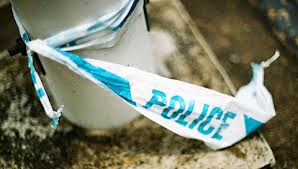
A black mother from KwaZulu-Natal was arrested in Gamalakhe, Port Shepstone, for allegedly trying to hire a hitman to kill her two sons, police said on Wednesday.
The woman allegedly approached a relative, who had recently been released from prison, to kill them, offering R25,000 for each child, Colonel Jay Naicker said.
“The alleged motive for the killing was that she wanted insurance money because she had insured her sons,” Naicker said.
The relative reported the matter to the police. A police officer posing as the hitman arrested her in her home, after she went to fetch photographs of her sons for him. Her sons were home at the time.
The 50-year-old mother of three would appear in the Port Shepstone Magistrate’s court on Thursday on charges of conspiracy to commit murder. – Sapa
A coloured Cape Town police officer accused of killing his wife and unborn child in 2000 is back working in the police service.
Morne Manuel allegedly shot and killed his wife, Janine, during a heated argument. She was seven months pregnant at the time.
Manuel who put forward a defence of temporary insanity has been cleared by an internal police disciplinary process and is allowed to perform his duties despite the charges still hanging over him.
“He’s still in the police force. This incident had absolutely nothing to do with his duties as a police officer. It was an incident involving his wife or his deceased wife and the police obviously made a decision that he is fit and able to carry out his duties in the police force,” said defence lawyer William Booth.
But Janine’s family thinks differently.
The family is no closer to finding closure and wants to know how the police officer charged with murdering their relative is still allowed to perform his duties.
“There’s no way that somebody can get away with something like that. I do believe that the way I was brought up, an eye for an eye so God is still there somewhere so I’m waiting. I’m just waiting and that is the only thing that makes me come to court,” said the victim’s sister Adeebah Salie.
The case has been marred by over 50 postponements and has again been postponed October 21. – eNCA
The United Nation Security Council (UNSC) has echoed sentiments by the UN Secretary General of strong concern for the alleged use of chemical weapons in Syria.
Opposition groups have accused the Syrian government of firing rockets with poisonous gas on residential areas early Wednesday morning, with reports claiming hundreds if not over one thousand victims. The allegations are uncorroborated but vehemently denied by the Syrian army.
The Council was briefed by the deputy Secretary General on the situation in Syria in an emergency session late Wednesday.
“There is a strong concern among council members about the allegations. There is also a general sense that there must be clarity on what happened and that the situation has to be followed carefully. All council members agreed that any use of chemical weapons by any side under any circumstances is a violation of international law,” says Council President Argentina’s Ambassador Maria Perceval at an emergency session in New York.
A UN team is on the ground to investigate earlier claims of chemical weapons usage and is now pushing to examine the site of Wednesday’s attack.
Deputy Secretary General Jan Eliasson called the latest attack an escalation. “We see the need to investigate this as soon as possible. This represents, no matter what the conclusions are, a serious escalation with grave humanitarian consequences and human consequences. We hope that we will be able to conduct the investigation. Dr Sellström and his team are in place in Damascus,” says Eliasson.
Syria would have to agree to any change in the team’s mandate to include additional sites. Modalities for the inspection of three earlier sites took months to iron out with the team only arriving in Damascus just this weekend.
“It is a very dramatic situation and the security situation right now does not allow such access and that is why this should also be seen in the broader perspective. We need cessation of hostilities in this particular area and in general,” he added.
The mandate of the investigators is a limited one they are merely to establish whether chemical weapons were used in Syria and not who used them.
That, the Secretary General said earlier this week, would be for member states to decide, perhaps the Security Council which has two options, to break the stalemate on Syria and agree on a course of action or engage in more of the same. But first an investigation must still take place to clarify what are to date merely accusations and denials. – SABC
Zimbabwean politician Enos Nkala, who co-founded Robert Mugabe’s ZANU party and was Defence Minister during a massacre of ethnic Ndebele that killed 20 000 people, has reportedly died.
“Nkala died at the Avenues Clinic, Harare, this morning after his admission at the hospital on August 7,” the News Day newspaper reported.
He was 81 years old. The cause of death is still unclear.
Nkala co-founded the Zimbabwe African National Union (ZANU) party in 1963 to fight against British colonial rule.
ZANU came to power after independence in 1980 and later joined the Zimbabwe African People’s Union (ZAPU) to form ZANU-PF, which remains in power.
Nkala served various posts in Mugabe governments, including as Finance Minister.
As Defence Minister he oversaw a state-ordered crackdown by North Korea-trained forces on dissidents in the Matabeleland and Midlands provinces between 1984 and 1987.
Around 20 000 people, including women and children, were killed during the massacre named “Gukurahundi”, which means “the wind that sweeps away the chaff before the spring rains” in the local Shona language.
Nkala sought to exonerate himself, saying Mugabe directed the deployment of the troops.
In the late 1990s Mugabe described the killings as “a moment of madness”, but stopped short of apologising for them.
Nkala left government following a corruption scandal in which cabinet ministers and officials bought cars for resale using special privileges.
He later became a staunch critic of Mugabe’s rule, but last year patched up his relationship with the 89-year-old ruler.
Mugabe is set to be inaugurated for a new five-year term on Thursday after winning a disputed election last month to extend his more than three-decade rule. – SABC
Hundreds of people, who have marched on Parliament in Cape Town to protest against the ousting of Egyptian President, Mohamed Morsi, have dispersed after handing over a memorandum to a member of the Committee for International Relations.
The protesters marched to parliament in Cape Town today condemning what they called “illegitimate military rulers who are trying to silence the voices of peaceful protesters in Egypt”.
Some Capetonians who were present at a demonstration organised by the Muslim Judicial Council support the council’s view that Morsi’s ousting undermines democracy.
Secretary General of the MJC, Abdul-Khaliq Ebrahim Allie has described the events taking place in Egypt as “unacceptable.”
“We are speaking as fellow South Africans who have enjoyed democracy, South Africans that have seen apartheid. What we see and witness in Egypt today is unacceptable. And as fellow South Africans, we are saying to the Egyptians that we stand with the masses who have elected the first democratically elected government. This we regard as a military coup.”
Some said the MJC did not speak on behalf of Egyptians.
“I’m an Egyptian citizen living in South Africa. I really love and appreciate the freedom in this country. They have changed the Constitution in Egypt. They want us to go backwards again. They don’t want us to be a prosperous country. Besides the fact that I’m an Egyptian, this violates everything to do with Human Rights, and we are here to show our support for the Muslim brothers and sisters who are being killed in Egypt for the mere fact that they stood up against oppression and injustice.”
Meanwhile, an Egyptian court has ordered the release of former President Hosni Mubarak. Security sources say he will leave prison later in the day as there are no longer any legal grounds for his detention.
85-year old Mubarak was being retried on charges of ordering the killing of protesters during the 2011 uprising that led to his downfall. Mubarak was sentenced to life in prison last year for failing to prevent the killing of demonstrators.
Home Affairs Minister Naledi Pandor says it will be difficult for anyone to duplicate the features on the new smart ID card.
She was speaking in the National Assembly during questions posed to ministers. “The key point is that every individual will have to present themselves for life capture. We think the application process will take 15 to 20 minutes and the card will be issued between 5 and 9 days,” says Pandor.
She says that the security features are of a world class standard and addresses some of the constraints that the department has experienced in the past. She says that the card is going to be hard to duplicate as the machinery is bigger and more sophisticated.
She says the smart ID card will go a long way in eliminating the use of fraudulent IDs. The first issue will be free and should it get lost, it will then cost R140 to replace it.
The department was allocated R6.7 billion in the 2013/2014 financial year, and the bulk of the budget is going into developing the smart ID card. – SABC
A federal appeals court on Wednesday ruled that three major companies cannot be held liable in the United States for crimes South Africa’s former apartheid government committed, saying a recent US Supreme Court decision “plainly bars” such lawsuits.
The plaintiffs brought their suits under the Alien Tort Statute (ATS), a law passed in 1789 that allowed non-US citizens to bring cases in US federal courts for violations of international law, such as piracy. In recent decades it took on renewed importance, employed to allow non-US citizens to sue for alleged human rights violations abroad.
But a recent Supreme Court decision found that “federal courts may not, under the ATS, recognize common-law causes of action for conduct occurring in the territory of another sovereign,” Circuit Judge Jose Cabranes wrote in the unanimous decision.
In April, the Supreme Court unanimously ruled that a federal court in New York could not hear claims by 12 Nigerians who accused Anglo-Dutch oil company Royal Dutch Shell Plc of complicity in a violent crackdown on protestors in Nigeria from 1992 to 1995. The case, Kiobel v. Royal Dutch Petroleum Co, was seen as a major victory for multinational corporations.
The appeals court ruling on Wednesday could mark the end for plaintiffs in the long-running case, who accused Daimler AG , Ford Motor Company and International Business Machines Corp of facilitating decades of race-based crimes such as torture and extrajudicial killings because their South African subsidiaries sold products to it.
The automakers knew their vehicles were being used by South African forces to violently suppress protesters, while IBM knew its computers were being used to help strip black citizens of their rights, plaintiffs said.
The defendant companies can now request that the case be dismissed in district court, the ruling said. Attorneys for the plaintiffs and representatives of the defendant companies were not immediately available. Apartheid ended in 1994 when South Africa held its first all-race elections, bringing Nelson Mandela and the African National Congress to power.
More than 50 major corporations were initially sued in 2002, but the complaints were later amended to target fewer companies. Supporters of the lawsuits included South African Archbishop Desmond Tutu, a recipient of the Nobel Peace Prize. – Sapa/AP
Nelson Mandela moved into his Victor Verster in 1988. A few year later the world watched in awe as Mandela walked free from Victor Verster prison.
Western Cape premier Helen Zille says: “We’ve heard some really interesting stories about the house… a lot of anecdotes. I mean we were told how Madiba saw a microwave for the first time and thought it was a TV. I mean everything in this house is still the same and we need to preserve such history”
23 years later the refurbished Madiba Freedom Walk Road was opened. It has cost the DA municipality R6 million to upgrade the road.
The DA believes tourists will flock to the place in numbers and the refurbished road would make access easier.
“Correctional facilities are very strict. Before, anyone coming to the house had to go through the prison gate. Now the road grants everyone easier access to the Madiba house,” says Correctional services’ Jacobus Sinclair.
The Madiba house is now a landmark that is etched in history, according to the main opposition party.
A 67-year-old Johannesburg white man allegedly mistreated by staff at two flagship academic hospitals is in danger of losing a leg.
Earl Harper and his family believe that he is being mistreated because he is white.
“I’m a nice person and treat people nicely, but when you are confronted by nasty people you start thinking rubbish.”
In continuous pain from an unhealed injury sustained in a scooter accident, Harper this week once again sought medical attention for the gaping wound in his right leg.
This time, he hoped, black doctors and nurses at the Charlotte Maxeke Academic Hospital would treat him better than on the previous five times he sought help.
“I have nowhere to go but a public hospital. All I have is my pride and they are taking that away,” he wept.
His medical nightmare began at Chris Hani-Baragwanath Hospital, Soweto, on June 20 immediately after the accident.
After a seven-hour wait and enduring what he called the “bad attitude” of black hospital staff, Harper was stitched up and sent home with a few packets of painkillers. He alleges that the Baragwanath team did not clean the wound properly.
This week the former credit manager and father of two claimed that staff at Charlotte Maxeke ignored his request for a bedpan during his five-hour wait for treatment and left him to wet himself.
His son, Eric, phoned The Times from East London, fearing his father would again be sent home without proper treatment for the wound – which is so deep that bone is exposed.
The Times arrived at the clinic at Charlotte Maxeke as Harper was being examined by three doctors.
Two Netcare/911 paramedics, whose duty was simply to transport him to the hospital, spent three-and-a-half hours there after being told by doctors and nurses that it was their responsibility to open an admission file.
“We just care, that is why we stayed,” they said.
Harper was treated courteously after staff discovered that he was accompanied by media representatives. In the event, he refused to be admitted, fearing that he would not receive adequate medical attention.
Gauteng health department spokesman Simon Zwane told Harper to make an official complaint.
“The department does not condone a negative attitude towards patients and visitors at any of its hospitals and has identified this as a matter that must receive attention.”
But Harper said it would be futile: “I complained before and the paperwork was never sent to me. I am old, sick and so tired. I would rather die than be treated like a dog.” – timeslive.co.za
The elevation of Mrs Doreen Lawrence to Britain’s highest parliamentary chamber, the House of Lords, should come as no surprise to seasoned observers of the British political elite.
Baroness Lawrence
For as the mother of arguably the most important murder victim in modern British history, she occupies a special place in the political firmament somewhere beside Bob Geldof and the late Princess Diana — perhaps equivalent to Rosa Parks or the parents of the sainted Trayvon Martin.
While no-one can put a name to any of the dozens of teenage Blacks murdered every year in London since then, Doreen’s son Stephen Lawrence was different — he was killed by Whites and his death was an opportunity to create the most potent weapon that has ever been aimed at the British people: mass demonization.
In an earlier age, tactical area bombing was used to deliver a relentless, sustained and never-ending barrage to cow a civilian population. But instead of the RAF this time the propaganda barrage was delivered by the media and Doreen Lawrence played a vital role as a living symbol of the evils of White racism.
So in a sense, her ennoblement is for services to the political elite, the human-rights industrial complex, the bureaucratic class, the media and for everyone else who has benefited from the murder which took place twenty years ago this year.
Several hundred miles to the north in the Lancashire seaside resort of Blackpool another mother Mrs Karen Downes could be forgiven for allowing herself a smile of bitter resignation at this latest accolade.
It is unlikely that Doreen Lawrence and Karen Downes will ever meet but the two mothers have much in common. Both had children murdered by racists and both have had to fight long battles against police incompetence and official indifference.
But there the similarity ends. For while Jamaica-born Mrs Lawrence has become a national heroine, lionised by the establishment, feted by the media and showered with honours, Mrs Downes is a shunned and marginalised figure who does not know if the killers of her daughter will ever be brought to justice.
The discrepancy in the treatment of the two cases can only be understood through the prism of the victimhood hierarchy. While Mrs Lawrence is the mother of a Black teenager, Mrs Downes and her daughter both belong to the despised White working class.
It is hard to overestimate the importance of the events that followed the knifing to death of Stephen Lawrence in a random attack at a bus stop in Eltham south east London in 1993 and it could well be argued that the crime was the single most transformative event in the creation of the new settlement imposed on the country.
A botched police investigation and collapsed trial triggered a full scale judicial inquiry in 1999 led by Lord McPherson and this had two effects. The first was the branding of the Metropolitan Police in perpetuity as guilty of vague and ill-defined “institutional racism”.
The second was the demonization of the White working class as irredeemably racist and hate-filled bigots who had no more call on the sympathies of right-thinking citizens than did the German people in the aftermath of World War II.
The elevation of this blood libel to a central place in the new settlement had one overriding political purpose — it meant the objections of working class Whites to mass immigration or multiculturalism could be safely cast aside as of no account.
The case was swiftly picked up by the media, politicians and human rights lawyers and barristers who smelled a winning cause célèbre and began jostling furiously for the anticipated glory.
In their pursuit of the five suspects in the killing of Stephen Lawrence normal conventions such as the assumption of innocence and contempt of court were ignored — and it was apparent that their White working class aspect produced an additional frisson of loathing.
As the media bombardment followed — the acres of newsprint, TV documentaries the TV dramas, the feature film — one message was unmistakeable; all working class Whites had to share the blame for what happened to Stephen Lawrence.
Finally in 2011, after an estimated 16 separate inquiries and a failed trial, the House of Commons decided to overturn the centuries-old law of double-jeopardy solely for the purpose of prosecuting the Stephen Lawrence killers. Convictions were duly obtained on two of the five suspects in what was condemned as a showtrial.
But there was far too much political capital to be had from the saga to leave it at that and, like a medieval religious play, there are now frequent re-enactments of the martyrdom of Stephen Lawrence in which self-aggrandising politicians, loudmouthed race-hustlers, sanctimonious journalists and grandstanding human-rights lawyers — and Doreen Lawrence — all play their appointed parts.
This summer’s passion play has not disappointed. The Prime Minister, the Deputy Prime Minister, the Home Secretary, the Shadow Home Secretary, the Commissioner of the Metropolitan Police and the chairman of the Commons Home Affairs Committee were all arguing furiously about how best to satisfy Mrs Lawrence’s demands for yet another public inquiry. They duly obliged and in July two new reviews were launched into the conduct of the police in 1993.
It is enlightening to compare all this activity with the experience of Mrs Karen Downes whose 14-year old daughter Charlene went missing on 1st November 2003 while apparently making her way home from Blackpool’s north pier after school.
She had been in the habit of hanging out at the Funny Boyz kebab shop in Dickson Road ran by Iyad Albattikhi and Mohammed Reveshi who were known to target young White girls by plying them with cigarettes and alcohol.
But initially the police were reluctant to take action or even provide the family with basic information. It was only when Karen approached the local newspaper that things began to move. The main suspects were reported boasting to friends that the body had been put into kebabs, and a proper investigation was launched. Eventually surveillance recordings produced apparently damning statements and the men were duly arrested and tried.
In one conversation Mr Reveshi was reported to have said to Mr Albattikhi: “Well, hopefully I [done] it properly you know . . . he thought he saw me cutting her body up…
“Do you remember she was bleeding to death?” “Yes,” replied Mr Albattikhi. “So that she made a mess,” Mr Reveshi allegedly added. Later in the transcript Mr Reveshi allegedly says: “The last one then, it was the last deep one and then it was the [heart] . . . that finally killed her.” …
At one point Mr Reveshi said: “I’m so worried and you was the one who killed her.” …
But the case sensationally collapsed in court because the prosecution had botched the presentation of the evidence. The jury were unable to reach a unanimous decision, and instead of requesting a re-count with a majority decision, the judge dismissed the case.
The two Muslims received half a million pounds in compensation for their ordeal but despite this the police have admitted there are no other suspects in the frame.
Since then there has been no movement in the Charlene Downes case despite reports of compelling fresh evidence, new witnesses, allegations of jury-tampering and the fact that the double-jeopardy law is no longer an obstacle to another prosecution of the same men.
Meanwhile, down south Mrs Doreen Lawrence is still receiving more accolades and awards to add to the OBE she received in 2003 for her services to community relations.
The gleaming £10 million Stephen Lawrence Centre was opened five years ago and is the base for the Stephen Lawrence Charitable Trust, set up by Doreen in 1998. This body, of which Doreen is a director, has become one of London’s largest training providers, not least because of the millions poured in by local and national government and corporate sponsors.
For Baroness Lawrence — as we must learn to call her — the awards, the accolades, the public appearances and the praise just never seem to stop rolling. Last summer, in front of an international television audience of millions, she was an Olympic flagbearer, alongside Muhammad Ali and former UN secretary general Ban-Ki Moon.
And then she received the lifetime achievement award in the UK media’s nationally televised “Pride of Britain Awards” to a standing ovation in November 2012. Her portrait “No Woman No Cry” rendered by one of our most fashionable modern artists, hangs in the Tate Gallery.
The Stephen Lawrence Trust has become one of the biggest brands in the charity sector. There is the Memorial Service — attended by the Prime Minister — the Woman of the Year Award, the star-studded concert at London’s largest venue, the O2 Arena — all in the name of Stephen Lawrence. Not to mention the Memorial Lecture which has been given by Prince Charles, the Prince of Wales.
For any ambitious young politico on the make a photo-opportunity with Doreen is not to be passed by. There is every possibility thanks to the Stephen Lawrence Legacy black tie gala dinners which have become prime networking events for the great and good.
The Dorchester Hotel in Park Lane will be the venue for the next one. Recent dinners have featured the Home Secretary, the Leader of the Opposition, the editor of the Daily Mail and the editor of the Mirror not to mention the Commissioner of the Metropolitan Police again.
As if all this did not keep Doreen busy enough, she has been awarded honorary degrees by the Universities of East Anglia, Bradford, Staffordshire, Greenwich, York, East London and Bishop Grosseteste University College, Lincoln. She also received an Honorary Fellowship from Goldsmith’s College.
She has a seat on important government panels and charity boards. Her autobiography is called, without irony, And Still I Rise.
Despite being nominally above the political fray, Mrs Lawrence has waded in when it suits her, and her statements that the police are still institutionally racist are guaranteed to dominate the headlines. In fact her supposed special insights into every subject from schooling to knife crime are given special weight by an ever doting media.
It is educational to compare this with the disappearance of Charlene Downes. It could hardly have happened at a more sensitive time. Despite undeniable evidence of organised grooming of White underage girls by Muslims in towns across the north of England the authorities refused to act or even speak out on the matter.
Instead the mainstream parties together with the police, the BBC, local papers and social services, closed ranks and refused to discuss the matter. The only politician speaking out was the British National Party’s Nick Griffin, and it was on the back of this issue that the BNP won four local elections in Bradford.
Then only months after Charlene disappeared, the BBC broadcast secretly recorded public speeches by the BNP leader and his colleague Mark Collett in which they vociferously spoke out against Muslim grooming gangs and the authorities refusal to act on the matter.
The BBC handed footage to the police and the two were duly charged with “using words or behaviour intended or likely to stir up racial hatred,” only to be sensationally acquitted after a retrial at Leeds Crown Court in 2006.
As for Karen Downes and her family, it would be fair to say that the intervening years have not treated them kindly. Karen has been on the receiving end of a campaign of vile abuse mounted by local left-wingers who crowed their delight at the collapse of the trial of the men accused of killing her daughter. A commemorative bench inscribed to Charlene and placed in her favourite park was thrown into a pond, and the police do not even return her phone calls any more.
She has taken to mounting ad hoc protests outside the kebab bar in Dickson Street but the police have issued her with a harassment order banning her from approaching the takeaway and warning her if she does not stop she could be jailed for racial harassment.
Most weekends Karen Downes can be found forlornly searching among the arcades of the north pier in a vain attempt to catch sight of the daughter she last saw ten years ago this November. – The Occidental Observer
Turkish Prime Minister Recep Tayyip Erdogan claims Ankara has proof Israel was behind the July 3 military “coup” that toppled Egyptian president Mohamed Morsi, Turkish media report.
Erdogan said the West was beginning to redefine democracy as a process that is not solely determined at the ballot box, although the poll represents “the people’s will.”
“This is what has been implemented in Egypt. Who is behind this? Israel. We have evidence,” Erdogan said, as quoted by the Hurriyet daily, during a meeting with provincial chairs of his ruling Justice and Development Party (AKP).
Erdogan spoke of a meeting between Turkey’s justice minister and a “Jewish” intellectual in France before Egypt’s 2011 elections.
“The Muslim Brotherhood will not be in power even if they win the elections. Because democracy is not the ballot box’: This is what [the intellectual] said at that time,” the PM continued.
Erdogan did not clarify what connection the unidentified intellectual had to the Israeli government or how his alleged opinion proved Israel played any part in the recent ouster of Morsi.
The Israeli Foreign Ministry declined to respond to Erdogan’s accusation. “This is a statement well worth not commenting on,” said ministry spokesman Yigal Palmor.
In March, Israel attempted rapprochement with Turkey after Israeli Prime Minister Benjamin Netanyahu called Erdogan to apologize for the 2010 Gaza flotilla raid that resulted in the deaths of eight Turks and one Turkish-American.
Erdogan accepted the apology and both sides agreed to carry out further discussions. The PM, however, said that normalization of bilateral ties would take time, insinuating that Turkey wanted to ensure victims of the raid were compensated and that Israel remained committed to easing the restriction of goods to Gaza before restoring relations.
The Turkish PM, an outspoken supporter of Morsi and his Islamist government, lashed out at the West for failing to act in light of last week’s bloody crackdown against Muslim Brotherhood supporters. Having previously condemned the coup, Erdogan insisted that Morsi be reinstated through a democratic process.
Erdogan’s ruling AKP, which has Islamic roots, had developed ties with Egypt’s Muslim Brotherhood and aimed to boost Turkey’s regional clout by bolstering its relationship with the North African state. – RT
On Sunday morning David Miranda, the partner of Guardian columnist Glenn Greenwald, was detained as he was passing through Heathrow airport on his way back to Rio de Janeiro, where the couple live. Greenwald is the reporter who has broken most of the stories about state surveillance based on the leaks from the former NSA contractor Edward Snowden. Greenwald’s work has undoubtedly been troublesome and embarrassing for western governments. But, as the debate in America and Europe has shown, there is considerable public interest in what his stories have revealed about the right balance between security, civil liberties, freedom of speech and privacy. He has raised acutely disturbing questions about the oversight of intelligence; about the use of closed courts; about the cosy and secret relationship between government and vast corporations; and about the extent to which millions of citizens now routinely have their communications intercepted, collected, analysed and stored.
In this work he is regularly helped by David Miranda. Miranda is not a journalist, but he still plays a valuable role in helping his partner do his journalistic work. Greenwald has his plate full reading and analysing the Snowden material, writing, and handling media and social media requests from around the world. He can certainly use this back-up. That work is immensely complicated by the certainty that it would be highly unadvisable for Greenwald (or any other journalist) to regard any electronic means of communication as safe. The Guardian’s work on the Snowden story has involved many individuals taking a huge number of flights in order to have face-to-face meetings. Not good for the environment, but increasingly the only way to operate. Soon we will be back to pen and paper.
Miranda was held for nine hours under schedule 7 of the UK’s terror laws, which give enormous discretion to stop, search and question people who have no connection with “terror”, as ordinarily understood. Suspects have no right to legal representation and may have their property confiscated for up to seven days. Under this measure – uniquely crafted for ports and airport transit areas – there are none of the checks and balances that apply once someone is in Britain proper. There is no need to arrest or charge anyone and there is no protection for journalists or their material. A transit lounge in Heathrow is a dangerous place to be.
Miranda’s professional status – much hand-wringing about whether or not he’s a proper “journalist – is largely irrelevant in these circumstances. Increasingly, the question about who deserves protection should be less “is this a journalist?” than “is the publication of this material in the public interest?”
The detention of Miranda has rightly caused international dismay because it feeds into a perception that the US and UK governments – while claiming to welcome the debate around state surveillance started by Snowden – are also intent on stemming the tide of leaks and on pursuing the whistleblower with a vengeance. That perception is right. Here follows a little background on the considerable obstacles being placed in the way of informing the public about what the intelligence agencies, governments and corporations are up to.
A little over two months ago I was contacted by a very senior government official claiming to represent the views of the prime minister. There followed two meetings in which he demanded the return or destruction of all the material we were working on. The tone was steely, if cordial, but there was an implicit threat that others within government and Whitehall favoured a far more draconian approach.
The mood toughened just over a month ago, when I received a phone call from the centre of government telling me: “You’ve had your fun. Now we want the stuff back.” There followed further meetings with shadowy Whitehall figures. The demand was the same: hand the Snowden material back or destroy it. I explained that we could not research and report on this subject if we complied with this request. The man from Whitehall looked mystified. “You’ve had your debate. There’s no need to write any more.”
During one of these meetings I asked directly whether the government would move to close down the Guardian’s reporting through a legal route – by going to court to force the surrender of the material on which we were working. The official confirmed that, in the absence of handover or destruction, this was indeed the government’s intention. Prior restraint, near impossible in the US, was now explicitly and imminently on the table in the UK. But my experience over WikiLeaks – the thumb drive and the first amendment – had already prepared me for this moment. I explained to the man from Whitehall about the nature of international collaborations and the way in which, these days, media organisations could take advantage of the most permissive legal environments. Bluntly, we did not have to do our reporting from London. Already most of the NSA stories were being reported and edited out of New York. And had it occurred to him that Greenwald lived in Brazil?
The man was unmoved. And so one of the more bizarre moments in the Guardian’s long history occurred – with two GCHQ security experts overseeing the destruction of hard drives in the Guardian’s basement just to make sure there was nothing in the mangled bits of metal which could possibly be of any interest to passing Chinese agents. “We can call off the black helicopters,” joked one as we swept up the remains of a MacBook Pro.
Whitehall was satisfied, but it felt like a peculiarly pointless piece of symbolism that understood nothing about the digital age. We will continue to do patient, painstaking reporting on the Snowden documents, we just won’t do it in London. The seizure of Miranda’s laptop, phones, hard drives and camera will similarly have no effect on Greenwald’s work.
The state that is building such a formidable apparatus of surveillance will do its best to prevent journalists from reporting on it. Most journalists can see that. But I wonder how many have truly understood the absolute threat to journalism implicit in the idea of total surveillance, when or if it comes – and, increasingly, it looks like “when”.
We are not there yet, but it may not be long before it will be impossible for journalists to have confidential sources. Most reporting – indeed, most human life in 2013 – leaves too much of a digital fingerprint. Those colleagues who denigrate Snowden or say reporters should trust the state to know best (many of them in the UK, oddly, on the right) may one day have a cruel awakening. One day it will be their reporting, their cause, under attack. But at least reporters now know to stay away from Heathrow transit lounges.
Australia’s new race discrimination commissioner starts in the job today and he’s got his sights firmly set on tackling the modern face of racial prejudice.
Dr Tim Soutphommasane is a 30-year-old first generation Australian, whose parents fled Laos in the mid-1970s, he grew up in south west Sydney.
He’ll now spearhead the nation’s response to racism and discrimination and he’s keen to craft strategies to help eliminate casual bigotry and cyber racism.
Presenter:Emily Bourke
Speaker:Dr Tim Soutphommasane, Australia’s new Race Discrimination Commissioner
EMILY BOURKE: Australia’s new race discrimination chief says racism is still far too common.
TIM SOUTPHOMMASANE: About 20 per cent of Australians report that they have experienced race hate talk, so racial slurs or verbal abuse. Eleven per cent report that they have been excluded from the workplace or social activities on the basis of their skin colour or ethnicity.
EMILY BOURKE: As a migrant himself, Tim Soutphommasane, has experienced racism in Australia first-hand.
TIM SOUTPHOMMASANE: Well I’m a first generation Australian of Chinese and Lao heritage. It’s a mouthful when I say that to people. But I think it sums up my cultural identity. I have experienced racial slurs. It can be very confronting. It’s very unpleasant, but most of all it’s about a denial of respect and equality.
EMILY BOURKE: Dr Soutphommasane says the modern face of racism is increasingly casual.
TIM SOUTPHOMMASANE: For instance, you might have someone making light of an issue or cracking a joke and when someone complains there, the response is perhaps along the lines of well, come on, just have a bit of a laugh, don’t take yourself too seriously. And I think that attitude belittles the experience of racial prejudice and discrimination.
It’s not just about hurt feelings, or about mere offence. Part of the cultural shift that needs to take place on casual racism is to recognise that racism is as much about impact as it is about intention.
EMILY BOURKE: But he adds racism among young Australians has followed the same trend as schoolyard bullying – it’s moved online.
TIM SOUTPHOMMASANE: Cyber racism among younger Australians is a serious emerging problem. There’s no question that if we do not tackle this issue, we may be creating further challenges of social cohesion and we may be cultivating a sense of indifference to racial abuse when it happens online.
EMILY BOURKE: In his new role, Dr Soutphommasane says he wants to start a new conversation about racism and how to stop it.
TIM SOUTPHOMMASANE: What it’s going to require is change at the everyday level in civil society, in your workplaces, in your schools and indeed in your backyards, at those barbecues, when someone says something that’s off-colour.
Perhaps in the past we’ve been happy to let that slide and not create a bit of a fuss. But if we’re prepared to take a stand and prepared to persuade someone to see racism from the perspective of another person, then perhaps we have an opportunity here to achieve a generational shift in our thinking. – ABC
An earlier boatload of migrants rescued by the Italian Coast Guard
More than 600 migrants from Eritrea, Pakistan, Syria and other countries have landed on Italian shores on three boats, coast guards said Tuesday.
The coast guard rescued 336 people aboard a boat near Porto Empedocle in Sicily and escorted them ashore, where most of them fled from police.
The migrants said they were all from Eritrea.
Dramatic video images shot from a border guard vessel showed the migrants including women and children being helped off a heavily overcrowded boat at night.
A second boat with 233 people aboard was also spotted by a navy vessel and taken to the tiny island of Lampedusa, Italy’s southernmost point and a major arrival point for migrant boats from Libya and Tunisia.
A third boat with 67 people aboard arrived in a small port near Syracuse in southeast Sicily. The migrants said they were all from Pakistan and Syria.
“I want to be a human like everybody. In Syria, everything is destroyed,” one of the migrants told news channel SkyTG24. Another said the journey had “lasted 10 days and we ran out of water”.
Local coast guard official Luca Sanciglio said: “We were told about the impending landing by a fisherman who spotted them. The boat was not stable so we had to ferry them to the shore.”
“We have a duty to rescue everyone 24 hours a day and that includes immigrants,” he said.
“After so many days and nights of suffering, they just want water and someone to welcome them,” he added.
Most of the thousands of economic migrants and refugees who have landed in Italy in recent months have landed in Libya from other parts of Africa.
Some 350 migrants — many of them from Egypt and Syria — arrived on four boats in Sicily on Monday.
Calmer weather conditions and growing unrest in north Africa have led to a surge in migrant arrivals in recent weeks.
Italy’s interior ministry said 24,277 migrants landed in Italy in the 12-month period between August 1, 2012, and August 10, 2013. – AFP
This website uses cookies to improve your experience. We'll assume you're ok with this, but you can opt-out if you wish. Cookie settingsACCEPT
Privacy & Cookies Policy
Privacy Overview
This website uses cookies to improve your experience while you navigate through the website. Out of these cookies, the cookies that are categorized as necessary are stored on your browser as they are essential for the working of basic functionalities of the website. We also use third-party cookies that help us analyze and understand how you use this website. These cookies will be stored in your browser only with your consent. You also have the option to opt-out of these cookies. But opting out of some of these cookies may have an effect on your browsing experience.
Necessary cookies are absolutely essential for the website to function properly. This category only includes cookies that ensures basic functionalities and security features of the website. These cookies do not store any personal information.
Any cookies that may not be particularly necessary for the website to function and is used specifically to collect user personal data via analytics, ads, other embedded contents are termed as non-necessary cookies. It is mandatory to procure user consent prior to running these cookies on your website.


 A black mother from KwaZulu-Natal was arrested in Gamalakhe, Port Shepstone, for allegedly trying to hire a hitman to kill her two sons, police said on Wednesday.