UN celebrates World Toilet Day and multilingualism

multilingualismThe United Nations General Assembly adopted a resolution to mark “World Toilet Day.” The day will be celebrated November 19.

“The amusement and laughter likely to follow the designation of 19 November as ‘World Toilet Day’ would all be worthwhile if people’s attention was drawn to the fact that 2.5 billion people lacked proper sanitation and 1.1 billion were forced to defecate in the open, the General Assembly heard today,” a U.N. press release reads.

“Ending open defecation will lead to a 35 per cent reduction in diarrhoea, which results in over 750,000 deaths of children under five years of age every year,” Singapore’s representative said as he tabled a draft resolution on Sanitation for All, one of four adopted by consensus today. Apart from establishing World Toilet Day, the text also urged Member States and the United Nations system to encourage behavioural change, to introduce policies that would increase sanitation among the poor, and to accelerate progress towards attaining Millennium Development Goal 7.

Tajikistan’s representative, speaking also on behalf of Finland, Thailand and Hungary — the Steering Committee of the Group of Friends of Water — underlined the need for accelerated, bolder action on sanitation. He also called for expansion of the water agenda beyond securing water, hygiene and sanitation for all, to address other matters, like water-resource management, water quality and wastewater.

The Assembly went on to adopt a draft resolution on multilingualism, which emphasized the paramount importance of equality among the six official languages of the United Nations. It underlined the need for full implementation of the resolutions establishing arrangements for the official and working languages of the United Nations, as well as the Secretariat’s responsibility for the equitable integration of multilingualism into is activities.

By other terms, the Assembly emphasized the importance of making use of all the official languages and of ensuring their full and equitable treatment in all activities of the Department of Public Information, with a view to eliminating the disparity between the use of English and that of the other five. It reaffirmed the need for full parity among the six official languages, and for linguistic diversity on all United Nations-related materials on the web, in documentation and conference services, in human resources management, as well as in United Nations field offices and peacekeeping operations.

Taking up a draft titled “Causes of conflict and the promotion of durable peace and sustainable development in Africa” (document A/67/L.59/Rev.1), the Assembly called upon the United Nations system and Member States to support peace-consolidation mechanisms and processes, to assist in post-conflict countries, to support efforts by African countries to promote political, social and economic inclusion, to support the African Union and to deliver expeditiously on commitments to ensure the full and speedy implementation of the political declaration on Africa’s development needs, as well as implementation of the New Partnership for Africa’s Development (NEPAD).

Nawaf Salam ( Lebanon), Acting President of the Assembly, then announced that consideration of the draft resolution “New Partnership for Africa’s Development: progress in implementation and international support” (document A/67/L.57/Rev.1) would be postponed for one week.

Also today, the Assembly elected Timor-Leste, by acclamation, as a Vice-President representing the Group of Asian States for the Assembly’s sixty-eighth session, following the resignation of the representative of Uzbekistan.

The General Assembly will reconvene at a time and date to be announced. – The Weekly Standard

No longer a crime to mock French president

flanbyBeing rude to the President of France is no longer an automatic criminal offence, France’s parliament agreed today.

In the interests of free speech, MPs revoked legislation dating back to 1881 when anything judged to have ‘offended the head of state’ risked an automatic fine.

The change followed the European Court of Human Rights (ECHR) ruling in March that France violated a demonstrator’s right to freedom of expression when he referred to Nicolas Sarkozy as a ‘jerk’.

Mr Sarkozy, the notoriously aggressive 5ft 5ins conservative, became the butt of numerous jokes during his five years in office, which ended last year.

But when a demonstrator held up a placard reading ‘Get Lost Jerk’ at a Sarkozy meeting in western France in 2008, he received a criminal conviction and a fine of around 25 pounds.

This was despite exactly the same expression being used by Sarkozy himself months earlier while he was attending an agricultural show in Paris.

Last year ECHR deemed the punishment handed down to Sarkozy’s tormentor as being disproportionate and a violation of freedom of expression, as the act was a ‘satirical remark.’

The ECHR acknowledged that the insult constituted ‘criticism of a political nature’ for which ‘freedom of expression was of the highest importance.’

Now anyone who chooses to insult a serving French president will have to be pursued through the libel courts.

Francois Hollande, the current Socialist French president, is regularly mocked, often by people using his nickname of ‘Flanby’, after a wobbly caramel pudding.

Earlier this month it emerged that Sarkozy views his successor as a ‘ridiculous little fat man who dyes his hair’.

When Sarkozy was head of state, his third wife Carla Bruni put him on a fitness programme aimed at making him leaner, fitter and younger looking.

Before that the diminutive Sarkozy – nicknamed ‘Bling-Bling’ because of his love of tacky status symbols – was himself mocked for being a chubby little man.

He continued to wear platform heels, and to surround himself with smaller men in an attempt to look taller, but lost a great deal of weight through constant work-outs and giving up chocolate.

Hollande, in contrast, has failed to lose the tubby image and shake off the Flanby nick-name.

Opinion polls routinely reveal that Hollande is the most unpopular president in the history of the Fifth Republic, with Sarkozy a close second. – Daily Mail

Former SA ambassador examines the land question

Paulo MndlovuJustice Piitso says the question of the ownership of the economy is the nerve centre of the struggles of the people

A revolution will remain incomplete without the resolution of the fundamental question of land ownership.

Next week the people of Zimbabwe will have an opportunity to exercise their democratic right to elect the government of their choice when they will be going to the polls.

This will be the most historic elections paving way for the end of the power sharing unity government between the ZANU -PF under President Robert Mugabe and the MDC under Prime Minister Morgan Tsvangirai.

This complex transitional arrangement is unfolding under the auspices of the watchful eye of the international community. The recent past elections were marred by allegations of state sponsored violence and intimidation of voters that made it difficult for a conducive environment of a free and fair elections.

It will therefore be in the best interest of the people of Zimbabwe that the forthcoming elections take place within the enabling framework of a free and fair environment. The people of Zimbabwe, Southern African region, the continent and the world need peace and stability.

The elections are taking place against the background of protracted forms of struggles between the government of Zimbabwe and the former colonial power Britain, over the historic land ownership question.

The political tensions escalated when the government under the leadership of ZANU-PF, embarked on a programme of seizure of land from the hands of the few white into the hands of the vast majority of the black people of Zimbabwe.

The state led radical programme for seizure of land from the white Zimbabwean community, sparked a fierce reaction that prompted the international community to impose sanctions against the government under the leadership of President Mugabe.

The imposition of the economic sanctions by the international community was a confirmation that colonial societies are ordered by imperialism. The reason why we say the Zimbabwean revolution fiddled with the nervous system of the forces of imperialism and colonialism.

It is from this context that revolutionaries openly debate on the important question of the complexities of the post colonial transitional periods, and how they affect the struggles of our people in the former colonies and semi colonies.

Equally we need to appreciate this as a metamorphosis of how the post colonial contradictions manifest themselves in the arena of the struggles of our people, against imperialism and neo colonial domination.

In the year 1980 Zimbabwe was declared an independent state after decades of protracted forms of struggles for national liberation against British colonial domination and the racist South African apartheid regime.

The declaration of the independence of the former colonial state of Rhodesia, was a historic breakthrough in the struggles of our people for the liberation of the Southern African region.

The declaration of the independence of the former colonial state of Rhodesia was a product of a negotiated transitional political arrangement. The transitional negotiations culminated into the former colonial master Britain and the liberation movement of Zimbabwe signing the historic Lancaster Agreement.

At the heart of the watershed agreement was the unwavering commitment by the British colonial government to assist in ensuring equitable transfer of land back to the overwhelming majority of the people of Zimbabwe. It was agreed that the process should be completed within the first decade of the transitional period.

Historical records prove that the British colonial government rescinded by not expediting the process of the transfer of land as agreed at the Lancaster house. This is the fundamental problem that has aggravated the present socio economic crisis.

The Zimbabwean land ownership question is a living testimony of how complex post colonial transitional period can be in the context of the history of the struggles of our people in the former colonies and semi colonies. It also relates to the nature and the character of the struggles, between the oppressor and the oppressed nations, post colonial transitional period.

At the core of these struggles is the fundamental question of how do we involve the oppressed people in the former colonies and semi colonies into the mainstreams of our economy. The primary issue remains to be how do we resolve the fundamental question of the ownership of the economy.

The scientific historical realities have proven that the question of the ownership of the economy is the nerve centre of the struggles of our people. The basic reason why it has become the most contentious issue after every war of the independence of our people.

The pertinent question is how do we understand the interrelationship between the primary and secondary contradictions. The mistakes we must avoid is to elevate secondary contradictions at the expense of primary contradictions.

Imperialism is trying to confuse our people by elevating the superficial issues of human rights at the expense of the fundamental question of the ownership patterns of the economy.

We must therefore refuse the attempts by imperialism to reduce the role of the people in the former colonies and semi colonies into being praise singers of national anthems and hoisting of National flags.

The most fundamental question is how do we take forward the common struggles of our people to create a new world social order. Our immediate task is to implore our collective responsibility to resolve the contradictions of poverty, disease and underdevelopment inflicting the poor people of the world.

We therefore have to ask ourselves the most important question as to what are the lessons and experiences we have learned out of the contradictions of the Zimbabwean post colonial transition.

We have to ask ourselves the most important question as what is the role and influence of the phenomenon of imperialism and colonialism during the transitional period of the post colonial nation states.

The essence of any revolutionary phase is about generations of mankind making sacrifices. The people of Zimbabwe have made sacrifices during the struggles for liberation against British colonial rule, and they are still making sacrifices today as they continue with the struggles for the socio economic transformation of their country.

The struggles of the people of Zimbabwe are still consistence with the values, culture and traditions of the progressive movement of the world. Its posture is still anti colonial in form and content.

The only task confronting the collective leadership of the ZANU-PF is how to polish their understanding of the scientific revolutionary concept of the role of an individual in the making of history.

The collective leadership of the ZANU-PF will go into the annals of history, having been the first generations of the people of the former colonies and semi colonies to have fiddled with the nervous system of the forces of imperialism and colonialism.

Phatse Justice Piitso is the former Ambassador to the republic of Cuba and the former provincial secretary of the SACP.

Police bungle another farm attack case

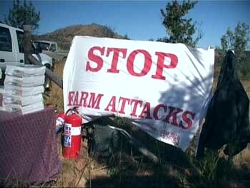
stopfarmattacksAfriForum is considering legal action against a police investigator after a case was thrown out of court and a farm attacker was freed due to gross negligence by the police.

The victims of the attack, Mr Noël McSeveney, and his wife, Alta, were attacked by two men in June 2013 on their farm just outside of Malelane, Mpumalanga. Mr McSeveney was wounded in the attack, and in his efforts to protect himself and his wife, he killed one attacker and wounded the other.

According to Nantes Kelder, Head of the Investigative Unit at AfriForum, the case against the accused took place in absentia. The investigating officer allegedly failed to present a medical report to the court to confirm that the accused was still in hospital, receiving treatment. As a result, the case was thrown out.

The Investigative Unit of AfriForum also made a report available earlier this year on mistakes made by the police during their investigations of farm attacks. “The blatant negligence of the police means that an attacker is now free and the victims have to live in fear. The investigator should be held responsible,” said Kelder.

AfriForum will take on the case on behalf of Mr McSeveney. Kelder added that the incidence of farm attacks and violent crimes is unacceptably high. One would think that such cases would be handled with great care, in order to ensure that justice is served.

A warrant for the arrest of the accused has been issued, but AfriForum has heard that he could not be traced.

DA’s Midvaal mayor moves to ANC central planning unit


Timothy Nast
Timothy Nast

The release of the Public Protectors report with the findings of maladministration and irregularities in the DA controlled Midvaal municipality in Gauteng, highlighted rampant corruption.

The FF Plus, already in April 2009, during a press briefing made information available to the media about corruption in Midvaal and in November 2009 requested an investigation by the Gauteng MEC for local government.

According to the FF+, Helen Zille, was aware of allegations of serious corruption in Midvaal from at least January 2009, after Mr. Kobus Hofmann, then a member of the mayoral committee for Midvaal revealed his concerns about corruption in the municipality to her and she, despite this, continually referred to the clean administration of the DA in Midvaal during the election campaign of 2009 and the local government elections of 2011.

Helen Zille, James Selfe, Ryan Coetzee and other senior DA leaders denied every time that there is any form of corruption in Midvaal despite numerous conspicuous pieces of evidence. The FF Plus intervened after numerous residents in Midvaal approached the party for assistance because they had been harmed by the DA council.

Zille had even in the Volksblad newspaper of 21 August 2011 denied that she knew Hofmann and James Selfe, the chairperson of the Federal Council of the DA at the time, told the same media that he was not worried about the allegations after Hofmann had laid a charge at the Meyerton police of defeating the ends of justice against Zille and other DA leaders.

The controversial leader of the DA in Midvaal, Mr. Andre Odendaal, following allegations of corruption made against the DA in public, then started a defamation case against Messrs. Corrie Pypers, FF Councillor in Midvaal, Kobus Hofmann, whistle blower and Jaco Mulder, the FF Plus’ MPL in Gauteng .

“The DA and ANC are two sides of the same coin and time will show that the DA controlled Midvaal is most probably the most corrupt municipality in South Africa ,” Mulder said. Helen Zille, James Selfe, Ryan Coetzee and Martie Wenger are therefore accessories to this corruption as it was continually brought to their attention but they denied it and neglected to take action against it.

The DA has repeatedly misled the voters and can consequently not be a credible alternative to the ANC.

FF Plus demanded that Helen Zille and every DA official who is involved in the corruption in Midvaal resign.

Despite this, the DA’s Midvaal mayor Timothy Nast was praised by MP James Selfe.

“He takes up his new position at the Gauteng Planning Commission (GPC) from August 1,” said Selfe, after news of Nast’s recent resignation became public.

The GPC is responsible for long-term city-region planning and performance monitoring and evaluation for the province. All infrastructure and development planning is co-ordinated centrally by the GPC on behalf of Gauteng premier Nomvula Mokonyane, a member of the African National Congress.

Selfe said the move to the ANC would not affect Nast’s affiliation with the DA. “He made it very clear that he remained an enthusiastic and loyal member of the DA.”

Nast, 32, became mayor of the Midvaal in 2009. He was re-elected to the post in 2011.

Bulls or Brumbies?

Dewald Potgieter
Dewald Potgieter

Bulls captain Dewald Potgieter has targeted a solid start to Saturday’s Super Rugby semi-final against the Brumbies at Loftus Versfeld as the key for his team to make it through to their fourth final.

According to supersport.com, Potgieter will lead a younger and very different Bulls side out onto his home ground this weekend – a side with much less experience than the ones that won the other three competitions, but one which believes they have what it takes to become Southern Hemisphere champions.

But even though they play at Loftus Versfeld, a field where they are unbeaten this year, and one where they have never lost a playoff match, the Bulls know they will need to be at their best to beat Jake White’s Brumbies – a side who are not flashy but very effective in the way they win matches.

According to ruckingoodstats.com, there is very little to choose between the teams, based on their statistics through the season, which point to very similar trends:

• Both teams dominate possession – the Brumbies are slightly ahead with 53.3% to the Bulls’ 52.5%. This might not sound like much, being just over 50%, but after 16 rounds it is significant. Most teams sit just under 50% for possession.

• Both teams are averaging the same amount of attacking time needed to score a try. The Brumbies are scoring a try every 6 minutes 34 seconds and the Bulls every 6 minutes 51 seconds.

• When it comes to conceding tries, the numbers are also similar: the Brumbies concede a try every 8 minutes 42 seconds on average, while for the Bulls it’s 8 minutes 34 seconds. This means that the two teams have a similar attack and defence pattern – reflected by the fact that they have both made the semifinals!

• Turnovers are not high for these teams. Given the hype about Brumbies flanker George Smith’s role in the game from the Aussies, you would expect higher turnover ratios. The Brumbies are stealing/turning over 2.9% of the opposition’s rucks, the Bulls slightly better at 3.3%. In comparison, the Crusaders were just 2% for the season (Reds 4%) but last week against the Reds, turned over a massive 9%, showing how much their game execution has improved in the last few weeks.

• While the Bulls have had some shockers defensively, they are missing 1 in 5.5 tackle attempts or a tackle every 58 seconds in defence. The Brumbies are again similar, with a miss every 1 in 5.9 tackle attempts or every 59 seconds.

• The biggest area of difference is handling errors. When looking at handling errors as a proportion of total errors made, the Brumbies’ handling errors make up 37.9% as opposed to the Bulls at 43.4%. When you take time on the field into consideration, the Bulls are 20% more likely to make a handling error than the Brumbies

• When it comes to kicking – the stat that is likely to dominate this weekend – there is only 1 tactical kick from the hand difference between the two teams. The Bulls have made 409 tactical kicks from the hand and the Brumbies 410. Factoring in time on attack means that the Bulls kick every 39 seconds and the Brumbies every 41 seconds.

• The Bulls will kick and chase more, retaining 10.5% of their kicks compared to the Brumbies’ 7.1% retained kicks. But the Bulls will kick less for touch with only 25.5% of tactical kicks from hand going to touch to the Brumbies’ 26.8%.

• When it comes to kicking errors – and this will be key this weekend – the Bulls’ stat is 10.8%, which is much higher than the Brumbies’ 6.8%, meaning that there is a 58% greater chance that the Bulls will make a kicking error than the Brumbies will.

So with this in mind, Bulls coach Frans Ludeke summed it up quite nicely when he spoke about what he saw between the Cheetahs and Brumbies in Canberra last Sunday.

“It was quite a battle. Hats off to the Cheetahs, there were some areas in the game where I felt they had control.

“But the way the Brumbies stuck to their game-plan, to the way they play, gave them the result.

“We feel this weekend will be the same. They play a lot like us, they like field position and to suffocate the opposition.

“They have a good pack of forwards and are dangerous in broken play.

“They have players who can finish off as well,” Ludeke said.

“This is why I say set pieces are vital.

“You need to control the broken field, use your opportunities when you get there and applying the pressure is vital.” – ruckingoodstats.com/Supersport

‘ANC is coming unstuck’

Nic Boraine
Nic Boraine

A poor showing by the ruling party at next year’s general election will likely cost President Jacob Zuma his job, political analyst Nic Borain said on Thursday.

Speaking at a Cape Town Press Club lunch, he said the signs were that “the ANC’s glue is coming unstuck” after the Marikana shootings last year.

“They [the ANC] are taking this 2014 election extremely seriously. They’re going to fight tooth and nail to [win it].

“They know that if they drop below 60%, they’re in trouble. Jacob Zuma will be in trouble… “

Responding to questions, Borain – a local independent analyst, who spoke on “the impact of the current mining troubles” in South Africa – suggested the rise of the Association of Mineworkers and Construction Union (Amcu) was a turning point for ANC supporters.

Support for it had been triggered by unhappiness with the ANC-aligned National Union of Mineworkers (NUM).

“There was a huge defection [from] the ANC support base in the platinum sector.”

This had later spread to the gold sector, where it had risen – according to some sources – to 30%.

“Jacob Zuma is now losing support among urban black people,” Borain said.

Prediction

Asked to predict the likely showing of the ANC at next year’s elections, he said a “worst-case scenario” was the ANC retained 65% of the vote.

He suggested a more-likely “best scenario” would see the ANC get 59% of the vote. This, he said, would lead to ANC leaders negotiating a “controlled exit” for Zuma, who would want to be assured he could leave with his wealth intact and not facing corruption charges.

“The ANC is not going to accept this kind of loss.”

Borain said a third scenario, involving the ANC garnering only 51% of the vote, was “very scary”.

“If that happens, all bets are off.”

Pushed to suggest how political parties might fare in the coming election, he estimated the ANC would take 58%, the DA 26%, a figure he later revised to 30%, and newly-formed Agang SA about 2%.

On the DA, Borain said the main opposition party would find it “difficult to overcome barriers to its growth”.

On the future prospects of Julius Malema’s Economic Freedom Fighters (EFF) – whose leadership he described as “the clowns and fools of our politics” – Borain said they could take up to 5% of the vote.

“But I can’t see them getting out to vote,” he added. – Sapa

EFF warned on land grab

Tina warns EFF on land grab

Government is ready to act if Julius Malema and his organisation, the Economic Freedom Fighters (EFF), act on threats to seize farms, Beeld reported on Friday.

State must take over ‘all land’, says EFF State must take over ‘all land’, says EFF

Agriculture Minister Tina Joemat-Pettersson told the newspaper that if Malema and EFF supporters occupied farms or agricultural land, action would be taken.

“There is no way we will allow people to sow discord in our farming communties for party-political gains,” she was quoted as saying.

She was reacting to the EFF’s founding manifesto, released on Thursday, in which the organisation said that all land should be transferred, without compensation, to the state.

Joemat-Pettersson told Beeld that it was a misperception that all commercial farmers were white. Violence and farm murders had already traumatised rural communities. Anyone who encouraged illegal action on farms would face the full might of the law, she said.

She warned farmers not to take the law into their own hands and gave assurances that Cabinet members of the security cluster would do whatever it took to stabilise the situation.

All land should be transferred to state ownership, according to the Economic Freedom Fighters’ founding manifesto.

“The state should, through its legislative capacity, transfer all land to the state, which will administer and use land for sustainable development purposes,” the EFF said in its manifesto.

“This transfer should happen without compensation, and should apply to all South Africans, black and white.”

Once the land was under state control, those currently using land or intending to use it would have to apply for a “land-use licence”.

The licence would only be granted once an application was filled out stating what the land would be used for, the EFF said.

The licence would be valid for 25 years and could be renewed based on whether the land was being used as planned.

“The state should, within this context, hold the right to withdraw the licence and reallocate the land for public purposes.”

The EFF said expropriation without compensation was one of its seven non-negotiable “cardinal pillars”.

During the launch of the “protest movement” earlier this month, its leader Julius Malema said the EFF had a plan that included the non-negotiable principles of land expropriation and nationalisation of mines, both without compensation.

“[The EFF is] the people’s organisation, inspired by people’s suffering on the ground,” Malema said at the time.

It would embrace an “anti-capitalist and anti-imperialist ideology”, and aspired to non-racialism and non-sexism. While white capitalist monopoly was an enemy of the EFF, “no one is going to be driven into the sea”.

“You are going to be forced to share.”

At a rally later that day in Sebokeng, Malema told residents that once the EFF became the ruling party it would take the land.

“We are going to take this government and once we take it, we are not going to negotiate, we are going to take our land.

“We are going to take it because it’s our land.”

He also said “those who want land must be given land”.

In its manifesto the EFF said “no one should be allowed to own land forever”.

“[This is]… because those who have money can, over time, buy huge plots of land and use them for counter-developmental private purposes, such as using land as game farms.

“A maximum of 30 years can then be placed on all land leases applied for by private corporations and individuals, with the state retaining the right to expropriate in instances where the land is not used for the purpose applied for.”

The EFF is holding a conference in Soweto on Friday and Saturday to work out its policies and manifesto. – Sapa

No more borders for Africa, say EFF

africabeadsThe Economic Freedom Fighters will advocate the integration of Africa by eliminating national borders, according to its founding manifesto.

The “protest movement”, led by Julius Malema, said the borders between African countries were “unnecessary”, especially those between South Africa and Botswana, Lesotho and Swaziland.

“The EFF will … advocate for the ultimate integration of the African continent through the erosion and eventual elimination of unnecessary borders, which, in the case of South Africa will entail the Botswana, Lesotho and Swaziland borders in a manner that involves and includes the participation and approval of those countries,” it said in its manifesto.

“This will also be encouraged in other parts of the African continent.”

This formed part of the EFF’s policy on “progressive internationalism”.

The EFF said it would also advocate for free trade across the continent.

On immigration, the movement committed itself to taking up the struggle of all immigrants, whether they were in South Africa legally or illegally. It said immigrants should be guaranteed basic rights when they were in the country.

‘Access to health … education’
“Certain basic rights cannot be denied to any human being who is in South Africa, whether they are in possession of certain documents or not.

“Basic rights that should be guaranteed include access to health, access to education for children, protection from super-exploitation by employers, and access to burial rights in South Africa.”

The process of applying for citizenship should not be complicated.

The EFF is holding a conference in Soweto on Friday and Saturday to work out its policies and manifesto. – Sapa

Mining bosses still raking in millions

Filling a few pockets

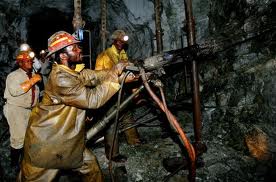
The mining industry is in the doldrums. Declining metal prices and rising costs foreshadow a tumultuous time ahead for the sector which is still reeling from devastating wildcat strikes last year.

Yet mining bosses continue to rake it in – with one individual taking home much as R45-million last year – serving to fuel the ideological war between themselves and their workers, the haves and have-nots, particularly as wage negotiations and the strike season kick into gear.

Last year, the chief executives of just the top three gold and platinum miners in South Africa earned collective remuneration totalling R140-million, leaving workers and unions indifferent to pleas of poverty by mining houses in ongoing wage negotiations.

Peter Major, a mining analyst at Cadiz Corporate Solutions, said executive remuneration would continue to add fuel to the fire when it came to wage negotiations.

He said many senior directors and many in management had a short-term, selfish view, which, he felt, let a proud 150-year-old industry down.

“If these guys wanted workers to take a zero percent increase, the first thing they would do is take a pay cut. That’s what leading by example – from the front – is all about. Instead, many of these ‘leaders’ are taking increases and bonuses. And when viewed against the enormous and frequent write-downs we’ve been seeing, resignations, firings and jail time should be up for serious consideration. It’s atrocious.”

On July 15 gold employers tabled an opening offer of a 4% wage increase, which was swiftly rejected by all worker representatives at different levels, who have demanded anything from a 10% to a 100% increase.

The parties reconvened on July 24 for another round of tough talks in which the offer was revised up to 5%, after which Solidarity, UASA (formerly known as United Association of South Africa) and the National Union of Mineworkers (NUM) declared a wage dispute that will be referred to the Commission for Conciliation, Mediation and Arbitration.

But gold producers say they simply cannot afford the increases. The Chamber of Mines’s figures for the fourth quarter of 2012 show – based on cash costs and an average gold price – that almost half of the country’s gold mines are unprofitable or marginal, at best.

But executive pay, at least for the major players in the sector, remains sizeable, as confirmed by company remuneration reports for 2012.

Top of the list is Gold Fields chief executive, Nicholas Holland, who earned a basic salary of R9.3-million, but after bonuses, share proceeds and other benefits, took home R45.3-million – R12.6-million more than the year before. Gold Fields chief financial officer Paul Schmidt took home almost R20-million.

Speaking to the media in May this year, Holland outraged unions when he said: “We can’t continue giving double-digit increases when productivity is declining. That’s not sustainable.”

AngloGold Ashanti’s former chief executive, Mark Cutifani, took home R43.2–million last year, while the company’s chief financial officer and now chief executive, Srinivasan Venkatakrishnan, was paid a total of R36-million.

Lonmin’s former chief executive, Ian Farmer, who stepped down due to illness in December 2012, earned R13.8-million for the year ended September 30 2012, compared with R17.9-million for the year before.

Gideon du Plessis, the general secretary of trade union Solidarity, said the remuneration was “exorbitant”.

“I understand the fiduciary duty they have and the difficulty of the task … but if you compare the remuneration of entry level workers to executives, there is a 100% mismatch. It conflates the perception that they do have the money.”

A salary freeze would mean little, insiders said.

“Mining bosses have never had any good gestures, the only gesture they show you is that they smile while you are in pain … If there is not a complete change in the manner they run their business, there will never be peace in the sector.” – M&G

Monkey stoned and burned

Vervet monkey
Vervet monkey

Hundreds of community members in Mamelodi East Section 14, Pretoria, watched as the monkey burnt to ashes.

A vervet monkey was stoned to death and later set alight by residents of Mamelodi East Section 14, who accused the animal of witchcraft last week Sunday afternoon.

The community believed that the monkeys were used to bewitch one another and they could place a curse on a person or bring bad luck.

The community members spotted the monkey hanging on a tree and thought it was busy placing a curse on them. They started chasing the monkey using stones and sticks.

They finally cornered the monkey in a house where they stoned it to death before dragging it to the street for the whole community to see.

Later, they set the monkey on fire by using a burning tyre.
Speaking to one of the community members who wanted to remain anonymous, Looklocal was told that the monkeys were used as muti to place a curse, either to ensure that the person does not succeed in life or to bring bad spirit between friends and family members.

“If we find another monkey, we will burn it to hell, we want to live in peace and not hating each other because of muti,” he said.

Hecke Marais from Tshwane Nature Conservation said the community members were not used to wildlife and when they see monkeys roaming around the community, they think that the monkey has brought bad spirits to the community.

“The monkeys are no danger to the society and the only time they can become dangerous to the community is when they are threatened.

“We have tried to convince the community members that the monkeys are not bad spirits. Most of the community members, however, grew up being taught to believe that the monkeys are used for muti,” said Marais. – looklocal.co.za

Dead baby found in paint bucket

paintbucketDespite the option of birth control and legal abortion, South African township dwellers still want to kill and dump their babies like rubbish.

The dead body of a two-month-old black child was found inside a paint bucket at Motsumi Street in Mohlakeng, Randfontein on 23 July.

According to resident and eye witness at the scene Thabo Ndiaza, children who were playing in the street made the shocking discovery.

“Initially the children went to the veld nearby to look for items that they could play with.

“They came back with empty tins and a heavy paint bucket that they dragged around for some time.

“Eventually, the bucket toppled over and the body of a dead baby emerged.

“They immediately rushed to us and informed us of the incident,” says Ndiaza.

He adds that he together with other residents went to investigate and upon arrival, they found the dead baby and called the police.

“Despite the option of abortion, people still want to kill and dump their babies like rubbish.

“It is really disturbing.

“And to make matters worse, our children have to come across such things while playing,” says Ndiaza. – looklocal.co.za


Initiate caught with muti to kill

traditionalhealer
Sangoma

A young initiate admitted that he had been promised R5 000 by four sangomas should he succeed in killing the other initiates in an attempt to close the initiation school by ruining its reputation.

 An alleged dubious and bizarre attempt to kill all the young men at a Mamelodi initiation school by means of witchcraft was thwarted when a 16-year-old initiate was caught urinating on the shoes of his co-initiates.

After questioning, the young initiate admitted that he had been promised R5 000 by four sangomas should he succeed in killing the other initiates in an attempt to close the initiation school by ruining its reputation.

The boy seemed confused and was acting strange, Looklocal was told.

The principal of the initiation school, Ndando Tshivhula, said that he caught the youngster urinating on the shoes of other initiates.

“When first questioned about why he had urinated on the shoes, the teenager tried to put the blame on other initiates. But he finally came out with the truth after a long interrogation by the principal of the initiation school and admitted that he had been sent to destroy the school by killing other initiates,” said Tshivhula.

“By killing all the initiates, he would cause the initiation school to be closed forever.”

According to Tshivhula, the teenager claimed that he was going to be rewarded with R5 000 if he did the job well.

Tshivhula said that the youngster told him that it all started in April when Tshivhula announced to the public that on 10 May he was going to open a new initiation school and that all young boys who wanted to become men, were welcome to apply to his school for the initiation programme.

“Shortly after my announcement, the four sangomas and a senior citizen called the boy to a meeting, asking him if he also wanted to become a man,” the teenager admitted to Tshivhula.

“One sangoma performed a ritual on me and gave me rope to tie to my left hand and leg,” said the teenager, adding that the sangoma had said that the ropes would ensure that principal Tshivhula would be blamed for the death of the initiates.

The rope on the leg was covered with different types of muti and had to be hung on a tree to make the young initiates lose hope and go home or go to another school,” the teenager allegedly claimed.

The second rope – tied to his arm – was supposed to chase away those who were at the initiation school teaching the initiates poems.

The teenager confessed that the sangomas had also given him other muti, wrapped in bundles of cloth, that was supposed to kill the initiates when the teenager stabbed the muti bundles with a special pin while saying the name of the initiate.

This, the young man claimed, would have killed the initiate whose name he spoke.

Tshivhula said that the muti bundles that had been found equalled the exact number of initiates at the school.

They boy however refused to disclose who had sent him to commit such an evil deed at the school.

Tshivhula said he believed that those involved wanted to destroy him because this school had succeeded for the past four years with no deaths.

He was confident that the 11 initiates would graduate alive this Saturday.

Tshivhula has reported the matter to the Council of Traditional Leaders. – looklocal.co.za

Pagad: We are being framed

pagadAnti-drug group Pagad, a Muslim organisation, says the bombs detonated in Athlone in Cape Town on Wednesday night were probably placed by people who want to frame the organisation and derail it.

A motor dealership and a house were bombed within five minutes of one another. It was the second bombing this month near a Pagad event.

A Pagad motorcade was travelling through Athlone when the bombs when off on Wednesday night.


But Pagad spokesman Haroon Orrie said the motorcade was peaceful, and he denied any prior knowledge of the bombings.


He said Pagad had worked hard to shed the negative image of a violent vigilante group, to increase transparency and to rebuild trust and support within communities.

Asked about the possibility of rogue members carrying out attacks without a Pagad mandate, he said: “That scenario is impossible. Our motorcades are peaceful attempts at engaging communities affected by the scourge of drug dealing and gangsterism.

“We use loud-hailers to get our message across, and the response from the community has been very positive. We condemn the use of violence.”

Pagad has admitted it has increased its activities during the month of Ramadaan, with a “Ramadaan Awareness Programme”.

Pagad said on Thursday night that the police knew Pagad was not to blame.

“The police was with Pagad on the motorcade on every route we took through the streets of Bokmakierie (and) can therefore verify and testify that the Pagad motorcade had nothing to do with the blasts,” another spokesman, Cassiem Parker, charged.

“In the past the police were quick to link Pagad to incidents which they could never prove.”

Pagad also denied any involvement in the recent blasts.

Instead, Parker said: “The South African government must take full responsibility on the rise of anti-gangsterism and anti-drug groups who are striving to protect communities.

“The government, the SA Police Services and the minister of safety and security have once again failed to protect law-abiding citizens against gangsters and drug dealers.

“Communities are also fed-up with the thousands of shebeens and liquor outlets on our doorsteps. It’s a known fact these places give rise to crime and other social ills…

“It is a shame that communities are forced to organise themselves in movements like Pagad, the Mayitshe Group and others to patrol their streets against gangsterism and drug dealers.

“It is a shame that people in Manenberg, Bonteheuwel, Ocean View and many other areas are living in fear because gangsters have the free reign to shoot and kill them.”

Motorcades on Wednesdays after evening prayers during Ramadaan, form part of the programme.

In the first motorcade, on July 10 in Belgravia Estate and Rondebosch East, Pagad members picketed outside the homes of two alleged drug dealers, letting off firecrackers and using loud-hailers to issue “verbal warnings to stop their illegal activities”.

A house in Rondebosch East, near to the official convoy and police escort, was petrol-bombed, but Pagad national chairman Abdus-Salaam Ebrahim denied involvement in the attack.

No arrests have been made in that incident, police said.

Pagad has since lashed out at the police for showing “its full strength” at Pagad events.

The bomb thrown at Velocity Motors on Klipfontein Road on Wednesday night damaged nine cars. Two cars were written off. The blast caused R600 000 damage, said Niyaaz Jainoodian, the Velocity franchise’s director. He had “no idea” why it had been targeted, or by whom.

In the second bombing, of a home on Taurus Road, windows were shattered, but no was was injured. The owner declined to be interviewed.

Meanwhile, Athlone residents are trying to make sense of the attacks.

We were preparing to sleep, right after our evening prayer, and then we just heard a loud bang, saw some light flashes and assumed it was an accident. But when we got out to look the whole street was filled with smoke,” said Shireen Devous.

Devous, who lives next door to the Taurus Road house, said it had been targeted before: there had been a bomb threat last year, but police found no explosive devices.

A few houses away, another resident, who declined to be named, said the owner no longer lived there but the the owner’s mother and sister did.

“When the bomb happened the granny was still in the house. Whoever is targeting him would have known he doesn’t live there anymore.” – IOL