Accord on Afrikaner self-determination 23 April 1994

prinsevlagBETWEEN THE FREEDOM FRONT, THE AFRICAN NATIONAL CONGRESS AND THE SOUTH AFRICAN GOVERNMENT/NATIONAL party taking note of the Constitution of the Republic of South Africa, Act 200 of 1993 as amended; and taking note of the unsigned Memorandum of Agreement between the African National Congress (ANC) and the Afrikaner Volksfront (AVF), dated December 21, 1993; and taking note of Constitutional Principle XXXIV, dealing with the issue of self-determination; and subsequent to the discussions between the delegations of the ANC, the AVF, the South African Government and eventually the Freedom Front (FF) –

The parties represented by these delegations record the following agreement:

1. The parties agree to address, through a process of negotiations, the idea of Afrikaner self-determination, including the concept of a Volkstaat.

2. The parties further agree that in the consideration of these matters, they shall not exclude the possibility of local and/or regional and other forms of expression of such self-determination.

3. They agree that their negotiations shall be guided by the need to be consistent with and shall be governed by the requirement to pay due consideration to Constitutional Principle XXXIV, other provisions of the Constitution of the Republic of South Africa, Act 200 of 1993 as amended, and that the parties take note of the Memorandum of Agreement, as referred to above.

3.1 Such consideration shall therefore include matters such as:

3.1.1 substantial proven support for the idea of self-determination including the concept of a Volkstaat;

3.1.2 the principles of democracy, non-racialism and fundamental rights; and

3.1.3 the promotion of peace and national reconciliation.

4. The parties further agree that in pursuit of 3.1.1 above, the support for the idea of self-determination in a Volkstaat will be indicated by the electoral support which parties with a specific mandate to pursue the realisation of a Volkstaat, will gain in the forthcoming election.

4.1 The parties also agree that, to facilitate the consideration of the idea of a Volkstaat after the elections, such electoral support should be measured not only nationally, but also by counting the provincial votes at the level of:

4.1.1 the electoral district, and

4.1.2 wherever practical the polling stations as indicated by the parties to, and agreed to by, the Independent Electoral Commission.

5. The parties agree that the task of the Volkstaatraad shall be to investigate and report to the Constitutional Assembly and the Commission on the Provincial Government on measures which can give effect to the idea of Afrikaner self-determination, including the concept of the Volkstaat.

6. The parties further agree that the Volkstaatraad shall form such advisory bodies as it may determine.

7. In addition to the issue of self-determination, the parties also undertake to discuss among themselves and reach agreement on matters relating to matters affecting stability in the agricultural sector and the impact of the process of transition on this sector, and also matters of stability including the issue of indemnity inasmuch as the matter has not been resolved.

8. The parties further agree that they will address all matters of concern to them through negotiations and that this shall not exclude the possibility of international mediation to help resolve such matters as may be in dispute and/or difficult to conclude.

8.1 The parties also agree that paragraph 8.0 shall not be read to mean that any of the deliberations of the Constitutional Assembly are subject to international mediation, unless the Constitutional Assembly duly amends the Constitution to enable this to happen.

8.2 The parties also affirm that, where this Accord refers to the South African Government, it refers to the South African Government which will rule South Africa until the April 1994-elections.

signed by: gen. constand viljoen, leader:

freedom front mr thabo mbeki, national chairman:

african national congress mr roelf meyer, minister of constitutional development and of communication on behalf of the government and the national party witnessed by:

prof. abraham viljoen & mrjurgen kdgl

April 23, 1994

Philips to establish Research & Innovation Hub in Africa

WordmarkNAIROBI, Kenya, March 21, 2014/ — Royal Philips (AEX: PHI, NYSE: PHG) today announced the establishment of its Africa Innovation Hub in Nairobi, Kenya, which underlines the company’s commitment to invest in Africa. The Philips Africa Innovation Hub will work both on the creation of new inventions, as well as bringing these inventions to the market.

The Philips Africa Innovation Hub will do application-focused scientific and user studies to address key challenges like improving access to lighting and affordable healthcare as well as developing innovations to meet the aspirational needs of the rising middle class in Africa.

The Philips Africa Innovation Hub will be located at the Philips East African Headquarters in Nairobi, where African talents and international researchers will operate on the concept of “open innovation” and will work in close collaboration with the R&D ecosystem of Kenya and Africa. Philips is in discussions with local organizations and Universities on R&D collaborations to co-create meaningful solutions for Africa.“We welcome the establishment of Philips’ Innovation Hub in Kenya; Philips is a globally recognized innovation powerhouse and their selection of Nairobi as the site to establish their African Innovation hub is a testament to the Kenyan government’s commitment to nurture the drive for research and innovation in the region”, says, Hon’ble Adan Mohammed, Cabinet Secretary for Industrialization and Enterprise Development. “We lend our full support to the investment being made by Philipsand look forward to the outcomes of their Africa-specific research and projects that can contribute to transforming society, business and government across the continent”.

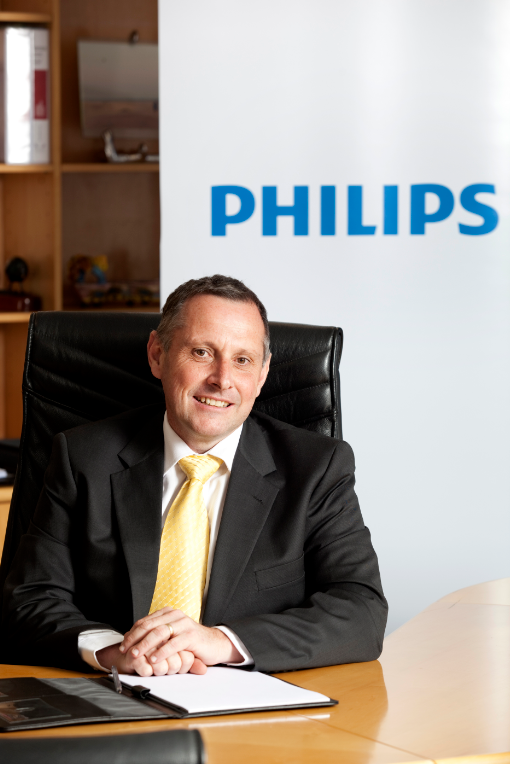
JJ van Dongen, Senior Vice President & CEO Philips Africa

JJ van Dongen, Senior Vice President & CEO Philips Africa states: “Philips is passionate to invent, apply technology and partner to help people succeed. Our ambition is to create impactful innovations that matter to people and address the key challenges that confront society. With Kenya as a leader in the continent in science and entrepreneurship as well as a hub of collaboration on technology and innovation, Nairobi, is the ideal location to establish Philips’ African research presence. We want to tap into the city’s vibrant R&D eco-system and contribute to the process of co-creating new solutions, new business models and meaningful partnerships to provide innovations that make an impact.”

Enhancing people’s lives in Africa though meaningful innovations

Some innovations that Philips was already working on have now become part of the Innovation Hub, hence, the PhilipsAfrica Innovation Hub will kick-off with ventures that are under development as well as in the pilot phase; these include:

Respiratory rate monitor to support pneumonia diagnosis: Pneumonia is the leading cause of death among children under the age of five, resulting in 1.1 million deaths worldwide annually (1). Of these, 99% of deaths occur in developing countries in low-resource settings, which typically entail rural areas with very limited or poor healthcare facilities or with low-skilled health workers. The current diagnostic tools in such settings are not easy to use, can easily distract the workers from an accurate conclusion, and thus lead to a poor diagnosis.

The Innovation hub is working on the development and clinical testing of a robust and affordable Automated Respiratory Rate Monitor that aims to support the diagnosis of pneumonia among infants and children, using smart sensing technology on the body which is intended to be more accurate and reliable compared to manual processes being currently observed. This device will be specially designed for use by community health workers and nurses in rural areas. In Kenya, discussions are on with the Kenya Medical Research Institute (KEMRI) to further develop this project and co-create an effective solution tailored to circumstances in rural Africa.

Community care services: The development and testing of a work-flow innovation designed to reduce the number of avoidable maternal and child deaths. The purpose of the workflow is to enable remote area health centers to diagnose, triage, treat, stabilize and (prepare for) transport expectant mothers that come in for a check-up and treatment.

Smokeless cook stove: Philips has designed and is manufacturing this innovative stove to improve the lives of those who rely on wood or biomass for their daily cooking. These specially designed stoves are extremely efficient and significantly reduce the use of wood as fuel. The cook stove can reduce smoke and carbon monoxide emissions by more than 90% compared to an open fire (2)  thus reducing the health risks of indoor cooking. The contribution of the innovation hub is to create new go-to-market models for these stoves.

Consumer solar solutions: Today an estimated 560 million Africans live without electricity; Philips is committed to improving access to lighting in Africa, for the majority of the population that lives in off-grid communities. The Innovation hub is designing and developing new consumer products using the combination of solar power and energy efficient LED technology. New go-to-market models are also being established to ensure these solutions become accessible to people that would not be able to afford them otherwise.

The Philips Africa Innovation Hub while headquartered in Kenya, will be responsible for pan-African research and projects and will have operations across Africa, linked to the Philips regional offices across the continent; the hub will be headed by Dr. Maarten van Herpen and will work in close collaboration with the Philips research labs in Bangalore, Shanghai and Eindhoven.

 (1) Source: Unicef http://www.unicef.org/media/media_70890.html

 (2) Reference source: Water boiling test version 4.2.2 done at accredited stove laboratory, Aprovecho Research Center (http://www.aprovecho.org/lab/index.php), Oregon, USA.

Truck driver arrested for kidnapping, raping 6-year old

rape7On 10 March 2014 at 15:00,  a six-year-old victim was returning home from school  in the Clairwood Area when she went missing. After a frantic search for the child she was found the following morning at 03:10 in the bush along Edwin Swales Drive.

 The child related to police that she was kidnapped by a truck driver who dragged her into a bush, tied her up and raped her. It is alleged that he thereafter assaulted her with a brick on her head and left her in the bush. The child had sustained bruises on her body and her face was swollen from the assault. After interviewing the child the Brighton Beach Family Violence Child Protection and Sexual Offences Unit began their investigation by interviewing all trucking companies in the area. On 15  March the members made a breakthrough after the suspects employer confirmed that he found items belonging to the victim in one of his trucks. Police questioned the suspect at his place of employment in Phoenix where he confessed to the crime. The suspect (38) was then arrested for three counts of rape, attempted murder and kidnapping. He will appear in the Durban Magistrates’ Court this morning.

The KwaZulu-Natal Provincial Commissioner, Lieutenant General Mmamonnye Ngobeni welcomed the arrest. “We are glad that this monster is behind bars where he can do no more harm to our innocent children. We once again call on parents to be aware that there are such fiends amongst us that will commit the most heinous acts of violence on our children should they be present with the opportunity. We are responsible for the safety of our children and need to ensure that they are not exposed to these criminals,” she said. – South African Police media service

Putin: Crimeans expressed their will in full accordance with intl law, UN Charter

A woman with her face painted in the colours of the Russian national flag waits for the announcement of preliminary results of today's referendum on Lenin Square in the Crimean capital of Simferopol March 16, 2014
A woman with her face painted in the colours of the Russian national flag waits for the announcement of preliminary results of today’s referendum on Lenin Square in the Crimean capital of Simferopol March 16, 2014

The referendum in Crimea was fully consistent with international law and UN Charter, Russian President Vladimir Putin told Barack Obama, after the overwhelming majority of Crimeans expressed their willingness to join Russia.

The citizens of the peninsula have been given an opportunity to freely express their will and exercise their right to self-determination, the Russian president said in a phone conversation with his US counterpart, according to Kremlin’s press service.

With a record-breaking turnout of over 80 percent, according to preliminary results, over 95 percent of the Crimean population said ‘yes’ to the reunion of the republic with Russia. International observers have not reported any violations or anything resembling any kind of pressure during the vote.

However, Obama said the Unites States and the “international community” will “never recognize” the results of the referendum “administered under threats of violence and intimidation,” according to White House spokesman.

Obama “emphasized that Russia’s actions were in violation of Ukraine’s sovereignty and territorial integrity” and that the US in coordination with its European partners is “prepared to impose additional costs on Russia,” the White House added.

Despite the existing differences in the assessment of the situation in Ukraine, the leaders of Russia and US have agreed that they must jointly seek to help stabilize the situation in the country, the Kremlin said.

“Putin drew attention to the inability and unwillingness of the current Kiev authorities to curb rampant ultra-nationalist and radical groups, destabilizing and terrorizing civilians, including Russian-speaking population, and our fellow citizens,” Kremlin statement reads.

In this context, the possibility of sending an OSCE monitoring mission to Ukraine was discussed, the press office reported. The Russian President believes such a mission should be extended to all Ukrainian regions. – RT.COM

Language discrimination fuels Ukrainian conflict

Language map of Ukraine

The deepening crisis in Ukraine involves not only issues of political sovereignty, European integration and Russian hegemony, but also language and its relationship to nationalism and ethnic identity. Immediately after the removal of President Viktor Yanukovych from power on Feb. 22, the Ukrainian Parliament repealed a controversial law passed in 2012 that allowed the use of “regional languages” – including Russian, Hungarian, Romanian and Tatar — in courts and certain government functions in areas of the country where such speakers constituted at least 10 percent of the population. (In 1991, in the wake of the collapse of the Soviet Union, the newly independent state of Ukraine established Ukrainian as its sole official language.)

Interim President Oleksandr Turchynov has since vetoed that repeal, but the episode has alarmed many of Ukraine’s Russian speakers and others. “Just as the law itself was meant to validate the continued use of Russian in Ukraine for a wide range of activities, the move to cancel that law was perceived as taking away rights enjoyed by the Russian-speaking population, and potentially a sign that there might be growing discrimination against them,” explained Olga Oliker, a security and defense analyst at the RAND Corp.

Indeed, after the 2012 law was passed, 13 of Ukraine’s 27 regions, mostly in the industrial eastern parts of the country, quickly adopted Russian as a second official language. (But even then, the passage of the law triggered demonstrations in the streets and even fistfights in Parliament.) Dr. Vitaly Chernetsky, associate professor in the department of Slavic languages and literatures at the University of Kansas, commented that the 2012 language law was poorly written and roundly criticized by many experts at the time. “Additionally, no budgetary allocations were made at the time, so passing this law was, in effect, a purely symbolic measure intended to divert the attention of the Ukrainian electorate from corruption and economic problems,” Chernetsky said in an interview.

According to the CIA/World Factbook, the Russian language is spoken by about one-fourth (24 percent) of the Ukrainian population, while about one-sixth (17.3 percent) of the Ukrainian population are ethnic Russians. RT, a Russian television network, claims that 40 percent of Ukrainians speak Russian, (presumably including non-Russians). Russian speakers are concentrated in the southern and eastern parts of Ukraine – while in the southern autonomous region of Crimea (where the Russians have had a naval base on the Black Sea for more than 200 years), an estimated 60 percent of the population are ethnic Russians.

Related

Oleksandr Turchynov: The Baptist Currently Running Ukraine
Ukraine Girls Really Knock Me Out: Women Playing Crucial Roles In Euro-Maidan Protests
The Ukraine Parliament reportedly will consider yet another language law in the coming weeks or months – it is unclear if it will again allow a multi-language framework for the country’s social and political life.

Svitlana Melnyk, a lecturer in Slavic languages and literatures at Indiana University-Bloomington, argued that the establishment of monolingualism formed a key part of solidifying Ukraine’s national identity. “For post-Soviet independent countries and Ukraine in particular, the state language has symbolic meaning and a great symbolic value in the process of nation-building,” she said. “This is a national symbol along with the flag and anthem. The language issue is highly politicized in Ukraine, and its future management heavily depends on the evolving political situation.”

Melnyk added that she thinks that Ukrainian should be “the only state language” in the country. “At the same time, the [new language] law should consider the current socio-linguistic situation and protect the languages of national and ethnic minorities in the country,” she said.

But the temporary repeal of the 2012 law sparked outrage from Ukraine to Moscow and even in the European Union. Russian Prime Minister Dmitry Medvedev condemned the law’s abolition. “We do not understand what is going on there. There is a real threat to our [Russian] interests and to the lives and health of our citizens,” he said at a press conference, adding that the new interim government in Kiev lacks legitimacy. Similarly, Konstantin Dolgov, the Russian Foreign Ministry’s commissioner for human rights, characterized the law’s repeal as an “attack on the Russian language in Ukraine” and a “brutal violation of ethnic minority rights.”

Outside of Russia, the European Parliament even passed a resolution calling on the new Ukraine regime to respect the rights (and languages) of its minority population. “The Parliament of Ukraine has made what I believe to be a mistake… canceling a law on regional languages,” Poland’s Foreign Minister Radoslaw Sikorski told CNN. “The new Ukrainian government should signal very eloquently to the ethnic minorities in Ukraine that they are welcome in Ukraine; that they are going to be part of the new Ukraine. And also Ukraine is a member of the Council of Europe, [with] its laws on protecting minorities.”

Separately, in response to the gathering storm in Ukraine, some nationalist lawmakers in Moscow, led by the far-right Liberal Democratic Party of Russia, have called for the fast-tracking of Russian citizenship to ethnic Russians in Ukraine. LPDR MP Ilya Drozdov has already tabled a bill that would grant Russian citizenship to Ukrainian-Russians within six months of proving their ethnicity. “The adoption of this amendment would allow [us] to lawfully use the migration potential of Ukrainian citizens of Russian ethnicity who desire to get Russian citizenship,” Drozdov explained. RT reported that more than 2 million residents of the former Soviet republics have received fast-tracked Russian citizenship since the fall of the Soviet Union – even including people not of ethnic Russian origin, like the South Ossetians of Georgia, who speak an Iranian-related language.

Meanwhile Ukrainian nationalists, particularly members of the ultra-right Svoboda (Freedom) party led by Oleg Tyahnibok, have even threatened to ban the Russian language completely and even strip the Ukrainian citizenship of the nation’s Russian speakers. Jean Asselborn, the foreign minister of Luxembourg, in a meeting with his Russian counterpart Sergei Lavrov in Moscow, expressed their grave concerns about another Svoboda-proposed bill that would essentially ban all Russian language media in Ukraine (which Svoboda has defended by citing that Russian reports of the turmoil in Ukraine have been tarred with bias). That bill would prohibit from Ukraine any media from nations that have not ratified the European Convention on Transfrontier Television — Russia has signed the convention, but has not ratified it yet.

“Russia is not a party to the convention, but it does not prevent us from broadcasting all across Europe. No EU member makes any problems for our broadcasts. If such a decision is taken in Ukraine, it would be a serious violation of the freedom of speech,” Lavrov said at a media conference.

With respect to the prevalence of Russian language, Chernetsky also noted if one looks at an average Ukrainian newsstand, one will find that about 90 percent of the publications are in Russian, even in the areas where the majority of the population speaks Ukrainian. “The Russian language also dominates the radio,” he said. “The only segment of the media where the Ukrainian language predominates is the national-level television channels.”

Oliker noted that while Ukraine has some strident far-right groups, including Svoboda and Pravyi Sektor (Right Sector), there are also more measured voices that recognize that Ukraine is a multi-ethnic country and which have absolutely no interest in denying anyone their citizenship on ethnic grounds. “Emotions are of course running very high right now, but I think most Ukrainian leaders, including the leadership of Svoboda, know they stand to lose far more than they stand to gain by taking action against the ethnic Russian minority,” she noted. “That said, the situation bears watching, because people are very angry and frightened, because one cannot ignore the ethnic undertones to the anger or the fear, and because elements of Svoboda, and certainly Pravyi Sektor, do hold ultra-nationalist views.”

Russian and Ukrainian are closely related Slavic tongues, but they are also distinct languages with separate ethnic and national identities. The Christian Science Monitor reports that Russian-language activists in Ukraine have long wanted to make Russian a second official state language, citing such scenarios in multi-lingual countries like Canada and India. “There is this pervasive suggestion that if you speak Russian, you’re not a loyal or true Ukrainian. This makes Russian-speakers feel like second-class citizens,” Ruslan Bortnik, vice chairman of Russian-Speaking Ukraine, an advocacy group, told the Monitor.

Of course, Ukrainian nationalists fear the further encroachment of Russian into its national fabric. “If Russian were an official language, the main fear is that it would be a wide-open door for Russian influence in Ukraine,” said Oleksiy Kolomiyets, president of the Center for European and Transatlantic Studies in Kiev. – International Business Times

Russia and Ukraine agree on truce over Crimea until 21 March

crimea-mapThe defense ministries of Ukraine and Russia have agreed on a truce in Crimea until March 21, Ukraine’s acting defense minister said on Sunday.

“An agreement has been reached with (Russia’s) Black Sea Fleet and the Russian Defense Ministry on a truce in Crimea until March 21,” Ihor Tenyukh told journalists on the sidelines of a cabinet meeting.

“No measures will be taken against our military facilities in Crimea during that time. Our military sites are therefore proceeding with a replenishment of reserves.” – Reuters

Two blacks get life sentences for robbery, rape

rape3Today, 14 March 2014, Siyanda Emmanuel Dlamini (27) and Sthembiso Ernest Mngadi (29) were each sentenced to three life imprisonments at the Durban High Court. Both Dlamini and Mngadi were facing nine counts of rape, inducing another person to commit a sexual offense, attempted murder and robbery with aggravating circumstances. The court found the two accused guilty of all the above mentioned crimes.

On 8 November 2011, both the accused entered a home of unsuspecting victims in Piesang, Inanda. They accosted three vulnerable women and two male occupants and held them at gunpoint. They raped and robbed them of an undisclosed amount of cash and cell phones. These events unfolded before the eyes of their helpless younger brother. They ordered both the brother and the other male to partake in the raping and as a result the other male occupant was shot in the face for protesting, while the brother feigned sexual intercourse with one of his sisters.

KwaZulu-Natal Provincial Commissioner, Lieutenant General Mmamonnye Ngobeni thanked Inanda Cluster Detectives and Family Violence, Child Protection and Sexual Offences Unit for their dedication in the arresting and thorough investigation of the cases that resulted in the conviction and sentencing of the accused who have been terrorising Inanda community. – SA Police Media Service

Hollywood: The No-Good, The Bad And The Beastly

mercer_ilanaby Ilana Mercer

[followbutton username=’IlanaMercer’ count=’true’ lang=’en’ theme=’light’]

Like Ilana Mercer’s Facebook page

Glenn Close’s remarks, In Memoriam, at the 86th Academy Awards ceremony, captured the delusions of grandeur held by the “tarts and tards of Hollywood,” and helped by their fans.

The actress (or is it “actor”?) did not thank the dearly departed for merely entertaining the masses, which is all actors and directors are capable of doing. Oh no. Her deities were, instead, acknowledged for “mentoring us, challenging us, elevating us”; “they made us want to be better, and gave us a greater understanding of the human condition and the human heart,” language that should be reserved for the likes of Ayn Rand and Aristotle.

Where a motion picture has indeed transported anyone—it is because it cleaved to a decent script, usually a good book. “Gone With the Wind,” “Doctor Zhivago,” “Midnight Express,” and “Papillon,” are examples.

Still, Hollywood is quite capable of reducing great literature to schmaltzy jingles, belted out by shrill starlets. This was the fate of “Les Misérables,” last year. Lost in the din were a lot of lessons about “the human condition.” The Victor-Hugo masterpiece I read as a kid was about France’s unfathomably cruel and unjust penal system, and the prototypical obedient functionary who worked a lifetime to enforce the system’s depredations—a lot like the powers that hounded Aaron Swartz, the co-founder of Reddit.com, to death, in 2013, and are intent on doing the same to the heroic Edward Snowden.

The dead were deified, but what of the walking dead?

To the Chinese, who appreciate the value of experience, the greater the ratio in a team of “grey hairs and no-hairs” to “black hairs”—the faster and better a task will be completed. The opposite assumption obtains in the youth-obsessed U.S.

On the old, Hollywood performs professional geronticide.

Aging actors are put out to pasture, retired into buffoonish, badly scripted roles (“Nebraska”). The annual Oscar Awards will see at least one old actor trotted out (in 2011, the “distinction” went to Kirk Douglas) from retirement. From the sympathetic thunder clap received by Harrison Ford, 71, this year, I’d say he’s ready to be retired.

Yes, a silly society is a youth-obsessed society. Duly, a precocious kid actor will typically cameo. This year, viewers were spared the spectacle. Tykes did, however, twerk and twirl with the adults in a Pharrell Williams routine, conjuring the current crop of Walt Disney cartoon characters (“Rio 1”). Once-upon-a-time, our beloved cartoons were cute, innocent and mischievous. Think Disney’s Donald Duck, Warner Brothers’ Bugs-Bunny and Amblimation’s Fievel of “An American Tail” fame.

Alas, like The Kids, the animated characters that festoon film nowadays sound and act as if created by another Victor (Frankenstein), combining pixelated bits of the putrefying Bethenny Frankel, and some “Mob Wives,” “Real Housewives,” and “Dance Moms,” for good measure.

On the topic of body parts. Dance, in general, has also become more atavistic than artistic. Dance moves most energetically engage the rump and the reproductive region, as though choreographed to the rhythm of mating primates.

As for music, here too pimp culture has prevailed. Remember when the Obamas spiritual guide, Rev. Jeremiah Wright, attempted to illustrate how “African” music differed from “European” music? His voice dripping with envy, Wright mocked the cantata in an address before the National Association for the Advancement of Colored People. “Black music,” hissed Obama’s holy man, may be different to “white music,” but in no way was it deficient.

Wright needn’t torture himself over the fact that B.B. King is no match for Johann Sebastian Bach. Honky style harmonization—the controlled use of the human voice—that’s all dead, replaced with tribal primal screams, the kind emitted by one Idina Menzel, who ululated her way through a frightful number from “Frozen.”

Into the Cannibal's Pot

Camelot culture has long since been usurped by pimp culture, because the latter is as easy as an American Girl Gone Wild on spring break. For her state dinners, Jackie Kennedy sought out the likes of the sublime mezzo-soprano Grace Bumbry and cellist Pablo Casals; the current White House promotes Mary J. Blige and squat-and-thrust Beyoncé.

The annual Academy Awards will invariably showcase some unfunny standup—almost, but not quite, as bad as the tomfoolery of Jimmy Fallon. Forgive another bloated digression, but what does the popularity of this whiteface minstrel show, starring the almost desperate, dancing, prancing, androgynous Fallon, say about America?

I’d venture that Fallon has been groomed to provide bread and circuses for Booboisie. Replacing Jay Leno’s hardly demanding political satire with a vaudeville of giggles, goofiness, mind-numbing banter and God-awful “music” comes with the “responsibility” to propagandize the same population.

And so it was that during Michelle Obama’s appearance on the Tonight Show set, as if on cue, one minute and fifty nine seconds in, dumb dweeb Fallon segues into an Obamacare promotional segment. Fallon’s lead was a signal to Sister Act. FLOTUS launched her own agitprop for her husband’s healthcare juggernaut.

Other than “Prisoners” (thrillers are my thing), there is not one film gushed over at the 86th Academy Awards that I’d watch. I was unable to endure more than 15 minutes of the first, much-ballyhooed “Hunger Games.” Allegories—libertarian, left or right—are cumbersome, inorganic and artificial, all the more so when dreamt-up by Hollywood dumb-asses.

As a kid, I recall trying to divine (while reading subtitles) the agonized themes and symbolism in the work of the Nordic Chekhov, Ingmar Bergman. Like director Quentin Tarantino’s fetish with actress Uma Thurman, Bergman’s muse was the lovely Liv Ullmann. The duo tortured their viewers, but this director’s work was never labored; the plot was not beyond the ken of a curious kid. More in the league of Federico Fellini, Bergman was way too sophisticated to be compared to the creator of “Hunger Games,” whoever he is.

Prequels and sequels, Steve Sailer has settled the score on “Hunger Games”: “Like the Twilight series, Suzanne Collins’s ‘The Hunger Games’ young-adult novels are aimed at 12-year-old female readers. This puts the movies squarely in the intellectual wheelhouse of average Americans, a sizable fraction of whom don’t read much at all.”

Oddly enough, the most marked artistic deterioration in celluloid is due to computer-generated imagery, used in most all genres: action, adventure and event films. When compared to the on-set props of yesteryear’s films, computerized special effects appear cheap and fake.

The computer-generated presentation transports this viewer no further than her local video-game arcade.

The best special effects were achieved in the old disaster-film productions: “Towering Inferno,” “Earthquake,” the “Airport” movies, and the original “Poseidon Adventure”, where a real model ship was recreated. (Just imagine: Poseidon’s original hero, played by Gene Hackman, was a priest who struggled with his faith!)

The authentic experience afforded in these films was owed not to a computer program, but to real props built on set and to the stuntmen who manned them. (And who can forget the on-camera war-paint wizardry of Dick Smith, in “The Exorcist” and “Taxi Driver”?)

Finally, please stand up and be counted if you flocked to see Lupita Nyong perform reruns of “Roots.”

She was a sartorial dream-come-true, in pale blue, but I’m no more inclined to turn to Lupita, in “12 Years A Slave,” for entertainment, than I am to subject myself to Oprah Winfrey and her M.O.P.E. (Most Oppressed Person Ever) “Butler.”

© 2014 by Ilana Mercer

[followbutton username=’IlanaMercer’ count=’true’ lang=’en’ theme=’light’]

Like Ilana Mercer’s Facebook page

The shambles we’re in

roodt_dan_wikiby Dan Roodt

The two responses to my letter alerting people to the destructive influence of Marxism and liberalism in South Africa do not really respond to the core of my argument. (See Speak for yourself and Move on, Mr Roodt, change is good.)

Mr. Deon Crafford of Pretoria states that “we are not divided by nationalism anymore, only by economic means”. If that were the case, why are the politicians campaigning in this election not arguing over interest rates, tariffs and trade, or the minutiae of macroeconomic policy? Instead, every party has some kind of ethnic platform, whether it is “taking back the land that whites stole from us” (the EFF) or support for racial quotas in the form of so-called broad-based black economic empowerment (DA and ANC).

During the current Oscar Pistorius trial which has been turned into a mass media event, the state could not even supply a trained interpreter from Afrikaans to English in Pretoria, the epicentre of Afrikaans in South Africa and in the world! This is just another indication of the shambles we find ourselves in, with a system founded on some 1940s melting-pot dream that could only have been invented in Sweden, where everybody has blue eyes and drives a Volvo.

How low do we have to go before people acknowledge that the current system is not working and will never work because it is not suited to a multi-ethnic state? Show me one province in South Africa that does not have a premier from the locally dominant tribe and I will eat my hat. Or just appoint a few Pedis to run Kwazulu-Natal and watch what happens. That is real diversity, not the fantasy-world of beer adverts proclaiming “One nation, one beer.”

The Constitutional Court decides whether there should be same-sex marriage or Afrikaans in schools. Is that democratic? Does anyone think that a referendum on same-sex marriage will get a “yes” vote? Most South Africans have probably more in common with Uganda than with Sweden or New York State.

Mr. Vladimir Putin has become the most popular world leader since Ronald Reagan. He opposes globalism and champions national sovereignty. In a recent speech to the Duma he quoted Nikolai Berdyaev, an early Bolshevik who soon turned to a kind of Christian existentialism and conservatism. The quote was:

“‘The point of conservatism is not that it prevents movement forward and upward, but that it prevents movement backward and downward, into chaotic darkness and a return to a primitive state.”

A haunting statement, given South Africa’s descent into anomic violence, as reflected in the media every day.

A slightly shortened version of this column appeared in the Johannesburg daily Business Day.

Donate or subscribe to praag!

Nato and Russia in talks over Ukraine

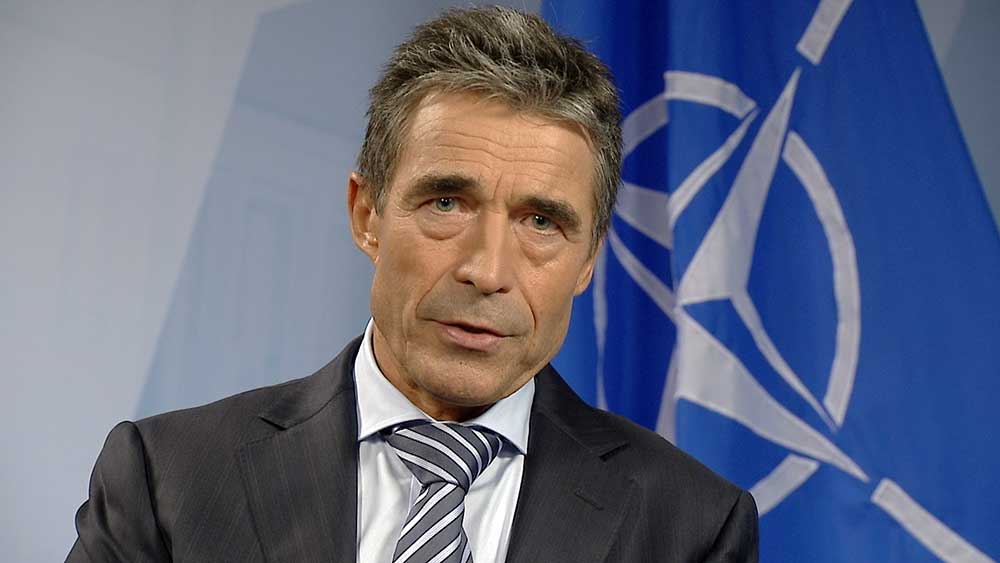
Anders Fogh Rasmussen

The NATO alliance and Russia have agreed to discuss the latest developments in Ukraine at a special meeting on Wednesday.

The alliance announced that an extraordinary NATO-Russia council will convene at the suggestion of alliance secretary-general Anders Fogh Rasmussen. Russia agreed to the meeting on Tuesday, when NATO ambassadors were further discussing the crisis among themselves.

Rasmussen has said Russia’s military intervention in Ukraine is in violation of the U.N. charter and threatens peace and security in Europe. Russian President Vladimir Putin said Tuesday that Moscow reserves the right to use its military to protect Russians there but voiced hope it won’t need to do so.

Russia took over the Crimean peninsula on Saturday, placing its troops around the region’s military bases and border posts.

South Africa to introduce Mandarin in schools after agreement with China

mandarin Basic Education Minister, Mrs Angie Motshekga has overseen the signing of an implementation plan between the Ministry of Education in China and the Department of Basic Education in South Africa in Beijing this week.

This follows the signing of a collaboration agreement between the two countries Presidents in March last year, when Chinese President Xi Jinping visited South Africa.

2014 has also been declared the year of South Africa in China with the understanding that the two countries share excellent international relations and wish to extend their relationship beyond trade into areas of mutual development. Education is a priority imperative for both countries and this implementation plan is centred around strengthening education ties at an institutional and policy level.

Bearing in mind the successes of the Chinese Education System, the Department of Basic Education (DBE), wish to learn more about the following key areas to improve Education outcomes in South Africa, with a special focus on Maths, Science and Technology.

1. Curriculum Development and Implementation

2. Mathematics, Science and Technology Education

3. Teacher Training and Development

4. Vocational Education and Training

5. Research and Development to improve basic education

Minister Motshekga delivered a Speech to Education students, academics and diplomats at the East China Normal University in Shanghai, in her speech she made reference to the challenges being experienced in South Africa in the area of Mathematics and Science education.

“It is for this reason that we are thrilled to be here in China as we begin to fulfil the agreement signed by our two respective Presidents in March last year. The agreement speaks to collaboration between our countries in a number of areas, but for us what is especially encouraging is the work we will be undertaking together in the field of mathematics, science and technology, where we have seen China excel. We hope to learn from the Chinese experience through the exchanges of knowledge and human capital, which we believe will be extremely beneficial. The signing of the implementation plan with the Chinese Minister of Education this past Monday has cemented this agreement and we look forward to working practically together towards quality education for all in our respective countries,” said Motshekga.

This collaboration allows SA to benchmark itself with the best in the world with a view of making sure that it is on par.

The Department has already identified areas for strategic partnership. In line with strengthening our participation and success rate in mathematics, science and technology we will be working with China to provide the requisite equipment and reposition our institutional arrangements to deliver in this area.

We are also in a process of reviewing our national curriculum statement to improve our split between the academic and vocational streams with the intention of encouraging more schools in the system to offer vocational subjects.

The Minister was impressed to see China had already succeeded in achieving a 50- 50 split in this regard, and believes that we can learn a lot from each other to strengthen our efforts.

The Minister visited the Chinese National Institute of Educational Sciences as the department begins to implement the recommendations of the MST task team by setting up our own Mathematics and Science office with the view of developing it into an institute outside the bureaucracy of the Department. This proved helpful to view the manner in which the Institute relates to the government department as well as the organisational arrangement of the Institute.

The Minister also visited schools in Shanghai to see how policy translates into implementation at a provincial and school level and was extremely impressed at the calibre of research and creativity being expressed by Chinese learners in the areas of Mathematics, Science and Technology.

Another aspect of the Agreement cultural exchange and the promotion of the Chinese language, Mandarin being taught in South African schools. There are currently six Confucius institutions in South Africa and with the help of the Chinese Government a curriculum for the teaching of Chinese will be developed to be offered in some schools around the country. This will assist with building on the already solid foundation of friendship and collaboration between our two countries. As South Africa’s biggest trading partner it is important for our children to become proficient in the Confucius language and develop a good understanding of Chinese culture.

“The exchange of both learners and professionals opens many additional doors of cooperation on a number of levels and lays the foundation for the development of the new emerging world economy. This new world requires strong and high performing educational systems as a prerequisite for success. As developing countries we understand each other’s challenges and can work together to find the solutions,” said Motshekga. – Department of Basic Eduction Media Statement

Land reform and ‘Boerehaat’

roodt_dan_wikiby Dan Roodt

Proletarian internationalism has never really inspired the so-called “silent majority” in South Africa, so it must count as one of the failures of the Left that they never actually persuaded “the masses” to wave hammer-and-sickle flags and demand instant collectivism.

However, most of what passes in SA for leftist politics is ethnic politics. Behind the so-called “land issue” is the land owners, the majority of whom happen to be Afrikaners. Now, those are the people the Left loves to hate, as in “Kill a Boer, kill a farmer”, “dubula ibhunu” and the other versions in ten official languages, except Afrikaans. Although, given that the editor of Beeld has now succumbed to vilifying the university-age children of his own readers as “Nazis”, there might be some official Afrikaans version of “skiet die Boer vrek, ons soek sy grond” quite soon.

Surprisingly little has been written about the phenomenon of Boerehaat or “hatred of the Boers” as it exists in South Africa, Britain, Australia and many other Commonwealth countries. It is at least as pervasive as anti-Semitism and is characterised by:

  • denying that Afrikaners exist as a nation or ethnic group,
  • considering them to be inferior or less intelligent than other white nations (especially the English);
  • seeing Afrikaners as “in-bred” or “parochial” and not cosmopolitan enough;
  • seeing Afrikaners as “inherently evil” and therefore without any legal claim to land or other property in South Africa;
  • considering Afrikaans to be a “mixture of languages” or a bastardised Creole without any cultural, literary or aesthetic value (whereas linguistically Afrikaans is perhaps the purest of all the Germanic languages).
A slew of Boerehaat photographers seek out "ugly" subjects as representative of Afrikaners, such as this photo by American Roger Ballen
A slew of Boerehaat photographers seek out “ugly” subjects as representative of Afrikaners, such as this photo by American Roger Ballen

The Boerehaat game has now been going on for so long that everyone in South Africa is very comfortable playing it. Just about everything has been taken from Afrikaners except their very lives and a few family-owned farms that still produce what South Africans buy in the supermarkets. However, the supermarkets and especially the dairy companies have squeezed the farmers to such an extent that milk is actually produced at a loss so that soon all milk will be imported, laced with imported powdered milk which may or may not contain all kinds of other substances.

The destructive rage of the South African Left compares very well with that of the Soviet revolutionaries whom Solzhenitsyn accused of killing 63 million Russians or Mao’s Red Guards or Pol Pot’s Khmer Rouge who also desired a “big transformation”.

 Most of what passes for SA history these days is a Marxist fairytale of the class struggle, which has been conveniently racialised to fit in with American race ideology that sees whites as inherently evil (being “racists”) and blacks as innocent victims of such congenital white evil.

Who really knows what happened in 1913 when the so-called Land Act was passed? Once you throw out the Deeds Office in your red fervour, you are left with competing “land claims” which will be decided by whom will get the most hysterical in denouncing the evil of his adversary. Now, the South African Left are also terrorists, as we know. If we define terrorism of the Church Street or Amanzimtoti bomb variety as “talking with the megaphone of amputated limbs”, we can already predict that a group of diffident farmers quietly appealing to economic rationality will lose the shouting match even before it begins. In fact, they have already lost it. So we know what is coming and it will be ugly for all concerned. More radicalism, more farm murders, more sadistic violence which will eventually tear down the vestiges of Roman-Dutch or “colonial law” that remain in this agonising society.

The Marxists feel cheated out of the second phase of the revolution and then the evils of apartheid get bigger and bigger the further we move away from it in time.  So the Boerehaat is constantly rising and the propaganda just keeps coming. The beast and its bloodlust have not been sated yet.

Most Afrikaners now believe that some kind of violent upheaval or civil war or apocalypse in South Africa is inevitable. You just have to read all the underground novels that mainstream publishers won’t touch and that outsiders do not even know about, Afrikaans having been declared officially dead, especially now that it is being extirpated at the tertiary level.

I find it ironic that the radio journalist Stephen Grootes should mention Robespierre in his article Land reform: Still caught up in politics, as I have often thought that the years since the mid-1980s will in future Afrikaner history be known as The Terror or “La terreur”. We are already in it and there seems to be no end in sight. Every day brings news of new atrocities being committed in the countryside.

Last night someone contacted me from Richards Bay where a young Afrikaner girl of 16 had been kidnapped by two black men and sexually molested by them, although by some miracle she was not raped. There is no police protection worth mentioning as the police are also black and therefore often sympathetic to criminals and not to their white victims. So the girl and her single mother had to look for help on Facebook. Fortunately people responded to their plight but they have fled their home and are hiding elsewhere. The girl has to write matric this year, while she cowers in someone else’s house, wondering when her “liberators” will be back.

This is what South Africa has come to: a country where law and order are increasingly falling by the wayside. But our zealous leftists want more revolution, stirring up more hatred every day.

Donate or subscribe to praag!

Uncle rapes niece of 14, gets 20 years

Child-Rape-Yesterday, 25 February a 40-year-old uncle was sentenced to 20 years imprisonment by the Ngwelezane Regional Court for raping his niece. On during September 2012 the victim (14) was with her uncle at their home when he sent by her to  buy cigarettes from a nearby shop. When the victim returned, she was raped by the accused in his room. He then promised to buy her anything she wants and told her not to tell anyone because he will stop providing the family with food. He raped the victim repeatedly on separate occasions until the victim became tired of his acts and reported the matter in January 2013. A case was opened at Empangeni police station and the docket was taken by Empangeni Family Violence, Child Protection and Sexual Offences Unit for further investigation. Through investigation, the accused was arrested and charged with rape in March 2013.

“This is a fitting sentence for the rapists who attack and raped vulnerable women and children. This will serve as a warning to those who thought they will escape the long arm of the law. We encourage our young children not to be intimidated by these criminals,” said  provincial commissioner of KwaZulu-Natal Lt General Mmamonnye Ngobeni. – SA Police News Service