Toronto mayor Rob Ford admits to buying illegal drugs

Rob Ford
Rob Ford

by Rob Gillies and Charmaine Noronha

Toronto Mayor Rob Ford admitted during a heated City Council debate Wednesday that he had bought illegal drugs in the past two years, but he firmly refused to step down even after nearly every councilor stood up to ask him to take a leave of absence.

The mayor made the confession under direct questioning by a former ally, Councilor Denzil Minnan-Wong. Ford publicly admitted last week that he smoked crack cocaine last year in a “drunken stupor,” but his comments Wednesday marked the first time he acknowledged having bought illegal drugs.

Ford paused for a long time after Minnan-Wong asked him if he had bought illicit narcotics in the past two years.

Then Ford replied, “Yes I have.”

“I understand the embarrassment that I have caused. I am humiliated by it,” Ford said.

But he then turned defiant, saying he was not an addict of any sort and rebuffing suggestions from council members that he should seek help. He insisted he is a “positive role model for kids who are down and out.”

“I’m most definitely keeping this job,” he said. “I am not leaving here. I’m going to sit here and going to attend every meeting.”

Moments earlier, all but two of the 43 councilors present for the debate voted to accept an open letter asking Ford to step aside.

Although it was a stark demonstration of his political isolation, the vote was symbolic because the City Council does not have the authority to force the mayor from office unless he is convicted of a crime.

“Together we stand to ask you to step aside and take a leave of absence,” Councilor Jaye Robinson said, reading the open letter.

The packed council chamber erupted with applause when Robinson ended her speech, saying “Let’s get on with city business.”

Outside City Hall, hundreds of protesters changed “resign!” And organizers of Toronto’s Santa Claus Parade asked that Ford not walk in the procession this year.

Ford’s refusal to resign has confounded the City Council, where many members agree that his erratic behavior – from public drunkenness to threatening to kill someone in a videotaped tirade – has consumed Toronto’s politics and undermined efforts to tackle other challenges.

But with no clear legal path to force him out, the Council is grasping for ways to shunt the larger-than-life leader aside and govern without him until next year’s municipal elections.

The open letter was separate from a non-binding motion, also being debated Wednesday, that would formally call on Ford to take a leave of absence, apologize to Toronto residents for misleading them and cooperate with police.

Deputy Mayor Norm Kelly, a Ford ally, announced shortly before the debate that he would support the motion, introduced by Minnan-Wong.

“I’m publicly advising the mayor to take some time,” Kelly said.

Minnan-Wong said he would drop another proposal to ask the province of Ontario to pass legislation to remove the mayor from office if he refuses to take a leave. Other councilors had expressed concern that asking the provincial government to intervene would set a dangerous precedent.

Councilor Doug Ford, the mayor’s brother, heckled Minnan-Wong throughout the debate.

One Ford ally, Councilor Giorgio Mammoliti, called the motion a waste of time. “We can’t tell him what to do. Only the electorate can tell him what to do,” he said.

Toronto police said last month they had obtained a long-sought video of Ford apparently smoking from a crack pipe but that it does not constitute evidence to charge him. Toronto Police spokesman Mark Pugash said Ford’s acknowledgement Wednesday that he bought illegal drugs would be passed on to investigators.

News reports of the crack video’s existence first surfaced in May, but it has not been released publicly.

Another proposed motion would curtail Ford’s powers, suspending his authority to appoint and dismiss the deputy mayor and his executive committee, which runs the budget process. It likely won’t be debated until Friday.

Toronto’s mayor already has limited powers compared to the mayors of many large cities in the United States. He is just one voting member in the council and his power stems mostly from his ability, as the only councilor elected by citywide vote, to build consensus and set the agenda. That authority, many council members say, has evaporated in the crack scandal.

Ford, 44, was elected three years ago, riding a backlash from suburbanites who felt alienated by what they deemed Toronto’s downtown-centric, liberal-dominated politics.

Despite his eroding political leverage, Ford promises to seek re-election. He maintains a hardcore of supporters he refers to as “Ford Nation,” who applaud him for abolishing an annual $60 vehicle registration tax, squeezing valuable concessions out of the labor unions and other cost-saving measures.

Councilors have expressed concern that more revelations about the mayor’s will surface and plague city politics.

On Tuesday, a judge agreed to release more documents from a drug case against a friend and occasional driver of the mayor, Alexander Lisi. Previously released documents revealed the mayor’s ties and covert meetings with Lisi.

Police said they obtained the crack video in the course of the investigation against Lisi and a gang. They say they cannot release the video because it is evidence before the court.

Ford was grilled by councilors about his links to a Toronto home where he was photographed with three suspected gang members. A police informant has described the residence as a “crack house” and police have said it relates to the crack video.

“That is not a crack house,” Ford said. “Have you been in that house?”

Councilor Michael Thompson retorted: “I have no interest in being in that house. I am not a crack user.” – AP

Bieber says ‘sorry’ for mistreating Argentinian flag

Bieber kicking the Argentinian flag

Justin Bieber says he’s sorry and the hopes Argentines can forgive him. Now he may need to tell that to some judges.

The 19-year-old pop star faces two criminal complaints after his wild tour in Argentina, in addition to trouble with police for allegedly spraying graffiti in Brazil and Colombia.

One Argentine lawyer is accusing Bieber of sending bodyguards to attack a photographer outside a Buenos Aires nightclub.

Another accuses him of defiling the national symbol by dragging two Argentine flags off stage with his feet and a microphone stand. If tried and convicted in the flag incident, that could mean up to four years in prison.

Bieber tweeted Thursday that he’s sorry. He says he “would never do anything to disrespect Argentina.” – AP

Mystery lingers over British spy Gareth Williams’s death

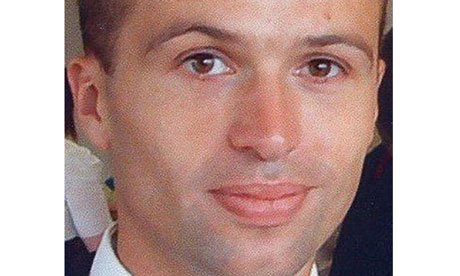
Gareth Williams
Gareth Williams

More than three years after the naked, decomposing body of British spy Gareth Williams was discovered stuffed inside a locked gym bag at the bottom of his bathtub, the mystery over his bizarre death lingers, and a police investigation has done little to clear it up.

London’s Metropolitan Police said Wednesday that their investigation had found that Williams likely died in an accident with no one else involved. But the tentative conclusion, which the police hedged by acknowledging many gaps haven’t been filled in, is unlikely to calm conspiracy theories surrounding the case.

Metropolitan Police Deputy Assistant Commissioner Martin Hewitt said Williams, whose remains were discovered in August 2010, was “most probably” killed in an accident, a verdict which conflicts with a coroner’s inquest that concluded last year that Williams was probably killed by another person in a “criminally meditated act.”

Hewitt said the police position “is that, on balance, it is a more probable conclusion that there was no other person present when Gareth died.”

“But the reality is that for both hypotheses, there exist evidential contradictions and gaps in our understanding,” he said.

Hewitt told reporters at Scotland Yard headquarters that his conclusion was based on the fact that investigators found little evidence of foul play in a death that has spawned a host of theories, from assassination to sexual adventure gone awry.

Williams, a cyberwarfare expert, worked for Britain’s GCHQ eavesdropping service and was attached to the overseas espionage agency MI6 when he died.

Some have raised the possibility that Williams locked himself in the bag as part of a sex act gone wrong or an experiment in escapology – the Houdini-like art of wriggling out of restraints or traps. Investigators found that he had visited bondage and sadomasochism websites, including some related to claustrophilia – a desire for confinement in enclosed spaces.

Police concluded – after several reenactments – that it was possible for Williams to climb inside the sports bag and lock it.

However, police couldn’t find Williams’ DNA on the lock, palm prints on the rim of the bath, or footprints in the bathroom itself. The coroner, Fiona Wilcox, said that pointed to another person having taken the bag into the bathroom, noting that if Williams had been “carrying out some kind of peculiar experiment, he wouldn’t care if he left any foot or fingerprints.”

She was also critical in her inquest verdict of MI6, which failed to pass evidence to investigating police, and said that while it seemed unlikely that British intelligence agencies were involved in Williams’ death, it was a “legitimate line of inquiry.”

Hewitt said there was no evidence that the apartment had been cleaned to remove forensic traces and nothing to suggest a struggle or a break-in.

And he dismissed the idea that Britain’s secretive intelligence services had carried out a cover-up, noting that a total of 27 members of staff from both MI6 and GCHQ had been interviewed and that police were given full access to Williams’ vetting and personnel file.

“I do not believe that I have had the wool pulled over my eyes,” Hewitt said. “I believe that what we are dealing with is a tragic unexplained death.”

He added that there was “no evidence to support the theory that Gareth’s death was in any way related to his work.”

Williams’ relatives said in a statement that they were disappointed that the facts remain unclear, but still believed it was likely he had been the victim of foul play.

“We consider that on the basis of the facts known at present the coroner’s verdict accurately reflects the circumstances of Gareth’s death,” the statement said. – AP

Krejcir case: Beeld photographer’s camera taken by restaurant owner

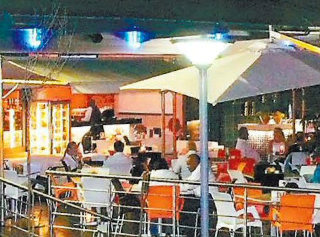
Forbidden: picture of the Harbour Fish & Meat Market in Bedfordview

Beeld newspaper intends laying criminal charges after its team was allegedly harassed for taking pictures of a restaurant frequented by Czech fugitive Radovan Krejcir, the SA National Editors’ Forum said on Thursday.

Sanef condemned an incident at the Harbour Fish & Meat Market on Wednesday and said it would complain to police commissioner Riah Phiyega.

It said restaurant employees seized a Beeld photographer’s camera after he took pictures of the restaurant from the parking lot of the Bedford Centre.

“After spotting the photographer, two men left the restaurant and aggressively approached the Beeld team in their vehicle,” it said.

“They removed camera equipment from the journalists’ vehicle and grabbed the camera from photographer Cornél van Heerden’s hands.”

They returned to the restaurant with the equipment.

The journalists called the Bedford Centre’s security, who allegedly refused to intervene and return the equipment.

Beeld then called the Bedfordview police station, which dispatched three officers to the scene.

The restaurant offered to release the equipment on condition that pictures of their restaurant be deleted in front of them.

“Shockingly, the SA Police Service members present agreed that the pictures should be deleted,” Beeld editor Adriaan Basson said in the statement.

He advised his team to delete the photos, get their camera equipment and leave.

“It was clear to me that we were in harm’s way and I didn’t want to put my colleagues at risk by continuing the argument with people who clearly have no clue about freedom of expression,” said Basson.

After the photos were deleted, the camera equipment was returned.

Basson said he was enraged by the restaurant’s actions, as the pictures were taken from a public space.

“We have seen numerous photos and footage of the restaurant before. This was a complete over-reaction by the restaurant and a failure by the Bedford Centre’s management to intervene.”

Sanef said it would take the matter further.

“Sanef is to complain to police commissioner General Riah Phiyega and request that disciplinary action be taken against the police officers who removed the pictures on the grounds of theft,” it said.

Management at the restaurant declined to comment on Thursday, saying that only the owner, who was not there, could do so. The owner would only be at the restaurant and available for comment after midday.

Krejcir made headlines this week when a bomb exploded at his business premises in Bedfordview on the East Rand.

The device went off late on Tuesday at Krejcir’s Money Point gold and diamond exchange office, next to the Eastgate shopping centre.

Two people were killed and five others injured.

On Wednesday, police combed the scene for clues and evidence.

In July, Krejcir was the target of an apparent assassination attempt outside his Bedfordview office.

As he was leaving the parking lot, an explosive device was detonated from the back of a vehicle which was parked opposite his vehicle. Krejcir escaped unharmed.

About three weeks earlier, Krejcir’s Bedfordview business was broken into and jewellery worth R3 million was stolen.

On Monday, a case against a man accused of involvement in a plot to kill Krejcir was postponed to November by the Germiston Regional Court.

Brendan Harrison was denied bail after investigators claimed his life would be at risk if he was not kept in custody.

Krejcir is due back in the Kempton Park Magistrate’s Court on December 9 for his extradition case.

Magistrate William Schutte will assess progress made in Krejcir’s bid for asylum, currently with the Refugee Appeal Board.

Krejcir was sentenced in the Czech Republic last year after being convicted in absentia of money-laundering. He would face an 11-year sentence if extradited. – Sapa

Violence against women, children, elderly ‘prevalent’ in S. Africa: Mthethwa

Nathi Mthethwa
Nathi Mthethwa

The fight against crime could not be separated from the war on want, Police Minister Nathi Mthethwa said on Thursday.

Speaking at Business Against Crime SA’s gala dinner in Sandton, the minister said contact crimes such as murder, rape and assault occurred in environments which did not allow for a decent social and family life.

“This speaks to the challenge of addressing the three resilient fault lines, which are unemployment, poverty and inequality,” Mthethwa said.

He said that with recent crimes against toddlers, teenagers, and the elderly, police had been blamed fairly and unfairly for not doing enough to protect citizens against such crimes.

“Various independent voices have expressed what should be done and we have listened and engaged them,” he said.

Mthethwa urged parents to work hand in hand with police in protecting their children, as it was their responsibility as much as it was the police’s to guarantee their well-being.

“Violence against women, children and the elderly is still prevalent in our society,” he said.

“This phenomenon militates against our national effort of creating a caring and humane society, underpinned by values of human solidarity, justice, peace and development.”

Measures were being taken and strengthened to stop crimes committed against women, children and the elderly.

Mthethwa called on business to play a more prominent role in the battle against such crimes.

“We want to urge you as the business sector to play a prominent role on such matters,” the minister said.

“We need to hear your voice because the majority of victims of such crimes are employees who contribute to our country’s economic growth.”

Another major challenge facing the safety and security cluster was lawlessness during public protests.

“The… negative impact is that the policing of public protests draws the police away from their normal policing activities and forces the police to redirect resources,” he said.

“This can lead to gaps in normal policing which are sharpened when the police personnel deployed to the policing of such events are drawn from local police stations.”

The business sector had also been affected by this problem.

“To demonstrate this strain around policing, since the start of this financial year the police have managed 6028 peaceful protests and 974 unrest incidents,” the minister said.

“A total of 1499 persons were apprehended during this period.”

Government appreciated the efforts undertaken by the business sector against crime because the sector could have adopted a stance of sitting on the sidelines.

Government had worked with Business Against Crime for over 17 years and a new memorandum of understanding between the two was being finalised, said Mthethwa. – Sapa

Racism ‘everywhere’

Racism

by Dan Roodt

With violence and anti-white racism rising in South Africa, Afrikaners need international support to survive. Our unique testimony of how a Western nation is being dominated by non-Westerners may just save the whole of our civilization!

Donate or subscribe to praag!

– See more at: http://praag.org/?p=11549#sthash.rD0j1X7w.dpuf

by Dan Roodt

Donate or subscribe to praag!

Sipho Hlongwane had to reach all the way to Slovenia (a little volkstaat that violently revolted against the nation-building of the old Yugoslavia) to discover the term “postmodern racism” in a tract by Slavoj Zizek (Living in postmodern racism, www.bdlive.co.za, November 11). I remember more than 10 years ago Claudia Braude introduced us to “subliminal racism”, which let her label all media in South Africa racist.

No doubt South Africa harbours a large variety of “racisms”: postmodern, subliminal, imagined, symbolic, public, private, and so on. Like the patient on Sigmund Freud’s couch, the country is in search of a “cure”, which could be either a rugby quota or another huge dose of black economic empowerment. Like a manic depressive, the Democratic Alliance seems to be vacillating on how racist South Africa really is, hence its recent volte face on more draconian affirmative action.

If racism had to end tomorrow, most of our academics would find themselves without jobs, not to mention politicians! So South Africa is married to metaphysical racism forever. Even in those “end times” referred to by Zizek, there will always be racism. Even if the dollar is replaced by Bitcoin and peak oil takes us back to ploughing with oxen, racism will survive as both an explanation of the modern world’s origins and its remaining inequalities.

American Craig Bodeker made a beautiful, minimalistic, black-and-white (in the cinematographic sense) documentary called A Conversation About Race. He interviewed people of all races on the streets of Denver, Colorado, asking them whether they thought “racism” was still a big problem in the U S. Of course, everybody thought so. Many of the subjects stated: “Racism is everywhere.”

Few people had any direct experience of racism, but they discerned it in other people’s body language, in their use of euphemisms or being patronised by others. One black man “who dates interracially”, as he described it, was complimented on being “a good dancer” in a club by a white man. He thought it was a racist comment as the man would not have complimented a white man in the same way. So the compliment, like the insult, may be construed as racism.

It seems that racism is the real motor of history, as opposed to Karl Marx’s class struggle or Friedrich Nietzsche’s will to power.

It follows that, like sin, metaphysical racism is insurmountable. It permeates our lives and contaminates our discourse. The radioactive cloud recently released from Pelindaba was much less of a danger than racism, which must explain why almost no one took any notice of it, while every day we agonise about racism.

Also published as letter in Business Day.

Donate or subscribe to praag!

Massive cyber attack over past few days on PRAAG websites

praagorg_logoOver the past few days, starting on Tuesday morning, a massive cyber attack involving potentially tens of thousands of computers in a so-called Distributed Denial of Service (DDOS) Attack was executed against websites and servers of PRAAG. The object of the attack was to bankrupt PRAAG and its service provider through the consumption of bandwidth and damage to network infrastructure.

At times the DDOS attack brought down the PRAAG servers but currently both the Afrikaans site at praag.co.za and the English one at praag.org are online.

Dr. Dan Roodt, Director of the Pro-Afrikaans Action Group (PRAAG) a community news service and cultural organisation, said in a statement: “We are absolutely astonished at the level of cyber activity currently directed against us, by extremist anti-Afrikaans groups in South Africa. There are also several Facebook pages run by people under assumed identities who wish to shut us down, ostensibly because we support anti-crime protests and multilingualism in South Africa.”

The cyber attack caused considerable damage not only to PRAAG, but also to its service providers and their networks, creating criminal liability under SA legislation. In addition, there are grounds for a civil suit if the perpetrators could be located.

“We are going to lay charges with the SAPS under the Electronic Communications and Transactions (ECT) Act 25 of 2002 for the DDOS attack against us, but also against those anonymous individuals slandering us on Facebook, social media, and in relation to potential advertisers on our site, said Roodt.

“We are not going to take these attacks lying down,” Roodt continued. “Our readers and supporters are right behind us and hundreds have presented themselves as volunteers to counter these attempts at muzzling us. However, we will not be using the distasteful and underhanded techniques of our opponents but will be defending ourselves in an open, transparent and legal manner.”

Free State coup suspect agrees to a plea bargain

Mark Trollip
Mark Trollip

One of the accused in a rightwing coup plot case has agreed to a plea bargain, the Bloemfontein High Court heard on Wednesday.

During the appearance of Mark Trollip, 48, and Johan Hendrik Prinsloo, 49, prosecutor Torie Pretorius read the details of a plea and sentencing agreement between the State and Trollip.

He and Prinsloo face charges of high treason and conspiracy to commit terrorist acts for their involvement in plans to bomb the ANC’s national conference in Mangaung last December.

In terms of the plea and sentence agreement, Trollip would plead guilty on the conspiracy charge and the State would withdraw the high treason charge.

Pretorius said one of the reasons taken into account with the plea agreement was that no lives were lost and no damage was done. The accused also could not obtain any weapons for the execution of their plans.

According to the charge sheet, Trollip and Prinsloo planned to acquire weaponry such as AK-47, R1 and R4 rifles to execute the coup.

Pretorius said Trollip, who was the self-proclaimed leader of the organisation Wit Brandwag, expressed remorse and was willing to co-operate with the police after his arrest.

Some of the plans were unrealistic, but the State felt that if the accused were successful, many lives would have been lost and caused racial tension.

Under the plea agreement, Trollip would serve a prison sentence of eight years. Trollip is represented by Kenny Pretorius. – Sapa

Criticism of police a security threat

MK soldiers parading under images of Mandela and Mbeki

Attacking the police’s crime intelligence division threatens the country’s security, the Umkhonto we Sizwe Military Veterans’ Association said on Monday.

“The various allegations levelled at the leadership of crime intelligence division… and the clear turf battles seeming to be raging… is a threat to the security, peace and stability of our country,” MKMVA chairman Kebby Maphatsoe told reporters in Johannesburg.

He said generals and colonels who served in the apartheid-era security intelligence had retired at the dawn of democracy and established private intelligence institutions.

“These are trained people…. Those generals are paraded as experts on crime fighting and have the audacity to regularly bash the SA Police Service, especially its crime intelligence division.”

He said civil society had been against the establishment of a crime intelligence unit, and was intent on discrediting the police.

He singled out former crime intelligence head Richard Mdluli as an example of this.

“Civil society has been against him returning to perform his duty as a policeman. It is dangerous. We will wake up one morning to an uprising and question why did it go about without being detected.” – Sapa

Open letter to Dan Roodt

Leadership

by Brian Faul

First off I am writing this mail in English in order for the message to be available to everyone. I am deeply concerned as to what is presently taking place in South Africa.

I am a white Afrikaans-speaking male in my 40’s. For all intents and purposes, this makes me enemy number one for those currently ruling South Africa.

I am a highly qualified professional in my field of expertise with many years’ experience. Among the problems I currently face is the total onslaught against people with similar profiles to mine. For the sake of correcting issues of twenty and more years ago, I am now after all this time being victimized to the extent of total poverty.

I have a forced financial commitment toward the state regarding rates and taxes. I am also taxed on the little revenue I generate on the side and I pay tax in the form of fuel levies and VAT every time I go to the shop. In return for this I get zero back from government. I am not allowed to parcipate in the formal job sector because I am not black enough..

A number of years ago I was destroyed financially by an unfair land claim that was eventually thrown out to my knowledge. During this time my business went insolvent as we were unable to operate on the property during the course of this bogus land claim.

As a result 15 people – all African – lost their jobs and the means to feed and house their families on the property and were put on the streets as a result. This, after living and working on the property with me for 16 years.

It later came to light that a very high-ranking police official who was later found guilty of fraud charges and corruption was behind the entire bogus claim. This is only one claim; there were many in surrounding areas that had exactly the same outcome: unemployment and poverty for hundreds of families.

Currently South Africa is living within a bubble.This bubble is bound to burst as more and more corruption comes to light and unemployment increases due to restrictive labour legislation being implemented. The problem by and large is that the people who are supposed to benefit most from this are standing to lose the most in the end.

I want to reiterate that this is not just an Afrikaner problem but a national problem for any white, coloured and Indian person in South Africa.

It is time for people to unite in thought and action before it is too late. There is still a small window open in this regard and this relates to the upcoming elections. It will in fact be the last chance for any white, Indian or coloured person to make a difference. After this election has passed and there is no significant opposition, the writing will be on the wall for all South Africans, including African people who are going to suffer the most, as in Zimbabwe. There will be no new dawn in South Africa, only poverty and strife leading to civil unrest and economic chaos.

The current government is essentialy anti-South African as it is embracing people from all over the world such as the Chinese who hold their allegiance to China and not to South Africa. Their interest is to take whatever they can back to build their own country, using our resources. In the long run millions of Chinese may settle in South Africa claiming our resources and living off our welfare system that is already overburdened and in a shambles as it is. It is known that the Chinese make the worst slave masters in the world.

Time is running out for creating an alternative. In this regard a formidable opposition is not yet available that will hear the concerns of the people. As far as I am concerned, Helen Zille and the Democratic Alliance have sold us out, following upon recent events. They have clearly unmasked their long-term intentions and they are not going to be acting in the interest of the minority voters.

In general South African people are hospitable, hardworking and honest, seeking a better life. By and large people of all races are not out to deliberately cause harm and conflict with each other. There is a very bad criminal element at present that is committing the most horrific crimes and gving a political slant to their actions. These crimes are often committed by people born after the democratic dispensation of 1994. They are often uneducated individuals that have been swept up by the words of a man such as Julius Malema that is forging ahead with a revolution based on self-enrichment and hatred because he was born black.

If one views what is taking place in South Africa at the moment a lot of it can be traced back to revolutionary tactics put in place by the ANC and Communist Party during their so-called struggle phase, including cadre deployment. It is as if no-one has given them the instruction to stop using these tactics as the struggle ended 20 years ago.

The cadre deployment tactics is what is currently driving economic collapse in many sectors including the most important: that of the future generation’s education.

The solution to this and many other issues is not a simple process and should be well thought through while we still have some time and this leads me to the following question.

Dan Roodt, will you be willing to lead us? I can only speak for myself and my family, yet I am sure that thousands of people in similar circumstances would ask you the same question.

The fact is, we the Afrikaans and English white people, as well as the coloured and Indian people, do not have leadership or rather coherent leadership at the moment. We are floating in a sea of doubt and despair, seeing civil strife ahead. This question is asked by people that have noticed your leadership skills. People that are willing to trust you and give you the support necessary to obtain this objective.

Those that do not arrach value to this letter, let them simply skip it and move on. This is a question raised by your followers and not by your enemies.

I believe you have been a victim of an onslaught by certain individuals to undermine your financial and moral support base.To those people I say: go to hell.

I have been made to understand that there is obviously a financial implication for yourself to enter the political domain. I believe the white people holding the same values as myself who are currently at the receiving end of this onslaught will commit financially to a few rand here and there. If people can donate cash to a host of causes without a direct impact on their future surely they will commit a few rand to this critical issue?

Perhaps you can set up a fund in this regard and outline the cost factor as I don’t believe people are actually aware that there are large amounts of funds needed for a venture such as this.

Time is of the essence so the sooner people are made aware and there is a manifesto in place the sooner people can act and commit to this.

Dr Dan Roodt, I urge you to consider this option and to at least put it out there for the general public and your support base to see.

Kind regards,

Brian Faul

Explosion on Radovan Krejcir’s property in Bedfordview

radovanTwo people were killed and five others injured when a bomb exploded in Bedfordview near the Eastgate shopping mall on Tuesday, police said.

Police were still combing the scene late on Tuesday night at the the property of Czech businesmen Radovan Krejcir where the bomb blast occured.

Forensic experts late in the evening told Sapa that the roof of the building had collapsed due to the magnitude of the blast.

A forensic expect who cannot be named said they were still trying to establish what kind of explosive was used.

“We still have to figure out what kind of bomb it was and the type of components it had.”

The injured were taken to Bedford Gardens hospital.

The bodies of the dead were still inside the building after 12 at night and were expected to be removed in the early hours of Wednesday.

The explosion took place on the corner of Bradford and Nicol Roads, with the intersection closed off to traffic and cordoned off by police.

In July, Krejcir was the target of an apparent bid to kill him outside his Bedfordview office.

“It is alleged that he [Krejcir] arrived at the premises and parked his vehicle,” police spokesman Lt-Col Lungelo Dlamini said at the time.

“As he was leaving the parking spot, an explosive device was detonated from the back of a vehicle, a VW Polo, parked opposite his vehicle.”

Krejcir escaped unharmed. The blast, in the parking lot of the Money Point gold and diamond exchange’s head office, on the corner of Nicol and Bradford Roads, Bedfordview, left several holes in Krejcir’s car.

The VW Polo was stolen in Brixton, Johannesburg, in April.

Krejcir said he heard noises, like bullets being fired, from a car he parked next to.

“I managed to get away and saved my life… someone out there tried to kill me,” Krejcir told Sapa at the time.

About three weeks earlier, Krejcir’s Bedfordview business was broken into and jewellery worth R3 million was stolen.

“It is on the same premises where an attempt to kill him was executed. On July 3, unknown suspects broke into the premises through the roof, cut open a safe, and stole jewellery worth approximately R3 million,” Dlamini said at the time. – Sapa

Why everyone should support the Afrikaner struggle

roodt_dan_wiki

by Dan Roodt

With violence and anti-white racism rising in South Africa, Afrikaners need international support to survive. Our unique testimony of how a Western nation is being dominated by non-Westerners may just save the whole of our civilization!

Donate or subscribe to praag!

It is now commonly accepted that Afrikaners and South African whites generally are in deep trouble. There are now two, no three, major black political parties who are trying to outbid one another in confiscating white-owned land, taxing us more, putting stricter racial quotas on our rugby and cricket teams, swamping the remaining white-majority schools with black pupils and making it harder for white students to gain entry to university. Even local taxes are used in an attempt to bankrupt many white-owned small businesses or family-owned farms.

All in all, the multicultural experiment is failing dismally in South Africa. Violence and mayhem are rising (70 000 of us killed since 1994), like corruption, environmental degradation and intolerance among South Africa’s linguistic and ethnic groups. Foreign Africans, like white farmers, are routinely killed and more often than not the police and the criminal justice system are turning a blind eye.

The city of Pretoria, with the Voortrekker Monument in the foreground

To many people overseas, South Africa is a lost cause, a sinking ship only worth abandoning. Yet, the very failure of our society presents a powerful argument against political correctness that may still save us and European civilization. It will take decades for Europe or North America to reach the state of advanced decay that South Africa finds itself in. We are ahead of the curve, as they say. We are the empirical proof that multiculturalism, affirmative action, the adulation of black people simply because they are black, lead straight to disaster!

But still, the skeptic may ask, why is it worth saving three or four million million whites in South Africa when the entire European/Western civilization is currently at risk? When support is needed to save France, Britain, the USA, from a programmed demise and takeover by other cultures, why bother about South Africa?

I accept that laying down our lives for most of the twentieth century in at least four wars fought for the Allies of for the West, does not count for much. But here are some persuasive reasons why you should support us now, in our final battle for survival. It is not a physical, but a spiritual battle, one of the will. We have many enemies and few friends… Yet we continue, against all odds, to resist being murdered, being acculturated, being assimilated!

Why the Afrikaner people is worth saving (and supporting)

Most of us come from Northern Europe which, for the last 300 years or so, ever since the Enlightenment, has produced some of the foremost breakthroughs in science, philosophy, art, music and literature. If it is worth saving Northern Europeans, it is worth saving us. In fact, we are a unique group of interbred Dutch, Germans, French and Scots who mostly speak a modernised Germanic dialect called Afrikaans. During the twentieth century we were united during a great national movement that was only brought down through foreign intervention, terror, intense propaganda, financial sanctions and more. Instead of getting a federal system and tolerance for ethnic diversity, we got Leninism and ethnic domination, even a slow genocide during which we are being killed one by one, family by family.

To many people, language is but a means of communication. Yet without Milton or the English Romantic poets, the English language would never have expressed a unique national identity, nor would German have acquired a high status without Goethe, Russian without Pushkin and Dostoevsky, etc. The astonishing aspect about our language, Afrikaans, is that, while evolving into a simplified grammar, its lexicon or vocabulary has remained more or less intact since the European Middle Ages, much more so than even the major European languages. We maintain a unique link with our distant past in Europe. There is some evidence that most of Northern Europe spoke dialects very similar to Afrikaans from 1300 to 1600 when Low German was the lingua franca of the Hanseatic League, a forerunner of the European Union which bound hundreds of cities together, from Russia to England and the Low Countries. This trade and seafarer’s tongue finally beached right here in South Africa in 1652. We nurtured and cared for this language which today, against the hostility of the state and global corporations who would like to see it disappear, remains a vehicle for cultural and scientific expression, for teaching anything from law to mathematics, from film to cooking, from information technology to accounting or high finance.

farmer_potatofieldAfter more than three centuries in Africa, we have become hardy and strong. Is there any other country in the world where blacks have to impose racial quotas favouring themselves because they feel threatened by the sporting prowess of whites? Not to mention the most radical affirmative action programme on earth, in order to starve us economically, intellectually, even literally, so as to prevent us from producing food on our farms, like we have done since the 1650s!

The battle for South Africa is not over. One would have thought our fate was sealed in 1994 when Nelson Mandela became president of this country, after the dismal failure of the then Afrikaner leadership during the negotiations at Kempton Park. An avowed communist and co-conspirator of the East German Stasi, Joe Slovo, triumphed over them all. Yet, such is our resilience in the face of terror, farm murders, racial and language discrimination, economic and educational injustices, that after 20 years of very hostile government we are still here!

The unique contribution of Afrikaners to the future of Europe?

Just today I saw a French TV debate on Ce soir ou jamais! in which a Cameroonian author, Léonora Miano, told Elisabeth Lévy “not to be afraid of becoming a minority in France”. Lévy took the risk of articulating the apprehension of many French people in seeing their country changed culturally by immigration. With supreme arrogance, Miano told her bluntly that “this is what is called a mutation” and “it is going to happen”.

What wil life be like once the French are a minority in France, the Dutch a minority in the Netherlands, the Italians a minority in Italy, and so on? Well, they need look no further than South Africa to find the nightmarish answer. Once one becomes a minority under a non-Western majority, one is simply forced to undergo constant violence, debasement, humiliation and impoverishment through racial and ethnic quotas.

The testimony that we Afrikaners bring to the international debate on immigration, multiculturalism, race and ethnicity, may yet save Western and European civilization! Yet for that possibility to be realised, we ourselves need to survive.

We did not ask to be cast ashore in 1652, yet we have made the most of our opportunity by building the most successful country in Africa, a country where we are today cast as foreigners. We are denied access to the very institutions our forebears had founded while our names are removed from towns, streets and buildings, to bring home to us that we are the racial and cultural “other”. We are good enough to pay taxes but not to be counted as full citizens; a myriad of laws impose a fundamental inequality on us under the pretext of ensuring, precisely, “racial equality”.

In South Africa, as there will no doubt soon be all over the world, something caled “fair discrimination”, which is nothing other than anti-white racism.

If you believe our voice and unique testimony should be heard and that we do not deserve simply being killed or expelled from our own country, then we humbly ask you to support our struggle for dignity, equality and fair treatment by the black majority and their radical communist allies. For our long-term survival, like that of the Palestinians, only self-government will suffice.

Please support us, in word and in deed!

Donate or subscribe to praag!

92-year old stabbed to death in the Eastern Cape

knife_murderA 92-year woman has been stabbed to death by a relative at Mndundu Village, in Willowvale, Eastern Cape police said on Sunday.

Captain Jackson Manatha said the woman was asleep in a room with her grandson when a man entered at 11pm on Saturday night.

“The granny was stabbed on her upper body and she died instantly. The motive for the murder is not known at this point in time,” said Manatha.

“The suspect was known to the grandson and police arrested him the same night. The grandson was not injured and it appears that the granny was the target of the killing.”

He said a 35-year-old man was arrested on Saturday night. It was not known how he was related to the elderly woman.

The man would appear in the Willowvale Magistrate’s Court on Monday on a charge of murder. – Sapa

S. African cabinet condemns protest vandalism

Collins Chabane
Collins Chabane

There is no logic in destroying one service in the course of demanding another, Minister in the Presidency Collins Chabane said on Thursday.

Briefing the media following Cabinet’s fortnightly meeting on Wednesday, he said the destruction of private and public property, seen in recent service delivery protests around the country, served nobody’s interests.

“Cabinet condemns the recent spate of violence, destruction of private and public properties, and looting of goods in Gauteng, the Eastern Cape, and Western Cape… [and] commends the police for intervening and quelling the situation.”

The destruction of public property deprived communities of much-needed services.

“Government will not allow criminals to destroy structures and amenities where vital services are rendered. Vandalism helps no one, and there is no logic to destroying one service in the course of demanding another,” he said. – Sapa