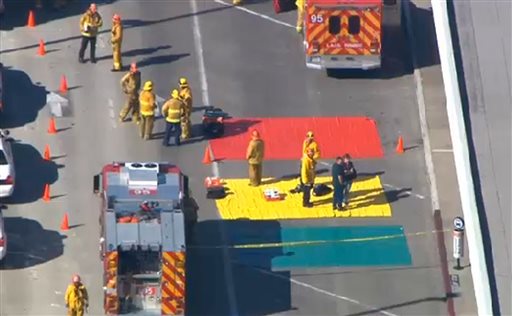
Shooting at Los Angeles airport kills one

In this aerial video frame grab provided by CBS-LA, fire and rescue personnel gather at Los Angeles International Airport on Friday Nov. 1, 2013.

A gunman opened fire with an assault rifle at Los Angeles International Airport (LAX) Friday, killing a security agent and wounding seven people, officials said.

Panicked travelers scrambled to escape after the lone suspect, named as 23-year-old Paul Anthony Ciancia, pulled out the gun and shot his way through a security checkpoint before being stopped in an exchange of fire with police.

The motive for the shooting was unclear, but the Federal Bureau of Investigation said it could not rule out terrorism. The gunman was reported to be in critical condition in hospital.

The shooter “came into Terminal Three, pulled an assault rifle out of a bag and began to open fire… He proceeded up into the screening area… and continued shooting,” said LAX police chief Patrick Gannon.

He then entered the main terminal area and reached a Burger King restaurant before officers “engaged him in gunfire… and were able to successfully take him into custody.”

The Transportation Security Administration (TSA), which employs screeners and guards at airports, confirmed one of its employees had died.

“Multiple Transportation Security Officers (TSOs) were shot, one fatally,” said a TSA statement emailed to AFP.

The Los Angeles Times initially cited sources saying the shooter, who opened fire shortly after 9:00 am in the crowded terminal was also believed to be a TSA employee at the airport, which is the country’s third-biggest hub.

Gannon would not comment on that report, but said: “We believe at this point that there was a lone shooter,” and that he “was the only person who was armed in this incident.”

Later, the FBI named him as Ciancia, saying he was a LA resident but giving no further details.

An NBC television report suggested Ciancia may have had some link to the TSA, and targeted TSA agents as his victims.

Of the seven people injured, six were taken to hospital, said the head of the LA Fire Department James Featherstone, briefing reporters for the first time a couple of hours after the incident.

One eyewitness recounted the shooter dressed in greyish-green clothing with an assault rifle opening fire as he went up an escalator and through the security area.

Live television footage showed armed police on the top of parking structures, apparently still looking for a possible gunman, while multiple ambulances were parked outside a terminal building.

Flights were disrupted as the Federal Aviation Administration (FAA) issued a national ground-stop, or hold, for all LA-bound flights that had not yet departed from their originating airports.

Eyewitness Brian Adamick, 43, said he was preparing to board a flight when he saw people running through the terminal, away from a security area. He and others responded by going through an emergency exit onto the tarmac.

A short time later shuttle buses began helping passengers to leave and he saw a wounded airport worker, from the TSA, board one bus, with a bloodied ankle.

“It looked like it was straight out of the movies,” said Adamick.

Another non-US passenger, named only as Alex, said he was waiting in line on an upper terminal level when the shooter opened fire on the floor below.

“He shot one guy downstairs,” he told KTLA 5, adding that the gunman then went up some escalators toward a security area.

“He fired several shots when he went through the security check,” he said, adding: “He just went straight through the security check.”

Eyewitness Eric Williams described the gunman to ABC7 television.

“We were standing in the TSA line to get checked through and all of a sudden we heard a shotgun. I saw the shooter and he was a Caucasian probably 18 to 25 years old,” he said.

Although there was no indication of other people being involved in the attack, the FBI said it could not rule out terrorism.

“It would be premature to comment on a motivation at this time and joint investigators have neither ruled out terrorism, nor ruled it in,” it said.

In Washington, President Barack Obama was kept up to date on the shooting. “Obviously, we’ve been monitoring it and we’re concerned about it,” Obama said.

German MP says Snowden ready to testify in Merkel tapping case

Hans-Christian Stroebele

Whistleblower Edward Snowden has met with a German MP in Moscow. He passed a letter addressed to the German government and federal public prosecutor where he allegedly said he is ready to testify over Washington’s probable wiretapping of Merkel’s phone.

During the meeting, Snowden made it “clear that he knows a lot,” Greens lawmaker Hans-Christian Stroebele told ARD channel.

“He expressed his principle readiness to help clarify the situation. Basis for this is what we must create. That’s what we discussed for a long time and from all angles,” the MP said. “He is essentially prepared to come to Germany and give testimony, but the conditions must be discussed.” 

Stroebele, 74, is a member of the German parliament’s control committee which is responsible for monitoring the work of intelligence agencies.

Snowden wouldn’t be able to travel to Germany to give evidence, as that would effectively see his refugee status lifted. If that were to happen, it would be possible for him to be extradited to the US, Interfax news agency quoted an unknown source as saying.

“At the same time, the German General Prosecutor’s Office could in principle send its representatives to Russia or pass its written questions on to Edward Snowden,” the same source said.

German Chancellor Angela Merkel has dispatched the country’s top foreign affairs and intelligence advisers to Washington this week to further investigate the allegations that her cell phone was tapped by the NSA, the report which caused fierce outrage in Germany.

The scandal initially broke when journalists working with Snowden’s leaked documents contacted the German government for clarification. German politicians subsequently suggested involving Snowden as a witness in the wiretapping case.

The German Federal Prosecutor’s Office may summon Snowden to be a witness in the case, German justice minister Sabine Leutheusser-Schnarrenberger told Deutschlandfunk radio on Sunday.

“If our suspicions prove correct and a case is opened, the German Federal Prosecutor’s Office will have to consider the possibility of interrogating Snowden as a witness,” she said. 

If Snowden were to come to Germany for the case, the EU country could breach US’ requests for extradition, the minister added.

Leutheusser-Schnarrenberger also said that the phone tapping is illegal and constitutes a crime,    therefore those responsible should be held accountable.

A parliamentary session will be held on November 18 to discuss the phone tapping. The Greens, along with the far-left Die Linke party, previously asked for a public inquiry into the matter. They were the ones to call on witnesses, including Snowden.

In June, Edward Snowden, a former NSA contractor who disclosed secret US surveillance programs, fled to Hong Kong and then to Russia.

President Vladimir Putin rejected US demands to extradite Snowden to face charges including espionage.

In early August, Snowden was granted temporary asylum, which can be extended annually.

America’s Bantustan

detroit2By Glen Ford

“If we don’t do something real soon, I think you’ll have to agree that we’re going to be forced either to use the ballot or the bullet. It’s one or the other in 1964. It isn’t that time is running out — time has run out!” – Malcolm X, “The Ballot or the Bullet,” Cleveland, Ohio, April 3, 1964.

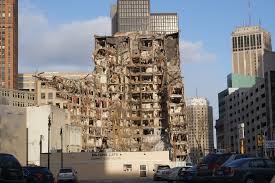
A half-century after the man once known as Detroit Red spoke those words, the last grains of sand are trickling from the hour glass of what has passed for democracy in America. The principle of one-person, one vote – or any meaningful franchise, at all – is no longer operative for the majority of Black people in the state of Michigan, whose largely African American cities are run by emergency managers accountable to no one but Rick Snyder, the venture capitalist in the governor’s mansion. The same bell is tolling for every urban center in the land, as hegemonic finance capital creates the template for direct corporate rule through the systematic destruction of Detroiters’ citizenship rights.

The 82 percent Black metropolis has been reduced to a Bantustan in both the economic and political senses of the term. Surrounded by some of the richest counties in the nation, the impoverished city exemplifies a national racial wealth gap that is more profound than that which existed in South Africa at the height of apartheid, as detailed by Jon Jeter in this issue of BAR (See “Worse Than Apartheid: Black in Obama’s America”). The Emergency Manager law, passed by the Republican state legislature after rejection by voters in a referendum, makes the Bantustan analogy complete, with a Black corporate lawyer overseeing the dismantling of every mechanism of local democracy. Kevyn Orr’s ascension as plenipotentiary of Wall Street is also the ultimate logic of the most vulgar current of African American politics, which seeks only Black representation at the highest levels of power, no matter whose interests are served. Wall Street long ago scoped this Black weakness, and has exploited it at every political level.

“The same bell is tolling for every urban center in the land.”

Detroit’s dissolution also sounds the death knell for a generation’s dreams of authentic “Black Power” through purely electoral means in collaboration with corporate “renaissance” schemes. The Black masses have never been envisioned as part of any “renewal” of the cities under corporate auspices. Rather, investment is contingent on Black disempowerment and removal – the corporate axiom from which the Emergency Manager regime logically flows. Barack Obama, as loyal (and lawyerly) a servant of the banks as Orr, accepts the validity of the premise, which is why he raises no principled objection to Detroit’s disenfranchisement, either in its particulars or as a model for urban America.

The drama unfolds in bankruptcy court, a venue whose rules were written almost entirely by the financial capitalist class. By virtue of the Emergency Manager law, Detroit is represented in court by its nemesis, Kevyn Orr – which is like imposing Newt Gingrich as chief counsel for the NAACP. (The Detroit NAACP seeks to halt the proceedings on voting rights grounds.) Orr’s office is referred to as “the city” in both legal terms and by idiot corporate media, who confuse the public by reporting, as did Detroit PBS correspondent Christy McDonald, this week, that the issue is “whether the city can go ahead with its bankruptcy” process. In fact, hardly an elected official or candidate exists that openly supports bankruptcy, especially under Kevyn Orr’s terms (Detroit holds a meaningless mayoral and council election, next week).

Orr may be the most hated man in Detroit – a fact that would be noted by every media outlet in the nation, if the metropolis were largely white. But the Detroit model for democracy’s demolition is depicted as a white supremacist morality play, in which corruption and incompetence are the inevitable fruits of Black majority rule, which must be extirpated by any means necessary. White Americans, in general, can be distracted by the slightest hint of ghetto graffiti from seeing their own futures written on the wall.

“Detroit is represented in court by its nemesis, Kevyn Orr – which is like imposing Newt Gingrich as chief counsel for the NAACP.”

Kevin Orr, ensconced in a $5,000 per month luxury penthouse condominium paid for by one of Governor Snyder’s private slush funds with contributions from secret corporate donors, is building the template for urban democratic dissolution from scratch. He is a crude and unimaginative man, doing Wall Street’s bidding with little finesse in the bright light of day. His arrogance is buttressed by the certainty that he is backed by the real rulers of the American State, Wall Street, and that the outcome in Judge Steven Rhodes’ federal bankruptcy court will create precedent to render all of America’s cities servile and neutered. Orr is also aware that his coloration provides perfect cover for his mission – added value for his services, well worth the luxury suite. (The judge ruled that Orr’s accommodations were irrelevant to the case.)

First-responders, revered in the post-911 United States, are crucified along with the rest of the city rabble. Orr ejected 8,000 city retirees under age 65 from their city-paid $605 per month health insurance, including police and firefighters. The state constitution specifically forbids impairing pensions, which average only $18,000 a year, yet Orr testified that he thinks federal law allows him to override those protections. He and the governor, who was subpoenaed by unions, both claimed they didn’t start out wanting to bankrupt the city – but why would Snyder hire bankruptcy lawyer Orr unless that were the intention? The lying duo claimed they never conspired to push Detroit into the venue, and that it was the unions that refused to negotiate in good faith. Apparently, “good faith” means negotiating away rights guaranteed by law.

“Orr ejected 8,000 city retirees under age 65 from their city-paid $605 per month health insurance, including police and firefighters.”

Orr admitted that he never even raised the subject of getting the state to help Detroit out of its fiscal difficulties. And, why would he? His mission is not to save the city, but to break it into auctionable pieces and to garnishee its remaining revenue streams for bankers. His opening fiscal reorganization plan would pay off Bank of America and UBS, who have already made millions on a 2005 derivatives scheme with the city, establishing Britain’s Barclay’s Bank as the super-priority creditor with dibs on $4 million a month in Detroit casino revenues if the city defaults.

To ensure that the city can never escape the clutches of capital, the contract would allow Barclay’s to immediately declare Detroit in default if Emergency Financial Manager rule is ended for any reason – that is, the corporate plan calls for the permanent cessation of democracy in Detroit.

That’s the plan for the whole country. Wall Street recognizes that it cannot effectively consume the public sphere as long as the public retains the electoral democratic mechanisms to stop it. In other words, concentrated capital can no longer coexist with even the thin gruel of American democracy. The Black polity is the weakest link in the U.S. democratic armor. White folks won’t protect it, and Black folks have the least resources to defend it. The generals of Wall Street have purposely chosen Detroit as the decisive battleground, where the power of massed capital will be hyper-charged by an endemic, unreconstructed racism that can reliably be expected to deny that democracy is really at stake, at all. It’s just, you know – “the Blacks.”

And even some Black folks will agree. – Black Agenda Report

US study: Citizens unaware of sharply rising violent crime

colorcrimeFewer Americans are aware that violent crime has been on the rise in the United States for the past few years, according to a Gallup poll published on Thursday.

The poll, conducted early this month, found that 64 percent of Americans feel that crime is increasing, down from 68 percent who felt that way in 2011, the poll found. That decline came despite the fact that the rate of violent crimes including rape, robbery and assault, rose by more than one-third from 2010 to 2012, according to federal data.

“Now, with crime ticking up, Americans are slightly less likely to believe crime is getting worse than they were two years ago,” Gallup researchers wrote in the report. “This could change next year if the 2013 data reveal another increase in crime. But for now, this worrisome trend doesn’t seem to have caught Americans’ attention,” Gallup researchers wrote in the report.”

Crime not reported to the police and simple assault accounted for the majority of the increase in crime rates between 2011 and 2012, according to the U.S. Bureau of Justice Statistics, which publish the victimization data used by Gallup. The bureau also said that violent crimes rates increased slightly among blacks in 2012, but remained stable for whites and Hispanics.

Concerns about local crime were similarly muted, with just 41 percent of the roughly 1,000 people polled believing that crime was on the rise in their area, down from a recent high of 51 percent who believed that in 2009.

The study has a 4 point margin of error. – Reuters

Billionaires manufacturing consent on open borders

Soros
Soros

The Soros-funded National Immigration Forum (NIF) organized today’s “fly-in” of some 600 people to lobby the American House Republicans to pass the Schumer-Rubio amnesty bill (which Senator Rubio himself has now disavowed). It started with a two-hour teach-in at the U.S Chamber of Commerce, with the usual suspects saying the usual things.

I couldn’t stomach the whole thing, but there were some amusing bits: Al Cardenas, head of the American Conservative Union, said that we need immigration because our population is declining (in fact, even with zero immigration — zero — our population would continue to increase for generations, beyond which projections are meaningless). Also, Tony Massif, lobbyist for California agribusiness, said that if we we don’t import more stoop labor from abroad, then we’ll have to import more food, meaning our enemies would “control our food supply.” (You know, because all that corn and wheat in the Midwest is being hand-harvested by Guatemalan peasants.) Speakers were also pretending that amnesty and increased immigration were conservative initiatives by claiming that environmentalists and labor unions are responsible for the opposition to the Schumer-Rubio bill when, obviously, they’re among the bill’s chief backers.

Anyway, that’s all boilerplate and hardly worth commenting on, as much as it might irk me. But I got to thinking about the groups hosting this thing and thought it’d be interesting to match up their principals and supporters with the Forbes 400 list. Turns out that “Billionaires for Open Borders” isn’t just a catchy name — it’s the reality. Joining Soros (#19 on the Forbes 400) in backing today’s lobbying effort are a broad collection of his fellow billionaires. One of the co-hosts was Partnership for a New American Economy. Among the group’s co-chairmen: Michael Bloomberg (#10 on the Forbes 400), Steve Ballmer (#21), Rupert Murdoch (#30), Douglas M. Baker Jr. (#161), and Bill Marriott (#296).

Another co-host was Fwd.us, founded by Mark Zuckerberg (#20) and including among its supporters Bill Gates (#1), Eric Schmidt (#49), Reid Hoffman (#103), John Doerr (#184), Stanley Druckenmiller (#184), John Fisher (#193), Barry Diller (#260), Sean Parker (#273), Jim Bryer (#352), Mark Pincus (was #212 in 2011, but fallen off since), Matt Cohler (worth a measly $400 million, but on the Forbes Future 400 list), Fred Wilson (#16 on Forbes Midas List of top tech investors), Ron Conway (#41 on the Midas List), and Richard Kramlich (#73 on the Midas List). That’s not to mention a whole list of mere multi-millionaires and even billionaires who didn’t make the cut.

To adapt WFB’s famous quip, I’d rather be governed by the first 400 names in the Boston phone directory than the Forbes 400 List. – nationalreview.com

Sexwale’s detention signals US terror watch list still active

Church Street bombing

A former black South African government Minister has been detained in New York apparently because his name is on a terrorism watch list.

Tokyo Sexwale became a member of the Black Consciousness Movement in the late 1960s and a local leader of the radical South African Students’ Movement. In the early 1970s, he joined the African National Congress’s armed wing to wage a terror campaign against white civilians.

Sexwale, a former Robben Island prisoner turned billionaire businessman, was stopped for questioning at John F. Kennedy airport for a second time while attempting to enter the United States on a recent business trip. He was also stopped for the same reason in 2002.

Sexwale has become a major player in the diamond industry, with his company reportedly being the third biggest after De Beers and JFPI Corporation. He was praised by no less a figure than Harry Oppenheimer, the patriarch of the Anglo-American and De Beers corporations, as having an understanding of the South African and international diamond mining industry that few can equal.

In the 1970s and 80s, the African National Congress (ANC) and various other groups were officially designated terrorist organisations as a result of waging a racial terror campaign against unarmed civilians, as well as women and children.

Other countries, including the U.S., followed suit. After the end of apartheid in 1994, certain names remained on the U.S. terrorism watch list. Even Nelson Mandela was only removed in 2008.

Ebrahim Rasool, the South Africa Ambassador to the U.S., was forced to intervene this week with the U.S. State Department to secure Sexwale’s release, according to a tweet by the South African public broadcaster SABC’s US correspondent, Sherwin Bryce-Pease.

Sexwale now intends to take legal again action through the American courts, the national broadcaster SABC reported. In 2002, when he was refused a visa to enter the United States, for the first time, it later transpired that he, along with many prominent South African anti-apartheid figures such as Nelson Mandela and South African cabinet minister Sidney Mufamadi, were still on the global terror list.

After initiating legal action, going so far as to having papers served on the U.S. Department of State and following personal intervention by Condoleezza Rice, Sexwale and the others received ten-year waivers from the Immigration and Naturalization Service and the Department of Homeland Security, as the US felt that permanently delisting them would mean changing the law, which would be a “lengthy process”.

In April 2008 the waiver was lifted and the ANC members along with the ANC were removed from the terrorist list in the USA. However it seems that Sexwale remains on the terror list.

Soweto-born Sexwale is one of the country’s richest men, although he is a sworn Marxist. In 1975 he went into self-imposed exile to the then Soviet Union and received military training there to launch a terror campaign in South Africa.

A year later, on his return to South Africa, he was arrested, charged with conspiracy to overthrow the government and sentenced to 18 years in prison. After his release in 1990 he pursued careers in both politics and business.

The Church Street bombing, a car bomb attack on 20 May 1983 by Umkhonto we Sizwe, the terror group, in Pretoria, killed 19 and wounded 217, and was one of the largest attacks against whites.

A further black mark against Sexwale is the appearance of his name in a United Nations report on illegal transactions under the Oil-for-Food Programme. Sexwale’s Group 5 has received criticism for their involvement with corrupt tender contracts in South Africa.

The ANC reacted angrily to Mr. Sexwale’s treatment by U.S. authorities. “If indeed it is true, we think it is totally unacceptable,” said Jackson Mthembu, the party’s national spokesman.

“We would have thought the Americans would have taken all credible struggle heroes off the list. This is very disappointing. It makes us very worried. If Tokyo can be arrested, who will not be?

In 2008 Condoleezza Rice, the then U.S. Secretary of State, described it as “embarrassing” that Nobel peace laureate Mandela remained on the terrorist watch list and needed special permission to visit the country.

Later that year Mandela was removed under a bill signed by President George Bush but it is unclear if this applied to other ANC leaders.

A former US diplomat said on Sunday: “During the apartheid era the ANC and other organisations ended up being listed as terrorist organisations and it was difficult to get them removed because of various senatorial pressures. I was not aware there were still people whose names are specifically listed on such an index.”

Clayson Monyela, spokesman for South Africa’s international relations department, said it had been told that a resolution is needed in the U.S. Congress to remove all the names.

Tokyo Sexwale arrested in New York as terrorist

Tokyo Sexwale
Tokyo Sexwale

Businessman Tokyo Sexwale will approach the US government after he was arrested in New York for being on a list of banned persons to that country.

The former Housing minister’s lawyer, Lesley Mkhabela says Sexwale was arrested at JF Kennedy Airport while on a business trip to New York.

Former ANC terrorists were banned from visiting America during apartheid. The ban has since been lifted but not all names have been removed from the list, said Mkhabela.

“He has instructed us to take the matter up with the authorities of the US so we will address the letter to the US embassy in South Africa,” said Sexwale lawyer.

He says that they will also send the copy to the state’s departments requiring clarification on the status of this issue and also assuring that this shall not happen again in the future. – SABC

Big Brother watching you in 3D

ngaFuture military operations may use a constantly updated digital “image skin” for a comprehensive map of the world under development by the Pentagon’s National Geospatial-Intelligence Agency (NGA).

This week, the NGA sought information from potential contractors to help develop the “orthorectified image skin” that would provide the base layer for the world map. Such a map would give the military a clearer picture of any potential trouble spot where troops would have to operate.

The U.S. Geological Survey defines orthoimagery as “high resolution aerial images that combine the visual attributes of an aerial photograph with the spatial accuracy and reliability” of a traditional map.

“A key element necessary to support global readiness is the availability of a current and accurate worldwide image base to ensure a common operational picture for all users,” the NGA document says.

In March, the NGA issued its first request for potential contractors for the orthoimaging for the map. The image skin will provide the foundation for the map and consist of images from multiple sources, including “commercial and government sources from satellite or airborne,” a March NGA document shows. “Sensors have included Electro Optical, Multi Sensor Imagery, Light Detection and Ranging, Synthetic Aperture Radar and Interferometric Synthetic Aperture Radar.”

The images for the map, according to the NGA, must be updated electronically “with multiple updates expected each week.”

NGA officials in charge of the map of the world project were scheduled to attend a geospatial intelligence symposium this month in Tampa, home to U.S. Central and Special Operations commands. The event was postponed until next spring because the government shutdown prevented government officials from traveling.

Images and maps from the NGA provide vital intelligence for military missions around the world. Using a variety of sources, the NGA provides a comprehensive visual picture for troops on the ground and for aerial attacks.

Effective imaging and mapping can mean the difference between success and failure for any military mission. Troops on the ground need to know if a wall they may be forced to scale is 10 feet high instead of 20, for example, then they can adjust their tactics accordingly.

Other recent NGA programs include the digital mapping of large sections of the ocean floor, particularly in Asia, where the Obama administration has called for an increased military focus. – usatoday.com

Merkel: US spying has shattered allies’ trust

German Chanellor Angela  Merkel
German Chanellor Angela Merkel

by John-Thor Dahlburg and Geir Mouson, Associated Press

European leaders united in anger Thursday as they attended a summit overshadowed by reports of widespread U.S. spying on its allies -allegations German Chancellor Angela Merkel said had shattered trust in the Obama administration and undermined the crucial trans-Atlantic relationship.

The latest revelations that the U.S. National Security Agency swept up more than 70 million phone records in France and may have tapped Merkel’s own cellphone brought denunciations from the French and German governments.

Merkel’s unusually stern remarks as she arrived at the European Union gathering indicated she wasn’t placated by a phone conversation she had Wednesday with President Barack Obama, or his personal assurances that the U.S. is not listening in on her calls now.

“We need trust among allies and partners,” Merkel told reporters in Brussels. “Such trust now has to be built anew. This is what we have to think about.”

“The United States of America and Europe face common challenges. We are allies,” the German leader said. “But such an alliance can only be built on trust. That’s why I repeat again: spying among friends, that cannot be.”

The White House may soon face other irked heads of state and government. The British newspaper The Guardian said Thursday it obtained a confidential memo suggesting the NSA was able to monitor 35 world leaders’ communications in 2006. The memo said the NSA encouraged senior officials at the White House, Pentagon and other agencies to share their contacts so the spy agency could add foreign leaders’ phone numbers to its surveillance systems, the report said.

The Guardian did not identify who reportedly was eavesdropped on, but said the memo termed the payoff very meager: “Little reportable intelligence” was obtained, it said.

Other European leaders arriving for the 28-nation meeting echoed Merkel’s displeasure. Swedish Prime Minister Fredrik Reinfeldt called it “completely unacceptable” for a country to eavesdrop on an allied leader.

If reports that Merkel’s cellphone had been tapped are true, “it is exceptionally serious,” Dutch Prime Minister Mark Rutte told national broadcaster NOS.

“We want the truth,” Italian Premier Enrico Letta told reporters. “It is not in the least bit conceivable that activity of this type could be acceptable.”

Echoing Merkel, Austria’s foreign minister, Michael Spindelegger, said, “We need to re-establish with the U.S. a relationship of trust, which has certainly suffered from this.”

France, which also vocally objected to allies spying on each other, asked that the issue of reinforcing Europeans’ privacy in the digital age be added to the agenda of the two-day summit. Before official proceedings got underway, Merkel held a brief one-on-one with French President Francois Hollande, and discussed the spying controversy.

The Europeans’ statements and actions indicated that they hadn’t been satisfied with assurances from Washington. On Wednesday, White House spokesman Jay Carney said Obama personally assured Merkel that her phone is not being listened to now and won’t be in the future.

“I think we are all outraged, across party lines,” Wolfgang Bosbach, a prominent German lawmaker from Merkel’s party, told Deutschlandfunk radio. “And that also goes for the response that the chancellor’s cellphone is not being monitored – because this sentence says nothing about whether the chancellor was monitored in the past.”

“This cannot be justified from any point of view by the fight against international terrorism or by averting danger,” Bosbach said.

Asked Thursday whether the Americans had monitored Merkel’s previous communications, White House spokesman Carney wouldn’t rule it out.

“We are not going to comment publicly on every specified alleged intelligence activity,” he said.

But while the White House was staying publicly mum, Carney said the Obama administration was discussing Germany’s concerns “through diplomatic channels at the highest level,” as it was with other U.S. allies worried about the alleged spying.

In the past, much of the official outrage in Europe about revelations of U.S. communications intercepts leaked by former NSA contract worker Edward Snowden seemed designed for internal political consumption in countries that readily acknowledge conducting major spying operations themselves. But there has been a new discernible vein of anger in Europe as the scale of the NSA’s reported operations became known, as well as the possible targeting of a prominent leader like Merkel, presumably for inside political or economic information.

“Nobody in Germany will be able to say any longer that NSA surveillance – which is apparently happening worldwide and millions of times – is serving solely intelligence-gathering or defense against Islamic terror or weapons proliferation,” said Hans-Christian Strobele, a member of the German parliamentary oversight committee.

“Because, if you tap the cellphone or the phone connection of the presidents of France or Brazil, or the cellphone of the chancellor, then this is no longer about collecting intelligence about international terrorism, but then that is about competition, about getting advantages in this competition and winning. That’s why today is a watershed moment.”

Martin Schulz, president of the European Parliament, said Europe’s undermined confidence in the U.S. meant it should suspend negotiations for a two-way free-trade agreement that would account for almost half of the global economy. The Americans, Schulz said, now must prove they can be trusted.

“Let’s be honest. If we go to the negotiations and we have the feeling those people with whom we negotiate know everything that we want to deal with in advance, how can we trust each other?” Schulz said.

European Union Commission President Jose Manuel Barroso said for many Europeans, eavesdropping on their phone calls or reading their emails is particularly objectionable because it raises the specter of totalitarian regimes of the recent past.

“At least in Europe, we consider the right to privacy a fundamental right and it is a very serious matter. We cannot, let’s say, pretend it is just something accessory,” Barroso told a presummit news conference.

Referring to the East German Communist secret police, the feared Stasi, Barroso said, “to speak about Chancellor Merkel, in Germany there was a part of Germany where there was a political police that was spying on people’s lives every day. So we know very recently what totalitarianism means. And we know very well what comes, what happens when the state uses powers that intrude in people’s lives. So it is a very important issue, not only for Germany but for Europe in general.”

In Berlin, the German Foreign Ministry summoned the U.S. ambassador to stress how seriously it takes the reported spying on Merkel. Germany’s defense minister said his country and Europe can’t return “to business as usual” with Washington, given the number of reports that the United States has eavesdropped on allied nations.

“The Americans are and remain our best friends, but this is absolutely not right,” Thomas de Maiziere, who served as Merkel’s chief of staff, told ARD television. “I have reckoned for years with my cellphone being monitored, but I wasn’t reckoning with the Americans.”

A German parliamentary committee that oversees the country’s intelligence service met to discuss the spying allegations. Its head, Thomas Oppermann, recalled previous reports to the panel that U.S. authorities had denied violating German interests, and said, “we were apparently deceived by the American side.” – AP

EU parliament votes to suspend US from SWIFT to avoid spying

euparliamentThe European Parliament voted Wednesday for US access to the global financial database held by a Belgian company to be suspended because of concerns that the US is snooping on the database for financial gain rather than just to combat terrorism.

The Strasbourg based parliament voted 280 in favor, with 254 against, with 30 abstentions, and called for a suspension of US access until a full enquiry clarifies the situation.

“We need full transparency, especially with all the NSA revelations. Europe cannot accept that the data of private citizens is being accessed without anyone knowing about it”, Guy Verhofstadt, the leader of the Liberals in the European Parliament, told Reuters.

EU lawmakers are concerned that the US is covertly using information from the SWIFT database following leaked US documents aired by Brazil’s biggest television network Globo, which indicated that the US has secretly tapped into SWIFT.

Under current agreements the US has limited access to the SWIFT database. The deal is part of transatlantic cooperation following the September 2001 attacks, and allows certain data from SWIFT to be shared with the US treasury.

The idea was that by sharing on a limited basis the millions of financial messages that take place across the world every day, it would help combat terrorism.

However, the parliament’s vote is symbolic, not binding, and rather reflects EU wide public anger at the NSA spying allegations. The European Commission and the various EU governments will still need to approve a suspension of US access to SWIFT.

The European Commission has said in a statement that it had no immediate plans to propose a suspension of SWIFT to its member states and that it was “still waiting for additional written assurances”that the US was respecting its prior written agreement with the EU.

For its part the US has denied it is doing anything wrong. According to the EU Home Affairs Commissioner Cecilia Malmstrom, the US Treasury undersecretary for terrorism, David Cohen, has told her that the US government has respected the 2010 agreement on SWIFT.

But there is undoubtedly a firm belief within certain sections of the EU parliament that the EU should be more careful about what it shares with the US.

“The EU cannot continue to remain silent in the face of these ongoing revelations: It gives the impression we are little more than a lapdog of the United States,” said Jan Albrecht, a German Green in the EU parliament.

The vote comes on the back of allegations by the Le Monde newspaper that the NSA has spied on the agency records of millions of phone calls of top French politicians and business people.

The claims were taken seriously by the French government and on Monday morning the US ambassador to France Charles Rivkin was summoned to the French Foreign Ministry to give an explanation.

It was also reported earlier this week that years of spying on Mexico by the NSA had helped Americans get the upper hand in business talks and get investment opportunities that were more favorable to them. – RT


Press Ombudsman dismisses complaint from ‘private army’

unsomali
Allegations of torture in Somalia

The Press Ombudsman has dismissed a security company owners’ complaint against Independent Newspapers, regarding two stories published in the Weekend Argus, he said in a finding released on Wednesday.

According to the finding, the first story was published on September 1 last year under the headline: “UN slams SA ‘private army’ Security firm accused of breaking sanctions, torture SA failing in its obligation to clamp down on mercenaries, says report”.

The second story was a follow-up published on page 11 on September 29, headlined “SA-linked military firm loses anti-piracy contract”.

Ombudsman Johan Retief and an adjudication panel said Sterling Corporate Services’ (SCS) owner Lafras Luitingh complained that the first story omitted important facts, that the headline was misleading, and that the newspaper did not try to verify the allegations against him and his company.

He complained that the reporter failed to correct the mistakes in the second story, even though he was provided with information, and that the references to “private army” in both stories wrongly suggested that he was involved in illegal activities.

In the first story, Ivor Powell and Bianca Capazorio reportedly wrote that a United Nations report had “slammed” SCS for mustering a “private army” in defiance of international agreements.

The UN report, authored by the its Monitoring Group on Somalia and Eritrea (SEMG), reportedly condemned SCS for “brazen, large-scale and protracted violation of the Somalia sanctions regime”, and for allegedly torturing local recruits.

The reporters wrote that it accused the South African government of failing to fulfil its international obligations “which include clamping down on mercenary activities”.

They wrote that the SCS operated as the private army of President Abdirahman Mohamud Faroole of the semi-autonomous region of Puntland (a region in northeastern Somalia).

They also reported that SCS had been involved in operations against Faroole’s enemies, “though officially contracted only to train and provide military advice to the Puntland administration”.

The story reportedly added that although SCS was mainly contracted to train an anti-piracy force, the bulk of its operations was directed against villages in the hinterland with little connection to Somali pirates holding shipping routes to ransom.

The story mentioned examples of alleged torture and “murderous corporal punishment”.

The follow-up story, written by Powell, reported that SCS had lost a contract to train a paramilitary Puntland Maritime Police Force against piracy in the Horn of Africa. It elaborated on the first story.

Retief and the panel concluded that the newspaper was justified in calling the SEMG’s Report a “UN report”, as a document “adopted” by the Security Council became an official document of the UN.

It also found that Luitingh had not brought any relevant UN document to the panel’s attention to substantiate his claim that the UN permitted his actions in Somalia.

“The panel finds that the newspaper did contact Luitingh and ask for his comment and that, in addition, they had published comment from a number of other involved parties. Luitingh had it within his power to provide comment and had chosen not to do so.”

While the panel accepted that Luitingh and his counsel were convinced that the second story should have reflected their views, which for them meant a correction, the panel did not believe this would have been appropriate.

It found the newspaper was justified in using the phrase “private army” as the phrase was used in the SEMG’s report.

Both parties have seven working days to appeal the decision. – Sapa

Saudi Arabia severs diplomatic ties with US

The kissing is over
The kissing is over

Upset at President Barack Obama’s policies on Iran and Syria, members of Saudi Arabia’s ruling family are threatening a rift with the United States that could take the alliance between Washington and the kingdom to its lowest point in years.

Saudi Arabia’s intelligence chief is vowing that the kingdom will make a ‘major shift’ in relations with the United States to protest perceived American inaction over Syria’s civil war as well as recent U.S. overtures to Iran, a source close to Saudi policy said on Tuesday.

Prince Bandar bin Sultan told European diplomats that the United States had failed to act effectively against Syrian President Bashar al-Assad and the Israeli-Palestinian conflict, was growing closer to Tehran, and had failed to back Saudi support for Bahrain when it crushed an anti-government revolt in 2011, the source said.

The growing breach between the United States and Saudi Arabia was also on display in Washington, where another senior Saudi prince criticized Obama’s Middle East policies, accusing him of ‘dithering’ on Syria and Israeli-Palestinian peace.

In unusually blunt public remarks, Prince Turki al-Faisal called Obama’s policies in Syria ‘lamentable’ and ridiculed a U.S.-Russian deal to eliminate Assad’s chemical weapons. He suggested it was a ruse to let Obama avoid military action in Syria.

‘The current charade of international control over Bashar’s chemical arsenal would be funny if it were not so blatantly perfidious. And designed not only to give Mr. Obama an opportunity to back down (from military strikes), but also to help Assad to butcher his people,’ said Prince Turki, a member of the Saudi royal family and former director of Saudi intelligence.

The United States and Saudi Arabia have been allies since the kingdom was declared in 1932, giving Riyadh a powerful military protector and Washington secure oil supplies.

The Saudi criticism came days after the 40th anniversary of the October 1973 Arab oil embargo imposed to punish the West for supporting Israel in the Yom Kippur war.

That was one of the low points in U.S.-Saudi ties, which were also badly shaken by the September 11, 2001, attacks on the United States. Most of the 9/11 hijackers were Saudi nationals.

Saudi Arabia gave a clear sign of its displeasure over Obama’s foreign policy last week when it rejected a coveted two-year term on the U.N. Security Council in a display of anger over the failure of the international community to end the war in Syria and act on other Middle East issues.

In Bahrain, home of the U.S. Fifth Fleet, a simmering pro-democracy revolt by its Shi’ite majority has prompted calls by some in Washington for U.S. ships to be based elsewhere.

The source declined to provide more details of Bandar’s talks with the diplomats, which took place in the past few days.

But he suggested that the planned change in ties between the energy superpower and the United States would have wide-ranging consequences, including on arms purchases and oil sales.

Saudi Arabia, the world’s biggest oil exporter, ploughs much of its earnings back into U.S. assets. Most of the Saudi central bank’s net foreign assets of $690 billion are thought to be denominated in dollars, much of them in U.S. Treasury bonds.

‘All options are on the table now, and for sure there will be some impact,’ the Saudi source said.

‘Prince Bandar told diplomats that he plans to limit interaction with the U.S.,’ the source close to Saudi policy said. – Daily Mail

US may have targeted Angela Merkel’s cellphone

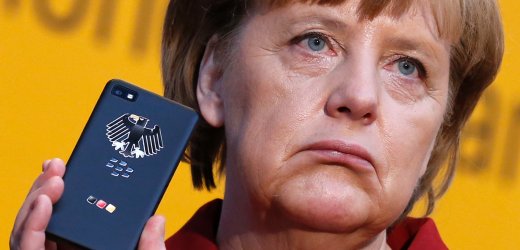
German Chancellor Merkel holds a BlackBerry Z10 smartphone featuring high security Secusite software at the booth of Secusmart during her opening tour at the CeBit computer fair in HanoverGerman Chancellor Angela Merkel complained to President Barack Obama on Wednesday after learning that U.S. intelligence may have targeted her mobile phone, and said that would be “a serious breach of trust” if confirmed, her government announced.

The White House denied that the U.S. is listening in on Merkel’s phone calls.

The German government said it responded after receiving “information that the chancellor’s cellphone may be monitored” by U.S. intelligence. It wouldn’t elaborate but German news magazine Der Spiegel, which has published material from NSA leaker Edward Snowden, said its research triggered the response.

Merkel spokesman Steffen Seibert said in a statement the chancellor made clear to Obama in a phone call that “she views such practices, if the indications are confirmed … as completely unacceptable.”

Merkel said among close partners such as Germany and the U.S., “there must not be such surveillance of a head of government’s communication,” Seibert added. “That would be a serious breach of trust. Such practices must be stopped immediately.”

In Washington, White House spokesman Jay Carney said “the United States is not monitoring and will not monitor the communications of the chancellor.”

Merkel raised concerns over electronic eavesdropping issue when Obama visited Germany in June, has demanded answers from the U.S. government and backed calls for greater European data protection. However, Wednesday’s statement was much more sharply worded and appeared to reflect frustration over the answers provided so far by the U.S. government.

Merkel called for U.S. authorities to clarify the extent of surveillance in Germany and to provide answers to “questions that the German government asked months ago,” Seibert said. – Breitbart

US spying causes new anger in France, Mexico

LogoLeMondeby Marianne Barriaux and Michael Mainville BARRIAUX, Michael MAINVILLE

The United States has become embroiled in a new row over its controversial spying programme as allies France and Mexico condemned revelations Washington tapped millions of phonecalls and hacked into leaders’ emails.

French President Francois Hollande on Monday expressed his “deep disapproval” of reports of US spying in a phone call with President Barack Obama.

France’s Le Monde newspaper reported that the US National Security Agency had secretly monitored 70.3 million phone communications in France over 30 days from December 10, 2012, to January 8 this year.

The allegations, the latest from leaks by former NSA contractor Edward Snowden, also marred a visit to Paris by US Secretary of State John Kerry, where he discussed moves to try to end the war in Syria.

At the same time, German weekly Der Spiegel reported the NSA had also hacked into former Mexican president Felipe Calderon’s email account.

Calderon, on Twitter, described the revelations as an “affront to the institutions of the country, given that it took place when I was president”.

Hollande told Obama that the alleged practices were “unacceptable between friends and allies because they infringe on the privacy of French citizens”, the French leader’s office said in a statement.

The allegations come on top of previous revelations by Snowden — who has sought safety in Russia as US authorities pursue him for leaking classified information — that the United States had a vast, secret programme called PRISM to monitor Internet users.

French prosecutors are already investigating the programme, and French Prime Minister Jean-Marc Ayrault said he was “deeply shocked” by the new revelations.

“It’s incredible that an allied country like the United States at this point goes as far as spying on private communications that have no strategic justification, no justification on the basis of national defence,” he told journalists.

French Foreign Minister Laurent Fabius, on a visit to Luxembourg, said US ambassador Charles Rivkin was summoned to his ministry early Monday.

“These kinds of practices between partners that harm privacy are totally unacceptable,” he told reporters, adding France needed assurances that the United States was no longer monitoring its communications.

His comments were relayed to the US ambassador during the meeting, a ministry spokesman said — the second time in less than four months that America’s top representative in France has been hauled in over revelations about US snooping.

Kerry refused to comment on the specific accusations, but noted that Washington was reviewing its intelligence gathering operations following protests from allied governments.

He also sought to defend the US position.

“Protecting the security of our citizens in today’s world is a very complicated, very challenging task… because there are lots of people out there seeking to do harm to other people,” Kerry said at a press conference after meeting Arab League officials.

“Lots of countries are engaged in the activity of trying to protect their citizens in the world,” he said. “Our goal is always to try to find the right balance between protecting the privacy and security of our citizens.”

According to Le Monde, the spy agency automatically picked up communications from certain phone numbers in France and recorded certain text messages under a programme code-named “US-985D”.

The French daily said the documents gave grounds to believe that the NSA targeted not only people suspected of being involved in terrorism but also high-profile individuals in business and politics.

Hollande’s office said the French president and Obama had agreed “to work together to determine the facts and the exact scope of surveillance activities” revealed by Le Monde.

Der Spiegel also revealed that US agents had hacked into the Mexican presidency’s network, gaining access to Calderon’s account.

According to the report, the NSA said this contained “diplomatic, economic and leadership communications which continue to provide insight into Mexico’s political system and internal stability”.

The agency reportedly said the president’s office was now “a lucrative source”.

Mexican authorities said they would be seeking answers from US officials “as soon as possible”.

“This practice is unacceptable, illegitimate and contrary to Mexican law and international law,” the foreign ministry said.

Glenn Greenwald, an American journalist now living in Brazil who has broken many of the recent stories about secret US surveillance programmes, says Washington has spied on all Latin American countries.

Speaking to a press association in Miami, Greenwald said he would report about each case in the region and warned that more spying within the United States would also be revealed.

He also said the disclosures published by Le Monde Monday had been in the hands of the French daily for some time.

This is not the first time there have been reports that France and Mexico have been targeted in relation to NSA spying allegations since information leaked by Snowden first emerged in June.

Mexico’s current President Enrique Pena Nieto has already complained to Obama over reports US spies have gone through his emails.

And Der Spiegel reported last month that in 2010 the NSA monitored the internal computer network of France’s diplomats and that of the foreign ministry.

But France itself has also been accused of spying. Le Monde reported in recent months that intelligence services intercepted all communications in the country, stocking telephone and computer data for years –accusations denied by the government. – AFP