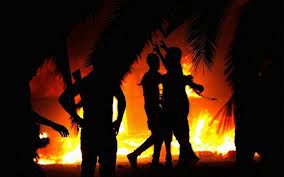
Obama hiding Benghazi survivors, changing their names


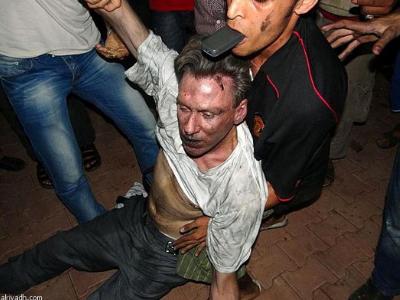
Ambassador Stevens
Ambassador Stevens

Rep. Trey Gowdy (R-SC) was on with Greta Van Susteren of Fox News on Thursday to discuss the Obama scandals.

This came after Jake Tapper at CNN broke the news that there were “dozens” of CIA operatives on the ground in Benghazi on 9-11 when the consulate came under attack and the agency is going to great lengths to make sure whatever it was doing, remains a secret.

Gowdy told Greta the Obama Administration is hiding the survivors, dispersing them around the country, AND changing their names.

“Including changing names, creating aliases. Stop and think what things are most calculated to get at the truth? Talk to people with first-hand knowledge. What creates the appearance and perhaps the reality of a cover-up? Not letting us talk with people who have the most amount of information, dispersing them around the country and changing their names.”

And, at the same time Obama is hiding the survivors around the country he’s calling Benghazi a ‘phony’ scandal.

The U.S. special mission in Benghazi was used to coordinate arms shipments and other aid to the so-called rebels fighting in Libya and later in Syria.

The scandal has garnered media attention since Sen. Rand Paul asked outgoing Secretary of State Hillary Clinton about the claims that involve Stinger missiles during hearings over the Benghazi affair.

Clinton claimed she did not know whether the U.S. special mission was involved in gun-running.

Security sources have reconfirmed the use of the Benghazi mission in aiding al-Qaida and other Islamic terrorist groups.

The slain U.S. ambassador, Christopher Stevens, played a central role in recruiting jihadists to fight Bashar al-Assad’s regime in Syria, according to Egyptian security officials.

In November, Middle Eastern security sources further described both the U.S. mission and nearby CIA annex in Benghazi as the main intelligence and planning center for U.S. aid to al-Qaida that was being coordinated with Turkey, Saudi Arabia and Qatar.

Among the tasks performed inside the building was collaborating with certain countries on the recruitment of fighters – including jihadists – to target Assad’s regime, the security officials said. – gatewaypundit.com/WND

US shuts down embassies in Middle East

US Embassy Kabul
US Embassy Kabul

The United States will temporarily shut down its embassies and consulates around the world Sunday — including those in Iraq, Afghanistan and Egypt — as a precautionary measure over terror-related concerns, State Department officials said.

State Department spokeswoman Marie Harf did not say how long the international installations would stay closed — only that the decision was taken “out of an abundance of caution and care for our employees and others who may be visiting.” Officials would not describe the nature of the threat.


Sunday is a normal workday in many Arab and Middle Eastern countries, meaning that is where the closures will have an impact. Embassies in Europe and Latin America would be shuttered that day anyway.


“We have instructed all U.S. embassies and consulates that would have normally been open on Sunday to suspend operations, specifically on August 4,” a senior State Department official said Thursday night. “It is possible we may have additional days of closing as well.”


Other U.S. officials said the threat was specifically in the Muslim world.


The issue of security abroad has been prominent since the attack on the U.S. compound in Benghazi, Libya, and a string of demonstrations on other U.S. embassies in the Middle East and North Africa.


On Thursday, measures to beef up security at U.S. embassies were passed out of the Senate Foreign Relations Committee. The bill is in response to the Sept. 11, 2012 attack on the diplomatic post in Benghazi, Libya, where Ambassador Chris Stevens and three other Americans were killed.


The Senate bill creates a training center for diplomatic security personnel.


Separately, the House Foreign Affairs Committee authorized full security funding for diplomatic missions — despite recommending a nine percent cut overall for State Department operations.

The House and Senate have already approved spending bills that cover embassy security. But their budgets differ markedly in other areas. – foxnews.com

CIA was ‘running arms smuggling team in Benghazi’

Arming the enemy
Arming the enemy

The CIA has been subjecting operatives to monthly polygraph tests in an attempt to suppress details of a US arms smuggling operation in Benghazi that was ongoing when its ambassador was killed by a mob in the city last year, according to reports.

Up to 35 CIA operatives were working in the city during the attack last September on the US consulate that resulted in the death of Ambassador Chris Stevens and three other Americans, according to CNN.

The circumstances of the attack are a subject of deep division in the US with some Congressional leaders pressing for a wide-ranging investigation into suspicions that the government has withheld details of its activities in the Libyan city.

The television network said that a CIA team was working in an annex near the consulate on a project to supply missiles from Libyan armouries to Syrian rebels.

Sources said that more Americans were hurt in the assault spearheaded by suspected Islamic radicals than had been previously reported. CIA chiefs were actively working to ensure the real nature of its operations in the city did not get out.

So only the losses suffered by the State Department in the city had been reported to Congress.

“Since January, some CIA operatives involved in the agency’s missions in Libya, have been subjected to frequent, even monthly polygraph examinations, according to a source with deep inside knowledge of the agency’s workings,” CNN reported.

Frank Wolf, a US congressman who represents the district that contains CIA headquarters in Langley, Virginia, is one of 150 members of Congress for a new investigation into the failures in Benghazi.

“I think it is a form of a cover-up, and I think it’s an attempt to push it under the rug, and I think the American people are feeling the same way,” he said. “We should have the people who were on the scene come in, testify under oath, do it publicly, and lay it out. And there really isn’t any national security issue involved with regards to that.”

A CIA spokesman said it had been open about its activities in Benghazi.

“The CIA has worked closely with its oversight committees to provide them with an extraordinary amount of information related to the attack on US facilities in Benghazi,” a CIA statement said. “CIA employees are always free to speak to Congress if they want,” the statement continued. “The CIA enabled all officers involved in Benghazi the opportunity to meet with Congress. We are not aware of any CIA employee who has experienced retaliation, including any non-routine security procedures, or who has been prevented from sharing a concern with Congress about the Benghazi incident.”- The Telegraph

African Union observers find Zim election ‘credible and fair’

Emblem of the African Union

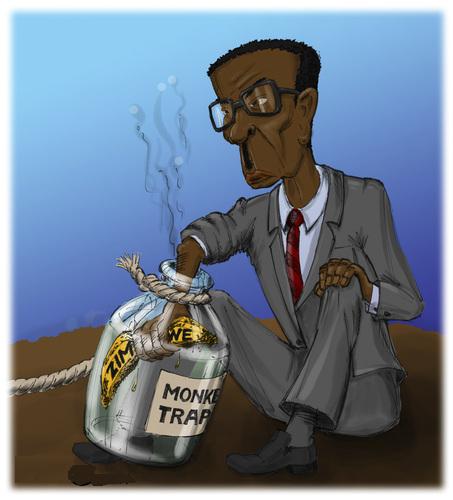
Zimbabwe’s election was credible and fair, the chief of the African Union observer mission said Friday, but the bloc’s report noted some problems with the voter roll and of people being turned away from polling booths.

President Robert Mugabe’s Zanu-PF appeared confident of a sweeping victory, while the rival Movement for Democratic Change (MDC) led by Prime Minister Morgan Tsvangirai has said the “sham” polls would plunge the country into crisis.

“We are very happy this morning. We are very confident and excited. We think there is a sense of victory for us,” ZANU-PF spokesman Rugare Gumbo told dpa.

He said the party expected to get between 130 and 140 seats in the 210-member parliament.

Results from about 30 per cent of seats in parliament showed Zanu-PF taking a strong early lead, with 52 to the MDC’s 10.

Mugabe’s party managed to wrest control of some urban constituencies previously held by the rival MDC.

The final results of Wednesday’s election must be announced by Monday.

Local elections observers noted there were serious problems with the voters roll in urban areas – long considered MDC strongholds.

Tsvangirai has declared the elections to be “null and void” because of allegations of vote rigging.

Zanu-PF insists the poll were conducted in a “free and fair” manner, as does the Zimbabwe Election Commission.

In the 2008 election that was marred by violence, Tsvangirai won the first round but did not get enough votes to avoid a run-off. Widespread intimidation, including the deaths of some 200 of his supporters, forced him to pull out of the runoff.

The presidential poll results are only expected in the coming days. If no candidate gets at least 50 per cent of the vote, a second round will be held September 11.

The 89-year-old Mugabe, who has led Zimbabwe since 1980, has vowed to step down if he loses.

Africa’s oldest head of state presided over a decade-long economic collapse, in part blamed on his policy of grabbing white-owned farms without compensation and fueling hyper inflation. -sapa-dpa

What is a journalist?

journalistThe Senate Judiciary Committee, looking to provide protections for journalists and their sources, ran into a roadblock Thursday when lawmakers couldn’t agree on the definition of “journalist.”

Under the legislation, journalists wouldn’t have to comply with subpoenas or court orders forcing them to reveal sources or confidential information unless a judge first determines there’s reason to think that a crime has occurred and government officials have exhausted all other alternatives.

It’s the third time Congress has considered a “shield law” for journalists. Similar bills have failed despite bipartisan support.

“I’m hoping the third time’s a charm,” said Sen. Patrick Leahy, D-Vt., the committee’s chairman.

The bill defines a journalist as a person who has a “primary intent to investigate events and procure material” in order to inform the public by regularly gathering information through interviews and observations. The person also must intend to report on the news at the start of obtaining any protected information and must plan to publish that news.

But senators disagreed on how to define journalists, since some thought the bill’s definition wasn’t specific enough.

Sen. Amy Klobuchar, D-Minn., wondered whether it could be used to provide protections to employees of WikiLeaks, an organization that allows anonymous sources to leak information to the public.

“I’m concerned this would provide special privilege to those who are not reporters at all,” Klobuchar said.

Sen. Dianne Feinstein, D-Calif., suggested that the definition comprise only journalists who make salaries, saying it should be applied just to “real reporters.” The sponsor of the bill, Sen. Charles Schumer, D-N.Y., was against that idea, since there are bloggers and others in the Internet age who don’t necessarily receive salaries.

“The world has changed. We’re very careful in this bill to distinguish journalists from those who shouldn’t be protected, WikiLeaks and all those, and we’ve ensured that,” Schumer said. “But there are people who write and do real journalism, in different ways than we’re used to. They should not be excluded from this bill.”

The Standing Committee of Correspondents, a group of reporters that issues congressional press passes, requires that reporters be full time and paid in order to receive passes.

The reconsideration of a shield law comes on the heels of media controversies that came to light in May. The Justice Department had seized the phone records of 20 Associated Press reporters over two months without giving them prior notice and had traced the phone calls and emails of a Fox News reporter.

The bill also would require the Justice Department to notify any reporters it chose to monitor. It allows Justice officials to delay that notice by 45 days and permits them to ask for an extension of another 45 days.

Most states have their own shield laws for journalists, but those laws don’t apply in federal court. That means any monitoring of reporters by the federal government would be covered only under a federal shield law.

The committee will continue debating the bill when it reconvenes in September, and Schumer said he hoped it would head to the Senate floor by the end of the year. – McClatchy Washington Bureau

Read more here: http://www.mcclatchydc.com/2013/08/01/198338/senators-spar-over-definition.html#storylink=cpy

Mine firm desecrated sacred Aboriginal site

aboartAn Australian mining firm was convicted on Friday in Darwin of desecrating a sacred outback Aboriginal site in a landmark ruling protecting the beliefs of the beleaguered minority in the country.

OM (Manganese) Limited, an Australian subsidiary of Singapore-based OM Holdings Limited, was fined $133 600 for damaging the spiritual significance of an Aboriginal rock site at Bootu Creek, north of remote Tennant Creek in the Northern Territory.

OM Manganese had previously been convicted of physically damaging the site when an overhanging rock feature known as the Horse’s Head collapsed due to nearby blasting activities in 2011, destroying the area known in English as “Two Women Sitting Down”.

But Darwin magistrate Sue Oliver on Friday ruled it had also amounted to desecration.

“The defendant did not consider damage to the site as a vague and remote possibility,” Oliver said, describing the company’s failure to do so as “wilful blindness”.

“The defendant company made decisions that involved the sacred site that favoured business and profit over the [cultural protection] obligations they had.”

Oliver imposed the fine for what the local Kunapa people said amounted to destruction of the site, forever disrupting their relationship with the land and its mythology or “dreaming”.

“It will always remain a sacred site to us, but it has been ruined and we don’t know what to do,” said Kunapa representative Gina Smith of the site which had been “there for thousands of years as part of our culture and our story”.

“It’s been significantly changed, which makes it much harder for Aboriginal people to recognise the dreaming,” she added.

“We’re not likely to use it any more.”

According to the Kunapa dreaming, a marsupial rat and a bandicoot fought over bush tucker, or native food, at the Bootu Creek site and their blood spilled over the rocks, turning them the rich red of manganese ore.

The Aboriginal Areas Protection Authority, the statutory body responsible for overseeing sacred sites in the Northern Territory which brought the case against OM Manganese, welcomed the “historic” ruling.

“When a sacred site is desecrated or damaged it tears the social fabric of the affected community, as the harmony of those people is inherently linked to that sacred site,” said AAPA chief Ben Scambary.

OM Holdings said it had contested the desecration charge on the basis that the damage was unintentional, but it accepted Oliver’s ruling.

“The company never intended to harm, damage or disrespect the sacred site. We sincerely regret the damage and the hurt caused and I unreservedly apologise to the site’s custodians and traditional owners,” OM CEO Peter Toth said in a statement to the Australian stock exchange.

Aborigines, the most disadvantaged Australians, are believed to have numbered around one million at the time of British settlement in 1788. There are now just 470 000 out of a total population of 23 million. – AFP

Japan’s Aso won’t quit over Nazi comment

Taro Aso
Taro Aso

Japan’s Finance Minister Taro Aso refused on Friday to resign or apologise over remarks suggesting Japan should follow the Nazi example of how to change the country’s constitution stealthily and without public debate.

The ruling Liberal Democrats want to revise the US-inspired postwar constitution, in part to allow a higher profile for Japan’s military.

Following protests by neighbouring countries and human rights activists, he “retracted” the comments on Thursday but refused to go further.

“I have no intention to step down” as Cabinet minister of lawmaker, Aso, who is also the deputy prime minister, told reporters. The government also said it is not seeking Aso’s resignation, which some opposition members have demanded.

Aso, who is known for intemperate remarks, drew outrage for saying Japan should learn from how the Nazi party stealthily changed Germany’s pre-World War II constitution before anyone realised it. He also suggested that Japanese politicians should make visit Tokyo’s Yasukuni war shrine quietly to avoid controversy. Such visits currently take place amid wide publicity and are a sore point for Southeast Asian nations, who suffered under Japanese occupation during World War II.

Aso said on Thursday he was misunderstood and only meant to say that loud debate over whether Japan should change its postwar constitution, and other issues is not helpful.

In retracting his comments, he said it was “very unfortunate and regrettable” that his comments were misinterpreted.

On Friday, Aso said he stands by all his other remarks in the speech made earlier this week in Tokyo to an ultra-conservative audience.

Japan and Nazi Germany were allies in World War II, when Japan occupied much of Asia and Germany much of Europe, where the racial supremacist Nazis oversaw the killings of an estimated 6 million Jews before the war ended in 1945 with their defeat. Japan’s history of military aggression, which included colonising the Korean Peninsula before the war, is the reason its current constitution limits the role of the military.

According to a transcript of the speech published by the newspaper Asahi Shimbun, Aso decried the lack of support for revising Japan’s pacifist constitution among older Japanese, saying the Liberal Democrats had held quiet, extensive discussions about its proposals.

“I don’t want to see this done in the midst of an uproar,” Aso said, according to the transcript. Since revisions of the constitution may raise protests, “doing it quietly, just as in one day the Weimar constitution changed to the Nazi constitution, without anyone realising it, why don’t we learn from that sort of tactic?”

He has apologised previously for accusing the elderly of being a burden on society, joking about people with Alzheimer’s disease, saying the ideal country would be one that attracts “the richest Jewish people”, and comparing the opposition Democratic Party of Japan to the Nazis.

On Thursday, Aso insisted that he was referring to the Nazis “as a bad example of a constitutional revision that was made without national understanding or discussion …I just don’t want [the revision] to be decided amid a ruckus”. – AP

Queen’s speech on ‘World War Three’ revealed

Queen Elizabeth II and Ronald Reagan

British officials drew up a speech for Queen Elizabeth to deliver to the nation in the event of a nuclear war, newly released archives showed on Thursday.

In the speech, the monarch was to urge Britons to remain united and resolute in the face of the “madness of war.” Relations between the Soviet Union and the West had become tense.

Written by government officials, the hypothetical speech was part of a secret exercise designed to prepare Britain for the threat of a possible World War Three, but was never broadcast 30 years ago.

It starts by referring to the queen’s traditional Christmas address to the nation.

“The horrors of war could not have seemed more remote as my family and I shared our Christmas joy with the growing family of the Commonwealth,” she was to have said.

“Now, this madness of war is once more spreading through the world and our brave country must again prepare itself to survive against great odds.”

The queen’s speech was imagined to be broadcast in the spring of 1983 against the backdrop of worsening U.S.-Soviet relations, during a year in which then U.S. President Ronald Reagan described the Soviet Union as an “evil empire”.

The queen was to have continued: “I have never forgotten the sorrow and the pride I felt as my sister and I huddled around the nursery wireless set listening to my father’s (King George VI’s) inspiring words on that fateful day in 1939 (at the start of the World War Two).

“Not for a single moment did I imagine that this solemn and awful duty would one day fall to me.”

Citing the close bond of family life as the greatest defence against the unknown, the speech also mentioned the queen’s second son Prince Andrew, who was serving in the Royal Navy at the time.

“If families remain united and resolute, giving shelter to those living alone and unprotected, our country’s will to survive cannot be broken,” she was to have said.

The papers were released by the National Archives as part of a 30-year rule that sees official records from the Prime Minister’s office and Cabinet Office released to the public. – Reuters

Edward Snowden’s escape

Sheremetyevo Terminal

THEY sought him here and there and everywhere. But in the end, Edward Snowden slipped away unnoticed from Moscow’s Sheremetyevo airport in a cab.

The US fugitive walked out of the airport and took a taxi, his lawyer Anatoly Kucherena revealed to disappointed journalists who have haunted the international airport since Mr Snowden flew in from Hong Kong on June 23, wanting to catch him inside the terminal’s capsule hotel or the passenger lounges.

Rossiya 24 television aired a blurred photograph apparently showing Snowden from the back carrying a black rucksack as he is about to enter a grey saloon car, with a blonde-hair woman standing next to him.

He is shown talking to Mr Kucherena, with four other unidentified men nearby, one talking on a cell phone. The channel did not reveal who took the photograph.

WikiLeaks wrote on its Twitter feed that Mr Snowden left the airport “under the care of WikiLeaks’ Sarah Harrison,” one of the site’s employees who arrived with him from Hong Kong.

She appeared at his side at his only public appearance since landing, when he met rights activists inside the airport on July 12.

Asked in a live interview on Rossiya 24 whether Mr Snowden really caught an ordinary taxi, his lawyer said drily: “I understand that it was a taxi.”

Mr Kucherena refused to reveal Mr Snowden’s location for security reasons, saying only that he “may stay in a flat or a hotel.”

Mysteriously, Mr Kucherena seemed not to be involved in Mr Snowden’s initial stay outside the airport, saying that unnamed American friends living in Russia were taking care of him.

“Of course he has gained friends, including within Russia – American friends – who possibly at the start will be able to provide his security, for some time, let’s say,” Mr Kucherena told Rossiya 24 television.

“I did not get involved in this part, it’s not my competence. So in this case, I hope that all will be well.”

He also refused to comment on whether Mr Snowden would be staying in Moscow itself.

“Let’s not lift up that veil since Edward himself will decide that question,” he told Rossiya 24, adding that he planned to talk on the telephone to Mr Snowden’s father Lon and his US lawyer later that day to discuss his future.

Mr Snowden did not take long to pack after receiving a document certifying that he has temporary asylum in Russia, dated July 31, said Mr Kucherena, who has revealed that he had to buy Mr Snowden extra jeans and shirts while he was in the airport.

“He has few things, so we didn’t have to pack suitcases,” he told the television channel.

It remained unclear where Mr Snowden had spent more than a month, with the public areas of the airport thoroughly combed by journalists.

Mr Kucherena last week spoke to journalists after emerging from a meeting with Mr Snowden via a door in the arrivals zone of Terminal E marked “staff only.”

On Thursday, Mr Kucherena made clear that Mr Snowden was in an area for “problem” passengers who lacked documents, dismissing a question about whether he could have been spotted by waitresses in the airport.

“Have you ever seen a waiter in the transit zone? I never did,” he said.

“It’s the place where a person who flies in, if he doesn’t have a passport or doesn’t have a visa, say, or he has some problems with documents, he stays in that zone.”

However, he also half-confirmed reports that Mr Snowden had been staying in a capsule hotel that has full public access in the transit zone.

“There is a capsule hotel. Those people who stay in the (transit) zone, if they can’t fly out anywhere, they sit there and wait for their problem to be resolved.” – news.co.au

Snowden granted asylum in Russia for a year

Snowden leaving the airport
Snowden leaving the airport [Twitter]

NSA whistleblower Edward Snowden has been granted temporary asylum in Russia and is allowed to enter the country’s territory, a source close to the matter told Itar-Tass.

The whistleblower has been granted temporary political asylum in Russia, Snowden’s legal representative Anatoly Kucherena said, with his words later confirmed by Russia’s Federal Migration service.

“I have just handed over to him papers from the Russian Immigration Service. They are what he needs to leave the transit zone,” he added.

Kucherena showed a photocopy of the document to the press. According to it, Snowden is free to stay in Russia until at least July 31, 2014. His asylum status may be extended annually upon request.

With his newly-awarded legal status in Russia, Snowden cannot be handed over to the US authorities, even if Washington files an official request. He can now be transported to the United States only if he agrees to go voluntarily.

Snowden departed at around 15.30 Moscow time (11.30 GMT), airport sources said. His departure came some 30 minutes before his new refugee status was officially announced.

His present location has not been made public nor will it be disclosed, Kucherena said.

Since June 23, the former CIA employee, Edward Snowden, has been staying in Moscow’s Sheremetyevo International Airport, where he came from Hong Kong as a transit passenger. In the middle of July he requested for a temporary political asylum in Russia.

Snowden is accused of revealing details about the U.S. surveillance services. He was charged with unauthorized communication of national defense information and providing U.S. classified intelligence to an unauthorized person under the 1917 Espionage Act. Moreover, he is accused of government property theft. Snowden will face up to 10 years in prison under every article. RT/Itar-Tass

Pentagon awards contracts to Al-Qaeda in Afghanistan

Operation Enduring FreedomeSupporters of the Taliban and al-Qaeda in Afghanistan have been getting U.S. military contracts, and American officials are citing “due process rights” as a reason not to cancel the agreements, according to an independent agency monitoring spending.

The U.S. Army Suspension and Debarment Office has declined to act in 43 such cases, John Sopko, the Special Inspector General for Afghanistan Reconstruction, said today in a letter accompanying a quarterly report to Congress.

“I am deeply troubled that the U.S. military can pursue, attack, and even kill terrorists and their supporters, but that some in the U.S. government believe we cannot prevent these same people from receiving a government contract,” Sopko said.

The 236-page report and Sopko’s summary provide one of the watchdog agency’s most critical appraisals of U.S. performance in helping to build a stable Afghanistan as the Pentagon prepares to withdraw combat troops by the end of next year.

“There appears to be a growing gap between the policy objectives of Washington and the reality of achieving them in Afghanistan, especially when the government must hire and oversee contractors to perform its mission,” said Sopko, whose post was mandated by Congress.

The Pentagon is scheduled to deliver its own Afghanistan status report to Congress today. Its appraisal, which is months late, will outline progress from October 2012 through March and concerns that deal with handing over security operations to the Afghan military.

Sopko said the Army “appears to believe that suspension or debarment of these individuals and companies would be a violation of their due-process rights if based on classified information” or on Commerce Department reports.

Regarding the 43 cases of contractors with militant connections, Sopko said the Army should “enforce the rule of common sense” in its suspension and debarment program.

“They may be enemies of the United States but that is not enough to keep them from getting government contracts,” according to the agency’s report. – Bloomberg


Uruguay legalises cannabis

daggalegalUruguay’s parliament voted to be the world’s first country to license and regulate production, distribution and sale of dagga for adult consumers.

Uruguay’s lower house of Congress voted for dagga legalisation. The law now needs to pass through Senate to become effective.

The unprecedented plan to create a legal marijuana market was approved by 50 of the 96 lawmakers present in the lower house of Congress just before midnight Wednesday after more than 13 hours of passionate debate. It now needs to pass through the Senate.

Legislators in the ruling coalition said legalising marijuana would help fight organised crime. They said putting the government at the center of a legal marijuana industry was worth trying because the global war on drugs had been a costly and bloody failure, and displacing illegal dealers through licensed sales could save money and lives.

They also hope to eliminate a legal contradiction in Uruguay, where it has been legal to use dagga but against the law to sell it, buy it, produce it or possess even one marijuana plant.

President Jose Mujica had postponed voting for six months to give supporters more time to rally public opinion. However, recent polls said two-thirds of Uruguayans remained opposed despite a “responsible regulation” campaign for the bill.

National party deputy Gerardo Amarilla said the government was underestimating the risk of marijuana, which he called a “gateway drug” for other chemical addictions that foster violent crimes.

“Ninety-eight percent of those who are today destroying themselves with base cocaine began with marijuana,” Amarilla said. “I believe that we’re risking too much. I have the sensation that we’re playing with fire.”

Activists
Dozens of pro-marijuana activists followed the debate from balconies overlooking the house floor, while others outside held signs and danced to reggae music.

“This law consecrates a reality that already exists: The marijuana sales market has existed for a long time, but illegally, buying it from traffickers, and in having plants in your house for which you can be thrown in jail,” said Camilo Collazo, a 25-year-old anthropology student. “We want to put an end to this, to clean up and normalise the situation.”

Mujica, for his part, said he never consumed marijuana, but that the regulations are necessary because many other people do. “Never in my life did I try it, nor do I have any idea what it is,” he told the local radio station Carve.

The heavy toll, costs and questionable results of military responses to illegal drugs have motivated marijuana legalisation initiatives in the US states of Colorado and Washington, and inspired many world leaders to re-think drug laws.

The secretary-general of the Organization of American States, Jose Miguel Inzulza, told Mujica last week that his members had no objections. Pope Francis, however, said during his visit to Brazil that the “liberalisation of drugs, which is being discussed in several Latin American countries, is not what will reduce the spread of chemical substances.”

New legislation
Under the legislation, Uruguay’s government would license growers, sellers and consumers, and update a confidential registry to keep people from buying more than 40 grams a month.

Carrying, growing or selling dagga without a license could bring prison terms, but licensed consumers could grow up to six plants at a time at home.

Growing clubs with up to 45 members each would be encouraged, fostering enough marijuana production to drive out unlicensed dealers and draw a line between dagga smokers and users of harder drugs.

The latest proposal “has some adjustments, aimed at strengthening the educational issue and prohibiting driving under the effects of cannabis,” ruling coalition deputy Sebastian Sabini said. “There will be self-growing clubs, and it will also be possible to buy marijuana in pharmacies” that is mass-produced by private companies.

An Institute for Regulation and Control of Cannabis would be created, with the power to grant licenses for all aspects of a legal industry to produce marijuana for recreational, medicinal or industrial use. – Sapa-AP

Morgan Tsvangirai finds Zim election ‘not credible’

monkeytrapThe “outcome of this election is illegitimate,” Prime Minister Morgan Tsvangirai said Thursday, and “does not reflect the will of the people of Zimbabwe.”

“The shoddy manner in which it has been conducted and the consequent illegitimacy of the result will plunge this country in a crisis,” he said in Harare.

Tsvangirai said he had conveyed his concerns to the African Union and the Southern African Development Community.

“The message we have given is that this is not a credible election.” – sapa

Poll: More worried about privacy than terrorism

x-keyscoreOn Wednesday, the Obama administration released several newly declassified intelligence documents in a damage control attempt over the growing NSA snooping scandal. On the same day, the Guardian reported on the NSA tool XKeyscore, which can track everything people do online, including emails, Facebook activity, online chats and browser histories. The White House just can’t keep ahead of the bad news.

The administration maintains that these programs are necessary for the fight against terrorism, but the American people are not convinced. A new survey released by the Pew Research Center for the People and the Press finds that 56% of Americans believe that “federal courts fail to provide adequate limits on the telephone and internet data the government is collecting as part of its anti-terrorism efforts.” And for the first time in the 10 year history of this poll, more people (47%) say the government has gone too far in restricting civil liberties than those who say it has not gone far enough to protect the country (35%).

This decisive change in attitude crosses the political spectrum. Republicans, Democrats and Independents have all seen double-digit shifts towards concern for liberty over security between October 2010 and July 2013. The shift is most pronounced among Tea Party members; in 2010 only a fifth of them believed the government had gone too far in restricting liberties, while 63% believed it should do more. In the new survey, the number of Tea Partiers concerned with government intrusion jumped to 55%, while those saying the state should keep ramping things up dropped more than half. The only group that showed no significant change in attitude was moderate to conservative Democrats, though the more interesting question is how the Pew Center located any members of this nearly extinct species.

The shift in attitude reflects a change in awareness. In 2010 few Americans knew the extent to which the government was logging the details of their daily lives. Proponents of widespread surveillance and data collection say that these methods keep Americans safer, and in some respects they do. But at some point the issue becomes how much intrusion on privacy is warranted for marginally decreasing increments of safety. No doubt the government could keep everyone safe from almost all terrorism, crime and other evils simply by monitoring everything, all the time, and flooding the country with special agents and block wardens. However, privacy has to count for something, and besides, all the sophisticated technology at the government’s disposal did not stop the Boston Marathon bombings. The best, most advanced counter-terrorism tools in the world can still fail in the hands of fallible people.

Competence is one matter, trust is another. The trade-off between safety and liberty involves a critical third variable, whether the government can be relied upon not to misuse these powerful, intrusive tools. The Pew survey found overwhelming concern that the government is abusing the public trust when it comes to snooping; seventy percent of Americans believe that the Federal government is using the data it collects for purposes other than fighting terrorism.

The White House sloughs off such concerns by saying “trust us,” but the American people simply don’t, and have good reason not to. As the snowballing IRS scandal shows, the administration is not above using official information for political purposes. Massive government databases make unprecedented amounts of information easily accessible, making them ripe for exploitation. The Obamacare “Data Hub” is another example of Federal overreach, which will contain comprehensive health and financial information just about everybody, with few safeguards and a high probability of being misused. It will be an irresistible gold mine for faceless government functionaries with rapidly diminishing ethical standards. Not to mention criminals, blackmailers, and opposition researchers with insider connections.

It will take more than the selective declassification of a few self-serving documents for the White House to regain the people’s trust. And the odds are that the American people still don’t know the worst of it. – rare.us

James S. Robbins, Deputy Editor at Rare, is a former professor at National Defense University who specialized in counter-terrorism.