Art of the world’s flight paths

The US and China may be the world’s biggest economic engines, but on this gorgeous map of the world’s flight paths, Europe glows brighter than either one.

The map, designed by a young Canadian GIS (geographic information systems) consultant named Michael Markieta, traces some 60 000 routes on major and regional airlines around the globe. The flight paths aren’t precise, but the departure and destination cities are. Marketa’s map shows relatively faint blue lines for each individual route and bright white nodes where multiple routes intersect or overlap.

One of the things that leaps out at first glance is the plethora of connections in the Eastern US, East Asia and most of all Europe, which makes sense given those regions’ wealth and population density.

Europe has the greatest concentration of short-hop flights. Germany’s Frankfurt International Airport is the busiest destination on the map, with 235 direct flights.

By contrast, almost the entire southern hemisphere is dim, save for a few bright spots in cities such as Sao Paolo and Syndey. The relative brightness of vacation spots like the Canary Islands compared to nearby African countries like Morocco highlights the persistent economic disparities in air travel patterns.

Africa remains poorly served by airlines, with Spain’s Canary Islands appearing brighter than major African cities on the map. Nonetheless you can roughly trace the continent’s outlines by the flights between coastal population centres.

The busiest US airport is Atlanta, but the Washington-New York-Boston corridor appears to be the most heavily travelled overall. A 2009 Brookings study found that the busiest city pairs were New York-Miami and Los Angeles-San Francisco.

Atlanta is home to the busiest US airport, though the densest concentration of flights is along the Atlantic seaboard.

Perhaps the most fascinating thing about the map is that there is no “base layer” tracing the outlines of countries or continents. Instead, the flight routes themselves sketch the edges of the world’s major land masses, because so many people live in and travel between coastal cities. – Slate

Did Ed Snowden get help?

Ed Snowden, NSA leaker. Honest man. Doing what was right. Bravo.

That still doesn’t preclude the possibility that, unknown to him, he was managed by people to put him the right place to expose NSA secrets.

Snowden’s exposure of NSA was a righteous act, because that agency is a RICO criminal. But that doesn’t mean we have the whole story.

How many people work in classified jobs for the NSA? And here is one man, Snowden, who is working for Booz Allen, an outside contractor, but is assigned to NSA, and he can get access to, and copy, documents that expose the spying collaboration between NSA and the biggest tech companies in the world—and he can get away with it.

If so, then NSA is a sieve leaking out of all holes. Because that means a whole lot of other, higher NSA employees can likewise steal these documents. Many, many other people can copy them and take them. Poof.

If the NSA is not a sieve, it’s quite correct to suspect Snowden, a relatively low-level man, was guided and helped.

Does that diminish what Snowden accomplished? No. But it casts it in a different light.

Or you can believe a scenario like this:

“Mr. Snowden, I’m closing up now for the day. Do you need anything before I go?”

“No thanks, Sarah, I’ll be staying late tonight.”

NSA isn’t a little community bank or a liquor store. We aren’t talking about an employee with a printer and a file folder to hold top-secret pieces of paper he carries in a briefcase out of the office on his way home.

If there are people who arranged Snowden’s access to NSA secrets, without him knowing it, they’ll be obscured by the maze of partisan political squabbling and Congressional idiots holding hearings.

Between these morons and the press, the public will be treated, night and day, to the following: Can Snowden be extradited back here? Is he a terrorist? Should those giant tech companies have agreed to supply the government with information on private citizens? If so, how much information? Etc., etc. Diversions. False trails.

To understand who might have been behind Snowden, we first need to understand the real reach of the Surveillance State.

The Surveillance State has created an apparatus whose implications are staggering. It’s a different world now. And sometimes it takes a writer of fiction to flesh out the larger landscape.

Brad Thor’s novel, Black List, posits the existence of a monster corporation, ATS, that stands along side the NSA in collecting information on every move we make. ATS’ intelligence-gathering capability is unmatched anywhere in the world.

At his site, www.BradThor.com, the author lists some of the open-source material he discovered that formed the basis for Black List. The material, as well as the novel, is worth reading.

On pages 117-118 of Black List, Thor makes a stunning inference that, on reflection, is as obvious as the fingers on your hand:

“For years ATS [substitute NSA] had been using its technological superiority to conduct massive insider trading. Since the early 1980s, the company had spied on anyone and everyone in the financial world. They listened in on phone calls, intercepted faxes, and evolved right along with the technology, hacking internal computer networks and e-mail accounts. They created mountains of ‘black dollars’ for themselves, which they washed through various programs they were running under secret contract, far from the prying eyes of financial regulators.

“Those black dollars were invested into hard assets around the world, as well as in the stock market, through sham, offshore corporations. They also funneled the money into reams of promising R&D projects, which eventually would be turned around and sold to the Pentagon or the CIA.

“In short, ATS had created its own license to print money and had assured itself a place beyond examination or reproach.”

In real life, whether the prime criminal source is one monster corporation or the NSA itself, the outcome would be the same.

Total surveillance has unlimited payoffs when it targets financial markets and the people who have intimate knowledge of them.

“Total security awareness” programs of surveillance are ideal spying ops in the financial arena, designed to grab millions of bits of inside information, and then utilize them to make investments and suck up billions (trillions?) of dollars.

It gives new meaning to “the rich get richer.”

Taking the overall scheme to another level, consider this: those same heavy hitters (NSA) who have unfettered access to financial information can also choose, at opportune moments, to expose certain scandals and crimes.

In this way, they can, at their whim, cripple governments, banks, and corporations. They can cripple investment houses, insurance companies, and hedge funds. Or, alternatively, they can merely blackmail these organizations.

It’s likely that the probe Ron Paul has been pushing—audit the Federal Reserve—has already been done by those who control unlimited global surveillance. They already know far more than any Congressional investigation will uncover. If they know the deepest truths, they can use them to blackmail, manipulate, and control the Fed itself.

Corruption on top of corruption.

In this global-surveillance world, we need to ask new questions and think along different lines now.

For example, how long before the mortgage-derivative crisis hit did the Masters of Surveillance know, from spying on bank records, that insupportable debt was accumulating at a lethal pace? What did they do with that information?

When did they know that at least a trillion dollars was missing from Pentagon accounting books (as Donald Rumsfeld eventually admitted), and what did they do with that information?

Did they discover precisely where the trillion dollars went? Did they discover where billions of dollars, in cash, shipped to post-war Iraq, disappeared to?

When did they know the details of the Libor rate-fixing scandal? Press reports indicate that Barclays was trying to rig interest rates as early as January 2005.

Have they tracked, in detail, the men responsible for recruiting hired mercenaries and terrorists, who eventually wound up in Syria pretending to be an authentic rebel force?

Have they discovered the truth about how close or how far away Iran is from producing a nuclear weapon?

Have they collected detailed accounts of the most private plans of Bilderberg, CFR, and Trilateral Commission leaders?

For global surveillance kings, what we think of as the future is, in many respects the present and the past.

It’s a new world. These overseers of universal information-detection can enter and probe the most secret caches of data, collect, collate, cross reference, and assemble them into vital bottom-lines. By comparison, an operation like Wikileaks is an old Model-T Ford puttering down a country road, and Julian Assange is a mere piker.

Previously, we thought we needed to look over the shoulders of the men who were committing major crimes out of public view. But now, if we want to be up to date, we also have to factor in the men who are spying on those criminals, who are gathering up those secrets and using them to commit their own brand of meta-crime.

And in the financial arena, that means we think of Goldman Sachs and JP Morgan as perpetrators, yes, but we also think about the men who already know everything about GS and Morgan, and are using this knowledge to steal sums that might make GS and Morgan blush with envy.

Therefore….when looking for who might have helped Ed Snowden punch a hole in NSA, we should think about who the NSA has been spying on. Not the little guy, not the medium-sized guy, but a very big guy. Perhaps a Goldman Sachs or a JP Morgan.

At the highest levels of criminal power, the players don’t always agree. It’s not always a smooth conspiracy. There is fierce in-fighting as well.

Goldman Sachs, Chase, and Morgan consider trillion-dollar trading markets their own private golden-egg farm. They run it, they own it, they manipulate it for their own ends.

If NSA has been looking over their shoulders for the past 30 years, discovering all their knowledge, and operating a meta invasion, siphoning off enormous profits, NSA would rate as Enemy Number One.

And would need to be torpedoed.

Enter Ed Snowden.

Looking elsewhere, consider this. Snowden worked for the CIA. He was pushed up the ranks quickly, from an IT position in the US to a posting in Geneva, under diplomatic cover, to run security on the CIA’s computer systems there.

Then, Snowden quit the CIA and eventually ended up at Booz Allen, a private contractor. He was assigned to NSA, where he stole the secrets and exposed the NSA.

The CIA and NSA have a long contentious relationship. The major issue is, who is king of US intelligence? We’re talking about an internal war.

Snowden could have been the CIA’s man at NSA, where certain CIA players helped him access files he wouldn’t have been able to tap otherwise.

You can bet your bottom dollar that NSA analysts are looking into this possibility right now. – naturalnews.com

Ed Snowden: How the spy story of our age leaked out

As he pulled a small black suitcase and carried a selection of laptop bags over his shoulders, no one would have paid much attention to Ed Snowden as he arrived at Hong Kong International Airport. But Snowden was not your average tourist or businessman. In all, he was carrying four computers that enabled him to gain access to some of the US government’s most highly-classified secrets.

Today, just over three weeks later, he is the world’s most famous spy, whistleblower and fugitive, responsible for the biggest intelligence breach in recent US history. News organisations around the globe have described him as “America’s Most Wanted”. Members of Congress have denounced him as a “defector” whose actions amount to treason and have demanded he be punished to the fullest extent of the law.

His supporters argue that his actions have opened up a much-needed debate on the balance between security and privacy in the modern world.

So is he whistleblower or traitor? That debate is still raging.

Snowden, aged 29, had flown to Hong Kong from Hawaii, where he had been working for the defence contractor Booz Allen Hamilton at the National Security Agency, the biggest spy surveillance organisation in the world. Since Monday morning, he has gone underground. Hong Kong-based journalists, joined by the international press, have been hunting for him. At the height of the search, reporters recruited Twitter followers to see if they could successfully identify the lighting and other hotel furnishings shown in the video in which he went public. They did: the $330-a-night Mira Hotel, on Nathan Road, the busy main shopping drag in Kowloon district.

Knowing it was only a matter of time before he was found, Snowden checked out at lunchtime on Monday. It is thought he is now in a safe house.

What happens now? The US is on the verge of pressing criminal charges against him and that would lead to extradition proceedings, with a view to bringing him back to the US for trial and eventually jail.

If America is planning to jail for life Bradley Manning, who was behind the 2010 WikiLeaks release of tens of thousands of state department memos, what retribution lies in store for Snowden, who is guilty of leaking on a much bigger scale? The documents Manning released were merely “classified”. Snowden’s were not only “Top Secret”, but circulation was extremely limited.

For an American, the traditional home for the kind of story Snowden was planning to reveal would have been the New York Times. But during extensive interviews last week with a Guardian team, he recalled how dismayed he had been to discover the Times had a great scoop in election year 2004 – that the Bush administration, post 9/11, allowed the NSA to snoop on US citizens without warrants – but had sat on it for a year before publishing.

Snowden said this was a turning point for him, confirming his belief that traditional media outlets could not be trusted. He looked around for alternative journalists, those who were both anti-establishment and at home with blogging and other social media. The member of this generation that he most trusted was the Guardian commentator Glenn Greenwald.

In January, Snowden reached out to a documentary filmmaker and journalist, Laura Poitras, and they began to correspond. In mid-February, he sent an email to Greenwald, who lives in Brazil, suggesting he might want to set up a method for receiving and sending encrypted emails. He even made a YouTube video for Greenwald, to take him step-by-step through the process of encryption. Greenwald did not know the identity of the person offering the leaks and was unsure if they were genuine. He took no action. In March, in New York, he received a call from Poitras, who convinced him that he needed to take this more seriously.

Greenwald and Snowden set up a secure communications system and the first of the documents arrived, dealing with the NSA’s secret Prism programme, which gathers up information from the world’s leading technology companies.

Greenwald flew to New York to talk to Guardian editors on 31 May; the next day, he and Poitras flew to Hong Kong. (I met the two for the first time in the New York office, accompanied them to Hong Kong and joined them in interviewing Snowden over the best part of a week, and writing articles based on the leaked documents and the interviews).

Neither Greenwald nor Poitras even knew what Snowden looked like. “He had some elaborate scheme to meet,” Greenwald said. Snowden told him to go to a specific location on the third floor of the hotel and ask loudly for directions to a restaurant. Greenwald assumed Snowden was lurking in the background, listening in.

They went to a room that, Greenwald recalled, contained a large fake alligator. Snowden made himself known. He had told Greenwald that “I would know it was him because he would be carrying a Rubik’s Cube”.

Both Greenwald and Poitras were shocked the first time they saw the 29-year-old. Greenwald said:

I had expected a 60-year-old grizzled veteran, someone in the higher echelons of the intelligence service. I thought: ‘This is going to be a wasted trip.’

After an hour of listening to Snowden, Greenwald changed his mind. “I completely believed him,” he said.

The interviews were conducted in Snowden’s room, which overlooked Kowloon Park. Snowden and the journalists, complete with camera equipment, crammed into the tiny space. He had been there for two weeks, having meals sent up. He did not have much with him: some clothes, a book, four computers, that Rubik’s Cube. He was becoming worried about the costs and especially the chance that his credit cards would be blocked.

Even though he was well-versed in surveillance techniques, he would not have been hard to find – having signed in under his own name, using his own credit cards.

The interviews, combined with the leaked documents, provided the Guardian with four scoops in quick succession, from the court order showing that the US government had forced the telecoms giant Verizon to hand over the phone records of millions of Americans, to the previously undisclosed programme, Prism.

The Prism story was also published independently by the Washington Post after Poitras, a freelance journalist, had earlier approached the investigative reporter Barton Gellman, who took the story to the paper. Once on the ground working in Hong Kong, Poitras began worked with the Guardian team.

On Sunday, the story shifted from the leaks to the leaker. Snowden had from the start decided against anonymity and Poitras filmed him being interviewed by Greenwald for a video that would announce his outing.

Snowden’s decision to go public has mystified many. Why come out? He had, he said, seen at first hand the impact on colleagues of leak inquiries involving anonymous sources and he did not want to put his colleagues through another ordeal.

So what are the options available to him now? In the interviews, he praised Hong Kong as a place with a strong tradition of free speech and a working judicial system, in spite of having been returned to Chinese sovereignty. But these courts, judging by examples of past extradition cases, tend to lean towards being helpful towards the US.

Snowden would likely argue he is not guilty of a crime and claim the charges are politically motivated.

He has been hailed as a hero by some and a criminal by others. He was denigrated in columns in the New York Times and Washington Post. The Post columnist Richard Cohen, though he has never met Snowden, wrote: “He is not paranoiac; he is merely narcissistic.” In the New York Times, David Brooks offered up psychological analysis, writing:

Though thoughtful, morally engaged and deeply committed to his beliefs, he appears to be a product of one of the more unfortunate trends of the age: the atomization of society, the loosening of social bonds, the apparently growing share of young men in their 20s who are living technological existences in the fuzzy land between their childhood institutions and adult family commitments.

On Sunday night, Snowden gave the last of what had been almost a week’s worth of interviews. It was his final night in that hotel room: the final night before his old life gave way to a new and uncertain one. He sat on his bed, arms folded, television news on without the sound, and spoke about the debate he had started, homing in on a comment Obama had made on Friday, in response to the leaks.

“You can’t have 100% security and then also have 100% privacy and zero inconvenience,” the president said. Society had to make choices, he added.

Snowden challenged this, saying the problem was that the Obama administration had denied society the chance to have that discussion. He disputed that there had to be a trade-off between security and privacy, describing the very idea of a trade-off as a fundamental assault on the US constitution.

In what were to be the last words of the interview, he quoted Benjamin Franklin: “Those who surrender freedom for security will not have, nor do they deserve, either one.”

Snowden recited it slowly. For him, it had a special resonance.

He has gone underground for now. But this saga is far from over. – The Guardian

Ed Snowden: I have more

US whistleblower Edward Snowden yesterday vowed to stay in Hong Kong to fight any extradition bid, and promised new revelations about US surveillance targets, the South China Morning Post reported.

In a teaser posted online before it publishes the full interview, the newspaper reported that the former contractor for the National Security Agency would offer “more explosive details on US surveillance targets”.

Snowden will also discuss his fears for his family and his immediate plans, the newspaper said after it interviewed the former CIA analyst earlier yesterday at a secret location in Hong Kong.

“People who think I made a mistake in picking Hong Kong as a location misunderstand my intentions.

“I am not here to hide from justice; I am here to reveal criminality,” he told the newspaper.

Snowden also vowed to fight any extradition attempt by the US government, the newspaper said, after he went to Hong Kong on May 20 and leaked a global eavesdropping operation by the NSA to The Guardian and The Washington Post.

“My intention is to ask the courts and people of Hong Kong to decide my fate. I’ve been given no reason to doubt your system.”

Snowden revealed a top secret court order issued on April 25 by the Foreign Intelligence Surveillance Court that granted a three-month renewal for the large-scale collection of American phone records.

That programme allows the NSA to gather hundreds of millions of US phone records to search for possible links to terrorists abroad. Snowden also disclosed another programme that allows the government to tap into nine US internet companies and gather all communications to detect suspicious behaviour that begins overseas.

The American Civil Liberties Union sued senior US government officials on Tuesday to strike down the NSA’s broad telephone surveillance.

The lawsuit filed in US District Court for the Southern District of New York claims the US government’s collection of vast communications records violates rights to free speech and privacy as guaranteed by the US constitution.

After stories from Snowden’s leaks appeared in The Guardian of Britain and The Washington Post, US National Intelligence director James Clapper declassified some details of the programme, acknowledging it existed. – Sapa-AFP-AP-Reuters

U.S. Ambassador to Belgium denies sex with minors allegations

In a fast-developing story, U.S. ambassador to Belgium Howard Gutman has been named as the diplomat accused of soliciting “sexual favors from both prostitutes and minor children,” according to State Department documents obtained by NBC News. Gutman denied the allegations, in a statement to The Cable and other outlets.

“I am angered and saddened by the baseless allegations that have appeared in the press and to watch the four years I have proudly served in Belgium smeared is devastating,” he said. “At no point have I ever engaged in any improper activity.”

Gutman came under the spotlight on Monday after CBS obtained an internal memo from the department’s inspector general detailing eight examples of alleged misconduct by staff or contractors ranging from soliciting prostitutes to obtaining narcotics from an “underground drug ring.” The report also alleged that the agency tried to cover up instances of misconduct, something State Department spokeswoman Jen Psaki called “preposterous.”

According to one veteran Brussels reporter speaking to The Cable, Gutman “is something of a legend here.”  He’s known as “the American guy who goes to shitty little Belgian towns even Belgians haven’t heard of,” in an effort to strengthen ties with the locals. “He’s pretty much always on Belgian TV apparently.”

Speaking of the two allegations — solicitation of prostitutes and minors — the source said: “The first charge is unsurprising in ‘like, whatever’ Belgium. But the second is shocking and out-of-character if proved.” He said the ambassador is known for his “sharp and wicked humor.”

“[He] lives in a gigantic pad between Royal Palace and Parliament,” the source said. “Florid reception room, which I imagine gets a lot of use — could easily hold 100.”

Gutman is also a big supporter of President Obama. Formerly a Washington lawyer, Gutman bundled at least $500,000 for Obama’s 2008 campaign committee and $275,000 for his inauguration committee, according to Open Secrets.

After allegations of Gutman’s misconduct arose, the ambassador was called back to Washington to meet Undersecretary of State for Management Patrick Kennedy, but kept his job.

According to the New York Post, which also obtained State Department memos, Kennedy ordered the investigation ceased. Kennedy, in a statement to The Cable, denied allegations that he inhibited the State Department investigation.

“The Foreign Service has been my life for over forty years and through several Secretaries of State,” he said. “I have always acted to honor the brave men and women I serve, while also holding accountable anyone guilty of wrongdoing.  In my current position, it is my responsibility to make sure the Department and all of our employees-no matter their rank-are held to the highest standard, and I have never once interfered, nor would I condone interfering, in any investigation.”

On Monday, Psaki announced that the department’s Bureau of Diplomatic Security requested a “review by outside, experienced law enforcement offices … to make expert assessments about our current procedures.”

The allegations surfaced with claims by Aurelia Fedensin, a former investigator with the State Department’s internal watchdog agency, who told CBS that higher ranking State Department officials discouraged allegations of misconduct. “We expect to see influence, but the degree to which that influence existed and how high up it went was very disturbing.”

On Monday, a State Department official told The Cable that investigations sometimes result in disciplinary actions that aren’t made public. At a briefing, Psaki said the department “would never condone any undue influence on any report or investigation,” Psaki said.

Republican Congressman Ed Royce, chairman of the House Foreign Affairs Committee, issued a statement Monday saying he was “appalled” at the alleged misconduct. “The notion that any or all of the cases contained in news reports would not be investigated thoroughly by the Department is unthinkable,” he said. – Foreign Policy

Ron Paul: US might kill Edward Snowden with drone

During an interview with FOX Business, former Rep. Ron Paul explained that he was concerned about the well-being of National Security Agency whistle-blower Edward Snowden.

“I’m worried about somebody in our government might kill him with a cruise missile or a drone missile,” Paul explained. “I mean we live in a bad time where American citizens don’t even have rights and that they can be killed, but the gentlemen is trying to tell the truth about what’s going on.”

Paul added that there were no signs of Snowden defecting to a foreign country, which meant that he was not really a threat.

“It’s a shame that we are in an age where people who tell the truth about what the government is doing gets into trouble,” he concluded.


Washington braces for death of Nelson Mandela

Officials in Washington and around the world are bracing for the death of longtime civil rights leader and former South African President Nelson Mandela, who is hospitalized again in serious condition for a lung condition. His aides have asked for prayers.

“It looks bad,” said one U.S. official who added: “Washington is keeping a close eye on the former leader and civil rights hero.”

Expectations are that President Obama and possibly former Presidents Jimmy Carter, Bill Clinton and George W. Bush would attend a funeral. No travel plans have been made, however.

Mandela, in prison for 27 years before being freed and eventually winning the presidency, has been in a Pretoria hospital since Saturday, his fourth hospital trip for lung ailments. On Saturday, a government spokesman said Mandela’s condition had “deteriorated.” On Monday, President Jacob Zuma said “his condition is unchanged.”

News reports noted that comments from South African officials have been suggesting that Mandela is near death. Jackson Mthembu, spokesman for the African National Congress, told Sky News that the party was “prepared for the worst.” Even Mandela’s estranged wife Winnie visited him.

Back in March, there was another health scare for Mandela, but he recovered. He contracted tuberculosis while he was in jail for fighting apartheid. He was freed in 1990 and was elected president four years later. He helped to heal the years of segregation.

Obama is planning a trip to Africa in early July with stops in South Africa. Michelle Obama visited Mandela two years ago. On Tuesday, White House spokesman Jay Carney said the president wished Mandela a “speedy recovery.” – The Examiner

Russia to vote on bill that bans informing children that gay people exist

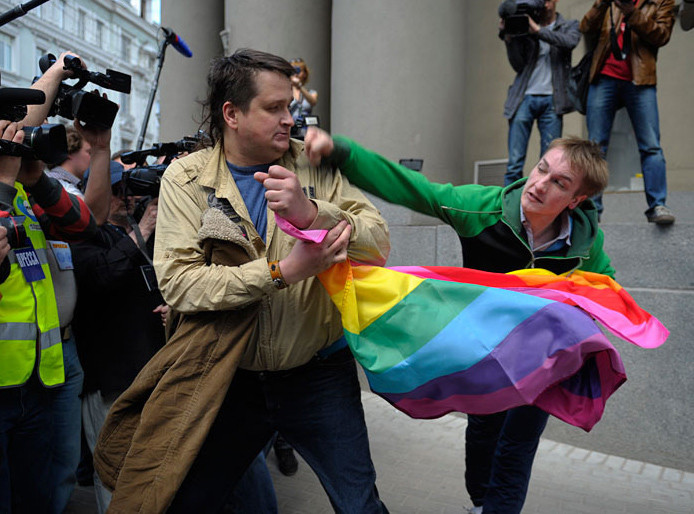
More than two dozen activists were detained in Moscow on Tuesday as they were protesting a bill that stigmatizes the gay community and bans the giving of information about homosexuality to children.

The protesters attempted to rally outside the Russian State Duma before what is expected to be a final vote on the bill banning “propaganda of nontraditional sexual relations.”

Police moved in after supporters of the bill started showering the protesters with eggs and water. Some of the protesters who were not detained were viciously attacked by masked men on a central street a mile away.

The Kremlin-backed legislation imposes hefty fines for providing information about the lesbian, gay, bisexual and transgender community to minors or holding gay pride rallies.

Russia is also considering banning citizens of countries that allow same-sex marriage from adopting Russian children.

Lawmakers changed the wording of “homosexual propaganda” to “propaganda of nontraditional sexual relations,” which backers of the bill define as “relations which are not conducive to procreation.”

Breaching the law carries a fine of up to 5,000 rubles ($156) for an individual and up to 1 million rubles ($31,000) for media.

Earlier Tuesday a dozen anti-gay activists picketed the Duma. One of them held a poster that read: “Lawmakers, protect the people from perverts!”

The bill has been seen as Putin’s attempt to consolidate his support base which includes many conservative Russian Orthodox voters.

Russian and foreign rights activists have decried the bill as violating basic rights. Human Rights Watch on Monday said the bill would “infringe Russian citizens’ freedom of expression and information, and discriminate against Russia’s LGBT community.”

Russian officials have rejected criticism. Foreign Minister Sergey Lavrov defended the bill in February, saying that Russia does not have any international or European commitment to “allow propaganda of homosexuality.”

Russia decriminalized homosexuality in 1993 but anti-gay sentiment is still high. – AP

UN expert accused of anti-Israel bias

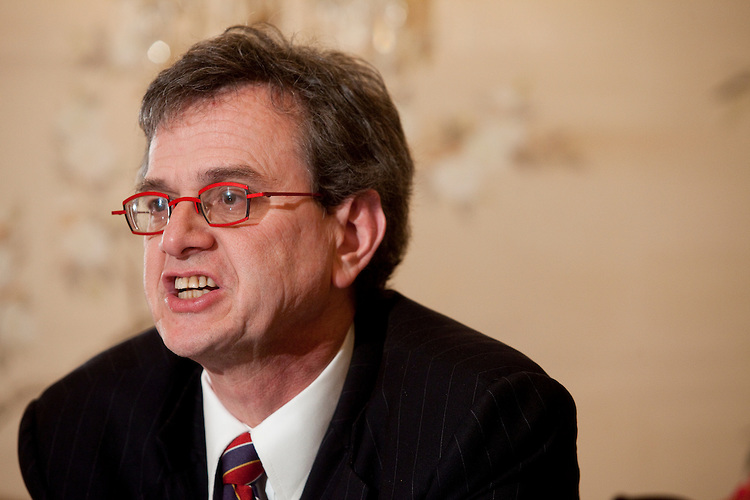
Richard Falk

An embattled UN rights expert who probes Israel’s conduct towards Palestinians on Tuesday rejected calls to step down, saying his opponents were trying to silence his criticism of the Jewish state by labelling him anti-Semitic.

“I don’t intend to resign, and there doesn’t seem to be any formal initiative that is seeking my dismissal,” Richard Falk told reporters, a day after calling for an international investigation of Israel’s treatment of Palestinian prisoners.

Falk, an 82-year-old American who is an emeritus law professor at Princeton University, has been the UN Human Rights Council’s monitor for the Palestinian territories since 2008.

He rejected claims of anti-Semitism, saying they were “hurtful” and “completely malicious”, given that he is Jewish himself.

“It makes it appear as if criticising Israel is tantamount to what everybody agrees to be objectionable, which is anti-Semitism. I’m not willing to be intimidated in this way,” he said.

“The attack on the messenger is a way of diverting attention from the message.”

Falk has repeatedly locked horns with Israel, the United States, Canada and some human rights groups for positions including labelling Israel’s 2008 offensive against Gaza a war crime and urging a boycott of companies helping Israel’s settlement drive in the Palestinian territories.

Washington has said he should quit his UN role, which like other rights monitors at the world body he holds on an unpaid, voluntary basis.

Falk has also come under fire for alleged anti-Israel bias from UN Watch, a lobby group affiliated with the American Jewish Committee.

In April, Canada asked the rights council for Falk’s departure after UN Watch highlighted comments he had made that could be interpreted as linking the Boston marathon bombing to Washington’s support of Israel.

Falk said his remarks were “spun” by opponents, that he had condemned the Boston attack as “terrorist criminality”, and that his goal was to examine the roots of antipathy towards US policies.

“I’ve criticised the US frequently, and I don’t feel I’m anti-American,” he said.

“Why do I keep getting into trouble? It’s because of my role in trying to speak honestly about the situation that Palestinians are facing under this condition of prolonged occupation,” he added.


Germany most-spied-on EU country by US

Germany appears to be the most snooped on EU country by the US, the map of secret surveillance activities by the National Security Agency shows. ‘Boundless Informant’ is among the data disclosed by former CIA contractor and NSA consultant Edward Snowden.

The color-coded map of secret surveillance activities by the NSA ranks countries according to how much surveillance they are currently undergoing – green for the least and red for the most watched.

While all EU member states boast variant shades of green, Germany stands out color-coded orange.

The source behind the revelation of the top-secret NSA surveillance program, already referred to as one of the most significant intelligence leaks in US history, was uncovered late last week. 29-year-old Snowden asked The Guardian to reveal his identity, having fled to Hong Kong to escape retaliation by the US authorities.

“The NSA has built an infrastructure that allows it to intercept almost everything. With this capability, the vast majority of human communications are automatically ingested without targeting,” he told The Guardian.

“I, sitting at my desk, certainly had the authority to wire-tap anyone … even if you are not doing anything wrong, you are being watched and recorded,” he added.

The Boundless Informant documents show NSA collecting up to 3 billion pieces of intelligence from US computer networks over a 30-day period ending in March 2013, according to The Guardian. The tool reportedly allows users to select a country on a map, view the metadata volume and select details about the collections against this or that state.

Germany’s Interior Ministry had already been in contact with US officials to find out whether there had been any infringement of German citizens’ privacy lately. Chancellor Angela Merkel is due to raise the issue of the NSA’s eavesdropping on Germany with President Barack Obama, who said the monitoring program is a means of defense against terrorism.

Iran is on top of the surveillance list, with more than 14 billion data reports in March, while Pakistan came in a close second at 13.5 billion reports. Jordan, a close US ally, as well as Egypt and India are also near the top, according to the data.

Senior European Union officials are also expected to discuss the impact of NSA’s programs on the privacy of EU citizens during a trans-Atlantic ministerial meeting in Dublin on Thursday.

“This case shows that a clear legal framework for the protection of personal data is not a luxury or constraint, but a fundamental right,” European Commissioner for Justice Viviane Reding said.

The European Parliament said it is always firm on data protection within the EU, as well as when negotiating with third countries, including the US.

“It would be unacceptable and would need swift action from the EU if indeed the US National Security Agency were processing European data without permission,” Guy Verhofstadt of the parliament’s liberal bloc said.

NSA’s tradition to survey international communities reportedly goes back to the Cold War era, when the agency used monitoring sites in Germany, Britain and other countries to spy on communications within the Soviet Union and its East European allies.

UK Foreign Secretary William Hague has meanwhile cancelled his trip to Washington to speak about The Guardian’s latest NSA report.

He assured parliament that accusations that the UK government allegedly used information provided by the Americans to circumvent laws were “baseless.”

“Our agencies practice and uphold UK law at all times,”
he stated, “even when dealing with information from outside the UK.”

In an interview with the British newspaper, successful NSA consultant Snowden leaked top-secret documents that revealed the existence of the US National Security Agency’s extensive internet spying program PRISM, which records digital communications and allows for real-time online surveillance of US citizens. PRISM gives US intelligence agencies direct access to files stored on the servers of major internet companies, including Google and Facebook, to identify and target potential terror suspects. – RT

Setting for a real international spy thriller

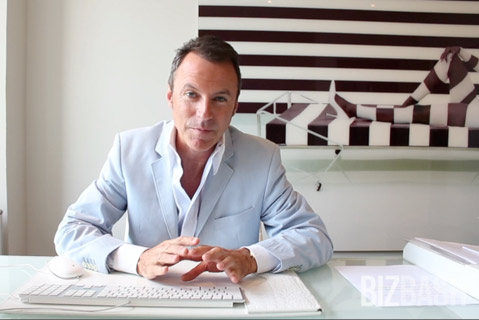
Colin Cowie, hotel designer

There are few better settings for an international spy thriller than the chaotic, neon-lit streets of Kowloon, to the north of Hong Kong’s Victoria Harbour.In the early 1970s, Kowloon’s triad-infested back-alleys played host to Roger Moore’s James Bond who used the area as the backdrop for The Man With the Golden Gun.

The Mira hotel’s rooms were conceived by Colin Cowie, a South African “lifestyle guru” and interior designer, and on its eleventh floor is Cuisine Cuisine, an award-winning restaurant where specialties include braised birds nests, South African abalone and sturgeon caviar.

On Monday, Kowloon was plunged once again into the midst of a global intrigue involving spooks and spies.

For it was here that Edward Snowden, the CIA worker-turned-whistleblower, made his temporary Asian hide-out, holing himself up inside one of Hong Kong’s chicest design hotels as the world absorbed his revelations about the National Security Agency’s mammoth electronic intelligence gathering operations.

On Monday afternoon two employees at Hong Kong’s £42m Mira hotel confirmed to The Daily Telegraph that a man called Edward Snowden had been staying at the 492-room luxury hotel in Kowloon.

“He checked out today,” said one staff member, who declined to be named.

The employees declined to say exactly when Mr Snowden, who reportedly flew to Hong Kong on May 20, had checked in and out, or which floor he had been staying on.

But it was from one of the hotel’s “uniquely designed guestrooms” that the 29-year-old looked on as news of his leaked revelations swept across the globe.

The Mira is one of Hong Kong’s most fashionable and talked about hotels. It describes itself as “a design-led urban retreat for the discerning traveller” and boasts a Michelin Star Chinese restaurant, a 25-metre indoor pool and a 18,000 square metre spa.

The Mira would have made a comfortable, if expensive, place to lie low. A brochure describes the hotel as “a living, breathing sophisticated space” which promises to “pamper the mind, body and spirit of the fast-living urban traveller”. Once a week the hotel hosts “Champagne Tuesday” at which guests quaff HK$100 glasses of champagne to the sound of “cool French jazz”.

Kowloon’s hustle and bustle would also have offered good cover to anyone wanting to fly under the radar. Outside the Mira’s pitch-black entrance at Number 118 Nathan Road, the streets teem with street hawkers and workers. Shoppers pour in and out of glitzy shopping malls and Cartier and Philippe Patek boutiques.

It is unclear how much Mr Snowden was able to take advantage of the hotel’s luxury facilities. Staff members refused to go into details about their former guest on Monday and The Guardian reported that the former contractor had spent three weeks “ensconced” in his bedroom, ordering room service. “I’ve left the room maybe a total of three times during my entire stay,” Mr Snowden said.

As Mr Snowden’s identity and and unexpected presence in Hong Kong was revealed on Monday morning, journalists raced to locate his hideout.

Rumours about his exact whereabouts spread on social media, with one Twitter-user suggesting Mr Snowden had been staying in the Excelsior hotel in Hong Kong’s Causeway Bay area. Staff there said they had “no information” about his presence, however, and refused to confirm or deny if they were hosting a guest named Edward Snowden.

By late afternoon Mr Snowden’s temporary home had been identified by means of an elegant bedside lamp that appeared in footage of an interview he had given and matched those in the Mira.

Members of the media rushed to the Kowloon hotel but by then the elusive Mr Snowden had left, staff said.

Tonight it was not clear if Mr Snowden remained in Hong Kong or had travelled elsewhere.

He told The Guardian he had chosen to come to Hong Kong because of its “commitment to free speech and the right of political dissent” but planned “to seek asylum in a country with shared values”, possibly Iceland.

A security guard outside the palm-flanked US consulate laughed off questions about the former CIA employee. “There are many Americans living in Hong Kong,” he said, grinning. – The Telegraph


Whistleblower disappears from Hong Kong hotel

Russia is willing to consider granting political asylum for NSA whistleblower Edward Snowden, who blew the lid on the US PRISM program, Russian media reported. Snowden dropped out of sight Monday after he was last seen checking out of a Hong Kong hotel.

The Mira Hotel, is a self-described “design hotel” near Kowloon park on the mainland.

The Mira Hotel in Tsim Sha Tsui, a waterfront area popular with tourists, said that an American named Edward Snowden had checked into the hotel on June 1 and stayed for more than a week before checking out Monday afternoon. The hotel is a luxury property that, according to its web site, promises “matchless indulgence for the young-at-heart modern traveler,” where room rates can go for more than $300 a night. […]

A man reached at the Mira Hotel in a room under Mr. Snowden’s name said he wasn’t the person reporters were looking for and then hung up the phone. On dialing the hotel again, the reception said Mr. Snowden’s room was no longer taking phone calls. A few minutes after that, the hotel said Mr. Snowden had checked out.

“If we receive such a request, we will consider it,” Kommersant daily quoted President Vladimir Putin’s press secretary Dmitry Peskov as saying.

Snowden, a 29-year-old former technical assistant for the CIA and current employee of the defense contractor Booz Allen Hamilton, revealed the existence of PRISM, the National Security Agency’s (NSA) massive data-mining surveillance program which gave the agency backdoor access to emails, videos, chats, photos and search queries from nine worldwide tech giants.

The whistleblower disappeared after checking out of a Hong Kong hotel, Reuters quoted witnesses as saying. A day earlier Snowden revealed his identity to The Guardian newspaper.

The revelations of Edward Snowden have been condemned by senior US lawmakers, who threatened the whistleblower with prosecution. Senator Dianne Feinstein (D-CA) on Monday called Snowden’s NSA leaks an “act of treason.”

Chairman of the House homeland security subcommittee Peter King stressed that if Edward Snowden is the leaker, then the US “must prosecute him to the fullest extent of the law and begin extradition proceedings at the earliest date.”

On Monday, Regina Ip, formerly Hong Kong’s top official overseeing security, told reporters it would be in Snowden’s “best interest to leave Hong Kong,” citing an extradition treaty with the United States that was signed in 1996.

Visitors walk into The Mira Hotel, where 29-year-old former CIA employee Edward Snowden was reported to have checked out of on Monday, in Hong Kong June 10, 2013 (Reuters / Bobby Yip)

“He won’t find Hong Kong a safe harbor,” Ip said. “Those agreements have been in force for more than 10 years. If the US submits a request, we would act in accordance with the law.”

Iceland MP and privacy rights campaigner Birgitta Jonsdottir has offered Snowden assistance in getting asylum in the Nordic island state.

Snowden fled to Hong Kong on May 20. Before that he had been working with the NSA earning approximately $200,000 per year and living in Hawaii.

“I’m willing to sacrifice all that because I can’t in good conscience allow the US government to destroy privacy, internet freedom and basic liberties for people all around the world with this massive surveillance machine they’re secretly building,” he told The Guardian. “The greatest fear that I have regarding the outcome for America, of these disclosures, is that nothing will change.”

Snowden copied the last of the documents he planned to release three weeks ago, telling his bosses he needed time off to be treated for epilepsy. He has also said he has a girlfriend who was unaware of his plans to seek refuge in Hong Kong.

WikiLeaks founder Julian Assange says he has been in contact with Edward Snowden, saying the NSA contractor was a prime example of what his organization is attempting to do.

“This organization and people like it and our values are forming a new body politic and people like Edward Snowden are part of that phenomena,” Assange said in a telephone interview with The Australian Broadcasting Corporation’s Emma Alberici on Monday from the Ecuadorian embassy in London.

Guardian journalist Glenn Greenwald, who revealed classified US surveillance programs leaked by Snowden, told AP that there will be more ‘significant information’ exposed in the near future. “We are going to have a lot more significant revelations that have not yet been heard over the next several weeks and months,” Greenwald told AP.

Teen gunned down by Syrian rebels

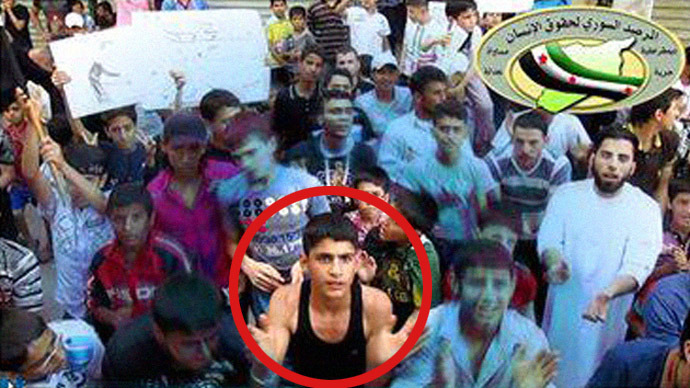
Photographs of the bloodied face of a 14-year-old boy executed in front of his parents by jihadist rebels in northern Syria have thrown into stark relief the sometimes extreme justice meted out in rebel-held areas.

Fighters of the al-Qaeda front group the Islamic State of Iraq and Syria accused Mohammad Qattaa of blasphemy, but a human rights group said he had done nothing more than use a common Arabic phrase that makes reference to the Prophet Mohammed’s name.

Pictures of Qattaa’s face, bloodied by the three shots that cut short his life on Sunday, spread like wildfire on social media websites, prompting a strong condemnation of his killing from the mainstream opposition.

“If someone shot a dog in the street, people would act,” cried the boy’s grieving mother Umm Mohammed in amateur video footage distributed by activists.

“Where are his rights? He was a child! How could they kill him?

“They killed him right in front of my eyes… May God take revenge on them… I saw his blood streaming down,” she wailed.

“We are with neither side (in Syria’s raging conflict). We just look after ourselves… Why did you kill my son? Is he a terrorist?”

The Syrian Observatory for Human Rights said the militants responsible for the boy’s execution were foreign volunteers with the al-Qaeda-linked Islamic State of Iraq and Syria.

“A member of the Islamic State of Iraq and Syria spoken to by an Observatory activist said the boy deserved to die,” said Observatory director Rami Abdel Rahman.

“Those who executed the boy were not Syrian,” he added.

Large swathes of northern Syria have fallen into the hands of various rebel groups, some of them Islamist, which have set up their own justice systems in areas they control.

Qattaa’s killing was the latest in a series of abuses by rebel fighters that have discomfited the mainstream opposition and its Western backers.

Just last month, amateur video showed a rebel fighter in the devastated province of Homs eating the organs of a slain soldier.

Opposition National Coalition member Alia Mansour said: “This execution is a crime against humanity and a crime against Syria’s revolution.”

“As the conflict develops, it is logical that we will see more problems of criminality emerge,” said Aron Lund, who has written extensively on the Syrian insurgency.

“The core problem in Syria, aside from the war, is the lack of law and order. Religious extremism is a response to the lack of law and order, as radicals see a chance to step in like a sheriff in the Wild West,” Lund told AFP.

“On the regime side, power is concentrated in Assad’s hands. But on the rebel side, it is more complicated because many insurgent groups are competing against each other for territory, and have many different ideas about how Syria should be ruled,” he added.

Alia Mansour of the opposition National Coalition condemned Qattaa’s killing.

“This execution is a crime against humanity and a crime against Syria’s revolution,” Mansour said. “We don’t want to exchange one killer regime for another.”

But Nadim Houry of Human Rights Watch said it was imperative that the opposition go beyond mere condemnation as allegations of abuses by rebel fighters were multiplying.

“Executions are on the increase, and a rising number of groups are taking the law into their own hands,” Houry told AFP.

“The rule of the gun is what dominates in Syria now, whether in opposition or regime-held areas. What is essential is that there be space for Syrian non-combatants to be able to speak up and condemn such acts,” he said.

“This kind of ability to mobilise and put pressure on the guys with the guns is essential for Syria’s future.”

Children have accounted for at least 5 030 children have been killed in Syria’s raging war, which has left more than 94 000 people dead in 26 months. The majority were killed in regime shelling, the Observatory says. – AFP

Mandela’s Qunu prepares for influx

Mandela's home in Qunu

As former president Nelson Mandela spends his fourth day in hospital, his home village of Qunu was preparing for throngs of visitors, the Sowetan reported.

Some residents were preparing to turn their homes into home-stay accommodation, as they said there might not be enough place in the village should the ailing icon die, according to the report.

Villagers, who did not want to be named, told the newspaper there were only three bed and breakfasts (B&B) in the village.

An employee at one of the residences said the house had been converted into a 10-room B&B and had previously accommodated many foreigners who came to the village to see Mandela’s home.

Nowinothi Geledwana, 63, told the newspaper she had previously rented out some rooms in her house and expected to do so again, should there be a demand.

“I have about three to four rooms that are available and can be rented out should people prefer home-stay accommodation in Qunu,” Geledwana was quoted as saying.

“I really don’t know how much I will charge for them, but I’m sure I will make some profit.”

Apart from accommodation provided by residents, the Nelson Mandela Museum in the village also had accommodation for 60 people, while there was a plush guesthouse less than 10km from Qunu.

The Star newspaper reported the Mandela family in Qunu was preparing for another relative’s funeral.

Florence Mandela, the wife of one of the son’s of the elder statesman’s uncle, died last week aged 96.

Florence’s funeral would be held on Saturday. – SAPA