Pink Floyd member urges Israel boycott

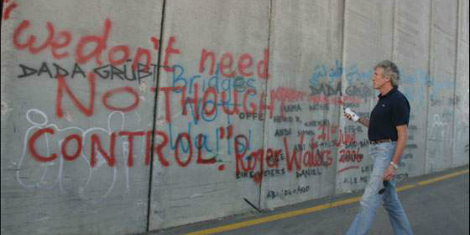
Roger Waters protests against Israel

Roger Waters and Alice Walker have penned open letters asking singer Alicia Keys to call off a forthcoming concert in Tel Aviv. Walker, the author of The Color Purple, invited Keys to join a cultural boycott of Israel, visiting “the children in Gaza” instead of supporting “a system that is cruel, unjust and unbelievably evil”.

“Dear Alicia Keys,” Walker wrote on the website for the US Campaign for the Academic & Cultural Boycott of Israel. “I have learned today that you are due to perform in Israel very soon. We have never met, though I believe we are mutually respectful of each other’s path and work. It would grieve me to know you are putting yourself in danger (soul danger) by performing in an apartheid country that is being boycotted by many global conscious artists.”

In his own letter, Waters admitted that Keys may not know who he is. “I used to be in a band called Pink Floyd and, believe it or not, I still work,” he wrote. The English musician implored Keys to “join the rising tide of resistance” and refuse “to give legitimacy to the Israeli government policies of illegal, apartheid, occupation of the homelands of the indigenous people of Palestine.”

Keys is due to appear at Tel Aviv’s Nokia Arena on 4 July, as part of her ongoing Girl On Fire tour. It will be her first appearance in Israel. As the concert approaches, activists have begun ramping up their Facebook and Twitter campaign, asking the long-time HIV/Aids activist to consider dropping the gig in solidarity with the Palestinian rights movement.

“I have kept you in my awareness as someone of conscience and caring, especially about the children of the world,” Walker went on. “A cultural boycott of Israel and Israeli institutions (not individuals) is the only option left to artists who cannot bear the unconscionable harm Israel inflicts every day on the people of Palestine, whose major ‘crime’ is that they exist in their own land, land that Israel wants to control as its own.”

Elvis Costello, Santana, the Pixies and Gil Scott-Heron are among the other artists to have boycotted Israel in recent years, while acts including Madonna and Paul McCartney have dismissed calls to cancel shows. Earlier this month, physicist Stephen Hawking announced he was joining the movement, adding his name to a list of supporters that includes dozens of Nobel laureates.

Keys has yet to respond to activists’ requests. – The Guardian

Oz farmers study robot workers

Moving carefully along a row of apple trees, two of Australia’s newest agricultural workers check if the fruit is ripe or the soil needs water or fertiliser.

Australia is one of the leaders in the field and, with a minimum wage of $15.37 an hour and a limited workforce, has a big incentive to use robots and other technology, such as unmanned aircraft, to improve efficiency.

It hopes to tap fast-growing Asian neighbours, where swelling ranks of the middle class increasingly want more varied and better quality food, from blueberries to beef.

“The adoption of new technology is going to be crucial for Australia to maintain its competitiveness in terms of the global agricultural sector,” said Luke Matthews, commodities strategist at the Commonwealth Bank of Australia.

“If we don’t adopt new technology, we can give up on these high-flying ambitions of being the food bowl of Asia.”

Using such technology tooptimise the use of fertiliser can boost profitability at grain farms by 14%, according to a study by Australia’s Commonwealth Scientific and Industrial Research Organisation.

A robot effortlessly plucking fruit is some way off, though a range of simpler tasks are within reach, to add to existing technology such as automatic steering of harvesters.

Salah Sukkarieh, professor of robotics and intelligent systems at the University of Sydney and developer of Mantis and Shrimp, says the next phase aims for robots to do increasingly complex jobs, such as watering and, ultimately, harvesting.

“We have fitted them with a lot of sensors, vision, laser, radar and conductivity sensors – including GPS and thermal sensors,” said Sukkarieh.

The technology could have the biggest application in horticulture, Australia’s third-largest agricultural sector with exports of $1.71-billion in the last marketing year, since a fixed-farm layout lends itself better to using robots.

Robots and an unmanned air vehicle that are being developed at the University of Sydney had passed field tests at an almond farm in Mildura, Victoria state, said Sukkarieh.

Propelled by sets of wheels and about the height of a man, the robots were named after the native Mantis shrimp because of the marine crustacean’s 16 different colour receptors, capable of detecting up to 12 colours. Humans only have four, three of which pick up colours.

This capacity to recognise colour already allows the robots to sense whether fruit is ripe.

The data can then be processed by computer to determine what action the robot should take. This could be used to water or apply fertiliser or pesticides, or sweep and prune vegetation, and eventually harvest the crop. – Reuters

Americans warm to French anti-gay protests

Although France officially legalized gay marriage last month, organizers of an anti-gay marriage — or “pro-family” — parade decided to go forward with a planned demonstration Sunday — and hundreds of thousands turned out.

Sandy Glass from Naperville, Illinois, was in Paris and witnessed the parade unexpectedly, telling TheBlaze she and her husband estimated more than 250,000 people were present.

“It brought tears to our eyes,” Glass, a conservative, said in a phone interview.

“We go to France a lot and thought it was another left wing protest,” she said later, recalling that last year they found themselves in the middle of a Socialist rally.

When they followed the noise and witnessed what she described as “pro-family” signs, Glass said she realized “oh, we’re not the only ‘crazy’ ones,” explaining that it is “sometimes very difficult to be on the right in America.”

The Associated Press reported there being about 5,000 police present for the demonstration, due to clashes that have occurred in other anti-gay marriage protests.

But Glass said the event was very well organized and even seemed to have its own security detail.

“Nobody bothered these people,” she said, noting that people on the street were giving thumbs up and people in balconies were cheering. “

Here are some photos from the event:

“It was such a show of force that was pro something, not against something,” she said. “I think it was awesome.”

The plan of French protesters, according to Glass, is to vote out lawmakers with whom they hold opposition in 2014. – The Blaze

Boy Scouts to accept gays

After lengthy and wrenching debate, local leaders of the Boy Scouts of America have voted to open their ranks to openly gay boys for the first time, but heated reactions from the left and right made clear that the BSA’s controversies are far from over.

The Scouts’ longstanding ban on gay adults remains in force, and many liberal Scout leaders – as well as gay-rights groups – plan to continue pressing for an end to that exclusion even though the BSA’s top officials aren’t ready for that step.

Meanwhile, many conservatives within the Scouts are distraught at the outcome of the vote and some are threatening to defect. A meeting is planned for next month to discuss formation of a new organization for boys.

The vote was conducted by secret ballot Thursday during the National Council’s annual meeting at conference center not far from Boy Scout headquarters in suburban Dallas. Of the roughly 1,400 voting members of the council who cast ballots, 61 percent supported the proposal drafted by the governing Executive Committee. The policy change takes effect Jan. 1.

“This has been a challenging chapter in our history,” the BSA chief executive, Wayne Brock, said after the vote. “While people have differing opinions on this policy, kids are better off when they’re in Scouting.”

However, the outcome will not end the membership policy debate, as was evident in the reactions of leaders of some of the conservative religious denominations that sponsor Scout units.

“We are deeply saddened,” said Frank Page, president of the Southern Baptist Convention’s executive committee. “Homosexual behavior is incompatible with the principles enshrined in the Scout oath and Scout law.”

The Assemblies of God said the policy change “will lead to a mass exodus from the Boy Scout program.” It also warned that the change would make the BSA vulnerable to lawsuits seeking to end the ban on gay adults.

John Stembeger, a conservative activist and former Scout from Florida, founded a group called OnMyHonor.net to oppose the policy change. He assailed the BSA executive committee for its role in gaining a “Yes” vote.

“What kind of a message are we sending to young people about being brave when its top adult leaders don’t even have the courage to stand up to the pressure of a militant lobby when the bullies in Washington D.C., Hollywood or even some of their own renegade councils start pressuring and harassing them?” he asked.

He said OnMyHonor.Net and other like-minded organizations and individuals would meet in Louisville, Ky., next month to discuss the creation of “a new character development organization for boys.”

Texas Gov. Rick Perry also expressed dismay.

“While I will always cherish my time as a Scout and the life lessons I learned, I am greatly disappointed with this decision,” he said.

The result was welcomed by many liberal members of the Scouting community and by gay-rights activists, though most of the praise was coupled with calls for ending the ban on gay adults.

“I’m so proud of how far we’ve come, but until there’s a place for everyone in Scouting, my work will continue,” said Jennifer Tyrrell, whose ouster as a Cub Scout den leader in Ohio because she is lesbian launched a national protest movement.

Tyrrell recalled having to tell her son she had been forced out as den mother.

“He doesn’t deserve to be told that we’re not good enough,” she said. `’We’re not going to stop until this is over.”

Pascal Tessier, an openly gay 16-year-old Boy Scout from Maryland, had mixed emotions after the vote.

“I was thinking that today could be my last day as a Boy Scout,” he said. “Obviously, for gay Scouts like me, this vote is life-changing.”

Tessier is on track to receive his Eagle Scout award – he only needs to complete his final project – but said he is troubled that on his 18th birthday he could transform from someone holding Scouting’s highest rank to someone unfit to be a part of the organization.

“That one couple hours (between 17 and 18) will make me not a good person,” he said.

Tessier has been an exception – an openly gay Scout whose presence was quietly accepted by local Scout leaders. In general, the Scouts’ policy has been to avoid any questioning of would-be Scouts as to their sexual orientation, but to dismiss boys who did speak openly about being gay.

For example, Scout officials refused to grant the Eagle Scout rank to Ryan Andresen, an 18-year-old Californian, after he came out as gay last year.

The vote followed what the BSA described as “the most comprehensive listening exercise in Scouting’s history” to gauge opinions, including a survey sent out starting in February to members of the Scouting community.

Of the more than 200,000 leaders, parents and youth members who responded, 61 percent supported the current policy of excluding gays, while 34 percent opposed it. Most parents of young Scouts, as well as youth members themselves, opposed the ban.

The proposal approved Thursday was seen as a compromise, and the Scouts stressed that they would not condone sexual conduct by any Scout – gay or straight.

“The Boy Scouts of America will not sacrifice its mission, or the youth served by the movement, by allowing the organization to be consumed by a single, divisive and unresolved societal issue,” the BSA said in a statement.

Among those voting for the proposal to accept openly gay youth was Thomas Roberts, of Dawsonville, Ga., who serves on the board of a Scout council in northeast Georgia.

“It was a very hard decision for this organization,” he said. “I think ultimately it will be viewed as the right thing.”

The BSA’s overall “traditional youth membership” – Cub Scouts, Boy Scouts and Venturers – is now about 2.6 million, compared with more than 4 million in peak years of the past. It also has about 1 million adult leaders and volunteers.

Of the more than 100,000 Scouting units in the U.S., 70 percent are chartered by religious institutions.

Those include liberal churches opposed to any ban on gays, but some of the largest sponsors are relatively conservative denominations that have previously supported the broad ban – notably the Roman Catholic Church, the Church of Jesus Christ of Latter-day Saints and Southern Baptist churches.

While the Southern Baptists were clearly upset by the vote to accept openly gay youth, the Utah-based Mormon church – which has more Scouting troops than any other religious denomination – reacted positively.

“We trust that BSA will implement and administer the approved policy in an appropriate and effective manner,” an LDS statement said.

Utah’s largest Boy Scout councils supported the change.

“This is a win for youth and a win for the community,” said John Gailey, spokesman for the Utah National Parks Council, which covers central and southern Utah. “It gives all youth the opportunity to take advantage of the values instilled by Scouting.”

The National Catholic Committee on Scouting responded cautiously, saying it would assess the possible impact of the change on Catholic-sponsored Scout units. – AP

Toronto mayor facing allegations of smoking crack

Rob Ford

The mayor of Canada’s largest city, facing allegations that he smoked crack cocaine, and made racial and homophobic slurs on video, must either refute the accusations or step down, fellow city politicians say.

“If the allegations are false, then the mayor is owed some apologies,” said Councillor Josh Matlow, who has clashed with Ford on transit issues, but who usually takes a centrist line in a polarized city council.

“If the allegations are proven true beyond a reasonable doubt, then the mayor should resign.”

An editor from U.S. media outlet Gawker and two reporters from the Toronto Star said separately they saw a cellphone video that appeared to show Mayor Rob Ford smoking crack cocaine.

Ford, who is no stranger to controversy, was elected mayor of Toronto more than two years ago after serving as a councillor for 10 years. He called the allegations “ridiculous” on Friday and suggested they were part of a broader campaign against him by the left-leaning Toronto Star newspaper.

Dennis Morris, Ford’s lawyer, told Reuters on Monday that it was still too early to consider legal action over the allegations and that if there is a video, it needs to be made public so that Canadians can judge the content for themselves.

“We’re all waiting to see whether there’s anything within this video and whether or not it’s been doctored, edited, altered, that type of thing,” he said.

Reuters was unable to independently verify the existence of the video or its contents.

Ford’s brother, Doug, his closest ally on City Council, broke a brief and uncharacteristic silence on Saturday, telling local radio station Newstalk 1010, “I have never seen my brother involved with anything like coke.”

The brothers canceled their regular Sunday appearance on a radio show at the same station.

The controversy made headlines across Canada and around the world, although some focused as much on Ford’s crude remarks as the allegations of crack use.

“The allegations that have been leveled at Mayor Ford are not just serious, but they are also criminal,” Councillor Kristyn Wong-Tam told CBC News. “I would encourage the mayor to resign and to seek help as soon as possible should this be true.”

The Toronto Star reporters who watched the video said Ford calls Liberal leader Justin Trudeau a “fag” and derisively refers to players on the high school football team he coaches as “minorities”.

“If the mayor the of world’s most diverse city is proven to have uttered racial and homophobic slurs, then he’s not fit for the office,” Councillor Matlow told Reuters.

Toronto City Council contains both left-leaning councilors, mostly from the city’s core, and right-leaning candidates like Ford, who are mostly from suburban areas like Etobicoke.

The two groups tend to take different approaches on issues from transit to unionized labor, with often comical policy flip flops. In one example, City Council imposed a 5-cent fee on plastic grocery bags, then ignored Ford’s plea to remove the fee and voted to ban the bags completely.

They then reversed that decision, leaving the issue exactly where it was before the whole debate started.

Elected on a platform to stop the gravy train at City Hall, Ford has courted controversy on many occasions; the Toronto Star on Friday published a list of 42 “extraordinary moments” in his political career.

(http://www.thestar.com/news/city_hall/2013/05/17/rob_ford_42_remarkable_moments_from_toronto_mayors_career.html)

The list includes accusations that Ford skipped City Council meetings to coach high-school football and engaged in a confrontation outside his home with a reporter.

He was briefly ordered out of office in 2012 after he was found guilty of conflict of interest, but won an appeal and was allowed to finish his four-year term as mayor.

In 2008, assault charges brought against Ford by his wife Renata were withdrawn by the Crown because of inconsistencies in Renata’s story. The couple later reconciled.

The rumblings of scandal have eroded Ford’s popularity, although polls conducted before the reports of the video still enjoyed support from some 50 percent of the population, most of them from in Toronto’s suburbs.

Both Gawker and the Star say the video is being shopped around by people with connections to the drug trade.

In an effort buy the video and post it online, Gawker launched a “Crackstarter” campaign last week to raise $200,000. It has so far raised more than $76,000. – Reuters

Race riots in Stockholm

Gangs of youth angered by the police shooting death of an elderly man in a mainly immigrant neighborhood hurled rocks at police and set cars and buildings on fire in a Stockholm suburb early Monday, forcing the evacuation of an apartment block.

Around 50 youths were involved in the riots in the suburb of Husby, police spokesman Lars Bystrom said.

The youths set light to a parking garage, compelling police to evacuate residents from an adjacent apartment block, Bystrom said. Residents were allowed to return home after a couple of hours.

Around 80 percent of the roughly 11,000 people living in Husby – a drab, low-income neighborhood of apartment blocks west of Stockholm – are first or second generation immigrants.

“Youth” in European news stories is a euphemism for black hooligans. The euphemism “Asian” wasn’t used and is an indication that they are black Africans, probably Somalis. The area where this occurred is 80% non-Swedish.

Bystrom said police responded to calls of burning cars and were met by masked youths hurling rocks at them.

One policeman was attacked by youths kicking him and two others were injured by rocks, local police officer Jorgen Karlsson said. He added around 10 cars were set ablaze, and windows were smashed at two schools and several local businesses.

Karlsson said the dead man was “European,” but couldn’t specify his nationality.

Residents said they had gathered to protest against the shooting death and that police responded by sending in SWAT teams that cordoned off the area.

“I understand that people react like this,” said Rami Al-Khamisi from the organization Megafonen, which represents citizens in Stockholm’s suburbs.

The organization said police had used excessive violence against the youths and also attacked passers-by with batons and dogs.

Police have launched an internal probe to investigate the shooting death on May 13 of a 69-year-old man in Husby. They say they shot the man in self-defense because he had attacked police with a knife when they broke down the door to an apartment, where he had locked himself up with a woman.

However, Megafonen has criticized police for initially releasing a faulty report saying the man was taken to a hospital. The group said residents had seen his dead body being transported from the scene hours after the shooting in a hearse, which police later admitted was correct. SAPA/AP

Russia sends advanced anti-ship missiles to Syrian government

Yakhont missile

Russia has sent advanced antiship cruise missiles to Syria, a move that illustrates the depth of its support for the Syrian government led by President Bashar al-Assad, American officials said Thursday.

Russia has previously provided a version of the missiles, called Yakhonts, to Syria. But those delivered recently are outfitted with an advanced radar that makes them more effective, according to American officials who are familiar with classified intelligence reports and would only discuss the shipment on the basis of anonymity.

Unlike Scud and other longer-range surface-to-surface missiles that the Assad government has used against opposition forces, the Yakhont antiship missile system provides the Syrian military a formidable weapon to counter any effort by international forces to reinforce Syrian opposition fighters by imposing a naval embargo, establishing a no-fly zone or carrying out limited airstrikes.

“It enables the regime to deter foreign forces looking to supply the opposition from the sea, or from undertaking a more active role if a no-fly zone or shipping embargo were to be declared at some point,” said Nick Brown, editor in chief of IHS Jane’s International Defense Review. “It’s a real ship killer.”

Jeffrey White, a fellow at the Washington Institute for Near East Policy and a former senior American intelligence official, said Syria’s strengthened arsenal would “tend to push Western or allied naval activity further off the coast” and was also “a signal of the Russian commitment to the Syrian government.”

The disclosure of the delivery comes as Russia and the United States are planning to convene an international conference that is aimed at ending the brutal conflict in Syria, which has killed more than 70,000. That conference is expected to be held in early June and to include representatives of the Assad government and the Syrian opposition.

Secretary of State John Kerry has repeatedly said that it is the United States’ hope to change Mr. Assad’s “calculations” about his ability to hold on to power so that he will allow negotiations for a political solution to the conflict. Mr. Kerry indicated that he had raised the issue of Russian arms deliveries to Syria during his recent visit to Moscow, but declined to provide details.

“I think we’ve made it crystal clear we would prefer that Russia was not supplying assistance,” he said. “That hasn’t changed.”

American officials have been concerned that the flow of Russian and Iranian arms to Syria will buttress Mr. Assad’s apparent belief that he can prevail militarily.

“This weapons transfer is obviously disappointing and will set back efforts to promote the political transition that is in the best interests of the Syrian people and the region,” Senator Bob Corker of Tennessee, the senior Republican on the Foreign Relations Committee, said in a statement on Thursday night. “There is now greater urgency for the U.S. to step up assistance to the moderate opposition forces who can lead Syria after Assad.”

Senator Robert Menendez, Democrat of New Jersey and the committee chairman, added in a statement, “Russia is offering cover to a despotic ruler and defending a bankrupt regime.”

Syria ordered the coastal defense version of the Yakhont system from Russia in 2007 and received the first batteries in early 2011, according to Jane’s. The initial order covered 72 missiles, 36 launcher vehicles, and support equipment, and the systems have been displayed in the country.

The batteries are mobile, which makes them more difficult to attack. Each consists of missiles, a three-missile launcher and a command-and-control vehicle.

The missiles are about 22 feet long, carry either a high-explosive or armor-piercing warhead, and have a range of about 180 miles, according to Jane’s.

They can be steered to a target’s general location by longer-range radars, but each missile has its own radar to help evade a ship’s defenses and home in as it approaches its target.

Two senior American officials said that the most recent shipment contained missiles with a more advanced guidance system than earlier shipments.

Russia has longstanding interests in Syria, including a naval base at the Mediterranean port of Tartus.

As the Syria crisis has escalated, Russia has gradually augmented its naval presence in the region. In January, more than two dozen Russian warships sailed to the Black and Mediterranean Seas to take part in what the Defense Ministry said was to be the country’s largest naval exercise in decades, testing the ships’ ability to deploy outside Russian waters.

A month later, after the Black Sea exercises ended, the Russian Defense Ministry news agency said that four large landing vessels were on their way to operations off the coast of Syria.

“Based on the results of the navy exercises in the Black and Mediterranean seas,” the ministry said at the time, “the ministry leadership has taken a decision to continue combat duty by Russian warships in the Mediterranean.”

– New York Times full story

Israel to declare four West Bank settler outposts legal


Settlements being built on the West Bank

Israel plans to declare legal four unauthorized West Bank settler outposts, a court document showed on Thursday, days before U.S. Secretary of State John Kerry returns to the region to try to restart peace talks.

Israel has been sending mixed signals on its internationally condemned settlement policy as Kerry pursues efforts to revive negotiations Palestinians quit in 2010 in anger over Israeli settlement building on occupied land they seek for a state.

In a reply to a Supreme Court petition by the Israeli anti-settlement group Peace Now, the government said it had taken steps in recent weeks to authorize retroactively four West Bank outposts built without official permission.

“The intention to legalize outposts as new settlements is no less than a slap in the face of Secretary Kerry’s new process and is blatant reassurance to settler interests,” Peace Now said in a statement.

A spokesman for Prime Minister Benjamin Netanyahu declined to comment on the government’s response to the court.

Most the world deems all Israeli settlements in the West Bank, which Israel captured in the 1967 Middle East war, as illegal. Israel disputes this and distinguishes between about 120 government-authorized settlements and dozens of outposts built by settlers without permission.

Last week, Peace Now and Israeli media reports said Netanyahu has been quietly curbing some settlement activity by freezing tenders for new housing projects, in an apparent effort to help the U.S. drive to renew peace talks.

But Peace Now said at the time construction already under way was continuing, and Israel announced last week that it had given preliminary approval for 300 new homes in Beit El settlement as part of a plan Netanyahu announced a year ago.

Kerry, due to meet Netanyahu and Palestinian President Mahmoud Abbas separately next week, has said he believes “the parties are serious” about finding a way back into talks.

The main issues that would have to be resolved in a peace agreement include the borders between Israel and a Palestinian state, the future of Jewish settlements, the fate of Palestinian refugees and the status of Jerusalem.

Some 500,000 Israelis have settled in the West Bank and East Jerusalem, which was also captured from Jordan in 1967. About 2.7 million Palestinians live in those areas. – Reuters

The downside of diversity

It seems increasingly popular to speak of racial and ethnic diversity as a civic strength. From multicultural festivals to pronouncements from political leaders, the message is the same: our differences make us stronger.

But a massive new study, based on detailed interviews of nearly 30,000 people across America, has concluded just the opposite. Harvard political scientist Robert Putnam — famous for “Bowling Alone,” his 2000 book on declining civic engagement — has found that the greater the diversity in a community, the fewer people vote and the less they volunteer, the less they give to charity and work on community projects. In the most diverse communities, neighbors trust one another about half as much as they do in the most homogenous settings. The study, the largest ever on civic engagement in America, found that virtually all measures of civic health are lower in more diverse settings.

“The extent of the effect is shocking,” says Scott Page, a University of Michigan political scientist.

The study comes at a time when the future of the American melting pot is the focus of intense political debate, from immigration to race-based admissions to schools, and it poses challenges to advocates on all sides of the issues. The study is already being cited by some conservatives as proof of the harm large-scale immigration causes to the nation’s social fabric. But with demographic trends already pushing the nation inexorably toward greater diversity, the real question may yet lie ahead: how to handle the unsettling social changes that Putnam’s research predicts.

“We can’t ignore the findings,” says Ali Noorani, executive director of the Massachusetts Immigrant and Refugee Advocacy Coalition. “The big question we have to ask ourselves is, what do we do about it; what are the next steps?”

The study is part of a fascinating new portrait of diversity emerging from recent scholarship. Diversity, it shows, makes us uncomfortable — but discomfort, it turns out, isn’t always a bad thing. Unease with differences helps explain why teams of engineers from different cultures may be ideally suited to solve a vexing problem. Culture clashes can produce a dynamic give-and-take, generating a solution that may have eluded a group of people with more similar backgrounds and approaches. At the same time, though, Putnam’s work adds to a growing body of research indicating that more diverse populations seem to extend themselves less on behalf of collective needs and goals.

His findings on the downsides of diversity have also posed a challenge for Putnam, a liberal academic whose own values put him squarely in the pro-diversity camp. Suddenly finding himself the bearer of bad news, Putnam has struggled with how to present his work. He gathered the initial raw data in 2000 and issued a press release the following year outlining the results. He then spent several years testing other possible explanations.

When he finally published a detailed scholarly analysis in June in the journal Scandinavian Political Studies, he faced criticism for straying from data into advocacy. His paper argues strongly that the negative effects of diversity can be remedied, and says history suggests that ethnic diversity may eventually fade as a sharp line of social demarcation.

“Having aligned himself with the central planners intent on sustaining such social engineering, Putnam concludes the facts with a stern pep talk,” wrote conservative commentator Ilana Mercer, in a recent Orange County Register op-ed titled “Greater diversity equals more misery.”

Putnam has long staked out ground as both a researcher and a civic player, someone willing to describe social problems and then have a hand in addressing them. He says social science should be “simultaneously rigorous and relevant,” meeting high research standards while also “speaking to concerns of our fellow citizens.” But on a topic as charged as ethnicity and race, Putnam worries that many people hear only what they want to.

“It would be unfortunate if a politically correct progressivism were to deny the reality of the challenge to social solidarity posed by diversity,” he writes in the new report. “It would be equally unfortunate if an ahistorical and ethnocentric conservatism were to deny that addressing that challenge is both feasible and desirable.”

. . .

Putnam is the nation’s premier guru of civic engagement. After studying civic life in Italy in the 1970s and 1980s, Putnam turned his attention to the US, publishing an influential journal article on civic engagement in 1995 that he expanded five years later into the best-selling “Bowling Alone.” The book sounded a national wake-up call on what Putnam called a sharp drop in civic connections among Americans. It won him audiences with presidents Bill Clinton and George W. Bush, and made him one of the country’s best known social scientists.

Putnam claims the US has experienced a pronounced decline in “social capital,” a term he helped popularize. Social capital refers to the social networks — whether friendships or religious congregations or neighborhood associations — that he says are key indicators of civic well-being. When social capital is high, says Putnam, communities are better places to live. Neighborhoods are safer; people are healthier; and more citizens vote.

The results of his new study come from a survey Putnam directed among residents in 41 US communities, including Boston. Residents were sorted into the four principal categories used by the US Census: black, white, Hispanic, and Asian. They were asked how much they trusted their neighbors and those of each racial category, and questioned about a long list of civic attitudes and practices, including their views on local government, their involvement in community projects, and their friendships. What emerged in more diverse communities was a bleak picture of civic desolation, affecting everything from political engagement to the state of social ties.

Putnam knew he had provocative findings on his hands. He worried about coming under some of the same liberal attacks that greeted Daniel Patrick Moynihan’s landmark 1965 report on the social costs associated with the breakdown of the black family. There is always the risk of being pilloried as the bearer of “an inconvenient truth,” says Putnam.

After releasing the initial results in 2001, Putnam says he spent time “kicking the tires really hard” to be sure the study had it right. Putnam realized, for instance, that more diverse communities tended to be larger, have greater income ranges, higher crime rates, and more mobility among their residents — all factors that could depress social capital independent of any impact ethnic diversity might have.

“People would say, ‘I bet you forgot about X,'” Putnam says of the string of suggestions from colleagues. “There were 20 or 30 X’s.”

But even after statistically taking them all into account, the connection remained strong: Higher diversity meant lower social capital. In his findings, Putnam writes that those in more diverse communities tend to “distrust their neighbors, regardless of the color of their skin, to withdraw even from close friends, to expect the worst from their community and its leaders, to volunteer less, give less to charity and work on community projects less often, to register to vote less, to agitate for social reform more but have less faith that they can actually make a difference, and to huddle unhappily in front of the television.”

“People living in ethnically diverse settings appear to ‘hunker down’ — that is, to pull in like a turtle,” Putnam writes.

In documenting that hunkering down, Putnam challenged the two dominant schools of thought on ethnic and racial diversity, the “contact” theory and the “conflict” theory. Under the contact theory, more time spent with those of other backgrounds leads to greater understanding and harmony between groups. Under the conflict theory, that proximity produces tension and discord.

Putnam’s findings reject both theories. In more diverse communities, he says, there were neither great bonds formed across group lines nor heightened ethnic tensions, but a general civic malaise. And in perhaps the most surprising result of all, levels of trust were not only lower between groups in more diverse settings, but even among members of the same group.

“Diversity, at least in the short run,” he writes, “seems to bring out the turtle in all of us.”

The overall findings may be jarring during a time when it’s become commonplace to sing the praises of diverse communities, but researchers in the field say they shouldn’t be.

“It’s an important addition to a growing body of evidence on the challenges created by diversity,” says Harvard economist Edward Glaeser.

In a recent study, Glaeser and colleague Alberto Alesina demonstrated that roughly half the difference in social welfare spending between the US and Europe — Europe spends far more — can be attributed to the greater ethnic diversity of the US population. Glaeser says lower national social welfare spending in the US is a “macro” version of the decreased civic engagement Putnam found in more diverse communities within the country.

Economists Matthew Kahn of UCLA and Dora Costa of MIT reviewed 15 recent studies in a 2003 paper, all of which linked diversity with lower levels of social capital. Greater ethnic diversity was linked, for example, to lower school funding, census response rates, and trust in others. Kahn and Costa’s own research documented higher desertion rates in the Civil War among Union Army soldiers serving in companies whose soldiers varied more by age, occupation, and birthplace.

Birds of different feathers may sometimes flock together, but they are also less likely to look out for one another. “Everyone is a little self-conscious that this is not politically correct stuff,” says Kahn.

. . .

So how to explain New York, London, Rio de Janiero, Los Angeles — the great melting-pot cities that drive the world’s creative and financial economies?

The image of civic lassitude dragging down more diverse communities is at odds with the vigor often associated with urban centers, where ethnic diversity is greatest. It turns out there is a flip side to the discomfort diversity can cause. If ethnic diversity, at least in the short run, is a liability for social connectedness, a parallel line of emerging research suggests it can be a big asset when it comes to driving productivity and innovation. In high-skill workplace settings, says Scott Page, the University of Michigan political scientist, the different ways of thinking among people from different cultures can be a boon.

“Because they see the world and think about the world differently than you, that’s challenging,” says Page, author of “The Difference: How the Power of Diversity Creates Better Groups, Firms, Schools, and Societies.” “But by hanging out with people different than you, you’re likely to get more insights. Diverse teams tend to be more productive.”

In other words, those in more diverse communities may do more bowling alone, but the creative tensions unleashed by those differences in the workplace may vault those same places to the cutting edge of the economy and of creative culture.

Page calls it the “diversity paradox.” He thinks the contrasting positive and negative effects of diversity can coexist in communities, but “there’s got to be a limit.” If civic engagement falls off too far, he says, it’s easy to imagine the positive effects of diversity beginning to wane as well. “That’s what’s unsettling about his findings,” Page says of Putnam’s new work.

Meanwhile, by drawing a portrait of civic engagement in which more homogeneous communities seem much healthier, some of Putnam’s worst fears about how his results could be used have been realized. A stream of conservative commentary has begun — from places like the Manhattan Institute and “The American Conservative” — highlighting the harm the study suggests will come from large-scale immigration. But Putnam says he’s also received hundreds of complimentary emails laced with bigoted language. “It certainly is not pleasant when David Duke’s website hails me as the guy who found out racism is good,” he says.

In the final quarter of his paper, Putnam puts the diversity challenge in a broader context by describing how social identity can change over time. Experience shows that social divisions can eventually give way to “more encompassing identities” that create a “new, more capacious sense of ‘we,'” he writes.

Growing up in the 1950s in a small Midwestern town, Putnam knew the religion of virtually every member of his high school graduating class because, he says, such information was crucial to the question of “who was a possible mate or date.” The importance of marrying within one’s faith, he says, has largely faded since then, at least among many mainline Protestants, Catholics, and Jews.

While acknowledging that racial and ethnic divisions may prove more stubborn, Putnam argues that such examples bode well for the long-term prospects for social capital in a multiethnic America.

In his paper, Putnam cites the work done by Page and others, and uses it to help frame his conclusion that increasing diversity in America is not only inevitable, but ultimately valuable and enriching. As for smoothing over the divisions that hinder civic engagement, Putnam argues that Americans can help that process along through targeted efforts. He suggests expanding support for English-language instruction and investing in community centers and other places that allow for “meaningful interaction across ethnic lines.”

Some critics have found his prescriptions underwhelming. And in offering ideas for mitigating his findings, Putnam has drawn scorn for stepping out of the role of dispassionate researcher. “You’re just supposed to tell your peers what you found,” says John Leo, senior fellow at the Manhattan Institute, a conservative think tank. “I don’t expect academics to fret about these matters.”

But fretting about the state of American civic health is exactly what Putnam has spent more than a decade doing. While continuing to research questions involving social capital, he has directed the Saguaro Seminar, a project he started at Harvard’s Kennedy School of Government that promotes efforts throughout the country to increase civic connections in communities.

“Social scientists are both scientists and citizens,” says Alan Wolfe, director of the Boisi Center for Religion and American Public Life at Boston College, who sees nothing wrong in Putnam’s efforts to affect some of the phenomena he studies.

Wolfe says what is unusual is that Putnam has published findings as a social scientist that are not the ones he would have wished for as a civic leader. There are plenty of social scientists, says Wolfe, who never produce research results at odds with their own worldview.

“The problem too often,” says Wolfe, “is people are never uncomfortable about their findings.”

Michael Jonas is acting editor of CommonWealth magazine, published by MassINC, a nonpartisan public-policy think tank in Boston.

© Copyright 2007 Globe Newspaper Company.

Top human rights barrister wants age of consent to be lowered to 13

Barrister Barbara Hewson was criticised by her own chambers after causing a furore by suggesting that the age of consent should be lowered to 13.

In an article for online publication Spiked, Ms Hewson, a specialist in reproductive rights, said it was time to “end the persecution of old men” such broadcaster Stuart Hall, describing the indecent assault of 13 girls, which he admitted, as “low-level misdemeanours”.

She called for the end of anonymity for complainants, a strict statute of limitations for cases, and a lowering of the age of consent.

Her chambers in London, Hardwicke said: “We are shocked by the views expressed in Barbara Hewson’s article in Spiked.

“We did not see or approve the article pre-publication and we completely dissociate ourselves from its content and any related views she may have expressed via social media or any other media outlets.”

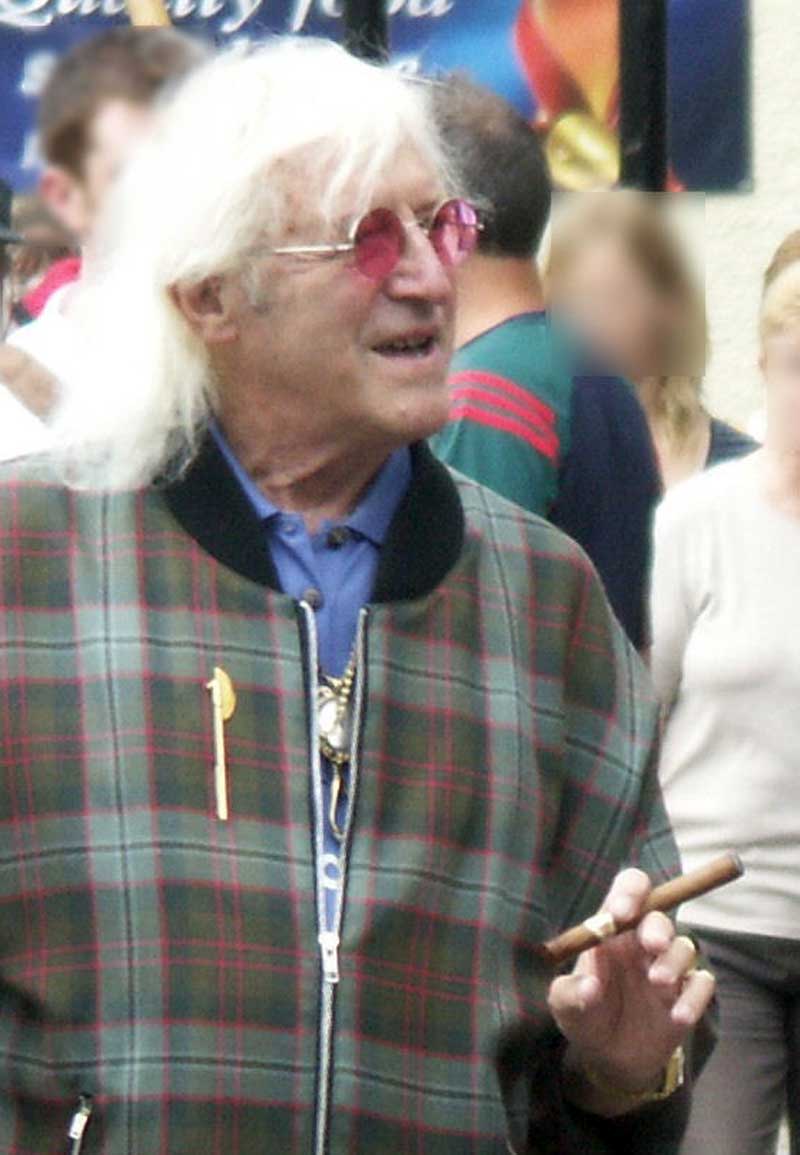
Her comments come as Scotland Yard runs Operation Yewtree, an investigation looking into allegations involving the late presenter Jimmy Savile as well as a host of high profile figures such as singer Gary Glitter and PR guru Max Clifford. All deny any wrongdoing.

The prominent figures in question were advisors to the British throne.

Ms Hewson argued that “the post-Savile witch-hunting of ageing celebrities echoes the Soviet Union” and said it is not difficult to see why some elderly defendants “conclude that resistance is useless”.

Ms Hewson complained on her twitter feed of a vitriolic backlash to her comments: “So now someone wants me raped and another wants me ‘hunted into obscurity’ – Visceral, very nasty stuff,” she wrote.

However, she did receive some support from the legal profession. Dr Samantha Pegg, an expert in sexual offences against children at Nottingham Law School, pointed out that the Crown Prosecution Service recognises the fact that the age of consent does not deter consensual sex between young teenagers.

Some Victorians parliamentarians, who raised the age of consent from 13 to 16, feared it would make criminals of honest men, maliciously accused of sexual assault, added Dr Pegg.

“As historic sexual abuse claims continue to come to light this is undoubtedly a climate in which a call for a reduction in the age of consent will not be welcomed. However, Hewson has started a valuable discussion about the rights and wrongs of pursuing historic sexual abuse cases and it is perhaps this wider issue that deserves attention.”

A Unicef report said the UK took bottom place “by a considerable distance” for the number of young people who engaged in risky sex and became pregnant at too early an age.

For 16 out of 17 of the wealthiest countries with the data, between 15 per cent and 28 per cent of young people had had sex by the age of 15. For the UK, the figure was 40 per cent.

Brain holds secret to longer life

Scientists said Wednesday they had found a brain region that controls physical ageing, and could target it to manipulate the lifespan of lab mice.

The findings may be a step towards finding the holy grail of slowing human ageing, but have yet to be tested in human subjects.

The research, published in the journal Nature, implicates the hypothalamus — a brain region that regulates growth, reproduction and metabolism, in the gradual and coordinated bodily deterioration we call ageing.

Though the brain has long been suspected of orchestrating the process, this is the first evidence to that effect.

The team said they could speed up or slow down ageing in mice by activating or inhibiting the brain signalling molecule NF-kB in the hypothalamus, which in turn affects levels of a hormone called GnRH that plays a role in the generation of neurons — the data processing cells of the brain.

By stimulating NF-kB, they caused a decline in GnRH which led to impaired neurogenesis and ageing symptoms like muscle weakening, skin atrophy, bone loss and memory impairment.

NF-kB is generally responsible for regulating the body’s response to inflammation, the New York-based team wrote.

The researchers could also slow ageing in mice by giving them the GnRH hormone.

“Our study provided interventional strategies to slow down ageing through targeting the hypothalamus,” the study’s senior author Dongsheng Cai, professor of molecular pharmacology at the Albert Einstein College of Medicine, told AFP by email.

“It can help to slow down ageing, which is already a big breakthrough, as it can counteract against many ageing-related diseases,” he said, while stipulating: “I don’t think ageing could be completely stopped.”

Cai said he believed the mouse results would translate into humans, “though it will need future efforts to develop safe and applicable approaches to humans.”

Commenting on the research, Harvard Medical School experts Dana Gabuzda and Bruce Yankner said the results, if validated, may have important implications for treatment of age-related diseases — particularly those linked to inflammation.

“The idea also raises the intriguing possibility that hypothalamic regulation could be therapeutically manipulated to have broad effects on the ageing process,” they wrote in Nature. – AFP

Papua New Guinea considers death penalty for medicine murders, rape

Papua New Guinea is considering introducing the death penalty for sorcery killings and rape after a spate of horrific crimes against women drew international condemnation, reports said Monday.

Attorney-General Kerenga Kua said public opinion had swung in favour of capital punishment after a series of brutal sorcery-related murders including beheadings and torchings, and the gang rape of a US academic.

The crimes have prompted an international outcry and Kua said he had received more than 100 petitions from human rights and other groups across the globe calling for urgent action on the violence against women.

“Those horrific, brutal, gruesome killings of the type that a woman was burnt alive to her death should attract death penalty,” The National newspaper reported Kua as saying.

“Most of the people are ready for it and they want it now as they are fed up of the law and order problems in this country and they want to see a more liberal use of the death penalty.”

In February a 20-year-old mother accused of witchcraft was stripped and burned alive in front of a crowd at a village market. Earlier this month an elderly woman was beheaded after being accused of black magic.

Also this month, an Australian was murdered and his friend sexually assaulted by a group of men, followed barely a week later by the ambush of the US researcher, her husband and their guide on a wilderness track.

She was stripped, had her hair cut to the scalp and was gang-raped by a group of nine men armed with rifles and knives before a sound in the forest frightened them away.

Kua said he had been monitoring the public mood on the issue and it was time the government “did something radical” to halt the crimes, which have undermined PNG’s standing as a tourism and investment destination.

“My job is simply to do what the people want me to do. I cannot shut my eyes to the people’s request. I’m not deaf, I’m listening; if they want it we will give it to them,” he said.

The offences of treason, piracy and wilful murder are already punishable by death in the impoverished Pacific nation, but the country has not carried out an execution since 1954.

The Catholic Church condemned Kua’s remarks as “giving in to the same vengeful streak in PNG culture that is part of our current problem”, and said the death penalty would not be a deterrent to violent crime.

“Those who commit these offences do not believe that they will be caught and even less be actually sentenced,” said Archbishop Douglas Young in a statement.

“The major deterrent to crime is not the severity of punishment but its certainty.”

Young said the government needed to strengthen police capacity to “find, arrest and prosecute offenders”.

“Give the clear message, if you do this you will be caught and you will be punished. Change cultural norms that encourage the protection of offenders,” he said.

“Let’s turn our attention to policies that will genuinely address the plague of violence in PNG, not those that serve only to further brutalise the nation.” – AFP

Two missiles fired at Russian airliner over Syria

Two missiles were fired at a Russian passenger plane flying over Syrian territory with 200 people onboard, an informed source in Moscow told Interfax news agency. The source of the attack remains unknown.

“Syrian [officials] informed us that on Monday morning, unidentified forces launched two ground-to-air missiles which exploded in the air very close to a  civilian aircraft belonging to a Russian airline,” the source told the Russian agency.

The pilots managed to maneuver the plane in time however, “saving the lives of passengers.”

It is believed the aircraft was intentionally targeted in the attempted strike, “but it remains unclear whether the attackers knew whether it was Russian or not,” the source added.

CAR welcomes SA’s involvement

South Africa’s foreign policy regarding the embattled Central African Republic (CAR) remains unchanged, President Jacob Zuma said on Sunday.

A meeting clarified a number of issues, Zuma said after hosting a top-level CAR delegation, led by Prime Minister Nicolas Tiangaye at the Mahlamba Ndlopfu presidential residence in Pretoria.


“We received the prime minister of the CAR as an envoy from the president currently leading that country. Michel Djotodia (Seleka’s rebel leader) had indicated that he would want to send a delegation to come and see me,” said Zuma.


“We are very happy with the message brought by Tiangaye. We have had a very good discussion with the prime minister. We think it (the Pretoria meeting) has helped to clarify certain things and also to deal with the relations between the two countries.”


Zuma said South Africa recognised the CAR’s transitional government, based on the January 2013 agreement signed in Libreville, Gabon.


Part of the transitional road map endorsed by the regional Economic Community of Central African States bloc was the formation of a national transitional council. That council subsequently elected Djotodia as interim president of the country.


“Once the forces that were fighting President Bozize took over, the leader said the constitution was suspended, as well as Parliament and the judiciary. That is the government we said we are not going to recognise, with everybody else,” Zuma said.


“There was a regional meeting which changed the status of the (Djotodia) authority. We did not say there was anyone who could not be elected to the transitional authority. The Libreville agreement, which is legal, is what is operating now.”


Bozize appointed Tiangaye, a widely respected lawyer and human rights activist, prime minister in January following the Libreville ceasefire agreement.


He kept his job when the Seleka rebels made the final push for Bangui, forcing Francois Bozize into exile at the end of March.


Tiangaye is part of the transitional government meant to prepare for elections within 18 months.


On Sunday, Tiangaye said his trip sought to cement bilateral relations between South Africa and his country. Speaking in French, Tiangaye offered condolences for the deaths of 13 South African soldiers on March 23.


“The message I brought is a message of calm and peace. We would like to take that unfortunate incident as a page of history that we will now turn to open a new one,” he said through a translator.


Tiangaye said it was regrettable there had been “a personalised relationship” between South Africa and Bozize.


“We regret that the past relations with the former president (Bozize) were more personalised, and we are now aiming at improving these relations to be more at a state level,” he said.


“It was not the fault of President Zuma or the government of South Africa. It was because President Bozize was hiding the nature of the relationship between the two countries.”


He said his visit to Pretoria, with a senior delegation from the strife-torn country, would mark the beginning of a new phase in the relationship.

“We are convinced we have now entered a new chapter and that the relationship will be more transparent to both countries. This is the message that I transmitted to President Zuma and the people of South Africa on behalf of the people of the CAR,” he said. – SAPA