Another round of protests over Prophet Mohammad movie

Muslim protest in London near US embassy

(Reuters) – Protesters in Afghanistan and Indonesia burnt U.S. flags and chanted “Death to America” on Monday in renewed demonstrations over a film mocking the Prophet Mohammad that has unleashed a wave of anti-Western sentiment in the Muslim and Arab world.

Indonesian police fired teargas and water cannon to disperse hundreds of demonstrators who massed outside the U.S. Embassy in Jakarta, capital of the most populous Muslim nation.

In Kabul, thousands of protesters took to the streets, setting fire to cars and shops and throwing stones at police.

“We will defend our prophet until we have blood across our bodies. We will not let anyone insult him,” said one protester in the Afghan capital. “Americans will pay for their dishonor.”

The demonstrations were the latest across the world provoked by a short film made with private funds in the United States that depicted the Prophet Mohammad as a fool and womanizer.

In a torrent of violence last week, the U.S. ambassador to Libya and three other Americans were killed in an attack in Benghazi and U.S. and other foreign embassies were stormed in several cities in Asia, Africa and the Middle East by enraged Muslims. At least nine other people have been killed.

The United States has sent ships, extra troops and special forces to protect its interests and citizens in the Middle East while a number of its embassies have evacuated staff and are on high alert for trouble.

The situation poses an unexpected foreign policy headache for U.S. President Barack Obama as he campaigns for re-election in November, even though his administration has condemned the film as reprehensible and disgusting.

Despite efforts early in his tenure to improve relations with the Arab and Muslim world, he faces a number of problems including the continued U.S. military involvement in Afghanistan, Iran’s nuclear program, the Syrian civil war and the fall-out from the Arab Spring revolts.

US, ISRAEL FLAGS BURNED

The renewed protests on Monday dashed any hopes that the furor over the film might fade despite an appeal from the senior cleric in Saudi Arabia, home to Islam’s holiest shrines, for calm over the weekend.

In the Kabul demonstration, protesters shouted “Death to America” and burned the flags of the United Sates and of Israel, a country reviled by many Muslims and Arabs because of the Palestinian issue.

Police Lieutenant-General Fahem Qayem put the number of demonstrators at between 3,000 and 4,000 but said police had the situation under control.

Embassies in central Kabul, including the U.S. and British missions, were placed on lockdown and violence flared near fortified housing compounds for foreign workers.

Rallies also took place in London, Australia, Turkey and Pakistan on Sunday, showing the global scale of the outrage.

In other developments on Monday, Iran said it would hunt for those responsible for making the film.

“The government of the Islamic Republic of Iran condemns this inappropriate and offensive action,” First Vice-President Mohammad Reza Rahimi said. “Certainly it will search for, track, and pursue this guilty person who has insulted 1.5 billion Muslims in the world.”

Iranian officials have demanded that the United States apologize to Muslims for the film, saying it is only the latest in a series of Western insults aimed at Islam’s holy figures.

The head of Lebanon’s Iranian-allied Hezbollah, Sayyed Hassan Nasrallah, called for protests in Beirut this week and said the United States must be held accountable.

“All these developments are being orchestrated by U.S. intelligence,” he said.

The identity of those directly responsible for the film is still murky. Clips posted online since July have been attributed to a man named Sam Bacile, which two people connected with the film have said was probably an alias.

Nakoula Basseley Nakoula, 55, a Coptic Christian widely linked to the film in media reports, was questioned in California on Saturday by U.S. authorities investigating possible violations of his probation for a bank fraud conviction.

Australia to deal with its boatpeople this week

Australian Immigration Minister Chris Bowen on Monday said he hoped to begin sending asylum-seekers who arrive by boat to the tiny Pacific nation of Nauru later this week.

With Australia facing a record influx of asylum-seekers arriving by sea, Canberra last month announced plans to send them to Nauru and Papua New Guinea’s Manus Island in a policy aimed at stemming the flow.

Bowen tabled a document in parliament Monday designating Nauru as a regional processing country under the Migration Act so boatpeople can be sent to the small state to await their visa decision.

“Subject to both houses (of parliament) passing a resolution approving the designation, the designation will allow for the transfer of irregular maritime arrivals who arrived after 13 August to Nauru,” Bowen said.

Canberra announced its intention to transfer asylum-seekers to Nauru and Papua New Guinea in mid-August as part of a tough new policy to deter them from paying people-smugglers to attempt the dangerous sea voyage.

Since then 2,087 asylum-seekers have arrived by boat — close to capacity for the camps on Manus and Nauru, which will accommodate a total of 2,100 once completed.

Bowen would not comment on who would be part of the first transfer to Nauru or whether children would be sent but said that he hoped the first group would be transferred within days.

“Construction work on the temporary facility is nearing completion and the government expects to be able to begin transferring people to Nauru later this week,” Bowen said in a statement.

More than 9,796 asylum-seekers have arrived in Australia on boats in 2012, many of them Afghans, Iraqis and Iranians who have paid people-smugglers to ferry them from Indonesia to Australia.

Offshore processing is a sensitive issue in Australia, with Prime Minister Julia Gillard adopting the policy after months of bitter political debate and after several boats capsized en route, drowning scores of people.

The policy signals a return to the practice of the previous conservative government, which sent asylum-seekers to Nauru and Manus, that centre-left Labor rolled back soon after taking office in late 2007.

The opposition supports offshore processing but said the government’s promise that asylum-seekers won’t be resettled quicker just because they are processed on Nauru or PNG will see them stranded in the Pacific for years.

“The policy that (they) have adopted means people could expect to wait on Nauru for five years,” opposition spokesman Scott Morrison said. – AFP

US drone kills 5 militants in northwest Pakistan

ISLAMABAD — Pakistani intelligence officials say a U.S. drone strike has killed five militants in northwest Pakistan.

Two intelligence officials said at least seven missiles were fired from U.S. drones Saturday at a vehicle and a house in the village of Degan in the Pakistani tribal region of North Waziristan near the Afghan border.

The officials spoke on condition of anonymity because they are not authorized to talk to the media.

They said the area is dominated by anti-American militant commander Hafiz Gul Bahadur. They did not know whether the killed men belong to his group.

The CIA-run drone program is controversial in Pakistan where many call it an infringement on the nation’s sovereignty. The U.S. maintains it is necessary tool to combat militants. – AP

Thailand breaks mass-massage world record

Thai masseuses

BANGKOK (AP) — Thailand has long been known as the massage capital of the world. Now, it has a Guinness World Record to prove it.

A record-breaking 641 massage therapists mass-massaged 641 people simultaneously for 12 minutes to win the honor Thursday at an indoor exhibition hall in Bangkok. The event was organized by the Ministry of Public Health to promote the Southeast Asian nation’s massage and spa industry.

The therapists more than doubled the previous record – attained in Australia in 2010 – of 263 people being massaged at the same time for five minutes.

“It was easy because this is what we do every day for a living,” said 53-year-old Chayanan Chanwuttisawan, one of the mostly female masseuses who took part in the event. “I’m proud of myself and my profession. I never thought we’d have a chance to be recognized like this.”

Prime Minister Yingluck Shinawatra presided over the spectacle, and a senior representative from Guinness Records, Rob Molloy, was on hand to certify the feat.

Although some of Thailand’s massage parlors notoriously double as fronts for prostitution, the vast majority are legitimate spas offering everything from aromatherapy to foot rubs to Thai “traditional massage” – an ancient art offered at shops across Bangkok that is still practiced and taught at the city’s revered Wat Pho temple.

A traditional massage lasts two hours. An abbreviated version was on display Thursday as therapists, dressed in traditional garb, demonstrated their skills on a sea of thin sky blue mats spread across the floor. To a soundtrack of dreamy music that included the sound of chirping crickets, they went through their repertoire with a series of massage positions choreographed by the tinkling of a bell.

The event ended quietly, but hands went up and therapists cheered after Mollow confirmed they had won a Guinness Record shortly afterward.

“I felt I was enchanted,” Yingluck told reporters afterward. “I felt calm and relaxed watching them. I felt really relaxed.”

Chayanan said the therapists who participated were given a video from the Ministry of Public Health to practice with. They are part of an army that the Health Ministry estimates numbers 50,000 nationwide and an industry that generates at least 13 billion baht ($415 million) annually.

Health Minister Wittaya Buranasiri has said he wants to see the industry bring in even more revenue. The National News Bureau of Thailand reported last week that the government “is aiming to make Thailand the world’s ultimate destination for massage, with plans to improve the quality of the workers, offer more massage classes to the public and set up a massage center in every hospital.”

Many civilians massacred in Congo, say U.N. officials

Rival armed groups may have killed hundreds of civilians in massacres and other “incomprehensibly vicious” attacks in eastern parts of the Democratic Republic of Congo (DRC), senior U.N. officials said on Wednesday.

The violence is focused in North Kivu province near the border with Rwanda where warring groups have targeted villages seen as supporting their opponents, while the national army has been diverted to fight a movement of mutineers known as M23.

“The deterioration of the overall security situation in North Kivu following the M23 mutiny and related ruthless attacks against civilians is extremely alarming,” said Roger Meece, special representative of U.N. Secretary General Ban Ki-moon.

Meece was cited in a United Nations report issued in Geneva as saying a new round of systematic killings of villagers appeared to have occurred in early August.

U.N. High Commissioner for Human Rights Navi Pillay said allegations of hundreds of killings were still being verified, but preliminary investigations suggested that a large number of people, mainly women and children, had been slaughtered.

“The sheer viciousness of these murders is beyond comprehension,” she said.

The Congo government in Kinshasa this month rejected calls by other countries in the region for an exclusively African force to tackle the insurgency in the east.

Congo says some of the insurgent groups have support from countries such as Rwanda and Uganda – a charge both those governments deny – and wants an expansion of the 17,000-member U.N. peacekeeping force in the vast, mineral-rich state.

Pillay’s office in Geneva said its mission in Congo had recorded 45 attacks on 30 North Kivu villages since May by a group dubbing itself “Democratic Forces for the Liberation of Rwanda” or FDLR, and another called Raia Mutumboki.

The FDLR is largely composed of ethnic Hutus, many of whom fled into the Congo after the defeat of a Hutu government widely viewed as responsible for the massacre of up to a million Tutsis and opponents of its policies in Rwanda in 1994.

The movement sometimes stages attacks in alliance with another armed group, Nyatura, the United Nations says.

Raia Mutumboki is a local militia group that says it is protecting the local population. It targets FDLR members and their families, and has been linked to other attacks against people in Congo perceived to be from Rwanda.

Marie Claire Bangwene Mwavita, administrator of North Kivu’s Masisi territory where much of the fighting has taken place, said that she did not know how many civilians had died so far in the violence, but that there was a risk of growing ethnic conflict.

“I can confirm there are several armed groups operating in Masisi, but I cannot confirm that hundreds have been killed,” she said. “As the armed groups are ethnically motivated, there’s a risk (of growing conflict). But the provincial government is already organizing meetings between different communities to put an end to the problem.”

The U.N. force, known as MONUSCO, focuses on protecting civilians but has been forced to divert resources to tackle the fallout from fighting between the Congolese army and M23.

That conflict has displaced nearly half a million people since the mutiny in April led to the formation of the rebel group that accuses Kinshasa of violating a 2009 peace accord. – Reuters

New York Times and UN at loggerheads over state of Zimbabwean agriculture

Rural Zimbabweans in need of UN food relief after Mugabe's 'successful land reform' Photo: WFP

Whereas the New York Times sang the praises of Zimbabwean “land reform” only a few weeks ago, the UN food agency has just said that hunger was worsening in Zimbabwe after erratic rains, shortages of seeds and fertiliser and “poor agricultural practices” in the troubled economy.

This, the UN said, had led to a reduction in fields planted with the main staple foods. The World Food Programme said cereal harvests in the current season were down by an estimated one-third compared with last year. It said about 1.1million rural people would need food aid up to December, rising to 1.6million in the traditionally “lean months” to March.

The agency’s latest bulletin yesterday said $119-million was needed for upcoming food assistance. It said food shortfalls were becoming especially critical in arid southern Zimbabwe where Matabeles live. The Zimbabwean leader has previously been accused of genocide in Matabeleland where 20 000 people were killed in the early 1990s, with a large proportion of the inhabitants fleeing to South Africa.

Irregular rains, poor agricultural practices and ongoing economic challenges have pushed Zimbabwe into an increasingly critical food security situation, the United Nations food relief agency warned.

Lydia Polgreen of The New York Times Photo: Twitter

However, the New York Times’s correspondent in Johannesburg, Lydia Pogreen, differs from the WFP assessment and sees a “golden lining” amid any dark clouds over Zimbabwean agriculture. On 20 July 2012 the New York-based liberal paper wrote:

“The success of these small-scale farmers has led some experts to reassess the legacy of Zimbabwe’s forced land redistribution, even as they condemn its violence and destruction. “

The paper also stressed that the illegal confiscation of white-owned land does not necessarily lead to greater farming productivity but creates greater equality. It quoted a Zimbabwean pro-Mugabe researcher as saying: “But does it share wealth more equitably? Does it give people a sense of dignity and ownership? Those things have value, too.”

According to the World Food Programme (WFP), the past several weeks have provided signs of growing distress across the African country with high food prices, empty silos and granaries, and a reduced cereal harvest, aggravating the country’s food security outlook.

“Late and erratic rains, poor agricultural practices, constrained access to inputs, and a reduction in planted area have all contributed to reducing the national cereal harvest by 33 per cent this year,” WFP said in a news release on its Zimbabwe Vulnerability Assessment (ZimVAC). It further noted that a lack of diversified livelihoods and the rising cost of living were combining to create a perfect storm of income and food insecurity.

WFP, in fact, pointed out that according to the ZimVAC, over 1.6 million Zimbabweans will be in need of food assistance during the peak hunger period spanning January to March 2013.

ZimVAC is an annual study conducted by the Government of Zimbabwe in collaboration with UN agencies and non-governmental organisations in order to estimate national food insecurity levels.

In response to the deteriorating food situation, the UN agency announced it was scaling up operations in conjunction with the Government and other stakeholders to provide a combination of food distribution and cash transfers to those in need.

The WFP further noted that it would require approximately $119 million to complete its operations in Zimbabwe until the end of March 2013, though it said that almost three-quarters of the funding has not yet been accounted for.

Amnesty International urges Gambia to stop mass executions

Amnesty International on Tuesday said it was appalled at the execution in Gambia of nine death row prisoners by firing squad and urged government not to kill an estimated 38 prisoners remaining.

“We are appalled that the Gambian authorities carried out the nine executions and urge them to ensure that no further executions take place,” said Paule Rigaud, Amnesty International’s deputy director for Africa.

Gambia’s interior ministry said Monday nine death row prisoners including a woman had been executed by firing squad on Sunday night, a week after President Yahya Jammeh vowed to carry out all death sentences by mid-September.

The president’s feared plain-clothed security officers could be seen on the streets of the capital Banjul Tuesday, and tension was palpable among citizens who are afraid to talk about the executions lest their words be recorded by Jammeh’s agents and punished.

In a televised address to mark this year’s Muslim feast of Eid al-Fitr Jammeh said: “By the middle of next month, all the death sentences will have been carried out to the letter.

“There is no way my government will allow 99 percent of the population to be held to ransom by criminals.”

Jammeh, a former military officer who seized power in a 1994 coup, rules the tiniest nation on the African mainland with an iron fist and brooks no dissent.

The regime of the man who claims he can cure AIDS is often pilloried for human rights abuses, enforced disappearances, extra-judicial killings, torture and the muzzling of journalists.

In November 2011, Jammeh won a fourth term in power, brought to power by an electorate who the Economic Community of West African States (ECOWAS) said was “cowed by repression and intimidation.”

While the last official execution took place in 1985, AFP’s correspondent in Banjul said that executions in Gambia, a sliver of land wedged into Senegal, have continued unofficially with the most recent before Sunday’s death squad firing taking place in 2007.

Amnesty International had considered Gambia to be among the 22 of Africa’s 54 states which are abolitionist in practice. Sixteen are abolitionist in law for all crimes.

Fashion designer John Galliano stripped of French award for ‘public racism’

John Galliano receiving his Legion d'Honneur from former French president Nicolas Sarkozy

ArtLyst reports that John Galliano 51, the former top British fashion designer, has been stripped of his French Legion d’Honneur award. Galiano was found guilty on a charge of “public racism” last year in September.

He was charged after verbally abusing curator, Geraldine Bloch, 35, and her Asian companion, 41-yr-old Philippe Virgitti. He  called Ms Bloch a “dirty whore”and “dirty Jewish face” several times. The incident that led to his arrest originated from this outburst and were the center for the investigation and charges and fines imposed. Bloch is also personally suing Mr Galliano over this outburst of anti-Semitic abuse, that lasted 45 minutes. He was charged with “public insults based on race or ethnicity”. She told the court he had mocked her appearance and clothing during the February incident, and that the word “Jewish” was “one of the most recurrent”. The designer, was fired by the Dior fashion house following the allegations. Galliano said he had no recollection of the events and denied being racist.

At the same time he was also accused of verbally attacking a 47-yr-old English language teacher, Fatiha Oummedour and subjecting her to a series of expletive-laced racist and anti-Jewish remarks. A third incident in the Café La Perle bar near Galliano’s home,resulted in the designer being filmed on a mobile phone slurring the words “I love Hitler”. The video shows him telling two Italian women, that he believed to be Jewish that their mothers and forefathers should have been gassed. Neither of the women pressed charges  But the video was a YouTube sensation and later used by the prosecution as evidence against the designer. The designer has apologised for the “sadness” of his behaviour and subsequently checked into rehab for his addictions. He has highlighted his personal struggle with drugs and claimed to the court that he had been out of control for some time. This did not have much influence on the judges decision.He was given suspended fines totalling 6,000 euros (£4,800; $7,500) over the incident.

The fashion house Dior sacked Galliano in March 2011, stating a zero-tolerance policy on racism. Galliano credited with revitalising the Dior brand, had been its creative director since 1996. He had also since been fired from his own eponymous label ‘John Galliano’, which is majority-owned by Dior. Galliano had been chief designer at Dior for 15 years and has won numerous British Fashion Designer of the Year award including the top award on four occasions. Despite the accolades he has spent the last sixth months excommunicated from the fashion industry. John has done the unspeakable and as talented as he is will find it tough to claw his way back from the last season racks at TJ Maxx and Century 21.  Both discount fashion chains are currently full of his clothes at knock down prices.

Women plan sex strike in Togo

Lome, Togo – Women in the civil rights group “Let’s Save Togo” said they will have a week long sex strike to demand the resignation of President Faure Gnassingbé.

The plan to withhold sex from their husbands for a week will start Monday, said Isabelle Ameganvi , leader of the group’s women’s wing.

Ameganvi, a lawyer, told the AP that her group is following the example of Liberia’s women who used a sex strike in 2003 to campaign for peace.

The women’s protest is part of a campaign by a coalition against  Gnassingbé. The opposition group National Alliance for Change held a peaceful demonstration against the president on Saturday. Gnassingbé has been in power since 2005, following the death of his  father Gnassingbé Eyadema who ruled the West African country for 38  years. -AP

Racism threatens Australia’s ‘brand’

The Sydney Morning Herald reports that Australia’s race discrimination commissioner says the nation’s ‘‘brand’’ has at times been maligned by outbreaks of of racism and there is a poor understanding of the problem in the wider community.

Helen Szoke has also identified a ‘‘cultural glass ceiling’’ that hinders certain minority groups from rising up in workplaces as among the subtler issues that must be tackled.

In advance of today releasing a national anti-racism strategy, Dr Szoke said: ‘‘We understand sex discrimination much better than we understand racism — and we know far we have got  to go with sex discrimination — so that gives you an indication of how far we have to go with racism.’’

Dr Szoke said racism in Australia existed in multiple forms. ‘‘People who actually don’t experience racism think it’s something like riots or violence whereas often racism occurs in quiet places and quiet ways.’’In a paper outlining the public awareness plan to be rolled out over three years, the Australian Human Rights Commission notes indigenous people are among the most vulnerable to racism.

The commission said the experience of people from culturally diverse backgrounds tended  to vary, ‘‘being shaped in large part by their particular histories of migration and settlement’’.

New arrivals, especially those distinguished by dress and skin colour, were more likely to encounter prejudice than ‘‘settled’’ migrants.

In an interview, Dr Szoke cited the episode involving attacks on Indian students in Victoria as particularly harming Australia’s ‘‘brand’’.

She said Victoria Police, which recently raised the alarm about youth from Sudanese and Somali backgrounds, also needed  to exercise caution in how  it engaged with such a complex matter.

‘‘As soon as you name a particular racial group and associate them with crime it has two immediate effects,’’ Dr Szoke said.

‘‘The first is that it builds a perception in the eyes of the community that all people from that racial group are criminals and the second is it actually subjects members of those community who may have a public profile to vitriol and race hate.

‘‘That’s exactly what happened in the past week. I’ve seen some of the emails that have been sent to the African community leaders with some horrific and threatening (messages).’’

Dr Szoke  acknowledged sometimes law enforcement agencies needed to name a particular racial group, but a cautious and sensitive approach was required so as to avoid stigmatising a whole ethnic community.

She rejected the notion that a repeat of the Cronulla race riot situation was on horizon.

Dr Szoke also said she believed that the asylum seeker debate had a racial element to it, ‘‘because at its heart, racism is a fear of difference’’.

Read more: http://www.smh.com.au/national/racist-outbreaks-threat-to-australias-brand-20120823-24p0g.html#ixzz24cx0ztQC

Norway has to decide on Breivik’s sanity

As the trial of Anders Behring Breivik comes to an end, Norway is just starting to shape its future as a nation no longer isolated by its great wealth from a troubled outside world.

Survivors of Breivik’s massacre are waiting for Friday when an Oslo court passes judgment on the anti-Muslim gunman, hoping to return to something like the lives they led before he slaughtered 77 people last year.

Norwegian society, however, must still balance its liberal and conservative traditions exposed by Breivik’s 10-week trial as it decides how to deal with security and intelligence surveillance, gun controls and rising immigration.

“We are no longer so naive to believe that Norway is the best country in the world,” said Mette Yvonne Larsen, one of the three lawyers in court representing victims of Breivik’s attack on July 22, 2011. “It has made us understand we are a part of international society. We cannot solve problems by ourselves.”

For survivors such as Khamshajiny Gunaratnam, the most pressing need is to hear the verdict after a trial that went into every detail of Breivik’s bomb attack in Oslo that killed eight, and his shooting dead on Utoeya island of 69 people, mostly teenagers.

“After Aug 24, we can be done with it,” Gunaratnam told Reuters.

With what witnesses described as a “joyous battle cry”, Breivik arrived at the island youth camp of the ruling Labour Party dressed as a policeman. He regarded his victims, the youngest of whom was 14, as brainwashed “cultural Marxists” whose support for Muslim immigration threatened Norwegian ethnic purity.

Gunaratnam, aged 24, escaped the massacre by jumping into icy lake waters and swimming for her life. She survived because Breivik was busy shooting her friends in the head at point blank range, presuming she would drown.

SANE OR INSANE?

The verdict itself is not about Breivik’s guilt but whether, as prosecutors say, he is insane.

If Breivik is declared sane, his maximum sentence is 21 years, although this can be extended if he is seen as a danger to society. If declared insane, he faces indefinite mental care under lock and key.

The 33-year-old well-to-do son of a former diplomat is jailed in a three-room cell. He has a computer in one room, a treadmill to keep fit in another, access to TV and newspapers and is allowed a daily stroll in the fresh air outside.

Whatever the verdict, Breivik will probably spend the rest of his life in similar conditions, underscoring what some Norwegians regard as an excessive civility in the face of the cold-blooded killings.

Lawyers for the survivors say some do not care about the verdict while others would prefer Breivik be declared sane, meaning he takes responsibility for his actions.

Breivik himself wants to be ruled sane and his attack considered a political statement rather than an act of lunacy. He has said an insanity verdict would be “a fate worse than death” and that he would appeal it, prolonging the survivors’ ordeal.

A COUNTRY APART

Beyond the survivors’ personal feelings, the country of five million people faces difficult decisions following its worst massacre since World War Two.

Norway’s huge oil wealth has long set it apart from other nations. It has prospered outside the European Union, and its economy is expected to grow more than three percent this year while many European neighbors are stuck in recession.

Likewise, its strong political and legal systems mean it has avoided the corruption that afflicts many other oil producers.

With more than $600 billion in reserves from its oil fund, pristine forests and a welfare system that is the envy of the world, Norway has often looked haughtily at the rest of Europe.

However, some Norwegians now believe their country must draw on the experience of other nations to debate issues such as immigration as the oil wealth attracts large numbers of foreign workers.

These are being discussed more openly after the killings by Breivik, who believed the government’s immigration policies were adulterating Norwegian blood and leading to war with Muslims.

“We know now that Norway can be a source of terrorism … it has led us to just start talking about what kind of society we want,” said Geir Lippestad, Breivik’s lawyer. “What to do about right-wing fundamentalists, access to internet sites by extreme groups. We have just started the discussion.”

“Norway is more aware of racism now, of the issues of multiculturalism. Hopefully, we can start a process that Norway can open up more for the rest of the world,” he told Reuters.

NORWAY TRIES TO STAY THE SAME

On the face of it little has changed since the killings. The foreign ministry has new road blocks on its nearby street and a security check has been set up at the prime minister’s office. But government ministers still walk around without bodyguards and you can drive right up to the parliament building.

After the massacre, Prime Minister Jens Stoltenberg stressed that Norway would make no gut reactions that would infringe on its tradition of open democracy.

When prosecution lawyers shook hands with Breivik at the start of the trial, this civility sent a deliberate message that he would not force changes on the Norwegian way of life.

In some ways they succeeded. Opinion polls show more Norwegians accept multiculturalism – policies designed to accommodate differing communities – as the immigrants flock in.

Norway’s population grew 1.3 percent last year, one of the fastest rates in Europe, and net immigration accounted for 71 percent of that growth. While immigrants arrived from all round the world, 70 percent of them came from Europe.

“People are more aware of the danger of anti-Muslim rhetoric. We are more aware that some ideas can become very dangerous,” said Larsen.

But Norwegians’ civility is being tested already. A 500-page official report last week into the attacks found a host of mishaps and mistakes by police and intelligence services allowed Breivik to carry on the attacks unimpeded.

Norway’s police chief resigned after the report and the intelligence service are pressing for more surveillance powers.

Stoltenberg, who drew widespead praise for his measured and dignified leadership after the attack, is now under pressure to resign following the report. The conservative opposition has gone on the offensive before parliamentary elections next year.

The report also touched on a subject at the heart of Norway – wide gun ownership in a country where hunting is a national pastime, a legacy of Cold War defense preparations and Norway’s strong rural culture.

But the commission’s proposal to ban semi-automatic weapons – the kind that Breivik bought easily – may founder on opposition from many of Norway’s conservative voters for whom gun ownership, like in the United States, is a right.

Some critics of the government say Norway is also unprepared for its role in the outside world, saying its presence in the NATO-led force in Afghanistan, for example, could make it a target for further attacks.

All these debates need to be settled after the Breivik verdict. “Perhaps it was necessary to have a year of mourning,” Brent Aadal, political scientist at the Institute for Social Research. “Now we have to move forward and respond to real challenges.” – Reuters

‘We are the country that invented the concentration camp’ – Jeremy Clarkson

Jeremy Clarkson

 “Britain is a nation of 62 million complete and utter bastards”, according to Jeremy Clarkson. The Mirror reports that he does not have a high opinion of his countrymen, the British.

The Top Gear presenter also says that Brits invented torture and slavery and sent the White Russians to be slaughtered by Stalin.

Jeremy Clarkson has branded the whole country “complete and utter bastards” after Twitter trolls mocked him over the death of his dog.

During the outspoken presenter’s astonishing rant in Top Gear magazine, Clarkson said that Brits invented torture and slavery and sent the White Russians to be slaughtered by Stalin.

He wrote: “A few moments ago , my dog died, and, as an experiment, I announced the fact on Twitter.

“Now, everyone must have known that when a family pet is put down, the family in question is bound to be upset.

“So you’d expect a bit of sympathy. And, in America, that’s what you’d get.

“Not in Britain, though. Moments after I posted my Tweet, a man called Ryan Paisey asked: “How does she smell?”

Clarkson’s latest outburst comes after he revealed he suffered a ‘tirade of abuse’ within minutes of Tweeting about the death of his black Labrador Whoopi.

He added: “Britain is a nation of 62 million complete and utter bastards. We are the country that invented the concentration camp, and international slavery.

“Hanging, drawing, quartering: that was us too. And who was it that sent the White Russians home to be slaughtered by Stalin? Yup. Us.

“Outwardly, we hated communist Russia; inwardly, it’s what 95 per cent of the country wants .

“Bankers, Estate Agents, Politicians, Journalists. Anyone in a suit is basically evil and must, after they’ve been sacked, go to prison.

“Anyone in a donkey jacket? They’re basically good and must have a plasma television immediately.”

Clarkson is known for being outspoken.

In November 30 last year, on the evening of Britain’s biggest public sector strikes for 30 years, Clarkson said that he would take the striking workers outside and “execute them in front of their families”.

Clarkson was forced to apologise and the regulator launched an investigation after his remark, made on The One Show, sparked around 31,700 complaints and led to condemnation from union leaders and politicians, with Prime Minister David Cameron branding the TV star’s statement “silly”.

However, Ofcom later ruled that his comments did not breach broadcasting rules.

Swiss soccer player investigated for Twitter ‘racism’

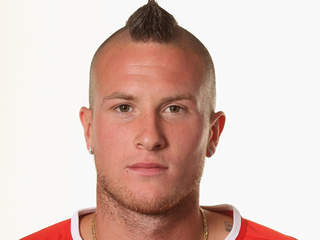
Michel Morganella

Switzerland’s Michel Morganella is being investigated for sending an allegedly racist message on Twitter after their defeat in the men’s Olympic football by South Korea, a Swiss team official said on Monday.

“We are investigating this case and we will hold a news conference at 5pm today,” said Christof Kaufmann.

The alleged tweet has since been deleted from the player’s account but pictures of it appeared in the Swiss media. The 23-year-old Swiss international, who plays for Palermo, could face expulsion from the Games. He has played the full 90 minutes in both of Switzerland’s matches and was booked against South Korea.

Last week the Greek triple jumper Paraskevi Papachristou was thrown off the Olympic team following a racist comment on her account regarding Africans living in Greece. – Reuters

Zimbabwe central banker cautions on yet more affirmative action

Zimbabwe’s central bank chief warned Friday the country’s fragile economy could grind to a halt if the government rushes its planned seizure of majority stakes in foreign-owned banks.

“The implementation of indigenisation and economic empowerment regulations in the banking sector should be done in a manner that preserves confidence since any adverse developments in the banking sector could grind economic activity to a screeching halt,” Gideon Gono said.

He was speaking to business executives at the annual congress of the Confederation of Zimbabwe Industries in the eastern resort town of Nyanga.

Zimbabwe passed in 2007 a law that forces all foreign-owned companies to hand over a majority stake of 51 percent to locals.

The law has forced mining firms, including the country’s biggest platinum mine Zimplats, a subsidiary of South Africa’s Impala Platinum, to submit schedules on how they will surrender a majority share.

“We are gratified to note that some aspects of the indigenisation and economic empowerment regulations are receiving attention with a view to harmonize and fine-tune pertinent issues,” Gono said.

Indigenisation Minister Saviour Kasukuwere, in a government notice made public earlier this month, gave foreign banks and other companies one year to cede a 51 percent stake to locals, as required under current laws.

Mugabe’s partner in a coalition government, Prime Minister Morgan Tsvangirai dismissed the ultimatum on the banks as illegal and a threat to the ailing economy’s recovery prospects.

Britain’s Standard Chartered Bank and Barclays Bank are among the major foreign banks with operations in this former British colony.  – AFP