Snowden, the modern romantic hero

romanticby Rike Bosman

Snowden may have broken the law, but so did the Founding Fathers of America when they issued that famous declaration 237 years ago.

They did so in defiance of a powerful empire, just as Snowden has done. The world became a better place because they chose to defy the laws of their time, and Snowden’s idealistic act may leave us better off too.

One suspects that Thomas Jefferson, James Madison, and the rest of those revolutionaries would have been thrilled.

Five hundred years ago, Snowden would have sought cover in a church. In the middle ages, the romantic hero, seeking sanctuary from charges of treason, would have thrown himself on God’s mercy. Once across the holy threshold, he would have been untouchable by earthly justice.

God is a lot less powerful these days, sadly. If there is no higher law, Snowden needs a lawless zone instead, like an airport or an embassy. His best hope is not heaven, but the Grey Area.

Why are Snowden and Assange such fascinating figures? They are postmodern outlaws who have given up the comforts of an ordinarily life to save our freedoms. They are compelling because their predicament is both dreadful and very romantic.

Snowden has made the tenuous nature of our laws and nations and conventions explicit. Borders, and international laws have become arbitrary since he has blown the whistle. The political map is just a picture with lines drawn on it now, and it depends on the backing of a very powerful force.

How powerful? As we watch Snowden’s challenge, we also see the real grasp of that power unfolding.

Snowden flew into terminal F at Moscow’s Sheremetyevo airport from Hong Kong on 23 June, shortly after his passport was revoked by the US authorities.

Terminal F is described by a reviewer on airlinequality.com as an “awful prison”, but it is at least connected by a mile-long walkway to terminals D and E, which are said to be better appointed. Enterprising journalists who have flown into Sheremetyevo in the hope of finding Snowden have so far failed to do so. This may be because of a relatively unusual feature of the airport, the airside wing of the Novotel hotel, where passengers in transit without Russian visas are permitted to stay.

Some have speculated that the fugitive could be holed up in one of the hotel’s spartan rooms, awaiting the call from a friendly nation to leap on the next plane out of Moscow and return to a slightly more normal life. An AP reporter who spent a night there in search of Snowden called every room he could, to no avail; his efforts to seek him out in person were thwarted by the security guard stationed outside his door. He could be in the hotel, yes. But he could be in the airport’s detention quarters, so infamous that they once featured in the UNHCR’s guide to the problems facing the world’s refugees; he could be paying $20 an hour for a spot in a VIP lounge; he could be browsing the duty-free matryoshkas, somehow unseen by the world’s press; he could be somewhere else altogether. For the time being, at least, he is out of reach.

The uncertainty over Snowden’s whereabouts only makes the question of what his life might be like at the moment more tantalising. The airport is maybe the quintessential example of what have been called “non-places”, the grey places.

The modern airport is based on the assumption that everyone’s from somewhere else, and it becomes, therefore, an anthology of generic spaces – the shopping mall, the food court, the hotel lobby – which bear the same relationship to life.

The Iranian exile Mehran Karimi Nasseri, found himself in the no-man’s-land of the departure lounge at Paris’s Charles de Gaulle airport for fully 18 years. There was also Ram Charan, a successful business consultant who lived entirely on planes and in hotels until the age of 67, and whose only concession to normality was a weekly parcel of dirty laundry sent to an office in the US.

Uniquely modern fugitives, they are taking refuge in uniquely modern spaces. It’s not a coincidence that Snowden is a man of the internet, a space like the airport terminal or the embassy where the conventional rules don’t apply; a space of all nations, and of none; the beginning of a journey into the unknown.

Oliver Stone, Iceland support for Snowden

oliverstone‘It’s a disgrace that (President) Obama is more concerned with hunting down Snowden than reforming these George Bush-style eavesdropping techniques,’ the outspoken director said Thursday at a Czech film festival. Snowden is reportedly holed up in a Moscow airport waiting for a country to grant him asylum.

Controversial filmmaker Oliver Stone is looking to get in on the fracas surrounding Edward Snowden, calling the fugitive secret-leaker a “hero.”

Stone, no stranger to making contentious statements, was appearing at a July Fourth appearance at the Karlovy Vary International Film Festival in the Czech Republic, where he was scheduled to show two episodes of his new TV series, “The Untold History of the United States.”

Stone went on to encourage foreign countries to offer asylum to Snowden, who is reportedly holed up in Moscow’s Sheremetyevo Airport after fleeing Hong Kong following his disclosure of confidential cellphone and Internet usage data surveillance programs run by the National Security Agency.

Edward Snowden, a former analyst with a U.S. defense contractor, withdrew his application for asylum in Russia on Monday after President Vladimir Putin said he would have to stop leaking NSA documents.

“To me, Snowden is a hero, because he revealed secrets that we should all know, that the United States has repeatedly violated the Fourth Amendment,” Stone said.

“He should be welcomed, and offered asylum, but he has no place to hide because every country is intimidated by the United States,” he added.

Snowden has applied for asylum in 21 countries and has been rejected by at least 12 of them, including Austria, Brazil, Ecuador, Finland, Germany, Iceland, India, Ireland, Norway, Poland, Spain and Switzerland.

Bolivia and Venezuela remain possible landing places for the fugitive 30-year-old, who faces espionage charges in the U.S.

Member of Iceland’s parliament Ögmundur Jónasson made a proposition to receive Snowden on Thursday morning, the last day before the 63-member legislative body begins their summer leave.

Granting citizenship to Snowden, who admits to revealing key details of U.S. surveillance activities would circumvent the rule that he must be on Icelandic soil to apply for asylum there.

The same tactic helped get eccentric chess master Bobby Fischer to Iceland from Japan in 2005 to escape U.S. prosecution for breaking sanctions imposed on the former Yugoslavia, according to 21st Century Wire.

Ogmundur Jonasson, whose liberal Left-Green Party is backing the proposal along with the Pirate Party and Brighter Future Party, put the issue before the Judicial Affairs Committee, but the idea received minimal support.

‘We wanted to do this earlier,’ wrote Pirate Party politician Helgi Hrafn Gunnarsson on his Facebook page. ‘But citizenship is an extremely delicate issue when it’s granted by parliament instead of granted through ordinary legal processes.’

Iceland’s parliament, known as Althing, saw three Pirate Party members elected in 2013. NPR billed the party as an ‘international online freedom movement.’

Jonasson argued to parliament on Thursday that Snowden ‘is now being chased and has nowhere to go,’ according to Icelandic media.

Snowden also has a friend in former Icelandic presidential candidate Asthor Magnusson, who is collecting signatures from Icelanders as part of a petition to make his a citizen.

‘I appeal to the oldest parliament in the world, the Althing in Iceland to grant a citizenship to Edward Joseph Snowden and issue him with travel documents for safe passage to Reykjavik,’ Magnusson wrote in an appeal to Parliament, according to RT News. ‘As matters have developed, I think that Icelanders should say ‘This is enough’: We support open society and human rights. It’s a basic human right to grant this man asylum in Iceland.’

The ruling Conservative and Moderate parties could halt the bill. And some have speculated that the country’s president, Ólafur Ragnar Grímsson, could succumb to pressure purportedly being placed on international leaders by the U.S. government and veto the legislation. – Daily News/Daily Mail

‘Kidnapped by imperialism’

Morales in Russia
Morales in Russia

Bolivia has accused Austria of “kidnapping” its president, Evo Morales.

After a 12-hour interruption during which the president’s plane was stopped and searched by Austrian authorities for US fugitive Edward Snowden, Morales was allowed to fly home. Bolivia’s vice-president, Alvaro Garcia Linera, described Morales as being “kidnapped by imperialism” in Europe. Authorities had suspected Morales was taking Snowden to Latin America.

The unusual treatment of the Bolivian leader touched a sensitive nerve in the region, which has a history of US-backed coups, and presidents rallied in support of Morales.

“Definitively, they’re all crazy,” Argentine President Cristina Fernandez tweeted after a phone call to Morales. Fernandez described Morales as defiant.

” ‘I’m not a thief’,” she quoted him as saying.

Nicaraguan and Cuban officials also decried the incident.

A senior Bolivian diplomat said the Austrians had acted at the bidding of the US, which has been trying to get its hands on Snowden since he revealed details of its secret surveillance programmes.

“We’re talking about the president on an official trip after an official summit being kidnapped,” Bolivia’s ambassador to the UN, Sacha Llorenti Soliz, said.

The plane, which was taking Morales home from an energy conference in Moscow, was stranded at Vienna airport after Portugal and France refused to allow it to fly through their airspace.

The search found that Snowden was not on board.

Bolivia has filed a complaint at the United Nations on Wednesday over what it called the kidnapping of its president.

The country’s ambassador to the UN, Sacha Llorenti, said the enforced rerouting to Austria was an act of aggression and a violation of international law. The US admitted that it had been in contact with other nations over potential flights by Snowden.

“We will demand appropriate explanations from those countries that submitted to North American imperialism and briefly put President Morales in such a helpless situation,” Llorenti told the state radio Patria Nueva. Bolivia’s vice-president, Alvaro García Linera, said Morales was “kidnapped by imperialism”.

South American nations accused the United States of being behind the extraordinary manoeuvring, furious at what they regarded as the humiliation of Morales. In Washington, the state department would not comment on the Morales flight but conceded that it discussed the issue of flights by Snowden with other nations.

“We have been in contact with a range of countries that had a chance of having Snowden land or travel through their country but I am not going to outline what those countries were or when this [contact] happened,” said spokeswoman Jan Psaki.

The diplomatic crisis may have been set off by a remark by Morales during a television interview in Russia, where he had been attending an energy conference. Morales said that he sympathised with Snowden, who is believed to be holed up in the transit area of Sheremetyevo airport, and hinted that Bolivia might accept an asylum petition. “If there were a request, of course we would be willing to debate and consider the idea,” Morales told RT Actualidad, the Spanish-language service of the Russian broadcaster RT.

Later that day, soon after Morales was bound for La Paz, Spain, Italy, France and Portugal refused to allow the presidential jet to fly through their airspace over suspicions that Snowden was on board, according to the Bolivian government’s account.

The Bolivian foreign minister, David Choquehuanca, said France and Portugal were the first to cancel air permits. “They say it was due to technical issues, but after getting explanations from some authorities we found that there appeared to be some unfounded suspicions that Mr Snowden was on the plane. We don’t know who invented this lie. We want to denounce to the international community this injustice with the plane of Evo Morales,” Choquehuanca said.

Diverted from their planned route, pilots feared they would not be able to complete their journey. The plane was eventually cleared to land in Vienna, where Morales was forced to spend 13 hours in humiliating limbo while officials worked to resolve the dispute.

It later took off after Austrian officials said Snowden was not on board. But it was unclear whether any officials in Vienna had searched the plane. Austria’s deputy chancellor, Michael Spindelegger, said Morales “agreed to a voluntary inspection”. But the Bolivian defence minister, Ruben Saavedra, later said Morales had refused entry to the inspectors, and that they had only got as far as the door of the aircraft.

In Bolivia, the treatment of the president stirred up patriotic and anti-imperialist sentiment. Several labour and indigenous organisations planned a welcome rally for the president on his arrival in La Paz on Wednesday evening.

The Argentinian president, Cristina Fernández de Kirchner, attacked the “vestiges of colonialism” in a speech in Buenos Aires. “We believe this constitutes not only the humiliation of a sister nation but of all South America,” she said. An emergency meeting of the Union of South American Nations was expected to be convened on Thursday.

It was widely assumed in South America that Washington was responsible for the presidential plane being refused air permissions. Earlier in the week, the state department said it hoped Snowden would be returned to the US to face charges of espionage and theft after a string of other countries said they would not accept his applications for asylum.

Speaking before the developments in Vienna, the state department rejected claims made by Snowden on Monday that the US had bullied other potential hosts, such as Ecuador, into withdrawing their offer of asylum. The US says it has only impressed upon possible host countries the seriousness of the crimes with which Snowden had been charged. – Reuters/The Guardian

Austria not worried about passenger Snowden

Mikl-Leitner
Mikl-Leitner

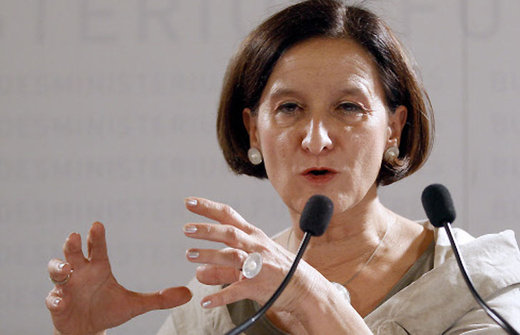
Austria allowed Bolivian President Evo Morales’ plane to land because it did not share other countries’ worries that former U.S. spy agency contractor Edward Snowden might be on board, Interior Minister Johanna Mikl-Leitner said on Wednesday.

France and Portugal abruptly canceled air permits for Morales’ plane en route from Moscow, forcing the unscheduled stopover in Vienna late on Tuesday.

An Austrian Foreign Ministry spokesman said rumours that Snowden was on the plane were untrue.

“Austria did not close its airspace and the plane could of course land although many other countries apparently feared that Snowden was on board too,” the minister told ORF radio. “Austria did not do that, which means there is no fear here.”

Wanted by Washington for espionage after divulging classified details of U.S. phone and Internet surveillance, Snowden apparently remains in the transit area of Moscow’s Sheremetyevo airport.

He applied for asylum in Austria – and several other countries – via the country’s Moscow embassy on Monday, which the government said was insufficient to grant him refuge.

Mikl-Leitner said it would be up to Austrian asylum authorities to decide what to do in the unlikely case that Snowden arrived there.

She defended Austria’s position that Snowden would have to apply in person for asylum, saying this was clearly spelled out in the law.

“This is in the hands of the authorities and independent courts. The important thing here is that this would be judged individually, as in every other case,” she said. – Reuters

Bolivian leader’s plane ‘skyjacked’ on Snowden fear

Evo Morales
Evo Morales

The plane carrying Bolivian President Evo Morales was forced to land in Austria after various European countries refused to let it cross their airspace because of suspicions that NSA leaker Edward Snowden was on board, Bolivian officials said Tuesday.

Officials in both Austria and Bolivia said that Snowden was not on the plane, which was taking Morales home from a summit in Russia, where he had suggested that his government would be willing to consider granting asylum to the American.

A furious Bolivian Foreign Minister David Choquehuanca said France and Portugal would have to explain why they canceled authorization for the plane, claiming that the decision had put the president’s life at risk.

“We don’t know who invented this lie” that Snowden was traveling with Morales, Choquehuanca said in La Paz. “We want to denounce to the international community this injustice with the plane of President Evo Morales.”

In a midnight press conference, Bolivian Vice President Alvaro Garcia said that not only France and Portugal, but also Italy and Spain were denying the plane permission to fly through their airspace.

He described Morales as being “kidnapped by imperialism” in Europe.

“The ambassador for Spain in Austria has just informed us that there is no authorization to fly over Spanish territory and that at 9 a.m. Wednesday they would be in contact with us again,” said Defense Minister Ruben Saavedra, adding that the Spanish government had put as a condition for passage the “revision of the presidential plane.”

Earlier, Choquehuanca said that Spain’s government allowed Morales’ plane to refuel in its territory before flying on to Vienna.

French government officials reached overnight said they could not confirm whether Morales’ plane was denied permission to fly over France. Officials at Portugal’s Foreign Ministry and National Civil Aviation Authority could not be reached to comment.

Austrian Foreign Ministry spokesman Alexander Schallenberg told The Associated Press that Snowden was not with Morales.

Leaks by Snowden, a former NSA systems analyst, have revealed the NSA’s sweeping data collection of U.S. phone records and some Internet traffic, though U.S. intelligence officials have said the programs are aimed at targeting foreigners and terrorist suspects mostly overseas.

He is believed to be in a Moscow airport transit area, seeking asylum from one of more than a dozen countries.

While Bolivia’s foreign minister had earlier said officials did not know who was behind the “lie” that Snowden was on Morales’ plane, the country’s defense minister later expressed no doubt.

“We want to declare very firmly that it was an American story that Edward Snowden was on this flight,” said Saavedra at the VIP terminal of Vienna’s airport. “This is a plot by the U.S. government to destroy president Morales’ image. We say this simply is a lie. And we will confirm this.”

Morales himself was present during the improvised press conference but chose not to speak to reporters. Morales will remain at the airport until his plane has been cleared for takeoff.

In Washington, the State Department would not comment directly when asked to speak to the matter and referred the AP to statements on Snowden made at the department’s daily briefing. Earlier Tuesday, department spokesman Patrick Ventrell would not discuss how the Obama administration might respond if Snowden left the Moscow airport. “We’re not there yet,” he said.

Snowden has applied for asylum in Venezuela, Bolivia and 18 other countries, according to WikiLeaks, a secret spilling website that has been advising him. Many European countries on the list — including Austria, Finland, Ireland, the Netherlands, Norway, Spain and Switzerland — said he would have to make his request on their soil.

One of Snowden’s best chances of finding refuge outside the United States may hinge on Venezuelan President Nicolas Maduro, who was also in Russia on Tuesday.

Maduro told Russian reporters that his country has not received an application for asylum from Snowden and dodged the question of whether he would take him with him when he left.

But Maduro also defended the former National Security Agency systems analyst.

“Who must protect Snowden? This is the question. This young man of 29 was brave enough to say that we need to protect the world from the American imperial elite, so who should protect him?” Maduro said in response to a question from journalists covering a ceremony to rename a Moscow street after Chavez. “All of mankind, people all over the world must protect him.”

Maduro was scheduled to spend Wednesday in neighboring Belarus before returning to Venezuela.

In Venezuela, Foreign Minister Elias Jaua said that changing the flight’s route without checking on how much fuel it had endangered Morales’ life.

“All the countries that have denied permission for the flight of our brother president, Evo Morales, must be held responsible for his life and his dignity as president.”

Another possible landing spot for Snowden is Ecuador, where Wikileaks founder and publisher Julian Assange has been seeking asylum.

“We are willing to analyze Mr. Snowden’s request for asylum and this position has not changed,” said Ecuadorean Foreign Minister Ricardo Patino on Tuesday. “What we have said is that we will be able to analyze the request when Mr. Snowden is in Ecuadorean territory or in an Ecuadorean mission.”

Patino added that two weeks ago a hidden microphone was found in Ecuador’s embassy in London, where Assange is holed up. “We want to find out with precision what the origin of the apparatus is.”

Snowden, who recently turned 30, withdrew a bid for asylum in Russia when he learned the terms Moscow had set out, according to Putin’s spokesman Dmitry Peskov. Putin said on Monday that Russia was ready to shelter Snowden as long as he stopped leaking U.S. secrets.

At the same time, Putin said he had no plans to turn over Snowden to the United States.

Rebuffed by Russia’s president, the Obama administration has recently toned down demands Snowden be expelled from the Moscow airport in a sign that the U.S. believes he is not worth scuttling diplomatic relations between the former Cold War enemies.

On Monday, WikiLeaks posted a statement attributed to Snowden on its website, in which he slams Obama for “using citizenship as a weapon.”

“Although I am convicted of nothing, (the United States) has unilaterally revoked my passport, leaving me a stateless person,” Snowden says in the statement. “Without any judicial order, the administration now seeks to stop me exercising a basic right. A right that belongs to everybody. The right to seek asylum.

“Their purpose is to frighten, not me, but those who would come after me.” – AP

New Snowden bombshell coming

Another big National Security Agency scoop is coming soon, Glenn Greenwald said on Tuesday.

“Just wait a little bit, you’ll have it,” The Guardian journalist who broke the NSA surveillance story said on “Fox & Friends.”

Although Greenwald wouldn’t reveal exactly what the new revelations are, he said the world “will be shocked.”

“I will say that there are vast programs, both domestic and international spying, that the world will be shocked to learn about, that the NSA is engaged in with no democratic accountability and that’s what driving our reporting,” Greenwald said.

nsaGreenwald also said President Barack Obama’s administration is using leaker Edward Snowden as an example to prevent future whistleblowers from coming forward.

“I think what the Obama administration wants, and has been trying to establish for the last almost five years now with the unprecedented war on whistleblowers that it is waging, and to make it so that everybody is petrified of coming forward with information about what our political officials are doing in the dark that is deceitful, illegal or corrupt,” Greenwald said.

He added that the administration doesn’t care about Snowden anymore.

“They don’t care about Edward Snowden at this point; he can no longer do anything that he hasn’t already done; what they care about is making an extremely negative example out of him to intimidate future whistleblowers from coming forward because they’ll think that they’ll end up like him,” Greenwald said.

Snowden asking 15 countries for asylum

edwardsnowden2Edward Snowden, the former National Security Agency contractor who leaked U.S. security secrets and is now a fugitive, met Monday morning with Russian diplomatic officials and handed them an appeal to 15 countries for political asylum, a Russian Foreign Ministry official told The Times.

“It was a desperate measure on his part after Ecuador disavowed his political protection credentials,” said the official, speaking on condition of anonymity. ”In the document Snowden reiterated once again that he is not a traitor and explained his actions only by a desire to open the world’s eyes on the flagrant violations by U.S. special services not only of American citizens but also citizens of European Union including their NATO allies.”

The official didn’t disclose the countries that were on the list. The meeting took place at Moscow’s Sheremetyevo International Airport, where Snowden has apparently holed up in a transit lounge since fleeing from Hong Kong while seeking a route to Ecuador or somewhere else that might grant him asylum.

Kirill Kabanov, a member of the Presidential Council on Human Rights, a Kremlin advisory body, said he believes that Russia is on the list.

“In the given circumstances, Russia has two workable options: Firstly is to provide Snowden with some refugee-status papers so that he could buy a ticket and leave for some other country, or secondly to grant him political asylum,” Kabanov said in an interview with The Times.

“Snowden’s actions were motivated by a desire to protect human rights and freedoms and now many rights activists in Russia are talking about him as a human rights advocate who deserves to be granted asylum, although this measure is fraught with some political inconveniences for Russia,”  he said. – latimes.com

Putin: Snowden never crossed Russian border, so no extradition

Putin slams US demands

Former NSA contractor Snowden remains in the transit zone of a Moscow airport. President Putin said that Snowden never crossed the Russian border and doesn’t fall under any extradition treaty. He called accusations against Russia “nonsense and rubbish.”

“It is true that Snowden has arrived to Moscow, and it really came as a surprise for us. He arrived as a transit passenger, and didn’t need a [Russian] visa, or any other documents. As a transit passenger he is entitled to buy a ticket and fly to wherever he wants,” Vladimir Putin said as he spoke to journalists in Finland.

Edward Snowden is still at the transit area of Moscow’s Sheremetyevo Airport, Putin stressed. He said that any accusations against Russia are “nonsense and rubbish,” as the former NSA contractor “has not crossed” the Russian border.

The President also pointed out that there is no extradition treaty between Russia and the US, which makes it impossible to extradite people like Snowden.

“We can only extradite any foreign citizens to such countries with which we have signed the appropriate international agreements on criminal extradition,” he explained.

Snowden “has not committed any crime” on Russian soil, Putin added. Russian security agencies “have never worked with and are not working with” the former CIA employee, he also stressed.

“Snowden is a free person. The sooner he chooses his final destination, the better it is for him and Russia,” Putin said.

He also expressed hope that the Snowden saga would not have any negative impact on Russian-American relations and that the US “will understand this.”

Putin also commented on the situation with WikiLeaks founder Julian Assange, who has been holed up in the Ecuadorian embassy in London to avoid extradition to Sweden, fearing that he would then be extradited to the US.

“Just like Snowden, he considers himself a rights advocate and fights for sharing information. Ask yourself: should or should not people like these be extradited to be later put to jail?” the President asked.

“In any case, I would like not to deal with such issues because it is like shearing a pig: there’s lots of squealing and little fleece,” he said.

Washington again requested that Moscow expel Snowden on Tuesday, urging Russia to build upon its bilateral law enforcement cooperation with the US.

Russia has “clear legal basis” to expel the NSA leaker, National Security Council spokeswoman Caitlin Hayden said in a statement. She added that Snowden would face espionage charges in the US, even without an extradition treaty.

The White House, along with Putin, doesn’t want the issue to negatively impact the nations’ bilateral relations, Hayden said. – RT

UK tapping EU’s data flows a catastrophe – Germany

Sabine Leuthesser-Scharrenberger

The German Justice Minister has called the British spy agency’s massive eavesdropping of international fiber-optic cables ‘a catastrophe’. Sabine Leuthesser-Scharrenberger insisted European institutions should seek clarification “straight away”.

The exposure by former US National Security Agency contractor Edward Snowden of the global eavesdropping capabilities of the British Government Communications Headquarters (GCHQ) have sent European capitals into a stupor.

Having revealed the NSA’s PRISM global surveillance program, Snowden told the UK’s Guardian newspaper information about Britain’s top secret Tempora surveillance project under which the UK’s GCHQ spying agency intercepts and stores for 30 days huge volumes of data, like emails, social network posts, phone calls and much more, culled from international fiber-optic cables.

The most vociferous reaction has come from Berlin where politicians have demanded a thorough investigation of the activities of the British intelligence-gathering community.

“If these accusations are correct, this would be a catastrophe,” German Justice Minister Sabine Leutheusser-Schnarrenberger said in an email to the Reuters. She compared the news with a “Hollywood nightmare” and called on to the European institutions “to seek straight away to clarify the situation.”

“The accusations make it sound as if George Orwell’s surveillance society has become reality in Great Britain,” Thomas Oppermann, the leader of the opposition Social Democrats in the Bundestag told Reuters. German politicians called the situation ‘unbearable’ and demanded the government “act against a total surveillance of German citizens”.

A report in Britain’s Guardian newspaper has exposed that UK’s GCHQ has been spying on European capitals for at least 18 months intercepting data from over 200 fiber-optic cables.

Begun in 2008, by 2010 the Tempora project made GCHQ a true intelligence superpower, “’the biggest internet access’ of any member of the Five Eyes electronic eavesdropping alliance, comprising the US, UK, Canada, Australia and New Zealand,” The Guardian’s report claims.

By the end of 2012 the GCHQ agency reportedly had enough computational capacity to process information from 46 fibre-optic cables at a time, which amounted to 600 million international phone calls and internet messages daily.

While it was reported earlier that NSA shared classified information obtained through its tapping of the world’s largest internet providers with GCHQ, it became known that these were tit for tat relations and GCHQ shared the info it obtained with the NSA, too. The Guardian believes that the 850,000 NSA employees and US private contractors, like Edward Snowden, had access to GCHQ databases.

“The UK has a huge dog in this fight,” Snowden confirmed to the Guardian. “They [GCHQ] are worse than the US,” he stressed. – RT

Snowden: British are worse than US in spying

Satellite dishes at GCHQ's outpost at Bude in CornwallThe British spy agency GCHQ has access to the global network of communications, storing calls, Facebook posts and internet histories – and shares this data with the NSA, Edward Snowden has revealed to the Guardian in a new leak.

GCHQ’s network of cables is able to process massive quantities of information from both specific targets and completely innocent people, including recording phone calls and reading email messages, it was revealed on Friday.

“It’s not just a US problem. The UK has a huge dog in this fight,” Snowden told the Guardian. “They [GCHQ] are worse than the US.”

The Government Communications Headquarters agency has two different programs, aimed at carrying out this online and telephone monitoring – categorized under ‘Mastering the Internet’ and ‘Global Telecoms Exploitation.’ Both have been conducted in the absence of any public knowledge, reports the Guardian.

“If you remember, even the NSA said that they did not record phone calls, but according to these latest revelations by Edward Snowden, that up to ‘600 million’ telephone events last year were recorded a day by the GCHQ,” said RT’s Tesa Arcilla from London.

“There’s no doubt as to what the objectives of these programs were, having put them in place,” she said, emphasizing the titles.

The agency is able to store the volumes of data it amasses from fiber-optic cables for up to 30 days in an operation codenamed Tempora. The practice has been going on for around 18 months.

GCHQ which was handling 600m telephone ‘events’ a day, according to the documents, had tapped into over 200 fiber-optic cables and had the capacity to analyze data from over 46 of them at a time.

The cables used by GCHQ can carry data at 10 gigabits per second, which in theory, means they could deliver up to 21petabytes of information per day. The program is continuing to develop on a daily basis with the agency aiming to expand to the point it is able to process terabits (thousands of gigabits) of data at once.

“This appears to be dangerously close to, if not exactly, the centralised database of all our internet communications, including some content, that successive Governments have ruled out and Parliament has never legislated for,” said Nick Pickles of UK privacy campaign group Big Brother Watch.

“If GCHQ have been intercepting huge numbers of innocent people’s communications as part of a massive sweeping exercise then I struggle to see how that squares with a process that requires a warrant for each individual intercept. This question must be urgently be addressed in Parliament,” he stated.

By May last year, some 300 GCHQ-assigned analysts and 250 from the NSA had been specially allocated large quantities of data to trawl through as a result of the operations.

The Guardian reports that 850,000 NSA and outside contractors had potential access to the databases. However, the paper does not explain how it came to such an enormous figure

“These revelations reveal the scale of and the scope of cooperation between UK and US intelligence services,” said RT’s Gayane Chichakyan from Washington. “From these revelations we learned how dramatically it has expanded over the years.”

“The document shows the FISA court lets the NSA use data snagged ‘inadvertently.’ They basically give a warrant to target suspects,” she said, recalling Lieutenant General Keith Alexander’s quote after a 2008 visit to the Menwith RAF base in England: “Why can’t we collect all the signals all the time? Sounds like a good summer project for Menwith,” he had said.

The GCHQ project was first trialed in 2008. The intelligence organization has been labeled an ‘intelligence superpower’ on account of its technical capabilities, which by 2010 gave it the strongest access to internet communications out of the ‘Five Eyes’ – an international intelligence sharing  alliance, including Australia, Canada, New Zealand, the UK and US, brought into existence in 1946.

The mass-surveillance has seen the interception of data from transatlantic cables that also carry data to western Europe through ‘intercept partners’ commercial companies that had entered into private agreements with GCHQ. Many have been paid off for their cooperation.

GCHQ feared that exposure of the names of the companies involved could lead to “high-level political fallout,” and took measures to ensure names were kept secret. Warrants had reportedly been issued to compel the companies to cooperate so that GCHQ could engage in spying through them.

“They have no choice,” said a Guardian intelligence source.

Human rights groups have spoken out against the mass data collection: “They are exploiting the fact that the internet is so international in nature,” Shami Chakrabarti, director of Liberty, told BBC Radio 4’s ‘Today’ program. “I’m pretty sad in a democracy when all that appears to be holding back the secret state is its physical and technological capability and not its ethics or a tight interpretation and application of the law,” she added.

Snowden previously warned that he would be releasing further information pertaining to mass security operations carried out on the unwary public, stating in a previous  Q & A with the Guardian that the “truth is coming, and it cannot be stopped.” – RT

US warns countries against Snowden travel

snowdenagentFugitive former U.S. spy agency contractor Edward Snowden was seeking asylum in Ecuador on Sunday after Hong Kong allowed his departure for Russia in a slap to Washington’s efforts to extradite him on espionage charges.

In a major embarrassment for President Barack Obama, an aircraft thought to have carried Snowden landed in Moscow on Sunday, and the anti-secrecy group WikiLeaks said he was “bound for the Republic of Ecuador via a safe route for the purposes of asylum.”

Earlier, Ecuadorean Foreign Minister Ricardo Patino, visiting Vietnam, tweeted: “The Government of Ecuador has received an asylum request from Edward J. #Snowden.”

It was a blow to Obama’s foreign policy goals of resetting ties with Russia and building a partnership with China. The leaders of both countries were willing to snub the American president in a month when each had held talks with Obama.

The United States continued efforts to prevent Snowden from gaining asylum. It warned Western Hemisphere nations that Snowden “should not be allowed to proceed in any further international travel, other than is necessary to return him to the United States,” a State Department official said.

U.S. Senator Charles Schumer charged that Russian President Vladimir Putin likely knew and approved of Snowden’s flight to Russia and predicted “serious consequences” for a U.S.-Russian relationship already strained over Syria and human rights.

“Putin always seems almost eager to stick a finger in the eye of the United States – whether it is Syria, Iran and now of course with Snowden,” Schumer, a New York Democrat, told CNN’s “State of the Union” program. He also saw “the hand of Beijing” in Hong Kong’s decision to let Snowden leave the Chinese territory despite the U.S. extradition request.

Ecuador, which has been sheltering WikiLeaks‘ founder Julian Assange at its London embassy for the past year, once again took center stage in an international diplomatic saga over U.S. data secrecy.

Ecuador’s ambassador to Russia, Patricio Alberto Chavez Zavala, told reporters at a Moscow airport hotel he would hold talks with Snowden and Sarah Harrison, a WikiLeaks representative.

Hours later, shortly after midnight (2000 GMT Sunday), the ambassador emerged from a business-class lounge near the hotel and refused to say whether he had met Snowden or make any other comment. Shortly before he appeared, a cart with three plates of salmon and a Starbucks bag were rolled into the lounge.

Snowden, who had worked at a U.S. National Security Agency facility in Hawaii, had been hiding in Hong Kong, the former British colony that returned to China in 1997, since leaking details about secret U.S. surveillance programs to news media.

U.S. authorities had said on Saturday they were optimistic Hong Kong would cooperate over Snowden.

U.S. authorities have charged Snowden with theft of federal government property, unauthorized communication of national defense information and wilful communication of classified communications intelligence to an unauthorized person, with the latter two charges falling under the U.S. Espionage Act.

A source at Russian airline Aeroflot said on Sunday that Snowden was booked on a flight scheduled to depart for Havana on Monday at 2:05 p.m. (1005 GMT) from the same Moscow airport where the flight from Hong Kong arrived, Sheremetyevo.

The chief of Cuba’s International Press Center, Gustavo Machin, said he had no such information though pro-government bloggers heaped praise on Snowden and condemned U.S. spying activity.

Venezuela, Cuba and Ecuador are all members of the ALBA bloc, an alliance of leftist governments in Latin America that pride themselves on their “anti-imperialist” credentials.

In their statement announcing Snowden’s departure, the Hong Kong authorities said they were seeking clarification from Washington about reports of U.S. spying on government computers in the territory.

The Obama administration has previously painted the United States as a victim of Chinese government computer hacking.

At a summit this month, Obama called on his Chinese counterpart Xi Jinping to acknowledge the threat posed by “cyber-enabled espionage” against the United States and to investigate the problem. Obama also met Putin in Northern Ireland last week.

A spokesman for the Hong Kong government said it had allowed the departure of Snowden – considered a whistleblower by his supporters and a criminal or even a traitor by his critics – as the U.S. request for his arrest did not comply with the law.

However, a U.S. Justice Department official said at no point in discussions through Friday did Hong Kong raise issues about the sufficiency of the U.S. arrest request.

“In light of this, we find their decision to be particularly troubling,” the official said.

U.S. sources familiar with the issue said Washington had revoked Snowden’s U.S. passport. State Department spokeswoman Jen Psaki said revoking the passport of someone under a felony arrest warrant was routine and does not affect citizenship status.

“It’s a shocker,” Simon Young, a law professor with Hong Kong University said. “I thought he was going to stay and fight it out. The U.S. government will be irate.”

The issue has been a major problem for Obama, who has found his domestic and international policy agenda sidelined as he has scrambled to deflect accusations that U.S. surveillance practices violate privacy protections and civil rights. The president has maintained that the measures have been necessary to thwart attacks on the United States.

The White House had no comment on Sunday’s developments. – Reuters

Marine Le Pen demands political asylum for Snowden

marinesnowdenMarine Le Pen, leader of France’s anti-immigration National Front (FN) party, has demanded that the country give former American defense contractor and whistleblower Edward Snowden immediate political asylum.

In an open message, Le Pen said she was demanding French President François Hollande “to give, in the name of the French Republic, asylum to this young man who had the courage to reveal to humanity a very serious threat to democracy and to public freedoms.”

The FN leader is better known for calling on cuts to French asylum quotas.

During her campaign ahead of the 2012 presidential election, she called for an 80 percent reduction in the number of refugees taken in by France over five years.

Snowden, a former low-level CIA employee and sub-contractor to the US National Security Agency, revealed on Sunday that he was the source of a leak about a top-secret US program code named PRISM that monitored internet use and phone records.

The 29-year-old told the Guardian and Washington Post newspapers that he had blown the whistle on the NSA’s activity to protect “basic liberties for people around the world”.

On Monday, he told the Guardian he was holed up Hong Kong, which has an extradition treaty with the United States.

He said he was looking at trying to get political asylum in a country that shared his values – and that “the nation that most encompasses this is Iceland.”

Icelandic authorities said on Monday that they had not been contacted by Snowden, and that the only way to apply for asylum there was to arrive in the country itself. – France24

China, Germany press US to explain NSA-spying allegations

South China Morning PostChina on Monday joined calls for Washington to provide explanations following disclosures of National Security Agency (NSA) programmes, which collect millions of telephone records and track foreign internet activity on US networks.

Foreign Ministry spokesperson Hua Chunying told reporters that Washington needs to heed international concerns expressed since the programmes were made public earlier this month by former NSA contractor Edward Snowden.

Officials and lawmakers in Germany and other countries are already pressing Washington for information about the collection of information that might affect their citizens’ privacy.

“We think that the United States should regard seriously the concerns and demands of the global community and people from all countries and furnish the global community with a necessary explanation,” Hua said at a regularly scheduled briefing.

Snowden flew to the Chinese autonomous region of Hong Kong on May 20 and is believed to still be there, though in hiding at an unknown location. China hasn’t said whether it would cooperate with any US demands for his extradition, and Hong Kong’s Western-style legal system that is distinct from that on the Chinese mainland allows opportunities for him to appeal.

US officials have defended the surveillance programmes as essential to disrupting terrorist plots.

Former vice-president Dick Cheney said on Sunday that he was “very, very worried” that Snowden would pass on sensitive information to China in return for immunity or sanctuary.

Asked whether Snowden was a Chinese spy or co-operating with Beijing, Hua answered, “This is complete nonsense.”

Max Keiser called Cheney out for being duplicitous as he was instrumental in selling American military equipment to China.

Addressing the backlash against him in the US, Snowden said much of it was predictable. He said: “It’s important to bear in mind I’m being called a traitor by men like former vice president Dick Cheney. This is a man who gave us the warrantless wiretapping scheme as a kind of atrocity warm-up on the way to deceitfully engineering a conflict that has killed over 4,400 and maimed nearly 32,000 Americans, as well as leaving over 100,000 Iraqis dead. Being called a traitor by Dick Cheney is the highest honor you can give an American.”– Sapa-AP

Did Ed Snowden get help?

Ed Snowden, NSA leaker. Honest man. Doing what was right. Bravo.

That still doesn’t preclude the possibility that, unknown to him, he was managed by people to put him the right place to expose NSA secrets.

Snowden’s exposure of NSA was a righteous act, because that agency is a RICO criminal. But that doesn’t mean we have the whole story.

How many people work in classified jobs for the NSA? And here is one man, Snowden, who is working for Booz Allen, an outside contractor, but is assigned to NSA, and he can get access to, and copy, documents that expose the spying collaboration between NSA and the biggest tech companies in the world—and he can get away with it.

If so, then NSA is a sieve leaking out of all holes. Because that means a whole lot of other, higher NSA employees can likewise steal these documents. Many, many other people can copy them and take them. Poof.

If the NSA is not a sieve, it’s quite correct to suspect Snowden, a relatively low-level man, was guided and helped.

Does that diminish what Snowden accomplished? No. But it casts it in a different light.

Or you can believe a scenario like this:

“Mr. Snowden, I’m closing up now for the day. Do you need anything before I go?”

“No thanks, Sarah, I’ll be staying late tonight.”

NSA isn’t a little community bank or a liquor store. We aren’t talking about an employee with a printer and a file folder to hold top-secret pieces of paper he carries in a briefcase out of the office on his way home.

If there are people who arranged Snowden’s access to NSA secrets, without him knowing it, they’ll be obscured by the maze of partisan political squabbling and Congressional idiots holding hearings.

Between these morons and the press, the public will be treated, night and day, to the following: Can Snowden be extradited back here? Is he a terrorist? Should those giant tech companies have agreed to supply the government with information on private citizens? If so, how much information? Etc., etc. Diversions. False trails.

To understand who might have been behind Snowden, we first need to understand the real reach of the Surveillance State.

The Surveillance State has created an apparatus whose implications are staggering. It’s a different world now. And sometimes it takes a writer of fiction to flesh out the larger landscape.

Brad Thor’s novel, Black List, posits the existence of a monster corporation, ATS, that stands along side the NSA in collecting information on every move we make. ATS’ intelligence-gathering capability is unmatched anywhere in the world.

At his site, www.BradThor.com, the author lists some of the open-source material he discovered that formed the basis for Black List. The material, as well as the novel, is worth reading.

On pages 117-118 of Black List, Thor makes a stunning inference that, on reflection, is as obvious as the fingers on your hand:

“For years ATS [substitute NSA] had been using its technological superiority to conduct massive insider trading. Since the early 1980s, the company had spied on anyone and everyone in the financial world. They listened in on phone calls, intercepted faxes, and evolved right along with the technology, hacking internal computer networks and e-mail accounts. They created mountains of ‘black dollars’ for themselves, which they washed through various programs they were running under secret contract, far from the prying eyes of financial regulators.

“Those black dollars were invested into hard assets around the world, as well as in the stock market, through sham, offshore corporations. They also funneled the money into reams of promising R&D projects, which eventually would be turned around and sold to the Pentagon or the CIA.

“In short, ATS had created its own license to print money and had assured itself a place beyond examination or reproach.”

In real life, whether the prime criminal source is one monster corporation or the NSA itself, the outcome would be the same.

Total surveillance has unlimited payoffs when it targets financial markets and the people who have intimate knowledge of them.

“Total security awareness” programs of surveillance are ideal spying ops in the financial arena, designed to grab millions of bits of inside information, and then utilize them to make investments and suck up billions (trillions?) of dollars.

It gives new meaning to “the rich get richer.”

Taking the overall scheme to another level, consider this: those same heavy hitters (NSA) who have unfettered access to financial information can also choose, at opportune moments, to expose certain scandals and crimes.

In this way, they can, at their whim, cripple governments, banks, and corporations. They can cripple investment houses, insurance companies, and hedge funds. Or, alternatively, they can merely blackmail these organizations.

It’s likely that the probe Ron Paul has been pushing—audit the Federal Reserve—has already been done by those who control unlimited global surveillance. They already know far more than any Congressional investigation will uncover. If they know the deepest truths, they can use them to blackmail, manipulate, and control the Fed itself.

Corruption on top of corruption.

In this global-surveillance world, we need to ask new questions and think along different lines now.

For example, how long before the mortgage-derivative crisis hit did the Masters of Surveillance know, from spying on bank records, that insupportable debt was accumulating at a lethal pace? What did they do with that information?

When did they know that at least a trillion dollars was missing from Pentagon accounting books (as Donald Rumsfeld eventually admitted), and what did they do with that information?

Did they discover precisely where the trillion dollars went? Did they discover where billions of dollars, in cash, shipped to post-war Iraq, disappeared to?

When did they know the details of the Libor rate-fixing scandal? Press reports indicate that Barclays was trying to rig interest rates as early as January 2005.

Have they tracked, in detail, the men responsible for recruiting hired mercenaries and terrorists, who eventually wound up in Syria pretending to be an authentic rebel force?

Have they discovered the truth about how close or how far away Iran is from producing a nuclear weapon?

Have they collected detailed accounts of the most private plans of Bilderberg, CFR, and Trilateral Commission leaders?

For global surveillance kings, what we think of as the future is, in many respects the present and the past.

It’s a new world. These overseers of universal information-detection can enter and probe the most secret caches of data, collect, collate, cross reference, and assemble them into vital bottom-lines. By comparison, an operation like Wikileaks is an old Model-T Ford puttering down a country road, and Julian Assange is a mere piker.

Previously, we thought we needed to look over the shoulders of the men who were committing major crimes out of public view. But now, if we want to be up to date, we also have to factor in the men who are spying on those criminals, who are gathering up those secrets and using them to commit their own brand of meta-crime.

And in the financial arena, that means we think of Goldman Sachs and JP Morgan as perpetrators, yes, but we also think about the men who already know everything about GS and Morgan, and are using this knowledge to steal sums that might make GS and Morgan blush with envy.

Therefore….when looking for who might have helped Ed Snowden punch a hole in NSA, we should think about who the NSA has been spying on. Not the little guy, not the medium-sized guy, but a very big guy. Perhaps a Goldman Sachs or a JP Morgan.

At the highest levels of criminal power, the players don’t always agree. It’s not always a smooth conspiracy. There is fierce in-fighting as well.

Goldman Sachs, Chase, and Morgan consider trillion-dollar trading markets their own private golden-egg farm. They run it, they own it, they manipulate it for their own ends.

If NSA has been looking over their shoulders for the past 30 years, discovering all their knowledge, and operating a meta invasion, siphoning off enormous profits, NSA would rate as Enemy Number One.

And would need to be torpedoed.

Enter Ed Snowden.

Looking elsewhere, consider this. Snowden worked for the CIA. He was pushed up the ranks quickly, from an IT position in the US to a posting in Geneva, under diplomatic cover, to run security on the CIA’s computer systems there.

Then, Snowden quit the CIA and eventually ended up at Booz Allen, a private contractor. He was assigned to NSA, where he stole the secrets and exposed the NSA.

The CIA and NSA have a long contentious relationship. The major issue is, who is king of US intelligence? We’re talking about an internal war.

Snowden could have been the CIA’s man at NSA, where certain CIA players helped him access files he wouldn’t have been able to tap otherwise.

You can bet your bottom dollar that NSA analysts are looking into this possibility right now. – naturalnews.com