Zimbabwe, ruled by the despotic Robert Mugabe installed as leader by Great Britain in 1980, is still experiencing food shortages, mainly as a result of its anti-white policies which saw most white commercial farmers ethnically cleansed from the country.
According to Famine Early Warning Systems Network, an NGO, “food security is expected to deteriorate to Crisis and Emergency levels between October 2015 and March 2016 in the southern region. Outcomes will be significantly better if typical assistance is delivered, though Crisis and Stressed food security would still be likely due to the above-average retail maize prices expected in the southern cereal-deficit areas”.
While lauded for his anti-white policies by liberals and leftists all over the world, Robert Mugabe has plunged his own country into prolonged famine and disorder. According to the World Food Programme, “One third of Zimbabwe’s children are stunted, or short for their age.” The international agency also states on its website:
Rural poverty has increased from 63 percent in 2003 to 76 percent in 2014. Most households in the rural areas are net food buyers: they do not (for a number of reasons) produce enough food to meet their needs through to the next harvest season. Consequently, they rely on markets and other non-farm sources such as casual labour to bridge the food gap to the next season. As such, a number of people in rural areas will struggle to meet their daily food needs.
The state-run Herald is reporting that the country needs to import at least 700,000 tonnes of maize between now and the next harvest early next year to avert a food crisis.
Zimbabwe also receives electricity from South Africa, where years of neglect by the radical ANC regime has equally led to power cuts and shortages.
Publishing a radical exhortation to sedition by a convicted black extremist like Assata Shakur in City Press (Listen up! The European is not your friend) is not only irresponsible, but demonstrates the double standards at work when it comes to freedom of expression in South Africa. If I had written a piece like that, telling white Afrikaners to “use force to break the shackles and obtain emancipation”, the police would have broken down my front door and I would have been charged with “high treason” like the Boeremag and might have been sent to prison for life.
Ostensibly her article is about Rhodes’s statue. However, it represents a blanket call to arms against whites or “Europeans” world-wide, especially South Africa’s beleaguered white minority of 8% that is already subject to official hostility, Nazi-style race laws and sustained criminal or ethnic attacks such as the gruesome plaasmoorde (farm murders).
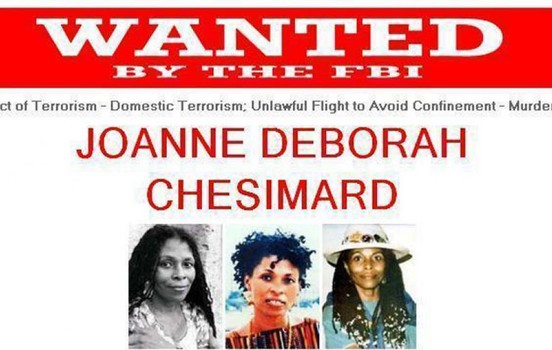
A cursory internet search reveals the following about Shakur: She was born JoAnne Deborah Byron and sentenced for the murder of a white policeman or state trooper, Werner Foerster, in the USA. Not only is she still wanted there as an escaped convict, but she was classified as a “domestic terrorist” by the FBI in 2005 with a price of $1 million on her head.
How come that if you speak out on behalf of the oppressed Afrikaner minority you are marginalised and censored, but an extremist anti-white radical like Shakur has free reign in the mainstream media to stir up racial and ethnic passions?
Apart from the xenophobia playing out on our streets, we also have leukophobia (“fear of whites”) which Shakur openly wants to inflame, causing even more violence than we are already experiencing. Section 16(2) of the 1996 constitution is quite clear that “freedom of expression… does not extend to a. propaganda for war; b. incitement of imminent violence; or c. advocacy of hatred that is based on race, ethnicity, gender or religion, and that constitutes incitement to cause harm”.
Obviously, Shakur’s diatribe against us whites contravenes all three sub-sections prohibiting so-called “hate speech”. Many people thought that South Africa was an exception on the continent and that we would not experience African-style ethnic strife, followed by economic collapse as happened in Rwanda, Liberia, Sierra Leone, Angola, Zimbabwe, the DRC and so many other countries. But our leftist media, besotted as they are with concepts like “revolution” and “transformation”, are inciting the same kind of racial and ethnic hatred that has been the bane of Africa since independence. Like the Indians were expelled from Uganda and Malawi, or the Portuguese from Angola and Mozambique, we should ultimately be booted out of South Africa in a glorious act of “black emancipation”.
Some might argue that Shakur is nothing but a caricature of black radicalism, as described in a book from my student days, Tom Wolfe’s Radical Chic and Mau-mauing The Flak Catchers. A more sophisticated reader – I daresay “European”! sipping coffee in a café in Paris or Milan – might see it for what it is: a pathetic attempt at fomenting racial revolution from Cuba, one of the last outposts of Marxist dystopia on the planet.
But given that South Africa is already mired in racial and ethnic strife, with axes and knives brandished on our horror-movie streets, its citizens brainwashed with simplistic notions of “white privilege” and “black disadvantage”, Shakur’s discourse could easily lead to civil war. Is that really what City Press and the directors of Naspers, its owners, have in mind for us?
Zimbabwe’s Consul-General in South Africa, Henry Mukonoweshuro, says diplomatic ties between South Africa and Zimbabwe will not be affected by the on-going xenophobic attacks in the greater eThekwini Metropolitan Municipality.
Hundreds of foreign nationals from Zimbabwe, the Democratic Republic of Congo (DRC), Ethiopia and Somalia have been displaced after xenophobic attacks in Durban. Close to 2000 foreign nationals are being housed in three temporary makeshift camps.
Mukonoweshuro says they will be working closely with their South African counterparts to find a solution and put an end to the on-going violence.
“It is just a question of a few misguided individuals. To some extent I think some vagrants who think if they create chaos people will run away from their homes. Then they can vandalise and steal but my president was here a few days ago and met with President Jacob Zuma and elevated political and economic relations, our people are here.”
Mukonoweshuro says talks with Home Affairs Minister Malusi Gigaba are continuing to address the issue.
“This is a dent but I mean look, these problems are never at any one time planned.”
There’ve been reports of attacks in Umlazi, KwaMashu, Inanda and Siyanda
Meanwhile, eThekwini Metro police say about five shops owned by foreign nationals were set alight and several others looted in townships in the Durban area Sunday night.
More than a dozen foreign owned businesses have been looted since the violence began, Somali Hassan Ali says all his shops in KwaMashu, north of Durban, have been looted and burnt.
Zimbabwean youths were stopped yesterday from digging up the remains of Cecil Rhodes from his grave in the Matopos Hills, just outside Bulawayo.
The Zanu-PF youths assembled at the party’s Bulawayo offices, from which they intended to go to the hills. They apparently planned to exhume Rhodes’s remains so they could be repatriated to Britain.
But a directive from Zanu-PF headquarters in Harare put an end to their plan.
Zweli Malinga, a Zanu-PF youth activist from Masotsha Ndlovu district, where Rhodes is buried, reportedly told NewZimbabwe online: ”We cannot stand seeing whites coming from abroad every day to honour and conduct rituals before their ancestor who is here buried on our own land. The sooner they take [Rhodes] to their own land the better. If they do not we will do it ourselves.”
Zimbabwe’s President Robert Mugabe in 2012 blocked attempts by “war veterans” to exhume Rhodes’ remains.
A member of the Zanu-PF politburo, Sikhanyiso Ndlovu, said: “We decided to preserve it after independence for historical [reasons].”
The deputy head of communication at the British High Commission in Pretoria, Isabel Potgieter, said it was up to South Africans and Zimbabweans how they handled the Rhodes saga.
“It is not for us to comment. It is for stakeholders in the countries to decide,” she said.
The Rhodes Must Fall campaign has spread from UCT to Kimberley, with calls for a statue of him there to be removed.
Comment boards placed next to the Rhodes statue at UCT were removed after being covered in racist remarks prompting vice-chancellor Max Price to whine about “hate speech”, something he somehow finds perfectly in order when directed against Afrikaners.
Zimbabwe has confirmed eight cases of cholera, including two on the border with South Africa, state media reported on Thursday.
Two children, aged five and 10, had been quarantined with cholera at Beitbridge District Hospital, the official Herald reported.
Six other cases had been recorded in Mudzi and Chiredzi, the state Zimbabwe Broadcasting Corporation said.
Mudzi is on the border with Mozambique, where 41 people have died of cholera. Chiredzi is in south-eastern Zimbabwe.
Another possible case was being investigated in Chirundu on the Zambian border, the report said.
Cholera killed more than 4000 people in Zimbabwe in late 2008 to early 2009. The disease spreads particularly fast during the rainy season through contaminated food and water.
The new Expropriation Bill of 2015 was recently released by the minister of public works, Thulas Nxesi, and is due to be enacted into law this year. The 2015 Bill is just as unconstitutional as its predecessors of 2008 and 2013. It still gives the State the power to take ownership and possession of property of virtually any kind by notice to the owner – and without a prior court order confirming the constitutional validity of the expropriation.
The Bill also puts great pressure on expropriated owners to accept whatever amounts of compensation the State might offer. Particularly telling is a clause saying owners will be deemed to have accepted these amounts unless they sue for more within two months. Given the high cost of litigation, most people will be reluctant to risk this.
The Government claims the 2015 Bill will cure the constitutional defects in the current Expropriation Act of 1975, but this is simply not true. Mr. Nxesi’s Bill should thus be abandoned and replaced by a new amendment bill that is fully compliant with the Constitution. Such a bill can easily be crafted by amending the current Act in three key ways, as this issue of @Liberty explains.IRR_@Liberty_1-2015_-_4_March_2015 (1)
I can’t imagine that anyone in his right mind would actually want to go to the 91st birthday party of Robert Gabriel Mugabe which takes place this Saturday.
It promises to be an event of truly spectacular moral ugliness. While his people are starving, the ancient despot will convoke 20,000 cronies at a kind of golf club-cum-safari lodge near the Victoria Falls. In scenes reminiscent of the more disgusting and luxurious behaviour of the emperor Commodus, he will cause various exotic beasts to be slaughtered for the feast.
Five impalas will be roasted, two sables, two buffaloes – and then, to the ululations of his drunken Zanu-PF supporters, there will be a series of culinary climaxes, each more revolting than the last. A local farmer has procured two elephants, and after these rare and majestic creatures have been butchered for the delectation of the semi-deified Mugabe, there will be one more type of meat to come – an animal that you might think was semi-sacred, whose killing should be taboo, a creature that people would never normally dream of eating. Yes, a lion, the king of the animal kingdom, will lay down its life before the meat-maddened mob and have the honour of surrendering its mortal flesh to the palsied gullet of the man who still calls himself the “Hitler of Africa”.
And then, at last, the cake will appear, predicted to weigh 200lb, and in the most depraved and demoralising vignette of all, this crowd of brainwashed Zimbabweans will sweetly sing Happy Birthday to the man who has impoverished their country. This birthday party is predicted to cost $1 million at a time when Zimbabweans are living on 35 cents a day. Teachers across the country have been forced to contribute $10 each to put on the show.
The whole exercise is utterly nauseating – and my only question, as I say, is who on earth would want to be there?
Who is going to be toasting Mugabe in champagne and Tusker lager? Who is going to feature in the photo spread in the Zimbabwean equivalent of Hello! or OK!? I doubt that Britain will be represented at all – but by rights there is one man who damn well should be there, one man who should be down on the dance floor with Mugabe’s buxom assistants, and flashing his familiar glistering smile at the gathering.
If there were any justice in the world, that man would break off from giving advice to sundry other dubious regimes and help old Bob with the job of blowing out his candles. And that man, naturally, is Tony Blair.
Zimbabwe is now the second poorest nation on earth – beaten only by Congo for overall grimness. The people are so badly malnourished that one in three children is physically stunted, according to the UN. If you go there you see the ravages of HIV, the emaciated figures standing listlessly on street corners. Companies are constantly going to the wall.
But it is vital to recognise that Zimbabwe was not always like this, and did not have to be like this. This Mugabe tyranny is no accident – and Britain played a shameful part in the disaster. Readers will remember the 1979 Lancaster House Agreement, by which Margaret Thatcher granted independence to Rhodesia. At that time the country was a breadbasket, a flourishing agricultural producer, with about 6,000 commercial farmers. The only trouble with those farmers was that the most successful of them were white – and Mugabe’s long reign has been characterised by one overwhelming objective: to exterminate the last vestiges of white power, whether political or economic.
As he has said: “The white man is here as a second citizen. The only man you can trust is a dead white man.” So it was crucial that the Lancaster House Agreement protected the interests of these white farmers. They could, of course, be bought out, but their land could not be simply seized. There had to be a “willing buyer, willing seller”. The British government agreed to fund the arrangement, compensating the former colonial farmers for land that they gave up. Under that arrangement the white farmers were able to survive – more or less; Zimbabwe remained economically viable – more or less.
And then in 1997, along came Tony Blair and New Labour, and in a fit of avowed anti-colonialist fervour they unilaterally scrapped the arrangement. The overseas development minister, Clare Short, made it clear that neither she nor Blair gave a stuff about the former colonial farmers. As she put it at the time: “I should make it clear that we do not accept that Britain has a special responsibility to meet the costs of land purchase in Zimbabwe. We are a new government from diverse backgrounds, without links to former colonial interests. My own origins are Irish and, as you know, we were colonised not colonisers.”
It was that betrayal of Lancaster House that gave Mugabe his pretext to launch his pogroms against the whites. I remember going to a place called Mazowe, not far from Harare, where Mugabe now has one of his vast personal ranches. I met an old ex-Rhodesian couple whose family came from near London, whose kitchen dresser bore the medals their relatives had won fighting for this country. I remember them physically trembling with fear of the Zanu-PF thugs who were waiting at the gate to their farm; and it wasn’t long before they were gone – driven out by sheer intimidation. They died not long afterwards.
The Labour government enlisted this country in all sorts of wars around the world, some more disastrous than others. British soldiers went to fight and die in Iraq, in Afghanistan, in the Balkans. Here we had people with close relatives in our own country – yes, our own kith and kin – and we did absolutely nothing. We turned our backs on the very people who were actually indispensable to the economic well-being of Zimbabwe, and Labour essentially allowed Mugabe to launch a racist tyranny.
The two criminals, Blair and Bob enjoying a moment together
It was Labour’s betrayal of the Lancaster House Agreement – driven by political correctness and cowardice – that gave Mugabe the pretext for the despotic confiscations by which he has rewarded his supporters. And that is why Blair should be there: to mark Labour’s special contribution to the tyrant’s longevity in office.
Boris Johnson is the Lord Mayor of London and a former journalist. This article is from the Telegraph newspaper.
The secret to a long life, says Zimbabwe’s President Robert Mugabe, who has just turned 91, is “not filling my stomach”.
His country has been struggling with food shortages since his drive to chase white farmers from their properties.
In an interview televised this week ahead of a huge birthday party in Victoria Falls, Mugabe said: “I do certain things that I believe sustain life.
“I eat well, not filling my stomach, eating foodstuffs that I believe sustain one most. You must eat well, and really not go for food because it’s attractive and feed yourself until your tummy is full,” the longtime Zimbabwean leader said.
At least 20 000 guests will attend the bash at the golf course of a luxury hotel this weekend to feast on elephant, buffalo, donated cattle and a gigantic birthday cake.
Mugabe’s half sister, Regina Gata, recently said that he neither smokes nor drinks.
The Zimbabwe leader has made several trips to the Far East in recent years for medical check-ups, officially on his eyes.
The European Union has given Zimbabwe $267 million, it said on Monday, the first time the bloc has given financial aid to the southern African nation’s government since imposing sanctions in 2002.
The 28-nation EU has gradually eased biting sanctions on Zimbabwe to encourage political reform, although it has kept an asset freeze and a travel ban on veteran President Robert Mugabe and his wife Grace, as well as an arms embargo.
Since imposing the sanctions, the EU has shunned the government, and restricted its funding to charities only.
The EU ambassador to Zimbabwe Philippe Van Damme said during a signing ceremony that the agreement opened a new chapter in the bloc’s relationship with Zimbabwe, but cautioned that new problems could still emerge in future.
“Does this mean that everything is suddenly sorted out and that we are entering a new honeymoon? No, we have cleared some obstacles in our partnership, and as in any partnership new problems may emerge, old problems may reappear,” he said.
Mugabe’s ZANU-PF party has long demanded the complete removal of EU sanctions it denounces as illegal.
Finance Minister Finance Patrick Chinamasa said the aid marked a significant step towards improving ties between Zimbabwe and the EU but that sanctions on Mugabe and his wife would hurt full normalisation of relations.
“As long as the chief executive (Mugabe) remains under sanctions, our relations remain poisoned and unproductive,” Chinamasa said.
The EU said the funds will improve health, agriculture-based economic development, governance and institution-building.
Half of the money would be released this year, and the rest will be paid gradually until 2020, Van Damme said.
Mangaung Executive Mayor, Thabo Manyoni on Tuesday met with representatives of the community of Botshabelo regarding illegal land occupation and invasion.
A portion of Botshabelo section H was not properly allocated to residents. Manyoni said the land invasion was against procedures of the city and needed to be rectified urgently.
He added that he will not allow people to stay or occupy any piece of land that is not serviced and does not conform with the basic requirements for living standards. He says the issue of land is a serious matter that needs to be treated carefully hence the municipality will not allow any lawlessness around it.
At the same time he urged members of the community not to be coerced into occupying land that is not approved but rather to work closely with the city to address the sensitive matter of land.
Farmers in Sasolburg are meanwhile meeting with Free State MEC for Police, Roads and Transport Butana Khompela and the provincial police commisioner, Simon Mpembe in Sasolburg.
The meeting will revolve around rural safety and illegal land occupations. The meeting will take place at 11:00 at the municipal offices in Fichardt street, in the Council Foyer on the second floor.
Most of Zimbabwe’s white farmers were stripped of their land in often violent evictions that started in 2000. Now the remaining white farmers are on edge because of threats of new evictions linked to the country’s long-running political turmoil.
Mandi Chimene, a newly appointed provincial governor for Manicaland province, said at a rally this past weekend that she had evicted white farmers from 12 farms in the Headlands district alone, claiming they were being protected by the former vice president’s faction. Joice Mujuru was ousted from the ruling party congress in December after falling out of favor with the president and his wife.
Another newly appointed governor, Joe Biggie Matiza of Mashonaland East province, said he will take similar action by the end of this month.
However, human rights advocate and political analyst Gabriel Shumba said that linking the evictions to the Mujuru faction “is just political expediency by those seeking to evict them.” Shumba said, “White farmers are caught up because they are in possession of an asset that is in demand.”
The Commercial Farmers Union, which represents mostly white farmers in Zimbabwe, has sought a meeting with the lands minister over the evictions, said spokesman Hendricks Olivier. “The eviction of both black and white farmers is not good for the sector,” Olivier told The Associated Press. “We need a clear policy.”
Douglas Mombeshora, the lands minister, recently said black farmers can enter into joint venture with partners of other races. But vice president Emmerson Mnangagwa later delivered a conflicting message, warning of more evictions of white farmers. President Robert Mugabe has often spoken against joint farming partnerships between blacks and whites.
There are fewer than 300 white farmers out of the original total of 4,500, according to the Commercial Farmers Union. The land eviction program that targeted white farmers starting in 2000 was defended by Mugabe as necessary to correct land imbalances dating from the era of white rule, though the upheaval was blamed for mismanagement of Zimbabwe’s once rich agricultural economy.
A Zimbabwean who says he bribed police officers at the Beit bridge border post to let him into the country, says corruption is hampering the South African government’s efforts to prevent foreigners from entering the country illegally.
The Minister of Home Affairs has recently announced the December 31 cut-off date for Zimbabweans to apply for a special three year permit.
Police holding cells in Musina are full of illegal Zimbabweans while others allegedly manage to go through the border gates by bribing border officials.
Musina police spokesperson Dakalo Ramagwede says they are waiting for the immigration officers to process deportation papers for the arrested nationals to be sent back home.
“We are arresting but the problem is that now our cells are full, but they do not allow us to stop arresting. The problem is the immigration process, it takes too long so they have to wait. The cells are full and the people are complaining. We are doing our best to take them home.”
The Zimbabwean, who admits he was one of them and wishes to remain anonymous says, “Every time you pass the border you have to pay something, if you don’t have money you don’t pass.”
THE World Bank and donors will next year contribute more than $100 million to the Zimbabwe Reconstruction Fund as the Bretton Woods institute warms up to re-engagement with Zimbabwe following years of acrimony.
Six donors, the European Union, United Kingdom, Germany, Norway, Denmark and Sweden and the World Bank State and Peace Building Fund are contributing $44 million to the Zimref currently but the fund is expected to be topped up next year.
Addressing the media yesterday, WB country director for Zimbabwe, Malawi and Zambia Ms Kundhavi Kadiresan said Zimref will expand the bank’s support to include investment projects and to channel some financing directly through Government systems.
Zimref will allow Government flexibility to tackle some of the urgent reform measures in the areas of parastatals reform which will include a comprehensive due diligent audit to cover issues of management systems and capacity and will include turnaround strategies.
“Under Zimref there is going to be $15 million to be made readily available next year. It is giving me the discretion to use the money to carry out these audits. We will start naturally with the strategic ones,” said Minister Chinamasa.
“The audit is not just with respect to parastatals but also with respect to local authorities because between them the State enterprises and the local authorities are a pain and an albatross around the neck of the fiscus,” he said.
Early this month the WB executive board approved the Kariba Dam rehabilitation project financed to the tune of $75 million from the International Development Association and co-financing from the Government of Sweden of $25 million.
In addition, African Development Bank will provide $75 million and the European Union $100 million, for a total project financing of $300 million.
The Zimbabwe Government is also contributing counterpart financing through the Zambezi River Authority.
The project was approved on an exceptional basis that allows World Bank financing to be on-lent by the Zambian government to the Zambezi River Authority and to ultimately benefit Zimbabwe.
The bank is also providing a $6 million grant from Co-operation in International Waters Africa to support preparation of the Batoka Gorge Hydro-Electric Scheme.
Finance and Economic Development Minister Patrick Chinamasa said the Government will, in the next couple of months, start “a conversation” with the WB on Zimbabwe’s arrears to the financial institution.
Source: The Herald
This website uses cookies to improve your experience. We'll assume you're ok with this, but you can opt-out if you wish. Cookie settingsACCEPT
Privacy & Cookies Policy
Privacy Overview
This website uses cookies to improve your experience while you navigate through the website. Out of these cookies, the cookies that are categorized as necessary are stored on your browser as they are essential for the working of basic functionalities of the website. We also use third-party cookies that help us analyze and understand how you use this website. These cookies will be stored in your browser only with your consent. You also have the option to opt-out of these cookies. But opting out of some of these cookies may have an effect on your browsing experience.
Necessary cookies are absolutely essential for the website to function properly. This category only includes cookies that ensures basic functionalities and security features of the website. These cookies do not store any personal information.
Any cookies that may not be particularly necessary for the website to function and is used specifically to collect user personal data via analytics, ads, other embedded contents are termed as non-necessary cookies. It is mandatory to procure user consent prior to running these cookies on your website.