German telecom giant to counter surveillance

germantelecomGermany’s largest telecom provider, Deutsche Telekom, is looking to introduce a “national routing” service which would keep German internet traffic out of the hands of foreign spies.

The former state-owned communications giant outlined the plans at a secret meeting in the Economy Ministry, business weekly Wirtschaftswoche reported.

Currently, email data is exchanged between users worldwide via international Internet exchange points; physical structures through which Internet service providers (ISPs) exchange Internet traffic between their networks.

The company hopes to hammer out an agreement with other national Internet providers which would guarantee that “while being transported from the sender to the receiver in Germany… no single byte leaves Germany,” Thomas Kremer, a board member of Telekom’s data privacy, legal affairs and compliance, told the magazine.

To put the plan into effect, Deutsche Telekom must secure the support of all its competitors, including Telefonica and Vodafone.

While Vodafone and Telefonica are currently mulling the initiative, another competitor – Internet service provider QSC – has questioned the efficacy of the plan, saying it was not possible to determine with certainty whether data is being routed nationally or internationally.

“In a next step, this initiative could be expanded to the Schengen area,” the spokesman said, referring to the group of 26 European countries – excluding Britain – that have removed border controls for participating countries.

Deutsche Telekom first began leading the charge for to protect its users’ privacy from foreign intelligence agencies in August when they rolled out ‘Email Made in Germany’, an encrypted email service that only uses German servers to process and store all domestic email traffic.

The move followed revelations that the US National Security Agency (NSA) collects 500 million pieces of phone and email metadata from Germany each month — more than in any other EU country.

“Germans are deeply unsettled by the latest reports on the potential interception of communication data,” said Rene Obermann, head of Deutsche Telekom.

“Now, they can bank on the fact that their personal data online is as secure as it possibly can be.”

Experts do not believe the move will stop governments from getting their hands on information, although it might complicate efforts to do so.

“Of course the NSA could still break in if they wanted to, but the mass encryption of emails would make it harder and more expensive for them to do so,” Sandro Gaycken, a professor of cyber security at Berlin’s Free University, said when the idea was first proposed. – RT

Carnegie Mellon introduces app NSA can’t break

carnegiemellonCarnegie Mellon University software researchers say they have written a smartphone messaging app with security that not even the National Security Agency can break, yet is easy to use.

“Even the NSA cannot break this, we believe. This is a lot safer than any security system out there,” said Adrian Perrig, a former technical director of Carnegie Mellon’s CyLab and a professor at ETH (Eidgenössische Technische Hochschule) in Zurich, who oversaw the project.

The app — called SafeSlinger — is available free on the iTunes App Store for Apple and Google Play Store for Android smartphones. Within a few months, the developers plan to have a similar security app available for email, using Google’s Gmail, Perrig said.

With government snooping on personal data in the name of preventing terrorist attacks and the NSA obtaining personal data from Google, Microsoft, Apple and other technology companies, consumer outrage has increased without a way to fight back.

“That’s precisely what SafeSlinger will do,” Perrig said — provide an easy way to securely exchange messages for free without the need to trust an external party.

Michael W. Farb, a research programmer at Carnegie Mellon CyLab, said, “The most important feature is that SafeSlinger provides secure messaging and file transfer without trusting the phone company or any device other than my own smartphone.” Farb worked on the Android version of SafeSlinger.

The software was introduced at last week’s MobiCom 2013 Conference for Mobile Computing and Networking in Miami after six years of development, funded with $500,000 in research money from the National Science Foundation and Cylab, Perrig said.

“With SafeSlinger, users can gain control over their exchanged information through end-to-end encryption, preventing intermediate servers or service providers from reading their messages or other personal information that is exchanged,” Perrig said.

Other applications such as the popular PGP (Pretty Good Privacy) are available but difficult to use securely. Blackberry was popular among business and other users who needed its security protections, but its data was observed by the government, Perrig said.

A three-minute video is available on YouTube that explains how SafeSlinger works.

The setup between users takes several minutes, when they exchange contact information and answer security questions generated by the app that help it generate encryption and authorization credentials. Then it works like a regular messaging app.

The app developers spent two years debugging the program, and it’s been subjected to three security reviews. In addition, they are publishing the source code for SafeSlinger so it can be reviewed and improved by others.- triblive.com

11 Million users quit Facebook over spying

facebookA new report by the Daily Mail reveals Facebook users are abandoning the social media giant at an unprecedented rate over privacy concerns.

New research shows Facebook has lost a total of eleven million users, nine million in the US and two million in Britain. Researchers at the University of Vienna analyzed 600 users and found that almost half quit as a result of privacy concerns.

Studies show the majority of users that quit the site were older males.

Facebook, among other tech giants, have been repeatedly under scrutiny for their lack of user privacy, including turning over thousands of user’s info to the government. In August, Infowars revealed Facebook submitted information on approximately 38,000 users in 74 countries during the first half of 2013.

Over half of the requests originated from inside of the United States. Tech giants are unable to reveal absolute numbers on how many requests they’ve submitted to because the government prohibits them from doing so. However, companies like Google, Microsoft, Facebook and Yahoo have formed a unique alliance and are fighting back.

The tech alliance is putting pressure on the Foreign Intelligence Surveillance (FISA) court by filing motions asking to publicly disclose more details about secret national intelligence requests, instead of just releasing approximations.

“We believe there is more information that the public deserves to know, and that would help foster an informed debate about whether government security programs adequately balance privacy interests when attempting to keep the public safe,” said Facebook’s general counsel Colin Stretch.

“Editor of the journal Cyberpsychology, Behaviour and Social Networking which published the findings, said: ‘Given high profile stories such as WikiLeaks and the recent NSA surveillance reports, individual citizens are becoming increasingly more wary of cyber-related privacy concerns,’” reported Mail Online.

Facebook has also been under close examination for their recently updated “Statement of Rights and Responsibilities” policy which states users’ profile data including their profile picture, name and personal information “could show up as part of a Facebook ad their friends may see on the site,” according to a report by Mashable.

Even more controversy surrounded the social media giant when they announced the update of the “Tag Suggest” feature, which would allow facial recognition technology “to speed up the process of ‘tagging’ friends and acquaintances who appear in photos posed on the network,” reported Reuters.

As you can see, users’ concerns over privacy, or lack thereof, are certainly substantiated. However, if your information isn’t being collected through Facebook, NSA’s spy program, PRISM, is sure to scoop up your info in some other way, most likely through email or cellular data. – infowars.com


US shares raw intel with Israel

snowden3The NSA regularly shares raw US intelligence data with Israel without even removing information about American citizens, according to the latest revelation published by the Guardian. The report is based on a document leaked by Edward Snowden.

On Tuesday, September 11, the Guardian published a previously undisclosed document which revealed top-secret policies in place since 2009 that are used to share personal phone and Internet data pertaining to United States citizens with American ally Israel.

The document, a five-page memorandum authorized by the National Security Agency near the beginning of US President Barack Obama’s first administration, outlines a deal between the NSA and Israel’s SIGINT National Unit, or ISNU.

“This agreement,” the memo begins, “prescribes procedures and responsibilities for ensuring” privacy safeguards are implemented to protect the Fourth Amendment rights of US citizens with regards to the direct sharing of raw intelligence collected by the NSA with its Israeli counterpart.

That data, the document later explains, includes raw traffic picked up by the American spy office such as “unevaluated and unminimized transcripts, gists, facsimiles, telex, voice and Digital Network Intelligence (DNI) metadata and content” which is never necessarily scrutinized by US officials before sent to Israeli agents.

“Seems the only info actually being ‘minimized’ is the info #NSA shares with the American public,” American Civil Liberties Union Deputy Legal Director Jameel Jaffer tweeted following publication of the Guardian piece. “NSA is really good at minimizing that.”

But while the contents of emails and phone calls involving most US persons are fair game to be collected by Israeli intelligence, a select group of Americans are sparred from international surveillance: elected officials. The memo mandates that the Israelis must “destroy upon recognition” any communication “that is either to or from an official of the US government.” That pool of exempt persons is defined as “officials of the executive branch (including the White House, cabinet departments, and independent agencies), the US House of Representatives and Senate (member and staff) and the US federal court system (including, but not limited to, the Supreme Court).”

The Guardian notes, however, that other leaked documents uncovered as of late indicate that the US intelligence community may have reservations nonetheless with sharing info with even an ally as tried and true as Israel.

“On the one hand, the Israelis are extraordinarily good Sigint partners for us, but on the other, they target us to learn our positions on Middle East problems,” a senior NSA official says in a 2008 NSA document seen by the Guardian but not published in Wednesday’s piece. “A NIE [National Intelligence Estimate] ranked them as the third most aggressive intelligence service against the US.”

“One of NSA’s biggest threats is actually from friendly intelligence services, like Israel. There are parameters on what NSA shares with them, but the exchange is so robust, we sometimes share more than we intended,” the Guardian quotes from the ’08 document.

According to Guardian journalists Glenn Greenwald, Laura Poitras and Ewen MacAskill, a NSA spokesperson pressed for comment wouldn’t deny the validity of the leaked document’s contents, but assured the British newspaper that “Any US person information that is acquired as a result of NSA’s surveillance activities is handled under procedures that are designed to protect privacy rights.”

The latest leak comes on the 12-year anniversary of the September 11, 2001 terrorist attacks that many high-ranking US officials have used to justify the surveillance measures enacted in the decade-plus since. It also marks just more than three months since the Guardian first began published leaked NSA documents attributed to Snowden, a 30-year-old former intelligence contractor who has since relocated to Russia where he was granted asylum while avoiding espionage charges in the US. – RT

US bugged UN HQ

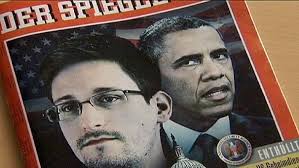
usspsyingThe U.S. National Security Agency has bugged the United Nations’ New York headquarters, Germany’s Der Spiegel weekly said on Sunday in a report on U.S. spying that could further strain relations between Washington and its allies.

Citing secret U.S. documents obtained by fugitive former intelligence contractor Edward Snowden, Der Spiegel said the files showed how the United States systematically spied on other states and institutions.

Der Spiegel said the European Union and the U.N.’s Vienna-based nuclear watchdog, the International Atomic Energy Agency (IAEA), were among those targeted by U.S. intelligence agents.

In the summer of 2012, NSA experts succeeded in getting into the U.N. video conferencing system and cracking its coding system, according one of the documents cited by Der Spiegel.

“The data traffic gives us internal video teleconferences of the United Nations (yay!),” Der Spiegel quoted one document as saying, adding that within three weeks the number of decoded communications rose to 458 from 12.

Internal files also show the NSA spied on the EU legation in New York after it moved to new rooms in autumn 2012. Among the documents copied by Snowden from NSA computers are plans of the EU mission, its IT infrastructure and servers.

According to the documents, the NSA runs a bugging program in more than 80 embassies and consulates worldwide called “Special Collection Service”. “The surveillance is intensive and well organized and has little or nothing to do with warding off terrorists,” wrote Der Spiegel.

OPEN LETTER

Snowden’s leaks have embarrassed the United States by exposing the global extent of its surveillance programs. Washington has said its spies operate within the law and that the leaks have damaged national security.

A week ago Britain, a staunch U.S. ally in the intelligence field, detained the partner of a Brazil-based journalist working for London’s Guardian newspaper who has led coverage of Snowden’s leaks. British police said documents seized from David Miranda were “highly sensitive” and could put lives at risk if disclosed.

The Guardian last week destroyed computer equipment containing Snowden files after it was threatened with possible legal action by senior British government advisers.

In an open letter to British Prime Minister David Cameron published on Sunday, editors of leading Nordic newspapers said Miranda’s detention and moves against the Guardian were “undermining the position of the free press throughout the world”.

“(We are) deeply concerned that a stout defender of democracy and free debate such as the United Kingdom uses anti-terror legislation in order to legalize what amounts to harassment of both the paper and individuals associated with it,” said the letter from Sweden’s Dagens Nyheter, Finland’s Helsingin Sanomat, Denmark’s Politiken and Norway’s Aftenposten.

Earlier this month, U.S. President Barack Obama announced plans to limit U.S. government surveillance programs, saying the United States could and should be more transparent.

The issue has also become a hot topic in Germany before an election next month. Some reports have suggested that German intelligence agents have cooperated with U.S. spies.

There could be a voter backlash if it emerges that Chancellor Angela Merkel, tipped to win a third term, knew more about such cooperation than she has so far acknowledged. – Reuters

Journalism under threat

Alan Rusbridger
Alan Rusbridger

By Alan Rusbridger
Guardian Editor

On Sunday morning David Miranda, the partner of Guardian columnist Glenn Greenwald, was detained as he was passing through Heathrow airport on his way back to Rio de Janeiro, where the couple live. Greenwald is the reporter who has broken most of the stories about state surveillance based on the leaks from the former NSA contractor Edward Snowden. Greenwald’s work has undoubtedly been troublesome and embarrassing for western governments. But, as the debate in America and Europe has shown, there is considerable public interest in what his stories have revealed about the right balance between security, civil liberties, freedom of speech and privacy. He has raised acutely disturbing questions about the oversight of intelligence; about the use of closed courts; about the cosy and secret relationship between government and vast corporations; and about the extent to which millions of citizens now routinely have their communications intercepted, collected, analysed and stored.

In this work he is regularly helped by David Miranda. Miranda is not a journalist, but he still plays a valuable role in helping his partner do his journalistic work. Greenwald has his plate full reading and analysing the Snowden material, writing, and handling media and social media requests from around the world. He can certainly use this back-up. That work is immensely complicated by the certainty that it would be highly unadvisable for Greenwald (or any other journalist) to regard any electronic means of communication as safe. The Guardian’s work on the Snowden story has involved many individuals taking a huge number of flights in order to have face-to-face meetings. Not good for the environment, but increasingly the only way to operate. Soon we will be back to pen and paper.

Miranda was held for nine hours under schedule 7 of the UK’s terror laws, which give enormous discretion to stop, search and question people who have no connection with “terror”, as ordinarily understood. Suspects have no right to legal representation and may have their property confiscated for up to seven days. Under this measure – uniquely crafted for ports and airport transit areas – there are none of the checks and balances that apply once someone is in Britain proper. There is no need to arrest or charge anyone and there is no protection for journalists or their material. A transit lounge in Heathrow is a dangerous place to be.

Miranda’s professional status – much hand-wringing about whether or not he’s a proper “journalist – is largely irrelevant in these circumstances. Increasingly, the question about who deserves protection should be less “is this a journalist?” than “is the publication of this material in the public interest?”

The detention of Miranda has rightly caused international dismay because it feeds into a perception that the US and UK governments – while claiming to welcome the debate around state surveillance started by Snowden – are also intent on stemming the tide of leaks and on pursuing the whistleblower with a vengeance. That perception is right. Here follows a little background on the considerable obstacles being placed in the way of informing the public about what the intelligence agencies, governments and corporations are up to.

A little over two months ago I was contacted by a very senior government official claiming to represent the views of the prime minister. There followed two meetings in which he demanded the return or destruction of all the material we were working on. The tone was steely, if cordial, but there was an implicit threat that others within government and Whitehall favoured a far more draconian approach.

The mood toughened just over a month ago, when I received a phone call from the centre of government telling me: “You’ve had your fun. Now we want the stuff back.” There followed further meetings with shadowy Whitehall figures. The demand was the same: hand the Snowden material back or destroy it. I explained that we could not research and report on this subject if we complied with this request. The man from Whitehall looked mystified. “You’ve had your debate. There’s no need to write any more.”

During one of these meetings I asked directly whether the government would move to close down the Guardian’s reporting through a legal route – by going to court to force the surrender of the material on which we were working. The official confirmed that, in the absence of handover or destruction, this was indeed the government’s intention. Prior restraint, near impossible in the US, was now explicitly and imminently on the table in the UK. But my experience over WikiLeaks – the thumb drive and the first amendment – had already prepared me for this moment. I explained to the man from Whitehall about the nature of international collaborations and the way in which, these days, media organisations could take advantage of the most permissive legal environments. Bluntly, we did not have to do our reporting from London. Already most of the NSA stories were being reported and edited out of New York. And had it occurred to him that Greenwald lived in Brazil?

The man was unmoved. And so one of the more bizarre moments in the Guardian’s long history occurred – with two GCHQ security experts overseeing the destruction of hard drives in the Guardian’s basement just to make sure there was nothing in the mangled bits of metal which could possibly be of any interest to passing Chinese agents. “We can call off the black helicopters,” joked one as we swept up the remains of a MacBook Pro.

Whitehall was satisfied, but it felt like a peculiarly pointless piece of symbolism that understood nothing about the digital age. We will continue to do patient, painstaking reporting on the Snowden documents, we just won’t do it in London. The seizure of Miranda’s laptop, phones, hard drives and camera will similarly have no effect on Greenwald’s work.

The state that is building such a formidable apparatus of surveillance will do its best to prevent journalists from reporting on it. Most journalists can see that. But I wonder how many have truly understood the absolute threat to journalism implicit in the idea of total surveillance, when or if it comes – and, increasingly, it looks like “when”.

We are not there yet, but it may not be long before it will be impossible for journalists to have confidential sources. Most reporting – indeed, most human life in 2013 – leaves too much of a digital fingerprint. Those colleagues who denigrate Snowden or say reporters should trust the state to know best (many of them in the UK, oddly, on the right) may one day have a cruel awakening. One day it will be their reporting, their cause, under attack. But at least reporters now know to stay away from Heathrow transit lounges.

‘Ed Snowden is Jason Bourne’

Jason Bourne
Jason Bourne

A deep distrust of government has led young Americans to hold up NSA leaker Edward Snowden as a hero, Sen. John McCain said Sunday.

“There’s a young generation who believes he’s some kind of Jason Bourne,” the Arizona Republican said during on “Fox News Sunday,” referring to the lead character in the Bourne movie trilogy who battled his own government, particularly the CIA.

Mr. Snowden’s revelations — including details of the National Security Agency’s data-collection efforts — have led to a debate on the national security vs. privacy question, and how to balance the two.

President Obama last week laid out a series of proposed reforms to government spying programs in an effort to reassure Americans that their Fourth Amendment rights aren’t being trampled. His proposals include having a privacy advocate argue against the federal government in court, more restrictions on the mass collection of phone records and other steps.

Mr. McCain, a widely respected figure on national security and his party’s 2008 presidential nominee, said the White House’s recommendations could be beneficial.

But there’s a deeper problem that must be addressed, he said.

“Right now there’s kind of a generational change. Young Americans do not trust this government,” Mr. McCain said. “Without trusting government you can’t do a lot of things.”

Mr. Snowden now has been granted asylum in Russia in another blow to relations between the U.S. and its old Cold War foe. – Washington Times


Poll: More worried about privacy than terrorism

x-keyscoreOn Wednesday, the Obama administration released several newly declassified intelligence documents in a damage control attempt over the growing NSA snooping scandal. On the same day, the Guardian reported on the NSA tool XKeyscore, which can track everything people do online, including emails, Facebook activity, online chats and browser histories. The White House just can’t keep ahead of the bad news.

The administration maintains that these programs are necessary for the fight against terrorism, but the American people are not convinced. A new survey released by the Pew Research Center for the People and the Press finds that 56% of Americans believe that “federal courts fail to provide adequate limits on the telephone and internet data the government is collecting as part of its anti-terrorism efforts.” And for the first time in the 10 year history of this poll, more people (47%) say the government has gone too far in restricting civil liberties than those who say it has not gone far enough to protect the country (35%).

This decisive change in attitude crosses the political spectrum. Republicans, Democrats and Independents have all seen double-digit shifts towards concern for liberty over security between October 2010 and July 2013. The shift is most pronounced among Tea Party members; in 2010 only a fifth of them believed the government had gone too far in restricting liberties, while 63% believed it should do more. In the new survey, the number of Tea Partiers concerned with government intrusion jumped to 55%, while those saying the state should keep ramping things up dropped more than half. The only group that showed no significant change in attitude was moderate to conservative Democrats, though the more interesting question is how the Pew Center located any members of this nearly extinct species.

The shift in attitude reflects a change in awareness. In 2010 few Americans knew the extent to which the government was logging the details of their daily lives. Proponents of widespread surveillance and data collection say that these methods keep Americans safer, and in some respects they do. But at some point the issue becomes how much intrusion on privacy is warranted for marginally decreasing increments of safety. No doubt the government could keep everyone safe from almost all terrorism, crime and other evils simply by monitoring everything, all the time, and flooding the country with special agents and block wardens. However, privacy has to count for something, and besides, all the sophisticated technology at the government’s disposal did not stop the Boston Marathon bombings. The best, most advanced counter-terrorism tools in the world can still fail in the hands of fallible people.

Competence is one matter, trust is another. The trade-off between safety and liberty involves a critical third variable, whether the government can be relied upon not to misuse these powerful, intrusive tools. The Pew survey found overwhelming concern that the government is abusing the public trust when it comes to snooping; seventy percent of Americans believe that the Federal government is using the data it collects for purposes other than fighting terrorism.

The White House sloughs off such concerns by saying “trust us,” but the American people simply don’t, and have good reason not to. As the snowballing IRS scandal shows, the administration is not above using official information for political purposes. Massive government databases make unprecedented amounts of information easily accessible, making them ripe for exploitation. The Obamacare “Data Hub” is another example of Federal overreach, which will contain comprehensive health and financial information just about everybody, with few safeguards and a high probability of being misused. It will be an irresistible gold mine for faceless government functionaries with rapidly diminishing ethical standards. Not to mention criminals, blackmailers, and opposition researchers with insider connections.

It will take more than the selective declassification of a few self-serving documents for the White House to regain the people’s trust. And the odds are that the American people still don’t know the worst of it. – rare.us

James S. Robbins, Deputy Editor at Rare, is a former professor at National Defense University who specialized in counter-terrorism.

British far-right clash with police over surveillance

EDL wants surveillance...
EDL wants surveillance…

Protesters have been injured and a police officer hospitalised with concussion after police and far-right demonstrators clashed at an English Defence League (EDL) rally in Birmingham.

Hundreds of EDL supporters gathered in the city’s Centenary Square on Saturday, with Unite Against Fascism members forming a counter-protest in nearby Chamberlain Square.

Soon after EDL leader Tommy Robinson began his speech to the crowd, protesters started tussling with police, with some pulling down fences around a new University of Birmingham construction site and hurling smashed cobble-stones and bottles at officers.

Several protesters were seen with blood pouring from their heads after police equipped with riot gear and armed with batons confronted the crowd.

“Police injured, Broad St bar doors smashed, building site materials thrown at police, shops closed, work lost. Another peaceful EDL protest,” tweeted Birmingham Labour MP Ian Austin.

West Midlands Police said that four arrests had been made and that 1,000 extra officers had been drafted in before the demonstration to help cope with any disorder.

The EDL said they were marching for the reintroduction of CCTV cameras in the Washwood Heath and Sparkbrook areas of the city. The cameras were originally installed as a counter-terrorism measure, but removed in 2011. – ibtimes.com


Obama administration drowning in lawsuits filed over NSA spying

Not Juju's organisation...
Not Juju’s organisation…

Attorneys for the Electronic Frontier Foundation (EFF, not to be confused with Julius Malema’s Economic Freedom Fighters) have sued the Obama administration and are demanding the White House stop the dragnet surveillance programs operated by the National Security Agency.

Both the White House and Congress have weighed in on the case of Edward Snowden and the revelations he’s made by leaking National Security Agency documents. Now the courts are having their turn to opine, and with opportunities aplenty.

Day by day, new lawsuits waged against the United States government are being filed in federal court, and with the same regularity President Barack Obama and the preceding administration are being charged with vast constitutional violations alleged to have occurred through the NSA spy programs exposed by Mr. Snowden.

The recent disclosures made by Snowden have generated commotion in Congress and the White House alike. The Department of Justice has asked for the 30-year-old former Booz Allen Hamilton worker to be extradited to the US to face charges of espionage, and members of both the House and Senate have already held their share of emergency hearings in the wake of Snowden’s series of disclosures detailing the vast surveillance programs waged by the US in utmost secrecy. But with the executive and legislative branches left worrying about how to handle the source of the leaks — and if the policies publicized should have existed in the first place — the courts could soon settle some disputes that stand to shape the way the US conducts surveillance of its own citizens.

Both longstanding arguments and just-filed claims have garnered the attention of the judicial branch in the weeks since the Guardian newspaper first began publishing leaked NSA documents attributed to Snowden on June 6. But while the courts have relied previously on stalling or stifling cases that challenge Uncle Sam’s spy efforts, civil liberties experts say the time may be near for some highly anticipated arguments to finally be heard. Now on the heels of lawsuits filed by the likes of the American Civil Liberties Union and the Electronic Privacy Information Center, groups are coming out of the woodwork to wage a legal battle against the White House.

The most recent example came this week when a coalition of various organizations filed suit together against the Obama administration by challenging “an illegal and unconstitutional program of dragnet electronic surveillance, specifically the bulk acquisition, collection, storage, retention and searching of telephone communications information.” Represented by attorneys from the EFF and others, the plaintiffs in the latest case filed Tuesday in San Francisco federal court include an array of groups, such as: First Unitarian Church of Los Angeles; Bill of Rights Defense Committee; Calguns Foundation; California Association of Federal Firearms Licensees; Council on Islamic Relations; Franklin Armory; Free Press; Free Software Foundation; Greenpeace; Human Rights Watch; Media Alliance; National Organization for the Reform of Marijuana Laws; Open Technology Institute; People for the American Way, Public Knowledge; Students for Sensible Drug Policy; TechFreedom; and Unitarian Universalist Service Committee.

Cindy Cohn, the legal director of the EFF, told the Washington Post that the NSA leaks credited to Snowden have been a “tremendous boon” to the plaintiffs in recently filed court cases challenging the surveillance state. The courts are currently pondering at least five important cases, Cohn told the Post, which could for once and for all bring some other issues up for discussion.

Since June 6, the American Civil Liberties Union, a Verizon Wireless customer and the founder of conservative group Judicial Watch have all filed federal lawsuits against the government’s collection of telephony metadata, a practice that puts basic call records into the government’s hands without a specific warrant ever required and reported to the media by Mr. Snowden. Larry Klayman of Judicial Watch has also sued over another revelation made by Snowden — the PRISM Internet eavesdropping program — and the Electronic Privacy Information Center, or EPIC, has asked the Supreme Court to vacate the order compelling Verizon Business Network Services to send metadata to the feds.

Perhaps most important, however, is a California federal court’s recent decision to shutdown the government’s request to stop the case of Jewel vs. NSA from proceeding. That debate first began in 2008 when Jewel, a former AT&T customer, challenged the government’s “illegal and unconstitutional program of dragnet communications surveillance” as exposed by a whistleblower at the telecom company. That case has seen roadblock after roadblock during the last five years, but all that changed earlier this month. The government long argued that Jewel v. NSA can’t go up for discussion because the issues at hand are privileged as ‘state secrets’ and can’t be brought into the public realm.

“[T]he disclosure of sensitive intelligence sources and methods . . . reasonably could be expected to cause exceptionally grave harm to national security,” the government wrote in one earlier filing. “The very purpose of these cases is to put at issue whether the NSA undertook certain alleged activities under presidential authorization after 9/11, and whether those activities continue today. At every stage, from standing to the merits, highly classified and properly privileged intelligence sources and methods are at risk of disclosure. The law is clear, however, that where litigation risks or requires the disclosure of information that reasonably could be expected to harm national security, dismissal is required.”

Following Snowden’s recent disclosures, though, Judge Jeffrey White of the Northern District of California ruled on July 8 that there’s a way for those cases to still be heard.

“The court rightly found that the traditional legal system can determine the legality of the mass, dragnet surveillance of innocent Americans and rejected the government’s invocation of the state secrets privilege to have the case dismissed,” the EFF’s Cohn, who is working on the case, said in a statement issued at the time of the ruling. “Over the last month, we came face-to-face with new details of mass, untargeted collection of phone and Internet records, substantially confirmed by the Director of National Intelligence. Today’s decision sets the stage for finally getting a ruling that can stop the dragnet surveillance and restore Americans’ constitutional rights.”

Weighing in weeks later to the Post, Cohn said that outcome could have more of an impact than many might imagine. “It’s tremendous, because anything that allows these cases to proceed is important,” she said.

Speaking to the New York Times this week, American Civil Liberties Union attorney Jameel Jaffer said that until now the government has operated a “shell game” to shield it’s surveillance programs from litigation. “[T]he statute has been shielded from judicial review, and controversial and far-reaching surveillance authorities have been placed beyond the reach of the Constitution,” he said.

Should Cohn’s prediction come true, though, the courts could decide to weigh in and reshape the way the government currently conducts surveillance.

According to University of Pittsburgh law professor Jules Lobel, a victory there could come in more than one way. “There is a broader function to these lawsuits than simply winning in court,” he told the Post. “The government has to respond, and forcing them to go before a court might make them want to change aspects of the programs.”

“The government does things to avoid embarrassment,’’ he added, “and lawsuits are a key pressure point.’’

Interviews to the Post and the Times come just days after Sen. Ron Wyden (D-Oregon), a long-time member of the Senate Intelligence Committee, said he thought the revelations made by Snowden may influence the White House to reconsider their surveillance practices before the courts can even have their chance.

“I have a feeling that the administration is getting concerned about the bulk phone records collection, and that they are thinking about whether to move administratively to stop it,” Sen. Wyden told the Times.

“I think we are making a comeback,” he said. – RT

NSA is more than just a spy network, it’s global fascism

by Patrick Henningsen

Despite the size and scope of Edward Snowden’s NSA whistleblowing, there’s little sign of Washington DC changing its practices, and even less of an indication that any of its European allies will actually hold it to account.

Germany Flip-Flops

Germany’s change of direction on this issue reveals a lot about the scale of the problem. Angela Merkel’s initial public response seemed to be that of outrage. “We are no longer in the cold war,” said Angela Merkel’s spokesman, Steffen Seibert. “If it is confirmed that diplomatic representations of the European Union and individual European countries have been spied upon, we will clearly say that bugging friends is unacceptable”(Guardian July 1, 2013).

Merkel’s public façade didn’t hold up for long after Snowden revealed in Der Spiegel magazine only days later that the US and Germany were in fact partnering in the global spy network. “They are in bed with the Germans, just like with most other Western states”, the German magazine quotes Snowden as saying, adding that the NSA has a Foreign Affairs Directorate which is responsible for cooperation with other countries (RT July 8, 2013). The Der Spiegel report also indicated how German Federal Intelligence Service, the Bundesnachrichtendienst (BND) and NSA work together.

The embarrassment of this Snowden bombshell seemed to force Germany down a notch, with Merkel opting for a new policy of appeasement instead. So was the initial rift between the US and Germany mere political theatre?

Merkel told Die Zeit that there was “a need to discuss the balance between privacy and security, but protection against terrorism was not possible without the option of electronic surveillance”. She then added, “(I want) the necessary discussions with the United States to be conducted in the spirit which, despite the many justified questions, never forgets that America has been our most loyal ally over the decades and still is” (Reuters July 10, 2013).

But it’s Merkel’s last statement which indicates that she may be just as out of touch with public opinion as the culture of denial which still dominates Washington DC. “For me, there is no comparison at all between the state security (Stasi) of the GDR and the work of intelligence services in democratic states,”Merkel told Die Zeit (Reuters July 10, 2013). Incredible.

No real accountability

Putting the overall theme of government abuse of power into perspective, this week provided a solid example of what should happen in an advanced civilized democracy. Luxembourg’s long-serving Prime Minister Jean-Claude Juncker announced his resignation this week over a spying scandal involving illegal phone-taps, alongside a number other highly corrupt activities.

In normal times, what happened in Luxembourg should also happen in other countries like the US, or Great Britain – but these are far from normal times. What passes for normal in this bizarre epoch is anyone’s guess, and the same goes for what is deemed to be ‘legal’, especially in the United States.

Snowden’s revelations should have been a watershed moment, but instead in 2013, there appears to be no parliamentary controls to regulate the practice of warrantless digital surveillance and data theft on the part of government agencies, and even less chance of justice in the courts, where adjudicators have been rendered impotent to enforce the law which have been buried under an avalanche of emergency war-time edicts and executive orders.

Well before the Snowden affair this year, Germany effectively cleared the legal path for one of the corporations within the NSA collective. Through the use of administrative courts and the EU, the Administrative Court of Schleswig, Germany upheld two decisions on February 14th, 2013 which ruled that German data protection laws do not apply to data processing by Facebook (file numbers 8 B 60/12 and 8 B 61/1).These controversial judicial procedure were initiated by Facebook Inc. (USA) and by Facebook Ltd. (Ireland, EU), and reversed a previous order by the Independent State Center for Data Protection of Schleswig-Holstein (ULD) which had ruled to allow users to sign in on Facebook using a pseudonym and to unblock those user-accounts that had been blocked due to the users not using their real name and personal data. At the time this was seen as a victory for Facebook the corporation – when in fact it was really a victory for the NSA – who harvests its data from Facebook.

NSA and GCHQ: A Joint Venture

Based on these latest Snowden leaks, we’ve learned more about the true nature of America’s NSA and Britain’s GCHQ partnership in this international spy network, sharing their data and communications. Through the UK Government’s Communications Headquarters known as TEMPORA, the British agency is able to tap over 200 fiber optic cables landing in the UK, saving everything – up to 27 petabytes a day, which are then parsed out to 300 GCHQ analysts and 250 NSA colleagues who then sift through it.

Over a decade of Patriot Acts, FISA laws and Wikileaks cables has left Americans and Europeans alike in a precarious state akin to Stockholm Syndrome, where their love of digital communications almost trumps their concerns for privacy. This same ambiguity has been echoed by Obama and Merkel, who both claim that protection against terrorism is not possible without the option of electronic surveillance. But the narrative which was originally framed around Washington’s invasion of its citizens’ privacy has since gone international. It’s now about governments partnering with each other – and with corporations, in the largest global digital dragnet imaginable.

The extent of the US National Security Agency (NSA) overseas spying in Europe has stunned the European public for sure, and appears to have rattled the political classes in Germany and Brussels – but only for now.

According to Edward Snowden’s revelations in the German magazine Der Spiegel last week, the NSA snoops through approximately 20-60 million German phone connections, and 10 million internet data sets a day. According to the Snowden report, all in all, the NSA combs through around half a billion German phone calls, emails and text messages on a monthly basis.

To add insult to injury, it’s been said the US intelligence regards Germany as a “third class partner”, on par with the likes of China and Iraq, making them fair game for NSA targeting. It’s not just Berlin, as the NSA are also said to have bugged EU diplomatic offices and gained access to EU internal computer networks.

So where is the crisis of international diplomacy between the US and Europe? Under normal circumstances, this might morph into a major diplomatic crisis pitting the EU members on one side and the US on the other – but alas, these are not really normal times. Germany and the EU came out swinging, well, sort of.

President of the European Parliament, Martin Schulz hit out immediately stating:

“If the allegations prove to be true, it would be an extremely serious matter which will have a severe impact on EU-US relations”.

Brussels immediately passed a non-binding resolution, which said that unless the US provided full disclosure about its email and communications data, then two EU-US transatlantic information-sharing deals could be revoked. Those deals are the Terrorist Finance Tracking Program (TFTP) and Passenger Name Records (PNR). Both were rammed through the EU Parliament during the aftermath of the September 11, 2001 attacks. It seemed like the right thing to do at the time. It gives the US Treasury carte blanche on all European stored data on international financial transfers, and gives US Homeland Security carte blanche on all passenger check-ins and ticket bookings on flights.

Few believe that the EU will actually make good on their threats, seeing the initial reaction as a mere face-saving exercise, leading to no real action by MEPs in Brussels.

Global Data Industry: A Digital Cartel

The corporate aspect should not be underrated in terms of its central role in the international digital data trade. Edward Snowden’s PRISM revelations of government controlled NSA wiretapping and data theft are nothing new, as former CIA analyst Russell Tice prove almost a decade ago in 2005 by showing that the NSA were engaged in unlawful and unconstitutional wiretaps on American citizens. But the NSA cannot operate without the partnership of these companies – all of whom have offices and operational hubs in most foreign markets.

Herein resides the key aspect in all of this – that in order for agencies like the NSA and GCHQ to get easy access to all of our digital communications and data, they still need the cooperation of corporations to do it. In the US, it’s now known what role major ISPs and mobile carriers like Verizon and AT&T play in this equation within US borders, including the existence of NSA-controlled SG3 collection rooms embedded within the companies facilities. Shocking enough, but not nearly as shocking if you consider the role of transnational corporations in enabling the NSA access to your digital threads.

Internationally, citizens have already signed over most of their privacy simply by using the digital services of US multinationals like Google, Facebook, Apple, Microsoft, Skype, Yahoo and others. All of these corporation operate within a ‘profit-first’ ethical vacuum where, in many cases, they are actually charging the NSA for the privilege of consuming their customers’ communications and data. According to the recent Snowden leaks, the level of collusion between Microsoft Corp and the NSA is astonishing, where Microsoft allows the NSA to skirt encryption protocols on Outlook, Skype video and cloud services, and where data captured by the NSA is routinely passed on to both the FBI and the CIA (Guardian July 12, 2013).

The horrible irony here is too obvious to ignore: the US government, through its NSA, is giving away taxpayer dollars so these corporations can profit from handing over all of your personal communications and data.

Such an unholy alliance between partnering governments and transnational corporations could be defined as fascism, but the global nature of this operation might require a new term to define what means as a global phenomenon.

Amidst the international Snowden media circus, it’s important not to forget that what has enabled agencies like the NSA and GCHQ to act with impunity, is the fact that both these governments have excelled in capitalising on a post-September 11th paranoia that has hijacked the national consciousness in both the US and the UK. The entire basis upon which their relentless war-time remit has been erected can be described in three words: “War on Terror”.

henningsen_patrickIt’s already clear to the global citizenry that the US federal government and its NSA are out of control, and should be reined in as soon as possible in order to preserve any remaining moral standing for a country which has exhausted nearly all of its goodwill internationally – as well as domestically.

Judging by Washington’s stoic and unapologetic stance thus far, goodwill doesn’t seem to be a high priority yet. Until the problem is properly addressed, there will remain a gaping hole of moral leadership in the international community.

What political leaders are slow the realize is that when the goodwill has been exhausted, so has the trust, and that’s a very slippery slope indeed.

Patrick Henningsen is a writer, investigative journalist, and filmmaker and founder of the news website 21stCentury Wire.com.

This piece originally appeared on RT.com

Obama orders fed workers to spy on each other

wethepeopleIn an initiative aimed at rooting out future leakers and other security violators, President Barack Obama has ordered federal employees to report suspicious actions of their colleagues based on behavioral profiling techniques that are not scientifically proven to work, according to experts and government documents.

The techniques are a key pillar of the Insider Threat Program, an unprecedented government-wide crackdown under which millions of federal bureaucrats and contractors must watch out for “high-risk persons or behaviors” among co-workers. Those who fail to report them could face penalties, including criminal charges.

Obama mandated the program in an October 2011 executive order after Army Pfc. Bradley Manning downloaded hundreds of thousands of documents from a classified computer network and gave them to WikiLeaks, the anti-government secrecy group. The order covers virtually every federal department and agency, including the Peace Corps, the Department of Education and others not directly involved in national security.

Under the program, which is being implemented with little public attention, security investigations can be launched when government employees showing “indicators of insider threat behavior” are reported by co-workers, according to previously undisclosed administration documents obtained by McClatchy. Investigations also can be triggered when “suspicious user behavior” is detected by computer network monitoring and reported to “insider threat personnel.”

Federal employees and contractors are asked to pay particular attention to the lifestyles, attitudes and behaviors – like financial troubles, odd working hours or unexplained travel – of co-workers as a way to predict whether they might do “harm to the United States.” Managers of special insider threat offices will have “regular, timely, and, if possible, electronic, access” to employees’ personnel, payroll, disciplinary and “personal contact” files, as well as records of their use of classified and unclassified computer networks, polygraph results, travel reports and financial disclosure forms.

Over the years, numerous studies of public and private workers who’ve been caught spying, leaking classified information, stealing corporate secrets or engaging in sabotage have identified psychological profiles that could offer clues to possible threats. Administration officials want government workers trained to look for such indicators and report them so the next violation can be stopped before it happens.

“In past espionage cases, we find people saw things that may have helped identify a spy, but never reported it,” said Gene Barlow, a spokesman for the Office of the National Counterintelligence Executive, which oversees government efforts to detect threats like spies and computer hackers and is helping implement the Insider Threat Program. “That is why the awareness effort of the program is to teach people not only what types of activity to report, but how to report it and why it is so important to report it.”

But even the government’s top scientific advisers have questioned these techniques. Those experts say that trying to predict future acts through behavioral monitoring is unproven and could result in illegal ethnic and racial profiling and privacy violations.

“There is no consensus in the relevant scientific community nor on the committee regarding whether any behavioral surveillance or physiological monitoring techniques are ready for use at all,” concluded a 2008 National Research Council report on detecting terrorists.

“Doing something similar about predicting future leakers seems even more speculative,” Stephen Fienberg, a professor of statistics and social science at Carnegie Mellon University in Pittsburgh and a member of the committee that wrote the report, told McClatchy.

The emphasis on individual lifestyles, attitudes and behaviors comes at a time when growing numbers of Americans must submit to extensive background checks, polygraph tests and security investigations to be hired or to keep government or federal contracting jobs. The U.S. government is one of the world’s largest employers, overseeing an ever-expanding ocean of information.

While the Insider Threat Program mandates that the nearly 5 million federal workers and contractors with clearances undergo training in recognizing suspicious behavior indicators, it allows individual departments and agencies to extend the requirement to their entire workforces, something the Army already has done.

Training should address “current and potential threats in the work and personal environment” and focus on “the importance of detecting potential insider threats by cleared employees and reporting suspected activity to insider threat personnel and other designated officials,” says one of the documents obtained by McClatchy.

The White House, the Justice Department, the Peace Corps and the departments of Health and Human Services, Homeland Security and Education refused to answer questions about the program’s implementation. Instead, they issued virtually identical email statements directing inquiries to the Office of the Director of National Intelligence, declined to comment or didn’t respond.

Caitlin Hayden, a spokeswoman for the White House National Security Council, said in her statement that the Insider Threat Program includes extra safeguards for “civil rights, civil liberties and privacy,” but she didn’t elaborate. Manning’s leaks to WikiLeaks, she added, showed that at the time protections of classified materials were “inadequate and put our nation’s security at risk.”

Reply from the National Security Council

Even so, the new effort failed to prevent former National Security Agency contractor Edward Snowden from taking top-secret documents detailing the agency’s domestic and international communications monitoring programs and leaking them to The Guardian and The Washington Post newspapers.

The initiative goes beyond classified information leaks. It includes as insider threats “damage to the United States through espionage, terrorism, unauthorized disclosure of national security information or through the loss or degradation of departmental resources or capabilities,” according to a document setting “Minimum Standards for Executive Branch Insider Threat Programs.”

McClatchy obtained a copy of the document, which was produced by an Insider Threat Task Force that was set up under Obama’s order and is headed by Director of National Intelligence James Clapper and Attorney General Eric Holder. McClatchy also obtained the group’s final policy guidance. The White House, the Justice Department and the Office of the Director of National Intelligence declined requests for both documents, neither of which is classified.

Although agencies and departments are still setting up their programs, some employees already are being urged to watch co-workers for “indicators” that include stress, divorce and financial problems.

When asked about the ineffectiveness of behavior profiling, Barlow said the policy “does not mandate” that employees report behavior indicators.

“It simply educates employees about basic activities or behavior that might suggest a person is up to improper activity,” he said.

“These do not require special talents. If you see someone reading classified documents they should not be reading, especially if this happens multiple times and the person appears nervous that you saw him, that is activity that is suspicious and should be reported,” Barlow said. “The insider threat team then looks at the surrounding facts and draws the conclusions about the activity.”

Departments and agencies, however, are given leeway to go beyond the White House’s basic requirements, prompting the Defense Department in its strategy to mandate that workers with clearances “must recognize the potential harm caused by unauthorized disclosures and be aware of the penalties they could face.” It equates unauthorized disclosures of classified information to “aiding the enemies of the United States.”

All departments and agencies involved in the program must closely track their employees’ online activities. The information gathered by monitoring, the administration documents say, “could be used against them in criminal, security, or administrative proceedings.” Experts who research such efforts say suspicious behaviors include accessing information that someone doesn’t need or isn’t authorized to see or downloading materials onto removable storage devices like thumb drives when such devices are restricted or prohibited.

“If you normally print 20 documents a week, well, what happens if the next week or the following week you have to print 50 documents or 100 documents? That could be at variance from your normal activity that could be identified and might be investigated,” said Randy Trzeciak, acting manager of the Computer Emergency Response Team Insider Threat Center at Carnegie Mellon University’s Software Engineering Institute.

“We’ve come up with patterns that we believe organizations might be able to consider when determining when someone might be progressing down the path to harm the organization,” said Trzeciak, whose organization has analyzed more than 800 cases and works with the government and private sector on cyber security.

But research and other programs that rely on profiling show it remains unproven, could make employees more resistant to reporting violations and might lead to spurious allegations.

The Pentagon, U.S. intelligence agencies and the Department of Homeland Security have spent tens of millions of dollars on an array of research projects. Yet after several decades, they still haven’t developed a list of behaviors they can use to definitively identify the tiny fraction of workers who might some day violate national security laws.

“We are back to the needle-in-a-haystack problem,” said Fienberg, the Carnegie Mellon professor.

“We have not found any silver bullets,” said Deana Caputo, the lead behavioral scientist at MITRE Corp., a nonprofit company working on insider threat efforts for U.S. defense, intelligence and law enforcement agencies. “We don’t have actually any really good profiles or pictures of a bad guy, a good guy gone bad or even the bad guy walking in to do bad things from the very beginning.”

Different agencies and departments have different lists of behavior indicators. Most have adopted the traditional red flags for espionage. They include financial stress, disregard for security practices, unexplained foreign travel, unusual work hours and unexplained or sudden wealth.

But agencies and their consultants have added their own indicators.

For instance, an FBI insider threat detection guide warns private security personnel and managers to watch for “a desire to help the ‘underdog’ or a particular cause,” a “James Bond Wannabe” and a “divided loyalty: allegiance to another person or company or to a country besides the United States.”

A report by the Deloitte consulting firm identifies “several key trends that are making all organizations particularly susceptible to insider threat today.” These trends include an increasingly disgruntled, post-Great Recession workforce and the entry of younger, “Gen Y” employees who were “raised on the Internet” and are “highly involved in social networking.”

Report from Deloitte

Some government programs that have embraced behavioral indicators have been condemned as failures. Perhaps the most heavily criticized is the Transportation Security Administration’s Screening of Passengers by Observation Techniques, or SPOT, program.

The program, which has cost $878 million and employs 2,800 people, uses “behavior detection officers” to identify potential terrorists by scrutinizing airline passengers for signs of “stress, fear or deception.”

DHS’ inspector general excoriated the program, saying in a May 2013 report, “TSA cannot ensure that passengers at United States airports are screened objectively, show that the program is cost-effective or reasonably justify the program’s expansion.”

Interviews and internal complaints obtained by The New York Times quoted TSA officers as saying SPOT has led to ethnic and racial profiling by emphasizing certain profiles. They include Middle Easterners, Hispanics traveling to Miami and African-Americans wearing baseball caps backward.

Another problem with having employees report co-workers’ suspicious behaviors: They aren’t sure which ones represent security threats.

“Employees in the field are not averse to reporting genuine security infractions. In fact, under appropriate conditions they are quite willing to act as eyes and ears for the government,” said a 2005 study by the Pentagon’s Defense Personnel Security Research Center. “They are simply confused about precisely what is important enough to report. Many government workers anguish over reporting gray-area behaviors.”

Even so, the Pentagon is forging ahead with training Defense Department and contractor managers and security officials to set up insider threat offices, with one company emphasizing how its course is designed for novices.

“The Establishing an Insider Threat Program for Your Organization Course will take no more than 90 minutes to complete,” says the proposal.

Officials with the Army, the only government department contacted by McClatchy that agreed to discuss the issue, acknowledged that identifying potential insider threats is more complicated than relying on a list of behaviors.

Response from the Army

“What we really point out is if you’re in doubt, report, because that’s what the investigative personnel are there to do, is to get the bottom of ‘is this just noise or is this something that is really going on?’” said Larry Gillis, a senior Army counterintelligence and security official.

The Army implemented a tough program a year before Obama’s executive order after Maj. Nidal Hasan, a U.S.-born Muslim, allegedly killed 13 people in a 2009 rampage at Fort Hood, Texas. Hasan, who has not gone on trial, has said he was defending the Afghan Taliban.

Gillis said the Army didn’t want a program that would “get people to snitch on each other,” nor did it want to encourage stereotyping.

“We don’t have the luxury to make up reasons to throw soldiers out,” Gillis said. “It’s a big deal to remove a soldier from service over some minor issue. We don’t want to ruin a career over some false accusation.”

But some current and former U.S. officials and experts worry that Obama’s Insider Threat Program could lead to false or retaliatory accusations across the entire government, in part because security officials are granted access to information outside their usual purview.

These current and former U.S. officials and experts also ridiculed as overly zealous and simplistic the idea of using reports of suspicious behavior to predict potential insider threats. It takes years for professional spy-hunters to learn their craft, and relying on the observations of inexperienced people could lead to baseless and discriminatory investigations, they said.

“Anyone is an amateur looking at behavior here,” said Thomas Fingar, a former State Department intelligence chief who chaired the National Intelligence Council, which prepares top-secret intelligence analyses for the president, from 2005 to 2008.

Co-workers, Fingar said, should “be attentive” to colleagues’ personal problems in order to refer them to counseling, not to report them as potential security violators. “It’s simply because they are colleagues, fellow human beings,” he said.

Eric Feldman, a former inspector general of the National Reconnaissance Office, the super-secret agency that oversees U.S. spy satellites, expressed concern that relying on workers to report colleagues’ suspicious behaviors to security officials could create “a repressive kind of culture.”

“The answer to it is not to have a Stasi-like response,” said Feldman, referring to the feared secret police of communist East Germany. “You’ve removed that firewall between employees seeking help and the threat that any employee who seeks help could be immediately retaliated against by this insider threat office.” – McClatchy Washington Bureau

Read more here: http://www.mcclatchydc.com/2013/07/09/196211/linchpin-for-obamas-plan-to-predict.html#storylink=cpy


Germany prepares charges against US and British intelligence

spyinggermanyGermany is preparing to bring charges against US and British intelligence amid fresh allegations that the services spied far more extensively than thought on German phone and internet traffic and bugged European Union offices in America.

A report alleging a major and continuous US National Security Agency spying operation in Germany was published by Der Spiegel magazine yesterday, prompting outrage from Berlin MPs still reeling from reports about extensive British surveillance in their country.

The German Justice Minister, Sabine Leutheusser-Schnarrenburger, demanded an immediate explanation and said the behaviour of the intelligence services was “reminiscent of the actions against enemies during the Cold War”. “It defies belief that our friends in the US see the Europeans as their enemies,” she said.

The leak, which Der Spiegel said came from fugitive ex-CIA analyst Edward Snowden, claimed that the NSA tapped into half a billion German phone calls, emails and SMS messages each month. Reports last week revealed extensive tapping of German phone and internet traffic by British intelligence under its so-called Tempora programme. The information was said to be shared with the NSA.

A spokesman for the Federal Prosecutor said the office was preparing to bring charges against “persons unknown” in relation to the reports.

There was also widespread and mounting anger at official European Union level yesterday following disclosures that the NSA had spied on EU computer networks at its offices in New York and Washington and that it had also bugged the premises. Martin Schulz, head of the European Parliament, demanded “full clarification” from the US and said that if the disclosures proved true they would have a severe impact on US-EU ties.

It also emerged that the UK Government had invited German MPs and justice officials to attend a video conference at British Embassy in Berlin today during which the issue of spying would be addressed.

Der Spiegel said the NSA’s German phone and internet surveillance operation was the biggest in the EU. On 7 January 2013 it tapped into some 60 million German phone calls in a single day.

The magazine said that Canada, Australia, Britain and New Zealand were exempt from NSA surveillance but Germany was regarded as a country open for “spy attacks”. – Belfast Telegraph

Global surveillance: Where is the outrage?

temporaThe British-American surveillance program Tempora marks a historic turning point. Unnoticed by the public, intelligence agencies have pursued total surveillance. Governments have deliberately concealed from the public the extent to which we are being watched.

The term, “information superhighway” has always been insufficient to describe the Internet. In reality, the Web is a global communication space containing the private information of a large part of the population of every developed country. If someone were able to train an all-seeing eye onto the Internet, the blackmail potential would be almost limitless.

It is precisely this all-seeing eye that the British intelligence agency Government Communications Headquarters (GCHQ) and the American National Security Agency (NSA) have developed under the name Tempora. An appropriate real-world metaphor for the program might be something like this: In every room of every house and every apartment, cameras and microphones are installed, every letter is opened and copied, every telephone tapped. Everything that happens is recorded and can be accessed as needed.

It sounds preposterous, but it is frighteningly close to the reality that was unveiled by the Guardian on Friday. Together, the GCHQ and NSA monitor Internet traffic by tapping directly into the data stream sent through fiber-optic cables. They are able to copy and cache this data, to be sifted through later as needed.

Those behind this disgraceful program have not even bothered to deny what they are up to. The British spy agency has said it will not be commenting on the program — but said that whatever they do is in the service of the fight against terrorism and subject to strict legal controls. The NSA has been making this same argument since the Prism program was unveiled earlier this month. What we’re doing, they say, is for a good cause. It’s all regulated, and we’re only looking at the information collected when we deem it necessary.

But that’s all just pretence.

Would the public agree to the total video surveillance of their private living space because it could possibly also help in the pursuit of terrorists? Would we be satisfied with the fact that we would only be observed if some unnamed intelligence analyst considered it necessary? Of course not. A government proposing such a program would be forced out of office — and rightly so.

Where is the Outrage?

It therefore seems odd that the reactions in the Anglo-Saxon world have been so restrained. Sure, the Guardian, as well as the Washington Post, have reported in detail about the programs. Yet in the political sphere, it was mainly a few German politicians voicing their outrage.

And for good reason. The fact that the Americans and the British — it is yet to be revealed who else participated — have granted themselves this enormous power, without ever informing their own people, is a scandal of historic proportions. To the initiated, all the recent public debate about data retention, Internet privacy and the practices of Facebook and Google must have been downright amusing. The state, as it turns out, knew everything all along.

That was precisely the goal, according to the head of the NSA, Lieutenant General Keith Alexander. “Why can’t we collect all the signals all the time?” he asked in an internal document acquired by the Guardian. “Sounds like a good summer project for Menwith,” he continued, referring to a GCHQ/NSA facility at Menwith Hill in northern England.

Voters Must Defend Themselves

A different quote shows that intelligence personnel lied to the public following the first revelations of the existence of the program. European Justice Commissioner Viviane Reding said that, in meetings with US officials, she had been assured that data from Europeans had not been collected “in bulk.” The surveillance of Europeans, they insisted to Reding, had been targeted and only undertaken in exceptional cases. That now appears to be untrue — it’s just that the mass acquisition of data in Europe is taken care of by GCHQ, rather than by the NSA.

The public revelation of these activities in the Guardian, thanks to the risky actions of former NSA worker Edward Snowden, marks a turning point. The next weeks and months will show whether democratic societies across the world are strong enough to take a stand against the unlimited, totalitarian ambitions of Western secret services — or not.

The governments of the countries in question apparently did not have the necessary backbone. They knew full well that the kind of surveillance being undertaken lacked all democratic legitimacy. But they pursued the programs anyway, behind the backs of their electorates.

It is now up to voters to defend themselves. It is up to us, whose data has landed as by-catch in the nets of Tempora. We must force our own representatives to defend our freedoms. – Der Spiegel