Falklands will be under Argentina’s control ‘soon’

Hector Timerman

The Falkland Islands will be under Argentina’s control within 20 years, the country’s foreign minister told British press, claiming that the UK “has never missed an opportunity to miss an opportunity to find a solution” to the issue.

Speaking to reporters from The Guardian and The Independent, Hector Timerman stressed that “not one single country in the world” supports Britain’s claims to right of rule in the Falkands, to which he referred by their Spanish name, the Malvinas.

“I don’t think it will take another 20 years,” he said, talking about re-gaining Argentine control over the islands. “I think that the world is going through a process of understanding more and more that this is a colonial issue, an issue of colonialism, and that the people living there were transferred to the islands.”

In the interview, the Argentine foreign minister ruled out military action to resolve the issue, accusing the British government of militarizing the South Atlantic region in a grab for oil and natural resources.

“Wherever there is a smell of oil, big powers start to look around and they find a reason to stay there. I think probably oil will complicate the peaceful solution that is asked for by the United Nations. I think in history that Britain has had a tendency to stay in places where there are natural resources belonging to other people.”

Timerman expressed his willingness to discuss the issue with British Foreign Secretary William Hague, who refused to meet his Argentine counterpart in London. The Foreign Office insists that such a meeting will not take place without Falklands Islands representatives present.

Meanwhile Timerman underlined that “according to the United Nations, there are only two parties to the conflict – the United Kingdom and the Republic of Argentina,” and that by insisting on the introduction of a third party, that being the Falkland Islanders, London is ignoring more than 40 UN resolutions calling on the two countries to negotiate.

“I think the fanatics are not in Buenos Aires, [but] maybe in the United Kingdom because they are 14,000 kilometers away from the islands. And I think they are using the people living in the islands for political [reasons] and to have access to oil and natural resources which belong to the Argentine people,” the top Argentine diplomat said, as quoted by The Guardian. – RT

UK cuts social services to finance Afghan war

British soldiers in Afghanistan
British soldiers from B Company, 2 Mercian set off on an operation in Malgir, Helmand

The UK has revealed that the cost of its involvement in the war in Afghanistan has reached $27.6 billion, and may end up being as much as $32.5 billion. Meanwhile, the UK continues to slash domestic social services to reduce its budget deficit.

UK Prime Minister David Cameron said that Britain has no plans to abandon Afghanistan: “We will be contributing £70m [US$113 million] a year to help pay for the Afghan National Security Forces.”

The UK recently announced an accelerated plan to withdraw 3,800 of its 9,000 troops from Afghanistan in 2013. However, like the US, the UK will maintain an undisclosed number of soldiers in Afghanistan to help local forces with security after NATO’s mission ends in 2014.

“Because of the success of our forces and the Afghan National Security Forces… we’ll be able to see troops come home in two relatively even steps – 2013 and 2014,” Prime Minister Cameron told Parliament.

At least 438 British troops died during the UK’s 11-year involvement in the widely unpopular and expensive war. UK opinion polls suggest that a majority of British voters think the war is “unwinnable,” and would like to see the soldiers come home ahead of schedule.

And while the UK continues to spend money in Afghanistan, even past the 2014 mark, vital domestic services are being cut. Public spending in 2011 and 2012 dropped by 1.58 per cent ($17.5 billion), the Guardian reported.

The country’s healthcare budget was reduced by 1.2 percent including inflation, about $2 billion, and the education budget was cut by 5.7 percent including inflation, about $5.4 billion.

Cameron has warned that Britain must continue with deep cuts to public spending to reduce the UK’s budget deficit.

In 2012, local patient care was put at risk when GPs were asked to cut services including childhood immunization campaigns, out-of-hours care and minor surgery.

The funding of arts organizations and museums in England will also be cut by $18.8 million starting in 2013. And more than 200 UK libraries were closed this year alone.

The cuts to education have mostly affected children from poor families – one of the repercussions was the closure of primary schools’ breakfast clubs, which were run by charities that provided free breakfasts. – RT

Economic warfare provoked Pearl Harbor

Robert Higgs

Many people are misled by formalities. They assume, for example, that the United States went to war against Germany and Japan only after its declarations of war against these nations in December 1941. In truth, the United States had been at war for a long time before making these declarations. Its war making took a variety of forms. For example, the U.S. navy conducted “shoot [Germans] on sight” convoys – convoys that might include British ships — in the North Atlantic along the greater part the shipping route from the United States to Great Britain, even though German U-boats had orders to refrain (and did refrain) from initiating attacks on U.S. shipping. The United States and Great Britain entered into arrangements to pool intelligence, combine weapons development, test military equipment jointly, and undertake other forms of war-related cooperation. The U.S. military actively cooperated with the British military in combat operations against the Germans, for example, by alerting the British navy of aerial or marine sightings of German submarines, which the British then attacked. The U.S. government undertook in countless ways to provide military and other supplies and assistance to the British, the French, and the Soviets, who were fighting the Germans. The U.S. government also provided military and other supplies and assistance, including warplanes and pilots, to the Chinese, who were at war with Japan.[1] The U.S. military actively engaged in planning with the British, the British Commonwealth countries, and the Dutch East Indies for future combined combat operations against Japan. Most important, the U.S. government engaged in a series of increasingly stringent economic warfare measures that pushed the Japanese into a predicament that U.S. authorities well understood would probably provoke them to attack U.S. territories and forces in the Pacific region in a quest to secure essential raw materials that the Americans, British, and Dutch (government in exile) had embargoed. [2]

Roosevelt had already led the United States into war with Germany in the spring of 1941—into a shooting war on a small scale. From then on, he gradually increased U.S. military participation. Japan’s attack on December 7 enabled him to increase it further and to obtain a war declaration. Pearl Harbor is more fully accounted for as the end of a long chain of events, with the U.S. contribution reflecting a strategy formulated after France fell. . . . In the eyes of Roosevelt and his advisers, the measures taken early in 1941 justified a German declaration of war on the United States—a declaration that did not come, to their disappointment. . . . Roosevelt told his ambassador to France, William Bullitt, that U.S. entry into war against Germany was certain but must wait for an “incident,” which he was “confident that the Germans would give us.” . . . Establishing a record in which the enemy fired the first shot was a theme that ran through Roosevelt’s tactics. . . . He seems [eventually] to have concluded—correctly as it turned out—that Japan would be easier to provoke into a major attack on the Unites States than Germany would be. [3]

The claim that Japan attacked the United States without provocation was . . . typical rhetoric. It worked because the public did not know that the administration had expected Japan to respond with war to anti-Japanese measures it had taken in July 1941. . . . Expecting to lose a war with the United States—and lose it disastrously—Japan’s leaders had tried with growing desperation to negotiate. On this point, most historians have long agreed. Meanwhile, evidence has come out that Roosevelt and Hull persistently refused to negotiate. . . . Japan . . . offered compromises and concessions, which the United States countered with increasing demands. . . . It was after learning of Japan’s decision to go to war with the United States if the talks “break down” that Roosevelt decided to break them off. . . . According to Attorney General Francis Biddle, Roosevelt said he hoped for an “incident” in the Pacific to bring the United States into the European war.[4]

These facts and numerous others that point in the same direction are for the most part anything but new; many of them have been available to the public since the 1940s. As early as 1953, anyone might have read a collection of heavily documented essays on various aspects of U.S. foreign policy in the late 1930s and early 1940s, edited by Harry Elmer Barnes, that showed the numerous ways in which the U.S. government bore responsibility for the country’s eventual engagement in World War II—showed, in short, that the Roosevelt administration wanted to get the country into the war and worked craftily along various avenues to ensure that, sooner or later, it would get in, preferably in a way that would unite public opinion behind the war by making the United States appear to have been the victim of an aggressor’s unprovoked attack.[5] As Secretary of War Henry Stimson testified after the war, “we needed the Japanese to commit the first overt act.” [6]

At present, however, seventy years after these events, probably not one American in 1,000—nay, not one in 10,000—has an inkling of any of this history. So effective has been the pro-Roosevelt, pro-American, pro-World War II faction that in this country it has utterly dominated teaching and popular writing about U.S. engagement in the “Good War.”

In the late nineteenth century, Japan’s economy began to grow and to industrialize rapidly. Because Japan has few natural resources, many of its burgeoning industries had to rely on imported raw materials, such as coal, iron ore or steel scrap, tin, copper, bauxite, rubber, and petroleum. Without access to such imports, many of which came from the United States or from European colonies in Southeast Asia, Japan’s industrial economy would have ground to a halt. By engaging in international trade, however, the Japanese had built a moderately advanced industrial economy by 1941.

At the same time, they also built a military-industrial complex to support an increasingly powerful army and navy. These armed forces allowed Japan to project its power into various places in the Pacific and East Asia, including Korea and northern China, much as the United States used its growing industrial might to equip armed forces that projected U.S. power into the Caribbean, Latin America, and even as far away as the Philippine Islands.

When Franklin D. Roosevelt became president in 1933, the U.S. government fell under the control of a man who disliked the Japanese and harbored a romantic affection for the Chinese because, some writers have speculated, Roosevelt’s ancestors had made money in the China trade. [7] Roosevelt also disliked the Germans in general and Adolf Hitler in particular, and he tended to favor the British in his personal relations and in world affairs. He did not pay much attention to foreign policy, however, until his New Deal began to peter out in 1937. Thereafter he relied heavily on foreign policy to fulfill his political ambitions, including his desire for reelection to an unprecedented third term.

When Germany began to rearm and to seek Lebensraum aggressively in the late 1930s, the Roosevelt administration cooperated closely with the British and the French in measures to oppose German expansion. After World War II commenced in 1939, this U.S. assistance grew ever greater and included such measures as the so-called destroyer deal and the deceptively named Lend-Lease program. In anticipation of U.S. entry into the war, British and U.S. military staffs secretly formulated plans for joint operations. U.S. forces sought to create a war-justifying incident by cooperating with the British navy in attacks on German U-boats in the northern Atlantic, but Hitler refused to take the bait, thus denying Roosevelt the pretext he craved for making the United States a full-fledged, declared belligerent—a belligerence that the great majority of Americans opposed.

In June 1940, Henry L. Stimson, who had been secretary of war under William Howard Taft and secretary of state under Herbert Hoover, became secretary of war again. Stimson was a lion of the Anglophile, northeastern upper crust and no friend of the Japanese. In support of the so-called Open Door Policy for China, Stimson favored the use of economic sanctions to obstruct Japan’s advance in Asia. Treasury Secretary Henry Morgenthau and Interior Secretary Harold Ickes vigorously endorsed this policy. Roosevelt hoped that such sanctions would goad the Japanese into making a rash mistake by launching a war against the United States, which would bring in Germany because Japan and Germany were allied.

The Roosevelt administration, while curtly dismissing Japanese diplomatic overtures to harmonize relations, accordingly imposed a series of increasingly stringent economic sanctions on Japan. In 1939, the United States terminated the 1911 commercial treaty with Japan. “On July 2, 1940, Roosevelt signed the Export Control Act, authorizing the President to license or prohibit the export of essential defense materials.” Under this authority, “[o]n July 31, exports of aviation motor fuels and lubricants and No. 1 heavy melting iron and steel scrap were restricted.” Next, in a move aimed at Japan, Roosevelt slapped an embargo, effective October 16, “on all exports of scrap iron and steel to destinations other than Britain and the nations of the Western Hemisphere.” Finally, on July 26, 1941, Roosevelt “froze Japanese assets in the United States, thus bringing commercial relations between the nations to an effective end. One week later Roosevelt embargoed the export of such grades of oil as still were in commercial flow to Japan.” [8] The British and the Dutch followed suit, embargoing exports to Japan from their colonies in Southeast Asia.

Roosevelt and his subordinates knew they were putting Japan in an untenable position and that the Japanese government might well try to escape the stranglehold by going to war. Having broken the Japanese diplomatic code, the American leaders knew, among many other things, what Foreign Minister Teijiro Toyoda had communicated to Ambassador Kichisaburo Nomura on July 31: “Commercial and economic relations between Japan and third countries, led by England and the United States, are gradually becoming so horribly strained that we cannot endure it much longer. Consequently, our Empire, to save its very life, must take measures to secure the raw materials of the South Seas.”[9]

Because American cryptographers had also broken the Japanese naval code, the leaders in Washington also knew that Japan’s “measures” would include an attack on Pearl Harbor.[10] Yet they withheld this critical information from the commanders in Hawaii, who might have headed off the attack or prepared themselves to defend against it. That Roosevelt and his chieftains did not ring the tocsin makes perfect sense: after all, the impending attack constituted precisely what they had been seeking for a long time. As Stimson confided to his diary after a meeting of the War Cabinet on November 25, “The question was how we should maneuver them [the Japanese] into firing the first shot without allowing too much danger to ourselves.” After the attack, Stimson confessed that “my first feeling was of relief . . . that a crisis had come in a way which would unite all our people.”[11]

Robert Higgs is senior fellow in political economy for the Independent Institute and editor of The Independent Review. He is the 2007 recipient of the Gary G. Schlarbaum Prize for Lifetime Achievement in the Cause of Liberty. Send him mail.

Notes

[1] See “Flying Tigers,” Wikipedia. Available at: http://en.wikipedia.org/wiki/Flying_Tigers .

[2] Robert Higgs, “How U.S. Economic Warfare Provoked Japan’s Attack on Pearl Harbor,” The Freeman 56 (May 2006): 36-37.

[3] George Victor, The Pearl Harbor Myth: Rethinking the Unthinkable (Dulles, Va.: Potomac Books, 2007), pp. 179-80, 184, 185, emphasis added.

[4] Ibid ., pp. 15, 202, 240.

[5] See Perpetual War for Perpetual Peace: A Critical Examination of the Foreign Policy of Franklin Delano Roosevelt and Its Aftermath, edited by Harry Elmer Barnes (Caldwell, Id.: Caxton Printers, 1953).

[6] Stimson as quoted in Victor, Pearl Harbor Myth, p. 105.

[7] Harry Elmer Barnes, “Summary and Conclusions,” in Perpetual War for Perpetual Peace: A Critical Examination of the Foreign Policy of Franklin Delano Roosevelt and Its Aftermath, edited by Harry Elmer Barnes (Caldwell, Idaho: Caxton Printers, 1953), 682-83.

[8] All quotations in this paragraph are from George Morgenstern, “The Actual Road to Pearl Harbor,” in Barnes, ed., Perpetual War for Perpetual Peace, 322-23, 327-28.

[9] Quoted in Morgenstern, “The Actual Road to Pearl Harbor,” 329.

[10] Robert B. Stinnett, Day of Deceit: The Truth About FDR and Pearl Harbor (New York: Free Press, 2000).

[11] Quoted in Morgenstern, “The Actual Road to Pearl Harbor,” 343, 384.

This talk by Robert Higgs was the Arthur M. Krolman Lecture at the 30th Anniversary Supporters Summit of the Ludwig von Mises Institute, Callaway Gardens, Georgia, on October 26, 2012. Originally posted at the Ludwig von Mises Inistitute

Britain will be going after racists

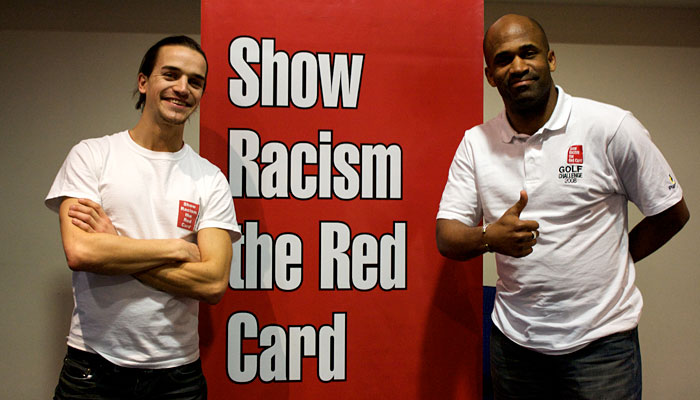
This season, the stench of racism emanating from English football has been contagious. Barely a weekend has gone by in which the game has not been overshadowed by a distressing tangle of accusations, handshake snubs, T-shirt boycotts and monkey-chants. Players, referees, and fans alike have become sullied by its toxic stink.

The ugliness of these incidents may yet conceal a societal truth. While each occurrence has been grating to witness, their collective effect may ultimately prove positive.

As Piara Powar, executive director of the London-based Football Against Racism in Europe Network, explains, “What we are watching is progress,” he said. “This is not a dive back to the bad old days when racism occurred on a mass scale. [If this were] a few years ago, the Luis Suarez and Patrice Evra incident would have simply been swept under the carpet and there certainly would have been no investigation into John Terry’s abuse of Anton Ferdinand. These two incidents have established a standard that sparked off all the events that followed because English society now sees this behavior as wrong. It has decided there is a clear line that people cannot cross.”

Hard to believe? Just ask anyone who entered an English football stadium in the 1980s and ’90s. Back then, the sight of a black player setting foot on a professional sports field could cause hundreds of grown men to grunt monkey sounds with abandon, an occurrence so common, the media did not consider it newsworthy. Last week, when a single Chelsea fan, Gavin Kirkham, was accused of abusing Manchester United’s Danny Welbeck, the offender was named and shamed across the backpages in howling coverage, replete with photos of the wrongdoer in a “Borat mankini.”

When I started watching English football in the 1970s, there was only one black player in the top flight, Clyde Best, a forceful Bermuda-born striker who played for West Ham (and ended up in NASL with the Portland Timbers.)

The intelligent defender Viv Anderson became the first black player to represent the senior England team in November 1978, playing before English travelling support that had been infiltrated by far-right factions that routinely chanted, “Ain’t no black in the Union Jack.” Then England-coach Ron Greenwood offered the debutant an ill-advised yet well-intentioned vote of confidence, “Yellow, purple or black,” he said, “if they’re good enough, I’ll pick them.”

Anderson had grown up in Nottingham, the son of a hospital porter father and nurse mother who had immigrated from Jamaica in 1954. When making his debut for local club Nottingham Forest in 1974, fans had welcomed him with a barrage of fruit. A traumatized Anderson sought refuge in the team dugout, only to have his own coach, the iconic Brian Clough, command him to “Get your f****** arse back out there then and fetch me two pears and a banana!

In 1978, the year of Rio Ferdinand’s birth, a fluent West Bromwich Albion side made history by becoming the first team to field three black players. Dominant striker Cyrille Regis, artful defender Brendon Batson and deft winger Laurie Cunningham were talent-soaked footballers who inadvertently became game-changing pioneers. At the time, bawdy manager Ron Atkinson belittled their achievement, naming his charges “The Three Degrees” after a Philadelphian female soul trio. (Atkinson would later be forced to resign as a broadcaster in 2004 when his racially abusive language toward Chelsea’s Marcel Desailly was picked up live on a mic.)

For all the abuse black players received from teammates, opponents and fans alike, they lacked any obvious form of redress. Welsh striker Nathan Blake withdrew from the national squad in 1997 after racially abusive comments from then-coach Bobby Gould. The player complained to the South Wales Echo: “We’re in international football. I’m an established striker and I should not have to listen to it [racism] from my own people, especially a manager I play for.”

Gould scoffed in response, “Perhaps Nathan Blake has finer feelings than other people. In future I will take that on board.”

Arsenal’s talented midfielder Paul Davis quite literally took matters into his own hands in 1988, when he responded to on-field abuse from Southampton’s Glenn Cockerill by shattering his opponent’s jaw with a right hook. Davis, who received a nine-match ban, and was never able to shake the resultant “bad boy” stigma during his career. But he was moved by Luis Suarez’s 2011 eight-match suspension for racially abusing Patrice Evra to the point that he wrote, “25 years ago … a player would not have been banned, because a black player wouldn’t have been brave enough to make the accusation.”

Liverpool’s English international John Barnes, who once told the BBC, “there wasn’t a game in the ‘80s when you didn’t get racial abuse as a black player,” took another route. When recording Liverpool’s infamous 1988 Hip Hop parody, “Anfield Rap,” the wondrous winger made light of his shocking experiences, famously half-rhyming, “I come from Jamaica, my name is John Barnes, When I do my thing the crowd go bananas.”

There was little that could be considered funny about the punishment Barnes received from Everton fans in which the England player was showered with enough bananas to stock a greengrocers. Worse, perhaps, was the collective chant, “EFC are white, EFC are white, Hello, Hello, EFC are white,” which would occasionally tumble from the terraces when one of Everton’s black opponents had the temerity to score.

As late as 2001, a report commissioned by the Premier League, grappled with the cause of such seething, open hatred. The FA Premier League National Fan Survey 2001 still makes for fascinating reading. It revealed that 97.3% of Premier League fans were white. Only 0.8% were black or Asian. Racism aimed at players was reported by a colossal 27% of supporters, a side-effect perhaps of the 64% who thought it was possible to “let off steam at football matches.”

“Letting off steam” appears to have been a euphemism for the racial antagonism that began to plague the United Kingdom after the Second World War. In 1945, England’s minority population numbered in the low thousands. By 1970, it had exploded to 1.45 million as immigrants decamped from across the British Empire’s colonies.

As British comedian, novelist and television presenter David Baddiel explained, football became an outlet for this tension. “This is not football’s problem, it’s a wider problem facing English society,” he said. “Football remains one of the last uninhibited spaces in our culture which is a good thing. People need to get out the shouting and swearing but it makes it hard to police.”

The recent controversies surrounding John Terry, Mark Clattenburg, and the monkey-chanting Gavin Kirkham have allowed Stamford Bridge to become perceived as the epicenter of contemporary racism, but in the Premier League era, even Chelsea are a team transformed. Thirty years ago, Paul Canoville became the first black footballer to play for Chelsea. As he entered the game to his own fans screaming racial epitaphs. Last season, six of the Chelsea starting 11 who kicked off the Champions League final were black.

Baddiel is a Chelsea season ticket holder, who attended his first game in 1975. “You cannot overestimate how bad it was when Paul Canoville was playing,” he said. “When people say John Terry is bad, they need to understand the racism that occurs now is isolated and the situation is not as doom and gloom as the newspapers are making it seem.”

Baddiel reveals he moved his season ticket from the raucous Matthew Harding Stand after Marcel Desailly became team captain and was barraged by the N word from his own fans. “I could not stand to watch the game amongst unreconstructed racists,” he said. But the well-known football fan has become a noted anti-racism advocate, enlisting the support of players like Frank Lampard, in a campaign to stamp out anti-semitic chanting during games.

“There is a line and it needs to be the same for everyone,” Baddiel said. “We have been putting up with it for 20 years. The only reason we did not act before was because the mechanisms were not in place to do anything about it. The big difference now is that there is ‘zero tolerance.’ When someone is racist, people no longer shrug. You can do something about it.” – ESPN

Max Keiser: The end of Britain

A serf in the days of King John, Max Keiser argues, was in many ways better off than some US voters in 2012.

“Because in the age of Robin Hood,” Keiser says, “at least the process of theft was transparent. The barons came to your house. They whacked you over the head then they took all your money.” Even if the poor didn’t exactly empathise with their oppressors, Keiser adds, they could at least comprehend their methods. “And the serfs,” he continues, “did enjoy a modicum of stability. They got something in return for their enslavement. A small plot of land. Shelter. A relationship with the lord of the manor.” In the modern age of “financial tyranny” orchestrated by what Keiser refers to as “the banksters” in charge of the major financial institutions in the US and Europe, he believes, “We have reverted to a more pernicious kind of neo-feudalism. The instruments of larceny have changed; that’s all.”

What better time, you might ask, to have the opportunity to vote in a presidential election? But the real forces which shape the destiny of his homeland, Keiser says, have long been impervious to democratic pressure.

“Barack Obama,” he maintains, “has been a huge disappointment. He reneged on every one of his campaign promises except one: he did buy his kids a dog. Of course he could be replaced in this election, but if that happens we will simply inherit a different version of the same thing, just as we have done in the US for the past 30 years. The guy in the White House,” he believes, “is really taking his orders from finance.”

You may never have heard the name Max Keiser, even though, once he begins to broadcast across China in the New Year, he will have confirmed his status as the most widely watched news commentator on the planet. Assisted by his producer, co-presenter and fiancée Stacy Herbert, Keiser, 52, mercilessly castigates rogue financiers and the politicians notionally required to oversee them, on programmes already transmitted by international networks including France 24, Al Jazeera and Iran’s Press TV. No channel in the United States will carry his broadcasts, which go well beyond the benign impudence of The Daily Show.

His most popular outlet is The Keiser Report, on Russia Today (RT), and its international viewing figures, as Keiser (not a man plagued by self-doubt) isn’t slow to point out, are huge. What has fascinated me, I tell him, when we meet in his London television studio, is that in Britain, in recent months, I’ve begun to hear his mischievously seditious RT show mentioned, with admiration, by taxi drivers, patrons in the Haringey Arms, and my window cleaner. This may not, I admit, constitute a statistically significant sample, but Keiser is clearly attracting people you wouldn’t necessarily expect to view a rolling news channel on a foreign network.

The presenter isn’t surprised. “There is a fury against this global banking fraud that is building every day,” he says. “People from all kinds of backgrounds, all over the world, have had enough.”

The Keiser Report, first aired in September 2009, is produced here three times a week. One episode, shown in September 2011, contained the interview with Roseanne Barr during which she famously observed that her solution to banking malpractice would be to “bring back the guillotine”.

While his sardonic, quick-fire delivery would allow him to shine in a debate at the Oxford Union or a Hampstead dinner party just as effectively as, say, David Dimbleby, Keiser’s utterings on the less laudable activities of Morgan Stanley, Goldman Sachs and other financial institutions also manage (unlike Dimbleby’s) to resonate with the kind of people who might fantasise about fire-bombing their local branch of NatWest. To illustrate a point, he will occasionally produce a plastic chicken, a stuffed rat, or a small explosive device. On one recent show, he advised David Cameron to, “Go back to Eton and get some of that back-stall shower pleasure.”

I tell Keiser how, the first time I saw him presenting the show with Stacy Herbert (his partner’s name, somewhat unfortunately, may be familiar from her appearance in 2002 red-top headlines concerning the “three in a bed sex sessions” whose pivot was Angus Deayton), I’d assumed his performance to be fuelled by amphetamines.

“I wave my arms,” he says. “I shout. Of course I do. Because this is a global insurrection. Against banker occupation.”

He folded balloon animals on one show.

“Well, you have to make an impression quickly. Most people first see The Keiser Report at an airport or hotel. RT has 450 million viewers. It goes into more hotel rooms than the BBC and it has more YouTube views. Everywhere I go, people stop me in the street. And remember I’m broadcasting about global financial corruption; not so long ago, everyone used to say, who could be interested in that?”

is histrionic style, combined with the forthright nature of his views (Keiser recently derided the Eurozone as an entity “which poses as this prestigious club, but is actually a leper colony where everyone is checking who still has the most fingers left”) have led some to dismiss him as a marginal, whacked-out conspiracy theorist.

This perception is some way removed from the truth. Raised in an affluent New York suburb, Keiser was a highly successful Wall Street stockbroker and the creator and former chief executive of HSX Holdings, a company which, using his own software system, allowed traders to deal in virtual securities. Put simply, this allowed you to gamble on the success – and, more disturbingly to the studios, on the failure – of a Hollywood film before its release. The practice was halted by the industry, but not before Keiser had sold his shares at the top of the market, adding to his already substantial fortune.

He founded the hedge fund Karmabanque, which has sought (with limited success) to profit from any decline in the equity value of companies criticised by environmental groups, such as Coca-Cola and McDonald’s. And in 2007, in an Al Jazeera film called Extraordinary Antics, he travelled to Milan to examine how CIA agent Robert Seldon Lady and others had illegally abducted then deported an Egyptian imam, Hassan Mustafa Osama Nasr, who later faced torture in Cairo. (In 2009 Lady, also known as “Mister Bob”, was sentenced to eight years in absentia by an Italian court, though the US refuses to extradite him to Italy.)

“I imagine,” I tell Keiser, “that some Americans, seeing your work carried by RT, Arabic and Iranian stations, view you as a modern-day Lord Haw-Haw.” (William Joyce, the Irish-American who broadcast Nazi propaganda to the UK during the Second World War, and was hanged in London in 1946.)

“Some might. But all around the world, working people love the show. We make The Keiser Report at Associated Press. That, as you know, is an American company. The people who feel challenged are the banksters. What I’m saying is that you can fight back: by fighting fire with fire.”

Keiser is among the most outspoken of a group of American commentators (Texas-based broadcaster Alex Jones being another) who argue that national sovereignty and democracy in the US and elsewhere have been eroded by the power of global corporations. Keiser maintains that the most effective form of resistance is through individual financial activism. “If the Karmabanque hasn’t worked,” Keiser says, “it’s because there isn’t yet a critical mass of people who are prepared to fight back, and who instead prefer to be victims.”

The presenter lived in France for a decade, toying with screenplays including one near-miss based on the life of Houdini, which would have starred his close friend Alec Baldwin. (He currently runs a highly successful crowdfunding site, piratemyfilm.com.) Keiser was based in Villefranche-sur-Mer, near Nice, when he met Herbert, who is eight years his junior, in 2003.

Herbert’s apparently subordinate role as co-presenter of The Keiser Report, in which her main task is to prompt, and then revel in her partner’s hyperbole, belies her acute instincts as a producer and editor. Before collaborating with Keiser, Herbert, the daughter of a NYPD officer who died in tragic circumstances when she was six, began her career working with Michael Phillips (who co-produced Taxi Driver and The Sting). She was later associate producer on the acclaimed but highly controversial animated 2005 series Popetown. A cartoon sitcom featuring the voices of Mackenzie Crook, Ruby Wax, Matt Lucas, Jerry Hall and Ben Miller, it was once described as Father Ted meets South Park. Originally commissioned for BBC Three, Popetown was dropped from its schedule after protests from the Catholic Church, though it is available on DVD.

Herbert and Keiser moved to London a year ago. “Because this is the world capital of banking fraud. Pretty much every financial scandal of the past 20 years has had its main component in London, because it has the least regulated banking environment. This is very important for the US, because America outsources its own fraud to London, just as it outsources its labour to China.” The JP Morgan and UBS traders who lost billions, he points out, were both London-based. “And Lehman Brothers went through the UK. As did AIG.” (The latter, a multinational insurance corporation, has been troubled by many controversies including its 2008 government bailout, subsequent executive bonus payments estimated at between $165m and $450m – some say more – and charges relating to accounting fraud, settled out of court in 2006.)

Tony Blair, Keiser adds, “was the first prime minister in this country’s history who knew that going into Downing Street would act more as a resumé builder than a way of serving the public. He has become fabulously wealthy with the contacts he made as prime minister.” Blair, he continues, “personifies the move, in the UK and the US, away from representational democracy and towards control by bankers. It is since New Labour that you have the rise of these incredible scandals: so you have HSBC involved in multimillion-dollar Mexican drug-laundering. [In July of this year, the bank publicly apologised for its “lapses”.] And Barclays involved in rigging Libor [the estimated interest rate for inter-bank loans].”

I tell Keiser I can feel many readers wondering exactly what relevance such activities might have to their lives. “Well, the policy of the banks has been to keep interest rates as low as possible, so as to fuel financial speculation, no matter how oppressive the effect of that would be. Low interest rates wipe out savers and devastate middle-class workers. The banksters have orchestrated this wealth transference of trillions, from the poor to the very wealthy. At the expense of everybody who isn’t at the top.”

In a recent televised discussion chaired by Andrew Neil, Keiser recalls, “We agreed that the country suffers from economic and financial illiteracy. Which makes it amazing that George Osborne has a programme whereby people will exchange their rights as workers for shares. Why is he proposing this, if not to exploit that knowledge gap? Shouldn’t the Chancellor be ashamed of himself?”

“But hang on – you’re not an anti-capitalist.”

“No. I am pro-capitalism and I am pro-free market. But what you have now is not capitalism. It is a state- controlled, command and control, centralised politburo. Both in Britain and the United States. The States is run by the Federal Reserve, an institution that answers only to itself and to a few large banks. It’s modelled on the Bank of England. Ben Franklin said that one of the main reasons America revolted was to get away from the Bank of England, the mother of all central banks; the most pernicious and insidious of all.”

“You said you were disappointed by Obama. What should he have done?”

“When Franklin D Roosevelt came into office, he started putting bankers in jail. The foremost reason that America got out of the Depression was not World War Two, or because of the Keynesian stimulus. It was because of the legislation introduced to regulate markets [many such clauses in FDR’s Emergency Banking Act of 1933 were dismantled under Clinton] and the banksters that Roosevelt sent to jail.”

“Don’t you think Obama came in with the best of intentions? Surely he’s not just another avaricious politician?”

“Barack Obama had to face up to people like Larry Summers [Clinton’s former Treasury Secretary, and director of the US National Economic Council until two years ago, Summers had a key role in lifting safeguards in the derivatives market, a move generally considered to have precipitated the 2007/8 crash]. There were others he failed to remove from office, who were guilty of orchestrating this economic collapse.”

“Are you accusing Obama of malicious complicity?”

“I think that Obama is, like many people, financially and economically illiterate. He is a lawyer. But in Wall Street there is no law.”

Is the implication that the situation will change if Obama is defeated? “It’s not difficult to envision what a Romney presidency would be like. He’s already made it clear that he believes Wall Street to be over-regulated, which of course is the opposite of the truth.”

Romney’s background, Keiser adds, is in private equity, “which is the crystallisation of the worst elements of capitalism”. (Private-equity firms tend to specialise in leveraged buyouts: a practice whose potential consequences have become familiar to many non-economists in Britain, not least to supporters of Manchester United since the club’s purchase by the Glazer family in 2005.) “So then you would have a pure cacistocracy: rule by the worst, the most ignorant, and the most corrupt.”

On Mitt Romney’s first day in office, Keiser adds, “I would imagine that, rather as Emperor Caligula appointed his horse to the senate, he will issue proclamations and edicts that will shock people. But if he does release the genie of even more deregulation, bankrupting the country, he would do so in the full knowledge of the crime he was committing. I believe that Obama was less consciously aware of the stupidity he was engaged in.”

ax Keiser grew up in Westchester County, a New York suburb so steeped in Ivy League privilege that Loudon Wainwright III wrote a song about it (“We were richer than most/ I don’t mean to boast/ But I swam in the country club pool”). It’s not hard to imagine his robust intelligence being applied in other fields, such as teaching or law. While his name may evoke images of some prosperous chancer in a James Bond film, he doesn’t come across as your average money man. So how did he wind up prospering on Wall Street?

“I’d been to New York University,” Keiser recalls, “where I studied theatre. That’s where I first met Alec Baldwin. I did a lot of radio, and stand-up comedy. I spent my time watching punk and rap bands at CBGB and Max’s Kansas City. My biggest fear in 1983 was that the party would end. I’d done various jobs.” These included working as a street magician on Broadway.

“Then I got a part-time job at Paine Webber, a brokerage firm on Wall Street, just to support myself. I remember walking in and seeing the brokers all looking up at the ticker tape on the wall. They were in very expensive suits and smoking cigars. I could see that, by this means, the party could continue. So I became a stockbroker. And the party not only continued, but intensified.”

“It must have been a bit of a culture shock.”

“Not so much as you might imagine, because stockbroking had sort of a punk aesthetic. It was a DIY revolution. I had no background in it whatsoever. But in the early 1980s suddenly there was the start of this bull market: a tsunami of cash was arriving every day on Wall Street. It required no talent whatsoever to make gobsmacking amounts of money. A rhesus monkey could have done it.”

“And socially?” “We took the party into the office. We’re making calls to customers during the day. At the same time we’re getting calls from hookers and drug dealers. I remember I woke up on a plane one day; k I was coming out of a blackout. I asked my buddy, who I’d started the outing with, who knows when, ‘Where are we going?’ He said, [the Caribbean island of] ‘St Thomas.’ I don’t remember a whole lot after that. Anyhow, we ended up back in the office. Then I heard my friend, shouting: ‘Shit… Oh my God, shit…’ I asked what happened. He said, ‘Max… when we were down there in St Thomas… did I buy a house?’ He had done, and he had absolutely no memory of it. After the crash in 1987 the party ended.”

“What were people taking: drink and cocaine?”

“Yes. There was cocaine on everyone’s desk, more or less. At that time you could take a shoeshine guy – and they did – and with the systems they had, which allowed swift calls, and using sales scripts, he could make hundreds of thousands of dollars in months.”

Of the many themes that Keiser returns to in his shows, one of the most interesting and incendiary is the relationship between big business and Congress. He has openly accused senior politicians of using investigations into financial malpractice as a way of acquiring market information so as to benefit themselves.

“Democracy is not well served by the current political configuration in America,” he maintains. “The entire political establishment is designed around enriching a minority of people who have access to both information and capital. Take the CIA. They have recently opened up their services to hedge funds. Hedge-fund managers can now hire CIA agents to do research on pharmaceutical companies, defence contractors, or oil contracts.”

I can imagine some of his compatriots regarding such talk, especially his accusations of endemic insider trading in Congress, as treasonable. “Treason is a strong word. My family arrived in America in the 1700s and was active in the constitutional process that led to the Declaration of Independence. I would answer that charge by saying, as they do down south, ‘That dog don’t hunt.’

“Nobody has a greater affinity for the founding principles of America than I do. But what the people with power are doing now is not remotely connected to the ideals of the founding fathers.”

Any talk about treason, Keiser argues, would be more suitably aimed in the direction of men such as his principal bête noir, Hank Paulson, a former CEO of Goldman Sachs who served as the US Treasury Secretary from 2006 to 2009. “There is a revolving door for Goldman Sachs guys into and out of US government. And they are working against the sovereign interest of the United States. What’s happening is that all these bankers in Europe are consolidating into one major bank that’s going to be running Europe, from Brussels. All of that debt will be re-priced in some new European-wide currency. And that bad debt will be joined with all the American bad debt, in some new global reserve bank. And every single step of the way guys like Hank Paulson – who really is a traitor – will put a gun to the head of the American people and say, either you accept this new banking deal or we are going to crash this market.”

Among Keiser’s fans, Paulson more than anybody has come to personify the culture of greed and flagrant conflict of interest that the broadcaster satirises.

“You don’t like Hank Paulson very much, do you?”

“The fact that that man is even breathing and walking… the last time I was on Al Jazeera live,” Keiser adds, “was when I declared a fatwa against Hank Paulson.”

“Fatwa defined in what way?”

“The word has certain resonances, after the Salman Rushdie affair. That’s not what I was saying. Under Bush and Obama, the office of president has acquired enormous power: to pretty much arrest anybody in the world. With no due process. No habeas corpus. If you have the ability to arrest a man on a mere suspicion, and detain them without reference to judge or jury, then that man’s name is Hank Paulson. Go after the really bad guys.”

Fear, Keiser believes, is what stops such opinions being transmitted in his homeland. “Look at these clowns who present shows. Like [arch-conservatives] Rush Limbaugh and Bill O’Reilly. These people are not Americans. They are the subversives. They are the ones tearing American society apart by belittling everything that, at its heart, could be construed as the lifeblood of democracy.

“Those guys,” Keiser adds, warming to his subject, “are shameless. They are despicable. My merely pointing out where crimes are being committed is not treason against the country. It is an act in support of reform to get the country back from the clutches of these foreign bankers.”

“So who would you like to see elected?” “The only politician that I like is [former independent presidential candidate] Ralph Nader. Because he talks about corporations. And corpocracy. He isn’t running. So I won’t be voting.”

Listening to Keiser, I tell him, I’m left with feelings of little else but imminent doom. He has few words of comfort. “The global derivatives market, which is a quadrillion or more in size, is a very complicated, highly unstable system which is becoming more unstable with every hour,” he says. “It is similar to the side of a mountain before the last snowflake arrives to trigger the avalanche. Or, like Mr Creosote [who explodes at the dinner table in the Monty Python film The Meaning of Life] is just waiting for that final after-dinner mint.”

Any hope of recovery, he argues, will come not through the ballot box but financial initiatives on the part of individuals; notably a mass campaign to ignore governmental advice to trust in bonds and paper money – investments in which, Keiser insists, confidence has rightly evaporated.

“People have to take action for themselves. That means buying not bonds or dollars or euros, but gold and silver. Gordon Brown sold Britain’s gold at the historic low of $250 an ounce. Gold is now $1,700 an ounce. My argument – I can categorically state – is winning the global propaganda war. China is aggressively buying gold. Russia is buying gold like a maniac. Iran has been buying as much as it can. All of these countries, where my show is popular, are buying gold and silver, and God bless them for it.”

Purchasing such commodities, he believes, will offer the owner true security and accelerate the demise of “the banksters”, who speculate only in notional wealth, and paper money.

renetic and controversial as he may be, Keiser has a decent record on prediction. He was in Reykjavik, issuing bleak warnings, months before Iceland’s catastrophic economic collapse. He was talking about Athens years ago, predicting civil unrest and what now appears to be an inevitable Greek default.

“I came to London,” he says, “because being here gives you a front-row seat on the imminent collapse of an entire city. I think that the Eurozone is over-rated as a disaster area. They are not yet in as bad shape as Britain. The UK pound,” he continues, “is about to collapse. And the collapse of the British economy will be one of the biggest in modern economic history. Of course you will take the American dollar and the euro down with you, for sure. But this place – London – is about to go belly up. It’s … how can I put this?” Keiser pauses. “If you see me walking the streets of your town,” he adds, “then you’re probably fucked.” – The Independent


Britain, the global bully

The global reach by Britain is astounding. A new study has found that at various times the British have invaded almost 90 per cent of the countries around the globe.

The analysis of the histories of the almost 200 countries in the world found only 22 which have never experienced an invasion by the British.

Among this select group of nations are far-off destinations such as Guatemala, Tajikistan and the Marshall Islands, as well some slightly closer to home, such as Luxembourg.

The analysis is contained in a new book, All the Countries We’ve Ever Invaded: And the Few We Never Got Round To.

Stuart Laycock, the author, has worked his way around the globe, through each country alphabetically, researching its history to establish whether, at any point, they have experienced an incursion by Britain.

Only a comparatively small proportion of the total in Mr Laycock’s list of invaded states actually formed an official part of the empire.

The remainder have been included because the British were found to have achieved some sort of military presence in the territory – however transitory – either through force, the threat of force, negotiation or payment.

Incursions by British pirates, privateers or armed explorers have also been included, provided they were operating with the approval of their government.

So, many countries which once formed part of the Spanish empire and seem to have little historical connection with the UK, such as Costa Rica, Ecuador and El Salvador, make the list because of the repeated raids they suffered from state-sanctioned British sailors.

Among some of the perhaps surprising entries on the list are:

* Cuba, where in 1741, a force under Admiral Edward Vernon stormed ashore at Guantánamo Bay. He renamed it Cumberland Bay, before being forced to withdraw in the face of hostile locals and an outbreak of disease among his men. Twenty one years later, Havana and a large part of the island fell to the British after a bloody siege, only to be handed back to the Spanish in 1763, along with another unlikely British possession, the Philippines, in exchange for Florida and Minorca.

*Iceland, invaded in 1940 by the British after the neutral nation refused to enter the war on the Allies side. The invasion force, of 745 marines, met with strong protest from the Iceland government, but no resistance.

* Vietnam, which has experienced repeated incursions by the British since the seventeenth century. The most recent – from 1945 to 1946 – saw the British fight a campaign for control of the country against communists, in a war that has been overshadowed by later conflicts involving first the French and then Americans.

It is thought to be the first time such a list has been compiled.

Mr Laycock, who has previously published books on Roman history, began the unusual quest after being asked by his 11-year-old son, Frederick, how many countries the British had invaded.

After almost two years of research he said he was shocked by the answer. “I was absolutely staggered when I reached the total. I like to think I have a relatively good general knowledge. But there are places where it hadn’t occurred to me that these things had ever happened. It shocked me.

“Other countries could write similar books – but they would be much shorter. I don’t think anyone could match this, although the Americans had a later start and have been working hard on it in the twentieth century.”

The only other nation which has achieved anything approaching the British total, Mr Laycock said, is France – which also holds the unfortunate record for having endured the most British invasions. “I realise people may argue with some of my reasons, but it is intended to prompt debate,” he added.

He believes the actual figure may well be higher and is inviting the public to get in touch to provide evidence of other invasions.

In the case of Mongolia, for instance – one of the 22 nations “not invaded”, according to the book – he believes it possible that there could have been a British invasion, but could find no direct proof.

The country was caught up in the turmoil following the Russian Revolution, in which the British and other powers intervened. Mr Laycock found evidence of a British military mission in Russia approximately 50 miles from the Mongolian border, but could not establish whether it got any closer.

The research lists countries based on their current national boundaries and names. Many of the invasions took place when these did not apply.

The research covered the 192 other UN member states as well as the Vatican City and Kosovo, which are not member states, but are recognised by the UK government as independent states.

The earliest invasion launched from these islands was an incursion into Gaul – now France – at the end of the second century. Clodius Albinus led an army, thought to include many Britons, across the Channel in an attempt to seize the imperial throne. The force was defeated in 197 at Lyon.

Mr Laycock added: “One one level, for the British, it is quite amazing and quite humbling, that this is all part of our history, but clearly there are parts of our history that we are less proud of. The book is not intended as any kind of moral judgment on our history or our empire. It is meant as a light-hearted bit of fun.”

The British invented concentration camps in South Africa where they killed 27 000 white Afrikaner women and children.

The countries never invaded by the British:

Andorra

Belarus

Bolivia

Burundi

Central African Republic

Chad

Congo, Republic of

Guatemala

Ivory Coast

Kyrgyzstan

Liechtenstein

Luxembourg

Mali

Marshall Islands

Monaco

Mongolia

Paraguay

Sao Tome and Principe

Sweden

Tajikistan

Uzbekistan

Vatican City

– Daily Telegraph

Farm workers exploited in Britain

Exploited

There are strict rules in Britain covering the conditions for chickens and eggs marketed in the happy hen category by high street names – a Freedom Food chicken must be grabbed by both legs rather than just one when being caught, for example. But the conditions of the humans sent to catch them has had less attention.

Late on Monday a gangmaster company which provided teams of migrant workers to dozens of large chicken farms in a chain that supplies premium free range eggs to McDonald’s, Tesco, Asda and M&S, “Woodland” eggs to Sainsbury’s, and the Freedom Food and other brands to leading retailers had its licence revoked with immediate effect by the Gangmaster Licensing Authority (GLA).

The action followed a joint operation earlier this month by Kent police, the GLA and the Serious Organised Crime Agency to liberate more than 30 Lithuanian workers who are alleged to have been trafficked in to the UK. They are said to have then been kept in debt bondage, forced to work up to 17 hours a shift, bussed to farms the length of the country to catch hens through the night, sleeping for days at a time only in vans, in some weeks not paid at all, and, according to workers’ testimony, kept under control by Lithuanian enforcers with threats of violence and on occasions actual physical assault.

A 52-year-old man and a 50-year-old woman from the company, who cannot be named for legal reasons, were arrested in a dawn raid on a Grade II listed house in Kent on suspicion of human trafficking for the purposes of labour exploitation. They were later released on bail, whose terms included a ban on them contacting the workers, pending further inquiries. The gangmaster company is a member of Freedom Food, the welfare scheme licensed by the RSPCA. Six dogs, including some fighting breeds, which the migrants claim were used to intimidate them, were taken from a separate property into the care of a local branch of the RSPCA.

The migrants, who as EU nationals are legally entitled to work in the UK, were transferred to a reception centre by the UK Human Trafficking Centre where those who wanted it were given support by the Salvation Army.

The gangmaster business supplied workers to Noble Foods, one of the UK’s largest processors of eggs and chickens. Noble is currently promoting its happy eggs on primetime television with an advert that shows its hens leaping for joy to the Olympian soundtrack of Chariots of Fire.

The number of people being trafficked into the UK has been rising, according to a report published last week by the government’s Inter-departmental Ministerial Group. Nearly a thousand suspected victims of human trafficking were referred to the National Referral mechanism in 2011, compared to just over 700 the previous year. Trafficking for labour exploitation is a significant and growing category, accounting for nearly a quarter of all cases. Extreme exploitation in the supply chain of major fast food names and leading supermarkets remains a serious problem, according to the GLA. Austerity across Europe, and retailers squeezing costs to counter inflation in food, have created the conditions for it to thrive. The GLA head of operations for the south-east, Neil Court, said exploitation among Lithuanians and other eastern Europeans appeared to be increasing, and in other cases the authority has seen a rise in organised crime, including fraud, money laundering, tax evasion and violence associated with labour abuse. The GLA has, however, had its budget for enforcement and inspection slashed by nearly one-fifth by the coalition government.

Court said the allegations in the case involving the chicken catching gangs were “probably some of the worst I have come across in my time at the GLA”.

The workers said they had been charged a fee of around £350 for what they had been promised back in Lithuania were good jobs. £50 a week was then deducted from their wages each week, so they were debt bonded on arrival. They allege they would be told to bring food to last five days and were then bussed around the country from job to job, from Monday to Friday, sometimes being driven for five or six hours at a time between farms before working a night shift. They were put to work without training or safety equipment, having to learn on the job how to catch four chickens in each hand before crating them. Without face masks, they found the smell and dust in the sheds was often overwhelming. They described not even knowing where they were going, but trying to find out from the GPS system at the front of the minivan. They claim they were refused toilet stops on journeys and that in between jobs they were kept for hours in the vans at roadside parking places.

When they were brought back to their accommodation in Kent at weekends, they reported living 15 men to a small house in damp, squalid conditions. Mattresses on the floor were infested with bed bugs and fleas. They say they had £40 a week deducted from their wages for the privilege of being bitten as soon as the lights were out.

Those workers who wanted to open bank accounts or apply for national insurance numbers say they were told they couldn’t and were threatened with the sack if they complained. When they were paid, it was by cheque, so they were forced to cash their wages at a local branch of the Money Shop where the charges are £2.50 for registration, a £3.99 flat fee for each cheque plus a 7.99% service fee, meaning that they could lose another £12 from a £100 cheque.

The most serious allegations from the workers relate to the climate of fear and violence in which they say they were kept. They have described Lithuanian enforcers used by the gangmasters to keep them under control with physical and verbal abuse. They have reported workers being beaten, punched, given black eyes and broken ribs, and then beaten again if they complained. One recalled first meeting one of the enforcers a couple of days after arriving in the UK, when the enforcer is said to have kicked the door of their house in and shouted to them that no one was getting paid that week. Others have said that their wages were withheld on several occasions for random reasons: a dirty cup left in the kitchen, or the smell of alcohol on someone’s breath on a day off.

In revoking the company’s licence to operate with immediate effect, the GLA listed breaches of licence terms on an unprecedented scale. The gangmaster has the right of appeal.

At the gangmasters’ period property when the Guardian accompanied police on their raid, several luxury vehicles were parked in front of a green oak barn. A top-of-the-range motor home sat alongside two new Range Rovers. A decorative wooden shelter next to the gate was stocked with eggs for sale in free range and Freedom Food boxes with an “honesty box” in which passersby could post the money for them.

McDonald’s also declined to comment and referred us to Noble Foods. A Tesco spokesperson said: “As a founder member of the Ethical Trading Initiative, we are committed to decent working conditions on all the farms and factories in our supply chain. These allegations are clearly shocking. We will continue to work closely with the GLA, our suppliers and others to ensure good practice throughout the sector.” The other retailers also said that they took the allegations very seriously and were co-operating with the enforcement agencies.


Chaos and violence on the rise in UK

British police in Croydon, South London on August 8, 2011

Chaos and violence are on the rise in the UK a year after the PM declared a war on gang culture, a study revealed. Police aggression and a refusal to tackle the root causes of delinquency are reportedly the main issues hindering the initiative.

On Monday, the Center for Social Justice (CSJ) released a damning report titled ‘Time to Wake Up.’ The study criticized the steps taken by the UK’s coalition government over the last year to curb the problem of rising social unrest and delinquency.

The investigation roundly condemned the government’s heavy-handed approach as exacerbating the problem, citing a perception in the government of the riots as a “random one-off” that can be managed by an elevated police presence.

“They could not be more wrong. The alarming fact is that many streets across the country are besieged by anarchy and violence. There is no control in such neighborhoods,” the report said. It also notes an increase in violence among younger gang members, and in the number of women joining gangs.

In the wake of the mass rioting that swept the UK last summer, PM David Cameron launched an “all-out war on gang culture,” maintaining that gangs were at the root of the social unrest. The CSJ report cited statistics showing that “individuals who have links to gangs are believed to be responsible for 16 percent of London’s total drug supply, nearly a fifth of stabbings, half of all shootings and 14 percent of all rapes.”

The CSJ argued that the 10 million pounds the Home Office allotted last year to combating gang culture had been poorly distributed. Some organizations designated for funding did not receive money due to a lack of awareness, which the report describes as indicative of a “complete disconnect between what goes on at the policy level to what goes on on the ground.”

The CSJ said that aggressive policing could be one of the main drivers of the increase in gang crime over the past year.

“Negative, discriminatory and aggressive police behavior, if not perpetuating gang culture, actively hinders attempts to tackle it,” the study said, adding that according to a CSJ survey, 57.7 percent of respondents believed the police’s relationship with young people had not changed since the riots, while 13.5 percent said it had worsened.

The organization expressed particular concern with the police policy of targeting gang leaders. Referencing the arrest of over 200 ringleaders in London over the past year, CSJ said their removal had led to the creation of volatile power vacuums, potentially paving the way for chaotic power struggles between younger gang members.

The UK government’s attitude towards gang violence will only yield short-term results, the CSJ argued, adding that the underlying issues need to be addressed if there is to be any long-term resolution of the issue.

The study described the current strategy as ignoring the root causes of the violence, such as family breakdown and dysfunction, drug addiction and unemployment: “It takes years to work with gang nominal. Preventative work to discourage young people from joining gangs has ‘fallen off the radar.’

The growing gang culture in the UK hit the headlines last year when thousands of young people took part in riots across the country, looting shops and damaging property.

Mass riots in London were triggered by the police shooting of suspected criminal Mark Duggan, The circumstances surrounding the incident are highly controversial: Some claim Duggan was unarmed when he was gunned down by an officer. The government attributed the ensuing violence and social unrest to a degraded youth culture.

Scottish independence could end UK’s nuclear deterrent

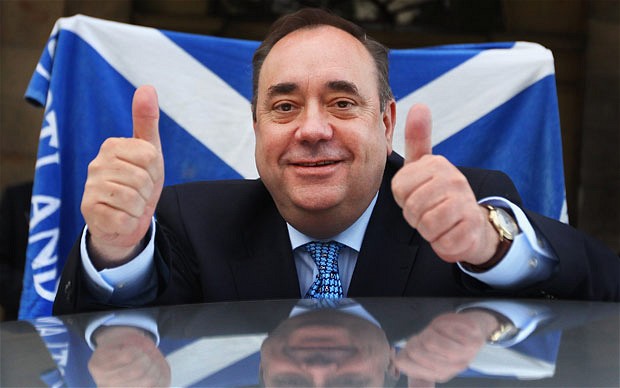
Alex Salmond

A unilateral nuclear disarmament could be forced on Britain if Scotland becomes independent in 2014, a government report says. Along with Scotland, the UK would lose the only naval base capable of hosting Trident nuclear-carrying submarines.

­In the new report, the Commons Scottish Affairs Committee warned that Edinburgh’s desire to remove Trident submarines from its shores could result in forced nuclear disarmament for the rest of the UK.

If dismantled, the Continuous at Sea Deterrent, which has at least one submarine constantly patrolling the UK’s shores, would cease to exist.

“Trident can be deactivated within a matter of days, and the warheads removed within 24 months. In the process, the UK would lose the ability to operate its nuclear deterrent, and effectively be forced into unilateral disarmament for an indeterminate period,” Committee chairman Ian Davidson said.

The committee stipulated that if Scotland removes the nuclear weapons, the construction of the necessary facilities in other parts of the UK could take 20 years.

One of the options still on the table is for Scotland to agree to lease the facilities to London and for the UK to operate the Trident submarines, something the Scottish National Party strongly opposes.

“A separate Scotland would be presented with a choice over Trident. It could honor the long-standing commitment of the SNP that there should be no nuclear weapons in Scotland and insist on the ‘speediest safe transition’ of Trident from Scotland,” Davidson says.

Finding other facilities in the UK is difficult as most are located in heavily populated areas where storing nuclear warheads is dangerous. Most areas are too shallow for the submarines to dock.

Scottish First Minister Alex Salmond said earlier that if London was not willing to build a new Trident base within the UK, it had only a few options left: either scrap the entire weapons system or move the missiles to a French or American base.

“They could decide on what would be a much better policy, which would be to decommission the weapons system,” Salmond told the BBC.

The Commons Scottish Affairs Committee suggests that both London and Edinburgh publish contingency plans ahead of the vote for removing the atomic fleet from Scotland’s shores, so that electorates can make an informed choice.

If the base stays, almost eight thousand people will remain employed at Faslane Naval Station, which houses the submarines, making it the country’s largest worksite.

Removing the submarines and placing them south of the border will cost an estimated £3.5 billion, an expense which is to be divided between taxpayers in Scotland and the rest of the UK.

In a statement following the report’s release, Philip Hammond, the UK defense secretary, said: “Our continuous submarine-based nuclear deterrent is the ultimate safeguard of our national security. We have made a clear commitment to maintain that deterrent and there is absolutely no question that the UK will unilaterally disarm. We are confident that the Scottish people will choose to remain part of the United Kingdom,” the Financial Times quotes him as saying.

How Britain plundered the globe for 300 years

by George Monbiot of The Guardian

Opium, famine and banks all played their part in Britain’s plundering of the globe.

Why now? It’s not as if this is the first time Britain’s representatives have been caught out. The history of governments in all countries is the history of scandal, as those who rise to the top are generally the most ambitious, ruthless and unscrupulous people politics can produce. Pushing their own interests to the limit, they teeter perennially on the brink of disgrace, except when they fly clean over the edge. So why does the current ballyhoo threaten to destroy not only the government but also our antediluvian political system?

The past 15 years have produced the cash-for-questions racket, the Hinduja and Ecclestone affairs, the lies and fabrications that led to the invasion of Iraq, the forced abandonment of the BAE corruption probe, the cash-for-honours caper and the cash-for-amendments scandal. By comparison to the outright subversion of the functions of government in some of these cases, the is small beer. Any one of them should have prompted the sweeping political reforms we are now debating. But they didn’t.

For the past 300 years, the revolutions and reforms experienced by almost all other developed countries have been averted in Britain by foreign remittances.

The social unrest that might have transformed our politics was instead outsourced to our colonies and unwilling trading partners. The rebellions in Ireland, India, China, the Caribbean, Egypt, South Africa, Malaya, Kenya, Iran and other places we subjugated were the price of political peace in Britain. After decolonisation, our plunder of other nations was sustained by the banks. Now, for the first time in three centuries, they can no longer deliver, and we must at last confront our problems.

There will probably never be a full account of the robbery this country organised, but there are a few snapshots. In his book Capitalism and Colonial Production, Hamza Alavi estimates that the resource flow from India to Britain between 1793 and 1803 was in the order of £2m a year, the equivalent of many billions today. The economic drain from India, he notes, “has not only been a major factor in India’s impoverishment … it has also been a very significant factor in the industrial revolution in Britain”. As Ralph Davis observes in The Industrial Revolution and British Overseas Trade, from the 1760s onwards India’s wealth “bought the national debt back from the Dutch and others … leaving Britain nearly free from overseas indebtedness when it came to face the great French wars from 1793”.

In France by contrast, as Eric Hobsbawm notes in The Age of Revolution, “the financial troubles of the monarchy brought matters to a head”. In 1788 half of France’s national expenditure was used to service its debt: the “American War and its debt broke the back of the monarchy”.

Even as the French were overthrowing the ancien regime, Britain’s landed classes were able to strengthen their economic power, seizing common property from the country’s poor by means of enclosure. Partly as a result of remittances from India and the Caribbean, the economy was booming and the state had the funds to ride out political crises. Later, after smashing India’s own industrial capacity, Britain forced that country to become a major export market for our manufactured goods, sustaining industrial employment here (and avoiding social unrest) long after our products and processes became uncompetitive.

Colonial plunder permitted the British state to balance its resource deficits as well. For some 200 years a river of food flowed into this country from such places as Ireland, India and the Caribbean. In The Blood Never Dried, John Newsinger reveals that in 1748 Jamaica alone sent 17,400 tons of sugar to Britain; by 1815 this had risen to 73,800. It was all produced by stolen labour.

Just as grain was sucked out of Ireland at the height of its great famine, so Britain continued to drain India of food during its catastrophic hungers. In Late Victorian Holocausts, Mike Davis shows that between 1876 and 1877 wheat exports to the UK from India doubled as subsistence there collapsed, and several million died of starvation. In the North-Western provinces famine was wholly engineered by British policy, as good harvests were exported to offset poor English production in 1876 and 1877.

Britain, in other words, outsourced famine as well as social unrest. There was terrible poverty in this country in the second half of the 19th century, but not mass starvation. The bad harvest of 1788 helped precipitate the French revolution, but the British state avoided such hazards. Others died on our behalf.

In the late 19th century, Davis shows, Britain’s vast deficits with the United States, Germany and its white dominions were balanced by huge annual surpluses with India and (as a result of the opium trade) China. For a generation “the starving Indian and Chinese peasantries … braced the entire system of international settlements, allowing England’s continued financial supremacy to temporarily co-exist with its relative industrial decline”. Britain’s trade surpluses with India allowed the City to become the world’s financial capital.

Its role in British colonisation was not a passive one. The bankruptcy, and subsequent British takeover, of Egypt in 1882 was hastened by a loan from Roths­child’s bank whose execution, Newsinger records, amounted to “fraud on a massive scale”. ­Jardine Matheson, once the biggest narco-trafficking outfit in history (it dominated the Chinese opium trade), later formed a major investment bank, Jardine Fleming. It was taken over by JP Morgan Chase in 2000.

We lost our colonies, but the plunder has continued by other means. As Joseph Stiglitz shows in Globalisation and its Discontents, the capital liberalisation forced on Asian economies by the IMF permitted northern traders to loot hundreds of billions of dollars, precipitating the Asian financial crisis of 1997-98. Poorer nations have also been strong-armed into a series of amazingly one-sided treaties and commitments, such as trade-related investment measures, bilateral investment agreements and the EU’s economic partnership agreements. If you have ever wondered how a small, densely populated country which produces very little supports itself, I would urge you to study these asymmetric arrangements.

But now, as John Lanchester demonstrates in a fascinating essay in the London Review of Books, the City could be fatally wounded. The nation that relied on financial services may take generations to recover from their collapse. The great British adventure – three centuries spent pillaging the labour, wealth and resources of other countries – is over. We cannot accept this, and seek gleeful revenge on a government that can no longer insulate us from reality.

Read the original article here.


Britain to appeal colonial torture judgement

Colonial times

Britain’s Foreign Office said it would appeal a High Court judgement on Friday that three elderly Kenyans who were tortured under British rule in the 1950s could pursue their claim for damages from London.

“The judgement has potentially significant and far reaching legal implications,” it said in a statement.

“The normal time limit for bringing a civil action is 3 to 6 years. In this case, that period has been extended to over 50 years despite the fact that the key decision makers are dead and unable to give their account of what happened.”

The Foreign Office added that it did not dispute that each of the three claimants in the case suffered torture and other ill treatment at the hands of the colonial administration.

Lawyers for the claimants said Friday’s judgement would be carefully studied by victims of alleged colonial torture from Malaya to the Yemen from Cyprus to Palestine, as well as South Africa.

The claimants, Jane Muthoni Mara, Wambuga Wa Nyingi and Paulo Muoka Nzili celebrated the news in Nairobi, Kenya. They were represented by a white lawyer, Martyn Day.

London’s High Court ruled the case, relating to the 1950s Mau Mau uprising, could proceed despite the time elapsed.

The ruling means the case will now go to a full trial. Lawyers for the three hailed it as a “historic” judgement.

While the government accepts UK forces tortured detainees it denies liability and will appeal against the decision.

After the 2011 ruling, the case went back to the High Court in July to consider a claim by the UK Foreign and Commonwealth Office (FCO) that the actions had been brought outside the legal time limit. The FCO said it faced “irredeemable difficulties” in relation to the availability of witnesses and documents.

As the news filtered through, several dozen elderly Kenyans erupted into cheers. They linked arms and danced through the grounds of the Kenyan Human Rights Commission, which has been supporting the claimants.

For them, and other veterans of the Mau Mau struggle, today’s judgement was a significant victory.

But elsewhere in Kenya the case has received little attention. Only a handful of reporters from the Kenyan media turned up to cover the reaction from the veterans themselves.

There are historical reasons for this. Many of those who found themselves in power following independence in 1963 had previously been associated with the Home Guard: those who fought with the British colonial authorities against the Mau Mau rebels.

When independence came, many believed this chapter in Kenya’s recent history would sow division rather than foster unity. The elderly veterans of that struggle are still fighting for recognition, both at home and abroad.

In his ruling, the judge said: “A fair trial for the Kenyans on this part of the case does remain possible and the evidence on both sides does remain significantly cogent for the court to complete its task satisfactorily.”

A lawyer for the three said the claimants had not been in court because they were in the Kenyan capital Nairobi, but they were “absolutely delighted” when they learned of the result.

Martyn Day said lawyers would be pressing for a trial “as quickly as possible” but they would also be pushing for the government to reach an out-of-court settlement.

“This is a historic judgement which will reverberate around the world and will have repercussions for years to come,” he said in a separate statement.

“The British government has admitted that these three Kenyans were brutally tortured by the British colony and yet they have been hiding behind technical legal defences for three years in order to avoid any legal responsibility. This was always morally repugnant and today the judge has also rejected these arguments.”

He added: “Following this judgement we can but hope that our government will at last do the honourable thing and sit down and resolve these claims. There will undoubtedly be victims of colonial torture from Malaya to the Yemen, from Cyprus to Palestine, who will be reading this judgement with great care.”

Written evidence from the three Kenyans sheds light on their treatment at the hands of colonial forces:

  • Mr Nyingi, 84, a father of 16, said he was arrested in 1952 and detained for about nine years. In one incident in 1959 he said he was beaten unconscious and still bears marks from leg manacles, whipping and caning. “I have brought this case because I want the world to know about the years I have lost and what was taken from a generation of Kenyans, he said
  • Mr Nzili, 85, said he was stripped, chained and castrated shortly after being arrested in 1957. “I felt completely destroyed and without hope,” he said
  • Ms Mara, 73, said she was 15 when she was raped at a detention camp. “I want the British citizens of today to know what their forefathers did to me and to so many others. These crimes cannot go unpunished and forgotten,” she said

A spokesman for the FCO said the judgement had “potentially significant and far-reaching legal implications”.

“The normal time limit for bringing a civil action is three to six years. In this case that period has been extended to over 50 years despite the fact that the key decision-makers are dead and unable to give their account of what happened,” the spokesman said.

“Since this is an important legal issue, we have taken the decision to appeal. In light of the legal proceedings it would not be appropriate for the government to comment any further on the detail of the case.”

The spokesman reiterated that the government did not dispute that each of the claimants suffered torture at the hands of colonial forces.

“We have always said that we understand the pain and grievance felt by those, on all sides, who were involved in the divisive and bloody events of the emergency period in Kenya, and it is right that those who feel they have a case are free to take it to the courts,” he said.

Britain likes anarchy, especially in South Africa

by Dan Roodt

Over the past week or two, I have been embroiled in a polemic in Business Day and elsewhere about South African and Afrikaner history. First of all, I challenged the ubiquitous assumption that apartheid visited some form of genocide upon South African blacks. Neither did apartheid “withhold education from blacks” as historian Hermann Giliomee has so amply demonstrated in a few recent articles.

I got some irate replies from Mrs. Louise Asmal, wife of the destructive former minister of education Kader Asmal. Mrs. Asmal is Irish, therefore a foreigner enthralled by the stereotyped views of our history proliferating abroad. Dr. Wilmot James of the Democratic Alliance also responded to my “apartheid revisionism” by regaling us on the apparent injustices suffered by his family under the previous South African government.

However, any injustices from 1948 to 1994 must pale into insignificance next to the injustices, nay, atrocities suffered by Afrikaners since 1994, not to mention much of the nineteenth century and especially the Anglo-Boer. One letter writer to Business Day had the temerity to suggest that 34 000 Boer women in the British concentration camps had died as a result of “cultural factors” such as a lack of hygiene.

If only the Germans had thought of that one: the Jews died at Auschwitz and Dachau “because they were dirty”. Take that, you dirty Jew! There you have it, you vile Afrikaner miscreant!

I have often wondered at the source of British arrogance. When I worked in Johannesburg dealing rooms, we were often visited by high-flying financiers out of the City of London with dirty collars and cuffs. In the Johannesburg heat you also became aware that these people, although living in five-star hotels, did not make the morning shower one of their regular habits.

More often than not they were nothing short of uncouth, lacked any form of culture and were given to getting drunk ever so often. Yet these British yobs in dirty shirts with double cuffs sporting flashy cuff links radiated a sense of know-it-all superiority that was a wonder to behold.

The presenter of Top Gear, Jeremy Clarkson, recently fulminated against his own countrymen, saying about Britain: “We are the country that invented the concentration camp.” Notwithstanding Tony Blair’s lies about Iraq’s weapons of mass destruction, the British sense of moral superiority has never been stirred, let alone shaken.

Talking of James Bond, that great hero of fiction and film, it reminds me of something else: Britons are, like African warlords, “licensed to kill”. That is why it is almost futile to mention any past or present British war crimes and human-rights violations. It will only elicit boredom or the impression that one has broken some rule of etiquette merely by mentioning it.

Currently I am reading a book by one Willem Steenkamp, who is apparently the former military correspondent of the Cape Times. Entitled, Assegais, drums and dragoons: a military and social history of the Cape, it is irritating in parts, because one senses that the author is trying to offer a politically correct re-reading of early Cape history. For example, he spends a whole chapter arguing that the seventeenth and eighteenth centuries were marvels of racial integration and intermarriage so that we are all in fact “Coloureds”. If so, then it must be a genetic miracle that Afrikaners from the oldest families still manage to produce offspring that appear even more European in features and in skin colour than the children of many European nations. Every time I drive past an Afrikaans high school, I am simply amazed at the incongruous sight of all these beautiful, gamboling white children in the African sun. On my mother’s side I have a lot of Botha blood, Botha being one of the oldest and most common Afrikaner surnames, going back to the early Cape. Yet a Dutch TV team, with an American geneticist in tow, replete with Harvard Ph.D., gave me a DNA test. To their utter disappointment, I was found to be of 100% European ancestry, or if you prefer, white, that dreaded concept.

However, if one disregards Steenkamp’s attempts at political correctness, the book contains some interesting material on the building of the Castle at the Cape of Good Hope in the seventeenth century. He quotes an author, Mentzel, who described life at the Castle thus:

“…for a man who loves method it is a veritable joy to observe the excellent order maintained in the Castle. The whole work of the day is mapped out by the clock and is performed with the utmost punctuality.”

To some extent, those two sentences describe much of the Afrikaner ideal for South Africa, one we had lived up to for most of the time when he had any say in government. On a recent visit to the Pretoria archives, I was astonished to see the meticulous way in which the early pioneers had immediately set about recording the meting out of the first farms in the Transvaal in the 1840s. I twice saw another of South Africa’s surfeit of Bothas, PW, at his home in the Wilderness near George, and on both occasions he repeated the words to me:  “I believe in orderly government.”

The Castle at the Cape of Good Hope is something of a symbol of that order which we have vainly tried to maintain in South Africa, and not only because the Castle was used as an emblem for the old South African Defence Force, prior to the ANC’s takeover.

Whence the need for such a fortress in the seventeenth century? From the very moment that Jan van Riebeeck and his fellow pioneers set foot in the Cape on 6 April 1652, they had to protect themselves from two constant enemies: the cantankerous, often violent Khoikhoi or “Koina” as Steenkamp calls them,  as well as, of course, belligerent Britain or England as it was known then.

During the seventeenth and eighteenth centuries, England was nothing less than a pirate nation, attacking merchant ships from other nations at will, much like Somalian pirates do today in the Indian ocean off the horn of Africa. Again and again the Netherlands had to fend off the English pirates and troublemakers, until the courageous Dutch Admiral Michiel de Ruyter sailed up the Thames and all but destroyed the English fleet. That gave us a few decades of respite.

Unfortunately, the treacherous British who changed alliances as it suited them, eventually got the upper hand and since then our misery here in South Africa has not ceased. Instead of “privateers” holding a commission from Queen Elizabeth I or some other monarch, a licence to rob and kill like James Bond, we are now faced with a motley collection of NGOs, churches, propagandists and rapacious mining magnates who would gladly see South Africa reduced to rubble if only they could make a quick buck in the process.

In the City of London the current anarchy and mining strikes must be a boon to traders who would be long gold and platinum, but short the rand and South African government bonds. They also propagate “land reform” in the hope of destroying our agriculture so that we would ultimately be completely at the mercy of British NGOs like Oxfam or Save the Children. Except, it is not our children that they will be saving.

In this way, there is a strange synergy between the British privateer, his profit motive that does not balk at bribery of the odious ANC officials, and the strange breed of histrionic, publicity-seeking “do-gooder” that also abounds in the British Isles. The latter have wrought almost more evil than the looting privateer or “businessman”. One such individual was Father Trevor Huddleston of the Anglican Church. Without Huddleston and his various public and private stratagems, the ANC terrorist regime would never have come to power in South Africa and we would have been spared the current descent into anarchy.

From my reading of the facts since Huddleston’s fateful arrival in South Africa in 1945, the ANC would long have fallen by the wayside as just another failed, penniless black organisation with megalomaniac dreams. Huddleston more or less “created” – trained, indoctrinated and groomed – subsequently world-famous black heroes such as Nelson Mandela and Desmond Tutu.

The culture of licence, criminality, violence, prostitution and gangsterish “glamour” that characterised Huddleston’s Sophiatown, would eventually overwhelm the entire country. Of course, Sophiatown has been lionised by English authors such as Nadine Gordimer and Anthony Sampson, the first editor of the black Drum magazine. Gordimer even wrote a roman à clef, A world of strangers, with an ill-disguised Anthony Sampson as the main character, boozing in shebeens and chasing after township whores.

After 1948, Britain or at least Labourite Britain, launched a total propaganda onslaught against South Africa, aided and abetted by much of the local English media who have never shaken off their colonial, jingoist origins during nineteenth-century British rule. They have maintained their fawning, sycophantic dependence upon English so-called “liberal” ideas, together with their often irrational and pathetic sense of “being superior” to Afrikaners.

Recently , the ideal of Sophiatown during the 1940s and 1950s, that “multiracial” demi-monde, has triumphed over that of the Castle. Thanks to the English menace, we have come full circle since 1652. The “excellent order” that we have created by being disciplined and law-abiding, together with the prosperity resulting from that order, have been swept away.

Those periods of South African history when Britain and its callous officials dominated us, notwithstanding its hysterical clergy, inciting blacks or Khoikhoi against the indigenous white population, have always been characterised by the kind of lawlessness and mayhem that we are currently experiencing.

But we must also blame ourselves, in having allowed – despite the historical evidence – this catastrophe. Our forefathers could withstand Britain, for decades and even centuries. They fortified themselves against all those English ships out there and formed commandos of citizens to defend themselves and to maintain order. In fact, the commando system that the ANC abolished had been more than three centuries old!

Why have we been found wanting?

Were Afrikaners ‘dirty African peasants’?

by Dan Roodt

Pauline Morris in Boer women and children died ‘due to backwardness wants to “open up a critical debate on the realities of the Boer War concentration camps”, as part of the wider “de-mythologising” of South African history.

I can only say: “Bring it on!” Let us open the archives and reread the tens of thousands of letters and other evidence that have been gathering dust for over a hundred years. In fact, I recently visited the archives in Pretoria and was the first person ever to peruse some of the files related to the barbaric destruction inflicted by Britain on each and every farm and household in the Transvaal and especially the Free State. Some, but not all, victims received derisory compensation for their losses after the war.

To some extent, dr. Elma Ross has already revealed the true nature of the camps by describing her own family history, characterising the British as “terrorists”. Britain was a signatory to the Hague Convention of 1899, a forerunner of the Geneva Conventions prohibiting war and atrocities upon civilians. The Hague Convention entered into force on September 4, 1900, just in time to apply to the form of “total war” that Kitchener and Roberts waged upon the entire Boer population during the second, non-conventional phase of the war.

There can be no doubt that, were it not for the policy of “reconciliation between the two white races” followed after the war, culminating in Union in 1910, Britain would have been prosecuted for war crimes under the Hague Convention, just like Germany was after World War II. Some Afrikaner groups believe that Britain could still be prosecuted even today. At the very least Britain should be made to acknowledge its war crimes at the European level, similar to demands by former French President Chirac that Turkey should “recognise its past” and the Armenian genocide (1915-23) before being able to join the EU.

Whatever the sophistries thought up these days by British historians and their colleagues at jingoist institutions like the University of Cape Town where Elizabeth van Heyningen is apparently a professor of history, it cannot be denied that the camps formed part of a military operation. That they were partly successful in breaking Boer resolve to defend their sovereignty, is also widely acknowledged.

The jingoist case for Afrikaner women and children “dying due to ignorance and lack of hygiene” seems to rest upon the wider English belief (or myth?) that pioneer Afrikaners in the nineteenth century were not, as Prof. Elizabeth van Heyningen puts it in one of her journal articles, “civilised Europeans” but “dirty African peasants”.

That these “dirty African peasants” were literate enough to write letters and diaries about their war and concentration camp experiences and that their “civilised” British captors found it necessary to destroy their pianos and other musical instruments while burning down their homes, seem to contradict many a confident English stereotype.

Perhaps we should also enquire about the hygienic habits of Johannesburg’s much-admired uitlander population in the 1890s when the outbreak of syphilis relating to widespread prostitution presented a major public health problem to Paul Kruger’s Republican government.

The British were terrorists

British Terrorism Against Boer Civilians, cover of Dr. Elma Ross's book

by Dr Elma Ross, Wynberg, Cape Town

The letter by Pauline Morris, Anglo-Boer war myth, refers.

It is indeed necessary to debate issues concerning the concentration camps of the Anglo-Boer War.

My grandparents were in the Bethulie and Aliwal North camps as children, and they could never shake off the horror that they experienced. They went from healthy homes with everything they needed to situations of starvation and extreme thirst (children were sometimes deprived of water for a full day).

Their suffering motivated me to translate the stories of some of the survivors of those camps. I also point out how the children experienced the symptoms due to lack of food when they would slowly starve to death. I called the book British Terrorism against Boer Civilians, because the actions of the British soldiers meet the criteria for terrorism.

[ad 1]

The symptoms of fear and starvation are discussed, as well as the psyche of the soldiers that would, for example, force children to sleep in the mud or deny women the use of toilets. Years spent in the Middle East enabled me to show the difference between the actions of the US in building up Middle East societies after the discovery of oil, versus the ways in which Britain destroyed the Boer republics by means of the concentration camps.

The movie, Die Wonderwerker, points out that some people “were never the same again”; that some parents were too traumatised to look after their children, and had to farm them out to strangers. With more research in epigenetics, possible damage to future generations should also be considered. I would suggest descendants of survivors of those camps be consulted, before it is too late.

It is indeed time to discuss the damage the camps did to the psyche of the Boer people. But, I would urge Ms Morris to visit the camps, and to talk to us — not to strangers who had no family in those camps.