Dolce and Gabbana convicted of tax evasion

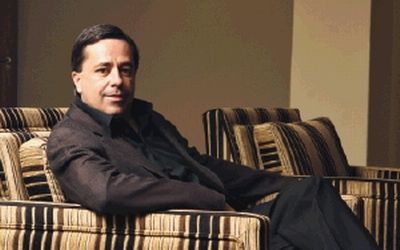
Domenico Dolce, left, and Stefano Gabbana, in the company of some fashion clients

An Italian court on Wednesday sentenced Italian fashion designers Domenico Dolce and Stefano Gabbana to one year and eight months in prison for tax evasion.

The pair’s lawyer, Massimo Dinoia, said they planned to appeal, adding that the case is “groundless.” The designers, known for their sexy styles favored by celebrities such as Madonna, Naomi Campbell and Katy Perry, have denied the charges.

The case dates back to 2004, when two of the company’s main brands were sold to Luxembourg-based holding company Gado.
Related Video

A court in Milan has convicted fashion designers Domenico Dolce and Stefano Gabbana of tax evasion. Christina Binkley reports.

Prosecutors alleged that the sale was made to avoid declaring taxes on royalties deriving from the two brands’ activities.

Under Italian law, the pair wouldn’t go to prison because sentences of less than three years are served with house arrest or community service. Moreover, the designers have the right to appeal the verdict twice, and Italian courts often take years to reach a final decision.

Public prosecutor Laura Pedio dubbed the operation as a “sophisticated tax fraud” and originally asked for a two-year jail term for the duo. If the conviction is upheld, the pair would also need to pay a fine to Italy’s tax agency for €500,000.

Over the last five years, Italian tax authorities have ratcheted up pressure on tax evasion in an effort to claw back an estimated €120 billion a year in unpaid taxes, cracking down in particular on the use by Italian companies of offshore centers to avoid taxes.

According to Italian tax authorities, the country lost about €17 billion in undeclared or under-declared income to offshore centers last year, compared with €11 billion for 2011, with Luxembourg the leading country used by Italian individuals and companies seeking to hide money abroad. Corporate tax rates in Luxembourg can be close to zero, while they are about 28% in Italy.

While Dolce & Gabbana has emerged as one of the most high-profile cases pursued by Italian tax authorities, Italian authorities have gone after other fashion groups in the past. In 1996, Giorgio Armani received a nine-month suspended sentence and was fined $64,000 for paying off tax authorities in exchange for favorable audits. Mr. Armani admitted to having paid the bribes.

Late last year, prosecutors launched an investigation into whether the Marzotto family, a wealthy textile dynasty, and four managers dodged 65 million euros in Italian income taxes when it sold fashion house Valentino through a Luxembourg holding company in 2007.

Earlier this year, the family paid the taxes that the state claimed it owed, but will face a criminal trial later this year.

The family and managers have denied all charges. – Wall Street Journal

US seizure of journalist records called ‘chilling’

Gary Pruitt
Gary Pruitt

The US government’s secret seizure of Associated Press phone records had a “chilling effect” on newsgathering by the agency and other news organizations, AP’s top executive said Wednesday.

“Some longtime trusted sources have become nervous and anxious about talking with us,” AP president and chief executive Gary Pruitt said in a speech to the National Press Club.

“In some cases, government employees we once checked in with regularly will no longer speak to us by phone. Others are reluctant to meet in person … This chilling effect on newsgathering is not just limited to AP.

“Journalists from other news organizations have personally told me that it has intimidated both official and nonofficial sources from speaking to them as well.”

Pruitt spoke one month after the US news agency revealed that it had been notified after the fact that the US Justice Department had secret subpoenas of two months of phone records from its news operations.

The AP has said US authorities appeared to have sought out the records as part of a criminal investigation into leaked information contained in a May 2012 AP story about a foiled terror plot.

Pruitt, who previously called the seizure “a massive and unprecedented intrusion” into newsgathering, said the Justice Department “violated its own rules” on how it handles investigations of leaks to news media.

He said the collection of records pertaining to more than 100 journalists was “an overbroad and sloppy fishing expedition” and failed to follow procedures on notification.

Pruitt said that authorities maintained that by notifying the AP ahead of the sweep “it would have tipped off the leaker” but argued “that kind of reasoning would apply in every single case.”

This rationale would mean news organizations would never know when its records are being obtained, news sources would become less willing to speak and “the public will only know what the government wants them to know.”

The Justice Department has told the AP “that our phone records have been and will continue to be walled off, protected and used for no other purpose other than the leak investigation,” Pruitt said.

“We appreciate these assurances. But that does not excuse what they did. We need to make sure it doesn’t happen again.”

The AP chief said the US administration should reaffirm the right of advance notice to news organizations, and use the courts to adjudicate any disputes on whether certain records are needed.

He also called for a “federal shield law with teeth” to ensure that journalists are not prosecuted for doing their jobs.

“We do not dispute that the government has the right to pursue those who leak classified information,” he said.

But he argued that “no one in this country should ever be prosecuted for committing journalism.”

Last month, Attorney General Eric Holder said the leak which prompted the seizure of journalist phone records was a “very serious” matter which “puts the American people at risk.”

Pruitt said Wednesday however that the AP waited five days before publishing the article, until after it had been assured by US officials that “the national security risk had passed.

The US administration under President Barack Obama has been aggressive in pursuing leaks of secret government information.

Authorities have said they had opened a probe into Edward Snowden, the former government contractor who leaked details about a cast US government electronic surveillance program.

Former CIA officer John Kiriakou was sentenced in January to two and a half years in prison for leaking the name of a secret agent implicated in harsh interrogations of Al-Qaeda suspects. – AP

Obama makes ‘an alarming call to end Catholic education’

barackvaticanThe Catholic media is up in arms over comments President Obama made during a speech while in Northern Ireland for the G8 summit. Obama made what is described as “an alarming call for an end to Catholic education,” in spite of the fact that it is considered “a critical component of the Church.”

In front of an audience of about 2,000 young people, including many Catholics, Obama claimed that Catholic education divides people and blocks peace, according to the Scottish Catholic Observer

“If towns remain divided—if Catholics have their schools and buildings and Protestants have theirs, if we can’t see ourselves in one another and fear or resentment are allowed to harden—that too encourages division and discourages cooperation,” Obama said.

Catholic World News noted:

Ironically, President Obama made his comments just as Archbishop Gerhard Müller, the prefect of the Congregation for the Doctrine of the Faith, told a crowd in Scotland that religious education upholds the dignity of the human person. Archbishop Müller said that Catholic schools should promote “all that is good in the philosophies of societies and human culture.”

Fr. John Zuhlsdorf quoted the Observer’s article on Fr. Z’s blog and added:

Another example of what this man wants: total isolation of any religious values in the private sphere alone. Pres. Obama is working either to intimidate or legislate or even TAX religious freedom out of the public square.

Off the top of my head, I can’t think of a foreign visit to a Islamic nation where he told people on his arrival that they shouldn’t have madrasas.  Can you?

Did he when visiting, say, Israel, say “You Jews shouldn’t have synagogue schools and you muslims shouldn’t have mosque schools.”  I can’t remember.  Did he?

Each of the articles drew numerous public comments, most suggesting that Obama be more concerned about the public schools in the United States than their parochial schools, which are working just fine. – bizpacreview.com

Few come to see Obama in Berlin

Almost nobody came...
Almost nobody came…

What a difference 5 years make: Obama braves blistering Berlin heat to make speech before invite-only crowd of 4,500 (that’s 195,500 FEWER than last time he was in Germany)

It was a more muted affair for President Obama in Berlin today as he spoke at Berlin’s iconic Brandenburg Gate before an invite-only crowd of 4,500 guests – a remarkable difference from the rock-star welcome he received five years ago in front of 195,500 cheering supporters.

Then, Obama had it all to play for – the glowing presidential candidate symbolizing America’s revived hope for the future. This time, he arrived back in Berlin under the cloud of NSA surveillance programs which have outraged many Europeans and the ever-growing crisis in Syria.

The President removed his jacket and rolled up his sleeves as he battled the 86F temperature on Wednesday, quipping: ‘People of Berlin, your welcome is so warm I’m going to take off my jacket.’

What a difference five years makes: 200,000 people came out to see then presidential candidate Barack Obama speak in 2008 at the Victory Column, around a mile from his speech today

At times wiping away beads of sweat, the President read from paper because the teleprompter wasn’t working.

He used the bulk of his speech to call for a reduction in the world’s nuclear stockpiles – as he stood  behind high walls of bullet-proof glass in the public square. The two-inch thick sheets are routinely used when the President appears before large crowds in public spaces.

Appealing for a new citizen activism, Obama renewed his call for the world to confront climate change, a danger he called ‘the global threat of our time’.

In a wide-ranging speech that enumerated a litany of challenges facing the world, Obama said he wanted to reignite the spirit that Berlin displayed when it fought to reunite itself during the Cold War.

Obama’s Kenyan half-sister made a rare public appearance as she joined Michelle and her daughters for emotional visit to Berlin’s Holocaust memorial

‘Today’s threats are not as stark as they were half a century ago, but the struggle for freedom and security and human dignity, that struggle goes on,’ Obama said at the city’s historic Brandenburg Gate under a bright, hot sun.

‘”And I come here to this city of hope because the test of our time demands the same fighting spirit that defined Berlin a half-century ago.’

The German press had mixed reviews for Obama on Wednesday, a marked difference from five years ago when ‘Obama-mania’ greeted him in the streets.

National newspaper Die Zeit published an article online on the Berlin speech, saying that Obama appeared to be the ‘young, fresh, uninhibited’ political force he was five years ago – but that the time between his speeches has been marked by ‘bitter disappointment’.

The article said Obama’s battles over gun control and equality for same-sex marriage must be remembered, otherwise his speech in Berlin could be seen as just ‘nice words’ in light of his decisions on Guantanamo and the NSA surveillance.

Other than his landmark speech, the President spent Wednesday in talks with German chancellor Angela Merkel and other top politicians including president Joachim Gauck.

He touched down with his family in the German capital on Tuesday night, waving to the crowds gathered at Tegel Airport.

His wife Michelle and daughters Malia and Sasha visited the city’s Holocaust memorial on Wednesday, accompanied by the President’s half-sister Auma, who studied in Germany.

Five years ago, when he was still seeking election as President, Obama received a rapturous reception on a brief tour of Europe where he was greeted as a leader who could give the world a fresh start after the controversial presidency of George W. Bush.

Now he is a much more divisive figure – although his re-election last year was welcomed by most Europeans, recent revelations about his administration’s spying on internet communications have tarnished his record in the eyes of many.

Mr Obama’s speech tomorrow will inevitably be compared with JFK’s, which took place on June 26, 1963 at the Rathaus Schöneberg, a few miles away from the Berlin Wall which had been under construction over the previous two years.

Kennedy’s speech, considered one of his best, held up West Germany as a symbol of freedom on the front line of the battle against communism.

It featured the famous line: ‘All free men, wherever they may live, are citizens of Berlin, and therefore, as a free man, I take pride in the words, “Ich bin ein Berliner!”‘ – Daily Mail

Tax havens cost Africa tens of billions: Kofi Annan

taxhavensTax havens used by major international firms are depriving impoverished African states of tens of billions of dollars each year, former UN secretary general Kofi Annan said.

Annan told a Security Council meeting on natural resources and conflict that tax avoidance and “murky” deals result in a loss of state revenue that fuels the wars over natural resources that have bedeviled Africa for decades.

“When foreign investors make extensive use of offshore companies, shell companies and tax havens, they weaken disclosure standards and undermine the efforts of reformers in Africa to promote transparency,” Annan said.

The former UN leader said the Africa Progress Report panel, which he chairs, had found “anonymous shell companies” were used in five deals that cost the Democratic Republic of the Congo nearly $1.4 billion from 2010 to 2012.

That sum is almost double the impoverished but resource-rich country’s annual budget for health and education.

Annan added that Africa loses more money each year through a Africa Progress Report panel technique, known as trade mispricing, than it receives in international development assistance.

More than $30 billion a year is sent to Africa each year in development aid by Western countries. Trade mispricing is where companies quote artificially low prices to deceive tax authorities.

Annan praised a vow by Group of Eight leaders at a summit this week to crack down on tax avoidance.

He called for international rules to insure the payment of taxes, “rules that limit the use of shell companies and other tools that contribute to secret, murky and exploitative deals.”

Annan said this could “help prevent the conditions that lead to armed competition for the spoils of natural wealth.”

He also said the Security Council could “play an important role in ending the plunder of minerals and other natural resources that perpetuate violent conflict” by taking tougher action against trade in conflict-linked resources.

The meeting was organized by Britain, which is Security Council president for June and had hoped the talks would result in a statement on conflict and natural resources.

But diplomats, speaking on condition of anonymity, said this was blocked by Russia.

Without naming any country, Britain’s UN ambassador Mark Lyall Grant expressed “disappointment” at the failure to agree a joint statement.

He said certain members had objected, saying that the issue of natural resources and conflict falls outside of the council’s mandate.

“This is clearly not true,” he said.

“There are a significant number of countries on the council’s agenda in which the weak management and illegal exploitation of natural resources has played a role in triggering, prolonging or escalating a conflict.” – SAPA/AFP

White South Africans killed in Somalia named

Somalia Al Shabab
Somalia Al Shabab

Denel has released the names of two of three employees who were killed after an attack on a United Nations facility in Somalia on Wednesday.

They were Morne Lotter, 42, of Oudtshoorn and Alan Simpson, 35, of Port Elizabeth, spokeswoman Vuyelwa Qinga said on Thursday.

The name of the third employee, a Somali, would be released soon.

On Wednesday morning at around 11am the UN Development Programme camp in Mogadishu came under attack and at least 16 people were killed, Denel said.

Denel group chief executive Riaz Saloojee said the company would do everything possible to help the families of the deceased, and would repatriate their bodies at the earliest opportunity.

“We further extend our deepest condolences to the families and friends of the UN employees who lost their lives,” he said.

The Denel staff in Somalia belonged to a contingent of personnel in the company’s humanitarian demining operations, Mechem, and were providing camp management services to the UN operations in the region.

These included managing and providing catering, cleaning and logistical support, as well as mine protected vehicles in the region.

The company would continue with its work towards the UN’s peace-keeping efforts.

“This is a very unfortunate incident, but Denel will continue to support all peace-keeping efforts carried out under the auspices of the United Nations and the African Union.

“In this instance our employees lost their lives while they were providing services to the UN’s peace-keeping efforts in the region,” said Saloojee.

The remaining Denel employees in Somalia were moved to facilities under the protection of the UN Office for Project Services (UNOPS) where they were reported to be safe.

UNDP administrator Helen Clark strongly condemned the attack.

“We are all appalled and deeply saddened by this cowardly attack.”

She said on Wednesday that among the UN fatalities were one international staff member, three contractors, and four Somali security guards.

A number of Somali civilians were also killed.

“We grieve with the Somali people, the African Union Mission in Somalia (AMISOM), and the entire UN family today,” said Clark.

The security forces arrived at the scene soon after the explosion. The UNDP compound is next to the airport where the AU forces have a base.


Government wants to stop redistributed land being used as collateral

San people
San people

Government is working on a plan that would help prevent redistributed land being used as collateral by banks, Land Reform Minister Gugile Nkwinti said.

“We know that when people are in trouble, they go to the bank and use it [their land] as collateral, and the land is taken away,” he said at a televised The New Age breakfast briefing.

“We don’t want them to lose their land for a second time.”

Nkwinti was referring to the Khoi-San people and their descendants, whose land was dispossessed after the 1913 Natives Land Act, and who are now benefiting from land restitution and financial compensation.

Nkwinti noted that the Khoi-San people had lost land even before 1913. – SAPA

Land redistribution was not only about owning land, but also about production and sustaining it.

He said government wanted every household to be treated like a basic production unit.

Brazil claims South Africa is dumping tyres

tyresSouth African manufacturers of truck and bus tyres are the latest target of a Brazilian antidumping investigation against South Africa, following an application by the Brazilian body representing tyre manufacturers, ANIP.

This comes in the wake of another trade probe of South Africa, over allegations of Sasol dumping polypropylene products, launched in March this year. Meanwhile, the tiff between the two Brics (Brazil, Russia, India, China and South Africa) members about cheap chicken imports to South Africa has been continuing.

Brazil threatened legal action at the World Trade Organisation (WTO) last year when South Africa’s International Trade Administration Commission investigated the dumping of frozen Brazilian poultry in South Africa and introduced a provisional antidumping duty.

Brazil initiated an antidumping probe on June 10 into imports of new truck and bus tyres from South Africa, Russia and Asian countries, giving importers 40 days to respond. It alleged South Africa’s manufacturers were dumping at a 51.98% discount.

South African Tyre Manufacturers Conference CEO Etienne Human said the claim only recently came to its attention. “The (conference’s) members are in the process of obtaining technical advice on how to deal with the Brazil antidumping application.”

An industry expert on Wednesday said Brazil had been “quite aggressive” in protecting its manufacturing industry, and implied that the authorities did not always follow WTO rules diligently on the introduction of trade remedies.

International trade law firm Felsberg & Associates said Brazil had introduced five antidumping investigations within two months at the end of last year, ranging from seamless carbon steel pipe imports from China to tyres from South Korea, Thailand, Taiwan and the Ukraine.

Apparently requests by the South African Tyre Manufacturers Conference for discussions with the Brazilian authorities had been unsuccessful.

The tyre antidumping initiation document says that due to the lack of pricing data for the products probed, the normal value for all investigated countries was based on “estimates of production costs, operational expenses and profit margins”. – BDLive

African migrants ‘left to die’ sue Nato states

boatpeopleSurvivors of a dinghy tragedy that left 63 migrants dead have accused the Nato member states of failing to come to the aid of people in danger.

The harrowing case known as the boat “left-to-die” was first revealed by the Guardian in 2011 and raised serious questions about the role of Nato naval vessels and military aircraft after a tiny dinghy crammed with 72 migrants from sub-Saharan Africa ran out of fuel and drifted for two weeks along one of the busiest shipping lanes in the world. The passengers died one by one, despite numerous distress calls, while Nato allies engaged in the operation against Muammar Gaddafi were in the waters nearby but did not help.

An initial legal complaint was shelved by the Paris prosecutor’s office last year after the French military claimed it had no responsibility.

Last year, an investigation by the Council of Europe, the continent’s human rights watchdog, found that a catalogue of institutional and legal failures led to the avoidable deaths of the migrants. It called on Nato and its member states to launch separate inquiries into why so many military units – including a Spanish frigate under Nato command that was sailing in the immediate vicinity of the boat – failed to respond to the migrants’ desperate pleas for help.

The new Paris legal complaint – with the International Federation of Human Rights Leagues and three other rights groups as civil parties – is designed to force a judicial inquiry by a French investigating judge. Another complaint is to be lodged in Belgium and official demands for information have been made in Canada and the UK.

Human rights groups denounced the lack of information from defence ministries whose forces were present.

Father Mussie Zerai, an Eritrean priest in Rome, one of the last people to communicate with the migrant boat before its satellite phone battery ran out, warned against the omertà, or code of silence, among Nato states.

Survivor’s account
Launching the legal case, Abu Kurke , a survivor, described what happened after the dinghy left Libya on March 27 2011 before washing up in Libya two weeks later with only 11 people alive, two of whom died shortly after.

Abu Kurke (25) had fled his native region of Oromia in Ethiopia as a result of political violence, trekking across the Sahara to reach the north African coast. He and a friend paid for their passage on the dinghy but boarded without food or water after the Libyan military intercepted them and took their bags. Abu Kurke found the boat “very small, very dangerous”. He considered swimming back but his friend warned that Libyan forces might open fire.

He now lives in the Netherlands with his wife and child, and needs ear surgery after injuries from sun exposure. “I have constant nightmares,” he said. “To see 63 people die is something that you can’t easily forget.”

Gonzalo Boye, the lawyer heading the Spanish case, said that naval ships on a military operation that did not assist civilians in danger was equivalent to a “war crime”. – Guardian News and Media 2013

Steinhoff successfully refinances European and African debt

Markus Jooste, CEO of Steinhoff International

In line with Steinhoff’s policy to review its funding structure, facilities, liquidity and capital structure regularly, Steinhoff Europe today announced that the syndicated revolving credit facility has been successfully refinanced, effectively extending the maturity dates by two years from June 2014 and 2016, to June 2016 and 2018 respectively. In addition Steinhoff Europe took advantage of the current strong European corporate loan environment and increased the facility from €720.5 million to €860 million. The refinancing closed at similar interest rates as those previously negotiated, ranging from Euribor plus 1.25% to Euribor plus 2%.

Director of treasury and financing activities, Stehan Grobler commented “The transaction provides significant benefits to Steinhoff, including sustained borrowing costs, increased financial liquidity and extended maturities. We are pleased to maintain our relationship with 35 international and European participating lenders on continued favourable loan terms and in addition the syndicated loan now includes two new lenders. We are particularly pleased by the extended terms agreed, confirming the vote of confidence in the quality of the European operations’ earnings and assets.”

Africa subsidiaries further diversify and extend debt maturities

Steinhoff also confirmed that various refinancing initiatives have been successfully concluded to extend maturities and commit liquidity on behalf of the African operations. Steinhoff Africa already refinanced R350 million of debt, effectively extending the maturity dates to April/May 2016 at a rate of Jibar+1.6%. Steinhoff’s independently listed subsidiary, JD Group (JDG) refinanced approximately R1.5 billion of debt at terms ranging from Jibar plus 0.76% to Jibar plus 2.03%.

“The JD debt refinancing consists of various trances of listed and unlisted paper. The most noteworthy of these being the listed tranches of R450 million repayable in April 2016 at a rate of Jibar plus 1.65%, and R300 million repayable by April 2018 at a rate of Jibar plus 2.03%” said Grobler.

About Steinhoff International

Steinhoff International Holdings Limited was listed in 1998 on the Johannesburg Stock Exchange (the JSE Limited) and forms part of the JSE Top 40 index, the JSE Industrial 25 index and is included on the JSE Socially Responsible Investment (SRI) Index.

Steinhoff is an active investment holding company.  Since inception, its investment strategy has been focused on investing in complementary assets that could provide benefits to, or derive benefits from, the existing businesses within its portfolio.  Steinhoff is primarily invested in listed or listable operating subsidiaries and associates.

These businesses operate independently, each with its own investment and growth focus, namely:

· Steinhoff Europe, an integrated mass market retailer of furniture and household goods, predominately serving the discount segment.

· 62% investment in listed entity KAP Industrial Holdings Limited, a diversified southern Africa industrial company operating in the logistics (Unitrans), integrated timber (PG Bison) and manufacturing sectors.

· 56% investment in listed entity JD Group Limited, an emerging market retailer of furniture and household goods, motor vehicles and DIY products, supported by a consumer finance business.

· 20% Associate investment in PSG Group, an investment holding company invested in a variety of complementary assets at various stages of development and maturity.

· A property portfolio comprising commercial, industrial and retail real estate assets throughout the jurisdictions where we operate.

Cape wind farm gets green light

WInd farm
WInd farm

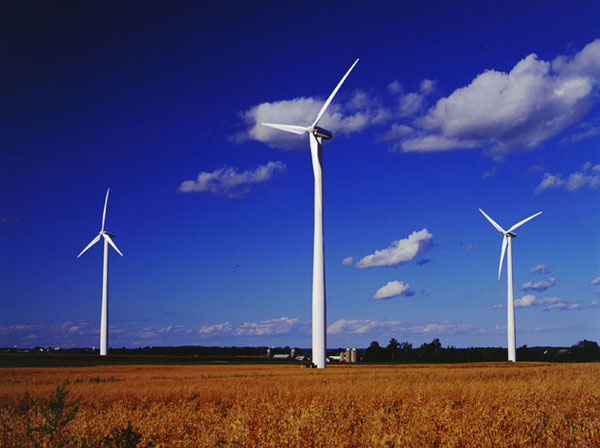
A proposed wind farm has been given the green light by Western Cape environmental authorities, the Cape Times reported on Thursday.

The environmental affairs and development planning department reportedly said the farm near Wolseley would not be in conflict with environmental legislation.

SAGIT Energy Ventures director Mich Nieuwoudt told the newspaper the next step was to have his bid selected by the national energy department in the next round of renewable energy bids in August.

The 90MW farm of 30 turbines was proposed for the Breede River Valley between Wolseley and Worcester.

According to the report, it would be capable of supplying enough electricity for 70 percent of the Witzenberg Municipality’s population, once completed.

This equated to around 63,000 people when running at peak. The power would be fed into the national grid.

The province reportedly got most of its electricity from Mpumalanga, about 1600km away, and a significant amount was lost in transmission. – Sapa

Countdown to urgent elections after Mali ceasefire

mali_map2The clock is ticking for Mali as it scrambles to organise key elections in less than 40 days following a ceasefire deal between the government and separatist Tuareg rebels.

The agreement, reached on Tuesday after 10 days of tense negotiations, will enable Malian troops to enter the Tuareg-held city of Kidal in the northeast to secure polls scheduled to take place on July 28.

Malians have welcomed the truce but there are fears the deal will be difficult to implement and could unravel after the vote.

Malian military sources say the accord envisages the army entering the regional capital “without delay”, accompanied by French soldiers and troops from the African-led International Support Mission to Mali (AFISMA).

French President Francois Hollande told a meeting of his cabinet the agreement was “a major breakthrough”, his spokesman said.

The US also welcomed the deal.

“The agreement clears the way for the return of Malian administrative and security authorities to Kidal to permit the holding of presidential elections there on July 28,” State Department spokeswoman Jen Psaki said.

And the UN Security Council urged other armed groups who had cut ties with “terrorist organisations” in Mali to join the ceasefire.

But analysts raised a number of problems with securing a long-term ceasefire, such as difficulties monitoring any disarmament; and differentiating Tuareg militants from the diverse range of insurgents infesting Mali’s north.

“Ultimately, this is an interim agreement to allow the organisation of the presidential elections in Kidal, ” Malian analyst Mamadou Samake told AFP.

“It has not solved all the problems, it just put off some of the problems.”

The Malian government signed the accord with the National Movement for the Liberation of Azawad (MNLA) and a smaller Tuareg group in Ouagadougou, capital of neighbouring Burkina Faso.

The two sides agreed to halt hostilities and organise peace talks after the election, but the Tuaregs were not pressed to lay down their weapons.

“It was that or nothing, but we were heading for disaster if we hadn’t been able to get an agreement on presidential elections in the Kidal region,” said an aide to President Dioncounda Traore.

The Tuareg occupation of Kidal has been a major obstacle to holding the election, seen as crucial to Mali’s recovery from the conflict of the past 15 months.

Malian officers staged a coup in March 2012 but the weak army was overpowered by the MNLA, which seized key northern cities before being sidelined by its Al-Qaeda-linked allies.

The MNLA sided with a French-led military intervention, which reclaimed most of the lost territory from the Islamists. But the rebels have been reluctant to allow government troops into their Kidal bastion for the vote.

For analyst Samake, settling the major issues relating to Mali’s Tuareg separatist movement will have to wait.

“After the presidential elections, the legislative elections loom on the horizon. Former Tuareg rebels will certainly want to stand,” he said.

“But for now, they cannot because of an arrest warrant against them… That could create problems.”

Those warrants will likely be dropped, but the accord does state that international investigators will look into crimes against humanity and war crimes committed during the conflict.

Confronted with these problems, an official from the Ministry of Territorial Administration would only say: “Let’s take each day as it comes.”

The logistics of the disarmament is another obstacle to be cleared for all parties working for lasting peace in the Kidal region.

But the larger problem, say military sources, is that Islamist insurgents continue to hide out in northern Mali. They could launch attacks which might be wrongly attributed to former Tuareg rebels.

“We are the military — we don’t do politics,” a battalion commander from a neighbouring country’s army told AFP in the northern city of Gao.

“But just so there is no ambiguity, there will have to be some kind of mechanism in Kidal to prevent any infiltration of terrorists, otherwise it could complicate things.” – AFP

Italy’s first black minister receives death threats

Cecile Kyenge
Cecile Kyenge

Italy’s first black Cabinet minister is facing Internet death threats before a visit to a region known for its anti-immigrant political base.

But Cecile Kyenge says she’s not afraid and challenged Italians to respond to such intimidation themselves to prove that Italy isn’t racist.

Kyenge, a Congolese-born doctor who has lived in Italy since 1983, has been the target of racist diatribes ever since she was named integration minister in April. She has been called “Congolese monkey,” and a member of a “bonga bonga government.”

Last week, a local politician from the xenophobic Northern League party was expelled from the party after she suggested on Facebook: “Why doesn’t someone rape her (Kyenge), so she can understand what victims of atrocious crimes feel?” The official, Dolores Valandro, was implying that immigrants were responsible for violent crime in Italy.

Kyenge on Wednesday acknowledged “racist episodes,” but declined to brand the country as a whole racist. She has offered a muted response to the attacks against her, saying it’s more for Italy as a nation to respond.

“These actions are directed against all of us, not just me,” Kyenge told reporters. “Surely it hasn’t left me indifferent. But I think the response that the country gives is important.”

Unlike France, Germany or Britain, where second and third generations of immigrants have settled, albeit uneasily, Italy is a relative newcomer to the phenomenon, with the first waves of immigrants coming to Italy’s shores only in the 1980s. The country’s race problem was then largely seen at soccer stadiums, where even today black stars like Mario Balotelli are routinely subjected to racists taunts.

But Kyenge’s emergence onto the political stage has brought the issue to the fore, spurred on in part by her call for Italy to change its citizenship law to allow children born in Italy of legal immigrants to obtain citizenship more easily.

Currently, such children can only apply once they turn 18, and can be denied citizenship for a host of bureaucratic mistakes or omissions. Kyenge says changing the law is a key part of changing Italians’ very concept of citizenship, to take into account the country’s changing demographics.

Foreigners made up about 2 percent of Italy’s population in 1990; currently the figure stands at 7.5 percent.

“It’s a new citizenship that comes about by the meeting of different cultures,” she said.

Her call, however, has been met with stiff resistance by the anti-immigrant Northern League, which isn’t taking part in a parliamentary committee drafting the new citizenship law. Kyenge’s spokesman, Cosimo Torlo, said it’s unclear at what age citizenship could be obtained under the proposed legislation – at age 3, 5 or 10 – but that “Whatever it is, it will be better than the current law.”

The threats against Kyenge are real. She arrived at the Foreign Press Association with a phalanx of bodyguards, two of whom flanked the dais where Kyenge spoke, talking into their shirt cuffs and sending signals to two other colleagues at the back of the room.

Asked about the unusually high security detail, Kyenge noted that all ministers have bodyguards. “But it’s clear that for me, because of the threats I have received, there’s a greater attention on protection.”

This weekend, Kyenge will give the opening address to a multicultural festival in the northern region of Veneto, the political home base of the Northern League. Far-right groups are planning a protest. Isabella Zuliani, vice mayor of the town hosting the event, told newspaper Il Gazzettino that police have already been informed about a new round of Internet death threats directed at Kyenge, including one that exhorted simply: “Kill her.”

“Racist episodes exist, but you can’t say that a country is racist because there are certain episodes in the territory,” Kyenge said.

That said, Kyenge appeared more ready to acknowledge such “racist episodes” than in her first meeting with the media, soon after she was nominated. Then, she said Italy’s problem wasn’t so much racism as ignorance of “the other.”

After two months of taunts directed against her, Kyenge said, “Maybe what is missing in Italy is a culture of immigration: We have to try to know, understand the ‘other,’ and that diversity is a richness.

“As soon as we understand that, we can evaluate whether Italy is racist,” she added. – AP

Heavy police presence ahead of Malema’s court appearance today

Julius Malema
Julius Malema

Police vehicles gathered around the Pietersburg Magistrate’s Court on Thursday morning ahead of a case involving expelled ANCYL leader Julius Malema and four others.

Around 7.15am, two police Nyalas and at least 10 police cars were parked in the vicinity of the court, where the five are set to appear on charges including fraud and racketeering.

Traffic was affected on Landros Mare and Bodenstein Streets outside the court, but the roads were not completely closed.

One of the Nyalas was carrying a roll of barbed wire.

Later on Thursday, the court is expected to set a High Court date for the trial.

The case is being heard in the high court building, because the magistrate’s court was gutted by fire last year.

Malema is accused of making nearly R4 million from corrupt activities. He is out on bail of R10,000 and faces charges of fraud, corruption, money-laundering, and racketeering.

His co-accused are his business associates Kagisho Dichabe, Lesiba Gwangwa, Helen Moreroa, and Makgetsi Manthata, who are out on bail of R40,000 each.

The State alleges they misrepresented themselves to the Limpopo roads and transport department, leading to a R52m contract being awarded to On-Point Engineering.

According to court papers, Malema had business ties with Gwangwa, a director of On-Point Engineering. Malema’s Ratanang Family Trust was an indirect shareholder in On-Point.

The department paid the company R43m. According to the charge sheet, Malema substantially benefited from this payment, using it to buy a multi-million rand farm and a Mercedes-Benz.

Malema allegedly did this knowing that the money formed part of the proceeds of crime.

All five have proclaimed their innocence. – Sapa