The Church of Norway on Tuesday rejected a proposal for religious same-sex marriage, even though it had the support of most bishops. Norway was among the first countries in Europe to grant homosexuals full rights, including marriage and adoption in 2009.
In October eight of Norway’s 12 bishops said they favored allowing religious weddings for same-sex couples. But the proposal needed the approval of the synod, the highest decision-making body in the church, which professes the Lutheran Christian faith.
During a national synod, 64 participants voted against and 51 in favor. The delegates will now examine other alternatives such as whether to add a religious blessing to civil ceremonies.
Benestad, a Norwegian priest who has been one of the leading voices against gay marriage, stated emphatically that marriage only describes a relationship between a man and one woman.
“I will be happy if we end up with marriage preserved as a relationship between man and woman,” Benestad said. “There is only one answer, both in the bible and in the history of the church, to the question of what a marriage is.”
Same-sex marriage became legal in Norway on January 1, 2009 when a gender neutral marriage bill was enacted after being passed by the Norwegian legislature in June 2008. Norway became the first Scandinavian country and the sixth country in the world to legalize same-sex marriage. However, there is no regulation about churches’ obligations in marriages.
In neighboring Sweden, the Lutheran church approved same-sex marriages in 2009. Denmark in 2012 made it mandatory for all churches to offer full religious weddings for same-sex couples, although priests opposed on principle can ask a colleague to take the service their place.
Black people are the fathers and mothers of civilization, white men are the devil, the Christian God is nothing more than a ghost and only a small percentage of people understand the world.
These are just some of the beliefs behind the bling — the gaudy Five Percent Nation medallions worn by Jay Z and Carmelo Anthony.
Last week, all eyes at the Barclays Center weren’t on Jay Z’s better half, Beyoncé — but on the coaster-size golden pendant swinging from the rapper’s neck as the couple sat courtside. Asked once if the group’s symbol — an eight-point star with the number 7 in the middle — held any meaning to him, the rapper shrugged, “A little bit.”
So what exactly do Five Percenters believe?
“The rationale is that the black man is God and created the universe, and is physically stronger and intellectually stronger and more righteous naturally,” says Michael Muhammad Knight, an author of two books on the radical group.
“Whiteness is weak and wicked and inferior — basically just an errant child who needs to be corrected.”
The group was founded in 1964 in Harlem by Clarence Smith, who later changed his name to Allah, a former student of Malcolm X who disagreed with the Nation of Islam over the nature of God.
Smith rejected the notion of a supernatural deity and instead believed that all black men had God in them and that black women were “earths” who took on a complementary yet subordinate role to their gods.
The idea is empowering, Knight says.
“Anytime someone is saying you have to accept your conditions of oppression and slavery and pray to an unseen god — that kind of god is just being used to keep people down and to keep people from looking to themselves as a solution to their problems,” he notes. “If there is a problem, no one will fix it for you, except yourself.”
Five Percenters don’t consider themselves Muslim, but their name comes from the Nation of Islam’s belief that 5 percent of humanity are “poor righteous teachers” who exist to enlighten the masses about the truth of existence.
Members will sometimes refer to themselves as “scientists” to drive home the search for truth. And they face a tall task, because under their belief system, 10 percent of the world’s population controls the other 85 percent by spreading the belief in a “mystery God.”
To show followers the way, members must learn the Supreme Mathematics and Supreme Alphabet — powerful tools to decipher the meaning of the universe. In both, each letter and number represents a concept, for example, 1 is knowledge, 2 is wisdom, while A is Allah and B is be, or born. The number 7 on Jay Z’s pendant stands for God.
Caucasians, meanwhile, don’t enjoy an exalted status in the narrative of the Five Percenters.
“The first lesson I learned from the Five Percent was simple: F–k white people. Seriously. White people are devils,” Knight, 36, who is white and converted to Islam as a teenager, once wrote.
Like government leaders everywhere, Russia’s Vladimir Putin often lies. But when he tells an uncomfortable truth, few people in the US or Europe bother to listen. Take what he said about Ukraine back in 2007, when Time magazine interviewed him as their “Person of the Year.”
The Russians subsidize Ukraine, Putin explained. They sell it natural gas and other energy resources at $3 billion to $5 billion a year below international market prices. At the same time, the US “somehow decided that part of the political elite in Ukraine is pro-American and part is pro-Russian, and they decided to support the ones they consider pro-American, the so-called orange coalition.”
Why, Putin asked, should Russia continue to subsidize Ukraine? “If you want to support someone, you pay for it. Nobody wants to pay.”
Putin had it right. In their proposed economic agreement with Ukrainian president Viktor Yanukovych, the Europeans offered very little money. In their negotiations with him during the Euromaidan protests, they and their allies in Washington continued to offer far less than the estimated $20 billion to $35 billion that the country needed.
In February, about a week before Yanukovych ran away, the Christian Science Monitor summed up the situation. Ukraine’s international currency reserves were falling at a vertiginous rate. The national currency, the hryvnia, had lost value, and the international credit rating agency Fitch had downgraded the country’s sovereign debt. How would Ukraine pay what it owed – primarily to Western banks and Russia’s Gasprom? How would it pay salaries, pensions, and social benefits?
The EU agreement looked to a major infusion of capital from the International Monetary Fund. But that would come only after the Ukrainians agreed to what IMF managing director Christiane Lagarde later called a “profound transformation,” especially of its fiscal policy, monetary policy, and policies on energy.
“Nobody is willing to give economic support, from the United States or from the IMF or from Europe, to an unreformed Ukraine,” US State Department’s Victoria Nuland said in Kiev on February 7.
The Westerners had good reason for being tight-fisted. They knew that the incredibly corrupt Yanukovych and the Ukrainian oligarchs would take the money and stay put. That is how the country’s oligarchic system works, with or without Yanukovych. Most of the new billionaires – including the leading candidate to become the new president, Petro Poroshenko – made their first big money by “privatizing” formerly state-owned enterprises.
“Ukraine’s oligarchs got rich during the privatization sales of former Soviet-owned industries and factories shortly after independence in 1991,” explained the Monitor. “The country’s main industries of mining, metals, chemical production, and energy distribution were snatched up by individuals, who then reaped millions in profits.”
The Monitor did not mention one significant fact. Privatization only came about the way it did with what one academic study called “the support and cajoling of Western donors.” Will foreign meddlers never learn?
Nor did the Western-backed rip-off stop with the original sin. Several analysts tell the same story, none more succinctly than the Monitor. “Many of the oligarchs’ businesses – particularly in the mining, heavy industry, and energy distribution industries – operate in dilapidated, Soviet-era facilities that are extremely energy-inefficient, and heavily dependent on government subsidies.”
In other words, when would-be reformers talk about Ukraine’s corruption, they mean the oligarchic system. Not necessarily personal corruption, but a pervasive systemic corruption.
“Corruption and politics have always had a close relationship in Ukraine,” explains the Monitor. “The oligarchs have benefitted for two decades from close relations with government officials, who have at times turned a blind eye to the activities in exchange for support. At other times, politicians have enabled their oligarch supporters to get richer through key government appointments and a lack of transparency in government contracts.”
Systemic corruption also gobbled up foreign assistance. Ukraine has gotten far more aid than any county in the former Soviet Union, energy specialist Emily Holland told Bloomberg Businessweek. And where has it gone? “Into the pockets of an incredibly corrupt political elite and oligarchs.”
The Russians, with their own oligarchic system, continued to subsidize Ukraine’s energy imports. They also agreed in December to buy $15 billion in Ukrainian Eurobonds, and actually laid out the first $3 billion.
“The economy of Ukraine was going into the wall and was heading for disaster,” the IMF’s Lagarde told PBS Newshour. “Without the support that they were getting from this lifeline that Russian had extended a few months ago, Ukraine was heading nowhere.”
Mounting violence from the protesters, continuing refusal of Brussels and Washington to come up with serious money, and increasing loss of support from the oligarchs convinced Yanukovych to jump ship. Putin responded by stopping the subsidies, which meant raising the price Ukraine had to pay for its energy imports.
Brussels and Washington were left holding the bag, as Putin had suggested they should. So, at warp speed, the IMF and Ukraine’s Western-backed interim government came to terms. The Ukrainians would agree to “profound transformation.” The IMF would give them something between $14 billion and $18 billion over time.
Having worked as a private banker, central banker, and Minister of Economy, Prime Minister Yatsenyuk knew from the start what lay ahead. “To be in this government is to commit political suicide,” he predicted even before the Russians moved into Crimea.
The biggest challenge, he told an investor’s conference in Kiev last week, will be to sell Ukrainians on the need for “painful economic reforms.” Unpegging the hryvnia from the dollar will likely cause a 3% drop in GDP, he explained. Cutting the public sector by 10% will put a lot of people out of work. Losing the Russian subsidy on energy and simultaneously cutting domestic fuel subsidies will greatly increase the cost of living, though the government would provide “some sort of subsidy” to the poorest five to eight million households.
Yats understood how this would breed discontent, especially in the east and south, where people lean more toward Russia. He knew Moscow was telling them that they would enjoy higher living standards in Russia, with higher wages and better pensions and without the austerity that the Kiev government was now offering. “They’re saying: if you go to Russia, you’ll be happy, smiling, and not living in a Western hell.”
That is Russian propaganda, no doubt. But the message rings true, doesn’t it?
Yats has a much bigger problem. He and his Western-backed interim government have gone to great lengths to give the oligarchs even greater power – far more than to the Svoboda Party or followers of Stepan Bandera in Yatsenyuk’s Fatherland Party. In one of their first acts in office, they appointed oligarchs like Ihor Kolomoisky and Serhiy Taruta as governors in Eastern Ukraine, and are already working closely with the country’s likely new president, Petro Poroshenko.
Many in the West welcome “the Chocolate King’s” presence, especially since he was the highest-profile oligarch to support the Euromaidan protest. Western “deciders” have looked kindly on him for years, as journalist Andriy Skumin wrote in March 2012, just after Yanukovych appointed Poroshenko Minister of Trade and Economic Development.
“European circles, blindly searching for any adequate Western-thinking individuals within Ukraine’s establishment, have a favorable opinion of Poroshenko as a person who is reliable, can be charged with introducing changes in Ukraine and ending the deadlock in EU–Ukraine relations” Skumin wrote. But “the preservation of the monopolistic oligarchy will not allow for any European integration or even domestic transformations using European patterns. The only thing that could be done is perhaps only an outward European appearance.”
“Profound transformation” requires killing the oligarchic system, which no one in the game – least of all Poroshenko – has come close to suggesting. This is the IMF’s big lie. Lagarde talks of changing Ukraine, but the people she has entrusted to make those changes are the precisely the ones whose power the country most needs to curtail.
To crib from Vladimir Putin, Poroshenko and his fellow oligarchs are neither pro-American, pro-European, nor pro-Russian. They are not even necessarily pro-Ukrainian, though a bit of patriotic fervor may help them shove austerity down the throats of their underlings. Ukrainian oligarchs, like American plutocrats, are simply pro-themselves.
A veteran of the Berkeley Free Speech Movement and the New Left monthly Ramparts, Steve Weissman lived for many years in London, working as a magazine writer and television producer. He now lives and works in France, where he is researching a new book, “Big Money and the Corporate State: How Global Banks, Corporations, and Speculators Rule and How to Nonviolently Break Their Hold.”
Russia is a Christian country, Putin repeated recently.
This speech recalls last December’s address where the former KGB chief spoke of Russia as standing against a decadent West:
“Many Euro-Atlantic countries have moved away from their roots, including Christian values. Policies are being pursued that place on the same level a multi-child family and a same-sex partnership, a faith in God and a belief in Satan. This is the path to degradation.”
Heard any Western leader, say, Barack Obama, talk like that lately?
Indicting the “Bolsheviks” who gave away Crimea to Ukraine, Putin declared, “May God judge them.”
What is going on here?
With Marxism-Leninism a dead faith, Putin is saying the new ideological struggle is between a debauched West led by the United States and a traditionalist world Russia would be proud to lead.
In the new war of beliefs, Putin is saying, it is Russia that is on God’s side. The West is Gomorrah.
Vladimir Putin knows exactly what he is doing, and his new claim has a venerable lineage. The ex-Communist Whittaker Chambers who exposed Alger Hiss as a Soviet spy, was, at the time of his death in 1964, writing a book on “The Third Rome.”
The first Rome was the Holy City and seat of Christianity that fell to Odoacer and his barbarians in 476 A.D. The second Rome was Constantinople, Byzantium, (today’s Istanbul), which fell to the Turks in 1453. The successor city to Byzantium, the Third Rome, the last Rome to the old believers, was — Moscow.
Putin is entering a claim that Moscow is the Godly City of today and command post of the counter-reformation against the new paganism.
Putin is plugging into some of the modern world’s most powerful currents.
Not only in his defiance of what much of the world sees as America’s arrogant drive for global hegemony. Not only in his tribal defense of lost Russians left behind when the USSR disintegrated.
He is also tapping into the worldwide revulsion of and resistance to the sewage of a hedonistic secular and social revolution coming out of the West.
In the culture war for the future of mankind, Putin is planting Russia’s flag firmly on the side of traditional Christianity. His recent speeches carry echoes of John Paul II whose Evangelium Vitae in 1995 excoriated the West for its embrace of a “culture of death.”
What did Pope John Paul mean by moral crimes?
The West’s capitulation to a sexual revolution of easy divorce, rampant promiscuity, pornography, homosexuality, feminism, abortion, same-sex marriage, euthanasia, assisted suicide — the displacement of Christian values by Hollywood values.
Washington Post columnist Anne Applebaum writes that she was stunned when in Tbilisi to hear a Georgian lawyer declare of the former pro-Western regime of Mikhail Saakashvili, “They were LGBT.”
“It was an eye-opening moment,” wrote Applebaum. Fear and loathing of the same-sex-marriage pandemic has gone global. In Paris, a million-man Moral Majority marched in angry protest.
Author Martha Gessen, who has written a book on Putin, says of his last two years, “Russia is remaking itself as the leader of the anti-Western world.”
But the war to be waged with the West is not with rockets. It is a cultural, social, moral war where Russia’s role, in Putin’s words, is to “prevent movement backward and downward, into chaotic darkness and a return to a primitive state.”
Would that be the “chaotic darkness” and “primitive state” of mankind, before the Light came into the world?
This writer was startled to read in the Jan-Feb. newsletter from the social conservative World Council of Families in Rockford, Ill., that, of the “ten best trends” in the world in 2013, number one was “Russia Emerges as Pro-Family Leader.”
In 2013, the Kremlin imposed a ban on homosexual propaganda, a ban on abortion advertising, a ban on abortions after 12 weeks and a ban on sacrilegious insults to religious believers.
“While the other super-powers march to a pagan world-view,” writes WCF’s Allan Carlson, “Russia is defending Judeo-Christian values. During the Soviet era, Western communists flocked to Moscow. This year, World Congress of Families VII will be held in Moscow, Sept. 10-12.”
Will Vladimir Putin give the keynote?
In the new ideological Cold War, whose side is God on now?
Patrick J. Buchanan is the author of “Suicide of a Superpower: Will America Survive to 2025?” To find out more about Patrick Buchanan and read features by other Creators writers and cartoonists, visit the Creators Web page at www.creators.com.
Watch the white middle class of Chicago vanish before your eyes.
It shows the demise of the foundation of an American city.
Watch as the grey squares, which illustrate the middle class that dominated the most of the city’s neighborhoods in 1970s, quickly vanish over 40 years.
The poor, represented by the orange and red colors, explode across the map.
And watch what happens in the green areas representing the upper middle class and wealthy. Not surprisingly, it spreads from downtown to the north side, but not with the same ferocity as the reds and oranges.
Especially in 2000, the greens-the color of money–grow much darker. It seems the rich simply got richer. In later years, the wealthy pushed the poor out of the near West Side. It appears that area bypassed the middle.
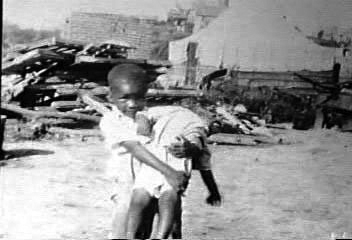
A black actress will play a journalist investigating the 1921 Oklahoma race riots, where an estimated 300 people were believed to have been murdered amid post-WWI racial tension surrounding segregation laws and the prosperous black community of Greenwood.
According to a 2011 New York Times story on the subject, “The Tulsa race riot of 1921 was rarely mentioned in history books, classrooms or even in private…an episode so brutal that this city, in a bout of collective amnesia that extended more than a half-century, simply chose to forget it ever happened.”
The announcement came as part of the net’s next slate of programming.
The 8.2 earthquake that shook northern Chile and surrounding countries late Tuesday night was one of a string of recent earthquakes along what is known as the “Ring of Fire,” a circle of quake-prone areas on the Pacific Rim.
A magnitude 5.1 quake hit Los Angeles last week, followed by aftershocks along the California coast. And South America will be on the lookout in coming days for aftershocks that have already started following Tuesday night’s temblor.
Both cities lie along the so-called Ring of Fire, where two plates underneath the earth’s surface occasionally bump up against other plates, according to Kate Hutton, staff seismologist at California Institute of Technology.
“That affects South America, the California coast, Alaska, Japan, the Philippines. Basically any places around the Pacific Rim are at risk,” she said.
The 9.0 magnitude quake that hit Japan and cause the Fukushima meltdown in 2011 was on the Pacific’s Ring of Fire.
Hutton said the current risk is not greater because California and Chile experienced quakes.
“The biggest risk is aftershocks for the 8.2 in the same area where the 8.2 occurred. They’ll become less frequent with time, but the risk still exists for days and weeks,” Hutton said.
Scientists still don’t have a way to predict when and where earthquakes will hit, so it is impossible to say whether other quakes will strike along rim areas, she said.
The most susceptible areas on the Ring of Fire include such populated cities as Santiago, Chile; Los Angeles and San Francisco, California; Seattle, Washington; Tokyo, Japan; and Lima, Peru.
“The most obvious aspect of earthquake distribution is its randomness in time,” Hutton said, “though not geography.”
Italian police on Wednesday arrested 24 people involved in a campaign to demand independence for Venice and its surrounding region and seized a tractor that they said the activists had tried to convert into a sort of tank.
The surprise arrests came just two weeks after activists held an online vote calling for the Veneto region, which encompasses the lagoon city, to break away from the rest of Italy and declare itself the “Repubblica Veneta”.
The authorities accused the 24 separatists of being involved in “terrorism”, “fabrication of weapons of war” and “subversion of the democratic order”.
The activists were part of a “secessionist group that was planning various initiatives, some of them violent, aimed at pushing for the independence of Veneto and other parts of the national territory of the Italian State,” the paramilitary Carabinieri said.
The activists were allegedly planning to use the “tank”, which was armed with a makeshift cannon, to stage a protest in Venice’s St Mark’s Square, 17 years after a similar stunt in which Veneto separatists drove a home-made armoured car into the famous square.
Police claim the makeshift tank was in good working order and was capable of firing projectiles from its barrel.
Those arrested included Franco Rocchetta, a former MP and the founder of the Liga Veneta, or Veneto League, one of several separatist movements calling for independence for the affluent north-eastern region.
In last month’s unofficial referendum, organisers claimed that 56 per cent of registered voters in the region cast a vote online and that an overwhelming majority supported secession from Italy.
They said that out of a total 2.36 million votes cast, 2.1 million voted for independence.
The drive for independence is supported by Veneto’s most powerful politician, Luca Zaia, who is president of the region and a member of the separatist Northern League.
Mr Zaia leads a regional assembly which is debating holding an official referendum on the issue, just as Scotland secured the right to hold September’s vote on seceding from the UK. He says there are powerful economic and cultural reasons for Veneto to strive for independence.
Venetians and the people of surrounding cities such as Padova and Vicenza deeply resent the fact that each year Rome takes 20 billion euros of their tax revenue.
They feel that the money is squandered on corrupt and dysfunctional parts of Italy, particularly in the crime-ridden south.
The US stock market is rigged in favour of high-speed electronic trading firms, which use their advantages to extract billions from investors, according to the acclaimed author Michael Lewis.
In his new book Flash Boys: A Wall Street Revolt, Lewis says that firms are using their speed advantage to profit at the expense of other market participants to the tune of tens of billions of dollars.
“They are able to identify your desire to buy shares in Microsoft and buy them in front of you and sell them back to you at a higher price,” Lewis, whose book is available on Monday, said on the television program 60 Minutes on Sunday.
“This speed advantage that the faster traders have is milliseconds, some of it is fractions of milliseconds,” said Lewis, whose books include The Big Short and Moneyball.
High-frequency trading (HFT) is a practice carried out by many banks and proprietary trading firms using sophisticated computer programs to send thousands of orders into the market in an instant, executing a small portion of them when opportunities arise to capitalise on price imbalances, or to make markets. HFT makes up more than half of all US trading volume.
The trading methods and technology that make HFT possible are all legal, and the stock exchanges HFT firms trade on are highly regulated.
Proponents of HFT argue that the presence of such firms makes it easier for all market participants to find buyers and sellers for their trades, and that the speed at which HFT firms can detect and take advantage of pricing imbalances between different markets and assets leads to smaller bid-ask spreads.
But Brad Katsuyama, former head trader in New York for the Royal Bank of Canada and a major figure in Lewis’s book, said he was finding that when he would send a large stock order to the market, it would only be partially filled, and then he would have to pay a higher price for the rest of the order.
With the help of new hire Ronan Ryan, Katsuyama realised that his orders travelled along fibre optic lines and hit the closest exchange first, where high frequency traders would get a glimpse, and then use their speed advantage to beat him to the other 12 US public exchanges and 45 private trading venues. HFT algorithms could then buy the shares Katsuyama wanted, and then sell them to him at a slightly higher price.
Katsuyama and Ryan created a system in which RBC would send its orders first to the exchange that was the furthest away, and last to the exchange that was closest, with the goal of arriving at all places nearly simultaneously, cutting out HFT.
“Essentially, our fill rates went to 100 percent. We couldn’t believe it when we actually figured it out,” Katsuyama told 60 Minutes.
Katsuyama said he decided to start a new trading platform, called IEX, for the Investors’ Exchange, employing similar tactics to those he used at RBC.
“It almost felt like a sense of obligation to say we found a problem that is affecting millions and millions of people – people are blindly losing money they didn’t even know they were entitled to. It’s a hole in the bottom of the bucket,” he said.
IEX has attracted the investment of David Einhorn, the billionaire owner of hedge fund Greenlight Capital, and an endorsement from Goldman Sachs. The investors in IEX are fund companies and individuals, not banks.
“We are selling trust, we are selling transparency, and to think that trust is actually a differentiator in a service business, is actually a crazy thought, right?” said Katsuyama.
Earlier this month, New York state’s Attorney General Eric Schneiderman said he believes US stock exchanges and other platforms provide HFT firms with unfair advantages.
A 20-year-old gay man was gang-raped and his mattress burned in Roodepan near Kimberley, Northern Cape police said on Monday.
He was raped in the early hours of Sunday at a house in Lerato Park, Lieutenant Sergio Kock said.
Asked if this had been a homophobic attack, Kock said: “We cannot confirm if it was a homophobic attack or not, that we can’t say really.”
Five men allegedly forced their way into the house where the man was with his boyfriend. The boyfriend managed to escape. The men allegedly took turns raping him.
“It is further alleged that the suspects set alight a mattress inside the house and later fled the scene.”
She suffocated her 8-year-old son with a pillow at her Parkrand, Boksburg, home.
Then she took his lifeless body, put it into her car and drove to Dawn Park, a suburb a few kilometres away, where she placed it on the side of the road and burnt it.
As the corpse was engulfed by flames, Precious Maliepetsane Mokoena got into her car and went home.
She was arrested a few days later and charged with the murder of Lehlohonolo Magatikele.
In the Johannesburg High Court on Monday, Mokoena’s father’s eyes constantly brimmed with tears whenever he looked at his daughter.
Speaking to The Star, Abram Moepshe said he “can’t stop asking why”.
Mokoena pleaded guilty and, according to her lawyer, advocate Thabiso Mashitoa, the mother-of-two stated in her plea explanation that she had marital problems.
She had divorced her husband and was awarded custody of Lehlohonolo.
On January 13 last year, she smothered Lehlohonolo with a pillow, burnt his body and went home, she said in her plea explanation.
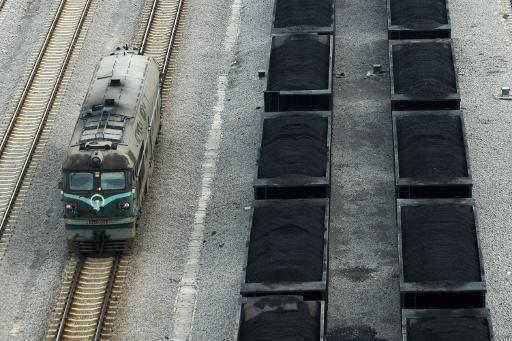
It is one of the world’s longest railways — an approximately 11,000-kilometre “modern-day silk road” that traverses Russia and Kazakhstan to link a megacity in the heart of China with a key commercial hub in western Germany.
On Saturday, as part of his landmark visit to Germany, Chinese President Xi Jinping is set to visit the last stop on the “Yuxinou” rail line, an industrial feat that promises to revolutionise transport between Europe and Asia.
Duisburg is a steel-making town of around half a million on the confluence of the Rhine and Ruhr rivers that boasts the world’s biggest inland port and is one of Germany’s most important transport and commercial hubs.
Despite the vast distances between them, it takes just 16 days for trains crammed with laptops and electronics to travel to Duisburg from Chongqing, a sprawling metropolitan symbol of rising China with a population of more than 30 million.
Xi is scheduled to welcome a freight train on Saturday afternoon as it completes a journey that has taken it through Central Asia, Russia, Belarus and Poland.
The area round the first ever McDonalds in Moscow in Pushkinskaya square saw today an extraordinary promo-campaign against “all the unhealthy stuff that came from the West”, Russian media as well as restaurant search engine Tillypad XL report.
Leaders of the movement “All the truth about food” are set to improvise later the symbolic deportation of the giant hamburger, universally seen as the basic junk food token.
“We are going to put forward our own bill that would set limits to the possible number of unhealthy fast food eateries in Russia, citing a high proportion of saturated fats in their menus, which proves harmful for human health,” says Maxim Raksha, the campaign coordinator.
He admits that one of the reasons for the event is the US-imposed sanctions on Russia. ‘I’ve been following the standoff between Russia and the West, and we’ve come to believe now is the right moment to say no to everything harmful that comes from them.”
The beef is “washed” in ammonium hydroxide and used in the filling of the burger. Before this process the food is deemed unfit for human consumption.
According to the chef and hamburger enthusiast, Jamie Oliver, who has undertaken a war against the fast food industry, “Basically, we’re taking a product that would be sold in the cheapest way for dogs, and after this process, is being given to human beings.”
Besides the low quality of the meat, the ammonium hydroxide is harmful to health. Oliver famously coined this the “the pink slime process.”
Marine Le Pen’s party, the Front National, is on course to secure the best result ever, exit polls show.
France’s anti-immigrant Front National was on track to win at least 14 towns in local elections, beating its previous record amid public dissatisfaction with President Francois Hollande’s Socialists.
But the Socialists retained control of Paris town hall in local elections on Sunday as their candidate Anne Hidalgo comfortably won the mayoralty.
Promising to be the mayor of “all Parisians,” Miss Hidalgo hailed her historic win as the “victory for a Left-wing that remains faithful to its ideal.”
Miss Hidalgo said: “As the first woman mayor of Paris, I am aware of the challenge that this represents.”
The victory is some consolation for Mr Hollande’s ruling party, which according to partial tallies and exit polls was on track to lose its grip on dozens of major towns elsewhere across France.
After winning the northern town of Henin-Beaumont in round one, the FN took at least 13 more towns, including Béziers in the southwest and Fréjus, population 84,000, on the Riviera. Its best ever previous score was three, in 1995.
The Front National scored a major victory by claiming the mayorship of the 7th sector of Marseille, putting it in charge of 150,000 people.
“We have moved onto a new level,” Marine Le Pen, FN leader, claimed. “There is now a third major political force in our country.”
But the FN failed to take Avignon, where the Socialists won, or Perpignan and Forbach.
Some 80 per cent of the French want President Hollande to dismiss Prime Minister Jean-Marc Ayrault, according to a Harris Interactive poll this week, and Manuel Valls, the ambitious and tough-talking interior minister, is their favourite to replace him.
Despite the strong showing for the FN, the centre-Right opposition UMP party, also regained control from the Left of the majority of towns and cities of more than 9,000 inhabitants.
These included Reims, Saint-Etienne, Roubaix and Quimper.
Source: The Telegraph
This website uses cookies to improve your experience. We'll assume you're ok with this, but you can opt-out if you wish. Cookie settingsACCEPT
Privacy & Cookies Policy
Privacy Overview
This website uses cookies to improve your experience while you navigate through the website. Out of these cookies, the cookies that are categorized as necessary are stored on your browser as they are essential for the working of basic functionalities of the website. We also use third-party cookies that help us analyze and understand how you use this website. These cookies will be stored in your browser only with your consent. You also have the option to opt-out of these cookies. But opting out of some of these cookies may have an effect on your browsing experience.
Necessary cookies are absolutely essential for the website to function properly. This category only includes cookies that ensures basic functionalities and security features of the website. These cookies do not store any personal information.
Any cookies that may not be particularly necessary for the website to function and is used specifically to collect user personal data via analytics, ads, other embedded contents are termed as non-necessary cookies. It is mandatory to procure user consent prior to running these cookies on your website.


 The Church of Norway on Tuesday rejected a proposal for religious same-sex marriage, even though it had the support of most bishops. Norway was among the first countries in Europe to grant homosexuals full rights, including marriage and adoption in 2009.