The SA National Civic Organisation (Sanco) has accused Social Development Minister Bathabile Dlamini of trying to buy votes in Tlokwe, in the North West, with food parcels, the Saturday Star reported.
Sanco regional secretary James Gadinabokao reportedly said that Dlamini distributed parcels ahead of ward by-elections in an attempt to buy votes.
“This is a blatant abuse of state resources to campaign for votes,” he said.
“Why does the minister choose to go to Ward Nine, where by-elections will be held, of all the poverty-stricken areas in Tlokwe?”
Dlamini denied this was the motivation behind the relief efforts and said there were more than 17 000 child-headed households in Tlokwe.
“We are not going to stop our programmes because there are by-elections. The problem of malnutrition in this area is a concern for us.”
However, according to the report, a representative from the DR Kenneth Kaunda municipality warned residents on Friday that if the ANC-led government lost power, they would lose grants and food parcels.
Tlokwe’s ANC mayor Maphetle Maphetle has been unseated twice when ANC councillors voted to replace him with Democratic Alliance councillor Annette Combrink.
The ANC’s North West provincial disciplinary committee expelled the councillors concerned, resulting in them losing their seats.
The by-elections are scheduled to take place on Wednesday. – Sapa
Scholars, campaigners and lawyers can for the first time readily access more than 2,200 documents from a largely unknown archive housed at the United Nations that documents thousands of cases against accused World War II criminals in Europe and Asia.
The unrestricted records of the United Nations War Crimes Commission were put online in early July by the International Criminal Court after an agreement with the U.N., a move spurred by British academic Dan Plesch, who has been leading the push for greater access to the archive. The documents relate to more than 10,000 cases.
Plesch said Friday that following his research at the archive in New York he was invited to give a guest lecture on the War Crimes Commission at the International Criminal Court in The Hague, Netherlands, in March 2012 by Hans Bevers, the head of the prosecutor’s research office. Bevers suggested the ICC might be interested in obtaining the archive and Plesch said he put him in touch with the U.N. office that manages the archives.
“It was a happy coincidence of him doing research here, him doing research there, and the ICC wanting to put as many archives as possible online,” U.N. chief archivist Bridget Sisk said Friday.
“Our goal is to make available as widely as possible open archives of the organization,” she said. “The collaboration with ICC adds to the world’s permanent war crimes tribunal the historical record in international criminal justice.”
U.N. spokesman Martin Nesirky said putting the unrestricted part of the archive online “will greatly enhance the availability of these materials to those engaged in research into the development of international criminal law, as well as to researchers from other academic disciplines.”
The War Crimes Commission was established in October 1943 by 17 allied nations to issue lists of alleged war criminals – ultimately involving approximately 37,000 individuals – and examine the charges against them and try to assure their arrest and trial.
The commission was shut down in 1948, three years after the now 193-member United Nations officially came into existence. In 1949, the U.N. Secretariat drew up rules making the archive available only to governments on a confidential basis. In 1987, limited access was granted only to researchers and historians.
Plesch and his colleagues continue to seek access for researchers to the still restricted sections of the files, which he said contain some 30,000 sets of pre-trial documents submitted to the commission by national and military tribunals to judge whether the case should be pursued.
“These files contain details of many charges of crimes that are not being prosecuted extensively today, including rape and forced prostitution, and crimes by ordinary soldiers,” Plesch said.
He said that following representations by his team to the U.S. State Department, the U.S. Holocaust Memorial Museum, which is a federal agency, is pursuing access to the commission’s entire archive – hundreds of thousands of pages in 400 boxes.
The International Criminal Court said more than 2,240 documents, totaling 22,184 pages, with search data for each document, have been added to the ICC Legal Tools Database.
The records include meeting minutes and other documents from the commission and its subordinate bodies as well as “a small but wide-ranging portion of the war crimes trial reports sent to the commission by national authorities” from Australia, Canada, China, Czechoslovakia, France, Greece, the Netherlands and Norway, the ICC said.
Research on the War Crimes Commission conducted by Plesch and colleague Shanti Sattler will be presented at a conference Sept. 10-11 at the University of London’s School of Oriental and African Studies where Plesch heads the Center for International Studies and Diplomacy. The conference is supported by the International Bar Association and will be chaired by South African Judge Richard Goldstone.
“It is scientifically proven that we belong to one family. That is why ubuntu is so important. Ubuntu started here.”
Archbishop Emeritus Desmond Tutu left his decidedly unscientific mark during a ceremony at Maropeng Visitor’s Centre in the Cradle of Humankind World Heritage Site.
Maropeng, Cradle of Humankind World Heritage Site, as the grand title suggests, is a political entertainment park where vistors are fed “scientific facts” on why there are no differences between races and cultures.
Archbishop Tutu, together with a slew of politically implicated academics, his family and friends, and members of the media all gathered to witness yet another propaganda effort.
After a gushing welcome from the CEO of Gauteng Tourism, Dawn Robertson, Archbishop Tutu was asked to take off his shoe and sock to leave his footprint.
“This spectacular journey of a species was all done on two feet. So no matter what complexion and physique your recent ancestors had, you ultimately are an African. What incredible feet!” Robertson screeched in adulation.
The Archbishop, who was full of jokes during the ceremony, entertained the media and others with his usual antics. His child-like excitement was clearly infectious to those who were part of the event.
Attendees could not help but feel that they were all part of history – their own – in the making. Most could barely hide their incessant obsequious flattery.
After leaving his footprint in a block of concrete and also signing his name, the Archbishop loudly reminded everyone why he was left-handed, bringing forth yet more merriment: “God made perfect people, and the rest He made right-handed.”
Other footprints outside the Tumulus building at the centre include those of former president Thabo Mbeki and former UN Secretary General Kofi Annan, all resolute One Worlders.
The 1984 Nobel Peace Prize laureate and former head of the South African Anglican Church described the event as a “huge privilege”, but did not disclose the amount of money he received to be part of it.
Rep. Trey Gowdy (R-SC) was on with Greta Van Susteren of Fox News on Thursday to discuss the Obama scandals.
This came after Jake Tapper at CNN broke the news that there were “dozens” of CIA operatives on the ground in Benghazi on 9-11 when the consulate came under attack and the agency is going to great lengths to make sure whatever it was doing, remains a secret.
Gowdy told Greta the Obama Administration is hiding the survivors, dispersing them around the country, AND changing their names.
“Including changing names, creating aliases. Stop and think what things are most calculated to get at the truth? Talk to people with first-hand knowledge. What creates the appearance and perhaps the reality of a cover-up? Not letting us talk with people who have the most amount of information, dispersing them around the country and changing their names.”
And, at the same time Obama is hiding the survivors around the country he’s calling Benghazi a ‘phony’ scandal.
The U.S. special mission in Benghazi was used to coordinate arms shipments and other aid to the so-called rebels fighting in Libya and later in Syria.
The scandal has garnered media attention since Sen. Rand Paul asked outgoing Secretary of State Hillary Clinton about the claims that involve Stinger missiles during hearings over the Benghazi affair.
Clinton claimed she did not know whether the U.S. special mission was involved in gun-running.
Security sources have reconfirmed the use of the Benghazi mission in aiding al-Qaida and other Islamic terrorist groups.
The slain U.S. ambassador, Christopher Stevens, played a central role in recruiting jihadists to fight Bashar al-Assad’s regime in Syria, according to Egyptian security officials.
In November, Middle Eastern security sources further described both the U.S. mission and nearby CIA annex in Benghazi as the main intelligence and planning center for U.S. aid to al-Qaida that was being coordinated with Turkey, Saudi Arabia and Qatar.
Among the tasks performed inside the building was collaborating with certain countries on the recruitment of fighters – including jihadists – to target Assad’s regime, the security officials said. – gatewaypundit.com/WND
The United States will temporarily shut down its embassies and consulates around the world Sunday — including those in Iraq, Afghanistan and Egypt — as a precautionary measure over terror-related concerns, State Department officials said.
State Department spokeswoman Marie Harf did not say how long the international installations would stay closed — only that the decision was taken “out of an abundance of caution and care for our employees and others who may be visiting.” Officials would not describe the nature of the threat.
Sunday is a normal workday in many Arab and Middle Eastern countries, meaning that is where the closures will have an impact. Embassies in Europe and Latin America would be shuttered that day anyway.
“We have instructed all U.S. embassies and consulates that would have normally been open on Sunday to suspend operations, specifically on August 4,” a senior State Department official said Thursday night. “It is possible we may have additional days of closing as well.”
Other U.S. officials said the threat was specifically in the Muslim world.
The issue of security abroad has been prominent since the attack on the U.S. compound in Benghazi, Libya, and a string of demonstrations on other U.S. embassies in the Middle East and North Africa.
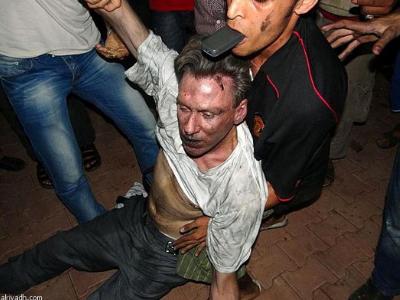
On Thursday, measures to beef up security at U.S. embassies were passed out of the Senate Foreign Relations Committee. The bill is in response to the Sept. 11, 2012 attack on the diplomatic post in Benghazi, Libya, where Ambassador Chris Stevens and three other Americans were killed.
The Senate bill creates a training center for diplomatic security personnel.
Separately, the House Foreign Affairs Committee authorized full security funding for diplomatic missions — despite recommending a nine percent cut overall for State Department operations.
The House and Senate have already approved spending bills that cover embassy security. But their budgets differ markedly in other areas. – foxnews.com
The CIA has been subjecting operatives to monthly polygraph tests in an attempt to suppress details of a US arms smuggling operation in Benghazi that was ongoing when its ambassador was killed by a mob in the city last year, according to reports.
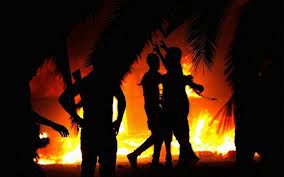
Up to 35 CIA operatives were working in the city during the attack last September on the US consulate that resulted in the death of Ambassador Chris Stevens and three other Americans, according to CNN.
The circumstances of the attack are a subject of deep division in the US with some Congressional leaders pressing for a wide-ranging investigation into suspicions that the government has withheld details of its activities in the Libyan city.
The television network said that a CIA team was working in an annex near the consulate on a project to supply missiles from Libyan armouries to Syrian rebels.
Sources said that more Americans were hurt in the assault spearheaded by suspected Islamic radicals than had been previously reported. CIA chiefs were actively working to ensure the real nature of its operations in the city did not get out.
So only the losses suffered by the State Department in the city had been reported to Congress.
“Since January, some CIA operatives involved in the agency’s missions in Libya, have been subjected to frequent, even monthly polygraph examinations, according to a source with deep inside knowledge of the agency’s workings,” CNN reported.
Frank Wolf, a US congressman who represents the district that contains CIA headquarters in Langley, Virginia, is one of 150 members of Congress for a new investigation into the failures in Benghazi.
“I think it is a form of a cover-up, and I think it’s an attempt to push it under the rug, and I think the American people are feeling the same way,” he said. “We should have the people who were on the scene come in, testify under oath, do it publicly, and lay it out. And there really isn’t any national security issue involved with regards to that.”
A CIA spokesman said it had been open about its activities in Benghazi.
“The CIA has worked closely with its oversight committees to provide them with an extraordinary amount of information related to the attack on US facilities in Benghazi,” a CIA statement said. “CIA employees are always free to speak to Congress if they want,” the statement continued. “The CIA enabled all officers involved in Benghazi the opportunity to meet with Congress. We are not aware of any CIA employee who has experienced retaliation, including any non-routine security procedures, or who has been prevented from sharing a concern with Congress about the Benghazi incident.”- The Telegraph
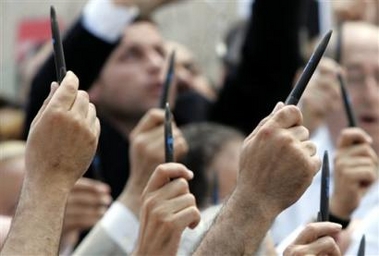
The Senate Judiciary Committee, looking to provide protections for journalists and their sources, ran into a roadblock Thursday when lawmakers couldn’t agree on the definition of “journalist.”
Under the legislation, journalists wouldn’t have to comply with subpoenas or court orders forcing them to reveal sources or confidential information unless a judge first determines there’s reason to think that a crime has occurred and government officials have exhausted all other alternatives.
It’s the third time Congress has considered a “shield law” for journalists. Similar bills have failed despite bipartisan support.
“I’m hoping the third time’s a charm,” said Sen. Patrick Leahy, D-Vt., the committee’s chairman.
The bill defines a journalist as a person who has a “primary intent to investigate events and procure material” in order to inform the public by regularly gathering information through interviews and observations. The person also must intend to report on the news at the start of obtaining any protected information and must plan to publish that news.
But senators disagreed on how to define journalists, since some thought the bill’s definition wasn’t specific enough.
Sen. Amy Klobuchar, D-Minn., wondered whether it could be used to provide protections to employees of WikiLeaks, an organization that allows anonymous sources to leak information to the public.
“I’m concerned this would provide special privilege to those who are not reporters at all,” Klobuchar said.
Sen. Dianne Feinstein, D-Calif., suggested that the definition comprise only journalists who make salaries, saying it should be applied just to “real reporters.” The sponsor of the bill, Sen. Charles Schumer, D-N.Y., was against that idea, since there are bloggers and others in the Internet age who don’t necessarily receive salaries.
“The world has changed. We’re very careful in this bill to distinguish journalists from those who shouldn’t be protected, WikiLeaks and all those, and we’ve ensured that,” Schumer said. “But there are people who write and do real journalism, in different ways than we’re used to. They should not be excluded from this bill.”
The Standing Committee of Correspondents, a group of reporters that issues congressional press passes, requires that reporters be full time and paid in order to receive passes.
The reconsideration of a shield law comes on the heels of media controversies that came to light in May. The Justice Department had seized the phone records of 20 Associated Press reporters over two months without giving them prior notice and had traced the phone calls and emails of a Fox News reporter.
The bill also would require the Justice Department to notify any reporters it chose to monitor. It allows Justice officials to delay that notice by 45 days and permits them to ask for an extension of another 45 days.
Most states have their own shield laws for journalists, but those laws don’t apply in federal court. That means any monitoring of reporters by the federal government would be covered only under a federal shield law.
The committee will continue debating the bill when it reconvenes in September, and Schumer said he hoped it would head to the Senate floor by the end of the year. – McClatchy Washington Bureau
Read more here: http://www.mcclatchydc.com/2013/08/01/198338/senators-spar-over-definition.html#storylink=cpy
An Australian mining firm was convicted on Friday in Darwin of desecrating a sacred outback Aboriginal site in a landmark ruling protecting the beliefs of the beleaguered minority in the country.
OM (Manganese) Limited, an Australian subsidiary of Singapore-based OM Holdings Limited, was fined $133 600 for damaging the spiritual significance of an Aboriginal rock site at Bootu Creek, north of remote Tennant Creek in the Northern Territory.
OM Manganese had previously been convicted of physically damaging the site when an overhanging rock feature known as the Horse’s Head collapsed due to nearby blasting activities in 2011, destroying the area known in English as “Two Women Sitting Down”.
But Darwin magistrate Sue Oliver on Friday ruled it had also amounted to desecration.
“The defendant did not consider damage to the site as a vague and remote possibility,” Oliver said, describing the company’s failure to do so as “wilful blindness”.
“The defendant company made decisions that involved the sacred site that favoured business and profit over the [cultural protection] obligations they had.”
Oliver imposed the fine for what the local Kunapa people said amounted to destruction of the site, forever disrupting their relationship with the land and its mythology or “dreaming”.
“It will always remain a sacred site to us, but it has been ruined and we don’t know what to do,” said Kunapa representative Gina Smith of the site which had been “there for thousands of years as part of our culture and our story”.
“It’s been significantly changed, which makes it much harder for Aboriginal people to recognise the dreaming,” she added.
“We’re not likely to use it any more.”
According to the Kunapa dreaming, a marsupial rat and a bandicoot fought over bush tucker, or native food, at the Bootu Creek site and their blood spilled over the rocks, turning them the rich red of manganese ore.
The Aboriginal Areas Protection Authority, the statutory body responsible for overseeing sacred sites in the Northern Territory which brought the case against OM Manganese, welcomed the “historic” ruling.
“When a sacred site is desecrated or damaged it tears the social fabric of the affected community, as the harmony of those people is inherently linked to that sacred site,” said AAPA chief Ben Scambary.
OM Holdings said it had contested the desecration charge on the basis that the damage was unintentional, but it accepted Oliver’s ruling.
“The company never intended to harm, damage or disrespect the sacred site. We sincerely regret the damage and the hurt caused and I unreservedly apologise to the site’s custodians and traditional owners,” OM CEO Peter Toth said in a statement to the Australian stock exchange.
Aborigines, the most disadvantaged Australians, are believed to have numbered around one million at the time of British settlement in 1788. There are now just 470 000 out of a total population of 23 million. – AFP
Japan’s Finance Minister Taro Aso refused on Friday to resign or apologise over remarks suggesting Japan should follow the Nazi example of how to change the country’s constitution stealthily and without public debate.
The ruling Liberal Democrats want to revise the US-inspired postwar constitution, in part to allow a higher profile for Japan’s military.
Following protests by neighbouring countries and human rights activists, he “retracted” the comments on Thursday but refused to go further.
“I have no intention to step down” as Cabinet minister of lawmaker, Aso, who is also the deputy prime minister, told reporters. The government also said it is not seeking Aso’s resignation, which some opposition members have demanded.
Aso, who is known for intemperate remarks, drew outrage for saying Japan should learn from how the Nazi party stealthily changed Germany’s pre-World War II constitution before anyone realised it. He also suggested that Japanese politicians should make visit Tokyo’s Yasukuni war shrine quietly to avoid controversy. Such visits currently take place amid wide publicity and are a sore point for Southeast Asian nations, who suffered under Japanese occupation during World War II.
Aso said on Thursday he was misunderstood and only meant to say that loud debate over whether Japan should change its postwar constitution, and other issues is not helpful.
In retracting his comments, he said it was “very unfortunate and regrettable” that his comments were misinterpreted.
On Friday, Aso said he stands by all his other remarks in the speech made earlier this week in Tokyo to an ultra-conservative audience.
Japan and Nazi Germany were allies in World War II, when Japan occupied much of Asia and Germany much of Europe, where the racial supremacist Nazis oversaw the killings of an estimated 6 million Jews before the war ended in 1945 with their defeat. Japan’s history of military aggression, which included colonising the Korean Peninsula before the war, is the reason its current constitution limits the role of the military.
According to a transcript of the speech published by the newspaper Asahi Shimbun, Aso decried the lack of support for revising Japan’s pacifist constitution among older Japanese, saying the Liberal Democrats had held quiet, extensive discussions about its proposals.
“I don’t want to see this done in the midst of an uproar,” Aso said, according to the transcript. Since revisions of the constitution may raise protests, “doing it quietly, just as in one day the Weimar constitution changed to the Nazi constitution, without anyone realising it, why don’t we learn from that sort of tactic?”
He has apologised previously for accusing the elderly of being a burden on society, joking about people with Alzheimer’s disease, saying the ideal country would be one that attracts “the richest Jewish people”, and comparing the opposition Democratic Party of Japan to the Nazis.
On Thursday, Aso insisted that he was referring to the Nazis “as a bad example of a constitutional revision that was made without national understanding or discussion …I just don’t want [the revision] to be decided amid a ruckus”. – AP
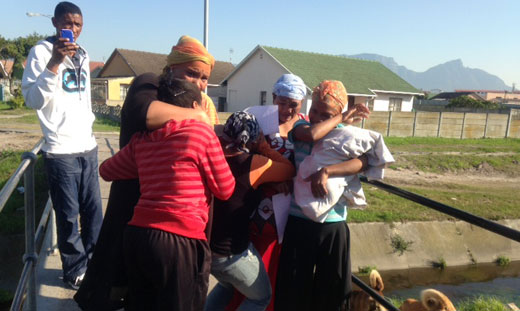
The coloured parents of 3-year-old Olivia van Voeght have been arrested for child neglect, Western Cape police said on Thursday.
Colonel Thembinkosi Kinana told Eyewitness News that Olivia’s parents were arrested after they were taken in for questioning following her death.
She disappeared on Tuesday after her mother left her at home for two hours.
He said the arrests were made on suspicion of neglect. Western Cape Social Development MEC Albert Fritz said he was saddened, and at the same time angered, by the discovery of Olivia’s body.
“…saddened by her untimely and unnecessary death and angered by the fact that there now seems to be an alleged situation of child neglect,” he said.
He said he learned that police had arrested the parents on allegations of child neglect. Fritz said he assigned social workers to the matter.
“Too often children fall prey to criminals in our society, because the very people who must love, care for and protect them, have abandoned their responsibilities,” said Fritz.
He promised to investigate the full circumstances around her death and would co-operate with police and the department of justice to ensure that, if found guilty, the parents and perpetrators were brought to book.
“Let this be a lesson to all parents. The safety and protection of your child is firstly your responsibility and parents whose negligence places their children’s lives in danger, will have to face the full force of the law,” he said. – Sapa
Zimbabwe’s Zanu-PF party has dismissed allegations of vote rigging as “absolute hogwash”.
Speaking in an interview with SABC, a spokesperson for Zanu-PF Psychology Maziwisa predicted more than two thirds in parliament would go to Zanu-PF.
“It looks like we will surpass the two thirds majority in parliament. The feeling, the environment in Zimbabwe right now is one of excitement. It feels like we are in 1980 where we’ve reclaimed our independence, our sovereignty as a nation. We look forward to charting the best way for the people of Zimbabwe,” said Maziwisa, who was born well after 1980.
He said these were the most credible elections to be held on the African continent.
“You don’t judge an election using perfection as a standard. You’ve got to look at circumstances objectively and I think if you look at the situation here, what prevailed on July 31st, if you look at it objectively, I think you can only come to one conclusion and that is that we had an election that was free, that was fair, that was credible. In fact this could very well be the freest, the fairest and the most credible election to be held on the African continent,” said Maziwisa.
A veteran Zimbabwean opposition leader called on Thursday for a campaign to bring the country to a halt, after a disputed election that has seen President Robert Mugabe’s allies claim victory.
“There needs to be resistance against this theft and the people of Zimbabwe need to speak out strongly,” the Movement for Democratic Change’s (MDC) Roy Bennett told AFP in Johannesburg.
“I’m talking about passive resistance. I’m talking about people completely shutting the country down – don’t pay any bills, don’t attend work, just bring the country to a standstill.”
Bennett, an aide to Mugabe’s long-time rival Morgan Tsvangirai, spends much of his time outside Zimbabwe after a series of arrests.
He remains MDC treasurer.
Mugabe’s allies declared the veteran leader had romped to victory in Wednesday’s poll.
Bennett expressed dismay at an election he described as an “absolute total sham”.
“I’m totally shocked at how badly they’ve rigged it and expect to get away with it.”
“It’s not a case of even rigging it. It’s a case of having totally stolen it. Blatant, outright, daylight theft of the greatest proportions.”
Britain, meanwhile, has expressed concern that Zimbabwe had not enacted important electoral reform before Wednesday’s vote in the former British colony, and by reports that large numbers of voters had been turned away.
“We are also concerned by the late publication of the electoral roll,” a spokesperson for the British Foreign Office told Reuters.
“Any judgement on the credibility of elections will need to take these factors into account.” – AFP
Allegations of massive fraud related to Eskom’s ill-starred Medupi and Kusile power station projects have begun to emerge from the collapse of First Strut, the Mail & Guardian reported.
Central to the claims is steel fabrication company Cosira, which construction group First Strut bought in November 2012 from the Da Silva group in a deal funded with a R385-million bond issue.
Cosira was subcontracted by prime contractor Alstom to supply and construct the turbine halls at Medupi and was a joint venture partner for the turbine hall desulpherisation plant at Kusile.
Medupi has been dogged by delays and concern that key tenders may have favoured the business interests of the ANC – which, through Chancellor House, has an interest in boiler supplier Hitachi.
First Strut, which trades as First Tech, applied to put Cosira into business rescue on June 13 this year.
Six days later, First Strut’s gay chairperson and financial director, Jeff Wiggill, was found shot dead next to his Bentley in Protea Glen, Johannesburg.
His murder precipitated the collapse of First Strut and indications are emerging that Wiggill presided over what is – separate to the Cosira transaction – shaping up to be the largest corporate fraud and loan default in South African history.
First Strut director Andris Bertulis applied to liquidate Cosira. In his affidavit, Bertulis alleged that since taking control of the company First Tech had uncovered significant misrepresentation of its assets.
“As an illustration, a deeper look into one of the applicant’s projects, the Medupi project, revealed that the loss there was not the original R27-million … but rather a current projected loss of roughly R140-million.
“What’s coming out of that is the huge amounts of debt. I mean, they are talking in the region of R3.5-billion.”
The Bertulis affidavit alleges that lawyers engaged by First Strut analysed Cosira’s books during April 2013 and, on that basis, revised the company’s value down from a claimed positive R183-million to a total negative of R323-million.
Da Silva group chief executive John da Silva denied any wrongdoing. He said they had not been given an opportunity to respond to Bertulis’s claims.
“You’ve got to understand one thing: initially, when that affidavit came out … the rest of the [First Strut] group was still intact and Mr Bertulis was going around looking for any financial issue that the group had on Cosira.
Da Silva referred further queries to his lawyer.
Eskom declined to comment, referring all queries to Alstom.
A spokesperson for Alstom declined to answer detailed questions, but issued a statement noting: “Alstom did not purchase raw steel from Cosira, but a supply and construction service, for which Alstom paid a composite fee based on market-related pricing. Cosira has delivered all the steel and materials it was contracted to supply to the Medupi site. In light of recent developments, Alstom as the main contractor … has stepped in wherever possible to ensure timely completion of the deliverables and mitigate any material impact on the projects. Further questions should be directed to Cosira.”
An investigation has raised questions about the pricing of steel for the Eskom contract and the artificial insertion of middlemen between steel fabricators and steel suppliers such as Macsteel and Trident.
The M&G has established that, in March 2009, coinciding with the Eskom contracts, Cosira set up a shelf company called Copper Moon Trading 653, with two directors: Monique Fisher and Molemo Kgomo.
Fisher was until then the personal assistant to one of the senior Cosira executives. Kgomo was married to Cosira director Molefe Kgomo.
The Zimbabwe Electoral Commission has begun announcing official results of Wednesday’s national elections.
The results announced on Thursday confirm earlier reports that Zanu-PF leader Robert Mugabe is headed for a big win, while his Zanu-PF party is set to claim a majority in Parliament.
ZEC deputy chairperson Joyce Kazembe released results of 31 constituencies in Bulawayo, Masvingo and Mashonaland West provinces, of which Zanu-PF claimed 28 of the seats.
Kazembe released results for 18 constituencies in Masvingo, all of which went to Zanu-PF.
Eight of the seats were won by MDC-T in 2008.
Zanu-PF officials and officials from the MDC formations say Zanu PF was likely to take all 26 seats in the province.
Kazembe also released results of 11 constituencies in Mashonaland West.
Ten of the constituencies were won by Zanu-PF, with MDC-T claiming the Chinhoyi Central seat.
MDC-T won the Pelandaba-Mpopoma and Nkulumane seats in Bulawayo and pointers were that the party would claim the 12 seats in the province.
Returns from polling stations indicated MDC-T would win less than 50 of the 210 contested seats in the House of Assembly, giving Zanu-PF the two-thirds majority it needs to change laws in Parliament.
The presidential election is also not likely to go to a runoff, as Mugabe is likely to garner the 50% plus one vote necessary for him to be sworn in as president without a second round. – mg.co.za
This website uses cookies to improve your experience. We'll assume you're ok with this, but you can opt-out if you wish. Cookie settingsACCEPT
Privacy & Cookies Policy
Privacy Overview
This website uses cookies to improve your experience while you navigate through the website. Out of these cookies, the cookies that are categorized as necessary are stored on your browser as they are essential for the working of basic functionalities of the website. We also use third-party cookies that help us analyze and understand how you use this website. These cookies will be stored in your browser only with your consent. You also have the option to opt-out of these cookies. But opting out of some of these cookies may have an effect on your browsing experience.
Necessary cookies are absolutely essential for the website to function properly. This category only includes cookies that ensures basic functionalities and security features of the website. These cookies do not store any personal information.
Any cookies that may not be particularly necessary for the website to function and is used specifically to collect user personal data via analytics, ads, other embedded contents are termed as non-necessary cookies. It is mandatory to procure user consent prior to running these cookies on your website.