Romney stumbles on Libya

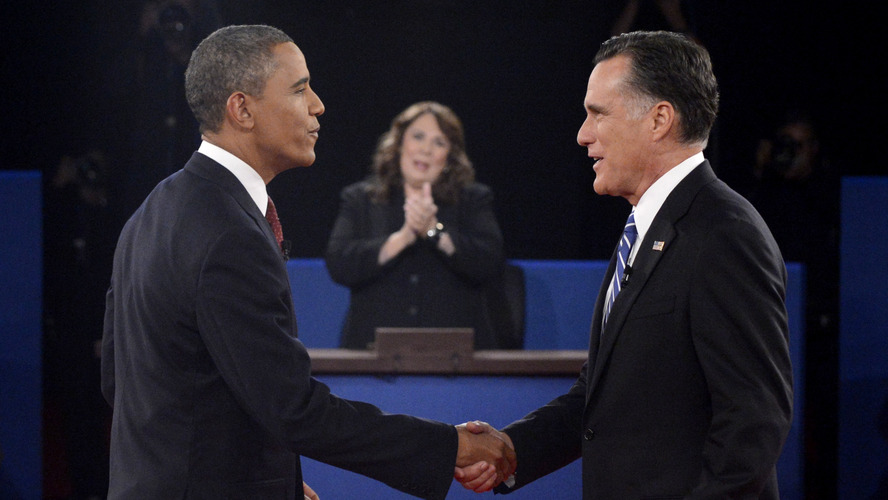
White House challenger Mitt Romney stumbled and missed his mark as he attacked Barack Obama’s handling of last month’s deadly attack on a US mission in Libya.

The Obama camp had been flailing for a month to explain its response to the September 11 assault on the Benghazi consulate, at first blaming it on protesters before concluding it was a pre-planned attack by Islamist militants.

Four Americans, including US ambassador Chris Stevens, died in the attack, and Romney’s campaign has zeroed in on the issue to attack Obama’s broader Middle East policy and his perceived failure to understand looming threats.

It could have proved a weak point for the incumbent in the pair’s second televised debate on Thursday, with Romney returning to his theme that Obama’s policy is “unraveling before our very eyes.”

Obama had slammed Romney for trying to make political capital out of a national security issues and said in his own defense that he had declared the Benghazi assault an “act of terror” the very day after it took place.

Sensing a mistake, Romney went in for the kill.

“I think it’s interesting, the president just said something, which is that on the day after the attack he went into the Rose Garden and said that this was an act of terror,” Romney said.

“That’s what I said,” Obama replied.

“You said in the Rose Garden the day after the attack, it was an act of terror? It was not a spontaneous demonstration, is that what you’re saying?” Romney asked.

“Please proceed governor,” Obama said, relaxing back on his tall chair.

“I want to make sure we get that for the record — because it took the president 14 days before he called the attack in Benghazi an act of terror,” Romney protested.

“Get the transcript,” Obama suggested.

As Romney stood center stage, looking suddenly less sure of himself, CNN journalist and debate moderator Candy Crowley stepped in: “He did in fact, sir.”

“Can you say that a little louder, Candy?” Obama asked with amusement.

“He, he did call it an act of terror,” she stuttered, as Romney looked deflated.

In fact, on September 12, in the Rose Garden, Obama had indeed said in reference to the Benghazi attack: “No acts of terror will ever shake the resolve of this great nation.”

Aside from Romney’s stumble, which was seized upon with glee by Obama’s campaign and broader support base, both candidates landed some tough blows on the Libya issue — without either scoring a knockout.

Obama accused Romney of exploiting the issue and missing a chance to prove that he has the mettle to become US commander-in-chief.

“While we were still dealing with our diplomats being threatened, governor Romney put out a press release,” Obama said, referring to the Republican’s criticisms on the night of the attack.

“Trying to make political points, and that’s not how a commander-in-chief operates. You don’t turn national security into a political issue, certainly not right when it’s happening,” he said during an angry exchange.

Romney hit back, accusing Obama of going on a fundraising tour the day after the September 11 assault on the Benghazi consulate and declaring that his Middle East policy was “unraveling before our very eyes.”

But Obama retorted: “The suggestion that anybody on my team, whether it’s a secretary of state, our UN ambassador, anybody on my team, would play politics or mislead when we’ve lost four of our own, governor, is offensive.

“That’s not what we do. That’s not what I do as president, not what I do as commander-in-chief,” the president declared, fixing Romney with an angry stare before turning on his heel and heading back to his seat. – Sapa/AFP
‘Some girls, they rape so easy’

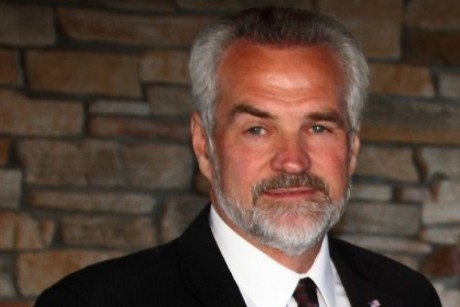
Roger Rivard

The controversial comments led Republican vice presidential hopeful Paul Ryan, a Wisconsin congressman, to withdraw his endorsement of Roger Rivard just hours before Ryan was set to debate Vice President Joe Biden.

It was the second time Ryan has withdrawn an endorsement from a fellow Republican due to offensive rape comments.

Missouri congressman Todd Akin drew widespread condemnation for declaring in August that a woman’s body can prevent conception in cases of “legitimate rape” as he tried to explain his opposition to abortion even in cases of rape.

Ryan, who also opposes abortion in cases of rape, is expected to be pressed on his pro-life views during the debate.

Rivard, a 60-year-old state representative, first made the statement when discussing the case of a local high school student who had been charged with sexual assault for having sex with an underage girl in the school’s band room.

The Chetek Alert paper quoted him in December as saying that his father had warned him “some girls rape easy” — meaning that some girls could decide later that sex wasn’t consensual.

He doubled down on the comments in an interview with the Milwaukee Journal Sentinel Wednesday, saying that he took his father’s warnings about the dangers of premarital sex seriously.

“He also told me one thing, ‘If you do (have premarital sex), just remember, consensual sex can turn into rape in an awful hurry,'” Rivard told the paper.

“Because all of a sudden a young lady gets pregnant and the parents are madder than a wet hen and she’s not going to say, ‘Oh, yeah, I was part of the program.’ All that she has to say or the parents have to say is it was rape because she’s underage. And (my father) just said, ‘Remember, Roger, if you go down that road, some girls,’ he said, ‘they rape so easy.'”

Rivard went on to say: “What the whole genesis of it was, it was advice to me, telling me, ‘If you’re going to go down that road, you may have consensual sex that night and then the next morning it may be rape.’ So the way he said it was, ‘Just remember, Roger, some girls, they rape so easy. It may be rape the next morning.'”

About three hours after speaking to the paper, Rivard — who is engaged in a tight re-election race — sent a statement to the Sentinel in which he acknowledged that “rape is a horrible act of violence.”

“Sexual assault is a crime that unfortunately is misunderstood and my comments have the potential to be misunderstood as well,” his statement said.

“I have four daughters and three granddaughters and I understand the importance of making sure that awareness of this crime is taken very seriously.”

But activists said his initial statement belies his inability to comprehend the realities of sexual assault and are part of a broader problem of blaming victims.

“Unfortunately, comments like these are all too common, and an indication of ways in which the culture is generally undereducated about what sexual assault is,” Pennie Meyers of the Wisconsin Coalition Against Sexual Assault said in a statement. “Sexual assault remains an underreported and underprosecuted crime.”

Rivard, who is married with six children and ten grandchildren, said in his campaign biography that he learned the “value of a hard day’s work at a young age” while working at his parent’s restaurant in Rice Lake, Wisconsin. Sapa/AFP

Ann Coulter’s Mugged, a review

Ann Coulter and friend

Many in the Dissident Right/ Right Opposition have criticized Ann Coulter as the epitome of the cable news partisanship. However, next to Pat Buchanan, she probably speaks more taboo truths than anyone else with Main Stream Media [MSM] access.

Coulter calls for cuts in legal immigration, ending birthright citizenship, speaks frankly about the Bell Curve, defends groups like the Council of Conservative Citizens (with some qualifications), and even quotes VDARE.com and Peter Brimelow .

So I was excited when I heard of her latest book, Mugged: Racial Demagoguery from the Seventies to Obama.

But, as she began promoting it, the controversy seemed to be limited to her attacking liberals and the Democrats for racism and indifference to blacks.

So I got worried that the book would be more partisan Jonah Goldberg-type “Democrats-are-the-real-racists, Martin Luther King-is-a-conservative” platitudes than an actual, much-needed indictment of racial demagoguery.

Fortunately, however, the vast bulk of Coulter’s book focuses on exposing liberal and black hysteria and lies about race.

Coulter notes several actions that now inspire accusations of racism in the Age of Obama:

“not electing Obama president”
“requesting documents from Attorney General Eric Holder” in Fast and Furious
“references  to Obama playing basketball”
“the word ‘the’”. The last charge, she notes, was inspired by Donald Trump referring to “the blacks.”

Her book’s subtitle is Racial Demagoguery from the Seventies to Obama, and Coulter systematically documents racial demagoguery from the 1970s on. She does a great job telling the true story behind supposed acts of racism such as the justified Rodney King beating, the tragic (but not racist) shooting of Amadou Diallo, and the Willie Horton Ad. She exposes the little-known fact that Jim Jones People’s Temple mass suicide was led by a fanatical left-winger driven by “anti-racism” and Marxism, who also had close ties to the Democratic Party.

Perhaps the best part of Coulter’s book is her discussion of hate crime hoaxes. She devotes an entire chapter, amusingly titled “Hey, whatever happened to that story…” to hate crime hoaxes and how the MSM always accepts the lies, only to deep-six the stories when they prove false. In addition to rehearsing well-known hoaxes such as the Tawana Brawley case, she goes into great detail about lesser-publicized frauds, like the non-existent epidemic of black church burnings during the Clinton years. More importantly, she notes that many of these fake hate crimes stirred up actual hate crimes against whites—which were all ignored by the MSM.

Coulter covers the Duke Lacrosse mess later in the book.  This is one of the few Hate Crime hoaxes that most people still remember, but Coulter brings up facts often ignored (outside of VDARE and a few other sources) that put it in perspective. She reports DOJ crime statistics noting that there has not been a single case of an actual white-on-black gang rape, while thousands of black-on-white rapes (including gang rapes) occur each year. As Coulter barbs:

  If there were a single unequivocal example of a white on black rape in modern times, a lesbian folk singer would have written a song about it and won an Oscar for the accompanying documentary.

There are, however, a few areas where I believe Coulter’s partisanship gets in the way of her otherwise excellent analysis.  Like many Conservatism Inc. publicists, Coulter argues the Democrats are in fact the real racists, and that the Republican Southern Strategy was non-racial.

Coulter has occasionally made some statements suggesting that she is sympathetic to Bell Curve arguments. [See her column Murdering The Bell Curve, June 27, 2002 at 2:50 PM]But she concludes her book by asserting

if all black people woke up tomorrow morning with the cultural predilections of Korean Americans, all sociological disparities—income, crime rates, out of wedlock births—would vanish within ten years.

Coulter’s general point that most of the problems in the black community will only improve through cultural change is no doubt true. But the unfortunate fact of average genetic differences means that most of those disparities will never vanish.

These quibbles aside, Coulter’s Mugged ranks with Jared Taylor’s Paved with Good Intentions and Thomas Sowell’s The Vision of the Anointed  as one of the best indictments of American minority and liberal hypocrisy and hysteria on race. – Alexander Hart, VDARE.com

Don’t laugh please, we’re black(face)!

Blackface not funny

Administrators in the Waverly Central School District have been fielding complaints all weekend after students involved in a Friday pep rally staged a skit critics say was racist and made light of domestic violence.

The issue is getting some national attention after a Waverly High School graduate posted a story on the CNN iReport website early Monday.

Three white students wearing blackface put on the skit, according to the post by 2006 graduate Matt Dishler, with two of the students representing singer Rihanna and her former boyfriend, entertainer Chris Brown, who were involved in a highly publicized domestic violence case in 2009.

A photo posted with the story shows one male restraining another male, with a student portraying Rihanna cowering on the floor. Students and others sitting on the bleachers in the background appear to be smiling and laughing as they watch the skit.

Dishler said he didn’t attend the rally, but heard about it from friends. After confirming the information, he decided to post an opinion piece.

“I can testify there’s not a lot of racial diversity in that school whatsoever. We’re not really exposed to that at that school,” Dishler said. “I felt like something should have been done about this. I don’t believe the kids had any vicious intentions, but the administrators should have said that’s not exactly OK.”

Waverly Superintendent Joseph Yelich said he was not aware that the students were planning to do the skit, but he has received plenty of complaints since then.

“The Waverly School District is committed to creating a positive atmosphere through all activities,” Yelich said. “I’ll be working with building administration, staff and students to develop future activities consistent with that commitment.

“There is a set of concerns that a number of individuals have had, and we want to address those concerns,” Yelich said. “I want to be sure administration and staff and students know what our expectations are.”

Yelich did not indicate what if any specific actions would result from Friday’s pep rally.

A New Hope Center, an Owego-based agency that assists victims of domestic and sexual violence, hate crimes, rape and other abuse, is already working with the Waverly School District on bullying issues, according to Assistant Director Francis J. Bialy.

Bialy wasn’t aware of Friday’s pep rally, but he said, in general, it’s disturbing to try to find humor in grave issues such as domestic violence.

“If it’s intended to be humorous or putting down people, it further perpetuates permission to engage in such behavior,” Bialy said.

“When you look at issues with race, the same thing holds true. If people act in racist ways or support racist behavior, they tell other people it’s OK to act racist.

“I hesitate to judge the intent of something,” Bialy said.

“There’s also a dynamic that well-intentioned actions are done without a full sense of understanding that also end up being damaging as well. I think it should be looked at.”

Dishler said he is still proud of his former high school and didn’t want to be too critical.

“I believe they will take steps to cure it. I just think sometimes things need to be brought to light,” Dishler said.

“(Domestic violence) is nothing to joke about. I wanted people to know this mistake was made and can we please rectify it so it doesn’t happen again.”  – stargazette.com

Affirmative action about to be redefined?

The case for racial preferences in awarding places at US universities is no longer  about minorities held back by centuries of discrimination, says Simon Barber.

Rather, it is all about letting educators decide what will be best to prepare the youth for racial diversity. That, at any rate, is how proponents of affirmative action are framing the discussion as the matter is about to be heard by the US Supreme Court.

Solicitor-general Donald Verrilli, the Obama administration’s chief litigator, told the court last week: “The core of our interest is in ensuring that the nation’s universities produce graduates who are going to be effective citizens and effective leaders in an increasingly diverse society and effective competitors in diverse global markets.”

Just over half the Fortune 100 chimed in with an amicus brief. “The only means of obtaining a properly qualified group of employees,” they argued, “is through diversity in institutions of higher education which are allowed to recruit and instruct the best qualified minority candidates and create an environment in which all students can meaningfully expand their horizons.”

The case pits Abigail Fisher against the University of Texas. Ms Fisher, who is white, says her rights under the constitution’s 14th Amendment were violated when she failed to get in. The university says that while it does indeed take race into account in selecting candidates, it does so as part of a “holistic” review fully consistent with the court’s precedents, in particular Justice Sandra Day O’Connor’s opinion in the landmark 2003 case, Grutter v Bollinger. Writing for a slim 5-4 majority Justice O’Connor held that the University of Michigan Law School’s admissions strategy passed muster: it was adopted in “good faith”, did not rely on demographically-based quotas and was “narrowly tailored to a compelling interest in attaining a diverse student body (with a) critical mass” of minority students.

Opponents of affirmative action would like to believe that, with Justice O’Connor’s replacement by the far more conservative Justice Samuel Alito, there is now a critical mass on the court for banning race-based preferences altogether. They hope Ms Fisher will persuade a majority if not to reverse Grutter v Bollinger, then at least, in the words of Justice Sonia Sotomayor (who will not be part of that majority), “gut it”.

There is a school of progressive thought which would not mind seeing Ms Fisher prevail. In a new study for The Century Foundation, Richard Kahlenberg looks at how universities have been handling diversity in the seven states, including California, where racial preferences have already been banned by referenda, state legislatures or gubernatorial executive order. The news is good.

Responses include partnerships with disadvantaged schools, new race-neutral preferences for students from all difficult environments, no more automatic slots for offspring of alumni, and guaranteed places, regardless of test scores, for a fixed percentage of top students from all in-state public schools. Many of these are terrible, de facto segregated and disproportionately starved of resources.

“For people who care about social equality, all these new measures are intrinsically desirable,” Mr Kahlenberg writes. But they do not come naturally to university administrators because they are harder and more expensive to implement.

“While higher education’s vigorous defence of affirmative action on one level represents a sincere desire for greater racial equality, it has another less virtuous side to it, as racial preferences avoid the hard work of addressing deeply rooted inequalities and instead provide what (one critic) has called ‘racial justice on the cheap’ … recruiting fairly privileged students of colour is far less expensive than including low-income and working class kids of all races.”

Research by Derek Bok, a former Harvard president, found that 86% of African Americans at universities with selective admissions standards were either middle or upper class. At Ivy League schools, 41% of black students were not even African American, but immigrants from relatively advantaged backgrounds.

While it is invidious to invoke the voices of revered figures who can no longer speak for themselves in support of one’s favoured positions, it is interesting to conjecture what Dr Martin Luther King might have said of class, as opposed to race-based affirmative action. He did say, in calling for a Bill of Rights for the Disadvantaged in 1967, “it is a simple matter of justice that America, in dealing creatively with the task of raising the Negro from backwardness should also be rescuing a large strata of the forgotten white poor”. Simon Barber, bdaylive.com

Racial goals for maths and reading

The Florida State Board of Education passed a plan that sets goals for students in math and reading based upon their race.

On Tuesday, the board passed a revised strategic plan that says that by 2018, it wants 90 percent of Asian students, 88 percent of white students, 81 percent of Hispanics and 74 percent of black students to be reading at or above grade level. For math, the goals are 92 percent of Asian kids to be proficient, whites at 86 percent, Hispanics at 80 percent and blacks at 74 percent. It also measures by other groupings, such as poverty and disabilities, reported the Palm Beach Post.

The plan has infuriated many community activists in Palm Beach County and across the state.

“To expect less from one demographic and more from another is just a little off-base,” Juan Lopez, magnet coordinator at John F. Kennedy Middle School in Riviera Beach, told the Palm Beach Post.

JFK Middle has a black student population of about 88 percent.

“Our kids, although they come from different socioeconomic backgrounds, they still have the ability to learn,” Lopez said. “To dumb down the expectations for one group, that seems a little unfair.”

Others in the community agreed with Lopez’s assessment. But the Florida Department of Education said the goals recognize that not every group is starting from the same point and are meant to be ambitious but realistic.

As an example, the percentage of white students scoring at or above grade level (as measured by whether they scored a 3 or higher on the reading FCAT) was 69 percent in 2011-2012, according to the state. For black students, it was 38 percent, and for Hispanics, it was 53 percent.

In addition, State Board of Education Chairwoman Kathleen Shanahan said that setting goals for different subgroups was needed to comply with terms of a waiver that Florida and 32 other states have from some provisions of the federal No Child Left Behind Act. These waivers were used to make the states independent from some federal regulations.

“We have set a very high goal for all students to reach in Florida,” Shanahan said.

But Palm Beach County School Board vice-chairwoman Debra Robinson isn’t buying the rationale.

“I’m somewhere between complete and utter disgust and anger and disappointment with humanity,” Robinson told the Post. She said she has been receiving complaints from upset black and Hispanic parents since the state board took its action this week.

Robinson called the state board’s actions essentially “proclaiming racism” and said she wants Palm Beach County to continue to educate every child with the same expectations, regardless of race. – CBS

Blacks show blind loyalty to Barack

African Americans show blind loyalty to President Barack Obama.

Are black people supporting Obama mainly because he’s black? If race is just one factor in blacks’ support of Obama, does that make them racist? Can blacks’ support for Obama be compared with white voters who may favor his Republican challenger, Mitt Romney, because he’s white?

These questions have long animated conservatives who are frustrated by claims that white people who oppose Obama’s policies are racist. This week, when a black actress who tweeted an endorsement of Romney was subjected to a stream of abuse from other African-Americans, the politics of racial accusation came full circle once again.

Stacey Dash, who also has Mexican heritage, is best known for the 1995 film “Clueless” and the recent cable-TV drama “Single Ladies.” On Twitter, she was called “jigaboo,” “traitor,” “house nigger” and worse after posting, “Vote for Romney. The only choice for your future.”

The theme of the insults: A black woman would have to be stupid, subservient or both to choose a white Republican over the first black president.

Russell Simmons, the hip-hop mogul and Obama backer, called Dash’s experience “racism.” Said Barbara Walters on “The View”: “If she were white, this wouldn’t have happened.”

Twitter users are by no means representative of America, and many black Obama supporters quickly denounced the attacks. But the reason Dash was attacked is simple: She is a black woman supporting a white candidate over a black one.

There is racial bias amongst whites, and there is racial bias amongst blacks. But as far as the press is concerned, it only goes one way, says a white critic.

When people speak out against a symbol of black progress like Obama, African-Americans tend to feel hurt.

“We still have a civil rights (era) mentality, but we’re not living in a civil rights-based world anymore,” says a black man. “We want to say, `You’re black, you need to stand behind black people.'”

He said one reason he voted for Obama in the 2008 primary against Hillary Clinton was because Obama is black: “Yes, I will admit that.”

Is that racism? Not in his mind. “It’s voting for someone who would understand your side of the coin a lot better.”

Such logic runs into trouble when applied to a white person voting for Romney because he understands whiteness better. Ron Christie, a black conservative who worked for former President George W. Bush, finds both sides of that coin unacceptable.

“It’s not the vision that our leaders in the civil rights movement would have envisioned and be proud of in the era of the first African-American president,” Christie said.

Martin Luther King Jr. fought Jim Crow laws, which deprived blacks of political rights after Reconstruction, upheld by Southern Democrats. But black voters switched after Democratic President Lyndon B. Johnson pushed through the 1960s civil rights legislation and Republicans successfully pursued the votes of white people who disliked the civil rights agenda.

Since then, Democrats have persistently wooed black voters with programs and platforms that African-Americans favor, and the party has been rewarded every four years.

Clinton got 83 percent of the black vote in 1992 and 84 percent in 1996; the third-party candidate Ross Perot probably sliced away some of Clinton’s black support. Al Gore got 90 percent in 2000; John Kerry got 88 percent in 2004. Obama captured 95 percent in 2008, and 2 million more black people voted than in the previous election.

Christie says he, too, shares the sense of pride in Obama smashing what for blacks is the ultimate glass ceiling. He understands that black pride springs from a shared history of being treated as less than human, while the history of pride in whiteness has a racist context.

Christie says black men shifted from calling candidate Obama “half-white” and “not one of us” to demanding that Christie stop opposing the first black president.

He sees it in the comments of radio host Tom Joyner, who told his millions of listeners a year ago, “Let’s not even deal with facts right now. Let’s deal with our blackness and pride – and loyalty. . I’m not afraid or ashamed to say that as black people, we should do it because he’s a black man.”

The actor Samuel L. Jackson said much the same thing: “I voted for Barack because he was black,” he told Ebony magazine. “Cuz that’s why other folks vote for other people – because they look like them.”

In 2011, as black unemployment continued to rise, the chairman of the Congressional Black Caucus said that if Clinton was still president, “we probably would be still marching on the White House . (but) nobody wants to do anything that would empower the people who hate the president.”

And just last week, the rapper Snoop Dogg posted a list of voting reasons, written by someone else, on a social media account. No. 1 on his pro-Obama list: He’s black. Snoop’s top reason to not vote for Romney: He’s white.

Black voters feel like white people are attacking their dignity whwn they say negative things about Obama, and they are closing ranks around him.

There should not be this resistance to pride over the first black president, says many blacks. The USA should only elect blacks to that position in the future to eradicate racism. The GOP probably agrees, but would prefer an Uncle Tom. – AP

Racism worse for whites, study shows

American Freedom Fighters

The study polled roughly 200 white people and 200 black people drawn at random from a national census and asked them to rate racist attitudes against blacks and whites in each decade from 1950 to 2000.

Both groups felt racism against black people was substantial in the 1950s and both groups agreed the situation had markedly improved.

However, white respondents to the survey indicated that racism is now on the rise against white people. Eleven per cent of people responding to the survey even gave anti-white racism a maximum rating of ten points.

The authors said the research showed America has not yet reached a “post-racial” era, despite the election of Barack Obama as the country’s first black president.

Instead, they said there are still “several legal and social controversies” highlighting “reverse racism” against white people, and that the white respondents to the survey felt that racism is now a “zero-sum game” – the less racism that is directed against black Americans has been accompanied by a rise in perceived biases against white Americans.

“Whites believe the pendulum has now swung way beyond equality in the direction of discrimination,” it added.

“It is a pretty surprising finding when you think of the wide range of disparities that still exist in society, most of which show black Americans with worse outcomes than whites in areas such as income, home ownership, health and employment,” said Samuel Somers, an associate professor of psychology at Tufts who co-authored the study.

David E. Berstein, a professor of law at George Mason university, told the New York Times that the US policy of affirmative action, which sees universities and employers overtly favour black candidates over whites, had led many whites to complain about the unfairness of the system.

“It is not terribly surprising that whites subjectively perceive discrimination against members of their own group as an especially significant and growing problem, even though, objectively speaking, bias against blacks is far more pervasive, problematic and ill-intentioned,” he said. – The Telegraph


Romney has a tough road ahead

The American electoral college system means each state is assigned a certain number of electoral votes, dependent on population, and whoever wins a majority of these electoral votes – 270 or more – will be the next president.

For states with a large population, such as California or Texas, therefore have more influence, and tiny ones like Rhode Island or Maine less

It means campaign tactics limit the presidential candidates in states that are swing states. American states tend to lean strongly toward one political ideology at the presidential level.

Massachusetts, for example, is a strongly liberal and Democrat state, while Texas leans toward the Republicans. Democrats will not win Texas in this election cycle, and Republicans stand no chance of winning Massachusetts.

This leaves about eleven swing states that are usually competitive. For this election however, it’s down to eight with Michigan and Pennsylvania leaning towards the Democrats, while Missouri will likely vote Republican.

These eight are Florida (29 electoral college votes), Ohio (18), New Hampshire (4), Virginia (13), North Carolina (15), Colorado (9), Nevada (6) and Iowa (6).

The balance of power in these states gives a decisive advantage to President Barack Obama. With 538 electoral college votes at stake, 270 votes will secure victory, and, according to reasonable projections Obama can pretty much bank on 247 while Republicans have a total of only 191 probable votes.

This means only one thing: If Romney loses Florida he cannot become president, as its 29 votes will put Obama ahead of the 270-victory threshold. It also means Romney can’t afford to lose any combination of votes that add up to anything more than 22.

The problem for Romney is that swing state polls are not kind to him as things stand, although they have narrowed in recent days. The polling average has Obama up in all swing states except North Carolina. And Romney is less than a percentage point ahead in North Carolina.

Incidentally, if Obama does only win 22 of the 100 available electoral votes, both candidates will be tied at 269. If this happens the Constitution points to the House of Representatives to decide who becomes president, and that chamber will likely have a Republican majority.

WSU speaker wants racial separation

Jared Taylor

More than 200 people visited Towson University to hear Jared Taylor, a self-described “racial realist.”

A prospective White Student Union at Towson University added to its own controversial history when it brought an advocate for white interests to speak Tuesday at the group’s first meeting.

Jared Taylor, editor of the “racial realism” online news site American Renaissance, said he hoped to spread a message about the importance of racial separateness.

“I believe in complete freedom of association, and when given that choice most people prefer the company of people of their own race,” said Taylor, when reached by phone Wednesday. “We’re always being told to celebrate diversity and I think diversity is a source of tension.”

Many people, including a Patch reporter and other media, were denied admission to the Tuesday night event by campus security after the venue, which holds about 200, filled to capacity. Still, about 50 individuals stood outside the doors as Taylor spoke.

Taylor said his presentation centered around his support for the White Student Union and speaking out against diversity. He acknowledged that the audience reception was lukewarm—”some liked it, some didn’t.”

The White Student Union began recruiting members at Towson University a few months ago.This occurred shortly after Youth for Western Civilization, a group headed by current White Student Union President Matthew Heimbach, disbanded following allegations that its members scrawled “white pride” in chalk at locations around campus.

Youth for Western Civilization’s faculty advisor Richard Vatz, who is also a Patch blogger, resigned from his post after the chalk-writing incident, noting in his resignation letter  that he “cannot in good conscience advise a group that attacks people or groups personally or tactlessly or does not recognize their dignity and the value of dignified argument in the marketplace of ideas.”

Heimbach, who did not return calls for comment on this article, previously said both groups were about celebrating white heritage and advocating for white interests, not supremacy.

“It’s a spectacular double standard that only whites are singled out and told they can’t have a race-based organization,” said Taylor, who argued that the group is necessary as demographics change making whites a minority.

Taylor said he presented evidence showing problems raised by diversity, such as data indicating that approximately 100,000 job grievances are related to racial matters. He also pointed to racial riots that occur in prisons. Taylor empathized with whites who felt the need to join gangs in prison because he said there are many black and Hispanic gangs existing outside of prison whose networks extend to jails.

But he did admit there was one benefit to diversity.

“I do enjoy ethnic food,” he said.

Many attendees were not impressed with Taylor’s presentation.

During his speech, Taylor said several people sneaked inside the venue through a fire escape and shouted an obscenity at him. Gay Pinder, a Towson University spokeswoman who was in attendance, said she just heard one person yell at the end of the presentation. She said the individual left through the rear door immediately after making the proclamation.

“It was generally a well-behaved crowd,” Pinder said.

Raymond Winbush, the director of The Institute for Urban Research at Morgan State University, said the presentation was deceptive.

“[Taylor’s] lying,” said Winbush, who is black. “He’s good at manipulating words and says he’s not racist. It’s like the white collar Ku Klux Klan.”

Towson University senior Ignacio Evans, who is also black, thought Taylor was well-spoken but called his speech “absolutely disgusting.”

“He was eloquent, put together, but inherently racist,” Evans said. “He was very anti-diversity and made assertions that people of color are inferior.”

Taylor dismissed the claims of racism as “name-calling.”

“[Calling someone racist is] something someone will say when they don’t have an argument,” he said.

Frankie Knight, a white senior family science student who didn’t know much about the White Student Union, came to the meeting after hearing about it from her professor.

“I thought it was very negative and very offensive,” she said.

Knight and Evans both noted that Taylor said blacks are genetically inferior. He denied making the statement.

“I have said the races are different….there are unquestionable differences,” Taylor said.

And Taylor was not without supporters. Johns Hopkins University engineering professor Dennis Nagle, who is white, said he believes there is truth to Taylor’s teachings.

“He’s got some interesting views on diversity that aren’t popular,” said Nagle, who was not able to get inside the event. “But he’s got evidence and documentation to back it up.”

The White Student Union is not a university-recognized student organization, but the group’s leaders are working to make it approved. Because they don’t yet have that status, the White Student Union had to book the Towson University venue for the presentation as an outside entity. – TowsonPatch

Peace Corps pedophile sentenced

A former Peace Corps volunteer apologised for sexually abusing young black girls while serving in South Africa and acknowledged the widespread fallout from his crimes before he was sentenced Wednesday to 15 years in prison.

Jesse Osmun, who had served at the Umvoti Aids Centre in Greytown, KwaZulu-Natal, apologised in court to the victims, his family and the Peace Corps.

He said he struggles with feelings of guilt and shame and acknowledged that his victims will live with the scars of abuse forever.

“I sometimes wish I could take my brain out and wash it of all the memories I have,” Osmun said in US District Court in Hartford, Connecticut.

Osmun, 33, said he besmirched his oath to the Peace Corps to represent his country with pride.

Prosecutors sought a harsh term, saying Osmun preyed on children who were among the most vulnerable in the world, persuading them to engage in illicit sexual acts by playing games with them and giving them sweets.

Osmun’s attorney, Richard Meehan, said his client spared the victims the ordeal of testifying by pleading guilty in June to travelling from the United States to engage in illicit sexual conduct with children.

He also said Osmun wants to get treatment.

Judge Alvin Thompson said Osmun’s efforts to gain insight into his crimes and to work toward rehabilitation were unusual for a sex offender.

Thompson read a letter in which Osmun described viewing child pornography, which became his “gateway drug” to abuse.

As a Peace Corps volunteer, Osmun worked at a centre that provides support to people affected by the Aids virus. He told the court in June that he helped supervise children and was left alone with them for 10 to 30 minutes and recognised that as an opportunity to abuse them.

Osmun admitted that he engaged in acts with one of his victims twice per week for about five months.

US Attorney David Fein said Osmun had shown remorse, but he called the crimes “heinous” and read a letter from an official at the centre who said the children were abused in the one place they could feel safe.

She said the children are in counselling and staff were traumatised as well.

“These children have so little, but Jesse has taken the very fundamentals of their lives away,” she wrote.

The Peace Corps has said it was made aware of the allegations after Osmun resigned in May 2011. The agency has condemned Osmun’s actions as “reprehensible” and agreed to contribute about R175 000 to a fund for the victims.

Peace Corps volunteers, who are provided with a living allowance and receive transition funds after they complete 27 months of service, provide hands-on assistance in areas including health education, information technology and environmental preservation.

The Peace Corps has sent more than 200 000 Americans to serve in 139 countries.

Affirmative action challenge in US Supreme Court

Abigail Fisher in the Supreme Court building

The US Supreme Court is hearing arguments Wednesday on a case that could affect how universities across the United States consider race in their admissions.

The case, one of the most high-profile of the court’s agenda this year, pits Abigail Fisher, a white woman, against the University of Texas at Austin, which denied her admission.

Fisher accuses the university of discriminating against her because of her skin color, violating her constitutional rights.

“I was taught from the time I was a little girl that any kind of discrimination was wrong,” she proclaimed in an interview posted on YouTube.

Fisher was not among the top 10 percent of Texas high school graduates — who are all guaranteed spots at the state university and who make up the majority of students there.

But she argues she was denied admission in favor of other applicants with lower test scores and grades, who were accepted on the basis of racial preference for under-represented minorities.

The plaintiff claimed in her court filing she “suffered an injury that falls squarely within the language and spirit of the Constitution’s guarantee of equal protection.”

She believes that the university’s admission program “favors two groups, African-Americans and Hispanics, in one of the most ethnically diverse states in the United States.”

Fisher, who ultimately earned her financial analysis degree in neighboring Louisiana, is appealing her case to the nation’s highest court after failing in the lower courts.

The Supreme Court last took up this controversial issue in 2003, reaffirming a 1978 decision that affirmative action’s race-based quotas did not violate the constitution.

The policy, aimed at correcting historic imbalances in education by favoring US minorities in public university admissions and other circumstances, has come under increasing scrutiny in the wake of a growing minority population.

Now — more than 60 years after the high court forced the University of Texas to enroll the first African-American ever in its law school — the school is urging the court to reconfirm that “racial diversity is a legitimate goal” in higher education, according to law professor David Cole.

The university is backed by more than 70 motions from universities, human rights groups and businesses — as well as by the US government — all attesting the court’s decision will have a far-reaching impact.

“There’s a lot at stake and plenty of reasons to be concerned,” stressed Alan Morrison of The George Washington University Law School. He called the affirmative action decision “crucial,” saying it would be felt at all US universities, both public and private.

But it is not clear the court will rule as it did nearly a decade ago.

Since the last ruling on affirmative action, the makeup of the high court has changed, turning it into “the most conservative in a lifetime,” noted Georgetown Law professor Louis Seidman.

What’s more, Elena Kagan, generally considered one of the court’s more liberal judges, has recused herself, after having come down in favor of affirmative action while serving in her previous post as Solicitor General under Obama.

The Supreme Court will give its decision in 2013, after the presidential election. President Obama’s challenger, Republican Mitt Romney, has said he is opposed to the quotas in public institutions.-AFP

‘We don’t need a race box’

Abigail Fisher

Abigail Fisher is a slight young woman with strawberry blond hair, a smile that needs little prompting, a determined manner and a good academic record. She played soccer in high school, and she is an accomplished cellist.

But the university she had her heart set on, the one her father and sister had attended, rejected her. “I was devastated,” she said, in her first news interview since she was turned down by the University of Texas at Austin four years ago.

Ms. Fisher, 22, who is white and recently graduated from Louisiana State University, says that her race was held against her, and the Supreme Court is to hear her case on Wednesday, bringing new attention to the combustible issue of the constitutionality of racial preferences in admissions decisions by public universities.

“I’m hoping,” she said, “that they’ll completely take race out of the issue in terms of admissions and that everyone will be able to get into any school that they want no matter what race they are but solely based on their merit and if they work hard for it.”

The university said Ms. Fisher would not have been admitted even if race had played no role in the process, and it questioned whether she has suffered the sort of injury that gives her standing to sue. But the university’s larger defense is that it must be free to assemble a varied student body as part of its academic and societal mission. The Supreme Court endorsed that view by a 5-to-4 vote in 2003 in Grutter v. Bollinger.

University officials said that the school’s affirmative action program was needed to build a student body diverse enough to include minority students with a broad range of backgrounds and for the campus to have a “critical mass” of minority students in most classrooms. Interaction among students in class and around campus, said Kedra Ishop, the university’s director of admissions, helps students overcome biases and make contributions to a diverse society. “The role of U.T. Austin,” Dr. Ishop said, “is to provide leadership to the state.”

The majority opinion in the Grutter case, written by Justice Sandra Day O’Connor, rejected the use of racial quotas in admissions decisions but said that race could be used as one factor among many, as part of a “holistic review.” Justice O’Connor retired in 2006, and her replacement by Justice Samuel A. Alito Jr. may open the way for a ruling cutting back on such race-conscious admissions policies, or eliminating them.

The Constitution does not permit the government to sort people by race, no matter how worthy its goal. “While racial diversity on college campuses is beneficial, it cannot be attained by racial discrimination,” said Edward Blum, an adviser to Ms. Fisher and a driving force behind the Fisher case.

Three-quarters of applicants from Texas are admitted under a program that guarantees admission to the top students in every high school in the state. The remaining Texas students and those from elsewhere are considered under standards that take account of academic achievement and other factors, including race and ethnicity.

In the fall of last year, freshmen who enrolled under the program were 26 percent Hispanic and 6 percent black. Texas is 38 percent Hispanic and 12 percent black.

The university said the Top Ten program was a blunt instrument and that classes in many subjects have few or no minority students. It adds that the diversity generated by the Top Ten program is “mostly a product of the fact that Texas high schools remain highly segregated in regions of the state,” which “limits the diversity that can be achieved within racial groups.”

Among the kind of student excluded by the Top Ten program, the university said is “the African-American or Hispanic child of successful professionals in Dallas who has strong SAT scores and has demonstrated leadership ability in extracurricular activities but falls in the second decile of his or her high school class (or attends an elite private school that does not rank).”

Ms. Fisher’s lawyers called that “a newly minted interest in elitism dressed up as ‘intra-racial’ diversity.” They added that the university is making the unseemly pitch for “its preferred kind of minorities” at the expense of white students like Ms. Fisher with similar qualifications.

Talking in the hallway after the seminar, Joao Eloy, who was admitted outside the Top Ten program, said he had mixed feelings about the university’s approach. “My only concern is if diversity becomes a priority above merit,” he said, adding that he was wary of any system that “punishes Asians and poor whites, to name a few.”

Nosa Aimuyo, whose parents are Nigerian immigrants and who was also admitted outside the Top Ten program, said race-conscious admissions were needed to address “disparities in opportunity between high schools, which disproportionately affect minorities.”

In an interview in his office in Austin, William C. Powers Jr, the university’s president, said the attributes that the university seeks have many dimensions. “We want diversity in terms of economic background, first generation, geography, inner city, suburban middle class,” he said.

Asked what he would say to Ms. Fisher, whose own background is middle class, about her disappointment at being rejected, Mr. Powers paused for a moment.

“We look at everyone’s holistic characteristics,” he said.

Last month, Ms. Fisher spent a morning chatting with a reporter at a private club in Washington and then took an impromptu tour of the Supreme Court, where the grandeur of the surroundings seemed to bring home to her the gravity of the question she had presented to the justices.

She is working in Austin, where she had wanted to be in the first place, as a financial analyst. She said her college years at Louisiana State had been fine and that she had enjoyed the camaraderie of the bowling team.

But she added that she had lost a benefit that her state’s government had decided to distribute on a basis other than merit.

“The only thing I missed out on was my post-graduation years,” she said. “Just being in a network of U.T. graduates would have been a really nice thing to be in. And I probably would have gotten a better job offer had I gone to U.T.” She said she was trying to come to terms with her role in a case that could reshape American higher education. Asked if she found it interesting or exciting or scary, she said, “All of the above.”

But she did not hesitate to say how she would run an admission system. “I don’t think,” she said, “that we even need to have a race box on the application.”

What happened to race-neutral admissions?

The Supremes

Nine years after the Supreme Court said colleges and universities can use race in their quest for diverse student bodies, the justices have put this divisive social issue back on their agenda in the middle of a presidential election campaign.

Nine years is a blink of the eye on a court where justices can look back two centuries for legal precedents. But with an ascendant conservative majority, the high court in arguments Wednesday will weigh whether to limit or even rule out taking race into account in college admissions.

The justices will be looking at the University of Texas program that is used to help fill the last quarter or so of its incoming freshman classes. Race is one of many factors considered by admissions officers. The rest of the roughly 7,100 freshman spots automatically go to Texans who graduated in the top 8 percent of their high school classes.

A white Texan, Abigail Fisher, sued the university after she was denied a spot in 2008.

The simplest explanation for why affirmative action is back on the court’s calendar so soon after its 2003 decision in Grutter v. Bollinger is that the author of that opinion, Sandra Day O’Connor, has retired. Her successor, Justice Samuel Alito, has been highly skeptical of any use of racial preference.

Justice Anthony Kennedy, a dissenter in the 2003 decision, probably holds the deciding vote, and he, too, has never voted in favor of racial preference.

As a result, said Supreme Court lawyer Thomas Goldstein, “No matter what the court does, it is quite likely that the UT program is going to be in big trouble.”

The challenge to the Texas plan has gained traction in part because the university has produced significant diversity by automatically offering about three-quarters of its spots to graduates in the top 10 percent of their Texas high schools, under a 1990s state law signed by then-Gov. George W. Bush. The admissions program has been changed so that now only the top 8 percent gain automatic admission.

More than eight in ten African-American and Latino students who enrolled at the flagship campus in Austin last year were automatically admitted, according to university statistics. Both sides acknowledge that the use of race is present.

In all, black and Hispanic students made up more than a quarter of the incoming freshmen class. White students constituted less than half the entering class when students with Asian backgrounds and other minorites were added in.

“For decades, the defense of racial preferences was, `We’d love to find a way to get diversity without using race, but it’s just not possible. There’s just no other way.’ And Texas found another way,” said Richard Kahlenburg, a senior fellow at the Century Foundation and prominent advocate of class-based affirmative action.

The university says the extra measure of diversity it gets from the slots outside automatic admission is crucial because too many of its classrooms have only token minority representation, at best. At the same time, Texas argues that race is one of many factors considered and that it “is impossible to tell whether an applicant’s race was a tipping factor.”

The Obama administration, 57 of the Fortune 100 companies and large numbers of public and private colleges that could be affected by the outcome are backing the Texas program. Among the benefits of affirmative action, the administration argues, is that it creates a pipeline for a diverse officer corps that it called “essential to the military’s operational readiness.” In 2003, the court cited the importance of a similar message from military leaders.

But lawyers for Fisher, of Sugar Land, Texas, said the race-blind method under which the university automatically admits most of its students has been successful. They say Fisher, who has since graduated from Louisiana State University, was excluded because of her race, and they point to a handful of African-American and Latino students who were admitted with lower scores than hers.

“If any state action should respect racial equality, it is university admission,” Fisher’s lawyers said in their written submission to the court.

The university says that a fuller picture of the process shows that white students with lower scores also were admitted, while many more minority students with higher scores than Fisher also were not offered admission.

The case also raises several contentious side issues, including whether affirmative-action programs hurt the very people they are supposed to be helping. A new book by law professor Richard Sander and journalist Stuart Taylor argues that “large preferences often place students in environments where they can neither learn nor compete effectively, even though these same students would thrive had they gone to less competitive but still quite good schools.”

Their book, “Mismatch,” says these students are set up to fail, getting lower grades and dropping out more often than white students with similar backgrounds.

Taylor and Sander, a law professor at the University of California at Los Angeles, point to statistics in California to support their argument. After voters changed the state constitution to outlaw racial preferences, UCLA saw significant declines in enrollment by black and Hispanic students.

But the number of African-American and Latino graduates was unchanged for the five classes after the ban when compared to the five years before the change in state law, they said.

The dozens of legal briefs in the Texas case also highlight a debate over whether racial preference programs actually limit the number of students from Asian backgrounds, who are disproportionately represented in student bodies relative to their share of the population.

The university says Asian-American enrollment has increased under the policy that is being challenged. The numbers would be even higher if Texas stopped factoring in race, Fisher and others say. – AP