Major parts of the world ignored by media in 2013

farmmurders
No news

Why do Americans often seem so clueless about the world outside their borders? The answer lies with what the three major U.S. television networks offered their viewers in the way of news during 2013.

Syria and celebrities dominated foreign coverage by ABC, NBC, and CBS – whose combined evening news broadcasts are the single most important media source of information about national and international events for most Americans. Vast portions of the globe went almost entirely ignored, according to the latest annual review by the authoritative Tyndall Report.

Latin America, most of Europe and sub-Saharan Africa, South Asia apart from Afghanistan, and virtually all of East Asia – despite growing tensions between China and Washington’s closest regional ally, Japan – were virtually absent from weeknight news programmes of ABC, NBC, and CBS last year, according to the report, which has tracked the three networks’ evening news coverage continuously since 1988.

Out of nearly 15,000 minutes of Monday-through-Friday evening news coverage by the three networks, the Syrian civil war and the debate over possible U.S. intervention claimed 519 minutes, or about 3.5 percent of total air time, according to the report.

That made the Syrian conflict and the U.S. policy response the year’s single-most-covered event. It was followed by coverage of the terrorist bombing by two Chechnya-born brothers that killed three people at the finish line of last April’s Boston Marathon (432 minutes); the debate over the federal budget (405 minutes); and the flawed rollout of the healthcare reform law, or Obamacare (338 minutes).

The next biggest international story was the death in December of former South African President Nelson Mandela (186 minutes); the July ouster of Egyptian President Mohamed Morsi and its aftermath; the coverage of Pope Francis I (157 minutes, not including an additional 121 minutes devoted to Pope Benedict’s retirement and the Cardinals’ conclave that resulted in Francis’ succession); and the birth of Prince George, the latest addition to the British royal family (131 minutes)

The continued fighting in Afghanistan came in just behind the new prince at 121 minutes for the entire year.

The strong showings by the papal succession, Mandela’s death, and Prince George’s birth all demonstrated the rise of “celebrity journalism” in news coverage, Andrew Tyndall, the report’s publisher, told IPS. He added that “a minor celebrity like Oscar Pistorius (the South African so-called “Bladerunner” track star accused of murdering his girlfriend) attracted more coverage [by the TV networks – 51 minutes] than all the rest of sub-Saharan Africa in the months before Mandela’s death.”

Surveys by the Pew Research Centre for the People & the Press, among other polling and research groups, show that about two-thirds of the general public cite television as their main source for national and international news, more than twice the number of people who rely on newspapers, and about one-third more than the growing number of individuals whose primary source is the internet.

An average of about 21 million U.S. residents watch the network news on any given evening. While the cable news channels – CNN, FoxNews, and MSNBC – often get more public attention, their audience is actually many times smaller, according to media-watchers.

“In 2012, more than four times as many people watched the three network newscasts than watched the highest-rated show on the three cable channels during prime time,” Emily Guskin, a research analyst for the Pew Research Centre’s Journalism Project, told IPS.

As in other recent years, news about the weather – especially its extremes and the damage they wrought – received a lot of attention on the network news.

Last year’s tornado season, severe winter weather, drought and wild forest fires in the western states constituted three of the top six stories of the year, according to the report. Along with the aftermath of 2012’s Superstorm Sandy, those four topics reaped nearly 900 minutes of coverage on the three networks, or about six percent of the entire year’s coverage.

By comparison, the growing tensions between Japan and China in the East China Sea – which many foreign-policy analysts here rate as one of the most alarming events of the past year if, for no other reason, than the U.S. is committed by treaty to militarily defend Japan’s territory – received a mere eight minutes of coverage.

Two other major U.S. foreign policy challenges received more coverage. North Korea and the volatile tenure of its young leader, Kim Jong-un, received a total of 87 minutes, including 10 minutes to visiting basketball veteran Dennis Rodman, of coverage during 2013.

Events in Iran, including the election of President Hassan Rouhani and negotiations over its nuclear programme, received a total of 104 minutes of coverage between the three networks over the course of the year, nearly as much attention as was given the British royals.

Libya received 64 minutes of coverage, but virtually all of it was devoted to the domestic controversy over responsibility for the September 2012 killings of the U.S. ambassador and three other officials there. The Boko Haram insurgency in Nigeria and the civil war and humanitarian disaster in the Central African Republic received no coverage at all.

As for the Israel-Palestinian conflict which Secretary of State John Kerry has made a top priority along with a nuclear deal with Iran, it received only 16 minutes of coverage in 2013. “Palestine has virtually disappeared from the news agenda,” noted Tyndall.

As has Latin America, which received virtually no attention, according to Tyndall who suggested that the lack of coverage may be due to the growth of Spanish-language networks here. “The assumption seems to be that anyone interested in Latin American coverage would likely speak Spanish and find it in that language.”

Altogether, the three networks devoted just under 4,000 minutes, or about 27 percent of total air time, to coverage of overseas stories or U.S. foreign policy. That was somewhat under the average amount of 25-year average. Indeed, the 1,302 minutes’ worth of stories focused on U.S. foreign policy marked a nearly 50-percent reduction from the average.

“In general, foreign policy coverage has risen when the president is bellicose,” according to Tyndall, who noted that such coverage had risen sharply as a result of armed conflicts during the administrations of the two Presidents Bush and fallen under Presidents Clinton and Obama.

But the collection by the National Security Agency (NSA) of “metadata” on U.S. citizens and of private conversations and email of foreign leaders as disclosed by former NSA contractor Edward Snowden – a story with both domestic and international repercussions – also placed among the top 10 stories of the year with 210 minutes of coverage. – IPS

Nigeria signs law banning gay marriage

gayblackNigeria’s President Goodluck Jonathan has signed a bill banning gay marriage into law.

Jonathan approved a bill banning gay marriage and same-sex partnerships earlier this month.

A spokesperson for the president says he signed the Same Sex Marriage (Prohibition) Bill 2013 as it was consistent with the attitudes of most people towards homosexuality in the west African nation.

“More than 90 percent of Nigerians are opposed to same sex marriage. So, the law is in line with our cultural and religious beliefs as a people,” he added.

Under the terms of the law, anyone who enters into a same-sex marriage or civil union can be sentenced to 14 years in prison.

Gay partnerships entered into abroad are deemed “void”.

It also warns that anyone who registers, operates or participates in gay clubs, societies and organisations or who directly or indirectly makes a public show of a same-sex relationship will break the law, and could lead up to 10 years in prison.

The anti-gay law follows similar legislation in Uganda that was condemned by US President Barack Obama as “odious” and compared to apartheid by South African peace icon Archbishop Desmond Tutu.

Cannibal in Central African Republic eats his enemy’s leg

mcentafrThe BBC reports that “a man who ate another man’s flesh in the Central African Republic has told the broadcaster that he was seeking ‘revenge’ for the murder of family members”.

The man, who calls himself “Mad Dog”, was in a Christian mob who attacked a Muslim in the capital Bangui.

He said he had been “angry” because Muslims killed his pregnant wife, his-sister-in law and her baby.

At least 1,000 people have been killed since violence broke out in the Christian-majority country in December.

Tens of thousands have also been forced to flee their homes in the sectarian conflict.

‘Magic’ powers

“Mad Dog” told the BBC’s Paul Wood he had seen his victim sitting on a minibus and decided to follow him.

More and more people joined him until he was at the head of a mob of some 20 youths, he said.

They forced the bus driver to stop and dragged the Muslim man out on the street, where he was beaten and stabbed before being set on fire.

Footage of the incident shows “Mad Dog” eating the man’s leg.

According to eyewitnesses, no-one tried to intervene.

Some people in the Central African Republic wear amulets containing the flesh of men they have killed because they believe it makes them invincible. – extract from bbc.co.uk

Mayor of Paris, minister call for ban on French comedian Dieudonne

dieudonne
Poster of Dieudonne’s Le Mur at the entrance of the theatre

The mayor of Paris is also calling for comedian Dieudonne M’bala M’bala, known for his anti-Jewish humour, to be banned from performing in public.

France’s interior minister, Manuel Valls, voiced his displeasure first in wanting Dieudonne, as he is known, banned from the stage.

The well-known comedian, started out years ago with a Jewish partner in sketches that mocked racism.

But in 1997, he fell out with Elie Semoun over money owed to him.

He has now joined the political right and alienated some fans with anti-Jewish comments. Dieudonne maintains that most people find joking about blacks in order, but not humour about Jews.

His latest joke about gas chambers has irked Paris mayor Bertrand Delanoe, who likened Dieudonne to a criminal who “defends crimes against humanity”.

“We must ban the performances” he said, echoing recent comments made by interior minister Valls. Valls himself has been accused of discrimination after he said in September that Roma did not want to integrate.

Dieudonne has already been fined a couple of times for defamation, insults, hate speech and racial discrimination, and over his salute, called the “quenelle”.

The “quenelle” has been used by several personalities since, including footballer Nicolas Anelka, who recently used it to celebrate a goal.

But the 47-year-old comedian says the Holocaust gets too much attention to the exclusion of other crimes.

Valls, meanwhile, has said he wants to ban performances by Dieudonne on his nationwide tour this month, after the comedian joked about Jewish radio presenter Patrick Cohen.

“When I hear Patrick Cohen speak, I tell myself, you know, the gas chambers… A shame,” joked Dieudonne.

Despite the criticism, the comedian has scores of die-hard fans who feel he is unjustly being hounded by the media and politicians.

Dieudonne’s official page has 466,000 likes.

He won fans by exposing a well-known Jewish author’s denials of ethnic focus as flimsy and insincere.

The French-born son of a Cameroonian father and a white mother, Dieudonne M’Bala M’Bala shot to fame in the 1990s in a double-act with his childhood friend Semoun.

He stood for EU-wide elections in 2009 on an anti-Zionist platform, describing Holocaust commemorations as “memorial pornography”.

But his shows at a small theatre in Paris that he manages attract packed audiences.

At his show on Thursday, the comedian joked about “kippa city” and “the banking slave master” to general hilarity.

Media totally ignores that ice-locked ship was on global warming mission

Akademic Shokalskiy
Akademic Shokalskiy

A group of climate change scientists were rescued by helicopter Jan. 2, after being stranded in the ice since Christmas morning. But the majority of the broadcast networks’ reports about the ice-locked climate researchers never mentioned climate change.

The Russian ship, Akademic Shokalskiy, was stranded in the ice while on a climate change research expedition, yet nearly 98 percent of network news reports about the stranded researchers failed to mention their mission at all. Forty out of 41 stories (97.5 percent) on the network morning and evening news shows since Dec. 25 failed to mention climate change had anything to do with the expedition.

In fact, rather than point out the mission was to find evidence of climate change, the networks often referred to the stranded people as “passengers,” “trackers” and even “tourists,” without a word about climate change or global warming.

Chris Turney, the expedition’s leader, is a professor of climate change at the University of South Wales. According to Turney’s personal website, the purpose of the expedition is to “discover and communicate the environmental changes taking place in the south.”

Twenty-two crew members stayed with the ship for the time being, as the scientists and researchers were rescued. According to CNN, the ship has enough supplies for “a very long time.”

Three rescue attempts had been thwarted by growing levels of sea ice and weather conditions.

“Outside, blizzard conditions packing an abnormal amount of ice in to the area for this time of the year, summer in the Antarctic,” ABC News Correspondent Gio Benitez reported on “Good Morning America” Dec. 31.

On Jan. 2, all 52 passengers were airlifted to a nearby Australian icebreaker ship which had tried, and failed, to plow through the ice and free the Akademic Shokalskiy, on Dec. 30. “Good Morning America” said on Dec. 30, that “the ice could be as thick as 13 feet.”

According to Fox News, Turney admitted “we’re stuck in our own experiment.” They reported on Dec. 30, that a statement from the Australasian Antarctic Expedition said, “Sea ice is disappearing due to climate change, but here ice is building up.”

There was only one news story out of 41 that mentioned climate change. That was CBS “This Morning” Dec. 30. “Despite being frozen at a standstill, the team’s research on climate change and Antarctic wildlife is moving forward,” CBS News Correspondent Don Dahler said. That night, all three evening news programs still failed to make any mention of the group’s climate change research.

The MRC’s Business and Media Institute was unable to view a copy of CBS “Sunday Morning” for Dec. 29, so that broadcast had to be excluded from the tally.

Before their ship got stuck in ice, the researchers were following the trail of the explorer Douglas Mawson, who was stranded in Antarctica for more than a year, beginning in December 1912, according to the website about the expedition. – http://newsbusters.org

Killing with impunity: US covert targeted deaths

yemenThe Council on Foreign Relations has released its estimates on the year’s covert targeted killings in Yemen and Pakistan, carried out primarily by drones. The numbers are based on reports from The Bureau of Investigative Journalism, The Long War Journal, and The New America Foundation. Each source provides slightly different numbers, but the Long War Journal figures estimate a total of 54 strikes and 253 casualties, of whom 31 were civilians. The Council estimates a total of 3,520 casualties since the drone strike program began in 2004, of whom 457 have been civilians.

The numbers are only estimates, as data on civilian casualties is notoriously unreliable, but CFR is straightforward about its goals in releasing the report. “The current trajectory of US drone strike policies is unsustainable,” author Micah Zenko wrote in his initial report last year, to which these new numbers are an update. “Without reform from within, drones risk becoming an unregulated, unaccountable vehicle for states to deploy lethal force with impunity.”

Palestinian ambassador to Prague killed in explosion

praguepalestineJamal al-Jamal, the Palestinian ambassador to the Czech Republic, died Wednesday after an explosion went off in his Prague residence.

“There has been a detonation of a so far unidentified explosive mixture,” a police spokeswoman said. “The ambassador was … taken to hospital with serious injuries.”

Al-Jamal died shortly after arriving at the hospital. Dr Daniel Langer, who works there, told public television that al-Jamal had suffered serious abdominal injuries, as well as injuries to his chest and head.

The cause of the explosion is not yet known and Czech officials said it may have been the result of an accident.

Czech police said the ambassador died of his injuries in hospital after the explosion on the morning of New Year’s Day in the two-storey suburban residence. No one else was injured, police said, although Jamal’s family was at home at the time.

The safe was recently moved from the old embassy building, but it had come from a building that used to house the Palestinian Liberation Organisation’s offices in the 1980s.

Malki told The Associated Press news agency: “The ambassador wanted to know what is in the safe. He opened it and asked his wife to bring a paper and a pen to write down the contents of the safe. She left him to bring (the) pen and paper. During that time, she heard the sound of an explosion.”

Palestinian Foreign Ministry said it would send a delegation to Prague “to help with the investigation”.

Al-Jamal was born in 1957, in Beirut’s Sabra and Shatilla refugee camp. His family is originally from Jaffa in what is now Israel.

He joined Fatah in 1975 and was appointed deputy ambassador in Bulgaria in 1979.

Starting in 1984, he served as a diplomat in Prague, eventually as acting ambassador. From 2005-2013, he served as consul general in Alexandria, Egypt. In October 2013, he was appointed ambassador in Prague.

Battle for Hong Kong intensifies as thousands take to the streets

Leading the pack against Beijing,
Leading the pack against Beijing

Thousands protested in Hong Kong on Wednesday pressing China to allow full democracy in the city as a battle intensifies over Beijing’s attempts to control the outcome of a planned direct election for the city’s leader in 2017.

Beijing had promised direct elections in the former British colony as the goal for 2017, but the devil is in the details of the rules governing who can run.

Pressure has been building between democratic forces in the financial hub, which returned to Chinese rule in 1997, and China’s stability-obsessed Communist Party leaders who fear a rival democrat being voted into office.

Protesters at the annual New Year’s Day democracy rally shouted slogans demanding full democracy in 2017, with a key condition being the open nominations of candidates so that anyone, including China critics, can run for office.

In March 2013 organisers of the “Occupy Central” movement, Benny Tai, Reverend Chu Yiu-ming and Chinese University’s Sociology professor Chan Kin-man officially announced at a news conference that they will start promoting the protest in 2014 if the government’s proposals for universal suffrage fail to meet international standards

But Chinese officials and leftist newspapers have rejected that, citing the city’s mini-constitution that states all nominees must be endorsed by a 1,200-strong election committee, which is stacked with Beijing loyalists. – Reuters

Fighting between Muslims and Christians leaves 3 dead in Central African Republic

Internally displaced refugees in the Central African Republic, being cared for by a Western aid agency

Fighting brorke out between Muslims and Christians in Central African Republic’s capital, causing the deaths of at least three people on Wednesday. According to reports, angry residents threw grenades and set dwellings alight.

French and African troops sent to the country have struggled to stop the internecine violence between Muslim Seleka rebels, who seized power in March, and Christian self-defence militia. The fighting killed more than 1 000 people in December.

Residents of Bangui said that Seleka militiamen in civilian clothes threw grenades at Christian homes in a northern district of the city, burning them to the ground. Christian youths then launched reprisal attacks, torching nearby Muslim dwellings.

“The Muslims came and set fire to the houses … everyone was affected,” said Aristide Yenga, resident of the Ngou Simon neighbourhood in the north of the capital Bangui.

“This morning they began shooting and when we heard that we left for the larger (displaced persons’) camps.”

The corpse of a Seleka fighter with his left hand cut off and missing lay in the middle of a large dirt avenue following the attacks. A resident of the neighbourhood who asked not to be named said that two other Muslims had been killed there during the night.

No peacekeepers were present, although a French helicopter flew overhead, according to eyewitness reports.

Despite the ongoing faction fighting, interim President Michel Djotodia called for reconciliation during a New Year’s speech on Wednesday, suggesting everyone should return to their homes.

In the meantime, the president of the neighbouring Republic of Congo, Denis Sassou-Nguesso, warned of the “tragic and fatal” consequences for the region of CAR’s descent into civil war.

“It is imperative that we avoid such a disastrous outcome,” he said in a speech on Wednesday.

A doctor of the French NGO, Médécins Sans Frontières, at Bangui airport where it provides refuge for over 100,000 displaced people said it had received around 15 injured and two dead.

“Among the two dead was an adolescent of 12 years with a gash on his skull,” said MSF’s Gaetan Adouaka.

It was not clear if those killed were the Muslims from the northern district. The previous day a four-month-old baby died from a gunshot wound, the charity said in an earlier statement.

Aid workers say they are battling to provide for the country’s more than 800,000 displaced people, most of whom are now living in crowded refugee camps, because the constant violence is disrupting supplies.

Others have fled via boats across the Congo River or by air to other countries.

The Central African Republic is one of Africa’s poorest states despite enjoying abundant mineral resources.  SInce independence from France in 1960, five coups have taken place. – News agencies and praag

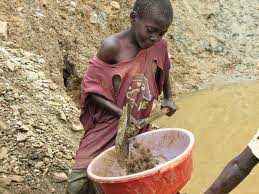
The modern economy depends on 60+ obscure metals

Mining coltan
Mining coltan

Over half a century ago, the global economy largely depended on just ten or so different materials. Most important products were made out of wood, brick, iron, copper, gold, silver or a few plastics — and that was about it.

Things are wildly different today. A huge chunk of modern-day technology, from hybrid cars to iPhones to flat-screen TVs to radiation screens, use dozens of different metals and alloys. A computer chip typically involves more than 60 different elements that are specifically selected to optimize performance, like europium or dysprosium.

And that’s long raised a concern: What would happen if we run short of any of these valuable metals? Say there’s a war. Or unrest in a crucial mining region. Or China decides to lock up its strontium deposits. Could we easily come up with substitutes? Or is modern society vulnerable to a materials shortage?

Here’s the case for vulnerability: A fascinating recent paper in The Proceedings of the National Academies of Science looks at 62 different metals that are widely used in modern-day industry. For a dozen metals, potential substitutes are either inadequate or flat-out unavailable. And there are no “excellent” substitutes for any of the 62 metals. A shortage of any of them could do some damage.

Read more.

At least 14 dead in Egyptian car bomb explosion

Scene of the explosion at Mansoura, north of Cairo

At least 14 people are believed to have died in a large explosion that destroyed a police headquarters in a Nile Delta city north of Cairo early Tuesday morning, according to the state news agency and a security official. Some 200 people were injured in the blast.

The Egyptian government accused the Muslim Brotherhood of orchestrating the attack. Cabinet spokesman Sherief Shawki said Prime Minister Hazem el-Beblawi had officially declared the group a terrorist organisation.

The Muslim Brotherhood, however, condemned the attack in an emailed statement from the group’s London press office released hours after the explosion.

“The Muslim Brotherhood condemns in the strongest possible terms the attack on the police headquarters in Mansoura (region),” the statement said.

“The Muslim Brotherhood considers this act as a direct attack on the unity of the Egyptian people and demands an enquiry forthwith so that the perpetrators of this crime may be brought to justice.”

Among the injured from the blast at Daqahliya security headquarters in the Nile Delta province of Mansour, was the police chief of the province General Sami al-Meih.

Most of those killed were policemen inside the security headquarters. Many bodies are still believed to be buried under the debris and the death toll is expected to rise, the official said.

An initial investigation indicated that the explosion was the result of a car bomb.

The attack came a day after an Al-Qaida-inspired group called on police and army to desert or face death at the hands of its fighters.

Ansar Beit al-Maqdis, or the Champions of Jerusalem, said it considers Egyptian troops to be infidels because they answer to the secular-leaning, military-backed government.

The group and others based in the Sinai have been blamed for a surge of attacks against security forces since the July coup that toppled the country’s Islamist president, Mohammed Morsi. In response, Egypt’s armed forces launched a military offensive against militants in the Northern Sinai province in August.

Speaking at a public forum on Monday, military spokesman Ahmed Mohammed Ali said so far the operations have resulted in the killing of 184 militants and the arrest of 803 others. He said about 25 percent of those killed and arrested are foreign fighters, but didn’t provide further details.

Ansar Beit al-Maqdis is believed to have ties with Palestinian militants in the Gaza Strip, and officials have said other foreign militants have found refuge in Sinai during the ongoing turmoil. – AP, Reuters, dpa

Mandela tribute mistakes Morgan Freeman for dead ‘icon’

Morgan Freeman posing as Mandela

American actor Morgan Freeman is known for his portrayal of South African leader Nelson Mandela in the Clint Eastwood drama Invictus.

Perhaps Freeman’s performance in the 2009 was too good as it lead to some confusion for an Indian-based billboard artist.

An owner of a billboard dedicated to Nelson Mandela was red-faced on Thursday after the discovery that a photo of actor Morgan Freeman was used instead of one of the anti-apartheid hero.

The billboard was erected on the side of a road in Coimbatore as part of memorials across India and the world to Mandela, who died on December 5.

Brazil buys Gripen fighters instead of French planes

A Gripen fighter
A Gripen fighter

Swedish aerospace maker Saab beat competition from France’s Dassault and US aviation giant Boeing to win a $5 billion contract to equip the Brazilian air force with 36 new fighter jets (pictured), the Brazilian defence minister announced Wednesday.

“After analyzing all the facts, President Dilma Rousseff directed me to inform that the winner of the contract for the acquisition of the 36 fighter jets for the Brazilian Air Force is the Swedish Gripen NG,” Defense Minister Celso Amorim told a press conference.

The announcement came after more than 10 years of discussions and repeated delays due to budgetary constraints.

The Gripen is said to be cheaper than either Dassault’s Rafale or Boeing’s F/A-18. It is a state-of-the-art multi-role fighter jet capable of performing an extensive range of air-to-air, air-to-surface and reconnaissance missions. It is in use in the air forces of Britain, South Africa, the Czech Republic, Thailand and Hungary.

Brazil insisted on technology transfers so that the planes can be assembled locally and give a boost to the domestic defence industry.

President Rousseff had postponed a decision on the FX-2 replacement contract in early 2011 for budgetary reasons but Brazilian air force chiefs insisted they needed the new fighter aircraft to maintain an adequate air defence. The air force is to retire its 12 Mirage jets in late December.

Brazil bought the refurbished Mirage 2000 C/Bs from France in 2005 for $80 million to fly for five years. -france24.com

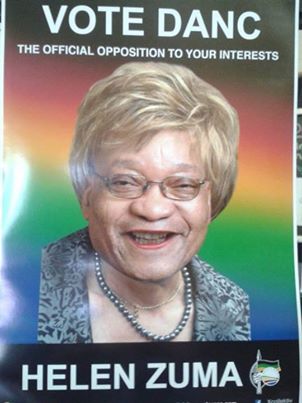
‘It’s psychotic to use Botox’

helenzuma
Zille has been a keen Botox user

It may be freezing outside — but the faces of American women are thawing out.

Botox, the most common cosmetic surgery procedure in the country, is suffering a serious public backlash, a decade after its rise to rigid prominence on the brows of celebrities and average folk alike.

The waxy, immobile visages of middle-aged stars like Nicole Kidman, Bruce Jenner, Renée Zellweger — and even that of 27-year-old Lindsay Lohan — have become cautionary tales of overindulging with the injectable antiwrinkle treatment. And now many A-listers are speaking out about their revulsion for Botox.

Earlier this year, Gwyneth Paltrow, 41, admitted she’d dabbled with the age-defying toxin. But, she said in an interview, “I won’t do Botox again, because I looked crazy.”

And 54-year-old Emma Thompson, on a tour for her new movie “Saving Mr. Banks,” made some pointed comments to UK talk show host Graham Norton recently: “Look at me, I’m normal. I really wouldn’t do anything. It’s psychotic to have your body opened up and stuff put in and inject yourself with poisons.” nypost.com