Swede helps nationalists in Ukraine

Mikael Skillt
Mikael Skillt

Three weeks ago Mikael Skillt worked for a construction company in Stockholm, Sweden. Today, he is a volunteer in a nationalist organization in Kiev. In an interview with Fria Tider, Skillt tells the story of a Ukraine where the role of the police has been assumed by paramilitary Right-wing groups.

At the end of February, mere days after Ukraine’s president, Viktor Yanukovych, was overthrown, Mikael Skillt boarded a plane bound for Kiev. He left behind a relationship that had just ended, a terrace house in a Stockholm suburb and a well-paid job as a planner at a construction company.

The purpose of his trip was to volunteer for one of the nationalist organizations which, as a result of their central role in the Ukrainian revolution, have gone from being relatively marginal to controlling the streets of Kiev.

It was not an easy decision to make, Skillt said when Fria Tider spoke to him over Skype. His former employer, also a personal friend, was not happy when Skillt suddenly quit his job to go to Ukraine. Skillt said he went anyway because of a sense of solidarity with the Ukrainian nationalists. “Nationalists have died on the streets of Kiev,” he recounted. “And I was able to help them. That is more important than my personal well-being.”

Skillt is 37 years old and has been involved in various Swedish nationalist groups for more than a decade. Between 2002 and 2010 he was active in the National Socialist organization Svenska motståndsrörelsen (Swedish Resistance Movement). Today, he is a member of a small, nationalist political party, Svenskarnas parti (Party of the Swedes), but holds no official position within it. He says he is no longer a National Socialist and describes himself as an “ethnic nationalist.” “You are born Swedish,” he explained. “It’s not something you can become.”

After arriving in Ukraine, Skillt joined the organization C14, also known as Sich, which is closely affiliated with the nationalist party Svoboda. In an interview with the BBC, C14′s leader, Yevhen Karas, says that his organization has approximately 200 members and that its main objective is to sever all ties between Ukraine and Russia. Some have called him a Nazi, but he firmly denies that accusation. “I don’t think I’m a Nazi, I’m a Ukrainian nationalist,” Karas told the BBC. “The main confrontation is about that some ethnic groups have control of many business structures, some economical and political forces.”

When asked which ethnic groups he was referring to, Karas clarified, “Russians and Jews. Some non-Ukrainian groups control a huge percent of the economic and political power. And of course, in this situation you have some tension with the Ukrainian people.”

According to Skillt, C14 has been in existence for quite some time. Prior to the revolution, C14 often intervened to protect tenants threatened by illegal eviction. “Ukrainian landlords, similar to so-called ‘slum lords’ in America, have often evicted tenants illegally in order to tear down an existing building and put up something newer and more profitable in its place. They often do that by bribing corrupt politicians. In many cases, C14 has occupied such buildings and chased away the police when they arrive to evict the tenants.”

When the protests against Yanukovych’s government began last autumn, C14 was one of the groups that fought the riot police, Berkut, as they tried to drive the protesters off the Maidan Square. “Most of the members of C14 have been very active in the Maidan riots. If you sit down and talk to these guys, I can give you ten names right off the bat of people who have lost a friend in the fighting. So, they’ve been on the front lines,” Skillt said. “I have never heard anyone here call himself a National Socialist. They fight for a Ukraine based on ethnic unity.”

Today, C14 is a force to be reckoned with. Together with the so-called Right Sector, C14 patrols the streets of Kiev, fights crime and guards public buildings. Skillt and several other Swedish volunteers participate in the patrols. “The police force still exists, but isn’t seen much,” he said. “Most of the police officers you see on the streets are only traffic police. Maintaining order is primarily being done by C14 and the Right Sector.”

The reason why there is a power vacuum that is currently being filled by these groups is that the special police force, Berkut, was disbanded following the overthrow of Yanukovych, and many officers of the regular police force were also sacked. “Corruption among the police has been massive and many have been dismissed,” Skillt explained. “Some have fled for their lives because they were guilty of corruption, or otherwise behaved like bastards. The officers that remain are pro-Ukrainian and not corrupt. But because of their low-life former comrades, people don’t have much confidence in them either.”

“Berkut was really disgusting,” he continued. “I have met some people who were arrested by them. They were tortured, sometimes even maimed. People had toes and fingers cut off. Some were doused in gasoline, while police officers stood next to them, smoking. Others had water poured over them and were then thrown out into -10 degrees C temperatures.”

The nationalist groups, rather than the police, enjoy a great deal of confidence among the public, Skillt told us. “They have acted in an exemplary manner, as far as the people are concerned. They have stood up to armed police officers, in many cases while unarmed, and at great risk to their own lives. This won the confidence of the people.”

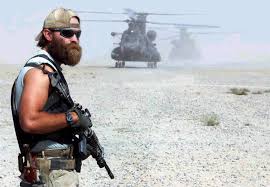
When the Ukrainian parliament convened on March 17 to discuss the situation in Crimea, C14 and the Right Sector provided security. Skillt was part of the group that C14 sent to guard the parliament. A photo showed him wearing a uniform, a bulletproof vest, a ski mask and sunglasses. He carried a gun case on his back, but he didn’t want to tell us what it contained. “A fishing pole,” he said.

Other photographs from the parliament, however, show uniformed, masked men openly carrying automatic rifles. Skillt confirms that both C14 and the Right Sector possess firearms, even though guns are not part of their standard equipment. The ability to handle guns safely varies widely from person to person. “Some of the guys in the Right Sector are like monkeys with guns,” he said. “You put your life at risk just by being near them, when they’re armed. It’s pure slapstick, they have guns but handle them carelessly, as if they were wooden sticks. In C14, safety routines are much better. It’s almost up to the standard of the Swedish military.”

Skillt described C14 as a more professional and disciplined unit than the Right Sector. Before Skillt was approved for service in C14 his physical fitness and marksmanship were tested. Candidates are expected to be able to run five kilometers in under 25 minutes while wearing a full uniform, a bulletproof vest and carrying other personal equipment. “It’s not as easy as it sounds,” Skillt said. “Part of the course is a steep uphill slope. I made it in 24 minutes and a few seconds.”

The Right Sector was formed last autumn, when the protests began. It first functioned as an umbrella organization for various nationalist groups that wanted to stop the police from driving the protesters from their encampments on the Maidan in central Kiev. Its members range from soldiers with combat experience from Afghanistan and Chechnya, to students and soccer hooligans.

According to Skillt, the different groups within the Right Sector have now coalesced into one organization with a common leadership. Its leader, Dmytro Yarosh, has announced his candidacy in the upcoming presidential election in May. He opposes integration with the European Union, which he described as a “monster” that imposes “anti-Christian and anti-national laws” upon its members. In a widely-distributed promotional video, the Right Sector has claimed to fight against “totalitarian liberalism” and for the “rebirth of Europe.”

One incident from last week illustrates the influence of these paramilitary, Right-wing groups in post-revolutionary Ukraine. Skillt told us that he was one of approximately 20 activists from C14 who went to the office of the Ukrainian prison authorities in Kiev. The purpose of the visit was to secure the release of one of the organization’s members, who had been jailed for participating in the street-fighting with the police while Yanukovych was still in power.

“There were four guards there,” Skillt said. “They locked themselves in a sentry booth as soon as we got there. We told the head of the prison authority that if he wouldn’t come outside and talk to us, we would come inside and talk to him. He actually did come outside and, after a brief discussion, promised the C14 activists that he would do what was necessary to have their comrade released.”

Source: friatider.se

A system that rewards confidence-gaming sociopaths

The eyes are telling

By Charles Hugh Smith.

What is the shelf life of a system that rewards confidence-gaming sociopaths rather than competence?

Let’s connect the dots of natural selection and the pathology of power.

In his 2012 book The Wisdom of Psychopaths: What Saints, Spies, and Serial Killers Can Teach Us About Success, author Kevin Dutton described how the attributes of sociopathology are in a sense value-neutral: the sociopathological attributes that characterize a dangerous criminal may also characterize a cool, high-performing neurosurgeon.

As Dutton explains in his essay What Psychopaths Teach Us about How to Succeed(Scientific American):

Psychopaths are fearless, confident, charismatic, ruthless and focused. Yet, contrary to popular belief, they are not necessarily violent. Far from its being an open-and-shut case–you’re either a psychopath or you’re not–there are, instead, inner and outer zones of the disorder: a bit like the fare zones on a subway map. There is a spectrum of psychopathy along which each of us has our place, with only a small minority of A-listers resident in the “inner city.”

While there is obviously a place for high-functioning sociopaths in professions which reward those characteristics, what about sociopaths who substitute deviousness and deception for competence? For some context, let’s turn to the Pathology Of Power by Norman Cousins, published in 1988.

Cousins was particularly concerned with the National Security State, a.k.a. the military-industrial complex, which at that point in U.S. history was engaged in a Cold War with the Soviet Empire. Cousins described the pathology of power thusly:

Connected to the tendency of power to corrupt are yet other tendencies that emerge from the pages of the historians:
1. The tendency of power to drive intelligence underground;
2. The tendency of power to become a theology, admitting no other gods before it;
3. The tendency of power to distort and damage the traditions and institutions it was designed to protect;
4. The tendency of power to create a language of its own, making other forms of communication incoherent and irrelevant;
5. The tendency of power to set the stage for its own use.
In broader terms, we might add: the tendency of power to manifest hubris, arrogance, bullying, deception and the substitution of rule by Elites for rule of law.

Natural selection isn’t only operative in Nature; it is equally operative in human organizations, economies and societies. People respond to whatever set of incentives and disincentives are present. If deceiving and conning others is heavily incentivized, while integrity and honesty are punished, people will gravitate to running cons and embezzlement schemes.

What behaviors does our Status Quo reward? Misrepresentation, obfuscation, legalized looting, embezzlement, fraud, a variety of cons, gaming the system, deviousness, lying and cleverly designed deceptions.

Let’s connect the pathology of power and the behaviors selected by our Status Quo. What we end up with is a system that selects for a specific category of sociopaths: those whose only competence is in running cons.

No wonder we have a leadership that is selected not for competence but for deviousness. What’s incentivized in our system is spinning half-truths and propaganda with a straight face and running cons that entrench the pathology of power.

What is the shelf life of a system that rewards confidence-gaming sociopaths rather than competence? Unless we change the incentives and disincentives, the system is doomed.


Ukraine, Chevron and Condi Rice… the broken record

Condi Rice, a dark force

High principles dominate the rhetoric on freedom-loving Ukraine, writes JP Sottile. But more mundane realities – like the interests of US oil corporations and Ukraine’s vast shale gas capacity – are part of the volatile equation.

In Ukraine, Chevron’s deal continues a long tradition of intermarriage between ‘national’ and corporate interests under the guise of national security.

Everybody’s got an opinion about the ‘showdown’ with Russia.

Some say it’s about freedom and the right to self-determination. Some say it’s about standing up to aggression and halting a dictator’s march.

Some say it’s about the future of everything-from Syria to North Korea to Iran’s nuclear program – and, according to Sen. Lindsey Graham, it all stems from Obama’s failure to kill the people who killed Americans at Benghazi.

But the most-revealing voice in the chorus is Condi Rice. She penned a tension-filled op-ed on Ukraine for the Washington Post – the newspaper of broken records.

Her nostalgic, “Baby, It’s a Cold War Outside” ditty on the “Ukrainian Problem” came just two days after a Teflon-coated Henry Kissinger opined about the “art of establishing priorities” in his own Ukraine-themed op-ed for the Post.

Why should we care about Condi?

As the world learned through painful experience, Condi Rice, much like Henry Kissinger, was all about establishing priorities. But now that she’s out of power, why should anyone waste any time considering Ms. Rice’s opinion about anything, much less about the ‘crisis’ in Ukraine?

Why? Because it’s telling. Like most American Exceptionalists, her bluster and posturing can be reverse-engineered to find the banal truth about US foreign policy.

For example, her steadfast belief that Ukraine “should not be a pawn in a great-power conflict but rather an independent nation” might have something to do with Chevron’s 50-year lease to develop Ukraine’s shale gas reserves.

It’s the gas, stupid

When that lease was signed on November 5, 2013, it stoked Russian fears about losing its influence on, and a major gas market in, a former satellite.

It also came on the eve of the much-disputed trade deal with the European Union that, once abandoned due to Russian pressure, led to the toppling of Ukraine’s government.

Reuters characterized Ukraine’s “$10 billion shale gas production-sharing agreement with US Chevron” as “another step in a drive for more energy independence from Russia.”

Of course, Ms. Rice knows something about driving for more energy. She sat on Chevron’s board of directors for ten years before resigning to become President Bush’s National Security Adviser in January of 2001.

She was such a titanic figure at Chevron and so beloved by their corporate captains that they even named a 129,000-ton oil tanker ‘Condoleezza Rice’. Do people name tankers after people? People do!

But four months after leaving Chevron, they “quietly renamed” the tanker, apparently sensitive to the implication that she might prioritize their interests in places like Kazakhstan (a de facto dictatorship never targeted by American Exceptionalists) or the Caspian Sea (where Chevron is heavily invested) or Afghanistan (where they’ve long sought a pipeline from the Caspian region to the Indian Ocean).

Corporate Interests Abroad

In the case of Ukraine, Chevron’s deal continues a long tradition of intermarriage between ‘national’ and corporate interests under the guise of national security.

As the International Business Times stated immediately after the deal, “Chevron’s agreement with Ukraine was supported by the US as part of its national security strategy to help reduce Russia’s hold on Europe and Kiev.”

As quoted in the article, US Ambassador Geoffrey Pyatt said, “I’m very determined to cooperate with the Ukrainian government in strengthening Ukraine’s energy independence.”

That “cooperation” is couched in the language of “independence” – but it’s actually about shifting to financial interdependence with powerful, American corporate interests. It’s not about freedom or self-determination or human rights.

It’s about the ‘Open Door’.

Since the US proposed the Open Door Policy in China at the end of the 19th Century, American ‘soft imperialism’ has exploited resource opportunities for American corporate interests in dozens of ‘friendly’regimes – their commitment to freedom notwithstanding.

We have been there before

Whether it was oil in Iran, bananas in Guatemala or sugar-cane in Cuba, any move to close the door on US business interests has traditionally been met with dire warnings about the dangers of isolationism and specious claims about America’s national interests – which, oddly enough, always seem to be located in another country.

Throughout the Cold War, those ‘endangered’ national interests inspired CIA hijinks around the world. US foreign policymakers supported regime change in places like Chile (calling Dr. Kissinger) and around Central America.

And they doled out generous foreign aid packages to a motley crew of anti-communist ‘strongmen’. If push came to shove, the US military might even get involved.

Since the end of the Cold War, US policy has been kicking open doors around the world and particularly around the edges of the former Soviet Union. Expansion of NATO and US involvement in the former ‘Soviet Stans’ around Afghanistan extended a semi-circle of US military might around Russia.

A declaration of economic war

And the Ukrainian energy independence trumpeted by Ambassador Pyatt amounted to a declaration of economic warfare on Russia’s oil and gas-based economy. Like Condi Rice before him, Ambassador Pyatt’s well-established priority is to ensure that well-connected businesses get in on the ground floor.

Once on the ground floor, they need insurance – either from local clients or from a neighborhood patrol by US forces. Perhaps that’s why Ms. Rice used her Ukraine op-ed as an opportunity to advocate leaving a permanent military force in Afghanistan.

She doesn’t want to hear “talk of withdrawal from Afghanistan whether the security situation warrants it or not.” For her, nothing less than 10,000 troops will do. Otherwise, the US is “not serious about helping to stabilize that country.”

Freedom, liberty, justice … and hydrocarbons

Yet, one wonders if she – like all the professional hand-wringers, truculent think tankers, and once and future policymakers who’ve grandstanded on the showdown with Russia – isn’t quietly more concerned about something more basic than freedom, liberty and justice for all.

Perhaps the former Secretary of State, former Chevron big-wig and former oil tanker is more concerned with the ability of Chevron to realize its Turkmenistan-Afghanistan-Pakistan-India (TAPI) pipeline dream.

Her old cohorts practicing soft imperialism at the US State Department have certainly been doing their part to help Chevron score that lucrative contract.

The banal truth is that America’s long-standing policy is to help people anywhere and everywhere when those people just so happen to be living on or near valuable resources.

Unless, of course, it’s Bahrain, Nigeria, Kazakhstan or anywhere else repressive and corrupt governments are already interdependent upon US corporate interests.

Source: The Ecologist

Ukraine: The coup to install billionaires

oligarchs-ukraineBy Dmitri Menin.

It has long been known that revolutions are carried out by romantics, and their fruits harvested by cynics. But Ukraine has now put them all to shame with the unbelievable speed with which it has rushed from romanticism to cynicism. The final few dazed revolutionaries are still wandering across Maidan Square shouting «Down with thieves and oligarchs!» and «Long live the government of national confidence», while at the same time it is these same oligarchs who are confidently taking up the more substantial government posts, such as multimillionaire Arsen Avakov, for example, who has been appointed Minister of Internal Affairs, as well as getting entire regions to feed on, such as billionaires Ihor Kolomoyskyi in Dnepropetrovsk and Sergey Taruta in Donetsk. The other appointees may have fewer millions at the moment, but they will soon catch up. New changes are also afoot. The New York Times reports that the nomination of Vadim Novinsky, the owner of Smart Holding Company whose net worth is estimated to be USD 1.9 billion, for the post of Kiev’s representative to Crimea is on the cards.

There is a rumour that the author of this ‘forced’ staffing strategy is former prisoner Yulia Tymoshenko, who went to see the people on Maidan Square in a wheelchair, but who was able to stand and walk about in the American Embassy. It turns out that is the place where one can breathe the salubrious air of freedom. It is assumed that the oligarchs, who represent the country’s business elite, will be able to exert a controlling influence over workers in eastern Ukraine. Yuriy Lutsenko, an ally of the magically-cured maiden Yulia Tymoshenko, has said that the reason oligarch’s are being appointed is so that big business can be as involved as possible in protecting the country’s territorial integrity, which will not just make use of public resources, but all available private resources as well. Only now, something tells us that this plan is far from spontaneous and that this is exactly the reason why the turmoil and undertaking took place to begin with. And as far as which citizens are primarily going to be saved by these private and public resources, there is absolutely no doubt at all – the most worthy, which is to say the oligarchs themselves. In essence, the era of the complete triumph of the oligarchy in Ukraine has arrived. Masks are being thrown off even more quickly than any kind of decency allows. There is a terrible hurry before the people befuddled by the incense of the burning tyres finally see the light. By then, however, it may very well be too late.

Simon Jenkins, a journalist for The Guardian, writes: «Romantics sometimes refer to the «wisdom of crowds», but they ignore the capacity of totalitarians to manipulate the masses to their will. They forget the hysteria and cruelty of which programmed crowds are capable. Any upheaval can offer the hope of better times. But history is always a sceptic».

Despair is discernible in the words of one of those who took part in the events in Ukraine: «In any case, good intentions like these without any constructive suggestions to take and create a people’s council, popular control or a people’s government are going to be faced with the fact that foreigners are once again going to end up in these public offices.

«Because the trend of Ukrainian desperation lies in the fact that the vermin we for some reason keep electing to govern us do not come from outer space. They live among us! Which is why any recombination of elements that make up the current system of power, which is represented by a political circle of particularly active, deceitful and cynical vermin, is going to come to nothing».

Another disillusioned revolutionary believes that «Maidan is probably waiting for the next grandiose ‘flop’ – something like what happened in 2005. There is no ‘elite’ in Ukraine that would be able to replace the corrupt domestic bedlam. The ‘Donetsk clan’ has been moved aside, and the ‘liubi druzi’ (the ‘dear friends’ of Viktor Yushchenko) are returning. What’s more, they are clearly hungry for revenge and in the mood for it. These are the same ‘liubi druzi’ that successfully ‘carved’ and ‘sawed’ under Tymoshenko in the previous attempt. Except that while they came to power in 2005 under the slogan ‘the Orange Revolution’, now they are chomping at the bit under the rhetoric of Maidan. Tymoshenko was released after all the human fatalities, and she and Turchynov were immediately hoisted to the top of the power pyramid. What is that about? Why such an unprecedented honour? Who exactly are these Elders of Zion? Whilst averting their eyes, some deputies say that such figures exist. All the rest are a closely guarded secret».

But they are not being kept secret any more. Let us look at two of them now.

The new head of the Dnipropetrovsk Regional State Administration is Israeli citizen Ihor Kolomoyskyi, a well-known Ukrainian businessman and head of the European Jewish Council. He is ranked the second richest person in Ukraine (2013) with a net worth of USD 3.645 billion. He is a member of various supervisory boards, the co-owner of PrivatBank, the Neftekhimik-Prykarpattya oil refinery, and the oil and gas extracting company Ukrnafta, the vice-president of the Football Federation of Ukraine, and, according to a number of political analysts, one of the most influential people in Ukraine. It was Kolomoyskyi who was always the financial sponsor of the ‘Yulia Tymoshenko’ political project. He lives in Switzerland. The fact that his PrivatBank was one of the first major lending institutions in the country to stop issuing money to the people because of the ‘Maidan troubles’ is evidence of how much of his own money Kolomoyskyi is willing to share with the people of Ukraine. In reality, he needs additional money himself to rectify affairs in his business empire. Much to the joy of Kiev’s new rulers, he has already registered his presence through his offensive remarks towards Russian president Vladimir Putin. Evidently there will be no point waiting for money, only insults.

Sergey Taruta has been appointed the governor of Donetsk region and is co-owner of the Industrial Union of Donbas Corporation, as well as president of FC Metalurh Donetsk. In February 2008, his net worth was USD 2.65 billion and Taruta ranked 8th in the Top-130 Richest Ukrainians. After the global financial crisis, however, his net worth fell dramatically to approximately USD 750 million. He is urgently in need of fresh infusions to restore his former greatness and save his assets. Governing a region as affluent as Donetsk will give him a good chance to do this, where he will be busy collecting objects of ‘high antiquity’. For this reason, he has spent a long time getting closer to former Ukrainian president Viktor Yushchenko.

Looking at these men, and knowing that it is these men who are standing behind the regime’s main figures, you start to wonder why Turchynov and Yatsenyuk are referring to themselves as a «kamikaze government» quite so insistently, and giving themselves a political life of 3-4 months. Why had it been necessary to rush to power quite so fiercely? Acting President Alexander Turchynov says that the provisional government is doomed because it will have to implement unpopular decisions. «Not those promised by the populists, but those that are needed to save Ukraine from default and restore the faith of creditors and investors. It will be criticised and vilified, but it must fulfil its duties and burn for the sake of Ukraine». Once again there is the question of whether it is for the sake of Ukraine or for the sake of its most worthy sons like Kolomoyskyi, Taruta and others. Yatsenyuk has already announced the unconditional acceptance of all IMF conditions, which will have a serious impact on the further deterioration of life for the Ukrainian people. But then on the other hand, fresh money will be received to save big business, which will then move along the already familiar route to offshore accounts and precious safety deposit boxes that will be hidden much more securely than those of the simpleton Yanukovych. It seems that the ‘kamikaze’ of Turchynov and Yatsenyuk is not going to involve anything except cutting out coupons to transfer power to the oligarchs.

And as far as Maidan’s «Circle of National Trust» is concerned, do they really believe in this fairytale about the fat cats being saviours of the homeland? After until, until fairly recently its leaders had been saying that Ukraine’s new government of national confidence would be closed to anyone on the list of the 100 richest people in Ukraine. Well what are they keeping quiet for?

They, for example, announced that they were going to convene a national popular assembly on Maidan Square on 2 March to listen to a report on the first results of the new government’s work. «And let Turchynov, Yatsenyuk, Tyahnybok, Klitschko and Avakov just try not to come!» it said in a statement on their social network site. People did actually gather on the square. But what did they talk about? About deflecting the threat of Russian ‘aggression’, both invented and over-exaggerated, seemingly so that no kind of report could be given. In truth, nobody has stuttered anything at all about the results of the new government’s work. And maybe nobody is going to ask, either. So what did the young people from the «Heavenly Hundred» and Berkut actually die for?

Will Baroness Ashton of Upholland lead the nuclear charge?

Baroness Catherine Ashton
Catherine Ashton adjusting her GU crown

When Victoria Nuland rejected the EU solutions in Ukraine with her “Fuck the EU” comment, the EU went it alone. Germany’s Foreign Minister, Frank-Walter Steinmeier proposed that he and his French counterpart, Laurent Fabius, fly to Kiev and try to reach a resolution of the violence before escalation. Polish Foreign Minister, Radoslaw Sikorski was asked to join.

The talks in Kiev included the EU delegation, Yanukovich, the three opposition leaders and a Russian representative. The US was not invited.

Then suddenly snipers began shooting into the crowd in Maidan Square. Panic ensued and riot police retreated in chaos according to eyewitnesses. Vitali Klitschko withdrew from the deal. Yanukovich fled Kiev.

Now that the “opposition” has driven a duly-elected president into exile and dissolved the national riot police, Berkut, Washington has demanded that Ukraine submit to very onerous IMF conditionalities. As Paul Craig Roberts writes:

According to a report in Kommersant-Ukraine, the finance ministry of Washington’s stooges in Kiev who are pretending to be a government has prepared an economic austerity plan that will cut Ukrainian pensions from $160 to $80 so that Western bankers who lent money to Ukraine can be repaid at the expense of Ukraine’s poor.

The corrupt Western media describes loans as “aid.” However, the 11 billion euros that the EU is offering Kiev is not aid. It is a loan. Moreover, it comes with many strings, including Kiev’s acceptance of an IMF austerity plan.

The austerity plan will cut social services, funds for education, layoff government workers, devalue the currency, thus raising the prices of imports which include Russian gas, thus electricity, and open Ukrainian assets to takeover by Western corporations.

Ukraine’s agriculture lands will pass into the hands of American agribusiness.

The conflict between the US and the EU has thus been exposed.

Meanwhile Vladimir Putin has made it clear that Moscow does not need to “invade” Ukraine. The 1997 Ukraine-Russia partition treaty specifically allows Russian troops in Crimea. No shots were fired and Russian “sons” were welcomed with open arms.

The US should start worrying about the white supremacists they so ardently and openly support in Ukraine, but shun elsewhere. If the Nazi’s take over – which seem more and more likely – the UN’s R2P (responsibility to protect) will come into play. Samantha Power, the architect of R2P, should be proud of herself for crafting the ultimate solution many hawks in the US wish for.

The three war-mongering women who represent the West’s foreign policy apparatus, US Assistant Secretary of State for European and Eurasian Affairs Victoria Nuland and EU official and onetime British Campaign for Nuclear Disarmament activist Catherine Ashton, and United States Ambassador to the United Nations Samatha Power, have been exposed. The first two by leaked phone calls, and the latter by her R2P plan.

Ashton, actually the grand and feudalistic Baroness Ashton of Upholland, also has an exaggerated view of her own accomplishments. She has scant knowlegde of what transpires in Europe, but flatters herself with the inflated title of High Representative for Foreign Affairs and Security Policy for the European Union.

Her title hasn’t lifted her dour expression and gloomy features yet, but it might be as a result of her closeness to the Great Unwashed, the GU.

The Baroness is married to former British journalist Peter Kellner, an executive of the British polling company YouGov. The pollster does political polling as well as the very dull infotainment media charts of Pop Idol and X-Factor, pandering to the GU. Only in Britain could a Labourite sink to such depths of grandeur.

In a phone call between herself and the Estonian foreign minister Urmas Paet, Ashton was told what had really happened in Kiev. The High Representative could no wait to throw cold water on the information that the “opposition” – actually a NATO force with looted Libyan weapons some say – was behind the shootings of protesters and policemen.

Ashton quickly defended the new members of the Ukrainian Rada, the parliament. The Estonian Foreign Ministry in the meantime has confirmed that the transcript is authentic.

Essentially, Ashton told the Estonian foreign minister that in the Machiavellian shaping of the fake opposition in the Rada, some “cannon fodder” had been required.

Ashton’s agenda complements that of Nuland whose January phone call with US ambassador to Ukraine Geoffrey Pyatt revealed that the Obama administration was hand picking and paying the future government of Ukraine even while Ashton, as well as Nuland’s co-ideologue Jeffrey Feltman, the United Nations Undersecretary General for Political Affairs, were feigning interest in a negotiated solution.

Nuland sounded certain that the US would achieve its political aims with the support of America’s bought-and-paid for UN team of Feltman and his boss, Secretary General Ban Ki-moon who was known to South Korean journalists as the “slippery eel” when he served as South Korean foreign minister.

The Calcutta-born Special UN envoy to Ukraine, Dutch diplomat Robert Serry, in which Nuland expressed great confidence must also not be forgotten in the coup plot.

Thanks to the intercept capabilities of loyal and proficient Ukrainian security agents, the world now understands the perfidy of chattering women who are helping lead Europe and, possibly, the rest of the world, into a massive conflagration, possibly a nuclear war.

US violates Nuclear Nonproliferation Treaty

peacenuclearU.S. military spending is not actually being cut at all, but increasing. Also going up: U.S. nuclear weapons spending. Some of the new nukes will violate treaties, but the entire program violates the Nuclear Nonproliferation Treaty, which requires disarmament, not increased armament. The U.S. policy of first-strike and the U.S. practice of informing other nations that “all options are on the table” also violate the U.N. Charter’s ban on threatening force.

But do nuclear weapons, by the nature of their technology, violate the U.S. Constitution? Do they violate the basic social contract and all possibility of self-governance? Thus argues a new book called Thermonuclear Monarchy: Choosing Between Democracy and Doom by Elaine Scarry. It’s not unheard of for people to see out-of-control nuclear spending as a symptom of out-of-control military spending, itself a symptom of government corruption, legalized bribery, and a militaristic culture. Scarry’s argument suggests a reversal: the root of all this evil is not the almighty dollar but the almighty bomb.

The argument runs something like this. The primary purpose of the social contract is to create peace and prevent war and other injury. The U.S. Constitution (Article I, Section 8, clause 11) bans the making of war without the approval of both houses of Congress. This approval was to be required not just for an existing military to attack another country, but for a military to be raised at all — standing armies not being anticipated. And it was understood that an army would not be raised and deployed into war unless the citizen-soldiers went willingly, their ability to dissent by desertion not needing to be spelled out (or, let us say, their ability to dissent by mass-desertion, as desertion in the war that led to the Constitution was punished by death).

And yet, because this point was so crucial to the entire governmental project, Scarry argues, it was in fact spelled out — in the Second Amendment. Arms — that is 18th century muskets — were to be freely distributed among the people, not concentrated in the hands of a king. “Civilian” control over the military meant popular control, not presidential. The decision to go to war would have to pass through the people’s representatives in Congress, and through the people as a whole in the form of soldiers who might refuse to fight. By this thinking, had the Ludlow Amendment, to create a public referendum before any war, passed in the 1930s, it would have been redundant.

Before the 1940s were over, in Scarry’s view, a Ludlow Amendment wouldn’t have been worth the paper it was written on, as the existence of nuclear weapons erases Constitutional checks on war. With nuclear weapons, a tiny number of people in a government — be it 1 or 3 or 20 or 500 — hold the power to very quickly and easily kill millions or billions of human beings, and other species, and very likely themselves in the process. “We may have democracy, or we may have wealth concentrated in the hands of a few, but we can’t have both,” said Louis Brandeis. We may have democracy, or we may have thermonuclear bombs, but we can’t have both, says Elaine Scarry.

Source: Global Resource

Zimbabwe arrives in SA: ANC’s plan for expropriation

Anthea Jeffrey
Anthea Jeffrey

Dr Anthea Jeffery, head of Special Research at the Institute of Race Relations, says the Investment Bill opens the door to expropriation without compensation and is a new Expropriation Bill by another name.

Media coverage of the Promotion and Protection of Investment Bill of 2013 (the Investment Bill) has focused on its role in replacing South Africa’s bilateral investment treaties with various European states. Representatives of these countries have broken their usual diplomatic silence to warn against the reduced protection it gives investors from their states. However, the true significance of the Bill goes very much beyond this.

The Investment Bill is, in fact, a new expropriation measure that will apply to all property owners in South Africa, both local and foreign. It is also likely to result in many people receiving zero compensation on the loss of their property, provided the State takes this, not as owner, but rather as ‘custodian’ for the disadvantaged. In combination with the Restitution of Land Rights Amendment Bill of 2013, it could see property of many kinds taken by the State as ‘custodian’ for land claim- ants and without any compensation to its former owners. Yet most commentary on the Investment Bill has overlooked this risk, helping to lull all property owners into a false sense of security.

A misleadingly named Promotion and Protection of Investment Bill of 2013 was gazetted by the Department of Trade and Industry (DTI) in November last year. The three months allowed for public comment expired at the end of January 2014. Since then, media coverage has been sanguine or absent, helping to obscure the threat posed by the Investment Bill to the property rights of every person, whether local or foreign.

Under the Investment Bill, the rights of domestic property owners will be much reduced. The current Expropriation Act of 1975 gives them the right to full compensation on expropriation, which must include not only the market value of their properties but also compensatory damages for consequential loss. The Act also guarantees them immediate payment of 80% of the compensation due, with interest on the outstanding balance.

Under the Investment Bill, by contrast, expropriated owners will receive less than market value and will have no right to damages for consequential loss. They will also have to wait for the State to make payment in what it regards as ‘a timely manner’.

However, the real danger in the Investment Bill is not that domestic property owners will be confined to ‘just and equitable’ compensation falling somewhat short of market value – but that they will receive no compensation at all.

This danger stems from a key clause in the Investment Bill stating that various actions ‘do not amount to acts of expropriation’. According to the Bill, there will thus be no expropriation where the Government’s actions result ‘in the deprivation of property’ but ‘the State does not acquire ownership’ and ‘there is no permanent destruction of the economic value of the investment’.


Read more.

Who is behind regime change?

Srdja Popovic
Srdja Popovic

Serbia’s Srdja Popovic is known by many as a leading architect of regime changes in Eastern Europe and elsewhere since the late-1990s, and as one of the co-founders of Otpor!, the U.S.-funded Serbian activist group which overthrew Slobodan Milošević in 2000.

Lesser known, an exclusive Occupy.com investigation reveals that Popovic and the Otpor! offshoot CANVAS (Centre for Applied Nonviolent Action and Strategies) have also maintained close ties with a Goldman Sachs executive and the private intelligence firm Stratfor (Strategic Forecasting, Inc.), as well as the U.S. government. Popovic’s wife also worked at Stratfor for a year.

These revelations come in the aftermath of thousands of new emails released by Wikileaks’ “Global Intelligence Files.” The emails reveal Popovic worked closely with Stratfor, an Austin, Texas-based private firm that gathers intelligence on geopolitical events and activists for clients ranging from the American Petroleum Institute and Archer Daniels Midland to Dow Chemical, Duke Energy, Northrop Grumman, Intel and Coca-Cola.

Referred to in emails under the moniker “SR501,” Popovic was first approached by Stratfor in 2007 to give a lecture in the firm’s office about events transpiring in Eastern Europe, according to a Stratfor source who asked to remain confidential for this story.

In one of the emails, Popovic forwarded information about activists harmed or killed by the U.S.-armed Bahraini government, obtained from the Bahrain Center for Human Rights during the regime’s crackdown on pro-democracy activists in fall 2011. Popovic also penned a blueprint for Stratfor on how to unseat the now-deceased Venezuelan president Hugo Chavez in September 2010.

Stratfor’s Global Activist Connector

Using his celebrated activist status, Popovic opened many doors for Stratfor to meet with activists globally. In turn, the information Stratfor intended to gain from Popovic’s contacts would serve as “actionable intelligence”—the firm billed itself as a “Shadow CIA”—for its corporate clients.

Popovic passed information to Stratfor about on-the-ground activist events in countries around the world, ranging from the Philippines, Libya, Tunisia, Vietnam, Iran, Azerbaijan, Egypt, Tibet, Zimbabwe, Poland and Belarus, Georgia, Bahrain, Venezuela and Malaysia. Often, the emails reveal, Popovic passed on the information to Stratfor without the consent of the activists and likely without the activists ever knowing that their emails were being shuttled to the private security firm.

In the U.S., this investigation’s co-author, Carl Gibson (representing US Uncut), and the Yes Men’s Andy Bichlbaum had a meeting with Popovic shortly after their two respective groups used a media hoax to play a prank on General Electric, ridiculing the company over its non-payment of U.S. taxes.

The pair gave Popovic information about both groups’ plans for the coming year and news later came out that Stratfor closely monitored the Yes Men’s activities.

During the Arab Spring, in Egypt in January 2011, Popovic received an interview invitation for an appearance on CNN. The first people he turned to for talking points were Stratfor employees, who provided him with five talking points to lead with.

Stratfor said Popovic’s main use for the firm was his vast array of grassroots activist contacts around the world.

“A little reminder that the main utility in this contact is his ability to connect us to the troublemakers around the world that he is in touch with. His own ability to discern situation on the ground may be limited, he mainly has initial contact with an asset and then lets them do their own thing,” reads a May 2010 email written by former Stratfor Eurasia Analyst Marko Papic. “He does himself have information that may be useful from time to time. But, the idea is to gather a network of contacts through CANVAS, contacts that we can then contact independently.”

Popovic was so well-received by Stratfor that he even got his wife, Marijah, a job there. She worked for a year from March 2010 through March 2011 as the weekend open source intelligence analyst at Stratfor. The other candidate for the job, Jelena Tancic, also worked for CANVAS.

“The Canvas guy [Popovic] is a friend/source [for Stratfor], and recommended her to us,” Stratfor’s Vice President of Analysis Scott Stewart said in a March 2010 email, leaving out that the two were dating at the time.

Popovic and his wife grew so close to Stratfor, in fact, that Popovic invited numerous members of the Stratfor staff to their wedding in Belgrade, Serbia.

Helping Stratfor Manufacture Revolutions

Stratfor saw Popovic’s main value not only as a source for intelligence on global revolutionary and activist movements, but also as someone who, if needed, could help overthrow leaders of countries hostile to U.S. geopolitical and financial interests. So useful was Popovic to Stratfor that the firm gave him a free subscription, dubbed “legit sources we use all the time as a company” by Papic.

In a June 2011 email, Papic referred to Popovic as a “great friend” of his and described him as a “Serb activist who travels the world fomenting revolution.”

“They…basically go around the world trying to topple dictators and autocratic governments (ones that U.S. does not like 😉 ,” Papic says in one email. Replying to a follow up to that email, he states, “They just go and set up shop in a country and try to bring the government down. When used properly, more powerful than an aircraft carrier battle group.”

In response to the “aircraft battle group” email, Stratfor Vice President of Intelligence Fred Burton sardonically said that perhaps they could be sent into Iran. Emails also reveal Popovic served as an information source intermediary for on-the-ground activists in Iran, also informing Stratfor of the funding struggle for “democracy programs” there, as the U.S. government pushed a “soft power” agenda.

Another March 2010 email from Stewart to Burton said that CANVAS was “trying to get rid of Chavez,” referring to the late Venezuelan President Hugo Chavez. In 2007, CANVAS trained activists to overthrow Chavez.

“If I remember correctly, we use hushmail communication to contact him regarding Venezuela due to the sensitivity of using a revolutionary NGO as a source considering we have clients who operate in country,” Papic said in a January 2011 email of Popovic.

Stratfor grew so enamored of CANVAS’s ability to foment regime change abroad that it invited Popovic to its Austin headquarters in 2010 to give seminars on the subject, and paid for his trip there.

CANVAS’s Goldman Sachs Cash

One of CANVAS’s major funders is Muneer Satter, a former Goldman Sachs executive who stepped down from that position in June 2012and now owns Satter Investment Management LLC. Stratfor CEO Shea Morenz worked for ten years at Goldman Sachs as well, where he served as Managing Director in the Investment Management Division and Region Head for Private Wealth Management for the Southwest Region.

Satter is meanwhile a major funder of the Republican Party, giving over $300,000 to Karl Rove’s Super PAC Crossroads GPS before the 2012 election, and another $100,000 to the Republican Governors Association in the first half of 2013 prior to the 2014 mid-term elections.

Living in a massive, $9.5 million mansion in Chicago’s North Shore suburb of Lake Michigan, Muneer also gave $50,000 toward President Obama’s inaugural fund in 2009.

When it came time to connect Muneer with the global intelligence firm, Popovic served as the middle man introducing Satter to Stratfor Chairman George Friedman.

“Whenever I want to understand the details behind world events, I turn to Stratfor,” reads an endorsement from Satter on Stratfor’s website. “They have the most detailed and insightful analysis of world affairs and are miles ahead of mainstream media.”

Otpor!: A Counter-History

To understand how Popovic came to aide Stratfor in its intelligence-gathering efforts, it’s crucial to examine Otpor! and CANVAS critically. A close examination demonstrates that Popovic was a natural choice to be a Stratfor informant and close advisor.

Often valorized by grassroots activists and Western media, there was far more to the “Bulldozer Revolution” that led to the overthrow of Milošević and subsequent Eastern European regimes than meets the eye.

“In principle, [Serbia] was an overt operation, funded by congressional appropriations of around $10 million for fiscal 1999 and $31 million for 2000. Some Americans involved in the anti-Milosevic effort said they were aware of CIA activity at the fringes of the campaign, but had trouble finding out what the agency was up to,” explained a 2000 investigative piece appearing in The Washington Post.

“The lead role was taken by the State Department and the U.S. Agency for International Development, the government’s foreign assistance agency, which channeled the funds through commercial contractors and nonprofit groups such as NDI and its Republican counterpart, the International Republican Institute (IRI).”

“In fact between 1997 and 2000 the National Endowment for Democracy and US government may have accomplished what NATO’s 37,000 bombing sorties had been unable to do: oust Milosevic, replace him with their favoured candidate Vojislav Kostunica and promote a neoliberal vision for Serbia,” independent scholar Michael Barker wrote for Z Magazine. “In much the same way as corporate front groups and astroturf groups recruit genuinely committed supporters, strategically useful social movements can potentially dominate civil society when provided with the right resources (massive financial and professional backing).”

Otpor! was so successful that it was ushered into Ukraine to help manufacture regime change there in 2004, using the template applied originally in Serbia with $65 million in cash from the U.S. government.

“We trained them in how to set up an organization, how to open local chapters, how to create a ‘brand,’ how to create a logo, symbols, and key messages,” an Otpor! activist told U.S.-funded media outlet Radio Free Europe-Radio Liberty. “We trained them in how to identify the key weaknesses in society and what people’s most pressing problems were—what might be a motivating factor for people, and above all young people, to go to the ballot box and in this way shape their own destiny.”

The overthrow of Milošević was accompanied by U.S.-funding for the creation of a robust media apparatus in Serbia, and Popovic’s wife worked at one of the U.S.-funded radio and TV outlets as a journalist and anchor B92 from 2004-2009.

“By helping Radio B92 and linking it with a network of radio stations (ANEM), international assistance undermined the regime’s direct and indirect control over news and information,” a January 2004 policy paper released by USAID explained. “In Serbia, independent media supported by USAID and other international donors facilitated the regime change.”

Critics point out that what happened in Eastern Europe was regime change, not revolution in any real sense of the term.

“[They] were not revolutions at all; actually, they were little more than intra-elite power transfers,’” Portland State University Professor of Urban Studies and Planning, Gerald Sussman, explained in his book, “Branded Democracy: U.S. Regime Change in Post-Soviet Eastern Europe.”

“Modern tactics of electioneering were employed to cast regime change as populist, which took advantage of the unstable and vulnerable situations in those regions following the breakup of the Soviet Union,” he wrote.

Given Otpor!’s ties to powerful factions in the U.S. government, perhaps it’s unsurprising that Popovic felt comfortable giving a lecture to the Air Force Academy in May 2010, and attending a National Security Council meeting in December 2009.

A powerful individual who lobbied the U.S. government to give money to CANVAS early on was Michael McFaul, the current U.S. Ambassador to Russia for the State Department and someone who “worked closely with” Popovic while serving as a Senior Fellow at theright-wing Hoover Institution at Stanford University.

Critics Chime In, Popovic Responds

Maryam Alkhawaja, director of the Bahrain Center for Human Rights, said she had known Popovic for several years as an activist and had no knowledge of his outside relationships before the Wikileaks release of Stratfor emails.

“Srdja is someone I’ve met more than once. He was very supportive of the Bahrain revolution, supportive of the human rights fight,” Alkhawaja said in a phone interview. “When he gave me their information, that’s what surprised me the most.”

Alkhawaja said that at the time she wasn’t aware of what kind of firm Stratfor was, but she became immediately suspicious after reading Stratfor’s questions to her. She never corresponded with Stratfor due to what she felt was the suspicious nature of the emails coming from the firm.

“It was a series of really weird intelligence agency-like questions, given that they knew I was working in a human rights group. They were asking questions like, who’s funding the party coalition, how many members do they have, questions that even I didn’t know the answers to,” she said. “The fact that they asked questions like that, made me question the motive behind the email I received. That’s why I never responded.”

“Whenever we get emails like that or were contacted by people who seemed very interested in asking intelligence agency-like questions, we usually block them, because we know they probably work for the government,” Alkhawaja continued. “Journalists know the kind of work we do so they wouldn’t ask those questions in the first place. I just found the email very weird and thats why I actually never responded.”

In a Skype interview, one of Otpor!’s co-founders, who left the movement and asked to maintain his confidentiality, said his primary concern from the Wikileaks emails was that Popovic was giving out activists’ information to a third party without their prior consent.

An interview with Popovic sang a different tune about CANVAS. He stated, “We definitely wouldn’t jeopardize any of our activists’ safety, so we always follow their lead and never expose them to anybody without their consent.”

Popovic also said CANVAS would speak to anyone and everyone—without any discrimination—about nonviolent direct action.

“CANVAS will present anywhere — to those committed to activism and nonviolent struggle, but also to those who still live in the Cold War era and think that tanks and planes and nukes shape the world, not the common people leading popular movements,” he said.

“If we can persuade any decision maker in the world, in Washington, Kremlin, Tel Aviv or Damascus that it is nonviolent struggle that they should embrace and respect – not foreign military intervention, or oppression over own population – we would do that.”

Yet, given Popovic’s track-record—and specifically, who buttered his bread during the long professional career he pursued in activism—critics say Popovic fit like a glove at Stratfor.

“A group of Serbs cannot lead a protest movement anywhere outside Serbia, but his techniques are nonetheless instrumental in helping achieve certain political aims,” Professor Sussman said in an interview. “He also serves as an intelligence gatherer in the process—of use to private and state intelligence agencies. That’s what Stratfor saw as his use.”

Source: Nation of change

The math that predicted revolutions

food2It’s happening in Ukraine, Venezuela, Thailand, Bosnia, Syria, and beyond. Revolutions, unrest, and riots are sweeping the globe. The near-simultaneous eruption of violent protest can seem random and chaotic; inevitable symptoms of an unstable world. But there’s at least one common thread between the disparate nations, cultures, and people in conflict, one element that has demonstrably proven to make these uprisings more likely: high global food prices.

Just over a year ago, complex systems theorists at the New England Complex Systems Institute warned us that if food prices continued to climb, so too would the likelihood that there would be riots across the globe. Sure enough, we’re seeing them now. The paper’s author, Yaneer Bar-Yam, charted the rise in the FAO food price index—a measure the UN uses to map the cost of food over time—and found that whenever it rose above 210, riots broke out worldwide. It happened in 2008 after the economic collapse, and again in 2011, when a Tunisian street vendor who could no longer feed his family set himself on fire in protest.

Bar-Yam built a model with the data, which then predicted that something like the Arab Spring would ensue just weeks before it did. Four days before Mohammed Bouazizi’s self-immolation helped ignite the revolution that would spread across the region, NECSI submitted a government report that highlighted the risk that rising food prices posed to global stability. Now, the model has once again proven prescient—2013 saw the third-highest food prices on record, and that’s when the seeds for the conflicts across the world were sewn.

“I have a long list of the countries that have had major social unrest in the past 18 months consistent with our projections,” Bar-Yam tells me. “The food prices are surely a major contributor—our analysis says that 210 on the FAO index is the boiling point and we have been hovering there for the past 18 months.”

Source: Motherboard

The twisted motives behind political correctness

political-correctnessby Brandon Smith

As I have confessed in the past, in my early years I found myself active in the Democratic Party and the general liberal methodology. I had no understanding of the concept of the false left/right paradigm. I had no inkling of the dangers of globalism and central banking. I had no concept of decentralization or non-participation. I had never even heard of libertarianism. I knew only that George W. Bush was a criminal (and I was right), but the problem went far deeper than the GOP. I was astoundingly ignorant of the bigger picture.

However, what I did have going for me was an almost violent sense of nonconformity. I hated collectivists, yet I found myself surrounded by them while working within the leftist culture. It was the insanity of self-proclaimed “liberals” that taught me the true nature of the facade of politics. When I realized that the Democrats were essentially the same corrupt entity as the neoconservatives, everything in my life changed.

One aspect of liberalism with which I am now very familiar is political correctness. I didn’t understand it at the time, not until I stepped outside the cultism of it and looked in from a wiser place. It always bothered me, but I couldn’t quite grasp why until later. Then, it hit me like a revelation. Political correctness was not a political ideology. No, it was a religion, a full-fledged spiritual con, a New Age ghetto of frothing mishmash that is sociological voodoo. And the leftists were eating it up like steak night at an all-you-can-eat buffet.

These people were rationally retarded. Every idea they proposed they merely parroted from books and articles they had read. They were like malfunctioning automatons trapped in a cycle of discontented social criticism. Their desperation to invent meaning in the midst of their irrelevant lives made me feel ill. If they could not find a legitimate cause to champion, they would create one out of thin air and defend it relentlessly, regardless of how shallow it truly was.

When I outline my analysis of economic destabilization within the United States or I write about the rise of the police state, I am driven by a fundamental sense of concrete concern. There are indeed real problems in the world, swirling in a storm of obvious factual conflicts. But the warriors of the PC culture don’t see any of it. Rather, they fantasize about injustices that don’t exist, trespasses that are ultimately fictional. They imagine themselves champions of some greater purpose that, in the end, doesn’t matter.

Recently, I read a news story about a “transgendered teen” in Maine. When the boy was in the fifth grade, he decided to dress as a girl and demanded to use the girl’s bathroom at his public school, despite having the biological apparatus of a male. This story was international news, folks! Why? I can’t say, except that the mainstream media have made a point to focus on “gender optional” issues as if they represent some kind of civil rights uprising.

The issue perfectly illustrates the disturbing nature of politically correct culture.

Teachers at the school did not deny the student the use of restroom facilities. In fact, they allowed him to use the teacher’s bathrooms to avoid any confusion. The Maine Supreme Judicial Court, on the other hand, had other ideas. It ruled that the school’s refusal to allow the boy to use the girl’s facilities constituted a violation of the State’s anti-discrimination law. The ruling has been heralded as a massive victory for the politically correct narrative.

Now, let me make one thing clear: I could not care less about this boy’s sexual orientation (if he even has one). I do think the very idea that a fifth-grader at about the age of 10 is sexually conscious enough to develop a sense of gender dissuasion is absurd. Children who haven’t even experienced puberty yet, proclaiming they are transgendered? Utter nonsense. I find it far more likely that the student’s PC-obsessed parents influenced him to come to such a decision despite his naivety.

Is it not rather mentally backward for any person to base his public persona solely on his carnal compulsions? Do I dance around on the sidewalk bellowing to strangers how much I love the curves of women? Do I require a sociopolitical legal apparatus to vindicate my existence? Do I feel the need to shame gay people into publicly embracing my straight man’s libido? No, I do not.

The PC culture demands that we, as individuals, openly accept the sexual orientations of anyone and everyone; otherwise, we are labeled prejudiced monsters. It is not enough that we object in a logical manner. No, we must fall to our knees and thank the stars for the very existence of gender chameleons.

In the end, the psychological gender position of any particular person does not overrule his biological features. A child with a penis is a boy. Period. He will never be a girl. Ever. Not without surgical aid. And even then, he will never have the ability to give birth, which is the very hallmark of femininity. (Sorry, feminists, but that’s how it goes.) A boy, no matter his mental orientation, does not belong in a girl’s lavatory. The privacy rights of the girls outweigh the gender confusion of the boy. If I were a girl (why not play some gender games since everyone else is), I would beat the living hell out of any boy gallivanting in a dress in a bathroom I was using and make sure he never dared come back. And, by extension, if I were a rather mischievous boy with an aptitude as a peeping tom, why not dress up in a tutu in the hopes of getting a glimpse of the forbidden while being legally protected by the State?

The warped conflicts that arise, though, are not the creation of the child in question. A fifth-grader has no concept of gender rights or political correctness. This issue was a creation of the PC cult and its acolytes. These people don’t actually care about the children they involve in their legal dramas. They exploit them, with every intent to abandon them once they have chiseled their agenda into the gray matter of every American.

What truly motivates these people? Why do they do what they do? I think my experience with leftists makes me a well-positioned observer of the psychology of the culture. Here are the hidden thought processes I have witnessed while dealing directly with the PC army.

PC Elitism

One of the unfortunate side effects of religion is that proponents often use it as a means to feel superior to others. I have seen it in Christianity as much as I have seen it in any other belief system. It is the primary reason why I refuse to subscribe to organized and establishment-sanctioned spiritualism. Religion should be a personal experience first and foremost, not an easy way to fit in with the collective. Communing with others who share one’s beliefs should be secondary. Hypocritically, politically correct adherents often criticize Christians for their collectivist elitism while suffering from the same problem themselves.

PC culture allows participants to pretend as though they have some greater understanding of the world, an elevated knowledge of life that makes them superior to the uninitiated. It is important to understand that when a person pursues the methodology of zealotry, he doesn’t do it to make the world a better place; he does it to feel better about his place in the world.

The politically correct are so violent in the assertion of their ideals because they crave the subjugation of the mainstream and a recognition of their “rightness.” They don’t want people to “accept” their beliefs as tolerable. They want people to adore their beliefs as supreme. They want every man, woman and child to reinforce their ideals without question.

The malfunction of this philosophy is that zealots are never finished. They must always find new ways to feel superior to others. So they continuously engineer new taboos and new sins, no matter how ridiculous, so that they can forever look down upon the laymen. Because of this, there will never be an end to PC law. It will go on forever, labeling numerous social interactions and stances as “aberrant” — never satiated and never satisfied.

PC Futurism

The young are always searching for ways to feel wiser than the old. This is just the natural way of things, at least in America. Now, I know from ample experience that age does not necessarily denote intelligence. I’ve met plenty of idiotic people who had decades of time to learn from their mistakes but didn’t. But the young, many of whom lack time and struggle, have a terrible tendency to either pretend that they have “seen it all.” Or they pretend that the very atmosphere of the day somehow gives them a greater insight than generations past. The reality is that most of them know very little of import. This attitude comes from a philosophy called “futurism” (popular with the Nazis and the Soviets), which holds that all the beliefs and discoveries of the past mean nothing compared to the beliefs and discoveries of the present. This ideology is alluring to the young, because it gives them a way to feel intellectually dominant over older and more “ignorant” people who are “behind the times.”

Political correctness is basically an appendage of futurism. By labelling elders as social bigots and products of a barbaric era who don’t understand the “lingo” of the PC elite, liberalism draws in and collectivizes the fledgling left. Younger generations are given a cultural avenue toward high priesthood, a right of passage usually reserved for the aged. They get to skip ahead past all the trials and tribulations of life and announce their deep awareness of the so-called greater good.

The values of forefathers past become archaic scrawlings of racist and prejudiced cavemen who could never appreciate the “brilliance” of today’s academia. The inherent freedoms of natural law that have existed since time began are nothing more than obstacles to them, standing in the way of a new and better world where they have somehow outsmarted human instinct and centuries of history.

PC Collectivism

The very foundation of political correctness is solidified in a desire for the perpetual reinforcement of one’s worldview. PC people need every other person around them to sing the praises of their pure virtues. If I happen to disagree with the idea of gender bending, for instance, as some kind of socially persecuted subculture that needs overt government protection, then I am, of course, labelled a hateful Neanderthal. If I stand in opposition to the concept of victim group status in general, in which the state demands that designated “minorities” be given special treatment regardless of the status of the individual, then I become a racist political fossil ignorant of the bigger picture. You see, if you disagree with PC culture in any way (even if that way is rational), you cannot win. To refute political correctness is to refute the god of the New Age; and to refute their god, even with concrete logic, is blasphemy.

This kind of blind faith in political correctness lends itself entirely to collectivism. The average person begins to think that without a viable appreciation of the philosophy, he may be left out or cast aside. Most people do not know how to function without the approval of others. Therefore, even if a father happens to have a healthy skepticism over the idea of a make-up wearing fifth-grade boy waltzing into his daughter’s school bathroom, he is likely to keep his mouth shut, because to speak out would be a risk to his position within the group, or the community.

PC Control

The prevalence of PC philosophy is not subtle. I have always found it interesting that political correctness seems to consistently support the demands of the state. Our system smothers children with it in public school, our workplaces are rife with the propaganda for fear of lawsuits and colleges are veritable breeding grounds for the PC oligarchy. Politically correct culture goes out of its way to constantly test others to make sure they are also true believers.

The truth is some discrimination is healthy, and some discord is needed for a society to remain balanced. As long as we don’t allow our disagreements to end in the physical harm of others, then those disagreements are our natural-born right. If you are a racist (this goes for non-whites as well), that’s fine. Just don’t act out your racism in a violent way around me, or I will have to put you down permanently. If you have a distaste of homosexuality (or asexuality, as seems popular nowadays), then whatever, I don’t care. You shouldn’t have to have organizations like GLAAD (formerly the Gay & Lesbian Alliance Against Defamation) in your face attempting to force you to put on a smile for gaydom, coordinate man-on-man heavy-petting protests in your favorite restaurant (Chick-fil-A) while you’re trying to eat a damn sandwich, push boys into the girl’s bathroom, or trying to shut down your favorite TV shows because the stars happen to share your views (“Duck Dynasty”).

Now, PC proponents will argue that the very existence of bigotry does harm to society as a whole, and it must be educated out of individuals. Frankly, I see that kind of utopian fascism as a far greater threat to society as a whole than bigotry ever will be.

Look at where we are today because of the PC nightmare! We have a Nation on the verge of industrial and economic collapse, partly because companies are forced by law or persuaded by government subsidies to hire people with victim group status, even if they are unqualified, while ignoring highly qualified people who just happen to have lighter skin. We have children not even old enough to discover their own inherent character being clinically diagnosed with “gender dysphoria” by a psychiatric community of quacks, which conjured most PC terminology out of thin air. We have boys who are told that they are stunted for acting out their natural male impulses and girls who are told that true femininity is weakness and that they should act more masculine. We have a mainstream culture that coddles and infantilizes young adults, young girls who think promiscuity is the key to womanhood and that motherhood is disgusting (which I find rather ironic), and young men who have no testicular fortitude and no clue how to take charge of their own lives.

The American family unit has been completely destroyed. We have women who are ashamed to set aside careers to raise children because feminism frowns upon “breeders” who bring down the whole gender. We have men who abandon their children and refuse to take responsibility. And we have a weak-minded population addicted to collective affirmation and unwilling to think outside the box for fear of being shunned and shamed. Honestly, I can’t see a single redeeming quality to political correctness other than the fact that those people who espouse it do so loudly and obnoxiously, making it easier for me to identify and avoid them or to take special note of them as an obvious zombie threat in an America swiftly declining into mundane oblivion.

Brandon Smith at: brandon@alt-market.com

Enter Numsa and the classless society

marxistjokeSouth African “comrades” are preparing for the rebellion of the landless, the poor and the unemployed.

The National Union of Metalworkers of South Africa (Numsa) are on the forefront with “political schools” in the country. The point of the schools is “to bring capitalism down”, but in South Africa’s racial reality it probably means a new, organized anti-white front.

“Numsa has taken the lead in the establishment of a new United Front that will co-ordinate struggles in the workplace and in communities,” read one of their key resolutions from their special national congress in December last year.

One of the speakers at the week-long school held in Gauteng, from the University of Johannesburg, is academic dr Carin Runciman. She assures the comrades once more that world we are living in is divided into two.

Runciman is lecturing on “Marxism as the dominant working-class ideology and programme in the 20th century”.

No one seems to mind her heavy Scottish accent. Strangely, dr Runciman has not a sinle photograph of herself on the Internet, although she works in the field of “social change”.

Runciman sifts through 10 years of data analysing protests in the country.

“There is this idea that the recent protests in Madibeng have been ‘popcorn protests’ with no informed organisation or outcome, but that isn’t true,” says Runciman.

She shows us a graph illustrating 24 protests recorded in the municipality since 2007. “Eleven of these cited water as a grievance,” Runciman says. “In 2013, all the protests in the area were related to water and sanitation.”

Her audience is suitably bamboozled by the graphs, stats and academese.

Numsa invited more than 100 small community organisations and grassroots protest movements to engage in the Marxist debate.

They aim to be “very democratic”, with all views allowed, but in fact the whole exercise is nauseatingly doctrinaire.

Numsa spokesperson Castro Ngobese laughs off rumours of Numsa joining the EFF or Wasp [Workers and Socialist Party].

“We’re playing the long game. We’re not in a rush like these guys,” says Ngobese.

More rumours abound about how true Marxist ideology at Numsa could single-handedly realign South African politics at the polls if it wanted to, in tearing the ANC apart.

Opinion is divided among the shop stewards in attendance at the course.

So-called “social movements”, many funded from outside the country, all hope that Numsa might deliver.


The end of MSM: Liberal NYT editorials irrelevant, dull

nyt2“I think the editorials are viewed by most reporters as largely irrelevant, and there’s not a lot of respect for the editorial page. The editorials are dull, and that’s a cardinal sin. They aren’t getting any less dull. As for the columnists, Friedman is the worst. He hasn’t had an original thought in 20 years; he’s an embarrassment. He’s perceived as an idiot who has been wrong about every major issue for 20 years, from favoring the invasion of Iraq to the notion that green energy is the most important topic in the world even as the financial markets were imploding. Then there’s Maureen Dowd, who has been writing the same column since George H. W. Bush was president.”

This is one of the big media voices on the state of the New York Times. The dreadful liberal editorial section is run by Andrew Rosenthal.

Yet another former Times writer concurred. “Andy is a wrecking ball, a lot like his father but without the gravitas. What strikes me about the editorial and op-ed pages is that they have become relentlessly grim. With very few exceptions, there’s almost nothing light-hearted or whimsical or sprightly about them, nothing to gladden the soul. They’re horribly doctrinaire, down the line, and that goes for the couple of conservatives in the bunch. It wasn’t always like that on those pages.”

One former business reporter remarked that the entire business section viewed the editorial page as “irrelevant” and went on to say, “Their business editorials were relatively rare and really bad.”

The Times declined to provide exact staffing numbers, but that too is a source of resentment. Said one staffer, “Andy’s got 14 or 15 people plus a whole bevy of assistants working on these three unsigned editorials every day. They’re completely reflexively liberal, utterly predictable, usually poorly written and totally ineffectual. I mean, just try and remember the last time that anybody was talking about one of those editorials. You know, I can think of one time recently, which is with the [Edward] Snowden stuff, but mostly nobody pays attention, and millions of dollars is being spent on that stuff.”

Asked by The Observer for hard evidence supporting a loss of influence of the vaunted editorial page, the same Times staffer fired back, “You know, the editorials are never on the most emailed list; they’re never on the most read list. People just are not paying attention, and they don’t care. It’s a waste of money.”

Multiple attempts to reach Mr. Rosenthal were rebuffed, and emails directly to him were responded to instead by the Times publicity operation.

A Times spokesperson defended the page, telling The Observer, “The power of the editorial page is in the strength of the ideas it expresses. Some editorials are read more widely than others, but virtually all generate discussion and response among our readers, policy-makers and thought leaders. Recently, the editorial series on STEM Education and the editorial on Mr. Snowden sparked a great deal of discussion among readers and policy-makers.”

Asked for data, she added, “We do not share statistics or traffic numbers at the individual article or section level.” In a list of 2013’s most read stories the Times sent over, no editorials or columnists appeared (two guest editorials, from Angelina Jolie and Vladimir Putin, did make the cut).

Another sign of a loss of influence may have been revealed this past fall. A member of then Mayor Michael Bloomberg’s inner circle who remained in City Hall until the end of Mr. Bloomberg’s term told The Observer that the entire administration was “shocked” by the Times’ inability to drag its endorsed candidates over the goal line, referring to Christine Quinn in the mayoral primary and Dan Garodnick in the City Council speaker race. “When was the last time The New York Times lost both? Those are both essentially Democratic primaries, and the Times couldn’t carry any water.” The Times also endorsed Dan Squadron for advocate; he was defeated by Letitia James.

This charge was amplified by a different member of Mr. Bloomberg’s kitchen cabinet who left the administration a few years ago. He reports that Ms. Quinn’s political team viewed the Times endorsement as “critical” to her cementing the nomination, which led them to allow the Times to follow Ms. Quinn around making a documentary. What resulted was Hers To Lose, a behind-the-scenes look that was clearly supposed to show the historic win of an out lesbian but instead turned into an awkward and sometimes excruciating look at a campaign that finished in third place, despite the Times endorsement.

According to this source, “Chris worked very hard to get the endorsement. Ask yourself: Why did she allow the Times movie? Why would any campaign ever do that? They were so focused on the editorial [endorsement] that when Executive Editor Jill Abramson personally called over and asked Chris to do the movie, it was seen within the Quinn campaign as something they’d better say ‘yes’ to in order to get the endorsement.”

As for the charges that Mr. Rosenthal is a despot, one writer provided a funny example that others interviewed for this story immediately recognized. “Rosenthal himself is like a petty tyrant, like anytime anyone on the news pages uses the word ‘should’ in their copy, you know, he sends nasty emails around kind of CCing the world. The word ‘should’ belongs to him and his people.”

Also coming in for intense criticism were the opinion-page columnists, always a juicy target. Particularly strong criticism, to the point of resentful, was directed at Thomas Friedman, the three-time winner of the Pulitzer Prize who writes mostly about foreign affairs and the environment.

One current Times staffer told The Observer, “Tom Friedman is an embarrassment. I mean there are multiple blogs and Tumblrs and Twitter feeds that exist solely to make fun of his sort of blowhardy bullshit.”

Gawker has been particularly hard on Mr. Friedman, with Hamilton Nolan memorably skewering him in a column entitled “Tom Friedman Travels the World to Find Incredibly Uninteresting Platitudes,” as a “mustachioed soothsaying simpleton”; another column was titled “Tom Friedman Does Not Know What’s Happening Here,” and the @firetomfriedman Twitter account has more than 1,800 followers.

The mainstream media is in a state of collapse, the New York Times’s own writers admitt that the NY Times opinion pieces are now seen as “irrelevant” and have no impact on public discourse whatsoever.

Source: The New York Observer

US Army robots will outnumber human soldiers by 2023

warrobots
Modern technology making genocide easier

Talking at a US Army demonstration of autonomous weaponized robots at Fort Benning, Georgia, experts said that “ten years from now, there will probably be one soldier for every 10 robots. Each soldier could have one or five robots flanking him, looking for enemies, scanning for land mines.”

Those are the words of Scott Hartley, co-founder of 5D Robotics, who demonstrated his companies’ machines along with Northrop Grumman, QinetiQ, HDT Robotics and other robotics corporations catering to the US military. Harley also added that “robots can save lives.” And indeed they can, helping soldiers survive in a hostile environment and making their lives easier. But, obviously, they are also making them to kill.

According to the organizers, the main core of the event were the live fire demonstrations:

The Armed UGV Live Fire Demonstration will provide selected technologies an opportunity to demonstrate their ability to remotely fire a M240 accurately at stationary targets. These are highly anticipated demonstrations which will draw significant interest from Soldiers and within the U.S. Army Research communities.

The systems that participated in the demo were both autonomous and remote controlled. The robots had to demonstrate their ability to accurately fire the M240 machine gun at targets 800 meters away.

US Army robots will outnumber human soldiers 10 to 1 by 2023

Other demonstrations included firing weapons like the M2 Browning 0.50cal machine gun, theMK19 grenade launcher or the FGM-148 Javelin, a “man-portable fire-and-forget anti-tank missile.”

We are not anywhere near having Terminators with artificial intelligence now. The initial implementations are mostly human-dependent, but we are certainly going in that direction.Talking to ComputerWorld, Lt. Col. Willie Smith—chief of Unmanned Ground Vehicles at Fort Benning—said that “robots allow [soldiers] to be more lethal and engaged in their surroundings. I think there’s more work to be done but I’m expecting we’ll get there.”

It’s true that military robots—both weaponized or support units—will protect soldiers. But they will also make war even more horrible by taking away the human life loss component. If we can send platoons made of robots to war, people will not fear death in wars. There will be no dead bodies getting home in flag-covered coffins. Like aerial drones, this will inevitably trivialize wars.

Source: sploid.gizmodo.com

War for its own sake

sopsSince September 11, 2001, U.S. Special Operations forces have grown in every conceivable way, from their numbers to their budget.

Most telling, however, has been the exponential rise in special ops deployments globally. This presence — now, in nearly 70% of the world’s nations — provides new evidence of the size and scope of a secret war.

In the waning days of the Bush presidency, Special Operations forces were reportedly deployed in about 60 countries around the world. By 2010, that number had swelled to 75, according to Karen DeYoung and Greg Jaffe of the Washington Post. In 2011, Special Operations Command (SOCOM) spokesman Colonel Tim Nye told TomDispatch that the total would reach 120. Today, that figure has risen higher still.

In 2013, elite U.S. forces were deployed in 134 countries around the globe, according to Major Matthew Robert Bockholt of SOCOM Public Affairs. This 123% increase during the Obama years demonstrates how, in addition to conventional wars and a CIA drone campaign, public diplomacy and extensive electronic spying, the U.S. has engaged in still another significant and growing form of overseas power projection. Conducted largely in the shadows by America’s most elite troops, the vast majority of these missions take place far from prying eyes, media scrutiny, or any type of outside oversight, increasing the chances of unforeseen blowback and catastrophic consequences.

Formally established in 1987, Special Operations Command has grown steadily in the post-9/11 era. SOCOM is reportedly on track to reach 72,000 personnel in 2014, up from 33,000 in 2001. Funding for the command has also jumped exponentially as its baseline budget, $2.3 billion in 2001, hit $6.9 billion in 2013 ($10.4 billion, if you add in supplemental funding). Personnel deployments abroad have skyrocketed, too, from 4,900 “man-years” in 2001 to 11,500 in 2013.

According to SOCOM: “SOF [Special Operations forces] were deployed to 134 countries” during fiscal year 2013.”

Last year, Special Operations Command chief Admiral William McRaven explained his vision for special ops globalization. In a statement to the House Armed Services Committee, he said:

“USSOCOM is enhancing its global network of SOF to support our interagency and international partners in order to gain expanded situational awareness of emerging threats and opportunities. The network enables small, persistent presence in critical locations, and facilitates engagement where necessary or appropriate…”

While that “presence” may be small, the reach and influence of those Special Operations forces are another matter. The 12% jump in national deployments — from 120 to 134 — during McRaven’s tenure reflects his desire to put boots on the ground just about everywhere on Earth. SOCOM will not name the nations involved, citing host nation sensitivities and the safety of American personnel, but the deployments we do know about shed at least some light on the full range of missions being carried out by America’s secret military.

Last April and May, for instance, Special Ops personnel took part in training exercises in Djibouti, Malawi, and the Seychelles Islands in the Indian Ocean. In June, U.S. Navy SEALs joined Iraqi, Jordanian, Lebanese, and other allied Mideast forces for irregular warfare simulations in Aqaba, Jordan. The next month, Green Berets traveled to Trinidad and Tobago to carry out small unit tactical exercises with local forces. In August, Green Berets conducted explosives training with Honduran sailors. In September, according to media reports, U.S. Special Operations forces joined elite troops from the 10 member countries of the Association of Southeast Asian Nations — Indonesia, Malaysia, the Philippines, Singapore, Thailand, Brunei, Vietnam, Laos, Myanmar (Burma), and Cambodia — as well as their counterparts from Australia, New Zealand, Japan, South Korea, China, India, and Russia for a US-Indonesian joint-funded coun­terterrorism exercise held at a training center in Sentul, West Java.

And today South Sudan — a nation the U.S. shepherded into being, has supported economically and militarily (despite its reliance on child soldiers), and has used as a hush-hush base for Special Operations forces — is being torn apart by violence and sliding toward civil war.

As retired Army Colonel Andrew Bacevich, professor of history and international relations at Boston University, has noted, the utilization of Special Operations forces during the Obama years has decreased military accountability, strengthened the “imperial presidency,” and set the stage for a war without end. “In short, handing war to the special operators severs an already too tenuous link between war and politics; it becomes war for its own sake.”

In his blueprint for the future, SOCOM 2020, Admiral McRaven has touted the globalization of U.S. special ops as a means to “project power, promote stability, and prevent conflict.” Last year, SOCOM may have done just the opposite in 134 places.

Source: TomDispatch