Outdoor air pollution classified as carcinogenic by World Health Organization

air pollutionby Melissa Roper

It is not yet certain if climate change is the result of anthropogenic-sourced carbon emissions or, on the contrary, is a Sun-influenced phenomenon. As the debate on global warming versus global cooling continues, results of recent research draw attention towards an equally worrying side-effect of industry greenhouse gas emissions – the fatal implications of air pollution on human health. Earlier this month, 24 experts from 11 countries met at the International Agency for Cancer Research (IARC) headquarters in Lyon to assess the correlation between cancer and air pollution. IARC is the cancer specialized agency of the World Health Organization (WHO), the coordinating authority for health within the United Nations.

Cancer and air pollution: two widespread phenomena

The scientists evaluated over 1000 papers analysing the carcinogenicity of particulate matter and transport-related pollutants, and the results of the study will be published as Volume 109 of the IARC Monographs. According to the study’s Press release published on 17th October 2013, “outdoor air pollution [is] a leading environmental cause of cancer deaths”. This conclusion is the first paper to officially link the two:  both the worldwide rate of cancer and global air pollution have become alarmingly widespread phenomena in the past decades.  Cancer has become so common, that the international medical industry was revolutionized in order to address the problem in evermore effective ways. As Licensed Prescriptions explain, it has become possible to diagnose, prevent and treat cancer quickly, in some cases even without the need of a biopsy. One of the reasons why cancer has become such a frequent problem may be that “the air we breathe has become polluted with a mixture of cancer-causing substances” as summarized by Dr. Kurt Straif, Head of IARC Monographs.

Sources and effects of air pollution

The IARC study reports that although air pollution comes from a mixture of natural and anthropogenic sources, “the predominant sources of outdoor air pollution are transportation, stationary power generation, industrial and agricultural emissions, and residential heating and cooking. Generally, the burning of fuels – oil, coal, gas or wood – release elements such as particulate matter, carbon monoxide, sulphur oxides, and metals (lead, in particular) into the air. Humans breathe in these particles, which get stuck in the lung tissue and produce breathing affections and cancer on the long term.

South Africa air pollution

The University of Western Cape’s Biodiversity and Conservation Biology Department (BCB) also discusses air pollution, stating that “pollution from exhaust gases of vehicles is responsible for 60% of all air pollution and in cities up to 80%”, with lead being one of the most dangerous chemicals emitted by the transport industry. Combustion of coal is also acknowledged as a major source of air pollution leading to possible fatal effects. For South Africa in particular, one of the dangerous side effects of burning coal is acid rain, affecting stone, metal and brick elements. Highly acid rain, snow, hail or fog is produced when sulphur and nitrogen dioxides combine with the atmospheric moisture. “Coal in South Africa is rich in sulphur and the power stations in the Mpumalanga Province could be responsible for acid rain over other areas of our country”, explains the BCB.

Indeed, as announced by Greenpeace in August 2013, Witbank, a town outside of Johannesburg, has “some of the world’s most polluted air”. This can be linked with the activity of the 11 coal-fired power stations situated across Mpumalanga. Witbank is also the place where 83% of South Africa’s coal is mined.

Improving the National Ambient Air Quality

South African air is polluted by the high sulphur dioxide and particulate matter concentrations resulted from power-generation and industrial burning of coal.  This urgent matter was addressed by the most recent air quality governance approach, the Air Quality Act of 2004 and the recent National Ambient Air Quality Standards 2010. Key directions of the new approach include: Decentralisation of air quality management responsibilities; Requirements that all significant sources be identified, quantified and addressed; Setting of ambient air quality targets as goals to achieve emission reductions. The National Standards sets limits for the following airborne particles: Sulphur dioxide (SO2), Nitrogen dioxide (NO2), Particulate matter (PM 10 – 10 micrometre diameter), Ozone (O3), Benzene (C6H6), Lead (Pb) and Carbon monoxide (CO). The required date of compliance with the standards depends on each element, from “immediate” (2010) to January 1st 2015.

French presidential chef bids farewell with raspberry millefeuille

Bernard Vaussion in the presidential kitchen

by Sylvie Corbet

France’s presidential chef is retiring after four decades of culinary service, having fed five French presidents and peppered the steaks tartare of some of the world’s most powerful leaders.

Bernard Vaussion, 60, was filled with emotion while cooking his last lunch for the President Francois Hollande on Thursday at the Elysee Palace. The farewell meal included raspberry millefeuille, a rich pastry. Hollande has a well-known sweet tooth and has been mocked for his portly figure.

“It’s easy to work with Francois Hollande. There are not many things that he doesn’t like. He’s somebody who loves eating,” said Vaussion.

He said that over the years the most important skill for the job -besides cooking – was the ability to adapt to the tastes of each French leader.

Francois Mitterrand loved seafood. Jacques Chirac preferred snails and sauerkraut. More recently, Nicolas Sarkozy caused a stink by rejecting French gastronomy and asked Vaussion to serve him a healthier menu based on fish, vegetables and salad. Sarkozy also drinks no wine – a revelation that initially caused controversy and offended Gallic pride.

France is one country where food and drink get political.

Sarkozy also said “non” to cheese and only allowed it on the menu during visits to Paris from a well-known cheese fan, German Chancellor Angela Merkel.

Vaussion noted that Hollande, Sarkozy’s successor, was his polar opposite in food as well as in politics.

Hollande is a hearty eater who enjoys gastronomy as an art of living. Cheese is, of course, back on the table, which may be one reason Hollande has visibly gained weight since his May 2012 election.

But the leadership is not the only cause of change.

France’s economic crisis has taken its toll on the Palace menu, as the kitchen tries to cut expenses.

“Some luxury foods have disappeared from the menu, such as truffles and lobster,” said Vaussion.

But the Elysee kitchen remains a place of note.

Underground and the size of two tennis courts, the famed kitchen is home to hundreds of copper pots that hark back to the time of 19th-century King Louis Philippe, France’s last monarch. They’re still in use.

As Vaussion retires, he will take with him insider information about the tastes of the famous. An example? Queen Elizabeth II loves foie gras. – AP

Stasi Meets Steve Jobs

snoopingBy Eric Margolis

“Gentlemen do not read other gentlemen’s mail” sniffed US Secretary of State Henry Stimson in 1929 when told that American cryptographers had broken Japan’s naval and diplomatic codes.

Stimson, who later headed the War Department, ordered code-breaking shut down.

Alas, there are not any old-school gentlemen left in Washington these days. Revelations of US electronic spying by whistleblower Edward Snowden have ignited a furor across Latin America and now Europe.

This week’s uproar was intensified by claims that the US National Security Agency (NSA) had tapped into the cell phone of German Chancellor Angela Merkel, Europe’s most important and influential leader. Further outrage erupted in France after reports that its leaders and diplomats had been tapped by NSA’s big ears.

To no surprise, President Obama officially denied listening in to Merkel’s calls. A US source sought to lessen the damage by claiming NSA had only tapped her office phone, not her cell phone. German anger was not assuaged.

Back in the day, French Interior Ministers – notably Nicholas Sarkozy – used to stay up late poring over wire taps of fellow officials’ peccadillos. That was good fun. Today, by contrast, the NSA and CIA are sweeping up all communications of supposed allies as part of the runaway US national security state. Call it the Stasi meets Apple’s late Steve Jobs.

Last month alone, NSA reportedly sifted through 70 million French phone calls, text and email under the lame pretext of fighting terrorism. What NSA was really finding were the phone numbers of prominent Frenchmen’s mistresses or boyfriends – very useful for CIA blackmail ops – and important commercial information. Terrorism is a red herring. NSA’s run amok spying, allegedly to combat “terrorism,” is making a lot of Americans wonder again about the events of 9/11 that triggered the explosion of America’s spy state, restrictive laws, and foreign wars.

Still, one wonders if President Obama knew what his spies were doing. He has little control over the Pentagon and probably even less over America’s mammoth, ever-growing spy state built by former President George W. Bush that costs over $80 billion per annum. Some 4.8 million Americans now have secret security clearance and work for the octopod national security state.

Obama would not be the first president not to know what his spooks were up to. But he should have been this time. Bugging the leaders of America’s closest European and Latin American allies was an incredibly stupid act. Nothing thereby learned could have been worth the damage caused.

US Elint (electronic spying) has humiliated European and Latin leaders and made them and NATO look like American vassals to be dismissed or disdained.

How can Europe’s leaders face their own voters after this shameful episode? Revelations by Snowdon and Army private Bradley Manning show that Washington treats its NATO allies in the same imperious manner the old Soviet Union bossed around the Warsaw Pact.

Europe’s leaders are under mounting pressure to demonstrate their independence of Uncle Sam by taking some stern retaliatory action against US interests.

A starting point would be building a brand-new electronic communications architecture for Western Europe that resists US penetration, and creating a truly independent Europe military capability. Time for Europe to stop being foot soldiers to America’s nuclear knights.

US reputation in Europe and Latin America is now at an all-time low. The next NSA spying scandals will likely come from the Mideast, India and Pakistan, Canada, South Korea and Japan. Obama may be remembered as having gotten the world even angrier at the US than predecessor George W. Bush – quite an accomplishment.

Washington claims “everyone does spying.” True enough, but no one is anywhere close to NSA’s giant vacuum cleaner and all-hearing bugs. What the US has been doing is far more than information gathering against a handful of anti-American militants. It’s heavy-duty intimidation. A reminder that Big Brother is watching and listening.

The deeply corrupt US Congress won’t do much to curtail NSA’s information theft. Too many of its members profit from market trades made on the basis of NSA snooping.  – The Gulf Times

Lightbeam tool will expose who is looking over your shoulder

lightbeamJust who is looking over your shoulder when you browse the Internet? Tomorrow, web users will be given a new tool to shine a light on the commercial organisations which track your every movement online.

Lightbeam, a download produced by Mozilla, the US free software community behind the popular Firefox browser, claims to be a “watershed” moment in the battle for web transparency.

Everyone who browses the Internet leaves a digital trail used by advertisers to discover what your interests are.

Users who activate Lightbeam will be able to see a real-time visualisation of every site they visit and every third-party that is active on those sites, including commercial organisations which might potentially be sharing your data.

Mozilla wants users who install the Lightbeam add-on to Firefox, to crowd-source their data, to produce the first “big picture” view of web tracking, revealing which third-parties are most active.

Lightbeam promises a “Wizard of Oz” moment for the web, “where users collectively provide a way to pull back the curtains to see its inner workings,” Mozilla claimed.

Mark Surman, Mozilla’s executive director, said: “It’s a stake in the ground in terms of letting people know the ways they are being tracked. At Mozilla, we believe everyone should be in control of their user data and privacy and we want people to make informed decisions about their Web experience.”

Mozilla already offers users the ability to disable “cookies” – small files that download from websites onto a computer, allowing advertisers to target users based on their online activity – an option taken up by 18 per cent of UK Firefox users.

Lightbeam will reveal the source of the third-party adverts, scripts and images stored on a web page which are linked to servers in other domains. An expanding graph visualises the interactions between the sites a user intentionally visits and the third parties which may not be welcome.

Mozilla has come under “tremendous pressure” from trade bodies over its mission to bring transparency to the web, said Alex Fowler, the company’s Privacy Officer.

The software company said it was responding to increased privacy concerns following the revelation that the US National Security Agency (NSA) had tapped directly into the servers of Internet firms including Facebook, to track online communication in a surveillance programme.

Firefox released a security upgrade after it emerged that the NSA was exploiting vulnerabilities in the browser to gain access to computers using Tor, a sophisticated anonymity tool.

But Mozilla insisted that Lightbeam itself will not compromise the privacy of users who agree to upload and share data. Lightbeam will not log IP addresses, the information will be aggregated anonymously and the software can be uninstalled, Mr Surman promised.

Lightbeam initially will only be available for desktop browsers. Apple has reportedly rejected from its store apps by developers which incorporate “cookie tracking” technology. “The whole mobile environment is closed,” Mr Surman said. “You have to go through Google and Apple for apps.”

Mozilla, which is developing its own tablet, Mr Surman disclosed, is hosting its UK Mozfest this weekend, a brain-storming “hack”, attended by 1,400 people.

Mr Surman said: “Our focus in on building a web based on openness and transparency. Our dream is a world where people know more about how the web works and take control of their lives online. We need a posse of people to get involved and make that happen.”

He accepted that some cookies can help consumers navigate sites by providing content relevant to the user but said it was important that tracking happens with a person’s knowledge.

Lightbeam is released ahead of “Stop Watching Us,” a “rally against mass surveillance” in response to the Snowden revelations, which will be held in Washington D.C. on Saturday. – independent.co.uk

Racial income gap lowest ever

sowhatThe income gap between racial groups in South Africa is the lowest it has ever been, according to a Stellenbosch University study.

According to the study, the black middle class has grown from 350 000 individuals in 1993, to almost three million in 2012, with the black share of the middle class growing from 11% to 41%.

“In terms of fundamentals, our society is slowly becoming more equitable,” said Professor Hennie Kotzé, Research Fellow at the Centre for International and Comparative Politics at Stellenbosch University.

The researchers caution that there is still a lot of work to be done on racial equality when it comes to income, as whites are still over-represented in the middle class, but say that the figures indicate that South Africa is making steady progress.

“After almost 20 years of democracy, it is no longer true that South Africa’s middle class is mainly white,” said Servaas van der  Berg, a professor of Economics in a media statement. “Black South Africans now represent the largest share of the middle class.”

According to the university, despite the heartening news provided by the study, there are still major issues that need to be dealt with – particularly for South African children.

“Where almost all children growing up in typical upper middle class households will have access to electricity, clean water and decent sanitation we find that less than 20% of young children in lower class households have access to adequate sanitation, less than 35% have access to clean water and just over 60% have electricity in their homes.

“Similarly, while 83% of children who live in upper middle class households have access to a car, it is rare amongst the lower income classes (4%). The starkest contrast is in terms of computers: 73% of upper middle class children grow up with computers in their home, but virtually none of those born into lower classes have access to a computer,” the university said in its statement.

You can read more about the research on Stellenbosch University’s Research on Socio-Economic Policy website.

As anti-EU alliance takes shape, Soviet-style collapse looms

eu2As European Union bosses openly claim that a “federation” ruled from Brussels is inevitable, a growing coalition of political parties across the EU is coming together in an effort to preserve national sovereignty and self-government while putting the brakes on uncontrolled immigration. Led in large part by prominent political leaders from Holland and France, the budding anti-EU alliance is already being viciously demonized in the establishment press with smears like “radical” and “far-right.” More than a few analysts have compared the developments to the rise of the U.S. Tea Party.

The almost comical hysteria being expressed among top bloc officials about the effort to defeat the “integration” agenda suggests that paranoia is starting to take hold at the top — especially after recent polls revealed that the peoples of Europe largely reject the EU even as the super-state continues to usurp more power. Indeed, amid the economic crisis, the controversial bid to smash national sovereignty in favor of unaccountable “regional” governance is coming under increasing pressure from across the political spectrum.

Critics are saying the integration scheme is doomed anyway, but they want to help bring it down before more damage is inflicted. The EU is on track to “collapse like the Soviet Union,” said European Parliament Member (MEP) and French “National Front” party leader Marine Le Pen, echoing sentiments expressed by more than a few respected analysts and political leaders. Le Pen, whose socially conservative party — the third largest in France — has been surging in the polls, is working with other European political leaders to create a powerful alliance within the so-called European Parliament in defense of national sovereignty.

Blasting the EU as a “global anomaly,” Le Pen vowed to work with others toward reining in the growing super-state in favor of a system involving “cooperation of sovereign states.” The peoples of Europe, she complained, now have “no control” over their economies, currency, or the movement of people within their nations. “I believe that the EU is like the Soviet Union now: It is not improvable,” Le Pen was quoted as saying, adding that the increasingly unpopular behemoth would crumble under its own weight like the USSR did decades ago.

Joining forces with Le Pen in the effort to rein in the EU after regional parliamentary elections next summer is firebrand Dutch Member of Parliament Geert Wilders and his powerful party. According to Le Pen, one of the reasons for her party to campaign with Wilders and his Party for Freedom (PVV) is to show voters across Europe that “similar patriotic movements are active in every EU country.” It is important for voters to see that “we do not stand alone,” she noted. “The current system has a lot to lose if our movements work together.”

A poll released this month showed the National Front currently on track to be the biggest winner in the upcoming EU elections with 24 percent support — sending shockwaves through the French political establishment. The Dutch Party for Freedom, meanwhile, is also soaring in the polls, with recent surveys suggesting that it is the most popular party in the Netherlands at the moment. If elections were held today, it would dominate, polls suggest.

As chief of the Party for Freedom (PVV), MP Wilders has developed an international reputation as a strong critic of Islam — especially the ongoing mass immigration of Muslims into Europe, which he sees as a threat to the continent’s future. While Le Pen has distanced herself from some of the most heated rhetoric, National Front is also critical of radical Islam’s increasing prominence in France. The PVV calls for a withdrawal from the euro and the restoration of free markets, while National Front has strayed somewhat from its solid pro-market positions in recent years.

Even with those differences, the two party leaders are reportedly planning a meeting in the Netherlands next month. Among other topics on the agenda is forming a pro-sovereignty parliamentary grouping to unite so-called “euro-skeptic” and pro-sovereignty parties in the quasi-legislative European Parliament. Some of the political parties being considered as possible allies include Italy’s Northern League, the Austrian Freedom Party, the Sweden Democrats, Belgium’s Vlaams Belang, and others. While there are significant policy differences among potential members, all of them share concerns over the increasingly out-of-control EU.

Based on his public comments, despite the inter-party differences, MP Wilders believes that unity among anti-EU forces will help the cause. “The National Front and the PVV could make the Europhile elite sing a different tune,” he was quoted as saying on Dutch TV, referring to extremist “integration”-at-all-costs advocates who currently dominate EU institutions. “We want to do whatever we can to turn the forthcoming European elections into a Europe-wide electoral landslide against Brussels.”

According to analysts and news reports, a brutal electoral outcome for pro-EU extremists may well be on the way as people across the region grow increasingly furious with the EU for a wide array of reasons. The government-funded BBC, for example, reported without citing a source that the upcoming elections could see 170 out of 751 members of the European Parliament representing either euro-skeptic or outright anti-EU parties. The U.K. Telegraph, meanwhile, said that “even ardent European federalists” concede that as much as 30 percent of the quasi-legislative body could be composed of euro-skeptics.

Despite the fact that the European Parliament is virtually impotent compared with other bloc institutions, the developments reportedly have EU bosses and the anti-sovereignty establishment on edge. “If we allow these forces to gain a foothold once again on our continent we will have wasted a century of building closer ties and condemned history to repeat itself,” claimed former Belgian Prime Minister Guy Verhofstadt, invoking World War II for fear-mongering purposes while absurdly calling on “mainstream” parties to circle the wagons to fight “extremism.”

Socialist French President François Hollande, who recently declared that Europeans had “no choice” but to “march toward a unified Europe,” claimed the rising alliance of anti-EU parties could spark “regression and paralysis” in the region. The radical leader also argued, implausibly, that the developments could “threaten” Europe’s ability to recover from the eurozone crisis, which according to experts and economists was actually caused largely by EU scheming as well as the European Central Bank and its controversial single currency.

If the budding alliance does take shape in the wake of next year’s elections, which would require at least 25 members from seven countries to become official, it will not be alone in slamming the EU inside the European Parliament. Other major parties in Europe also oppose the euro and even membership in the EU. The liberty-minded United Kingdom Independence Party (UKIP), for example, part of the Europe of Freedom and Democracy grouping in the regional parliament, has been surging in the polls thanks in large part to its calls for Britain to withdraw from the controversial super-state.

Led by Nigel Farage, a former trader who is probably the best known member of the European Parliament due to his hard-hitting anti-EU speeches going viral across the Internet, the UKIP is also opposed to massive immigration, Huge Government, and never-ending EU power grabs. According to news reports, however, the popular British party will not be joining with the potential alliance led by Wilders and Le Pen.

“I am sure that a new Eurosceptic group of parties comprising Marine Le Pen and Geert Wilders will happen. But UKIP will not be part of it,” MEP Farage was quoted as saying, adding that his libertarian party would continue taking a principled stand against EU political union. “The European elections shall be a chance for people to give their views if they wish to remain in the EU or leave the EU and face towards global opportunities like UKIP.”

Even with recent polls showing a collapse in remaining support for the EU, the anti-sovereignty establishment working fiendishly to advance a federal regime is now doing so out in the open. It has also become clear that powerful forces intend to do anything and everything to keep the EU and the euro marching onwards — no matter what the people think. However, with the backlash against the schemes continuing to grow across the bloc, the longtime establishment dream of a centralized Europe ruled from Brussels is hardly assured. – thenewamerican.com

Japanese author Murakami leading race for Nobel literary prize

Haruki Murakami
Haruki Murakami

In a year with no clear favourites, Japanese novelist Haruki Murakami appears to be the front-runner to win the Nobel Prize for Literature this week.

Murakami, known across the globe for works such as “Norwegian Wood” and “1Q84”, heads the list at bookmaker Ladbrokes with 5/2 odds.

Also near the top of the Ladbrokes list is Canadian Alice Munro with odds of 4/1, and American Joyce Carol Oates with 8/1 odds.

Murakami has impressed the critics and won a mass readership with his intricately crafted tales of the absurdity and loneliness of modern life. His works, which are peppered with references to pop culture, have been translated to around 40 languages.

Munro is a writer of short stories, a genre that has only rarely been recognised by the Nobel committee, while Oates can look back at a prolific career spanning five decades during which she has produced more than 40 novels as well as plays and poems.

Overall, however, there is little consensus about who will win the prize, worth eight million Swedish kronor ($1,25 million, 925,000 euros). Observers also point to Belarussian writer Svetlana Alexievich and Algerian Assia Djebar as possible laureates.

The winner’s identity will be revealed at 11 GMT Thursday, when the Swedish Academy, picking as its venue the historic Bourse building in downtown Stockholm, will announce the winner of the world’s top prize for literary excellence.

A total of 195 authors have been nominated, including 48 first timers, and that is pretty much all that is known beforehand.

The deliberations of the Swedish Academy are secret and will remain closed to the public for the next 50 years, but outsiders still have some inkling of the factors that guide them — and literary fame is not among the top concerns.

“For the past 15 years, the Academy has… explored questions of literary quality, the evolution of literature, and its place in a historical context. It’s fascinating work,” said Gunilla Kindstrand, editor-in-chief at Swedish newspaper Haelsingetidningar.

“For them, it’s less important if the laureate is well-known or not.”

Or, as prominent Swedish publisher and journalist Svante Weyler put it: “The Academy takes a certain pleasure in surprising people, and acts in a slightly irrational manner.”

After last year’s prize to Chinese writer Mo Yan, whose close ties to authorities in Beijing made him controversial, the Academy has two choices this year, he said.

Either it can pick a writer who is completely apolitical, or it can choose one who is politically engaged, but not in a way that upsets the West.

“Svetlana Alexievich fits that description perfectly,” he said.

This opinion is shared by Bjoern Wiman, culture pages editor for Swedish daily Dagens Nyheter.

“The Academy ought to have recognised literary reporters in the Ryszard Kapuscinski class a long time ago,” he said, referring to the celebrated Polish foreign correspondent and writer, who died in 2007.

“Alexievich is a documentary author who writes polyphonic reportage at a very high level of accomplishment.”

He added that he believed very firmly this year’s prize would go to a female writer, something that has only happened 12 times since the award was first handed out in 1901.

Among other names that keep popping up: Poets Ko Un of South Korea and Syria’s Adonis, as well as novelists including American Philip Roth and Albanian Ismail Kadare.

It’s not essential that the winner has “written a lot of books”, argued students at Rinkebyskolan, a school in a disadvantaged neighbourhood of Stockholm which traditionally receives a visit from the literature laureate every year.

“The books have to be good, that is to say interesting and a source of inspiration, and they should motivate people to do something good for mankind,” a group of students from the school told AFP in an email.

Whether the 2013 winner fits that bill will remain a mystery for a few more days. For Weyler, the publisher, the only thing that is beyond doubt is the likely age of the laureate.

“In literature, you are rarely very good until you get old,” he said jokingly. “It’s not like mathematics where you make all the discoveries before the age of 25.”

Swedish poet Tomas Transtroemer, who won the prize in 2011 at age 80, argued that “for most writers, the Nobel Prize is a very distant phenomenon. Even though literary prizes can spur on writers, there are other forces that motivate a work.”

The winner will receive the prize in Stockholm on December 10, the anniversary of the death of Swedish industrialist and philanthropist Alfred Nobel, who established the award. – AFP

Cameroon’s mothers ‘iron’ daughters’ breasts to delay puberty

Scene in Cameroon with Mount Cameroon in the background

by Anne Mireille Nzouankeu and Kristin Palitza

It happened a long time ago, two full decades, but Raissa Nana’s painful memories have remained fresh.

“My mother began to flatten my chest when I was 11. Every evening, she heated a stone in boiling water and pressed it on my breasts,” the 31-year-old remembered, her anger still written all over her face.

Dressed in a plain T-shirt that betrayed her flat chest, Nana recalled the physical abuse and humiliation she endured throughout puberty: “I cried out in pain, while my aunts were holding me down.”

By “ironing” her bust for years, the mother damaged Nana’s breast tissue irreparably.

The practice of “breast ironing,” in which mothers try to flatten their daughters’ developing breasts with heavy, heated objects is common in Cameroon as well as in many other West African countries, including Nigeria, Togo, Guinea, Chad and Ivory Coast.

Some women use stones or pestles to prevent breast growth, while others pound the tissue with heated plantain peels.

In nations where teenage pregnancy and rape are rife, trying to forcibly eliminate signs of puberty to protect their daughters seems worth the pain to many mothers.

A quarter of girls fall pregnant under the age of 15 in Cameroon, according to 2011 government statistics, while an estimated four per cent of women and girls are being raped.

“Mothers don’t want their daughters to get involved in early sexual activity, become pregnant and drop out of school,” explained Dr. Flavien Ndonko, technical adviser and anthropologist of aid organization German Society for International Cooperation (GIZ) in Cameroon.

In a society, where discussing sexuality with children is a taboo for cultural and religious reasons, mothers resort to methods that have serious implications on their daughters’ health and psyche, according to Ndonko.

“They don’t realize how traumatizing breast ironing is,” he said. “It’s a very, very painful practice.”

But behavioural patterns are hard to change and myths difficult to set straight.

Even today, Nana’s mother, 52-year-old Emilienne, continues to believe the “benefits” of breast ironing outweigh the physical and emotional suffering it causes.

“I myself underwent breasts ironing. I did it to my daughter because I wanted the best for her,” she told dpa.

In Cameroon, 12 per cent of women have had their breasts ironed, according to a new study, for which GIZ surveyed about 6,000 girls and women between the ages of 10 and 82.

Contrary to general assumptions, breast ironing is not an old tradition. “It’s a social issue that is much more prevalent in urban than in rural areas. It originates from modern problems around sexuality,” explained Ndonko.

The psychological trauma the practice induces is immense.

“Girls get to understand that it’s not normal to have breasts, which has a long-term impact on their body image and sexual life,” said Ndonko.

“More than half of the women we interviewed associate breasts with shame,” he added.

Although Cameroon’s ministry for family and women’s empowerment classified breast ironing as a “violation of women’s rights” in 2011, the government has not legislated against the practice.

Eighty per cent of the women surveyed by GIZ said their breasts were permanently deformed by breast ironing. Nine per cent said they had difficulty breastfeeding their babies.

“We have seen girls developing cysts, infections, deformation and dissymmetry of the breast and psychological illness,” explained Sarah Ako, spokesperson of women’s rights group National Network of Aunties, which works closely with GIZ in capital Yaounde.

More than 10,000 women across Cameroon have joined the network to fight for the rights of younger generations. They run educational campaigns in schools, churches and on national radio to mobilize against breast ironing.

The good news is that the campaign has shown success. The 12 per cent of women suffering today from breast ironing represents a halving of the number in 2006, when an initial GIZ survey found that one in four women were affected by the practice.

“That’s a positive trend. It’s encouraging, but we’ll only be happy when we have zero cases,” said Ndonko.

Nana is one of the women who want to help break the cycle. As part of the Aunties network, she consults young women on issues relating to their sexuality.

Nana says she certainly won’t flatten the breasts of her own daughter, who just turned 14: “I don’t think it’s a solution to prevent premature sexuality.” – dpa

Twitter hosting terror feeds and suggesting terrorists to follow

bridgetjohnsonBy Bridget Johnson.

Twitter has increasingly come under criticism for hosting terror feeds. Al-Shabaab is on it sixth account after getting suspended in the past for tweeting photos of a dead French special ops soldier, and most recently the Somali terror outlet blazed through a few accounts after suspensions for gloating about the Westgate mall massacre.

Their latest account has remained active for many days now and has racked up 59 tweets. During the attack and its aftermath, journalists were checking the Shabaab feed for its latest claims and links to statements.

So when al-Qaeda announced it had launched its first official Twitter account, I, like other journalists who cover terrorism, hit the follow button. The account was suspended Sunday by Twitter after being allowed to remain open since Tuesday, posting nearly 50 tweets.

On Saturday, I received one of those occasional emails from Twitter offering suggestions based on a recent follow — suggesting that I follow other terrorists.

The first suggested account, “Islam Workshop,” is connected to an al-Qaeda web forum to “rouse the believers”. On Saturday the feed posted a video removed by YouTube for violence, showing Qaeda- and Muslim Brotherhood-backed jihadists Ansar Beit al-Maqdes fighting Egyptian forces in the Sinai.

The second appears to be linked to the Al-Battar training camp, al-Qaeda’s program that has offered DIY as well as hands-on terrorist advice. These days Muaskar Al-Battar (Camp of the Sword) concentrates largely on bringing together groups with the same goal in a loosely connected network. The feed even has a nice camp photo as its backdrop, with more than a few Tsarnaev look-a-likes in the wooded hills.

The third suggested Twitter account appears linked to a Kurdistan-based affiliate of al-Qaeda.

The fourth claims to be “one of the foot soldiers” of Al-Shabaab, and posted several press photo from the Westgate attack while gloating about Shabaab’s gruesome accomplishments.

The last account, posing with the girl, is former Guantanamo Bay detainee Abdulaziz Sayer Owain al Shammari, who was arrested by Pakistan in 2001 and transferred to his home country Kuwait in 2005.

“Based on detainee’s deception history, it is assessed that he has received training on advanced counter-terrorism techniques, as well as above average terrorist training typically taught by Al-Qaida,” reads a 2004 Defense Department memo. “…Detainee is assessed to have connections to high-ranking Al-Qaida members.”

Twitter has said it can’t comment on users when asked to explain why terrorist accounts remain up. The only reason Al-Shabaab’s account fell a couple of times after the horrific Westgate attack was because of intense pressure from angry Twitter users.


In 20 years robots will take over almost half of all jobs

macrobotIn the early days of artificial intelligence research, it was commonplace for the well-educated academics in the field to (mistakenly) think that being “intelligent” meant being good at things that other well-educated academic researchers struggled at, like playing chess. We now know, however, that it’s far harder to get robots to do things that come naturally to us (like identify objects and pick them up) than it is to get them to prove logical theorems or find patterns in huge volumes of data—things we humans struggle at. This and other counter-intuitive trends in AI and research on the nature of human intelligence have discouraged researchers from trying to predict which jobs will be automated, but a provocative new study by Carl Frey and Michael Osborne at Oxford University tries to do just that, and their findings are alarming.

In “The Future of Employment: How Susceptible Are Jobs to Computerisation?,” Frey and Osborne estimate that 47 percent of U.S. jobs are “at risk” of being automated in the next 20 years. This does not mean that they necessarily will be automated, despite the way the study has been portrayed in some media outlets. Rather, the authors argue, it is plausible over the next two decades that existing and foreseeable AI technologies could be used to cost-effectively automate those jobs out of existence. Machines may not (and probably won’t) do the jobs the same way as people, however just remember the last time you used an automated check-out system at a grocery store. There’s a difference between machines doing something cheaply and doing it well. Frey and Osborne took into account the possibility of such “task simplification” in their analysis.

Which jobs are most at risk? According to The Jetsons, we should expect robots to clean our houses and do other working-class occupations that educated elites have historically looked down upon as “unskilled.” But anyone who has done such a job, or has watched an episode of Undercover Boss and seen highly-paid CEOs fumble while trying to carry out the demanding minimum wage jobs usually performed by their underlings, knows that there is no such thing as unskilled labor anymore (if there ever was), especially if you are comparing humans and machines in the same breath. The gap between humans and current AI is vastly greater than the differences between humans.

Frey and Osborne focus on “engineering bottlenecks” in AI and robotics, and compare these stumbling points with the requirements of jobs in order to determine which are most and least likely to be vulnerable to automation. The biggest bottlenecks are perception and manipulation, creative intelligence, and social intelligence, all of which computers struggle mightily at (but Rosie the Robot excelled at, by the way). While the trend in recent decades has been towards a hollowing out of “middle-skill” jobs and an increase in low-paying service sector jobs and high-paying, highly educated jobs, Frey and Osborne expect that automation in the future will mainly substitute for “low-skill and low-wage” jobs.

So who, specifically, should be worried? They write:

Our model predicts that most workers in transportation and logistics occupations, together with the bulk of office and administrative support workers, and labour in production occupations, are at risk. These findings are consistent with recent technological developments documented in the literature. More surprisingly, we find that a substantial share of employment in service occupations, where most US job growth has occurred over the past decades (Autor and Dorn, 2013), are highly susceptible to computerisation.

This may turn out to be correct, though I’d note two reservations I have. First, the model uses (in part) the notoriously unreliable subjective estimates of AI researchers to assign values to whether tasks can be automated or not, and second, it uses lists of job requirements, that the authors acknowledge are not written to assess whether a job can be easily automated. Indeed, job ads don’t list things that are universal (or nearly so) across humans, such as rudimentary social intelligence, language understanding, and commonsense. As AI researcher Ernest Davis points out, there has been “only very limited progress” in equipping robots with commonsense reasoning skills.

What do the authors predict will happen to those whose jobs are automated out of existence? “Our findings thus imply that as technology races ahead, low-skill workers will reallocate to tasks that are non-susceptible to computerisation–i.e., tasks requiring creative and social intelligence. For workers to win the race, however, they will have to acquire creative and social skills.” Besides Undercover Boss, one could also consult Mike Rose’s excellent book The Mind at Work: Valuing the Intelligence of the American Worker in order to lay to rest the notion that low wageworkers lack creative and social skills.

Still, Frey and Osborne are pointing toward a quite urgent and important issue: how we can best structure our education system and ensure ready access to retraining services so that everyone has a fair shot at thriving in the labor market of the future. And as Matthew Yglesias of Slate notes in his overview of Tyler Cowen’s latest book on related issues, Average Is Over, various policy changes could enable more equitable social outcomes from the spread of intelligent machines we can expect this century.

However, let’s keep in mind that technology does not proceed autonomously, detached from any human influence. It is our tax dollars that fund most of the basic research underlying automation technologies, humans are designing these systems, and consumers have at least some say in how well automated service technologies fare in the market. I can imagine, for example, that “made (or served) by humans” could be the “organic” or “fair trade” of the future. If we as a society collectively vote with our wallets for good customer service by real people, the future may just look different from the often gloomy predictions of science fiction. After all, if there’s one thing humans will always be better at than machines, it’s being human. – Slate.com

Cape Town has twice the murder rate of Johannesburg

Cape Town, danger lurks here...
Cape Town, danger lurks here…

According to an analysis of the latest crime stats by the Istitute for Security Studies, the murder rate in Cape Town is almost twice as high as that of Johannesburg.

Lizette Lancaster, a researcher at the Institute, writes: “Between April 2011 and March 2012, police recorded more murders in Cape Town than in Johannesburg and Pretoria combined. This means that, taking population into account, Cape Town residents are 1,8 times more likely to be murdered than Johannesburg residents. Yet this information is potentially misleading because the likelihood of being a crime victim depends in large part on race, gender, age, economic profile and where in a city a person lives.”

For example, almost two-thirds of the Cape Town murders took place in just ten of the 60 police station precincts in the city, according to an analysis of crime hotspots by the Institute for Security Studies (ISS). For years, the Coloured area of Mitchells Plain has experienced the highest violence and property crime rates in the country.

Black areas in Cape Town show ‘abnormally high murder rates’

Although surpassed by Coloured (mixed-race) areas regarding general violent crime, black townships in Cape Town showed the highest murder rates. According to Lizette Lancaster, “Nyanga, Khayelitsha, Gugulethu and Harare remain the most murderous in the peninsula, according to an analysis that takes population size into account. These areas have experienced abnormally high murder rates for more than a decade.”

Similarly, a countrywide analysis of police precinct statistics suggests that income levels matter. Residents in low-income areas are far more likely to be murdered than their middle- and high-income counterparts. Half of South Africa’s murders occurred in only 13% of police precincts (or in 143 out of 1 127).

The focus tends to fall on South Africa’s national murder rate, which is almost five times higher than the global average of 6,9 murders per 100 000 people. However, about 13% of police precincts in South Africa had lower murder rates than this, including affluent areas such as Brooklyn (Pretoria), Garsfontein (Pretoria), Camps Bay, Claremont, Rondebosch (Cape Town), Edenvale and Linden (Gauteng). Over 10% of South African policing precincts – more than 115 stations – experienced no murders, while three in four murders occurred in just a quarter of the country’s police precincts. Suburbs like Sandton, Parkview (Johannesburg), Durban North, Table View and Woodstock (Cape Town) had a murder rate of just under 10 per 100 000 people.

Although murder is often used as the main indicator to support arguments that South Africa is a violent country, it makes up only 2,5% of all violent crime. While there were 16 259 murders in 2012/13, over 600 000 other violent crimes were also reported to the police, including attempted murder, rape, robbery and assault.

Most murder victims are young black men

A vast majority of the murders that take place daily do not make the news. They happen in areas where crime and violence are the norm, and where residents already feel marginalised and forgotten. The majority of murders are neither premeditated nor committed as part of a crime, but occur when an argument leads to physical assault. Research shows that most victims are killed by acquaintances, friends or family members during disputes fuelled by alcohol or drug abuse.

Victimisation surveys, police docket surveys and mortuary surveillance studies reveal that most South African murder victims are young black men. These studies also reveal that most murdered women are killed by their intimate partners, and that men are six times more likely to be killed than women. However, violence affects all South Africans, and the resultant trauma has lasting physical, emotional and often financial consequences.

Read Lizette Lancaster’s entire report here.

Why is Obama untouchable?

barry2Questions about Barack Obama’s background have been circulating since he first announced his intentions to run for president in 2007.

Even former U.S. President Bill Clinton openly declared his doubt on Obama’s birth and eligibility to run for president until it was reported that the life of his daughter Chelsea was threatened by someone associated with the Obama campaign.

There have been several lawsuits challenging Obama’s eligibility, but so far, the courts have ruled in favor of the President.

On behalf of over 200 residence of his county, Maricopa County Sheriff Joe Arpaio has had his Cold Case Posse investigate the birth certificate presented by the White House as being that of Obama.

The investigation has discovered numerous pieces of evidence that indicate that the birth certificate and Selective Service Registration are both forgeries and constitute fraud.

Unfortunately, Congress appears to be impotent and unwilling to do anything about what could be the greatest case of fraud in the history of the United States and possibly all of history.

There has even been some question about whether or not Barack Hussein Obama was really born in Hawaii as he claims or in Kenya as they claim. He has worked hard to hide his records.

WND reported that they had information that indicated that Barack Hussein Obama was an Indonesian citizen during his youth.

According to the WND story, Wayne Allyn Root received a phone call from a Breitbart.com reporter claiming to have documentation proving that Obama at one time was an Indonesian citizen whose religion was listed as Muslim.

The owner of the site has since died unexpectedly.

When Obama’s mother married her second husband and moved to Indonesia, he adopted Obama, making him a citizen of Indonesia. Later on when young Obama attended public school, he was listed as a Muslim.

The WND article presents a lot more information.

Other than the few private lawsuits filed that have challenged Obama’s eligibility, no government official, no one in Congress, and no court is willing to broach the subject.

Whether they have been threatened as Chelsea Clinton was or are just plain scared of crossing the powerful backers behind Obama, no one really knows.

The only thing clear is that it doesn’t seem to matter how much evidence is made available, Obama seems completely untouchable and this is the scariest aspect of it all.

German literary critic dies

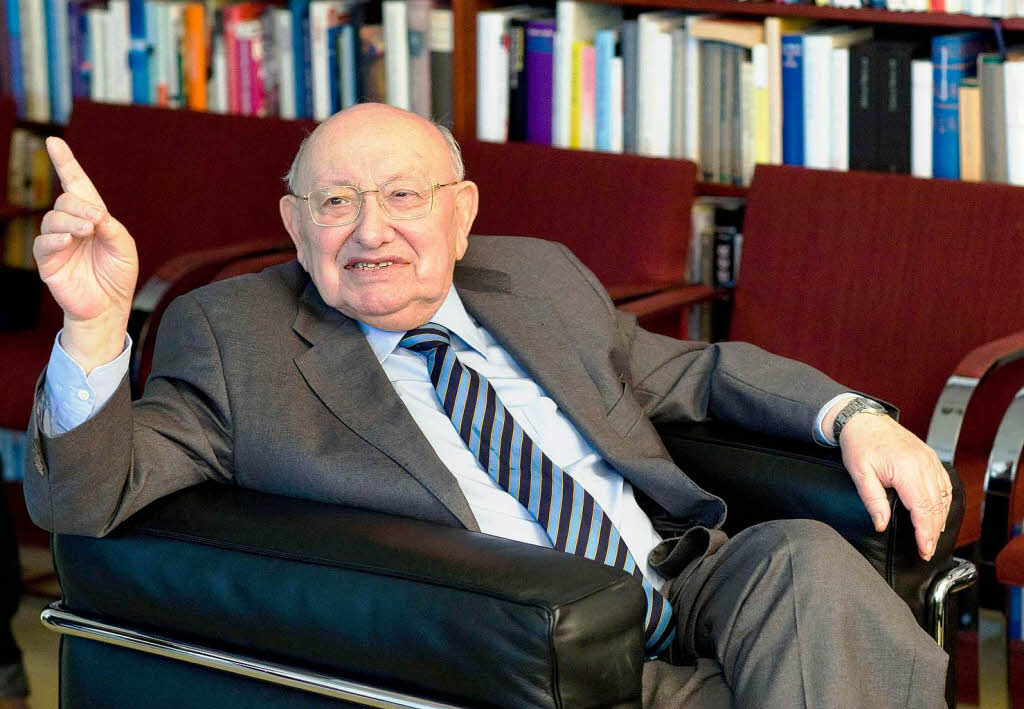
Marcel Reich-Ranicki

Marcel Reich-Ranicki, who grew up in Poland and Nazi Germany, survived the Warsaw Ghetto and went on to become post-war Germany’s best-known literary critic, has died at age 93.

The sharp-tongued Reich-Ranicki established himself as West Germany’s premier arbiter of literary taste after arriving with no money in 1958 from communist Poland, where he had served as a diplomat and intelligence agent in the late 1940s.

The Frankfurter Allgemeine Zeitung newspaper said Reich-Ranicki died in Frankfurt on Wednesday. It didn’t give further details.

Reich-Ranicki didn’t shy away from hard-biting criticism of authors, saying once that “clarity is the politeness of the critic; directness is his obligation and his job.” In his 1999 memoirs, “My Life,” he conceded that he had a reputation as “a man of literary executions.”

Initially part of the left-leaning literary circle known as Group of 47, along with Nobel laureate Guenter Grass, Reich-Ranicki wrote for the weekly Die Zeit, then led the literature section of the conservative-minded Frankfurter Allgemeine Zeitung daily from 1973 to 1988. After that, he became the star of ZDF public television’s “Literary Quartet,” a popular book program.

Reich-Ranicki said he recommended German novelist Heinrich Boell for the Nobel Prize for literature. Boell won in 1972.

Reich-Ranicki was by turns supportive and critical of Grass – with whom he fell out for a time after describing one of Grass’ books as “a complete failure.”

Reich-Ranicki was born into a Jewish family in Wloclawek, Poland, on June 2, 1920. When he was 9, his family moved to Berlin following the bankruptcy of his father’s construction company.

He recalled his elementary school teacher saying to him as he left: “You are going, my son, to the land of culture.” In Berlin, Reich-Ranicki went to high school but by the time he wanted to attend university to study German literature in 1938, the Nazis had come to power and he was denied entry because he was Jewish. He was then deported to Poland.

After Nazi Germany’s invasion of Poland in 1939, Reich-Ranicki, like other Jews, was soon forced to live in the Warsaw Ghetto. There he worked as an interpreter for the ghetto’s Jewish administrative council.

Speaking to the German Parliament in 2012, he recalled the day in July 1942 when the Nazi SS informed the Jewish council of plans for the inhabitants’ “resettlement” to the east – a Nazi euphemism for deportation to the death camps, and the beginning of the end of the ghetto.

Reich-Ranicki, who took minutes of the meeting, recalled that a “deathly silence” was followed by uproar. He said those present “seemed to sense what had happened: that the sentence had been pronounced for the biggest Jewish city in Europe. The death sentence.”

Discovering that, as an employee of the Jewish council, he was among those exempted from immediate deportation along with their wives, Reich-Ranicki hurriedly married his girlfriend Teofila, whom he called Tosia.

In February 1943, the couple escaped the Warsaw ghetto. A typesetter and his wife on the outskirts of Warsaw hid them in the basement or attic of their house during the day. At night, they made cigarettes, which the typesetter then sold. This continued until the Red Army arrived the following year.

Reich-Ranicki’s parents and brother were killed in the Holocaust. His sister, Gerda, and her husband escaped to England from Germany shortly before the war.

Having survived the war, Reich-Ranicki joined Poland’s communist party. He said he and his wife credited their survival to the Red Army and that communist ideas appeared “very attractive” at the time. But, after returning from his stint as the Polish consul in London and as an agent with Poland’s fledgling intelligence service, he was briefly detained and kicked out of the party amid the increasingly repressive atmosphere of the late 1940s.

He was still able to publish literary criticism in 1950s Poland and even had his expulsion from the communist party revoked – although he said he was never officially informed. But, disillusioned in part by an upturn in anti-Semitism, he decided not to return in 1958 from a study trip to West Germany; his wife and son, who had already flown to London, joined him there.

Born Marcel Reich, he took the name Ranicki when he worked for the Polish government in London after the war. He shifted to the double-barreled Reich-Ranicki when he launched his career as a critic in West Germany.

Reich-Ranicki never denied having been a member of Poland’s communist party, but became embroiled in an argument about his past in 1994 when, following a German television report, he had to acknowledge having worked for the Polish intelligence. He had previously criticized some East German intellectuals for not coming clean about alleged ties to their country’s secret police.

“I regret nothing that I did then, and I see not the slightest reason to justify myself,” Reich-Ranicki said.

His wife died in 2011 and he is survived by their son, Andrew. – AP