Russia, Switzerland mark 200 years of diplomatic ties

ruskiswissRussia and Switzerland on Thursday mark the 200th anniversary of the establishment of diplomatic relations. On this occasion, the two countries’ foreign ministers exchanged congratulatory messages, where they reiterated their commitment to further development of bilateral cooperation in various areas and further political contacts, including top-level contacts.

“The jubilee is a good occasion to look back at the path our countries have travelled, to recall the common historic past and try to analyze its lessons, to draw intermediate results of cooperation and outline plans for the future,” Dmitry Lyubinsky, director of the Russian Foreign Ministry’s Third European Department, told Itar-Tass. “It is important that both we and our partners are looking at the future of the Russian-Swiss relations with optimism.”

On February 22 (March 6), 1814, Russian diplomat Count Ivan Antonovich Kapodistria presented his credentials as the Russian Ambassador to Switzerland. A year after that, the Vienna congress proclaimed the Russian Empire as one of the guarantee powers for permanent Swiss neutrality. Thus, Russia made its contribution to the structure of Switzerland’s political system, thanks to which Switzerland avoided disastrous wars of the 19th and 20th centuries.

“I cannot say that everything was always smooth in our relations,” Lyubinsky went on. “The murder of Russian diplomat Vorovsky in Lausanne in 1923 and subsequent acquittal of the killer by the jury lead to the severance of diplomatic relations, which were resumed only in March 1946. Ever since, bilateral cooperation has only been growing and now we have reliable and promising partners in Switzerland in all areas of cooperation.”

Moscow is set for constructive cooperation with Bern over the period of the latter’s presidency in the Organization for Security and Cooperation in Europe (OSCE) in 2014. Strengthening of the OSCE’s role and enhancing its authority in international affairs meets the interests of both countries. Increased attention should be focused on problems stemming from transnational threats, on protection of the interests on national minorities, on counteracting extremism, and on OSCE reforms. It is important to exert more effort to promote the Helsinki Plus 40 process in order to draft a conceptual strategic document on principles of cooperation and security in Europe by the anniversary of the Helsinki Final Act in 2015.

The Russian-Swiss relations have reached a qualitatively new level in the recent years. A milestone event in bilateral relations was the first-ever visit by the Russian president to Switzerland in September 2009. The visit gave an extra impetus to closer cooperation in all areas, including the sphere of high technologies and innovation. Close contacts are maintained by the foreign ministries of the two countries. In 2007, they signed a joint memorandum on closer cooperation. The documents provides for consultations on a wide range of international and bilateral issues. In 2013 alone, the two countries’ foreign ministers and top-ranking foreign ministry officials had more than 20 such rounds. Russian and Swiss foreign ministers have annual meetings, including on the sidelines of various international events. Russian-Swiss summit meetings have become a regular practice in the recent years.

Source: TASS

New leak: Current Ukranian leaders hired snipers

Anglo-American terrorists in Kiev

Details of a leaked phone call between EU foreign affairs chief Catherine Ashton and Estonian foreign affairs minister Urmas Paet presented evidence that the US-backed opposition was responsible for hiring snipers who gunned down protesters in Kiev and not the deposed government of Viktor Yanukovich, as the media widely claimed.

More than 90 people were killed and another 900 injured during the standoff between police and protesters at Maidan Saquare in Kiev last month.

During the phone call, Paet tells Ashton that evidence presented to him by a doctor, Olga Bogomolets, who treated victims of the sniper attacks clearly indicates both police and protesters were being shot at by the same people. She has also just turned down the position of Vice Prime Minister of Ukraine for Humanitarian Affairs offered by the coup-appointed regime.

“There is now stronger and stronger understanding that behind the snipers, it was not Yanukovich, but it was somebody from the new coalition,” said Paet during the phone call.

The Estonian FM has described the whole sniper issue as “disturbing” and added, “it already discredits from the very beginning” the new Ukrainian power.

His overall impressions of what he saw during his one-day trip to Kiev are “sad,” Paet said during the conversation.

He stressed that the Ukrainian people don’t trust the Maidan leaders, with all the opposition politicians slated to join the new government “having dirty past.”

The file was reportedly uploaded to the web by officers of Security Service of Ukraine (SBU) loyal to ousted President Viktor Yanukovich who hacked Paet’s and Ashton’s phones.

“And second, what was quite disturbing, this same Olga [Bogomolets] told as well that all the evidence shows that the people who were killed by snipers from both sides, among policemen and then people from the streets, that they were the same snipers killing people from both sides,” the Estonian FM added.

Ashton reacted to the information by saying: “Well, yeah…that’s, that’s terrible.”

The true narrative therefore suggests that forces within the opposition hired the snipers in order to kill protesters and then blame the deaths on Yanukovich’s administration, thereby delegitimizing his bid to hold onto power.

This is a classic example of the kind “false flag” attack that NATO, which has vehemently sided with the opposition, perfected in Europe with Operation Gladio.

“I think we do want to investigate. I mean, I didn’t pick that up, that’s interesting. Gosh,” Ashton said in response to Paet.

A secretive British “forensic team” who refused to tell the BBC who they were working for, concluded that the Yanukovich government was responsible for the “bloodbath” before any formal results were published. There is strong reason to believe they were quickly sent in to clean up the crime scenes and destroy evidence.

Paet indicated that the newly installed government had since launched a cover-up of the sniper attacks, remarking, “They don’t want to investigate what exactly happened.”

The phone call was conducted after Paet visited Kiev on February 25 at the height of the clashes between police and protesters.


British child-porn advisor arrested for child abuse imagery

Patrick Rock
Patrick Rock

Patrick Rock who served as special advisor to UK Prime Minister David Cameron and played an influential role in the Prime Minister’s national Internet censorship plan, has been arrested for possession of images depicting the sexual abuse of children. The National Crime Agency is conducting forensic analysis of the computer networks at the Prime Minister’s office/residence, Number 10 Downing Street.

The Prime Minister brought him into Downing Street in 2011 to work in the Number 10 policy unit. He took responsibility for home affairs issues and was among officials who were involved in drawing up controls against internet images of child abuse.

A Downing Street spokesman said: “On the evening of February 12, Downing Street was first made aware of a potential offence relating to child abuse imagery. It was immediately referred to the National Crime Agency.

‘The Prime Minister was immediately informed and kept updated throughout. Patrick Rock was arrested at his home in the early hours of February 13, a few hours after Downing Street had reported the matter.

‘Subsequently, we arranged for officers to come into No 10 and have access to all IT systems and offices they considered relevant.

Source: Boing Boing

Nato and Russia in talks over Ukraine

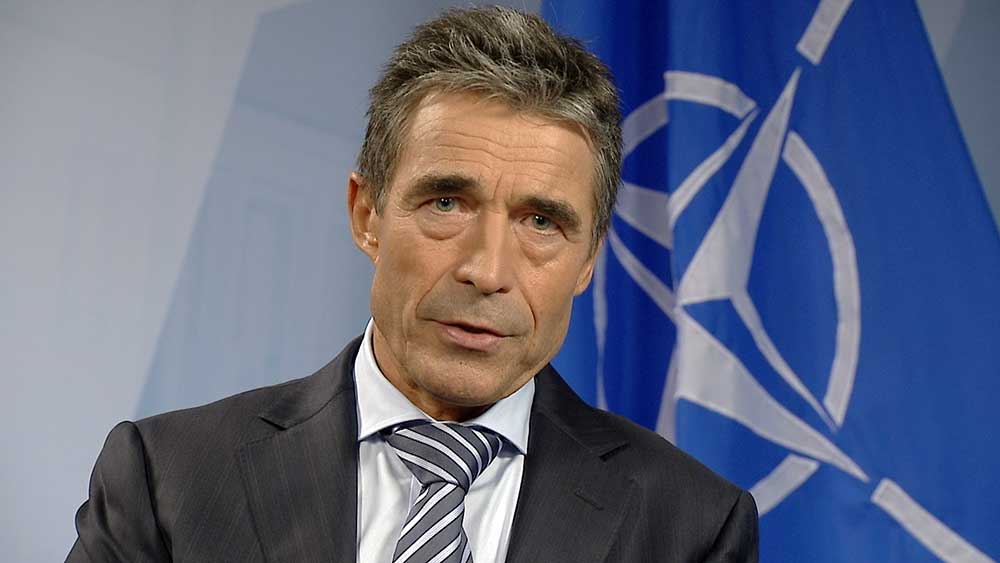
Anders Fogh Rasmussen

The NATO alliance and Russia have agreed to discuss the latest developments in Ukraine at a special meeting on Wednesday.

The alliance announced that an extraordinary NATO-Russia council will convene at the suggestion of alliance secretary-general Anders Fogh Rasmussen. Russia agreed to the meeting on Tuesday, when NATO ambassadors were further discussing the crisis among themselves.

Rasmussen has said Russia’s military intervention in Ukraine is in violation of the U.N. charter and threatens peace and security in Europe. Russian President Vladimir Putin said Tuesday that Moscow reserves the right to use its military to protect Russians there but voiced hope it won’t need to do so.

Russia took over the Crimean peninsula on Saturday, placing its troops around the region’s military bases and border posts.

Crimea cannot be denied right to hold self-determination referendum

Sevastopol airport
Sevastopol airport calm

The legitimacy of the Ukrainian parliament, the Verkhovna Rada decision, which removed President Viktor Yanukovych from office, is highly doubtful, the Russian State Duma International Affairs Committee Chairman Alexei Pushkov said. “As far as I understand, the process of Yanukovych’s deposing was rather confused and its legitimacy causes qualms,” Pushkov told reporters.

The opposition leaders who struck the deal with Yanukovych on February 21 on guarantee of EU representatives agreed that he would stay in office until the presidential election.

“It seems the sole purpose of the [February] 21 agreement guaranteed by the European Union was to remove Yanukovych from office. But that agreement said he would be the president until the elections were held. This is why Yanukovych says he remains the legitimate president of Ukraine,” the parliamentarian continued.

This is a formal agreement and no one has explained why “it was suddenly disavowed,” Pushkov said, describing the situation as a serious collision.

Crimea cannot be denied the right to hold a referendum on self-determination, head of the State Duma international affairs committee Alexei Pushkov told reporters on Friday.

“If Crimea holds a referendum, this will be an absolutely legislative and legally binding base for changing its status, if the majority of the population votes for this,” he said.

Pushkov said such a referendum would be a more legal form for changing Crimea’s status than “spontaneous Maidan” in Kiev.

“If we are told that the Maidan could be a source of power, well, this is the will of the people. But why then can’t the will of the people be the source of power and self-determination for Crimea. I think it cannot be denied this right,” the parliamentarian said.

On Thursday, the parliament of the Autonomous Republic of Crimea announced it would hold a referendum of the autonomy’s status and expansion of its powers.

The Russian and Ukrainian governments continue to maintain “working” contacts following the change of power in Kiev, Russian Deputy Prime Minister Arkady Dvorkovich said.

“These contacts continue at the working level,” he told Interfax after being asked whether negotiations could be held with the Ukrainian government any time soon.

Dvorkovich declined to comment on the prospects for holding official negotiations with the Ukrainian side.

Ukraine’s interior minister claims Russian forces have now taken control of two airports in Crimea.

Shortly afterwards a military airport near the port of Sevastopol was seized. There are no reports of any bloodshed or clashes near where the Russian Black Sea fleet has a base.

Ukraine’s Interior Minister Arsen Avakov has described the raid as an armed invasion in violation of international accords.

Source: Voice of Russia, TASS, Interfax

UK boasts most jihadis

One man's terrorist is another man's freedom fighter
One man’s terrorist is another man’s freedom fighter

We mapped the Facebook fans of some of the most violent jihadi organizations in the world.

Pop stars, sports teams and Hollywood actors aren’t the only ones with global followings on Facebook. Jihadis, too, have lots of rabid fans from around the world.

This global fandom to some degree mirrors the diversity of fighters on the ground in Syria, where the combatants have come from more than 80 countries, including Western nations like the U.K., France and the Netherlands.

Of those Facebook jihadi fans we were able to identify via their publicly available data, many express a strong religious affiliation, citing the likes of Al Qaeda or U.K., France and the Netherlandsas their employer. But despite a growing concern for privacy, and a near-ubiquitous trend for Western employers using social media profiles to screen employees, a large percentage of people who had liked extreme jihadi groups on Facebook did so side-by-side with listings for their actual places of work and study in Western countries. They list themselves as attending well-to-do high schools, Ivy League universities and military academies in the U.K., U.S. and elsewhere. They work at Google, Microsoft, Pizza Hut, JCPenney, Aeropostale and other globally recognized businesses.

Where in the West are the biggest pockets of radical Islam fandom? To find out, we picked 10 outspoken jihadis on Facebook and identified some of the groups they follow. We chose a total seven groups, covering a range of different countries, and then looked at where the people who follow those groups’ Facebook pages said they live. We also sorted the results to get rid of duplications among the people doing the liking.

As more jihadi groups use social networks to proselytize and even communicate with one another, governments and law-enforcement agencies halfway around the world are eager to know where the receptive audiences are located.

Turns out, Europe has way more jihadi fans than the U.S. does. Of the total 49,631 members in the groups we selected, 1,463 identify themselves as coming from European countries, while about 325 say they’re in the United States.

In Europe, the U.K. boasts 548 fans of the same pages—and London, with 260 fans, is far and away the most well-represented city in the data. Paris a distant second. Three of the four most well-represented cities in Europe are in the United Kingdom, with Birmingham and Manchester joining the capital on the list.

The U.S. numbers are much smaller, with New York City topping the city scales, and California taking the title for the state where most people are active on the jihadi Facebook pages we identified.

This ISIS page was deleted soon after we concluded our analysis.

Judging by their profiles, it’s clear that some are most likely expressing a passing interest or curiosity, while others may be monitoring the pages for work (journalists and academics). But others express consistently extreme views on their own page and also like a broad network of jihadi pages.

And some of these fans may be doing more than just liking the jihadi pages. While studies suggest that larger jihadi networks still rely on their own trusted forums, some rebel groups are using Facebook as a supplementary mechanism for contacting potential fighters.

Indeed, a large population of web-savvy European fighters have already made the trip to Syria, and they circulate that intelligence back to would-be jihadis. You can find long online conversations on social media that delve into the specifics of how to cross borders, how much money to bring, and what to expect upon arriving in the war zone.

So it stands to reason that the first contact a jihadi-curious teen or young adult may have with someone on the front line could be through Facebook.

Source: vocative.com

Governed by Kalashnikov-toting people in black masks

The Filchenkov
The Filchenkov

Missing Ukrainian President Viktor Yanukovych is in Sevastopol, at a Russian miltary base in Cossack Bay, UNIAN reported citing local media.

According to sources, the channel ATR, the ex-president fled to a ship of the Russian Federation’s Black Sea Fleet.

Sources say that Yanukovych could thus leave for Russia.

The Ukrainian president went into hiding over the weekend.

Yanukovych’s removal from power has been recognized the US and EU.

Russian PM Dmitry Medvedev said however that interim authorities in Kiev had conducted an “armed mutiny”.

On Sunday, Ukraine’s parliament reduced the official status of the Russian language by cancelling a law brought in by Mr Yanukovych.

Ukraine is facing bankruptcy and a promised loan from Russia is looking increasingly unlikely.

“Strictly speaking there is no one to talk to there. There are big doubts about the legitimacy of a whole series of organs of power that are now functioning there,” Mr Medvedev told Russian news agencies.

“If you consider Kalashnikov-toting people in black masks who are roaming Kiev to be the government, then it will be hard for us to work with that government,” Medvedev said.

Izvestia Kiev reported that out of Kubinka, four ships carrying special forces, are being relocated to Anapa. From there, in four hours, they will depart for Sevastopol at a speed of 10-15 knots, citing “Izvestia in Ukraine” as a source.  According to the source, the redeployment is “qualitative, not quantitative” and that the Ukraine is following these developments.

The large landing ship Nikolai Filchenkov is believed to be en route to the Crimean port of Sevastopol carrying 200 armed soldiers, sent from the nearby Black Sea town of Temryuk.

There will be an urgent NATO Defense Ministers meeting in Brussels on Wednesday, centered on Ukraine.

Putin, Merkel want Ukraine’s territorial integrity respected

ukraine3Vladimir Putin spoke with Angela Merkel by telephone on Sunday about the situation in Ukraine. According to a statement on the chancellor’s website, both leaders agreed that Ukraine’s “territorial integrity must be respected.”

President Viktor F. Yanukovych has fled the Ukrainian capital. He was removed from power by a unanimous vote in Parliament, lawmakers moved swiftly on Sunday to dismantle his government by firing top cabinet members, including the foreign minister.

The defense minister, Pavlo Lebedev told Ukraine’s Channel 24 that he intended to remain in his post.

Parliament voted to grant Oleksandr Turchynov, the Speaker, authority to carry out the duties of the president of Ukraine.

Speculation about a major role for the freed former prime minister, Yulia V. Tymoshenko, was squashed on Saturday afternoon when she issued a statement asking not to be considered for the post again.

EU officials recall her period as prime minister after Ukraine’s 2004/5 pro-democracy Orange Revolution as hardly less corrupt than Yanukovich’s tenure. Ukraine is 144th on watchdog Transparency International’s index of perceived corruption.

“Political uncertainty has arguably increased – including around the outcome of the presidential election set for 25 May – bringing with it a potential increase in the probability of a sovereign default,” Nomura political analyst Alastair Newton said.

France and Germany’s Merkel are both quite cool on the EU enlargement. Polish Prime Minister Donald Tusk, whose country played a central role in the negotiations, is not.

The EU has found it politically difficult enough to bail out its own members during the bloc’s debt crisis. Spending on an outsider will be more fraught still.

Russia tops Sochi 2014 medal count

Alexander Legkov
Alexander Legkov, gold medalist

Russian skiers have secured victory for Russia in the Olympic medal table by occupying all places on the podium in the 50km mass start race on the final day of the Games.

Aleksandr Legkov won the race with the result of 1:46:55.

His fellow team members, Maksim Vylegzhanin and Ilya Chernousov, took silver and bronze respectively, arriving at the finish just 0.1 second apart.

The triple medal win secures Russia’s leading position in the total medal count of the Sochi Olympics, since no other national team will be able to beat Russia’s result in the two remaining sport events on Sunday.

Russia’s result in Sochi is the best the country has ever had during the Winter Olympics. The country’s previous best gold haul was in 1994 in Norway’s Lillehammer, when the national team won 11 gold medals. The Sochi achievement also beats the record of the Soviet Union, which won a total of 29 medals in the Calgary Games of 1988.

With two gold medals for the host country in the final day of competitions in skiing and bobsleigh, Russia has 33 medals, including 13 gold, 11 silver and 9 bronze.

For now, Russia’s closest competitor in the gold race is Norway, which has 11 gold medals. In the total medal count the US team is just behind Russia, with 27 medals.

Source: RT

Iceland moves to withdraw EU application

Faroe Islands
Faroe Islands

Iceland’s government will seek parliamentary approval to withdraw its application to join the European Union, opting not to restart accession talks that were put on ice a year ago.

A bill proposing the withdrawal was sent to parliament late on Friday and was due to be debated next week, a foreign ministry spokesperson said on Saturday.

The move came after the parliamentary caucuses of the ruling parties – the centrist Progressive Party and the conservative Independence Party – voted on Friday to withdraw the application.

In comments on the proposal quoted by online news site Visir.is, the government said it “did not have a support base” to complete the accession process.

Opinion polls have consistently shown a majority of Icelanders oppose joining the EU.

A year after its banks collapsed, Iceland declared it would stop observing mackerel quotas agreed with the European Union, Norway and the Faroe Islands — a small archipelago north of Scotland and under the protection of Denmark.

Iceland and the Faroe Islands argue that the rise in sea temperatures caused by a combination of global warming and natural factors has sent such large quantities of mackerel and herring further north that the allocations should have been amended to reflect that.

Observers say the main problem the EU faces is obvious: Fish go where they find the best feeding and spawning grounds, oblivious to the political rows they create in their wake.

“The fact that these fish aren’t necessarily carrying a passport and flying a flag for a particular nation means that it starts to get interesting when they start to move out of EU jurisdiction,” marine biologist Stephen Simpson of the University of Exeter said in an interview.

A meeting of Coastal States (European Union, Faroe Islands, Iceland and Norway) was held in London on the in October 2013 under the chairmanship of the European Union to discuss management measures for 2014 for the mackerel stock in the North-East Atlantic. The meeting was also attended by observers from Greenland and the Russian Federation.

The discussions focused on the latest scientific advice from the International Council for the Exploration of the Sea (ICES), which has recommended a significant increase in fishing possibilities as compared to 2013.

EU, US exploiting nationalism in Ukraine

EU exploiting nationalism to Russia
EU, US exploiting nationalism to fend off Russia in Ukraine

Ukraine’s opposition will march on parliament to pressure lawmakers struggling to end a deadly three-month political standoff, jeopardizing compromises that eased tensions over the past week.

Vitali Klitschko, a former boxing champion and EU man, and Arseniy Yatsenyuk, a lawmaker and former central banker, plan to lead thousands of demonstrators today on the first mass action outside their Independence Square compound since Jan. 19, when the last attempt to reach parliament erupted in clashes with police.

“If politicians don’t make a decision, we the people will,” Serhiy, a 23-year-old from the Lviv region near Poland, said inside the encampment, wearing camouflage and a bulletproof vest adorned with a paper “self defense” badge. “We’ve had enough. We’re fighters. We haven’t come here to listen to talks. If we decide to act, we’ll act.”

The standoff began Nov. 21, when Yanukovych pulled out of a free-trade deal with the EU, opting instead for President Vladimir Putin’s offer of $15 billion of aid and cheaper gas.

Russia, which stopped buying bonds from Ukraine’s cash-strapped government after Yanukovych’s Russian-born prime minister, Mykola Azarov, resigned on Jan. 28, said yesterday it will resume purchases, including $2 billion this week. Russian Finance Minister Anton Siluanov made the announcement just as Klitschko and Yatsenyuk were meeting with German Chancellor Angela Merkel in Berlin to seek financial and political backing to form a new government.

Source: Business Week

‘Who will clean Swiss toilets?’

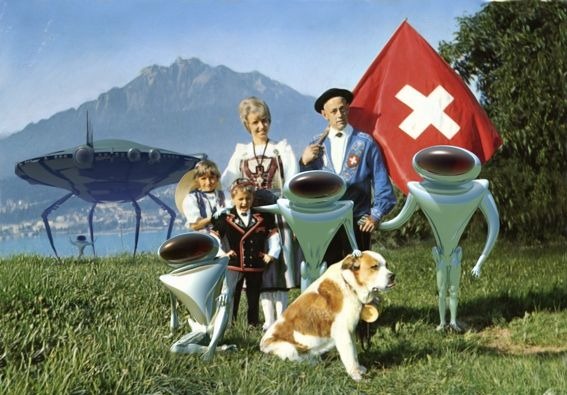
swissaliensSwitzerland’s vote to curb immigration has soured relations with the European Union and prompted companies including Nestle SA to warn of a potential effect on their business.

The vote outcome requires government quotas for all immigrants including European Union nationals.

The referendum responded to concerns over Switzerland’s mushrooming population, which grew 12 percent between 2000 and 2012. That has caused rents to spiral, construction to boom, and space in trains to grow tighter.

Switzerland voted against joining the EU’s precursor in 1992, preferring to stay a landlocked country surrounded by the bloc. A set of bilateral treaties, touching on topics ranging from market access for goods and services to scientific research, govern its relations.

While two recessions in four years have boosted anti-immigration parties across the euro area, Switzerland is unique because the limits will target many highly skilled workers.

It’s not only in parts of Switzerland that people welcomed the vote outcome. European politicians from France’s Marine Le Pen to Geert Wilders of the Netherlands and Heinz-Christian Strache in Austria cheered the decision, saying the Swiss result should resonate in the rest of Europe.

The Swiss People’s Party, or SVP, the biggest in parliament with 26.6 percent of the national vote in 2011, is a staunch opponent of EU membership and is also critical of too much power with the federal government in Bern. It spearheaded the anti-immigration vote, as it has other popular initiatives, billing these as a way for the common citizen to take back power. Party President Toni Brunner is a farmer by profession.

Swiss people feel disadvantaged in the labor market with wage dumping.

Switzerland managed to remain largely unscathed from the debt crisis and recession that afflicted the euro area. In 2013, the unemployment rate among Swiss citizens as measured by the International Labour Organization stood at 3.1 percent while among foreigners it was 8.3 percent.

For the EU, the jobless rate was 12.1 percent last year. At the same time, Swiss house prices have climbed almost 40 percent in the last 10 years.

Switzerland thus seems better off alone as immigrants become a burden to society. Adding fuel to the fire, the clampdown by European governments on tax evaders with secret Swiss bank accounts has at times been portrayed by the SVP as Switzerland getting bossed about by the EU.

Even so, the approval of the immigration ballot has many Swiss worried. Who’s going to clean Swiss toilets, take care of the sick and elderly, and who’s going to wash the dishes in a restaurant?

The banking and pharmaceuticals sectors are the economy’s big pillars. Agriculture makes up only 3.6 percent of employment and about 1 percent of annual output. Only a quarter of the population lives in a rural area, less than Austria or Italy, though more than in France.

Switzerland is doing well, and the EU isn’t. The Swiss want to keep it that way it seems.

Germany to resume counter-espionage against US, Western allies

merkelcellFollowing decades of a heavily subdued program, Germany is planning to resume counter-espionage against both the US and other Western allies in response to ongoing revelations surrounding NSA’s global surveillance practices, Der Spiegel reports.

Another primary motivation for the resumption of surveillance is US reluctance to agree to a no-mutual-spying treaty desired by Germany, the reports suggests.

The beefed up program will include more active tracking of US agents operating within Germany’s borders. British embassies – as well as those of the US – could also be targeted, according to the report.

“This step would be an about-face from the decades-long practice of systematically monitoring the activities of countries such as China, Russia and North Korea but rarely the activities of Western partners,” read Spiegel’s assessment of the situation.

One of the revelations considered to be most serious was the fact that the US was monitoring a non-governmental cell phone used by German Chancellor Angela Merkel. According to the files leaked by Edward Snowden, the German Chancellor’s mobile phone has been on an NSA target list since 2002 and was codenamed “GE Chancellor Merkel.” Surveillance and communication equipment installed on the roofs of both the US and British embassies in the capital was also deeply criticized.

Head of the German domestic intelligence service, the Bundesamt für Verfassungsschutz (BfV), Hans-Georg Maassen suggested last November that active operations may be stepped up in the wake of the news. Germany was required to “adjust counter-espionage and take a 360-degree view,” according to Maassen.

In January, Germany called for less rhetoric and more action in the wake of President Obama’s pledge to stop spying on world leaders. While the announcement was greeted with optimism, politicians said it had been “too little, from a German point of view.”

Mere days afterwards, former NSA contractor and whistleblower Edward Snowden chose the German ARD broadcaster to give his first TV interview, stating that: “There is no question that the US is engaged in economic spying.”

Clemens Binninger, part of Merkel’s Christian Democrats party, said that in regards to the discrepancies between countries surveilled, Germany needs to “cease the differentiation and treat them all the same way.”

Chancellor Merkel said on Saturday in her weekly podcast that herself and French President Francois Hollande would review plans to build up a trustworthy data protection network in Europe.

She aired her disapproval of companies such as Google and Facebook, basing their operations in countries with low levels of data protection, while in reality being active in countries with high data protection.

“Above all, we’ll talk about European providers that offer security for our citizens, so that one shouldn’t have to send emails and other information across the Atlantic. Rather, one could build up a communication network inside Europe,” she said.

In the wake of the revelations about US global spying activities, Merkel has become one of the biggest supporters of greater data protection making it mandatory for ministers to use encryption on their phones to secure their communications against intrusion.

However, before the new counter-intelligence plan comes into effect, an agreement must be reached between Merkel‘s office, the Interior Ministry and the Foreign Ministry, Der Spiegel reports. – RT

Arctic oil could wipe out Icelandic debt

barentsoilIceland, long known for its geothermal power, may become the next Nordic oil state, should predictions of an offshore deposit containing 10 billion barrels of oil hold true.

Icelandic authorities told Dagbladet, a Norwegian newspaper, that the deposit, between the country’s north-eastern coast and the Norwegian island of Jan Mayen, could be worth upwards of $1 billion.

According to an agreement with Norway, the deposits would be spilt between the two countries, but the find was large enough that Iceland could repay its foreign debt several times over.

“If we find a deposit with a billion barrels of oil, Iceland would be able to repay everything it owes,” said Heidar Mar Gudjonsson, the chair of Eykon Energy, an Icelandic oil firm.

Norway has built up an $800 billion wealth fund thanks to the profits from its oil resources in the North and Barents seas.

Iceland’s offshore areas closely resemble Norway’s and that has oil firms hoping that means there is just as much oil. One report showed that studies of seabed samples had found residues indicating that Icelandic waters may indeed be covering reserves as large as those that Norway has found in the Barents Sea.

The US Geological Survey estimated in 2008 that the Arctic contained 90 billion barrels of potentially recoverable oil, some 13 percent of the globe’s untapped reserves.

Iceland is pinning its hopes on an area about 200 kilometres north of its coast. The Dreki region is the subject of a 1981 agreement with Norway, giving each country the option to take a 25 percent share of any drilling license its neighbour issues in the region.

Norway has halted its exploration in the region, saying that it was content to rely on its agreement with Iceland.

Source: Arctic Journal