Church of England close to extinction

The Anglican Church made their political agenda too obvious
The Church of England gained nothing from their political agenda

Lord Carey, the former Archbishop of Canterbury, has warned that Christianity is “a generation away from extinction” in Britain.

The Church of England is close to extinction in Britain unless churches make a dramatic breakthrough in attracting young people back to the faith, Carey has warned.

Clergy are now gripped by a “feeling of defeat”, congregations are worn down by “heaviness”, and the public simply greets both with “rolled eyes and a yawn of boredom”, he said.

His comments at a conference came as a stark report laid before the Church of England’s General Synod warned that its position as a “national institution” would be in doubt if numbers in the pews dropped much further.

The Archbishop of York, Dr John Sentamu, also underlined the scale of the crisis, telling members of the Synod they must “evangelise or fossilise”.

In an impassioned plea for the Church to adopt a new missionary stance, he told them that their constant internal debates were no more than “rearranging furniture when the house is on fire”.

He called for a campaign aimed at the “re-evangelisation of England”, on a par with the ministry of the northern saints such as Cuthbert, Hilda and Aidan, who spread Christianity in Anglo-Saxon times.

The former Archbishop said while the church is doing much important work, it faces an existential challenge.

“In many parts of Britain churches are struggling, some priests are diffident; a feeling of defeat is around.

He said the reaction from the public was not so much hostile as dismissive.

His comments came as a report was laid before the Church of England’s General Synod, warning that plunging congregations now threaten its ability to “sustain a nationwide presence”.

Typical Sunday congregations have almost halved since 1970 to just 807 000 in the most recent figures. – timeslive.co.za

Senior journalist calls Libération shooting ‘good news’

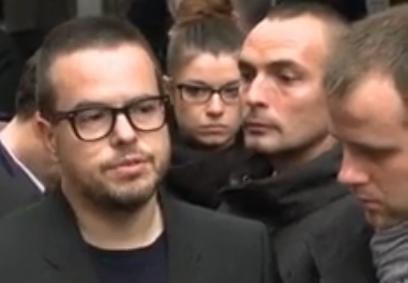
Nicolas Demorand, Liberation Editor-in-Chief, looks rather relaxed
Nicolas Demorand, Liberation Editor-in-Chief

A gunman opened fire in the lobby of a French newspaper office in Paris on Monday, gravely wounding a photographer’s assistant before fleeing.

“Blood in the hall of this newspaper may be some good news,” Annette Lévy-Willard, a senior staff writer at Libération told the New York Times. “This outrage could break France’s racist and anti-Semitic fever.”

Police and representatives of the ultra-left Liberation say a 27-year-old photographer’s assistant is in serious condition after being shot in the chest and arm.

The culture minister of the increasingly unpopular leftwing Socialist government called the newspaper founded by Jean-Paul Sartre, a “pillar of our democracy.”

The paper supports François Hollande who has become the most unpopular French president on record. Only 26% of French people have a positive opinion of the Socialist president, a BVA poll showed. It was the worst score for a French leader since BVA began polling 32 years ago.

The poll shows Hollande’s near-unanimous unpopularity among right-wing voters: 97% have a bad opinion of the Socialist leader, a level never reached by any president among supporters of other parties, even Sarkozy who deeply antagonised many left-wing voters.

Some 84% French people believed government policy was not efficient and 74% felt it was not fair. Meanwhile, in the run up to crucial local and European elections next spring, the far-right Front National is rising in popularity and now has the same level of approval ratings as the Socialist party.

Libération has been struggling with financial difficulties and layoffs in recent years as many readers shun the paper as a result of it’s support for the unpopular French president.

Benny Lévy (aka Pierre Victor) was a philosopher, political activist and author as well as a political figure of May 1968 in France, and the personal secretary of Jean-Paul Sartre from 1974 to 1980. Along with him, he helped founding the French newspaper Libération in 1972.

Benny Lévy is known for his unusual itinerary from Maoism to Judaism, or “from Mao to Moses”.

Editorially, the paper is supportive of gay marriage, a recent controversy in France. Earlier this month, the newspaper ran a long interview with Christiane Taubira, France’s black minister of justice, who had promoted the government’s new law permitting same-sex marriage.

“It is a very serious attack on a media outlet, on Liberation,” minister Aurelie Filipetti said. President Hollande, on an official visit to Israel, sent a strong message home about the attack: “It’s always freedom of information that is threatened.”

Nicolas Demorand, Liberation Editor-in-Chief, also gay, expressed his concern over what he says is an increase in the number of attacks in Paris.

“There is a high level of violence that compromises the work of many newsrooms and can have tragic consequences as the ones that occurred this morning,” Demorand said.

“We need to launch an alert a collective alarm in the face of the new stage in the rise of violence in Paris,” Demorand urged.

Soon afterward, shots were fired at the headquarters of a major French bank west of Paris, and a gunman briefly took a man hostage nearby.

The Paris police headquarters said that it is not clear whether the three incidents are linked, but that authorities are increasing security in all three places as well as media offices around Paris.

As police hunt for the attacker or attackers, a helicopter was seen flying over the neighbourhood that includes the French president’s office and the nearby Champs-Elysees avenue.


Mystery lingers over British spy Gareth Williams’s death

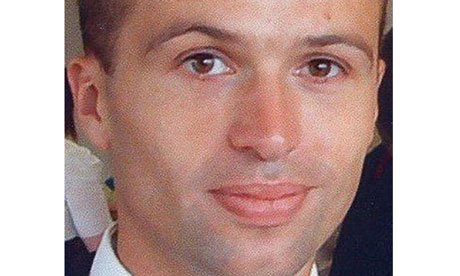
Gareth Williams
Gareth Williams

More than three years after the naked, decomposing body of British spy Gareth Williams was discovered stuffed inside a locked gym bag at the bottom of his bathtub, the mystery over his bizarre death lingers, and a police investigation has done little to clear it up.

London’s Metropolitan Police said Wednesday that their investigation had found that Williams likely died in an accident with no one else involved. But the tentative conclusion, which the police hedged by acknowledging many gaps haven’t been filled in, is unlikely to calm conspiracy theories surrounding the case.

Metropolitan Police Deputy Assistant Commissioner Martin Hewitt said Williams, whose remains were discovered in August 2010, was “most probably” killed in an accident, a verdict which conflicts with a coroner’s inquest that concluded last year that Williams was probably killed by another person in a “criminally meditated act.”

Hewitt said the police position “is that, on balance, it is a more probable conclusion that there was no other person present when Gareth died.”

“But the reality is that for both hypotheses, there exist evidential contradictions and gaps in our understanding,” he said.

Hewitt told reporters at Scotland Yard headquarters that his conclusion was based on the fact that investigators found little evidence of foul play in a death that has spawned a host of theories, from assassination to sexual adventure gone awry.

Williams, a cyberwarfare expert, worked for Britain’s GCHQ eavesdropping service and was attached to the overseas espionage agency MI6 when he died.

Some have raised the possibility that Williams locked himself in the bag as part of a sex act gone wrong or an experiment in escapology – the Houdini-like art of wriggling out of restraints or traps. Investigators found that he had visited bondage and sadomasochism websites, including some related to claustrophilia – a desire for confinement in enclosed spaces.

Police concluded – after several reenactments – that it was possible for Williams to climb inside the sports bag and lock it.

However, police couldn’t find Williams’ DNA on the lock, palm prints on the rim of the bath, or footprints in the bathroom itself. The coroner, Fiona Wilcox, said that pointed to another person having taken the bag into the bathroom, noting that if Williams had been “carrying out some kind of peculiar experiment, he wouldn’t care if he left any foot or fingerprints.”

She was also critical in her inquest verdict of MI6, which failed to pass evidence to investigating police, and said that while it seemed unlikely that British intelligence agencies were involved in Williams’ death, it was a “legitimate line of inquiry.”

Hewitt said there was no evidence that the apartment had been cleaned to remove forensic traces and nothing to suggest a struggle or a break-in.

And he dismissed the idea that Britain’s secretive intelligence services had carried out a cover-up, noting that a total of 27 members of staff from both MI6 and GCHQ had been interviewed and that police were given full access to Williams’ vetting and personnel file.

“I do not believe that I have had the wool pulled over my eyes,” Hewitt said. “I believe that what we are dealing with is a tragic unexplained death.”

He added that there was “no evidence to support the theory that Gareth’s death was in any way related to his work.”

Williams’ relatives said in a statement that they were disappointed that the facts remain unclear, but still believed it was likely he had been the victim of foul play.

“We consider that on the basis of the facts known at present the coroner’s verdict accurately reflects the circumstances of Gareth’s death,” the statement said. – AP

The word ‘banana’ leads to racism investigation

Christiane Taubira
Christiane Taubira

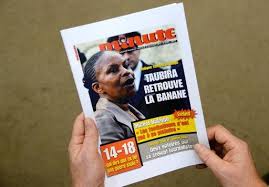
The French government has opened a racism investigation after a far-right magazine used word “banana” in a picture of the country’s black justice minister on its cover.

In a statement Wednesday, Prime Minister Jean-Marc Ayrault said he had brought Minute magazine to the attention of the Paris prosecutor, citing French law that forbids racist abuse.

The magazine described Justice Minister Christiane Taubira as “crafty as a monkey” and referred obliquely to an incident when she was greeted by racist taunts from a young girl at a recent protest against gay marriage in the western city of Angers. She was also compared to a monkey on the Facebook page of a candidate for the right-wing National Front party.

Helene Valette, a spokeswoman for the magazine, said the cover was satire and accused the government of trying to distract the French from the country’s real problems.

“It’s a front page with a play on words. There’s nothing mean about it,” Valette said. – AP

Russian activists pelt Dutch royals with tomatoes

Royal couple meet Putin

Two activists from the unregistered Other Russia party were arrested Saturday for yelling insults and throwing a tomato at the Dutch royal couple before a concert in Moscow.

The incident took place when Dutch King Willem-Alexander and Queen Maxima came out of their limousine and walked on a red carpet toward the entrance of the Moscow Conservatory building to attend the ceremonial closure of a year dedicated to celebrating Dutch-Russian ties.

Two young people from the crowd of onlookers reportedly started shouting “You have Dolmatov’s blood on your hands!” and threw a tomato at the royal couple. The tomato missed the intended target and the couple proceeded to the entrance without responding to the insults.

Police arrested the hooligans and escorted them to a patrol van parked nearby.

Spokesman for the Other Russia party, Alexander Averin, told RIA Novosti after the incident that the party activists staged a protest against the negligence of the Dutch government that led to the death of their fellow party member, Alexander Dolmatov, in a Dutch prison earlier this year.

Dolmatov, whom the Russian authorities wanted to question in connection with a violent opposition rally in Moscow in May 2012, killed himself in a Rotterdam deportation center on January 17 after being refused political asylum in the Netherlands.

The Dutch Justice Ministry has later acknowledged that agencies dealing with immigration issues “acted carelessly” in the treatment of Dolmatov.

The Other Russia was founded by Eduard Limonov in 2010 after his radical National Bolshevik party was banned in 2007. Limonov’s new party was denied registration by the Federal Registration Service in 2011 because “it did not have enough popular support among the Russian people.” – RIA Novosti

Russian students humiliate black paedophile

russia-black-shaving-head
‘David Smith’ gets a haircut

A 20-year-old black student from Johannesburg studying at the Shukhov State Technological University, in Belgorod was made fun of by a group of Russian students because he requested sex with a minor.

In an initiation-style video posted online was mostly in Russian and minimal broken English.

The student, called David Smith, although he later says his name is Bonga, is made a fool by four anti-LGBT activists, who had lured him by pretending to be a 15-year-old boy available for sex.

The legal age of consent in Russia is 16.

The Russian group calls themselves “Occupy Pedophilia,” and basically lure young gay men into meeting a member of their group, ostensibly by pretending to be gay themselves.  They then kidnap their victim and make fun of them, including “forcing them to drink urine” on film, according to a gay website.

The film is then published on Russian social media sites.

In Bongo’s case, they barge in, forcing him to do a fake tribal dance, then shaving his head and force feeding him a watermelon. . “Black, white, black white”, says one of the anti-LGBT activists, as he compared the colour of his palm against the colour of the back of his hand.

President Vladimir Putin’s new law where police can detain suspected homosexuals for up to two weeks is not popular with paedophiles. It has been reported that Russian MPs will discuss a bill early next week that could see homosexual couples lose custody of their children.

The soccer governing body has been battered by international gay lobbies for picking Russia and Qatar as hosts for the 2018 and 2022 tournaments. Both countries are known for their anti-gay laws.

Will Canada extradite terror accused to France 33 years after the act?

Hassan Diab
Hassan Diab

Canadian Crown attorneys on Tuesday defended key handwriting evidence that led to a decision to extradite a Canadian university professor accused of a deadly 1980 bombing of a Paris synagogue.

Hassan Diab is appealing the 2011 court decision and the Canadian government’s order to extradite the former University of Ottawa sociologist to France, despite the court’s concerns that the case was “weak.”

Diab denies any involvement in the first fatal attack against the French Jewish community since the Nazi occupation in World War II, which left four dead and many wounded.

A dozen or so Diab supporters returned for the second day of the hearing, where the Crown defended Justice Robert Maranger’s decision to allow the handwriting analysis report by Anne Bisotti in the original extradition hearing.

On Monday, defense lawyers worked to discredit Bisotti’s findings — that Diab likely signed a Paris hotel slip under a false identity (Alexander Panadriyu), which was also used to purchase a motorcycle used in the bombing — by saying she failed to use the proper methodology.

But Crown lawyer Janet Henchey said that it is not the job of the extradition judge to establish reliability of the evidence, and that French courts should be relied upon to do the due diligence on the report at a formal trial.

“It may not feel right at first, but that’s because you’re looking at it from the perspective of a Canadian trial. This is not a Canadian trial,” she said.

“There may be safeguards that do not look like ours, but… it’s arrogant for us as a country to think that only our trial process can provide safeguards that are required for due process.”

Henchey also said that the defense never questioned the samples of writing themselves, but rather focused only on whether the methodology was applied correctly, and added that in part, “expense and convenience” are considerations in an extradition case.

Crown attorney Jeffrey Johnston also defended then-justice minister’s Rob Nicholson’s decision not to seek assurances with regards to the origins of the unsourced foreign intelligence that helped link Diab to the bombing.

Johnston said that second-guessing the foreign intelligence would make it appear that Canada was defying the “reciprocity upon which extradition depends.”

Johnston compared Diab’s case to other much-publicized extradition cases, including that of Julian Assange, the founder of WikiLeaks, on allegations of sexual assault in Sweden.

Assange, who was living in Britain at the time, had to make a first appearance in court before any charges could be laid or a trial could be set, but Britain eventually ordered his extradition, deciding it was “consistent with the commencement of criminal prosecution,” said Johnston.

The Crown also targeted the defense’s suggestion that the unsourced intelligence was attained through torture and information-sharing deals with Syria. Johnston referred to it as “speculation” and said there were no “reasonable grounds” to suspect it.

At the close of the hearing, Diab lawyer Marlys Edwardh reiterated that there were inconsistencies with witness descriptions of the suspect –hair colour and height among them. She also reinforced the view that Nicholson had shirked his duty in not seeking out more information about the source of France’s intelligence.

“When the minister realizes that… (Diab) is going to be sent to stand trial on evidence from foreign intelligence agencies that will remain untouchable, and its sources will remain unknowable, we know that violates the principles of justice.” – AFP

French in 17th-century red bonnets destroy ecotax radars

French farmers in Brittany, wearing red bonnets, protest against the Ecotax

The French government scrambled Tuesday to contain anger over a proposed environmental tax as protesters continued to destroy radars set up to help collect the levy, in a revolt that shows no sign of abating.

Protests over the new “ecotax” on trucks, which aims to encourage environmentally friendly commercial transport, kicked off in earnest last month in the northwestern region of Brittany and eventually forced the government to backtrack and suspend the levy.

Wearing red bonnets, the symbol of a 17th-century anti-tax campaign in Brittany, the protesters — small business owners, fishermen and food industry workers — marched in big, sometimes violent, rallies in the region, which has already been crushed by job cuts and would be hard hit by the new tax.

Some destroyed radars set up in advance along roads to screen passing vehicles and determine whether they need to pay the tax, which would apply to French and foreign vehicles carrying goods weighing over 3.5 tonnes.

Under pressure to rein in its state deficit, France’s Socialist government has announced about 3 billion euros ($4.1 billion) in tax increases for next year, and protests in Brittany come on top of wider opposition to tax hikes.

The ecotax was actually adopted by the previous right-wing UMP government in 2009 but its implementation had repeatedly been put off.

And while the Socialist government suspended the levy last week over the unrest, protesters asking for the tax to be completely abandoned have continued to destroy radars, mostly in Brittany but in other parts of the country too.

On Tuesday, the transport ministry said 11 such radars had been vandalised since the beginning of the protest movement, as had four big overhead road structures equipped with cameras and radio receptors.

This equipment would identify trucks liable for the tax thanks to a GPS box installed inside the vehicles.

Controversy has also started to swirl around Ecomouv’, the firm contracted by the previous government to collect the tax, amid “questions” over how the company was awarded the contract.

Finance Minister Pierre Moscovici on Tuesday said the contract signed with the firm — which is majority owned by Italian company Autostrade per l’Italia — would have to be renegotiated.

“We can question the fact that the collection of a national tax was handed over to a supplier with foreign origins,” he said.

And while protests have so far been concentrated in Brittany, there is concern that the unrest may spread to other parts of France.

Last week, market gardeners staged a rally in a region near Brittany to demand an end to the levy, and several ecotax radars have been destroyed in other parts of France. – AFP

Britain’s secret listening post in Berlin uncovered

berlinembassyukConcerns were raised tonight that Britain operates a top-secret listening post from its Berlin embassy to eavesdrop on the seat of German power.

Documents leaked by the US National Security Agency whistleblower Edward Snowden show that GCHQ is, together with the US and other key partners, operating a network of electronic spy posts from diplomatic buildings around the world, which intercept data in host nations.

An American intercept “nest” on top of its embassy in Berlin – less than 150 metres from Britain’s own diplomatic mission – is believed to have been shut down last week as the US scrambled to limit the damage from revelations that it listened to mobile phone calls made by Chancellor Angela Merkel.

But the NSA documents, in conjunction with aerial photographs and  information about past spying activities in Germany, suggest that Britain is operating its own covert listening station within a stone’s throw of the Bundestag, Germany’s parliament, and Ms Merkel’s offices in the Chancellery, using hi-tech equipment housed on the embassy roof.

The potentially toxic allegation that Britain has a listening station in the capital of a close European Union ally will test relations between London and Berlin only days after the row between Germany and the US about its own clandestine activities. Jan Albrecht, an MEP for Germany’s Green Party and a leading campaigner on privacy and data protection, told The Independent: “If GCHQ runs a listening post on the top of the UK’s Berlin embassy, it is clearly targeting politicians and journalists. Do these people pose a threat?

“The EU has asked David Cameron’s Government to explain the activities of GCHQ in Europe but it has declined to do so, saying it does not comment on activities in the interest of national security. This is hardly in the spirit of European co-operation. We are not enemies.”

Asked to respond to the concerns last night, Mr Cameron’s official spokesman said: “We don’t comment on intelligence questions.”

Infrared images taken by a German television station, ARD, appear to show that the US embassy spying facility, housed in an anonymous rooftop building, has now been shut down after an incendiary clash in which Mrs Merkel told President Barack Obama it was “just not done” for friendly nations to spy on each other.

The heat signature from the structure dropped dramatically last week in the immediate aftermath of the conversation, and equipment inside has not been detected as having been turned on since.

The eavesdropping base, concealed in a box-like structure with special windows made of fibreglass which are opaque to light but allow radio signals to pass unhindered, was run jointly by CIA and NSA agents in a top-secret unit called the Special Collection Service (SCS). Despite the row the German authorities appear not to have noticed – or protested about – a potential parallel and linked surveillance unit on top of the British embassy.

According to one NSA document, Washington recently closed some of the 100 SCS locations it operates in embassies around the world and transferred some of the work to GCHQ, which is based in Cheltenham. In 2010, the SCS was known to operate 19 facilities in Europe, including stations in both Berlin and Frankfurt.

Documents shown to The Independent state that the operation uses equipment hidden within the fabric of diplomatic buildings and only a small number of personnel operating under diplomatic cover whose “true mission” is unknown even to the majority of their colleagues.

Aerial photographs of the British embassy in Berlin show a potential eavesdropping base enclosed inside a white, cylindrical tent-like structure which cannot be easily seen from the streets. The structure has been in place since the embassy, which was built following the reunification of Germany, opened in 2000.

The structure bears a striking resemblance to spying equipment used in GCHQ’s Cold War listening post in West Berlin at the now-abandoned Teufelsberg or “Devil’s Mountain” site, which was used to intercept East German and Soviet communications.

Equipment within the embassy unit would be capable of intercepting mobile phone calls, wi-fi data and long-distance communications across the German capital, including the adjacent government buildings such as the Reichstag and the Chancellery clustered around the Brandenburg Gate.

Last night GCHQ officials refused to discuss ongoing security matters.

Such is the critical importance of the network of embassy spying bases – the US version of which the NSA has codenamed “Stateroom” – that the NSA and the CIA have built a mock embassy-style site in woodland outside Washington DC to test their technology and train operatives.

Satellite images of the site in Maryland also show a white cylindrical structure in the grounds of the facility similar to the one on the roof of Britain’s Berlin embassy.

The NSA documents provided by Mr Snowden state that Stateroom-type operations are run by the US, Britain, Canada and Australia. Together with New Zealand, the countries form the “Five Eyes” at the core of an international eavesdropping coalition.The NSA document outlining Stateroom describes it as “covert SIGINT [signals intelligence] collection sites located in diplomatic facilities abroad… [including] SCS (at US diplomatic facilities) and government communications headquarters (at British diplomatic facilities)”.

The briefing underlines the clandestine nature of the operation, adding: “These sites are small in size and in the number of personnel staffing them. They are covert, and their true mission is not known by the majority of the diplomatic staff at the facility where they are assigned.”

The “concealed collection system” within the embassies utilises “sheds” or structures with fake windows. The document said: “Collection equipment on a building is concealed so as not to reveal SIGINT activity… antennas are sometimes hidden in false  architectural features or roof maintenance sheds.”

German and US diplomatic relations have fallen to an unprecedented low since evidence emerged that the personal mobile of Mrs Merkel, who is known to conduct sensitive government business by phone and text message, was targeted by SCS. Intelligence officials from Germany are now in Washington negotiating an end to mass surveillance on German territory as well as a formal pact not to conduct spying operations on friendly nations. But any suggestion that Britain could also have intercepted the calls of German politicians or officials – even if only as part of a much wider sweep of the German capital – would prove damaging.

A separate leaked SCS document states that Stateroom and other facilities target mobile phones or wi-fi networks. The location of any equipment within the British embassy would make it unlikely that data from Mrs Merkel’s residence and offices would not have been collected.

Secret bugging operations similar to the British and American Berlin embassy operations have been making the news for more than 40 years.

In 1971, American news columnist Jack Anderson reported that  NSA and GCHQ were successfully monitoring Soviet leaders’ radio links from Russian-made Zil limousines, producing streams of information about foreign policy and military intentions – but also revealing that the Soviet leaders “banter and bicker … and gossip”. “The leaders … complain about their ailments like old maids,”  he wrote.

As with the Snowden leaks, at the time the NSA claimed that the Anderson leak caused the Russians to shut down their use of limo phones.

This was not true – the Soviets just went on chattering. On 26 May 1972, according to released US documents, the embassy suites produced information that was vital to securing the East-West agreement not to use anti-missile missiles.

The Russians’ real response to the revelation was to blast both embassies with high intensity radio signals, in a failed attempt  to jam the receiving equipment. The radio onslaught provoked concerns for the health and  safety of both diplomats and spies. – The Independent

Russian Unity Day: 8 000 Russian nationalists protest against migrants

Russians on the march for Unity Day

Several thousand Russian nationalists rallied Monday in Moscow, venting against the migrants they accuse of pushing up the crime rate and taking their jobs.

The protest took place on the national holiday of Unity Day, established in 2005 to replace commemorations of the Bolshevik Revolution.

Many demonstrators carried Russian imperial flags. One group displayed a banner reading “Young People Against Tolerance.” The protesters in a southern neighborhood of the Russian capital ranged from tough-looking youths to older people.

Animosity is strong among nationalists against migrants both from the former Soviet Central Asian republics and non-Slavs from the largely Muslim Russian Caucasus region.

Monday’s rally came three weeks after rioters targeted a vegetable warehouse where they believed the killer of an ethnic Russian man was working. Police later rounded up more than 1,000 migrants working at the warehouse.

Some demonstrators praised the riot and suggested it was backed by the state.

“People received a signal that if they engage in such pogroms, there will be progress,” said Yevgeny Morgunov, a 36-year-old researcher at the Russian National Academy of Sciences.

He said he didn’t support the radical exclusionary sentiment reflected in the nationalist slogan “Russia for Russians,” but said “if Russians feel good, the other people of Russia will feel it too.”

There were no immediate reports of trouble at the Moscow rally, but the Interfax news agency said police detained 12 participants in a similar rally in the Siberian city of Krasnoyarsk. Nationalist demonstrations were also reported in the cities of Irkutsk and Kazan.

A U.N. report in September said Russia has about 11 million migrants. The state news agency RIA-Novosti, however, cited the Federal Migration Service as saying only about 718,000 of them have residency permits. – AP

Swedish restaurant charged for serving ‘racist soup’

racist_soupA restaurant in Sweden has been reported to the police for racism after calling one of its dishes “Gypsy Soup”, claiming as a joke that all the ingredients were stolen.

The prank was the idea of the Lundavägens Grill restaurant, in Malmo, southern Sweden. It’s daily menu offered a “zigenarsoppa”, stating in brackets that it had got its name only because everything in it was a result of robbery.

But one female diner failed to get the joke and reported the grill’s owner to police.

“This is not acceptable. Veiled racism in Malmö is dangerous,” she told Sweden’s Metro newspaper.

Apologetic restaurant owner Slavko Rasic said he had not meant to offend, but accepted that some people might find it upsetting.

“I’ll take it like a man,” he said.

“I don’t think I am specifically pointing the finger at any race when I call it ‘gypsy soup’,” he added before claiming the whole thing was a private joke.

Rasic also said that he could have called the dish “Elvis soup”, as his choice of name was nothing more than a word.

“It would be a different story if the soup was disgusting,” he added. New York Daily News

BBC host arrested on sex offenses

Paul Gambaccini
Paul Gambaccini

Veteran BBC TV and radio presenter Paul Gambaccini was arrested on suspicion of sexual offenses, the broadcaster said Friday.

Gambaccini, 64, has worked at the BBC for four decades and is one of Britain’s best-known music presenters. The BBC said he was held at his home and was questioned in police custody Tuesday. He was released on bail later that day.

Gambaccini’s spokesman said the presenter denies the allegations.

Police didn’t confirm the report, saying only that two men, aged 64 and 74, were arrested Tuesday as part of an operation probing historical sexual abuse. The investigation was triggered by the abuse scandal surrounding late BBC broadcaster Jimmy Savile, and has so far arrested more than a dozen people.

Police in Britain don’t name suspects until they are charged.

The BBC said Gambaccini wouldn’t be presenting his weekly radio show Saturday and would stay off-air in the next few weeks.

“Paul Gambaccini has decided that, in light of today’s media attention, he would rather not be on air at present and we respect that decision,” a BBC statement said. – AP

German journalists to stop using Google and Yahoo

spycompThe union representing German journalists advised its members on Thursday to stop using Google and Yahoo because of reported snooping by U.S. and British intelligence.

“The German Federation of Journalists recommends journalists to avoid until further notice the use of search engines and e-mail services from Google and Yahoo for their research and digital communication,” the union said in a statement.

It cited “scandalous” reports of interception of both companies’ web traffic by the U.S. National Security Agency (NSA) and Britain’s GCHQ.

“The searches made by journalists are just as confidential as the contact details of their sources and the contents of their communication with them,” said Michael Konken, head of the union which represents about 38,000 journalists. He said there were safe alternatives for both searches and email.

The Washington Post reported on Wednesday that the NSA had tapped directly into communications links used by Google and Yahoo to move large amounts of email and other user information between overseas data centers. It said the program was operated jointly with GCHQ. [ID:nL1N0IK2PG]

Google’s chief legal officer said it was ‘outraged’ at the apparent interception of data from its private fiber networks. The company declined to comment on the German union move. Yahoo said it had strict security in place at its data centers and had not given access to the NSA or other agencies.

Revelations by fugitive U.S. intelligence contractor Edward Snowden about the scale of NSA surveillance worldwide, from the alleged mass trawling of emails to the tapping of world leaders’ phones, have caused international outrage.

The German government said last week it had evidence that Chancellor Angela Merkel’s mobile phone had been monitored by U.S. intelligence.

Government snooping is especially sensitive in Germany, which has among the strictest privacy laws in the world, since it dredges up memories of eavesdropping by the Stasi secret police in former communist East Germany.

Earlier this month, Deutsche Telekom said it wanted German companies to cooperate to shield local internet traffic from foreign intelligence services, although experts believe this could be an uphill battle.

In August, Deutsche Telekom and its partner United Internet launched an initiative dubbed “E-mail made in Germany” to protect clients’ email traffic. – Reuters

German MP says Snowden ready to testify in Merkel tapping case

Hans-Christian Stroebele

Whistleblower Edward Snowden has met with a German MP in Moscow. He passed a letter addressed to the German government and federal public prosecutor where he allegedly said he is ready to testify over Washington’s probable wiretapping of Merkel’s phone.

During the meeting, Snowden made it “clear that he knows a lot,” Greens lawmaker Hans-Christian Stroebele told ARD channel.

“He expressed his principle readiness to help clarify the situation. Basis for this is what we must create. That’s what we discussed for a long time and from all angles,” the MP said. “He is essentially prepared to come to Germany and give testimony, but the conditions must be discussed.” 

Stroebele, 74, is a member of the German parliament’s control committee which is responsible for monitoring the work of intelligence agencies.

Snowden wouldn’t be able to travel to Germany to give evidence, as that would effectively see his refugee status lifted. If that were to happen, it would be possible for him to be extradited to the US, Interfax news agency quoted an unknown source as saying.

“At the same time, the German General Prosecutor’s Office could in principle send its representatives to Russia or pass its written questions on to Edward Snowden,” the same source said.

German Chancellor Angela Merkel has dispatched the country’s top foreign affairs and intelligence advisers to Washington this week to further investigate the allegations that her cell phone was tapped by the NSA, the report which caused fierce outrage in Germany.

The scandal initially broke when journalists working with Snowden’s leaked documents contacted the German government for clarification. German politicians subsequently suggested involving Snowden as a witness in the wiretapping case.

The German Federal Prosecutor’s Office may summon Snowden to be a witness in the case, German justice minister Sabine Leutheusser-Schnarrenberger told Deutschlandfunk radio on Sunday.

“If our suspicions prove correct and a case is opened, the German Federal Prosecutor’s Office will have to consider the possibility of interrogating Snowden as a witness,” she said. 

If Snowden were to come to Germany for the case, the EU country could breach US’ requests for extradition, the minister added.

Leutheusser-Schnarrenberger also said that the phone tapping is illegal and constitutes a crime,    therefore those responsible should be held accountable.

A parliamentary session will be held on November 18 to discuss the phone tapping. The Greens, along with the far-left Die Linke party, previously asked for a public inquiry into the matter. They were the ones to call on witnesses, including Snowden.

In June, Edward Snowden, a former NSA contractor who disclosed secret US surveillance programs, fled to Hong Kong and then to Russia.

President Vladimir Putin rejected US demands to extradite Snowden to face charges including espionage.

In early August, Snowden was granted temporary asylum, which can be extended annually.