Councillor calls for black Italian minister ‘to be raped’

Councillor Dolores Valandro

A councillor belonging to Italy’s anti-immigrant Northern League party called Thursday for the country’s first black minister to be raped, sparking an outcry and her expulsion from the party.

“Won’t someone rape her, just to make her understand what victims of this terrible crime feel? For shame!” Dolores Valandro, a councillor in Padua in Northern Italy, wrote on Facebook alongside a photograph of African-Italian Immigration Minister Cecile Kyenge.

Valandro was apparently reacting to an article on a website called “all immigrant crimes” which detailed an alleged attempt by a Somali in Genoa to rape two Romanian girls, Italian media reports said.

Kyenge said “everyone should feel offended” by the comments, and said she had long battled against violent language and behaviour.

Her reaction was supported by Prime Minister Enrico Letta, who said: “Cecile Kyenge is right, each one of us should feel offended, I feel offended.”

“The words do not deserve any comment, just disdain. Cecile deserves solidarity from me, the government and the country,” he said.

Valandro later apologised, saying: “It was a something I said in a moment of anger. When I’m angry I vent that way.”

Kyenge, an eye doctor and Italian citizen originally from Democratic Republic of Congo (DRC), has been subjected to a barrage of racist attacks since being appointed minister in February.

She has drawn heated criticism from the League over plans to push for legislation that would allow children born in Italy to immigrant parents to get automatic citizenship instead of waiting until 18 to apply. – AFP

Man arrested for defacing Queen’s portrait in London

Portrant by Ralph Heimans of Queen Elizabeth II

A man was arrested at London’s Westminster Abbey on Thursday for defacing a portrait of Queen Elizabeth II commissioned to mark her 60 years on the throne.

“In an incident at lunchtime today, a visitor to the abbey sprayed paint on the Ralph Heimans portrait of the queen, presently on display in the Chapter House,” a spokeswoman for the abbey said.

“Until work can be done to remedy the damage it will — very regrettably — not be possible to have the painting on public view.”

Scotland Yard said officers had been called to the abbey at about 12.30 pm (1130 GMT), where security guards had detained a 41-year-old man for defacing a painting.

“He was arrested by police on suspicion of criminal damage and taken to a central London police station where he is in custody,” it said in a statement.

The oil painting by Heimans, a Sydney-born artist based in London, is titled “The Coronation Theatre” and was commissioned for the queen’s diamond jubilee last year.

Measuring nine feet by 11 feet (about 2.7 metres by 3.4 metres), it depicts the monarch in the state dress she wore to her coronation in 1953 and taking an imagined moment of solitary reflection in the sacrarium of Westminster Abbey.

The painting was first shown at the National Portrait Gallery of Australia, and now forms part of the permanent collection of the abbey in London.

It was put on public display on May 23 as part of a special exhibition marking 60 years since the coronation, and was due to stay up until September 27. – AFP

Art of the world’s flight paths

The US and China may be the world’s biggest economic engines, but on this gorgeous map of the world’s flight paths, Europe glows brighter than either one.

The map, designed by a young Canadian GIS (geographic information systems) consultant named Michael Markieta, traces some 60 000 routes on major and regional airlines around the globe. The flight paths aren’t precise, but the departure and destination cities are. Marketa’s map shows relatively faint blue lines for each individual route and bright white nodes where multiple routes intersect or overlap.

One of the things that leaps out at first glance is the plethora of connections in the Eastern US, East Asia and most of all Europe, which makes sense given those regions’ wealth and population density.

Europe has the greatest concentration of short-hop flights. Germany’s Frankfurt International Airport is the busiest destination on the map, with 235 direct flights.

By contrast, almost the entire southern hemisphere is dim, save for a few bright spots in cities such as Sao Paolo and Syndey. The relative brightness of vacation spots like the Canary Islands compared to nearby African countries like Morocco highlights the persistent economic disparities in air travel patterns.

Africa remains poorly served by airlines, with Spain’s Canary Islands appearing brighter than major African cities on the map. Nonetheless you can roughly trace the continent’s outlines by the flights between coastal population centres.

The busiest US airport is Atlanta, but the Washington-New York-Boston corridor appears to be the most heavily travelled overall. A 2009 Brookings study found that the busiest city pairs were New York-Miami and Los Angeles-San Francisco.

Atlanta is home to the busiest US airport, though the densest concentration of flights is along the Atlantic seaboard.

Perhaps the most fascinating thing about the map is that there is no “base layer” tracing the outlines of countries or continents. Instead, the flight routes themselves sketch the edges of the world’s major land masses, because so many people live in and travel between coastal cities. – Slate

U.S. Ambassador to Belgium denies sex with minors allegations

In a fast-developing story, U.S. ambassador to Belgium Howard Gutman has been named as the diplomat accused of soliciting “sexual favors from both prostitutes and minor children,” according to State Department documents obtained by NBC News. Gutman denied the allegations, in a statement to The Cable and other outlets.

“I am angered and saddened by the baseless allegations that have appeared in the press and to watch the four years I have proudly served in Belgium smeared is devastating,” he said. “At no point have I ever engaged in any improper activity.”

Gutman came under the spotlight on Monday after CBS obtained an internal memo from the department’s inspector general detailing eight examples of alleged misconduct by staff or contractors ranging from soliciting prostitutes to obtaining narcotics from an “underground drug ring.” The report also alleged that the agency tried to cover up instances of misconduct, something State Department spokeswoman Jen Psaki called “preposterous.”

According to one veteran Brussels reporter speaking to The Cable, Gutman “is something of a legend here.”  He’s known as “the American guy who goes to shitty little Belgian towns even Belgians haven’t heard of,” in an effort to strengthen ties with the locals. “He’s pretty much always on Belgian TV apparently.”

Speaking of the two allegations — solicitation of prostitutes and minors — the source said: “The first charge is unsurprising in ‘like, whatever’ Belgium. But the second is shocking and out-of-character if proved.” He said the ambassador is known for his “sharp and wicked humor.”

“[He] lives in a gigantic pad between Royal Palace and Parliament,” the source said. “Florid reception room, which I imagine gets a lot of use — could easily hold 100.”

Gutman is also a big supporter of President Obama. Formerly a Washington lawyer, Gutman bundled at least $500,000 for Obama’s 2008 campaign committee and $275,000 for his inauguration committee, according to Open Secrets.

After allegations of Gutman’s misconduct arose, the ambassador was called back to Washington to meet Undersecretary of State for Management Patrick Kennedy, but kept his job.

According to the New York Post, which also obtained State Department memos, Kennedy ordered the investigation ceased. Kennedy, in a statement to The Cable, denied allegations that he inhibited the State Department investigation.

“The Foreign Service has been my life for over forty years and through several Secretaries of State,” he said. “I have always acted to honor the brave men and women I serve, while also holding accountable anyone guilty of wrongdoing.  In my current position, it is my responsibility to make sure the Department and all of our employees-no matter their rank-are held to the highest standard, and I have never once interfered, nor would I condone interfering, in any investigation.”

On Monday, Psaki announced that the department’s Bureau of Diplomatic Security requested a “review by outside, experienced law enforcement offices … to make expert assessments about our current procedures.”

The allegations surfaced with claims by Aurelia Fedensin, a former investigator with the State Department’s internal watchdog agency, who told CBS that higher ranking State Department officials discouraged allegations of misconduct. “We expect to see influence, but the degree to which that influence existed and how high up it went was very disturbing.”

On Monday, a State Department official told The Cable that investigations sometimes result in disciplinary actions that aren’t made public. At a briefing, Psaki said the department “would never condone any undue influence on any report or investigation,” Psaki said.

Republican Congressman Ed Royce, chairman of the House Foreign Affairs Committee, issued a statement Monday saying he was “appalled” at the alleged misconduct. “The notion that any or all of the cases contained in news reports would not be investigated thoroughly by the Department is unthinkable,” he said. – Foreign Policy

Germany most-spied-on EU country by US

Germany appears to be the most snooped on EU country by the US, the map of secret surveillance activities by the National Security Agency shows. ‘Boundless Informant’ is among the data disclosed by former CIA contractor and NSA consultant Edward Snowden.

The color-coded map of secret surveillance activities by the NSA ranks countries according to how much surveillance they are currently undergoing – green for the least and red for the most watched.

While all EU member states boast variant shades of green, Germany stands out color-coded orange.

The source behind the revelation of the top-secret NSA surveillance program, already referred to as one of the most significant intelligence leaks in US history, was uncovered late last week. 29-year-old Snowden asked The Guardian to reveal his identity, having fled to Hong Kong to escape retaliation by the US authorities.

“The NSA has built an infrastructure that allows it to intercept almost everything. With this capability, the vast majority of human communications are automatically ingested without targeting,” he told The Guardian.

“I, sitting at my desk, certainly had the authority to wire-tap anyone … even if you are not doing anything wrong, you are being watched and recorded,” he added.

The Boundless Informant documents show NSA collecting up to 3 billion pieces of intelligence from US computer networks over a 30-day period ending in March 2013, according to The Guardian. The tool reportedly allows users to select a country on a map, view the metadata volume and select details about the collections against this or that state.

Germany’s Interior Ministry had already been in contact with US officials to find out whether there had been any infringement of German citizens’ privacy lately. Chancellor Angela Merkel is due to raise the issue of the NSA’s eavesdropping on Germany with President Barack Obama, who said the monitoring program is a means of defense against terrorism.

Iran is on top of the surveillance list, with more than 14 billion data reports in March, while Pakistan came in a close second at 13.5 billion reports. Jordan, a close US ally, as well as Egypt and India are also near the top, according to the data.

Senior European Union officials are also expected to discuss the impact of NSA’s programs on the privacy of EU citizens during a trans-Atlantic ministerial meeting in Dublin on Thursday.

“This case shows that a clear legal framework for the protection of personal data is not a luxury or constraint, but a fundamental right,” European Commissioner for Justice Viviane Reding said.

The European Parliament said it is always firm on data protection within the EU, as well as when negotiating with third countries, including the US.

“It would be unacceptable and would need swift action from the EU if indeed the US National Security Agency were processing European data without permission,” Guy Verhofstadt of the parliament’s liberal bloc said.

NSA’s tradition to survey international communities reportedly goes back to the Cold War era, when the agency used monitoring sites in Germany, Britain and other countries to spy on communications within the Soviet Union and its East European allies.

UK Foreign Secretary William Hague has meanwhile cancelled his trip to Washington to speak about The Guardian’s latest NSA report.

He assured parliament that accusations that the UK government allegedly used information provided by the Americans to circumvent laws were “baseless.”

“Our agencies practice and uphold UK law at all times,”
he stated, “even when dealing with information from outside the UK.”

In an interview with the British newspaper, successful NSA consultant Snowden leaked top-secret documents that revealed the existence of the US National Security Agency’s extensive internet spying program PRISM, which records digital communications and allows for real-time online surveillance of US citizens. PRISM gives US intelligence agencies direct access to files stored on the servers of major internet companies, including Google and Facebook, to identify and target potential terror suspects. – RT

Millions transferred while napping on keyboard

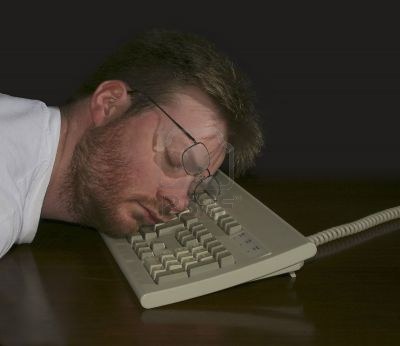
An obviously tired German bank employee fell asleep on his keyboard and accidentally transformed a minor transfer into a 222 million euro ($293 million) order, a court heard Monday.

The Hessen labour court heard that the man was supposed to transfer just 62.40 euros from a bank account belonging to a retiree, but instead “fell asleep for an instant, while pushing onto the number 2 key on the keyboard” — making it a huge 222,222,222.22 euro order.

The bank discovered the mistake shortly afterwards and corrected the error.

The case was taken to court by the man’s 48-year-old colleague who was fired for letting the mistake slip through when verifying the order.

The court ruled that the plaintiff should be reinstated in his job. – AFP

South Africa is world’s biggest exporter of oranges and grapefruit

South African grapefruit

International Relations Minister Maite Nkoana-Mashabane and European Commission vice-president Baroness Catherine Ashton discussed citrus exports on Monday.

“Yes, we engaged on the citrus issue and there has been an undertaking, and producers will still be engaging,” Mashabane told reporters in Belgium.

“Discussions have already been accelerated, and scientific research would continue [into the citrus spot problem].”

The discussion was held behind closed doors at the European External Affairs’ headquarters in Belgium’s capital, Brussels.

About 70 percent of the European Union’s citrus consumption comes from South Africa.

On Sunday, South Africa’s ambassador to Belgium, Mxolisi Nkosi, said the EU wanted to stop some imports from South Africa, like citrus fruit. He said the EU was increasingly using protectionism to block certain exports. Nkosi said the citrus sector contributed about R6 billion to South Africa’s gross domestic product.

The rise in citrus production was mainly due to the increase in cultivation areas, packaging and transport improvements, and preferences for healthier food options. But citrus harvesting and production in most of Europe continued to decline, particularly at the present time of year, due to the weather.

South Africa is the world’s biggest exporter of oranges and the largest shipper of grapefruit.

Citrus imports were halted after some shipments of fruit were tainted with a disease which affects the external appearance of the fruit. In 1993 the EU declared citrus black spot a phyto-sanitary measure.

This meant it was placed on a trade watch-list at EU borders. If spotty fruit was found, the consignment would be impounded. This reduced the size of citrus exports to the EU.

Turkey: Police deploys tear gas on thousands

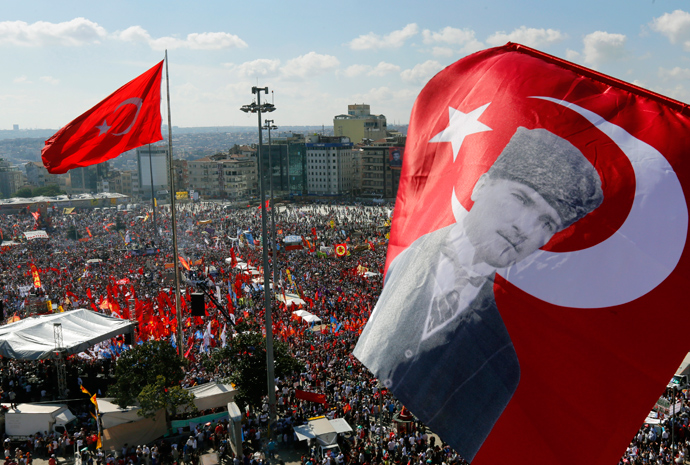
Turkish flag depicting Mustafa Kemal Ataturk as thousands gather in Istanbul's Taksim square June 9, 2013

Police again deployed tear gas and water cannons to quell more than thousands protesters that gathered in downtown Ankara. Just a few kilometers away, the Turkish PM was addressing his supporters after warning his patience with the demos “has a limit”.

At least two people were injured in fresh clashes in downtown Kizilay square in the Turkish capital, AFP reported.

Turkish Prime Minister Tayyip Erdogan, was meanwhile addressing supporters elsewhere in the city, calling on them to prepare for pro-government rallies next weekend in Istanbul and Ankara.

“On Saturday, are you ready for a big Ankara meeting? … The next day we will have the Istanbul meeting,” Erdogan said to cheering crowds in Ankara, as riot police moved in against protesters.

On Sunday, Erdogan held a string of pro-government rallies across the country.

Erdogan remained defiant over the ongoing protests, again calling the protesters “marauders” and urging the supporters of his Justice and Development Party (AKP) to “teach them a lesson” at the next local polls as he spoke in the southern Turkish city of Adana.

“Those now at Taksim, those who burn and destroy, those at various places across the country, I ask them, in the name of which freedom are you doing this?” Erdogan said in a speech at the Mediterranean Games in Mersin.

“There is an end to our patience,” Erdogan warned in Ankara airport, as the massive crowd of his supporters chanted slogans like “We are ready die for you, Tayyip!”

The Taksim protesters do not represent all the people of Turkey, the prime minister argued.

“Are the people only those at Gezi Park? Aren’t those who came to meet us at Istanbul airport people too? Those who are gathered now in Ankara; aren’t they people, too?” he exclaimed.

On Saturday night, a rally in the Turkish capital which started peacefully was also dispersed with tear gas and water cannons. According to witness reports on Twitter police were targeting and detaining “random” youths in the crowd. At least three arrests were reportedly made.

Authorities deployed over 4,000 riot police to quell the unrest, witnesses claim.

In Istanbul, a massive crowd packed the whole of Taksim Square was joined by the fans from rival football teams Fenerbahce, Besiktas and Galatasaray, AFP reports. Police kept away from the scene. In the city’s western Gazi neighborhood things did not go so peacefully as protesters hurled incendiary devices and taunted police, which resulted in fresh clashes.

Earlier, parliamentary Speaker Cemil Cicek said the mass protests that have been gripping the country are now “under control” and the process “is becoming normalized and increasingly in line with common sense.”

“We are ready to listen to all reasonable, legal and democratic demands,” he added.

At the same time, Istanbul’s mayor declared that Gezi Park would not be used as a venue to build a shopping mall, but the project to create a replica of Ottoman-era military barracks there would continue.

“We are definitely not thinking of building a shopping mall there, no hotel or residence either. It can be… a city museum or an exhibition center,” Istanbul mayor Kadir Topbas said as quoted by AFP. “The plan for the barracks was part of our election promises, the people gave us the authority to do it.”

The Turkish government dismissed press rumors of an early election on Saturday following the party meeting on the grounds it was unnecessary. Prime Minister Erdogan, who has been criticized by protesters for his overly authoritarian ruling style, returned to Turkey on Thursday night to a throng of supporters at Istanbul airport. A number of counter-demonstrations are said to be planned next week, as anti-government protests enter their 10th day.

Social upheaval began in Turkey last week when a demonstration against the demolition of a central park in Istanbul was brutally dispersed by police. In response, protesters occupied Istanbul’s Taksim Square and clashed with police repeatedly during the subsequent days. Many are calling for Prime Minister Erdogan’s resignation.

SA Citrus exports to EU under threat

The European Union wants to stop some imports from South Africa, like citrus fruit, SA Ambassador to Belgium Mxolisi Nkosi said on Sunday.

“We are concerned about this. We will speak of this at the meeting and see how we can find a solution.”

The South African delegation from the international relations department arrived in Brussels on Saturday ahead of bilateral talks and political engagement.

They are accompanying Minister Maite Nkoane-Mashabane, who is due to meet with several top European officials this week. The accompanying officials met with the ambassador on Sunday.

Nkosi said the citrus sector contributed around R6 billion to South Africa’s gross domestic product (GDP).   The rise in citrus production was mainly due to the increase in cultivation areas, packaging and transport improvements, and preferences for healthier food options.

But citrus harvesting and production in most of Europe continues to decline, particularly at this time of the year due to climate conditions.   About 40% of South Africa’s citrus exports go to the EU, making it one of the country’s most important markets. South Africa is the world’s biggest exporter of whole oranges and the largest shipper of grapefruit.

“This is a big business,” said Nkosi.

Citrus imports were halted after some shipments were found to have the citrus black spot (CBS) disease.

The spot is a fungal disease which affects the external appearance of the fruit.

In 1993, the EU declared CBS a phyto-sanitary measure, meaning it was placed on a trade watch-list at EU borders. If spotty fruit were found, the consignment would be impounded.

This reduced the proportion of citrus exports to the EU. Farmers are now spending substantial amounts to get rid of the spots.   The Citrus Growers’ Association of Southern Africa listed nine additional direct and indirect costs associated with the EU measure. These include more spraying, replanting earlier than necessary, added inspection costs, and storage costs for impounded fruit at European ports.

Export earnings account for about 80 to 90% of citrus growers’ revenue. The industry wants the phyto-sanitary measure withdrawn pending further research into black spot. Farmers believe the threat of citrus fruit being blacklisted could have disastrous effects on the sector.

The first case of CBS was recorded in 1929, and until recently the EU has not been too concerned about excluding spotty fruit.

Nkosi said the EU remained one of South Africa’s biggest trading partners, accounting for 24% of global exports.

He said the Eurozone financial crisis had significantly reduced demand for South African exports.

Despite its problems, Nkosi said the EU remained the second-largest economy in the world, accounting for 17% of the world’s GDP.

“Our relations with the EU go a long way,” he said.

“South Africa is the only African country with a partnership with the EU.”   However, Nkosi was concerned that EU development aid to South Africa would be significantly cut in the coming years.

“We need to be alive [to this], and the reality is the EU can no longer help us the way they used to,” he said.

Despite this, he said the EU would remain a strategic partner. – SAPA

Cathedral in Nantes (Western France) vandalised with Nazi symbols

The cathedral of Saint Peter and Saint Paul in Nantes (Western France)

Agence France Presse reports that the Saint Peter’s cathedral in Nantes was vandalised last night, with “symbols of a Nazi type”, according to the prefect of the Loire-Atlantique department, Christian de Lavernée. “The damages affect the sacred part of the chorus as well as the oldest altar at the back of the chorus,” he added.

This latest incident of sacrilege against churches in France comes amid a heated controversy around the death of a young left-wing activist, Clément Méric, during a fight with skinheads, as well as recent demonstrations against homosexual marriage by conservatives, notably Catholic believers.

According to the prefect, “the signs are mixed: there is a 666 (Satan’s number) and some Nazi symbols, a bust of Fermen, as well as some stickmen in the style of (the emblem of) the anti-gay marriage protest movement Manif pour tous.” He said the act was “deplorable”.

“The facts were discovered this morning at 8h15. There was a break-in by means of the high part of the scaffolding” which is being used at the moment along the facade, he explained and “the doors on the ground floor were cracked”. Obscene inscriptions and a broken statue were visible inside, as well as angels with sex organs and little Hitler’s moustaches, someone indicated who had had access to the interior of the cathedral.

Cathedral closed for tourists

“The church does not wish to add oil to the fire,” stated the general vicar of the Nantes diocese, Father Benoît Bertrand, who “condemned this act. We want to appeal to calm and to responsibility.”

At the cathedral several offficials from the police’s forensic department were busy with investigations and banned anyone from entering. An inquiry has been opened by the prosecution under the departmental sûreté of Nantes. The first deputy mayor of the municipality of Nantes, Johanna Rolland (Socialist Party) was also present and condemned the incident “in the strongest possible terms”. For the moment, the monetary value of the damages have not been established, according to the prefect.
The cathedral will be closed for several days for tourists but will be open for religious services.

French leftist left brain-dead in Paris fight with skinheads

Clement Meric (centre)

A group of skinheads attacked a French far-left activist in the heart of Paris’ shopping district, leaving the young man brain-dead in the hospital Thursday, officials said, in an attack that raised fears of increased far-right violence.

Political tensions are high in France after months of protests against legalizing gay marriage that sometimes ended with troublemakers from the extreme right clashing with police.

Interior Minister Manuel Valls said a fight broke out Wednesday evening between two groups of young people in a pedestrian street just steps away from the famous Printemps department store. At one point, the 19-year-old leftist was beaten by several skinheads, according to Valls, a widely respected, center-leaning member of President Francois Hollande’s Socialist government.

No suspects have been arrested, and Valls told reporters at the scene of the attack – a crowded street with cafes and chain stores – that finding them is the top priority.

It was unclear how the fight developed and how many people were involved.

Politicians from left and right lashed out at the violence, as did Valls, who focused his anger at the skinheads.

“There is no place for small neo-Nazi groups whose enemy is the nation,” he said. “A group of the extreme right is at the heart of this assassination. There is a discourse of hate and a climate that favors this discourse. We need to pay attention to this because they threaten our values.”

The Party of the Left said Meric, one of its activists, was declared brain dead. The party, one of several small political movements on France’s vocal and active far left, called for demonstrations in Paris on Wednesday against violence by groups on the extreme right.

The victim, Clement Meric, is a student at Sciences Po, one of France’s most prestigious universities, according to the school. – AP

Second defendant starts testimony in Germany’s neo-Nazi trial

Beate Zschaepe

The second of the five defendants began testimony Thursday at Germany’s landmark trial over racially inspired murders – the work, according to prosecutors, of a trio of neo-Nazis.

Holger G, who is alleged to have aided the killer cell by lending it his identity documents, was to read out his own statement about the crime spree, but would not answer any questions about it, his lawyer announced as the hearing began.

At the start of the day, the judge asked Holger G standard questions about his vital data and family background. His surname has been withheld under privacy guidelines for the media.

The trial in Munich began May 6, but testimony on the origins of the self-styled National Socialist Underground (NSU) only began this week. Prosecutors say Beate Zschaepe, 38, is the sole survivor of the NSU. She stands accused as an accomplice to murders and bombings.

The other two members, Uwe Boehnhardt and Uwe Mundlos, are dead after an apparent 2011 suicide pact. They are believed to have gunned down nine immigrants and a policewoman from 2000 to 2007 in attacks that chilled Germany’s ethnic Turkish minority and baffled police.

Another accused, 33-year-old Carsten S, this week admitted couriering a gun and silencer to the gang about 13 years ago.

There was an adjournment of the court before 39-year-old Holger G could begin reading out his statement.

“Follow the reading of this declaration, our client will not for the time being answer any further questions,” his lawyer Stefan Hachmeister told the court. He said Holger G might add more testimony later in the trial.

Police have said the trio, who were living with fake identities and supporting themselves by robbing banks, turned to neo-Nazi Holger G to borrow his identity documents because he resembled one of the gang members.Author: Jean-Baptiste Piggin and Jochen Neumeyer – dpa

Swiss parliament stalls banking secrecy bill

The legislation to disclose client names and data to resolve an ongoing tax-evasion spat between Switzerland and the US, was met with sharp critique by the lower house of parliament in Bern, who halted the vote.

The legislation, which has been dubbed by some Swiss media outlets as ‘American dictate’, is a strong demand by the US in a step for Switzerland to end their banking secrecy regime and bring transparency to their shady practices.

The accord, if enacted into law by Swiss parliament, aims to better track tax evasion in the alpine nation. Last week, Finance Minister Eveline Widmer-Schlumpt told reporters that her cabinet had approved the bill.

The Swiss news agency, ATS, reported 90 votes were in favor, and 100 opposed to debate the new law, which is expected to decided upon during the summer parliament session, which began on Monday and will come to a close on June 21.

Before voting, members from various political parties voiced concerns over the details of the deal to hand over sensitive data to Washington.

A committee, supported by elected members of the Swiss People’s Party, the Christian Democrats and the Ticino League, have until December 4th 2014 to collect 100,000 signatures to put the proposal to a national vote.

On Tuesday, the right-wing Swiss People’s Party launched a campaign to kill the bill and said the package was too ‘vague’ and could create trouble for Swiss bankers.

The bill is vague because Washington and Bern are keeping mum about the details and conditions of the deal, and plan to keep quiet until after the Parliament approves it. Once approved, Parliament will not be able to amend the accord. – RT

Turkey’s PM sees Twitter as problem

Turkey’s PM has vowed that development of Taksim Square will go ahead, despite ongoing protests. Tayyip Erdogan made the remark in Tunisia on his way back to Turkey. Erdogan is also under scrutiny, with opponents blasting him as authoritarian.

As the protests entered their seventh day, casualties have risen, with three people dead and more than 4,000 injured. What began as an environmental protest against the demolition of Taksim Gezi Park in Istanbul to build a mall has turned into Turkey’s biggest wave of anti-government protest in years.

“There is a problem called Twitter right now and you can find every kind of lie there. The thing that is called social media is the biggest trouble for society right now,” Erdogan said before leaving for North Africa. The Turkish prime minister also slammed the protests as undemocratic, and dismissed them as being organized by extremists.

In their list of demands issued to Erdogan, activists are calling for the firing of the chiefs responsible for the violent police crackdown, the release of protesters detained by police, and for a ban on the use of teargas. If these demands are fulfilled, protesters said they would end the riots.

The period of time after Erdogan returns Thursday from his three-day tour of North Africa is vital for Turkey, as public pressure may force the prime minister to reverse several of his own policies.

So far, Erdogan has only singled out scapegoats in the unrest, RT’s Irina Galushko reported from Istanbul.

He assailed the social networks used by demonstrators to organize protests and post updates; many demonstrators turned to Twitter and Facebook as a mobilization tool, as local media were largely silent during the initial stages of the protests.

However, Deputy Prime Minister Bulent Arinc, who is formally in charge while Erdogan is abroad, apologized on Tuesday for the police brutality against demonstrators. Turkish police have been roundly criticized for their widespread use of teargas and water cannons to disperse crowds of protesters.

Erdogan has been described as a man who rarely bows to opposition, and cannot handle criticism.

“He completely dislikes opposition to his ideas. He takes it as a personal offense. He’s used to having agreement from the country after having gained 50 percent of the votes. This time he didn’t assume the protest would be so big”, columnist and TV host Mutlu Tonbekci told RT.

Journalists Cengiz Candar told Reuters that “Erdogan takes things very personally and has developed a very authoritarian style.”

“Everybody here was being gassed, and people here were trying to resist and trying to keep this park, and he was telling that we are looters and there’s no project going on, and then he changed his mind, saying there’s of course a project and I will do what I want to do,” activist Nazan Ustundag said to RT.

“Our intelligence work is ongoing [to determine the foreign actors behind the protests],” Erdogan said on Monday. “It’s not possible to reveal their names. But we will have meetings with their bosses.”

Conservative Turkish newspaper Yeni Safak reported that foreign mercenaries were among the protesters, according to authorities: “750 to 1,000 people, agents, many of whom are foreign nationals, infiltrated the ranks of the demonstrators, and who are being paid by foreign intelligence.”

As clashes continue, some believe that Erdogan will go to great lengths to avoid embarrassment, as any sign of weakness could break up his party. “Erdogan cannot backtrack now. It would mean defeat,” car dealer Ali Aydin told Reuters. “Weakness would destroy the party.”

The prime minister may also be ill-equipped to dealing with the recent developments. “This is an unprecedented situation for Erdogan. Some people in [the ruling AKP party] think that his policies have to soften, but they remain loyal to party discipline and to Erdogan himself,” Reuters quoted a source close to the AKP as saying.

Many protesters believe that the prime minister has lost touched with reality, and is inflexible and unwilling to compromise.

Erdogan has alleged that hundreds of foreign agents are working to create unrest in the country. He maintains that these agents instigated the protests and are continuing to lurk among the crowds, encouraging dissent and turmoil.

Authorities have arrested some 15 foreign nationals across the country in connection with the protests, Today’s Zamaan newspaper quoted an unnamed governmental source as saying. Many were reportedly Iranian nationals, a country on Erdogan’s blacklist.

Despite the widespread protests, Erdogan remains a popular politician. He is known for his assertive leadership style, and his AK Party holds around two-thirds of the seats in parliament. But a key question remains: How will he handle the protests that are continuing to rock Turkey?

Erdogan is famous for his concrete human rights reforms, including granting rights to the country’s Kurdish minority, the opening of European Union entry talks, and a separation of the government and military. He has lately faced criticism for pressuring the media and for restrictions on alcohol sales.- RT