French ban on Mercedes angers Germans

mercedesA ban by France’s socialist government on the registration of several top-end Mercedes-Benz models has infuriated the German luxury carmaker and forced Brussels to step in to try to defuse the growing dispute.
Sales of thousands of the most prestigious Mercedes cars have been halted in France since Paris last month refused to allow the registration of four new models that include a refrigerant in their air-conditioning systems that has been banned by the EU on environmental grounds.

The issue escalated late last week when the government invoked an EU “safeguard procedure”, allowing it to act unilaterally to prevent a serious risk to road safety, the environment or public health. It acted after a French court had ordered a 10-day stay of execution for Daimler while the registration block was reviewed.

“The registration of Daimler/Mercedes vehicles classes A, B, CLA and SL remain banned in France as long as the company does not conform to active European regulation,” the environment ministry said.

Daimler said the French decision – Paris is to date the only EU country to issue a ban – was “absolutely inexplicable” and added it would take further legal action as a result.

Officials in Brussels said on Monday they were consulting with Berlin and Paris on the issue and would bring the two sides together in September in a bid to resolve it.

The dispute has highlighted the marked contrast between the state of the car industry in the two countries. PSA Peugeot Citroën, and to a lesser extent Renault, have suffered heavily from a big slump in demand for their mainly small and medium-sized cars.

Daimler, BMW and Volkswagen have, meanwhile, surged ahead, profiting from their premium models that have proved highly popular in emerging markets. France was riled last month when Angela Merkel, the German chancellor, blocked an EU move to impose tougher curbs on auto emissions that would have hit German makers of big cars.

The Mercedes issue revolves around an air-conditioning coolant called R134a which the EU outlawed from January. Daimler argues that the replacement coolant is dangerously flammable.

Jean-Claude Bernard, head of the Association of Mercedes-Benz dealers in France, said the action was politically motivated “to please the greens and damage a German manufacturer”.

The coolant is used in 95 per cent of cars in France with air conditioning.

The association wrote to the environment minister complaining that 11,000 jobs were at stake and demanding an end to the ban. – FT

Mining bosses still raking in millions

Filling a few pockets

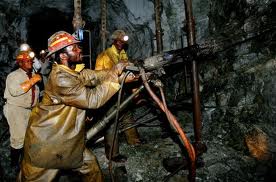
The mining industry is in the doldrums. Declining metal prices and rising costs foreshadow a tumultuous time ahead for the sector which is still reeling from devastating wildcat strikes last year.

Yet mining bosses continue to rake it in – with one individual taking home much as R45-million last year – serving to fuel the ideological war between themselves and their workers, the haves and have-nots, particularly as wage negotiations and the strike season kick into gear.

Last year, the chief executives of just the top three gold and platinum miners in South Africa earned collective remuneration totalling R140-million, leaving workers and unions indifferent to pleas of poverty by mining houses in ongoing wage negotiations.

Peter Major, a mining analyst at Cadiz Corporate Solutions, said executive remuneration would continue to add fuel to the fire when it came to wage negotiations.

He said many senior directors and many in management had a short-term, selfish view, which, he felt, let a proud 150-year-old industry down.

“If these guys wanted workers to take a zero percent increase, the first thing they would do is take a pay cut. That’s what leading by example – from the front – is all about. Instead, many of these ‘leaders’ are taking increases and bonuses. And when viewed against the enormous and frequent write-downs we’ve been seeing, resignations, firings and jail time should be up for serious consideration. It’s atrocious.”

On July 15 gold employers tabled an opening offer of a 4% wage increase, which was swiftly rejected by all worker representatives at different levels, who have demanded anything from a 10% to a 100% increase.

The parties reconvened on July 24 for another round of tough talks in which the offer was revised up to 5%, after which Solidarity, UASA (formerly known as United Association of South Africa) and the National Union of Mineworkers (NUM) declared a wage dispute that will be referred to the Commission for Conciliation, Mediation and Arbitration.

But gold producers say they simply cannot afford the increases. The Chamber of Mines’s figures for the fourth quarter of 2012 show – based on cash costs and an average gold price – that almost half of the country’s gold mines are unprofitable or marginal, at best.

But executive pay, at least for the major players in the sector, remains sizeable, as confirmed by company remuneration reports for 2012.

Top of the list is Gold Fields chief executive, Nicholas Holland, who earned a basic salary of R9.3-million, but after bonuses, share proceeds and other benefits, took home R45.3-million – R12.6-million more than the year before. Gold Fields chief financial officer Paul Schmidt took home almost R20-million.

Speaking to the media in May this year, Holland outraged unions when he said: “We can’t continue giving double-digit increases when productivity is declining. That’s not sustainable.”

AngloGold Ashanti’s former chief executive, Mark Cutifani, took home R43.2–million last year, while the company’s chief financial officer and now chief executive, Srinivasan Venkatakrishnan, was paid a total of R36-million.

Lonmin’s former chief executive, Ian Farmer, who stepped down due to illness in December 2012, earned R13.8-million for the year ended September 30 2012, compared with R17.9-million for the year before.

Gideon du Plessis, the general secretary of trade union Solidarity, said the remuneration was “exorbitant”.

“I understand the fiduciary duty they have and the difficulty of the task … but if you compare the remuneration of entry level workers to executives, there is a 100% mismatch. It conflates the perception that they do have the money.”

A salary freeze would mean little, insiders said.

“Mining bosses have never had any good gestures, the only gesture they show you is that they smile while you are in pain … If there is not a complete change in the manner they run their business, there will never be peace in the sector.” – M&G

Biggest oil discovery in 50 years

cooberpedyIn a virtually uninhabitable section of South Australia, a discovery has been made which could rock the world.  Some are calling it the biggest discovery of oil in 50 years.  Earlier this year, a company called Linc Energy announced that tests had revealed that there was a minimum of 3.5 billion barrels of oil equivalent sitting under more than 65,000 square kilometres of land that it owns in the Arckaringa Basin.  But that is the minimum number.  It has been projected that there could ultimately be up to 233 billion barrels of recoverable oil in the area.  If that turns out to be accurate, the oil sitting under that land is worth approximately 20 trillion dollars, and it would be roughly equivalent to the total amount of oil sitting under the sands of Saudi Arabia.  In essence, it would be a massive game changer.

If the 233 billion barrel figure is accurate (and some have even suggested that the true number could actually be 400 billion barrels), that would make it nearly 10 times larger than the Bakken formation, 17 times larger than the Marcellus discovery and 80 times larger than the Eagle Ford deposit down in Texas.

It would also mean that Australia now has more “black gold” than the nations of Iran, Iraq, Canada and Venezuela.

The closest town to this oil discovery, Coober Pedy, is in the process of being totally transformed.  It normally only has about 1,700 inhabitants, but news of this discovery has drawn in 20,000 additional people already and real estate prices in the town are absolutely skyrocketing.

So does all of this mean that gas prices will go down soon?

Well, unfortunately that is not likely to be the case.

First of all, the oil in this formation in Australia is going to be quite expensive to extract.  It has been estimated that it is going to cost up to 300 million dollars just to get this site ready for production.

In addition, many of our politicians are absolutely determined to greatly punish the use of oil because they believe that it is the primary cause of global warming.  So they continue to raise taxes on gasoline consumption.

Hopefully the price of gasoline will come down a bit over the next few years, but even if it does I would not expect it to come down too much.

But what we can be sure of is that the world is not going to run out of oil any time soon.  Those that have been predicting that we are are on the verge of an “energy doomsday” can take a rest for a while.

It is time that the American people were told the truth about our energy situation, and the truth is that we have plenty of energy resources.

#1 Back in 1995, the U.S. Geological Survey told the American people that the Bakken Shale formation in western North Dakota and eastern Montana only held 151 million barrels of oil.  Today, government officials are admitting that it holds 7.4 billion barrels of recoverable oil, and some analysts believe that the actual number could be closer to 24 billion barrels of oil.

#2 It is estimated that there are 19 billion barrels of recoverable oil in the tar sands of Utah.

#3 It is estimated that there are 86 billion barrels of recoverable oil in the Outer Continental Shelf.

#4 It is believed that there are 800 billion barrels of recoverable oil in the Green River formation in Wyoming.

#5 Overall, the United States is sitting on approximately 1.442 trillion barrels of recoverable oil.

#6 According to the Institute of Energy Research, the United States has an 88 year supply of natural gas.

#7 According to the Institute of Energy Research, the United States has a 169 year supply of oil.

#8 According to the Institute of Energy Research, the United States has a 465 year supply of coal.

#9 Goldman Sachs is predicting that the United States will be the number one oil producing country in the world by the year 2017.

So the bottom line is that we have plenty of energy resources.  We do not need to be importing oil from OPEC or anyone else.

But just because we are not going to run out of oil, natural gas or coal any time soon does not mean that we should not be developing alternative energy resources.  We should definitely be seeking ways to produce energy more cheaply, more cleanly and more efficiently.

If America does not end up leading the world in developing new forms of energy, we should be ashamed of ourselves.  And right now, the Chinese appear to be way ahead of us as far as thorium energy is concerned, and Italian scientists appear to be ahead of our own scientists in developing “cold fusion” technology.

So yes, let’s be glad that we are not going to be facing a crippling energy crisis in this generation, but let’s also not be complacent.  There are lots of new technologies out there just waiting to be developed, and the rewards are going to go to those that are able to develop them first. – Economic Collapse


Rising Africa, the hopeful continent

africacontinentIn May 2000, the respected international weekly magazine The Economist published a provocative lead article describing Africa as “the hopeless continent”.

To illustrate the hopelessness, the magazine picked several of Africa’s cities as case studies. Among those cities was Freetown, the capital of Sierra Leone, which, according to the magazine, symbolised Africa’s “failure and despair”.

Sierra Leone itself was described as being “of no great importance” because the country’s only relevance to the world was the sympathy needed for its people.

This beleaguered country, it was said, was nevertheless “a symbol of Africa”.

The article elicited condemnation from various quarters, including African government leaders, the academia and analysts. The magazine was reinforcing age-old negative perceptions of Africa, it was said.

The magazine would later atone for its pessimism – albeit 10 years later.

The cover page for the December 2011 edition labelled Africa “The Hopeful Continent”. And they had statistics to back it up.

Over the past decade, it was noted, “six of the world’s 10 fastest-growing countries were African”. In eight of the past 10 years, the magazine said “Africa had grown faster than East Asia, including Japan”.

It was as if there were two Africas: the one described in the May 2000 issue and the other as described in the December 2011 edition. And The Economist is not alone in having had to retract (although tacitly) its own coverage of developments in Africa.

Before South Africa’s successful hosting of the 2010 World Cup, the London-based Guardian newspaper carried an article in which one of their reporters warned potential tourists against visiting South Africa for the spectacle.

In “Why going to South Africa for the World Cup terrifies me”, Guardian journalist Louise Taylor claimed that South Africa was “more dangerous than Iraq and Afghanistan”.

Taylor added: “Deep down, there must be some VIPs pacing Fifa’s corridors of power who harbour nagging regrets that Egypt or Morocco did not pip South Africa and win the vote.”

Interestingly, Taylor had not visited the country before. Her article was based entirely on anecdotes and desktop information. The stereotypical view of Africa as a “dark continent” persists, despite evidence pointing to a continent on the rise.

Africa’s economy is growing at a rapid rate despite the global economic downturn that is adversely affecting some of the continent’s major trading partners, especially those in the euro zone.

The continent is also increasingly adhering to principles of good governance, which include regular democratic elections, adherence to the rule of law and the creation of a climate conducive for trade and investment.

Once a continent known for coups d’état, Africa now holds more elections than ever. In the 1960s and 1970s, according to a recent study, African countries held a total of 10 elections a decade.

This is on a continent of 54 countries.

Latest stats indicate that Africa now holds 41 elections every five years.

Of concern remains the ability of African countries to trade among themselves. Current trade among African countries stands at a paltry 10 percent, excluding trade in oil. Simply put, Africa trades with everyone except itself.

The overwhelming majority of African countries are single-commodity economies, exporting raw materials at a fraction of their value to markets in Asia, North America and Europe.

Together with other countries, South Africa has expressed its belief that integration and intra-trade at the level of regional economic communities will pave the way for greater continental economic integration. A lot of progress has been made regarding the establishment of a Tripartite Free Trade Agreement (T-FTA) between the Southern African Development Community (SADC), the Common Market for Eastern and Southern Africa (Comesa) and the East African Community (EAC). The T-FTA will combine the markets of 26 countries with a population of nearly 600 million people and a combined gross domestic product of $1 trillion (R9.8 trillion).

In summary, this key initiative will provide market scale that could launch a sizeable part of the continent onto a new industrialisation trajectory. The T-FTA will also form part of an Africa-wide FTA, which will create a market of $2.6 trillion.

Delivering the Department of Trade and Industry’s Budget Vote in Parliament recently, Minister Rob Davies said negotiations were proceeding, but that efforts in this regard had to be complemented by the promotion both of infrastructure development and co-operation to transform productive sectors and industrialise Africa.

The minister said investors had not been put off by challenges, but recognised Africa as the next growth frontier and the key strategic importance of South Africa as the most industrialised African country.

The 2013 Africa Competitiveness Survey by Ernst and Young says: “Africa’s rise over the past decade has been very real. While sceptics still abound, and there are people who still seek to debate the point, the evidence of the continent’s clear progress over the past decade is irrefutable.

“Over this period, a critical mass of African economies have grown at high and sustained rates; so much so that, despite the impact of the ongoing global economic situation, the size of the African economy has more than tripled since 2000.

“The outlook also appears positive, with many parts of the region forecast to continue experiencing relatively high growth rates and a number of African economies predicted to remain among the fastest growing in the world for the foreseeable future.

“At the same time, though, individual countries and the region as a whole still need to address significant challenges in order to sustain this progress, and to emulate the kind of developmental path we have seen in places like South East Asia over the past 30 to 40 years. We are of the view that Foreign Direct Investment (FDI) will play a key role in this process as both a source of capital, but, more importantly, as a catalyst for job creation, skills development, technology transfer, and ultimately, the longer-term diversification and transformation of key African economies.”

The growth in the African economy has increased the potential for FDI projects into Africa, as well as creating positive growth for investors in Africa. With South Africa being the single largest investor (2012 FDI projects) in Africa, there is ongoing confidence and interest among African countries regarding its potential growth and future.

The highest levels of growth have been found to originate in sub-Saharan Africa, with the lowest in north Africa. This stagnation in the north is mainly caused by the political instability within the region which has discouraged potential investors and caused certain levels of divestment.

The boom in the southern region is mainly due to the large levels of investment by South Africa in countries in the SADC region.

The role of South Africa as a strong investor has increased over the past decade as it is placed fifth on the list of top 20 countries that source FDI projects in Africa.

This makes it the largest African source of FDI projects with a compounded growth of 57 percent, in South African-originated projects into Africa, since 2007.

The pessimistic view of Africa as a dark, hopeless continent is being challenged by concrete stories of economic development and a general improvement in the standard of living of Africa’s people. – by Clayson Monyela. Monyela is the deputy director-general: public diplomacy in the Department of International Relations and Co-operation.

Goldman Sachs profits double on investment gains, lower tax rate

Goldman Sachs Group Inc (GS.N) said quarterly profit doubled, boosted by investment gains and a lower tax rate.

Lower taxes help Goldman Sachs

Goldman’s investing and lending segment, which tracks its investments in private equity deals, publicly traded stocks, loans and bonds, produced nearly seven times as much revenue in the second quarter as in the same period last year, much more than analysts expected.

Investors questioned how much revenue growth the bank can generate by investing its own capital under new regulations. The Volcker rule, part of the 2010 Dodd-Frank financial reform law, limits banks’ market wagers with their own money. But the industry has years to comply with the law, and Goldman believes most of its investing and lending activities already do.

Goldman’s effective tax rate dropped to 27 percent from 32 percent in part because the bank is electing to keep more of its international income permanently offshore, and because it earned more money overseas. Chief Financial Officer Harvey Schwartz told analysts on a conference call that the lower tax rate was not likely to be repeated.

“It’s tough to get too excited about these numbers because they’re potentially unsustainable,” said Tom Jalics, senior research analyst at Key Private Bank, whose clients own bank shares.

The results underscore the difficulties Goldman and its rivals face in navigating the post-crisis world. With regulators pressing banks to boost capital levels, many of Goldman’s most profitable businesses are earning less. The bank’s return on equity, a measure of how effectively it wrings profit from shareholders’ money, was just 10.5 percent in the second quarter, a hair above what it would pay for equity funding.

Overall, Goldman’s net income rose to $1.86 billion, or $3.70 per share, in the quarter, from $927 million, or $1.78 per share, a year earlier.

Analysts on average had expected $2.82 per share, according to Thomson Reuters I/B/E/S.

Net revenue rose 30 percent to $8.61 billion.

The biggest contributor to revenue was fixed income, currency and commodities (FICC) trading, which reflects trading with clients. Revenue there rose 12 percent to $2.46 billion.

Goldman’s results echoed similar trends in the investment banking units of JPMorgan Chase & Co (JPM.N) and Citigroup Inc (C.N), whose fixed-income trading businesses also benefited from improvements in trading and underwriting revenue in the second quarter. – Reuters

Pirate Bay plans surveillance-free messaging app

piratebayThe co-founder and former spokesperson of the file-sharing site Pirate Bay Peter Sunde is working on a new iPhone and Android messaging application that will allow the users to protect their conversations from spying.

The application called Hemlis – ‘secret’ in Swedish – utilizes end-to-end encryption to make sure that only the two people in a conversation will have access to its data.

“All communication on today’s networks is being monitored by government agencies and private companies. The politicians are not going to stop it, they’re actually asking for more,” Sunde said in a video about the app. “That’s why we decided to build a messaging platform where no one can spy on you, not even us.”

Indeed, not even Sunde and the team developing the app will see the text messages’ contents, unlike traditional applications that leave the trails of the data – something, which allows the corporations to access it.

No advertisements are set to appear in the application.

“Normally security results in a complex and unfriendly user experience. It should not be that way. Hemlis is a messenger for everyone, so we are dedicated to creating the most user friendly messenger ever,” the description of the app reads.

RT spoke to Sunde about Hemlis’ technical side and the implications of its existence.

“We know how to encrypt the traffic and which countries we can have service in and in which countries we can allow traffic to pass. So we are building a network on top of their own internet to pass the messages along encrypted. So it’s both a technology but it’s also aware of the global legal framework for privacy,” Sunde said.

Although many have tried to link encrypted communication to terrorism, Sunde says the possibility of terrorists using Hemlis is not a valid argument in this case.

“We are talking here about normal people who do not have access to that technology yet. So terrorists are definitely not going to be on our system – they are already on their own systems; they wouldn’t trust us… so I think the only people we are helping are the [ordinary citizens] whom the government is surveilling.”

There is currently a crowd-funding campaign for the application, with the users willing to participate paying in cash or Bitcoin.

At $5, extra features in the app are unlocked, while after spending $10 or more the user gets to pre-register usernames. A donation of $500 allows to be mentioned as a fundraiser in the application, plus hundreds of unlock codes.

The fundraising campaign is in its early stage, though, so there is no official release date planned for the application.

The development of the app follows the NSA leak scandal, and Sunde’s target group are those who are also concerned about the level of government surveillance and data capture.

Sunde is one of the three founders of The Pirate Bay, although he stepped down as the website’s spokesman in 2009. When he announced his departure from The Pirate Bay, he pointed out he was interested in moving on to new projects.

The Pirate Bay (commonly abbreviated TPB) is a website that provides torrent files and magnet links for file sharing using the BitTorrent protocol. The site was founded in Sweden in 2003, and has faced multiple legal threats since its creation.- RT

SA science website outdated since 2008 despite R16 million grant

saastaDespite a R16-million grant, most information on the SA Agency for Science and Technology Advancement’s website has not been updated in years.

A member of the public visiting the South African Agency for Science and Technology Advancement’s (Saasta’s) website for information about science in the country will find information that is outdated, and in some cases dating back to 2008. This is despite the fact that last year the agency received a parliamentary grant of more than R16-million. Only two links are up to date.

Saasta – a business unit of the National Research Foundation – is mandated with science and technology communication but despite a parliamentary grant, that since 2009 has averaged R15-million annually, it does not appear to have the resources to update its website. The site is an important avenue for people interested in science in South Africa.

Science communication has been highlighted as a way to increase interest among school learners in science, technology and engineering, and to encourage them to pursue these subjects in secondary and tertiary education.

Since the 2010/11 financial year, nearly R50 000 has been spent on upgrading and adding new information to the site, with the most recent being information about National Science Week 2013, which went up last week. However, the main page calls for entries in competitions, whose closing dates were in 2011. Also, according to the “Events” pages, the only events that Saasta has organised since 2009 were a staff meeting and a “Science Unlimited KwaZulu-Natal” event in 2010.

Head of corporate communications at Saasta Ina Roos told the Mail & Guardian that she was in charge of updating content, and pointed to the call for National Science Week proposals. “We don’t have a specific budget for the website,” she said, adding that the information and communications technology co-ordinator resigned last year and that a new person had just been appointed.

Beverley Damonse, group executive for corporate relations and science engagement at the National Research Foundation (NRF) and formerly executive director of Saasta, acknowledged “there is room for improvement”. However, she said: “The largest percentage of [Saasta] funding is contract [funding] … Contract funds are directed to specific projects” rather than core activities.

“Science communication is still a developing area … There are pockets of excellence driving science communications, but [Saasta] is not fully resourced in terms of a science communication entity,” Damonse said, adding that the focus has been on “educators and learners because of the science support needed in the system”.

Numerous attempts to contact Saasta managing director Dr Jabu Nukeri were unsuccessful. – M&G

Turkish defence conglomerate could become casualty of unrest

Erdogan with Koc holding chairman

The defense business of Turkey’s largest conglomerate could be a casualty of a row between the prime minister and one of its top executives over monthlong civil unrest that has battered the Turkish government, according to analysts and industry sources.

The prime minister has accused the Koc conglomerate of helping protesters, whom he referred to as “terrorists.” At stake, observers said, could be billions of dollars worth of government contracts in the portfolio of Koc’s two large defense companies — shipyard RMK Marine and armored vehicle manufacturer Otokar.

“It should come as no surprise if the government decided to thoroughly scrutinize all Koc-related contracts, including defense deals,” an analyst based here said.

An industry source said that some of the RMK and Otokar contracts may face revisions and some future deals may change course.

“It won’t be the first time a company becomes the victim of a political feud with the prime minister,” he said.

In 2009, Turkish tax authorities fined the country’s largest publishing group, Dogan Medya, US $3.2 billion over accounting irregularities, a fine that was larger than the company’s market value. The government denied any links between politics and the fine, although Prime Minister Recep Tayyip Erdogan had publicly called for a boycott of Dogan outlets and accused them of being politically hostile to his government.

What started May 31 as a demonstration by environmental activists in Istanbul has mushroomed into nationwide protests against Erdogan’s government in 80 cities. More than 2.5 million Turks have since protested Erdogan’s growing authoritarianism and Islamist governance. Four people have been killed in the demonstrations and more than 8,000 have been injured.

In one incident, protesters tried to escape police tear gas and pepper spray and took refuge in a posh Istanbul hotel, Divan, owned by Koc. Hotel management admitted the protesters to its lobby, which quickly turned into a makeshift first aid room.

The police fired more tear gas and pepper spray into the hotel lobby, although it is illegal to fire these chemicals into indoor spaces. It was reported that Ali Koc, a board member and third-generation family member, had ordered the hotel to help the protesters.

On June 16, an angry Erdogan said in a public rally: “We know which hotel owners helped terrorists [protesters]. It is a crime to abet terrorists. And those crimes will not remain unpunished.”

A senior government official close to Erdogan’s office said: “It is true that Erdogan got very upset by Koc’s open support for the protests. But I cannot tell how his anger would surface in this case.”

A procurement official familiar with Koc companies’ contracts denied any government intervention. “These are highly credible companies involved in most strategic programs. We have not yet received any political opinion regarding Koc-related contracts. And I cannot comment on how the prime minister will choose to behave in this matter.”

Erdogan chairs the Defense Industry Executive Committee (SSIK), the ultimate decision-maker on procurement. The procurement official admitted that Erdogan has a “powerful personal touch” when it comes to final decision-making at that panel.

Koc’s RMK Marine, based in Istanbul, is one of Turkey’s largest private shipyards. In January, the SSIK opened contract negotiations with RMK Marine to produce six corvettes under Turkey’s first national warship program, Milgem. The contract is worth $2.5 billion.

The corvettes are the smallest warships in the Turkish Navy. The largest ship is a frigate, and Turkey plans to use the experience gained in the Milgem project to design, develop and construct its first national frigate, the TF-2000, in the 2020s. Earlier, RMK Marine won a contract to build four search-and-rescue ships for the Coast Guard.

Otokar is the top supplier of armored vehicles to the Turkish Army. In 2008, Otokar signed a $500 million contract for Turkey’s first indigenous tank, the Altay. Under the deal, Otokar will build four prototypes that will undergo performance tests this year. The deal is for the prototypes only, and Otokar hopes to win the main production contract after performance tests.

Ironically, only 20 days before the unrest broke out, Koc announced that defense would be the fifth priority sector in the group’s strategic business planning, in addition to energy, finance, durable consumer goods and automotive production. – Defence News

Bundesbank: China’s currency fast becoming global reserve currency

chinacurrencyFollowing the most recent shift ‘away’ from a USD-centric world (with the China-Australia direct currency convertibility), it seems the possibility of China’s Yuan as the next global reserve currency is getting closer. The Brits, Germans, and now the Swiss (who just signed a free-trade-agreement with China) are all actively vying to become Europe’s Yuan trading hub as it seems the long line of developments to internationalize the currency over the past two years. As Bundesbank board member Joachim Nagel noted in a speech entitled “Reniminbi as a potential reserve currency” this week, “the Chinese currency is well on its way to becoming one of the future global reserve currencies.” He noted that, although the USD is still the most commonly-used currency for settling trade with China; from virtually zero in 2010, the Yuan is used to settle over 12% of trading transactions now – and is likley to increase further.

Remember, nothing lasts forever:

This latest development in global currency relations should come as no surprise to those who have followed our series on China’s slow but certain  internationalization of its currency over the past two years. To wit: “World’s Second (China) And Third Largest (Japan) Economies To Bypass Dollar, Engage In Direct Currency Trade“, “China, Russia Drop Dollar In Bilateral Trade“, “China And Iran To Bypass Dollar, Plan Oil Barter System“, “India and Japan sign new $15bn currency swap agreement“, “Iran, Russia Replace Dollar With Rial, Ruble in Trade, Fars Says“, “India Joins Asian Dollar Exclusion Zone, Will Transact With Iran In Rupees“, “The USD Trap Is Closing: Dollar Exclusion Zone Crosses The Pacific As Brazil Signs China Currency Swap“, and “Thanks, World Reserve Currency, But No Thanks: Australia And China To Enable Direct Currency Convertibility.”

Via Deutsche Bundebank (Dr. Joachim Nagel),

Renminbi as a potential reserve currency

According to Bundesbank Executive Board member Joachim Nagel, the Chinese currency is well on its way to becoming one of the future global reserve currencies. This potential stems from the renminbi’s increasing convertibility, he said at a conference of the Chamber of Industry and Commerce in Frankfurt.

He emphasised that although the US dollar is currently the most commonly used currency for settling trade with China, the significance of the renminbi has increased greatly over the last few years. He underlined this by referring to figures published by SWIFT, which indicate that the percentage of trading transactions settled in renminbi jumped from virtually zero to around 12% between 2010 and 2012 – and is likely to increase further. In view of this, he pointed out that the renminbi has already achieved the status of a trading currency.

Drawing parallels to the Deutsche Mark

Mr Nagel compared China’s growing importance with the German economic miracle of the 1950s and drew parallels between the renminbi’s current growth and the development of the Deutsche Mark. Thanks to the recovery of the German economy, the country accumulated a large volume of foreign exchange reserves and the Deutsche Mark acquired the status of a global investment and reserve currency, he explained. He anticipates that “the renminbi is certain to have similar long-term prospects if market access is liberalised further”. Mr Nagel backed up his comments by citing a survey of reserve managers carried out by RBS. The survey revealed that 14% of reserve managers have already invested in renminbi, with 37% of respondents considering investing in the currency in the next five to ten years.

Mr Nagel sees the renminbi as currently transitioning from a being trading currency to an investment currency. While both inward and outward direct investment is now possible, portfolio investments will continue to be regulated, he remarked, adding that improvements are expected in this area. “The internationalisation process of the Chinese currency is taking place more gradually than was the case with the Deutsche Mark, which, at times, was subject to radical upheaval”, he added. Mr Nagel recalled, in this context, the collapse of the Bretton Woods system of fixed exchange rates and the crisis in the European Monetary System at the beginning of the 1990s.

Renminbi financial centre in Frankfurt

Mr Nagel noted that “given China’s growing economic importance, the internationalisation of the renminbi seems long overdue”. He explained the Chinese government’s decision to employ offshore trading centres, which would allow China to establish its currency internationally, while protecting its domestic financial system. Hong Kong, where around 80% of all renminbi trade is settled, is by far the most important trading centre for the currency, with London and Singapore each accounting for 4% of renminbi trade since mid-2012. He added that the expansion of the market has led to the growing significance of other financial centres for renminbi.

Mr Nagel welcomed Frankfurt’s endeavour to position itself as a trading hub for the Chinese currency, calling it a step in the right direction, towards the free movement of capital. “The high level of interaction between China’s and Germany’s real economies highlights the necessity for a more active renminbi trade”, Mr Nagel remarked, “perhaps even using Germany as a hub” – Zero Hedge

SA faces maize shortage if exports continue

maizeSouth Africa may run out of yellow maize if exports of the grain rise further, a stock firm specialising in agricultural futures has said.

South Africa, the continent’s largest producer of maize, may run out of the yellow variety if exports of the grain rise further, pushing up the cost of white maize, one of the nation’s staple foods, stock broking firm BVG said.

The nation shipped 79 055 metric tonnes of yellow maize in the week to June 28, including 54 112 tonnes to Japan and 23 043 tonnes to Taiwan, the South African Information Service said in a statement on its website.

The country has exported 377 367 tonnes of the grain since the start of the marketing year in May, according to Sagis. That compares with 18 333 tonnes in the same period a year earlier and 413 152 tonnes for the entire 2013 marketing year that ended in April.

“If we continue at this brisk pace, we will definitely have shortages of yellow corn,” Brink van Wyk, a trader at BVG, said by phone from Pretoria. “What we have available this year for exports of yellow corn is one million tonnes.”

South Africa uses yellow maize as animal feed, while meal made from the white variety is one of the country’s dietary staples. The country will probably consume 4.54-million tonnes of yellow maize and could supply 5.74-million tonnes in the marketing year through April, the Grain and Oilseeds Supply and Demand Estimates Committee said in its first ever report, released on June 28.

“We either need to export less, or we use more white corn for cattle feed, or we import more yellow corn,” Van Wyk said.

Forecast Lowered
The Crop Estimates Committee cut its forecast for corn output by 0.6% to 11.38-million tonnes, it said in a June 25 report. South Africa produced 12.8-million tonnes in 2010, the biggest harvest since 1982.

Grain SA, the biggest representative of farmers in South Africa, says the nation has 620 000 tonnes of yellow maize available for export.

“If the average weekly export tempo of the past eight weeks should be maintained, the remaining export maize of 321 688 tonnes should be exported within the next nine weeks,” the organization said in an emailed newsletter yesterday. “This means that the yellow maize available for export should be completed by the end of August. South Africa can potentially experience a shortage in yellow maize for the biggest part of this marketing year.”

Yellow corn for delivery in September, the most active contract, declined 0.4% to R2.176 a tonne, the lowest since May 21, by the close on the South African Futures Exchange on Tuesday. The white variety fell 0.6% to R2 236 a tonne. – Bloomberg

Greece hires Goldman Sachs, Rothschild to ‘help economy’

MarkCarneybriefingWho better to help Greece escape financial turmoil than Wall Street mafia head Goldman Sachs and the international banking elite family known as the Rothschilds?

According to an official statement as reported by Reuters, Greece’s bank rescue fund has turned to the banking mafia duo in order to sell off two Greek banks (Proton and Hellenic Postbank) that were all but decimated by the economic turmoil in the nation. And who better to help sell these banks and help Greece to get back to a stable economic than Goldman Sachs, who actually was very helpful in helping to wage financial warfare on the Greek people through hiding Greece’s debt.

But that, of course, is just seasoning on top of the ironic yet horrific dish cooked up by this rescue fund in choosing the very origin of the modern banking mafia through turning to the notorious Rothschild family. From funding mega wars to originally making their massive wealth through outright deception following the Battle of Waterloo, electing any Rothschild to act as a Greek adviser is a choice that goes against the interests of the Greek people.

But then again, that is the way of the international banking cartel.

As we saw with the Cyprus incident, the wealthy bankers and connected corporate moguls pulled their voluminous amounts of cash from their accounts within the nation before the government went in and took finances from the savings of the people in order to pay for the country’s mega bailout. Even Cyprus President Nikos Anastasiadis was found to be on the list of individuals who withdrew their finances before the government-backed theft began.

According to Reuters on the partnership between the Greek bank rescue fund and the corrupt banking tag team Goldman and Rothschild in an article that has received virtually zero attention:

“Greece’s bank rescue fund has hired Rothschild and Goldman Sachs as advisers on the sale of lenders Proton and Hellenic Postbank (TT), which are most likely to be bought by bigger Greek banks, officials told Reuters on Friday.”

Back in April 2012 Zero Hedge – to loud jeers by the “pundits” who were convinced there is no chance in hell of it happening – that Goldman’s take over of the world’s central bank triumvirate: the NY Fed (Bill Dudley), the ECB (Mario Draghi) and the Bank of England, would soon be completed with Mark Carney taking over the world’s oldest central bank located on Threadneedle street.

This process has now been concluded and we have photographic evidence. – Anthony Gucciardi/Zero Hedge


Merkel to host EU talks on sky-high youth unemployment

Angela Merkel
Angela Merkel

Chancellor Angela Merkel on Wednesday hosts EU talks on felling sky-high youth unemployment less than three months before German elections after coming under fire for championing austere spending cuts and helping to create a “lost generation”.

Days after EU leaders okayed up to eight billion euros ($10.4 billion) for initiatives to help get the region’s 5.6 million jobless under 25-year-olds into work, Merkel will gather leaders and labour ministers in Berlin to thrash out the ways and means.

Merkel, whose conservatives have been cruising high in the polls, has shifted tone on fighting Europe’s financial woes in recent months, tempering her earlier insistence on budgetary rigour with an emphasis on growth.

And while she began co-opting major social policies from the main opposition Social Democratic Party (SPD) years ago, she has hardly missed a chance of late to warn that if Europe fails to foster more growth, it faces losing a whole generation.

Hard on the heels of a warning by US President Barack Obama on his Berlin visit this month that a change of tack was needed to avoid just that, Merkel said last week that Europe’s young people were “owed” chances for the future.

“And we particularly owe them it because they, the youth, are in no way to blame for the failures which have arisen in recent years,” she said in the Bundestag lower house of parliament.

French President Francois Hollande and EU Commission head Jose Manuel Barroso are due at the talks, which, according to a German government spokesman, will focus on “concrete measures” and “an exchange of best practices”.

“We want to share particular national experiences with each other — and Germany has broad experience from the time of German reunification — on advancing youth employment, and identify the most promising measures,” Merkel said.

Germany, Austria, the Netherlands and Denmark have experience to share on their systems of offering youngsters an apprenticeship at a company that combines vocational education, she added.

EU leaders agreed in Brussels Friday that the funding could be used from January to promote work placement programmes and help job seekers find work in other parts of the EU, although critics have called the amount a mere “drop in the ocean”.

The EU executive had announced in February its seven-year plan to ensure that young people are guaranteed either training, further education or employment within four months of leaving school.

Twice bailed-out Greece leads the way, with youth unemployment having reached more than 62 percent in April, but young adults in Spain, Portugal and Italy are also badly affected, while Germany struggles with a skilled labour shortage.

In Germany, some 34,000 apprenticeships in industry and trade were still unfilled shortly before programmes were due to begin, the Association of German Chambers of Commerce and Industry (DIHK), announced earlier this month.

DIHK Vice President Achim Drecks warned against too-high expectations. “When you speak of a ‘guarantee’ (of training, jobs or education), you hamper the acceptance of Europe” if it is not met, he told reporters.

But he said the jobs conference showed concern, after Germany and in particular Merkel have been skewered over their anti-crisis policies by angry protesters in the likes of Greece and Spain.

Gero Neugebauer, political scientist at Berlin’s Free University, said the conference had no bearing on the campaign for September 22 elections in which Merkel is seeking a third term — but also did her no harm.

“Germans are basically interested in what is happening here. They would like to be protected from the effects of the crisis.

“When Mrs Merkel then says ‘we’re giving money to fight youth unemployment in poor or economically weak countries…’ then they’ll say ‘as long as I don’t pay individually, that’s OK’ and Mrs Merkel is seen as a woman who only wants to do good.

“And who can have anything against that?” he said.

Her chief SPD rival Peer Steinbrueck heaped some of the blame for Europe’s high youth unemployment on what he called Merkel’s “one-sided” focus on austerity, criticising a “vicious circle of savings and growth setbacks”.

But labour market expert Karl Brenke, of the German Institute for Economic Research, cautioned against “disproportionately high” expectations over the migration of jobless youngsters to regions where labour is needed.

“The first thing to do isn’t to carry out action at the European level but to think about how at national level one can organise more solid training,” he said. – AFP

SA ready for nuclear

Alexander Bychkov
Alexander Bychkov

SOUTH Africa is “ready” to develop nuclear energy, an International Atomic Energy Agency (IAEA) forum held being held in St Petersburg, Russia, heard on Wednesday.

IAEA deputy director-general for nuclear energy Alexander Bychkov said he believed South Africa was “fully capable” of implementing a nuclear programme.

“There are no capacity problems in South Africa. It is a fast-growing economy. It is up to the government to decide how to implement nuclear energy. It appears interested in using the energy source to develop its people.”

Luc Oursel, CEO of French nuclear energy multinational Avera, said his company and many others in the industry globally would be interested in working with South Africa.

“South Africa is seen as a country (which) nuclear energy companies can develop long-term relationships with. Areva is awaiting a plan from South Africa. We want to know how we can play a role in the programme they develop. We want to help them to procure the necessary materials.”

Energy officials in South Africa’s government have expressed a commitment to developing nuclear energy, amid scepticism about the cost of the venture.

In April, Department of Energy director-general Nelisiwe Magubane told Parliament that South Africa’s nuclear plans were non-negotiable and were backed by the National Development Plan, which some commentators have disputed.

“The only thing(s) that we are waiting for are the procurement processes and how (they are) going to be funded,” Ms Magubane said.

In March, Deputy President Kgalema Motlanthe said a nuclear industry needed to be established in South Africa.

Ms Magubane said South Africa had to build three nuclear stations to generate a total of 9,600MW, with the first units to come on line in 2025.

Nuclear costs are rising. Given advanced, safer technologies, input costs sit at $7,000/kW compared with $5,000/kW back in 2010.

Nuclear energy stations can be expensive to build and maintain but South Africa is struggling to meet energy demand and remains heavily reliant on coal as its energy source, a National Planning Commission report found earlier this year.

If liquefied natural gas became an energy source of choice, nuclear energy could be delayed for years, while funds were diverted to developing infrastructure to mine the gas.

In addition, the proposed fracking of shale gas in the Karoo has been met with outrage over fears it would damage the environment and require lots of water. South Africa already suffers water scarcity. – bdaylive.co.za

• Anderson was invited to the IAEA international forum and Atomexpo held in St Petersburg, Russia, by Russian state nuclear energy firm Rosatom.

Obama’s ‘power trip’ to Africa

pylonsMr Obama is arriving in Africa this time with a few tricks up his sleeve. He will announce the creation of a new fund, Power Africa, to support the development of electricity infrastructure with a mix of state and private investment as well as initiatives to promote trade. His trip coincides with talks in Addis Ababa on renewing the Clinton era African Growth and Opportunity Act, which gave thousands of African products duty-free access to the US.

Nearly 600 million Africans face energy poverty, the in­ability to cook with modern cooking fuels and a lack of mini­mum lighting for productive activities at sunset.  This energy gap impacts a variety of health, education and economic outcomes:  Vaccines cannot be properly refrigerated, girls are pulled out of school to collect firewood, and small businesses cannot expand because of energy limitations.

As the Obama team considers a policy legacy for Africa during its second term starting in 2013, advisors believe a strong U.S. commitment to close the energy poverty gap in Africa can benefit the global economy.

With strategic interventions, the U.S. could address this energy poverty gap while at the same time create markets and increase investments for American businesses.  If the White House leverages private investment by rationalizing U.S. government tools, such as the Overseas Private Investment Corporation, and engages proactively with African environmental powers, the U.S. could make a significant contribution to accomplishing this achievable goal.

For the past couple of decades, U.S. companies have piled into Asia to reach new consumers. Now companies such as General Electric Co., General Motors Co. and Procter & Gamble Co. are expanding in the long-neglected frontier market of Africa.

GE on Friday signed an agreement to build a 400-megawatt gas-fired power plant in Tanzania. The East African country, where U.S. President Barack Obama plans to visit next week, is one of many on the continent that is seeking more electricity to meet growing demand from businesses and consumers.

Meanwhile, P&G is investing more than $150 million in its South African factories to expand the supply of its diapers and other products in southern and eastern Africa. And GM in October plans to start selling newly licensed Isuzu trucks in Kenya, Nigeria and Angola.

Until recently, most U.S. companies concentrated investment in the continent’s biggest economies, such as South Africa and Nigeria, or those with mineral wealth, like Angola. But as they seek new consumers, U.S. companies are branching out across the continent.

“People are finding that there are opportunities beyond the biggest markets in Africa, and part of it is because year-after-year growth in Africa has been stronger than on almost any other continent,” says Clay Lowery, a vice president at Rock Creek Global Advisors, an economic-policy consulting firm in Washington.

By 2018, five of the world’s fastest-growing economies will be in sub-Saharan Africa, according to the International Monetary Fund. U.S. companies invested $48.5 billion in Africa in the decade through 2011, according to the United Nations Conference on Trade and Development, more than companies from any other nation did. But China and India are catching up, pumping billions of dollars into Africa in each of the past few years.

President Obama’s visit to Senegal, South Africa and Tanzania beginning Wednesday is expected to bolster efforts to burrow into the continent’s smaller, more fragmented markets.

U.S. officials for years have urged American corporations to pursue opportunities in Africa to keep pace with the Chinese, Indian and Brazilian companies already here. On a trip to Senegal last August, then-Secretary of State Hillary Clinton touted U.S. businesses’ “sustainable partnerships in Africa that add value rather than extract it,” a thinly veiled reference to Chinese companies, which largely are focused on resource-related investments to support China’s economy.

U.S. corporations aren’t strangers to Africa. Companies including Coca-Cola Co. and Exxon Mobil Corp. have long invested on the continent and have been expanding. Since 2000, the U.S. African Growth and Opportunity Act has boosted African manufacturers, allowing them to export clothing to the U.S. duty free.

But many U.S. companies are only now waking up to Africa’s new consumer class, a byproduct of steady growth and more stable governments.

Stronger commercial relationships, some analysts say, could strengthen diplomatic ties with many African countries, as happened in China, India and elsewhere in Asia.

“We were never focused on Africa in any way,” says Witney Schneidman, a former U.S. diplomat and now a senior adviser for Africa for law firm Covington & Burling LLP. “Are corporates the agents of change?”

Africa is far from being the next Asia, however. The continent has a sixth of the world’s population but fuels less than 3% of the global economy. Africa also received less than 3% of global foreign direct investment in 2011, according to the U.N.

But the continent is growing fast from its low base. The IMF projects that sub-Saharan Africa’s economy will expand 5.6% this year, compared with 3.6% world-wide. The African Development Bank estimates that the continent’s emerging middle class may already be 300 million strong. – FT/WSJ/Brookings