‘World’s most powerful woman’ on track for third German term

The hands of Chancellor Angela Merkel

German Chancellor Angela Merkel, an unflappable pastor’s daughter, is closing in on a third term in Sunday’s general election, cementing her title as the world’s most powerful woman.

So strong is Merkel’s position that she has often seemed to transcend politics during what may be the last of her juggernaut campaigns, simply ignoring her opponent along the way.

This month a giant billboard went up at Berlin’s main train station featuring only a picture of the chancellor’s hands folded in her trademark diamond-shape gesture.

Quite simply, the mighty Merkel is the message.

After eight years at the helm of the top European economy, and three as the go-to leader in the eurozone crisis, Merkel looks set to sail to another term at the helm for steering the country unscathed through the turmoil.

But abroad, angry protesters have marched through the streets of Athens, Lisbon and Madrid blaming her for national budget cuts they say are choking off desperately needed economic growth, some even brandishing caricatures of Merkel in Nazi garb.

“I am determined to see Europe emerge stronger from the crisis,” she intones regularly. “Germany can only be strong with a strong Europe.”

During a widely criticised campaign virtually devoid of real substance, observers complain that Merkel has lulled the prosperous country into a false sense of security 23 years after its joyful reunification.

“Merkel perfectly embodies the sensibilities of the Germans in the early 21st century,” the publisher of the influential weekly Die Zeit, Josef Joffe, wrote last month.

“You don’t have to expect any threatening new tacks from her, no tough decisions for or against. She is perfectly predictable in her flexibility and the risk-averse electorate loves it. Merkel is us, and we are Merkel.”

Her late biographer Gerd Langguth found a “sphinx-like quality” in her, allowing Merkel to quietly triumph in the most unlikely circumstances.

Merkel dispensed with rivals in her conservative Christian Democratic Union (CDU) despite being a misfit in a party of mainly Roman Catholic family men from the wealthy southwest.

A twice-married childless Protestant raised in communist East Germany, she has become the unchallenged conservative leader of her generation.

The girl born Angela Kasner in 1954 left Hamburg in then West Germany a few weeks after her birth when her Protestant preacher father decided to tend to the flock in the East.

Locals remember her fierce intellect and discretion as a Christian in a totalitarian state.

She earned a physics doctorate, married and divorced fellow student Ulrich Merkel, and stayed out of politics until the Berlin Wall fell in 1989.

In 1990 she joined the CDU and won her first parliamentary seat.

Then chancellor Helmut Kohl made her minister for women’s issues and later environmental affairs, and bestowed on her the fond but patronising nickname “the girl”.

But in 2000, the frumpy newcomer rose to the head of the CDU when she alone had the courage to tell Kohl to quit as party chairman over a slush fund scandal.

In 2005 she unseated Social Democratic (SPD) chancellor Gerhard Schroeder after seven years in power, becoming Germany’s first female chancellor as well as its youngest.

She is also the only woman to lead a major European power since Margaret Thatcher of Britain.

During her first term, Merkel presided over a loveless “grand coalition” between the conservatives and their traditional rivals, the SPD.

Her decisive victory in the 2009 vote allowed her to drop the SPD in favour of the smaller, pro-business Free Democrats, in theory giving her more scope to set her own course.

But polls indicate they may have trouble renewing their tie-up and Merkel may again have to revert to a grand coalition.

Forbes magazine has named her the world’s most powerful woman for seven out of the last eight years, and she insists despite the friction that hers is the “most successful government since reunification” in 1990.

Critics say her own science background leads her to scrutinise the minutiae and at times dither, which in the euro crisis has left ailing European partners to twist in the wind. Rivals also find her chameleon-like qualities exasperating.

Merkel was a staunch defender of nuclear power until Japan’s Fukushima disaster in 2011, prompting a dizzying about-face that has seen her pledge to phase out all of Germany’s nuclear power reactors by 2022.

Angela Merkel
Angela Merkel

A lover of German opera, French red wine and walking holidays in the Italian mountains, Merkel has repeatedly pointed to the iconic Swabian housewife — a paragon of thrift and self-control — as her model.

Indeed she shuns the trappings of power, wearing boxy trouser suits, spending precious free weekends in her spartan dacha north of Berlin, and doing her own shopping at a discount supermarket.

Meanwhile her husband since 1998, chemistry professor Joachim Sauer, is so publicity-shy he opted not to attend Merkel’s inauguration in 2005. – AFP

Israel owns 80 nukes, can triple number

Dimona
Dimona

Israel has never confirmed or denied possession of nuclear weapons, but according to new report by US experts it has at least 80 operative warheads and has enough material to produce up to 190 more.

In a report published in the Bulletin of the Atomic Scientists, nuclear weapon proliferation experts Robert S. Norris and Hans M. Kristensen assess that Israel stopped producing nuclear warheads back in 2004 once it reached around 80 munitions.

However, the country can easily double its arsenal since it has enough fissile material to build at least another 115 bombs, experts say.

“There are rumors that Israel is equipping some of its submarines with nuclear-capable cruise missiles,” the report says, echoing the 2013 Stockholm International Peace Research Institute yearbook on armament and international security which also suggested Israel could have nuclear-capable submarine-launched cruise missiles and reported the same assessment of nuke stockpiles.

The suspicions were fueled by the fact that Germany supplied Israel with five Dolphin-class submarines, allegedly capable of launching nuclear missiles, and signed a contract to build a sixth.

It remains unknown how many nuclear warheads of the total inventory could already be deployed, as Israel continues to maintain its long-standing policy of nuclear opacity. In December 2012, Israel once again dismissed the latest demand from the members of the Treaty on the Non-Proliferation of Nuclear Weapons to join the accord.

Israeli stockpiles of weapons of mass destruction have come under unusual scrutiny following the US-Russian roadmap for the destruction of Syrian chemical weapons, which is seen as a significant step towards a WMD-free region.

Recently declassified CIA documents suggest that Israel secretly built up its own stockpile of chemical and biological weapons decades ago. This has added more fuel to the lingering complaint of Arab states, who constantly accuse Israel of possessing nuclear weapons. Israel remains one of just seven countries which has never ratified the Chemical Weapons Convention as well.

In his speech on Sunday before talks with US Secretary of State John Kerry, Israeli prime minister, Benjamin Netanyahu said that “in any case, Israel must be poised and ready to defend itself, by itself, against any threat – and this capability and readiness are more important now than ever.” – RT

Scraping the bottom of the barrel on Syria

Right behind the US on Syria
Albanians right behind the US on Syria

It’s not likely to ease Americans’ concerns about going to war, but the White House announced Monday that Albania is on board with the Obama administration’s plans to punish Syria.

Tiny Estonia, too, has agreed that Syria must be held accountable for using chemical weapons. The Coalition of the willing on Syria includes such superpowers as Albania, Estonia, Honduras.

Croatia, Denmark, Germany, Honduras, Hungary, Kosovo, Latvia, Lithuania and Morocco are the willing nations. And let’s not leave out Qatar, Romania and the United Arab Emirates.

They are the latest countries to sign on to a statement condemning the Syrian regime and calling for a “strong international response,” although not necessarily the missile strikes proposed by President Obama. A total of 25 nations support the statement, including the U.S. and Great Britain. – Washington Times

High-level US intel: Syrian government did not launch chemical weapons

intelNumerous American intelligence officials have questioned the Obama administration’s claims about Syria’s use of chemical weapons. Intelligence is being manipulated to justify war against Syria, they say, as it is clear that the Syrian rebels had access to chemical weapons too and have apparently used them in the recent past.

Associated Press reported last week:

An intercept of Syrian military officials discussing the strike was among low-level staff, with no direct evidence tying the attack back to an Assad insider or even a senior Syrian commander, the officials said.

So while Secretary of State John Kerry said Monday that links between the attack and the Assad government are “undeniable,” U.S. intelligence officials are not so certain that the suspected chemical attack was carried out on Assad’s orders, or even completely sure it was carried out by government forces, the officials said.

Another possibility that officials would hope to rule out: that stocks had fallen out of the government’s control and were deployed by rebels in a callous and calculated attempt to draw the West into the war.

Reuters notes today:

With the United States threatening to attack Syria, U.S. and allied intelligence services are still trying to work out who ordered the poison gas attack on rebel-held neighborhoods near Damascus.

No direct link to President Bashar al-Assad or his inner circle has been publicly demonstrated, and some U.S. sources say intelligence experts are not sure whether the Syrian leader knew of the attack before it was launched or was only informed about it afterward.

Intelligence officers actually say that the rebels have likely carried out the August 21st attack.

The Daily Caller reports:

The Obama administration has selectively used intelligence to justify military strikes on Syria, former military officers with access to the original intelligence reports say, in a manner that goes far beyond what critics charged the Bush administration of doing in the run-up to the 2003 Iraq war.

According to these officers, who served in top positions in the United States, Britain, France, Israel, and Jordan, a Syrian military communication intercepted by Israel’s famed Unit 8200 electronic intelligence outfit has been doctored so that it leads a reader to just the opposite conclusion reached by the original report.

The doctored report was picked up on Israel’s Channel 2 TV  on Aug. 24, then by Focus magazine in Germany, the Times of Israel, and eventually by The Cable  in Washington, DC.

According to the doctored report, the chemical attack was carried out by the 155th Brigade of the 4th Armored Division of the Syrian Army, an elite unit commanded by Maher al-Assad, the president’s brother.

However, the original communication intercepted by Unit 8200 between a major in command of the rocket troops assigned to the 155th Brigade of the 4th Armored Division, and the general staff, shows just the opposite.

The general staff officer asked the major if he was responsible for the chemical weapons attack. From the tone of the conversation, it was clear that “the Syrian general staff were out of their minds with panic that an unauthorized strike had been launched by the 155th Brigade in express defiance of their instructions,” the former officers say.

According to the transcript of the original Unit 8200 report, the major “hotly denied firing any of his missiles” and invited the general staff to come and verify that all his weapons were present.

The report contains a note at the end that the major was interrogated by Syrian intelligence for three days, then returned to command of his unit. “All of his weapons were accounted for,” the report stated.

An Egyptian intelligence report describes a meeting in Turkey between military intelligence officials from Turkey and Qatar and Syrian rebels. One of the participants states, “there will be a game changing event on August 21st that will “bring the U.S. into a bombing campaign” against the Syrian regime.

The chemical weapons strike on Moudhamiya, an area under rebel control, took place on August 21. “Egyptian military intelligence insists it was a combined Turkish/Qatar/rebel false flag operation,” said a source familiar with the report.

[A “false flag” is a ploy for starting war which has been used by governments around the world for thousands of years.]

Agents provacateurs are as old as warfare itself. What better than a false flag attack, staged by al Qaeda and its al Nusra front allies in Syria, to drag the United States into a war?

And 12 very high-level former intelligence officials wrote the following memorandum to Obama today:

We regret to inform you that some of our former co-workers are telling us, categorically, that contrary to the claims of your administration, the most reliable intelligence shows that Bashar al-Assad was NOT responsible for the chemical incident that killed and injured Syrian civilians on August 21, and that British intelligence officials also know this. In writing this brief report, we choose to assume that you have not been fully informed because your advisers decided to afford you the opportunity for what is commonly known as “plausible denial.”

There is a growing body of evidence from numerous sources in the Middle East — mostly affiliated with the Syrian opposition and its supporters — providing a strong circumstantial case that the August 21 chemical incident was a pre-planned provocation by the Syrian opposition and its Saudi and Turkish supporters. The aim is reported to have been to create the kind of incident that would bring the United States into the war.

According to some reports, canisters containing chemical agent were brought into a suburb of Damascus, where they were then opened. Some people in the immediate vicinity died; others were injured.

We are unaware of any reliable evidence that a Syrian military rocket capable of carrying a chemical agent was fired into the area. In fact, we are aware of no reliable physical evidence to support the claim that this was a result of a strike by a Syrian military unit with expertise in chemical weapons.

In addition, we have learned that on August 13-14, 2013, Western-sponsored opposition forces in Turkey started advance preparations for a major, irregular military surge. Initial meetings between senior opposition military commanders and Qatari, Turkish and U.S. intelligence officials took place at the converted Turkish military garrison in Antakya, Hatay Province, now used as the command center and headquarters of the Free Syrian Army (FSA) and their foreign sponsors.

Senior opposition commanders who came from Istanbul pre-briefed the regional commanders on an imminent escalation in the fighting due to “a war-changing development,” which, in turn, would lead to a U.S.-led bombing of Syria.

At operations coordinating meetings at Antakya, attended by senior Turkish, Qatari and U.S. intelligence officials as well as senior commanders of the Syrian opposition, the Syrians were told that the bombing would start in a few days. Opposition leaders were ordered to prepare their forces quickly to exploit the U.S. bombing, march into Damascus, and remove the Bashar al-Assad government

The Qatari and Turkish intelligence officials assured the Syrian regional commanders that they would be provided with plenty of weapons for the coming offensive. And they were. A weapons distribution operation unprecedented in scope began in all opposition camps on August 21-23. The weapons were distributed from storehouses controlled by Qatari and Turkish intelligence under the tight supervision of U.S. intelligence officers.

This article was originally published at Washington’s Blog

Twitter flooded with opposition to US attack on Syria

Merkel's necklace
Merkel’s necklace

A deluge of duty military personnel as well as many veterans are taking to Twitter to express their opposition to the Obama administration’s plan to launch an attack on Syria.

After numerous US servicemembers posted photos of themselves holding up signs on Twitter refusing to fight on the side of Al-Qaeda in Syria, the meme developed into several different hashtag trends, including #IdidntJoin and #VetsOnSyria.

Congressman Justin Amash, a vocal critic of the Obama administration’s build-up to war, has been inundated with tweets from active duty military members and veterans in anticipation of a House vote on authorization of military action which is set to take place next week.

Opposition to an attack on Syria is by no means only reserved to regular servicemembers. Numerous top brass have also gone public to express their concerns and Pentagon officials are even leaking information in a desperate bid to derail the path to war.

Many members of Congress have expressed dissatisfaction at the evidence presented to them by the administration in behind closed door meetings.

In a related development, the French government released an intelligence report today which alleged “massive use of chemical agents” by the Syrian government last month. The report was “based… in part on dozens of videos culled by French intelligence services.” In other words, this damning “intelligence” report relies primarily on YouTube videos of the attack, which offer no clues whatsoever to who the culprits even were.

The German BND also issued a similar statement, but tried to quell the growing opposition to chancellor Angela Merkel‘s toadying to the US. Her attention-grabbing necklace from Sunday night’s political debate has received its own popular Twitter parody account.

The Germany Necklace account purports to tweet from the perspective of Merkel’s debate necklace, which bears the colors of the German flag in the wrong order, and parodies the amount of attention the accessory received in the media when compared to issues such as Syria, taxes and the eurozone crisis.

“It’s getting warm here,” tweeted the necklace, which was approaching 7,500 followers to @schlandkette on Monday.

“I give the chancellor my full backing,” the account tweeted.

President Bashar Al-Assad also warned today that potential western military intervention in Syria could spark a “regional war,” adding that “chaos and extremism will spread” if Obama green lights an attack which he has signaled will take place no matter which way Congress votes.

Germany rejects allegations of police racism

Steffen Seibert, spokesman for Chancellor Angela Merkel

Germany’s government Friday rejected charges that its police were racist that arose from an inquiry into authorities’ decade-long failure to uncover a neo-Nazi cell accused of shooting dead nine immigrants.

“The federal police do not behave in racist fashion and have not done so in the past,” said Jens Teschke, a spokesman for Interior Minister Hans-Peter Friedrich. “We strongly reject this allegation.”

He spoke one day after an official inquiry concluded that the failure to find the cell accused in the slayings of one Greek and eight Turks was because of incompetence in the police and intelligence services.

Chancellor Angela Merkel’s spokesman, Steffen Seibert, welcomed the findings, saying, “The results will be thoroughly analysed, in particular the measures for reform that were proposed.”

The inquiry found the police trapped themselves in a false theory that a Turkish gang had formed in Germany to kill compatriots.

One member of the 11-member commission of inquiry, Social Democratic legislator Eva Hoegl, upset police unions by telling the media the disarray resulted from “structures of suspicion and prejudice in the police that often have a racist stamp.”

However, the example she gave was not connected to the botched inquiry into the National Socialist Underground (NSU) but claims last year that a small, specialized force that patrols trains and airports tends to ask black people to show their identity more than whites.

The force, the Federal Police, denied prejudice.

“We heard the allegations against the Federal Police …. with utter astonishment,” Teschke said. “The Federal Police had nothing to do with [the NSU inquiry].”

The inquiry chairman, Sebastian Edathy, earlier also denied the police were fundamentally racist, saying, “I don’t believe we have institutional racism, but I do believe that in everyday work, the police need to question their own stereotypes.”

Beate Zschaepe
Beate Zschaepe

Edathy, an opposition Social Democrat, said remedies included hiring more ethnic minorities to change the mentality of the police.

The inquiry into the killings from 2000 to 2007 ran parallel to a trial in Munich at which Beate Zschaepe, 38, is charged as an accomplice to the slayings. She is the only survivor of the three-member NSU. Two men died in a murder-suicide in 2011 that brought the gang to light. – dpa

US bugged UN HQ

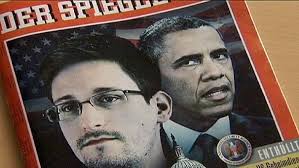
usspsyingThe U.S. National Security Agency has bugged the United Nations’ New York headquarters, Germany’s Der Spiegel weekly said on Sunday in a report on U.S. spying that could further strain relations between Washington and its allies.

Citing secret U.S. documents obtained by fugitive former intelligence contractor Edward Snowden, Der Spiegel said the files showed how the United States systematically spied on other states and institutions.

Der Spiegel said the European Union and the U.N.’s Vienna-based nuclear watchdog, the International Atomic Energy Agency (IAEA), were among those targeted by U.S. intelligence agents.

In the summer of 2012, NSA experts succeeded in getting into the U.N. video conferencing system and cracking its coding system, according one of the documents cited by Der Spiegel.

“The data traffic gives us internal video teleconferences of the United Nations (yay!),” Der Spiegel quoted one document as saying, adding that within three weeks the number of decoded communications rose to 458 from 12.

Internal files also show the NSA spied on the EU legation in New York after it moved to new rooms in autumn 2012. Among the documents copied by Snowden from NSA computers are plans of the EU mission, its IT infrastructure and servers.

According to the documents, the NSA runs a bugging program in more than 80 embassies and consulates worldwide called “Special Collection Service”. “The surveillance is intensive and well organized and has little or nothing to do with warding off terrorists,” wrote Der Spiegel.

OPEN LETTER

Snowden’s leaks have embarrassed the United States by exposing the global extent of its surveillance programs. Washington has said its spies operate within the law and that the leaks have damaged national security.

A week ago Britain, a staunch U.S. ally in the intelligence field, detained the partner of a Brazil-based journalist working for London’s Guardian newspaper who has led coverage of Snowden’s leaks. British police said documents seized from David Miranda were “highly sensitive” and could put lives at risk if disclosed.

The Guardian last week destroyed computer equipment containing Snowden files after it was threatened with possible legal action by senior British government advisers.

In an open letter to British Prime Minister David Cameron published on Sunday, editors of leading Nordic newspapers said Miranda’s detention and moves against the Guardian were “undermining the position of the free press throughout the world”.

“(We are) deeply concerned that a stout defender of democracy and free debate such as the United Kingdom uses anti-terror legislation in order to legalize what amounts to harassment of both the paper and individuals associated with it,” said the letter from Sweden’s Dagens Nyheter, Finland’s Helsingin Sanomat, Denmark’s Politiken and Norway’s Aftenposten.

Earlier this month, U.S. President Barack Obama announced plans to limit U.S. government surveillance programs, saying the United States could and should be more transparent.

The issue has also become a hot topic in Germany before an election next month. Some reports have suggested that German intelligence agents have cooperated with U.S. spies.

There could be a voter backlash if it emerges that Chancellor Angela Merkel, tipped to win a third term, knew more about such cooperation than she has so far acknowledged. – Reuters

German parliamentary report on neo-Nazi cell expected today

Beate Zschaepe
Beate Zschaepe

Germany’s decade-long failure to uncover a neo-Nazi cell blamed in the killings of immigrants was the fault of incompetence in the police and intelligence services, a commission of inquiry was expected to report Thursday.

Eight Turkish shopkeepers, a Greek man and a policewoman were shot to death in attacks in multiple cities from 2000 to 2007, but police only connected the crimes to the self-styled National Socialist Underground (NSU) four years after the last slaying.

The commission, made up of members of parliament, is to publish its findings after a year and a half of hearings and is to recommend reforms.

Sebastian Edathy, an opposition Social Democrat who chaired the inquiry, said the committee determined that the most horrifying suspicion, that detectives or secret agents might have protected the gang of two men and one woman, was unfounded.

“We did not find any evidence whatsoever that the authorities knew who was behind the crimes or looked the other way or even deliberately helped the perpetrators,” Edathy said. “We followed up every clue.”

Instead, the committee was expected to attribute the failure to across-the-board incompetence by about three dozen squabbling investigative agencies.

“This was a failure by the authorities without historical parallel,” Edathy said.

“November 4, 2011, when the trio was discovered was to us what September 11, 2001, was to the Americans,” he said. “It was the day we realized that our complete security architecture in Germany was not attuned to things like far-right terrorism.”

Germany monitors the wider neo-Nazi movement, which numbers about 5,000, and pays insiders to be informers but overlooked the cell.

The 1,000-page report was expected to conclude that police and agents failed to follow up clues, such as sightings of the neo-Nazis; worked under false assumptions because of institutional racism; and refused to share data with one another because of turf wars.

A parliamentary debate on the report was scheduled September 2.

The two accused gunmen died in a killing-cum-suicide before they could be caught. A judicial finding of their responsibility in the crimes was expected at the end of the current trial of Beate Zschape, the female survivor of the trio. She is charged as an accomplice to murder. – dpa

Fighting on the streets in Germany over refugees

Members of the Pro Deutschland group at a similar protest a year ago

German police kept angry rival protesters apart Wednesday during a third day of demonstrations in suburban Berlin over a new shelter for asylum seekers.

The conflict on the streets over a recent upsurge in refugee arrivals has spilled into violence this week. However Germany’s government rejected a call to summon state leaders for crisis talks about how to handle a recent upsurge in arrivals.

On Tuesday evening, the far-right National Democratic Party (NPD) demonstrated near the newly opened shelter, a four-storey former school in a housing estate built in Hellersdorf, east of Berlin.

Leftist counter-demonstrators then blocked a tramline nearby. During a melee between them and police, one officer’s cheekbone was broken by a hurled bottle. City police said they made 25 arrests.

Pro Deutschland, an anti-Islam group that has previously demonstrated against mosques, held a protest about 1 kilometre from the site, but there was no violence. Police fielded 300 officers.

With a general election on September 22, mainstream parties are wary of the deep divisions on the issue of refugees. Far rightists want to expel foreigners, whereas many liberals favour friendly immigration laws.

Most refugees in Germany enter without documents and apply for asylum after arrival. There has been a sharp rise this year in arrivals because of the conflicts in Syria and Afghanistan.

Wolfgang Bosbach, a conservative in Chancellor Angela Merkel’s Christian Democratic Union, urged local, state and national leaders to hold crisis talks, warning that extremists would exploit the issue.

“The government is aware that the increase in the numbers of refugees is posing a major challenge for the states and the regions,” an Interior Ministry spokesman said. “We are working closely together with them and therefore see no need for a crisis meeting.”

He said 5,000 approved refugees from the Syrian conflict would begin arriving at the end of August or early September under a relief plan. Nearly 12,000 other Syrians had reached Germany and applied for

asylum.

“We take the concerns of people about the refugee situation seriously,” he said.

The 200-bed overflow hostel at Hellersdorf has been set up in a low-income area of the capital where divisions run deep. Hellersdorf is an area of apartment blocks built by the communist authorities.

In the 23 years since reunification, attacks on foreigners have been especially common in the former communist east, where unemployment is high and populists accuse immigrants of taking away jobs.

Germany allocates asylum seekers to hostels across the country while their applications are processed. They are not allowed to work.

On Monday, the first 42 residents arrived at the shabby overflow hostel at Hellersdorf. A pro-refugee Berlin group said six people moved out again in fear for their safety. – dpa

Fight right-wing extremism, Merkel urges

Angela Merkel
Angela Merkel

Europe must fight right-wing ideas and movements to protect its democracy, German Chancellor Angela Merkel said Saturday as she prepared to visit a Nazi concentration camp next week.

“We must never accept that such lines of thought have a place in our democratic Europe,” she said in her weekly video podcast.

Merkel plans Tuesday to visit the Dachau concentration camp outside Munich. She described herself as moved that a survivor of the camp, Max Mannheimer, the chairman of the committee of former Dachau prisoners, had invited her.

She is travelling there with a “feeling of shame and shock,” she said, “because what happened in the concentration camps is and remains unfathomable.”

“We know that today we live in a democracy, but we also know that this democracy is always at risk,” she warned.

She called it “mortifying,” for example, that Jewish establishments in Germany must stay under police watch “because otherwise we must always worry that they will be desecrated.”

The government and large parts of society take the danger posed by right-wing extremism seriously, Merkel said.

Germany has established clear punishments through its legal system as well as programmes for those who want to leave right-wing movements, she said. All people are also urged to be aware that the rewriting of history and bogus slogans have no room in German society, she said.

“Civil courage is also part of society here, so that such ideas have absolutely no chance of spreading,” she said. – dpa

German email providers to protect customers from US cybersnooping

hacking_for_password_smallerGermany’s three biggest email providers announced Friday a partnership to bolster the security of messages sent between them in the wake of revelations of US online surveillance.

Telecommunications giant Deutsche Telekom as well as GMX and Web.de, both subsidiaries of Germany’s United Internet, will automatically encrypt their email traffic from now on.

Email content as well as the identity of the sender and recipient and attachments will be encrypted, Deutsche Telekom and United Internet told reporters, presenting the “Email Made in Germany” initiative.

The email services of t-online.de, web.de and gmx.de represent two-thirds of private email accounts used in Germany, or more than 50 million email addresses, according to the companies.

Deutsche Telekom chief executive Rene Obermann said the leak, which detailed the US National Security Agency’s gathering of vast amounts of phone call logs and Internet data, had “deeply unsettled” users.

He said talks with other email providers aimed at widening the alliance have already taken place. – AFP

Japan’s Aso won’t quit over Nazi comment

Taro Aso
Taro Aso

Japan’s Finance Minister Taro Aso refused on Friday to resign or apologise over remarks suggesting Japan should follow the Nazi example of how to change the country’s constitution stealthily and without public debate.

The ruling Liberal Democrats want to revise the US-inspired postwar constitution, in part to allow a higher profile for Japan’s military.

Following protests by neighbouring countries and human rights activists, he “retracted” the comments on Thursday but refused to go further.

“I have no intention to step down” as Cabinet minister of lawmaker, Aso, who is also the deputy prime minister, told reporters. The government also said it is not seeking Aso’s resignation, which some opposition members have demanded.

Aso, who is known for intemperate remarks, drew outrage for saying Japan should learn from how the Nazi party stealthily changed Germany’s pre-World War II constitution before anyone realised it. He also suggested that Japanese politicians should make visit Tokyo’s Yasukuni war shrine quietly to avoid controversy. Such visits currently take place amid wide publicity and are a sore point for Southeast Asian nations, who suffered under Japanese occupation during World War II.

Aso said on Thursday he was misunderstood and only meant to say that loud debate over whether Japan should change its postwar constitution, and other issues is not helpful.

In retracting his comments, he said it was “very unfortunate and regrettable” that his comments were misinterpreted.

On Friday, Aso said he stands by all his other remarks in the speech made earlier this week in Tokyo to an ultra-conservative audience.

Japan and Nazi Germany were allies in World War II, when Japan occupied much of Asia and Germany much of Europe, where the racial supremacist Nazis oversaw the killings of an estimated 6 million Jews before the war ended in 1945 with their defeat. Japan’s history of military aggression, which included colonising the Korean Peninsula before the war, is the reason its current constitution limits the role of the military.

According to a transcript of the speech published by the newspaper Asahi Shimbun, Aso decried the lack of support for revising Japan’s pacifist constitution among older Japanese, saying the Liberal Democrats had held quiet, extensive discussions about its proposals.

“I don’t want to see this done in the midst of an uproar,” Aso said, according to the transcript. Since revisions of the constitution may raise protests, “doing it quietly, just as in one day the Weimar constitution changed to the Nazi constitution, without anyone realising it, why don’t we learn from that sort of tactic?”

He has apologised previously for accusing the elderly of being a burden on society, joking about people with Alzheimer’s disease, saying the ideal country would be one that attracts “the richest Jewish people”, and comparing the opposition Democratic Party of Japan to the Nazis.

On Thursday, Aso insisted that he was referring to the Nazis “as a bad example of a constitutional revision that was made without national understanding or discussion …I just don’t want [the revision] to be decided amid a ruckus”. – AP

French ban on Mercedes angers Germans

mercedesA ban by France’s socialist government on the registration of several top-end Mercedes-Benz models has infuriated the German luxury carmaker and forced Brussels to step in to try to defuse the growing dispute.
Sales of thousands of the most prestigious Mercedes cars have been halted in France since Paris last month refused to allow the registration of four new models that include a refrigerant in their air-conditioning systems that has been banned by the EU on environmental grounds.

The issue escalated late last week when the government invoked an EU “safeguard procedure”, allowing it to act unilaterally to prevent a serious risk to road safety, the environment or public health. It acted after a French court had ordered a 10-day stay of execution for Daimler while the registration block was reviewed.

“The registration of Daimler/Mercedes vehicles classes A, B, CLA and SL remain banned in France as long as the company does not conform to active European regulation,” the environment ministry said.

Daimler said the French decision – Paris is to date the only EU country to issue a ban – was “absolutely inexplicable” and added it would take further legal action as a result.

Officials in Brussels said on Monday they were consulting with Berlin and Paris on the issue and would bring the two sides together in September in a bid to resolve it.

The dispute has highlighted the marked contrast between the state of the car industry in the two countries. PSA Peugeot Citroën, and to a lesser extent Renault, have suffered heavily from a big slump in demand for their mainly small and medium-sized cars.

Daimler, BMW and Volkswagen have, meanwhile, surged ahead, profiting from their premium models that have proved highly popular in emerging markets. France was riled last month when Angela Merkel, the German chancellor, blocked an EU move to impose tougher curbs on auto emissions that would have hit German makers of big cars.

The Mercedes issue revolves around an air-conditioning coolant called R134a which the EU outlawed from January. Daimler argues that the replacement coolant is dangerously flammable.

Jean-Claude Bernard, head of the Association of Mercedes-Benz dealers in France, said the action was politically motivated “to please the greens and damage a German manufacturer”.

The coolant is used in 95 per cent of cars in France with air conditioning.

The association wrote to the environment minister complaining that 11,000 jobs were at stake and demanding an end to the ban. – FT

Why Germans hate the Stasi state

germanmarshallfundBy Constanze Stelzenmüller.

Ah, German hypocrisy! During the cold war, you marched waving “Ami, Go Home” placards, but still let us protect you against the Soviets. Now you moan self-righteously about the National Security Agency and GCHQ reading your emails and listening to your mobile phone. You don’t acknowledge that – unlike the US or the UK – you have had no domestic terror attack in the past 10 years. That’s because we gave you information to prevent them; guess where we got it? Anyway, your Federal Intelligence Service snoops as much as it can. Except it can’t do that much. Whereas we – oh yes, we scan! Could it be that you’re jealous?

That about sums up the American and British response to the uproar about alleged US and UK spying activities in Germany revealed by the whistleblower Edward Snowden.

Sorry, friends: things are not that simple. This topic touches on historical sensitivities here. Our grandparents’ generation feared the early-morning knock of the Gestapo. During the cold war, West and East Germans alike were aware that their divided country was crawling with spooks of all denominations. We recognised that mutually assured espionage helped prop up the bipolar balance of power. (It also made for some superb spy thrillers.) Still, no one misses the sombre paranoia, reinforced in and after the 1970s by the ramping up of West Germany’s domestic intelligence services in response to homegrown terrorism.

Germans who were born east of the Berlin Wall were careful to give the organs of the Staatssicherheit a wide berth. But it was only after the fall of the Wall in 1989, when the citizens who had brought down their government stormed the secret police’s headquarters and realised the full horror of the web woven by the Stasi: neighbours spying on neighbours; husbands spying on wives. Joachim Gauck, our current president, was the first head of the Stasi Archives, the government agency that, 20 years on, continues to painstakingly piece together a full record of East Germany’s surveillance of its citizens.

Yes, we Germans have better cause than many of our allies to abhor the secret state. It’s why we don’t like closed-circuit television cameras. It’s also why our constitutional court enshrined a fundamental right of data privacy, and declared it illegal for Germany to implement an EU directive on preventive data storage.

That said, we understand that our liberal societies have enemies – and we need some surveillance to protect ourselves and preserve our way of life. We remember that some of the September 11 attackers were based in Hamburg. Like you, we’ve done a lot since then to improve our domestic intelligence capabilities. We haven’t heard many complaints about our ability to co-operate, whether in Europe or in Afghanistan. And, fair enough, this story has become fodder for an opposition desperate to unseat a seemingly unbeatable chancellor.

Rattled at first, Angela Merkel snapped: “Friends don’t treat each other like this.” Now, with her standing in the polls unharmed, Ms Merkel is calling for an EU-wide data privacy initiative.

The truth of Mr Snowden’s allegations has yet to be proved; they remain disturbing. Germany a target on the level of Iraq and Afghanistan? 500m intercepts a month? Embassies and EU representations bugged? You could try harder to dispel our misgivings. For all we know, no abuse of power was involved. But it is surely clear the intelligence services wield an excess of power. And, as we know, “power corrupts; and absolute power corrupts absolutely”.

It is not always easy to understand where our British friends draw the line between freedom and security. But it was Barack Obama who vowed on May 23 to end the war on terror, quoting James Madison: “No nation can preserve its freedom in the midst of perpetual warfare.”

Tell us about it. The phrase “perpetual warfare” reminds Germans that the most influential theorist of war without end – and of an untrammelled executive – was Carl Schmitt, Hitler’s lawyer-in-chief. It’s time for all of us to turn back the tide of executive power.

The writer is a senior transatlantic fellow with the German Marshall Fund. Her article appeared in the Financial Times