St. Andrew’s flag flies over Scotland and Donetsk

By Dmirti Minin.

That’s the way the history goes. The St. Andrew’s flag is flown in two places in Europe situated at great distance from each other. Scotland and Novorossia are struggling for their national identity under the same colors. The two peoples divided by different history and cultures are addressing the issue of independence. They are going different ways; a peaceful referendum is to take place in Scotland while Novorossia is going through the horrors of civil war. But they are united by the same goal and its symbol – the St. Andrew flag.

The New Testament states that Andrew the Apostle was born in the village of Bethsaida on the Sea of Galilee. He was a fisherman by trade to become the first disciple to follow Jesus. The church history says Andrew preached in Scythia, along the Black Sea, including Crimea and the Dnieper River as far as Kiev and from there he traveled to Novgorod. Hence, he became a patron saint of Ukraine, Romania and Russia. According to tradition, he founded the See of Byzantium (Constantinople) in AD 38. Since then Andrew was recognized as Russia’s patron saint. Andrew is said to have been martyred by crucifixion at the city of Patras (Patræ) in Achaea, on the northern coast of the Peloponnese.

The St. Andrew flag was the ensign of the Navy of the Russian Empire from 1712 to 1918. It was first hoisted in 1712 to be formally adopted as Navy Ensign in 1720. From 1692 to 1712 Peter I personally drew eight flags projects that have consistently been taken into the Navy. Here is the description of the flag’s final version by Peter I: «The flag is white, across it there is a blue St. Andrew’s cross, whom he baptized Russia». After the Russian Revolution, the Russian Navy Ensign was changed to be reintroduced in the Russian Navy in 1992, and is still used today. Novorossia made St. Andrew its flag in May 2014 adding some red field to it. It emphasized the important role of the Navy in adding these lands to Russia and the association with the Great Victory Banner. It also symbolizes the unity of Russian people. The current flag of the Federal State of Novorossia was adopted on August 13, 2014. It resembles the Romanov flag, the national flag of the Russian Empire from 1858 to 1883. Formally the St. Andrew flag now is a symbol of Novorossia’s self-defence forces. But the changes have not taken root. The people of Novorossia, civilians and fighters, maintain their allegiance to the St. Andrew’s flag.

First the Saint Andrew’s Cross or the Saltire, the flag of Scotland, also known as the national flag of the country. But then it was the white cross on a blue field. According to legend, Saint Andrew, the patron saint of Scotland, was crucified on an X-shaped cross at Patras (Patrae), in Achaea. According to legend, in 832 A.D. Óengus II led an army of Picts and Scots into battle against the Angles, led by Athelstan, near modern-day Athelstaneford, East Lothian. The legend states that whilst engaged in prayer on the eve of battle, Óengus vowed that if granted victory he would appoint Saint Andrew as the Patron Saint of Scotland; Andrew then appeared to Óengus that night in a dream and assured him of victory. On the morning of battle white clouds forming the shape of an X were said to have appeared in the sky. Óengus and his combined force, emboldened by this apparent divine intervention, took to the field and despite being inferior in terms of numbers were victorious. Having interpreted the cloud phenomenon as representing the crux decussata upon which Saint Andrew was crucified, Óengus honoured his pre-battle pledge and duly appointed Saint Andrew as the Patron Saint of Scotland. The white saltire set against a celestial blue background is said to have been adopted as the design of the flag of Scotland on the basis of this legend. The St. Andrew’s flag has been a symbol of opposing the aggressive Anglo-Saxon civilization in the lands stretching from the North Sea shore to the Black Sea region.

By signing the Acts of Union in 1707 Scotland ultimately lost its independence but preserved its soul. On September 18 an independence referendum is held and people may say «Yes». London makes a lot of promises to cozy up to Scottish voters. It goes to any length just to make them remain part of the United Kingdom. But even if the majority says ‘No» at the referendum, the time is on the side of those who advocate Scotland’s independence.

Saying «Yes» by the voters will inspire the people of Donetsk and Lugansk. They will welcome the outcome and ask – why should we be refused the rights that other peoples have, are we different, do our children cry in some other way?

When London agreed to the referendum, the idea of independence was supported by no more than 30%. The changes in public sentiments were neither expected, nor predicted. If it were different, perhaps the English would have done their best to prevent the event. What made influence the public opinion in such a short period of time? Has the drama of other European people making sacrifices for the ideas symbolized by the St. Andrew’s flag impacted their mindset? The link between the events in Scotland and Novorossia is only symbolic. Backed up by powerful Washington London is directly involved in activities aimed at quelling the expression of people’s free will in Novorossia. By doing so it kind of lets the Scots know that, if not the circumstances, they could be treated the same way. It only spurs the pro-independence feelings. Actually there is no difference between the happenings in Scotland and Novorossia from a legal point of view.

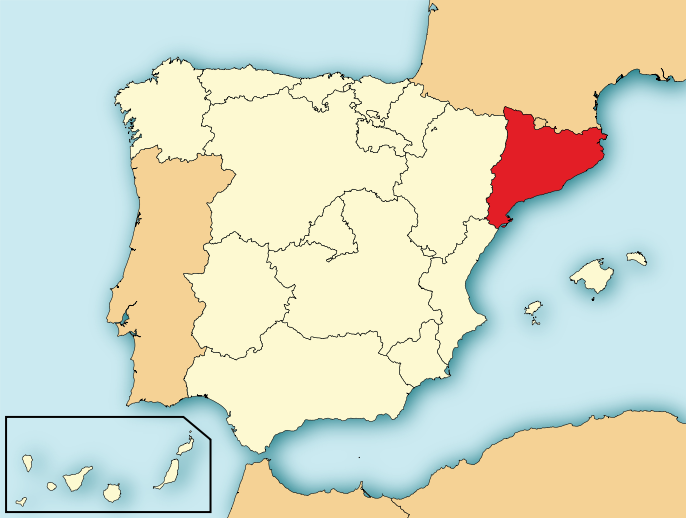
In fact, the only formal argument against the self-determination of Novorossia is that the referendum is held in agreement with London while the referendum in Novorossia took place without Kiev’s consent. The Spanish diplomacy tries to take advantage of this fact as the referendum on Catalonia’s independence is slated for November 9. The Spanish government never gave its agreement on organizing the event and never said it would recognize its results. In Madrid they say the Catalonian vote should be treated the same way as the plebiscites in Crimea and Novorossia with no recognition of referendum results to follow. But if Scotland votes for independence nothing will stop the Catalonians on the way to self-determination. The stubbornness of Madrid may lead to the repetition of the events in Ukraine. The attempt to substitute the rights of people with the rights of governments challenges the international law and may lead to new conflicts.

The energy of the collapse that hit the USSR and East Europe in the late 1980s – early 1990 was, to large extent, stimulated by London to backlash today. The West started to talk about the boomerang effect of re-Balkanization. Scotland is just a start. Wales and Northern Ireland may follow. It’s an irony of fate that Donetsk was founded by John James Hughes, a Welsh engineer and businessman. This is one more historic event linking Donetsk with Great Britain and its people.

The chain reaction is to move far beyond the UK’s borders. In Europe the leaders of political movements struggling for autonomy status or independence are closely watching the event. Perhaps Catalonia in Spain and Flandria in Belgium are next. The support of Western capitals for the Kiev repressions does not scare them; to the contrary it makes them more adamant on achieving the aspired goal. The logic is simple: the national issue should be tackled before they are treated the same way as in Ukraine.

The European Union will not avoid the crisis of identity. George Robertson, former NATO Secretary General (1999-2003) who is a Scot by origin, said, «A dangerous historic event might soon be upon us — with few people outside the U.K. even noticing». According to him, if the separatist government gets its way in a referendum planned for September 18, the 300-year-old union of Scotland, England, Wales and Northern Ireland — the United States’ oldest and closest ally — will be on the road to disintegration. The rest of the country will hold a referendum on the European Union membership. There is a great chance the advocates of leaving the Union will win as Scotland is largely pro-EU. The Eurosceptics will strengthen their position in all countries. The window of opportunity for the states striving for the European Union membership to save their feeble economies will probably be closed. And the Ukraine’s prospects for European integration, which are dim enough anyway, will vanish in the hays.

Scots spur separatists

For Kurt Ryon, the mayor of Steenokkerzeel, a Flemish village 10 miles northeast of Brussels, watching the Scottish independence campaign in the final days before the referendum is like watching a good soccer match. “They were losing for the first half and most of the second half,” he said, “but now we’re in the 85th minute and they could be winning.”

Mr. Ryon, who wants his native Flanders to split from Belgium, is rooting for Scotland to do the same from Britain, and like a faithful soccer fan he has all the gear: a T-shirt from the Scottish pro-independence “yes” campaign, a collection of “yes” pins on his denim jacket and copious amounts of a beer specially brewed by Flemish nationalists to express their solidarity. The label says “Ja!” next to a Scottish flag, Flemish for yes.

From Catalonia to Kurdistan to Quebec, nationalist and separatist movements in Europe and beyond are watching the Scottish independence referendum closely — sometimes more so than Britons themselves, who seem to have only just woken up to the possibility that Scotland might vote next Thursday to bring to an end a 307-year union. A curious collection of left and right, rich and poor, marginal and mainstream, these movements are united in the hope that their shared ambition for more self-determination will get a lift from an independent Scotland.

In the Basque Country, an autonomous community in northern Spain, the leader of the governing nationalist party has been known to dress up in a kilt and jokes that Basques would rather be part of an independent Scotland than remain part of Spain, which has ruled out any kind of vote. In Veneto, a region of northern Italy, nationalists have held a Scottish-inspired online referendum and now claim that nine in 10 inhabitants want autonomy.

Busloads of Catalans, South Tiroleans, Corsicans, Bretons, Frisians and “Finland-Swedes” are headed for Scotland to witness the vote. Even Bavaria (which calls itself “Europe’s seventh-largest economy”) is sending a delegation.

“It would create a very important precedent,” said Naif Bezwan of Mardin Artuklu University in the Kurdish part of Turkey. Across the Iraqi border (“the Kurdish-Kurdish border,” as Mr. Bezwan puts it), where a confluence of war, oil disputes and political turmoil has renewed the debate about secession, Kurds pine for the opportunity of a Scottish-style breakup.

“Everyone here is watching,” said Hemin Lihony, the web manager at Rudaw, Kurdistan’s largest news organization, based in Erbil, Iraq.

History offers few examples of nations splitting up in a consensual way. The velvet divorce between the Czechs and the Slovaks in 1993 is one, the Norwegian referendum on independence from Sweden in 1905 another. But mostly, nation states go to war over their borders.

The United States fought a civil war to preserve the union. Turkey fought Kurdish nationalists for decades and still denies them the right to Kurdish-language education. Kosovo declared its independence from Serbia only after a war in the 1990s.

President Vladimir V. Putin of Russia, who annexed Crimea after a stealth invasion and a referendum there, and who has been accused of aggressively aiding separatists in eastern Ukraine, has happily supported Scotland’s independence bid. But his attachment to self-determination is selective: In the Russian republics of Chechnya and Dagestan, he has deployed savage force to crush Muslim separatists.

In some cases, the referendum in Scotland is fueling new hopes, however improbable, among separatist fringe groups. When the president of the Texas Nationalist Movement, Daniel Miller, was invited to the University of Stirling in Scotland this year, he said the Scots were paving the way for an independent Texas. In others, the vote is re-energizing debates with considerable geopolitical importance.

In Taiwan, which China claims as part of its territory even though Taiwan is effectively independent with its own currency, military and democratically elected government, some hope a Scottish “yes” vote could prompt a more careful deliberation over the island’s future.

Wang Dan, a student leader in the 1989 Tiananmen Square protests, wrote in a recent column for Taiwan’s Apple Daily, “If the Scottish vote succeeds, it will be worth considering by those who advocate deciding Taiwan’s status through a referendum.”

But it is in Europe that a Scottish “yes” vote would probably create the largest ripples.

It would be the first time that a member of the European Union faces secession by a region eager to become a member in its own right. If Scotland succeeds in negotiating its own membership in the bloc, it would suddenly make the prospect of independence seem safer and more attractive elsewhere in Europe, said George Robertson, a former secretary general of NATO.

“There is a serious risk of a domino effect,” said Mr. Robertson, himself a Scot and an opponent of independence. A “yes” vote, he warned, could trigger “the Balkanization of Europe.”

Nationalists, however, say that a bit of Balkanization may be just what Europe needs.

In the slightly dilapidated Brussels office of the European Free Alliance, which groups together 40 parties representing Europe’s “stateless nations,” a busy map shows what Europe would look like if they all became independent. François Alfonsi, the president of the alliance and a proud Corsican, admits that it would be messy, but “democracy is messy and democracy is what Europe needs.”

Across town, Mark Demesmaeker, a Flemish member of the European Parliament who has decorated his office with a Scottish flag and keeps a copy of the Scottish white paper on independence on his desk, speaks of “failed nation states.”

In his view, Britain has failed to give the Scots and Welsh proper representation in Parliament, and Spain has failed to deliver democracy to Catalans and Basques eager to have their own independence vote. Other nations, like France and Italy, have been mired in political and economic stagnation. Mr. Demesmaeker’s own country, Belgium, cannot even form a government. (Belgium had elections in May and is still deep in coalition talks; the last time it took 541 days.)

Pro-European national movements like his own, the New Flemish Alliance — now the biggest party not just in Flanders but in all of Belgium — are the best antidote to the far-right, anti-European and anti-immigrant nationalist movements that did so well in European elections earlier this year, he said.

“If Scotland votes ‘yes,’ it will be an eye-opener for many people on the street,” Mr. Demesmaeker said. “Most people think it’s our fate to be part of Belgium. But Flanders could be a prosperous nation. It’s a democratic evolution that is going on in different states of the European Union. Eventually we want Flanders to take its place in the E.U.”

If plenty of nationalists have pledged their solidarity with Scotland, the reverse has been less true. The Scottish referendum takes place just days before the regional government of Catalonia is expected to confirm that it will hold an independence vote of its own on Nov. 9, which would override legal and political objections from Madrid.

Alfred Bosch, a Catalan lawmaker, said his counterparts in Scotland had shown little interest in being associated with events in Catalonia.

The Scots “probably want to distance themselves from anything that they see as not as ripe and as mature as their own process,” Mr. Bosch said. “They don’t want to create any hostility from Spain or other countries that might also have pro-independence movements,” not least because those governments will have to recognize an independent Scotland and consider whether to allow it into the European Union.

Whatever the outcome of the referendum, many nationalists say Scotland has already won.

“They have the opportunity to decide their own future,” said Andoni Ortuzar, the president of the governing Basque Nationalist Party, who wore a kilt in the 2012 carnival to celebrate the announcement of a Scottish referendum that year. “That’s what national self-determination is,” he said. “That’s all we ask.”

Source: NYT

Independent Scotland would ditch the Queen

Some 63 per cent of voters called for a ballot on Scotland’s next head of state in the event of separation, with only 22 per cent saying the royals should be retained without question.

Scottish independence could lead to Scotland ditching the royal family and becoming a republic, according to constitutional experts.

Although the SNP has said that it wants the Queen as head of state, independence could lead to divided loyalties for the sovereign, experts said.

Stephen Haseler, director of the Global Policy Institute in London, said: “Alex Salmond has overcome the issue of the monarchy initially by saying ‘Look, we will keep the Queen’, but of course the Queen won’t be around for very long, and my absolute conviction is that once the Queen goes the Scots won’t wear Prince Charles, and they will go for a republican system within the European Union.”

The movement contains many republicans, particularly in the Scottish Green party and among the Scottish Socialists.

This majority view is shared by people who are intending to vote against independence, as well as by supporters of all political parties.

Although many voters would support the monarchy in any such referendum, the very fact that Scots clearly want a say on the issue will be deeply worrying for Buckingham Palace.

The Royal Family has been enjoying a surge in popularity recently, thanks to the public affection for the baby, George.

However, our poll shows that repeated demands for an independent Scotland to become a republic have obviously shaken confidence in the Windsors north of the Border.

First Minister Alex Salmond has insisted the Queen and her successors would automatically remain as heads of state if Scots vote for independence next year.

However, influential figures within both the SNP and the Yes Scotland campaign are in favour of holding another referendum on retaining the monarchy.

Yes Scotland chairman Dennis Canavan welcomed our shock poll results, which support his personal view.

He said: “I am pleased to see such widespread support for the sovereignty of the people. This poll shows that the majority of people agree with my earlier suggestion that the people should decide whether the monarchy should be retained.

“It is also very significant that my proposal has cross-party support, with a clear majority amongst Labour, SNP, Tory and Lib Dem voters.

“Some of the party politicians seem to be out of touch with their own voters on this issue and trivialise the debate by mouthing sycophantic platitudes about the Queen.

“The present monarch may be popular but any would-be successor should not simply inherit the job of head of state without some form of democratic vote.

“The sovereignty of the people is far more important than the sovereignty of any monarch and a hereditary head of state should have no place in a modern society based on democratic principles such as equal opportunities.”

The strongest support for a referendum on the monarchy comes from Labour voters – 72 per cent – and those who did not vote in the last Holyrood elections – 88 per cent.

The party’s spokesman for constitutional affairs, Drew Smith MSP, said: “Talk of further referendums should come after the Scottish people have had their say on independence.”

Source: The Express

Oz leader’s comments on Scotland ‘foolish, hypocritical, offensive’

Alex Salmond, the First Minister for Scotland, has said that comments by Tony Abbott, the Australian Prime Minster, that the world would not “be helped by an independent Scotland” are “foolish, hypocritical and offensive”.

Mr Abbott who is on a visit to London told the Times newspaper that it was “hard to see how the world would be helped by an independent Scotland.”

“I think the people who would like to see the break-up of the United Kingdom are not the friends of justice, the friends of freedom, and the countries that cheer at the prospect are not the countries whose company one would like to keep,” he said.

Scottish voters will go to the polls on 18 September and will be asked the question “Should Scotland be an independent country?”

Alex Salmond jumped on Mr. Abbotts’ comments and told BBC Scotland they were hypocritical and “offensive to the Scottish people” considering the benefits Australia has got since becoming independent from Britain after the Second World War.

“They are foolish, actually, because of the way he said it. To say the people of Scotland who supported independence weren’t friends of freedom or justice, I mean, the independence process is about freedom and justice,” he said.

He added that even the British government could recognize the need for a democratic vote on the issue and that the referendum was a “model of democratic conduct”.

The Scottish premiere also said that Abbott was gaffe prone and had put his foot in it, with his comments.

One of his previous gaffes involved referring to Canada as Canadia during a press conference with Canadian Prime Minister Stephen Harper in Ottawa in June.

Source: RT

Enemies of West will cheer Scottish independence – Oz PM

The Prime Minister of Australia, Tony Abbott, has warned that Scottish independence would be “cheered” by the enemies of the West in the most outspoken foreign attack in the campaign so far.

“As a friend of Britain, as an observer from afar, it’s hard to see how the world would be helped by an independent Scotland,” Abbott said in an exclusive interview for The Times, London.

“I think that the people who would like to see the break-up of the United Kingdom are not the friends of justice, not the friends of freedom, and that the countries that would cheer at the prospect of the break-up with the United
Kingdom are not the countries whose company one would like to keep,” Abbott added.

“Independence seems to be working well for Australia,” responded Gail Lythgoe, a spokeswoman for the official pro-independence campaign, Yes Scotland. “The decision about Scotland’s future is one for the people of Scotland to make – a point that even UK Prime Minister David Cameron asserts,” Lythgoe said.

“After a Yes vote, Scotland will take her place as a normal and valued member of the international community – just as Australia did when she gained independence at the turn of the century.”

Abbott, who spent two years at Oxford University, is no stranger to controversy and has previously insulted native Australian aborigines, housewives and immigrants despite the fact he moved to the country himself as a child.

Abbott’s comments on Scottish independence follow those by US President Barack Obama and Chinese Premier Li Keqiang, who both gave veiled support for the continuation of the United Kingdom as a whole following approaches from Downing Street. But the Australian Prime Minister’s comments represent the most explicit rejection of Scottish independence yet made by an international leader.

Scots will go to the polls on September 18, and will be asked one question, “Should Scotland become an independent country?”

Source: RIA Novosti

Catalan president defies Spanish premier to his face

Catalan President Artur Mas has pledged to go ahead with the region’s independence vote, defying the Spanish Prime Minister in person. Madrid has branded the referendum as “illegal” and resolved to block the Catalan bid to separate from Spain.

Mas met with Spanish Prime Minister Mariano Rajoy on Wednesday in their first encounter in over a year.

“We have the determination and the political strength, but we would like to hold [the vote] in a legal manner and with the backing of the state,” said Mas following the meeting, referring to Scotland’s upcoming independence vote in September.

Mas said it was impossible to hold a legal consultation because Rajoy refused to budge on his stance the Catalan vote is a violation of Spanish sovereignty and therefore illegal.

“I thought that Rajoy was going to propose something concrete. I came prepared to listen, but there was no proposal,” said Mas, adding that he believed Madrid’s stance was more to do with politics than the actual legality of the independence vote.

Rajoy has been unmoving in his dialogue over the Catalan vote from the very beginning, and has resolved to block the referendum. Alicia Sanchez-Camacho, president of Rajoy’s party in Catalonia, said the vote would be a violation of Spanish law.

There has been growing resentment in the region that their taxes are being redistributing to other parts of the country and 45 percent of Catalans believe the region would be better off on its own, according to an April poll.

Catalonia is not the only region of Spain campaigning for independence. The long-rebellious Basque country has also called for a referendum to decide on their future in Spain. In late May, Basque lawmakers adopted a declaration of self-determination to follow on the footsteps of Catalonia.

Last month, at least 100,000 Basque citizens formed a human chain measuring 123 kilometers in solidarity with the Basque independence movement.

‘Scotland to become wealthier than UK after independence’

scotlandWhile Alex Salmond encourages his compatriots to vote “Yes” for Scottish independence, painting a picture of the bright prospects of “sustainable prosperity” across the whole country, skeptics have several questions for the First Minister. They want to know about the future nation’s currency, pensions, and funding for schools and hospitals if Scotland was to leave the UK.

According to Alex Salmond, Scotland will become independent “in more promising circumstances than virtually any nation in history,” the Scotsman reports. “We would be among the wealthiest nations in the OECD. Scotland would be 14th on the list, with the UK at 18th. Seven out of the ten wealthiest countries in the developed world have populations similar to, or smaller than, Scotland,” says the First Minister.

“Scotland has contributed more in taxes, per person, than the rest of the UK for every single one of the last 33 years. Over the past five years our public finances have been healthier than the UK’s by £8.3 billion ($13,96 billion), that’s nearly £1,600 ($2,690) per person,” Alex Salmond explains. He believes that Scotland possesses an “extraordinary potential” in such spheres as engineering, life sciences and energy, stressing that independence will help Scotland create a competitive and fair modern economy.

There are skeptics, however, who do not share Mr. Salmond’s optimistic position. Scottish Labour MSP, Jackie Baillie claims that the First Minister’s independence project lacks realism and pragmatism:
“Maybe if the First Minister had credible answers about what would replace the pound, how our pensions would be paid and what would happen to the funding for our schools and hospitals if we left the UK, his campaign wouldn’t be trailing so badly in the polls,” she said, cited by the Scotsman.

“As part of the UK we can have the best of both worlds; a strong Scottish Parliament, with the guarantee of more powers, backed up by the strength, security, and stability of being part of the larger UK. Only separation puts that at risk,” Jackie Baillie added.

Source: Voice of Russia

Venetian nationalists accused of ‘terror’

Luca Zaia
Luca Zaia

Italian police on Wednesday arrested 24 people involved in a campaign to demand independence for Venice and its surrounding region and seized a tractor that they said the activists had tried to convert into a sort of tank.

The surprise arrests came just two weeks after activists held an online vote calling for the Veneto region, which encompasses the lagoon city, to break away from the rest of Italy and declare itself the “Repubblica Veneta”.

The authorities accused the 24 separatists of being involved in “terrorism”, “fabrication of weapons of war” and “subversion of the democratic order”.

The activists were part of a “secessionist group that was planning various initiatives, some of them violent, aimed at pushing for the independence of Veneto and other parts of the national territory of the Italian State,” the paramilitary Carabinieri said.

The activists were allegedly planning to use the “tank”, which was armed with a makeshift cannon, to stage a protest in Venice’s St Mark’s Square, 17 years after a similar stunt in which Veneto separatists drove a home-made armoured car into the famous square.

Police claim the makeshift tank was in good working order and was capable of firing projectiles from its barrel.

Those arrested included Franco Rocchetta, a former MP and the founder of the Liga Veneta, or Veneto League, one of several separatist movements calling for independence for the affluent north-eastern region.

In last month’s unofficial referendum, organisers claimed that 56 per cent of registered voters in the region cast a vote online and that an overwhelming majority supported secession from Italy.

They said that out of a total 2.36 million votes cast, 2.1 million voted for independence.

The drive for independence is supported by Veneto’s most powerful politician, Luca Zaia, who is president of the region and a member of the separatist Northern League.

Mr Zaia leads a regional assembly which is debating holding an official referendum on the issue, just as Scotland secured the right to hold September’s vote on seceding from the UK. He says there are powerful economic and cultural reasons for Veneto to strive for independence.

Venetians and the people of surrounding cities such as Padova and Vicenza deeply resent the fact that each year Rome takes 20 billion euros of their tax revenue.

They feel that the money is squandered on corrupt and dysfunctional parts of Italy, particularly in the crime-ridden south.

Source: The Telegraph

Spanish Concourt rules Catalonia referendum unconstitutional

cataloniaSpain’s Constitutional Court has ruled that a referendum in Catalonia on independence from the rest of the country would violate the law, saying that regions within Spain “cannot unilaterally call a referendum on self-determination.”

According to a summary of the ruling, any “right to decide” their future by Catalans has to be in accordance with Spain’s 1978 constitution, which stipulates Spanish unity.

The Constitutional Court ruled “unconstitutional and null” a declaration by the regional parliament in Barcelona which claimed that Catalonia has the right of self-determination.

Kingdom of Spain Constitutional Court of Justice Building (AFP Photo / Dominique Faget)Kingdom of Spain Constitutional Court of Justice Building (AFP Photo / Dominique Faget)

The fate of the region rests on the power struggle between Catalan President Artur Mas who had promised a referendum on independence from Spain on November 9 and the Spanish Prime Minister Mariano Rajoy who insists that such a vote would be illegal.

“No one can unilaterally deprive the entire Spanish people of the right to decide on their future,” Rajoy told the national parliament last month insisting that the referendum “can’t take place.”

Rajoy remains certain that Catalonia cannot be compared to Scotland’s aspiration of succession from the UK, because the Spanish written constitution, unlike British, rules out such a move.

But in Catalonia, March’s public opinion poll showed that 59.6 percent of the population want independence from the rest of Spain and want their region to become a “new state of Europe.”

Catalonia, an autonomous community with a population of 7.5 million is responsible for around one-fifth of the country’s GDP and one-quarter of its taxes. Public sentiment believes that the region will be much better off financially if they secede from Madrid.

The situation is aggravated by the economic crisis, which is forcing the Spanish government to adopt painful austerity policies.

In January the Catalan Parliament voted to send a petition to the national legislature seeking the power to hold the vote. That initiative is still in the process. If successful the referendum in Catalonia will be a month after a similar vote in Scotland, which is slated for September 2014.

Source: RT

Scottish independence to derail 2015 election?

scottFears grow in Britain of a “constitutional crisis” which would put the election in doubt, as legal expert warns that Scottish independence could bring down the next government

The 2015 general election will be thrown into turmoil if Scotland votes for independence in September’s referendum, according to government legal advice.

An election is scheduled to be held on May 7 next year but by then Scotland could already be preparing to separate from the rest of the United Kingdom.

The leading lawyer who wrote the Westminster government’s legal advice on Scottish independence is now warning that a “Yes” vote in the referendum would have major ramifications for the election, and could destabilise the next British government.

Cabinet ministers fear that if Alex Salmond’s independence campaign succeeds, the general election would be in grave doubt, plunging Britain into an unprecedented “constitutional crisis”.

In a memorandum for the House of Lords, Professor Alan Boyle, a specialist in international law at Edinburgh University, outlined two options for the election if Scotland chooses independence on September 18.

Source: The Telegraph

Quebec separatists stand to gain

quebecCanada is bracing for another fight with Quebec separatists.

Premier Pauline Marois today called an election for April 7 as she met Lieutenant-Governor Pierre Duchesne to ask him to dissolve the provincial legislature. Polls show Marois’ separatist Parti Quebecois may have enough support to form its first majority government in more than a decade.

“Today, I have summoned my ministers and we have taken the necessary steps to dissolve the National Assembly and call an election,” Marois said in televised remarks in Quebec City. “It’s now up to you, Quebeckers, to decide.”

A majority would set the stage in the French-speaking province for a possible referendum on secession from the rest of Canada, roiling credit markets and threatening to push the Canadian dollar lower.

“If they get a majority, I fully expect they will hold a referendum during their next mandate,” said Harold Chorney, a political science professor at Concordia University in Montreal. “Marois isn’t going to give up sovereignty.”

A majority victory for the Parti Quebecois would mark the third time since the mid-1970s the party has taken sole control of the province’s legislature, propelling Quebec into another confrontation with the rest of Canada that a former premier once likened to a never-ending visit to the dentist.

Quebec has held two plebiscites on splitting from Canada — in 1980 and 1995 — under previous Parti Quebecois majority governments. The party will hold a third vote if a victory is in sight, Jean-François Lisée, Quebec’s international relations minister, told ICI Radio-Canada television March 1. The separatists came within 0.6 of a percentage point of gaining majority support in the 1995 referendum, but support for the cause has been stalled in the 30 percent range in recent years.

One advantage the separatists may seek to exploit is the federal Conservatives’ lack of representation and low support in the province, where the party holds five of 75 districts. The Conservatives are in fourth place in support in Quebec, polling about 9.4 percent support in the province, according to a four- week rolling survey by Nanos Research of 208 Quebeckers that ended Feb. 15.

It’s a vulnerability for Harper that the opposition Liberal and New Democratic Party, both led by Quebeckers, will try to exploit ahead of federal elections in 2015.

Source: BNN

Sunday referendum may see Venice elect to secede from Italy

veniceVoting begins Sunday on a referendum on whether Venice and its surrounding region should secede from the rest of Italy, in an attempt to restore its 1,000-year history as a sovereign republic.

La Serenissima — or the Most Serene Republic of Venice — was an independent trading power for a millennium before its last leader was deposed by Napoleon in 1797. The republic encompassed not just Venice but what is now the surrounding region of Veneto and it is there that the vote will take place from tomorrow until Friday.

Campaigners have been inspired by the example of Scotland, which will hold its referendum on independence in September, and Catalonia, where around half the population say they want to break away from Spain.

Activists say that the latest polling shows that 65% of voters in the Veneto region, which includes historic cities such as Treviso, Vicenza and Verona, are in favour of cutting ties with Rome.

For decades there has been deep-seated dissatisfaction in the rich northern regions of Italy with what is widely regarded as inefficient and venal rule from Rome, as well as resentment that hard-won tax revenues are sent south and often squandered.

About 3.8 million people in Veneto are eligible to vote. Campaigners want a future state to be known as Repubblica Veneta — the Republic of Veneto.

They acknowledge that the vote is not binding on the national government in Rome and could cause a big constitutional upheaval, but insist that if it passes, they will start taking steps to withhold taxes, in what would effectively be a unilateral declaration of independence.

“If there is a majority yes vote, we have scholars drawing up a declaration of independence and there are businesses in the region who say they will begin paying taxes to local authorities instead of to Rome,” Lodovico Pizzati, the spokesman for the independence movement, told The Daily Telegraph.

‘Kosovo gives Crimea right to self-determination’

Gregor Gysi
Gregor Gysi

The recognition of Kosovo independence set a precedent that gives Crimeans, as well as Basques and Catalans, a right for self-determination, German opposition leader said, lashing out against Angela Merkel’s support of sanctions against Russia.

Gregor Gysi, a parliamentary head of the largest lower-house opposition party in Germany has spoken out on Thursday against German Chancellor’s unquestioning support of the coup-appointed Ukrainian government.

“They formed a new government….. Immediately recognized by president Obama by the EU and German government as well. Miss Merkel! The vice-prime minister, the defense minister, minister of agriculture, environment minister, the attorney general.. They are fascists!” he stated.

Gysi said that NATO opened Pandora’s Box by recognising the unilaterally proclaimed independence of Kosovo and that Crimea’s secession from Ukraine applies the same pattern of international law.

“With Kosovo, they opened Pandora’s box. What’s allowed for Kosovo, you should also allow for others. I told you this but you haven’t listened to me. Winning the Cold War has eclipsed everything for you, you forgot about everything else,” Gysi said.

“The Basques are asking why can’t they make their choice, whether they want to stay within Spain or not? Catalonians are asking, why can’t they decide whether they want to belong to Spain or not. Of course people living in Crimea are asking the same thing.”

“I think that Crimea breaking away from Ukraine is just the same as Kosovo. I knew Putin would use this argument, and he did,” the politician said. “It must be found, such status for the Crimea, which will be acceptable for Ukraine, Russia, and us.”

Gysi also commented on NATO’s expansion to the east and called on the German government and the West to acknowledge the “legitimate security interests of Russia.”

“When we restored Germany’s unity, the US, German and other foreign ministers proclaimed there will be no NATO expansion to the east. But this promise has been broken. There was an expansion of NATO in Russia’s direction,” said Gregor Gysi in an outburst directed at Merkel.

“Security in Europe, there are neither without nor against Russia, but with Russia. When the crisis is over one day, an advantage could be that international law is finally respected again from all sides,” Gysi concluded.

Right before Gysi’s emphatic statement Chancellor Angela Merkel addressed German MPs, expressing her support of imposing sanctions and warning Russia that it risks “massive political and economic consequences” if it sticks to its position on Ukraine.

Russia has repeatedly said it considers the actions of Crimean authorities reasonable and legal, and will respect the results of the referendum.

Source: RT

An independent Puerto Rico? No thanks!

For many voters this Election Day, it’s not a matter of who will be the next president that’s a pressing issue: in Puerto Rico, people are hitting the polls to decide if the US territory should petition Congress for statehood.

The Atlantic Ocean island of Puerto Rico is home to around 4 million people, but some say their relationship with the United States isn’t what it should be, even more than a century into a longstanding relationship. Currently, the US Commonwealth of Puerto Rico is subject to American jurisdiction and sovereignty, as well the rule of whatever president is elected by the rest of the country — voters on the island, however, can’t have a say in that contest.

Pending the results of a vote on Election Day, though, that could change. Puerto Ricans going to the polls on November 6 aren’t opting for a president, but rather whether or not they should ask to join the union as the fifty-first state. This year, voters are being asked to weigh in on a two-part referendum that has them answering if they want to change their relationship with the US, and to what.

When Puerto Ricans go to the polls this year, they have the option of answering if they want to stop being a commonwealth of the US and, if so, what would they prefer: statehood, independence or sovereign free association.

This is the fourth time voters in Puerto Rico have been asked such a question in just 45 years, but the outcome this election season might bring a surprise: as of this week, a poll conducted by Asisa Research Group suspects that 47.9 percent of voters will want statehood, as opposed to independence or sovereignty.

In the past, a majority of voters have always agreed to stay subject to US laws without the representation allowed in the 50 other united states. Some say citizens might be more obliged to vote differently this year, though, as the benefits from becoming a state could save the island from some of the worst crimes it’s experienced in ages. In 2011, Puerto Rico reported 1,117 killings on an island barely 3,000 square miles, and currently they’re seeing unemployment at above 13 percent — double what some counties in the mainland have in terms of jobless rates.

Should Puerto Ricans vote for statehood, the island will be allowed roughly $20 billion in additional federal funding from Washington, as well as representation in Congress that could help bring in even more money down the road. In an environment where that sort of investment could easily turn things around, some say it’s a no-brainer.

“Puerto Rico has to be a state. There is no other option,” 25-year-old Jerome Lefebre tells the Associated Press on his way to the polls on Tuesday. “We’re doing OK, but we could do better. We would receive more benefits, a lot more financial help.”

Fernando Martin, the executive president of the Puerto Rican Independence Party (PIP), tells BBC that right now things are fair for fellow residents nestled roughly 1,000 miles off the mainland. “In our case, the government of another country makes decisions every day without the participation of Puerto Ricans,” he notes.

Under American rule without equal representation, some say they have been practically colonized by American leaders who limit what say residents have on their own. That stripping of culture and heritage is evident in many, like another man interviewed by the AP: 42-year-old Ramon Lopez de Azua.

“Puerto Rico’s problem is not its political status,” he said. “I think that the United States is the best country in the world, but I am Puerto Rican first.”

“We don’t want to continue being a colony. We want the full rights that we’re entitled to as American citizens,” Thomas Rivera Schatz, president of the territory’s local Senate, adds to the Chicago Tribune. “Because we’re a colony, we have the misfortune of being first (in line) for federal cuts and last in line for handouts.”

Others, however, have come to the consensus that statehood could be all too inevitable.

“I believe the country should become a 51st State because the US has influenced our country completely and we are 100% Americanised,” one young woman tells the BBC.

On Election Day, voters in Puerto Rico will elect a governor, but no president. The Asisa Research Group has Gov. Luis Fortuño as the likely opponent this year over challenger Sen. Alejandro Garcia Padilla.

Fernando Martin, the executive president of the Puerto Rican Independence Party (PIP), tells BBC that right now things are fair for fellow residents nestled roughly 1,000 miles off the mainland. “In our case, the government of another country makes decisions every day without the participation of Puerto Ricans,” he notes.

Under American rule without equal representation, some say they have been practically colonized by American leaders who limit what say residents have on their own. That stripping of culture and heritage is evident in many, like another man interviewed by the AP: 42-year-old Ramon Lopez de Azua.

“Puerto Rico’s problem is not its political status,” he said. “I think that the United States is the best country in the world, but I am Puerto Rican first.”

“We don’t want to continue being a colony. We want the full rights that we’re entitled to as American citizens,” Thomas Rivera Schatz, president of the territory’s local Senate, adds to the Chicago Tribune. “Because we’re a colony, we have the misfortune of being first (in line) for federal cuts and last in line for handouts.”

Others, however, have come to the consensus that statehood could be all too inevitable.

“I believe the country should become a 51st State because the US has influenced our country completely and we are 100% Americanised,” one young woman tells the BBC.

On Election Day, voters in Puerto Rico will elect a governor, but no president. The Asisa Research Group has Gov. Luis Fortuño as the likely opponent this year over challenger Sen. Alejandro Garcia Padilla. – RT