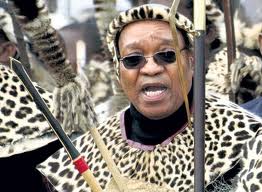
The government’s biggest challenge is to make maths and science exciting and popular for school pupils, President Jacob Zuma said on Friday.
“Science offers students the ability to access a wealth of knowledge and information, which will contribute to an overall understanding of how and why things work the way they do,” he said in a speech prepared for delivery.
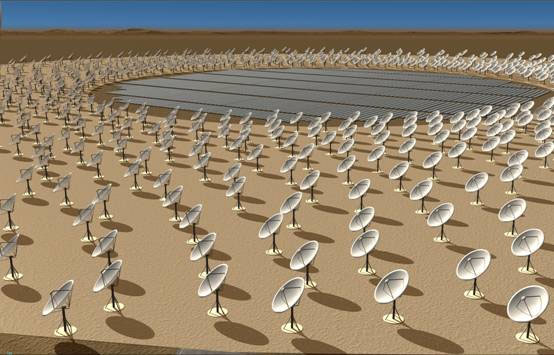
“Through science, you will be able to explain the mechanics and reasons behind the daily functioning of complex systems, which range from the human body to sophisticated modern methods of transport up to the workings of the Square Kilometre Array telescope that our country won the bid to construct.”
Zuma was speaking to finalists of the Eskom Expo for Young Scientists. He was hosting them as part of National Children’s Day at the Sefako Makgatho Presidential Guest House, IN Pretoria.
Zuma said that by producing more science and technology graduates, the country was assured of a bright future economically.
“It means our economy will have all the scientists, technologists, engineers, artisans and other skills that we need for economic development.
“It also means we will have all the expertise we need to prevent and cure diseases or to fight poverty through better agricultural methods,” he said. – Sapa
Presidential spokesman Mac Maharaj has apologised for the Malawi comments made by President Jacob Zuma.
“I have received numerous calls from Malawians being angry and after long discussions, they come around and say, yes, let’s not make a mountain of a molehill,” Maharaj said on Wednesday.
“Let me apologise for that and withdraw it,” he said.
He was interviewed on Power FM where he tried to explain the context of the statements made by Zuma at the Gauteng ANC’s manifesto forum in Johannesburg on Monday night.
In a clip on the EyeWitness News website, Zuma is heard saying: “We can’t think like Africans, in Africa, generally. We are in Johannesburg, this is Johannesburg. It’s not some national road in Malawi.”
Maharaj said Zuma was speaking in the context of two points on the highways but these did not come out in reporting by the media.
“Firstly, he was saying we need to enforce the user-pay principle for the national highways because it is not correct that people in the remote parts of South Africa should do the petrol levy and pay for the roads used in Gauteng,” said Maharaj.
He said the road should not be seen as a local road in a local area but as part of the transport system at the heart of the country’s economy.
“If that system through neglect of infrastructure chokes, the South African economy chokes.”
He said the comments did not reflect how Zuma thought or acted in forums about Africa.
“Our records are clear in that we are the champions of trying to get Africa to see itself as one and enter the global stage on a basis of equality with the rest of the players of the world economy,” said Maharaj.
Democratic Alliance parliamentary leader Lindiwe Mazibuko said Zuma must explain the blunder to Parliament.
She said the comments were unacceptable, and an insult to South Africans and to the people of Malawi.
“It is for this reason that I will today submit three urgent parliamentary questions to President Zuma enquiring whether he has followed due process and sent an official apology or clarified his comments to the High Commissioner of the Republic of Malawi; and whether he will retract and/or apologise for his unacceptable insults to both South Africans and the people of Malawi,” Mazibuko said in a statement.
She said lambasting people for “thinking like Africans” was an insult to every citizen on the continent, including all South Africans.
“It is now time for President Zuma to recognise that what he said was unacceptable, to stop the ineffective spin, and do what is expected of him: retract and apologise without delay,” she said. – Sapa
President Jacob Zuma has signed into law the Transport Laws and Related Matters Amendment Bill — paving the way for e-tolling, the presidency said on Wednesday.
“The president… has, in terms of Section 84 (2) of the Constitution of the Republic of South Africa, 1996, signed the Transport Laws and Related Matters Amendment Bill into law,” said spokesman Mac Maharaj.
“In effect, the act will provide more effectively for the collection of toll; to amend the Cross-Border Road Transport Act, 1998 (Act No 4 of 1998), to empower the Cross-Border Road Transport Agency to collect toll on behalf of Sanral….”
The law in effect gives the SA National Roads Agency Limited (Sanral) the nod to put into effect e-tolling on Gauteng’s freeways.
The signing came on the same day that the Supreme Court of Appeal was hearing argument in an attempt by the Opposition to Urban Tolling Alliance (Outa) to stop e-tolling in Gauteng.
The court was told that legislation allowed Sanral to explore options other than tolling to fund Gauteng’s freeways.
It also heard that Sanral should, therefore, have kept an open mind about the matter, despite the Cabinet’s approval of electronic tolling.
“Even bound by the Cabinet decision, they still had to follow the procedures of the act,” said Mike Maritz, for Outa.
He argued that the Sanral Act allowed Sanral to explore other funding options. Sanral should have considered this and should not have been bound by Cabinet’s decision that the project be funded with public money through e-tolling.
The High Court in Pretoria had granted Outa leave to appeal against a previous judgment, handed down in December, dismissing its bid to have the e-tolls scrapped.
Judge Fritz Brand asked whether Sanral should have ignored Cabinet’s decision.
Maritz said Sanral should have kept an open mind and taken all options into consideration.
Last week, Transport Minister Dipuo Peters said the Gauteng Freeway Improvement Project would be implemented in 2013, but that a starting date had not been determined.
The e-tolls have been challenged by political parties and the Congress of SA Trade Unions (Cosatu).
In April 2012, the High Court in Pretoria granted Outa an interdict approving a full judicial review before electronic tolling could be put into effect.
The interdict prevented Sanral from levying or collecting e-tolls, pending the outcome of a review. Sanral and the National Treasury appealed the court order.
In September last year, the Constitutional Court set aside the interim order, and in December, the High Court in Pretoria dismissed the application.
The court granted Outa leave on January 25 this year to take the matter to the Supreme Court of Appeal in Bloemfontein. – Sapa
President Jacob Zuma has arrived in St Petersburg, Russian Federation for the G20 Leaders’ Summit.
A meeting of BRICS Leaders was scheduled, giving leaders an opportunity to reflect on the progress made with regards to the implementation of the eThekwini Declaration, notably receiving progress reports in respect of the New Development Bank and the Contingent Reserve Arrangement.
President Zuma is accompanied by the Minister of Finance, Mr. Pravin Gordhan, and the Minister of International Relations and Cooperation, Ms. Maite Nkoana-Mashabane.
The primary objectives of the G20 are to facilitate policy coordination in order to achieve global economic stability and promote long-term sustainable growth.
South Africa’s participation in the G20 is guided by national interests and the primacy of the African Agenda. South Africa therefore seeks to use its participation in multilateral fora such as the G20 to promote and strengthen the interests of the African continent and those of the Southern hemisphere. In this regard, the G20 presents meaningful opportunities for advancing much-needed global governance reforms and orienting the international development agenda.
G20 countries account for 85 percent of global economic output, 80 percent of global trade, and two-thirds of the world’s population.
It is envisaged that the G20 Summit will focus on a set of measures aimed at boosting sustainable, inclusive and balanced global growth, including the creation of decent jobs. During its tenure as G20 President, Russia has focused its work on the interconnected issues on the G20 agenda around three priorities, which are intended to promote:
* Growth through quality jobs and investment;
* Growth through trust and transparency; and
* Growth through effective regulation.
Unemployment and ongoing problems and vulnerabilities in the global economy were discussed by Brics leaders on the margins of the G20 summit in Russia on Thursday, the presidency said.
“[We] believe that major economies, including the G20, could do more to boost global demand and market confidence,” said President Jacob Zuma, who chairs Brics — which consists of the Brazil, Russia, India, China, and South Africa group of emerging economies.
The leaders reiterated the concerns they expressed at the Durban Brics summit in March about the unintended negative spill-overs of the unconventional monetary policies of certain developed economies.
“[We] recalled the urgent need to implement the 2010 International Monetary Fund quota and governance reform, as well as to complete the next general quota review by January 2014, as agreed at the G20 Seoul summit in order to ensure the fund’s credibility, legitimacy, and effectiveness,” said Zuma.
Brics looked forward to the ninth World Trade Organisation ministerial conference, to be held in December.
“[We] expect that it will be a stepping stone to the successful and balanced conclusion of the Doha Development Round,” Zuma said.
The leaders also congratulated Russia on successfully hosting the G20 summit, which started on Thursday and runs until Friday. – Sapa
President Jacob Zuma has informed Parliament that 1345 soldiers have been deployed to the Democratic Republic of Congo (DRC), the presidency said on Friday.
“Our soldiers are doing exceptionally well in the continent. We congratulate them and assure them of the support of their compatriots as they continue to contribute to the building of a better Africa, as a force for peace,” Zuma said in a statement.
“We are very proud of them and their contribution to African renewal and development.”
The deployment was from June 13, 2013 to March 31, 2014. The expected cost of the deployment was R402,800,000.
The soldiers would be part of a “force intervention brigade”, under the United Nations Monusco peacekeeping force.
Zuma arrived in Luanda, Angola, on Thursday for consultations with Angolan President José Eduardo dos Santos and DRC President Joseph Kabila Kabange.
“The three heads of state are expected to discuss a range of issues relating to peace and stability in the region, particularly the current peace efforts in the DRC,” Zuma’s spokesman Mac Maharaj said in a statement at the time.
The SA National Defence Force said on Friday that South African soldiers in the DRC had not been engaged in armed combat with rebels in the country,
“I can confirm that… the DRC [defence] force engaged with the M23 rebels,” SANDF spokesman Siphiwe Dlamini said.
“We are in a defensive line — we are not engaging.”
He said the intervention brigade comprising of soldiers from South Africa, Tanzania, and Malawi was mandated to engage “armed groups”.
“They will not wait and watch while civilians are being attacked by armed groups,” Dlamini said.
“They will intervene to engage, neutralise, and disarm.”
On Thursday news agency Agence France-Presse reported that fresh fighting broke out outside the city of Goma.
M23 rebels attacked government-held positions on Wednesday night 20 kilometres north of the capital of North Kivu province.
Both sides said they were not yet able to say how many people had been killed or wounded. – Sapa
President Jacob Zuma called for reflection to restore peace in South Africa’s mining industry Wednesday, days before the first anniversary of police shooting dead strikers in the Marikana tragedy.
Friday marks a year after police opened fire on thousands of strikers at platinum producer Lonmin’s mine northwest of Johannesburg which killed 34 and injured 78 people.
Two days before the commemoration the firm recognised radical labour group AMCU, which led the wage strike, in an attempt to ease simmering inter-union tensions on the platinum belt.
“The incident of the 16th (of August) in particular shocked the whole country and caused untold pain and numbness amongst all South Africans,” Zuma said in a statement.
“It was a tragic and sad loss of life,” he added.
“We must all resolve to do everything possible to prevent a repeat of similar incidents.”
Demands for higher salaries sparked last year’s wildcat strikes.
Workers flocked to join the militant Association of Mineworkers and Construction Union (AMCU), abandoning the once-dominant National Union of Mineworkers (NUM) in droves because it was perceived to protect the mine management’s interests rather than that of labourers.
AMCU now represents 70 percent of Lonmin’s 27,000 employees, stealing the majority position from NUM, which is left with 20 percent of the membership.
The August shooting was described as the worst police brutality since the end of apartheid two decades ago.
But in the preceding week at least 10 people, including two policemen, were killed in clashes between the workers.
Following the massacre strikes spread quickly across the platinum industry and some gold mines, bringing an economic lifeblood to a standstill for months.
Mine stoppages in 2012 cost Africa’s largest economy 15.3 billion rand ($1.2 billion, 1.5 billion euro).
In the year since the bloodbath the union struggle for supremacy and ensuing benefits left a trail of bodies in its wake.
At least eight prominent members from both AMCU and NUM have been murdered, the latest victim a local NUM leader who was gunned down in front of her house on Monday.
Most victims were NUM members, and attackers periodically threatened the NUM to leave the mine.
“What is happening in Marikana does not only disrupt the community there, it disrupts economic growth,” said police commissioner Riah Phiyega launching a crime combating initiative in the town on Wednesday.
At least 13 murders occurred in the area in recent months, she added.
AMCU’s recognition as majority organisation seemed auspicious to calm hostilities in Marikana two days before the memorial of a massacre which has seen little retribution.
An inquiry Zuma set up to probe the killings is yet to conclude its work and lawyers representing wounded workers have pulled out over lack of funding.
The agreement “signals a new era”, according to Lonmin chief executive Ben Magara, who vowed that “we’ll put all we can to ensure peace and stability”.
AMCU president Joseph Mathunjwa urged a partnership to end acrimony between mine managers and labourers.
“We acknowledge that without cooperation we are all losers and that as leaders, we must find a way to ensure we can move forward together in peace and stability,” he said.
Labour analyst Daniel Silke believes that AMCU’s recognition will give it a sense of accomplishment, but won’t stop the NUM from reclaiming its position.
“In the short term, I think it’s positive on the mines,” said Silke.
Zuma urged unity in mining “so as to create an environment conducive to development”.
“Workers and managers must go to work without fear that anyone would harm them. Workers must be free to excercise their Constitutional right to join any trade union of their choice,” he added. – Sapa-AFP
The SABC reports that the Nkandla Municipality in northern KwaZulu-Natal, where President Jacob Zuma’s home is situated, has distributed groceries to needy families headed by single parents as part of celebrating Women’s Day.
Mayor Makhosonke Ntuli says, in one of the families they visited, there are thirteen children, but only three are being covered by child support grants.
Ntuli says social assistance for such families is essential.
“We are celebrating this day by visiting these families that do not have food. We identified this family even the house they are living in is not a proper house, they don’t have food and no one is working in the family. We gave her the grocery of almost a month but we are also going to have to do other interventions to see that her life and the children is improving,” says Ntuli.
President Jacob Zuma is expected to be bestowed with an award that acknowledges his role in the fight against apartheid.
The Presidency said in a statement on Wednesday that on Friday, traditional leader king Khosikhulu Toni Mphephu Ramabulana of the Royal Vhavenda tribe would present Zuma with the Makhado Bravery Award.
The award also celebrates the role the President played for the liberation of the South African people.
Spokesman in The Presidency Mac Maharaj said: “The King Makhado Bravery Award is the highest accolade of the Vhavenda Kingdom, named after the legendary warrior king and commander of the Vhavenda community.”
Zuma was expected to receive the award at the University of Venda Stadium in Thohoyandou. – Sapa
President Jacob Zuma on Sunday congratulated Robert Mugabe on his re-election as president of Zimbabwe.
Zuma described Wednesday’s elections as “harmonised” and called for peace in the neighbouring country, the international relations department said in a statement.
“President Zuma urges all political parties in Zimbabwe to accept the outcome of the elections as election observers reported it to be an expression of the will of the people.
” (He) also encourages the people of Zimbabwe to seize this opportunity to collectively contribute towards building their country driven by a common desire for peace, stability and prosperity.”
Zuma said South Africa was ready to continue its relations with Zimbabwe. – Sapa
A poor showing by the ruling party at next year’s general election will likely cost President Jacob Zuma his job, political analyst Nic Borain said on Thursday.
Speaking at a Cape Town Press Club lunch, he said the signs were that “the ANC’s glue is coming unstuck” after the Marikana shootings last year.
“They [the ANC] are taking this 2014 election extremely seriously. They’re going to fight tooth and nail to [win it].
“They know that if they drop below 60%, they’re in trouble. Jacob Zuma will be in trouble… “
Responding to questions, Borain – a local independent analyst, who spoke on “the impact of the current mining troubles” in South Africa – suggested the rise of the Association of Mineworkers and Construction Union (Amcu) was a turning point for ANC supporters.
Support for it had been triggered by unhappiness with the ANC-aligned National Union of Mineworkers (NUM).
“There was a huge defection [from] the ANC support base in the platinum sector.”
This had later spread to the gold sector, where it had risen – according to some sources – to 30%.
“Jacob Zuma is now losing support among urban black people,” Borain said.
Prediction
Asked to predict the likely showing of the ANC at next year’s elections, he said a “worst-case scenario” was the ANC retained 65% of the vote.
He suggested a more-likely “best scenario” would see the ANC get 59% of the vote. This, he said, would lead to ANC leaders negotiating a “controlled exit” for Zuma, who would want to be assured he could leave with his wealth intact and not facing corruption charges.
“The ANC is not going to accept this kind of loss.”
Borain said a third scenario, involving the ANC garnering only 51% of the vote, was “very scary”.
“If that happens, all bets are off.”
Pushed to suggest how political parties might fare in the coming election, he estimated the ANC would take 58%, the DA 26%, a figure he later revised to 30%, and newly-formed Agang SA about 2%.
On the DA, Borain said the main opposition party would find it “difficult to overcome barriers to its growth”.
On the future prospects of Julius Malema’s Economic Freedom Fighters (EFF) – whose leadership he described as “the clowns and fools of our politics” – Borain said they could take up to 5% of the vote.
“But I can’t see them getting out to vote,” he added. – Sapa
Recent comments made by members of Jacob Zuma’s technical team on the situation in Zimbabwe were “unfortunate”, says the presidency.
“The presidency has noted with great concern, recent unfortunate statements made on the situation in Zimbabwe,” spokesperson Mac Maharaj said in a statement.
Maharaj said the comments were attributed to a team member supporting Zuma in his role as a facilitator, with South Africa appointed by Southern African Development Community (SADC) to offer assistance to help Zimbabwe’s political parties resolve their differences.
Zuma’s team comprised of Mozambique high commissioner Charles Nqakula as its head, Maharaj, and Lindiwe Zulu, international relations adviser to the president.
The Agence France-Presse news agency reported on Friday that Zulu had said there were challenges leading up to the July 31 elections in Zimbabwe, following problems with early voting.
Thousands of Zimbabwean security forces reportedly could not make their mark in early voting with polling stations opening late, and lacking indelible ink, stamps, voter rolls, ballot papers, and boxes.
“If things didn’t go right in the special vote, those things need to be looked into by the time of elections on July 31,” Zulu said.
Imposition
Maharaj said the technical team supported Zuma in his role as facilitator, could not impose its views on Zimbabwe, nor make public pronouncements.
“Only President Zuma has the mandate to speak on Zimbabwe on behalf of SADC on facilitation issues,” Maharaj said.
“A number of statements have been made during the facilitation process which have been unauthorised and which are regrettable and unfortunate. Some of the utterances have also been inaccurate.”
The presidency said reports stating Zuma had telephoned Zimbabwe’s President Robert Mugabe to express his unhappiness about election preparations were incorrect.
“No such telephone call has been made,” said Maharaj.
Zuma had also been alerted to “inappropriate postings” in social media on the situation in Zimbabwe.
“South Africa remains fully committed to the warm historical relations with the republic of Zimbabwe and wishes the people of Zimbabwe well as they prepare for the elections,” said Maharaj. – Sapa
Auditor General Terence Nombembe has received a salary increase of close to a million rand a year, backdated for more than six years.
Details of the increase are contained in a letter, dated May 23 this year, sent by President Jacob Zuma to Parliament. The letter was published this week in a parliamentary document.
“[The president has determined that] the annual salary package of the Auditor General Mr TM Nombembe be increased from R1,708,600 per annum to R2,650,000 per annum with effect from December 1, 2006.”
This meant Nombembe’s salary package would increase by R941,400 a year, backdated for six-and-a-half years, a windfall of well over R6 million.
The date of December 1, 2006 is the day on which Nombembe — who replaced Shauket Fakie, who retired — was appointed to the post.
The letter also announces a huge increase in Nombembe’s termination benefits.
“[The] Auditor General’s termination benefit [is to] be increased from 10 percent of the average term compensation for each year of service, to 50 percent of the average term compensation for each year of service… .”
According to the letter the payment of back pay would be done in accordance with the guidelines applicable to the AG’s office.
Zuma’s decision to increase Nombembe’s salary package was based on a recommendation of the parliamentary committee on the Auditor General. – Sapa
This website uses cookies to improve your experience. We'll assume you're ok with this, but you can opt-out if you wish. Cookie settingsACCEPT
Privacy & Cookies Policy
Privacy Overview
This website uses cookies to improve your experience while you navigate through the website. Out of these cookies, the cookies that are categorized as necessary are stored on your browser as they are essential for the working of basic functionalities of the website. We also use third-party cookies that help us analyze and understand how you use this website. These cookies will be stored in your browser only with your consent. You also have the option to opt-out of these cookies. But opting out of some of these cookies may have an effect on your browsing experience.
Necessary cookies are absolutely essential for the website to function properly. This category only includes cookies that ensures basic functionalities and security features of the website. These cookies do not store any personal information.
Any cookies that may not be particularly necessary for the website to function and is used specifically to collect user personal data via analytics, ads, other embedded contents are termed as non-necessary cookies. It is mandatory to procure user consent prior to running these cookies on your website.

 The government’s biggest challenge is to make maths and science exciting and popular for school pupils, President Jacob Zuma said on Friday.