Brazil opens investigation into US spying

us-nsa-spying-germanyThe Brazilian government began an investigation Monday into whether telecommunications firms operating in the country cooperated with the U.S. as part of a spying program that has collected data on billions of telephone and email conversations.

Anatel, the government agency that regulates the telecom sector in Brazil, said it’s working with federal police and other government agencies on the investigation.

The O Globo newspaper reported this weekend that information released by the National Security Agency leaker Edward Snowden showed Brazil is the top target in Latin America for the NSA’s massive intelligence-gathering effort aimed at monitoring communications around the world.

Brazil isn’t alone in its concern; London-based advocacy group Privacy International filed lawsuit on Monday over alleged spying of internet and phone users in Britain. Earlier, official in Germany, France, Hong Kong and other nations lodged complaints.

Brazilian President Dilma Rousseff the nation would raise the issue at the 193-country U.N. International Telecommunications Union and also at the U.N. Commission on Human Rights since the “fundamentals” of human rights include “freedom of expression and the right to privacy.”

“If there was any involvement of other countries, of other businesses that aren’t Brazilian, then it’s certainly a violation of our sovereignty, without a doubt, just like it’s a violation of human rights,” Rousseff said. “Now, we have to look at things without pre-judgment, we have to investigate.”

Brazilian regulator Anatel said in its statement that “it’s worth clarifying that the confidentiality of data and telephone communications is a right guaranteed by the constitution, by our laws and by Anatel’s regulations. Its violation is punishable in civil, criminal and administrative realms.”

The O Globo article said the NSA collected the data through an undefined association between U.S. and Brazilian telecommunications companies. It said it could not verify which Brazilian companies were involved or if they were aware their links were being used to collect the data.

On Monday, O Globo reported that the U.S. had a significant data center in Brasilia for the collection of intercepted global satellite communications until at least 2002, based upon the Snowden document it’s seen. The documents didn’t indicate if that still exists.

Communications Minister Paulo Bernardo told reporters in Brasilia that he “has no doubt whatsoever” Brazilian citizens and institutions were spied upon.

“Even the European Parliament was monitored – you think that we weren’t?” he said. “We have to verify the circumstances in which this occurred, the exact way and when.”

Bernardo met Monday afternoon with U.S. Ambassador Thomas Shannon.

“He denied that there is such monitoring here in Brazil, he said that there never was a data center and that there is no agreement with Brazilian companies to collect data in Brazilian territory,” Bernardo said afterward, according to the state-run Agencia Brasil news agency.

The O Globo article printed Sunday said that “Brazil, with extensive digitalized public and private networks operated by large telecommunications and internet companies, appears to stand out on maps of the U.S. agency as a priority target for telephony and data traffic, alongside nations such as China, Russia and Pakistan.”

The report did not describe the sort of data collected, but the U.S. programs appear to gather what is called metadata: logs of message times, addresses and other information rather than the content of the messages.

U.S. journalist Glenn Greenwald, who lives in Rio de Janeiro and originally broke the Snowden story in the Britain-based Guardian newspaper, where he writes a regularly blog, co-authored the Sunday report in O Globo.

In an interview with the Globo TV network, Greenwald said the Snowden documents show that the U.S. was using Brazil as a “bridge” to gather data on better-protected states where it cannot gain direct access, but whose traffic may pass through Brazil.

“We don’t have access to China’s system, but we have access to Brazil’s system,” Greenwald said, speaking Portuguese. “So, we collect the traffic in Brazil not because we want to know what one Brazilian is saying to another Brazilian, but because we want to know what someone in China is saying to somebody in Iran, for example.”

Brazil’s Foreign Minister Antonio Patriota expressed “deep concern” about the monitoring of Brazil and demanded explanations from U.S. diplomats. On Monday, he said the conversations with the Americans were “encouraging” but that “we need to deepen the discussions.”

Patriota reiterated that Brazil was looking at how to take measures at the United Nations “that would guarantee not just privacy, but also the respect and the citizenship of states when it comes to the use of information technology and cyber security.”

In Washington, the U.S. State Department declined to comment on the alleged intelligence activity.

“As a matter of policy, we have been clear that the United States does gather foreign intelligence of the type gathered by all nations. I can tell you that we have spoken with Brazilian officials regarding these allegations,” said State Department spokeswoman Jen Psaki. “We plan to continue our dialogue with the Brazilians through normal diplomatic channels. But those are conversations that, of course, we would keep private.” – AP

Snowden: Fresh allegations against the British, Germans

snowden2For weeks now, officials at intelligence services around the world have been in suspense as one leak after another from whistleblower Edward Snowden has been published. Be it America’s National Security Agency, Britain’s GCHQ or systems like Prism or Tempora, he has been leaking scandalous information about international spying agencies. In an interview published by SPIEGEL in its latest issue, Snowden provides additional details, describing the closeness between the US and German intelligence services as well as Britain’s acquisitiveness when it comes to collecting data.

In Germany, reports of the United States’ vast espionage activities have surprised and upset many, including politicians. But Snowden isn’t buying the innocence of leading German politicians and government figures, who say that they were entirely unaware of the spying programs. On the contrary, the NSA people are “in bed together with the Germans,” the whistleblower told American cryptography expert Jacob Appelbaum and documentary filmmaker Laura Poitras in an interview conducted with the help of encrypted emails shortly before Snowden became a globally recognized name.

Snowden describes the intelligence services partnerships in detail. The NSA even has a special department for such cooperation, the Foreign Affairs Directorate, he says. He also exposes a noteworthy detail about how government decision-makers are protected by these programs. The partnerships are organized in a way so that authorities in other countries can “insulate their political leaders from the backlash” in the event it becomes public “how grievously they’re violating global privacy,” the former NSA employee says.

SPIEGEL reporting also indicates that cooperation between the NSA and Germany’s foreign intelligence service, the BND, is more intensive than previously known. The NSA, for example, provides “analysis tools” for the BND to monitor signals from foreign data streams that travel through Germany. Among the BND’s focuses are the Middle East route through which data packets from crisis regions travel.

BND head Gerhard Schindler confirmed the partnership during a recent meeting with members of the German parliament’s control committee for intelligence issues.

But it’s not just the BND’s activities that are the focus of the interview with Snowden.

The 30-year-old also provides new details about Britain’s Government Communications Headquarters (GCHQ). He says that Britain’s Tempora system is the signal intelligence community’s first “full-take Internet buffer,” meaning that it saves all of the data passing through the country.

The scope of this “full take” system is vast. According to Snowden and Britain’s Guardian newspaper, Tempora stores communications data for up to 30 days and saves all content for up to three days in a so-called Internet buffer. “It snarfs everything in a rolling buffer to allow retroactive investigation without missing a single bit,” Snowden says.

Asked if it is possible to get around this total surveillance of all Internet communication, he says: “As a general rule, so long as you have any choice at all, you should never route through or peer with the UK under any circumstances.”

In other words, Snowden says, one can only prevent GCHQ from accessing their data if they do not send any information through British Internet lines or servers. However, German Internet experts believe this would be almost impossible in practice.

The attempt to conduct total data retention is noteworthy because most of the leaks so far in the spying scandal have pertained to so-called metadata. In the interview, Snowden reiterates just how important metadata — which can include telephone numbers, IP addresses and connection times, for example — really are. “In most cases, content isn’t as valuable as metadata,” Snowden says.

Those in possession of metadata can determine who has communicated with whom. And using the metadata, they can determine which data sets and communications content they would like to take a closer look at. “The metadata tells you what out of their data stream you actually want,” Snowden says.

It is becoming increasingly clear to recognize the way in which surveillance programs from the NSA and GCHQ — including Prism, Tempora and Boundless Informant — cooperate. The metadata provides analysts with tips on which communications and content might be interesting. Then, Snowden says, with the touch of a button they can then retrieve or permanently collect the full content of communications that have already been stored for a specific person or group, or they can collect future communications. But a person can also be “selected for targeting based on, for example, your Facebook or webmail content.” – Der Spiegel

Austria not worried about passenger Snowden

Mikl-Leitner
Mikl-Leitner

Austria allowed Bolivian President Evo Morales’ plane to land because it did not share other countries’ worries that former U.S. spy agency contractor Edward Snowden might be on board, Interior Minister Johanna Mikl-Leitner said on Wednesday.

France and Portugal abruptly canceled air permits for Morales’ plane en route from Moscow, forcing the unscheduled stopover in Vienna late on Tuesday.

An Austrian Foreign Ministry spokesman said rumours that Snowden was on the plane were untrue.

“Austria did not close its airspace and the plane could of course land although many other countries apparently feared that Snowden was on board too,” the minister told ORF radio. “Austria did not do that, which means there is no fear here.”

Wanted by Washington for espionage after divulging classified details of U.S. phone and Internet surveillance, Snowden apparently remains in the transit area of Moscow’s Sheremetyevo airport.

He applied for asylum in Austria – and several other countries – via the country’s Moscow embassy on Monday, which the government said was insufficient to grant him refuge.

Mikl-Leitner said it would be up to Austrian asylum authorities to decide what to do in the unlikely case that Snowden arrived there.

She defended Austria’s position that Snowden would have to apply in person for asylum, saying this was clearly spelled out in the law.

“This is in the hands of the authorities and independent courts. The important thing here is that this would be judged individually, as in every other case,” she said. – Reuters

New Snowden bombshell coming

Another big National Security Agency scoop is coming soon, Glenn Greenwald said on Tuesday.

“Just wait a little bit, you’ll have it,” The Guardian journalist who broke the NSA surveillance story said on “Fox & Friends.”

Although Greenwald wouldn’t reveal exactly what the new revelations are, he said the world “will be shocked.”

“I will say that there are vast programs, both domestic and international spying, that the world will be shocked to learn about, that the NSA is engaged in with no democratic accountability and that’s what driving our reporting,” Greenwald said.

nsaGreenwald also said President Barack Obama’s administration is using leaker Edward Snowden as an example to prevent future whistleblowers from coming forward.

“I think what the Obama administration wants, and has been trying to establish for the last almost five years now with the unprecedented war on whistleblowers that it is waging, and to make it so that everybody is petrified of coming forward with information about what our political officials are doing in the dark that is deceitful, illegal or corrupt,” Greenwald said.

He added that the administration doesn’t care about Snowden anymore.

“They don’t care about Edward Snowden at this point; he can no longer do anything that he hasn’t already done; what they care about is making an extremely negative example out of him to intimidate future whistleblowers from coming forward because they’ll think that they’ll end up like him,” Greenwald said.

Snowden speaks from Moscow

Snowden resides at Sheremetyevo Airport, for now

Former US spy agency contractor Edward Snowden broke his silence on Monday for the first time since fleeing to Moscow over a week ago, blasting the Obama administration and saying he remains free to make new disclosures about US spying activity.

Snowden, who faces espionage charges in the United States and is believed to be staying in a transit area at Moscow’s  airport, surfaced with a letter to the Ecuadorean government and in a statement released through the anti-secrecy group WikiLeaks, which has taken up his cause.

In the WikiLeaks statement he accused the Obama administration of deception in a campaign to prevent him from finding political asylum and of “leaving me a stateless person” by revoking his US passport.

Snowden, 30, had not been heard from in the eight days since he flew to Moscow from Hong Kong, where he had first taken refuge after fleeing Hawaii.

Snowden has sought asylum in Ecuador and in an undated letter sent to Ecuadorean President Rafael Correa seen by Reuters, said the United States was illegally persecuting him for revealing its electronic surveillance programme, Prism, but made it clear he did not intend to be muzzled.

“I remain free and able to publish information that serves the public interest,” Snowden, who had been a contract employee for the US National Security Agency, said in the letter.

“No matter how many more days my life contains, I remain dedicated to the fight for justice in this unequal world. If any of those days ahead realise a contribution to the common good, the world will have the principles of Ecuador to thank.”

Snowden said the US government was persecuting him.

“While the public has cried out support of my shining a light on this secret system of injustice, the government of the United States of America responded with an extrajudicial man-hunt costing me my family, my freedom to travel, and my right to live peacefully without fear of illegal aggression,” Snowden wrote.

In his WikiLeaks statement, Snowden lashed out at US President Barack Obama and Vice-President Joe Biden for pressing Ecuador to turn him away.

“This kind of deception from a world leader is not justice, and neither is the extralegal penalty of exile,” he said.

“Without any judicial order, the administration now seeks to stop me exercising a basic right,” Snowden said. “A right that belongs to everybody. The right to seek asylum… Their purpose is to frighten, not me, but those who would come after me.”

US Justice Department spokeswoman Nanda Chitre rejected Snowden’s claim that he was marooned “since he is still a United States citizen and his country is willing to take him back”.

“As the State Department has already said, the US government is prepared to issue individuals wanted on felony charges a one-entry travel document to return home,” she said.

Snowden has given Russian diplomats a list of 15 countries, including Russia, where he wanted to apply for asylum, the Los Angeles Times reported, citing an unidentified Russian Foreign Ministry official. A Russian immigration source told Reuters that Snowden had applied for asylum in Russia.

Foreign Ministry and Kremlin officials declined immediate comment.

Russian President Vladimir Putin said Snowden could stay in Russia on one condition.

“He must stop his work aimed at harming our American partners, as strange as that sounds coming from my lips,” he told reporters after a gas exporters’ conference in Moscow.

Putin said he suspected that Snowden would continue leaking information because “he feels himself to be a human rights activist”.

“So he must choose a country of destination and go there,” he said, speaking before the asylum request to Russia was reported. “Unfortunately, I don’t know when this will happen.”

Putin said Russia was not working with Snowden and had no intention of handing Snowden over to the United States.

“Russia has never given up anyone to anybody and does not plan to. And nobody ever gave anyone up to us,” Putin said.

Correa said on Sunday that Snowden’s fate was in Russia’s hands because Ecuador could not consider the plea until he reached Ecuador or one of its embassies.

Shortly after Snowden fled the United States to Hong Kong in May, and long before he arrived in Russia, Putin suggested the surveillance methods he revealed were justified in fighting terrorism, if carried out lawfully.

Although Russia has sometimes exchanged captured spies with the United States, Putin suggested on Monday that this was not on the cards for Snowden. “As for Mr Snowden, he is not our agent and he is not working with us,” Putin said.

Obama, at a news conference in Tanzania, repeated that the United States was working through law enforcement channels to prod Russia to extradite Snowden.

Obama said there had been “high-level discussions with the Russians about trying to find a solution to the problem”. – Reuters

Snowden asking 15 countries for asylum

edwardsnowden2Edward Snowden, the former National Security Agency contractor who leaked U.S. security secrets and is now a fugitive, met Monday morning with Russian diplomatic officials and handed them an appeal to 15 countries for political asylum, a Russian Foreign Ministry official told The Times.

“It was a desperate measure on his part after Ecuador disavowed his political protection credentials,” said the official, speaking on condition of anonymity. ”In the document Snowden reiterated once again that he is not a traitor and explained his actions only by a desire to open the world’s eyes on the flagrant violations by U.S. special services not only of American citizens but also citizens of European Union including their NATO allies.”

The official didn’t disclose the countries that were on the list. The meeting took place at Moscow’s Sheremetyevo International Airport, where Snowden has apparently holed up in a transit lounge since fleeing from Hong Kong while seeking a route to Ecuador or somewhere else that might grant him asylum.

Kirill Kabanov, a member of the Presidential Council on Human Rights, a Kremlin advisory body, said he believes that Russia is on the list.

“In the given circumstances, Russia has two workable options: Firstly is to provide Snowden with some refugee-status papers so that he could buy a ticket and leave for some other country, or secondly to grant him political asylum,” Kabanov said in an interview with The Times.

“Snowden’s actions were motivated by a desire to protect human rights and freedoms and now many rights activists in Russia are talking about him as a human rights advocate who deserves to be granted asylum, although this measure is fraught with some political inconveniences for Russia,”  he said. – latimes.com

The Guardian deletes ‘scoop’ from website

madsenguardianThe Guardian released another shocking NSA scoop on Saturday, revealing collusion and mass harvesting of personal communications among the United States and at least six European Union countries — only to delete it from their website hours after publication.

The article, titled “Revealed: secret European deals to hand over private data to America,” was written by Jamie Doward, who reported information from Wayne Madsen, a former Navy Lt. and NSA employee for 12 years.

Doward wrote:

Madsen said the countries had “formal second and third party status” under signal intelligence (sigint) agreements that compels them to hand over data, including mobile phone and internet information to the NSA if requested.

Under international intelligence agreements, confirmed by declassified documents, nations are categorised by the US according to their trust level. The US is first party while the UK, Canada, Australia and New Zealand enjoy second party relationships. Germany and France have third party relationships.

He went on to say that seven European countries and the U.S. have access to a fiberoptic cable network, intercepting phone calls, emails, and user logs from websites. The article describes Madsen as having “been attacked for holding controversial views on espionage issues.”

That’s a light way of putting it.

Some of Madsen’s controversial views include the belief that President Obama is secretly a homosexual and that the Boston bombing suspects were government agents. He’s also reported on a “former CIA agent” alleging the 2000 USS Cole bombing was perpetrated not by al Qaeda terrorists, but by a missile fired from an Israeli submarine.

John Schindler, a professor at the Naval War College and intelligence expert, called Madsen ”batsh– crazy, to use the technical term.”

The pulled article now bears the message, “this article has been taken down pending an investigation” but appears to still be on tomorrow’s front page of the print edition. It was originally published in The Observer, a Sunday newspaper owned by The Guardian and hosted on their website. – Business Insider

EU lashes out at new NSA spying report

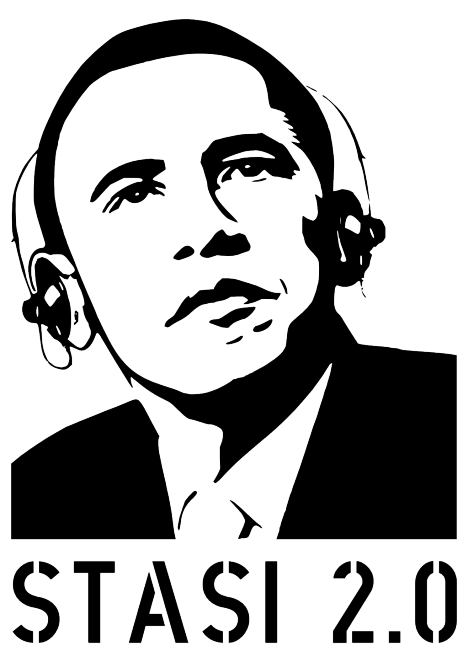
stasi2A top German official accused the United States on Sunday of using “Cold War” methods against its allies, after a German magazine cited secret intelligence documents to claim that U.S. spies bugged European Union offices.

Justice Minister Sabine Leutheusser-Schnarrenberger was responding to a report by German news weekly Der Spiegel, which claimed that the U.S. National Security Agency eavesdropped on EU offices in Washington, New York and Brussels. The magazine cited classified U.S. documents taken by former NSA contractor Edward Snowden that it said it had partly seen.

“If the media reports are accurate, then this recalls the methods used by enemies during the Cold War,” Leutheusser-Schnarrenberger said in a statement to The Associated Press.

“It is beyond comprehension that our friends in the United States see Europeans as enemies,” she said, calling for an “immediate and comprehensive” response from the U.S. government to the claims.

Other European officials demanded an explanation from the U.S.

“I am deeply worried and shocked about the allegations,” European Parliament President Martin Schulz said in a statement, according to CNN. “If the allegations prove to be true, it would be an extremely serious matter which will have a severe impact on EU-US relations. On behalf of the European Parliament, I demand full clarification and require further information speedily from the U.S. authorities with regard to these allegations.”

The revelations come at a particularly sensitive time for U.S.-E.U. relations, as long-awaited talks about a new trade pact are scheduled to begin next week. It is unclear how the latest report on NSA spying are going to affect them, but the trade pact has been a centerpiece of the Obama administrations diplomatic efforts in Europe for some time.

According to Der Spiegel, the NSA planted bugs in the EU’s diplomatic offices in Washington and infiltrated the building’s computer network. Similar measures were taken at the EU’s mission to the United Nations in New York, the magazine said.

Der Spiegel didn’t publish the alleged NSA documents it cited or say how it obtained access to them. But one of the report’s authors is Laura Poitras, an award-winning documentary filmmaker who interviewed Snowden while he was holed up in Hong Kong.

The magazine also didn’t specify how it learned of the NSA’s alleged eavesdropping efforts at a key EU office in Brussels. There, the NSA used secure facilities at NATO headquarters nearby to dial into telephone maintenance systems that would have allowed it to intercept senior EU officials’ calls and Internet traffic, Der Spiegel report said.

Germany was allegedly the focus of the European spying, according to The Guardian, categorising Washington’s key European ally alongside China, Iraq or Saudi Arabia in the intensity of the electronic snooping.

During a trip through Europe two weeks ago, President Obama assured an audience in Germany that America is not indiscriminately “rifling” through the emails of ordinary European citizens, describing the National Security Agency’s surveillance programs as a “circumscribed” system that has averted threats in America, Germany, and elsewhere.

Leutheusser-Schnarrenberger urged EU Commission President Jose Manuel Barroso to take personal responsibility for investigating the allegations.

The United States has defended its efforts to intercept electronic communications overseas by arguing that this has helped prevent terror attacks at home and abroad. – CBS

Sales of George Orwell’s ‘1984’ soar on Amazon as America becomes surveillance society

George Orwell
George Orwell

George Orwell’s dystopian novel “1984” is enjoying a spike in sales in the wake of revelations on surveillance in the United States.

Amazon.com says the book, published in 1945, has gone from No. 13,074 to No. 193 on its selling list, and it is moving higher, The Guardian reported. To put it another way, sales are up 7,000 percent.

In the novel, Orwell imagines a world divided into three large states, all of them exercising near-constant surveillance on their subjects. The government manipulates the news, history and the language.

The novel is set in London, the city where Orwell spent much of his adult life. But his primary target appears to be the Soviet Union, although he was also concerned about trends he saw in the United States and Britain.

It was “1984” that made “Orwellian” a common adjective in English. It is one that has been used a lot since news broke of National Security Agency monitoring of Internet and telephone traffic.

“What does our Constitution mean? What kind of country do we want to be? Kids will grow up knowing that every damn thing that they do is going to be recorded somewhere in a file, and I think that will have a very Orwellian and inhibiting impact on our lives,” U.S. Sen. Bernie Sanders, Ind-Vt., said in a recent interview.

Orwell died in 1950 at the age of 46. But the book remains under copyright in Britain and the United States, so his estate benefits from its new popularity. – UPI

Putin: Snowden never crossed Russian border, so no extradition

Putin slams US demands

Former NSA contractor Snowden remains in the transit zone of a Moscow airport. President Putin said that Snowden never crossed the Russian border and doesn’t fall under any extradition treaty. He called accusations against Russia “nonsense and rubbish.”

“It is true that Snowden has arrived to Moscow, and it really came as a surprise for us. He arrived as a transit passenger, and didn’t need a [Russian] visa, or any other documents. As a transit passenger he is entitled to buy a ticket and fly to wherever he wants,” Vladimir Putin said as he spoke to journalists in Finland.

Edward Snowden is still at the transit area of Moscow’s Sheremetyevo Airport, Putin stressed. He said that any accusations against Russia are “nonsense and rubbish,” as the former NSA contractor “has not crossed” the Russian border.

The President also pointed out that there is no extradition treaty between Russia and the US, which makes it impossible to extradite people like Snowden.

“We can only extradite any foreign citizens to such countries with which we have signed the appropriate international agreements on criminal extradition,” he explained.

Snowden “has not committed any crime” on Russian soil, Putin added. Russian security agencies “have never worked with and are not working with” the former CIA employee, he also stressed.

“Snowden is a free person. The sooner he chooses his final destination, the better it is for him and Russia,” Putin said.

He also expressed hope that the Snowden saga would not have any negative impact on Russian-American relations and that the US “will understand this.”

Putin also commented on the situation with WikiLeaks founder Julian Assange, who has been holed up in the Ecuadorian embassy in London to avoid extradition to Sweden, fearing that he would then be extradited to the US.

“Just like Snowden, he considers himself a rights advocate and fights for sharing information. Ask yourself: should or should not people like these be extradited to be later put to jail?” the President asked.

“In any case, I would like not to deal with such issues because it is like shearing a pig: there’s lots of squealing and little fleece,” he said.

Washington again requested that Moscow expel Snowden on Tuesday, urging Russia to build upon its bilateral law enforcement cooperation with the US.

Russia has “clear legal basis” to expel the NSA leaker, National Security Council spokeswoman Caitlin Hayden said in a statement. She added that Snowden would face espionage charges in the US, even without an extradition treaty.

The White House, along with Putin, doesn’t want the issue to negatively impact the nations’ bilateral relations, Hayden said. – RT

Global surveillance: Where is the outrage?

temporaThe British-American surveillance program Tempora marks a historic turning point. Unnoticed by the public, intelligence agencies have pursued total surveillance. Governments have deliberately concealed from the public the extent to which we are being watched.

The term, “information superhighway” has always been insufficient to describe the Internet. In reality, the Web is a global communication space containing the private information of a large part of the population of every developed country. If someone were able to train an all-seeing eye onto the Internet, the blackmail potential would be almost limitless.

It is precisely this all-seeing eye that the British intelligence agency Government Communications Headquarters (GCHQ) and the American National Security Agency (NSA) have developed under the name Tempora. An appropriate real-world metaphor for the program might be something like this: In every room of every house and every apartment, cameras and microphones are installed, every letter is opened and copied, every telephone tapped. Everything that happens is recorded and can be accessed as needed.

It sounds preposterous, but it is frighteningly close to the reality that was unveiled by the Guardian on Friday. Together, the GCHQ and NSA monitor Internet traffic by tapping directly into the data stream sent through fiber-optic cables. They are able to copy and cache this data, to be sifted through later as needed.

Those behind this disgraceful program have not even bothered to deny what they are up to. The British spy agency has said it will not be commenting on the program — but said that whatever they do is in the service of the fight against terrorism and subject to strict legal controls. The NSA has been making this same argument since the Prism program was unveiled earlier this month. What we’re doing, they say, is for a good cause. It’s all regulated, and we’re only looking at the information collected when we deem it necessary.

But that’s all just pretence.

Would the public agree to the total video surveillance of their private living space because it could possibly also help in the pursuit of terrorists? Would we be satisfied with the fact that we would only be observed if some unnamed intelligence analyst considered it necessary? Of course not. A government proposing such a program would be forced out of office — and rightly so.

Where is the Outrage?

It therefore seems odd that the reactions in the Anglo-Saxon world have been so restrained. Sure, the Guardian, as well as the Washington Post, have reported in detail about the programs. Yet in the political sphere, it was mainly a few German politicians voicing their outrage.

And for good reason. The fact that the Americans and the British — it is yet to be revealed who else participated — have granted themselves this enormous power, without ever informing their own people, is a scandal of historic proportions. To the initiated, all the recent public debate about data retention, Internet privacy and the practices of Facebook and Google must have been downright amusing. The state, as it turns out, knew everything all along.

That was precisely the goal, according to the head of the NSA, Lieutenant General Keith Alexander. “Why can’t we collect all the signals all the time?” he asked in an internal document acquired by the Guardian. “Sounds like a good summer project for Menwith,” he continued, referring to a GCHQ/NSA facility at Menwith Hill in northern England.

Voters Must Defend Themselves

A different quote shows that intelligence personnel lied to the public following the first revelations of the existence of the program. European Justice Commissioner Viviane Reding said that, in meetings with US officials, she had been assured that data from Europeans had not been collected “in bulk.” The surveillance of Europeans, they insisted to Reding, had been targeted and only undertaken in exceptional cases. That now appears to be untrue — it’s just that the mass acquisition of data in Europe is taken care of by GCHQ, rather than by the NSA.

The public revelation of these activities in the Guardian, thanks to the risky actions of former NSA worker Edward Snowden, marks a turning point. The next weeks and months will show whether democratic societies across the world are strong enough to take a stand against the unlimited, totalitarian ambitions of Western secret services — or not.

The governments of the countries in question apparently did not have the necessary backbone. They knew full well that the kind of surveillance being undertaken lacked all democratic legitimacy. But they pursued the programs anyway, behind the backs of their electorates.

It is now up to voters to defend themselves. It is up to us, whose data has landed as by-catch in the nets of Tempora. We must force our own representatives to defend our freedoms. – Der Spiegel

Snowden: British are worse than US in spying

Satellite dishes at GCHQ's outpost at Bude in CornwallThe British spy agency GCHQ has access to the global network of communications, storing calls, Facebook posts and internet histories – and shares this data with the NSA, Edward Snowden has revealed to the Guardian in a new leak.

GCHQ’s network of cables is able to process massive quantities of information from both specific targets and completely innocent people, including recording phone calls and reading email messages, it was revealed on Friday.

“It’s not just a US problem. The UK has a huge dog in this fight,” Snowden told the Guardian. “They [GCHQ] are worse than the US.”

The Government Communications Headquarters agency has two different programs, aimed at carrying out this online and telephone monitoring – categorized under ‘Mastering the Internet’ and ‘Global Telecoms Exploitation.’ Both have been conducted in the absence of any public knowledge, reports the Guardian.

“If you remember, even the NSA said that they did not record phone calls, but according to these latest revelations by Edward Snowden, that up to ‘600 million’ telephone events last year were recorded a day by the GCHQ,” said RT’s Tesa Arcilla from London.

“There’s no doubt as to what the objectives of these programs were, having put them in place,” she said, emphasizing the titles.

The agency is able to store the volumes of data it amasses from fiber-optic cables for up to 30 days in an operation codenamed Tempora. The practice has been going on for around 18 months.

GCHQ which was handling 600m telephone ‘events’ a day, according to the documents, had tapped into over 200 fiber-optic cables and had the capacity to analyze data from over 46 of them at a time.

The cables used by GCHQ can carry data at 10 gigabits per second, which in theory, means they could deliver up to 21petabytes of information per day. The program is continuing to develop on a daily basis with the agency aiming to expand to the point it is able to process terabits (thousands of gigabits) of data at once.

“This appears to be dangerously close to, if not exactly, the centralised database of all our internet communications, including some content, that successive Governments have ruled out and Parliament has never legislated for,” said Nick Pickles of UK privacy campaign group Big Brother Watch.

“If GCHQ have been intercepting huge numbers of innocent people’s communications as part of a massive sweeping exercise then I struggle to see how that squares with a process that requires a warrant for each individual intercept. This question must be urgently be addressed in Parliament,” he stated.

By May last year, some 300 GCHQ-assigned analysts and 250 from the NSA had been specially allocated large quantities of data to trawl through as a result of the operations.

The Guardian reports that 850,000 NSA and outside contractors had potential access to the databases. However, the paper does not explain how it came to such an enormous figure

“These revelations reveal the scale of and the scope of cooperation between UK and US intelligence services,” said RT’s Gayane Chichakyan from Washington. “From these revelations we learned how dramatically it has expanded over the years.”

“The document shows the FISA court lets the NSA use data snagged ‘inadvertently.’ They basically give a warrant to target suspects,” she said, recalling Lieutenant General Keith Alexander’s quote after a 2008 visit to the Menwith RAF base in England: “Why can’t we collect all the signals all the time? Sounds like a good summer project for Menwith,” he had said.

The GCHQ project was first trialed in 2008. The intelligence organization has been labeled an ‘intelligence superpower’ on account of its technical capabilities, which by 2010 gave it the strongest access to internet communications out of the ‘Five Eyes’ – an international intelligence sharing  alliance, including Australia, Canada, New Zealand, the UK and US, brought into existence in 1946.

The mass-surveillance has seen the interception of data from transatlantic cables that also carry data to western Europe through ‘intercept partners’ commercial companies that had entered into private agreements with GCHQ. Many have been paid off for their cooperation.

GCHQ feared that exposure of the names of the companies involved could lead to “high-level political fallout,” and took measures to ensure names were kept secret. Warrants had reportedly been issued to compel the companies to cooperate so that GCHQ could engage in spying through them.

“They have no choice,” said a Guardian intelligence source.

Human rights groups have spoken out against the mass data collection: “They are exploiting the fact that the internet is so international in nature,” Shami Chakrabarti, director of Liberty, told BBC Radio 4’s ‘Today’ program. “I’m pretty sad in a democracy when all that appears to be holding back the secret state is its physical and technological capability and not its ethics or a tight interpretation and application of the law,” she added.

Snowden previously warned that he would be releasing further information pertaining to mass security operations carried out on the unwary public, stating in a previous  Q & A with the Guardian that the “truth is coming, and it cannot be stopped.” – RT

China, Germany press US to explain NSA-spying allegations

South China Morning PostChina on Monday joined calls for Washington to provide explanations following disclosures of National Security Agency (NSA) programmes, which collect millions of telephone records and track foreign internet activity on US networks.

Foreign Ministry spokesperson Hua Chunying told reporters that Washington needs to heed international concerns expressed since the programmes were made public earlier this month by former NSA contractor Edward Snowden.

Officials and lawmakers in Germany and other countries are already pressing Washington for information about the collection of information that might affect their citizens’ privacy.

“We think that the United States should regard seriously the concerns and demands of the global community and people from all countries and furnish the global community with a necessary explanation,” Hua said at a regularly scheduled briefing.

Snowden flew to the Chinese autonomous region of Hong Kong on May 20 and is believed to still be there, though in hiding at an unknown location. China hasn’t said whether it would cooperate with any US demands for his extradition, and Hong Kong’s Western-style legal system that is distinct from that on the Chinese mainland allows opportunities for him to appeal.

US officials have defended the surveillance programmes as essential to disrupting terrorist plots.

Former vice-president Dick Cheney said on Sunday that he was “very, very worried” that Snowden would pass on sensitive information to China in return for immunity or sanctuary.

Asked whether Snowden was a Chinese spy or co-operating with Beijing, Hua answered, “This is complete nonsense.”

Max Keiser called Cheney out for being duplicitous as he was instrumental in selling American military equipment to China.

Addressing the backlash against him in the US, Snowden said much of it was predictable. He said: “It’s important to bear in mind I’m being called a traitor by men like former vice president Dick Cheney. This is a man who gave us the warrantless wiretapping scheme as a kind of atrocity warm-up on the way to deceitfully engineering a conflict that has killed over 4,400 and maimed nearly 32,000 Americans, as well as leaving over 100,000 Iraqis dead. Being called a traitor by Dick Cheney is the highest honor you can give an American.”– Sapa-AP

Did Ed Snowden get help?

Ed Snowden, NSA leaker. Honest man. Doing what was right. Bravo.

That still doesn’t preclude the possibility that, unknown to him, he was managed by people to put him the right place to expose NSA secrets.

Snowden’s exposure of NSA was a righteous act, because that agency is a RICO criminal. But that doesn’t mean we have the whole story.

How many people work in classified jobs for the NSA? And here is one man, Snowden, who is working for Booz Allen, an outside contractor, but is assigned to NSA, and he can get access to, and copy, documents that expose the spying collaboration between NSA and the biggest tech companies in the world—and he can get away with it.

If so, then NSA is a sieve leaking out of all holes. Because that means a whole lot of other, higher NSA employees can likewise steal these documents. Many, many other people can copy them and take them. Poof.

If the NSA is not a sieve, it’s quite correct to suspect Snowden, a relatively low-level man, was guided and helped.

Does that diminish what Snowden accomplished? No. But it casts it in a different light.

Or you can believe a scenario like this:

“Mr. Snowden, I’m closing up now for the day. Do you need anything before I go?”

“No thanks, Sarah, I’ll be staying late tonight.”

NSA isn’t a little community bank or a liquor store. We aren’t talking about an employee with a printer and a file folder to hold top-secret pieces of paper he carries in a briefcase out of the office on his way home.

If there are people who arranged Snowden’s access to NSA secrets, without him knowing it, they’ll be obscured by the maze of partisan political squabbling and Congressional idiots holding hearings.

Between these morons and the press, the public will be treated, night and day, to the following: Can Snowden be extradited back here? Is he a terrorist? Should those giant tech companies have agreed to supply the government with information on private citizens? If so, how much information? Etc., etc. Diversions. False trails.

To understand who might have been behind Snowden, we first need to understand the real reach of the Surveillance State.

The Surveillance State has created an apparatus whose implications are staggering. It’s a different world now. And sometimes it takes a writer of fiction to flesh out the larger landscape.

Brad Thor’s novel, Black List, posits the existence of a monster corporation, ATS, that stands along side the NSA in collecting information on every move we make. ATS’ intelligence-gathering capability is unmatched anywhere in the world.

At his site, www.BradThor.com, the author lists some of the open-source material he discovered that formed the basis for Black List. The material, as well as the novel, is worth reading.

On pages 117-118 of Black List, Thor makes a stunning inference that, on reflection, is as obvious as the fingers on your hand:

“For years ATS [substitute NSA] had been using its technological superiority to conduct massive insider trading. Since the early 1980s, the company had spied on anyone and everyone in the financial world. They listened in on phone calls, intercepted faxes, and evolved right along with the technology, hacking internal computer networks and e-mail accounts. They created mountains of ‘black dollars’ for themselves, which they washed through various programs they were running under secret contract, far from the prying eyes of financial regulators.

“Those black dollars were invested into hard assets around the world, as well as in the stock market, through sham, offshore corporations. They also funneled the money into reams of promising R&D projects, which eventually would be turned around and sold to the Pentagon or the CIA.

“In short, ATS had created its own license to print money and had assured itself a place beyond examination or reproach.”

In real life, whether the prime criminal source is one monster corporation or the NSA itself, the outcome would be the same.

Total surveillance has unlimited payoffs when it targets financial markets and the people who have intimate knowledge of them.

“Total security awareness” programs of surveillance are ideal spying ops in the financial arena, designed to grab millions of bits of inside information, and then utilize them to make investments and suck up billions (trillions?) of dollars.

It gives new meaning to “the rich get richer.”

Taking the overall scheme to another level, consider this: those same heavy hitters (NSA) who have unfettered access to financial information can also choose, at opportune moments, to expose certain scandals and crimes.

In this way, they can, at their whim, cripple governments, banks, and corporations. They can cripple investment houses, insurance companies, and hedge funds. Or, alternatively, they can merely blackmail these organizations.

It’s likely that the probe Ron Paul has been pushing—audit the Federal Reserve—has already been done by those who control unlimited global surveillance. They already know far more than any Congressional investigation will uncover. If they know the deepest truths, they can use them to blackmail, manipulate, and control the Fed itself.

Corruption on top of corruption.

In this global-surveillance world, we need to ask new questions and think along different lines now.

For example, how long before the mortgage-derivative crisis hit did the Masters of Surveillance know, from spying on bank records, that insupportable debt was accumulating at a lethal pace? What did they do with that information?

When did they know that at least a trillion dollars was missing from Pentagon accounting books (as Donald Rumsfeld eventually admitted), and what did they do with that information?

Did they discover precisely where the trillion dollars went? Did they discover where billions of dollars, in cash, shipped to post-war Iraq, disappeared to?

When did they know the details of the Libor rate-fixing scandal? Press reports indicate that Barclays was trying to rig interest rates as early as January 2005.

Have they tracked, in detail, the men responsible for recruiting hired mercenaries and terrorists, who eventually wound up in Syria pretending to be an authentic rebel force?

Have they discovered the truth about how close or how far away Iran is from producing a nuclear weapon?

Have they collected detailed accounts of the most private plans of Bilderberg, CFR, and Trilateral Commission leaders?

For global surveillance kings, what we think of as the future is, in many respects the present and the past.

It’s a new world. These overseers of universal information-detection can enter and probe the most secret caches of data, collect, collate, cross reference, and assemble them into vital bottom-lines. By comparison, an operation like Wikileaks is an old Model-T Ford puttering down a country road, and Julian Assange is a mere piker.

Previously, we thought we needed to look over the shoulders of the men who were committing major crimes out of public view. But now, if we want to be up to date, we also have to factor in the men who are spying on those criminals, who are gathering up those secrets and using them to commit their own brand of meta-crime.

And in the financial arena, that means we think of Goldman Sachs and JP Morgan as perpetrators, yes, but we also think about the men who already know everything about GS and Morgan, and are using this knowledge to steal sums that might make GS and Morgan blush with envy.

Therefore….when looking for who might have helped Ed Snowden punch a hole in NSA, we should think about who the NSA has been spying on. Not the little guy, not the medium-sized guy, but a very big guy. Perhaps a Goldman Sachs or a JP Morgan.

At the highest levels of criminal power, the players don’t always agree. It’s not always a smooth conspiracy. There is fierce in-fighting as well.

Goldman Sachs, Chase, and Morgan consider trillion-dollar trading markets their own private golden-egg farm. They run it, they own it, they manipulate it for their own ends.

If NSA has been looking over their shoulders for the past 30 years, discovering all their knowledge, and operating a meta invasion, siphoning off enormous profits, NSA would rate as Enemy Number One.

And would need to be torpedoed.

Enter Ed Snowden.

Looking elsewhere, consider this. Snowden worked for the CIA. He was pushed up the ranks quickly, from an IT position in the US to a posting in Geneva, under diplomatic cover, to run security on the CIA’s computer systems there.

Then, Snowden quit the CIA and eventually ended up at Booz Allen, a private contractor. He was assigned to NSA, where he stole the secrets and exposed the NSA.

The CIA and NSA have a long contentious relationship. The major issue is, who is king of US intelligence? We’re talking about an internal war.

Snowden could have been the CIA’s man at NSA, where certain CIA players helped him access files he wouldn’t have been able to tap otherwise.

You can bet your bottom dollar that NSA analysts are looking into this possibility right now. – naturalnews.com