Cry for me, Argentina

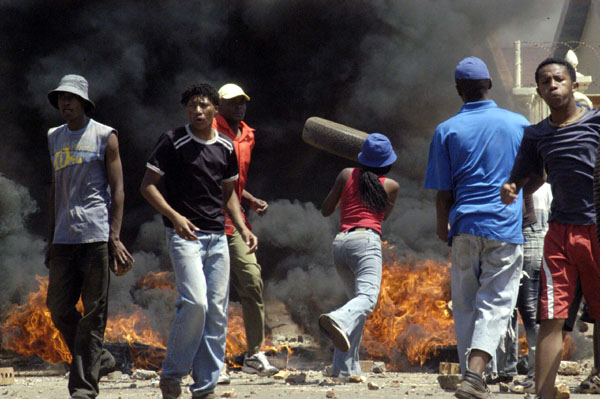
Riot police fired tear gas and rubber bullets late Sunday to restrain a group of vandals who disturbed a peaceful rally celebrating Argentina’s gutsy performance in a 1-0 loss to Germany in the World Cup finals.

Parents with small children could be seen fleeing in fear after police, who initially remained on the sidelines as jubilant fans poured into downtown Buenos Aires, began chasing down the vandals on motorcycles. The youths, many of them with their faces covered and drinking heavily, responded by hurling rocks, destroying store fronts and even breaking into a theater.

Police said 20 officers were injured and at least 60 people were arrested. The vandals tore down street lights and ripped up the stone from some streets to throw at officers.

The chaotic situation marred what was an otherwise spontaneous show of support for Argentina’s national team after its best World Cup run in 24 years.

Amid the outpouring of gratitude, there was a hint of frustration that Messi, the four-time world player of the year, didn’t turn in a stronger performance.

“Messi still isn’t Maradona,” said 31-year-old Eduardo Rodriguez, referring to Diego Maradona, who lifted the championship trophy for Argentina in 1986 and led the ‘albiceleste’ to its last World Cup final, also against Germany, in 1990. “But this here is a party. We’re all proud of our warriors.”

Despite the pride over their team’s performance, many Argentines couldn’t hide the pain.

In Rio de Janeiro, more than 70,000 Argentina fans cheered on their team, many having traveled upward of 40 hours by car.

Source: AP

Since Trayvon Martin 480 Blacks have been murdered in Chicago

And no outrage whatsoever

Think about that for a moment. More than 500 murders in 2012, and approximately 150 so far this year. 75% of the victims are Black. And most of it is Black on Black violence. Gang violence. Drug related violence. Crimes of passion. Crimes of opportunity.

While Chicago may not have the highest murder rate in the nation, it has the highest gross number of murders.

Strangely the black community expresses neither outrage nor angst over the level of violence in Chicago, home to Barack Obama and Oprah Winfrey.

Especially since so many of the victims are people of colour. But just try to talk about slavery from hundreds of years back and see the wild response.

Is the victim’s race less important than the race of the perp?

An extremely detailed analysis of murder in Chicago is available, but not a single black voice cares.


Snipers fire at Russian media in Kiev

ruptlyRT’s camera crews have been fired upon by rioters as they tried to film the escalating violence on Kiev’s Independent Square. Armed protesters have taken control of Hotel Ukraine, trapping members of the RT crew inside.

“We were just shot at. It broke a window over here. We were standing centimeters away when a gunshot hit the room where we have our live position,” RT correspondent Aleksey Yaroshevsky said, pointing to the window that had been smashed by the gunfire. He said there were unidentified snipers firing from buildings all around Independence Square.

“There’s no truce at all,” Yaroshevsky added, describing how, a few hours earlier, he witnessed rioters pushing police back from the barricades amid weapons fire.The camera team of RT’s video agency Ruptly was shot at during filming. One of the bullets grazed the bulletproof vest of journalist Danil Asimov as he stood by the window on the 14th floor of a Kiev hotel.

Correspondent Egor Piskunov and his camera crew were also caught in the crossfire as they tried to film Independence Square from Hotel Ukraine.

“The cameraman tried to film what was happening on the other side of the hotel and he was fired at. Thankfully they missed. As soon as they [cameramen] realized there was a bullet they dropped down to the floor,” Piskunov told RT.

Armed rioters have taken control on Hotel Ukraine and are using it as a base to fire on Independence Square, reports Ruptly news agency. Piskunov and his team have barricaded themselves in their hotel room and covered the windows.

“There are live rounds being fired all around this building. Rioters are occupying the floors right now,” said Piskunov.

He confirmed that EU Foreign Ministers from Poland, France and Germany had quit the Ukrainian capital because of security concerns. They were scheduled to meet with Ukrainian President Victor Yanukovich and members of the opposition on Thursday to discuss a solution to the unrest.

Limpopo protesters set up pay stations

limpopo2Protesters demanded entry fees to Relela and Kubjana villages in Limpopo on Friday morning. The “pay stations” set up at road blocks were operated by protesters in full view of the police.

Limpopo police spokesman Brigadier Hangwani Mulaudzi confirmed that roads were blocked in and around the villages, saying mainly police Nyalas were driving around.

Villages near Tzaneen were blocked with burning tyres and vandalised Stop signs.

The groups of four to ten protesters manning the road blocks wanted R5 entry fees from cars, and R10 from loaded bakkies,

People were only let through after they had paid the “entry fee”. Those who did not pay were forced to turn back.

On Friday morning, the police refrained from using rubber bullets when the protesters screamed at the officers to back off.

Taxi operators refused to drive through the area, forcing people to go on foot.

On Thursday, residents of Kubjana village near Relela torched the property of a local businessman after the body of a child and two other unharmed children were found in his car.

They had also clashed with police and stoned them.

The protests began after a schoolgirl from Relela, Khomotso Raolane, 15, was found murdered and mutilated, Sapa reported.

Her hands had been cut off and her cellphone and house keys placed inside her stomach, which had been sliced open. Her arms had been tied behind her back.

Two people were taken in for questioning but later released. Residents burnt their houses down on Saturday. During that protest a 15-year-old boy was shot dead, allegedly by police.

On Tuesday night, 15 police officers were injured and 19 police vehicles damaged when around 1500 people, armed with petrol bombs and stones, attacked the Relela satellite police station.


Cannibal in Central African Republic eats his enemy’s leg

mcentafrThe BBC reports that “a man who ate another man’s flesh in the Central African Republic has told the broadcaster that he was seeking ‘revenge’ for the murder of family members”.

The man, who calls himself “Mad Dog”, was in a Christian mob who attacked a Muslim in the capital Bangui.

He said he had been “angry” because Muslims killed his pregnant wife, his-sister-in law and her baby.

At least 1,000 people have been killed since violence broke out in the Christian-majority country in December.

Tens of thousands have also been forced to flee their homes in the sectarian conflict.

‘Magic’ powers

“Mad Dog” told the BBC’s Paul Wood he had seen his victim sitting on a minibus and decided to follow him.

More and more people joined him until he was at the head of a mob of some 20 youths, he said.

They forced the bus driver to stop and dragged the Muslim man out on the street, where he was beaten and stabbed before being set on fire.

Footage of the incident shows “Mad Dog” eating the man’s leg.

According to eyewitnesses, no-one tried to intervene.

Some people in the Central African Republic wear amulets containing the flesh of men they have killed because they believe it makes them invincible. – extract from bbc.co.uk

Black township Khutsong explodes, 5 killed

A previous riot in Khutsong

Five people, including a sangoma, were killed allegedly by community members in Khutsong near Carletonville on the West Rand on Sunday, Gauteng police said.

 About 400 men, believed to be Khutsong residents, held a meeting to discuss gangsterism earlier in the day, Brigadier Neville Malila said.

Shortly after the meeting started, the crowd split up into smaller groups. One of the groups went to a house in Khutsong Extension Three, where they attacked a 61-year-old traditional healer, setting him and his house alight. The man died on the scene.

Other splinter groups from the meeting went to Extension Four Phase Two, where two young men, allegedly members of the Casanova gang, were assaulted and set alight. They also died at the scene.

Malila said that in Extension Five, Carletonville, the groups assaulted a number of people they accused of being gangsters.

“Two alleged gang members were stoned, one died on the scene and the other at the Carltonville Hospital.”  No one had been arrested by early Sunday evening.

“Police vehicles who responded to the calls were stoned and damaged.”

No police were injured, and one resident who was assaulted by the group was in hospital in a stable condition.

Malila said the area remained volatile and there was increased police visibility and Public Order Policing Unit members were also called in to stabilise the area.

Acting provincial police commissioner Lt Gen Lesetja Mothiba urged anyone with information to come forward as such acts of violence could not be condoned.

Earlier, Constable Thembi Masango said that the sangoma was accused of working with gangsters in the area,.

She said the situation was “chaotic” just before 3pm.

Paul Ncwane, the chairman of the SA National Civic Organisation in the area said there were helicopters and police “Nyala” armoured vehicles, as well as police officers on foot in the area.

Angry people were moving around in groups and were splitting up to avoid the police and confuse them.

He said the community had had enough of young boys “terrorising them”.

“We are trying to stop gangsters. Women and children are living in fear because of these boys,” he said.

He said groups were also blocking the Potchefstroom road and throwing rocks at cars. – Sapa

Turfloop quiet after violence errupts

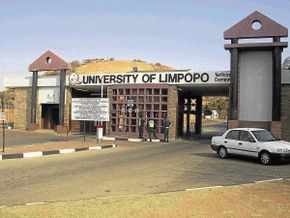
turfloopThe situation at the University of Limpopo’s Turfloop campus was quiet and under control on Friday after a wave of protests, police said.

“We are still monitoring the situation, but it is very quiet,” Brigadier Hangwani Mulaudzi said.

On Thursday, police used rubber bullets and teargas to disperse a group of protesters at the university.

Mulaudzi said the protest started on Wednesday night, and continued into Thursday morning.

“Some of the protesters stoned vehicles and blocked the entrances to the university. We had to bring in reinforcements to assist local police,” he said.

Twelve students were arrested and charged with public violence. They would appear in the Mankweng Magistrate’s Court soon.

Mulaudzi said the protests were sparked by a dispute over Student Representative Council (SRC) elections.

“Different student bodies were fighting among themselves but we cannot allow students to take matters into their own hands and destroy public property,” Mulaudzi said.

Black gang war errupts at Pretoria school

After his ear was cut off in a gang attack

Violence erupted when black pupils from a Pretoria West school attacked a group from Langenhoven High School on Wednesday, leaving at least four pupils critically injured.

One was rushed to hospital with an ear cut off; another had a sharp instrument stuck in his back.


In what parents on Thursday termed gang-related violence, the boys from Pretoria West arrived outside the school gates in a taxi they had hired specifically for that purpose.


They wielded an assortment of weapons, including knives, pangas, small axes and other sharp weapons.


“They waited outside the gate, and attacked my son just as he came out on his way home,” said Lucas Mgidi, whose son’s ear was cut off in the fight. Mgidi said his son had been caught in the attack meant for a rival group.


Department of Education spokesman Gershwin Chuenyane said a team would be sent to investigate the circumstances around the incident.


“We are saddened by the injuries suffered by the pupils, we will send psycho-social officials to talk to them,” he said.


Mgidi said his son had fought back when he found himself in the thick of things, but he was left badly injured and bleeding after being hit with bricks, booted feet and fists.


The boy was hit on the side of his face with a knife that severed most of his left ear. “His friends arrived at the scene to find him looking very bad.


“They picked him up, took the piece of ear lying on the ground near him and flagged down a passing taxi to remove him from the situation and the possibility of further injuries,” Mgidi said.


Mgidis’ son’s friends called his parents to notify them of the injury, and the father asked the taxi driver to drop his son off at a local hospital.


Maropeng Mamabolo, whose son was among the group from Pretoria West, said her son was also left badly injured.


He was bleeding profusely and had a sharp instrument stuck in his back from the clash.


A parent admitted that she knew the boys had been heavily armed. “They had dangerous weapons on them, they might even have had a gun.”


The police had been called to the scene, and on Thursday spokeswoman Sergeant Ann Portman said when the officers arrived most of the injured had been removed.


“We are investigating the possibility of the violence being gang-related,” she said, adding that a 15-year-old boy from Langenhoven had been arrested yesterday.


“He was the only identifiable one, and we released him into his parents’ custody, pending the investigation.”


Police would be collecting statements from the injured boys once they were well enough to talk. “And then more arrests will follow,” Portman said.


Mgidi said they now feared for their son’s life, and did not know how safe he would be when he was well enough to return to school.


The pupil’s aunt blamed the school for allowing the situation to escalate out of control. “If they had called in the boys and spoken to them my nephew would not have acted desperately and asked for assistance.”


Both boys were out of intensive care by Thursday afternoon, with their parents saying they expected them to be discharged soon. – Pretoria News

Police fire rubber bullets at students

saps6Police fired rubber bullets at Goldfields Further Education Training students who stoned them and broke college windows on Wednesday, said Free State police.

They arrested 27 of them for public violence and malicious damage to property, Captain Stephen Thakeng said.

He said college management called the police about an illegal gathering by students, who were breaking windows.

When the police arrived students threw stones and empty bottles at their cars. Police used rubber bullets when they refused to disperse.

Police were monitoring the situation on Wednesday afternoon. – Sapa

On the prejudices of ‘progressives’

roodt_dan_wiki

by Dan Roodt

[followbutton username=’danroodt’ count=’true’ lang=’en’ theme=’light’]

Like Dan Roodt’s Facebook page

My first question upon reading this sorry little ego trip from a Daily Maverick columnist who obviously thinks she deserves the Nobel prize for literature in a few days, is: Why don’t you go back to the UK where you spent 14 halcyon years? Why return to this backward country where English is mostly a second language to everyone – even to people like you who are hardly on the English peerage list – and therefore in various states of creolisation, pidginisation, etc.?

Many sub-editors and journalists at English-language newspapers in this country are actually Afrikaners. Maybe you should go on a campaign and get them fired and replaced by born-and-bred Englishmen?

Recently the Coloured champion of English and anglicisation in South Africa, Jonathan Jansen, claimed that “English will unite us”, where Afrikaans divided us, or some such lunatic fallacy. The truth is that English, like any language, unites as well as divides. In the UK, the British class system has created almost two worlds, an upper class gossiped about in the tabloid press and an anomic, drug-ridden white underclass whose children pass out in public places as reported here.

In the USA, which until recently used to be an English-speaking country, there is the Mason-Dixon line which no longer exists politically, but which still defines two cultures. The New York Times regards Southern identity with the same suspicion as a Soviet commissar would look upon stirrings of nationalism in any satellite state. We Afrikaners have a lot in common with Southern Americans, having lost an important war in the nineteenth century but also being puritans and Calvinists. The other day I read a comment by the Austrian intellectual Erik von Kuehnelt-Leddihn describing American folk music, especially country, as Calvinist and I must admit, he is right! The contemptuous American-liberal view of “red-state fascism” corresponds very much to the Johannesburg leftist’s supercilious “interest in the oddities of post-Apartheid whiteness”, as Nicky Falkof puts it.

To me English is also a foreign language, like French. But I really love reading books in French and even sometimes, more rarely, in English. When a black taxi knocked me over on my bicycle in DF Malan Drive a few years ago, I lost a lot of what Falkof would call my white skin, and spent a week immobile on my side. To ease the pain and discomfort, I read three Jean Echenoz novels and I think his quirky, ironic prose anaesthetised me a little and took my mind away from my immediate inability to even get up and go to the toilet without help.

I have never come across a Frenchman or -woman who held me in contempt because I was not a mother-tongue writer of French. Yet, Nicky Falkof, this is what you seem to be doing: you despise people who do not happen to be “to the manner born”, to quote J.P. Donleavy. I gather you were raised in some deep corner of Houghton where anglophilia was part of your noble upbringing.

By implication you are also saying that Afrikaners like Sunette Bridges and others are foreigners because they do not speak or write British English properly. The theme of alienation, becoming-foreign in the land of one’s birth – my forebears only came here in 1701 so I have not been properly naturalised as a “South African” – is one that really interests me. We named most of the country’s towns and cities, yet we are now seen as strangers. Farm murders are also an expression of xenophobia because, at least since the revolution, Afrikaners are considered foreigners or settlers, as Thabo Mbeki, Ruth First and many others have assured us.

That said, and being a foreigner/stranger, an “étranger” – if you know the famous novella by Albert Camus bearing that title, you will understand the existential alienation concomitant with being “not of this place”, the RSA, which is now oh so English – I cannot say that I know too much about your exalted language.

Yet the one thing I do know about South African English is that it is really horrible, lacking in aesthetic sense and coherence. Even mother-tongue speakers – although that might be a contradiction in terms – make lots of mistakes all the time and of course spelling and grammar have fallen by the wayside since the revolution and Kader Asmal importing something called “outcomes-based education”. Have you heard how blacks speak English? Have you seen how some of them write it, even ones with university degrees? Because it is not their own language, but also because since 1994 they have had sub-Bantu education. Maybe you should apply some of your heart-felt linguistic snobbery there?

Or is it not politically correct to put blacks down on account of their English style, but in relation to those local whites who object to being killed, tortured and raped, it is almost de rigueur?

Your other concern, that these hapless non-English are not amenable to being manhandled and executed by Foucauldian freedom fighters, and are actually usurping the register of genteel leftist diction, might be more problematic than you think. You describe it as “a ham-fisted attempt at adopting progressive discourse”.

First of all, I regard as ham-fisted the attempts by English people such as yourself to adopt some kind of local identity. Why does Woolworths sell boerewors and koeksisters? Why are you not proud to say that you are English, hoist the Union Jack or preferably the St. George’s Cross, and leave us in our benighted enjoyment of sosaties and pap, dubious Afrikaans poetry and popular songs, including Steve Hofmeyr, much like British peers on a visit to Africa would gaze from a distance at the dancing natives in colonial times?

At its simplest level: why do you want to correct our grammar? Lately, you or your underlings have even taken to correcting Afrikaans grammar, something about which you know absolutely nothing.

At a more theoretical level – and this might be another primitive display of non-English mores, as we are straying from “common sense” now – what you call “progressive discourse” probably means some variation of Marxism. To the extent that Karl Marx used Hegel and German indealism to construct his little dogma of the class struggle, we “naive people of the veld” could level exactly the same accusation at you “progressives”: Why did you pollute Hegel with your quasi-religious social eschatology? Progressivism in itself stands revealed as a perverted – more precisely perverse, even in a sexual sense – form of idealism.

By the way, the expression “naive people of the veld” is derived from a statement made by Gillian Slovo, the daughter of South African Communist Party leader Joe Slovo who characterised all of Afrikaans culture, everything from Eugène Marais to Mimi Coertse or Arnold van Wyk, I suppose, as “the naive culture of the veld”. Gillian Slovo is English enough to remain in London and I sometimes wonder when all you “progressives” will follow her example.

Being “naive people of the veld”, we find some things difficult to understand. The cognitive limitations of the proverbial “dumb Dutchman”… One is the depths of sadism that the freedom fighters stoop to in their orgies of killing in rural areas, but sometimes in the cities too. The mutilation of the victim’s body is supposed to be a sign of clinical sadism, so we are not being semantically naive in referring to it as sadism.

The second conundrum is the depths of “progressive” contempt for our “naive culture of the veld”, our language, music, architecture, cuisine, art, literature, place names, and so on. How do we explain that contempt, even apart from the “progressive” penchant for everything British and colonial?

Is there some innate or structural connection between the sadism of the “natural born killers” stalking the countryside and the “progressive” need for humiliating, putting down and ultimately affirming a cultural and perhaps even racial superiority on the part of the cultural-Marxist nobility that rules the roost in South Africa, particularly in the media and the universities?

A phenomenon of which, needless to say, Nicky Falkof has just given us an exemplary demonstration.

[followbutton username=’danroodt’ count=’true’ lang=’en’ theme=’light’]

Like Dan Roodt’s Facebook page

Schoolboy stabbed to death

Crossroads
Crossroads

A black 17-year-old Grade 8 pupil was stabbed to death, allegedly by fellow black pupils, at New Eisleben High school in Lower Crossroads on Thursday, shortly after morning assembly.

Anele Mhawuli died at the Nyanga Day Hospital after he was stabbed multiple times.

Police spokesman Captain FC van Wyk said a murder case had been opened and no arrests had been made. Police said three pupils had been identified as suspects.

The Department of Education said reports indicated that the incident was gang-related.

“This is a senseless and tragic loss of life and our thoughts and prayers are with his friends and family during this difficult time,” said the department’s spokeswoman Bronagh Casey.

“The school does have 24-hour security, but it is not yet clear how the weapon was brought into the school. The WCED Safe Schools directorate is currently assessing the security measures at the school,” said Casey.

It is alleged that the incident occurred minutes after assembly was adjourned as the pupils were about to head to class for their first period.

“Three boys headed towards Anele and his friend, and they started talking. The boys then slapped Anele and he then took out a knife, they kicked him and he fell and that’s when they started stabbing him repeatedly,” said a pupil who saw the stabbing.

According to pupils, Anele had been in a fight the day before with the same group of pupils. The fight was because Anele and the perpetrators belonged to rival gangs, the Vuras and the Vatos, the pupils said.

Anele’s sister, Nosiseko, 32, said her brother had been in her care since 2009 and their parents were in the Eastern Cape.

“I got a call and was told to come to the school because my brother had been hurt. When I got there I was told he was at the day hospital. I wasn’t allowed to see him at the hospital because the doctors were busy with him. Minutes later I was told he was dead,” she said.

Nosiseko described her brother as a good boy who dreamt of being a pilot and loved “spaza” rap, a local form of underground hip hop music.

“Even if they arrest the perpetrators, what good will it be because my brother is no longer living and they are still alive?” she said.

Education MEC Donald Grant visited the family on Thursday and counselling was provided for pupils who had been traumatised by the incident.

Earlier this year, at least three pupils were stabbed and one was shot at school.

Ned Doman pupil Uviwe Mzingelwa, 18, was stabbed to death in March on a bus after an altercation with a fellow pupil.

In the same month, a Grade 9 pupil at Oscar Mpetha High School, in Khayelitsha, was stabbed after a playground fight.

Four pupils were apprehended for the incident.

In May, 17-year-old Enrico Martin was shot in the head and later died at Groote Schuur hospital. Martin was approached by gunmen as he was entering the school premises. The incident was allegedly gang-related.

Last month, a 16-year-old Northpine Technical High School pupil was taken to hospital after being stabbed at school. A 17-year-old was arrested and released into his parents’ custody.

A white teacher tried to committ suicide on Thursday after she was punched in the face by a black 14-year old schoolboy earlier this week. She had asked him to respect the rules concerning schooluniforms. – IOL/Beeld

ANC meeting ends in violence

ancA meeting of the ANC’s biggest branch in the Western Cape erupted in chaos this weekend when some of its members attacked others with knobkieries and pangas.

Four of the party’s members were rushed to a nearby hospital with head and back injuries.

The branch in Ward 40 Gugulethu met on Saturday evening in a rush to meet the deadline of nominating who should represent the party in next year’s provincial and national elections. The branch has 1 496 members and is expected to send 19 delegates to the list conference.

This represents nearly four percent of the 480 delegates at the party’s provincial list conference on October 19. This is the branch in which former ANC councillor Andile Lili and Loyiso Nkohla have large support and which ANC MPL Mcebisi Skwatsha belongs to.

Skwatsha was at the national executive committee meeting in Johannesburg at the weekend.

Other ANC heavyweights from the branch are Parliament’s Deputy Speaker Nomaindia Mfeketo and former chief whip Tony Yengeni.

Dullah Omar regional secretary Vuyiso Tyhalisisu said it was dark when the attack took place at the Baptist Church Hall in Barcelona informal settlement, Gugulethu.

Some members were still busy with registration. The meeting did not quorate at that time,” he said.

Tyhalisisu said a group of 15 people on the back of a white bakkie stopped outside and walked to the hall.

“They had knobkieries and pangas and started attacking people. People ran in every direction,” Tyhalisisu said. “The meeting never started.”

He said some ANC members were identified among the group.

Tyhalisisu said four of its members suffered head and back injuries and were taken to the KTC Day Hospital.

“They were discharged after a few hours,” he said.

Tyhalisisu said the ANC’s regional executive council (REC) had received information that the group had been given alcohol at a nearby tavern before the meeting.

“It is a serious issue. Some of our members would be too scared in the future to come to meetings for fear this could happen to them,” he said.

He said the branch will call those members identified to a disciplinary hearing.

ANC provincial secretary Songezo Mjongile said the party’s provincial executive committee (PEC) met on Monday and discussed the attack. He condemned the attack and said the PEC will investigate.

Police spokesman Tembinkosi Kinana said police had been called to the church hall after the assault.

“The suspects who could not be identified at the time fled in a white bakkie.

“Police have opened a charge of intent to cause grievous bodily harm,” he said. – Cape Times

South African police handled 12 000 protests

ecprotestPolice handled more than 12,000 public protests during the 2012/2013 financial year, Police Minister Nathi Mthethwa said on Thursday.

“Over the past four years, a total of 46,180 incidents were attended to and all were successfully stabilised, with 14,843 arrests effected,” he said at the release of the 2012/2013 crime statistics in Pretoria.

These were made up of 41,104 peaceful and 5076 violent protests by the SA Municipal Workers Union, the SA Commercial, Catering and Allied Workers Union, protests in De Doorns in the Western Cape, Marikana in the North West, and Zamdela in the Free State.

“During 2012/13 alone, police managed 12,399 public incidents. Of these 10,517 were peaceful and 1882 were violent public protests with a total of 693 various criminal cases reported,” Mthethwa said.

“Most of the cases were reported in the Western Cape and North West provinces. Currently, stability has been restored.” – Sapa

Strikes in mining sector hit five-year high

labourThe number of strikes last year in South Africa hit a five-year high, with the mining sector accounting for 82.4% of them, says the labour depratment.

A total of 99 strikes were recorded in 2012, close to half of them unprotected or wildcat strikes, and many of them characterised by violence, labour director general Nkosinathi Nhleko told journalists in Cape Town on Wednesday.

Tabling the latest Industrial Action Report, which covers the 2012 calendar year, he said strikes over the period involved 241 391 workers, cost the economy 3.3-million working days, and resulted in workers losing R6.6-billion in wages.

The trend was continuing into this year.

“From what we can all see, there is a continuation of the trend we experienced in 2012,” Nhleko said.

However, no figures were yet available for the current calendar year. Asked why so many strikes involved violence, he suggested this had to do with leadership.

“The issue of how parties in the dispute have got to conduct themselves … hinges largely around the issue of exercise of leadership.

“And when we cite leadership as a factor … it is also informed by the mere fact that when these things begin to happen, it is something that wants to suggest that at a level of exercise of leadership, there is something that has not been handled properly and … accordingly.”

‘Worrying’
This, Nhleko said, was a “worrying point”. He said “social partners” needed to tackle the issue of how to prevent violence during strikes.

According to the report, 99 “strike incidents” were recorded in 2012, compared to 67 in 2011; 74 in 2010; 51 in 2009; and, 57 in 2008.

“South Africa experienced violent, bloody and deadly industrial actions in the mining, transport and agricultural industries … Out of 99 strikes processed within the department, 45 strikes were unprotected.”

The department of labour said in a statement that “A feature of industrial action during 2012 was the heightened violence that accompanied strike action, particularly in the mining and transport sectors. The violence and damage to property that was evident in the agricultural sector should also be noted, although these were protest actions and not strictly strike action.”

Mining
The document finds most of the working days lost by industry were in the mining sector (82.4%).

“Wages, bonuses and other compensation issues still remain the main reasons for work stoppages in South Africa during 2012.”

Further, most workers involved in last year’s labour unrest were members of the National Union of Mineworkers.

Among the provinces, Gauteng – South Africa’s economic heartland – had the most work stoppages.

“Gauteng experienced 42 strikes in 2012, up from 33 in 2011, an increase of 27.3%.”

According to the report, workers still had confidence in the Labour Relations Act, the legislation governing bargaining processes and associated legislation, “[but] most of them believe that the cost of living is too high”.

Among its conclusions are that “government needs to take control of the situation and solidify practice and protocol with regard to wage negotiations before the nation’s mining sector becomes un-investable [sic] as a result of the strikes.” – Sapa