South Africans top the global list for entrepreneurial capacity

Possibly as a result of extra pressure from anti-white discrimination due to affirmative action and Black Economic Empowerment, South African self-made entrepreneurs top the global list.

The creation myth of American wealth is almost always rooted in the entrepreneur.

It’s the two kids who start a computer company in their garage or dorm room. Or the former standup comic who creates form-shaping undergarments, or the South African immigrant who creates a new electric car and private space program.

But despite the high-profile examples, America may actually be falling behind the rest of the world when it comes to creating entrepreneurial wealth. A new study from Barclays, “Origins and Legacy: the Changing Order of Wealth Creation,” finds developing countries now lead the U.S. when comes to wealth creation by entrepreneurs.

(Read More: Entrepreneur Asia: A CNBC Special Report)

Worldwide, 40 percent of millionaires (which is defined as those with investable assets of $1.5 million or more) cited a “business sale or profit” from their business as their source of wealth. Only a quarter of the millionaires cited inheritance as their wealth source.

In the U.S., only 21 percent of millionaires cited business sale or profit as their source of wealth. A much larger percentage cited saved earnings or personal investments as their sources of wealth.

Where the entrepreneurs are: South Africa comes out on top, percentage-wise

In the Asia-Pacific region, 57 percent cited business sale or profit as a source of wealth—far more than in the U.S. South Africa (68 percent) and Latin America (58 percent) were also higher.

So is America losing its entrepreneurial mojo? There is some evidence that entrepreneurial activity is flagging. The latest data from the Kauffman Foundation found that there were 514,000 new business owners a month in 2012, down from 543,000 in 2011. The 2012 numbers marked the lowest in five years.

(Read More: Key to Wealth: Work, Risk or Luck?)

A report from the Hudson Institute found that brand-new companies added 2.34 million jobs in 2010 compared with an average of about 3 million a year dating back to 1977.

But the Barclays report said another difference between the U.S. and other countries could also be one of basic wealth cycles. Wealth in developing countries is newer, and therefore there is more wealth from freshly minted companies than from savings or investments.

“These [developing] markets have a much shorter history of widespread wealth creation and many of the high-net-worth individuals in these markets are first generation wealthy,” the report said.

Entrepreneurs were also more likely to increase their fortunes during the recession compared with those with inherited wealth or those who made their money from investments and savings.

They are also more prone to taking risks, given that risk-taking is key to entrepreneurial wealth. As a result, their fortunes are more volatile than the wealth made from savings and earnings.

(Read More: We’re Rich Again! So Why Don’t We Feel It?)

“Entrepreneurs need to embrace volatility and recognize that fortunes can be lost as quickly as they were made,” the report said. – CNBC

Fracking a disaster in drought-stricken regions

fracking2US states suffering a drought are facing a dire water crisis exacerbated by hydraulic fracturing. The procedure consumes vast amounts of water, which has driven up prices and depleted certain aquifers and rivers.

In drought-stricken regions, fracking is taking a serious toll on the water availability of local communities, in some cases turning water into a scarce and expensive resource. The procedure powerfully blasts water, fine sand and chemicals into the ground to shatter rock formations and release oil or gas.

Fracking is occurring in several counties in Arkansas, Colorado, New Mexico, Oklahoma, Texas, Utah and Wyoming, which are currently suffering a severe drought, the Associated Press reports. Although the procedure requires less water than farming or overall residential uses, it contributes to the depletion of an already-scare resource.

Some oil and gas companies manage to drain states of their water supply without spending any money, by depleting underground aquifers or rivers. But when unable to acquire the resource for free, the corporations can purchase large quantities at hefty prices.

“There is a new player for water, which is oil and gas,” Colorado farmer Kent Peppler told AP, noting that he is fallowing some of his corn fields because he can’t afford to irritate them. “And certainly they are in a position to pay a whole lot more than we are.”

Peppler, president of the Rocky Mountain Farmers Union, said that the price of water has skyrocketed since oil companies have moved in. The Meade, Colo. Farmer said he used to pay $9 to $100 per acre-foot of water at city-held auctions, but that energy companies are now buying the excess supplies for $1,200 to $2,900 per acre-foot.

Last year, the city of Aurora sold 2.4 billion gallons of sewer water to the oil company Anadarko for $9.5 billion, AP reports.

With oil and gas companies willing to spend large sums of money on excess sewer water, the cost of this valuable resource has risen across several drought-stricken states. Some local farmers, unable to afford crucial irrigation for their fields, say they are praying for rain.

“I was going to bed every night and praying to the good Lord that we would get just one rain on the crop,” West Texas cotton farmer Charlie Smith told AP, noting that he is selling some of his groundwater to drillers, since it is not enough to irrigate his crops. “I realized we’re not making any money farming, so why not sell the water to the oil companies? Every little bit helps.”

Environmental activists are calling for limitations on drilling in drought-stricken regions.

“We don’t want to look up 20 years from now and say, ‘Oops, we used up all our water,” said Jason Bane of the Western Resources Advocates.

Last summer’s record-breaking drought, which was the worst since the 1930’s Dust Bowl, resulted in a crop shortages that raised prices in US grocery stores. With a lack of water to irrigate crops across the US this year, Americans may once again find rising prices of both water and food.  – RT

Senior South African cop killed

SAPS_badgeA senior Gauteng Province police officer was found dead in an open field near Hammanskraal north of Pretoria on Tuesday, police said.

“Early this morning his body was found with his hands and feet tied,” Brigadier Neville Malila said.

“Forensic experts are on the scene to establish the cause of death.”

He said the officer’s vehicle was found abandoned on the R101 in Rooival. His family told investigators he left home to go to work shortly after 2pm on Monday.

“Late yesterday afternoon police officers on patrol spotted the officer’s vehicle parked next to the road,” said Malila.

“On inspection they found a uniform and an appointment certificate in the vehicle and started enquiring on the officers whereabouts.”

The officer’s name would not be released until his family was notified. – Sapa

Tech giants deny knowledge of PRISM spy operation

techgiantsAs the dust settles on the revelation that the U.S. government has been mining data from most of Silicon Valley’s largest companies in a program called “PRISM,” one question stands out: How did the NSA get access?

Apple, Google, Yahoo! and Microsoft, the largest companies involved in PRISM, the existence of which was revealed last night in a simultaneous Washington Post and Guardian scoop, have categorically denied knowledge of or participation in the program in a series of statements, while acknowledging that they do provide targeted access to the government when required to do so by law, generally according to court orders.

“We have never heard of PRISM,” says Apple’s spokesman. “If the government has a broader voluntary national security program to gather customer data we don’t participate in it,” says Microsoft’s. “We do not provide the government with direct access to our servers, systems, or network,” says Yahoo!’s. “Google does not have a ‘back door’ for the government to access private user data,” says Google’s.

Even unofficially, the tech companies seemed baffled by the allegations. The Guardian spoke with tech executives off the record, all of whom were “confused” by the documents published in the paper. None had ever heard of PRISM.

So what gives? Does the government have backdoor access so secret that not even their targets are aware? Are the tech companies lying? Or are they forbidden—as Verizon allegedly is with its NSA arrangement—from acknowledging its existence to an absurd extent? – gawker.com

Tens of thousands protest Confed Cup costs in Brazil

Brazilians protest
Brazilians protest

Tens of thousands of people took to the streets of major Brazilian cities Monday protesting the billions of dollars spent on the Confederation Cup and higher public transport costs, police said.

In Sao Paulo, the country’s economic capital and most populous city, an estimated 30,000 marched toward the main Paulista Avenue, with no repetition so far of the violence that marred similar protests last week.

“I came because I want Brazil to wake up. It’s not just to protest the higher transport fares, but also because of shortcomings in education and health,” said 20-year-old Diyo Coelho, who marched with friends carrying flowers.

Police said 6,000 protesters thronged central Rio, while organizers said 5,000 marched toward the National Congress in Brasilia, blocking the main avenue.

There were also protests in Belo Horizonte, Fortaleza, Salvador an other cities.

“I am here to show that Brazil is not just about football and festival. We have other concerns, such as the lack of investments in things that really matter, like health and education,” said Daiana Venancio, a 24-year-old lawyer marching in Rio.

Earlier, Sports Minister Aldo Rebelo warned that that authorities would not allow the protests to disrupt international football tournaments Brazil has pledged to host — the Confederations Cup and next year’s World Cup.

“The government assumed the responsibility and the honor to stage these two international events and will do so, ensuring the security and integrity of the fans and tourists,” he said.

Demonstrators in several major cities are up in arms over hikes in mass transit prices — from $1.5 to $1.6 — as well as over the $15 billion earmarked for the two sports events amid calls for more health and education funding.

The Confederations Cup, a dress rehearsal for the 2014 World Cup that runs through June 30, got under way in Brasilia’s national stadium Saturday with Brazil trouncing Japan 3-0. – AFP

China, Germany press US to explain NSA-spying allegations

South China Morning PostChina on Monday joined calls for Washington to provide explanations following disclosures of National Security Agency (NSA) programmes, which collect millions of telephone records and track foreign internet activity on US networks.

Foreign Ministry spokesperson Hua Chunying told reporters that Washington needs to heed international concerns expressed since the programmes were made public earlier this month by former NSA contractor Edward Snowden.

Officials and lawmakers in Germany and other countries are already pressing Washington for information about the collection of information that might affect their citizens’ privacy.

“We think that the United States should regard seriously the concerns and demands of the global community and people from all countries and furnish the global community with a necessary explanation,” Hua said at a regularly scheduled briefing.

Snowden flew to the Chinese autonomous region of Hong Kong on May 20 and is believed to still be there, though in hiding at an unknown location. China hasn’t said whether it would cooperate with any US demands for his extradition, and Hong Kong’s Western-style legal system that is distinct from that on the Chinese mainland allows opportunities for him to appeal.

US officials have defended the surveillance programmes as essential to disrupting terrorist plots.

Former vice-president Dick Cheney said on Sunday that he was “very, very worried” that Snowden would pass on sensitive information to China in return for immunity or sanctuary.

Asked whether Snowden was a Chinese spy or co-operating with Beijing, Hua answered, “This is complete nonsense.”

Max Keiser called Cheney out for being duplicitous as he was instrumental in selling American military equipment to China.

Addressing the backlash against him in the US, Snowden said much of it was predictable. He said: “It’s important to bear in mind I’m being called a traitor by men like former vice president Dick Cheney. This is a man who gave us the warrantless wiretapping scheme as a kind of atrocity warm-up on the way to deceitfully engineering a conflict that has killed over 4,400 and maimed nearly 32,000 Americans, as well as leaving over 100,000 Iraqis dead. Being called a traitor by Dick Cheney is the highest honor you can give an American.”– Sapa-AP

Desmond Tutu on Father Trevor

trevorhuddlestoneThe epitaph on the granite base of the statue in the English town of Bedford simply states, “No white person has done more for South Africa than Trevor Huddleston,” the words of Nelson Mandela.

I don’t know if Father Trevor, as we used to call him in Sophiatown, would be totally comfortable with the fact that a 12-word précis of his life should include the descriptor, “white”. Why did Madiba not use a nationalist or professional reference instead, such as, “No English person” or, “No Christian person”?

No. Madiba was right. When we grew up, the colour of our skins was what defined who we were, where we lived and what we were allowed to be. It was fundamentally important that Trevor Huddleston was white.

His kindness and compassion, his servant leadership, were evidence that not all white people had horns and tails. He taught us that the limitations imposed on us by apartheid were in fact false ceilings, that the sky was the limit.

One of the earliest and most painful memories of my childhood is accompanying my father, a school principal, to the shop – I think it was in Ventersdorp – and witnessing him being humiliated by a young white shop assistant… being addressed, “Ja, boy?” by one much younger than himself, and being forced to swallow his pride.

But I believe the most defining moment of my life occurred when I was about nine years old, outside the Blind Institute in Roodepoort where my mother was a domestic worker. We were standing on the stoep when this tall white man in a black cassock, and a hat, swept by. I did not know that it was Trevor Huddleston. He doffed his hat in greeting my mother.

I was relatively stunned at the time, but only later came to realise the extent to which it had blown my mind that a white man would doff his hat to my mother. It was something I could never have imagined. The impossible was possible.

I subsequently discovered that this was quite consistent with Trevor Huddleston’s theology: that every person is of significance, of infinite value, because they are created in the image of God.

A few years after that meeting in the street, I was admitted to Coronation Hospital, in Coronationville, where I was diagnosed with TB. I was to spend 20 months in hospital. Trevor Huddleston visited me regularly; he made me feel very special.

I remember drawing a birthday card for Father Trevor in 1947, and later listening to the wireless broadcast of the wedding service of Princess Elizabeth and Philip Mountbatten, the Duke of Edinburgh.

It was not that I was extra-special in any way. He made so many people feel special, everyone he touched. He was one of us, a member of our family, God’s family. When he wore a white cassock it quickly became grubby from all the little hands that tugged him and hugged him. Then he’d shoo us out of the office because he had to meet someone “important”. The fact is, he made us all feel important – because we all are!

There was a boy called Hugh, for example, who – like me – was pretty much a little township nobody. Hugh was pretty good at blowing the trumpet, not that he could afford one of his own. The next thing, Father Trevor made contact with Louis “Satchmo” Armstrong and a trumpet for Hugh was on its way from the US. Bra Hugh Masekela went on to become one of the world’s top trumpeters.

Of course, Father Trevor was eventually to leave Sophiatown. After 13 years of service, in 1956, he returned to England. In 1960 he was appointed Bishop of Tanzania, and in 1978, Archbishop of the Province of the Indian Ocean. He was a founder member of the Anti-Apartheid Movement, was appointed vice-president of the movement in 1961 (serving for 20 years), and served as president from 1981 to 1994.

Trevor Huddleston’s humanity, and the passion with which he opposed apartheid – and other injustices and indignities – were attributes I have sought to emulate throughout my life.

As a nation that is still seized with the necessary process of healing the divisions of its past, we would do well not to allow the contributions of giants, such as Father Trevor, to be lost in the mists of time.

This is an extract from Desmond and the Very Mean Word. Text copyright 2013 by Desmond M Tutu. Illustrations copyright 2013 by AG Ford. Reproduced by permission of the publisher, Candlewick Press.

Tomorrow is the centenary of Father Huddleston’s birth in Bedford, England. This article is the first in an ongoing, occasional series provided to the Cape Times by the Desmond TutuDesmond and Leah Tutu Legacy Foundation.

SA will ‘enforce’ peace in DRC

On the ready to enforce peace

Tight security has been thrown around the deployment of more than 1000 heavily armed South African troops to the Democratic Republic of Congo.

In the past 72 hours, 1300 soldiers from 6 SA Infantry Battalion, including paratroops, special forces and engineers, have left for the eastern DRC as part of a UN peace enforcement mission.

 The troops are part of a brigade deployed to target the M23 rebel group waging war on the DRC government.

Defence Ministry spokesman Siphiwe Dlamini dismissed the issue of troop movements as “speculative” and refused to comment further.

But defence analyst Helmoed Heitman said: “There has been a lot of activity [at the weekend]. Not only at Bloemspruit, in the Free State, where the troops are deploying from, but also in Pretoria, where Waterkloof air force base has been a hive of activity.

“After the Central African Republic situation, South Africa is taking this far more seriously than the UN. There is a big concern that the UN sees this as a peacekeeping, and not a peace enforcement, mission.” – timeslive.co.za

British spying claims outrage Russia, Turkey and South Africa

Russian Prime Minister Dmitry Medvedev, also spied upon

Russia, Turkey and South Africa expressed outrage on Monday over revelations that Britain and the United States spied on foreign delegates at G20 meetings in London in 2009.

The Turkish government summoned Britain’s charge d’affaires to explain a newspaper report that London put Finance Minister Mehmet Simsek under surveillance during the talks.

Moscow meanwhile expressed concern that US spies had intercepted communications made by then president Dmitry Medvedev while he was in Britain, and some Russian lawmakers warned it could harm US-Russian ties.

British Prime Minister David Cameron said he would not comment on intelligence matters, but the revelations were likely to be embarrassing as he hosts G8 leaders at a summit in Northern Ireland.

The claims are based on documents leaked by former US spy Edward Snowden, who has already invoked the ire of Washington by lifting the lid last week on a massive US Internet surveillance system.

According to The Guardian newspaper, Britain’s GCHQ electronic eavesdropping agency used “ground-breaking intelligence capabilities” to monitor communications at two G20 meetings in April and September 2009.

Delegates were allegedly tricked into using specially prepared Internet cafes which allowed British spies to intercept and monitor email messages and phone calls through BlackBerry devices.

GCHQ was also able to track when delegates were contacting each other and the agency targeted certain officials, including the finance minister of NATO ally Turkey.

Ankara responded with outrage, contacting the British ambassador and summoning the deputy head of mission to demand an explanation, a foreign ministry diplomat said.

Earlier, the ministry said that if the report was true, “such an action by an ally country is unacceptable”.

“This will constitute a scandal in terms of relations between the two countries if any truth is found in the allegations,” it said.

The British Foreign Office confirmed that its deputy head of mission had met Turkey’s director general for intelligence and security at the foreign ministry in Ankara, but gave no details.

Officials travelling to Northern Ireland with Russian President Vladimir Putin meanwhile expressed concern over claims that US agents spied on his predecessor while he was in London.

“As a country which takes steps to protect its own information, we are worried,” said Russia’s G8 negotiator Alexei Kvasov.

The reaction in Moscow was less diplomatic.

“It’s a scandal!” fumed Alexei Pushkov, the head of the lower house of parliament’s foreign affairs committee, on Twitter.

Senator Igor Morozov, a member of the international affairs committee of the upper house of parliament, said it risked hurting ties with Washington.

“In this situation how can we trust the current announcements of US President Barack Obama, who is talking about a new ‘reset’ (of relations)?” he told the RIA Novosti news agency.

Cameron earlier told Sky News television: “We never comment on security or intelligence issues, and I am not about to start now.”

The Guardian said that South African computers were also singled out for special attention, prompting Pretoria to warn against the abuse of privacy and “basic human rights”.

“We have solid, strong and cordial relations with the United Kingdom and would call on their government to investigate this matter fully with a view to take strong and visible action against any perpetrators,” the foreign ministry said.

The leaked documents suggest that orders to gather intelligence on G20 delegates came from a senior level within the government of Britain’s then prime minister Gordon Brown.

A briefing paper prepared for GCHQ director Iain Lobban, dated January 9, 2009, said the agency’s remit was “to ensure that intelligence relevant to Her Majesty’s government’s desired outcomes for its presidency of the G20 reaches customers at the right time and in a form which allows them to make full use of it”.

Snowden, currently in hiding in Hong Kong, has vowed to fight any attempt by the United States to extradite him, as it pursues a criminal investigation into the Internet surveillance leaks.

In a live question-and-answer session on The Guardian’s website on Monday, he said there were more revelations to come about the US National Security Agency’s access to Internet data. – AFP

Snowden regards it as an “honor” to be called a traitor by Cheney

Edward Snowden
Edward Snowden

US intelligence leaker Edward Snowden said on Monday that he was honored to have been branded a traitor by former vice president Dick Cheney and other senior politicians.

“Being called a traitor by Dick Cheney is the highest honor you can give an American,” he said, in an online interview hosted by the Guardian newspaper.

The 29-year-old said Cheney had helped put in place the huge secret program to monitor telephone calls and Internet traffic that Snowden revealed last month when he fled to Hong Kong and began leaking secret US documents.

He accused former president George W. Bush’s conservative right-hand man of “deceitfully engineering” the Iraq war.

“If they had taught a class on how to be the kind of citizen Dick Cheney worries about, I would have finished high school,” Snowden said, poking fun at his own relative lack of formal qualifications. – AFP

Joemat-Pettersson denies kickbacks over game-farm sale

Tina Joemat-Pettersson

Minister of Agriculture, Forestry and Fisheries, Tina Joemat-Pettersson has refuted a media report that she received kickbacks, her office said on Monday.

The allegations in the Sunday Times that Joemat-Pettersson benefited from a game-farm sale were “unsubstantiated and regrettable”, her spokeswoman Palesa Mokomele said in a statement.

“Those who know Minister Joemat-Pettersson know her to be a people orientated leader who consistently serves others and strives for the development of rural women and rural communities,” Mokomele said.

“The said farm was for the benefit of rural women through skills development and employment creation.”

The Sunday Times reported that Joemat-Pettersson was being investigated for allegedly taking a kickback for arranging the purchase of a R18 million game farm for disadvantaged women.

According to the report, she was allegedly paid R100,000 in 2006 for her efforts in closing the purchase of Sunset Game Lodge, outside Douglas, while she was MEC in the Northern Cape.

Joemat-Pettersson and the lawyer who facilitated the deal, Monica du Toit, are the focus of an investigation by the Asset Forfeiture Unit and the Special Investigation Unit, the Sunday Times reported.

Mokomele said Joemat-Pettersson would fully co-operate with any investigation into the matter.

“The minister will request that both the Parliamentary Ethics Committee and the African National Congress’s integrity committee investigate all allegations levelled against her and her conduct,” said Mokomele. – Sapa

Sweden to ban bestiality

sweden_bSweden will next year introduce a total ban on bestiality, which until now has only been illegal if cruelty to the animal could be proven, the government said Thursday.

“The government is now tightening the rules surrounding bestiality so there will be no doubt about the fact that it is prohibited to inflict suffering on animals,” Minister for Rural Affairs Eskil Erlandsson said in a statement.

“The should be no doubt that bestiality is unacceptable.”

Until now, bestiality was illegal in Sweden only if it could be proven that the animal had subjected to suffering.

From January 1, any sexual act with an animal will be punishable by a fine, a maximum prison sentence of two years, or both, even if the animal shows no sign of injury or suffering.

“It’s very good that the law will be changed,” a spokesman for the Swedish Federation of Veterinarians, Johan Beck-Friis, told AFP.

“It’s very important that society makes a clear statement that it is unacceptable to use animals that way,” he said.

The ban will bring Sweden in line with a European Union directive.

Germany introduced a ban in December, following in the footsteps of Britain, France, and Switzerland among others.

The Swedish parliament is expected to pass the bill into law soon, as there is broad political consensus on the issue.

According to Beck-Friis, under the current law veterinarians may suspect that an animal has been sexually abused but they are generally unable to prove it.

As a result, there are no statistics available on how common bestiality is in the country.

In 2006, the latest year for which statistics are available, about 100 cases of animals suffering injuries suspected of being related to bestiality were brought to the authorities’ attention, Beck-Friis said. – AFP

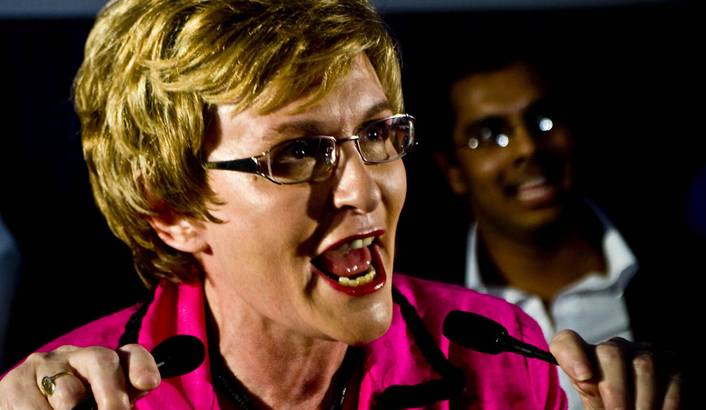
Zille joins ANC and Malema chorus in calling for ‘land reform’

Helen Zille
Helen Zille

The legacy of the 1913 Land Act was still with South Africa and so it is the duty of the state to implement effective redress through land restitution, Western Cape premier Helen Zille said on Monday.

“This will never remove or fully compensate for the pain suffered but it is a major step towards the restoration of dignity,” Zille said in a speech prepared for delivery in Cape Town.

“Effective delivery enables our society to own our future and it creates opportunities for active citizens to create the future of their design.”

Zille was speaking at the commemoration of the Natives Land Act of 1913.

She said it was critical to fulfil the redress and reconciliation mandates and that redress enabled society to honour the good in the past and acknowledge the bad.

There would be challenges in implementing land restitution and it required a balancing of different interests.

“There is no one-size-fits-all solution and each case has to processed in its own context,” Zille said.

She said whenever laws and policies were introduced in the past there had always been people who were willing to stand up and raise their voices and the 1913 Land Act compelled a generation of anti-apartheid activists.

History had shown that “evil triggers a backlash from good”, she said.

“Wherever injustice and oppression have reared their ugly heads, they have inspired resistance and protest to challenge it.

“The reason for this backlash from good against evil is not just because principles and values like freedom and justice are violated, but because human lives are deeply affected.”

Speaking at the same event, Cape Town mayor Patricia De Lille said the city was playing its part in ensuring redress and reconciliation took place to ensure land reform happened.

“In the value chain of restitution, the City of Cape Town plays its part to ensure that the Land Claims Commission is in a position to conduct its social function with those waiting for justice,” she said in a speech prepared for delivery.

“And most significantly, land restitution is featured as an objective in our strategic blueprint for the city, the Integrated Development Plan (IDP), unlike other cities.”

She said her career had been focused on fighting to address the “imbalances of history” but that it was also a personal fight for her as she remembered how her grandmother was forced to move because of the Group Areas Act.

“Our mission is to ensure that everyone has a stake in Cape Town.

“It’s why we are working hard to build a caring and inclusive city. And to build that future, we must ensure that we face up to our history, as painful as it is,” De Lille said. – Sapa

Turkey to probe ‘scandalous’ British spying

Turkish Finance Minister Mehmet Simsek

Turkey on Monday said it had contacted British authorities to inquire about “unacceptable” newspaper allegations that Britain spied on Finance Minister Mehmet Simsek’s emails and phone calls when he was in London in 2009.

Documents leaked by US former spy Edward Snowden appear to show that Britain spied on foreign delegates including fellow NATO member Turkey at G20 meetings at the time, British newspaper The Guardian reported Monday.

“It is clear that if the report is true, such an action by an ally country is unacceptable,” the foreign ministry said in a statement, stressing that it was waiting for “an official and satisfying statement from British authorities” on the matter.

“This will constitute a scandal in terms of relations between the two countries if any truth is found in the allegations,” it added.

As with the other G20 participants who were reportedly spied on, including South Africa, there is no suggestion that Simsek and his party were involved in any kind of criminal offence, according to the newspaper.

The newspaper said it had seen a document showing that Britain’s Government Communications Headquarters (GCHQ), its electronic eavesdropping agency, put Simsek under surveillance while in London, and possibly up to 15 members of his delegation as well.

The document stated that the objective was “to establish Turkey’s position on agreements from the April London summit” and their “willingness (or not) to co-operate with the rest of the G20 nations”.

According to the leaked files seen by the Guardian, British spies tricked delegates into using specially prepared Internet cafes. Those cafes allowed the spies to intercept communications and monitor email messages and phone calls through delegates’ BlackBerry devices. – AFP