People living in the Western Cape are better off than those in most other provinces. Most live in brick houses, have access to running water, flushing toilets and a better education than the average citizen, according to census figures released on Tuesday. It’s also the province with the least Africans.
There are 5.8 million people living in the Western Cape, of whom 2.8 million are coloureds, 1.9 million are black African, 910 600 are white and 58 000 are Indian/Asian.
The Western Cape and Gauteng have been confirmed as the provinces that attract the most people (numbering in the millions) because of greater economic activity.
Seventy-one percent of people living in the Western Cape were born here, while 16 percent come from the Eastern Cape and the remainder from other provinces.
Census statistics showed that the flood of people from largely rural provinces to Gauteng and the Western Cape was unceasing, said Statistician General Pali Lehohla at the release of the figures on Tuesday.
The Western Cape population has grown by 29 percent, making it the fastest growing region, outpacing Gauteng, Mpumalanga and North West, which grew collectively at 26 percent. The rest of the provinces grew at 6 percent.
People who live here are more than likely to be better off than in other provinces. For example, while the expanded unemployment rate rides at 40 percent nationally, it is only 29.3 percent in the Western Cape.
Census figures show people here and in Gauteng earn more money and have access to better services.
White people, however, earn six times more than black people and white people are more likely to be employed.
White households earn an average of R365 134, a year, while black households earn a meagre R60 613.
The average national income is R103 204 a year, while the annual average annual income in the Western Cape is R143 460.
There are 1 313 637 brick and mortar houses across the Western Cape and 320 363 informal and traditional houses.
An average family of three or four live in a four-roomed house, which they own, but are still paying off the bond.
There are 164 houses which boast 20 rooms. Stoves are high on the list of priorities with most households and 1.47 million people owning one.
More people own cellphones than fridges: 1.452 million households have at least one cellphone, but there are only 1.315 million fridges in the province.
More than 95 percent of children aged between seven and 14 go to school, but only 14.4 percent of adults in the province have post-school qualifications. This is, however, higher than the national average of 12.1 percent, but lower than Gauteng, where 18 percent of adults have tertiary qualifications. Only 7.5 percent of people in the Northern Cape have studied beyond matric.
White people have the highest level of education – 36.5 percent have tertiary qualifications while 39.5 percent have a matric certificate.
Census 2011 puts the country’s average age at 25, an indicator that South Africa continues to have a youthful population, even though it is ageing slowly. The average age according to the 1996 and 2001 census was 22 and 23, respectively.
In line with global trends, there were more women in the country than men. On average, there were 95 men to every 100 women.
Stats SA estimated a 14.6 percent undercount in the 2011 census. – IOL
With the 2011 census showing a decline in six of the 11 official languages, linguists are warning that failure to teach in home languages will lead to continued failures at schools and universities.
With a decline in the use of Zulu, Sepedi, Sotho, Tswana and Swati, the head of the Wits University language school, Nhlanhla Thwala said: “Teaching pupils in their mother tongue is imperative to ensuring success at schools and tertiary institutions.”
While most indigenous languages showed a decrease in popularity, English, Afrikaans and Ndebele recorded increases, with 9.6%, 13.5% and 2.1% of the population speaking these languages respectively.
Zulu and Xhosa remained the most popular languages, with 22.7% (11.5million people) and 16% (8million people) of the population speaking them respectively. The number of whites and Indians speaking Zulu increased.
Although decreasing in popularity in the Northern Cape and Western Cape, Afrikaans is the third-most-popular language.
English language speakers increased to 4.9million from 3.7million in 2001.
Thwala said South Africa’s “tragedy” was that even though so many indigenous languages were spoken, children were not taught in them.
“We are essentially ignoring well-known facts – if you want to learn you must do so in your mother tongue. If we do not, South Africa will continue to experience high failure rates in schools and universities,” he said.
Languages reflected the power dynamics of a country, Thwala said.
“People speak a language for a reason. Increases and decreases show which languages people find useful, regardless of whether they are their first language.”
While the increases were not surprising, the changes were, Thwala said.
“The popularity of Zulu and Xhosa are understandable, with Zulu South Africa’s de facto second language. People hear Zulu more than other languages, therefore there is a greater expectation to speak it.”
Research showed Zulu, the most widely recognised of the Nguni languages, was by far the most requested by people wanting to learn a language, he said.
While the increase in Afrikaans was surprising, once a language gained an advantage – be it through the amount of school materials or available teachers – it was difficult to undermine.
“Social engineering to either promote or undermine languages does not work.
“This is evident from fanakalo, which, while not official continues to be spoken, especially on mines. timeslive.co.za
Why is SAA always running at such a huge loss and forever requesting ‘bail outs’ from the government?
The reason appears to be quite simple – they have too many people working for them and the business simply cannot afford it!
Many of these SAA employees fall into the ‘protected employees’ category, (those that simply have a job and do very little to nothing to substantiate their worth, and our Employment Act prevents the SAA from simply ‘getting rid’ of surplus or unnecessary staff.
In any business it is vitally important to keep ones staff numbers to an absolute necessary minimum. This would be in line with the principle of keeping ones overall overheads to a minimum.
A website search was conducted by a member of the public of some random airlines (listed below) in order to gauge the total number of employees at that airline, measured against their total number of aircraft in the fleet. The gentleman simply divided the total number of employees by the total number of aircraft in the fleet which in turn indicated how many employees in the airline are employed per aircraft in the fleet.
It must be noted that his research was not conducted in depth and some of the numbers below reflect from 2010 – 2012.
Interestingly enough, when attempting to download SAA’s 2010 Annual Report, when clicking on it, nothing happens!
Have a look at the ‘shock and horror’ below:
1) QANTAS (Australian) 32 500 employees with a total of 252 aircraft = 129 employees per aircraft
2) American Airlines 87 897 employees with a total of 618 aircraft = 142
employees per aircraft
3) Delta Airlines 106 216 employees with a total of 722 aircraft = 147 employees per aircraft
4) British Airways 36 832 employees with a total of 238 aircraft = 154 employees per aircraft
5) United Airlines 115
149 employees with a total of 710 aircraft = 162 employees per aircraft
6) South African Airways 55 500 employees with a total of 58 aircraft = 957 employees per aircraft
Numbers above are subject to change depending on latest figures.
There are strict rules in Britain covering the conditions for chickens and eggs marketed in the happy hen category by high street names – a Freedom Food chicken must be grabbed by both legs rather than just one when being caught, for example. But the conditions of the humans sent to catch them has had less attention.
Late on Monday a gangmaster company which provided teams of migrant workers to dozens of large chicken farms in a chain that supplies premium free range eggs to McDonald’s, Tesco, Asda and M&S, “Woodland” eggs to Sainsbury’s, and the Freedom Food and other brands to leading retailers had its licence revoked with immediate effect by the Gangmaster Licensing Authority (GLA).
The action followed a joint operation earlier this month by Kent police, the GLA and the Serious Organised Crime Agency to liberate more than 30 Lithuanian workers who are alleged to have been trafficked in to the UK. They are said to have then been kept in debt bondage, forced to work up to 17 hours a shift, bussed to farms the length of the country to catch hens through the night, sleeping for days at a time only in vans, in some weeks not paid at all, and, according to workers’ testimony, kept under control by Lithuanian enforcers with threats of violence and on occasions actual physical assault.
A 52-year-old man and a 50-year-old woman from the company, who cannot be named for legal reasons, were arrested in a dawn raid on a Grade II listed house in Kent on suspicion of human trafficking for the purposes of labour exploitation. They were later released on bail, whose terms included a ban on them contacting the workers, pending further inquiries. The gangmaster company is a member of Freedom Food, the welfare scheme licensed by the RSPCA. Six dogs, including some fighting breeds, which the migrants claim were used to intimidate them, were taken from a separate property into the care of a local branch of the RSPCA.
The migrants, who as EU nationals are legally entitled to work in the UK, were transferred to a reception centre by the UK Human Trafficking Centre where those who wanted it were given support by the Salvation Army.
The gangmaster business supplied workers to Noble Foods, one of the UK’s largest processors of eggs and chickens. Noble is currently promoting its happy eggs on primetime television with an advert that shows its hens leaping for joy to the Olympian soundtrack of Chariots of Fire.
The number of people being trafficked into the UK has been rising, according to a report published last week by the government’s Inter-departmental Ministerial Group. Nearly a thousand suspected victims of human trafficking were referred to the National Referral mechanism in 2011, compared to just over 700 the previous year. Trafficking for labour exploitation is a significant and growing category, accounting for nearly a quarter of all cases. Extreme exploitation in the supply chain of major fast food names and leading supermarkets remains a serious problem, according to the GLA. Austerity across Europe, and retailers squeezing costs to counter inflation in food, have created the conditions for it to thrive. The GLA head of operations for the south-east, Neil Court, said exploitation among Lithuanians and other eastern Europeans appeared to be increasing, and in other cases the authority has seen a rise in organised crime, including fraud, money laundering, tax evasion and violence associated with labour abuse. The GLA has, however, had its budget for enforcement and inspection slashed by nearly one-fifth by the coalition government.
Court said the allegations in the case involving the chicken catching gangs were “probably some of the worst I have come across in my time at the GLA”.
The workers said they had been charged a fee of around £350 for what they had been promised back in Lithuania were good jobs. £50 a week was then deducted from their wages each week, so they were debt bonded on arrival. They allege they would be told to bring food to last five days and were then bussed around the country from job to job, from Monday to Friday, sometimes being driven for five or six hours at a time between farms before working a night shift. They were put to work without training or safety equipment, having to learn on the job how to catch four chickens in each hand before crating them. Without face masks, they found the smell and dust in the sheds was often overwhelming. They described not even knowing where they were going, but trying to find out from the GPS system at the front of the minivan. They claim they were refused toilet stops on journeys and that in between jobs they were kept for hours in the vans at roadside parking places.
When they were brought back to their accommodation in Kent at weekends, they reported living 15 men to a small house in damp, squalid conditions. Mattresses on the floor were infested with bed bugs and fleas. They say they had £40 a week deducted from their wages for the privilege of being bitten as soon as the lights were out.
Those workers who wanted to open bank accounts or apply for national insurance numbers say they were told they couldn’t and were threatened with the sack if they complained. When they were paid, it was by cheque, so they were forced to cash their wages at a local branch of the Money Shop where the charges are £2.50 for registration, a £3.99 flat fee for each cheque plus a 7.99% service fee, meaning that they could lose another £12 from a £100 cheque.
The most serious allegations from the workers relate to the climate of fear and violence in which they say they were kept. They have described Lithuanian enforcers used by the gangmasters to keep them under control with physical and verbal abuse. They have reported workers being beaten, punched, given black eyes and broken ribs, and then beaten again if they complained. One recalled first meeting one of the enforcers a couple of days after arriving in the UK, when the enforcer is said to have kicked the door of their house in and shouted to them that no one was getting paid that week. Others have said that their wages were withheld on several occasions for random reasons: a dirty cup left in the kitchen, or the smell of alcohol on someone’s breath on a day off.
In revoking the company’s licence to operate with immediate effect, the GLA listed breaches of licence terms on an unprecedented scale. The gangmaster has the right of appeal.
At the gangmasters’ period property when the Guardian accompanied police on their raid, several luxury vehicles were parked in front of a green oak barn. A top-of-the-range motor home sat alongside two new Range Rovers. A decorative wooden shelter next to the gate was stocked with eggs for sale in free range and Freedom Food boxes with an “honesty box” in which passersby could post the money for them.
McDonald’s also declined to comment and referred us to Noble Foods. A Tesco spokesperson said: “As a founder member of the Ethical Trading Initiative, we are committed to decent working conditions on all the farms and factories in our supply chain. These allegations are clearly shocking. We will continue to work closely with the GLA, our suppliers and others to ensure good practice throughout the sector.” The other retailers also said that they took the allegations very seriously and were co-operating with the enforcement agencies.
British police in Croydon, South London on August 8, 2011
Chaos and violence are on the rise in the UK a year after the PM declared a war on gang culture, a study revealed. Police aggression and a refusal to tackle the root causes of delinquency are reportedly the main issues hindering the initiative.
On Monday, the Center for Social Justice (CSJ) released a damning report titled ‘Time to Wake Up.’ The study criticized the steps taken by the UK’s coalition government over the last year to curb the problem of rising social unrest and delinquency.
The investigation roundly condemned the government’s heavy-handed approach as exacerbating the problem, citing a perception in the government of the riots as a “random one-off” that can be managed by an elevated police presence.
“They could not be more wrong. The alarming fact is that many streets across the country are besieged by anarchy and violence. There is no control in such neighborhoods,” the report said. It also notes an increase in violence among younger gang members, and in the number of women joining gangs.
In the wake of the mass rioting that swept the UK last summer, PM David Cameron launched an “all-out war on gang culture,” maintaining that gangs were at the root of the social unrest. The CSJ report cited statistics showing that “individuals who have links to gangs are believed to be responsible for 16 percent of London’s total drug supply, nearly a fifth of stabbings, half of all shootings and 14 percent of all rapes.”
The CSJ argued that the 10 million pounds the Home Office allotted last year to combating gang culture had been poorly distributed. Some organizations designated for funding did not receive money due to a lack of awareness, which the report describes as indicative of a “complete disconnect between what goes on at the policy level to what goes on on the ground.”
The CSJ said that aggressive policing could be one of the main drivers of the increase in gang crime over the past year.
“Negative, discriminatory and aggressive police behavior, if not perpetuating gang culture, actively hinders attempts to tackle it,” the study said, adding that according to a CSJ survey, 57.7 percent of respondents believed the police’s relationship with young people had not changed since the riots, while 13.5 percent said it had worsened.
The organization expressed particular concern with the police policy of targeting gang leaders. Referencing the arrest of over 200 ringleaders in London over the past year, CSJ said their removal had led to the creation of volatile power vacuums, potentially paving the way for chaotic power struggles between younger gang members.
The UK government’s attitude towards gang violence will only yield short-term results, the CSJ argued, adding that the underlying issues need to be addressed if there is to be any long-term resolution of the issue.
The study described the current strategy as ignoring the root causes of the violence, such as family breakdown and dysfunction, drug addiction and unemployment: “It takes years to work with gang nominal. Preventative work to discourage young people from joining gangs has ‘fallen off the radar.’
The growing gang culture in the UK hit the headlines last year when thousands of young people took part in riots across the country, looting shops and damaging property.
Mass riots in London were triggered by the police shooting of suspected criminal Mark Duggan, The circumstances surrounding the incident are highly controversial: Some claim Duggan was unarmed when he was gunned down by an officer. The government attributed the ensuing violence and social unrest to a degraded youth culture.
Julia Gillard has committed to 25 far-reaching goals over the next 13 years designed to tighten links with Asia and ensure that Australians are able to exploit the region’s “staggering” growth.
The measures, outlined in a report by a government-appointed taskforce, include offering thousands of scholarships to Asian students, new diplomatic posts across the region and requiring that a third of all company directors and senior civil servants have a “deep knowledge” of Asia. In addition, every schoolchild will be able to learn one of four “priority” languages: Chinese, Hindi, Japanese and Indonesian.
Ms Gillard said the “unstoppable” rise of Asia and its massive new urban middle class was “a transformation as profound as any that have defined Australia throughout our history”.
“This is good news for Australia and it should drive a profound change in our thinking about our economic relationship with Asia,” she said.
Under the long-awaited plan all schools will be partnered with schools in Asia and television stations will be encouraged to present more Asian news and programs. “Children in kindergarten now will graduate from high school with a sound working knowledge of Asia,” Ms Gillard said.
Australia has greatly benefited from the past decade of growth across Asia, which has triggered a mining boom and helped to shield the nation from the impact of the global financial crisis.
But there are growing concerns that the mining boom may have peaked and that Australia needs to find other ways to benefit from Asia’s rising prosperity.
Ms Gillard said Australia should not seek to lower wages or working conditions to try to compete with the Asian workforce but instead should boost the country’s skills and promote tourism, education and agriculture to the growing middle class, particularly in China.
“Think of it this way: back in the 80s Fosters beer tried to get into China,” Ms Gillard said. “Today it is Grange [one of Australia’s most expensive wines] carrying the flag.”
Critics largely welcomed the push for closer links with Asia but said it came too late. “The Asian century is already well underway – shouldn’t we have been planning for that quite a while ago?” Adrian Vickers, Asian Studies director at the University of Sydney, told ABC Radio.
“I think we’ve got a lot of catching up to do… The rapid advances in technology, in social change, in political change in Asia are things that we are struggling to keep up with as a nation.”
Professor Andrew MacIntyre, from the Australian National University, said the plan was visionary and would help Australia to adjust to a “new phase we are going into”.
“The scale of the change and the momentum of the change now is so huge,” he told the Daily Telegraph. “Australia has to adapt. We need to lift because the pace of change is not slowing down.”
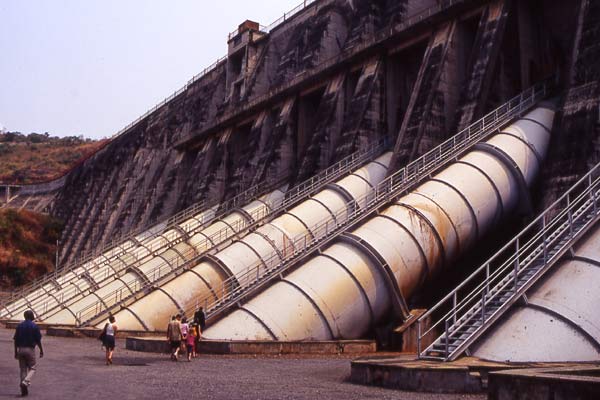
Cabinet announced yesterday it had approved a treaty between SA and the Democratic Republic of the Congo for the development of the Grand Inga hydroelectric project.
The project to exploit the Congo River for hydropower of 40,000 MW — nearly the size of SA’s current installed capacity — would be developed in phases. The additional source of electricity would be a welcome relief for SA, which is struggling to keep up with increasing demand.
Cabinet spokesman Jimmy Manyi said the purpose of the treaty was to develop an enabling framework linking Congo and SA into the Grand Inga projects, and to allow the countries to jointly explore economic feasibility for the project.
“The project will form part of SA’s government strategy to promote renewable energy in the region, contribute to a reduction of carbon emissions, ensure security of supply and to develop energy infrastructure on the continent and the Southern African Development Community region in particular,” Mr Manyi said.
The treaty could thrust Eskom into a central role in the project. Eskom yesterday declined to comment on Grand Inga, but the power utility has been contemplating its role in regional power projects.
In a speech in Pretoria on Friday, Eskom CE Brian Dames said there was potential for SA to source power from other countries in the region.
Mr Dames said the problem with big projects in the region was that none of them were bankable unless Eskom, which is Africa’s largest power utility, bought the power.
“We see ourselves in the role of buying the power,” he said.
“If opportunities arise to work in partnership with other players to be on the investment side of some of the projects, we would look at those. We are already working with independent power producers in the region ,” he said.
SA, through the integrated resource plan for electricity (IRP2010), has committed itself to a huge rollout of clean power in the period up to 2030, Mr Dames said.
“We have done a modelling exercise on the IRP2010, making certain assumptions about the role of Eskom and of independent power producers. We have found that as it stands, the plan would be extremely difficult to finance, and the cost of implementing it in its entirety out to 2030 might not be affordable for SA,” said Mr Dames.
The cost of the renewable energy, and the nuclear plans, might simply be too steep. SA was committed to reducing its carbon emissions and Eskom supported that.
He said SA was keen to leverage hydro in the north and gas fields in the east and west, as well as the extensive land which the region has available for solar generation.
Many people are used to returning merchandise if they find that it doesn’t match their needs. But one Chinese man went a step further, and returned his wife – getting $120,000 in a court settlement.
Jian Feng, living in Northern China, has filed for divorce from his wife after he found their newborn child to be “incredibly ugly,” arguing that his wife tricked him into the union by appearing to be a beautiful woman when she was instead ugly.
“I married my wife out of love, but as soon as we had our first daughter, we began having marital issues. Our daughter was incredibly ugly, to the point where it horrified me,” reports gossipwelove.com
Feng, after first accusing his wife of cheating, since the child girl did not look like him, was later confronted by his wife with the bitter truth – cosmetic surgery.
It was an apparent case of false advertising, as it turned out that that his once-beloved had spent over $100,000 in plastic surgery to modify her appearance.
Appalled by the fruit of their loins and by the fact that his wife had never revealed that surgery had enhanced her looks, Feng took the matter to court and won $120,000 in a settlement.
The reaction in social media to the story has largely been in support of Feng.
“When you are in a true relationship, you tell your spouse everything. Past present and future – if not, then you don’t respect them” one male commented on Facebook.
The female audience has also largely sided with Feng. “Of course I would – if you start a relationship with a lie, where does it end?” one woman asked. – RT
President Jacob Zuma withdrew his claim for damages against cartoonist “Zapiro” to avoid setting a legal precedent, the presidency said on Sunday.
“The president… would like to avoid setting a legal precedent that may have the effect of limiting the public exercise of free speech, with the unforeseen consequences this may have on our media, public commentators and citizens,” his spokesman Mac Maharaj said in a statement on Sunday.
He said Zuma had decided to withdraw his claim, made in December 2008, against Jonathan “Zapiro” Shapiro and Avusa Media, the publishers of The Sunday Times, and the newspaper’s editor at the time Mondli Makhanya “after careful consideration and consultation with his legal team”.
He had also decided to make a contribution to their costs.
“It is the president’s view that a legal battle against individuals and institutions will be an unnecessary diversion,” said Maharaj.
Zuma would rather encourage the people he was taking action against to become partners in efforts to address the problems facing the country, and to get South Africans to reach out to each other across historical divides to forge a common nationhood, “putting the country first.”
Zuma had sought R5 million in damages for defamation and impairment of his personal dignity over the publication of Zapiro’s Lady Justice rape cartoon in September 2008.
He reduced his claim from R4 million to R100,000 last week, media lawyer Dario Milo said at the time. Zuma dropped his claim that the cartoon harmed his dignity, but maintained that it had harmed his reputation. He had still wanted an unconditional apology.
The matter was to have been heard by the High Court in Johannesburg on Monday.
The cartoon depicted Zuma loosening his trousers while Lady Justice was held down by since expelled African National Congress Youth League president Julius Malema, Congress of SA Trade Unions general secretary Zwelinzima Vavi, SA Communist Party general secretary Blade Nzimande and ANC secretary general Gwede Mantashe, all saying: “Go for it, boss.”
Zuma was acquitted of a rape charge in 2006
“The newspaper and the cartoonist wanted to perpetrate an image of the president as a sexual deviant, despite a court of law rejecting the allegations against him and clearing his name,” said Maharaj.
The representation was “hurtful and defamatory”, as the respondents had admitted in papers submitted to the High Court in Johannesburg, he said.
“This candid admission, whilst sought to be justified on other grounds, at least reflects an appreciation of the hurt and harm that such depiction brought about.”
Maharaj said Zuma’s decision to withdraw the matter was informed by three major considerations.
“Whereas the president believes that in an open and democratic society, a fine and sensitive balance needs to be maintained between the exercise of civil rights such as freedom of speech, and the dignity and privacy of others, that balance should be struck in favour of constitutional freedoms,” he said.
It was for this reason he wanted to avoid setting a legal precedent.
Maharaj said Zuma also wanted to encourage South Africans to solve problems caused by racist attitudes by removing the racial imprint on the way the country’s society was organised and structured, and through continuous political action and open dialogue across racial and cultural divides.
Matters relating to dignity and the public standing of individuals could not be mediated exclusively through the courts, he said.
“Essentially, what lies at the heart of the Sunday Times’ publication of the cartoon was a set of deeply ingrained prejudices regarding not only the president, but which extend to views about African males and sexual mores.
“While the courts exist in part to protect citizens against racial and cultural prejudice and bigotry, those scourges will not be eradicated from our body politic through litigation alone.”
Zuma’s decision was also rooted in his attempts to find a way out of the difficulties the country and its people were facing because of the global economic meltdown and its accompanying frustrations, and his call on all South Africans to work together to find lasting solutions. – Sapa
Civilians who have undergone military training could soon be called up for active service and be deployed on potentially deadly peace-keeping operations.
The South African army – already overstretched by peacekeeping deployments across the continent – is fast preparing for the deployment of hundreds of additional troops, including civilian reservists, to peacekeeping missions. There are some 15000 army reservists.
Prior to yesterday’s announcement, President Jacob Zuma said he would strongly consider deploying soldiers to Mali on an African Union peacekeeping mission. If Zuma gives the go-ahead, the deployment could happen early next year.
Army chief Lieutenant-General Amos Masondo yesterday confirmed the urgent requests by Mali and the Democratic Republic of the Congo.
“We are waiting to hear what needs to be done,” he said.
Masondo said the appointment of Nkosazana Dlamini-Zuma as AU Commission chair would lead to increased demands for South African forces to be deployed elsewhere Africa.
“Unfortunately, we are limited by our numbers. If the request is approved, the forces will have to include lots of reservists.
“We simply do not have enough permanent force members. We are already overstretched in Africa, with hundreds of our troops deployed internally on our borders.”
Masondo said vast amounts of money were currently being spent on training, and that the upgrading of equipment was a priority.
Mali’s government is currently embroiled in violent confrontations with al-Qaeda linked groups trying to overthrow the state.
The government of the Democratic Republic of the Congo, along with the UN, is currently involved in bloody battles against rebel forces who are armed with heavy artillery and tanks.
The proposed deployments are being considered while 3000 South African soldiers take part in an exercise at the combat training centre in the Northern Cape.
A senior officer – deployed to the Democratic Republic of the Congo in 2010 – said the missions would require more than just a few hundred troops.
“These rebels are not playing around. They have serious numbers and serious fire-power. They are battle-hardened and have been at war for years. If we don’t do this right we will be bringing body bags home,” he said. – timeslive.co.za
South Africa needs special legislation for all forms of hate crimes, a conference on crime in Sandton heard on Thursday.
“It would be helpful to have hate crime legislation because it would focus the police minds when investigating, prosecutors when prosecuting, judges when passing sentences,” said Kerry Williams, partner at law firm Webber Wentzel.
“And the legislature could give some guidance in how to handle these crimes.”
Williams told the conference on crime reduction that the perpetrators of hate crimes could be prosecuted using common law, and judges could recognise the aspect of hate when passing judgment on these cases.
She said legislation would give added focus and stipulate minimum sentences for hate crimes.
In hate crimes, the perpetrator selects his or her victim for some discriminatory reason such as race, nationality, gender, or sexual orientation.
Juan Nel, director of the centre for applied psychology at Unisa, said hate crimes were not recognised in South Africa.
“Unless they become a recognised crime category, they can’t be recorded at police station level.
“Without it being recorded as such, it is very difficult to get a sense of what the prevalence would be.
“Once we have it as a recorded category… you can get a sense as to how often it happens, to whom it happens and where it happens.”
He said recording the crime would also help research efforts aimed at understanding the nature and impact of the crimes.
Nel said the priority that was put on hate crimes was not based on prevalence, but their impact.
“We believe it extends beyond the individual, it also affects the community. It also about the psychological impact that it has: the fear, the anger that it might create, and sometimes it has [a] ripple effect.”
He said the Hate Crimes Working Group, in partnership with other civic organisations, had identified 450 hate crimes in five provinces since 2005.
These were KwaZulu-Natal, Gauteng, Western Cape, Limpopo and Eastern Cape.
The crimes consisted of 150 lesbian gay bisexual trans-gender intersex (LGBTI) cases, 150 foreign national cases and 150 other cases.
The conference was hosted by the Institute For Security Studies and would end on Friday. – Sapa
Four men, including a police officer, were arrested as they allegedly tried to rob a house in Jeppe, Johannesburg police said on Thursday.
They were caught when they arrived at the house belonging to a businessman on Macdonald Street, after police were tipped off on Wednesday morning, Lt-Col Lungelo Dlamini said.
The men were found in possession of several items of police equipment and uniforms. A crime scene jacket, handcuffs, a fraudulent police identity certificate, handcuffs, a service pistol, a shocking stick with police identification marks, and nine cellphones were among the items seized. Three vehicles were impounded.
One of the men was a policeman based at the Johannesburg Central police station.
They were expected to appear in the Johannesburg Magistrate’s Court on Friday on charges of conspiracy to commit house robbery and impersonating police. Investigations were continuing to establish if they could be linked to other crimes. – Sapa
Since 1994, the South African currency’s value has correlated with the emerging market index, the result of its status the currency of reference across emerging markets.
“It seems now like the market is starting to think that South Africa’s internal challenges are compromising the rand’s role as the ‘dollar of emerging markets’,” says Peter Armitage, CEO of Anchor Capital. Armitage was updating members of the Institute of Directors in Southern Africa (IoDSA) on the country’s economic outlook. “South Africa is suffering a crisis of confidence.”
Adding weight to that analysis is the cover story of the 20 October edition of The Economist: “Cry, the beloved country: South Africa’s sad decline”.
Armitage’s analysis of South Africa’s position in the global economy is troubling but not wholly negative. The country in fact does have many strengths-some of them unexpected-but it needs to use them to solve internal challenges that are in danger of becoming systemic.
Many of South Africa’s indicators look good. The country is ranked 29 on the International Monetary Fund’s 2011 gross domestic product index and, in terms of gross domestic product per person, is ahead of fellow BRICS countries China and India. Things also look rosy in the private sector, where the Johannesburg Stock Exchange (JSE) has delivered an average return of 15% per year since 1995.
“But that’s because 35% of JSE earnings comes from foreign investments, and 40% from resources,” says Armitage. “The resources boom is essentially driven by Chinese demand and is not the result of anything we are doing right-in fact, our export volumes have been declining. It’s only the fact that resources prices have risen so much that we are in positive territory.”
In short, then, South Africa’s strength is actually based on external factors with its weaknesses, sadly, internal. We are running a near-record trade and current account deficits, and are reliant on increasing amounts of foreign capital inflows. We are facing demands for huge wage increases by a work force that is relatively unskilled which are not accompanied by increased productivity. And most poisonous of all, while there is a relatively large amount of money in the country, it is not distributed evenly-hence our high GINI coefficient-and unemployment remains frighteningly high.
These problems have to be solved.
On the plus side, says Armitage, government spending and rising wages are driving consumer spending, and our financial sector is healthy. South African companies are waking up to the potential offered by the rest of Africa.
“Government spending is, however, going to drive growth internally, but we need to make sure that money gets where it should-there’s too much leakage at present,” he says.
A final important point is that the weakening rand actually acts as a buffer that protects the economy from some of the impact of higher wages, by increasing the rand value of what is exported.
Gender and economic inequality are prevalent in violent societies, a conference on crime reduction heard on Thursday.
“South Africa is one of the wealthiest countries in Africa, but we also have one of the highest levels of violence,” said KwaZulu-Natal University academic Anthony Collins.
“There are African countries that are poor, for instance Malawi, but have less violence.”
He said rich countries, such as the United States, were also violent, because of high levels of inequality.
“What research is showing is that it is not the poverty; it is the economic inequality that is more significant,” Collins said.
“South Africa and Brazil are among the most unequal societies in the world and they also have among the highest levels of violence, although South Africa is higher.”
Collins cautioned that this was not a simple matter of cause and effect. Many other factors had to brought into the mix.
“There is a lot of social behaviour, cultural traditions, values, ideas [and] historical causes like in instances where societies have been through a lot of conflict, like South Africa.”
He said in the past there had been two views on violence. One was that people were violent because they disrespected the law.
Then, the progressive view came which said society was violent because of social circumstances.
“That was obviously true, but that got over-simplified into this claim that poverty causes violence,” said Collins.
“It is where you’ve got poverty and wealth in the same society next to each other. This creates a condition in which violence flourishes.”
Another contributing factor shown by research was the prevalence of gender inequality.
“A lot of societies where women and men have a more equal status are less violent… in a society with a lot of patriarchal structure, those societies turn to be violent,” said Collins.
Delegates from around the world attended the conference, themed “National And International Perspectives On Crime Reduction and Criminal Justice”. – Sapa
This website uses cookies to improve your experience. We'll assume you're ok with this, but you can opt-out if you wish. Cookie settingsACCEPT
Privacy & Cookies Policy
Privacy Overview
This website uses cookies to improve your experience while you navigate through the website. Out of these cookies, the cookies that are categorized as necessary are stored on your browser as they are essential for the working of basic functionalities of the website. We also use third-party cookies that help us analyze and understand how you use this website. These cookies will be stored in your browser only with your consent. You also have the option to opt-out of these cookies. But opting out of some of these cookies may have an effect on your browsing experience.
Necessary cookies are absolutely essential for the website to function properly. This category only includes cookies that ensures basic functionalities and security features of the website. These cookies do not store any personal information.
Any cookies that may not be particularly necessary for the website to function and is used specifically to collect user personal data via analytics, ads, other embedded contents are termed as non-necessary cookies. It is mandatory to procure user consent prior to running these cookies on your website.