Second night of violence: 20 cars torched in Paris suburbs

France-car-burningSome 20 cars have been torched and four people detained in a second night of violence in suburbs west of Paris, a result of tensions linked to authorities’ handling of France’s ban on Muslim face veils.

France’s interior minister said Sunday that the incidents overnight targeted the town of Elancourt.

Police union official said on BFM television that about 50 assailants were involved, some firing weapons and a gasoline bomb at police.

The night before, about 250 people hurling projectiles clashed with police firing tear gas in the nearby town of Trappes in apparent protest over the enforcement of France’s ban on Islamic face veils. Five people were injured and six detained in the violence, authorities said Saturday.

The interior minister urged calm and dialogue, insisting on both the need for public order and respect for France’s Muslims. The incident in the town of Trappes on Friday night reflected sporadic tensions between police upholding France’s strict policies of secularism and those who accuse authorities of discriminating against France’s No. 2 religion.

A few garbage dumpsters in the area were torched and a bus shelter shattered in the Trappes unrest. Spent tear gas capsules lay on the road Saturday near the police station at the center of the violence.

A 14-year-old boy suffered a serious eye injury in the violence, from a projectile of unknown provenance, Prosecutor Vincent Lesclous told reporters. Four police officers were injured and six people were detained in the violence, said an official with the regional police administration. The official spoke on condition of anonymity because he was not authorized to be named due to his department’s rules.

On Saturday night, fearing new violence, riot police deployed around the town, but the atmosphere appeared calm.

The Friday night violence came after a gathering of about 200-250 people to protest the arrest of a man whose wife was ticketed Thursday for wearing a face veil. The husband tried to strangle an officer who was doing the ticketing, the prosecutor said.

France has barred face veils since 2011. Proponents of the ban — which enjoyed wide public support across the political spectrum — argue the veil oppresses women and contradicts France’s principles of secularism, which are enshrined in the constitution. In addition to small fines or citizenship classes for women wearing veils, the law includes a hefty 30,000 euro ($39,370) fine for anyone who forces a woman to wear one.

The law affects only a very small proportion of France’s millions of Muslims who wear the niqab, with a slit for the eyes, or the burqa, with a mesh screen for the eyes. But some Muslim groups argue the law stigmatizes moderate Muslims, too. France also bans headscarves in schools and public buildings.

The Collective Against Islamophobia in France urged Interior Minister Manuel Valls, who recently joined Muslim leaders in a fast-breaking sundown feast for holy month of Ramadan, to crack down on insults and attacks against Muslims.

Valls urged calm after the Trappes violence, and pledged to stand against “all those who attack Muslim buildings or our compatriots of Muslim faith.”

But he also came down firmly against those who attack police.

“There is no valid reason for the violence seen in Trappes,” he told reporters in the southern city of Marseille, which has seen a wave of urban unrest. “The law should be applied, and applies to everyone.”

The anti-Islamophobia collective said in a statement that it was contacted by the veiled woman ticketed in Trappes on Thursday, and that she said the police officer yanked her by the veil and pushed her mother.

Police argue they are doing their jobs and that veiled women are breaking a well-known law.

Trappes was among many towns around France that saw rioting in 2005 by disillusioned youth in neglected housing projects, many with origins in former French colonies in North and West Africa.

Valls acknowledged the “difficulty our fellow citizens have living in these working class neighborhoods, especially young people. What they need is jobs, hope, training.”

“Only in dialogue can we find the solutions to the problems of our society, of joblessness, the sentiment of discrimination and exclusion,” he urged. “Violence leads to nothing.” – CBS News
Google boss is a love rat

Planning to implant microchips into the brain

He is the billionaire Google boss under fire for not doing enough to protect children from internet porn.

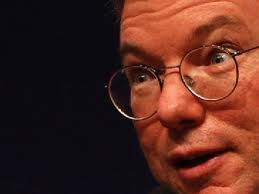
Yet The Mail on Sunday revealed that 58-year-old Eric Schmidt, Google’s executive chairman, does fiercely protect one thing: his own private life, which is as colorful and complex as the ever-changing ‘Google doodle,’ which pops up each time the search engine is launched.

He is all for freedom when it comes to dodging corporate tax.

But there’s one place the freewheeling views of the billionaire Google boss fizzle out – his bedroom door.

Sexy Schmidt?
Sexy Schmidt?

Schmidt has had a string of affairs with younger women, including TV presenter Kate Bohner, PR executive Marcy Simon and Vietnamese concert pianist Chau- Giang Nguyen.

But the unlikely sex symbol with thinning hair and pockmarked skin who is worth $5.4 billion made at least one mistress sign a confidentiality deal.

Bohner, 46, had a three-year affair from 2007 with the married mogul, dubbing him Dr Strangelove. “As far as Kate was concerned it was true love,” a friend said. “The reason I am speaking out now is it is ironic that someone like him can be so free and easy discussing other people’s privacy issues online while using his vast wealth to protect his own image.”

Schmidt’s wife Wendy, 57, has reportedly accepted their open marriage. – The Standard

Juror describes mental anguish to find Zimmerman ‘guilty of something’

trayvonA juror from the trial of George Zimmerman for the death of Trayvon Martin broke into tears as she described the mental anguish she and the other jurors felt as they weighed their decision.

She said the six-women panel was sharply divided when deliberations began.

The juror said ultimately it became a question of whether the events leading up the shooting were legally relevant or if, for self-defence, it is the moment before pulling the trigger that counts.

“It was just so confusing with what and what we could apply to what. Because I mean, there was a couple of them in there that wanted to find him guilty of something,” the juror said.

But “after hours and hours and hours of deliberating over the law and reading it over and over and over again, we decided there’s just no way.”

The jurors ultimately came to a unanimous decision, finding Zimmerman not guilty on charges of second-degree murder and manslaughter in the case that has brought tough questions about racism in the United States back to the fore.

But in an interview on CNN, juror B-37 – who was not named and was shown in deep shadow – said the first vote was split down the middle between those who wanted an acquittal and those who wanted to convict.

“We had three not guilties, one second degree murder and two manslaughters,” the juror said, adding she was one of the ones who voted not guilty.

Zimmerman – who has a white father and a Peruvian mother – said he acted in self-defence when he shot Martin during an altercation on the rainy night of February 26 2012.

But prosecutors said he profiled and stalked Martin, provoking the altercation that led to Martin’s death.

The juror explained her understanding of what happened that night: “I think George got in a little bit too deep … He shouldn’t have been there.”But Trayvon decided that he wasn’t going to let him scare him and get the one up on him or something. And I think Trayvon got mad and attacked him,” the juror said.

“I had no doubt George feared for his life in the situation he was in at the time.”

But she broke into tears as she described the mental anguish she and the other jurors felt as they weighed their decision.

“It’s a tragedy this happened, but it happened. And I think both were responsible for the situation they had gotten themselves in to. I think both of them could have walked away.”

In the aftermath of the verdict, race again came to the fore, with angry protesters asking if the result would have been the same had the teenager been white and Zimmerman black.

“We are all Trayvon,” some cried. – AFP

No criticism for Zim, says Presidency

Not appreciated...
Not appreciated…

Recent comments made by members of Jacob Zuma’s technical team on the situation in Zimbabwe were “unfortunate”, says the presidency.

“The presidency has noted with great concern, recent unfortunate statements made on the situation in Zimbabwe,” spokesperson Mac Maharaj said in a statement.

Maharaj said the comments were attributed to a team member supporting Zuma in his role as a facilitator, with South Africa appointed by Southern African Development Community (SADC) to offer assistance to help Zimbabwe’s political parties resolve their differences.

Zuma’s team comprised of Mozambique high commissioner Charles Nqakula as its head, Maharaj, and Lindiwe Zulu, international relations adviser to the president.

The Agence France-Presse news agency reported on Friday that Zulu had said there were challenges leading up to the July 31 elections in Zimbabwe, following problems with early voting.

Thousands of Zimbabwean security forces reportedly could not make their mark in early voting with polling stations opening late, and lacking indelible ink, stamps, voter rolls, ballot papers, and boxes.

“If things didn’t go right in the special vote, those things need to be looked into by the time of elections on July 31,” Zulu said.

Imposition
Maharaj said the technical team supported Zuma in his role as facilitator, could not impose its views on Zimbabwe, nor make public pronouncements.

“Only President Zuma has the mandate to speak on Zimbabwe on behalf of SADC on facilitation issues,” Maharaj said.

“A number of statements have been made during the facilitation process which have been unauthorised and which are regrettable and unfortunate. Some of the utterances have also been inaccurate.”

The presidency said reports stating Zuma had telephoned Zimbabwe’s President Robert Mugabe to express his unhappiness about election preparations were incorrect.

“No such telephone call has been made,” said Maharaj.

Zuma had also been alerted to “inappropriate postings” in social media on the situation in Zimbabwe.

“South Africa remains fully committed to the warm historical relations with the republic of Zimbabwe and wishes the people of Zimbabwe well as they prepare for the elections,” said Maharaj. – Sapa

Malawi faces hunger

malawihungerNearly 10 percent of Malawi’s 13 million people face hunger due of low yields of the main staple maize, prolonged dry spells and flooding, a report said.

“The total number of people who will not be able to meet their annual food requirement during the 2013/14 consumption period is 1,461,940, representing 9.5 percent of national total population,” the Malawi Vulnerability Assessment Committee said.

The grouping of several government departments, the United Nations, embassies and humanitarian agencies said those affected will need assistance for a period of between two to five months.

The shortages will affect poor households in 21 districts of the southern African country.

Food shortage in this impoverished southern African country is often caused by drought and economic difficulties as wellas backward farming practices.

One in two Malawians lives on less than a dollar a day.

Malawi had a good food security record in recent years after late president Bingu wa Mutharika implemented a subsidy programme giving poor villagers access to fertilisers and inputs. – Sapa

SA movie banned for child porn

ofgoodreportA South African movie about a schoolteacher who falls for a student has become the first film to be banned since 1994.

The film “Of Good Report” was the first not to receive classification since the Film and Publication Board was created, Sunday Times reported.

According to the newspaper, the decision was made based on the depiction of a simulated sexual act involving the 16-year-old student, who was played by a 23-year-old actress.

“The child porn thing smacks of the greatest ignorance, incompetence and downright stupidity,” director Jahmil XT Qubeka was quoted as telling the newspaper.

Board spokesman Prince Mlimandlela Ndamase reportedly told the Sunday Times the film was banned because it contained “content that carries an illegal act in it”.

“We need to emphasise that, ordinarily, we would not refuse the right of viewers to see the content, but in the interests of the protection of the child and our laws that exist in the country, child pornography is one of these things that are not legally permissible in the country.”

The film’s producer, lawyer Michael Auret, had reportedly lodged an appeal against the board’s ruling. – Sapa

Tau SA calls for credible land audit

safarmA credible land audit should take place before the land claims process is reopened, farmers’ union Tau SA said.


Ownership figures released in the much-awaited land audit in February were not reliable, union president Louis Meintjies said in a statement.


“Utmost dissatisfaction was expressed about the uncertainty of the land audit, especially with regard to state-owned land, during TAU SA’s general council meeting in Pretoria.


“The process was not transparent and therefore no value could be attached to the audit.”


Meintjies claimed the figures, released by Rural Development and Land Reform Minister Gugile Nkwinti, contradicted those he announced previously.


“According to Nkwinti’s latest figures, the state owns less land than what was previously estimated.”


He said it seemed that agricultural land was being registered in the country on an almost weekly basis.


Tau SA launched its own land audit initiative several years ago, but this was halted because the state apparently refused to fund it.


Nkwinti announced in February that about 26 million hectares belonged to the state and 96m hectares were privately owned.


A break down of which nationalities and races owned the private land was still outstanding.


“There is an institutional challenge which will be resolved very soon,” Nkwinti told MPs at the time.


Tau SA’s general council recommended that a comprehensive land audit take place before the land claims process reopened.


Nkwinti recently announced an indefinite postponement of the reopening of the land claims process.


According to the draft Restitution of Land Rights Amendment Bill, published in May, the new land claims deadline would be December 31, 2018. The previous deadline was December 31, 1998.


The land claim process is aimed at providing compensation to those forcibly removed from their land by the colonial and apartheid governments between 1913 and 1994. – Sapa

Top ANC official killed in car crash

Kolisile
Kolisile

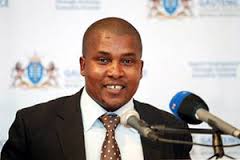
Gauteng’s MEC of Economic Development Nkosiphendule Kolisile and two others were killed in a car accident.

Kolisile was described as a “committed” public servant, whose dedication to the poor was “admirable”.

Kolisile steered his portfolio with “vigour”.

Kolisile was a former Young Communist League national committee member and former chairperson of the SA Communist Party in Gauteng.

Young Communist League spokesman for the Eastern Cape, Thabang Maseko said on Twitter that South Africa “lost a Marxist over the weekend” and that “Karl Marx would welcome him”.

Kolisile and two bodyguards were killed in a head-on collision in the Free State in the early hours of the morning, according to the SABC.

ANC Gauteng chairman Paul Mashatile told the SABC that Kolisile was travelling to a funeral in Queenstown, Eastern Cape when they collided head-on with another vehicle.

Mashatile said Premier Nomvula Mokonyane was with Kolisile’s family.

News of Kolisile’s death sparked reaction from political parties.

The Democratic Alliance in Gauteng described Kolisile as a great addition to the provincial cabinet following a reshuffle.

“[He] had a sterling record in the Gauteng provincial legislature,” DA provincial spokesman Marius Redelinghuys said in a statement. Gauteng is the richest province in the country by far.

The Young Communist League of SA said they were shocked at his the passing.

“As the YCLSA we send our deepest condolences to his family, colleagues and friends,” said spokesman Khaya Xaba.

The family travelled to Reddersburg, 60km south of Bloemfontein, Free State, where the accident happened, to see the place where Kolisile lost his life.

Free State police are investigating a case of culpable homicide in connection with the accident.

The province’s police spokesperson, Sergeant Thabo Litabe, said the accident happened at about 4.30am when a white sedan in which Kolisile and his bodyguards were travelling in swerved to avoid an ambulance only to collide head-on with a truck.

Only the truck driver survived the accident, while the ambulance sped on.

“The truck was travelling towards Bloemfontein while the (MEC’s) sedan was travelling to the Eastern Cape,” Litabe said.

He said the car Kolisile was travelling in was so badly damaged that police could not tell its make or model.

“All of the three occupants in the white sedan died on the scene. The accident was very very bad,” he said. – Sapa

Nationalise the SARB, says Malema

sarbThe SA Reserve Bank must be owned by the state in order to serve the interest of South Africans, the EFF said.


“The general practise in the world is that governments own their reserve bank. South Africa is one of the two if not three that do not own their own reserve bank,” said Economic Freedom Fighters leader Julius Malema.

“It [Reserve Bank] regulates the interest rates and once that is in the state ownership it will be regulated to the benefit of the people, so that our people can afford to buy houses and cars without having to pay high interest.”

Malema spoke to Sapa on the sidelines of an EFF consultative forum held in Johannesburg.

The members discussed principles on which the party’s policies would be based.

One of the priorities discussed during the plenary sessions was land ownership.

Malema said the party was clear on what would be the final policy of the organisation.

“The land issue is a national crisis. Our people have waited for the transfer of land for the past 20 years. The ANC has promised that it will deliver 30 percent of the land by 2014, but it has only delivered eight percent,” he said.

“The majority of our people don’t have the land, to own the means of production for the development of this country.”

He said the position of the EFF on land ownership would be part of the party’s priorities in its manifesto.

“The position is that we are expropriating without compensation. We want that to be an act [of law], and before it becomes an act, our people should begin the process of occupying the land,” he said.

Malema said the state would have to resolve the dispute with the owners of the private land which will be occupied.

“But our people don’t have to be evicted. They [government] must stop evicting people who occupy the land.”

EFF also wanted a full audit of who owned the land and for what purpose it was being used.

“We need to know who owns the land and what are they using it for. There is a lot of abundant land which has been fenced and is not being used for anything. We want to use that land for production and creation of jobs in South Africa,” Malema said.

Mbuyiseni Ndlozi national spokesman of the EFF said the consultative process was the beginning of policy discussion for the party.

“This was a national consultative forum which started policy conversations for the national assembly which is taking place next week,” he said.

The national assembly would be made up of representatives from all the regions and provinces, and it would conclude its EFF policy discussions next weekend.

Other policy issues discussed at the consultative forum held on Saturday were education, health, corruption and economic transformation. – Sapa

‘Science will solve apartheid problems’

Confused deputy-president

Problems inherited from the apartheid era can be solved through research, Deputy President Kgalema Motlanthe said – without irony – on Saturday, as South Africa struggles with ever worsening maths en science results since 1994.

South Africa has hit rock bottom in an international measure of the quality of maths and science education recently.

Concern is mounting whether the education system is producing a sufficient number of graduates in the hard sciences to support South Africa’s growth and development.

The World Economic Forum’s annual report on financial development, released in 2012, placed South Africa last in a ranking of 62 countries in the quality of maths and science education.

The 2011 census results, released on Tuesday, showed that  a decade ago mostly white 2.7% of men and 2% of women who had tertiary qualifications in South Africa had qualifications in the fields of natural, physical and mathematical sciences. By 2011, this had declined to 2% of men and 1.8% of women, due to racial discrimination against whites.

“Inevitably, most if not all the historically inherited challenges constituting a dead weight on our development ambitions can only be addressed through the research agenda of our national research institutes,” Motlanthe told a summit on science and technology in Polokwane, Limpopo.

Motlanthe said national research institutes had the task to remain relevant to the developmental agenda through the use of science, technology and innovation.

“In other words harnessing the force of science and technology to meet our developmental needs is among the surest ways out of the current quagmire of under-development,” he said.

Motlanthe said through the National Development Plan, government laid out the parameters within which each social partner could make a contribution towards the achievement of the country’s shared vision.

“This shared vision entails the reduction of poverty, stimulating economic growth, effecting economic transformation and creating employment.”  He said South Africa needed to do more in mobilising resources for the task of producing quality education for both teachers and learners alike.

“Only a sound and quality education system with strong emphasis on mathematics and science can serve as a reliable feeder for tertiary institutions…,” he said.

Motlanthe said research projects were carried out disparately without knowledge sharing and co-ordination to avoid duplication.

“Our national research efforts lack a central framework or institute to define and identify the most immediate projects, resulting in duplication, wastage and inefficient use of funding.”  The lack of collaboration robbed the country of the benefits which would accrue from research.

Research institutes could commission a study of the systemic failure in the governance system and how best could government address its problems, he said.

Motlanthe said under-utilisation of existing research institutes by government often led to wasteful expenditure in that each government department commissioned research in common areas.

“I submit that the benefits of science, technology and innovation are not only potentially immense for us but also, and more crucially, constitute the pre-conditions for South Africa’s development.” – SAPA/praag

Eskom suffers another shock

electricityEskom has suffered yet another setback that could see its funding costs rise or keep taxpayers shelling out for its debts.

A surprise credit rating downgrade comes on top of higher-than-expected coal prices – which could allow the state-owned energy company to pass on its increased costs to consumers.

Credit ratings agency Moody’s downgraded Eskom’s standalone credit quality by one notch on Friday, making it more difficult for it to raise money for its future expansion plans.

Eskom has been trying to get an investment-grade standalone rating so that it can raise the billions it needs without government guarantees.

Acting chief financial officer Caroline Henry diplomatically called the downgrade “a challenge” yesterday.

It adds to other pressures Eskom is facing, which could see it approach energy regulator Nersa for a higher tariff increase.

CEO Brian Dames said recently the high coal price increases gave Eskom the right to approach Nersa for an increase.

Primary energy costs, including for coal, have rocketed 36% over the past year, Eskom’s latest set of financial results reveal. These costs have gnawed into its margins and have seen it earn less than half the profit it did the previous year.

Eskom’s new build programme, with which it aims to keep the lights on, has a capacity expansion budget of about R400-billion up to this year and is expected to grow to more than a R1-trillion by 2026.

Shaun Nel, spokesman for the Energy Intensive User Group, which represents large industrial consumers, said yesterday the downgrade “will obviously increase the cost of capital”.

Eskom has tried to get a stand-alone credit rating since 2008, but Nersa has thwarted its plans several times, most recently in February when it allowed an increase of 8% a year for the next five years although Eskom requested 16%.

The lower increase means a revenue shortfall of about R220-billion over the next five years and was cited by Moody’s as a major factor in its decision.

“This means Eskom would need to borrow more because it will not be able to generate the funds from its own revenues,” said energy analyst Chris Yelland.

The downgrade comes after management two weeks ago admitted that the first power from its Medupi power station would realistically hit the grid only in the second half of next year.

Eskom is running on a very thin reserve margin and would now likely face another winter, when consumption climbs, without Medupi’s added capacity.

According to Nel, the supply constraints have started having a serious impact on the economy.

Industrial users now consume less than they did in 2006, indicating that factories and foundries were closing, said Nel.

“Though Eskom said it would not have to go back to Nersa for two years, it seems like a foregone conclusion that it would have to,” Nel said.

Yelland does not necessarily see Eskom going to the regulator. But he thinks it could go to the government for more credit guarantees.

Outgoing chief financial officer Paul O’Flaherty said two weeks ago that Eskom would not be able to attain an investment grade standalone rating – which would allow it to raise the funds it needs at decent rates – in the “next few years”.

It would continue needing massive state support, he said.

About R250-billion still needed to be raised, O’Flaherty said.

Dames said yesterday that Eskom was “comfortable with the measures [it was] taking with the continued support of [the government]”. – timeslive.co.za

US jets bomb heritage site

Two US fighter jets dropped four unarmed bombs in Australia’s Great Barrier Reef Marine Park after a training exercise went wrong.

The two AV-8B Harrier jets were launched from aircraft carrier USS Bonhomme Richard.

Each jettisoned an inert bomb and an unarmed explosive bomb in the World Heritage-listed marine park, off the coast of Queensland, on Tuesday last week, the US 7th Fleet said at the weekend. There were no explosions.

The four bombs were dropped in more than 50m of water away from coral to minimise the possibility of damage to the reef, the navy said on Saturday.

AV-8B Harrier jets
AV-8B Harrier jets

The jets – from the 31st Marine Expeditionary Unit – had intended to drop their ordnance on the Townshend Island bombing range.

But the mission was aborted when controllers reported the area was not clear of hazards.

The pilots had to jettison the bombs because they were low on fuel and could not land while carrying them, the navy said.

About 28000 US and Australian military personnel are taking part in a biennial joint training exercise, Talisman Saber, which lasts for three weeks.

The US Navy and the Marine Corps are working with Australian authorities to identify all the factors that contributed to the incident, the navy said.- Sapa/AP

Mandela not a Google doodle… yet

Rembrandt
Rembrandt

A day seldom goes by without a visit to Google for millions of people.

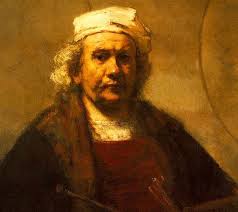
And what a treat when the Google logo on the home page is altered to celebrate anything from ice-cream sundaes to Rembrandt van Rijn’s 407th birthday.

The modified logos are referred to as Google doodles.

The UN General Assembly in 2009 designated July 18 as Nelson Mandela International Day.

As the world celebrated South Africa’s most famous statesman’s birthday last week, the day, surprisingly, was not marked by the creation of a doodle.

The latest South African doodle was designed for Freedom Day this year and Miriam Makeba’s 81st birthday was celebrated in March.

Madiba might not have had a doodle but last year Google contributed R8.6-million to the Nelson Mandela Centre for Memory to digitise “thousands of archival documents, photographs and videos” dealing with Mandela.

According to Google, there is a team of illustrators and engineers that designs its doodles.

International demand has led to an increase in the amount of artwork generated- 1000 have been created for Google’s home page.

Not every occasion is doodled. A lot depends on demand: a group of Googlers might come together to suggest a doodle or the idea can come from the general public. – timeslive.co.za

Martin Keevy ‘not fit to stand trial’ in treason case

Martin Keevy comforting his wife upon hearing that he has been refused bail

One of four rightwingers accused of plotting to murder senior ANC leaders is not fit to stand trial, his lawyer said on Friday.

Martin Keevy, 49, of Bloemfontein appeared in the Bloemfontein Magistrate’s Court on charges of treason and conspiracy to plan acts of terrorism.

Marius Bruwer, for Keevy, said a unanimous psychiatric report from the Free State Psychiatric Complex found he lacked criminal accountability and was unfit to stand trial.

Prosecutor Torie Pretorius told magistrate Andries Schoeman the State disputed the contents of the report and asked for a further 30-day postponement for a re-evaluation.

“The State does not agree with the conclusions of the report,” Pretorius said.

Bruwer did not oppose the application.

Keevy was admitted to the complex again on Friday, where the State’s experts would re-evaluate him. He would be back in court on August 16.

The State alleges that Keevy, Mark Trollip, Johan Prinsloo, and Hein Boonzaaier were part of a group who plotted to kill African National Congress leaders at the party’s Mangaung elective conference in December 2012. They allegedly called this “Die Slag van Mangaung” (The Battle of Mangaung).

Keevy, Trollip, and Prinsloo were denied bail, while Boonzaaier was granted R80,000 bail.

Trollip, Prinsloo, and Boonzaaier were expected to appear in court again on August 23. – Sapa