Prosecutors formally levied drug-trafficking charges on Tuesday against two young women from Scotland and Ireland who were arrested this month trying to depart Peru with 24 pounds of cocaine in their luggage.
The prosecutor’s office in Callao, the city abutting Lima where its airport is located, also said in a statement Tuesday night that Michaella McCollum Connolly, 20, and Melissa Reid, 19, face a maximum penalty of 15 years in prison if convicted.
Their lawyers claim they were coerced into carrying the drugs by criminals who threatened them and their families and had them followed to Peru to ensure they collected the cocaine.
A Peruvian police official says both women insisted on their innocence during questioning. He spoke on condition of anonymity.
The two young women spent much of Tuesday in medical checks and preprocessing ahead of an expected transfer to prison to await trial.
Since their Aug. 6 arrest at Lima’s airport as they tried to board a flight for Madrid, the women’s plight has received blanket coverage by British tabloids. The reports have featured photos of both young women in swimsuits, and partying in Ibiza.
Small-time smugglers who plead guilty in Peru usually receive six-year prison sentences and, with good behavior, can be out in two years.
Peru’s penal authority says 1,648 foreigners are currently in its prison on drug-trafficking charges, 31 of them British citizens. – AP
The military says Tamer Abdel-Raouf sped through a military checkpoint, ignoring soldiers’ warning shots. A colleague who was with him in the car says he obeyed the soldiers’ orders to turn back, but they opened fire anyway as he was making a U-turn.
The result was the same: The reporter for the flagship Egyptian daily Al-Ahram on Monday became the fifth journalist to die as the media are swept up in the bloodshed roiling Egypt.
Television and radio stations air patriotic songs while a slew of talk show hosts glorify the military that seized power and denounce the Islamist government it overthrew.
This satirical programme on TV has become almost real in Egypt
It’s a sharp turnaround from the challenges these same journalists faced under President Mohammed Morsi’s rule, when reporters were sued by Islamist lawyers for “insulting the president.” After his ouster, his Muslim Brothehrood group openly blacklisted 50 of those media personalities.
Now journalists are facing deadlier perils.
A week ago Mick Deane of the British TV broadcaster Sky News and two Egyptian journalists were fatally shot while covering the violent breakup of protest camps in Cairo. Other foreign journalists are also feeling the pressure, complaining that security forces fail to respect the exemption that allows them on the streets after nighttime curfew.
The tense media landscape is increasingly mirroring the venomous atmosphere, where people are fractured along political lines.
“The whole media scene has been extremely polarized and it’s a reflection of the polarization in society,” said Rasha Abdulla, a media professor at the American University in Cairo.
TV presenters have sung the national anthem on TV and openly cried tears of joy when Morsi was ousted seven weeks ago.
Meanwhile, Morsi’s Brotherhood group has waged its own media campaign online and through its spokesmen on social media websites after channels sympathetic to the group were shuttered last month.
In one, a spokesman posted a picture of dead Syrian children online, claiming they were Egyptian kids killed by police. In clashes that the Health Ministry said killed around 80 people, the Brotherhood’s emails to reporters initially claimed 200 were killed. At another point it claimed the overall death toll was more than triple what the Health Ministry was reporting.
The discrepancies come from both sides, as the death of reporter Abdel-Raouf demonstrates.
A statement by the army said that he sped through a checkpoint after curfew and soldiers fired warning shots.
However, Hamed al-Barbari of Al-Gomhuria newspaper told the New York-based Committee to Protect Journalists that the two, riding in the car together, were turned back by soldiers at the checkpoint. He said the soldiers then fired at the car as they were making a U-turn, shooting Abdel-Raouf in the head.
Abdel-Raouf had been critical of Morsi’s ouster on Facebook and other social media, though the CPJ said there was no evidence that he was targeted for his views.
Western journalists have come under attack from angry citizens. CPJ reported that during violent protests Saturday, Annabell Van Den Berghe, a freelance journalist with the Belgian public broadcaster VRT, and crew were confronted by people who accused them of being American spies and said Western media were biased. They beat a crew member but did not harm the journalists.
The Qatar-based Al-Jazeera network, particularly its channel dedicated to live coverage of events in Egypt, has been the only major Arabic-language outlet for the Muslim Brotherhood’s views. Its Cairo office was raided by security forces last week and two of its journalists detained.
A number of its presenters quit around the time of Morsi’s ouster, saying the station had misled viewers. The network counters that it is covering all events in Egypt with “balance and integrity”
Three Turkish journalists, Metin Turan and Heba Zakaria were arrested over the weekend and Tahir Osman Hamde was reported arrested on Tuesday. It’s not clear whether any have been released.
Senior Egyptian officials have taken to critiquing the foreign media.
The State Information Service released a statement saying some media outlets are “falling short of describing events of June 30 as an expression of popular will.”
Meeting foreign journalists recently, interim Foreign Minister Nabil Fahmy expressed his frustration.
“You have a problem of your profession frankly,” he said, saying the limited space to report complex issues makes the journalists “very superficial in what you are doing.” “And frankly,” he added, “many of you have covered the news incorrectly and unfairly.”
Adel Iskandar, author of “Egypt in Flux: Essays on an Unfinished Revolution,” said that under the rule of autocratic President Hosni Mubarak, “The military was untouchable and invisible” and that “the media, both state and private, were obedient because they were censored.
“Now they are willfully on the bandwagon.”
Under Mubarak, bloggers were targeted as well. Mostly liberal, leftist and secular protesters active on Twitter and Facebook were beaten and arrested during subsequent rallies against the military rulers who temporarily took over after he was toppled. Similarly, online administrators of Brotherhood websites and online activists sympathetic to the group are now being arrested, shot at and even killed by security forces at anti-government protests.
Noha Radwan, a scholar of Arabic literature at University of California at Davis, follows events in her native Egypt closely, and says the media is actually driving polarization in the country.
“For the past three weeks media sources on the ground, whether they are the governmental or the independent channels. have been working the public into nothing short of a mass hysteria,” she wrote, blaming both the state media and Islamists.
“Every media source in Egypt is lying, spreading hearsay, and dismissing reports that do not serve their agendas. The result is a frenzied and divided population that is proving uncharacteristically callous to the bloodshed among one group or the other.”
Iskandar said that while Egypt may not be in a state of actual war, the battle lines have been drawn in the media
Egypt, he said, “is in a state of media and rhetorical war.” – AP
Turkish Prime Minister Recep Tayyip Erdogan claims Ankara has proof Israel was behind the July 3 military “coup” that toppled Egyptian president Mohamed Morsi, Turkish media report.
Erdogan said the West was beginning to redefine democracy as a process that is not solely determined at the ballot box, although the poll represents “the people’s will.”
“This is what has been implemented in Egypt. Who is behind this? Israel. We have evidence,” Erdogan said, as quoted by the Hurriyet daily, during a meeting with provincial chairs of his ruling Justice and Development Party (AKP).
Erdogan spoke of a meeting between Turkey’s justice minister and a “Jewish” intellectual in France before Egypt’s 2011 elections.
“The Muslim Brotherhood will not be in power even if they win the elections. Because democracy is not the ballot box’: This is what [the intellectual] said at that time,” the PM continued.
Erdogan did not clarify what connection the unidentified intellectual had to the Israeli government or how his alleged opinion proved Israel played any part in the recent ouster of Morsi.
The Israeli Foreign Ministry declined to respond to Erdogan’s accusation. “This is a statement well worth not commenting on,” said ministry spokesman Yigal Palmor.
In March, Israel attempted rapprochement with Turkey after Israeli Prime Minister Benjamin Netanyahu called Erdogan to apologize for the 2010 Gaza flotilla raid that resulted in the deaths of eight Turks and one Turkish-American.
Erdogan accepted the apology and both sides agreed to carry out further discussions. The PM, however, said that normalization of bilateral ties would take time, insinuating that Turkey wanted to ensure victims of the raid were compensated and that Israel remained committed to easing the restriction of goods to Gaza before restoring relations.
The Turkish PM, an outspoken supporter of Morsi and his Islamist government, lashed out at the West for failing to act in light of last week’s bloody crackdown against Muslim Brotherhood supporters. Having previously condemned the coup, Erdogan insisted that Morsi be reinstated through a democratic process.
Erdogan’s ruling AKP, which has Islamic roots, had developed ties with Egypt’s Muslim Brotherhood and aimed to boost Turkey’s regional clout by bolstering its relationship with the North African state. – RT
Australia’s new race discrimination commissioner starts in the job today and he’s got his sights firmly set on tackling the modern face of racial prejudice.
Dr Tim Soutphommasane is a 30-year-old first generation Australian, whose parents fled Laos in the mid-1970s, he grew up in south west Sydney.
He’ll now spearhead the nation’s response to racism and discrimination and he’s keen to craft strategies to help eliminate casual bigotry and cyber racism.
Presenter:Emily Bourke
Speaker:Dr Tim Soutphommasane, Australia’s new Race Discrimination Commissioner
EMILY BOURKE: Australia’s new race discrimination chief says racism is still far too common.
TIM SOUTPHOMMASANE: About 20 per cent of Australians report that they have experienced race hate talk, so racial slurs or verbal abuse. Eleven per cent report that they have been excluded from the workplace or social activities on the basis of their skin colour or ethnicity.
EMILY BOURKE: As a migrant himself, Tim Soutphommasane, has experienced racism in Australia first-hand.
TIM SOUTPHOMMASANE: Well I’m a first generation Australian of Chinese and Lao heritage. It’s a mouthful when I say that to people. But I think it sums up my cultural identity. I have experienced racial slurs. It can be very confronting. It’s very unpleasant, but most of all it’s about a denial of respect and equality.
EMILY BOURKE: Dr Soutphommasane says the modern face of racism is increasingly casual.
TIM SOUTPHOMMASANE: For instance, you might have someone making light of an issue or cracking a joke and when someone complains there, the response is perhaps along the lines of well, come on, just have a bit of a laugh, don’t take yourself too seriously. And I think that attitude belittles the experience of racial prejudice and discrimination.
It’s not just about hurt feelings, or about mere offence. Part of the cultural shift that needs to take place on casual racism is to recognise that racism is as much about impact as it is about intention.
EMILY BOURKE: But he adds racism among young Australians has followed the same trend as schoolyard bullying – it’s moved online.
TIM SOUTPHOMMASANE: Cyber racism among younger Australians is a serious emerging problem. There’s no question that if we do not tackle this issue, we may be creating further challenges of social cohesion and we may be cultivating a sense of indifference to racial abuse when it happens online.
EMILY BOURKE: In his new role, Dr Soutphommasane says he wants to start a new conversation about racism and how to stop it.
TIM SOUTPHOMMASANE: What it’s going to require is change at the everyday level in civil society, in your workplaces, in your schools and indeed in your backyards, at those barbecues, when someone says something that’s off-colour.
Perhaps in the past we’ve been happy to let that slide and not create a bit of a fuss. But if we’re prepared to take a stand and prepared to persuade someone to see racism from the perspective of another person, then perhaps we have an opportunity here to achieve a generational shift in our thinking. – ABC
A Russian gold medalist from the Moscow World Athletics Championships on Tuesday said she was insulted by Anglo-Saxon media claims that she had kissed a fellow female athlete on the lips in defiance of Russia’s new law against gay “propaganda”.
The incident highlighted certain Anglo-Saxon cultural attitudes. In Russia it is common for friends to kiss each other on the lips. In France even heterosexual male family members or friends may kiss.
Ksenia Ryzhova and Yulia Gushchina, members of Russia’s victorious 4×400 women’s relay team that provided one of the great moments of the championships, kissed each other on the podium after receiving their gold medals.
Some activists saw the kiss as a brazen show of defiance in support of gays and lesbians and against President Vladimir Putin after the championships were shadowed throughout by controversy over the law.
But Ryzhova on Tuesday insisted that she was married and made clear she was none too happy that people suspected that she and Gushchina might be more than just good friends.
“Yesterday, I was telephoned 20 times by various publications and instead of congratulating me they decided to insult me with these questions,” she fumed, quoted by the ITAR-TASS news agency.
“Myself and Yulia are both married and we are not having any kind of relationship,” she added, saying the two were very good friends after having trained together for eight years.
“It was a storm of emotions (after winning). And if at that moment we touched lips… I don’t know in whose fantasy this all gets thought up.
“This insults not just us but our trainers,” she added. – France24
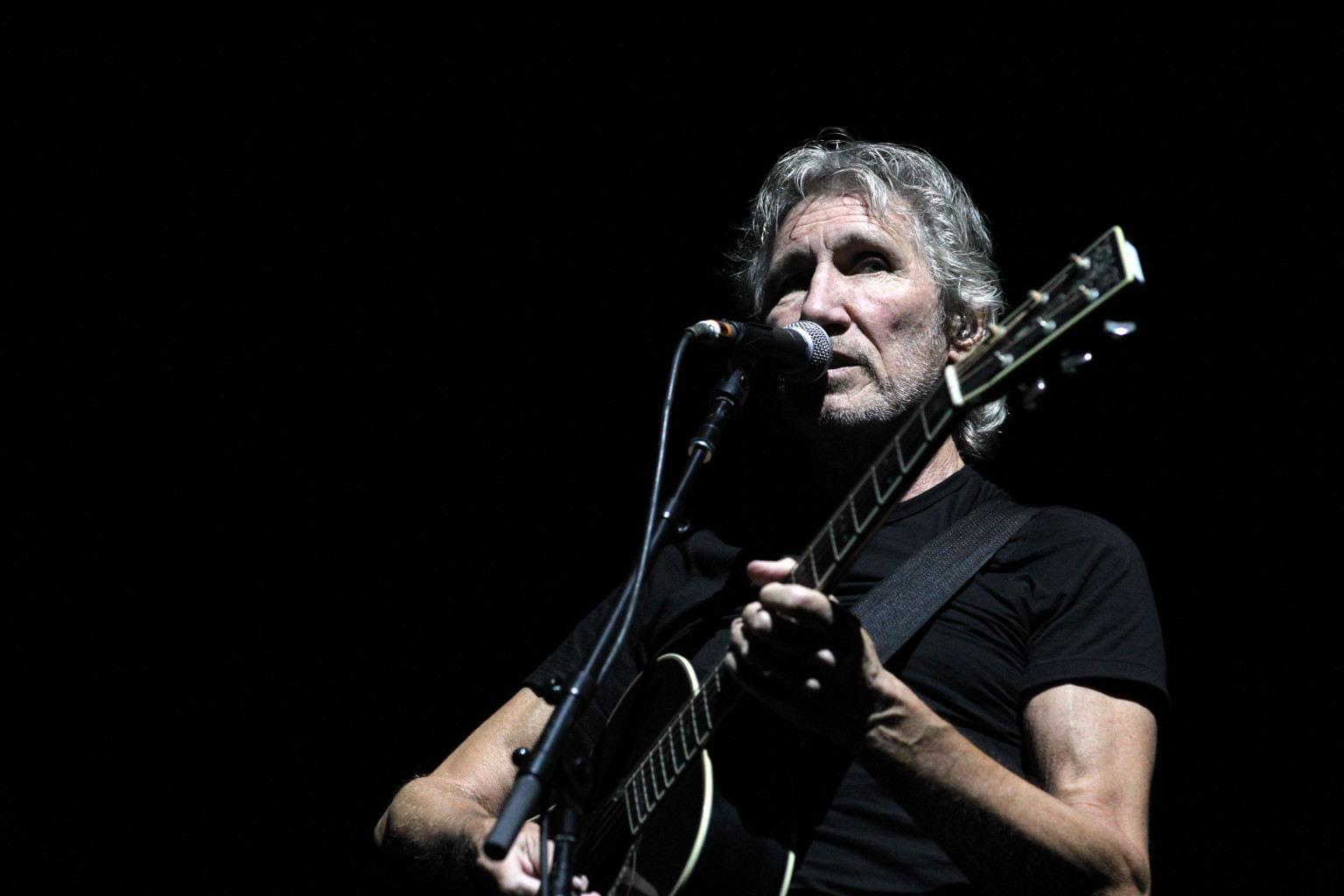
Ex-Pink Floyd musician Roger Waters during a concert
In an impassioned and hard-hitting open letter to fellow “Rock and Roll” musicians, Roger Waters (frontman and lead guitarist of world-famous rock band, PinkFloyd) has invited and called-on his peers to join the boycott, divestment and sanctions (BDS) against Israel campaign (see the full letter underneath). In a letter issued from Warsaw (Poland) earlier this morning, Waters writes:
“To cut to the chase, Israel has been found guilty – independently – by international human rights organizations, UN officials, and the International Court of Justice, of serious breaches of international law. These include, and I will name only two “the Crime of Apartheid” [and] the Crime of Ethnic Cleansing…[I]t falls to civil society and conscientious citizens of the world, to dust off our consciences, shoulder our responsibilities, and act. I write to you now, my brothers and sisters in the family of Rock and Roll, to ask you to join with me, and thousands of other artists around the world, to declare a cultural boycott on Israel.”
Waters explains in his open letter that there are two recent events that have prompted his letter, one of which was the December 2012 cancellation by Stevie Wonder of a headline performance at a benefit dinner for the Israeli Defence Force. Water adds that he, together with Archbishop Desmond Tutu, “wrote to Stevie [Wonder] to try to persuade him to cancel. My letter ran along these lines, ‘Would you have felt OK performing at the Policeman’s Ball in Johannesburg the night after the Sharpeville massacre in 1960?'”
Roger Waters (60) is an English musician, singer, songwriter and composer best known for his role in world famous rock-band, Pink Floyd. Waters served as bassist, co-lead vocalist, lyricist, principal songwriter and conceptual leader of the band. Pink Floyd subsequently achieved international success with the concept albums “The Dark Side of the Moon”, “Wish You Were Here”, “Animals”, “The Wall” and “The Final Cut”. Pink Floyd has sold more than 250 million albums worldwide, including 74.5 million units sold in the United States as of 2013.
In his open letter from this morning to rock and roll musicians, Waters also challenges mainstream media and specifically criticizes the USA media, stating that: “The clear inference would be that the media in the USA is not interested in the predicament of the Palestinian people, or for that matter the predicament of the Israeli people. We can only hope they may become interested as they eventually did in the politics of apartheid South Africa.”
The open letter by Roger Waters ends with reference to the former Apartheid regime in South Africa, the 1980s international boycott of South Africa movement and specific mention of the African National Congress’ (ANC) recent Mangaung boycott of Israel resolution:
“Back in the days of Apartheid South Africa at first it was a trickle of artists that refused to play there..then it became a stream, then ariver then a torrent and then a flood. (Remember Steve van Zant, Bruce and all the others? “We will not Play in Sun City?”)…The sports community joined the battle, no one would go and play cricket or rugby in South Africa, and eventually the political community joined in as well. We all as a global, musical, sporting and political community raised our voices as one and the apartheid regime in South Africa fell…Maybe we are at the tipping point now with Israel and Palestine. These are good people both and they deserve a just solution to their predicament. Each and every one of them deserves freedom, justice and equal rights. Just recently the ANC [African National Congress], the ruling party of South Africa, has endorsed BDS. We are nearly there. Please join me and all our brothers and sisters in global civil society in proclaiming our rejection of Apartheid in Israel and occupied Palestine, by pledging not to perform or exhibit in Israel or accept any award or funding from any institution linked to the government of Israel, until such time as Israel complies with international law and universal principles of human rights.”
Background
With Israeli discrimination, human rights abuses, violations of International Law and illegal settlement construction on the increase, Palestinians, inspired by the successful boycott and isolation of Apartheid South Africa, called on the international community in 2005 to play a decisive role in their struggle for self-determination and an end to Israel’s Apartheid policies. Palestinians called on global civil society, artists and multi national corporations to impose a program of boycott, divestment and sanctions (BDS) against Israel. The Palestinians laid out three demands that Israel needs to respect for the boycott to be called-off. Firstly, an end to the illegal Israeli Occupation. Secondly, allowing Palestinian refugees to return to their homes. And, thirdly, for Israel to ensure full equality for Palestinian citizens living inside Israel (see:www.bdsmovement.net/bdsintro). Activists maintain that the BDS campaign is not a malicious, blunt or punitive one which is out to punish Israelis but rather it is a practical, non-violent, goal-orientated and focused campaign that is uncompromisingly entrenched in international law and human rights – and also one that is increasingly supported by (progressive) Israelis themselves. Just some of the artists and intellectuals who have publicly lent their support and respected the boycott in recent years include: award-winning musician, Stevie Wonder; Jazz artist, Cassandra Wilson; Maxi Jazz of the UK band, Faithless; musician, Elvis Costello; Pultizer-prize winning author, Alice Walker; intellectual, Stephen Hawking and most recently, the film director, Mira Nair.
BDS South Africa warmly salutes Roger Waters for his principled position. His open letter is sure to go down in history as a turning point in the boycott of Israel campaign and the larger movement for a free Palestine.
Issued by Muhammed Desai on behalf of BDS South Africa
Roger Waters’s letter
To My Colleagues in Rock and Roll
Nigel Kennedy the virtuoso British violinist and violist, at The Recent Promenade Concerts at The Albert Hall in London, mentioned that Israel is apartheid. Nothing unusual there you might think, then one Baroness Deech, (Nee Fraenkel) disputed the fact that Israel is an apartheid state and prevailed upon the BBC to censor Kennedy’s performance by removing his statement. Baroness Deech produced not one shred of evidence to support her claim and yet the BBC, non political, supposedly, acting solely on Baroness Deech’s say so, suddenly went all 1984 on us. Well!! Time to stick my head above the parapet again, alongside my brother, Nigel Kennedy, where it belongs. And by the way, Nigel, great respect man. So here follows a letter last re-drafted in July.
To My Colleagues in Rock and Roll.
In the wake of the tragic shooting to death of un-armed teenager Trayvon Martin and the acquittal of his killer Zimmerman, yesterday, Stevie Wonder spoke at a gig declaring that he will not perform in the State of Florida until that State repeals its “Stand your ground” Law. In effect he has declared a boycott on grounds of conscience. I applaud his position, and stand with him, it has brought back to me a statement I made in a letter I wrote last February 14th, to which I have referred but have never published.
The time has come, so here it is.
This letter has been simmering on the back burner of my conscience and consciousness for some time.
It is seven years since I joined BDS (Boycott, Divestment and Sanctions) a non violent movement to oppose Israel’s occupation of the West Bank and violations of international law and Palestinian human rights. The aim of BDS is to bring international attention to these Israeli policies, and hopefully, to help bring them to an end. All the people of the region deserve better than this.
To cut to the chase, Israel has been found guilty, independently, by international human rights organizations, UN officials, and the International Court of Justice, of serious breaches of international law. These include, and I will name only two;
1.The Crime of Apartheid:
The systematic oppression of one ethnic group by another.
On 9 March 2012, for instance, the UN Committee on the Elimination of Racial Discrimination called[1] on Israel to end its racist policies and laws that contravene the prohibition against racial segregation and apartheid.
2.The Crime of Ethnic Cleansing:
The forcible removable of indigenous peoples from their rightful land in order to settle an occupying population. For example, in East Jerusalem non Jewish families are routinely physically evicted from their homes to make way for Jewish occupants.
There are others.
Given the inability or unwillingness of our governments, or the United Nations Security Council to put pressure on Israel to cease these violations, and make reparations to the victims, it falls to civil society and conscientious citizens of the world, to dust off our consciences, shoulder our responsibilities, and act. I write to you now, my brothers and sisters in the family of Rock and Roll, to ask you to join with me, and thousands of other artists around the world, to declare a cultural boycott on Israel, to shed light on these problems and also to support all our brothers and sisters in Palestine and Israel who are struggling to end all forms of Israeli oppression and who wish to live in peace, justice, equality and freedom.
I am writing to you all now because of two recent events.
1. Stevie Wonder.
Word came to me, the first week of last December that Stevie Wonder had been booked to headline at a gala dinner for the Friends of The Israeli Defend Force in LA on 6th December 2012. An event to raise money for the Israeli armed forces, as if the $4,3,000,000,000 that we the US tax payers give them each year were not enough? This came right after The Israeli defence Force had concluded yet another war on Gaza, (Operation Pillar of Defence), according to human rights watch, committing war crimes against the besieged 1.6 million Palestinians there.
Anyway, I wrote to Stevie to try to persuade him to cancel. My letter ran along these lines, “Would you have felt OK performing at the Policeman’s Ball in Johannesburg the night after the Sharpeville massacre in 1960 or in Birmingham Alabama, to raise money for the Law Enforcement officers, who clubbed, tear gassed and water cannoned those children trying to integrate in 1963?”
Archbishop Desmond Tutu also wrote an impassioned plea to Stevie, and 3,000 others appended their names to a change.org petition. Stevie, to his great credit, cancelled!
2. Earlier that week I delivered a speech at The United Nations. If you are interested you can find this speech on you tube. The interesting thing about these two stories is that there was NOT ONE mention of either story in the mainstream media in the United States.
The clear inference would be that the media in the USA is not interested in the predicament of the Palestinian people, or for that matter the predicament of the Israeli people. We can only hope they may become interested as they eventually did in the politics of apartheid South Africa.
Back in the days of Apartheid South Africa at first it was a trickle of artists that refused to play there, a trickle, that exercised a cultural boycott, then it became a stream, then a river then a torrent and then a flood. (Remember Steve van Zant, Bruce and all the others? “We will not Play in Sun City?”) Why? Because, like the UN and the International Courts of Justice they understood that Apartheid is wrong.
The sports community joined the battle, no one would go and play cricket or rugby in South Africa, and eventually the political community joined in as well. We all as a global, musical, sporting and political community raised our voices as one and the apartheid regime in South Africa fell.
Maybe we are at the tipping point now with Israel and Palestine. These are good people both and they deserve a just solution to their predicament. Each and every one of them deserves freedom, justice and equal rights. Just recently the ANC, the ruling party of South Africa, has endorsed BDS. We are nearly there. Please join me and all our brothers and sisters in global civil society in proclaiming our rejection of Apartheid in Israel and occupied Palestine, by pledging not to perform or exhibit in Israel or accept any award or funding from any institution linked to the government of Israel, until such time as Israel complies with international law and universal principles of human rights.
Militants killed 25 policemen on Monday in the deadliest attack of its kind in years, as Egypt’s army-installed rulers escalated a campaign to crush ousted president Mohamed Morsi’s Muslim Brotherhood.
The assailants fired rocket-propelled grenades at two buses carrying police in the Sinai Peninsula, security sources said, just hours after 37 Brotherhood prisoners died in police custody.
The bloodshed came after Egypt’s military chief vowed a “forceful” response to violence roiling the Arab world’s most populous nation.
Judicial sources said new accusations of inciting the deaths of protesters had been levelled against Morsi, who has been held in a secret location since the military deposed him on July 3.
Meanwhile, Former president Hosni Mubarak won conditional release in the third of four cases against him, but remained in detention on the fourth, judicial sources added.
The Sinai attack raised fears of a return to the wave of deadly Islamist violence that swept the country in the 1990’s.
Egypt is struggling to put a lid on a deep political crisis and violence that has killed almost 900 people in days of clashes between Islamist protesters and security forces across the country.
Western states have condemned the violence and are threatening to cut off billions of dollars in aid, though Saudi Arabia said Monday that Arab nations would step in to fill any gap.
Morsi loyalists vowed new demonstrations on Monday, although a day earlier they had cancelled some marches citing security
concerns.
The interior ministry said 25 policeman were killed and two injured in the Sinai attack, which it blamed on “armed terrorist groups”.
A border official said afterwards that the Rafah crossing with the Palestinian Gaza Strip, near where the attack occurred, would be closed.
Security sources said another policemen was killed in the northern city of El-Arish, bringing to at least 75 the number of security force members killed in the Sinai since the army toppled Morsi.
The security situation in the Sinai has deteriorated sharply in the past weeks, with near daily attacks by militants targeting police and military installations.
Elsewhere, bloodshed sparked by the August 14 security force crackdown on pro-Morsi protest camps in Cairo showed little sign of abating.
Authorities said 37 Islamist detainees died after police fired tear gas in a bid to free an officer taken hostage by prisoners, as the inmates were being transferred to a north Cairo jail.
However, the Brotherhood, the once-banned movement from which Morsi hailed, held the police accountable, accusing them of “murder”. They said the incident affirmed “the intentional violence aimed at opponents of the coup, and the cold-blooded killing of which they are targets”. – Sapa
Egypt’s military-backed rulers are pressing on in their crackdown against the Muslim Brotherhood with the arrest early Tuesday of the group’s spiritual leader who had been in hiding near the huge sit-in in support of the country’s ousted Islamist president, which security forces violently dispersed a week ago, leaving hundreds dead.
The arrest of Mohammed Badie – the supreme leader of the Brotherhood, the Islamist group from which ousted president Mohammed Morsi hails -followed a chaotic day of bloodshed that saw 25 policemen killed in a militant ambush in Sinai and a court ruling announcing the possibility that the jailed ex-president Hosni Mubarak could walk free later this week.
Mubarak’s release could fuel the unrest roiling the country after Morsi, Egypt’s first democratically elected president and the autocratic Mubarak’s successor, was removed in a military coup on July 3.
Underscoring the growing anger over Morsi’s ouster, suspected Islamic militants on Monday ambushed two minibuses carrying off-duty policemen in Egypt’s Sinai Peninsula, forcing the men to lie on the sand and shooting 25 of them dead.
The brazen daylight attack raised fears that the strategic desert region bordering Israel and the Gaza Strip could be plunged into a full-fledged insurgency.
Badie was captured early Tuesday in an apartment in the eastern Cairo district of Nasr City, according to security officials and state television, very close to where Morsi’s supporters held a six-week sit-in protest that was cleared by security forces last Wednesday.
The private ONTV network showed footage of a man the network said was Badie after his arrest. In the footage, a somber looking Badie in an off-white Arab robe, or galabiyah, sits motionless on a sofa as a man in civilian clothes and carrying an assault rifle stands nearby.
Badie and his powerful deputy Khairat el-Shater, who is in custody, go on trial later this month for their alleged role in the killing of eight protesters outside the Brotherhood’s Cairo headquarters in June. His arrest is a serious blow to the group at a time when authorities are cracking down on its leaders and mid-ranking officials, detaining scores of them across the country.
The officials spoke on condition of anonymity because they were not authorized to speak to the media.
Late Monday, the 25 slain police officers were given a funeral with full military honors. The men’s coffins, draped in red, white and black Egyptian flags, were jointly carried by army soldiers and policemen, and Egypt’s interim President Adly Mansour declared a nationwide state of mourning to mark their deaths.
Mubarak, 85, has been in detention since April 2011, two months after he was ousted in a revolution against his rule.
He was found guilty and sentenced to life in prison last year for failing to stop the killing of some 900 protesters in the 18-day uprising. His sentence was overturned on appeal and he is now being retried, along with his security chief and six top police commanders.
Two judicial officials said Mubarak could walk free this week or next after a criminal court on Monday ordered his release in a corruption case in which he and his two sons were accused of embezzling funds for the maintenance of presidential palaces. His sons were ordered kept in custody.
Monday’s ruling, along with the fact that Mubarak had previously been ordered released in the killings of the protesters opened the possibility of freedom for the former president, the officials said, speaking on condition of anonymity because they were not authorized to speak to the media.
There will no longer be any grounds to hold him if a court accepts a petition by his lawyer requesting his release in a third case later this week or next.
But freeing Mubarak, widely hated for widespread abuses and repression during his 29 years in power, during one of the worst bouts of turmoil since his ouster would be a huge risk for the military-backed government.
It could lend credibility to allegations that the mass protests that preceded the July 3 coup that toppled Morsi were the work of Mubarak-era figures searching for a way to reinstate the former regime.
Last week, the military raided two protest camps of Morsi’s supporters in Cairo, killing hundreds of people and triggering a wave of violence that has left at least 1,000 people dead.
Human Rights Watch, in a report Monday, accused Egyptian security forces of using excessive force when they moved to clear the larger of the two camps. The New York-based group said the assault amounted to the “most serious incident of mass unlawful killings in modern Egyptian history.”
It called on authorities to reverse a recent decision authorizing the use of deadly force by security forces when they come under attack or when key government facilities are assaulted.
The Sinai Peninsula has long been wracked by violence by al-Qaida-linked fighters, some who consider Morsi’s Brotherhood to be too moderate, and tribesmen who have used the area for smuggling and other criminal activity. Attacks, especially those targeting security forces, have been on the rise since Morsi’s ouster.
Monday’s attack targeting the police officers took place near the border town of Rafah in northern Sinai. A few hours later, militants shot to death a senior police officer as he stood guard outside a bank in el-Arish, another city in the largely lawless area, security officials said.
There was no immediate claim of responsibility for either attack. The United States condemned the slaying of the police officers and repeated its commitment to help Egypt combat terrorism in Sinai. U.N. Secretary-General Ban Ki-moon also denounced the attack.
The Sinai attack came a day after security forces killed 36 detainees during a riot on a prison-bound truck convoy north of Cairo. The killings came as police fired tear gas to free a guard who was trapped in the melee, security officials said.
The government ordered an inquiry into the deaths, which it blamed on armed men allegedly trying to help the 600 Muslim Brotherhood detainees escape. It gave no details.
The Brotherhood blamed military chief, Gen. Abdel-Fattah el-Sissi, and the interior minister for Sunday’s killings. The group also called for an international inquiry into the deaths.
The United States said it was troubled by the “suspicious deaths” of the prisoners.
“We call on all Egypt’s leaders and the international community to condemn such attacks without equivocation,” said Psaki, the State Department spokeswoman.
Amnesty International demanded a “full, impartial and effective” probe into the events.
Morsi has been held in an undisclosed location since his ouster. On Monday, prosecutors ordered his detention for 15 days in connection with allegations that he conspired to kill and torture protesters during mass demonstrations by the opposition outside his presidential palace in December 2012. – AP
Saudi Foreign Minister Prince Saud al-Faisal on Monday pledged to fill any financial gaps left by Western countries withdrawing aid from Egypt over its crackdown on Muslim Brotherhood protesters that has left hundreds dead since last week.
“To those who had declared they are stopping aid to Egypt or are waving such a threat, the Arab and Muslim nations are wealthy with their people and resources and will not shy away from offering a helping hand to Egypt,” he told state news agency SPA.
Meanwhile, Egypt’s public prosecutor ordered on Monday the detention of deposed President Mohamed Morsi for 15 days pending an investigation into allegations he participated in “violent acts”, state news agency MENA said.
On Thursday, Egyptian judicial authorities extended Mursi’s detention period for 30 days in a separate case.
Morsi, who was overthrown by the army on July 3, is being held at an undisclosed location on allegations of murder and spying. The new case centres on protests that took place in front of the presidential palace last December, MENA said. – Reuters
United Nations (UN) Secretary General Ban Ki-moon says the lifting of targeted sanctions against Zimbabwe is a matter for individual member states.
He was responding to a question during a brief press encounter with journalists at the UN Headquarters in New York.
“Any sanctions imposed on Zimbabwe need to be discussed and done by the member states and intergovernmental bodies. I have been urging the government of Zimbabwe and President Robert Mugabe himself, on many occasions, that there should be fair and credible elections and for a democratic process in Zimbabwe,” says Ban.
He says that there should be full respect for human rights and they should work on improving the well-being of the people.
Earlier, statements by the UN called for the country’s leadership to govern responsibly and inclusively.
“I have taken note of elections which were held recently. I know that there have been some assessments by different groups of monitors and I hope that all these controversies or current assessment should fully reflect the will of the people in line with international democratic principles,” he added.
Both the European Union (EU) and the United States have called for credible elections as a precursor to lifting sanctions.
Meanwhile, the United States says it will only lift sanctions on Zimbabwe’s newly re-elected President Robert Mugabe if he implements political reforms.
On Sunday, southern African leaders called for the West to lift sanctions against Harare as they gave their seal of approval to Mugabe’s victory in disputed elections. However, Washington was unimpressed.
In March 2003, the United States imposed sanctions on Mugabe and his relatives. – SABC
Egypt is a key bottleneck in the global oil industry. Should the current turmoil in the North African country get any worse, a potential oil spike could damage any nascent economic recovery.
After last week’s bloody crackdown by the Egyptian army, fears of a disruption of oil supplies to the West have boosted the oil price. Brent crude prices were propelled to a four-month high of $111.23 on Thursday. If the turmoil gets worse – or unrest spreads to other countries – the risk premium currently factored into the price of crude is likely to increase further.
Egypt is not a major energy exporter, producing a nominal amount of the world’s oil and gas. The North African country appears at number 54 on the list of the world’s largest oil exporters, producing about 0.9pc of the world’s oil and 1.8pc of global natural gas supply.
However, Egypt plays a vital role in international energy markets through the operation of the Suez Canal and the Suez-Mediterranean (Sumed) pipeline. These are vital pieces of infrastructure in the global oil market.
Last year, about 7pc of all seaborne traded oil and 13pc of liquefied natural gas (LNG) travelled through the Suez Canal, according to data collected by the US Energy Information Administration (EIA).
The Suez Canal, a 101-mile link between the Red Sea and the Mediterranean, and the 200-mile Sumed pipeline are strategic routes for Persian Gulf oil and gas shipments to Europe and North America.
Closure of these two routes would add an estimated 2,700 miles of transit from Saudi Arabia to the United States around the Cape of Good Hope, increasing costs and shipping time.
Hopes are high, however, that both the canal and pipeline will continue to operate as normal. Maritime insurers appear to be relaxed about the situation at the moment, but one, Skuld, has warned ships’ crews not to go ashore.
“Members are advised to ensure that ships and crew calling at Egyptian ports or transiting the Suez Canal remain on alert and take suitable precautions to ensure their safety,” Christian Ott, Skuld’s vice-president, head of claims, said. “Given the announcement of the state of emergency, and the continued situation on the ground, vessels and crew need to exercise particular caution if any crew step ashore – even for short periods of time.”
The rest of the country’s oil industry remains relatively unaffected. Despite the worrying headlines, most oil and gas production takes place offshore and is operating relatively undisturbed.
The largest player is BP, which produces about 15pc of the country’s oil and 30pc of its gas. “Operations and production are unaffected,” a BP spokesman told Reuters after more than 500 people were killed last week in a security crackdown. “We are monitoring the security situation in the areas where we have offices. All our people are safe and accounted for.”
Royal Dutch Shell is also a major producer in the country. “To ensure the safety and security of our staff, Shell offices in Egypt are closed for business today and into the weekend, and business travel into the country has been restricted. We will continue to monitor the situation in Egypt,” a Shell spokesman said on Friday.
However, perhaps the most exposed company to the country is BG Group. Egypt was the energy company’s largest producing country in 2012, delivering 20pc of the company’s total production.
BG’s production is also unaffected so far, but the group withdrew 100 expatriate staff and dependants last month. About half of the gas that Egypt produces is exported, with the rest servicing Egypt’s domestic market. This is one reason why sector watchers are hopeful that disruption will be minimal. Whoever holds political power will not want the lights to go off.
The Egyptian uncertainty will continue to boost the oil price, but the situation in neighbouring Libya is also a concern. Workers at ports in Libya have been on strike for a number of weeks, with the protests resulting in a drop in Libya’s oil exports.
“If the blockade of these oil terminals continues, the state will be obliged to use its power, and all the forces at its disposal, including the army,” the Libyan prime minister, Ali Zeidan, said on Friday.
“The situation in Libya is also threatening to escalate: the government appears to be running out of patience in view of the revenue losses due to strikes,” Commerzbank said last week. “After striking workers at the export terminals had announced that they planned to sell the oil themselves, the government threatened to deploy the army to prevent this from happening.”
Brent crude prices eased on Friday, following five straight days of gains. However, prices are likely to stay at or above $110 (£70) a barrel until there are signs of tensions easing. But if the situation in Egypt and Libya worsens, all bets could be off. – The Telegraph
The Egyptian government isn’t very happy with the way in which foreign journalists are covering the military crackdown on pro-Morsi protesters in the country, a conflict that has left over 800 people dead and thousands injured in just a few days. The State Information Service sent a notice to foreign correspondents in the country on Saturday claiming that “that some media coverage has steered away from objectivity and neutrality,” adding that “Egypt is feeling severe bitterness towards some Western media coverage that is biased to the Muslim Brotherhood.”
The memo lays out a number of points on which the Egyptian government would like to see a change in rhetoric:
Despite an escalation by the Muslim Brotherhood and supporters of the ousted president, police men, in cooperation with the Armed Forces men and through popular assistance, managed to carry out all missions assigned to them and were able to control the security situation in face of the terrorist attempts by the Muslim Brotherhood to fling the country into violence.
The implicit warning is just the latest of many signs of a disconnect between the interpretation of the last month or so by many Egyptians — where more or less the Islamist factions of the country stand against the military, who are supported by moderates, Christians, and secularists — and by the international community. As President Obama feels pressure to call the military overthrow of a democratically-elected (but deeply unpopular) president in Egypt a ‘coup’ as the violence continues in Egypt, those loyal to the military have long believed that the west is too sympathetic towards the Muslim Brotherhood. And now, it looks like that sentiment is being released on many of the journalists there to cover it.
During the past few days, the Committee to Project Journalists marked the milestone of 1,000 journalists killed since 1992, after multiple journalist deaths in Egypt. And a growing number of western correspondents, along with Egyptian correspondents and organizations not seen as loyal to the interim government, have been attacked while doing their jobs in Egypt, often by what appear to be vigilante-style crowds loyal to the Egyptian military (although there have been reports of violence against journalists instigated by both sides). Today, the army had to step in and rescue two journalists (Matt Bradley of the Wall Street Journal and Alastair Beach from UK Independent) from such a crowd at a Cairo mosque, as the military and pro-Morsi supporters exchanged gunfire. On Friday, journalist Jared Malsin, reporting for Time, was caught in an anti-Morsi crowd on the 15 May Bridge in Cairo. Malsin, an experienced reporter who speaks Arabic, described his confrontation with a pro-military vigilante group while trying to leave the bridge:
A man grabbed me by the arm, then a whole group seized me. Within seconds I was lifted off the ground while a whole crowd of men ripped my camera from my hands and my medical kit from the strap on my thigh. One man slapped me across the face, knocking my glasses to the pavement.
Somehow, cooler heads prevailed. More men joined the group, pulling me out of the crowd and returning my glasses and medical kit. Cliff had managed to secure the camera but two of his own had been stolen.
Speaking to the Atlantic Wire, Malsin said that after this experience “it became vividly clear to me that dynamics of street protests in Egypt have changed. The level of violence is more lethal.” He added, “The rules that applied six months ago don’t apply anymore.”
Another example: the Guardian’s correspondent, Patrick Kingsley, was roughed up and delivered to police by a group of teenagers.
Others have been confronted:
Obviously, dangerous conditions on the ground for journalists are translating to dangerous conditions for everyone. Democracy Now’s Sharif Kouddous explained as much to ABC News on Saturday, saying “It’s a dangerous situation for any citizen or any person to be out here. It’s always more difficult if you have a camera, you’re a target.” – theatlanticwire.com
A perfectly timed surge at the finish helped Johan Cronje claim bronze and the first ever medal for South Africa in the men’s 1,500 metre event at the IAAF World Championships in Moscow on Sunday.
Cronje, the national record-holder in the 1,500m, clocked 3 minutes 36.83 seconds just behind Kenyan Asbel Kiprop who won in 3.36.28, and American Matthew Centrowitz in second with 3:36.78.
Not only was it the first time a South African featured in the top eight of the event at the world championships, it was also the only medal the South African team claimed at the Moscow games.
After the race, Cronje said had not expected to be up on the podium.
“I believed in myself – but I wouldn’t have put money on myself”, said Cronje.
Cronje found himself boxed in during the race, and fancied with a better approach he could have grabbed silver.
“I’m a bit disappointed I was a few split-seconds from second.
“I think if I wasn’t boxed in I could have snatched that one, but I had a terrible tactical race,” said the Bloemfontein speedster who had initially expected a fast race.
Asbel Kiprop took control of the race from the gun, pulling the field through 400m, and Cronje found himself boxed in on the kerb initially in fifth, then dropping back to eighth with 300m to go.
“I couldn’t go fast as everyone was on my right and I had Centrowitz ahead.
“It was only the last 60 I had to go past as that’s when it opened up [on the inside].”
Cronje said he thought the tactics in the final would be different from his previous expectations.
“I realised that everyone was in there as individuals, the Kenyans weren’t going to run as a team, so they were watching each other and would also have Centrowtiz on their mind, so perhaps they would forget a guy like myself or Brannen from Canada,” said Cronje.
“Before the race I knew it could be slow: I had to be upfront and I had to be wide, and everything I knew I didn’t do.
After 900m Cronje said he had to break free from the group.
“It was stupid I was swearing at myself [for being boxed in], saying Johan this is your only opportunity, use it.
“I was sitting, sitting — looking right — [I] couldn’t get a gap and saw Centrowitz and knew he was a fast finisher, so I would stick with him.
“When he moved out and around, I saw the guys inside were looking outside - so I waited.
“As soon as you look outside your body moves out and I waited for that 20 centimetres to open up and I moved through on the inside,” added Cronje who is a semi-professional athlete, who is an investment specialist in his day job.
In the women’s javelin, once again Sunette Viljoen, the defending javelin bronze medalist from Daegu, threw her best distance with her opening trial.
Viljoen threw 63.58 metres, which was good enough for a sixth place overall after failing to improve on her first attempt.
It was a performance far below her season best of 64.51m set with the first throw of the qualification round, and her personal best of 69.35m set in New York in May of last year.
A visibly distressed Viljoen walked through the post-race zone without sharing any thoughts.
South Africa’s sole medal placed them 33rd and last on the medal table, compared to a ninth place in Berlin and 17th in Daegu. – Sapa
Tjostolv Moland, one of two Norwegian citizens imprisoned in the Congo since 2009 on murder charges, has died in prison. He was 32.
The cause of death wasn’t immediately clear, attorney Hans Marius Graasvold said.
British-Norwegian citizen Joshua French, who was imprisoned alongside Moland, is upset but in good health, Graasvold said.
The two former Norwegian soldiers were sentenced to death in Congo in the murder of their driver, Abedi Kasongo, and attempted murder of a witness.
The tragedy that has now occurred shows us it is extremely important that Joshua French returns home soon
The court in the northeastern city of Kinsangani also convicted them of spying for Norway because they were carrying military ID cards at the time.
They have denied the charges and the Norwegian government has denied that the men were spies.
Moland, who grew up in Vegardshei in southern Norway, worked for the Norwegian military until 2007.
After that, he and French went on to work for private security companies in Africa, according to Norwegian daily Aftenposten.
Among other things, they helped companies keep their ships secure off Somalia’s coast.
Graasvold said the two were in Congo in 2009 to do research for a potential start-up of an event company that would arrange extreme tourism holidays.
They had hired Kasongo as their driver after their motorbike broke down while travelling through the rainforest in eastern Congo.
They have consistently denied the charges against them, saying they are innocent and were ambushed by gunmen.
The British charity organisation Reprieve, which has assisted French’s legal team, has sharply criticised the conviction of the two, pointing out there was no physical evidence against the men and that two people were paid to testify against them.
Graasvold said he was last in contact with Moland about a week ago and wasn’t notified he had any health problems then. Previously, during his time in prison Moland has been ill with malaria and other diseases.
Norwegian Foreign Minister Espen Barth Eide said Moland was found dead in his cell Sunday morning and that members of his family in Norway have been informed.
“More than anything, our thoughts now are with them in this very difficult situation,” Eide said, adding the government has been concerned about French and Moland’s situation for a long time.
Norwegian authorities have tried to have the two transferred to serve their sentences in Norway and have also worked closely with Britain to put pressure on the Congolese officials to pardon the two.
Eide on Sunday said Congolese representatives haven’t responded to formal communications from him, British Foreign Secretary William Hague or Norwegian Prime Minister Jens Stoltenberg.
Graasvold said the two men’s families have earlier criticised Norwegian authorities for being passive in the case.
He said it was now even more important to make sure French is released.
“The tragedy that has now occurred shows us it is extremely important that Joshua French returns home soon,” he said. – Sapa
This website uses cookies to improve your experience. We'll assume you're ok with this, but you can opt-out if you wish. Cookie settingsACCEPT
Privacy & Cookies Policy
Privacy Overview
This website uses cookies to improve your experience while you navigate through the website. Out of these cookies, the cookies that are categorized as necessary are stored on your browser as they are essential for the working of basic functionalities of the website. We also use third-party cookies that help us analyze and understand how you use this website. These cookies will be stored in your browser only with your consent. You also have the option to opt-out of these cookies. But opting out of some of these cookies may have an effect on your browsing experience.
Necessary cookies are absolutely essential for the website to function properly. This category only includes cookies that ensures basic functionalities and security features of the website. These cookies do not store any personal information.
Any cookies that may not be particularly necessary for the website to function and is used specifically to collect user personal data via analytics, ads, other embedded contents are termed as non-necessary cookies. It is mandatory to procure user consent prior to running these cookies on your website.


 Prosecutors formally levied drug-trafficking charges on Tuesday against two young women from Scotland and Ireland who were arrested this month trying to depart Peru with 24 pounds of cocaine in their luggage.