South Africa losing investor confidence

A toxic mix of government stasis, creaking infrastructure and social unrest is prompting doubts about South Africa’s stability in a continent with too many economic scare stories.

It may, in the end, be events on a dusty patch of Highveld two hours’ drive from Johannesburg that end South Africa’s 18-year post-apartheid honeymoon.

In the weeks since dozens were killed in clashes between police and miners at Marikana, a wave of violent strikes has swept the South Africa, strangling vital mineral production and threatening fuel supplies.

Long pent-up anger at the slow pace of economic reform has come to the fore. More militant unions and political populists such Julius Malema are mining that rich seam of discord.

“Things are not rosy” said Mohammed Nalla, an economic analyst at Nedbank Capital in Johannesburg. “(The outlook) is deteriorating, we’ve got institutional decay and structural decay in the economy that is setting in.”

According to Nalla and others, the root of the problem is a lack of accountability at the top.

With no serious electoral rivals, the ruling ANC is accused of being too concerned with the accumulation of wealth and power.

Today ANC members are squarely focused on a December meeting that will select their next leader and, de facto, the next leader of the country.

Unpopular President Jacob Zuma faces a potential challenge from Deputy President Kgalema Motlanthe. Neither man is risking difficult decisions that could upset their power base.

That political drift is starting to eat away at investor confidence, and the timing could hardly be worse.

Just as the financial world seems ready to give Africa a shot at replicating the growth that transformed South East Asia and Latin America, some are wondering if Africa’s economic talisman is going to the dogs.

The cruel irony of the situation was underscored this week.

South Africa was welcomed into an elite group of bond issuing countries — opening the door to a whole new set of foreign investors — while at the same time having its bond rating cut.

Moody’s downgrade left South Africa, rated at Baa1 — around the level of peers Russia, Brazil and Thailand. But the diagnosis was bleak and a further ratings cut is likely.

Moody’s said South Africa’s twin fiscal and trade deficits were a serious worry, but the more immediate problem was a government that is unwilling and, increasingly, unable to tackling mounting economic problems.

If that sentiment takes root South Africa could be in serious trouble very quickly.

Thanks to the country’s mineral wealth and because of low returns to be had in the developed world, investors have been happy to seek out profits in more risky but growing markets such as South Africa.

As a result South African debt and the rand are still well liked by traders, helping keep the country’s already large trade deficit and tattered public finances under control.

“That momentum does not last forever, we know that these things come to end,” warned Nalla.

A significant slowdown in investment would be a double whammy for South Africa, which is highly dependent on both foreign inflows of capital and foreign imports.

A slowdown would increase the government’s cost of borrowing, squeezing public spending and at the same time weakening the rand, which would push up the price imported food and energy.

Already, over the last year, foreign inflows to the South African stock market have turned into modest outflows. Equities may yet prove to be the canary in the coalmine, but so far more crucial bond and currency investors seem willing to roll with the punches.

“We are not seeing the ‘Zimbabwe’ situation in South Africa. That is not what is happening. We are not seeing investors run away with their hands in the air,” said Peter Attard Montalto of Japanese investment bank Nomura.

[ad 1]

“What is happening is a slow grind of under-performance, (South Africa) not realising its full potential and that is a result of policy and the politics that are going on.”

South Africa may be saved, at least for now, by the few institutions that still work well, he added.

“The problem is, investors go to see the SARB (South African Reserve Bank), they go to see the National Treasury and these are amazing world-class institutions that are on a par with, or even better than, some developed markets.

“People don’t actually go and interact with the education ministry, the labour ministry — that’s where you see the real issues (and) at the provincial level, where the vast majority of provinces are highly inefficient, with large amounts of corruption.”

If political stasis allows that type of institutional decay to spread, South Africa could be in for a rough time ahead. – Sapa
Bavarian town promotes good manners

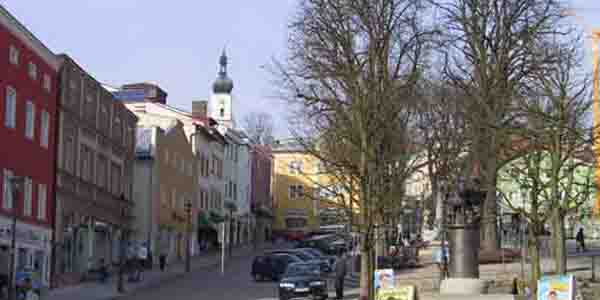
Idyllic Grafenau in the Bavarian Alps. Now they want to have perfect manners too

It seems like a vision of a better world: bus drivers have a friendly greeting for their passengers, salespeople serve customers with a smile, husbands surprise their wives with flowers, children offer their seats to the elderly on public transportation and behave well at school and at the dinner table.

This idea could soon become everyday reality in a town in Bavaria. The German Knigge Association, a society that promotes good manners and which is named after Baron Knigge who wrote a treatise on etiquette and behaviour in 1788, is starting a pilot project in the small town of Grafenau.

“For four days the residents of Grafenau will be introduced to etiquette,” says the head of the Association, Hans-Michael Klein. The local mayor is supporting the arrival of etiquette experts from all over Germany in Grafenau from October 18th to the 21st. They aim to turn the town into an epicentre of great manners.

“Good demeanour and politeness are the solution to many everyday problems,” says Klein. He believes that living together could be many times more pleasant if people met each other with respect and friendliness. Klein says adults should keep in mind that they are role models for children.

Over four days people of all ages will receive extra tuition in etiquette. Trainers will introduce “respect” in schools and kindergartens and the primary school’s drama group will stage a play about Baron Knigge. Adults will be able to enjoy wine tasting and a seminar about proper behaviour. Local hairdressers will help their customers find the right hairstyle and the dancing school will offer a course in Viennese waltz. A fashion show will teach the Do’s and Don’ts of dressing.

“Grafenau was not chosen because we need to catch up on manners,” says Grafenau’s mayor, Max Niedermeyer. But as the town lives from tourism there is always space for improvement. “Children in particular should have the same standard of behaviour towards parents, teachers, co-pupils and elderly people,” stresses Niedermeier. He doesn’t consider himself perfectly versed in etiquette either and hopes the weekend will have a lasting effect on locals.

Etiquette-expert Klein is hoping to spread his message even further. “Several cities have inquired already about our etiquette coaching.” He doesn’t want to reveal which ones but the etiquette instructors are not planning to visit big cities like Berlin, Hamburg, Munich, Frankfurt or Cologne for now.

“We Lower Bavarians work hard, are reliable and helpful, but we constantly want to improve ourselves,” says Ludwig Lankl. The district’s chief administrator believes society often lacks friendliness and respect. He thinks the weekend will help reintroduce a more “Christian” way of behaviour in the region.

Lankl does not make an exception for himself. “I have to make a mental note as well to surprise my wife with a bouquet of flowers.” – DPA

Zuma’s speech on Somalia at UN mini-summit

I wish at the outset to congratulate my dear brother, H.E. Hassan Sheik Mohamoud on being elected President of Somalia.

I look forward to working with you President Hassan, in both bilateral and in multilateral settings as we strengthen the South Africa-Somalia relationship and collaborate within the multilateral fora on matters of mutual interest.

I commend the people of Somalia on this historical step of starting a post transition government that shall chart a path towards governance, reconciliation, stability and development.

The Mini-Summit Summit on Somalia comes at an opportune time.

The resolve and desire for peace shown by Somalis from all walks of life must be supported by the international community.

The lessons we have learnt from all governments that emerge from instability is that the population must see benefit in democratic governance lest they be swayed by those who thrive in chaos.

The new Somali government has a challenging task of delivering the fruits of governance in a still violently contested atmosphere.

The crucial support that the international community continues to provide to Somalia, through maintaining AMISOM, supporting social and economic projects will determine the success of this new government.

However, no amount of support can replace the important role of Somali leadership in building their country.

The Somali leadership is expected to play a very critical role in developing a vision that will serve to rally Somali stakeholders and international partners in our efforts at post-transition development.

If we agree on the importance of these foundational elements, it would then be imperative for us all to collaborate in extricating Somalia out of the ashes of desolation to a developmental path.

As we celebrate the dawn of this new beginning for Somalia we remain conscious that there remain those in Somalia, who although they are sons and daughters of Somalia, remain violently opposed to this new government.

To brandish them as terrorists and respond to them consistent with the brand we attach to them, has had persistent costs.

If Somalia is to move forward, its people cannot continue to be at war.

There is therefore a need to consider increasing our effort to encourage and provide incentives to those that remain outside the political spectrum for them to consider peaceful co-existence with the new Somalia government.

In this regard, a strategy for dialogue between all Somali stakeholders is imperative.

This, if managed properly, could help lead to reconciliation and tolerance in Somalia.

South Africa is committed to availing its expertise on the area of national reconciliation.

We had already agreed with the previous Transitional Federal Government that my country would work closely with Somalis in their reconciliation strategy and we renew our commitment to the new Somali government.

Sustainable peace is possible in Somalia.

The adoption of the provisional Constitution has set in place the foundation for building the pillars on which peace will thrive.

We need to direct our focus on providing support as Somalis implement the political and social compact reached by adopting their constitution.

Important work has already been done by Somalis and international partners in this regard.

South Africa believes that it is imperative that Somalia has adequate institutions of governance that will be able to focus on the immediate and long term priorities of the new government.

It is however also necessary that Somali institutions be strengthened to enable them to play their role also in the prevention and prosecution of piracy.

South Africa shall work with Somalia in rendering assistance in capacity building for Somalis to be able to manage the piracy situation.

South Africa will also work closely with local and international partners to ensure that Somalis are equipped to govern themselves.

I commend the Secretary-General of the United Nations, H.E. Ban Ki- Moon for convening this Mini-Summit on Somalia.

We applaud the tireless efforts of the UN Special Envoy for Somalia, His Excellency Augustine Mahiga.

This is a new dawn for Somalia. May it usher in peace, development and reconciliation for the benefit of the people of Somalia.

I Thank You.

SA mining trapped in the 19th century – Ramphele

Mamphela Ramphele

South Africa needs to dig itself out of a 19th-century mining business model, academic Mamphela Ramphele said on Wednesday.

Speaking at a media briefing ahead of an international leadership education conference in Cape Town, she said a failure to change the nature of the industry was having devastating repercussions.

“We’ve just had this tragic Marikana debacle, and what was in evidence there is the consequence of South Africa failing to transform the mining industry from a 19th century business model, which relies on cheap migrant labour, very archaic mining technology and a… low-skilled, labour-intensive industrial base.”

She said change could come from leaders of business schools, leaders in the private mining sector and citizens putting their heads together.

“I want to make sure my three-year old grandson, in 30 years’ time, is in a country he can be proud of; and that will not happen, unless we deal with the legacy issues which are holding us back.”

Ramphele, who also chairs the Gold Fields board, said her recent visit to the mining house’s Australian operations showed the industries in the two countries were like chalk and cheese.

“Of course, they were established in different periods, but that doesn’t stop us, because one of the things South Africa is underplaying is technological innovation capacity,” Ramphele said.

She referred to the London Underground rail system, and said tunnelling technology developed in South Africa had contributed towards this.

Ramphele said the ability to innovate and change to a new mining model was not lacking in South Africa.

“We just have not applied our minds because there isn’t the political leadership and will to create a framework for a mining industry of the 21st century.”

She also took aim at industry bosses.

“The private sector, in the form of the mining industry, has also not exercised its mind about how do you leverage the huge endowment… in the form of mineral resources; leveraging that as a way of positioning South Africa as a globally competitive economy… .”

[ad 1]

Ramphele said South Africa had missed the benefits of the last mining boom, while other countries flourished.

“The other thing we do in South Africa — which is really inexplicable, that’s the polite way of putting it — is that we are exporting value to China, to India, to everywhere.

“We mined the riches the dear Lord gave us, gave it to others to process, which means we are exporting jobs, then we re-import (processed minerals) at huge costs for our own purposes, which is why we are de-industrialising.”

She said re-industrialisation in mining would depend on a rethink of the whole value chain.

Ramphele is also a businesswoman and medical doctor, and was an anti-apartheid activist. – Sapa

Corruption turning South Africa into a failed state

Fraud, theft and corruption are some of the worst threats facing the South African economy and one of the surest ways of stopping it in its tracks is to ensure that employees don’t steal their bosses’ blind.

Erna Penning, managing director of iPAC, a Pretoria-based human risk solutions company said the fact that South Africa had slipped significantly lower on Transparency International’s Corruption Perception Index, could have devastating consequences for foreign direct investment and hamper the growth of job creation which was so desperately needed in this country.

“Through many years of screening employees through a variety of means we have long held the view that it is essential to evaluate every aspect of an employee’s character and to have an integrated holistic view of the person and their competencies. Psychometric testing can compliment this process when gender, bias and cultural fair testing is integrated with thorough background screening. This results in a far more accurate and predictive method of determining whether there is a likelihood of an employee going rogue, be dysfunctional and becoming a career thief.”

Nigel Payne, the chairman of the Mr Price Group South Africa echoed Penning’s sentiments saying that the country had experienced a “precipitous slide” in the Index since 2007 and faced the prospect of becoming one of the world’s most corrupt nations.

Unleashing a scathing attack on corruption in the government at a gathering of about 1 300 delegates at the SA Council of Shopping Centres annual congress in Durban, he said it was time for South Africans to become angry about corruption. He said it was crippling the country, and firm leadership was needed to stop it from getting worse.

“The declining trend in the Transparency International index does not look great,” said Payne. “In fact, it is scary for SA and almost extreme. The index has a 10-point scoring system. SA dropped from a rating of 4.5 in 2010 to 4.1 in 2011. In 2007, we had a rating of 5.1, and this is a precipitous slide for any country to have.”

He said this was SA’s lowest rating since the index was started 17 years ago. Once the rating went below four, SA was heading for “failed state” status where corruption was part of daily life and resulted in more civil protests.

“We can’t afford to let that happen because things can deteriorate rapidly into an ‘Arab Spring’ or failed state.”

Penning said SA had always been rated in the four-to-six zone of the index – the zone of “uncertainty” into which most countries fell. Countries rated above six were in the so-called “premier league”, where “society squeezes out corruption”, and which SA should aspire to join.

She said corruption and corporate theft and fraud was no longer someone else’s problem.

“Every single person in South Africa needs to take stand against fraud, theft and corruption and to that end, employees should be encouraged to be whistle blowers to report their colleagues who were defrauding and stealing from their companies.

“We have now reached the point where a predictive and preventative process should be applied in the risk assessment of all new employees in South Africa.

“Merely checking that a new appointee had a valid drivers’ licence and ID was not nearly enough. As important as it is to verify degrees and diplomas, it is far more important to evaluate the person’s overall integrity and that can only be accomplished through the holistic evaluation of the individual.”

Payne concluded his address to his distinguished audience by saying: “We need an intervention to salvage a future for SA. It is time we get peeved off about corruption. We must put away the race card. This is about (all) our people. We must create an environment hostile to corruption.”

Immigration, the Final Frontier

For anyone interested in the immigration debate, whether you are a citizen, an illegal alien or a politician. This clip from the longer video, Immigration by the Numbers, features Roy Beck demonstrating the catastrophe of the huge numbers of both legal and illegal immigration by Third World people into the modern nations. He uses standard statistics and simple gumballs to show this disaster in the making.

The Great California Exodus

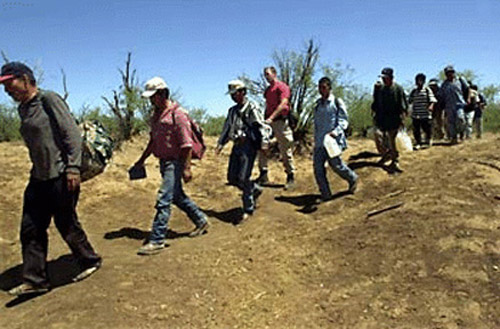
Mexicans heading for the Golden State

For decades after World War II, California was a destination for Americans in search of a better life. In many people’s minds, it was the state with more jobs, more space, more sunlight, and more opportunity. They voted with their feet, and California grew spectacularly (its population increased by 137 percent between 1960 and 2010). However, this golden age of migration into the state is over. For the past two decades, California has been sending more people to other American states than it receives from them. Since 1990, the state has lost nearly 3.4 million residents through this migration.

This study describes the great ongoing California exodus, using data from the Census, the Internal Revenue Service, the state’s Department of Finance, the Bureau of Labor Statistics, the Federal Housing Finance Agency, and other sources. We map in detail where in California the migrants come from, and where they go when they leave the state. We then analyze the data to determine the likely causes of California’s decline and the lessons that its decline holds for other states.

The data show a pattern of movement over the past decade from California mainly to states in the western and southern U.S.: Texas, Nevada, and Arizona, in that order, are the top magnet states. Oregon, Washington, Colorado, Idaho, and Utah follow. Rounding out the top ten are two southern states: Georgia and South Carolina.

A finer-grained regional analysis reveals that the main current of migration out of California in the past decade has flowed eastward across the Colorado River, reversing the storied passages of the Dust Bowl era. Southern California had about 55 percent of the state’s population in 2000 but accounted for about 65 percent of the net out-migration in the decade that followed. More than 70 percent of the state’s net migration to Texas came from California’s south.

What has caused California’s transformation from a “pull in” to a “push out” state? The data have revealed several crucial drivers. One is chronic economic adversity (in most years, California unemployment is above the national average). Another is density: the Los Angeles and Orange County region now has a population density of 6,999.3 per square mile—well ahead of New York or Chicago. Dense coastal areas are a source of internal migration, as people seek more space in California’s interior, as well as migration to other states. A third factor is state and local governments’ constant fiscal instability, which sends at least two discouraging messages to businesses and individuals. One is that they cannot count on state and local governments to provide essential services—much less, tax breaks or other incentives. Second, chronically out-of-balance budgets can be seen as tax hikes waiting to happen.

[ad 1]

The data also reveal the motives that drive individuals and businesses to leave California. One of these, of course, is work. States with low unemployment rates, such as Texas, are drawing people from California, whose rate is above the national average. Taxation also appears to be a factor, especially as it contributes to the business climate and, in turn, jobs. Most of the destination states favored by Californians have lower taxes. States that have gained the most at California’s expense are rated as having better business climates. The data suggest that many cost drivers—taxes, regulations, the high price of housing and commercial real estate, costly electricity, union power, and high labor costs—are prompting businesses to locate outside California, thus helping to drive the exodus.

Population change, along with the migration patterns that shape it, are important indicators of fiscal and political health. Migration choices reveal an important truth: some states understand how to get richer, while others seem to have lost the touch. California is a state in the latter group, but it can be put back on track. All it takes is the political will.

American ‘research war’ over affirmative action

by Scott Jaschik, Inside Higher Ed

With the U.S. Supreme Court about to hear arguments in the Fisher v. University of Texas case that could decide the fate of affirmative action in admissions, a research war has broken out. Defenders and critics of the consideration of race are releasing new studies (some of which were submitted in briefs to the court) on the impact of affirmative action.

Several studies presented Friday at the Brookings Institution suggested that eliminating the consideration of race would not have as dramatic an effect on minority students as some believe, and that the beneficiaries of affirmative action may in fact achieve less academic success than they would otherwise. The studies were criticized by some present for being one-sided.

Yield Rates After a Ban

One of the studies explored the impact on the yield rate — the proportion of admitted students who enroll — of black, Latino and Native American students to the University of California after the state barred the consideration of race in admissions. Minority enrollments fell after voters adopted the ban, in part because greater proportions of white and Asian applicants, on average, have the academic and other credentials required for admission.

But the paper focused on a subset of minority students: those who gained admission after the ban on affirmative action. Many observers at the time predicted that these students would be less likely to enroll, as they would perceive the system to be hostile, and news articles quoted minority students to this effect.

But a paper by Kate Antonovics, an economist at the University of California at San Diego, and Richard Sander, a law professor at the University of California at Los Angeles, found that the ban on affirmative action didn’t produce “chilling effects,” but actually produced “warming effects” on the likelihood of minority students’ accepting offers of admission.

The paper examined the yield rates by students in the three years after Proposition 209 (the ban) took effect. Across the system, the yield rate increased by about 10 percent. The increase was the greatest at Berkeley and UCLA. At Berkeley, the pre-Proposition 209 yield rate for underrepresented minority groups was 37.9 percent, and that increased by 5.7 percentage points after affirmative action considerations were barred from the admissions process. At UCLA, a 38.8 percent yield rate increased by 3.9 percentage points.

Antonovics, who presented the paper, said that the findings were important. She said that critics of affirmative action might expect (and accept) that the end of the consideration of race would lead to an overall decline in minority enrollment rates, but that there would be “a layer of concern” if some of that drop could be attributed to students who met race-neutral admissions standards opting not to enroll. She said that she and Sander expected to find this “chilling effect,” and were surprised to find “no evidence for it” and instead see evidence showing the opposite impact.

[ad 1]

‘Mismatch’ Theory

The fear Antonovics expressed is that minority students might not be enrolling at highly competitive institutions at which they would be a good academic match. Another kind of “mismatch” has also been the focus of much research on affirmative action in recent years — and that idea (hotly debated) is that minority students who are admitted to better institutions because of affirmative action may end up with lower academic achievement as a result. (Sander, who helped organize the Brookings program, has been a leading proponent of the idea.)

On Friday, Doug Williams, chair of economics at the University of the South, presented a paper arguing that law schools provide solid evidence for the existence of mismatch. He said that because of the requirement that lawyers pass a bar exam, there is an independent measure of successful learning in law school. Because some minority students with similar academic credentials (judged by undergraduate grads and LSAT scores) enroll at more or less competitive law schools, he said it is possible to see whether there is a mismatch.

There has long been a gap between black and white law graduates on bar passage rates, he noted. Currently, about 97 percent of white law school graduates pass the bar, with 92 percent passing on the first try. For black law graduates, the figures are 78 and 61 percent, respectively. But Williams said that these gaps are partly explained by the differing academic credentials of black and white law students, and so by themselves don’t back mismatch theory.

But in comparing minority law graduates of comparable academic preparation who enroll in more or less competitive law schools, Williams said that those (from among those with comparable academic credentials) who enroll in the bottom two tiers of law schools pass the bar at a rate that is 14 percentage points higher than that of those who enroll at the top law schools. And he said that suggested a statistically significant mismatch.

Williams said that he would like more detailed information about law students — including the law schools that they apply to and are admitted to — but based on the information he does have, he said that he had “strong evidence” to back mismatch.

Sander said that panelists at the program were “ideologically diverse” and that there was no attempt to include only scholars of one point of view.

The debate will likely continue Thursday when a coalition of social science groups — the American Educational Research Association, the American Sociological Association, the American Statistical Association, the Association for the Study of Higher Education, the Law and Society Association and the Linguistic Society of America — hold a briefing on research those organizations cited in their brief to the Supreme Court encouraging the justices to uphold the legality of the consideration of race and ethnicity in admissions.

Corrie Sanders’s death: ‘like something out of a wild west movie’

Boxing trainer Harold Volbrecht says he was shocked to hear of the sudden death of his close friend Corrie Sanders.

Volbrecht, who trained Sanders for the first 14-years of the heavyweight champion’s professional career, said on Monday they had a shared a close relationship.

Sanders, 46, was killed during a robbery at a restaurant in Brits, North West, on Saturday night.

“I took over as his trainer for his first professional fight [against King Kong Dyubele in April 1989],” Volbrecht said.

“I flew to Cape Town, where Corrie stayed at the time, to watch the fight, and I brought him back with me [to Benoni] afterwards.

“He stayed with me and my family until he got married. He was like a son to me.”

Volbrecht said he had been fortunate to train some of the country’s most prized pugilists, including former IBF lightweight title holder Philip Holiday, and IBF and WBA super-featherweight champion Brian Mitchell, but he was closer to Sanders than any of the other fighters under his tutelage.

“Corrie was different because he stayed in my house,” Volbrecht said.

“We were much closer because I gave him daily advice. We had a very good relationship.”

Sanders beat Ukrainian Wladimir Klitschko in a second-round technical knockout in Hannover, Germany, to win the WBO heavyweight title in March 2003.

The following year he held Klitschko’s older brother Vitali for eight rounds before the fight was stopped in Los Angeles, California.

He retired in February 2008, after 46 professional fights, with 42 wins (31 of them by knockout) and only four defeats.

[ad 1]

“He was a brilliant all-round sportsman,” Volbrecht said.

“A lot of people assume, because he was a big guy, that he had a powerful punch, but he was not a powerful guy who picked up heavy weights.

“His hand speed and accuracy made him so effective.

“Muscle means nothing in boxing, and Corrie knew that. He understood the techniques of the sport.”

Volbrecht said Sanders, a keen golfer, had hoped to turn professional and wanted to play on the Champions Tour after he turned 50.

“It was his dream to play on the seniors tour as a professional golfer,” Volbrecht said.

“He had another four years to wait, but he was a brilliant golfer because he hit the ball so far.”

Volbrecht had been stunned to hear of Sanders’ death on Sunday morning.

“How does somebody walk into a restaurant while people are eating and just start shooting? It doesn’t make any sense,” he said.

“I can’t believe it. It’s so senseless, like something out of a wild west movie.” – Sapa

Also read:

Former world-champion boxer Corrie Sanders refused medical treatment in South Africa

South African mining crisis puts traditional unions on the spot

Miners assembling on a hillside in Marikana to mourn their colleagues killed by police

The violent crisis that has shaken South Africa’s mines shows workers’ distrust for traditional trade unions, up to now the guardians of social peace despite the country’s deep inequality.

Miners this week clawed record salary increases of 22 percent from the Lonmin platinum mine operators after a near six-week wildcat strike that killed 46.

Having rejected major player the National Union of Mineworkers (NUM), miners appointed their own representatives at the negotiations.

The unprecedented agreement may upend the whole mining industry, a fifth of the GDP of Africa’s largest economy, analysts said, and bodes ill for the country’s powerful trade union federation COSATU, and NUM, its main member.

Wildcat strikes have already spread to other gold, platinum and chrome mines, including world number one Anglo American Platinum and Gold Fields.

“Marikana holds the potential for an era in South African labour relations where violent strike action forces the hand of weakened management as opposed to historical collective bargaining promoted by COSATU and its affiliate unions,” said independent analyst Daniel Silke.

The country’s labour movement has been formalised for decades, and representative unions have exclusive negotiation rights with employers in an extremely structured process.

Unions also formed a formidable opposition to the white minority regime during apartheid. Since its inception in 1985, COSATU was affiliated with the African National Congress.

This alliance helped to avoid major social unrest when the ANC took over government in 1994 after the first all-race elections, and COSATU only gained in power through the deal.

But now the partnership threatens to taint the federation.

“COSATU has moved away from its roots to become a political organisation, while its supposed to be a labour movement,” economist Dawie Roodt told AFP.

On the ground, mineworkers say they live in hell, pointing to shacks without electricity, water or sanitation.

“Because of the separation between the grassroots and leadership, the mine worker feels his interests are not being protected anymore. This guy from the union is more interested to become a mine shareholder, and has forgotten about the worker’s wages,” said Roodt.

But it has not all been bad. The Chamber of Mines has said workers have it good compared to others in South Africa amid a 40 percent unemployment rate.

“The National Union of Mineworkers has done too good a job for its members over the past 30 years, especially the past 10, getting its members double-digit, double-inflation wage increases with no increases in productivity,” Peter Major, mining and resources head at consulting company Cadiz Corporate Solutions, wrote in the weekly Mail & Guardian.

Now, the same workers are abandoning the old guilds in favour of new ones, like the Association for Mineworkers and Construction Union (AMCU), which has been blamed for inciting the violence at Lonmin.

Other miners go it alone. Wildcat strikes have increased since the start of the year. They often erupt into violence, with intimidation against non-strikers. Some clashes spill explode into deadly violence.

Police shot dead 34 people on August 16 at the Marikana mine, a week after clashes between workers left 10 dead. Two people died in subsequent violence.

“The key issue here is whether the trade union movement, whether COSATU itself, can keep a handle on the more militant workers who have smelled blood with management as a result of Marikana,” said Silke.

“The pressure will really be on COSATU to retain a level of organisation …to attempt to elicit a better deal for members or face the potential of political polarisation.”

Unions were losing membership “without a doubt”, added Roodt.

“The political outcome will be (that) we need a separation between labour and government. (The situation) is untenable.” – Sapa

Fisher vs. University of Texas – one girl against Obama and corporate America

University of Texas Austin
The University of Texas at Austin

WASHINGTON — Last month the Obama administration threw its support behind the University of Texas’ use of race as a standard in its admissions policies, asking the Supreme Court not to interfere with the consideration of racial preferences in college admissions.

Abigail Fisher, who was denied admission to the Univerity of Texas in 2008 on the basis that she was white, has filed suit before the US Supreme Court in a bid to overturn affirmative action at the university level. In her submission before the court, she argues that the university has imposed a racial quota system that excluded her for the sake of admitting students of lesser ability. As a result, her civil and constitutional rights were violated.

Arguments in the case will start on October 10, not long before the US presidential election and are bound to attract national attention in America, as well as all other countries where affirmative action and racial quotas are being applied, such as South Africa.

According to a recent article in Forbes magazine, dozens of groups have weighed in as the Supreme Court prepares to hear oral arguments over the constitutionality of affirmative action.

Everyone from professors (one group calls itself the “Empirical Scholars,” another, the “Texas Association of Scholars”) to think tanks (the Cato Institute) to advocacy organizations (the NAACP) to universities (Brown University) to student groups (the National Black Law Students Association) to various state and local governments (California) and public officials (Senate Majority Leader Harry Reid) have submitted amicus briefs trying to influence the Court in what is likely to become one of the most controversial decisions of its upcoming term.

The present case seeks to overturn a previous ruling in Grutter v. Bollinger in 2003, which again opened the door wide for anti-white racial preference policies in America. In that case, Big Business also supported the argument for affirmative action. In a filing to the Court at the time, 65 corporations with more than a trillion dollars in annual revenues – including Intel, Merck, Boeing, and Coca-Cola – had underligned the importance of affirmative action in their “continued success in the global marketplace.”

The Court took notice of their concerns.  The 5-4 majority upholding the University of Michigan Law School’s admissions policy emphasized these efforts to establish a diverse workforce to meet the challenges of a global economy in Grutter v. Bollinger, the key ruling stemming from the pair of lawsuits.

“What is more,” former Justice Sandra Day O’Connor wrote in Grutter at the time, “high-ranking officers and civilian leaders of the United States military” also looked for a “racially diverse officer corps.”  O’Connor’s opinion elaborated on the military’s use of affirmative action to ensure “an officer corps that is both highly qualified and racially diverse.”  As several retired military leaders with decades of experience had urged the Court, she applied this line of reasoning from the military setting to the nation’s public universities.

Abigail Fisher
Abigail Fisher, who was denied admission to the University of Texas because of race preference

For Fisher v. University of Texas, the US Justice Department, in a court brief co-signed by several other government agencies, told the high court that a diverse college population was in the university’s — and the government’s — best interests. “The armed services and numerous federal agencies have concluded that well-qualified and diverse graduates are crucial to the fulfillment of their missions,” Solicitor General Donald B. Verrilli said.

The court brief was cosigned by lawyers from the departments of Defense, Education, Commerce, Labor and Health and Human Services.

The Supreme Court’s ruling on the University of Texas’ admission program will be its first ruling on affirmative action in higher education since 2003.

However, the same groups in the military and corporate America that supported race preference in 2003 have largely repeated their arguments in a new round of amicus briefs filed in response to Fisher.

“Fulfillment of the national security interest in officer corps diversity must not be imperiled by a sweeping ruling against race-conscious admissions,” argued the brief filed on behalf of General Anthony C. Zinni, Admiral Dennis C. Blair, General Wesley K. Clark, and dozens of other high-ranking former officials from all branches of the US armed forces.

Likewise, dozens of the nation’s largest companies – including Pfizer, Starbucks, and Wal-Mart to name a few – also echoed the arguments put forth nine years earlier by a similar list of corporations.

Texas admits most of its students because they rank among the top 10 percent in their high school classes. Fisher’s grades did not put her in that category. For other students, Texas officials say that race is considered among many factors, including academic record, personal essays, leadership potential, extracurricular activities, and honors and awards. The school says race is not used to set quotas, which the high court has previously rejected.

“Race is not considered on its own, and it is never determinative of an applicant’s admission by itself,” Verrilli said. “Rather, race is one of a number of contextual factors that provide a more complete understanding of the applicant’s record and experiences. That is a far cry from impermissible racial balancing.”

The Texas policy has been upheld by federal appeals courts, which said it was allowed under the high court’s decision in Grutter vs. Bollinger in 2003 that upheld racial considerations in university admissions at the University of Michigan Law School. But Fisher appealed to the current Supreme Court, which is considered to be more conservative than the one that ruled in 2003 and more likely to jettison that decision or at least limit when colleges may take account of race in admissions.

Before adopting race as part of its admission policy, Texas’ student body was 21 percent African-American and Hispanic. By 2007, the year before Fisher filed her lawsuit, African-Americans and Hispanics accounted for more than a quarter of the entering freshman class.

“Race is considered not on its own, but as a piece of information that provides valuable context in understanding an applicant’s achievements and his likely contributions to the university,” Verrilli said. “That individualized consideration is designed to work in conjunction with the Top 10 plan to enable the university to construct a class that is diverse in all ways valued by the institution.”

The case is Fisher v. University of Texas at Austin, 11-345.

– AP, Forbes and various other sources