‘Crimea was annexed’ narrative falls apart

A group of Italian MPs announced plans to travel to Crimea less than a week after a delegation of French lawmakers visited the Black Sea peninsula late last week.

When will we see a delegation of US lawmakers take a trip to Crimea?

We guess never, as that would totally torpedo the entire US government, military, NATO and media narrative for Ukraine, and reveal yet another US failed regime change operation where Putin outplayed Obama to secure the prize that is Crimea.

Now America is stuck paying for a colony that is of no value to its military imperial needs.

Via Sputnik News Agency:

The eight- to ten-strong Italian delegation will be led by a member of the parliament’s Foreign Relations committee Alessandro di Battista, Kommersant newspaper reported, citing one of the visit’s organizers, Manlio Di Stefano who represents the Five Stars movement in the Italian legislature.

Senator Sergio Divina of the anti-EU Northern League party also plans to make the trip, scheduled for early October.

Márton Gyöngyösi, the deputy leader of the nationalist Jobbik party’s Parliamentary Group and Vice-Chairman of the Foreign Affairs Committee of the Hungarian National Assembly also intends to visit Crimea. He expects the exact date of the visit to be confirmed “in the coming weeks.”

A delegation of ten French parliamentarians visited Crimea last week holding a series of meetings with local residents and officials in Simferopol, Sevastopol and Yalta.

The Ukrainian Foreign Ministry slammed the visit as a “show of disrespect for Ukraine’s sovereignty and a blatant violation of Ukrainian law.”

The French Foreign Ministry described the MPs’ trip to the peninsula as a violation of international law.

Source: redpilltimes.com

Europe threatened by ‘depth of Africa’

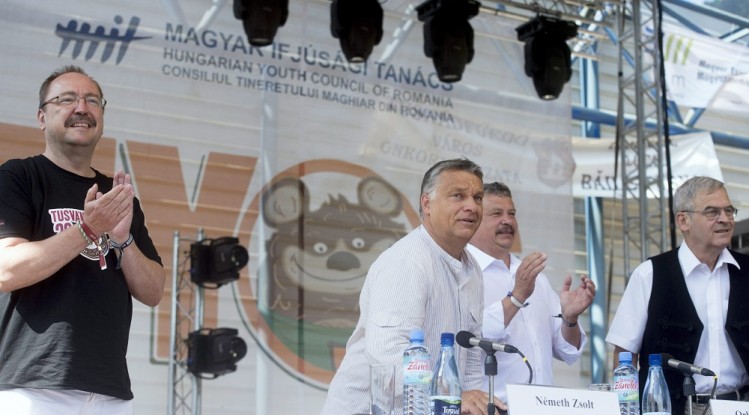
“The question now is not merely what kind of Europe we, Hungarians would like to live in, but whether that which we call Europe today will at all survive”, Hungarian PM Viktor Orbán said in a speech to students.

“Our answer is clear: we would like Europe to be preserved for the Europeans”, he added. The Hungarian Prime Minister emphasized that modern-day mass migration is a consequence of political processes.

In his view, the real threat is not coming from war zones, but from the depths of Africa. The Hungarian Premier criticized harshly both the European and Hungarian left-wing elites, which, he said, do not perceive immigration as a source of danger but as an opportunity.

According to Viktor Orbán, the left believes that the escalation of migration may definitively debilitate, or even eliminate, national boundaries, and this would constitute the attainment of the long-term objective of the left in a historical perspective.

“While the Hungarian left incited against Hungarians beyond the borders in 2004, they would today readily embrace illegal migrants, and would await them with open arms. These people, these politicians quite simply do not like the Hungarian people”, Orbán concluded.

He added: if the left had been given the chance to form a government in 2014, “within a year or two, we would not recognise our country; we would be like a refugee camp”.

As for the fence on Hungary’s border with Serbia, it will be built by 31 August; any other dates are invalid, Viktor Orbán announced. “Based on experiences to date, the number of illegal border-crossers decreases to one-sixth to one-seventh immediately after the construction of such border fences. I am expecting a large-scale improvement as a result of this measure”, he said.

Viktor Orbán also informed his audience of the results of the national consultation on immigration and terrorism.

He pointed out that 1,000,254 questionnaires were completed and sent back, and according to the results, 95 per cent take the view that Hungarian families and the children to be born should be supported, instead of immigration.

More than two thirds of Hungarian people find the issue of the spread of terrorism relevant to their own lives.

Three quarters of them believe that illegal migrants are a threat to the jobs and livelihood of the Hungarian people.

Four fifths take the view that the policy of Brussels regarding immigration and terrorism has failed, he said.

France, Russia sink Mistral

Talks between Russia and France concerning the future of the Mistral contract have ended. The contract will be terminated in the near future, a top Russian official has stated.

Paris and Moscow have agreed on and amount of the penalty France will have to pay Russia for not delivering the Mistral helicopter carriers, and the date on which it must be paid, thus bringing the negotiations to conclusion. The contract will be cancelled shortly, Vladimir Kozhin, the Assistant to the President for military and technical cooperation, told RIA Novosti.

“The talks have already ended. Everything is settled – both the date and the amount of penalty. I hope that the agreement concerning the cancellation of the contract will be signed in the nearest future. Then the sum that France will pay Russia will be officially announced,” Kozhin said.

It was reported earlier that Russia and France would settle on the amount of penalty before July 10.

“The penalty amount is only predefined, as this decision has yet to be approved by the governments of the two countries,” a Russian government source told RIA Novosti.

One dead after migrants storm Eurotunnel

At least 1,500 migrants desperate to reach England made new attempts to enter the Eurotunnel terminal overnight in the French port town of Calais, a police source said Wednesday, adding that one person was found dead.

“Our team found a corpse this morning and the firefighters have confirmed the death of this person,” added a spokesman for Eurotunnel.

The migrant, a man of Sudanese origin believed to be aged between 25 and 30, was hit by a truck that was leaving a cross-Channel ferry, the police source said.

The latest fatality brings the number of migrants who died near the Channel Tunnel terminal site to nine since June. It comes a day after some 2,000 migrants were pushed back near the terminal entrance, in the largest single attempt to enter the tunnel linking France to Britain.

Calais, where the French end of the Channel Tunnel is located, has seen an explosion in recent years in the number of migrants, who live mainly in makeshift camps in the port city after fleeing war and poverty from countries including Eritrea, Libya and Syria.

The situation in Calais has been exacerbated by strikes by workers and farmers in the region, causing further disruption at the key port.

British police last week raised their estimate of the number of migrants in Calais to 5,000 from 3,000, with thousands of attempts made each day to board lorries and trains headed to the UK.

Authorities stopped more than 8,000 attempts at crossing the Channel over a six-week period in June and July, according to the British interior ministry.

British Prime Minister David Cameron on Wednesday expressed concern over the worsening crisis.

“This is very concerning,” he told reporters during a visit in Singapore, adding that “we are working very closely” with French authorities to address the situation.

Increasing Paris-London tension

The Calais encampments have soured relations between Britain and France, which blame each other for failing to cope with the crisis.

The mayor of Calais, Natacha Bouchart, has threatened to shut down the port if Britain does not do more to tackle the crisis. A report by the French interior ministry released earlier this month criticised a lack of cooperation between the UK and France on sharing information and resources.

Another Eurotunnel spokesman said later on Tuesday: “This is an issue that is a really for the government to sort out. We need them to stop the migrant flow from Calais but it appears to be too much for them to handle.”

Last week Eurotunnel said it would demand nearly €10 million from the French and British governments to help cover the extra security costs involved in combatting the flow of migrants.

French Interior Minister Bernard Cazeneuve and British Home Secretary Theresa May held a UK-France summit Tuesday in London to discuss the ongoing crisis.

“The French and UK governments are working in close collaboration on this issue which affects us both,” said May following the talks with Cazeneuve.

The UK minister said that intelligence and law enforcement specialists will be posted to combat the “terrible” gangs of people smugglers “making a profit out of human misery”.

France and Britain also vowed to work together to return migrants, mainly to West Africa, “to ensure that people see that making this journey does not lead to them coming to Europe and being able to settle”, May added.

The Conservative government minister also announced an extra £7 million ((€10.8 million) for security at Coquelles, the French suburb which is home to the Eurotunnel terminal, which is in addition to the £15 million already pledged.

Source: France24/AFP/Reuters

Putin on rise of right-wing in Europe

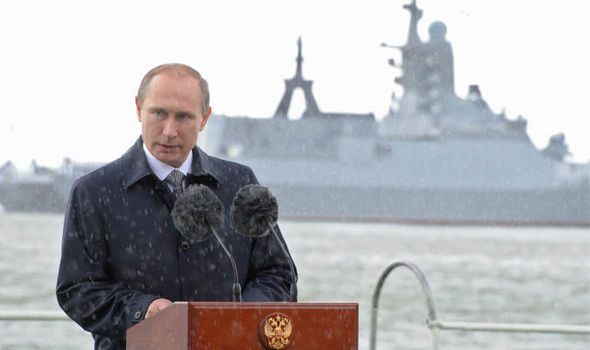
President Vladimir Putin said it was not Russia’s business to analyze the foreign policy of European countries, but discussing inter-European affairs with European partners in Washington “is not very interesting”.

The Russian president spoke to the Swiss RTS TV channel.

Asked to comment on the “ironic” turn in European politics, which has seen right-wing political parties gain public support, and seemingly speak out in favor of Putin’s statements as opposed to politicians on the left, the President said the underlying reason was Washington’s troublesome interference into the domestic affairs of other nations.

Putin has received support from Marine Le Pen of France’s National Front or Swiss Democratic Union of the Centre (UDC). He described it as a “tectonic shift in Europeans’ public conscience” in the direction of protecting national interests, including from foreign political interventions.

According to Putin, a number of issues Europe is facing now, including the influx of migrants from places such as war-torn Libya, have to do with “decisions taken over the [Atlantic] ocean.” In fact, Europe is now paying for decisions it did not make, he stressed.

He also mentioned that the US has been “pursuing an imperial policy for a long time.” In addition, he cited the opinion of some American political analysts who “believe that this imperial angle hurts the US.”

After several questions from Swiss media on the FIFA corruption scandal, Putin said he doesn’t believe it had anything to do with actions of the organization’s head, President Sepp Blatter, hinting that he views the allegations as politically motivated.

He questioned whether the efforts to pursue the investigation stemmed from failed attempts of the US and its key ally, the UK, to secure bids to host the 2022 and 2018 World Cups: “The way this fight against corruption looks makes me wonder if it isn’t a continuation of the bids for 2018 and 2022.”

He said European countries should be less beholden to military blocks and the US when considering issues concerning their own national interests.

“It would be great to see Europe show more independence and sovereignty, and the ability to stand up for its national interests – the interests of its peoples and countries,” Putin said in an interview with RTS published on Monday.

He added that he “hopes” another war in Europe is not in the cards.

The Russian leader added that a certain level of sovereignty is undoubtedly lost when joining any “any military-political organization [or] military-political bloc.” Putin noted that “France withdrew from NATO in order to preserve its sovereignty to a greater extent than would have been possible had it been part of the organization,” referring to the French withdrawal from NATO in the 1960s. France fully returned to the military bloc only in 2009.

Putin explained that Russia’s stance on US foreign policy “has nothing to do with anti-Americanism,” adding that Russians “have respect and great love for the USA, and especially for the American people.”

When answering a question about Russia’s earlier efforts to fight terrorism and the lack of Western support at the time, Putin said that European governments had ignored abundant evidence of terrorist activity, such as Al-Qaeda affiliates fighting in the Russian North Caucasus.

“When I asked my colleagues, including Europeans: ‘You see what is happening?’ they used to respond: ‘Yes, we do, but due to various domestic, international circumstances, we cannot support you.’ I would tell them then: ‘If you cannot support us – at least don’t hinder our efforts.’”

Putin criticized the US government’s self-perceived right to pressure other countries around the world, acting from a policy of “who is not with us, is against us.” Still, with enough patience it is possible and necessary to work with the American side on solving global issues, Putin said, praising international efforts that have led to a recent deal on Iran’s nuclear program.

Sweden’s immigrant city rocked by bomb attacks

Four grenade attacks this week have rocked Malmo, the third largest city in Sweden, prompting police to sound an alarm over the increasing violence. Multiple explosions, shootings and arson struck the city, which has a large migrant population.

On Sunday, the southern Swedish city of Malmo saw the fourth grenade attack in under a week as the a hand grenade was detonated in a car park in the district of Värnhem in the morning, local media reported.

The attack came after a blast on Friday in the Solbacken neighborhood, which occurred less than 12 hours after another explosion in the residential area of Limhamn in the west, and two days after a car bomb attack that injured a man outside a community center in the south.

“It is the thirtieth explosive attack since the New Year. We have a situation that is serious,” said the Malmö police chief, Stefan Sintéus, about the explosion on Friday, as quoted by the Local.se on Saturday.

The local police have called for expert help from the national police operational department. “We have asked for shared expertise on various issues,” said Lars Förstell, a spokesperson for the city’s police, as quoted by the media.

This week’s unrest continues a series of numerous shootings, explosions and arsons that have occurred since the beginning of the year in Malmo, infamous for high crime rates, multi-ethnic and gang-related violence.

Since the beginning of 2015, 18 explosions rocked the city prompting the Swedish police’s national bomb squad (NSB) to be called in. Over the whole 2014 a total of 25 explosions took place which shows a significant increase, Goran Mansson, head of NSB Malmo, told regional newspaper Sydsvenskan on Friday.

Police said they believe this week’s explosions are linked with the court sentencing of three young men on July 10 for their roles in the Christmas Eve bombing in Rosengard – the city district which has been dubbed by media as Sweden’s “most notorious refugee ghetto.” The Financial Times reported that nine out of 10 in Rosengard have a foreign background.

Following the spike in violence in the neighborhood in June, police announced that they would step up their presence in known trouble-hit areas such as Rosengard and Seved.

Rosengard, a district in Malmo, was built in the 1960s and has long been associated with immigrants. Over 80 percent of residents there are immigrants, hailing from the Middle East, Africa and Eastern Europe. Only 38 percent of residents in the district are employed, according to the Economist, prompting restive youth to take to rioting and crime.

Adrian Groglopo, professor of social science at the University of Gothenburg said that the conflicts are fueled by racial and economic tensions.

“People growing up in different areas segregated racially and economically are trying to keep their own business, protect their own areas and sometimes create a very violent climate,” he told RT.

Malmo is a rather young city and its population is mostly young as well, with almost half under the age of 35, according to local authorities.

Two major polls (by YouGov for Sweden’s Metro newspaper and Novus) conducted in June showed that the far-right anti-immigration party ‘Sweden Democrats’ has the support of about 20 percent of Swedish voters.

Meanwhile, according to figures from the EU’s statistics watchdog, Eurostat, issued in May, Sweden has been taking in a larger share of asylum seekers than any other EU state compared to its existing population size. Sweden’s population is about 9.6 million while in 2014 asylum was granted to more than 33,000 refugees, the report said.

Obama urges UK to stay in EU for ‘ world influence’

In a wide-ranging television interview, President Barack Obama has urged Britain to stay in the European Union in order to have influence on the world stage. He also admitted US gun laws were his “biggest frustration.”

Speaking to the UK’s BBC correspondent in Washington, US President Barack Obama said Britain must remain in the European Union to maintain its global influence. In previous interviews Obama has avoided taking a stance on such issues.

“Having the UK in the EU gives us much greater confidence about the strength of the transatlantic union, and is part of the cornerstone of the institutions built after (the second world war) that has made the world safer and more prosperous,” Obama said. “We want to make sure that the United Kingdom continues to have that influence,” he added.

British Prime Minister David Cameron is following up on an election pledge to negotiate with the EU for improved terms for Britain, ad then to hold a referendum on EU membership before the end of 2017.

Obama said that Britain was the US’ “best partner” because of its willingness to project power beyond its “immediate self-interests to make this a more orderly, safer world.”

US gun laws

Obama admitted that failure to pass “common sense gun safety laws” was the greatest frustration of his presidency.

“If you look at the number of Americans killed since 9/11 by terrorism, it’s less than 100. If you look at the number that have been killed by gun violence, it’s in the tens of thousands,” he commented.

“For us not to be able to resolve that issue has been something that is distressing,” Obama said.

While he has pressed for stricter gun control during his presidency, Obama has been unable to make any significant changes to the laws due to opposition in Congress.

Source: Deutsche Welle

French famers protest against EU ban on Russia

French milk and meat farmers demanded an increase in purchasing prices for their produce and a negotiated lifting of a Russian ban on food imports from France.

The farmers complained that prices for their products are so low that they can’t even meet their costs. In protest, they are blocking roads to tourist attractions, RTL radio reported on Wednesday.

In response to the farmers’ protests, which have been going on for several weeks now, officials argue that the government is unable to regulate the purchasing prices.

Former Agriculture Minister, Bruno Le Maire, believes that new markets for French food exports could help solve the problem and that Russia is an indispensable trading partner.

Le Maire, who served as the French Minister of Food, Agriculture and Fishing from 2009 to 2012, blames the farmers’ plight on an “ongoing tug-of-war over other diplomatic issues.”

The French government has already set in motion a program to help the country’s struggling agricultural sector, but the farmers fear that the promised assistance may never come.

Russia banned the import of meat, fish, diary, fruit and vegetables from the European Union last summer in response to European economic sanctions imposed on Russia earlier over its alleged involvement in the Ukrainian conflict.

Source: Sputniknews

US missiles stay in Poland despite Iran deal

US anti-missile systems will be placed in Poland despite world powers reaching an agreement on Iran’s nuclear program, John A. Heffern, US Deputy Secretary of State for Europe and Eurasia, said.

“The deal with Tehran doesn’t include missiles, therefore the threat remains,” Heffern told Polish Rzeczpospolita newspaper Tuesday, adding that he was speaking about Iranian rockets without nuclear warheads.

According to the US diplomat, the construction of AMD components in the village of Redzikowo near the northern Polish town of Slupsk starts next year – as scheduled – and will be completed in 2018.

Washington’s plans to install anti-missile systems in Eastern Europe have been one of the biggest stumbling blocks in US-Russia relations.

Moscow refused to believe American explanations that the shield is needed to counter a possible attack from nuclear-capable Iran, considering it a threat to Russia’s national security.

After Tehran agreed to curb its controversial nuclear program in exchange of easing of international sanction, Russia’s foreign minister, Sergey Lavrov, said that Washington’s AMD plans had no justification anymore.

“We all probably remember that in April 2009 in Prague [US] President [Barack] Obama said that if the Iran nuclear program issue is sorted out, then the task of creating the European segment of the missile defense system would disappear,” Lavrov stated at a press conference in Vienna.

Meanwhile rearmament of Russia’s Strategic Missile Forces (RVSN) with the newest Yars mobile missile system is planned to be completed by 2021. Russian Defense Ministry’s spokesman for RVSN Dmitry Andreyev told TASS on Thursday that a division of the Yoshkar-Ola RVSN formation will be transferred to the Yars system in 2016.

In the next few years, the Topol mobile missile systems will remain at the heart of Russia’s “nuclear shield.”

About a hundred mobile missile carriers are now on combat duty across the country. The Topol mobile missile system, which has no analogues in the foreign missile industry, is designed to engage all types of strategic targets. Ove the past 30 years, about 100 missile launches have been carried out without a single abortive launch.

Yars is the result of modernization of the Topol system to destroy enemy’s stationary strategic targets with the RS-24 missile. It has increased total power of multiple warheads, equivalent to 45 US atomic bombs dropped on Hiroshima.

More Nazi’s in the Royal woodwork

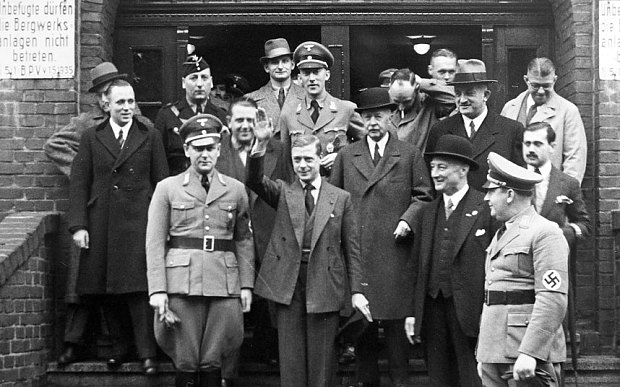
Photographs of the Queen’s uncle Edward VIII giving Nazi salutes on a visit to Germany two years before the outbreak of war have emerged after being put up for auction.

The then Duke of Windsor, who had abdicated the previous year, is pictured making the distinctive “Heil Hitler” gesture on an unofficial visit to Germany in 1937.

He is surrounded by senior Nazis in uniform, some wearing swastika armbands, on a visit to the Friedrich Heinrich colliery in the Lower Rhine area.

His guide during the visit was Robert Ley, the Nazi head of the German Labour Front, who later committed suicide while awaiting trial at Nuremberg for war crimes.

Among the other senior Nazis who accompanied him were Joachim von Ribbentrop, the German foreign minister; Fritz Wiedemann, Hitler’s personal adjutant; Arthur Goerlitzer, the deputy political leader of Berlin and Walter Hewel, Hitler’s liaison to Ribbentrop.

The British government representative was James Harrison, third secretary at the British Embassy.

Although Edward VIII’s admiration for Hitler has always been well known – he once met the Fuhrer with his wife Wallis Simpson – the timing of the photographs’ release could not have been worse for the Royal family.

The portfolio has been held by a private collector for the last 30 years.

Edward’s visit to Germany in October 1937 had ostensibly been to learn about factories and working conditions, but he attended a political rally flanked by SS guards and met Hitler at his Alpine retreat at Berchtesgaden.

An account of the conversation between the Fuhrer and Edward was captured by the Allies, but it has never been released by the National Archives.

Edward spoke in German to his hosts, and gave a speech declaring the Nazi economic model to be “a miracle”, adding: “One can only begin to understand it when one realises that behind it all is one man and one will.”

Source: The Telegraph

French delegation to Crimea ignores Ukranian authorities

Member of the French National Assembly Thierry Mariani who will head the French delegation during its visit to Crimea, has told reporters about the aims and the agenda of the visit.

The members of the French delegation did not consult with the Ukrainian authorities before the visit to Crimea.

“We arrive in Moscow in the evening on Wednesday, on Thursday we will meet with the State Duma speaker Sergey Naryshkin and then we will head for Yalta and Sevastopol. The agenda includes meetings with the local authorities [including chairman of the Crimean State Council Vladimir Konstantinov, Crimean Prime Minister Sergey Aksyonov and governor of Sevastopol Sergey Menyailo] and the visit will have its ‘French’ part as well.

In Sevastopol we will visit the Alliance Francaise cultural center and the French military cemetery [the burial place of soldiers who perished during the siege of Sevastopol in 1854-1855]. This is the largest French cemetery abroad, somewhat unkempt recently because of the political events,” he added.

Answering a question on whether the members of the delegation consulted with the Ukrainian authorities before the visit, Mariani said, “No, we didn’t. The French Foreign Ministry also said the idea of such a trip would not be supported. But French parliamentarians are free to make decisions. We want to understand how people live there,” the parliamentarian told the Kommersant daily.

French scrabble champ speaks no French

The Francophone world crowned a new Scrabble champion on Monday – a man from New Zealand who barely speaks a word of French.

Nigel Richards, considered one of the world’s greatest players of the word-based board game, beat opponents from France, Canada, Belgium and Francophone Africa on his way to claiming the title at the 44th World Championships of French Scrabble in the Belgian town of Louvain.

But unlike his competitors who all grew up speaking French as their mother tongue, Richards cannot even string a sentence together in the language.

He claims to have memorised the entire French dictionary in just nine weeks before the tournament began, without learning how to pronounce the words or their meanings.

“Nigel can say ‘bonjour’ – with an accent – he can tell you the scores in French … But that’s all,” Yves Brenez of the Belgian Federation of Scrabble told Francetv info.

“He learnt the French vocabulary in just nine weeks. For him, words are just a combination of letters. I exaggerate a bit, but he knows [words] that others have taken ten years to learn.”

If Richards’ victory injured the Gallic pride of the players or audience in Belgium, they didn’t show it, instead giving the New Zealander a standing ovation.

Richards, who lives in Malaysia, is already something of a legend in the world of Scrabble, with one English-language world championship to his name and five US national championship titles.

Source: France24

No more Mohammed cartoons says Charlie Hebdo

The editor of Charlie Hebdo has said that cartoons of the Prophet Mohammed will no longer be published by the French satirical magazine, six months after 12 people were killed in an attack on its Paris offices by Islamist gunmen.

The magazine has frequently provoked outrage among Muslims by publishing cartoons of the Prophet Mohammed, whose image is considered blasphemous by many followers of Islam. Its “survivors’ issue”, the first to be published after January’s attack, featured a cartoon of the Prophet Mohammed on the front page.

But Charlie Hebdo editor Laurent Sourisseau, also known by his pen name “Riss”, told German magazine Stern that the Prophet Mohammed would no longer appear in the magazine’s pages.

“We have drawn Mohammed to defend the principle that one can draw whatever they want. We’ve done our job. We have defended the right to caricature,” Sourisseau said.

“We still believe that we have the right to criticise all religions,” he added.

Riss took over as Charlie Hebdo’s editor in the wake of January attack – which he survived by playing dead – taking over the role from Stéphane “Charb” Charbonnier, who was killed in the massacre.

Riss’s announcement comes after one of the magazine’s most prominent cartoonists Rénald “Luz” Luzier said in April he would no longer draw the Prophet Mohammed as it “no longer interests me”.

Luz, who drew the front cover of the “survivors’ issue”, quit the magazine altogether a month later.

Source: France24

Thousands march in honor of murdered Russian Royal Family

On the evening of 16/17 July, to honour the memory of the murdered Russian Emperor Nicholas II and his family, more than 60,000 Orthodox faithful took part in the 20-km royal procession pilgrimage from the Church on Blood in Honour of All Saints Resplendent in the Russian Land in Ekaterinburg to the Monastery of the Royal Martyrs at Ganina Yama.

The procession passed without incident, said “the regional newspaper” the press service of the Ekaterinburg diocese.

Before the procession a Divine Liturgy was held at the Cathedral on the Blood.

At two o’clock in the morning on July 17, residents and guests of Ekaterinburg, which included Orthodox Christians, monarchists, among others began the 20-km procession, which ended at half past six in the morning.

The procession was led by Metropolitan Kirill of Ekaterinburg and Verkhoturye, accompanied by members of his clergy. They were followed by Cossacks carrying icons and banners.

This year, a group of Japanese pilgrims, dressed in samurai armour took part in the procession. The column stretched for several kilometres.

Throughout the course of the procession, pilgrims were accompanied by mobile teams of assistance who provided the faithful with bottles of drinking water, and first aid. Buses were provided along the procession route for people to stop and rest, or for those who could not complete the journey.

Source: Royal Russia