Russia believes chemical attack was provocation

Vladimir Putin
Vladimir Putin

Russia has every reason to believe that the use of chemical weapons in a Damascus suburb in August was an adroit and smart provocation, President Vladimir Putin has said.

“We have every grounds to believe that it was a provocation. Of course, it was adroit and smart, but, at the same time, primitive in terms of technical performance. They took an old Soviet-made missile, which was taken out of service in the Syrian army long ago. It was most important to have ‘made in the USSR’ written [on the missile],” Putin said at the Valday discussion forum on Thursday.

The Russian president pointed out that the August 21st attack in Damascus was not the first time chemical weapons had been used in Syria.

“But why haven’t other cases been investigated?” he asked.

The chemical weapon attack must be thoroughly investigated and those behind it must be identified, Putin told the Valday Club meeting in Russia’s Novgorod Region.

“No matter how difficult it might be, but if in the end we manage to answer the question… as to who committed that crime – and that was certainly a crime – the next step will follow. Then, together with our colleagues from the United Nations Security Council we will have to define the level of responsibility of those who committed the crime,” Putin said.

He stressed that measures like military strikes cannot solve every international issue, while they should also be brought to the UNSC rather than discussed in the US Congress.

“This would be a strike on the world order, not Syria,” the Russian leader said.

Earlier this month, Russia and the United States reached a deal on a framework that will see the destruction or removal of Syria’s chemical weapons by mid- 2014. That came after Moscow suggested that Damascus should put its chemical weapons arsenal under international control and the Syrian government accepted the proposal. The republic also agreed to join the Chemical Weapons Convention which bans the production and the use of such arms.

Speaking at the Valday gathering, Putin noted that Syria not only agreed to sign the international convention, but announced it already considers itself a party to the treaty.

“These are practical steps that the Syrian government has already made,” Putin said.

The United Nations confirmed last Saturday that it had received all the necessary documents from Syria for joining the chemical weapons convention and that Syria would become a member from October 14.

Russia’s proposal for Syria was voiced as the Congress was readying itself to vote on President Barack Obama’s plan to launch a limited military strike against Syria in response to the chemical weapons attack in August. The US blamed the country’s government for the incident. The decision was put on hold after a suggestion from Moscow, which was discussed in detail by Secretary of State John Kerry and Foreign Minister Sergey Lavrov in Geneva.

Putin said that any attempt to interfere in the conflict by supporting one of the sides would bring imbalance. When the crisis began over two years ago, it immediately started getting support from abroad, he said.

“How did terrorist groups like Al-Nusra appear there? Even the State Department admits that Al-Qaeda’s branches are fighting [in Syria],” Putin observed.

The Russian leader is frustrated that Western states have no idea what they would do if, after their interference in the ongoing war, extremists came to power in Syria.

“Would they drive them away with a newspaper?” Putin said.  – RT

France charges Rwandan doctor over genocide

Eugene Rwamucyo
Eugene Rwamucyo

French judges have charged a Rwandan doctor for planning to “commit the crime of genocide” in 1994, a judicial source said, after Kigali issued an international warrant against him.

Eugene Rwamucyo is wanted by Kigali for having allegedly planned and carried out atrocities in the Butare region of southern Rwanda, but in 2010, a French court rejected a request to extradite him.

After probing the accusations, judges in Paris whose job it is to investigate crimes against humanity decided to charge Rwamucyo with “involvement in an agreement with a view of committing the crime of genocide”, said the source, who wished to remain anonymous.

But they placed him under the status of “supervised witness” on the more serious charges of committing genocide and of complicity, the source added.

The status of “supervised witness” means that Rwamucyo can be interviewed under caution and could face further questions — and possibly charges — at a later stage.

“The fact that my client was placed under the status of supervised witness, and not under formal investigation, for ‘genocide’ shows the judges have doubts on this case and on the complaint that was made against him,” his lawyer Philippe Meilhac said.

The doctor is the subject of a complaint filed by the families of genocide victims for crimes against humanity.

Rwamucyo, who is in his 50s, lives in Belgium and used to work as a doctor in a hospital in the northern French city of Maubeuge.

He was suspended in 2009 when his employer found out the Rwandan government had issued an international warrant against him, and subsequently fired.

Rwamucyo denies the allegations of genocide and has accused the Tutsi-led government in Kigali of waging a campaign against him.

There are currently about 20 genocide-related cases pending in French courts.

France has repeatedly refused to extradite genocide suspects to Rwanda, fearing they would be denied a fair trial, but has sent some to Tanzania to face trial at the International Criminal Tribunal for Rwanda.

An estimated 800,000 people, mostly ethnic Tutsis, were massacred over the course of about 100 days from April to July 1994. – AFP

Thousands protest against right-wing party in Athens

Supporters of Golden Dawn in Greece

Thousands of Greeks took to the streets of Athens to protest against far-right extremism on Thursday, a day after police and demonstrators clashed in cities across the country following the murder of an anti-fascist singer.

Around 4,000 people marched in the capital’s western Keratsini district, where Wednesday’s murder occurred, carrying banners that said “stop fascism” and “no pasaran” (“they shall not pass”), an AFP reporter saw.

The protesters, mostly trade union members, shouted slogans including “out with fascists” and “workers do not fear threats”.

Greece has been rocked by unrest since popular hip hop artist Pavlos Fyssas, who wrote music under the nickname Killah P, was stabbed to death early on Wednesday by 45-year-old truck driver George Roupakias, who has allegedly confessed to police and is said to be a supporter of the neo-Nazi Golden Dawn party.

Thousands of Greeks took to the streets in anti-fascist marches in cities across the country on Wednesday. Scuffles broke out in some areas, with police firing tear gas at groups of demonstrators in Athens, the northern city of Thessaloniki and the western city of Patras.

Golden Dawn has denied links with the killer, but pictures have surfaced of Roupakias participating in party activities, and reports said members of his family worked for the organisation.

In a televised address earlier on Thursday, Greek Prime Minister Antonis Samaras vowed to rein in the Golden Dawn party.

“This government is determined not to allow the descendants of the Nazis to poison our social life, to commit crimes, terrorise and undermine the foundations of the country that gave birth to democracy,” he said.

Experts have argued that current legislation would make it difficult to slap an outright ban on Golden Dawn, but government spokesman Simos Kedikoglou said steps will be taken to expose the group’s “criminal” acts and isolate it. – AFP

Tony Blair’s daughter held at gunpoint

kathrynblair
Kathryn and Tony Blair

Tony Blair’s daughter Kathryn has been threatened at gunpoint in a botched robbery.

The young barrister was walking her dog with her boyfriend and a group of friends when the attackers struck.

The pair were in Marylebone, a mile from the million pound home her father bought her in 2010, and near his own central London property.

Neither 25-year-old Miss Blair nor her boyfriend were harmed in the attack, which took place at around 8pm on Monday.

The attempted mugging is thought to be linked to another similar incident in the area on the same night.

The two attempted robberies took place just half an hour apart and both involved the use of a firearm to threaten a couple.

A spokesman for the Blairs said:  ‘Kathryn was with a group of friends. No one was hurt and nothing was stolen.’

The group were approached by two men, one armed with a gun, and were asked for cash and jewellery before the suspects fled empty-handed.

No arrests have been made and the race of the attackers were not mentioned.

The attack raises concerns for the safety of the Blairs, who could be  targeted due to the former prime minister’s role as peace envoy to the Middle East, and to his decision to go to war in Iraq in 2003.

One security expert said last night: ‘It seems staggering that the daughter of a man who evokes such extreme emotions in some should be wandering around in the dark at night without protection.

‘Neither of the two victims were injured. A firearm was shown on each occasion though no shots were  discharged. Officers are investigating both attempted robberies. There have been no arrests at this stage.

‘We would urge anyone with information to contact us immediately,’ the police said. – Daily Mail

‘World’s most powerful woman’ on track for third German term

The hands of Chancellor Angela Merkel

German Chancellor Angela Merkel, an unflappable pastor’s daughter, is closing in on a third term in Sunday’s general election, cementing her title as the world’s most powerful woman.

So strong is Merkel’s position that she has often seemed to transcend politics during what may be the last of her juggernaut campaigns, simply ignoring her opponent along the way.

This month a giant billboard went up at Berlin’s main train station featuring only a picture of the chancellor’s hands folded in her trademark diamond-shape gesture.

Quite simply, the mighty Merkel is the message.

After eight years at the helm of the top European economy, and three as the go-to leader in the eurozone crisis, Merkel looks set to sail to another term at the helm for steering the country unscathed through the turmoil.

But abroad, angry protesters have marched through the streets of Athens, Lisbon and Madrid blaming her for national budget cuts they say are choking off desperately needed economic growth, some even brandishing caricatures of Merkel in Nazi garb.

“I am determined to see Europe emerge stronger from the crisis,” she intones regularly. “Germany can only be strong with a strong Europe.”

During a widely criticised campaign virtually devoid of real substance, observers complain that Merkel has lulled the prosperous country into a false sense of security 23 years after its joyful reunification.

“Merkel perfectly embodies the sensibilities of the Germans in the early 21st century,” the publisher of the influential weekly Die Zeit, Josef Joffe, wrote last month.

“You don’t have to expect any threatening new tacks from her, no tough decisions for or against. She is perfectly predictable in her flexibility and the risk-averse electorate loves it. Merkel is us, and we are Merkel.”

Her late biographer Gerd Langguth found a “sphinx-like quality” in her, allowing Merkel to quietly triumph in the most unlikely circumstances.

Merkel dispensed with rivals in her conservative Christian Democratic Union (CDU) despite being a misfit in a party of mainly Roman Catholic family men from the wealthy southwest.

A twice-married childless Protestant raised in communist East Germany, she has become the unchallenged conservative leader of her generation.

The girl born Angela Kasner in 1954 left Hamburg in then West Germany a few weeks after her birth when her Protestant preacher father decided to tend to the flock in the East.

Locals remember her fierce intellect and discretion as a Christian in a totalitarian state.

She earned a physics doctorate, married and divorced fellow student Ulrich Merkel, and stayed out of politics until the Berlin Wall fell in 1989.

In 1990 she joined the CDU and won her first parliamentary seat.

Then chancellor Helmut Kohl made her minister for women’s issues and later environmental affairs, and bestowed on her the fond but patronising nickname “the girl”.

But in 2000, the frumpy newcomer rose to the head of the CDU when she alone had the courage to tell Kohl to quit as party chairman over a slush fund scandal.

In 2005 she unseated Social Democratic (SPD) chancellor Gerhard Schroeder after seven years in power, becoming Germany’s first female chancellor as well as its youngest.

She is also the only woman to lead a major European power since Margaret Thatcher of Britain.

During her first term, Merkel presided over a loveless “grand coalition” between the conservatives and their traditional rivals, the SPD.

Her decisive victory in the 2009 vote allowed her to drop the SPD in favour of the smaller, pro-business Free Democrats, in theory giving her more scope to set her own course.

But polls indicate they may have trouble renewing their tie-up and Merkel may again have to revert to a grand coalition.

Forbes magazine has named her the world’s most powerful woman for seven out of the last eight years, and she insists despite the friction that hers is the “most successful government since reunification” in 1990.

Critics say her own science background leads her to scrutinise the minutiae and at times dither, which in the euro crisis has left ailing European partners to twist in the wind. Rivals also find her chameleon-like qualities exasperating.

Merkel was a staunch defender of nuclear power until Japan’s Fukushima disaster in 2011, prompting a dizzying about-face that has seen her pledge to phase out all of Germany’s nuclear power reactors by 2022.

Angela Merkel
Angela Merkel

A lover of German opera, French red wine and walking holidays in the Italian mountains, Merkel has repeatedly pointed to the iconic Swabian housewife — a paragon of thrift and self-control — as her model.

Indeed she shuns the trappings of power, wearing boxy trouser suits, spending precious free weekends in her spartan dacha north of Berlin, and doing her own shopping at a discount supermarket.

Meanwhile her husband since 1998, chemistry professor Joachim Sauer, is so publicity-shy he opted not to attend Merkel’s inauguration in 2005. – AFP

Belgium investigates suspected cyber spying by foreign state

belgacom_tvBelgium said on Monday it was investigating suspected foreign state espionage against its main telecoms company, which is the top carrier of voice traffic in Africa and the Middle East, and a newspaper pointed the finger at the United States.

Federal prosecutors said in a statement that the former state telecoms monopoly Belgacom had filed a complaint in July about the hacking of several servers and computers.

“The inquiry has shown that the hacking was only possible by an intruder with significant financial and logistic means,” they said.

“This fact, combined with the technical complexity of the hacking and the scale on which it occurred, points towards international state-sponsored cyber espionage.” The prosecutors declined to say which foreign state they suspected.

Documents leaked by the former U.S. intelligence contractor Edward Snowden have revealed a vast National Security Agency (NSA) electronic surveillance program that has tracked enormous quantities of both Americans’ and foreigners’ email and telephone data.

This has mostly been done by agreement with telecommunications or internet providers or foreign government intelligence agencies.

However, the Brazilian television network Globo this month alleged that the NSA had tapped into the computer systems of companies including Google Inc. and the Brazilian state oil firm Petroleo Brasileiro, as well as France’s Foreign Ministry and the Belgian-based international banking cooperative SWIFT, which handles international financial transactions.

The Belgian daily De Standaard said the NSA had been monitoring international telephone traffic through Belgacom for two years. It said the hackers had been primarily interested in Belgacom’s subsidiary BICS, a wholesale provider of international phone lines and biggest voice carrier in Africa and the Middle East.

The government of Belgium, which has a majority stake in Belgacom, condemned the intrusion and the violation of a public company.

Prosecutors said the intruder had used malicious software and advanced encryption techniques with the aim of gathering strategic information, and had not sabotaged Belgacom’s data or sought to cause direct economic damage.

Belgacom itself said it had carried out work over the weekend to improve security and remove an unknown virus from its internal systems, adding that at the moment there was no indication of any impact on customers or their data. It said it had filed a complaint against an unknown third party.

Globo’s revelations were based on leaked U.S. documents provided by Guardian journalist Glenn Greenwald, who has worked with Snowden to expose the extent of U.S. spying.

James Clapper, the U.S. Director of National Intelligence, responded last week by saying U.S. agencies did collect information about economic and financial matters, which was used to combat terrorist financing and predict problems that could lead to financial crises or disrupt financial markets.

“What we do not do,” Clapper said in a statement, “is use our foreign intelligence capabilities to steal the trade secrets of foreign companies on behalf of – or give intelligence we collect to – U.S. companies to enhance their international competitiveness or increase their bottom line.” – Reuters

Sweden: Public indecency not a crime

Be warned, public indecency welcome on Swedish beaches

A man who openly masturbated on a Stockholm beach has been acquitted of sexual assault in court after it was ruled he was not targeting a specific person, with the prosecutor saying it’s “okay” to play with yourself in public

The Södertörn District Court has now acquitted the 65-year old in a judgement which stated that it “may be proven that the man exposed himself and masturbated on this occasion”.

However, the court added that no offence had been committed as the masturbating man was not pleasuring himself towards a specific person.

Public prosecutor Olof Vrethammar told the Mitti newspaper that he wasn’t planning to appeal the ruling.

“For this to be a criminal offence it’s required that the sexual molestation was directed towards one or more people. I think the court’s judgement is reasonable,” he said.

When asked if it was now acceptable to masturbate in public if you don’t direct it towards a specific individual the prosecutor said it was “okay.”

“The district court has made a judgement on this case. With that we can conclude that it is okay to masturbate on the beach. The act may be considered to be disorderly conduct.”

In another recent judgement a 15-year-old boy was acquitted after being previously charged with sexual assault. The teen had thrown his underwear into a lake and stood naked in front of two under-age girls.

The Södertörn District Court said that his behaviour did not have a sexual undertone and the charge was dismissed. Both the girls had requested the boy be charged with molestation. – thelocal.se

Russia reopens Arctic military base

arctic2Russia is reopening a Soviet-era military base in the Arctic, President Vladimir Putin said on Monday, part of a drive to make the northern coast a global shipping route and secure the region’s vast energy resources.

Two decades after abandoning it, Russia has sent 10 warships behind four nuclear-powered ice breakers to the base on the Novosibirsk Islands, a show of force as it resumes a permanent naval presence in the thawing region.

The flotilla was led by Russia’s flagship nuclear-powered cruiser, Peter the Great, along the Northern Sea Route, which connects Europe to Asia across Russian waters from the Kara Gate to the Bering Strait.

“Our troops left there in 1993, and yet it is a very important location in the Arctic Ocean, a new stage in the development of the Northern Sea Route,” Putin told a meeting of Russian defense officials.

“We will not only reopen the military base but restore the airfield to working order and make it possible for the emergency services, hydrologists and climate specialists to work together to ensure the security and effective work of the Northern Sea Route.”

Russia has staked future growth on mining the Arctic’s vast energy resources, and reviving the Soviet-era shipping route is an integral part of that plan.

Warmer summers have thawed more of the frozen waterways, rendering it navigable for longer periods and raising hopes the maritime passage could become a shorter alternative to southern routes.

But industry analysts and mariners say poor infrastructure, ice floes, narrow straits, shallow waters, and stormy winters remain as obstacles to safe and profitable shipping. – Reuters

Argument over Kant ends in shooting

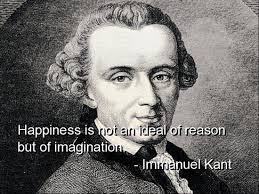
kantMany Russians love to discuss philosophy and history, often over a drink, but such discussions rarely end in shootings.

An argument over the theories of 18th century philosopher Immanuel Kant, however, ended in a man being shot in a grocery store in southern Russia.

RIA news agency quoted police in the city of Rostov-on-Don as saying a fight broke out between two men as they argued over Kant, the German author of “Critique of Pure Reason”, without giving details of their debate.

“In the course of the fight, the suspect took out a pistol firing rubber bullets and fired several shots at his opponent,” it said, adding that one man was detained and the victim was taken to hospital. His life was not in danger.

Kant lived in Koenigsberg, which is now the Russian city of Kaliningrad, and is a central figure of modern philosophy. – Reuters

Western powers poised to pressure Syria

William Hague
Everything is ‘abundantly clear’ to William Hague

Western powers were poised Tuesday to press their efforts for a UN resolution to rid Syria of chemical weapons, one day after a report by the world body describing a “chilling” sarin gas attack there.

United Nations experts, without assigning blame, said they had gathered “clear and convincing evidence” that surface-to-surface rockets took sarin gas into the opposition-held Damascus suburb of Ghouta on August 21.

The United States had threatened a military strike on Syria over the attack, which it said killed more than 1,400 people.

Washington said responsibility for the attack rests squarely with the regime of President Bashar al-Assad.

“The technical details of the UN report make clear that only the regime could have carried out this large-scale chemical weapons attack,” said Washington’s UN ambassador Samantha Power. “It defies logic to think that the opposition would have infiltrated the regime-controlled area to fire on opposition-controlled areas.”

French Foreign Minister Laurent Fabius said there was “no doubt” that government forces were to blame, while British Foreign Secretary William Hague said the report made “abundantly clear” that the Syrian regime was behind the attack.

France and Britain will soon send a draft resolution to other Security Council members demanding a threat of sanctions if Assad does not keep to a disarmament plan and for the chemical attacks to be referred to the International Criminal Court, diplomats said.

The council, meanwhile, is expected to start negotiations this week.

UN chief Ban Ki-moon condemned the use of chemical weapons in Syria as “a war crime” as the country’s conflict again spilled into neighboring nations, with Turkey saying it had shot down a Syrian military helicopter.

Ban said the report prepared by the experts “makes for chilling reading.”

He added that the use of sarin had been proved “unequivocally and objectively” and that the Ghouta attack was “the most signficant” with chemical weapons since Saddam Hussein unleashed poison gas in Halabja, Iraq, in 1988, killing thousands.

“The environmental, chemical and medical samples we have collected provide clear and convincing evidence that surface-to-surface rockets containing the nerve agent sarin were used” in Ghouta, said the report by UN inspectors who were in Syria when the attack was staged.

The experts concluded that “chemical weapons have been used in the ongoing conflict between the parties in the Syrian Arab Republic, also against civilians including children on a relatively large scale.”

A separate UN-mandated independent human rights inquiry announced separately on Monday that it was investigating 14 alleged chemical weapons attacks in Syria.

Ban would not say on Monday who had carried out the attack.

“We may all have our own thoughts on this, but I would simply say that this was a grave crime and those responsible must be brought to justice as soon as possible,” Ban told reporters.

On Friday, he said Assad had “committed many crimes against humanity.”

While the United States, Britain and France all insist that the findings show Assad’s forces had used the weapons, Russia’s UN envoy Vitaly Churkin said after a Security Council meeting on the report that there should be more investigation into who was responsible.

Moscow has sided with Assad in blaming opposition rebels for the chemical assault.

The UN experts’ report will now become a key weapon in a Security Council battle over how much of a threat must be made against Assad to make him disarm.

The French, US and British foreign ministers called for a “strong” resolution after a meeting in Paris.

US Secretary of State John Kerry said: “If Assad fails to comply with the terms of this framework, make no mistake we are all agreed, and that includes Russia, that there will be consequences.”

Kerry and Russian Foreign Minister Sergei Lavrov agreed a plan on Saturday under which Syria’s chemical weapons would be eliminated by mid-2014.

Russia has agreed the plans must be backed by a Security Council resolution but rejects any move to include the threat of force into a UN text.

Lavrov said such threats could kill off hopes of a peace conference on the 30-month-old conflict in which more than 110,000 people, according to activists.

Kerry was due to meet Thursday to discuss the issue with his counterpart from China, which has welcomed the agreement but has sided with Russia in its resolve to veto any UN Security Council resolution against Syria.

Fighting has worsened in Syria as the diplomatic wrangling goes on and Turkey said it shot down a Syrian military helicopter on Monday after it entered Turkish airspace.

The Syrian MI-17 helicopter was detected two kilometers (1.2 miles) inside Turkish airspace and shot down by two F-16 jets five minutes later after failing to heed warnings, Deputy Prime Minister Bulent Arinc told reporters.

“It was continuously warned by our air defense,” Arinc said, adding there was no information about the fate of its crew because the helicopter fell on Syrian soil.

Arinc said Turkey has changed its military rules of engagement in response to repeated gunfire from the Syrian side. – Sapa/AFP

Al-Qaeda attacking minorities in Syria

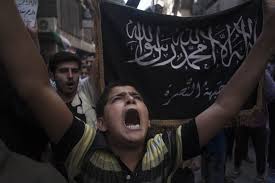
syriajihadOpposition forces battling Bashar al-Assad’s regime in Syria now number around 100,000 fighters, but after more than two years of fighting they are fragmented into as many as 1,000 bands.

The new study by IHS Jane’s, a defence consultancy, estimates that more than half the rebels fighting in Syria for powerful factions are linked to al-Qaeda.

Rebels now number around 100,000 fighters, but after more than two years of fighting they are fragmented into as many as 1,000 bands.

There are around 10,000 international jihadists, who would include foreign fighters.


Another 30,000 to 35,000 are hardline Islamists who share much of the outlook of the jihadists, but are focused purely on the Syrian war rather than a wider international struggle.

There are also at least a further 30,000 moderates belonging to groups that have an Islamic character, meaning only a small minority of the rebels are linked to secular or purely nationalist groups.

Jihadists have been the most active portion of the rebellion, attacking ethnic Kurds and religious minorities nationwide, including three more Alawite villages sacked today in Homs Province.

The stark assessment, to be published later this week, accords with the view of Western diplomats estimate that less than one third of the opposition forces are “palatable” to Britain, while American envoys put the figure even lower.

Fears that the rebellion against the Assad regime is being increasingly dominated by extremists has fuelled concerns in the West over supplying weaponry that will fall into hostile hands. These fears contributed to unease in the US and elsewhere over military intervention in Syria. – The Telegraph


‘Western promotion of LGBT values a concern’

South African artist Steven Cohen
South African gay artist Steven Cohen

A senior Russian diplomat has blasted as unacceptable the ongoing attempts of Western nations to impose their values on other countries, while at the same time infringing on the socio-economic rights of their own citizens.

“The urge of Western countries to impose their neoliberal system of values on the other members of the international community as a universal basis of living can only cause concern. This is especially noticeable on the background of their aggressive promotion of the sexual minorities’ rights,” said the Foreign Ministry’s plenipotentiary for human rights, Konstantin Dolgov, while addressing the International Human Rights Forum, currently underway in Beijing.

Attempts to force other nations into accepting homosexuality and same-sex marriage as some natural social phenomenon which deserves support at a state level cannot be tolerated, Dolgov emphasized.

He added that such an approach was met with resistance not only in countries that hold to traditional values, but also those that have always had liberal attitudes to people of non-traditional orientation. He recalled the protests held in France after same sex marriage was legalized earlier this year.

In addition, Dolgov noted that the aggressive advertising of neo-liberal values is often done at the same time with frequent infringement of socio-economic rights and liberties inside the countries that pursue such politics. 

The speech was made against the backdrop of the massive international campaign against a Russian act that outlaws the promotion of non-traditional sexual relations to minors. LGBT activists around the world dubbed the act ‘the gay propaganda ban’ and called for protest measures ranging from a boycott of Russian vodka to a boycott of the 2014 Winter Olympics in the Russian city of Sochi.

Russian sponsors of the ban and senior officials have repeatedly noted that the law is not discriminatory and only seeks to protect children.

The Russian Olympic Committee at some point issued a special address assuring that LGBT athletes had nothing to fear in Sochi and that people of all orientations would be welcome in Sochi as contestants and guests.

Russia has also addressed the International Olympic Committee with a request to help stop the relentless campaign of speculation and protests over the issue, noting that LGBT activists often distort the meaning of the Russian law in their addresses.

In a recent TV interview, President Vladimir Putin also described the ban as non-discriminatory and said he was ready to meet with leaders of the LGBT community to discuss their problems, but had not yet received any suggestions.

The ban on the promotion of non-traditional sex to children has also caused some protests and a great deal of public discussion inside Russia. However, the majority of Russians support it. In March this year, the Levada public opinion center released the results of the poll that said that about 85 percent of adult Russians were strongly against same sex marriage and 87 percent oppose the idea of gay pride events in their cities. – RT

Banished to Amsterdam’s ‘concentration camp’

Scumvillage
Scumvillage

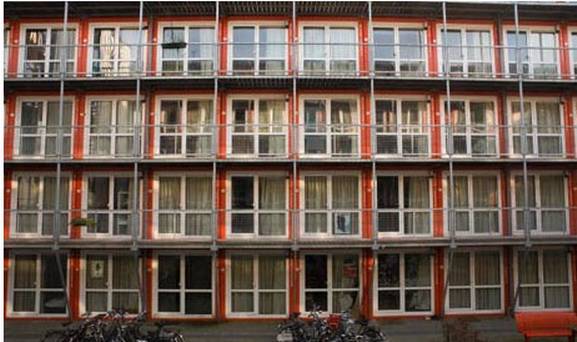
The Dimitrovs are the first nuisance neighbours to be moved forcibly to police-supervised accommodation as crowded Amsterdam steps up measures against anti-social behaviour.

Eberhard van der Laan, Amsterdam’s mayor, admitted that the removal of the family was a draconian measure but insisted that bullying and violent behaviour had left him with no choice.

“The family has been causing problems for years and has a history of vandalism, noise nuisance and threatening behaviour,” he said.

The eight members of the gypsy family have compared their container homes, numbers 48a and 48b, to a concentration camp and accused Amsterdam council of “pure racism”.

Francois Lonis, an ex-boyfriend of one of the Dimitrov daughters who still lives with the family, criticised Mr van der Laan for commemorating the Holocaust while “discriminating” against Roma. “The mayor talks about Auschwitz but sends us to this place,” he said.

“Where is my mother-in-law supposed to do the shopping. Our television does not fit inside.”

The housing camps have been nicknamed “scum villages” because their establishment follows a 2011 proposal from Geert Wilders, the leader of a populist Dutch right-wing party, for special units to deal with persistent troublemakers.

“Repeat offenders should be forcibly removed from their neighbourhood and sent to a village for scum,” he argued at the time. – Daily Telegraph

US shares raw intel with Israel

snowden3The NSA regularly shares raw US intelligence data with Israel without even removing information about American citizens, according to the latest revelation published by the Guardian. The report is based on a document leaked by Edward Snowden.

On Tuesday, September 11, the Guardian published a previously undisclosed document which revealed top-secret policies in place since 2009 that are used to share personal phone and Internet data pertaining to United States citizens with American ally Israel.

The document, a five-page memorandum authorized by the National Security Agency near the beginning of US President Barack Obama’s first administration, outlines a deal between the NSA and Israel’s SIGINT National Unit, or ISNU.

“This agreement,” the memo begins, “prescribes procedures and responsibilities for ensuring” privacy safeguards are implemented to protect the Fourth Amendment rights of US citizens with regards to the direct sharing of raw intelligence collected by the NSA with its Israeli counterpart.

That data, the document later explains, includes raw traffic picked up by the American spy office such as “unevaluated and unminimized transcripts, gists, facsimiles, telex, voice and Digital Network Intelligence (DNI) metadata and content” which is never necessarily scrutinized by US officials before sent to Israeli agents.

“Seems the only info actually being ‘minimized’ is the info #NSA shares with the American public,” American Civil Liberties Union Deputy Legal Director Jameel Jaffer tweeted following publication of the Guardian piece. “NSA is really good at minimizing that.”

But while the contents of emails and phone calls involving most US persons are fair game to be collected by Israeli intelligence, a select group of Americans are sparred from international surveillance: elected officials. The memo mandates that the Israelis must “destroy upon recognition” any communication “that is either to or from an official of the US government.” That pool of exempt persons is defined as “officials of the executive branch (including the White House, cabinet departments, and independent agencies), the US House of Representatives and Senate (member and staff) and the US federal court system (including, but not limited to, the Supreme Court).”

The Guardian notes, however, that other leaked documents uncovered as of late indicate that the US intelligence community may have reservations nonetheless with sharing info with even an ally as tried and true as Israel.

“On the one hand, the Israelis are extraordinarily good Sigint partners for us, but on the other, they target us to learn our positions on Middle East problems,” a senior NSA official says in a 2008 NSA document seen by the Guardian but not published in Wednesday’s piece. “A NIE [National Intelligence Estimate] ranked them as the third most aggressive intelligence service against the US.”

“One of NSA’s biggest threats is actually from friendly intelligence services, like Israel. There are parameters on what NSA shares with them, but the exchange is so robust, we sometimes share more than we intended,” the Guardian quotes from the ’08 document.

According to Guardian journalists Glenn Greenwald, Laura Poitras and Ewen MacAskill, a NSA spokesperson pressed for comment wouldn’t deny the validity of the leaked document’s contents, but assured the British newspaper that “Any US person information that is acquired as a result of NSA’s surveillance activities is handled under procedures that are designed to protect privacy rights.”

The latest leak comes on the 12-year anniversary of the September 11, 2001 terrorist attacks that many high-ranking US officials have used to justify the surveillance measures enacted in the decade-plus since. It also marks just more than three months since the Guardian first began published leaked NSA documents attributed to Snowden, a 30-year-old former intelligence contractor who has since relocated to Russia where he was granted asylum while avoiding espionage charges in the US. – RT