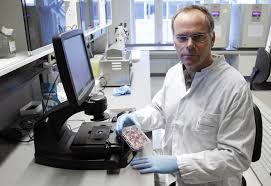
A Dutch scientist is offering the world’s first cultivated beef made of stem cells to taste. He believes the lab-grown meat will feed the world and help save the environment. The tasting event happens amid UN calls to invest more in food innovation.
The 5-ounce burger which costs $332,000 to produce will be fried in a pan and tasted by volunteers at an event in London on Monday, Bloomberg quotes the creator of the burger scientist Mark Post of Maastricht University. The research has been funded by an anonymous individual, he said.
The muscle stem cells, taken by a harmless biopsy of living cows, are fed and nurtured so they multiply to create muscle tissue, Bloomberg quotes the scientist as saying. One sample of cells is enough to create up to 20,000 tons of meat in the lab, he said.
“People might think this is a crazy way to produce meat. But it’s inevitable. Because the way we produce meat right now from livestock is not sustainable. It is not good for the environment, it is not good for animals, and we actually are not going to produce,” Prof Mark Post said in an interview to BBC.
Commercial production could begin in a decade or two, Bloomberg quotes Post, whose work on cultured beef began in 2008. The cost is currently the main obstacle to mass production, Bloomberg quotes experts.
“For it to succeed it has to look, feel and hopefully taste like the real thing,” Post says, adding that any association with genetically modified foods is unwarranted.
“Cultured beef is normal beef,” Bloomberg quotes the professor. “It consists of cow cells.”
Post is among scientists who believe lab-grown meat is an alternative to raising livestock, which contributes to 18 percent of greenhouse gas emissions and uses 30 percent of the world’s ice-free land, Bloomberg quotes an Oxford University study. – RT
Independent defence analyst , Helmoed-Romer Heitman says it is unlikely that the commission will uncover much. Heitman says those implicated in corruption would have taken measures by now to get rid of the evidence.
“It’s been so long that if anybody is half way clever they would have buried the evidence so deep that nobody is ever gonna dig it out. I think in that sense the commission is really on a sticky wicket. They’ll probably find nothing and that will either mean there was nothing or that it’s well hidden but whatever the case may be people will then accuse it of being just another cover-up,” says Heitman.
The Commission of Inquiry into the multi-billion rand arms deal begins with public hearings in Pretoria on Monday. The Arms Procurement Commission was set up by President Jacob Zuma in 2011. This followed calls from opposition parties to probe allegations of fraud and corruption in the weapons purchases of the 1990s.
Former President Thabo Mbeki, Planning Minister Trevor Manuel and former Ministers Mosiuoa Lekota, Ronnie Kasrils and Alec Erwin are scheduled to appear. The commission’s been hit by the resignation of one of its members, Judge Francis Legodi, and other officials. Cape Town Mayor Patricia de Lille is regarded as the initial whistleblower on the deal.
Swedish defence group Saab admitted that its erstwhile British partner BAE Systems had paid R24 million in the form of “bonuses and salaries” between 2003 and 2005 for the deal involving 26 JAS Gripen fighters.
The comments came after Sweden’s TV4 television channel said it had evidence Saab had promised to pay Fana Hlongwane, then advisor to the South African defence minister and also serving as a consultant to the Swedish firm, millions of euros in bonuses if Pretoria did not back out of the Gripen deal.
BAE Systems sold its stake in Saab for £152-million.
In 1999, deals were signed to buy 40 Italian Agusta helicopters; frigates and submarines from Germany; and from Britain, 52 Hawk trainer aircraft and Anglo-Swedish Gripen fighters. The British deal, strenuously promoted by the British prime minister Tony Blair and backed by the UK export credit agency, ECGD, was worth an impressive £1.6bn. It eventually emerged that BAE’s Hawks were twice the price of an Italian rival but the deal had been forced through regardless of cost by the South African defence minister Joe Modise.
Most of the bribe money went through BAE’s Red Diamond front company. BAE claimed to the UK government that the payments had no links to politicians, but this was false.
Fana Hlongwane, an adviser to the late defence minister Joe Modise, was a beneficiary. Hlongwane is also linked to Mbeki, some sources say. Another was the business partner of a notorious Berkshire-based arms dealer whose UK premises were raided. It was alleged that payments went to the ANC 1999 election campaign, via bank accounts in Saudi Arabia, Algeria and Mauritius
ANC official, Tony Yengeni, was jailed for taking a Mercedes from arms company EADS. Schabir Shaikh, brother of a senior arms procurement official, has been jailed for fifteen years for involvement in bribery.
Mbeki accused the British prime minister of double standards in singling out Africa over corruption, and insisted that no corruption had taken place in the deal he originally brokered.
BAE Systems is Europe’s biggest arms company. It has a massive presence in the US and sales all over the globe. It dominates the military scene in the UK.
Corrupt arms deals by BAE have now been alleged all round the world, virtually everywhere the company does business.
For more than 40 years the UK government has secretly tolerated, and sometimes actually practised, bribery. It has deliberately colluded with companies such as BAE and allowed them to continue corrupt practices. In 1965, during an economic crisis, Denis Healey launched an official arms sales department in Whitehall. Its remit was to pay bribes.
Healey himself was frank when he was interviewed recently by the Guardian: “Bribery has always played a role in the sale of weapons – I think almost no role in the sale we made to the Americans or the Germans or our western allies. But in the Middle East people couldn’t buy weapons unless you bribed them to do so, and that was particularly true in Saudi Arabia.”
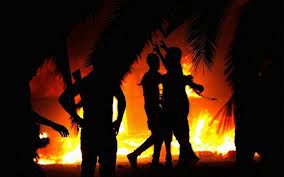
The CIA has been subjecting operatives to monthly polygraph tests in an attempt to suppress details of a US arms smuggling operation in Benghazi that was ongoing when its ambassador was killed by a mob in the city last year, according to reports.
Up to 35 CIA operatives were working in the city during the attack last September on the US consulate that resulted in the death of Ambassador Chris Stevens and three other Americans, according to CNN.
The circumstances of the attack are a subject of deep division in the US with some Congressional leaders pressing for a wide-ranging investigation into suspicions that the government has withheld details of its activities in the Libyan city.
The television network said that a CIA team was working in an annex near the consulate on a project to supply missiles from Libyan armouries to Syrian rebels.
Sources said that more Americans were hurt in the assault spearheaded by suspected Islamic radicals than had been previously reported. CIA chiefs were actively working to ensure the real nature of its operations in the city did not get out.
So only the losses suffered by the State Department in the city had been reported to Congress.
“Since January, some CIA operatives involved in the agency’s missions in Libya, have been subjected to frequent, even monthly polygraph examinations, according to a source with deep inside knowledge of the agency’s workings,” CNN reported.
Frank Wolf, a US congressman who represents the district that contains CIA headquarters in Langley, Virginia, is one of 150 members of Congress for a new investigation into the failures in Benghazi.
“I think it is a form of a cover-up, and I think it’s an attempt to push it under the rug, and I think the American people are feeling the same way,” he said. “We should have the people who were on the scene come in, testify under oath, do it publicly, and lay it out. And there really isn’t any national security issue involved with regards to that.”
A CIA spokesman said it had been open about its activities in Benghazi.
“The CIA has worked closely with its oversight committees to provide them with an extraordinary amount of information related to the attack on US facilities in Benghazi,” a CIA statement said. “CIA employees are always free to speak to Congress if they want,” the statement continued. “The CIA enabled all officers involved in Benghazi the opportunity to meet with Congress. We are not aware of any CIA employee who has experienced retaliation, including any non-routine security procedures, or who has been prevented from sharing a concern with Congress about the Benghazi incident.”- The Telegraph
British officials drew up a speech for Queen Elizabeth to deliver to the nation in the event of a nuclear war, newly released archives showed on Thursday.
In the speech, the monarch was to urge Britons to remain united and resolute in the face of the “madness of war.” Relations between the Soviet Union and the West had become tense.
Written by government officials, the hypothetical speech was part of a secret exercise designed to prepare Britain for the threat of a possible World War Three, but was never broadcast 30 years ago.
It starts by referring to the queen’s traditional Christmas address to the nation.
“The horrors of war could not have seemed more remote as my family and I shared our Christmas joy with the growing family of the Commonwealth,” she was to have said.
“Now, this madness of war is once more spreading through the world and our brave country must again prepare itself to survive against great odds.”
The queen’s speech was imagined to be broadcast in the spring of 1983 against the backdrop of worsening U.S.-Soviet relations, during a year in which then U.S. President Ronald Reagan described the Soviet Union as an “evil empire”.
The queen was to have continued: “I have never forgotten the sorrow and the pride I felt as my sister and I huddled around the nursery wireless set listening to my father’s (King George VI’s) inspiring words on that fateful day in 1939 (at the start of the World War Two).
“Not for a single moment did I imagine that this solemn and awful duty would one day fall to me.”
Citing the close bond of family life as the greatest defence against the unknown, the speech also mentioned the queen’s second son Prince Andrew, who was serving in the Royal Navy at the time.
“If families remain united and resolute, giving shelter to those living alone and unprotected, our country’s will to survive cannot be broken,” she was to have said.
The papers were released by the National Archives as part of a 30-year rule that sees official records from the Prime Minister’s office and Cabinet Office released to the public. – Reuters
THEY sought him here and there and everywhere. But in the end, Edward Snowden slipped away unnoticed from Moscow’s Sheremetyevo airport in a cab.
The US fugitive walked out of the airport and took a taxi, his lawyer Anatoly Kucherena revealed to disappointed journalists who have haunted the international airport since Mr Snowden flew in from Hong Kong on June 23, wanting to catch him inside the terminal’s capsule hotel or the passenger lounges.
Rossiya 24 television aired a blurred photograph apparently showing Snowden from the back carrying a black rucksack as he is about to enter a grey saloon car, with a blonde-hair woman standing next to him.
He is shown talking to Mr Kucherena, with four other unidentified men nearby, one talking on a cell phone. The channel did not reveal who took the photograph.
WikiLeaks wrote on its Twitter feed that Mr Snowden left the airport “under the care of WikiLeaks’ Sarah Harrison,” one of the site’s employees who arrived with him from Hong Kong.
She appeared at his side at his only public appearance since landing, when he met rights activists inside the airport on July 12.
Asked in a live interview on Rossiya 24 whether Mr Snowden really caught an ordinary taxi, his lawyer said drily: “I understand that it was a taxi.”
Mr Kucherena refused to reveal Mr Snowden’s location for security reasons, saying only that he “may stay in a flat or a hotel.”
Mysteriously, Mr Kucherena seemed not to be involved in Mr Snowden’s initial stay outside the airport, saying that unnamed American friends living in Russia were taking care of him.
“Of course he has gained friends, including within Russia – American friends – who possibly at the start will be able to provide his security, for some time, let’s say,” Mr Kucherena told Rossiya 24 television.
“I did not get involved in this part, it’s not my competence. So in this case, I hope that all will be well.”
He also refused to comment on whether Mr Snowden would be staying in Moscow itself.
“Let’s not lift up that veil since Edward himself will decide that question,” he told Rossiya 24, adding that he planned to talk on the telephone to Mr Snowden’s father Lon and his US lawyer later that day to discuss his future.
Mr Snowden did not take long to pack after receiving a document certifying that he has temporary asylum in Russia, dated July 31, said Mr Kucherena, who has revealed that he had to buy Mr Snowden extra jeans and shirts while he was in the airport.
“He has few things, so we didn’t have to pack suitcases,” he told the television channel.
It remained unclear where Mr Snowden had spent more than a month, with the public areas of the airport thoroughly combed by journalists.
Mr Kucherena last week spoke to journalists after emerging from a meeting with Mr Snowden via a door in the arrivals zone of Terminal E marked “staff only.”
On Thursday, Mr Kucherena made clear that Mr Snowden was in an area for “problem” passengers who lacked documents, dismissing a question about whether he could have been spotted by waitresses in the airport.
“Have you ever seen a waiter in the transit zone? I never did,” he said.
“It’s the place where a person who flies in, if he doesn’t have a passport or doesn’t have a visa, say, or he has some problems with documents, he stays in that zone.”
However, he also half-confirmed reports that Mr Snowden had been staying in a capsule hotel that has full public access in the transit zone.
“There is a capsule hotel. Those people who stay in the (transit) zone, if they can’t fly out anywhere, they sit there and wait for their problem to be resolved.” – news.co.au
President Robert Mugabe on Thursday reiterated the Zimbabwe government’s position to bar Western observers from general elections set for Wednesday, insisting that only officials from friendly nations would be allowed to monitor the polls.
The veteran Zimbabwean leader said the United States, United Kingdom and other Western countries would never be invited to observe elections in Zimbabwe until they remove economic sanctions against top Harare officials.
“Our position is very clear. We will never allow the Americans and the British to come and observe our elections as long as their sanctions continue to burden our people,” he told supporters during a campaign rally in Chinhoyi farming town, about 100km northwest of Harare.
Zimbabwe has since 2002 refused to allow Western observers to witness the country’s general elections, accusing them of bias in favour of the opposition.
The Zimbabwe government however, said it has no problems welcoming election observers from the United Nations, Asia, the Southern African Development Community, the African Union and the BRICS group of countries comprising Brazil, Russia, India, China and South Africa.
Mugabe also said Thursday that the US and UK had no moral ground to lecture Zimbabwe on democracy when their own histories are tainted with cases of human rights abuses.
The US said earlier this week that it was concerned about the conditions prevailing in Zimbabwe ahead of general elections set for July 31.
A State Department spokesperson said Washington was wary about lack of transparency in electoral preparations and continued partisan behaviour by security organs, particularly the army and police. – APA
A ban by France’s socialist government on the registration of several top-end Mercedes-Benz models has infuriated the German luxury carmaker and forced Brussels to step in to try to defuse the growing dispute.
Sales of thousands of the most prestigious Mercedes cars have been halted in France since Paris last month refused to allow the registration of four new models that include a refrigerant in their air-conditioning systems that has been banned by the EU on environmental grounds.
The issue escalated late last week when the government invoked an EU “safeguard procedure”, allowing it to act unilaterally to prevent a serious risk to road safety, the environment or public health. It acted after a French court had ordered a 10-day stay of execution for Daimler while the registration block was reviewed.
“The registration of Daimler/Mercedes vehicles classes A, B, CLA and SL remain banned in France as long as the company does not conform to active European regulation,” the environment ministry said.
Daimler said the French decision – Paris is to date the only EU country to issue a ban – was “absolutely inexplicable” and added it would take further legal action as a result.
Officials in Brussels said on Monday they were consulting with Berlin and Paris on the issue and would bring the two sides together in September in a bid to resolve it.
The dispute has highlighted the marked contrast between the state of the car industry in the two countries. PSA Peugeot Citroën, and to a lesser extent Renault, have suffered heavily from a big slump in demand for their mainly small and medium-sized cars.
Daimler, BMW and Volkswagen have, meanwhile, surged ahead, profiting from their premium models that have proved highly popular in emerging markets. France was riled last month when Angela Merkel, the German chancellor, blocked an EU move to impose tougher curbs on auto emissions that would have hit German makers of big cars.
The Mercedes issue revolves around an air-conditioning coolant called R134a which the EU outlawed from January. Daimler argues that the replacement coolant is dangerously flammable.
Jean-Claude Bernard, head of the Association of Mercedes-Benz dealers in France, said the action was politically motivated “to please the greens and damage a German manufacturer”.
The coolant is used in 95 per cent of cars in France with air conditioning.
The association wrote to the environment minister complaining that 11,000 jobs were at stake and demanding an end to the ban. – FT
Seventeen lawmakers from the European Parliament have called on President Barack Obama to put an end to the persecution of US soldier Bradley Manning accused of aiding the enemy after he handed over a bunch of sensitive military documents to the WikiLeaks website.
In an open letter to President Obama and Defense Secretary Chuck Hagel, the group of seventeen praised Manning for shedding light on “evidence of human rights abuses and apparent war crimes in Iraq and Afghanistan.”
“We hereby urge you to end the persecution of Bradley Manning, a young gay man who has been imprisoned for over three years, including ten months in solitary confinement, under conditions that the UN Special Rapporteur on Torture Juan Mendez deemed ‘cruel and abusive.’ Bradley Manning has already suffered too much, and he should be freed as soon as humanly possible,” MEPs from Spain, France, Sweden, Germany, Portugal, Ireland, and Ukraine wrote.
The lawmakers specifically stressed that the “aiding the enemy” offense thrown at him by the US court martial would set a terrible precedent.
“To consider releasing information about war crimes to the public to be ‘aiding the enemy’ would be a terrible setback for the defense of Human Rights and International Humanitarian Law worldwide,” they underscored.
“Army prosecutors closed their arguments in the case without having provided any real evidence that Bradley Manning aided the enemy, or that he intended to do so,” they said.
Army Pfc. Bradley Manning faces a potential life sentence for passing hundreds of thousands of classified military and diplomatic cables to the transparency website WikiLeaks, which exposed America’s crimes in its wars in Iraq and Afghanistan and further abuses around the world.
The military judge in Manning’s trial is expected to deliver a final verdict today, July 30. The sentencing stage of the trial is expected to run for several weeks in August.
Manning faces life imprisonment if found guilty
The sentence a US court will pass upon Wikileaks informant Private Bradley Manning will show what fugitive former US intelligence contractor Edward Snowden would get should he return to his country, a senior Russian lawmaker Alexei Pushkov said.
“When the sentence is passed upon Manning for handing files to the Wikileaks website, it would be clear what would await Snowden if he returned to the United States,” Alexei Pushkov, the head of the Russian lower house’s international committee, said on Twitter on Monday.
Snowden, who is wanted by the United States for leaking classified data about the US National Security Agency’s surveillance programs, formally requested temporary asylum in Russia on July 16. Washington has repeatedly called on Moscow to reject Snowden’s request for asylum and send him back to the United States to stand trial on charges of espionage and theft. – Voice of Russia, RIA, RT, Express Tribune, TASS, Scoop
European Union foreign policy chief Catherine Ashton said on Tuesday she found that deposed Egyptian President Mohamed Morsi was well and had access to television and newspapers when she visited him.
Sources told AFP that Ashton had left Cairo in a military helicopter heading to the undisclosed location where Morsi is being held.
Ashton was speaking to journalists after meeting Morsi on Monday night. “I’ve tried to make sure that his family know he is well,” said Ashton.
Ashton, who is trying to mediate a resolution to Egypt’s political crisis, added: “I said I wouldn’t come unless I could see him (Morsi).” Asked about a media report that she had offered Morsi a “safe exit”, she replied: “I did nothing of the kind.”
Spokeswoman Maja Kocijancic said on her Twitter feed that Ashton and Morsi had an “in-depth discussion” lasting two hours.
Morsi is in army detention at an undisclosed location, facing charges of conspiring with Islamist group Hamas to carry out “hostile acts.”
Ashton was on her second visit to Egypt since widespread political unrest gripped the country following Morsi’s ouster on July 3. – Voice of Russia/dpa
Britain’s government on Monday defended a controversial campaign featuring vans with billboards urging illegal immigrants to “go home or face arrest”, after criticism from a senior minister.
Two trucks, each displaying a huge poster with a number for migrants to text if they wish to return to their country of origin, were driven around six London boroughs for a week in a pilot scheme by the interior ministry.
Posters, leaflets and advertisements in local newspapers will run for a further month.
Business Secretary Vince Cable, a member of the Liberal Democrat party which is the junior partner in the coalition government with Prime Minister David Cameron’s Conservatives, called the campaign “stupid and offensive”.
But Cameron’s spokesman defended the vans, saying it was “clear that this is already working” and that getting illegal immigrants to leave voluntarily was the most cost-effective solution.
The interior ministry had already received a “great deal of interest” as a result of the campaign, the spokesman added.
The government will decide whether or not to roll out the vans nationwide after the ministry has collected all the necessary information, he added.
Immigration is a key issue with less than two years until Britain’s next general election, as the centre-right Conservatives fear a growing threat from the UK Independence Party, which campaigns for migration curbs and an exit from the European Union.
But the “go home” campaign has revived tensions in the coalition government, with the office of Liberal Democrat Deputy Prime Minister Nick Clegg reportedly saying he had not been told about the van plan in advance.
The posters feature a huge picture of a pair of handcuffs together with a number said to represent the number of arrests in the local area and the words: “In the UK illegally? Go home or face arrest.”
It tells people to text the word “HOME” to the displayed number to get help.
The trucks were driven through several areas of London with large ethnic minority populations.
A Home Office spokesman said the cost of the entire campaign, £10,000 ($15,000, 11,500 euros), was less than the £15,000 cost to forcibly remove one illegal immigrant from Britain.
The opposition Labour Party’s home affairs spokeswoman, Yvette Cooper, said the scheme was “ludicrous”.
UKIP leader Nigel Farage said ethnic communities would take the billboards as a “sign of open warfare”.
“I think it’s very Big Brother, very state-ish, very sort of East Germany circa the 1980s, it’s just a horrid way of doing it,” the member of the European parliament told LBC radio.
There was also a backlash from British commentators and on social media.
In a commentary on the Guardian newspaper website, user “Pukkah Punjabi”, a graphic designer from London, described how she had called the Home Office and asked them to help her go “home” — to her house in the suburb of Willesden Green.
She said “go home” had been a racist slogan of abuse against migrants when she was growing up in the 1970s.
The Twitter hashtag #racistvan drew a series of other users saying they had texted the ministry to ask for train times and lost keys, while there was even a spoof Twitter account @theracistvan, with the sole message “RT (retweet) if you’re in the UK illegally.”
The Conservatives in particular have been trying to shore up their right-wing credentials on the immigration issue in recent months, with centre-left Labour being seen as weaker on the issue.
In June Britain said it would charge “high-risk” adult visitors from Nigeria, India, Pakistan, Bangladesh, Sri Lanka and Ghana a refundable bond of £3,000 for a six-month visa. – AFP
The success of British Prime Minister David Cameron’s flagship immigration policy was called into serious question on Sunday, dealing him a potential blow ahead of 2015 elections by playing into the hands of a populist anti-immigration party.
A report by lawmakers from across the political spectrum concluded that Britain’s migration statistics were grossly unreliable and “not fit” for purpose, undermining the credibility of Cameron’s assertions about the issue.
Immigration is a hot button issue in Britain, where Cameron is trying to stop an exodus of voters to the UK Independence Party (UKIP) before a parliamentary election in two years’ time, and polls show the issue is one that worries voters the most.
Concerns have been fuelled by warnings in the right-leaning press about “hordes” of Romanians and Bulgarians moving to Britain next year when EU freedom of movement restrictions lapse, at a time when Britons face rising competition for jobs.
To compound Cameron’s problems on immigration, a government pilot scheme that involves vans driving around London with billboards telling illegal immigrants to “go home or face arrest” has angered his junior coalition partner, the Liberal Democrats, and prompted allegations of racism.
Questioning immigration was for years regarded as racist in Britain, but all three main parties have started to talk tough about the subject in response to rising public anxiety, campaigns in the country’s popular tabloid press, and the popularity of the anti-immigration UKIP.
Cameron’s ruling Conservatives, who are trailing the opposition Labour party in the polls, have promised a far-reaching immigration crackdown and say they have cut net migration – the numerical difference between people coming in and out of the country – by a third.
They have also pledged to cut that figure to tens of thousands of people a year from over 100,000 now.
Data ‘too uncertain’
But the report, by the lower house of parliament’s Public Administration Committee, said that government migration data was neither systematically nor rigorously collected.
“We are struck by the advice of the Migration Advisory Committee to the Government that it should aim for net migration of only 50,000 as the only means of being certain that net migration is in fact below 100,000,” it said.
Bernard Jenkin, a Conservative lawmaker who oversaw the report, told local media government statistics were “little better than a best guess and could be out by tens of thousands.”
Chris Bryant, a Labour lawmaker, said the report showed the government’s assertions on immigration could not be trusted.
“We should be able to count people in and out of this country,” he told Sky TV. “If the government is going to boast about having cut net migration then you would think that the statistics would be reliable ones. The truth is they’re not.”
Cameron’s Conservatives are trailing Labour in the polls, but several surveys show Labour’s lead, which until recently had been fairly steady at ten percentage points, is narrowing.
One opinion poll published earlier this month put the Conservatives in joint first place with Labour for the first time in over a year.
UKIP, which campaigns for Britain to leave the European Union and for a halt to “open door immigration,” made sweeping gains in May local elections, winning almost one in four votes.
But its poll rating has since fallen from a high of 22 percent. Some polls suggest it has lost one or two percentage points. Others suggest its fall in support may be more serious.
A spokesman for Britain’s Home Office (interior ministry) said the government was confident it was on the right track.
“We disagree with the report’s conclusions,” he said. “Government reforms on immigration are working and the statistics do show that net migration is at its lowest level for a decade.” – Reuters
Italy’s first black minister, a target of racist slurs since her appointment in April, has condemned a spectator who threw bananas towards her while she was making a speech at a party rally.
Integration minister Cecile Kyenge, who was born in Democratic Republic of Congo, has angered far-right groups with her campaign to make it easier for immigrants to gain Italian citizenship.
Shortly before the incident on Friday, members of the right-wing Forza Nuova group left mannequins covered in fake blood at the site of the rally in Cervia, central Italy, in protest against Kyenge’s proposal to make anyone born on Italian soil a citizen.
“Immigration kills,” was written on leaflets accompanying the dummies – a slogan Forza Nuova has previously used when referring to murders committed by immigrants in Italy.
Although the bananas missed the stage where Kyenge was speaking, she responded to the gesture on Twitter, calling it “sad” and a waste of food, considering the economic crisis.
“The courage and optimism to change things has to come above all from the bottom up to reach the institutions,” she added.
Kyenge has faced regular insults since becoming minister, often from other politicians. Earlier this month a senior parliamentarian in the anti-immigration Northern League party likened her to an orangutan and only apologized after a storm of criticism. – Reuters
A staggering 40 million euro ($53 million) worth of diamonds and other jewels was stolen Sunday from the Carlton Intercontinental Hotel in Cannes, in one of Europe’s biggest jewelry heists in recent years, police said. One expert noted the crime follows recent jail escapes by members of the notorious “Pink Panther” jewel thief gang.
The hotel in the sweltering French Riviera was hosting a temporary jewelry exhibit over the summer from the prestigious Leviev diamond house, which is owned by Israeli billionaire Lev Leviev.
A police spokesman said the theft took place around noon, but he could not confirm local media reports that the robber was a single gunman who stuffed a suitcase with the gems before making a swift exit. The spokesman spoke on condition of anonymity because he was not authorized to discuss the matter on the record.
The luxury Carlton hotel featured prominently in Alfred Hitchcok’s “To Catch a Thief,” which starred Cary Grant as a reformed burglar chasing a jewel thief. It is situated on the exclusive Promenade de la Croisette that stretches a mile and a half (2.4 kilometers) along the French Riviera, and is thronged by the rich and famous throughout the year. The hotel’s position provides not only a beautiful view of the sea but also an easy getaway for potential jewel thieves along the long stretch of road.
“It’s a huge theft. Anytime you talk about a heist with many millions of dollars it turns heads and feeds the imagination,” said Jonathan Sazonoff, U.S. editor for the Museum Security Network website and an authority on high-value crime.
He said the likelihood of recovering the stolen diamonds and jewels is slim, because the thieves can easily sell them. “The fear is, if you’re dealing with high-quality minerals, it’s hard to get them back,” Sazonoff said. “They can be broken up and so they can be easily smuggled and sold.”
The valuable gems were supposed to be on public display until the end of August. It was not immediately clear how many pieces were stolen.
Leviev, in a brief statement, said: “Company officials are cooperating with local authorities investigating the loss and are relieved that no one was injured in the robbery.”
Several police officers were placed in front of the Carlton exhibition room – near a Cartier diamond boutique – to prevent the dozens of journalists and photographers from getting a look at the scene of the crime.
Hotel officials would not comment, and attempts to get comments from Leviev or his company were not immediately successful.
Europe has been struck by several brazen jewelry thefts in recent years, some of which have involved tens of millions of dollars in treasure.
On Feb. 18 in Belgium, some $50 million worth of diamonds were stolen. In that heist, robbers targeted stones from the global diamond center of Antwerp that had been loaded on a plane headed to Zurich. Authorities have since detained dozens of people and recovered much of the items stolen in that operation.
Five years ago, in December 2008, armed robbers wearing women’s wigs and clothing made off with diamond rings, gem-studded bracelets and other jewelry said then to be worth $108 million from a Harry Winston boutique in Paris.
Also in 2008 – in February of that year – in a scene reminiscent of the movie “The Italian Job,” masked thieves drilled a tunnel into a Damiani jewelry company showroom in Milan, Italy. They tied up the staff with plastic cable and sticky tape, then made off with gold, diamonds and rubies worth some $20 million. The robbers had been digging for several weeks from a building under construction next door.
Cannes appears to be a favorite target this year – in May it was struck by other two highly publicized jewelry heists during the Cannes Film Festival.
In the first theft, robbers stole about $1 million worth of jewels after ripping a safe from the wall of a hotel room. In the second, thieves outsmarted 80 security guards in an exclusive hotel and grabbed a De Grisogono necklace that creators said is worth 2 million euros ($2.6 million).
Sazonoff said it is normal for robbers to gravitate to a place like Cannes, whose glimmering harbor and glamorous film festival attract the world’s rich and famous. “Why do thieves target Cannes? It’s simple … On the Cote d’Azur, it’s where the monied people flow,” he said.
Sazonoff also said police would likely probe whether Sunday’s heist is linked to recent jail escapes by alleged members of the Pink Panther jewel thief gang.
On Thursday, gang member Milan Poparic escaped his Swiss prison after accomplices rammed a gate and overpowered guards with bursts from their AK-47s, police said.
Police say the Pink Panther network’s members are prime suspects in a series of daring thefts. According to Interpol, the group has targeted luxury watch and jewelry stores in Europe, the Middle East, Asia and the United States, netting more than ?330 million (£285m) since 1999.
Poparic is the third member of the Pink Panthers to escape from a Swiss prison in as many months, according to Vaud police.
“The brazen drama of it is their style… The possibility of the reemergence of the Pink Panther gang is very troubling and taken seriously by law enforcement worldwide,” Sazonoff said. “The theft of high value diamonds is exactly what they do, so it’s not a great leap to assume they are on the warpath again. They are a crime wave waiting to happen.” – AP
Being rude to the President of France is no longer an automatic criminal offence, France’s parliament agreed today.
In the interests of free speech, MPs revoked legislation dating back to 1881 when anything judged to have ‘offended the head of state’ risked an automatic fine.
The change followed the European Court of Human Rights (ECHR) ruling in March that France violated a demonstrator’s right to freedom of expression when he referred to Nicolas Sarkozy as a ‘jerk’.
Mr Sarkozy, the notoriously aggressive 5ft 5ins conservative, became the butt of numerous jokes during his five years in office, which ended last year.
But when a demonstrator held up a placard reading ‘Get Lost Jerk’ at a Sarkozy meeting in western France in 2008, he received a criminal conviction and a fine of around 25 pounds.
This was despite exactly the same expression being used by Sarkozy himself months earlier while he was attending an agricultural show in Paris.
Last year ECHR deemed the punishment handed down to Sarkozy’s tormentor as being disproportionate and a violation of freedom of expression, as the act was a ‘satirical remark.’
The ECHR acknowledged that the insult constituted ‘criticism of a political nature’ for which ‘freedom of expression was of the highest importance.’
Now anyone who chooses to insult a serving French president will have to be pursued through the libel courts.
Francois Hollande, the current Socialist French president, is regularly mocked, often by people using his nickname of ‘Flanby’, after a wobbly caramel pudding.
Earlier this month it emerged that Sarkozy views his successor as a ‘ridiculous little fat man who dyes his hair’.
When Sarkozy was head of state, his third wife Carla Bruni put him on a fitness programme aimed at making him leaner, fitter and younger looking.
Before that the diminutive Sarkozy – nicknamed ‘Bling-Bling’ because of his love of tacky status symbols – was himself mocked for being a chubby little man.
He continued to wear platform heels, and to surround himself with smaller men in an attempt to look taller, but lost a great deal of weight through constant work-outs and giving up chocolate.
Hollande, in contrast, has failed to lose the tubby image and shake off the Flanby nick-name.
Opinion polls routinely reveal that Hollande is the most unpopular president in the history of the Fifth Republic, with Sarkozy a close second. – Daily Mail
This website uses cookies to improve your experience. We'll assume you're ok with this, but you can opt-out if you wish. Cookie settingsACCEPT
Privacy & Cookies Policy
Privacy Overview
This website uses cookies to improve your experience while you navigate through the website. Out of these cookies, the cookies that are categorized as necessary are stored on your browser as they are essential for the working of basic functionalities of the website. We also use third-party cookies that help us analyze and understand how you use this website. These cookies will be stored in your browser only with your consent. You also have the option to opt-out of these cookies. But opting out of some of these cookies may have an effect on your browsing experience.
Necessary cookies are absolutely essential for the website to function properly. This category only includes cookies that ensures basic functionalities and security features of the website. These cookies do not store any personal information.
Any cookies that may not be particularly necessary for the website to function and is used specifically to collect user personal data via analytics, ads, other embedded contents are termed as non-necessary cookies. It is mandatory to procure user consent prior to running these cookies on your website.