Turkish defence conglomerate could become casualty of unrest

Erdogan with Koc holding chairman

The defense business of Turkey’s largest conglomerate could be a casualty of a row between the prime minister and one of its top executives over monthlong civil unrest that has battered the Turkish government, according to analysts and industry sources.

The prime minister has accused the Koc conglomerate of helping protesters, whom he referred to as “terrorists.” At stake, observers said, could be billions of dollars worth of government contracts in the portfolio of Koc’s two large defense companies — shipyard RMK Marine and armored vehicle manufacturer Otokar.

“It should come as no surprise if the government decided to thoroughly scrutinize all Koc-related contracts, including defense deals,” an analyst based here said.

An industry source said that some of the RMK and Otokar contracts may face revisions and some future deals may change course.

“It won’t be the first time a company becomes the victim of a political feud with the prime minister,” he said.

In 2009, Turkish tax authorities fined the country’s largest publishing group, Dogan Medya, US $3.2 billion over accounting irregularities, a fine that was larger than the company’s market value. The government denied any links between politics and the fine, although Prime Minister Recep Tayyip Erdogan had publicly called for a boycott of Dogan outlets and accused them of being politically hostile to his government.

What started May 31 as a demonstration by environmental activists in Istanbul has mushroomed into nationwide protests against Erdogan’s government in 80 cities. More than 2.5 million Turks have since protested Erdogan’s growing authoritarianism and Islamist governance. Four people have been killed in the demonstrations and more than 8,000 have been injured.

In one incident, protesters tried to escape police tear gas and pepper spray and took refuge in a posh Istanbul hotel, Divan, owned by Koc. Hotel management admitted the protesters to its lobby, which quickly turned into a makeshift first aid room.

The police fired more tear gas and pepper spray into the hotel lobby, although it is illegal to fire these chemicals into indoor spaces. It was reported that Ali Koc, a board member and third-generation family member, had ordered the hotel to help the protesters.

On June 16, an angry Erdogan said in a public rally: “We know which hotel owners helped terrorists [protesters]. It is a crime to abet terrorists. And those crimes will not remain unpunished.”

A senior government official close to Erdogan’s office said: “It is true that Erdogan got very upset by Koc’s open support for the protests. But I cannot tell how his anger would surface in this case.”

A procurement official familiar with Koc companies’ contracts denied any government intervention. “These are highly credible companies involved in most strategic programs. We have not yet received any political opinion regarding Koc-related contracts. And I cannot comment on how the prime minister will choose to behave in this matter.”

Erdogan chairs the Defense Industry Executive Committee (SSIK), the ultimate decision-maker on procurement. The procurement official admitted that Erdogan has a “powerful personal touch” when it comes to final decision-making at that panel.

Koc’s RMK Marine, based in Istanbul, is one of Turkey’s largest private shipyards. In January, the SSIK opened contract negotiations with RMK Marine to produce six corvettes under Turkey’s first national warship program, Milgem. The contract is worth $2.5 billion.

The corvettes are the smallest warships in the Turkish Navy. The largest ship is a frigate, and Turkey plans to use the experience gained in the Milgem project to design, develop and construct its first national frigate, the TF-2000, in the 2020s. Earlier, RMK Marine won a contract to build four search-and-rescue ships for the Coast Guard.

Otokar is the top supplier of armored vehicles to the Turkish Army. In 2008, Otokar signed a $500 million contract for Turkey’s first indigenous tank, the Altay. Under the deal, Otokar will build four prototypes that will undergo performance tests this year. The deal is for the prototypes only, and Otokar hopes to win the main production contract after performance tests.

Ironically, only 20 days before the unrest broke out, Koc announced that defense would be the fifth priority sector in the group’s strategic business planning, in addition to energy, finance, durable consumer goods and automotive production. – Defence News

Turkey unrest simmering

Ready for another round...
Ready for another round…

Turkish riot police have fired rubber bullets to block demonstrators from entering an Istanbul park, the birthplace of deadly unrest in June.

Riot police on Monday fired rubber bullets, tear gas and water cannons to block demonstrators from entering the small Istanbul park.

Police moved after Turkish authorities reopened Gezi Park to public use earlier in the day.

“Four people died for this park. This park will reopen!” a young demonstrator shouted, while others were trying to convince the police that their action was unfair and they should stop emptying the park.

But later in the day after police sealed off access to the central Taksim Square and the adjacent park, the cat-and-mouse game with protesters ensued in the nearby thoroughfares.

At least one demonstrator was seriously wounded, with his left eye abundantly bleeding, an Agence France-Presse journalist reported.

“You should be ashamed of yourself. Go on, shoot me too!” one of the protesters yelled at a police officer on top of an armoured vehicle.

Some angry shopkeepers at a fish market close to Taksim square lashed out at police and anti-government demonstrators, accusing them of ruining their business.

Earlier on Monday when Turkish authorities reopened the park they warned that no further protests would be tolerated.

‘Occupation zone’
“Gezi Park has been reopened to public but there are many calls for unauthorised protests aimed at turning the park into an occupation zone,” Istanbul Governor Huseyin Avni Mutlu wrote on Twitter.

A brutal police crackdown on May 31 against a peaceful sit-in to prevent 600 trees from being cut down in a park redevelopment scheme sparked June’s nationwide protests against Turkish Prime Minister Recep Tayyip Erdoğan and his Islamic-rooted government.

Protesters occupied the small park and put up tents to remain around the clock before being evicted by police on June 15. Erdogan has become unpopular as a result of his backing for Islamic Syrian rebels

Since then, the park has been closed. But in the face of public anger, authorities planted additional trees and a Turkish court annulled a government decision to redevelop the park, saying locals had not been sufficiently consulted about the project.

Residents feared the redevelopment plan would turn the area into a shopping district, while urban planners and ecologists said the proposals did not respect the environment.

Nearly three weeks of protests in Turkey have left four people dead and some 8 000 injured. – AFP

Charles Saatchi and Nigella Lawson getting divorced

Nigella Lawson
Nigella Lawson

British art collector Charles Saatchi told a newspaper on Sunday that he is divorcing his wife, celebrity chef Nigella Lawson, following an incident in which he grabbed her by the neck outside a London restaurant.

Under the headline “I’m divorcing you Nigella”, 70-year-old Saatchi said in a statement to the Mail on Sunday that he had made a “heartbreaking” decision to separate from his 53-year-old wife because she had not defended him over the row.

The publicity-shy former advertising executive, who owns London’s Saatchi Gallery for contemporary art, accepted a police caution last month after pictures of the incident appeared in another tabloid, the Sunday People.

“I am sorry to announce that Nigella Lawson and I are getting divorced,” he said in the statement which was splashed over the front page of the newspaper.

“This is heartbreaking for both of us as our love was very deep, but in the last year we have become estranged and drifted apart,” he wrote.

“I feel that I have clearly been a disappointment to Nigella during the last year or so, and I am disappointed that she was advised to make no public comment to explain that I abhor violence of any kind against women, and have never abused her physically in any way.”

Saatchi insisted that his actions had not been “violent” and claimed that Lawson, to whom he has been married for 10 years, had grasped his neck in the past because they were both “tactile” people.

There was no immediate comment from Lawson.

The daughter of former Conservative finance minister Nigel Lawson, she is a multi-millionaire cookery writer and TV presenter.

Dubbed ‘the domestic goddess’, she is famed for her flirtatious approach to cooking.

She married Saatchi in 2003, and has two children from her marriage to journalist John Diamond, who died of throat cancer in 2001. Saatchi has one daughter from his previous marriage. – AFP

Austria not worried about passenger Snowden

Mikl-Leitner
Mikl-Leitner

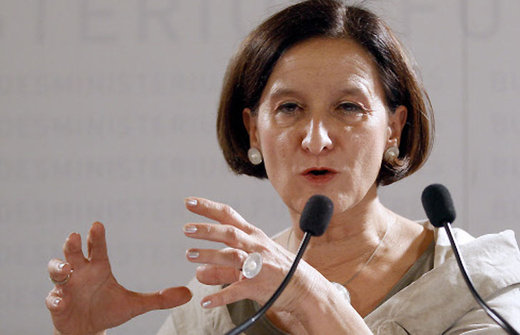
Austria allowed Bolivian President Evo Morales’ plane to land because it did not share other countries’ worries that former U.S. spy agency contractor Edward Snowden might be on board, Interior Minister Johanna Mikl-Leitner said on Wednesday.

France and Portugal abruptly canceled air permits for Morales’ plane en route from Moscow, forcing the unscheduled stopover in Vienna late on Tuesday.

An Austrian Foreign Ministry spokesman said rumours that Snowden was on the plane were untrue.

“Austria did not close its airspace and the plane could of course land although many other countries apparently feared that Snowden was on board too,” the minister told ORF radio. “Austria did not do that, which means there is no fear here.”

Wanted by Washington for espionage after divulging classified details of U.S. phone and Internet surveillance, Snowden apparently remains in the transit area of Moscow’s Sheremetyevo airport.

He applied for asylum in Austria – and several other countries – via the country’s Moscow embassy on Monday, which the government said was insufficient to grant him refuge.

Mikl-Leitner said it would be up to Austrian asylum authorities to decide what to do in the unlikely case that Snowden arrived there.

She defended Austria’s position that Snowden would have to apply in person for asylum, saying this was clearly spelled out in the law.

“This is in the hands of the authorities and independent courts. The important thing here is that this would be judged individually, as in every other case,” she said. – Reuters

Bolivian leader’s plane ‘skyjacked’ on Snowden fear

Evo Morales
Evo Morales

The plane carrying Bolivian President Evo Morales was forced to land in Austria after various European countries refused to let it cross their airspace because of suspicions that NSA leaker Edward Snowden was on board, Bolivian officials said Tuesday.

Officials in both Austria and Bolivia said that Snowden was not on the plane, which was taking Morales home from a summit in Russia, where he had suggested that his government would be willing to consider granting asylum to the American.

A furious Bolivian Foreign Minister David Choquehuanca said France and Portugal would have to explain why they canceled authorization for the plane, claiming that the decision had put the president’s life at risk.

“We don’t know who invented this lie” that Snowden was traveling with Morales, Choquehuanca said in La Paz. “We want to denounce to the international community this injustice with the plane of President Evo Morales.”

In a midnight press conference, Bolivian Vice President Alvaro Garcia said that not only France and Portugal, but also Italy and Spain were denying the plane permission to fly through their airspace.

He described Morales as being “kidnapped by imperialism” in Europe.

“The ambassador for Spain in Austria has just informed us that there is no authorization to fly over Spanish territory and that at 9 a.m. Wednesday they would be in contact with us again,” said Defense Minister Ruben Saavedra, adding that the Spanish government had put as a condition for passage the “revision of the presidential plane.”

Earlier, Choquehuanca said that Spain’s government allowed Morales’ plane to refuel in its territory before flying on to Vienna.

French government officials reached overnight said they could not confirm whether Morales’ plane was denied permission to fly over France. Officials at Portugal’s Foreign Ministry and National Civil Aviation Authority could not be reached to comment.

Austrian Foreign Ministry spokesman Alexander Schallenberg told The Associated Press that Snowden was not with Morales.

Leaks by Snowden, a former NSA systems analyst, have revealed the NSA’s sweeping data collection of U.S. phone records and some Internet traffic, though U.S. intelligence officials have said the programs are aimed at targeting foreigners and terrorist suspects mostly overseas.

He is believed to be in a Moscow airport transit area, seeking asylum from one of more than a dozen countries.

While Bolivia’s foreign minister had earlier said officials did not know who was behind the “lie” that Snowden was on Morales’ plane, the country’s defense minister later expressed no doubt.

“We want to declare very firmly that it was an American story that Edward Snowden was on this flight,” said Saavedra at the VIP terminal of Vienna’s airport. “This is a plot by the U.S. government to destroy president Morales’ image. We say this simply is a lie. And we will confirm this.”

Morales himself was present during the improvised press conference but chose not to speak to reporters. Morales will remain at the airport until his plane has been cleared for takeoff.

In Washington, the State Department would not comment directly when asked to speak to the matter and referred the AP to statements on Snowden made at the department’s daily briefing. Earlier Tuesday, department spokesman Patrick Ventrell would not discuss how the Obama administration might respond if Snowden left the Moscow airport. “We’re not there yet,” he said.

Snowden has applied for asylum in Venezuela, Bolivia and 18 other countries, according to WikiLeaks, a secret spilling website that has been advising him. Many European countries on the list — including Austria, Finland, Ireland, the Netherlands, Norway, Spain and Switzerland — said he would have to make his request on their soil.

One of Snowden’s best chances of finding refuge outside the United States may hinge on Venezuelan President Nicolas Maduro, who was also in Russia on Tuesday.

Maduro told Russian reporters that his country has not received an application for asylum from Snowden and dodged the question of whether he would take him with him when he left.

But Maduro also defended the former National Security Agency systems analyst.

“Who must protect Snowden? This is the question. This young man of 29 was brave enough to say that we need to protect the world from the American imperial elite, so who should protect him?” Maduro said in response to a question from journalists covering a ceremony to rename a Moscow street after Chavez. “All of mankind, people all over the world must protect him.”

Maduro was scheduled to spend Wednesday in neighboring Belarus before returning to Venezuela.

In Venezuela, Foreign Minister Elias Jaua said that changing the flight’s route without checking on how much fuel it had endangered Morales’ life.

“All the countries that have denied permission for the flight of our brother president, Evo Morales, must be held responsible for his life and his dignity as president.”

Another possible landing spot for Snowden is Ecuador, where Wikileaks founder and publisher Julian Assange has been seeking asylum.

“We are willing to analyze Mr. Snowden’s request for asylum and this position has not changed,” said Ecuadorean Foreign Minister Ricardo Patino on Tuesday. “What we have said is that we will be able to analyze the request when Mr. Snowden is in Ecuadorean territory or in an Ecuadorean mission.”

Patino added that two weeks ago a hidden microphone was found in Ecuador’s embassy in London, where Assange is holed up. “We want to find out with precision what the origin of the apparatus is.”

Snowden, who recently turned 30, withdrew a bid for asylum in Russia when he learned the terms Moscow had set out, according to Putin’s spokesman Dmitry Peskov. Putin said on Monday that Russia was ready to shelter Snowden as long as he stopped leaking U.S. secrets.

At the same time, Putin said he had no plans to turn over Snowden to the United States.

Rebuffed by Russia’s president, the Obama administration has recently toned down demands Snowden be expelled from the Moscow airport in a sign that the U.S. believes he is not worth scuttling diplomatic relations between the former Cold War enemies.

On Monday, WikiLeaks posted a statement attributed to Snowden on its website, in which he slams Obama for “using citizenship as a weapon.”

“Although I am convicted of nothing, (the United States) has unilaterally revoked my passport, leaving me a stateless person,” Snowden says in the statement. “Without any judicial order, the administration now seeks to stop me exercising a basic right. A right that belongs to everybody. The right to seek asylum.

“Their purpose is to frighten, not me, but those who would come after me.” – AP

Turkey blames Jews for protests

turkeyprotestsA Turkish deputy prime minister linked the “Jewish diaspora” to recent anti-government unrest, drawing condemnation from world Jewish leaders on Tuesday and concern among Turkey’s Jews the comments could make them targets of popular anger.

Deputy Prime Minister Besir Atalay’s office said his comments, made to reporters in the town of Kirikkale and published on the Cihan news agency website on Monday, were taken out of context.

Turkey was rocked by violent protests last month when a small effort to save Gezi Park in central Istanbul from redevelopment mushroomed into a mass demonstration by tens of thousands of people opposed to what they see as Prime Minister Tayyip Erdogan’s increasingly authoritarian rule.

Erdogan, in power for ten years, and other officials have cited conspiracies involving “foreign circles”, an “interest-rate lobby”, foreign media and terrorists engineering the protests to undermine Turkey’s economy and political clout. Atalay’s comments pointed the finger at the ‘Jewish diaspora”.

“There are those inside and outside the country who are envious about Turkey growing too much,” said Atalay, one of four deputy prime ministers.

“They are all uniting. On the one side you have the Jewish diaspora. You have seen the foreign media’s attitude over the Gezi Park events, how quickly they bought into it and how quickly and widely they started broadcasting before any assessment was made,” he said.

In a written statement to the media on Tuesday, Atalay’s office said some of the minister’s comments had been taken out of context and had been added to, resulting in articles stating Atalay had said the Jewish diaspora was behind the protests.

“There was no such statement or assessment made by our Deputy Prime Minister Besir Atalay,” the statement said.

“DESPICABLE”

The World Jewish Congress said it was shocked by what it said were “despicable” and “totally baseless slurs”.

“Mr. Atalay should have the decency to apologize. His remarks are an insult not only to the Jewish people but also to the many Turkish citizens who took part in the protests and who have real grievances,” it said in a written statement.

The Turkish Jewish Community, which represents most of Turkey’s estimated 23,000 Jewish faithful, said Atalay’s remarks could lead to reprisals against its members in a mostly Muslim country of 76 million.

“We are trying to obtain information about the meaning, the scope and details of Deputy Prime Minister Besir Atalay’s statement about the ‘Jewish Diaspora being behind Gezi protests,'” the Turkish Jewish Community and chief rabbinate said in a joint statement on the community’s website.

“(Because) Turkish Jewish citizens, as well as other Jewish people living all around the globe, may be affected and pointed (out) as a target of such a generalization, we wish to express our concerns and share our apprehension and worry of the consequences that such perceptions can cause.”

Turkey’s Jews, most of whom trace their roots to the 15th century when their ancestors found refuge in the Ottoman Empire from the Spanish Inquisition, have in recent years faced pressure as relations between Israel and Turkey soured.

Ties between the erstwhile military allies hit a low in May 2010 when Israeli commandoes killed nine Turkish activists in storming the Mavi Marmara, a ship in a Turkish-led convoy seeking to break a naval blockade of the Gaza Strip.

Earlier this year, Erdogan called Zionism “a crime against humanity”, prompting objections from U.S. Secretary of State John Kerry. President Barack Obama subsequently orchestrated an Israeli apology for the Mavi Marmara raid.

While at least one other member of Erdogan’s ruling party has suggested Jewish involvement in the Gezi protest, the remarks by Atalay appeared to be the first such public accusation by a senior member of the ruling AK Party, which traces its roots to a banned Islamist movement.

In a message on Twitter, the AK Party mayor of the Turkish capital Ankara, Melih Gokcek, said on June 16 the Gezi protests were a “a game of the Jewish lobby” and cited a Turkish newspaper report that a Washingon-based think tank linked to the American Israel Public Affairs Committee lobbying group had predicted the protests earlier in the year. – Reuters

Marine Le Pen loses parliamentary immunity, exposing her to ‘racism’ charge

Marine Le Pen
Marine Le Pen

The leader of France’s National Front lost her right to legal immunity as a European Parliament deputy on Tuesday, exposing her to possible prosecution over a racism charge.

Marine Le Pen’s loss of immunity came at the request of a Lyon court three years after she was accused of inciting racial hatred for comparing Muslim street prayers to the occupation of France by Nazi Germany.

A majority of parliamentarians voted to ratify the decision, as recommended by a judicial committee, a parliament official said after the hearing at the parliament’s seat in the northern French city of Strasbourg.

A public trial in France would be a setback for the National Front as it seeks to capitalize on her rising popularity to grab territory from the ruling Socialist Party and mainstream right in local and European Parliament elections next year.

Le Pen’s anti-immigrant, anti-EU party is notably gaining support at the expense of President Francois Hollande’s Socialists in a darkening economic context, as high and rising joblessness fuels the spread of her euro-skeptic views.

The National Front has also profited from a tax evasion scandal that prompted the resignation of ex-Budget Minister Bernard Cazeneuve, stealing votes in his former home district during a by-election last month.

It is tipped to make strong gains in May 2014 European elections, with one survey by pollster YouGov in June showing it could reap 18 percent of the vote — ahead of the Socialists but behind the center-right UMP party.

By comparison in 2009, when Le Pen won her EU parliament seat in the North-West France region, the National Front scored a total of just 6.3 percent of the vote, versus 16.4 percent for the Socialists and 27.8 percent for the UMP.

Le Pen was ranked France’s third most popular politician in a web-based poll conducted in May by web site L’Internaute. That placed her one position behind former President Nicolas Sarkozy, and 24 positions ahead of Hollande.

If found guilty of inciting racial hatred, she would face a maximum penalty of one year in prison and 45,000 euros in fines. – Reuters

Greece hires Goldman Sachs, Rothschild to ‘help economy’

MarkCarneybriefingWho better to help Greece escape financial turmoil than Wall Street mafia head Goldman Sachs and the international banking elite family known as the Rothschilds?

According to an official statement as reported by Reuters, Greece’s bank rescue fund has turned to the banking mafia duo in order to sell off two Greek banks (Proton and Hellenic Postbank) that were all but decimated by the economic turmoil in the nation. And who better to help sell these banks and help Greece to get back to a stable economic than Goldman Sachs, who actually was very helpful in helping to wage financial warfare on the Greek people through hiding Greece’s debt.

But that, of course, is just seasoning on top of the ironic yet horrific dish cooked up by this rescue fund in choosing the very origin of the modern banking mafia through turning to the notorious Rothschild family. From funding mega wars to originally making their massive wealth through outright deception following the Battle of Waterloo, electing any Rothschild to act as a Greek adviser is a choice that goes against the interests of the Greek people.

But then again, that is the way of the international banking cartel.

As we saw with the Cyprus incident, the wealthy bankers and connected corporate moguls pulled their voluminous amounts of cash from their accounts within the nation before the government went in and took finances from the savings of the people in order to pay for the country’s mega bailout. Even Cyprus President Nikos Anastasiadis was found to be on the list of individuals who withdrew their finances before the government-backed theft began.

According to Reuters on the partnership between the Greek bank rescue fund and the corrupt banking tag team Goldman and Rothschild in an article that has received virtually zero attention:

“Greece’s bank rescue fund has hired Rothschild and Goldman Sachs as advisers on the sale of lenders Proton and Hellenic Postbank (TT), which are most likely to be bought by bigger Greek banks, officials told Reuters on Friday.”

Back in April 2012 Zero Hedge – to loud jeers by the “pundits” who were convinced there is no chance in hell of it happening – that Goldman’s take over of the world’s central bank triumvirate: the NY Fed (Bill Dudley), the ECB (Mario Draghi) and the Bank of England, would soon be completed with Mark Carney taking over the world’s oldest central bank located on Threadneedle street.

This process has now been concluded and we have photographic evidence. – Anthony Gucciardi/Zero Hedge


Snowden speaks from Moscow

Snowden resides at Sheremetyevo Airport, for now

Former US spy agency contractor Edward Snowden broke his silence on Monday for the first time since fleeing to Moscow over a week ago, blasting the Obama administration and saying he remains free to make new disclosures about US spying activity.

Snowden, who faces espionage charges in the United States and is believed to be staying in a transit area at Moscow’s  airport, surfaced with a letter to the Ecuadorean government and in a statement released through the anti-secrecy group WikiLeaks, which has taken up his cause.

In the WikiLeaks statement he accused the Obama administration of deception in a campaign to prevent him from finding political asylum and of “leaving me a stateless person” by revoking his US passport.

Snowden, 30, had not been heard from in the eight days since he flew to Moscow from Hong Kong, where he had first taken refuge after fleeing Hawaii.

Snowden has sought asylum in Ecuador and in an undated letter sent to Ecuadorean President Rafael Correa seen by Reuters, said the United States was illegally persecuting him for revealing its electronic surveillance programme, Prism, but made it clear he did not intend to be muzzled.

“I remain free and able to publish information that serves the public interest,” Snowden, who had been a contract employee for the US National Security Agency, said in the letter.

“No matter how many more days my life contains, I remain dedicated to the fight for justice in this unequal world. If any of those days ahead realise a contribution to the common good, the world will have the principles of Ecuador to thank.”

Snowden said the US government was persecuting him.

“While the public has cried out support of my shining a light on this secret system of injustice, the government of the United States of America responded with an extrajudicial man-hunt costing me my family, my freedom to travel, and my right to live peacefully without fear of illegal aggression,” Snowden wrote.

In his WikiLeaks statement, Snowden lashed out at US President Barack Obama and Vice-President Joe Biden for pressing Ecuador to turn him away.

“This kind of deception from a world leader is not justice, and neither is the extralegal penalty of exile,” he said.

“Without any judicial order, the administration now seeks to stop me exercising a basic right,” Snowden said. “A right that belongs to everybody. The right to seek asylum… Their purpose is to frighten, not me, but those who would come after me.”

US Justice Department spokeswoman Nanda Chitre rejected Snowden’s claim that he was marooned “since he is still a United States citizen and his country is willing to take him back”.

“As the State Department has already said, the US government is prepared to issue individuals wanted on felony charges a one-entry travel document to return home,” she said.

Snowden has given Russian diplomats a list of 15 countries, including Russia, where he wanted to apply for asylum, the Los Angeles Times reported, citing an unidentified Russian Foreign Ministry official. A Russian immigration source told Reuters that Snowden had applied for asylum in Russia.

Foreign Ministry and Kremlin officials declined immediate comment.

Russian President Vladimir Putin said Snowden could stay in Russia on one condition.

“He must stop his work aimed at harming our American partners, as strange as that sounds coming from my lips,” he told reporters after a gas exporters’ conference in Moscow.

Putin said he suspected that Snowden would continue leaking information because “he feels himself to be a human rights activist”.

“So he must choose a country of destination and go there,” he said, speaking before the asylum request to Russia was reported. “Unfortunately, I don’t know when this will happen.”

Putin said Russia was not working with Snowden and had no intention of handing Snowden over to the United States.

“Russia has never given up anyone to anybody and does not plan to. And nobody ever gave anyone up to us,” Putin said.

Correa said on Sunday that Snowden’s fate was in Russia’s hands because Ecuador could not consider the plea until he reached Ecuador or one of its embassies.

Shortly after Snowden fled the United States to Hong Kong in May, and long before he arrived in Russia, Putin suggested the surveillance methods he revealed were justified in fighting terrorism, if carried out lawfully.

Although Russia has sometimes exchanged captured spies with the United States, Putin suggested on Monday that this was not on the cards for Snowden. “As for Mr Snowden, he is not our agent and he is not working with us,” Putin said.

Obama, at a news conference in Tanzania, repeated that the United States was working through law enforcement channels to prod Russia to extradite Snowden.

Obama said there had been “high-level discussions with the Russians about trying to find a solution to the problem”. – Reuters

Dutch reporter raped in Tahrir Square


tahrirEgyptian media reported Sunday that a Dutch journalist was raped by several men in Cairo’s Tahrir Square a few days ago.

Dina Zakaria, a journalist reporting for the “Egypt 25” news channel affiliated with the January 25 revolution, shared the incident on her Facebook page Sunday: “A Dutch journalist in Tahrir was raped by men who dub themselves revolutionists. Her condition is severe and she is hospitalized.”

Meanwhile, a state hospital issued a statement that the journalist was admitted after being raped by five men several days ago. She underwent surgery and has been released. It was also reported that Egypt’s Prosecutor General Talaat Abdallah ordered his staff to go to the hospital to hear the woman’s story and reveal the circumstances behind the violent attack.

Egyptian women face sexual harassment and assaults on a daily basis. During and after the revolution, there have been a number of case of foreign reporters who were sexually assaulted, such as Sonia Dridi and Lara Logan.

Sexual harassment is not new within the conservative Egyptian society, yet the extent of this phenomenon has grown and become more violent and visible. The Egyptian law defines assault as a crime, but not sexual assault.

The United Nations claimed last month that it holds some 25 sexual assault reports that occurred in Tahrir Square, the center of the protest, in one week in the beginning of the year. The organization dedicated to preventing sexual assaults, whose activists patrolled Tahrir Square, reported 19 assaults on January 25 alone – the second anniversary of the uprising against Hosni Mubarak. Among the reports was also a case of a girl who was raped by a sharp instrument.  – ynetnews.com


Germany prepares charges against US and British intelligence

spyinggermanyGermany is preparing to bring charges against US and British intelligence amid fresh allegations that the services spied far more extensively than thought on German phone and internet traffic and bugged European Union offices in America.

A report alleging a major and continuous US National Security Agency spying operation in Germany was published by Der Spiegel magazine yesterday, prompting outrage from Berlin MPs still reeling from reports about extensive British surveillance in their country.

The German Justice Minister, Sabine Leutheusser-Schnarrenburger, demanded an immediate explanation and said the behaviour of the intelligence services was “reminiscent of the actions against enemies during the Cold War”. “It defies belief that our friends in the US see the Europeans as their enemies,” she said.

The leak, which Der Spiegel said came from fugitive ex-CIA analyst Edward Snowden, claimed that the NSA tapped into half a billion German phone calls, emails and SMS messages each month. Reports last week revealed extensive tapping of German phone and internet traffic by British intelligence under its so-called Tempora programme. The information was said to be shared with the NSA.

A spokesman for the Federal Prosecutor said the office was preparing to bring charges against “persons unknown” in relation to the reports.

There was also widespread and mounting anger at official European Union level yesterday following disclosures that the NSA had spied on EU computer networks at its offices in New York and Washington and that it had also bugged the premises. Martin Schulz, head of the European Parliament, demanded “full clarification” from the US and said that if the disclosures proved true they would have a severe impact on US-EU ties.

It also emerged that the UK Government had invited German MPs and justice officials to attend a video conference at British Embassy in Berlin today during which the issue of spying would be addressed.

Der Spiegel said the NSA’s German phone and internet surveillance operation was the biggest in the EU. On 7 January 2013 it tapped into some 60 million German phone calls in a single day.

The magazine said that Canada, Australia, Britain and New Zealand were exempt from NSA surveillance but Germany was regarded as a country open for “spy attacks”. – Belfast Telegraph

The Guardian deletes ‘scoop’ from website

madsenguardianThe Guardian released another shocking NSA scoop on Saturday, revealing collusion and mass harvesting of personal communications among the United States and at least six European Union countries — only to delete it from their website hours after publication.

The article, titled “Revealed: secret European deals to hand over private data to America,” was written by Jamie Doward, who reported information from Wayne Madsen, a former Navy Lt. and NSA employee for 12 years.

Doward wrote:

Madsen said the countries had “formal second and third party status” under signal intelligence (sigint) agreements that compels them to hand over data, including mobile phone and internet information to the NSA if requested.

Under international intelligence agreements, confirmed by declassified documents, nations are categorised by the US according to their trust level. The US is first party while the UK, Canada, Australia and New Zealand enjoy second party relationships. Germany and France have third party relationships.

He went on to say that seven European countries and the U.S. have access to a fiberoptic cable network, intercepting phone calls, emails, and user logs from websites. The article describes Madsen as having “been attacked for holding controversial views on espionage issues.”

That’s a light way of putting it.

Some of Madsen’s controversial views include the belief that President Obama is secretly a homosexual and that the Boston bombing suspects were government agents. He’s also reported on a “former CIA agent” alleging the 2000 USS Cole bombing was perpetrated not by al Qaeda terrorists, but by a missile fired from an Israeli submarine.

John Schindler, a professor at the Naval War College and intelligence expert, called Madsen ”batsh– crazy, to use the technical term.”

The pulled article now bears the message, “this article has been taken down pending an investigation” but appears to still be on tomorrow’s front page of the print edition. It was originally published in The Observer, a Sunday newspaper owned by The Guardian and hosted on their website. – Business Insider

Croatia celebrates historic entry into European Union

The European Union flag, left, and Croatian national flag fly from the Croatian state parliament building in Zagreb, Croatia.

Tens of thousands of Croatians cheered the country’s entry into the European Union at midnight Sunday as fireworks lit up the skies above Zagreb.

It was a historic moment for the former Yugoslav republic, coming nearly two decades after it emerged from a bloody independence war in the 1990s.

Some 20,000 people gathered at Zagreb main square, joining more than 100 European dignitaries to mark event on the stroke of midnight (2200 GMT) when Croatia officially became the bloc’s 28th member.

“Welcome to the European Union!” European Commission President Jose Manuel Barroso told the crowd.

Countdown celebrations were held in towns throughout the country as crowds cheered to the EU anthem, Beethoven’s “Ode to Joy”, waving EU and Croatia’s flags in joy.

Welcoming Croatia into the bloc, European President Herman Van Rompuy said the country had “crossed an important threshold.

“It will change the life of this nation for good,” Van Rompuy told the festive crowd in Zagreb.

As thousands of Croatians took to the city squares to celebrate, officials removed the “Customs” sign at a border crossing with fellow EU member Slovenia.

At the same time, the “EU” sign appeared at the land border with Serbia, another ex-Yugoslav republic which on Friday got a green light from Brussels to open membership talks by January 2014.

But the celebrations were overshadowed by economic worries that the membership would only burden already recession-hit Croatia’s economy.

“There is nothing to celebrate, it will not get better, prices will jump and we will become a cheap workforce,” said 30-year old Zagreb administrator Branka Horvat.

The centre-left government hopes that EU entry will attract badly needed foreign investment and boost the economy with 11.7 billion euros ($15 billion) of potential financial aid.

Croatia’s tourism-oriented economy has been either in recession or stagnant for the past four years, while unemployment stands at around 20 percent.

The country’s per capita gross domestic product is 39 percent below the EU average, with only Romania and Bulgaria lagging behind, the bloc’s figures show.

But Croatian President Ivo Josipovic vowed not to “let the cloud of the economic crisis overshadow our vision and optimism.”

“The crisis is a challenge, an invitation to make tomorrow better than today,” Josipovic said in his celebratory speech in Zagreb.

A lavish EU entry celebration in Zagreb included performances by some 700 singers, musicians and dancers at three stages decked out in the EU’s trademark blue colour.

Nik Kolveshi, 23-year-old student from Zagreb, said Croatia was “finally joining its family.”

“Many opportunities will open as we will be officially linked with Europe,” he said.

“I am satisfied that we are finally there where we belong, but we are not ecstatic as we have a pile of problems to deal with,” said psychiatrist Lukrecija Pavicevic.

But Croatia’s branch of global Occupy movement declared: “EU entry is an economic genocide against our citizens.”

Prime Minister Zoran Milanovic earlier dismissed fears that Croatia, with a population of 4.2 million, would be an economic burden on the EU.

“At the end of the day we are not a part of the eurozone,” he said referring to the crisis-ridden single currency bloc.

In a toast at the official dinner on Sunday, Josipovic described the EU accession as the “end of one stage in Croatia’s history and the beginning of a new, European age for us.

“The moment of Croatia’s accession to the EU is a time of many doubts and questioning. In Croatia also there are similar dilemmas,” Josipovic added, in a reference to the eurozone debt crisis.

Zagreb has aspired to join the EU club ever since it proclaimed independence from the former Yugoslavia, a move that sparked the bloody 1991-1995 war against rebel Serbs backed by Belgrade.

Croatia becomes only the second former Yugoslav republic to join the bloc, after Slovenia, following the bloody breakup of the ex-communist federation in the 1990s.

Heads of state from all six ex-Yugoslav republics were among the guests, but the leaders of many EU member states including Britain, France and notably Germany did not attend.

German Chancellor Angela Merkel cited a full workload to excuse herself from the event, but both Croatian media and the opposition labelled her decision a “diplomatic slap”.

Merkel to host EU talks on sky-high youth unemployment

Angela Merkel
Angela Merkel

Chancellor Angela Merkel on Wednesday hosts EU talks on felling sky-high youth unemployment less than three months before German elections after coming under fire for championing austere spending cuts and helping to create a “lost generation”.

Days after EU leaders okayed up to eight billion euros ($10.4 billion) for initiatives to help get the region’s 5.6 million jobless under 25-year-olds into work, Merkel will gather leaders and labour ministers in Berlin to thrash out the ways and means.

Merkel, whose conservatives have been cruising high in the polls, has shifted tone on fighting Europe’s financial woes in recent months, tempering her earlier insistence on budgetary rigour with an emphasis on growth.

And while she began co-opting major social policies from the main opposition Social Democratic Party (SPD) years ago, she has hardly missed a chance of late to warn that if Europe fails to foster more growth, it faces losing a whole generation.

Hard on the heels of a warning by US President Barack Obama on his Berlin visit this month that a change of tack was needed to avoid just that, Merkel said last week that Europe’s young people were “owed” chances for the future.

“And we particularly owe them it because they, the youth, are in no way to blame for the failures which have arisen in recent years,” she said in the Bundestag lower house of parliament.

French President Francois Hollande and EU Commission head Jose Manuel Barroso are due at the talks, which, according to a German government spokesman, will focus on “concrete measures” and “an exchange of best practices”.

“We want to share particular national experiences with each other — and Germany has broad experience from the time of German reunification — on advancing youth employment, and identify the most promising measures,” Merkel said.

Germany, Austria, the Netherlands and Denmark have experience to share on their systems of offering youngsters an apprenticeship at a company that combines vocational education, she added.

EU leaders agreed in Brussels Friday that the funding could be used from January to promote work placement programmes and help job seekers find work in other parts of the EU, although critics have called the amount a mere “drop in the ocean”.

The EU executive had announced in February its seven-year plan to ensure that young people are guaranteed either training, further education or employment within four months of leaving school.

Twice bailed-out Greece leads the way, with youth unemployment having reached more than 62 percent in April, but young adults in Spain, Portugal and Italy are also badly affected, while Germany struggles with a skilled labour shortage.

In Germany, some 34,000 apprenticeships in industry and trade were still unfilled shortly before programmes were due to begin, the Association of German Chambers of Commerce and Industry (DIHK), announced earlier this month.

DIHK Vice President Achim Drecks warned against too-high expectations. “When you speak of a ‘guarantee’ (of training, jobs or education), you hamper the acceptance of Europe” if it is not met, he told reporters.

But he said the jobs conference showed concern, after Germany and in particular Merkel have been skewered over their anti-crisis policies by angry protesters in the likes of Greece and Spain.

Gero Neugebauer, political scientist at Berlin’s Free University, said the conference had no bearing on the campaign for September 22 elections in which Merkel is seeking a third term — but also did her no harm.

“Germans are basically interested in what is happening here. They would like to be protected from the effects of the crisis.

“When Mrs Merkel then says ‘we’re giving money to fight youth unemployment in poor or economically weak countries…’ then they’ll say ‘as long as I don’t pay individually, that’s OK’ and Mrs Merkel is seen as a woman who only wants to do good.

“And who can have anything against that?” he said.

Her chief SPD rival Peer Steinbrueck heaped some of the blame for Europe’s high youth unemployment on what he called Merkel’s “one-sided” focus on austerity, criticising a “vicious circle of savings and growth setbacks”.

But labour market expert Karl Brenke, of the German Institute for Economic Research, cautioned against “disproportionately high” expectations over the migration of jobless youngsters to regions where labour is needed.

“The first thing to do isn’t to carry out action at the European level but to think about how at national level one can organise more solid training,” he said. – AFP