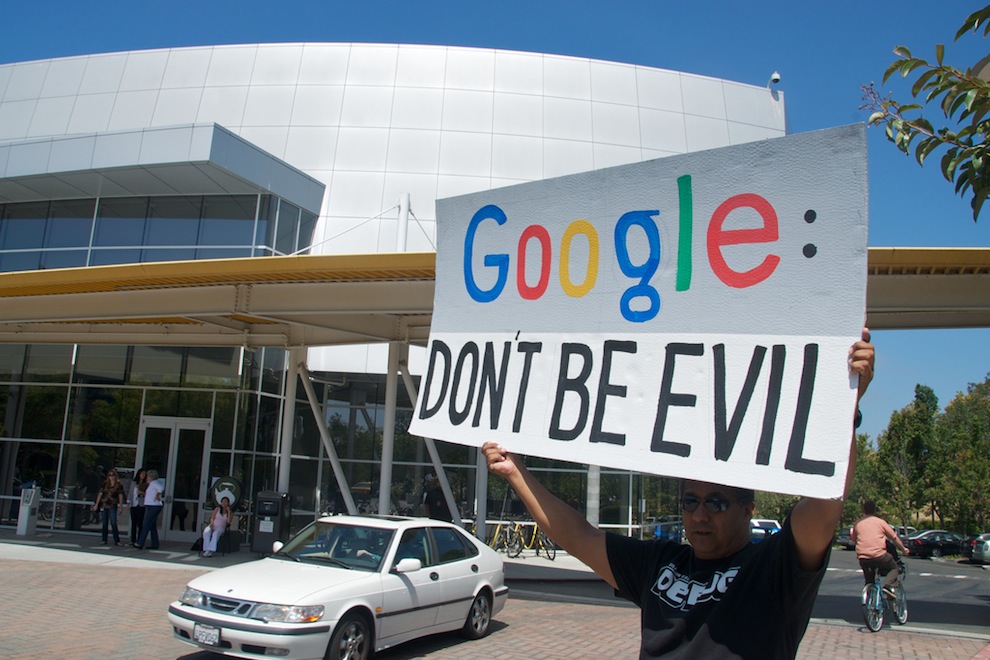
A top German official accused the United States on Sunday of using “Cold War” methods against its allies, after a German magazine cited secret intelligence documents to claim that U.S. spies bugged European Union offices.
Justice Minister Sabine Leutheusser-Schnarrenberger was responding to a report by German news weekly Der Spiegel, which claimed that the U.S. National Security Agency eavesdropped on EU offices in Washington, New York and Brussels. The magazine cited classified U.S. documents taken by former NSA contractor Edward Snowden that it said it had partly seen.
“If the media reports are accurate, then this recalls the methods used by enemies during the Cold War,” Leutheusser-Schnarrenberger said in a statement to The Associated Press.
“It is beyond comprehension that our friends in the United States see Europeans as enemies,” she said, calling for an “immediate and comprehensive” response from the U.S. government to the claims.
Other European officials demanded an explanation from the U.S.
“I am deeply worried and shocked about the allegations,” European Parliament President Martin Schulz said in a statement, according to CNN. “If the allegations prove to be true, it would be an extremely serious matter which will have a severe impact on EU-US relations. On behalf of the European Parliament, I demand full clarification and require further information speedily from the U.S. authorities with regard to these allegations.”
The revelations come at a particularly sensitive time for U.S.-E.U. relations, as long-awaited talks about a new trade pact are scheduled to begin next week. It is unclear how the latest report on NSA spying are going to affect them, but the trade pact has been a centerpiece of the Obama administrations diplomatic efforts in Europe for some time.
According to Der Spiegel, the NSA planted bugs in the EU’s diplomatic offices in Washington and infiltrated the building’s computer network. Similar measures were taken at the EU’s mission to the United Nations in New York, the magazine said.
Der Spiegel didn’t publish the alleged NSA documents it cited or say how it obtained access to them. But one of the report’s authors is Laura Poitras, an award-winning documentary filmmaker who interviewed Snowden while he was holed up in Hong Kong.
The magazine also didn’t specify how it learned of the NSA’s alleged eavesdropping efforts at a key EU office in Brussels. There, the NSA used secure facilities at NATO headquarters nearby to dial into telephone maintenance systems that would have allowed it to intercept senior EU officials’ calls and Internet traffic, Der Spiegel report said.
Germany was allegedly the focus of the European spying, according to The Guardian, categorising Washington’s key European ally alongside China, Iraq or Saudi Arabia in the intensity of the electronic snooping.
During a trip through Europe two weeks ago, President Obama assured an audience in Germany that America is not indiscriminately “rifling” through the emails of ordinary European citizens, describing the National Security Agency’s surveillance programs as a “circumscribed” system that has averted threats in America, Germany, and elsewhere.
Leutheusser-Schnarrenberger urged EU Commission President Jose Manuel Barroso to take personal responsibility for investigating the allegations.
The United States has defended its efforts to intercept electronic communications overseas by arguing that this has helped prevent terror attacks at home and abroad. – CBS
Chancellor Angela Merkel forcefully condemned on Friday the conduct of Irish bankers who were caught on tape joking about a bailout deal and mocking Germany, saying their actions were an insult to working people and damaged democracy.
Transcripts of telephone conversations from 2008 between bankers at Anglo Irish Bank have caused outrage in Ireland and beyond in recent days.
In the tapes they made light of the Irish government’s decision at the height of the global financial crisis to guarantee their liabilities and talk about demanding “moolah” – slang for money – from the country’s central bank.
They were also heard singing the pre-war version of the German national anthem, with the words “Deutschland ueber alles”.
Asked about the recordings at a European Union summit in Brussels, Merkel said: “For people who go to work each day and earn an honest living, this kind of thing is very hard to take, it’s impossible to stomach.
“This is really damaging to democracy, the social market economy and all that we work for,” she said, adding that it made it harder for policymakers to convince their citizens to support aid for struggling European partners.
Ireland’s government offered a blanket guarantee to Anglo and other lenders in 2008 to keep them operating. The decision eventually cost Irish taxpayers some 30 billion euros, forcing Dublin to seek a European bailout in late 2010.
EU finance ministers agreed on Thursday new rules for dealing with failing banks which would hit shareholders, bondholders and wealthy depositors before taxpayers.
Germany, concerned it could be asked to rescue mismanaged banks in other European countries, has put the brakes on a push by some of its partners to create a single bank resolution mechanism and a deposit guarantee fund for the bloc. – Reuters
Former NSA contractor Snowden remains in the transit zone of a Moscow airport. President Putin said that Snowden never crossed the Russian border and doesn’t fall under any extradition treaty. He called accusations against Russia “nonsense and rubbish.”
“It is true that Snowden has arrived to Moscow, and it really came as a surprise for us. He arrived as a transit passenger, and didn’t need a [Russian] visa, or any other documents. As a transit passenger he is entitled to buy a ticket and fly to wherever he wants,” Vladimir Putin said as he spoke to journalists in Finland.
Edward Snowden is still at the transit area of Moscow’s Sheremetyevo Airport, Putin stressed. He said that any accusations against Russia are “nonsense and rubbish,” as the former NSA contractor “has not crossed” the Russian border.
The President also pointed out that there is no extradition treaty between Russia and the US, which makes it impossible to extradite people like Snowden.
“We can only extradite any foreign citizens to such countries with which we have signed the appropriate international agreements on criminal extradition,” he explained.
Snowden “has not committed any crime” on Russian soil, Putin added. Russian security agencies “have never worked with and are not working with” the former CIA employee, he also stressed.
“Snowden is a free person. The sooner he chooses his final destination, the better it is for him and Russia,” Putin said.
He also expressed hope that the Snowden saga would not have any negative impact on Russian-American relations and that the US “will understand this.”
Putin also commented on the situation with WikiLeaks founder Julian Assange, who has been holed up in the Ecuadorian embassy in London to avoid extradition to Sweden, fearing that he would then be extradited to the US.
“Just like Snowden, he considers himself a rights advocate and fights for sharing information. Ask yourself: should or should not people like these be extradited to be later put to jail?” the President asked.
“In any case, I would like not to deal with such issues because it is like shearing a pig: there’s lots of squealing and little fleece,” he said.
Washington again requested that Moscow expel Snowden on Tuesday, urging Russia to build upon its bilateral law enforcement cooperation with the US.
Russia has “clear legal basis” to expel the NSA leaker, National Security Council spokeswoman Caitlin Hayden said in a statement. She added that Snowden would face espionage charges in the US, even without an extradition treaty.
The White House, along with Putin, doesn’t want the issue to negatively impact the nations’ bilateral relations, Hayden said. – RT
Executives at the Anglo Irish Bank were recorded joking about how they lied to Dublin about the bank’s financial future in 2008, convincing lawmakers to invest in the failing bank with figures “picked out of my arse” – with no plans to pay them back.
John Bowe, the head of capital markets for Anglo Irish, was recorded laughing as he explained to Peter Fitzgerald, the former head of banking, how Anglo Irish had fleeced the Irish government into providing billions of euro to keep the bank solvent.
The 2008 conversation was captured by the bank’s internal recording system and published by the Irish Independent. Ireland still has yet to fully recover from the financial crisis, despite attempts to bring the country back to normalcy by way of a drastic austerity program set in motion in the four years since.
In the September 2008 conversation caught on the tape, Bowe admits he knew the €7 billion he initially asked for would not be enough to spare the bank, which was within mere days of a complete meltdown. When asked about the origin of that figure, Bowe referred to then-Anglo Irish CEO David Drumm.
“Just as Drummer would say, ‘picked it out of my arse,’ you know,” he said. “I mean, look, what we did was we basically said: ‘What is the amount we can securitize over the next six months? And basically say to them: ‘Look our problem here is time, it’s not our ability to create the liquidity, the enemy is time here.’”
Both Bowe and Fitzgerald can be heard laughing through the discussion. The tapes’ release also confirms the long-held suspicion that Irish bankers knew the initial government investments were far too small.
“Yeah and that number is seven, but the reality is that actually we need more than that,” Bowe said. “But you know, the strategy here is you pull them in, you get them to write a big check and they have to keep – they have to support their money.”
Anglo Irish has since been renamed the Irish Bank Resolution Corporation, and is still in the process of being liquidated, as the austerity-hit country awaits a high-profile court case into the collapse of the bank.
Recent estimates indicate that, all told, Irish taxpayers will have supplied Anglo Irish Bank alone with €30 billion – a massive sum for the small island nation of just over 4.5 million people.
“If they (the Central Bank) saw the enormity of it up front, they might decide they have a choice. You know what I mean? They might say the cost to the taxpayer is too high,” Bowe went on. “If it doesn’t look too big at the outset – if it looks big enough to be important, but not too big that it kind of spoils everything, then, I think you have a chance.”
“So, so it’s bridged until we can pay you back. Which is never.”
Fitzgerald is heard saying, “Yeah. They’ve got skin in the game and that is the key.”
In statements to national broadcaster RTE, the two executives denied any wrongdoing and any “strategy or intention on the part of Anglo Irish Bank to mislead the authorities.” The two men did not deny the conversation in the excerpts of the statements that RTE read out, Reuters reports.
Bowe excused his comments as “off-the-cuff” when questioned by reporters over the weekend.
Irish opposition parties called for a new probe into the banking crisis, calling the conversation “shocking to the core.”
Government officials have previously blamed an inability to establish a parliamentary committee as the reason for Dublin’s failure to hold a public inquiry.
“Any suggestion that the taxpayer was lured into bailing out Anglo Irish Bank under a false impression about the state of the bank’s financial condition is deeply disturbing and has to be fully investigated by the authorities,” said Michael McGrath, finance spokesman of Fianna Fail (The Republican Party).
Ireland has yet to criminally prosecute a single banker who helped gamble the country into an economic tailspin. Pearse Doherty, a finance spokesman for the Irish party Sinn Fein, told the Financial Times the new revelations are a perfect opportunity to reverse that trend.
“They prove conclusively that an investigation is needed into the events surrounding the bank guarantee and subsequently that the people must be prosecuted for their roles in collapsing the Irish economy,” he said. – RT
Prince Charles has warned that Britain was suffering from an “apparent rise in antisemitism, along with other poisonous and debilitating forms of intolerance”, according to . He made the comments in a speech that praised the work of Lord Sacks, the outgoing chief rabbi, in promoting tolerance
Charles said: “Running throughout your time as chief rabbi has been that all-important principle of which this country has long been an exponent – the principle of tolerance.
“I sometimes fear not enough recognition is given to the role of the faith communities in the life of our country in promoting such a critical principle, and I join with you, in mounting anxiety, at the apparent rise in antisemitism, along with other poisonous and debilitating forms of intolerance.”
During his speech at the Grosvenor House hotel in central London, the prince said both he and Sacks had reached the official age of retirement, and joked: “I do hope yours is going to be a bit more realistic than mine.”
Recorded tributes from David Cameron and some of his predecessors in No 10 were played on a large screen at the tribute dinner. The archbishop of Canterbury, Justin Welby, praised his “phenomenal contribution” to public life.
In his speech Sacks was due to describe his 22 years as chief rabbi as the most exciting and fulfilling of his life. But he was also expected to issue a warning over the number of Jews who do not have a Jewish marriage, and the growth of so-called ultra-orthodoxy. – The Guardian
The U.S. assumes National Security Agency leaker Edward Snowden remains in Russia, and officials are working with Moscow in hopes he will be expelled and returned to America to face criminal charges, President Barack Obama’s spokesman said Monday. He declared that a decision by Hong Kong not to detain Snowden has “unquestionably” hurt relations between the United States and China.
Snowden left Hong Kong, where he has been in hiding, and flew to Moscow but then apparently did not board a plane bound for Cuba as had been expected. His whereabouts were a mystery. The founder of the WikiLeaks secret-spilling organization, Julian Assange, said he wouldn’t go into details about where Snowden was but said he was safe.
Snowden has applied for asylum in Ecuador, Iceland and possibly other countries, Assange said.
At the White House, spokesman Jay Carney said the U.S. was expecting the Russians “to look at the options available to them to expel Mr. Snowden back to the United States to face justice for the crimes with which he is charged.”
“The Chinese have emphasized the importance of building mutual trust,” he added. “And we think that they have dealt that effort a serious setback. If we cannot count on them to honor their legal extradition obligations, then there is a problem. And that is a point we are making to them very directly.”
Snowden has given highly classified documents to The Guardian and The Washington Post newspapers disclosing U.S. surveillance programs that collect vast amounts of phone records and online data in the name of foreign intelligence, often sweeping up information on American citizens. He also told the South China Morning Post that “the NSA does all kinds of things like hack Chinese cellphone companies to steal all of your SMS data.”
Snowden still has perhaps more than 200 sensitive documents, Sen. Dianne Feinstein, chairwoman of the Senate Intelligence Committee, said over the weekend.
He had been in hiding in Hong Kong, a former British colony with a degree of autonomy from mainland China. The United States formally sought Snowden’s extradition but was rebuffed by Hong Kong officials who said the U.S. request did not fully comply with their laws. The Justice Department rejected that claim, saying its request met all of the requirements of the extradition treaty between the U.S. and Hong Kong.
Said Carney: “We are just not buying that this was a technical decision by a Hong Kong immigration official. This was a deliberate choice by the government to release a fugitive despite a valid arrest warrant, and that decision unquestionably has a negative impact on the U.S.-China relationship.”
The dual lines of diplomacy — harsh with China, hopeful with the Russians — came just days after Obama met separately with leaders of both countries in an effort to close gaps on some of the major disputes facing them.
Snowden arrived in Moscow on Sunday, but his whereabouts were thrown into question Monday when a plane took off from Moscow for Cuba with an empty seat booked in his name. The U.S. has revoked his passport.
In Washington, U.S. Secretary of State John Kerry said it would be “deeply troubling” if Russia or Hong Kong had adequate notice about Snowden’s plans to flee to a country that would grant him asylum and still allowed him leave.
“We don’t know, specifically, where he may head, or what his intended destination may be,” Kerry said, responding to a question during a news conference in New Delhi where he was discussing bilateral issues between the U.S. and India.
U.S. officials pointed to improved cooperation with the Russians in the aftermath of the Boston Marathon bombing and to assistance the U.S. has given Russia on law enforcement cases.
“We continue to hope that the Russians will do the right thing,” Kerry told NBC News. “We think it’s very important in terms of our relationship. We think it’s very important in terms of rule of law. These are important standards. We have returned seven criminals that they requested for extradition from the United States over the last two years. So we really hope that the right choice will be made here.”
“We don’t know, specifically, where he may head, or what his intended destination may be,” Kerry said during a news conference in New Delhi.
Carney said the U.S. was in touch through diplomatic and law enforcement channels with countries through which Snowden might travel or where he might end up.
“The U.S. is advising these governments that Mr. Snowden is wanted on felony charges and as such should not be allowed to proceed in any further international travel, other than is necessary to return him here to the United States,” Carney said.
An Aeroflot representative who wouldn’t give her name told The Associated Press that Snowden wasn’t on flight SU150 to Havana, which was filled with journalists trying to track him down.
In Moscow, security around the aircraft was heavy prior to boarding and guards tried to prevent the scrum of photographers and cameramen from taking pictures of the plane, heightening the speculation that Snowden might have been secretly escorted on board.
After spending a night in Moscow’s Sheremetyevo Airport, Snowden had been expected to fly to Cuba and Venezuela en route to possible asylum in Ecuador.
Some analysts said it was likely that the Russians were questioning Snowden, interested in what he knew about U.S. electronic espionage against Moscow.
“If Russian special services hadn’t shown interest in Snowden, they would have been utterly unprofessional,” Igor Korotchenko, a former colonel in Russia’s top military command turned security analyst, said on state Rossiya 24 television.
The White House’s tough response to Hong Kong’s decision to let Snowden leave came just two weeks after Obama met with Chinese President Xi Jinping for two days of personal diplomacy in a desert retreat in California.
Carney said that after the U.S. sought Snowden’s extradition from Hong Kong, authorities there requested additional information from the U.S.
“The U.S. had been in communication with Hong Kong about these inquiries and we were in the process of responding to the request when we learned that Hong Kong authorities had allowed the fugitive to leave Hong Kong,” Carney said.
Ecuador’s foreign minister, Ricardo Patino, said his government had received an asylum request, adding Monday that the decision “has to do with freedom of expression and with the security of citizens around the world.”
Ecuador has rejected some previous U.S. efforts at cooperation and has been helping Assange avoid prosecution by allowing him to stay at its embassy in London.
But Assange’s comments that Snowden had applied in multiple places opened other possibilities of where he might try to go.
WikiLeaks has said it is providing legal help to Snowden at his request and that he was being escorted by diplomats and legal advisers from the group.
Icelandic officials have confirmed receiving an informal request for asylum conveyed by WikiLeaks, which has strong links to the tiny North Atlantic nation. But authorities there have insisted that Snowden must be on Icelandic soil before making a formal request. – AP
A 23-year old candidate from France’s right-wing Front National, Étienne Bousquet-Cassagne, has lost against the mainstream UMP candidate during a by-election in south western France, but scored an overall 46% of the votes, sending shivers through the Socialist government.
Jean-Louis Costes of the UMP yesterday obtained 53,76% of the votes and so prevented Mrs. Marine Le Pen’s Front National from sending a third MP to the French Assemblée. Adding to Socialist woes and causing the governing party to be eliminated during the first round of the contest, was a financial scandal surrounding its candidate and a former junior minister, Jérôme Cahuzac. Accused of tax fraud, Mr. Cahuzac admitted to maintaining a secret bank account abroad for 20 years.
During the first round, the young National Front candidate obtained 26,04% of the votes against Jean-Louis Costes’s 28,71%, ahead of the Socialist Bernard Barral’s 23,69%. On the eve of the second round of voting, the secretary general of the Socialist Party and long-time anti-racist activist, Harlem Désir, called on all voters to “block the Front National candidate”. Both the French President, François Hollande and Prime Minister Jean-Marc Ayrault repeated Désir’s message to voters.
Bousquet-Cassagne stated that the results of the second round showed “an electoral defeat but an ideological victory”. The leader of the Front National, Mrs. Marine Le Pen, said last night that the “primary lesson” to be drawn from this by-election was that the “so-called republican front against us was dead”. She noted the spectacular progress made by her party during the two rounds and maintained that “it shows that the combined left-liberal parties are no longer able to mobilise their electorate to prevent the Front National from gaining votes”.
The German Justice Minister has called the British spy agency’s massive eavesdropping of international fiber-optic cables ‘a catastrophe’. Sabine Leuthesser-Scharrenberger insisted European institutions should seek clarification “straight away”.
The exposure by former US National Security Agency contractor Edward Snowden of the global eavesdropping capabilities of the British Government Communications Headquarters (GCHQ) have sent European capitals into a stupor.
Having revealed the NSA’s PRISM global surveillance program, Snowden told the UK’s Guardian newspaper information about Britain’s top secret Tempora surveillance project under which the UK’s GCHQ spying agency intercepts and stores for 30 days huge volumes of data, like emails, social network posts, phone calls and much more, culled from international fiber-optic cables.
The most vociferous reaction has come from Berlin where politicians have demanded a thorough investigation of the activities of the British intelligence-gathering community.
“If these accusations are correct, this would be a catastrophe,” German Justice Minister Sabine Leutheusser-Schnarrenberger said in an email to the Reuters. She compared the news with a “Hollywood nightmare” and called on to the European institutions “to seek straight away to clarify the situation.”
“The accusations make it sound as if George Orwell’s surveillance society has become reality in Great Britain,” Thomas Oppermann, the leader of the opposition Social Democrats in the Bundestag told Reuters. German politicians called the situation ‘unbearable’ and demanded the government “act against a total surveillance of German citizens”.
A report in Britain’s Guardian newspaper has exposed that UK’s GCHQ has been spying on European capitals for at least 18 months intercepting data from over 200 fiber-optic cables.
Begun in 2008, by 2010 the Tempora project made GCHQ a true intelligence superpower, “’the biggest internet access’ of any member of the Five Eyes electronic eavesdropping alliance, comprising the US, UK, Canada, Australia and New Zealand,” The Guardian’s report claims.
By the end of 2012 the GCHQ agency reportedly had enough computational capacity to process information from 46 fibre-optic cables at a time, which amounted to 600 million international phone calls and internet messages daily.
While it was reported earlier that NSA shared classified information obtained through its tapping of the world’s largest internet providers with GCHQ, it became known that these were tit for tat relations and GCHQ shared the info it obtained with the NSA, too. The Guardian believes that the 850,000 NSA employees and US private contractors, like Edward Snowden, had access to GCHQ databases.
“The UK has a huge dog in this fight,” Snowden confirmed to the Guardian. “They [GCHQ] are worse than the US,” he stressed. – RT
The British spy agency GCHQ has access to the global network of communications, storing calls, Facebook posts and internet histories – and shares this data with the NSA, Edward Snowden has revealed to the Guardian in a new leak.
GCHQ’s network of cables is able to process massive quantities of information from both specific targets and completely innocent people, including recording phone calls and reading email messages, it was revealed on Friday.
“It’s not just a US problem. The UK has a huge dog in this fight,” Snowden told the Guardian. “They [GCHQ] are worse than the US.”
The Government Communications Headquarters agency has two different programs, aimed at carrying out this online and telephone monitoring – categorized under ‘Mastering the Internet’ and ‘Global Telecoms Exploitation.’ Both have been conducted in the absence of any public knowledge, reports the Guardian.
“If you remember, even the NSA said that they did not record phone calls, but according to these latest revelations by Edward Snowden, that up to ‘600 million’ telephone events last year were recorded a day by the GCHQ,” said RT’s Tesa Arcilla from London.
“There’s no doubt as to what the objectives of these programs were, having put them in place,” she said, emphasizing the titles.
The agency is able to store the volumes of data it amasses from fiber-optic cables for up to 30 days in an operation codenamed Tempora. The practice has been going on for around 18 months.
GCHQ which was handling 600m telephone ‘events’ a day, according to the documents, had tapped into over 200 fiber-optic cables and had the capacity to analyze data from over 46 of them at a time.
The cables used by GCHQ can carry data at 10 gigabits per second, which in theory, means they could deliver up to 21petabytes of information per day. The program is continuing to develop on a daily basis with the agency aiming to expand to the point it is able to process terabits (thousands of gigabits) of data at once.
“This appears to be dangerously close to, if not exactly, the centralised database of all our internet communications, including some content, that successive Governments have ruled out and Parliament has never legislated for,” said Nick Pickles of UK privacy campaign group Big Brother Watch.
“If GCHQ have been intercepting huge numbers of innocent people’s communications as part of a massive sweeping exercise then I struggle to see how that squares with a process that requires a warrant for each individual intercept. This question must be urgently be addressed in Parliament,” he stated.
By May last year, some 300 GCHQ-assigned analysts and 250 from the NSA had been specially allocated large quantities of data to trawl through as a result of the operations.
The Guardian reports that 850,000 NSA and outside contractors had potential access to the databases. However, the paper does not explain how it came to such an enormous figure
“These revelations reveal the scale of and the scope of cooperation between UK and US intelligence services,” said RT’s Gayane Chichakyan from Washington. “From these revelations we learned how dramatically it has expanded over the years.”
“The document shows the FISA court lets the NSA use data snagged ‘inadvertently.’ They basically give a warrant to target suspects,” she said, recalling Lieutenant General Keith Alexander’s quote after a 2008 visit to the Menwith RAF base in England: “Why can’t we collect all the signals all the time? Sounds like a good summer project for Menwith,” he had said.
The GCHQ project was first trialed in 2008. The intelligence organization has been labeled an ‘intelligence superpower’ on account of its technical capabilities, which by 2010 gave it the strongest access to internet communications out of the ‘Five Eyes’ – an international intelligence sharing alliance, including Australia, Canada, New Zealand, the UK and US, brought into existence in 1946.
The mass-surveillance has seen the interception of data from transatlantic cables that also carry data to western Europe through ‘intercept partners’ commercial companies that had entered into private agreements with GCHQ. Many have been paid off for their cooperation.
GCHQ feared that exposure of the names of the companies involved could lead to “high-level political fallout,” and took measures to ensure names were kept secret. Warrants had reportedly been issued to compel the companies to cooperate so that GCHQ could engage in spying through them.
“They have no choice,” said a Guardian intelligence source.
Human rights groups have spoken out against the mass data collection: “They are exploiting the fact that the internet is so international in nature,” Shami Chakrabarti, director of Liberty, told BBC Radio 4’s ‘Today’ program. “I’m pretty sad in a democracy when all that appears to be holding back the secret state is its physical and technological capability and not its ethics or a tight interpretation and application of the law,” she added.
Snowden previously warned that he would be releasing further information pertaining to mass security operations carried out on the unwary public, stating in a previous Q & A with the Guardian that the “truth is coming, and it cannot be stopped.” – RT
President Obama’s visit to the Group of Eight summit has created a political row in Ireland after an outspoken liberal lawmaker on Wednesday denounced the U.S. president as a “war criminal” for his drone use and his decision to arm the Syrian rebels.
Parliamentarian Clare Daly said her country’s government had showcased the country “as a nation of pimps, prostituting ourselves in return for a pat on the head,” The Irish Times reports.
The “unprecedented slobbering” during Obama’s two-day visit to Northern Ireland, she said, had even led to speculation that “you were going to deck the Cabinet out in leprechaun hats decorated with a bit of stars and stripes to really mark abject humiliation.”
The Irish head of government, Enda Kenny, called the remarks “disgraceful.”
“I think they do down the pride of Irish people all over the world who are more than happy to see this island being host to the G-8,” he said.
“And for you to stand up and criticize the American president for giving a continuation of support for a fragile peace process in Northern Ireland, where over 3,000 people lost their lives in 30 years, is a disgraceful do-down.”
Daly’s pique appears to have been provoked by the White House’s announcement last week that it will provide “military support” for the Syrian rebels after accusing Bashar Assad’s forces of using chemical weapons.
Ireland has remained neutral since shortly after its independence from Great Britain in 1922, and was one of the most vocal critics of the 2003 invasion of Iraq.
“This is the man who is in essence stalling the Geneva peace talks [scheduled for next month] by trying to broker enhanced leverage for the Syrian opposition by giving them arms — and to hell with the thousands more who’ll lose their lives, or the tens of thousands who will be displaced,” Daly said.
“This is the man who has facilitated a 200 percent increase in the use of drones which have killed thousands of people, including hundreds of children.” – The Hill
Foreign ministers of the “Friends of Syria” group meet in Doha on Saturday to discuss military help and other aid for rebels after an onslaught by government forces who have retaken key areas.
The meeting will address in a “concerted, coordinated and complementary manner” the concerns raised by the opposition’s military chief, Salim Idriss, during a “Friends of Syria” meeting in Ankara last Friday, a French diplomat said.
The rebels had notably asked for anti-tank and anti-air missiles to fight the regime forces. Western aid for them so far has been confined to non-military equipment like sophisticated communications materiel.
The upcoming talks — attended by ministers of Britain, France, the United States, Germany, Italy, Jordan, Saudi Arabia, Qatar, the United Arab Emirates, Turkey and Egypt — will also discuss a proposed peace meeting between President Bashar Al-Assad’s regime and the opposition to end the 27-month conflict which has claimed some 93,000 lives and shows no sign of abating.
“We will try in Doha to sum up the situation on the ground and to see how we can aid the opposition coalition and arrive at a political solution,” French Foreign Minister Laurent Fabius said.
The Doha talks will be held against the backdrop of a string of successes by government troops into rebel territory, backed up by Iranian forces and Lebanon’s Hezbollah group.
They have retaken Qusayr in the central Homs province near Lebanon and trying to recapture the key city of Aleppo.
It also comes days after a summit of G8 leaders issued a non-committal statement for a peace conference on Syria to be held as soon as possible. The group was deeply divided on key issues, especially owing the intransigence of Russia, Assad’s ally.
The G8 also agreed to push for a transitional government in Syria that could include members of Assad’s regime who switched sides.
French President Francois Hollande, who will be in Qatar and Jordan over the weekend in a visit that had been planned earlier, will also discuss the Syrian unrest with Qatar’s ruler Sheikh Hamad bin Khalifa Al Thani, officials said.
Qatar and Saudi Arabia have been the two major Middle Eastern states providing aid to the rebels.
Britain and France have recently pushed for providing weapons to them but have underscored that this must be done in a responsible manner to avoid the kind of anarchy that took place in Libya after the fall of dictator Moamer Kadhafi.
United States President Barack Obama has authorised sending small arms to the rebels after confirmation that chemical weapons were being used in the conflict. But he has refused to specify what they will be.
Syrian rebels have asked friendly world powers to give them heavier weapons and to impose a no-fly zone over parts under their control to avert a humanitarian disaster.
“The regime could use Scud missiles with unconventional warheads to shell liberated areas. So we need a safe haven,” Free Syrian Army spokesman Louay Meqdad told AFP.
“It is necessary to establish secure areas and impose no-fly zones in the south or north,” he said.
Calling for anti-tank and anti-aircraft weapons, he said that “if they do not provide us with arms to protect civilian areas, a humanitarian disaster will occur because regime troops are committing massacres in the areas they are recapturing”. – AFP
France on Thursday threatened Google with a fine of up to 150,000 euros ($198,000) if it does not bring its privacy procedures into line with French law on data protection within three months.
In a move that France hopes will be followed by other European states, the national data protection agency Cnil said the US Internet giant had failed to provide it with sufficient assurances about the storing and use of data it obtains from users.
“The information received in respect to this have so far been too imprecise or vague,” Cnil President Isabelle Falque-Pierrotin told AFP.
She said that Google must set a clear limit on the length of time it can store the data obtained from web surfers and seek prior approval from them before installing cookies on their devices.
France’s move follows Google’s introduction last year of a new privacy policy which enables it to track users activity across its search engine, gmail, the Google+ social networking platform and other services it owns, which include YouTube.
The changes make it easier for Google to collect and process data that could be used by advertisers to target individuals with offers tailored to their specific interest, thereby increasing the company’s revenue potential.
The changes have been widely criticised because of the implications for privacy but the pressure on Google to change how it operates has been limited to date.
The 27-member European Union warned Google in October 2012 that its data protection procedures did not comply with an EU directive on the subject and gave the company four months to change them.
That deadline passed without any action, prompting France to set up a task force of individual member states interested in pursuing the issue that involved Britain, Germany, Italy, the Netherlands and Spain.
Cnil President Falque-Pierrotin noted that while the maximum fine Google could face under French law was relatively small, Spain has the capacity of impose a penalty of up to one million euros ($1.3m).
Google has defended the changes it made last year on the ground that they simplify and standardise its approach across its various services.
But critics argue that the policy, which offers no ability to opt out aside from refraining from signing into Google services, gives the operator of the world’s largest search engine unprecedented ability to monitor its users.
Google has repeatedly stated that its privacy policy respects European law. – AFP
Marine Le Pen faces prosecution for comparing Muslim immigration to the Nazi occupation of France after the European Parliament’s legal committee recommended that the nationalist leader be stripped of her immunity.
The full parliament is now expected to formally lift her protection from prosecution as an MEP after a vote on the recommendation on July 3, clearing the way for her to face race hate charges in a French court.
Sajjad Karim, a British Tory MEP on the parliament’s legal affairs committee, voted in favour Ms Le Pen losing her parliamentary immunity.
“There is a red line between freedom of speech and inciting racial hatred,” he said. “I, along with many other MEPs, today voted to drop Ms Le Pen’s immunity and I am confident that the majority of the European Parliament will follow our lead in July.”
French prosecutors asked the EU assembly last November to lift the French National Front leader’s immunity as a lawmaker so she could be prosecuted for remarks likening Islamic prayers to the Nazi occupation.
Ms Le Pen faces charges for comments she made in a speech to National Front supporters in December 2010 when she denounced the holding of Muslim prayers in the streets of France in areas where there are no mosques.
“For those who like to talk about World War II, to talk about occupation, we could talk about, for once, the occupation of our territory. There are no armoured vehicles, no soldiers, but it is an occupation all the same and it weighs on people,” she said.
She follows in the footsteps of her father Jean Marie, founder of the French National Front, who was stripped of his legal protection as an MEP to face German Holocaust denials charges in 1998, he had previously been convicted of similar charge in France. – Daily Telegraph
Domenico Dolce, left, and Stefano Gabbana, in the company of some fashion clients
An Italian court on Wednesday sentenced Italian fashion designers Domenico Dolce and Stefano Gabbana to one year and eight months in prison for tax evasion.
The pair’s lawyer, Massimo Dinoia, said they planned to appeal, adding that the case is “groundless.” The designers, known for their sexy styles favored by celebrities such as Madonna, Naomi Campbell and Katy Perry, have denied the charges.
The case dates back to 2004, when two of the company’s main brands were sold to Luxembourg-based holding company Gado.
Related Video
A court in Milan has convicted fashion designers Domenico Dolce and Stefano Gabbana of tax evasion. Christina Binkley reports.
Prosecutors alleged that the sale was made to avoid declaring taxes on royalties deriving from the two brands’ activities.
Under Italian law, the pair wouldn’t go to prison because sentences of less than three years are served with house arrest or community service. Moreover, the designers have the right to appeal the verdict twice, and Italian courts often take years to reach a final decision.
Public prosecutor Laura Pedio dubbed the operation as a “sophisticated tax fraud” and originally asked for a two-year jail term for the duo. If the conviction is upheld, the pair would also need to pay a fine to Italy’s tax agency for €500,000.
Over the last five years, Italian tax authorities have ratcheted up pressure on tax evasion in an effort to claw back an estimated €120 billion a year in unpaid taxes, cracking down in particular on the use by Italian companies of offshore centers to avoid taxes.
According to Italian tax authorities, the country lost about €17 billion in undeclared or under-declared income to offshore centers last year, compared with €11 billion for 2011, with Luxembourg the leading country used by Italian individuals and companies seeking to hide money abroad. Corporate tax rates in Luxembourg can be close to zero, while they are about 28% in Italy.
While Dolce & Gabbana has emerged as one of the most high-profile cases pursued by Italian tax authorities, Italian authorities have gone after other fashion groups in the past. In 1996, Giorgio Armani received a nine-month suspended sentence and was fined $64,000 for paying off tax authorities in exchange for favorable audits. Mr. Armani admitted to having paid the bribes.
Late last year, prosecutors launched an investigation into whether the Marzotto family, a wealthy textile dynasty, and four managers dodged 65 million euros in Italian income taxes when it sold fashion house Valentino through a Luxembourg holding company in 2007.
Earlier this year, the family paid the taxes that the state claimed it owed, but will face a criminal trial later this year.
The family and managers have denied all charges. – Wall Street Journal
This website uses cookies to improve your experience. We'll assume you're ok with this, but you can opt-out if you wish. Cookie settingsACCEPT
Privacy & Cookies Policy
Privacy Overview
This website uses cookies to improve your experience while you navigate through the website. Out of these cookies, the cookies that are categorized as necessary are stored on your browser as they are essential for the working of basic functionalities of the website. We also use third-party cookies that help us analyze and understand how you use this website. These cookies will be stored in your browser only with your consent. You also have the option to opt-out of these cookies. But opting out of some of these cookies may have an effect on your browsing experience.
Necessary cookies are absolutely essential for the website to function properly. This category only includes cookies that ensures basic functionalities and security features of the website. These cookies do not store any personal information.
Any cookies that may not be particularly necessary for the website to function and is used specifically to collect user personal data via analytics, ads, other embedded contents are termed as non-necessary cookies. It is mandatory to procure user consent prior to running these cookies on your website.

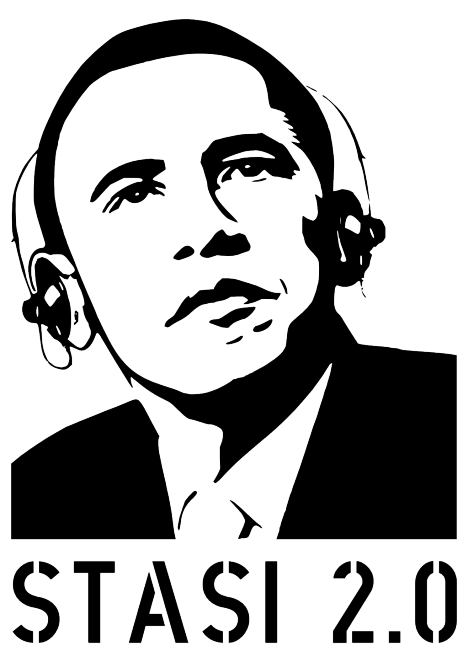
 A top German official accused the United States on Sunday of using “Cold War” methods against its allies, after a German magazine cited secret intelligence documents to claim that U.S. spies bugged European Union offices.