France backs Palestinians

Hillary kisses French foreign minister Fabius

France has announced it will vote in favor of recognition of Palestine as a non-member observer state at the UN General Assembly later this week.

­The French Foreign Minister Laurent Fabius told parliament that France “will respond ‘yes’” when the issue is put on a vote at the UN General Assembly.

France, a permanent UN Security Council member, is the first European country to speak in favor of elevating Palestinian status from an observer to a nonmember observer state.

The United States, which opposes the Palestinian bid for statehood, publicly disagreed with France’s move. State Department spokeswoman Victoria Nuland said Paris’s decision would not change the US assessment of the Palestinian action as a “mistake.”

“With regard to France and any other countries, we obviously disagree with our oldest ally on this issue,” she told reporters. “They know that we disagree with them. But it’s their sovereign decision.”

The Austrian foreign ministry also said Tuesday it would back the Palestinian bid and claimed that more than half of the European Union’s 27 member states would vote for the proposal, AFP reported.

Meanwhile, the UK says it is ready to support the PA in their current bid to become a non-member observer state if the Palestinians comply with three conditions, The Telegraph reports.

British Foreign Secretary William Hague allegedly requested Palestinian President Mahmoud Abbas, pledge not to join the International Criminal Court after its UN status is upgraded, not to apply for full membership at the UN and to resume peace negotiations with Israel without any preconditions.

At the moment the PA refuses to negotiate with Israel until it halts the expansion of Jewish settlements in the occupied West Bank and East Jerusalem territories.

On Thursday, the Palestinians will officially ask the assembly to upgrade their status.  Earlier the Palestinian Authority said it expected the assembly to vote two-thirds in favor of granting the PA non-member status, seeing the move as an important step toward a two-state solution with Israel.

Israel strongly opposes the bid. Previously Tel Aviv said it objects to any wording the PA would bring for a vote at the assembly.

But as Israeli authorities were unable to block the bid they have changed their stance and now are trying to soften the wording, Haaretz reported on Tuesday citing a senior Israeli official.

The article states Tel Aviv and Washington are working together to change the document.

Last year, Washington used its veto power to block a Palestinian bid for statehood at the UN Security Council. A similar move is unlikely in this case as there are no vetoes in the General Assembly. – RT

Boys will be… girls

One of the largest toy chains in Sweden published a gender-neutral Christmas catalogue, which pictured boys playing with dolls and girls holding toy machine guns. The move has reignited a debate in Sweden over the proper place of gender roles.

Top Toy has produced children’s Christmas catalogues in Denmark and Sweden for both Toys R Us and BR. Though the catalogues’ page layouts are the same in both countries, the gender of the pictured kids is reversed in the Swedish edition.

“With the new gender thinking, there is nothing that is right or wrong. It’s not a boy or a girl thing, it’s a toy for children,” Top Toy director of sales Jan Nyberg told TT news agency.

The Danish catalogue showed a boy wielding a toy machine gun, which was replaced by a girl in the Swedish version. The “Hello Kitty” page of the Swedish catalogue also replaced a girl with a boy, and a one girl’s pink t-shirt was turned into light blue.

The move is a profound shift in strategy for Top Toy. In 2008, the company was criticized by Swedish advertising watchdog Reklamombudsmannen (RO) for encouraging outdated gender roles with catalogues that featured boys dressed as superheroes and girls as princesses.

Since then, Top Toy has modified its strategy based on RO’s advice.

“We have produced the catalogues in a completely different way this year,” Nyberg said. “For several years, we have found that the gender debate has grown so strong in the Swedish market that we… have had to adjust.”

Sweden is the frontline for the gender debate.

Since 2008, the government has spent 110 million Swedish crowns ($16.3 million) on promoting gender equality in schools, including the introduction of laws requiring teachers to actively work to reverse gender stereotypes.

The country also proposed a new single gender-neutral pronoun – ‘hen’ – to replace ‘he’ and ‘she’ in order to minimize gender stereotyping.

In January 2012, children’s author Jesper Lundqvist’s release ‘Kivi and Monster Dog,’ a book that uses ‘hen.’ The move sparked debate in Sweden and worldwide about the proper place of gender roles.

Elise Claeson, a columnist and a former equality expert at the Swedish Confederation of Professions, claimed that the use of the word hen is an example of notions of gender equality going too far.

Claeson argues that mixed messages about their gender can be harmful for kids: “It is important to have your gender confirmed to you as a child. This does not limit children; it makes them confident about their identity,” she told the Christian Science Monitor.

Separatists winning in Catalonia

Four separatist parties in Spain’s Catalonia looked set to win a majority in regional elections on Sunday, partial results showed, but the main one was on course to lose some seats, possibly undermining its bid to call an independence referendum.

With half of votes counted, the ruling Convergence and Union alliance, or CiU, was winning 48 seats in the 135-seat local parliament, well down from its current 62 seats.

The separatist Republican Left, or ERC, was winning 20 seats, with two other smaller separatist parties taking a total of 16 seats, giving the four parties 60 percent between them.

Regional President Artur Mas, of CiU, had campaigned on a pledge to hold a referendum on independence, in response to a resurgent separatist movement among Catalans who are frustrated with Spain in a deep economic crisis.

Opinion polls had forecast that CiU would retain 62 or more seats in the local Parliament and that all four separatist parties would have more than two-thirds of the seats. Neither of those projections was met as the results began to come in.

Without the psychological backing of a two-thirds majority, analysts have said, it may be hard for Mas to defy the constitution and the central government in Madrid and try to hold a referendum.

Turnout was very high in the election, 68 percent, 10 percentage point higher than in the previous vote two years ago.

With more people than Denmark and an economy almost as big as Portugal’s, Catalonia has its own language. Like Basques, Catalans see themselves as distinct from the rest of Spain.

Growing Catalan separatism is a huge challenge for Prime Minister Mariano Rajoy, who is trying to bring down painfully high borrowing costs by persuading investors of Spain’s fiscal and political stability.

Mas converted to separatism after huge street demonstrations in September.

Up until recently Mas was a moderate nationalist who had pushed Spain to give Catalonia more self-governing powers. He has followed the popular mood in converting to a more radical separatism, but it is not clear he can hold a referendum legally.

Many Catalans are angry that Rajoy has refused to negotiate a new tax deal with their largely self-governing region. Annually, an estimated 16 billion euros ($21 billion) in taxes paid in Catalonia, about 8 percent of its economic output, is not returned to the region.

Home to car factories and banks that generate one fifth of Spain’s economic wealth, and birthplace of surrealist painter Salvador Dali and architect Antoni Gaudi, the region also has one of the world’s most successful football clubs, FC Barcelona. – Reuters

The smell of danger

Scientists have found that some of the ingredients in Chanel’s iconic No. 5 scent and a number of other perfumes can cause allergic reactions. EU health officials are considering banning the perfumes from sale.

European scientists unveiled a list of 100 ingredients thought to be hazardous to human health, adding 74 more substances to a previous, similar list. Among these is tree moss, traces of which are featured in the iconic Chanel scent, which has been in production for nearly a century. The list of potentially harmful perfumes also includes Guerlain’s Shalimar and one from Thierry Mugler, The Daily Mail reports.

The European Commission is now considering whether perfumes containing these substances, even in small amounts, should be banned from sale. Such a decision would strongly affect the manufacturers.

Perfumers found the initiative ridiculous, saying the whole industry could be devastated. “Chanel No. 5 has never done any harm to anyone,” Sylvie Jourdet of the French perfumers’ society is quoted by The Daily Mail as saying.

The whole idea remains dubious, considering the fact that different people have different allergies. “Lemon, jasmine and bergamot all contain allergenics,” Jourdet said. “It is the death of perfume if this continues. The more you use natural ingredients, the more there is a risk of allergies.”

Scientists have called for a ban on some of the ingredients on the list, while they say the use of others should be limited. They’ve suggested that 12 substances – including such popular components of perfumes as lemon citral, coumarin, found in tonka beans and eugenol, found in rose oil – be limited to 0.01 per cent of the product.

“It would be the end of beautiful perfumes if we could not use these ingredients,”
Françoise Montenay of Chanel says.

The ingredients used in perfumes are not regulated by law as are other products despite the profound sensory influence it may exert. The perfume industry has made significant inroads recently on secret “mood changing” diffusers in public spaces.

Some critics even say it’s the scent of “death.”

The environmental group Greenpeace said Monday that at least 36 well-known perfume brands contain chemicals that are hazardous to health and the environment.

At a press briefing at the Chicken Bacolod Restaurant in Quezon City, Francis de la Cruz, Greenpeace Southeast Asia toxics campaigner, said that phthalate esters and synthetic musks-two toxic man-made to chemicals-are contained in several perfumes.

“These chemicals are known to be persistent and they intensify once they enter the body by inhaling or through the skin,” he said.

“It’s not acute poisoning but it’s chronic, it stays in our system and accumulates in the fatty tissues of living organisms,” he added.

De la Cruz said phthalate has been found to have bad effects on the DNA, evil sperm and restricts lung function in men. Synthetic musks can attack living tissues, he said.

These perfumes containing toxic agents, he said, and they are Terre by Hermes, CK One, Eternity for Men and Eternity for Women of Calvin Klein, Boss in Motion of Hugo Boss; Envy Me of Gucci, Blue Pole of Ralph Lauren, True Star of Tommy Hilfiger, She of Armani, No.5 of Chanel, Floral Dream of Adidas, Cinema of Yves Saint Laurent and Sunset of Naomi Campbell.

Randomly selected brands of perfume was sent for to quantitative analysis for phthalates and synthetic musks at the Netherlands laboratory, TNO Environment and Geosciences, which conducted the study from 2003 to 2004.

The complete list includes Floral Dream by Adidas, In Leather by Aigner, Natural Aqua, Bulgarian Emporio Armani by Armani, White Musk, Eau de Parfum by The Body Shop and High Speed by Bogner, BLV Night by, CK One for Men, Eternity for Men and Eternity for Women by Calvin Klein, the Baiser Du Dragon by Cartier, Chance Not. 5 by Chanel, Poison and Also Poison by Christian Dior, Him by FCUK, Fiorucci Loves You, Envy Me by Gucci, Boss by Hugo Boss, Manifest My by Isabella Rosellini, Classique and Badly by the Jean Paul Gaultier, Nightlife by Joop! , Iris Blue by Melvita, Waterlove by Mexx, Sunset by Naomi Campbell, XS Pour Homme by Paco Rabanne, and Jamaica Man and Jamaica Woman by Puma.

Ken Cook, President of the watchdog organization Environmental Working Group (EWG), is alerting consumers to the risks they’re taking each time they reach to sprits a wrist or neck. It’s one thing to know that the US does a generally abysmal job of regulating personal care product ingredients – another thing entirely to know that EWG found 38 “secret” (unlisted) ingredients in the 17 popular perfumes they recently tested.

Here’s what’s even worse: 66% of those unlisted ingredients in those 17 perfumes have not been assessed by the FDA for safety, and 19% of listed ingredients haven’t been vetted for safety, either. No problem, right? I’m not ingesting my perfume, right? Wrong. Your skin is your largest organ, and it drinks up most of what you put on it, chemicals and all. Would you drink a bottle of juice with 38 “secret” ingredients in it? Probably not.

From EWG’s email alert:

“We found 38 unlisted chemicals in our testing. The average fragrance tested contained 14 secret chemicals. Among them are chemicals associated with hormone disruption and allergic reactions, and many substances that have not been assessed for safety in personal care products by the US Food and Drug Administration (FDA) or the industry’s own safety panel.”

Companies are getting away with this secretive, smelly nonsense because the 1973 Fair Packaging and Labeling Act doesn’t regulate “fragrance” ingredients. So when you see “fragrance” listed on a product label, that’s a red flag – it’s likely there to cover all manner of evils.

According to EWG: “The vague term ‘fragrance’ covers chemicals that can be linked to reproductive damage, hormone disruption, and can trigger allergic reactions.”

If South Korean voters think they can smell victory when they go to the ballot box, they are absolutely right.

A team of supporters of presidential candidate Lee Myung-bak secretly sprayed a perfume called “Great Korea” at his rallies.

Volunteers were sent to voting booths in 2007 to ensure the same scent is drifting through the air.

“It will remind people of the identity of Lee Myung-bak. The concept of the perfume is hope, victory and passion,” said Oh Chi-woo of the conservative Grand National Party’s culture and arts team.

“They’ll just smell it today. But when they cast their votes, they’ll remember,” he said in the central town of Jecheon, standing by an open vegetable market where any smell from mounds of garlic and onions was drowned out by the slightly cloying scent of “Great Korea.”

The “fragrance of the president” offensive had been carried out on the quiet since the start of Lee’s campaign, he said.

One party volunteer, Kwon Hae-jin, said voters had responded well, noting some smokers who had complimented her on the pleasant scent.

“People will probably realise this is Lee’s smell,” she said, spraying bursts of the perfume into a gathering of supporters.

Latest opinion polls suggest she may not need to bother. Lee’s popularity rating is about 30 points ahead of his nearest rival.

Swiss Ecopop group forces immigration referendum

A group of Swiss environmentalists has collected enough signatures to force a national referendum on immigration.

The Ecopop group says natural resources are under increasing pressure from overpopulation.

It wants annual population growth through immigration capped at 0.2% and a tenth of foreign aid to be used for birth control measures abroad.

Switzerland now has a population of eight million people – almost a quarter of them foreigners.

Ecopop gathered a petition with 120,700 certified signatures – easily passing the 100,000 threshold needed for a referendum on the proposed new law.

“The pressure on land, nature and the countryside is considerable, and quality of life is continuously deteriorating due to a lack of living space,” said Ecopop member Philippe Roch, a former director of the Swiss environment department.

The group insists it is opposed to all forms of xenophobia and racism but says Switzerland must limit immigration to avoid urbanisation and to preserve agricultural land.

Under the Swiss system of direct democracy, referenda take place up to four times a year.

Correspondents say the initiative reflects growing concern in Switzerland about overcrowding. The population has risen by some 15% since 1990.

In April, the Swiss government agreed to re-impose immigration quotas on workers from central and eastern EU countries – a decision criticised by EU officials.

Until 2011, Switzerland had a quota of 2,000 residency permits per year for citizens of the so-called “A8″ nations, which joined the EU in 2004.

The right-wing Swiss People’s Party (SVP), which blames rising rents and crowded transport on immigration, has also gathered enough signatures to force a referendum on tougher immigration quotas. – BBC

Max Keiser: The end of Britain

A serf in the days of King John, Max Keiser argues, was in many ways better off than some US voters in 2012.

“Because in the age of Robin Hood,” Keiser says, “at least the process of theft was transparent. The barons came to your house. They whacked you over the head then they took all your money.” Even if the poor didn’t exactly empathise with their oppressors, Keiser adds, they could at least comprehend their methods. “And the serfs,” he continues, “did enjoy a modicum of stability. They got something in return for their enslavement. A small plot of land. Shelter. A relationship with the lord of the manor.” In the modern age of “financial tyranny” orchestrated by what Keiser refers to as “the banksters” in charge of the major financial institutions in the US and Europe, he believes, “We have reverted to a more pernicious kind of neo-feudalism. The instruments of larceny have changed; that’s all.”

What better time, you might ask, to have the opportunity to vote in a presidential election? But the real forces which shape the destiny of his homeland, Keiser says, have long been impervious to democratic pressure.

“Barack Obama,” he maintains, “has been a huge disappointment. He reneged on every one of his campaign promises except one: he did buy his kids a dog. Of course he could be replaced in this election, but if that happens we will simply inherit a different version of the same thing, just as we have done in the US for the past 30 years. The guy in the White House,” he believes, “is really taking his orders from finance.”

You may never have heard the name Max Keiser, even though, once he begins to broadcast across China in the New Year, he will have confirmed his status as the most widely watched news commentator on the planet. Assisted by his producer, co-presenter and fiancée Stacy Herbert, Keiser, 52, mercilessly castigates rogue financiers and the politicians notionally required to oversee them, on programmes already transmitted by international networks including France 24, Al Jazeera and Iran’s Press TV. No channel in the United States will carry his broadcasts, which go well beyond the benign impudence of The Daily Show.

His most popular outlet is The Keiser Report, on Russia Today (RT), and its international viewing figures, as Keiser (not a man plagued by self-doubt) isn’t slow to point out, are huge. What has fascinated me, I tell him, when we meet in his London television studio, is that in Britain, in recent months, I’ve begun to hear his mischievously seditious RT show mentioned, with admiration, by taxi drivers, patrons in the Haringey Arms, and my window cleaner. This may not, I admit, constitute a statistically significant sample, but Keiser is clearly attracting people you wouldn’t necessarily expect to view a rolling news channel on a foreign network.

The presenter isn’t surprised. “There is a fury against this global banking fraud that is building every day,” he says. “People from all kinds of backgrounds, all over the world, have had enough.”

The Keiser Report, first aired in September 2009, is produced here three times a week. One episode, shown in September 2011, contained the interview with Roseanne Barr during which she famously observed that her solution to banking malpractice would be to “bring back the guillotine”.

While his sardonic, quick-fire delivery would allow him to shine in a debate at the Oxford Union or a Hampstead dinner party just as effectively as, say, David Dimbleby, Keiser’s utterings on the less laudable activities of Morgan Stanley, Goldman Sachs and other financial institutions also manage (unlike Dimbleby’s) to resonate with the kind of people who might fantasise about fire-bombing their local branch of NatWest. To illustrate a point, he will occasionally produce a plastic chicken, a stuffed rat, or a small explosive device. On one recent show, he advised David Cameron to, “Go back to Eton and get some of that back-stall shower pleasure.”

I tell Keiser how, the first time I saw him presenting the show with Stacy Herbert (his partner’s name, somewhat unfortunately, may be familiar from her appearance in 2002 red-top headlines concerning the “three in a bed sex sessions” whose pivot was Angus Deayton), I’d assumed his performance to be fuelled by amphetamines.

“I wave my arms,” he says. “I shout. Of course I do. Because this is a global insurrection. Against banker occupation.”

He folded balloon animals on one show.

“Well, you have to make an impression quickly. Most people first see The Keiser Report at an airport or hotel. RT has 450 million viewers. It goes into more hotel rooms than the BBC and it has more YouTube views. Everywhere I go, people stop me in the street. And remember I’m broadcasting about global financial corruption; not so long ago, everyone used to say, who could be interested in that?”

is histrionic style, combined with the forthright nature of his views (Keiser recently derided the Eurozone as an entity “which poses as this prestigious club, but is actually a leper colony where everyone is checking who still has the most fingers left”) have led some to dismiss him as a marginal, whacked-out conspiracy theorist.

This perception is some way removed from the truth. Raised in an affluent New York suburb, Keiser was a highly successful Wall Street stockbroker and the creator and former chief executive of HSX Holdings, a company which, using his own software system, allowed traders to deal in virtual securities. Put simply, this allowed you to gamble on the success – and, more disturbingly to the studios, on the failure – of a Hollywood film before its release. The practice was halted by the industry, but not before Keiser had sold his shares at the top of the market, adding to his already substantial fortune.

He founded the hedge fund Karmabanque, which has sought (with limited success) to profit from any decline in the equity value of companies criticised by environmental groups, such as Coca-Cola and McDonald’s. And in 2007, in an Al Jazeera film called Extraordinary Antics, he travelled to Milan to examine how CIA agent Robert Seldon Lady and others had illegally abducted then deported an Egyptian imam, Hassan Mustafa Osama Nasr, who later faced torture in Cairo. (In 2009 Lady, also known as “Mister Bob”, was sentenced to eight years in absentia by an Italian court, though the US refuses to extradite him to Italy.)

“I imagine,” I tell Keiser, “that some Americans, seeing your work carried by RT, Arabic and Iranian stations, view you as a modern-day Lord Haw-Haw.” (William Joyce, the Irish-American who broadcast Nazi propaganda to the UK during the Second World War, and was hanged in London in 1946.)

“Some might. But all around the world, working people love the show. We make The Keiser Report at Associated Press. That, as you know, is an American company. The people who feel challenged are the banksters. What I’m saying is that you can fight back: by fighting fire with fire.”

Keiser is among the most outspoken of a group of American commentators (Texas-based broadcaster Alex Jones being another) who argue that national sovereignty and democracy in the US and elsewhere have been eroded by the power of global corporations. Keiser maintains that the most effective form of resistance is through individual financial activism. “If the Karmabanque hasn’t worked,” Keiser says, “it’s because there isn’t yet a critical mass of people who are prepared to fight back, and who instead prefer to be victims.”

The presenter lived in France for a decade, toying with screenplays including one near-miss based on the life of Houdini, which would have starred his close friend Alec Baldwin. (He currently runs a highly successful crowdfunding site, piratemyfilm.com.) Keiser was based in Villefranche-sur-Mer, near Nice, when he met Herbert, who is eight years his junior, in 2003.

Herbert’s apparently subordinate role as co-presenter of The Keiser Report, in which her main task is to prompt, and then revel in her partner’s hyperbole, belies her acute instincts as a producer and editor. Before collaborating with Keiser, Herbert, the daughter of a NYPD officer who died in tragic circumstances when she was six, began her career working with Michael Phillips (who co-produced Taxi Driver and The Sting). She was later associate producer on the acclaimed but highly controversial animated 2005 series Popetown. A cartoon sitcom featuring the voices of Mackenzie Crook, Ruby Wax, Matt Lucas, Jerry Hall and Ben Miller, it was once described as Father Ted meets South Park. Originally commissioned for BBC Three, Popetown was dropped from its schedule after protests from the Catholic Church, though it is available on DVD.

Herbert and Keiser moved to London a year ago. “Because this is the world capital of banking fraud. Pretty much every financial scandal of the past 20 years has had its main component in London, because it has the least regulated banking environment. This is very important for the US, because America outsources its own fraud to London, just as it outsources its labour to China.” The JP Morgan and UBS traders who lost billions, he points out, were both London-based. “And Lehman Brothers went through the UK. As did AIG.” (The latter, a multinational insurance corporation, has been troubled by many controversies including its 2008 government bailout, subsequent executive bonus payments estimated at between $165m and $450m – some say more – and charges relating to accounting fraud, settled out of court in 2006.)

Tony Blair, Keiser adds, “was the first prime minister in this country’s history who knew that going into Downing Street would act more as a resumé builder than a way of serving the public. He has become fabulously wealthy with the contacts he made as prime minister.” Blair, he continues, “personifies the move, in the UK and the US, away from representational democracy and towards control by bankers. It is since New Labour that you have the rise of these incredible scandals: so you have HSBC involved in multimillion-dollar Mexican drug-laundering. [In July of this year, the bank publicly apologised for its “lapses”.] And Barclays involved in rigging Libor [the estimated interest rate for inter-bank loans].”

I tell Keiser I can feel many readers wondering exactly what relevance such activities might have to their lives. “Well, the policy of the banks has been to keep interest rates as low as possible, so as to fuel financial speculation, no matter how oppressive the effect of that would be. Low interest rates wipe out savers and devastate middle-class workers. The banksters have orchestrated this wealth transference of trillions, from the poor to the very wealthy. At the expense of everybody who isn’t at the top.”

In a recent televised discussion chaired by Andrew Neil, Keiser recalls, “We agreed that the country suffers from economic and financial illiteracy. Which makes it amazing that George Osborne has a programme whereby people will exchange their rights as workers for shares. Why is he proposing this, if not to exploit that knowledge gap? Shouldn’t the Chancellor be ashamed of himself?”

“But hang on – you’re not an anti-capitalist.”

“No. I am pro-capitalism and I am pro-free market. But what you have now is not capitalism. It is a state- controlled, command and control, centralised politburo. Both in Britain and the United States. The States is run by the Federal Reserve, an institution that answers only to itself and to a few large banks. It’s modelled on the Bank of England. Ben Franklin said that one of the main reasons America revolted was to get away from the Bank of England, the mother of all central banks; the most pernicious and insidious of all.”

“You said you were disappointed by Obama. What should he have done?”

“When Franklin D Roosevelt came into office, he started putting bankers in jail. The foremost reason that America got out of the Depression was not World War Two, or because of the Keynesian stimulus. It was because of the legislation introduced to regulate markets [many such clauses in FDR’s Emergency Banking Act of 1933 were dismantled under Clinton] and the banksters that Roosevelt sent to jail.”

“Don’t you think Obama came in with the best of intentions? Surely he’s not just another avaricious politician?”

“Barack Obama had to face up to people like Larry Summers [Clinton’s former Treasury Secretary, and director of the US National Economic Council until two years ago, Summers had a key role in lifting safeguards in the derivatives market, a move generally considered to have precipitated the 2007/8 crash]. There were others he failed to remove from office, who were guilty of orchestrating this economic collapse.”

“Are you accusing Obama of malicious complicity?”

“I think that Obama is, like many people, financially and economically illiterate. He is a lawyer. But in Wall Street there is no law.”

Is the implication that the situation will change if Obama is defeated? “It’s not difficult to envision what a Romney presidency would be like. He’s already made it clear that he believes Wall Street to be over-regulated, which of course is the opposite of the truth.”

Romney’s background, Keiser adds, is in private equity, “which is the crystallisation of the worst elements of capitalism”. (Private-equity firms tend to specialise in leveraged buyouts: a practice whose potential consequences have become familiar to many non-economists in Britain, not least to supporters of Manchester United since the club’s purchase by the Glazer family in 2005.) “So then you would have a pure cacistocracy: rule by the worst, the most ignorant, and the most corrupt.”

On Mitt Romney’s first day in office, Keiser adds, “I would imagine that, rather as Emperor Caligula appointed his horse to the senate, he will issue proclamations and edicts that will shock people. But if he does release the genie of even more deregulation, bankrupting the country, he would do so in the full knowledge of the crime he was committing. I believe that Obama was less consciously aware of the stupidity he was engaged in.”

ax Keiser grew up in Westchester County, a New York suburb so steeped in Ivy League privilege that Loudon Wainwright III wrote a song about it (“We were richer than most/ I don’t mean to boast/ But I swam in the country club pool”). It’s not hard to imagine his robust intelligence being applied in other fields, such as teaching or law. While his name may evoke images of some prosperous chancer in a James Bond film, he doesn’t come across as your average money man. So how did he wind up prospering on Wall Street?

“I’d been to New York University,” Keiser recalls, “where I studied theatre. That’s where I first met Alec Baldwin. I did a lot of radio, and stand-up comedy. I spent my time watching punk and rap bands at CBGB and Max’s Kansas City. My biggest fear in 1983 was that the party would end. I’d done various jobs.” These included working as a street magician on Broadway.

“Then I got a part-time job at Paine Webber, a brokerage firm on Wall Street, just to support myself. I remember walking in and seeing the brokers all looking up at the ticker tape on the wall. They were in very expensive suits and smoking cigars. I could see that, by this means, the party could continue. So I became a stockbroker. And the party not only continued, but intensified.”

“It must have been a bit of a culture shock.”

“Not so much as you might imagine, because stockbroking had sort of a punk aesthetic. It was a DIY revolution. I had no background in it whatsoever. But in the early 1980s suddenly there was the start of this bull market: a tsunami of cash was arriving every day on Wall Street. It required no talent whatsoever to make gobsmacking amounts of money. A rhesus monkey could have done it.”

“And socially?” “We took the party into the office. We’re making calls to customers during the day. At the same time we’re getting calls from hookers and drug dealers. I remember I woke up on a plane one day; k I was coming out of a blackout. I asked my buddy, who I’d started the outing with, who knows when, ‘Where are we going?’ He said, [the Caribbean island of] ‘St Thomas.’ I don’t remember a whole lot after that. Anyhow, we ended up back in the office. Then I heard my friend, shouting: ‘Shit… Oh my God, shit…’ I asked what happened. He said, ‘Max… when we were down there in St Thomas… did I buy a house?’ He had done, and he had absolutely no memory of it. After the crash in 1987 the party ended.”

“What were people taking: drink and cocaine?”

“Yes. There was cocaine on everyone’s desk, more or less. At that time you could take a shoeshine guy – and they did – and with the systems they had, which allowed swift calls, and using sales scripts, he could make hundreds of thousands of dollars in months.”

Of the many themes that Keiser returns to in his shows, one of the most interesting and incendiary is the relationship between big business and Congress. He has openly accused senior politicians of using investigations into financial malpractice as a way of acquiring market information so as to benefit themselves.

“Democracy is not well served by the current political configuration in America,” he maintains. “The entire political establishment is designed around enriching a minority of people who have access to both information and capital. Take the CIA. They have recently opened up their services to hedge funds. Hedge-fund managers can now hire CIA agents to do research on pharmaceutical companies, defence contractors, or oil contracts.”

I can imagine some of his compatriots regarding such talk, especially his accusations of endemic insider trading in Congress, as treasonable. “Treason is a strong word. My family arrived in America in the 1700s and was active in the constitutional process that led to the Declaration of Independence. I would answer that charge by saying, as they do down south, ‘That dog don’t hunt.’

“Nobody has a greater affinity for the founding principles of America than I do. But what the people with power are doing now is not remotely connected to the ideals of the founding fathers.”

Any talk about treason, Keiser argues, would be more suitably aimed in the direction of men such as his principal bête noir, Hank Paulson, a former CEO of Goldman Sachs who served as the US Treasury Secretary from 2006 to 2009. “There is a revolving door for Goldman Sachs guys into and out of US government. And they are working against the sovereign interest of the United States. What’s happening is that all these bankers in Europe are consolidating into one major bank that’s going to be running Europe, from Brussels. All of that debt will be re-priced in some new European-wide currency. And that bad debt will be joined with all the American bad debt, in some new global reserve bank. And every single step of the way guys like Hank Paulson – who really is a traitor – will put a gun to the head of the American people and say, either you accept this new banking deal or we are going to crash this market.”

Among Keiser’s fans, Paulson more than anybody has come to personify the culture of greed and flagrant conflict of interest that the broadcaster satirises.

“You don’t like Hank Paulson very much, do you?”

“The fact that that man is even breathing and walking… the last time I was on Al Jazeera live,” Keiser adds, “was when I declared a fatwa against Hank Paulson.”

“Fatwa defined in what way?”

“The word has certain resonances, after the Salman Rushdie affair. That’s not what I was saying. Under Bush and Obama, the office of president has acquired enormous power: to pretty much arrest anybody in the world. With no due process. No habeas corpus. If you have the ability to arrest a man on a mere suspicion, and detain them without reference to judge or jury, then that man’s name is Hank Paulson. Go after the really bad guys.”

Fear, Keiser believes, is what stops such opinions being transmitted in his homeland. “Look at these clowns who present shows. Like [arch-conservatives] Rush Limbaugh and Bill O’Reilly. These people are not Americans. They are the subversives. They are the ones tearing American society apart by belittling everything that, at its heart, could be construed as the lifeblood of democracy.

“Those guys,” Keiser adds, warming to his subject, “are shameless. They are despicable. My merely pointing out where crimes are being committed is not treason against the country. It is an act in support of reform to get the country back from the clutches of these foreign bankers.”

“So who would you like to see elected?” “The only politician that I like is [former independent presidential candidate] Ralph Nader. Because he talks about corporations. And corpocracy. He isn’t running. So I won’t be voting.”

Listening to Keiser, I tell him, I’m left with feelings of little else but imminent doom. He has few words of comfort. “The global derivatives market, which is a quadrillion or more in size, is a very complicated, highly unstable system which is becoming more unstable with every hour,” he says. “It is similar to the side of a mountain before the last snowflake arrives to trigger the avalanche. Or, like Mr Creosote [who explodes at the dinner table in the Monty Python film The Meaning of Life] is just waiting for that final after-dinner mint.”

Any hope of recovery, he argues, will come not through the ballot box but financial initiatives on the part of individuals; notably a mass campaign to ignore governmental advice to trust in bonds and paper money – investments in which, Keiser insists, confidence has rightly evaporated.

“People have to take action for themselves. That means buying not bonds or dollars or euros, but gold and silver. Gordon Brown sold Britain’s gold at the historic low of $250 an ounce. Gold is now $1,700 an ounce. My argument – I can categorically state – is winning the global propaganda war. China is aggressively buying gold. Russia is buying gold like a maniac. Iran has been buying as much as it can. All of these countries, where my show is popular, are buying gold and silver, and God bless them for it.”

Purchasing such commodities, he believes, will offer the owner true security and accelerate the demise of “the banksters”, who speculate only in notional wealth, and paper money.

renetic and controversial as he may be, Keiser has a decent record on prediction. He was in Reykjavik, issuing bleak warnings, months before Iceland’s catastrophic economic collapse. He was talking about Athens years ago, predicting civil unrest and what now appears to be an inevitable Greek default.

“I came to London,” he says, “because being here gives you a front-row seat on the imminent collapse of an entire city. I think that the Eurozone is over-rated as a disaster area. They are not yet in as bad shape as Britain. The UK pound,” he continues, “is about to collapse. And the collapse of the British economy will be one of the biggest in modern economic history. Of course you will take the American dollar and the euro down with you, for sure. But this place – London – is about to go belly up. It’s … how can I put this?” Keiser pauses. “If you see me walking the streets of your town,” he adds, “then you’re probably fucked.” – The Independent

Exporting unemployment

No prospects

Under a scheme organised by the local authorities in the town of Soderhamn and by Sweden’s national employment office, anyone aged between 18 and 28 can volunteer to take a “Job Journey” to Oslo and attempt track down gainful employment.

Those who sign up get a ticket to the Norwegian capital and are put up in an Oslo youth hostel for a month, with Soderhamn council picking up the £20 a night bill. The package also includes on-the-spot guidance on how to get a job in Sweden’s northern neighbour.

“We had an unemployment rate of over 25 per cent, so we had to find solutions,” Magus Nilsen, the man in charge of the project at Soderhamn council, told the Daily Telegraph. “Going to Norway to find work has always been quite popular with young people, but sometimes they want to go but don’t know how to find a job or accommodation so we thought we’d give them a bit of help with both.”

So far around 100 people have decided to leave Soderhamn, a town of 12,000, 250 kilometres due north of Stockholm, to try their luck in the bright lights of Oslo, and some, at least, have struck gold.

After two years on the doll in his hometown Andreas Larsson opted for a “Job Journey” to Norway and now works as a lorry driver in Oslo.

“I came here on a Thursday and on Monday morning I had a job, so it was fast,” he told Swedish Radio. “It almost felt a bit unreal, as if you have come to the promised land.”

Soderhamn and Port Shepstone in South Africa have a twinning partnership as part of the Sweden South Africa Formal Partnership.

Frankie Boyle wins 54 000 pounds for being called a ‘racist’

Frankie Boyle

London, Oct 23 (ANI): Comedian Frankie Boyle has been awarded more than 54,000 pounds in damages after a High Court jury found that he had been libelled by a newspaper which described him as “racist.”

The jury concluded that Boyle, 40, from Glasgow, had been defamed by the Daily Mirror, the Daily Mail reported.

After the verdict, the comedian gave a V-for-Victory sign on the court steps and revealed that he would be donating the money to charity.

Boyle said that he filed the lawsuit because he had always “made a point” of being “anti-racist.”

He had claimed that a Daily Mirror article published on July 19 last year defamed him by describing him as “Racist comedian Frankie Boyle,” adding that he had been “forced to quit” BBC panel show ‘Mock The Week.’

Daily Mirror publisher Mirror Group Newspapers (MGN) defended the article, arguing that the “racist” description was either true or “honest comment on a matter of public interest.”

MGN also argued that the words “forced to quit” did not mean that Boyle had been sacked and were not defamatory.

Boyle was awarded 50,400-pound damages for the “racist” assertion and a further 4,250 pounds in relation to the claim that he was “forced to quit” the BBC show.

Boyle was also awarded legal costs, estimated to be in the region of 100,000 pounds. (ANI)

Landslide victory for Flemish nationalists

Bart de Wever

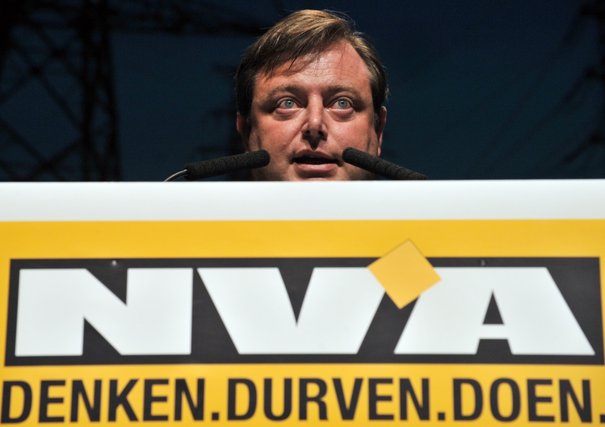
Flemish nationalists made sweeping gains across northern Belgium in local elections on Sunday, a success that will bolster separatists’ hopes for a break-up of the country.

Bart de Wever, leader of the New Flemish Alliance (NVA), is set to become mayor of the northern city of Antwerp, Belgium’s economic heartland, after his party emerged as the largest one ending about 90 years of socialist rule.

Soon after the ballot results emerged, Mr De Wever, who had turned the tough mayoral race into a referendum on Flander’s independence for Belgium, demanded that the country’s prime minister give greater independence to the Dutch-speaking north.

“De Wever sent a strong signal to Brussels and he has put his party on course to send an even clearer one in 2014 … they will try to go for an even bigger win in the federal elections,” said a veteran political analyst for the Gazet Van Antwerpen.

“We want to give Flemish people the government they want at all levels. That is why I call on Elio Di Rupo and the francophone politicians. Take up your responsibility,” said De Wever.

The strong result recorded by the Flemish nationalists is likely to have an impact across Europe, where the sovereign debt crisis, which has seen rich countries bail out poor ones, has revived separatist sentiment throughout the continent.

Flanders, which is the most economically prosperous region of Belgium, has long resented financing the ailing economy of French-speaking Wallonia, and Sunday’s victory will strengthen their demand for self-rule.

Lieven De Winter, a political scientist at Université Catholique de Louvain, said that Mr De Wever’s victory was a clear step forward for separatist who had long been campaigning for secession from the southern part of the country. However, he warned that the process towards accomplishing a break-up would be wrath of problems.

“There is no doubt that tonight De Wever made a small step towards completing his dream of a break-up but there are many obstacles ahead … at the end of the day you need two to tango,” Mr De Winter said.

NVA won about 38 per cent of votes in Antwerp against about 28 per cent secured by the Socialists, according to provisional Flanders government data. Meanwhile, in the rest of the northern region the Flemish nationalists won more than 30 per cent of support.

NVA is expected to seek the support of the Socialists to run Antwerp – in Belgium it is common for opposing parties to form a coalition after elections as no one party enjoys an outright majority throughout the country.

Belgium consists of Dutch-speaking Flanders, francophone Wallonia and Brussels, its bilingual capital. The Socialists have tried to keep Brussels French through Arab immigration. Political powers have already been devolved to regional governments, Flanders, in more populous with about 6m people compared with 3.5m in Wallonia.

NVA’s victory in Antwerp and strong result across the north of Belgium will give good momentum to the separatists in the run-up to the key federal elections in 2014, said analysts. – FT


Nobel bailout, EU wins

Past winners

The European Union has been announced the winner of the Nobel Peace Prize 2012. Amidst Europe’s as-yet-unsolved crippling economic backdrop, a heated debate emerged over the validity of the prize.

­The unanimous decision was reportedly made by a five-person panel chaired by Council of Europe Secretary-General Thorbjoern Jagland, a strong advocate of the 27-nation block.

The news came 60 years after the creation of the EU’s predecessor organization, the European Coal and Steel Community, which helped rebuild a continent decimated by two World Wars.

“The European Union is in the middle of one of its worst crises, but perhaps it is precisely now the peace and stabilization project deserves a hand from the ‘no’ country Norway?”
Norwegian public broadcaster NRK said.

Norway, the Nobel Peace Prize’s host nation, refused membership in the EU in 1972 and again in 1994.

One past winner introduced indefinite detention and expanded the deadly global drone war. Another was the architect of the deliberate mass killing of civilian populations in Indochina. Ghandi never got one.

With the winner of the 2012 Nobel Prize set to be announced in Oslo, Norway on Friday, the shadow of Barack Obama still looms large. In 2009, the committee awarded the current US president “for his extraordinary efforts to strengthen international diplomacy and cooperation between peoples.” Nominations for the award are due by February 1, meaning Obama had served as America’s executive for less than two weeks when the Norwegian Nobel Committee selected him. Perhaps it was wishful thinking.

Since then, Obama signed the National Defense Authorization Act into law, making it legal to indefinitely detain US citizens. There are also the deadly drone wars in Yemen and Pakistan, the war waged in Libya, the Afghan surge and a secret “kill list” revealed this year by The New York Times, which grants a select few American officials the option to mark perceived national security threats – foreign citizens or otherwise – for assassination. Ironic, yes, but they never could have known.

Even attempts for the committee to play it more conservatively have backfired. Last year, the committee decided to recognize three women for their role in a non-violent struggle for the safety of women and for women’s rights to full participation in peace-building work. The three women included a Yemeni activist, Liberian President Johnson Sirleaf and her fellow citizen and civil society activist Leymah Gbowee.

On Wednesday, Gbowee publically lambasted Sirleaf for failing to fight corruption and nepotism in Liberia.

Liberia’s Truth and Reconciliation Commission even put Sirleaf on a list of 52 people who should be sanctioned for committing war crimes for supporting former Liberian warlord and President Charles Taylor in the late 1980s.

Taylor, who infamously campaigned on the slogan “He killed my ma, he killed my pa, but I will vote for him” during the 1997 general election that followed a war that killed over 200,000 people, fortunately did not win a Nobel Prize.

The post-Obama rehabilitation of the prize might not have gone as smoothly as hoped, but the prize’s history is replete with examples of questionable choices, to say the least.

Chief among them was the 1973 prize awarded to North Vietnamese leader Le Duc Tho and Henry Kissinger. Tho rejected the prize, telling Kissinger that peace had not been restored in South Vietnam. Kissinger for his part accepted the prize “with humility.”

Before, during and after his acceptance of the prize, Kissinger would be implicated in assassination, war crimes and the slaughter of civilians in a large swath of countries: East Timor, Pakistan, Greece, Cyprus, Chile, Argentina, Cambodia, Laos and Vietnam.

This year’s winner was drawn from 231 different nominations, 188 of whom are individuals, while the rest are organizations.

Also on the list was Myanmar’s President Thein Sein, who might be recognized for his role in moderating Myanmar’s notoriously repressive military regime. But even Sein has been implicated in confiscating land from paddy farmers which was later sold to an officer from the effectively paramilitary United Wa State Arm, who then used the land for the production of amphetamines.

This certainly wouldn’t have been the biggest shock in the prize’s hundred-plus years.

Breivik’s mother ‘sexualised’ him at four

Breivik with half-sister and mother

“The mother and Anders sleep in the same bed at night with very close bodily contact,” psychologists from Norway’s centre for child and youth psychiatry (SSBU), reported after Breivik and his mother spent several weeks there in 1983.

The reports also show that when Breivik was just four-years-old, his mother became preoccupied with fears that her son would violently assault someone. By the time he was four years old, she “sexualised” the young Breivik, hit him, and frequently told him that she wished that he were dead.

“She saw him as an adult violent person, even though he was only a small boy,” said Aage Borchgrevink, author of A Norwegian tragedy. “She was afraid that he would assault people.”

The psychologist reports show that Wenche Behring already felt her son was “aggressive, hyperactive and clingy,” when she was breastfeeding him.

The family’s neighbours at the time became worried about her inappropriate sexual behaviour.

“During the police investigation, the neighbours also said that they had been shocked by the mother’s sexualised language,” Borchgrevink writes. “There was a lot of fighting in the apartment and they remembered sexual activity taking place while the children were in there.”

The SSBU report described Ms Behring as “a woman with an extremely difficult upbringing, borderline personality structure and an all-encompassing if only partially visible depression” who “projects her primitive aggressive and sexual fantasies onto him [Breivik]”.

The psychologists reported that she would frequently tell her son that she wished he would die.

“She shifts very quickly between speaking to him with a sugary voice and openly expressing a death wish,” they wrote.

When she smacked him in an attempt to exert control, the four-year-old would taunt her that the blows did not hurt, smiling in a way she found “condescending, inappropriate and derisive”.

Borchgrevink, a novelist, has faced criticism in Norway for his decision to publish excerpts from the reports, with some accusing him of violating the privacy of Ms Behring, who was admitted to a psychiatric ward the day after her son killed 77 people in his bomb and gun rampage in July 2011.

Ms Behring was excused from testifying in the trial this summer on health grounds, and refused to give permission for the psychologist who examined the family in 1983 and 1984 to give evidence, preventing the information published last week from being heard in court.

After Breivik’s father Jens Breivik lost a child custody case with Ms Behring, social workers recommended that the boy nonetheless be removed from his mother to prevent “more severe psychopathology” from developing, a request that was ignored.

Borchgrevink said it was this that had convinced him that he was right to publish.

“I’ve given more weight to the public interest. The fact is that he was actually caught by the system before the action, not by the security police, but in his childhood. He was within the system, but the system let him go.”

Breivik was sentenced to 21 years in jail for his attack in August, which he claimed was “necessary” to alert Norway to the threat posed by Islamic immigration. – Richard Orange

Fear of fracking

Fuel is usually found in unattractive places. Geologists discovered the biggest oil and natural gas reserves in the deserts of the Middle East and beneath the permafrost of Siberia. Countries in temperate Central Europe, on the other hand, have only modest reserves. One of them lies some 5,000 meters (16,000 feet) beneath the surface in Rotenburg/Wümme, an administrative district in the northwestern German state of Lower Saxony.

Using a method known as “fracking,” Germany could exploit domestic sources to meet its natural gas needs for 20 years. But safety worries have prompted government authorities to refrain from granting the permits that companies need to use the controversial technique.

ExxonMobil, which operates a well called “Bötersen Z11” uses “induced hydraulic fracturing,” or “fracking” for short.

ExxonMobil plans to inject about 350,000 liters (92,500 gallons) of water, mixed with a cocktail of chemicals, into the well under high pressure. The liquid is supposed to penetrate into the rock at the bottom of the pipe and trigger a long-term loosening effect. Hair-line fractures will create a network of tiny channels from which natural gas can escape for at least 15 years, according to ExxonMobil estimates.

But what ExxonMobil still lacks is official permission to do this. The state mining agency has been sitting on the company’s application for the last year, hesitant to move forward with its approval.

“Unfortunately, fracking has become a scary word,” says Dieter Sieber, a mining engineer and fracking expert at ExxonMobil. A cart decorated with pamphlets from a local citizens’ initiative is parked at the entrance to the drilling site. The group aims to “protect God’s creation,” and one of its signs proclaims: “Stop Fracking!”

The public reservations and protests are coming at a surprisingly late point. As a method to increase the yields of hydrocarbon deposits, fracking has been in use for almost 50 years. In Germany, it has been instrumental in preventing domestic natural gas production from drying up altogether. Very few Germans are aware that, until the 1980s, almost a quarter of the natural gas being burned in Germany came from domestic sources. Although it’s still about 12 percent today, that number is declining by about 1 percent a year.

The deposits that have already been discovered are almost exhausted. About 300 wells have been fracked in Germany since the 1960s. Without imports, more than three-quarters of which come from Russia, Norway and the Netherlands, Germany would soon find itself without natural gas — if there weren’t another alternative, that is.

In May, Germany’s Federal Institute for Geosciences and Natural Resources (BGR) published a study concluding that there are up to 2.3 trillion cubic meters (81 trillion cubic feet) of technically recoverable natural gas under German soil, primarily in the northern state of Lower Saxony and the western state of North Rhine-Westphalia. This would amount to more than 20 times Germany’s annual consumption of natural gas.

The reserves are in deposits that are described as “unconventional,” consisting of shale and coal formations, which are the primary “source rocks” of hydrocarbons. They were long considered unexploitable because they are substantially denser than “conventional” deposits found in more porous sandstone. The coveted fuel simply doesn’t flow out of shale formations — which is where fracking comes in.

Fracking is now proving to be a key technology for extracting oil and gas from shale formations. In Germany, the natural gas reserves that could be exploited in this manner would have “the potential to make up for declines in production in recent years,” explains geophysicist Dieter Franke, a geophysicist who heads the BGR’s oil and gas geology department. In light of the sheer magnitude of proven reserves, this could be seen as a conservative estimate.

Since the mid-1990s, Americans have been far more aggressive and active when it comes to fracking. Geologists estimate that — after China and, presumably, Russia — the United States has the third-largest shale natural gas reserves on Earth, or about 20 times as much as Germany. The United States is exploiting these reserves on a large scale and even hopes to use fracking to end its dependence on gas imports.

Now the United States is also taking a similar approach with shale oil. Thanks to fracking, the Midwestern state of North Dakota already produces more than half a million barrels of oil from the Bakken shale formation. As a result, this year, the state surpassed Alaska in oil production for the first time. According to a forecast by the Organization of Petroleum Exporting Countries (OPEC), oil-tanker traffic to North America could very well be eliminated by 2035.

In contrast to the United States, which once met its own oil requirements and is now enthusiastic about returning to this status, government agencies in Europe are tentative. France, which is assumed to have the largest unconventional gas reserves in Western Europe, has yet to issue a single fracking permit. German authorities have only permitted isolated test fracking. The last fracking operation in German bedrock was conducted in late July 2011 — also by ExxonMobil — at the “Buchhorst T12” site, a conventional gas deposit in Bundsandstein, a type of colored sandstone that lies below large parts of Western and Central Europe.

Horror stories from the United States, an El Dorado for companies engaged in fracking, have discredited the technology. A documentary film about the practice showed a fireball emerging from a faucet, a result of the presence of methane in drinking water. People are starting to realize that pumping 13 million liters of chemical-laced water into a hole can have unpleasant consequences.

Holocaust denial: German court to punish British bishop

Bishop Richard Williamson

A German court is making a fresh attempt to punish a British ultraconservative Catholic bishop for denying the Holocaust in a television interview.

The regional court in the southern city of Regensburg has issued an order of punishment against Richard Williamson after an earlier conviction was overturned on a legal technicality last year.

Court spokesman Thomas Rauscher said Thursday that if Williamson accepts the order of punishment he will be required to pay an unspecified fine. If he objects, the case will go to trial again.

The 72-year-old Williamson told a Swedish TV station in 2008 that he did not believe Jews were killed in gas chambers during World War II. Holocaust denial is a crime in Germany.

Williamson is a member of the ultraconservative Society of St. Pius X. – AP

Muslims fear Serb win in Srebrenica

Srebrenica
Srebrenica

Muslims from Srebrenica, the site of Europe’s worst atrocity since World War II, fear a Bosnian Serb win in Sunday’s local polls would represent “the final step of a genocide”.

Bosnian Serb forces summarily executed some 8,000 Muslim men and boys after they captured the eastern town in July 1995. Two international courts have ruled the massacre a genocide.

For almost 17 years, Srebrenica Muslims who lived elsewhere after fleeing the 1992-95 Bosnian war were allowed to vote in local elections, ensuring the town had a Muslim mayor.

But this year, they have been stripped of that right after complex local voting laws were reformed, prompting fears that Serbs who have a slight majority in the town can now vote in their candidate.

A Serb win “would be quite simply the final step of a genocide, an ethnic cleansing” of Srebrenica, warned Kada Hotic, member of an organisation of Srebrenica mothers who lost her husband and a son in the massacre.

“Everything will be in danger, the existence of the Muslims who returned to Srebrenica, our memorial centre. We could even see a Serb mayor banning the yearly genocide commemoration,” she said, explaining it is the mayor who needs to clear permits for the event.

The remaining Muslims were expelled and most of them never returned to Srebrenica, which is now in the Serb-dominated part of the Balkan country.

Returnee Hatidza Mehmedovic, who lost her husband and two sons in the genocide, said she feels the new rules unfairly reward Serb wartime brutality.

“Serbs will never accept the truth of what happened here. They know very well but their politics will not allow them to admit it,” she said from her house on the hills overlooking the town.

Srebrenica’s pre-war population was around 37,000 residents: 27,000 Muslims and 8,300 Serbs. Today the municipality, hard-hit by the economic crisis and with an unemployment rate of over 50 percent, has about 6,000 inhabitants.

But thanks to several remaining loopholes, both camps have drummed up people to vote in Srebrenica, so some 14,000 voters divided almost equally among Muslims and Serbs are now registered.

Incumbent Srebrenica mayor Camil Durakovic, himself a massacre survivor, said he would consider leaving town if “those who deny genocide” win.

“It will be an end. I have a three-year-old daughter to think about,” said the 33-year-old, who returned to Srebrenica in 2005 after spending almost a decade in the United States as a refugee.

“Here we should have a council that does not deny genocide, which is a sacred issue for Muslims and every normal human being,” he said.

This Sunday, only those officially registered in Srebrenica will be entitled to vote.

Muslims blast the international community, which has refused to interfere, although it has the power to do so through its high representative in Bosnia.

“The international community has abandoned us now … Srebrenica should be given back to the Muslims,” Hotic said, calling for a special status for the town.

Serb politicians have fanned the flames of the controversy with Bosnian Serb leader Milorad Dodik telling a rally in Srebrenica in September: “There was no genocide!” evoking a “Western plan to blame the Serb community.”

Serb mayoral candidate Vesna Kocevic said those who committed war crimes should be brought to justice, but she avoids using the term genocide.

“Serb people carry the burden of these events … why should my children, who were aged one and two at the time, suffer from it today?” she said.

On Sunday, some 3.1 million Bosnians will go to the polls in 136 municipalities to elect local councils and mayors. – AFP