De Klerk, Russian professor on ANC’s revolutionary doctrine

Former president FW de Klerk said on Wednesday he would have fired Basic Education Minister Angie Motshekga if he had found wrongdoing on her part in the Limpopo textbook saga.

“If I was president, I would have asked the minister of education to fully investigate and brief me,” he told reporters in Johannesburg.

“And if I had come to a conclusion that the minister of education… failed in a material way, yes, I would have fired her.”

De Klerk said the failure to deliver textbooks was purely a management issue.

“The textbooks were printed… but not delivered. That is tremendously bad management.”

De Klerk was speaking at a press briefing after a conference hosted by his foundation on Wednesday. The conference discussed the outcomes of the ANC’s policy conference.

De Klerk said the spirit of inclusiveness and reconciliation embodied by former president Nelson Mandela was no longer prevalent in the country. He warned against the ruling party’s national democratic revolution.

“The NDR as a concept is dangerous. A revolution against who? Who is the enemy?”

He said the ANC wanted to lead the country using policies which had failed elsewhere in the world.

Earlier, Irina Filatova, former head of African studies at Moscow State University, echoed De Klerk’s view on the NDR.

“The ANC cannot implement this policy. But there will be one aspect it can do, and it can destroy this country. There could be partial land reform, partial nationalisation of mines.”

Filatova said the ANC “obviously believes in this ideology” as it spoke of the unique nature of its developmental state.

“I think that the ANC is a bit lost about the second stage of the revolution. In the 1980s it was so obvious what would happen.”

She said the more the economy failed, the deeper the ANC was going to dig in its heels.

“The more failure[s] there are, the more they will try to use various means, both constitutional and unconstitutional, to keep their following,” Filatova said.

Leon Louw, executive director of the Free Market Foundation, warned that recent laws passed by the government made the South African economy less free.

Growth had been restricted by the National Credit Act, Consumer Protection Act, and exchange controls.

Louw said the country had changed the economic path it embarked on in 1994.

“Things changed after 2006 and the economy started becoming less free again. If your economy becomes more free you will grow, and if it becomes less free, you will stagnate and contract.”

The economy was stagnating because of the government’s interference in the labour market, making it expensive and difficult to employ people.

In his concluding remarks, De Klerk urged South Africans to be active and engage the ruling party on its policies, because they would shape the country’s future. – Sapa
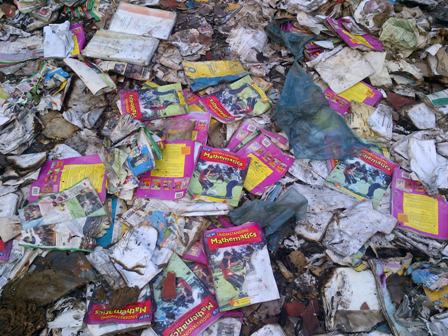
South African Education Department ‘burns textbooks’

Burnt textbooks found in the Eastern Cape, a formerly independent black homeland

Thousands of burnt textbooks have been found in a warehouse in Fort Beaufort in the Eastern Cape, the DA said on Monday.

“We have written to MEC Mandla Makupula demanding an explanation as to how valuable public resources for Eastern Cape children were allowed to be destroyed in this irresponsible way,” Democratic Alliance provincial education spokesperson Edmund van Vuuren said in a statement.

However, provincial education department spokesperson Loyiso Pulumani said the books found in Fort Beaufort were destroyed during an arson attack.

The books were from the old Cape College of Education, which was closed in 1996, and had no relevance to current textbooks, Pulumani said.

“The old store-room was burnt down on 16 June. It is a suspected arson case. The books are more than 10-years-old.”

Van Vuuren said the books, most of them mathematics textbooks, were found by a DA inspection team.

“Given the massive shortages of both textbooks and workbooks in schools, every single book that does not reach a school will have an impact on a child’s ability to learn,” he said.

Boxes of books still wrapped in packaging were found in other parts of the district warehouse.

“The department needs to account for how many boxes of books remain inside the warehouse, and when these will be delivered to schools,” Van Vuuren said.

“The destruction of these books raises serious questions about why proper care was not taken to ensure that they were delivered to schools on time at the beginning of the year.”

Like Limpopo, the Eastern Cape has also been plagued by textbook problems.

Earlier this month, several thousand school workbooks were returned to the Eastern Cape education department because they were in the wrong language.

When approached for comment, provincial officials referred all questions to the national department.

National spokesperson Panyaza Lesufi said the department ordered books based on numbers given to it by the province.

“The other provinces all seem to be correct, so why is it only in the Eastern Cape? It must tell you something about that province,” he said.

At the time, Van Vuuren said the department’s database for Port Elizabeth showed 25 370 literacy workbooks and 15 500 numeracy workbooks were still outstanding.

“Claims… that chronic book delivery problems are limited only to the Port Elizabeth district, are false,” he said.

Burnt textbooks found in the Eastern Cape, a formerly independent black homeland

70% of children in Limpopo province fail school

Johannesburg – Failure to deliver textbooks to schools in Limpopo has affected exam results in that province, the Sunday Times reported.

According to the paper, 70% of Grade 10 pupils in 25 Limpopo schools failed their June exams.

This amounted to 3174 of 4529 pupils.

Principals told the paper the dire results were likely to be mirrored in the rest of the province.

“Teachers are willing to assist, even over weekends, but we don’t have any money to pay them,” said Henry Raedani of Azwifarwi Secondary School.

“The children have been suffering without books.”

Basic Education Minister Angie Motshekga said the media had overplayed the failure to deliver textbooks.

“This question of no teaching for six months is a media story, and now principals are jumping on the bandwagon when they have not done their work,” she was quoted as saying.

Limpopo ANC youth league spokesperson Jacob Lebogo reportedly said both Motshekga and Limpopo MEC for education Dickson Masemola should be removed. – Sapa

ANC vandalising Afrikaans, says Zulu nationalist party

Inkatha Freedom Party chief whip Koos van der Merwe has accused the ANC government of vandalising Afrikaans.

“The ANC is continuing its cultural vandalism of Afrikaans,” he said in a statement on Monday.

“The latest blatant example is government placing six full pages of advertising for vacant positions in Rapport [newspaper] of Sunday 15 July 2012 — all only in English.”

Van der Merwe said he had urgently placed questions on Parliament’s order paper asking why English had been used in an Afrikaans newspaper.

The questions were put to the ministers of local government, arts and culture, social development, transport, tourism, and public enterprises.

He wanted to know, among other things, whether the adverts in only English “are aimed at eliminating prospective Afrikaans applicants”.

“It is becoming clearer by the day that the ANC is vandalising Afrikaans and Afrikaner culture,” Van der Merwe said.

“It is not only happening to our language, but also to Afrikaans schools, [which are] being turned into English schools.”

Correspondence by state departments was being conducted almost exclusively in English.

Hardly one percent of court reports were now in Afrikaans, while this used to be almost 50 percent, he said.

The ANC was not immediately available for comment. – Sapa

ANC delegates end conference in a fist fight

North West ANC delegates had a physical fight on the last day of the party’s national policy conference, spokesman Jackson Mthembu says.

A North West African National Congress member was addressing the plenary session on Friday when another delegate tried to stop him, Mthembu said.

“One of the delegates grabbed the [microphone] from that person and a scuffle ensued… a scuffle ensued between two or four people. It was a physical fight,” he said.

Mthembu said the delegates had also fought about who was representing the North West at the four-day policy conference held at Gallagher Estate, in Midrand, Johannesburg.

The ANC’s national executive had to step in after five provincial executive committee (PEC) members were removed a week before the policy conference.

ANC secretary general Gwede Mantashe said national officials declared invalid and unconstitutional the removal of provincial chairman Supra Mahumapelo, treasurer Philly Mapolane, deputy provincial secretary Gordon Kegakilwe, spokesman Kenny Morolong and PEC member Matthew Wolmarans. – Sapa

The PEC was divided over several issues.

Mthembu said one North West delegate was kicked out of the conference.

“All those involved will be subjected to disciplinary measures,” he said.

These would be handled by the ANC national executive.

Mthembu said five people with fraudulent accreditation tags had also been found at the conference.

This was reported to the police and two of the five people were arrested.

“When there is an event as big as this one was, some people try to take a chance… but we were well prepared,” said Mthembu.

Apart from these incidents the conference was a “runaway success”, he said.

ANC must take ‘bold decisions’ on economy – Mantashe

Gwede Mantashe

JOHANNESBURG –  “If we have a weak resolution on the economy it would be flying in the face of what is intended in the second transition document, which is the second phase of our transition,” he said in an interview on SAFM.

“Then we will go strong… which means taking bold actions. [The] time has arrived for us to do something new and get in, [take] the plunge, take a decision, take a risk.”

The ANC policy conference in Midrand accepted a proposal on Thursday on a “second transition” for correcting economic imbalances after renaming it “the second phase of the transition”.

The conference ends on Friday with an address by Zuma.

Mantashe told SAFM the ANC had a long history of appreciating the importance of a balanced, mixed economy.

“We don’t give markets a free hand. We believe that the markets must have their role, but the state must [also] play a role,” he said.

“In this day and age, after this [economic] crisis, we are all convinced that the state must be more firm and provide the leadership in the economy.”

Mantashe said the state had the capacity to provide the leadership needed.

“Skills are never bought in any shop. You develop skills. You cannot develop skills unless you are involved,” he said.

Mantashe said the ANC would read all the documents from the policy conference together, for them to be finalised at the 53rd ANC national conference in Mangaung, in the Free State, in December.

If adopted, the policies will form the basis for the ANC government’s policies, new laws or amended laws.

On Friday, the commissions will report back on their discussions on gender, state intervention in the minerals sector, economic transformation, peace and stability, education and health, legislature and governance and land reform.

Asked about the ANC’s policy conference, political analyst Aubrey Matshiqi of the Helen Suzman Foundation told SAFM there had been many good decisions reported in the media briefings.

“I think the main challenge facing the ANC is that of aligning what it says… with state capacity, and its own capacity as a ruling party to deliver what it promises.” – Sapa

Kentucky Fried Nkosi Sikelel’, ANC wants racism probe

Johannesburg – An urgent investigation is needed into abuse of the national anthem by artists and businesses, the Western Cape ANC said on Thursday.

Provincial secretary Songezo Mjongile was responding to reports that a Cape Town man buying chicken at take-away outlet KFC was shocked when a “vulgar, profane” version of the national anthem blasted out over the music system.

“Such blatant racism is untenable,” Mjongile said.

“The ANC calls on all South Africans to distance themselves from this kind of intolerance and to unite on the side of non-sexism and non-racism.”

The Cape Times reported that Tariq Mellett was waiting in the queue at the KFC in Buitenkant street, Gardens, when he heard what sounded like the national anthem, Nkosi Sikelel’ iAfrika.

“It sounded like parts of the national anthem, but I was surprised when the song started in Afrikaans with: Nkosi Sikelel’… Nkosi is ‘n doos, Mandela is ‘n f****n kaffir… and so on, at full blast,” he said.

“Two other customers and I were flabbergasted by the vulgarity, profanity and racism being belted out in a popular family restaurant.”

Mellett said they shouted at the staff to switch it off, but this was done only after some time.

KFC’s provincial manager Craig Davids told the newspaper it had referred the query to franchisor Yum Restaurants.

“We are in the process of looking into the matter, I can’t comment until we have checked it out,” he said. – Sapa

ANC to continue intervening in Swaziland

The ANC resolved that it will continue to be in solidarity with the people struggling in Swaziland, international relations committee member Lindiwe Zulu said on Thursday.

“We support the democratisation of Swaziland,” Zulu told reporters at the ANC’s national policy conference in Midrand, Johannesburg.

This was an outcome of the ANC’s policy discussions on international relations.

Zulu said the conference resolved that it had to “push forward” for the unbanning of political parties in Swaziland.

She said the South African government was still waiting for Swaziland to sign a memorandum of understanding (MOU) in relation to a loan.

“The MOU… calls for the democratisation and unbanning of political parties,” she said.

“Swaziland has agreed to sign the MOU without removing conditions.”

South Africa would only lend Swaziland the money if it agreed to the conditions.”

The ANC would work with its alliance partner, the Congress of SA Trade Unions, on helping Swaziland.

Zulu said the ANC also acknowledged that it had a relationship with Zanu-PF in Zimbabwe and said it would continue to have a relationship with the country.

However, it said it would remain neutral when it came to dealing with Zimbabwe’s different political parties.

Zulu said the ANC would continue to support Palestine and called for an increased boycott on Israeli products.

Economic diplomacy was also discussed.

“We must ensure our economy grows, not just in South Africa but in all SADC countries,” she said.

On the International Criminal Court (ICC), Zulu said the ANC felt the court had to stop only looking at African countries.

“We not against the ICC but the ANC says there must be a balance,” said Zulu.

The ANC also continued to support countries such as Madagascar, Sudan, South Sudan and Somalia, but it would not send troops to Somalia. – SAPA

Limpopo textbook saga ‘unfortunate’ – ANC

It was “unfortunate” that Limpopo pupils did not have textbooks in the first half of the year, the ANC said on Thursday.

“We are saying, it’s very unfortunate,” African National Congress spokesman Jackson Mthembu told SAfm.

“Six months into an education year, kids have no books.”

Mthembu did not want to comment on reports that the education department had again missed a deadline to deliver the textbooks by midnight on Wednesday.

The department was expected to send a report on Thursday morning to civil rights group Section27 with an update on the situation.

The department of basic education was initially ordered in May to provide Limpopo schools with textbooks by June 15.

The High Court in Pretoria in May ruled that the department’s failure to provide textbooks violated the Constitution.

Section 27, which brought the application, met the department after the first deadline expired, and it was decided that delivery of the textbooks should be completed by Wednesday. – SAPA

Second revolution against whites must come, says Zuma

Johannesburg – The ANC’s second transition is necessary to overcome the compromises it made in the fight for democracy, President Jacob Zuma said on Tuesday.

“One of the causes of the slow pace to economic freedom is that ahead of [the first democratic election in] 1994… we went through a negotiations process,” Zuma said in Midrand.

“We had to make certain compromises in the national interest, and these were absolutely necessary to make. We had to be cautious about restructuring the economy in order to maintain economic stability and confidence at the time.”

Zuma was opening the policy conference of the ruling African National Congress.

He said the apartheid era’s economic power had remained intact.

“The ownership of the economy is still primarily in the hands of white males, in which it has always been.”

A document on the second transition was one of the ANC’s 13 policy documents which would be discussed during the four-day conference.

Zuma said the second transition would make the country a “true democratic developmental state… which has a number of instruments it can use to facilitate change”.

The first transition was still important because it had ushered in an era of democracy in South Africa.

“The time has come to do something more drastic to accelerate change towards economic transformation and freedom.”

Zuma asked delegates to discuss the notion of a second transition when dealing with the strategy and tactics document.

“It is time to ask questions about the present and future… the last 18 years was the first transition. We are calling for a dramatic shift… to deal with the triple challenge[s] of poverty, unemployment and inequality.”

– SAPA

Malema appeal postponed

The appeal hearing of three ANC Youth League leaders was postponed on Thursday, ANC national disciplinary committee of appeals (NDCA) chairman Cyril Ramaphosa said.

League president Julius Malema, spokesman Floyd Shivambu and secretary general Sindiso Magaqa were scheduled to submit their appeal presentations to the NDCA at the African National Congress headquarters at Luthuli House, Johannesburg.

Ramaphosa said the three asked for the hearing to be postponed because their lawyer was not available.

“The NDCA turned down the request and insisted on the continuation of the hearing.”

The appellants then asked for a new legal representative, and the committee agreed to this, on the condition that the new lawyer be available within an hour. Advocate Muzi Sikhakhane arrived soon afterwards, but asked for time to familiarise himself with the heads of argument, Ramaphosa said.

“The NDCA agreed to postpone the hearing with a proviso that the new legal representative will submit the appellants’ heads of argument by the 18th April 2012 in writing.”

He said the ANC would need to submit its heads of argument two days later.

“The parties have agreed that the appeal will proceed through written submissions rather than oral hearing.”

Unnamed sources told the SABC that Malema’s lawyers had not arrived for the hearing because they had not received key documents relating to the national disciplinary committee’s previous sitting, which expelled Malema.

Malema was expelled from the ANC in November 2011 for sowing division in the party and for bringing it into disrepute. He was found to have done so by unfavourably comparing the leadership style of President Jacob Zuma to that of former president Thabo Mbeki and for remarks about bringing about regime change in Botswana. He remains ANCYL president until all options to overturn his sentence have been exhausted.

Shivambu was also found guilty of sowing division and bringing the ANC into disrepute. He was suspended from the ANC for three years for swearing at a journalist and for issuing a statement calling for a change of government in Botswana.

Magaqa was suspended for three years for making derogatory remarks about Public Enterprises Minister Malusi Gigaba. This was suspended for three years on condition that he apologise to Gigaba within 15 days. Magaqa apologised to Gigaba, in a statement sent to the media, on March 10.

Last week when the ANC’s national disciplinary committee suspended Malema from the party for calling Zuma a dictator. The conditions of the suspension prohibit him from exercising any duty as an ANC member, president of the ANCYL or member of the Limpopo provincial executive committee. He would face fresh disciplinary proceedings in this matter.

The two disciplinary proceedings were separate.

The ANCYL remained defiant, with provincial leaders insisting Malema remained its president. Should Malema’s appeal fail, he could ask the ANC’s national executive committee to review the matter. Failing this, he could attempt to raise his concerns at the ANC’s elective conference in Bloemfontein later this year.

Last month, Malema said he would seek redress in the courts if he was expelled. Until then he had consistently rejected the idea of taking legal action against the ANC.

ANC spokesman Jackson Mthembu said the party frowned on its members taking it to court.

“We are against anyone who takes the ANC to court because we do have a constitution in the ANC and we abide by the constitution,” he said. – SAPA

ANC welcomes Malema’s latest suspension

No ANC member is bigger than the organisation’s constitution, the party said on Wednesday in welcoming Julius Malema’s latest suspension.

“We welcome and respect the decision as we do with all decisions arrived at by constitutional structures of the ANC,” spokesman Jackson Mthembu said in a statement.

On Wednesday the African National Congress’s national disciplinary committee (NDC) announced it had temporarily suspended ANC Youth League president Julius Malema from the party, to investigate charges relating to comments he made on Friday.

“The decision of the NDC derives from the constitution of the ANC, section 25.12 (c), which empowers the NDC and the national working committee under extraordinary circumstances, to temporarily suspend any member of the ANC with a view to investigate possible charges,” Mthembu said.

Malema’s ANC membership was suspended with immediate effect.

On Friday Malema called Zuma a dictator and accused him of suppressing the ANCYL.

“After due consideration, the NDC was satisfied that this utterance constitutes a very serious violation of the ANC constitution and that the institution of disciplinary action… as outlined in the ANC constitution is warranted,” NDC chairman Derek Hanekom said in a statement.

“[The NDC] concluded that such utterance could bring the ANC into disrepute.”

Malema was informed on Wednesday morning of his immediate temporary suspension and that disciplinary proceedings would be instituted against him.

Consequently Malema would not be allowed to exercise his duties as an ANC member, as president of the ANCYL, or member of the Limpopo ANC’s provincial executive committee, said Hanekom.

“He will not attend any meeting of the ANC or any of its structures, including the leagues, except for the purpose of the NDCA [national disciplinary committee of appeal] hearing and the pending disciplinary proceedings to be instituted against him.”

Malema would also not be allowed to address any ANC or ANCYL meeting.

“He will not make any public statement on any matter pertaining to the ANC,” said Hanekom.

Malema is appealing his expulsion from the ANC for sowing division in the party and for bringing it into disrepute. The appeal hearing is scheduled to take place on April 12.

SABC news reported on Wednesday evening that Malema had given the ANC an ultimatum to allow him to speak in public again.

‘Crude rhetoric’ from ANC leaders

by Genevieve Quintal and Hlengiwe Nhlabathi

ANC leaders on Tuesday condemned the “shockingly crude, disrespectful and un-ANC” remarks recently made by some within the party.

“The brazen and often rude and crude rhetoric to detract from real issues facing our youth does nothing to add value to the integrity of the ANC and its leagues,” secretary general Gwede Mantashe told reporters in Johannesburg.

“As national officials of the ANC, we believe the time has come to put an end to the blustering and often incomprehensible remarks that are made by various leaders and members of the ANC.”

Mantashe was joined by President Jacob Zuma, his deputy Kgalema Motlanthe, treasurer Mathews Phosa, national chairwoman Baleka Mbete and deputy secretary general Thandi Modise.

This followed ANCYL leader Julius Malema’s remarks at a centenary lecture at Wits University on Friday, that Zuma was a dictator and suppressing the league.

Mantashe said the attack on Zuma was an attack on the African National Congress.

“It makes it sound like we can’t think for ourselves. It is not a leadership of dwarfs around a dictator. This is an insult to many of us.”

Mantashe said Malema’s claim that new ideas were suppressed and that the ANC’s current leaders were dictators was a “deliberate falsehood”.

It was unfortunate that the league had chosen the ANC’s centenary year to call the party undemocratic and to try sow division within the organisation. Mantashe said these statements would be investigated.

Party leaders also bemoaned the Umkhonto we Sizwe Military Veterans Association’s call, made at another press briefing earlier in the day, for Malema to be summarily expelled from the party.

The ANC Youth League called its own media briefing at Luthuli House after the veterans had held theirs, and accused them of looking for attention and trying to impress their girlfriends.

Mantashe said the ANC’s top officials were united on discipline within the organisation. The leaders were also not fighting for positions ahead of the party’s elective conference in Bloemfontein in December.

“We remain loyal to all decisions taken. National officials are not at odds with each other.”

Mantashe said the ANC had not yet met with the league, as it was being cautious. The ANC did not want to cause confusion while disciplinary processes were ongoing, he said.

Malema is still awaiting the result of his appeal against his expulsion from the party by its national disciplinary committee.

Thandi Modise likened the ANCYL to a teenager and said tensions between it and the ANC were a given. She cautioned against a situation where antagonism replaced militancy. She also cautioned against the “bastardising” of internal ANC processes.

Asked why he did not reprimand Malema when he verbally attacked Zuma and his leadership on Friday, Phosa said he did not have the urge to immediately respond, but did so late in his speech.

“I said in response… The masses of our country do not appreciate it when leaders engage in public spats.”

He was invited to the event as a replacement for Sports Minister Fikile Mbalula, a former ANCYL leader and reportedly a Malema supporter.

Speculation was also rife that Phosa and Motlanthe were staunch Malema allies.

However, Motlanthe warned against those who used the ANC leaders’ names to divide the organisation, saying they would not be successful. Last month, he reprimanded ANCYL members in Limpopo who wore T-shirts bearing his face.

-SAPA

Riots in black area north of Johannesburg

by Meggan Saville and Jenni Evans

Tear gas was fired at protesting residents of Kya Sand, north of Johannesburg, on Monday afternoon, Gauteng police said.

Lt-Col Lungelo Dlamini said a small group of protesters started throwing stones at police escorting them back to the Inadan informal settlement.

Police retaliated by firing gas canisters at those who were being unruly, and restored calm, he said.

The protesters had dispersed around 1.30pm, but later regrouped and blocked Riverbend and Aghulas Roads, said Democratic Alliance ward councillor Matome Mafokwane.

He said police fired rubber bullets at the crowd, but Dlamini denied this.

Earlier, members of the mayoral committee (MMC) addressed the protesters.

Housing MMC, Dan Bovu, told the community he would engage with them to prioritise their needs for planned development in the area.

When he said he would check his diary to find a suitable time for this, the protesters jeered at him.

Public safety MMC Matshidiso Mfikoe said a meeting would be convened with the residents’ leadership next Tuesday.

She said a broad, integrated programme of development was needed, and she said she would ask the provincial government, before the meeting, about long-term solutions to problems facing the community.

“We need money for building roads, for sewers… this needs to be quantified,” Mfikoe said.

Mafokwane said that the possible relocation of residents from Inadan, an informal “mini-settlement”, to the greater Kya Sand informal settlement was the reason initially given for the protest.

A small group had turned out on Wednesday to protest against the relocation, but this had escalated into demands for housing and sanitation.

Bovu said about 2000 people living at the informal settlement needed to be moved because it was on a wetland and not conducive to development.

Possible solutions included moving families to Kya Sand or Cosmo City and speaking to local private land owners to find suitable land.

Around 500 protesters sang and waved sticks, watched by a large police contingent on Monday.

Police cordoned off Malibongwe road in the vicinity of the protest. A water cannon was on standby, but was not used.

Earlier, Mafokwane said the protest was not political.

“I don’t want to believe that this is political, I want to separate this from politics,” he said.

Mafokwane said it was unclear what had sparked the renewed protests.

“Obviously something must have happened… It started with one grievance, now it’s packing on top with others,” he said.

A spokesman for the informal settlement dwellers, Ephraim Lifuwas, said employers were likely to bear the brunt of the protest as workers were unable to get to work.

The intention was to pressurise the government into yielding to their demands.

“Build houses. That is what we need,” he said.

Regarding the relocation of residents, Mafokwane said normally a decision was made on an issue only after departments had given councillors a detailed brief, and feedback had been obtained from the community.

Even he, as a councillor, was not sure of the situation regarding the relocation, he said.

“I’m in the face of this protest. I need to give them answers, but even I don’t know what is going on.

“A meeting was secured for tonight, but now the situation has overtaken us, and we are talking about a big crowd wanting answers now.

“It’s no longer about the move, it’s now about water, housing, sanitation.”

Mafokwane said that although the DA controlled the ward politically, the African National Congress-run council controlled the resources.

“Leaving aside whether the protest is legal or illegal, their concerns are legitimate, they are valid, make no mistake,” he said.

The Kya Sand protest is the latest in a number of protests around the country in the past 10 days, including protests in Heidelberg in Gauteng and Hangberg in the Western Cape.

Apart from a protest at a church in Evaton, that appeared to be connected to allegations of Satanism, the other protests were intended to draw attention to housing, water, electricity and education complaints.

Police Minister Nathi Mthethwa visited the site of protests in the farming area of Heidelberg last week.

The ANC has urged people to be patient with the government’s pace of installing utilities and providing housing.

The Kya Sand informal settlement was established in the past two decades, on a tract of land originally surrounded by farms and agricultural holdings.

Since then it has changed into a light industrial and retail zone. – Sapa