Marikana miners sprinkled muti against police

Police officers knew a substance thought to be muti was given to striking Marikana mineworkers, the Farlam commission of inquiry has heard.

Commission chairperson, retired judge Ian Farlam, questioned Major General Charl Annandale on whether they knew protesters believed the muti they had administered would make them invincible and invisible.

“They believed that the bullets would bounce off them. They had no fear and believed that the police’s R-5’s would have no effect on them,” Farlam said.

“Did you take that into consideration when you drafted your [dispersal and disarming] plan?” he asked.

Annandale, who headed the police special tactical operations team during the unrest in Marikana, was giving his evidence-in-chief at the commission in Rustenburg.

He said they were aware rituals had been performed on the miners, but did not get information about the supposed effect of the substances.

A white Toyota bakkie laden with buckets had been driven up to the koppie where miners were gathered in the days prior to August 16, when police fired on the strikers.

A traditional healer was seen sprinkling the substance in the buckets on a group of naked men, said Annandale. Police took pictures of this from a helicopter.

The commission is investigating the deaths of 44 people during the wage-related unrest in Marikana last year. Police shot dead 34 mineworkers on August 16. Another 10 people were killed in the preceding week. – Sapa

Crime scene tampering at Marikana: Commissioner knew

National police commissioner Riah Phiyega knew there was evidence to suggest that one of the crime scenes where 34 protesters were shot dead by police on August 16 had been tampered with, the Farlam Commission of Inquiry heard on Monday.

Ismael Semenya for the police said: “The national commissioner has instituted an investigation.”

He said the matter came to Phiyega’s attention two weeks ago and that she immediately launched a probe to establish what had happenened.

Semenya said this after it became apparent that photographs taken on the night of August 16 showed more traditional weapons around the bodies of the slain miners than photographs taken earlier that day.

Evidence leader Mbuyisela Madlanga was cross-examining crime scene expert Captain Apollo Mohlaki when it became clear that scene two, in the vicinity of a koppie near Lonmin’s Marikana mine in Rustenburg, had been altered between the times when the pictures were taken.

Madlanga showed Mohlaki three photographs of each of three bodies.

Two were taken in daylight and one by electric light after dark. Mohlaki took the night pictures and admitted his photographs showed more weapons around the bodies than those taken earlier.

Referring to the night-time photograph of the corpse of Henry Mvuyisi Pato, Madlanga asked whether Mohlaki could see a butcher’s knife and an iron rod.

“That weapon is underneath the hand or arm of the deceased?”

Drawing attention to the photographs of the same body taken in daylight, Madlanga asked: “Quite plainly, that butcher’s knife is not there?”.

“It is not appearing, I don’t see it,” Mohlaki replied.

George Bizos, for the Legal Resource Centre, asked: “Who were the people who had the opportunity to really insult the administration of justice in our country?…This came as a big surprise to us.”

Commission chairman, retired judge Ian Farlam, said it came as a surprise “to all of us”.

Last week Semenya said the integrity of the crime scene could have been compromised by the presence of paramedics.

“No blame on your team, but your scene was corrupt?” he asked Mohlaki.

“We will hear evidence that paramedics asked that weapons be removed so they could do their work,” said Semenya.

Also on Monday, Dali Mpofu, the attorney for injured and arrested Lonmin miners, claimed some of the shot miners seemed to be handcuffed in a video entered as evidence.

He asked Mohlaki whether he had seen any protesters — whether dead, injured or arrested — with their hands bound behind their backs.

Mohlaki said he had not, but conceded that on a video shown to the commission it appeared to be the case.

“At the crime scene I never observed that…. I never went to individual bodies to see which one was handcuffed, which one was injured…

“If I am looking at the video there is a person, handcuffed possibly, but on the day I did not observe that.”

The video showed the dead bodies of the miners lying at unnatural angles among large rocks.

Towards the end of the video, loud laughter could be heard, but the group laughing was not visible.

Asked what police might have found so amusing at the scene of so many violent deaths, Mohlaki said: “I have no idea.”

During the afternoon session, the parties debated the usefulness of separating elements of the inquiry into phases.

Semenya objected to the fisrt phase being dominated by the policeºs conduct on August 16.

“From our perspective, it is an open secret that SAPS has been found guilty in the court of public opinion,” he said.

Semenya argued that the contributions of the National Union of Mineworkers, the Association of Mineworkers and Construction Union, Lonmin, the actions of angry crowds, and preceding events needed to be taken into account to contextualise the August 16 shootings. – citizen.co.za

Mining deaths a joke to police chief

Riah Phiyega

National Police Commissioner Riah Phiyega reportedly laughed and joked as footage of the killing of 34 miners in a clash with police was screened at the Farlam Commission of Inquiry, The Times reported on Wednesday.

Phiyega reportedly joked with a state law adviser as a prelude to the killings was screened at the Rustenburg Civic Centre.

Surrounded by her senior officers, Phiyega smiled as she watched.

It was only after screams of horror echoed across the room, as the footage was played without any warning, that Phiyega’s “humorous demeanour changed to that of an ice queen, blatantly ignoring the wailing families”, the report continued.

“…Phiyega stared straight ahead, ignoring a widow screaming at her for answers about her husband’s death,” the newspaper reported.

“Why did they do this? Why did your policemen kill my husband? What did he do?” the woman screamed at her.

Later she was seen comforting one of the widows of the two policemen killed ahead of the August 16 shooting.

Asked repeatedly for comment on why she did not help those upset, and what she had been joking about, Phiyega said: “I am not here for that. I am here for the commission and the commission only.”

Bishop Jo Seroka, a talks facilitator for the miners, said: “She sat there laughing and did nothing. You would expect a sense of remorse and empathy which was non-existent.” – Sapa

Afrikaners will be blamed for Marikana too

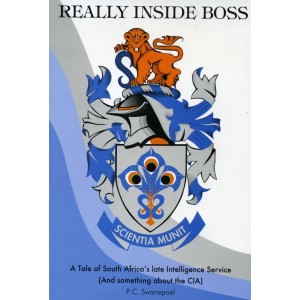
Piet Swanepoel responds to R.W. Johnson’s article on the Marikana, Sharpeville and the Pondo uprisings.

Johnson’s article was very interesting and deserves to be read by anyone trying to make sense of events in Africa.

Like Johnson I also trace my involvement or interest in African political developments to Durban. Unfortunately we were not contemporaries there – I arrived in Durban in 1948 and was transferred to South West Africa in January 1961, whereas it seems that his involvement only started in 1960.

We were in different camps as well. He was a budding Marxist and I was a Special Branch detective. Our backgrounds also differed completely. He was English, (albeit our local branch of the species), whereas I was (still am) an Afrikaner.

We seem to have known the same people, for example the Arensteins, but when I came to know Rowley and Jacqueline they were living in a block of flats where there would have been no room for visiting Pondo chiefs.

Their neighbours, I remember, were Errol and Dorothy Shanley, both also listed communists like the Arensteins. What I heard only recently was that Ronnie Kasrils, our former Minister of Intelligence, and Jacqueline Arenstein, were cousins.

We also knew the same places. Like Lakhani Chambers, where the ANC had a small little office, sometimes unoccupied for weeks, whereas the Natal Indian Congress (NIC) offices in the same building were spacious with a big staff under M.P.Naicker, a very committed communist.

Some time in the early fifties I had been one of a small party of detectives, led by a visiting American intelligence officer, who entered Lakhani Hall late one night and planted a then state of the art bug in the ceiling..

Unfortunately the bug was never very effective because of the long distance to our wire recorder at the Smith Street Police station.

This article is about the massacres Mr. Johnson did not deal with, but his references to Durban in the sixties make me remember so many names which white people never knew, but to us in the Special Branch were household names.

Names like Albert John Luthuli, Massabalala Bonny Yengwa, Pitness Humphry Simelane and Wilson Zamindlela Conco. This latter fellow was a pain in the neck to me. He was the treasurer of the ANC in Natal. His father, Harry Conco, was a successful bus owner who operated a fleet of busses which passed Highflats in Southern Natal every day when I was stationed there in 1947.

Why, I asked myself, was my father a poor unschooled Boer, whose son had to start life as a labourer on the Railways, and this smart Aleck’s father a rich businessman who could send his kid to varsity to become a doctor?

But enough of that. This is about the massacres you never talk about. First of all you need to know what I call a massacre. I take my cue from Funk and Wagnells which defines a massacre as the indiscriminate killing in numbers of the unresisting or defenceless.

Johnson, as to be expected, does not deal with the most terrible massacre in the history of South Africa. English-speaking people do not share with Afrikaners, the grief and pain at the remembrance of the murders of Piet Retief and his party of some hundred Voortrekkers and their non-white grooms at King Dingane’s kraal on February 6th, 1838.

They had been invited into the kraal by the King and requested to leave their firearms with their horses, so they were absolutely defenceless when the King gave the order to have them killed.

The killing of Retief and his men was only the lesser part of the brutal murders of that week. Immediately after they had clubbed their victims to death, Dingane’s impis were dispatched to attack the old men, women and children and servants who were waiting for Retief and his party’s return.

41 Boer men, 56 Boer women, 185 Boer children and 200 Coloured and African servants were killed in the vicinity of where the town of Weenen (Weeping) stands today.

What saddens an Afrikaner like me is how a modern liberal English writer deals with the massacre I’ve described here. Anthony Sampson, in his Mandela – the authorized Biography, appears never to have heard of them.

Instead he writes “16 December was Dingane’s day, which commemorated the Afrikaners’ massacre of Zulus in 1838”. It It is unbelievable, but the Battle of Blood River has now become an Afrikaner massacre of Zulus!

Thousands of well-armed Zulu warriors attacked a laager in which some 300 Afrikaners were determined to defend themselves. Their primitive front-loader rifles enabled them to fight off the Zulus but that now becomes a massacre!

Another series of events which have been described by some people as massacres took place in Durban in January 1949. These events, like the Weenen massacres, are not frequently mentioned any more, but being one of the few remaining witnesses to the first act in that drama, I think people might be interested in what I remember of it.

As I said, it was January 1949. I had just progressed from being a detective probationer to a fully fledged detective constable. I was not yet 21 years old so I could not be issued with a firearm. (In those years detectives were issued with .38 pistols). I was on the Theft from Motor cars squad, a small unit and had just completed a motor cycle with side-car course and been issued a licence to drive a Harley Davidson.

We, child detectives, were tutored by older hands and Zulu colleagues. We knew absolutely nothing about politics or race relations or Marxism. We lived as we’d grown up. Zulu colleagues told you stories of what was going on in their communities and you told them what white people were saying.

The big story on the Zulu side was that some wealthy Indian young men were taking advantage of young Zulu girls, getting them pregnant, but refusing to marry them or pay maintenance for the children.

Only a small number of such misdeeds had apparently been committed, but it was a nice juicy type of story. None of us regarded it as anything serious, until one morning the Zulu detectives insisted on seeing the chief of the CID. There was going to be something terribly serious happening near the Bus Centre at the Indian market, they reported.

A group of men were preventing bus drivers from departing from the centre, leaving thousands of African passengers stranded in the centre. Many of them were dock workers who depended on busses to take them to the docks in Point Road. And agitators were busy among the passengers. The talk was that the time had come to rid the country of the Indians.

There was not much the CID chief and the District Commandant could do. They verified the fact that all the busses arriving at the Bus Centre near the Indian market were prevented from departing and that thousands of people were consequently massing up in the Centre. For some reason which I never really understood they decided that all the detectives at the Smith Street Police station were to be deployed in the Indian business quarter to observe what was happening. We were loaded into a few Black Marias.

If I remember correctly, I was dropped in Leopold Street, which led off from the Bus Centre to Grey Street, the heart of the Indian business centre. I stood on the pavement feeling very lonely.

We were all instructed to take up positions about 50 yards apart. The street had become eerily quiet. All the Indian shopkeepers and their families had retreated to their flats above their shops which were all locked, but in those days, unprotected by burglar fencing.

From the Bus Centre, which was approximately 300 yards from where I was standing, roars could be heard and suddenly what I thought were a million people filled the street in a mad rush in my direction.

They screamed and ululated and I knew the end of the world had come. Most of them had wooden “kieries” and these they used to smash every shop window in their way. At this stage they were not looting the contents of the shop windows. They were content to destroy the windows and did not attempt to enter further into the shops.

They were clearly in a hurry to destroy the shop window of every one of the hundreds of Indian shops in the area. And in the next hour or two they did that. Not a singleshot was fired at them. It would have been suicidal to interfere with them.

The weird thing was that they never even threatened me or any of my colleagues as I later established. Many of them stopped next to me for a few seconds and advised me to arrange that the ships in the harbour were to be instructed to receive all the Indians in Natal to take them back to their Motherland!

In the days which followed the mood changed and the rioting became very serious. Many innocent Indian people were killed and their shops looted.

Policemen were flown in from the Rand to try and restore order and eventually even Marines from the Navy with machine guns were deployed. Curfews were enforced and people ignoring them were shot.

It was a sad time. For me the saddest part came afterwards. It was an article I read years later in an American magazine. The real cause of these tragedies, it claimed, were the policies of the Afrikaners who had taken over the country the year before! In Durban, at that time, there was not a single Afrikaner councilor.

I have no doubt that eventually Marikana will be blamed on us, the Afrikaners, also.

Miners shot in the back says lawyer

Fourteen of the 34 Lonmin platinum miners killed by the police in August were shot in the back, a judicial inquiry into the Marikana shooting heard on Monday.

“All fatal projectile wounds were sustained from the back,” advocate Dumisa Ntsebeza told the Farlam commission at the Rustenburg Civic Centre, North West.

“Those who were killed were unlawfully killed by SAPS [the SA Police Service],” he said in his opening remarks.

On 16 August the police opened fire while trying to disperse a group of striking mineworkers encamped on a hill in Nkaneng, killing 34 and wounding 78.

The workers had been carrying knobkerries, pangas, sticks, and iron rods.

The miners went on strike on 10 August, demanding a monthly salary of R12 500. Within four days, 10 people had been killed, two of them policemen and two of them security guards.

Ntsebeza represents the Eastern Cape families of 20 of the men who died.

The family members, many of the women wearing black and blue mourning clothes, sat in the first two front rows of the auditorium at the hearing.

Ntsebeza said the police had claimed the mineworkers charged at officers because they had taken muti (traditional medicine) which made them feel invincible. This was the police’s justification for killing them.

“For us, the subtext of this justification… is that the miners, according to them [police], acted like possessed men, that they had to be destroyed like vermin and that they were destroyed like vermin,” he said.

“Whatever the truth of that tragic day, it cannot be that the SAPS could not have acted differently. [They] could and should have brought the gathering to an end peacefully and without loss of life,” Ntsebeza said.

He said his team would contend that every step the police took leading up to 16 August, and on the day itself, made the workers’ deaths foreseeable and inevitable.

Ntsebeza agreed it was the police’s job to disarm people and disperse gatherings, and that the way they had done so in Marikana was not legitimate.

“The manner and timing… invited injury and death as well.”

He said the police’s decision to send National Union of Mineworkers and Association of Mineworkers and Construction Union officials to discuss the striking workers’ demands was not the correct one.

“SAPS officers on the scene must have known workers were not under the control of the unions… This was a public order issue, not a labour issue,” said Ntsebeza.

It appeared the police had not given the mineworkers an official order to disperse, but rather an ultimatum, and had encircled and entrapped the protesters with barbed wire.

“Blocking the miners’ dispersal route to Nkaneng informal settlement… [they] had no choice but to move in numbers towards police with nowhere else to go,” he said.

“Some of these miners were shot in the back and the back of the head while trying to get away.”

Ntsebeza said the police’s response to the protest was aggressive, misguided, disproportionate, unreasonable, and unlawful. – Sapa

Russia the only country speaking of SA atrocities

The cover of Versia, from some years before

by Avigdor Eskin, translated from the Russian by Karlinka Bismark

Russia is the only country that speaks of the atrocities of Africans in South Africa.

Avigdor Eskin stirred the world, with 34 striking miners at a platinum mine in Marikana South Africa were shot and killed by police during a protest. Be clear: this is not about the times of apartheid: the time and place – here and now. As a result, the government first set out to bring to justice the miners themselves and accuse them of provoking bloody riots. However, the world-wide publicity forced President Jacob Zuma to change his mind. All those arrested were released. Miners and mine-owners directly linked to the ruling party, “the African National Congress’, hastened to meet halfway in the demands for higher wages. So the conflict was over.

It will be recalled that the global response to the aforementioned carnage did not include South African Embassy pickets and calls for sanctions, as happened after Sharpeville in 1960. On March 10, 1960 seven thousand black demonstrators surrounded the building where the police station was and tried to take it by storm. The police opened fire, killing 69 blacks.

For the “Sixties” in the world, this event has become iconic and unforgettable. The protests covered almost all the countries of the West. A UN Security Council adopted a resolution at No. 134 condemning the actions of the authorities in South Africa. The Battle at the mine of Marikana did not receive this massive reaction, because the miners were not shot by white police, as it was in Sharpevile, and their black counterparts.

A month ago, the “Voice of Russia” in English, reported on Marikana. It was the first of its kind. And it has been widely rastirazhirovana. As long as 18 years ago, the apartheid regime in South Africa was eliminated and the power was placed in the hands of the “African National Congress”, with the country thrown back to the third world.

In 1994, the average life expectancy of black South Africans reached 64 years, but now it has fallen below 50. The average statistical number of 49 includes data on the white and Asian population of the country, of which the life expectancy is much higher. If we consider the Negro population on its own, its life expectancy is less than 47 years. But South Africa came out on top in the world regarding population infection and AIDS.

Post-apartheid South Africa also firmly holds first place in the world in rape, killing and looting. And it set the world record for the lengthiest trial. In 2002, the South African security forces arrested 23 Afrikaners on suspicion of conspiracy to overthrow the government, as well as in the preparation of acts of sabotage. The trial is known as “Boeremag” – the name of the group, which translated from Afrikaans means “Boer force”. 20 people were behind bars pending a court decision.

The main point of the charges can be called an analogue of the 64th article in the Soviet Criminal Code. The defendantsm repeatedly met and discussed plans for a separate state for the white part of the territory of South Africa. However, only five of them participated in the preparation of real sabotage. This process is similar to the famous court case that went down in history as the “Rivonia trial” – bearing the name of the town near Johannesburg.

On July 11, 1963, 10 leaders of the “African National Congress” were arrested on charges of conspiring to overthrow the government. On their account was by then 221 acts of sabotage. The trial lasted less than two years. The main accused was named Nelson Mandela. The struggle to free Mandela and his associates was conducted all over the world for many years.

Not one human rights organization in the world will stand up for the prisoners from the “Boeremag” and none of the advocates of human rights pay attention to the fact that 20 people were held under severe prison conditions not by a court, but in anticipation of the judgment. The lawyer of two of the defendants Paul Kruger told us, “If you compare the Rivonia trial with the Boeremag then in many ways we are forced to recognize the lawlessness in the second”.

Accused Wilhelm Pretorius has suffered severe torture that affect his health to this day. I’m not talking about the fact of the length of the trial. Nowhere in the world do you hold the accused in jail for more than 10 years in anticipation of the verdict.

Unfortunately, the world is indifferent to what is happening in that country. This is racism. “The world does not want to hear us because we are white, pursued by the black majority. “

A month ago, the court read out the last conviction to all the accused, going all the way over to the prosecutor’s office. But the decision on punishment may take a year, based on the experience of the case. Only one of the accused was suddenly released from prison – the hero of the war on terror in the 80s, Adriaan van Wyk. The judge ruled that, for any turn of events, he did not condemn Van Wyk for a longer period than the one served. After 10 and a half years in a dungeon Adriaan was released.

However, he was not allowed contact with his colleagues on the movement for the rights of the Afrikaner and give interviews to the press. The judge’s decision was explained by Attorney Dan Mostert : “First of all I want to say that my client should not have been kept in jail for a single day. His fault was that he was involved in the discussion of plans for the establishment of an independent Afrikaner state. But I want to draw attention to the fact of his release. A month ago, the ‘Voice of Russia’ in English, reported this, and it has been widely replicated.

“There is no doubt that it influenced the judge’s decision to set Adrian free. Sometimes we do not understand the importance of publicity. There are times when wide publicity under tyranny saves lives. “

Interestingly, in the 60s and 70s, the Soviet Union, with its propaganda apparatus was the locomotive in the struggle for the accession to power of the ANC in South Africa. This initiative was taken up by liberal circles in Europe and the U.S. – from the early 80s -and their governments. This is what the global front for the abolition of the apartheid regime looked like. White South African government has met the international requirements and gradually transferred power to the black majority led by “the African National Congress”. Since then, the international media has been ignoring the facts of flagrant human rights violations in this country, and have not admitted to their error. An exception is the Russian media, which have repeatedly talked about the systematic extermination of white people in this country.

The South African government itself denies the murder of more than fifty thousand of its white citizens, but attributes it to the general wave of crime. But the facts have belied this explanation. In their speeches in English, most of the Negro leaders talk about democracy and equality. However, during the transition to their tribal dialect they openly call for the physical destruction of the Afrikaner.

Every person can now find online records of the famous song “Kill the Boer”, that accompanied the entire struggle against the white regime. After coming to power, it was repeatedly performed publicly by Nobel Peace Prize winner Nelson Mandela, together with with his associates. In January this year, the current South African President Jacob Zuma performed once this call for murder on racial grounds in during the African National Congress’s centenary celebrations.

The well-known human rights activist, Dr. Dan Roodt, head of the organization for the preservation of the Afrikaner culture PRAAG said in an interview with us that after the call of President Zuma to attack the white minority, the number of attacks on white farmers in South Africa as a whole had increased markedly. “When the President himself publicly calls for the extermination of our people, the radical part of Black youth perceives it as a call to action.”

Orignally published in Russian in the newspaper Versia.

Marikana massacre scene inspected

A rock on Marikana Hill

By Genevieve Quintal and Jonisayi Maromo

A judicial inquiry into the shooting of striking Lonmin platinum workers at Marikana in August concluded an inspection on Monday of the hills where the workers were killed.

Two North West crime scene experts led retired judge Ian Farlam and his team around the area where 34 miners were shot dead by police.

Warrant Officer Patrick Thamae pointed out where bodies were found near the main hill, where the mineworkers assembled in the days leading up to the shooting on August 16.

A large crowd of observers and advocates representing the different parties followed Farlam and the experts.

Thamae pointed out the place where seven bodies were found. Another five were found next to a kraal, he said.

Farlam asked him to show the commission where barbed wire was rolled by police on the day of the shooting.

The commission was then taken a few hundred metres further, to where a single body had been found.

Thamae said the body was found “in the road”.

Cartridge cases of various calibres had been found near the body, he said.

He told the commission a number of R5 rifle and pistol cartridges were found lying in areas surrounding the hill, where police were believed to have been standing at the time of the shooting.

In another area, pistol cartridges and rubber bullets were discovered.

Another crime scene expert, Captain Apollo Mohlaki, led the commission in inspecting a small hill.

Mohlaki pointed out where bodies had been found.

He also showed the judge the place where traditional weapons recovered from the protesters were heaped.

The judge held an umbrella to shield himself from the sun as he was helped up the steep hill.

Large boulders on the hill were chipped by bullets.

The procession inspected other areas where other bodies and bullet cartridges were discovered. The locations had been marked with yellow paint.

Mohlaki pointed out bullet markings and drops of blood on some of the boulders surrounding the small hill.

A group of miners, arrested after the shooting and since released on bail, stood watching on the sidelines of the commission’s inspection. They would not talk to the media.

The workers are represented by advocate Dali Mpofu, who defended expelled ANC Youth League president Julius Malema during his disciplinary hearing.

During the inspection, Mpofu stopped to speak to his clients.

He told Farlam they wanted to point out that three or four helicopters had hovered over the scene on the day of the shooting.

Earlier, the mineworkers undertook their own scene inspection, separately from that of the judicial commission of inquiry.

A miner showed Association of Mineworkers and Construction Union (Amcu) leader Joseph Mathunjwa areas where striking mine workers were shot by the police.

He pointed to an area surrounded by rocks where a body was found, and indicated that the miner was shot from a helicopter above.

[ad 1]

Mathunjwa, wearing a white Amcu T-shirt, took photographs and asked questions.

Before the formal inspection started, residents from the nearby informal settlement approached the scene, singing struggle songs and carrying placards reading: “Don’t let the police get away with murder”.

The crowd shouted “amandla, awethu” while they danced.

A group of policemen stood watching.

The 34 miners were killed and 78 were wounded when police opened fire on them while trying to disperse a group of protesters near Lonmin’s platinum mine in Marikana in August.

Some reports since the event have suggested that several miners were shot dead among rocks a distance from where the police clashed with workers.

The commission’s inspection in loco continues on Tuesday, when the mine hostels, informal settlements and formal settlements will be visited.

The commission will also inspect shafts and any other areas deemed important to the inquiry. – Sapa

Marikana inquiry starts

Retired judge Ian Farlam

The judicial inquiry into the shooting at Lonmin’s Marikana mine will begin in Rustenburg in the North West on Monday.

The commission of inquiry would start with public hearings at 9am at the town’s civic centre.

On Monday, all parties involved would go to the area where 34 striking workers of the Lonmin Platinum mine in Marikana were shot dead by police on August 16.

The commission’s secretary said people would be allowed to point out places which they considered relevant to the inquiry. The descriptions of what happened at the site would be recorded.

Following the in loco inspection, formal sittings of the commission were expected to start at the civic centre on Wednesday.

In August, President Jacob Zuma announced a three-member judicial commission of inquiry to probe the mine violence.

[ad 1]

The commission, chaired by retired Judge Ian Farlam, has been mandated to determine the roles played by Lonmin, the police, the Association of Mineworkers and Construction Union, and the National Union of Mineworkers.

It will also determine the role played by the department of mineral resources or any other government department or agency, and the conduct of individuals and groupings in promoting a situation of conflict and confrontation which could have given rise to the shootings. – Sapa

South Africa losing investor confidence

A toxic mix of government stasis, creaking infrastructure and social unrest is prompting doubts about South Africa’s stability in a continent with too many economic scare stories.

It may, in the end, be events on a dusty patch of Highveld two hours’ drive from Johannesburg that end South Africa’s 18-year post-apartheid honeymoon.

In the weeks since dozens were killed in clashes between police and miners at Marikana, a wave of violent strikes has swept the South Africa, strangling vital mineral production and threatening fuel supplies.

Long pent-up anger at the slow pace of economic reform has come to the fore. More militant unions and political populists such Julius Malema are mining that rich seam of discord.

“Things are not rosy” said Mohammed Nalla, an economic analyst at Nedbank Capital in Johannesburg. “(The outlook) is deteriorating, we’ve got institutional decay and structural decay in the economy that is setting in.”

According to Nalla and others, the root of the problem is a lack of accountability at the top.

With no serious electoral rivals, the ruling ANC is accused of being too concerned with the accumulation of wealth and power.

Today ANC members are squarely focused on a December meeting that will select their next leader and, de facto, the next leader of the country.

Unpopular President Jacob Zuma faces a potential challenge from Deputy President Kgalema Motlanthe. Neither man is risking difficult decisions that could upset their power base.

That political drift is starting to eat away at investor confidence, and the timing could hardly be worse.

Just as the financial world seems ready to give Africa a shot at replicating the growth that transformed South East Asia and Latin America, some are wondering if Africa’s economic talisman is going to the dogs.

The cruel irony of the situation was underscored this week.

South Africa was welcomed into an elite group of bond issuing countries — opening the door to a whole new set of foreign investors — while at the same time having its bond rating cut.

Moody’s downgrade left South Africa, rated at Baa1 — around the level of peers Russia, Brazil and Thailand. But the diagnosis was bleak and a further ratings cut is likely.

Moody’s said South Africa’s twin fiscal and trade deficits were a serious worry, but the more immediate problem was a government that is unwilling and, increasingly, unable to tackling mounting economic problems.

If that sentiment takes root South Africa could be in serious trouble very quickly.

Thanks to the country’s mineral wealth and because of low returns to be had in the developed world, investors have been happy to seek out profits in more risky but growing markets such as South Africa.

As a result South African debt and the rand are still well liked by traders, helping keep the country’s already large trade deficit and tattered public finances under control.

“That momentum does not last forever, we know that these things come to end,” warned Nalla.

A significant slowdown in investment would be a double whammy for South Africa, which is highly dependent on both foreign inflows of capital and foreign imports.

A slowdown would increase the government’s cost of borrowing, squeezing public spending and at the same time weakening the rand, which would push up the price imported food and energy.

Already, over the last year, foreign inflows to the South African stock market have turned into modest outflows. Equities may yet prove to be the canary in the coalmine, but so far more crucial bond and currency investors seem willing to roll with the punches.

“We are not seeing the ‘Zimbabwe’ situation in South Africa. That is not what is happening. We are not seeing investors run away with their hands in the air,” said Peter Attard Montalto of Japanese investment bank Nomura.

[ad 1]

“What is happening is a slow grind of under-performance, (South Africa) not realising its full potential and that is a result of policy and the politics that are going on.”

South Africa may be saved, at least for now, by the few institutions that still work well, he added.

“The problem is, investors go to see the SARB (South African Reserve Bank), they go to see the National Treasury and these are amazing world-class institutions that are on a par with, or even better than, some developed markets.

“People don’t actually go and interact with the education ministry, the labour ministry — that’s where you see the real issues (and) at the provincial level, where the vast majority of provinces are highly inefficient, with large amounts of corruption.”

If political stasis allows that type of institutional decay to spread, South Africa could be in for a rough time ahead. – Sapa

Zuma blames apartheid

Jacob Zuma

South Africa’s president says the mining unrest that captured international attention following the police killing of 34 striking miners will be resolved through negotiation.

President Jacob Zuma told the Associated Press that the Aug. 16 killings at the Lonmin PLC platinum mine in Marikana should not be viewed as “the kind of incident that will be a common occurrence” or “that things have gone out of control in South Africa.”

He said the strikes which spread to other, mostly gold, mines were a direct consequence of the strike at Marikana and that they too would be resolved through negotiation.

Zuma denied that the strikes revealed startling inequalities in post-apartheid South Africa, saying it was not a problem that has “arisen now,” blaming the problem on the legacy of apartheid. – AP

SA mining trapped in the 19th century – Ramphele

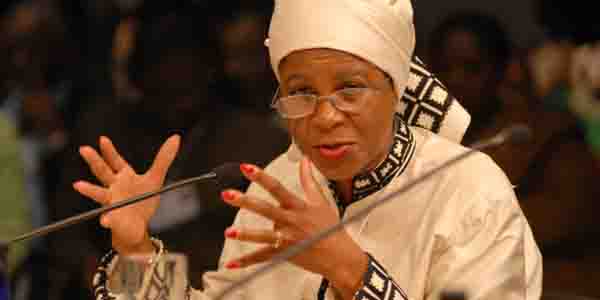
Mamphela Ramphele

South Africa needs to dig itself out of a 19th-century mining business model, academic Mamphela Ramphele said on Wednesday.

Speaking at a media briefing ahead of an international leadership education conference in Cape Town, she said a failure to change the nature of the industry was having devastating repercussions.

“We’ve just had this tragic Marikana debacle, and what was in evidence there is the consequence of South Africa failing to transform the mining industry from a 19th century business model, which relies on cheap migrant labour, very archaic mining technology and a… low-skilled, labour-intensive industrial base.”

She said change could come from leaders of business schools, leaders in the private mining sector and citizens putting their heads together.

“I want to make sure my three-year old grandson, in 30 years’ time, is in a country he can be proud of; and that will not happen, unless we deal with the legacy issues which are holding us back.”

Ramphele, who also chairs the Gold Fields board, said her recent visit to the mining house’s Australian operations showed the industries in the two countries were like chalk and cheese.

“Of course, they were established in different periods, but that doesn’t stop us, because one of the things South Africa is underplaying is technological innovation capacity,” Ramphele said.

She referred to the London Underground rail system, and said tunnelling technology developed in South Africa had contributed towards this.

Ramphele said the ability to innovate and change to a new mining model was not lacking in South Africa.

“We just have not applied our minds because there isn’t the political leadership and will to create a framework for a mining industry of the 21st century.”

She also took aim at industry bosses.

“The private sector, in the form of the mining industry, has also not exercised its mind about how do you leverage the huge endowment… in the form of mineral resources; leveraging that as a way of positioning South Africa as a globally competitive economy… .”

[ad 1]

Ramphele said South Africa had missed the benefits of the last mining boom, while other countries flourished.

“The other thing we do in South Africa — which is really inexplicable, that’s the polite way of putting it — is that we are exporting value to China, to India, to everywhere.

“We mined the riches the dear Lord gave us, gave it to others to process, which means we are exporting jobs, then we re-import (processed minerals) at huge costs for our own purposes, which is why we are de-industrialising.”

She said re-industrialisation in mining would depend on a rethink of the whole value chain.

Ramphele is also a businesswoman and medical doctor, and was an anti-apartheid activist. – Sapa

South African mining crisis puts traditional unions on the spot

Miners assembling on a hillside in Marikana to mourn their colleagues killed by police

The violent crisis that has shaken South Africa’s mines shows workers’ distrust for traditional trade unions, up to now the guardians of social peace despite the country’s deep inequality.

Miners this week clawed record salary increases of 22 percent from the Lonmin platinum mine operators after a near six-week wildcat strike that killed 46.

Having rejected major player the National Union of Mineworkers (NUM), miners appointed their own representatives at the negotiations.

The unprecedented agreement may upend the whole mining industry, a fifth of the GDP of Africa’s largest economy, analysts said, and bodes ill for the country’s powerful trade union federation COSATU, and NUM, its main member.

Wildcat strikes have already spread to other gold, platinum and chrome mines, including world number one Anglo American Platinum and Gold Fields.

“Marikana holds the potential for an era in South African labour relations where violent strike action forces the hand of weakened management as opposed to historical collective bargaining promoted by COSATU and its affiliate unions,” said independent analyst Daniel Silke.

The country’s labour movement has been formalised for decades, and representative unions have exclusive negotiation rights with employers in an extremely structured process.

Unions also formed a formidable opposition to the white minority regime during apartheid. Since its inception in 1985, COSATU was affiliated with the African National Congress.

This alliance helped to avoid major social unrest when the ANC took over government in 1994 after the first all-race elections, and COSATU only gained in power through the deal.

But now the partnership threatens to taint the federation.

“COSATU has moved away from its roots to become a political organisation, while its supposed to be a labour movement,” economist Dawie Roodt told AFP.

On the ground, mineworkers say they live in hell, pointing to shacks without electricity, water or sanitation.

“Because of the separation between the grassroots and leadership, the mine worker feels his interests are not being protected anymore. This guy from the union is more interested to become a mine shareholder, and has forgotten about the worker’s wages,” said Roodt.

But it has not all been bad. The Chamber of Mines has said workers have it good compared to others in South Africa amid a 40 percent unemployment rate.

“The National Union of Mineworkers has done too good a job for its members over the past 30 years, especially the past 10, getting its members double-digit, double-inflation wage increases with no increases in productivity,” Peter Major, mining and resources head at consulting company Cadiz Corporate Solutions, wrote in the weekly Mail & Guardian.

Now, the same workers are abandoning the old guilds in favour of new ones, like the Association for Mineworkers and Construction Union (AMCU), which has been blamed for inciting the violence at Lonmin.

Other miners go it alone. Wildcat strikes have increased since the start of the year. They often erupt into violence, with intimidation against non-strikers. Some clashes spill explode into deadly violence.

Police shot dead 34 people on August 16 at the Marikana mine, a week after clashes between workers left 10 dead. Two people died in subsequent violence.

“The key issue here is whether the trade union movement, whether COSATU itself, can keep a handle on the more militant workers who have smelled blood with management as a result of Marikana,” said Silke.

“The pressure will really be on COSATU to retain a level of organisation …to attempt to elicit a better deal for members or face the potential of political polarisation.”

Unions were losing membership “without a doubt”, added Roodt.

“The political outcome will be (that) we need a separation between labour and government. (The situation) is untenable.” – Sapa

Two more miners killed by police, one dragged by armoured car

Amplats strikers
Amplats strikers

RUSTENBURG, South Africa (AP) — Days after soldiers were deployed, South African President Jacob Zuma’s office announced Thursday he has ordered military forces to assist police trying to control labor unrest in the nation’s crucial mining sector. Despite resolution of the longest and bloodiest strike, two more deaths were reported.

Even as miners returned to work Thursday at the Lonmin PLC platinum mine in Marikana where police killed 34 miners on Aug. 16 labor advocates said police killed two more people: a ruling party municipal councilor who died of injuries from a rubber bullet and a miner who was run over by an armored car.

Zuma’s office said he was invoking the Constitution to use the military to support police “in the prevention and combating of crime as well as the maintenance of law and order in the Marikana Area … and other areas around the country where needed” until Jan. 31. The notice from the presidency referred to section 201 (2) of the Constitution, which states that “only the President, as head of the national executive, may authorize the employment of the defense force.”

Last weekend some 1,000 soldiers were trucked into the “platinum belt” northwest of Johannesburg.

Thursday morning, police in two water cannon trucks and several armored cars confronted striking Anglo American Platinum miners at a shantytown where residents set up barricades of rocks and burning tires and logs. Before long, the fires died down and most of the police pulled back. The people dispersed, leaving a herd of goats milling around the water cannons. Strike leader Evans Ramokga told The Associated Press that one miner was run over Wednesday by a police armored car and dragged several meters (feet) before it stopped. He said the man died overnight in the hospital.

Police spokesman Dennis Adriao said he was unaware of the incident which occurred at the scene where police fired rubber bullets, tear gas and stun grenades to break up a march by thousands of strikers. The mines near Rustenburg belong to Anglo American Platinum, the world’s largest platinum producer.

“The only thing we want is to sit down and have them hear our demands,” Ramokga said. He said authorities have refused to give permission for the thousands of strikers among Anglo’s 15,000 workers there to hold a protest march to back their demands for a gross monthly salary of 16,070 rand ($2,000).

Anglo issued an ultimatum for workers to report for duty by Thursday night or threatened to act on a court order declaring the strike illegal. That gives Anglo the power to fire strikers.

“Anglo American Platinum’s Rustenburg mining operations are already under considerable economic pressure, any further delays in returning to work will only increase the risk to the long-term viability of these mines,” it said in a statement late Wednesday.

The Marikana Solidarity Campaign meanwhile reported that African National Congress councilor Paulina Masutlhe was shopping Saturday at the Wonderkop shantytown where Lonmin platinum miners live when police firing from a speeding armored car hit several women. Masutlhe was hit in the abdomen and leg and rushed to the hospital, where she died Wednesday, a statement said.

Adriao said he is investigating the report of a death. He said police had reported to the Independent Police Investigative Directorate that several people were hit by rubber bullets in a raid to disarm strikers on Saturday, the day after the government ordered a crackdown.

The directorate already has opened 34 murder and 78 attempted murder charges against police in the Aug. 16 shootings, the worst state violence since the white minority apartheid regime was brought down in 1994. The government has said it is awaiting the outcome of a judicial commission of inquiry that is to report to the president in January.

The solidarity campaign condemned the brutality of police and called for “the immediate identification and suspension of the police officers involved in her (Masutlhe’s) murder. “

“We are also extremely unhappy that, to date, none of the police officers involved in the massacre on 16 August 2012 has been identified or suspended – this is totally unacceptable and unlawful,” said the campaign that includes the powerful Congress of South African Trade Unions that is part of a governing alliance with the African National Congress party and the South African Communist Party.

The deaths at the two mines, both northwest of Johannesburg, bring the strike-related death toll to 47.

Lonmin on Tuesday resolved its five-week strike by agreeing to pay raises of 16 to 22 percent.

The strike already has spread to several gold, platinum and chrome mines, damaging investor confidence in the country that produces 75 percent of world platinum and is the No. 4 chrome producer and in the top 10 of gold producers.

South African President Jacob Zuma deploys troops in the country

The SA National Defence Force has officially been deployed domestically from September 14 until next year in Marikana “and other areas of the country where needed”, the Presidency said in a statement on Thursday.

The Presidency said in a short statement that the soldiers would be deployed to support the police “in the prevention and combating of crime as well as the maintenance of law and order in the Marikana area, North West province and other areas around the country where needed.”

The statement did not detail where the other areas may be.

The deployment will last from September 14 until January 31, 2013.

“The extended period will see the SANDF soldiers supporting the police during the festive season period around the country, as they did last year, 2011,” the statement read. – Sapa