France, Russia sink Mistral

Talks between Russia and France concerning the future of the Mistral contract have ended. The contract will be terminated in the near future, a top Russian official has stated.

Paris and Moscow have agreed on and amount of the penalty France will have to pay Russia for not delivering the Mistral helicopter carriers, and the date on which it must be paid, thus bringing the negotiations to conclusion. The contract will be cancelled shortly, Vladimir Kozhin, the Assistant to the President for military and technical cooperation, told RIA Novosti.

“The talks have already ended. Everything is settled – both the date and the amount of penalty. I hope that the agreement concerning the cancellation of the contract will be signed in the nearest future. Then the sum that France will pay Russia will be officially announced,” Kozhin said.

It was reported earlier that Russia and France would settle on the amount of penalty before July 10.

“The penalty amount is only predefined, as this decision has yet to be approved by the governments of the two countries,” a Russian government source told RIA Novosti.

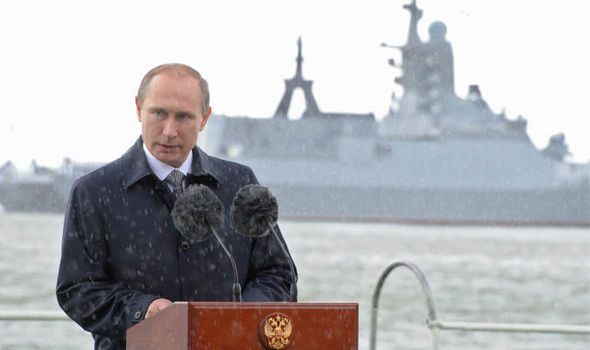
Putin on rise of right-wing in Europe

President Vladimir Putin said it was not Russia’s business to analyze the foreign policy of European countries, but discussing inter-European affairs with European partners in Washington “is not very interesting”.

The Russian president spoke to the Swiss RTS TV channel.

Asked to comment on the “ironic” turn in European politics, which has seen right-wing political parties gain public support, and seemingly speak out in favor of Putin’s statements as opposed to politicians on the left, the President said the underlying reason was Washington’s troublesome interference into the domestic affairs of other nations.

Putin has received support from Marine Le Pen of France’s National Front or Swiss Democratic Union of the Centre (UDC). He described it as a “tectonic shift in Europeans’ public conscience” in the direction of protecting national interests, including from foreign political interventions.

According to Putin, a number of issues Europe is facing now, including the influx of migrants from places such as war-torn Libya, have to do with “decisions taken over the [Atlantic] ocean.” In fact, Europe is now paying for decisions it did not make, he stressed.

He also mentioned that the US has been “pursuing an imperial policy for a long time.” In addition, he cited the opinion of some American political analysts who “believe that this imperial angle hurts the US.”

After several questions from Swiss media on the FIFA corruption scandal, Putin said he doesn’t believe it had anything to do with actions of the organization’s head, President Sepp Blatter, hinting that he views the allegations as politically motivated.

He questioned whether the efforts to pursue the investigation stemmed from failed attempts of the US and its key ally, the UK, to secure bids to host the 2022 and 2018 World Cups: “The way this fight against corruption looks makes me wonder if it isn’t a continuation of the bids for 2018 and 2022.”

He said European countries should be less beholden to military blocks and the US when considering issues concerning their own national interests.

“It would be great to see Europe show more independence and sovereignty, and the ability to stand up for its national interests – the interests of its peoples and countries,” Putin said in an interview with RTS published on Monday.

He added that he “hopes” another war in Europe is not in the cards.

The Russian leader added that a certain level of sovereignty is undoubtedly lost when joining any “any military-political organization [or] military-political bloc.” Putin noted that “France withdrew from NATO in order to preserve its sovereignty to a greater extent than would have been possible had it been part of the organization,” referring to the French withdrawal from NATO in the 1960s. France fully returned to the military bloc only in 2009.

Putin explained that Russia’s stance on US foreign policy “has nothing to do with anti-Americanism,” adding that Russians “have respect and great love for the USA, and especially for the American people.”

When answering a question about Russia’s earlier efforts to fight terrorism and the lack of Western support at the time, Putin said that European governments had ignored abundant evidence of terrorist activity, such as Al-Qaeda affiliates fighting in the Russian North Caucasus.

“When I asked my colleagues, including Europeans: ‘You see what is happening?’ they used to respond: ‘Yes, we do, but due to various domestic, international circumstances, we cannot support you.’ I would tell them then: ‘If you cannot support us – at least don’t hinder our efforts.’”

Putin criticized the US government’s self-perceived right to pressure other countries around the world, acting from a policy of “who is not with us, is against us.” Still, with enough patience it is possible and necessary to work with the American side on solving global issues, Putin said, praising international efforts that have led to a recent deal on Iran’s nuclear program.

French famers protest against EU ban on Russia

French milk and meat farmers demanded an increase in purchasing prices for their produce and a negotiated lifting of a Russian ban on food imports from France.

The farmers complained that prices for their products are so low that they can’t even meet their costs. In protest, they are blocking roads to tourist attractions, RTL radio reported on Wednesday.

In response to the farmers’ protests, which have been going on for several weeks now, officials argue that the government is unable to regulate the purchasing prices.

Former Agriculture Minister, Bruno Le Maire, believes that new markets for French food exports could help solve the problem and that Russia is an indispensable trading partner.

Le Maire, who served as the French Minister of Food, Agriculture and Fishing from 2009 to 2012, blames the farmers’ plight on an “ongoing tug-of-war over other diplomatic issues.”

The French government has already set in motion a program to help the country’s struggling agricultural sector, but the farmers fear that the promised assistance may never come.

Russia banned the import of meat, fish, diary, fruit and vegetables from the European Union last summer in response to European economic sanctions imposed on Russia earlier over its alleged involvement in the Ukrainian conflict.

Source: Sputniknews

French delegation to Crimea ignores Ukranian authorities

Member of the French National Assembly Thierry Mariani who will head the French delegation during its visit to Crimea, has told reporters about the aims and the agenda of the visit.

The members of the French delegation did not consult with the Ukrainian authorities before the visit to Crimea.

“We arrive in Moscow in the evening on Wednesday, on Thursday we will meet with the State Duma speaker Sergey Naryshkin and then we will head for Yalta and Sevastopol. The agenda includes meetings with the local authorities [including chairman of the Crimean State Council Vladimir Konstantinov, Crimean Prime Minister Sergey Aksyonov and governor of Sevastopol Sergey Menyailo] and the visit will have its ‘French’ part as well.

In Sevastopol we will visit the Alliance Francaise cultural center and the French military cemetery [the burial place of soldiers who perished during the siege of Sevastopol in 1854-1855]. This is the largest French cemetery abroad, somewhat unkempt recently because of the political events,” he added.

Answering a question on whether the members of the delegation consulted with the Ukrainian authorities before the visit, Mariani said, “No, we didn’t. The French Foreign Ministry also said the idea of such a trip would not be supported. But French parliamentarians are free to make decisions. We want to understand how people live there,” the parliamentarian told the Kommersant daily.

Thousands march in honor of murdered Russian Royal Family

On the evening of 16/17 July, to honour the memory of the murdered Russian Emperor Nicholas II and his family, more than 60,000 Orthodox faithful took part in the 20-km royal procession pilgrimage from the Church on Blood in Honour of All Saints Resplendent in the Russian Land in Ekaterinburg to the Monastery of the Royal Martyrs at Ganina Yama.

The procession passed without incident, said “the regional newspaper” the press service of the Ekaterinburg diocese.

Before the procession a Divine Liturgy was held at the Cathedral on the Blood.

At two o’clock in the morning on July 17, residents and guests of Ekaterinburg, which included Orthodox Christians, monarchists, among others began the 20-km procession, which ended at half past six in the morning.

The procession was led by Metropolitan Kirill of Ekaterinburg and Verkhoturye, accompanied by members of his clergy. They were followed by Cossacks carrying icons and banners.

This year, a group of Japanese pilgrims, dressed in samurai armour took part in the procession. The column stretched for several kilometres.

Throughout the course of the procession, pilgrims were accompanied by mobile teams of assistance who provided the faithful with bottles of drinking water, and first aid. Buses were provided along the procession route for people to stop and rest, or for those who could not complete the journey.

Source: Royal Russia

Carthage must be destroyed

The Pentagon has released its “National Military Strategy of the United States of America 2015,” June 2015.

The document announces a shift in focus from terrorists to “state actors” that “are challenging international norms.” It is important to understand what these words mean. Governments that challenge international norms are sovereign countries that pursue policies independently of Washington’s policies. These “revisionist states” are threats, not because they plan to attack the US, which the Pentagon admits neither Russia nor China intend, but because they are independent. In other words, the norm is dependence on Washington.

Be sure to grasp the point: The threat is the existence of sovereign states, whose independence of action makes them “revisionist states.” In other words, their independence is out of step with the neoconservative Uni-power doctrine that declares independence to be the right of Washington alone. Washington’s History-given hegemony precludes any other country being independent in its actions.

The Pentagon’s report defines the foremost “revisionist states” as Russia, China, North Korea, and Iran. The focus is primarily on Russia.Washington hopes to co-op China, despite the “tension to the Asia-Pacific region” that China’s defense of its sphere of influence, a defense “inconsistent with international law” (this from Washington, the great violator of international law), by turning over what remains of the American consumer market to China. It is not yet certain that Iran has escaped the fate that Washington imposed on Iraq, Afghanistan, Libya, Syria, Somalia, Yemen, Pakistan, Ukraine, and by complicity Palestine.

The Pentagon report is sufficiently audacious in its hypocrisy, as all statements from Washington are, to declare that Washington and its vassals “support the established institutions and processes dedicated to preventing conflict, respecting sovereignty, and furthering human rights.” This from the military of a government that has invaded, bombed, and overthrown 11 governments since the Clinton regime and is currently working to overthrow governments in Armenia, Kyrgyzstan, Ecuador, Venezuela, Bolivia, Brazil, and Argentina.

In the Pentagon document, Russia is under fire for not acting “in accordance with international norms,” which means Russia is not following Washington’s leadership.

In other words, this is a bullshit report written by neocons in order to foment war with Russia.

Nothing else can be said about the Pentagon report, which justifies war and more war. Without war and conquests, Americans are not safe.

Washington’s view toward Russia is the same as Cato the Elder’s view toward Carthage. Cato the Elder finished his every speech on any subject in the Roman Senate with the statement “Carthage must be destroyed.”

This report tells us that war with Russia is our future unless Russia agrees to become a vassal state like every country in Europe, and Canada, Australia, Ukraine, and Japan. Otherwise, the neoconservatives have decided that it is impossible for Americans to tolerate living with a country that makes decisions independently of Washington. If American cannot be The Uni-Power dictating to the world, better that we are all dead. At least that will show the Russians.

Moscow hopes US will abandon AMD plans for Europe

Moscow hopes the US will fulfill its promise not to develop a system of missile defense in Europe after a deal with Iran has been reached, Russian Foreign Minister Sergey Lavrov said in Vienna on Tuesday.

“We all probably remember that in April 2009 in Prague [US] President [Barack] Obama said that if the Iran nuclear program issue is sorted out, then the task of creating the European segment of the missile defense system will disappear,” Lavrov said at press conference in Vienna.

He said that Tehran and the P5+1 powers (the United States, the UK, France, Germany, Russia and China) have agreed on “joint all-inclusive plan of actions, which consists of the main document and five very detailed technical appendices.”

A draft of UN Security Council resolution has also been agreed upon which all participants of the talks will present as co-authors in New York in the next few days, Lavrov said, adding that the resolution will be considered by the UN SC and voted on. “We believe, it will be unanimously approved,” he added.

Russia to kick out major NGO’s

Russia’s upper house of parliament adopted on Wednesday a petition to the Prosecutor General’s Office, the Foreign and Justice Ministry asking them to consider the patriotic stop list of foreign NGOs for possibly including them to the list of undesirable organizations.

The petition, backed unanimously by a total of 156 senators, reads that Russia “has faced the greatest attack on its national interests, values and institutions over the past quarter of the century.”

Its key goal is to influence the domestic political environment in Russia as well as to “undermine the patriotic unity” of people and also disrupt integration processes involving Russia on space Commonwealth of Independent States (CIS).

“The unprecedented involvement in this activity of nonprofit organizations, which are also funded by the state budgets of foreign countries, allows speaking about a “soft aggression” against Russia,” the text of the petition obtained by TASS says.

The upper house says the Foreign and Justice Ministries and also the Prosecutor General’s Office should “consider the patriotic stop list” which includes a range of well-known anti-Russian foreign and international non-governmental organizations.

This measure is aimed at possibly making them a subject of the existing norms of the country’s law on undesirable organizations, it says.

The “stop list” includes 12 organizations, among them the Soros Foundation, the National Endowment for Democracy, the MacArthur Foundation, the Freedom House and the East European Democratic Center.

Source: Itar-TASS

Africa believes it will gain from BRICS bank

Africa’s ambitious infrastructure built programme is expected to get a boost from the BRICS New Development Bank.

The new bank was launched in Moscow ahead of the 7th BRICS Summit which starts in the city of Ufa on Wednesday evening. It is estimated that the continent’s infrastructure built has a R100 million a year gap in funding.

President Jacob Zuma, who is also the champion of the project, says the BRICS bank is meant to lift developing countries out of poverty and not to rival or compete with existing Western financial institutions such as the International Monetary Fund (IMF) and the World Bank.

The new BRICS Development Bank has an initial budget of R600 billion and it is expected to help finance infrastructure projects in all BRICS member states and other poor countries of the world.

There also seems to be growing interest in BRICS from – countries including Nigeria, Turkey, Mexico and Indonesia to join.

President Zuma says the bank is just an alternative to established financial institutions.

Pretoria is upbeat that South Africa and the rest of the continent have a lot to benefit from the new financial institution.

It is reported that Greece potentially joining the block will be discussed.

South Africa’s Lesley Maasdorp, is the vice president of the new bank while former Reserve Bank Governor, Tito Mboweni, is part of the board of governors.

Russian President Vladimir Putin who has been in a cold war with the western leaders over Ukraine is expected to set the tone when he addresses leaders’ gala dinner.

On Thursday, leaders are expected to sign several agreements on economic integration between Brics member states.

SA, Russia sign energy pact

South Africa and Russia signed two memoranda of understanding on nuclear power co-operation on Wednesday, part of efforts by Africa’s most advanced economy to lessen its reliance on coal and overcome power shortages that threaten economic growth.

The agreements, signed at the summit of emerging Brics nations in Ufa, Russia, are between Russia’s state-run nuclear energy company Rosatom and South Africa’s Department of Energy. They call for joint projects to educate and encourage “public acceptance of nuclear power” in South Africa, the South African Department of Energy said in a statement.

They will also include programmes for training specialists in South Africa’s nuclear industry.

South Africa is considering using reactors from Russia’s Rosatom and Westinghouse for its planned 9 600 MW nuclear fleet expansion, an energy advisor to the government said in June.

The country plans to build six new nuclear power plants by 2030 at an estimated cost of between R400 billion and R1 trillion.

Critics contend South Africa cannot afford the price tag against the backdrop of rising debt and sluggish economic growth, which is constrained by power shortages that trigger periodic rolling blackouts.

The government has said South Africa needs to not only expand its capacity, but also diversify its power mix from coal, which provides over 85 percent of the country’s energy needs.

Source: Reuters

Rise of hypersonic missiles render fleets obsolete

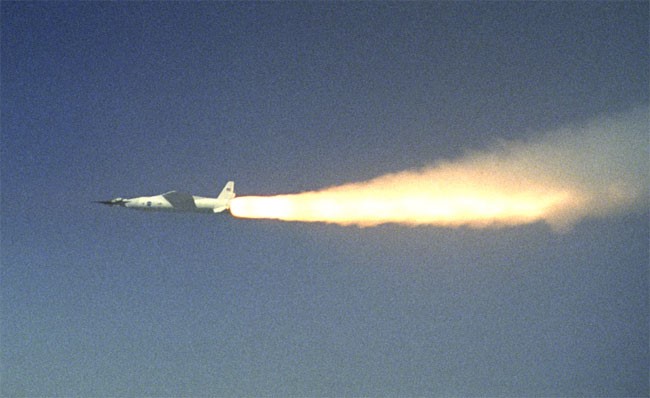
With the rise of hypersonic missiles, fleets have become largely obsolete, reduced as they are to huge sitting ducks. There is simply no defense for a large ship against an incoming MACH5 missile. Carriers can destroy small countries like Libya or Iraq, but not Russia and China.

Hypersonic weapons can achieve speeds over five times faster than the speed of sound (Mach 5) and they are the latest version of precision guided munitions (PGM) that make up part of the larger family of long-range strike weapons systems.

“Hypersonic weapons add to the complexity and elusiveness of the escalatory dynamics and this is something both sides will need to plan for”, says Eleni G. Ekmektsioglou from the American University’s School of International Service.

In the United States, hypersonic weapons are pursued in the context of the conventional prompt global strike (CPGS) commonly defined by officials as a technology of “high-precision conventional weapons capable of striking a target anywhere in the world within one hour’s time.”

Outside the United States, states such as China or Russia have been pursuing this promising technology in secrecy.

Chinese fears skyrocketed after President Barack Obama’s Prague speech and the 2010 Nuclear Posture Review (NPR). The Chinese understood America’s decreasing reliance on nuclear weapons as being tantamount to a greater reliance on conventional weapons—especially CPGS—where the United States enjoys an undeniable superiority.

Thus, the Chinese regard President Obama’s vision for a nuclear-free world as a trap that aims at containing China’s rise to power, Ekmektsioglou believes.

Russia has built a revolutionary new weapon system that can render enemy satellites and weapons useless.

Its Russian makers say it is a ‘fundamentally new electronic warfare system’ which can be mounted on ground-based as well as air- and sea-borne carriers.

‘The system will target the enemy’s deck-based, tactical, long-range and strategic aircraft, electronic means and suppress foreign military satellites’ radio-electronic equipment,’ Russia’s Radio-Electronic Technologies Group (KRET) Deputy CEO Yuri Mayevsky told Russian news agency TASS.

To comply with international weapons laws, the system will be mounted on ground-based, air-and seaborne carriers and not on satellites.

‘It will fully suppress communications, navigation and target location and the use of high-precision weapons,’ said adviser to the KRET first deputy CEO Vladimir Mikheyev.

The system will be used against cruise missiles and will suppress satellite-based radio location systems.

The “R” in evolution.

The world has had its fair share of revolutions in the past few centuries, most notably the French, the Russian and perhaps slightly less so the South African “transformation”.

The narrative abounds that life has become either too complicated or daunting to continue on its path and therefore is in need of change. The desire for wanton destruction then becomes the norm. No stone is left unturned and people are killed in droves, their demise often being met with mirth and mockery.

While the images of the French and Bolshevik Revolutions are well documented and the savagery well-known, it appears that the dynamism behind them has itself undergone an evolution. No longer do we see a uniform ideology to abide by, but a caricature of one’s own culture is used. The motor behind revolution has gone global and uses different means depending on the local circumstances.

Actually, a global revolution is taking place at present, and has been doing so for decades. We feel the tremors but the epicentre is hidden. We have seen South Africa fall, and are watching how the United States is following suit, yet nations that are rising from the ashes, like Russia for instance, has become the new thorn in the side of the world’s shadow elite. No doubt, a firm nationalist and religious identity works wonders to abate any such dangerous revolutionary takeovers. In that sense Russia has a lot to teach us because they have been there.

In the news today, we see the following “random” events taking place:
Back in 2010 the journalist and Bilderberg Group investigator Daniel Estulin mentioned that thirteen US military bases were being built in Afghanistan with the intention of threatening Russia. Need we not forget that the eastern block has done away with the Warsaw Pact decades ago, but NATO – its military contender in the West – is still rattling its sabre. Otherwise, various fringe groups such as pop stars and gay rights activists have been implemented to stem the tide of Russian nationalism. Not to mention the State Department’s Victoria Nuland’s leaked phone call wherein the political dislodging of Ukraine from its powerful neighbour was discussed. And yet they still want us to believe that Putin is the bogeyman.

Elsewhere, the United States is still reeling from the various racially related riots that have taken place at home. Arguably, it started off when George Soros’ puppet president Barack Obama commented on the Trayvon Martin/George Zimmerman case in 2012. In contrast to the ruling of the court, the president defended the African American teenager, effectively criminalising the defendant further and undermining the rule of law; a dictator in the making. Setting such precedents are not productive when it comes to quelling race relations, not to mention how the defendant, who had previously referred to himself as Hispanic all of a sudden became “white” in the eyes of the public. This hand-picked incident of violence (one out of 8,855 hand gun related homicides that year) had to have a white man killing a black youngster in order to pass muster, otherwise it would have disappeared down the memory hole and would have been seen as no more than an everyday act of violence. The ensuing race related incidents in Ferguson, New York and Baltimore demonstrated how violence with indirect approval from the Commander in Chief begets further violence. The Washington Post has mentioned how, once again, George Soros bankrolled $33 mln to Ferguson to fan the flames of racial tensions. Apparently – and to no surprise one might add – even the race-baiting reverend Jeremiah Wright is on Soros’ dime.

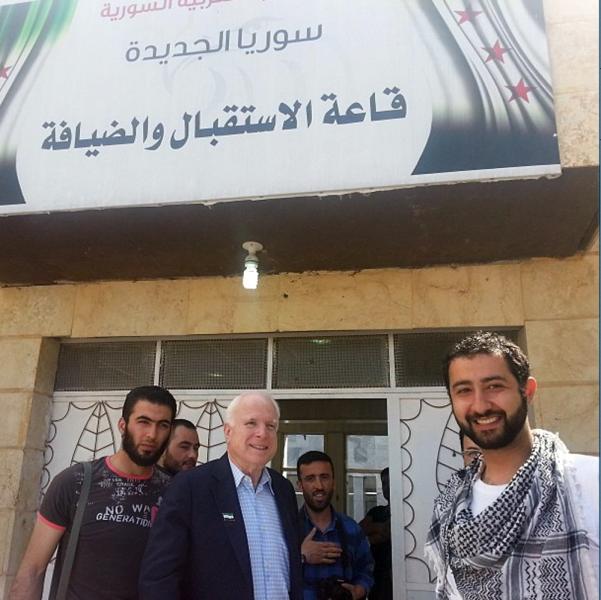
In other parts of the world, especially the Middle-East, we are witnessing the rise of Islamic State, a new type of extremist militia group with lofty ambitions of establishing a global caliphate. Interestingly, where the US had helped to topple local dictators and warlords, IS is taking over with unseen ferocity. First there was Saddam who had to be ousted, and a few years later Khaddafi followed him into the grave. In both instances and beyond, IS rose out of the chaos, beheading people and destroying ancient statues wherever they went. The destructive allure of IS has transcended national borders not only in the Middle-East but even Muslims in Europe are enticed by their boldness and are risking life and limb to fight and die for them. And then we have to hear how none other than puppet master Henry Kissinger mentioned that IS is fighting with weapons manufactured in the United States, while Republican senator John McCain was seen holding a meeting with the IS ringleaders.

Do we see a pattern emerge?

In Russia, the Western elite wants to destroy their sense of nationhood using religion as an important target. In the US they are using trumped up charges of racism to destroy the White Anglo Saxon Protestant character, and in the Middle-East uncompromising savagery is used to kill and intimidate minorities in the name of Islam, all happening at the same time.

In all these cases, religion is used either as a lance or as a target, depending on the local circumstances.

One of the ideals of Communism, as explained in Marx and Engels’ manifesto is to destroy religion. In the case of IS, religion is used as a means to traumatise the various populations in order to ultimately convert the masses to atheism, as religion is perceived as a source of violence. Apparently a new force of atheism is emerging within the spindle of the Islamic world, namely Saudi Arabia. Even though statistics are hard to come by in this reclusive state, the general opinion seems to be that the veils and religious garb are rather concealing unbelief than immorality nowadays.

As Lenin once wrote, the best revolutionary is a youth devoid of morals. From this point of view, it appears as if IS has taken a leaf from the book of global revolution and are using the most severe forms of barbarism to put Lenin’s credo to the test. Any successful megalomaniac could attest to the joys of a traumatised and docile populace, as they often make the best slaves.

Whereas in the United States and South Africa, the destruction of the middle class is taking place, with white Americans and South Africans slowly becoming the nouveau pauvre, the Russian Bear is on the rise, and Putin has achieved everything the globalists had hoped would not happen. The entire revolutionary character and spirit of Russia has been disbanded and the rumors are circulating that the czar is to be restored as a final triumph of nationalism over internationalism.

To create a world of poverty and unbelief appears to be one of the means the elite is using to encapsulate the world by locking its people up in an unbreakable caste.

In our modern times people are once again searching for a sense of being authentic. Realising that the general narrative that has been told to us does not reflect people’s true feelings, the search for a more authentic identity then comes to the fore.

This would explain the primary reason why revolutions, which cost billions in modern day cash, cannot hold up against nationalist sentiments. Just as historian Oswald Spengler wrote about a hundred years ago a sense of one’s own culture and way of life cannot be crushed, simply because self-reflection is free and more captivating than the primitive one-dimensional ideologies proposed by revolutionary ideologues. Conversely, the revolutionary thinkers have to pressure themselves into preventing this return to nationalist based thoughts, ultimately fighting a losing battle.

Regardless of the fact that revolutions have evolved, once the tricks that are being used are exposed, people will naturally return to their own sense of authenticity, causing revolutionary thoughts to dissolve and go gently into that good night.

Let’s hope it’s not too late for that.

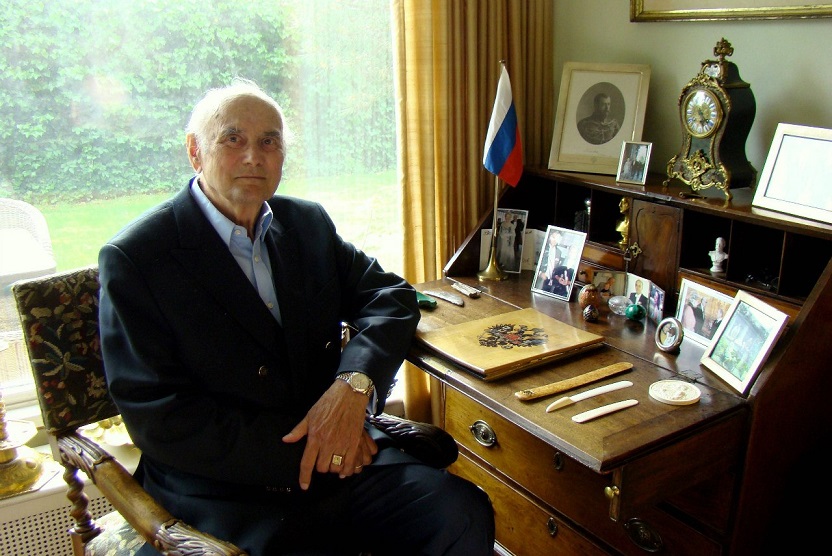
Russian Romanov family to return

Vladimir Petrov, deputy of the Russian Legislative Assembly believes that return of the Imperial family to Russia will become a symbol of a “spiritual power revival of the Russian peoples”.

The deputy suggests the heirs of Romanov family to return to Russia and choose one of the palaces in St. Petersburg or the Crimea to live in.

The Assembly will consider the draft resolution “On special state of the imperial family representatives” within the shortest possible time, as well as their return from Europe to one of the official residences.

Petrov addressed Her Imperial Highness the Grand Duchess Maria Vladimirovna, living currently in Spain, in a letter, where he stated that the imperial Romanov dynasty has always been one of the fundamentals of State. Given the present-day challenging revival of Russian mightiness and return of world influence to it, members of the Family could take part in ceremonial events, as in many European countries.

According to Alexander Zakatov, head of the Russian Imperial House chancellory, the Duchess Maria is ready to return to Russia, but “the return should be decent”.

Source: Pravda

Russia and Saudi Arabia sign nuclear deal

A number of cooperation documents were signed by Russia and Saudi Arabia on Thursday, after President Putin met with Saudi Prince Mohammed in what was one of the most anticipated meetings at the international economic forum in St. Petersburg.

The pair has signed six agreements in total, Al Arabiya News Channel reported. A cooperation agreement on a peaceful nuclear program was among the documents, the press service of Russia’s nuclear agency, Rosatom, said.

According to Rosatom, the document is the first in the history of Russia-Saudi relations to create a legal framework for cooperation between the nations in the field of nuclear energy. Future joint projects might include construction of nuclear power reactors, provision of services in nuclear fuel cycling, including those for nuclear power stations and research reactor facilities.

The Gulf kingdom has no industrial nuclear power plants, but has big plans for developing nuclear energy.

The two oil heavyweights have also agreed on the creation of a working group to develop joint energy projects, Russian Energy Minister Aleksandr Novak said on Thursday. Saudi Arabia is interested in energy projects in Russia, the minister said, adding that Russia doesn’t aim to replace existing partners in oil and gas cooperation, but rather wants to establish new ones.

The countries are ready to cooperate in a number of other spheres, the minister told journalists, mentioning pharmaceuticals and infrastructure development as prospective sectors.

“Our colleagues from Saudi Arabia have brought a lot of projects to the table. These projects will be introduced to our companies, including the ones involving the construction and upgrade of railways and building underground railway systems,” Novak said, adding that the Gulf kingdom plans to build metro systems in four cities in the near future.

Russia’s state space agency, Roscosmos, and Saudi national center for science and technology KACST signed papers including agendas for future cooperation in space exploration.

On meeting Putin, the 30-year old deputy crown prince Mohammed bin Salman, who is Saudi Arabia’s Defense Minister, announced that his father, King Salman, was inviting the Russian leader to visit the Gulf state.

“I have the honor to pass on an invitation to visit the kingdom of Saudi Arabia, as we regard Russia as one of the important states in the contemporary world, and our relations have roots in the past,” Prince Mohammed said, adding that Russia had been the first country to officially recognize the Gulf kingdom. “We will aim to develop bilateral relations in all sectors,” he added.