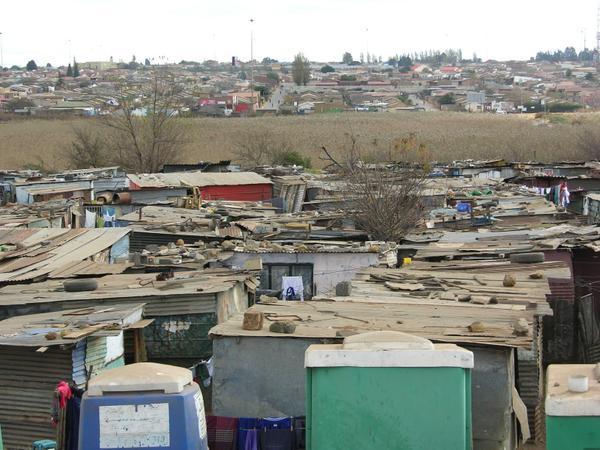
Four more people have been arrested for looting at the troubled township of Protea South in Soweto. It brings to 25 the number of people arrested for public violence and looting since Thursday morning.
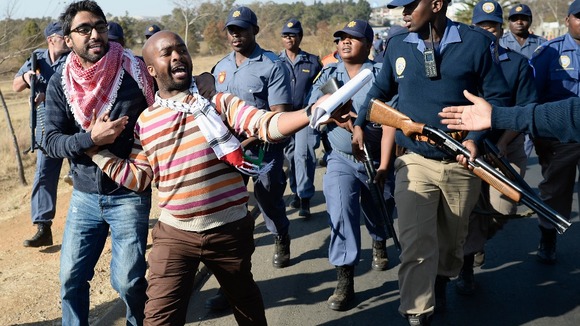
Police in Soweto have remained on high alert following the violent protests. On Thursday authorities used rubber bullets to disperse crowds after they burnt electric boxes and damaged traffic lights.
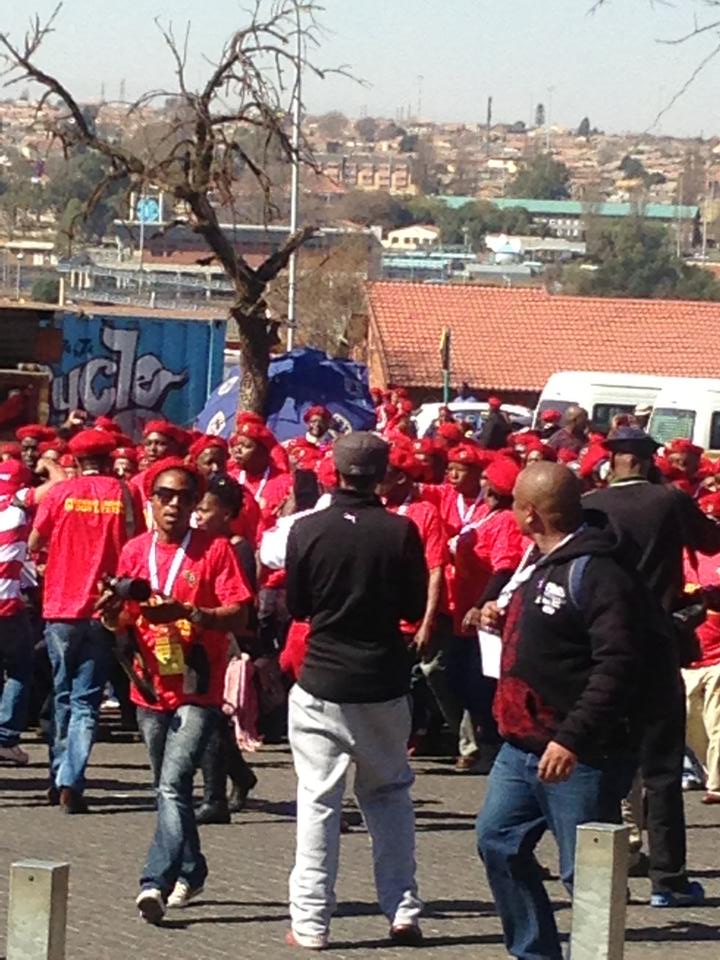
Protesting residents chased away Julius Malema’s Economic Freedom Fighters when they arrived at the scene of violent service delivery protests in Soweto.
Earlier, Malema told protesters at a violent protest in Kokosi Township in Fochville on the West Rand to fight for land. He also appealed to police deployed in the township to exercise restraint.
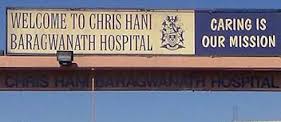
Public Protector Advocate Thuli Madonsela has expressed concern about the conditions she found at the Chris Hani Baragwanath Academic Hospital in Soweto during a surprise visit to the facility.
This is part of her office’s on-going national stakeholders dialogue. The visit also served as an inspection-in-loco for the systemic investigation.
The Public Protector is conducting an investigation following a complaint from a group of doctors at the hospital.
The complaint primarily relates to irregularities and inefficiencies in the procurement of hospital medicines and equipment leading to interruptions in essential services.
Meanwhile, Madonsela says it appears government has no plan in place to achieve the Millennium Development Goals (MDGs).
Her office’s ongoing national stakeholder dialogue and public hearings seek to strengthen government’s ability to deliver on the MDG’s.
“We are going around the country talking to people about their experiences of maladministration. Mainly maladministration to the country’s goals on millennium development,” says Madonsela.
She adds: “Our duty is to fight against maladministration and ensuring that access to quality health care is not undermined. I don’t seem to think that there is a plan or at least we haven’t visited a single province where there is a plan on how to end poverty.”
A man was found stoned to death in Jabulani, Soweto, police said on Tuesday.
The 31-year-old man was found by a passer-by, surrounded by bloody rocks in a Jabulani hostel on Monday evening around 9.35pm, Warrant Officer Kay Makhubela said.
“When we found him he was still alive but couldn’t speak. He died at the hospital upon arrival,” he said.
No arrests had yet been made.
Makhubela urged those who might have witnessed the crime to come forward.
“We know the people who live there might have seen what happened,” Makhubela said. – Sapa
Ten high school pupils were taken in for questioning after a teenage girl was found dead in Soweto, Gauteng police said on Tuesday.
“They were taken in to help police with the investigation. We let them go home afterwards,” said Warrant Officer Kay Makhubela.
“We wanted to know if they knew anyone or anything related to this incident.”
The body of 15-year-old Lungile Kubeka was found in a yard on Monday morning. Police believe she may have been raped and strangled, as there were no open wounds on her body.
Angry residents, who alleged that Kubeka’s boyfriend was behind the attack, went to the Sebetsa O Thole Moputso Secondary School in Dobsonville and demanded they hand themselves over to police.
Makhubela said police took in the ten pupils including the boyfriend, his friends, and some of Kubeka’s friends.
The Economic Freedom Fighters (EFF) have secured over 1000 new members, it said on Saturday.
“We received 1 100 new members on the first day of recruiting,” said party leader Julius Malema at a press briefing in Soweto.
“If this becomes a trend then we will be getting 1 000 member[s] every day. It is going to be bigger than what we expected.”
This exceeded their expectations, he said.
The EFF — which had gathered at the the Uncle Tom community hall for a two day national assembly — plans to contest next year’s general election.
Malema said the EFF would be officially registered with the Independent Electoral Commission (IEC) on Monday after a few amendments had been made, including changes to its logo.
The EFF logo depicted an arrow instead of a spear, and this was to be changed.
Malema said the party would register with double the required number of members needed to contest the election.
“I was told by the IEC that we should have 500 members to register but we are going register with 1 100 new members,” the former ANC Youth League leader said.
Malema is facing corruption charges in the Polokwane Magistrate’s Court. He is accused of making nearly R4-million from corrupt activities, and is out on bail of R10,000.
He faces charges of fraud, corruption, money-laundering, and racketeering.
On Saturday, Malema acknowledged that intimidation was part of politics, but expressed concern about the alleged intimidation of his members.
He said “people with pangas” had intimidated his members during an EFF meeting in the Vaal, but did not say when this happened. He noted that intimidation tactics were worse in Mpumalanga.
“I am more worried about Mpumalanga because they have the potential to kill,” he said.
Malema also encouraged Congress of SA Trade Unions (Cosatu) general secretary Zwelinzima Vavi and his wife to stay strong amid the rape allegations against him.
Vavi’s lawyer Dup de Bruyn said earlier that a case of extortion was opened against a woman who allegedly tried to blackmail Vavi. He said the case was opened at the Sandton police station on Thursday evening. Police spokeswoman Captain Kym Cloete verified this.
In a statement, Vavi denied the rape of a Cosatu colleague, saying he had been in a consensual extramarital affair with the woman.
Malema said he expected Vavi’s wife to stick by his side and not allow “his detractors any room for joy”. – sapa
An 11-year-old Soweto girl who was raped and stabbed is recovering in hospital, Gauteng police said on Thursday.
“She is no longer in ICU,” Warrant Officer Kay Makhubela said.
The girl and her little brother were asleep in a house in Bram Fischerville when she was attacked on Wednesday morning. She was raped and stabbed three times in the upper body. No arrests had been made.
Gauteng premier Nomvula Mokonyane on Thursday condemned the rape and appealed to police to bring the perpetrator to book.
“We are calling on the police to leave no stone unturned in finding the perpetrator who did this to an innocent child,” she said in a statement.
She said rape and abuse against women and children could not be allowed to rear its ugly head.
“Our thoughts and prayers are with this little girl and her family.”
Mokonyane said rape was a hideous crime that contravened the basic human rights of women and girls.
“We cannot allow such horrific incidents to go unchallenged in our communities.” – Sapa
US President Barack Obama was met Saturday with songs, cheers and laughter from young South Africans at a university in the Soweto area of Johannesburg.
Before he entered the room, the crowd sang songs from the struggle against apartheid and burst into a lively round of Shosholoza, an old miners song from southern Africa with a call and response format that became more lively with each chorus.
As he appeared, Obama shouted out, “Yebo Mzanzi!” or “Yes, South Africa!” to jubilation from the crowd.
The president used the town-hall-style meeting, which was hooked up via video link to several other African nations, to encourage young people to innovate and act on their imaginations.
While Nelson Mandela, the ailing anti-apartheid leader who Obama said was a personal hero and “one of the greatest people in history,” was still in hospital in critical condition, his spirit was felt in the room.
“Building the future you see, realizing the vision you have not only for your own country but for the world – it will not be easy,” Obama told the hundreds of young people in attendance at the University of Johannesburg’s Soweto campus.
“But as you go forward, think of the man who is in our prayers today. Think of 27 years in prison. Think of the hardship and struggles and being away from family and friends,” Obama said, referring to Mandela’s time in jail for opposing white minority rule.
Obama was quick to stress the importance of education, as Mandela had always done, saying it was the “best investment” any country could make in its youth.
Or, indeed, for its politicians. “I don’t want to reinforce for the American press here that Africa is just one big piece of land on the map,” Obama, a Democrat, said in an apparent reference to widely reported claims that former US Republican vice presidential candidate Sarah Palin believed Africa was a country, not a continent.
He was met by loud cheers from the crowd and laughter from his travelling press corps.
The questions he received were often tough, focussing on trade, the environment, women’s rights and even a promise he made to travel to Kenya, his father’s home, during his presidency.
“I’m going to be president for another three and a half years,” he said when asked via a video link from Nairobi why he had not visited the country. “You learn as president that people not only want you to fulfil your promises but want you to fulfil your promises yesterday.”
But Obama admitted that the International Criminal Court warrant out for that country’s new president and vice president had influenced his decision.
“I did not think it was an optimal time for me to visit,” he said but pledged he would still make a trip to Kenya before his time in office ends, which would be 2017.
For many in the crowd, however, the key concerns they had were jobs and economic opportunities. They wanted clear words from the president that he envisioned an economic partnership between the United States and Africa.
“Everywhere I go in Africa, people want to break out of the dependency trap,” Obama said.
“What we need is an Africa that is building, manufacturing, creating value, inventing and then sending those products around the world and receiving products in return under fair terms of trade,” the president said. “If we do that, there is no reason Africa cannot succeed.”
Obama insisted the US was not interested in global domination, a concern often felt strongest in countries once subjected to colonial rule, which milked resources while oppressing their people.
“I was elected to end the wars,” he said, adding that he regularly visits young US soldiers who have been gravely injured in Iraq and Afghanistan.
“This idea that we want to get more involved militarily around the world is not true,” he said.
Obama said the US would rather be “selling iPads and planes” rather than using its military abroad, drawing applause from the crowd, many of whom snapped photos of the president and his large entourage on their smartphones and tablets. – dpa
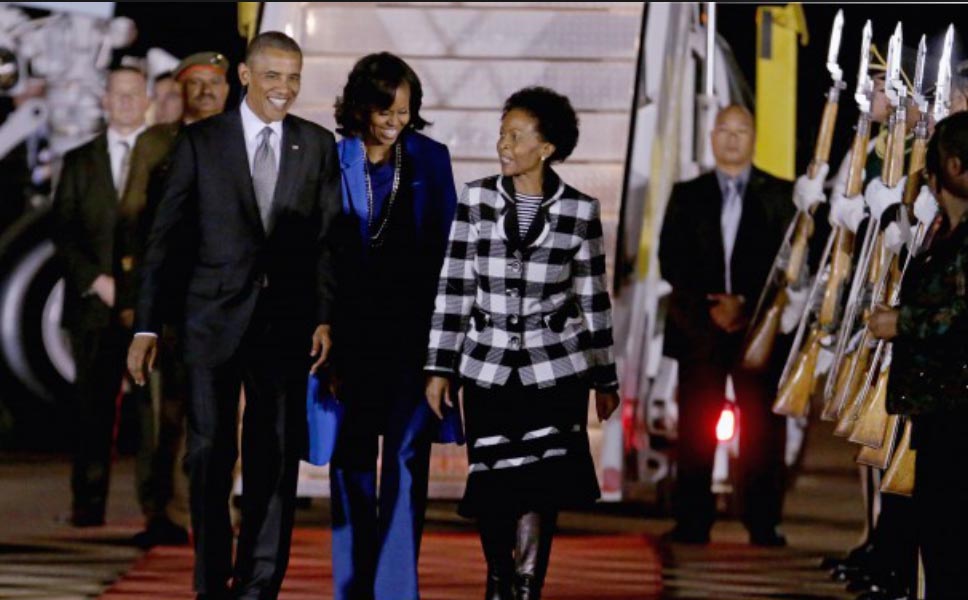
Obama upon his arrival at Waterkloof Air Force Base, with wife Michelle and Maite Nkoana-Mashabane, the SA foreign minister
US President Barack Obama told Africa’s youth Saturday that the future of the continent was in their hands and urged them to use Nelson Mandela as a model for political leadership.
Obama got a rowdy welcome as he used a town hall style meeting in South Africa to announce a new fellowship that will initially take 500 young African leaders to the United States every year for academic and leadership training.
As Obama spoke at a university in the sprawling township of Soweto where opposition to apartheid sprung into life, police nearby fired stun grenades to disperse hundreds of people critical of his anti-terror policies.
The US leader, on the second leg of an African tour, spoke at a University of Johannesburg not far from the simple homes in Soweto where Mandela, now 94 and in a critical condition in hospital, spent several years of his life.
“The future of this continent is in your hands,” Obama said.
He urged young people in Soweto and those watching the town hall meeting in Kenya, Nigeria and Uganda to take inspiration from Mandela’s refusal to be cowed by 27 years in jail.
“Think about 27 years in prison. Think about hardships and the struggles and being away from family and friends,” Obama said.
“There were dark moments that tested his faith in humanity, but he refused to give up.
“In your lives there will be times to test your faith.”
Obama was greeted with wild enthusiasm by the crowd in Soweto, who sang South African protest songs before he arrived and chanted his “Yes We Can” campaign slogan when he took the stage.
However, protesters set fire to US flags and portraits of Obama and at least three bangs from stun grenades were heard as armed police tried to move demonstrators away from the university.
“The message is clear. We want him to honour the promises he made when he became president, including things like the closing of Guantanamo Bay,” 30-year-old Firoz Osman told AFP. – AFP
Police officers on Saturday fired a stun grenade at a group of protestors near the entrance of the University of Johannesburg Soweto campus ahead of US President Barack Obama’s visit there.
Spokeswoman Sally de Beer said about 120 protestors gathered about 400 metres from the gates to the campus.
The group were allowed permission to protest, but only until 2pm.
“When their time lapsed at 2pm, they refused to comply with a request to disperse as they were required to …the police fired one stun grenade and they then dispersed,” de Beer said.
No arrests were made.
De Beer said: “We totally respect everyone’s right to demonstrate peacefully, but if they are required in terms of their permission to protest, they must stick to the requirements.”
Obama was due to address young people at an event at the Soweto campus. – Sapa
Barack Obama was barely 15 years old when riots erupted in the South African township of Soweto over a circular concerning the use of Afrikaans and other African languages in black schools. Decades later, its residents are preparing to welcome the US president as a “fellow African”.
Obama, now 51, will host a town hall meeting at a university campus as part of his visit to a crucible of the fight against apartheid, which saw protests break out in 1976 that spread across the country.
Although the white nationalist regime was not defeated, the 1976 riots spawned a new generation of black liberation leaders who continued the struggle while senior figures like Nelson Mandela and others languished in prisons.
While hundreds of anti-Obama protesters marched on the US Embassy in the capital Pretoria, 80 kilometres (50 miles) to the north on Friday, many Sowetans were keenly anticipating the visit by the first black US president.
“I want it to be a message of hope. I hope he talks about important things like education and the importance of going to school,” Christopher Mutangwa, a 20-year-old accounting student, said outside the University of Johannesburg’s (UJ) satellite Soweto campus.
“But I also hope that he can learn something about us and what happened here in Soweto during the struggle,” Mutangwa told AFP.
“He should, because I think he is an African.”
While there were few signs of preparation ahead of the highly anticipated visit at the UJ campus, many residents said they planned to line the streets, or watch the event on television.
“I was planning to visit my grandmother … but now I think I would rather go see Obama,” said Sibongiseni Kekana, 22, who makes a living as a struggling artist.
“Maybe I’ll even sell something to him,” Kekana laughed as he showed AFP around his tin shack, which also doubles as his art studio.
“In any case, I hope for inspiration from him,” Kekana said.
But even with Obama visiting Soweto, the continuing illness of South Africa’s own first black president, Nelson Mandela, never strays far from the conversation.
Mandela, 94, spent a third week in the intensive care section of a Pretoria hospital where he is being treated for a recurring lung infection.
After taking a turn for the worse last weekend, Madiba, as he is popularly known by his clan name, has been showing tentative signs of recovery.
— Two generations of black leaders —
With a possible visit by Obama to the ailing statesman on the cards over the weekend, inevitable comparisons are being drawn in many conversations.
“To me, Madiba represents an older and perhaps more traditional generation of black leaders, while Obama represents the new generation,” Tshepo Mofokeng, 43, told AFP.
“I’m sure he will be welcomed here as an African,” said Mofokeng, as he took some pictures on his mobile phone of his children at the Hector Pieterson Museum, which covers the 1976 uprising.
“I just think he (Obama) is sexy,” his wife Nomsa, 36, added with a laugh.
Even though many people will flock to welcome the US head-of-state, not all Sowetans were happy with his presence and demonstrations were planned for Saturday.
“I don’t think it’s a good thing that he’s coming here,” said Freddy Mhaule, 25.
“Especially with him spying on the world,” he added, referring to the recent revelations about PRISM, the US Internet surveillance programme.
“Obama’s visit will have zero impact on us,” said an art vendor, who only wanted to be identified as “Lebo”, at the Hector Pieterson Museum, which commemorates the death of the youth activist, shot dead in 1976 by apartheid police at the age of 12.
“To me he’s just another politician,” Lebo added, as he tried to sell tourists a wooden model of the Soweto home where Mandela once lived, which today serves as a museum. – AFP
In my last column, I went to the trouble of explaining what happened on 16 June 1976 and that none of the six rioting Soweto high schools had actually been forced to learn anything in Afrikaans, whereas a seventh studied only the subject of history by medium of Afrikaans.
However, the motley collection of so-called English-liberal whites do not like to be “bored with the facts”. Just today I read on the website of the leftist Mail & Guardian: “The issue of language has been a sensitive one since June 16 1976, when Soweto pupils rose up against Afrikaans as a primary language in schools.” No, the issue of language has been moot since 1806 when the British permanently set foot in South Africa and embarked on a drawn-out attempt to stamp out, first Dutch, and then its inveterate spoken variety, Afrikaans, a policy that continues to this day under the ANC regime.
There always seems to be one newspaper in Johannesburg that is vehemently anti-Afrikaans. A century ago it was The Star. When the first Afrikaans high school opened in the city in 1921 (my old school called Helpmekaar), The Star opined: “There is something rotten in the state of Denmark.” In the 1960s and early 1970s it was the Rand Daily Mail where Helen Zille cut her teeth. The late journalist Chris Louw once overheard the editor of that paper, Alistair Sparks, during an aeroplane flight raging against the “sub-human” Afrikaners and how South Africa would have been better off if Britian had “finished the job in 1902 and killed them all”. The Rand Daily Mail ultimately closed down, with its business section continuing as the current Business Day. The present Mail & Guardian was in fact started as a replacement Rand Daily Mail. It regularly vilifies Afrikaners and tells us how ugly our language is, how reactionary we are, how we should disappear forever and just how backward our music, literature and art are. For good measure it keeps a few renegade Afrikaners – mainly because they are prepared to work for lower salaries – who now and again write about their identity crises and how they felt much better when they managed to forget their Afrikaans, including their horrible conservative upbringings.
However, some of the Mail & Guardian journalists have absconded to set up an online rag or electronic wet wipe known as The Daily Maverick. This is a complete misnomer as it should have been called The Daily Conformist. After all, the term “maverick” denotes, especially in American usage, exactly the opposite of a conformist. I could copy and paste a definition from any number of online dictionaries, but let me climb onto my little wooden step ladder and fetch the Shorter Oxford Dictionary off the top shelf.
According to the dictionary, the term may be traced to one Samuel A. Maverick, a “Texas engineer who owned but did not brand cattle”. Hence its two meanings: “1. An unbranded calf or yearling. 2. An unorthodox or independent-minded person, an individualist, US, a politician who will not affiliate with a regular political party.”
Obviously, there is nothing maverick about The Daily Maverick. It keeps us corralled or herded within the enclosures of South Africa’s tedious, second-hand and stupid leftist tradition. Every academic in South Africa, as well as many a journalist, especially the kind that writes for The Daily Maverick, dreams of becoming a British Marxist and being able to kiss Terry Eagleton or E.P. Thompson’s boots. Well, E.P. Thompson is dead now, but any old pommie commie would do.
The thing to understand about English-South African leftists, is that they are something like T.S. Eliot’s “hollow men”, a notion which may be traced back, appropriately, to the character Mister Kurz in Joseph Conrad’s great novella about Africa, Heart of Darkness. You probably recall the first lines of Eliot’s poem:
We are the hollow men
We are the stuffed men
Leaning together
Headpiece filled with straw. Alas!
Since 1994, with all the cultural Marxists in control of the media and the universities in South Africa, there is almost no debate possible. Just repeat all the tired clichés and propaganda after us.
However, as Oscar Wilde would say, there is one thing worse than a left-wing snot who fancies himself a journalist and that is a snot who writes about cricket. South Africa is a bit like Nero’s Rome: the worse it gets, the more fanatical people become about games, nonchalantly stepping over all the casualties that we learn about daily. Not sports casualties and not in The Daily Conformist a.ka. Maverick either. Just the men and women dying by the thousands every month, the human sacrifices to the god of political correctness.
Kenneth Borland is a cricket correspondent for a provincial paper, The Natal Witness, who also writes for The Daily Maverick, it appears. They are not keeping him properly corralled, for he seems to stray off the pitch sometimes, but then he keeps his comments firmly within the quasi-Soviet style of labelling any dissident or heretic on the misty horizon as a “Nazi, fascist, racist” or other imaginative terms. Oh, I left out “homophobe” and “white supremacist”.
Just yesterday Mr. Borland called me a “white supremacist” in the following passage from The Daily Maverick‘s comment section:
“As opposed to your evil, divisive, hate-filled propaganda Dan?
“As a member of the white middle-class I can safely say I am not under attack by the state, however appalled I am by Zuma, the corrupt political elite and the worrying signs of a return of oppression through state security apparatus.
“You and your shameful ilk are the biggest cause of ethnic conflict in this country. Your statement elsewhere that white South Africans are the nicest people in the world is laughable. I, for one, am extremely grateful that the majority in this country, oppressed for so long, have been able to show such magnanimous ubuntu that I do still believe there is hope for South Africa.
“You are nothing short of a white supremacist and you should be living somewhere like Nazi Germany rather than a country that is still striving for reconciliation and meaningful democracy.”
I do not intend entering into a literary analysis of this passage, which is hardly on a par with T.S. Eliot or Joseph Conrad. Nevertheless, I find it quite telling that the author admits that South Africa “is still striving for reconciliation and meaningful democracy” as no-one in his right mind would describe the current one-party state with non-existent boundaries between party and state as a “democracy” in the Western sense.
He also acknowledges that there is some kind of “ethnic conflict” going on in the country. When our “good democrats” are not assaulting or killing foreign Africans (a little “xenophobia” here and there), they are elsewhere engaged in farm murders, house robberies, hold-ups, rapes and other mayhem. Sometimes the police force join in too, in full uniform! Recently there was a case in Naboomspruit where two black policemen committed a robbery in full uniform, using their service pistols. They are out on bail but have not been suspended. Their weapons having been retained as court evidence, they have simply been issued with other pistols and are back at the station.
This is South Africa, the leftist utopia. Anything goes. From gay unions to policemen moonlighting as armed robbers.
But according to Borland – and he probably speaks for the entire pack of hounds yapping away every day at The Daily Conformist, in their pompous imitations of British-Marxist cool – “me and my shameful ilk” are somehow responsible for all the violence and lawlessness in the country, apart from relegating me to “Nazi Germany”.
I have news for these mauve Brits or would-be Brits, merrily uploading their daily wet wipe which wouldn’t even clean my screen without leaving an opaque layer of obfuscation. I don’t need to time-travel back to Germany in the thirties. This is Nazi Germany already! Except that we Afrikaners are being treated like Jews. If we are not being attacked by your daily Einsatzgruppen, torturing, killing or raping us, we are vilified, smeared, labelled and blamed as scapegoats for the mess known as the “New South Africa”, or Mbeki’s “youngest black republic”. This is a failed state and its failure was planned so that it would either drive us out of here or we would simply be eliminated during a protracted uhuru, realising Alistair Sparks’s dream of a final solution for us.
Afrikaners, as educators, engineers, administrators, farmers and founders of industries such as Sasol over which the Rand Daily Mail and “its ilk” once guffawed as “sheltered employment for stupid Afrikaners”, have always tried to bring development and stability to South Africa. Not so the destructive, know-it-all uitlander opportunist and pompous purveyor of revolution, “transformation” and other radical concepts.
The present Zimbabwe is entirely the result of Briitsh foreign policy that saw Ian Smith as just another intractable white patriot to be eliminated. Regime change was needed. Ten years later a reforming South Africa was seen as a threat to the Marxist-revolutionary ambitions of the ANC and the South African Communist Party. So we got regime change too. After us it was Iraq, Afghanistan, Libya, Egypt and other countries of the so-called Arab Spring where the fundamentalist Muslim Brotherhood was deemed preferable to the more secular, modernist but autocratic Arab regimes. We now have civil war in Syria, another country destroyed by Anglo-American foreign policy and support for Al Kaida-type “rebels”. Among other things, the British-supported “rebels” are destroying churches, portending an end to religious freedom in Syria.
South African leftism, of which The Daily Maverick is but one of the many mouthpieces that have mushroomed and grown like weeds since the South African revolution, is also a form of fundamentalism. Its creed, like every strain of communism during the twentieth century, is “equality at all costs”. Except the very people who propagate this utterly totalitarian idea do not themselves believe that they are equal to anyone else. In Orwell’s famous phrase: “Some animals are more equal than others.”
It follows that even a low-life cricket commentator like Kenneth Borland believes himself to be far above the average middle-class Afrikaner, concerned about his children’s education and the safety of his family while revolution rages about him. Borland and his coreligionists are part of a British-Marxist nomenklatura egging their ANC storm troopers on. Go kill some Boers, go take their land! Go rape their daughters and teach them not to be “racist” in their choice of a sexual partner. After all, in Soweto “forced sex” is not considered wrong, according to opinion polls among the enlightened youth of that conurbation, so why should we conservative, Calvinist, “Nazi” Afrikaners object? “Corrective rape” already exists for lesbians in South Africa, so why not introduce it for “white-supremacist women and girls” too?
I could expatiate on the peculiar, almost racial (Nazi?!) sense of superiority that one encounters in Natal with its virulent anti-Afrikaans chauvinism. Despite Natal, or KZN as it is now known, being one of the poorest provinces in the country, its inhabitants believe that somehow the British Empire is not dead. As long as Britain can still bomb a few Iraqi children or supply weapons to Syrian Islamists, I suppose there is life in it yet. Small wonder then, that the ANC and the SA Communist Party have recruited some of their most pliable white “cadres” from that most English of South African provinces, who will serve the Bantu Empire with a zeal once reserved for the British one.
The Natal Witness cricket commentator, Kenneth Borland, hails from Pietermaritzburg, the smaller of the two KZN cities. Need one say more? Hence the pregnant “you and your shameful ilk”, implying that to be descended from the Dutch, French Huguenots, Germans and Scots as we are, is somehow beyond the pale.
Reading an e-wipe like The Daily Maverick, I sometimes get the impression that this whole tragic, violent revolution slowly consuming our country, is based not on Karl Marx – although he is in there somewhere – but on some imitation or simulacrum of English snobbery. I imagine that Baron David Owen or Lord Carrington condemned Rhodesia to death over gin and tonic while boasting about his new Jaguar. Likewise, South Africa’s demise was concocted as some act of upper-class insouciance. People were just tired of PW Botha’s hat that he wore sometimes at a time when it was no longer fashionable, whereas now it would have been perfectly à la mode.
I think author Nadine Gordimer – she got her anti-Afrikaans attitude from Lithuania, not from Natal – summed it up when she said in an interview: ““We were naive, because we focused on removing the apartheid government and never thought deeply enough about what would follow.”
Gordimer makes it sound as if she cares. However, none of the South African leftists care about this country. If it had to descend into a Zimbabwean abyss of hyperinflation and famine tomorrow, they would simply pack up and leave, with a shrug.
Besides smugness, they are also motivated by Schadenfreude. The notion that they are powerful enough to destroy and dilapidate all that Afrikaners managed to create in 360 years, gives them a tremendous sense of satisfaction.
South Africa has changed for the better since 1976, President Jacob Zuma said on Sunday.
“We have come a long way since 1976. South Africa has changed considerably, for the better. We thank the youth for their sterling contribution to both freedom and the reconstruction of their country,” he said at a Youth Day celebration in Newcastle, KwaZulu-Natal, according to a copy of his speech.
Zuma said the government had prioritised youth development because the 2011 Census indicated South Africa was a youthful country.
“[The census] told us that for the next 20 years, South Africa will have over 14 million young people between the ages of 15 and 29. The number will peak in 2021, reaching 15.1 million.”
Quality education was needed. The percentage of completed higher qualifications like certificates, diplomas, degrees and post-graduate qualifications increased from 7.1 percent in 1996 to 12.1 percent in 2011.
The percentage of those who had completed secondary or higher education increased from 23.4 percent in 1996 to 40.5 percent in 2011.
“This figure shows improvement, but it is still far from what we want for our country,” the president said.
Sixty-five percent of the black youth was unemployed.
“Our education and development programmes are designed to correct these challenges.”
Zuma urged young people to help in the fight against crime, drug abuse, xenophobia and other social ills.
“Thus our special message to the youth of the republic today, is that you must become an integral part of the struggle against all these cancers that are painfully eating our society,” he said.
“We must fight the scourge with the same vigour that we fought apartheid, and the zest that is displayed in our successful fight against HIV and Aids today.” – Sapa
Today is 16 June, a public holiday (vacation to our American friends) commemorating the race riots of 1976 in Soweto. Every year I dread the arrival of 16 June, incongruously called “Youth Day”, because it represents the acme of the anti-white propaganda calendar in South Africa.
Even the country’s biggest beer company, SAB Miller, participates in the onslaught, with an “artistic” rendition of the dead Hector Pieterson’s famous photo which you can see lower down here. I will save you the real photo, either because you have seen it many times already, or because we are all aware of how images are debased through constant repetition. You needn’t have read any of the theories of Walter Benjamin or Jean Baudrillard about the loss of authenticity or receding reality to understand that.
US First Lady Michelle Obama visits Hector Pieterson Memorial, 22 June 2011
To South African leftists, black nationalists, radical theologians and persons of that ilk, Hector Pieterson or his image represents common currency. There is even now a Hector Pieterson Memorial which is touted to tourists. It has already been visited by Michelle Obama and will soon be inspected by her husband, Barack, whose first visit to South Africa is imminent. It seems that Chinese tourists go to the Voortrekker Monument while American tourists prefer the Hector Pieterson Memorial. Probably, it speaks to them of their own race riots, as well as the interminable arguments around them and how whites are always, in the final analysis, to blame for black violence and mayhem.
Now get this: Hector Pieterson was shot by a black policeman., not a white one. To the crazed, left-wing propagandists on their crusade against the last vestiges of white or Western civilization, the race of the policeman is immaterial. It suffices that the previous white South African government “made him pull the trigger”, like whites always “make blacks do things” or by some intricate racial dialectic cause them to commit crime, not to do well at school or undermine their value system so they end up taking bribes in positions of authority. According to eyewitness reports, Hector Pieterson, who was supposed to be at school that day but sauntered along to see some of the protest action, simply “wandered into the line of fire” between a large crowd of stone-throwing youths and a small group of policemen defending themselves after the mob had not responded to earlier warning shots fired over their heads.
South African Breweries (SAB Miller) has just published this version of the Hector Pieterson image, as a “positive” message to the multiracial youth of South Africa (Click to enlarge)
The photograph in question was taken by one Sam Nzima who worked for a black newspaper called The World at the time. It shows Hector Pieterson being carried by Mbuyisa Makhubo after being hit by a stray bullet not intended for him. The shooter being black, you could call it “friendly fire” or black-on-black violence. Hector’s sister, Antoinette Sithole, runs beside them and is obviously distressed. Here is the beer commercial version of the photograph which puts an entirely new “spin” on it, as being a message addressed to the multiracial youth of South Africa. Note also that Hector Pieterson has suddenly become white in SAB Miller’s “reworking” of Sam Nzima’s image.
SAB Miller became the second biggest beer company in the world as a result of two things:
The thirst of black South Africans for its products.
The fact that apartheid or white rule in the country placed enough buying power in the hands of blacks to afford so-called “clear beer”, as opposed to the African or “Bantu beer” traditionally consumed by blacks.
Not so long ago, I read someone’s Ph.D. thesis on the role of advertising in post-1994 South Africa and SAB, having the biggest “ad spend” in the country, also did the most “to shape our new identity”.
Until I saw SA Breweries’ appropriation of the Sam Nzima photograph, I had not been aware of how intimately the beer company had been involved in the whole Hector Pieterson cult! Apparently there exists a “shebeen route”, the Soweto equivalent of the Cape wine route, whereby one may visit “The world of beer”, showing a traditional (and in those days, illegal) black tavern or “shebeen”, and then move onto the Hector Pieterson Memorial and Winnie Mandela’s garage museum. After reading Rian Malan’s article in the latest Noseweek, one could safely say that Winnie Mandela has so many skeletons in her cupboard that she needs a garage to put them in. Unfortunately, the article is not available online, but perhaps someone needs to scan and OCR it to make a bootleg or “shebeen copy” available to enlighten the public on the real Winnie Mandela. Nelson Mandela’s wife (they have since been divorced) had 14-year old Stompie Moeketsi murdered but was protected by both the ANC and the dying National Party government from prosecution. Why? Because she was famous. And black, no doubt.
But let’s not digress and keep to our main topic, which is the 1976 race riot, flatteringly referred to by journalists and academics as an “uprising”. An article in the New Age newspaper, written by Zwelinzima L Sizani, an ANC official, is subtitled: “How we lost our fear of the regime in the days leading to June 16 1976 and the events that changed history.” Like SA Breweries, Sizani is also busy appropriating the riot for his party which played a very marginal, if any, role at the time.
Within the mythology of the New South Africa – why our country’s name has not been changed during all the other name changes I do not know – the Soweto riots were the “turning point”. On 16 June blacks “rose up against the white regime” which was “forcing Afrikaans down the throats of black schoolchildren”. In response – or so we are told – the rioters went on the rampage, killed a Jewish doctor caring for their sick, looted some beer halls and burned down government buildings, including some of their own schools.
‘The recent slogan of “Kill a Boer, kill a farmer” represents a prolongation of the Jew-killing, school-burning mentality of 37 years ago.’
I know that in South Africa there exists a certain inversion of values, at least among our ubiquitous leftist commentators and historians. They consider terrorism, which is decried elsewhere in the world, as the apotheosis of virtue. Every time Afrikaans street names are changed, they ransack the lists of past terrorists and killers of civilians for “heroes” to name streets in Pretoria after, such as Solomon Mahlangu. Within this mindset it is perhaps understandable that killing a philanthropic Jew, Dr. Melville Edelstein, and burning schools are considered exemplary acts which we should celebrate every year on a national holiday. With SAB Miller and other big companies tossing in some ad spend to keep the propaganda going.
The recent slogan of “Kill a Boer, kill a farmer” represents a prolongation of the Jew-killing, school-burning mentality of 37 years ago. If the Gauteng education department under Mrs. Barbara Creecy could burn down a few schools, especially Afrikaans schools, they would consider it a great contribution to this country’s intellectual development. No functional school must be left alone, is the revamped version of the slogan of yore: “Liberation before education.”
The Soweto riots of 1976 are used retroactively to justify the extremist racism and chauvinism meted out to Afrikaners today. In 1976, only a small minority of blacks and white English leftists were anti-Afrikaans. Thanks to the constant stream of ethnic hatred and propaganda, a real hatred against Afrikaans exists at present, fuelling farm murders and ethnic attacks.
The notion that anybody in the history of South Africa – or Azania as the Left calls it – has ever been forced to learn Afrikaans or learn in Afrikaans is so preposterous, it is almost laughable. Yet it suits a lot of people to repeat this fallacy mindlessly every year, including the adherents to the creed that Azania is really a British colony that should speak English only. The multiculturalist, anti-Western British Council probably loves it. For 200 years Afrikaans has survived against all odds, being suppressed under the British Empire and now under its successor, the Bantu Empire.
The denial of language rights to Afrikaners is even more pervasive in the twenty-first century than in the nineteenth in the Cape Colony. English has always been “rammed down our throats”, together with the sickening propaganda that our children are forced to learn for exams at school. It includes history, which means ANC history and the biography of Nelson Mendala, and an idiotic subject called “Life Orientation”. Given the preponderance of English in business and in the media, Afrikaans has never been the dominant language in South Africa. Yet in the Life Orientation handbook at school it is stated: “Under apartheid Afrikaans was the dominant language in South Africa.” I suppose we wrote more books than anybody else in this country, which must have been a crime.
One of those prolific Afrikaans writers is Jaap Steyn, a retired professor of linguistics and one of the greatest minds to come out of South Africa. He wrote a 500–page tome on Afrikaans entitled Tuiste in eie taal (At home in one’s own language). The section on the Soweto riots contains some interesting facts:
In only one of the seven Soweto schools protesting against Afrikaans as a medium of instruction in 1976 was the language used as such, and then only in one subject, History;
the English Academy of South Africa was waging a major campaign in black schools to get them to use English, whereas there was no such campaign by any Afrikaans organisation;
unlike a small coterie of white English leftists in Cape Town, Johannesburg and Durban, blacks did not hate Afrikaans. During a competition for school choirs in Soweto, twelve of the sixteen choirs in the senior division sang in Afrikaans and only four in English.
According to Steyn, the economic damage of the riots included the following:
More than 100 buildings of the West Rand Bantu Administration Council were damaged or destroyed;
250 liquor stores and beer halls were looted or destroyed;
170 shops were looted or destroyed;
25 health clinics were burnt down;
8 banks were destroyed;
a number of libraries, post offices, hotels, churches, community halls, magistrate’s courts and gas stations were burnt down;
several 100 vehicles were burnt and up to a third of the 926 buses belonging to the Public Utility Transport Corporation (Putco) were attacked.
While liberals and leftists consider such acts of arson and wanton destruction as “heroic”, the question has to be asked: Why? After all, the ANC government announced only recently that from next year all children in the country will have to learn an African language at school, including white children. No predominantly white and Afrikaans school is preparing to riot and their teachers are not encouraging them to do so.
On 27 June 1976 the editor of the Zulu newspaper, Ilanga, Obed Kunene, wrote in the Sunday Tribune: “Blacks do not destroy facilities… They destroy symbols of the entire system devised by Whites for them… When riots come… all the institutions and services that bear the stamp of White authority become prime targets…”
By the same token, Afrikaners should now be burning every government building in sight, as the reverse holds true: Thanks to their demographic superiority, blacks enjoy political power over us at all levels and decide what is good for us, including what our children should learn at school and in what language they may study at university.
But seeing the Soweto riots as a merely black-white affair, as did the editor of Ilanga in 1976, is simplistic. For long periods white and black have been able to coexist more or less peacefully, but separately, in South Africa. Whenever there was outside interference or incitement of blacks, mayhem broke loose. A deeper analysis of the Soweto riots would reveal the role played by the British Churches such as the Anglican Church and by the so-called Christian Institute, funded by the German churches. They organised and encouraged the Soweto pupils, many of whom were in their twenties as blacks in those days started school at a higher age than whites, to protest and oppose even the study of Afrikaans literature.
‘Affirmative shopping’ as theft is euphemistically called in South Africa, takes place openly in a supermarket in Sasolburg
The problem with the riot-as-revolt theory is that since the advent of black rule in South Africa, we have had as many, if not more, riots than ever before! When someone had stolen cables along the railroad tracks, making trains late, the historic Pretoria statioin was set alight by blacks. Other trains were burnt out too. Not a day goes by when one does not read about “service delivery protests”. Tyres are burnt and vehicles stoned, similarly to the riots of 1976. Blacks seem to be revolting against their own government and municipalities, which they themselves had voted in. They also burn the same “symbols of oppression” as before: councillors’ homes, community centres, municipal offices, libraries, cars and still loot shops and liquor stores. In January this year, black South Africans exercised their right to loot in Sasolburg, south of Johannesburg and pictures again show burnt-out vechicles and a liquor store being ransacked.
In the United States too, race riots have been a feature of that country’s political life. When the four policemen who had assaulted Rodney King were acquitted in 1992, the Los Angeles riots ensued. During those riots, 53 people were killed and more than 2000 injured. In Britain, France, Sweden and elsewhere, burning and looting have become a way for their immigrant communities to express themselvesA recent modish term in South Africa has been the “grammar of blackness” on which I commented a few days ago in White guilt, Coloured faith. Perhaps riots are the grammar of blackness, as they often seem incomprehensible to the white mind. Winnie Mandela famously said: “With our boxes of matches and our necklaces we shall liberate this country”, the “necklace” being placing a petrol-filled tyre around the victim’s neck and igniting it.
The point to understand is that the burning has never stopped and “liberation” continues to this day.
In the Johannesburg Sunday Times I discovered the following amazing pronouncement this week, on the subject of a name change for Pretoria, our capital: “What we should accept is that victors always rewrite history and ensure their dominance is not only felt but seen.”
I may be alone in this, but I refuse to accept that because we have been conquered by propaganda, we should perpetuate the disinformation ourselves. None of the leftist fairy tale of South African history, including the Soweto riots, will stand up to closer scrutiny. There is no continuous “march to freedom” performed by South African blacks. Between the Rivonia trial where Mandela and his comrades were jailed and the Soweto riots, we discern a discontinuity or “epistemological break”. The Soweto riots must be seen as a more or less isolated event.
Neither is there continuity between the riots and the National Party’s ultimate capitulation and absorption by the ANC. FW de Klerk and Roelf Meyer betrayed their own electorate and supporters in all but surrendering to the ANC. Perhaps they were bribed or influenced by foreign powers, but they took that decision by themselves and for peculiarly idiosyncratic and personal reasons.
Like schoolchildren are fond of saying: “It’s random!” There is nothing in South Africa’s past that made the present nightmare a necessity. The Soweto riots could have been triggered by some other event that may have had nothing to do with Afrikaans at all. Like a Rodney King or soccer violence or the presence of foreign Africans in Soweto. Currently, we are seeing a lot of looting and killing around so-called xenophobia. The shops of Somali traders in black areas are regularly attacked, looted and their proprietors assaulted or murdered. So “liberation” continues.
Michelle Obama has already reaffirmed the myth of Soweto by visiting the Hector Pieterson memorial and no doubt her husband Barack will do the same during his coming visit to South Africa. He has already booked a visit to Mandela’s prison cell on Robben island, off Cape Town.
As in the dystopian novels of George Orwell, we are living through a powerful artificial consciousness, a pseudo-reality fabricated by the mass media, academia and the advertising industry. In this story the rioters are the heroes and Dr. Melville Edelstein or the Afrikaner education officials of Soweto are the villains
It constitutes rule by propaganda, domination by (dis)information. We have seen how Tony Blair lied to the world about weapons of mass destruction in Irak. The truth is what you can get away with. Or as it is bluntly put by the Sunday Times:
“What we should accept is that victors always rewrite history and ensure their dominance is not only felt but seen.”
I wonder what Orwell would have thought about that axiom.
Eight pupils from the Winnie Ngwekazi Primary School, in Soweto, will represent South Africa at a children’s parliament in France this week, it was announced on Thursday.
The eight 12-year-olds were being sent to the event by the arts and culture department and the Nelson Mandela Children’s Fund, they said in a statement.
Democracy required the participation of all citizens, including the youth, said Arts and Culture Minister Paul Mashatile.
“This programme gives them a valuable opportunity to raise their voices on key issues; to debate and discuss how better to improve aspects of freedom, democracy and liberty,” he said.
“They also get to share their experiences and aspirations for the future with other children from around the world.”
Moipone Buda-Ramatlo, of the Nelson Mandela Children’s Fund, said it was honoured to send the pupils to France.
“This is squarely in line with our key objectives… of facilitating child and youth participation in issues that affect them, and in shaping a society that is attentive to children, their rights, needs, abilities and aspirations”.
More than 500 children from various countries were expected to attend the parliament. – Sapa
This website uses cookies to improve your experience. We'll assume you're ok with this, but you can opt-out if you wish. Cookie settingsACCEPT
Privacy & Cookies Policy
Privacy Overview
This website uses cookies to improve your experience while you navigate through the website. Out of these cookies, the cookies that are categorized as necessary are stored on your browser as they are essential for the working of basic functionalities of the website. We also use third-party cookies that help us analyze and understand how you use this website. These cookies will be stored in your browser only with your consent. You also have the option to opt-out of these cookies. But opting out of some of these cookies may have an effect on your browsing experience.
Necessary cookies are absolutely essential for the website to function properly. This category only includes cookies that ensures basic functionalities and security features of the website. These cookies do not store any personal information.
Any cookies that may not be particularly necessary for the website to function and is used specifically to collect user personal data via analytics, ads, other embedded contents are termed as non-necessary cookies. It is mandatory to procure user consent prior to running these cookies on your website.


 Four more people have been arrested for looting at the troubled township of Protea South in Soweto. It brings to 25 the number of people arrested for public violence and looting since Thursday morning.