US, EU kicks treaty binding transnational corporations

The United States and the 28-member European Union (EU) have assiduously promoted – and vigourously preached – one of the basic tenets of Western multi-party democracy: majority rules.

But at the United Nations, the 29 member states have frequently abandoned that principle when it insists on “consensus” on crucial decisions relating to the U.N. budget – or when it is clearly outvoted in the 193-member General Assembly or its committee rooms.

That’s exactly what happened Thursday at the U.N. Human Rights Council (UNHRC) in Geneva which adopted, by majority vote, a proposal to negotiate a legally-binding treaty to prevent human rights abuses by transnational corporations (TNCs) and the world’s business conglomerates.

But following the vote, the United States and the EU, have warned they would not cooperate with an intergovernmental working group (IGWG) which is to be established to lay down ground rules for negotiating the proposed treaty.

Stephen Townley, the U.S. representative in the HRC, told delegates: “The United States will not participate in this IGWG, and we encourage others to do the same.”

There are also a host of practical questions about how an internationally binding instrument would apply to corporations, which are not subjects of international law, and how states would implement such an instrument, said Townley, special assistant to the legal adviser at the U.S. State Department.

The vote was 20 for, 14 against and 13 abstentions in the 47-member HRC. The United States and EU members, including France, Germany, UK, Italy, Ireland, Austria, Estonia and the Czech Republic, along with South Korea and Japan, voted against the resolution.

Spearheaded by Ecuador and South Africa, the resolution received positive votes from China, India, Indonesia, Kenya, Pakistan, Philippines and Algeria, amongst others.

The Arab nations, including Saudi Arabia, the United Arab Emirates and Kuwait, along with Mexico, Peru and the Maldives, abstained.

Anne van Schaik, accountable finance campaigner with Friends of the Earth Europe, told IPS the voting list “makes clear we are up against powerful forces”.

“Who will not back away from using old bullying techniques?” she asked.

She said the EU has clearly stated it will not cooperate in implementing the proposal.

And after the vote, the United States said this legally binding instrument will not be binding for those who vote against it.

“So we can expect some fierce opposition,” Schaik said, even as the IGWG plans to hold its first meeting sometime next year.

“But we are cheerful because it is not every day public interest wins over corporate interests which are backed by the EU and the U.S.,” she added.

Both United States and the EU have argued that the three-year-old U.N. Guiding Principles on Business and Human Rights is adequate as a yardstick to monitor the business practices – and malpractices – of corporations and big business.

“We have not given states adequate time and space to implement the Guiding Principles,” Townley told delegates.

He said “while we share and appreciate the concerns expressed by some delegations and civil society colleagues that we need to do more to improve access to remedy for victims of business-related human rights abuses, our concern is that this initiative [for a legally binding treaty] will have exactly the opposite effect.”

Philip Lynch, director of International Service for Human Rights, told IPS that in order to be effective, it is crucial that any treaty on business and human rights be negotiated with input from all relevant stakeholders and that it cover all business enterprises, not just transnational corporations.

“We consider it very important that the European Union participates in this negotiation process,” he said, since the EU is both the headquarters for many corporations, and global leaders in the implementation of the U.N. Guiding Principles on Business and Human Rights.

“We also hope that the negotiation of the treaty can complement and build on the consensus underpinning the Guiding Principles, which enjoy strong EU support,” he added.

Speaking of the proposed treaty, Schaik told IPS this is something that Friends of the Earth has campaigned for years, if not decades.

“We have always wanted the U.N. to take responsibility to develop such a mechanism, since they are the only international democratic decision-making body that is able to work on such a proposal.”

So, it is better than, for example, having legislation adopted by some countries, or regional bodies (if this would have been feasible at all), she added.

Secondly, Schaik said, what is very positive as well is that in the resolution, a roadmap is already laid out for the first steps of this working group.

“The division of the votes clearly shows that the countries who are host to a lot of TNCs, such as the EU, as well as Norway and the U.S., are against this proposal,” she noted.

Asked how the Western opposition could be countered, she pointed out the U.S. warned, even before the vote, that countries who voted against it would not be obliged to respect the resolution.

“This is of course total nonsense, but it does mean that both civil society, as well as the countries who voted in favour, will have to do what they can in order for this working group to be successful.”

She said: “We have built at very short time a coalition of more than 610 organisations and 400 individuals.”

She said the treaty alliance is already making plans on how to follow up on this victory, “and I think particularly for groups in Europe, the U.S. and Norway there is an important task to keep pressuring their countries to respect the resolution.

“We will campaign, set up email actions, present research, organise speaker tours and take to the streets, if necessary, to ensure the working group will be successful,” she said.

Source: Common Dreams

Near half of Detroit can’t pay water bills

Black city struggling

It’s a basic human right: water. But could the United Nations soon help the Detroit Water and Sewerage Department provide the service to struggling customers?

Water department spokeswoman Curtrise Garner says it’s a possibility — but for now, the water bills must be paid.

“We do have programs that do help those that are just totally in need; can’t afford it — but we also know that there are also people who can’t afford it would can not pay and we know this because, once we shut water off, the next day they are in paying the bill in full. So we do know that that has become a habit as well,” said Garner.

“At the DWAS Department — it’s not our goal to shut off water. We want people’s water on, just like they do; but you do have to pay for your water…That’s the bottom line.”

Garner said the reality is that nearly half of Detroit Water and Sewerage customers can’t pay their bills; and that has led activists to lobby the UN to step up and take action.

“If they do contact us we are willing to speak with them,” she said, adding “We owe it to the customers that are paying to collect from those that aren’t. Somebody has to pay for the water.”

And while Garner says water is “a God-given right,” she says there is a cost to move water from the water resource to the customer and that the infrastructure costs money.

According to the Free Press, the average Detroit water bill is now $75 a month — much higher than the nation’s average rate of about $40.

Source: CBS local

Israel no ‘oasis of human rights and equality’

Onlangse betoging in Johannesburg teen 'Apartheid-Israel'
Recent protest in Johannesburg against ‘Apartheid-Israel’ with photo of Mandela and Arafat

by Salomé Oosthuizen, Helderkruin, Johannesburg

The letter below was sent to Business Day newspaper in response to a letter to the same newspaper written by a Ms. Shapiro of Glenhazel, Johannesburg about Israel. In her letter she says, inter alia, that Israel is “a miracle that is a rebirth” and that the country is where “black and white walk hand in hand on the streets”. She also says the country is “an oasis of human rights and human equality amidst a sea of oppression and brutality”. Her letter gives the impression that Arabs and Jews are treated equally in Israel and that Arabs are laughing and singing and are “picnicking on the grass outside her apartment”. But let me first quote her letter in full:

FAADELAH Patel queries the definition of a Jewish state (Hamas has changed, Letters, May 12).

I have spent the past two weeks in Israel so will try to explain to her just what a Jewish state is. It is the state where Jews walk their streets proudly, celebrating the miracle that is the rebirth of their country.

It is the state where every Jew stands at attention for two minutes while the sirens drone on Yom Hashoah (the day commemorating the wilful slaughter of 6-million Jewish men, women and children during the Holocaust).

It is the state where every citizen stands at attention for two minutes while sirens drone on Yom Hazikaron (the day commemorating the loss of Israeli life, Arab and Jew, both on the battlefield and as a result of terrorism). It is the state where businesses close on the Shabbat, the Jewish Sabbath, and it’s the state where religious Jews do not need to search for kosher restaurants.

But it is also much else, and herein lies the true miracle of what Israel is.

It is the state where my family and I encountered a group of Arabs celebrating a birthday, laughing, singing and dancing on a boat ride on Lake Kinneret. We were the only Jews on this trip. It is the state where, when alighting from the boat, and going into a kosher restaurant in the harbour, we were followed by many of the self-same Arabs who had shared the boat ride with us.

It is the state where the lady in the queue in front of me in the clothing shop was an Arab dressed in a burqa, buying clothes for her grandchildren, as was I. It is the state where Arabs picnic on the grass outside my apartment.

It is the state where the pharmacist on my corner is an Arab woman, and black and white walk hand in hand on the streets.

And it is the state where Jew, Muslim and Christian worship freely and without fear the G-d of their choice.

And so Ms Patel, while Israel is and will remain the state of the Jewish people, it will always, because of, not in spite of, its Jewish character, be an oasis of human rights and human equality amidst a sea of oppression and brutality.

Monessa Shapiro
Glenhazel

Following is the letter I wrote to Business Day in response to this fairy tale. My letter was not printed by Business Day. My letter was based on verifiable facts, Ms. Shapiro’s letter was based on her rose-tinted impressions after a two week visit. What can we make of this omission? Why would the truth be hidden by Business Day while a glossy, fanciful story is printed as the truth about Israel?

We leave the reasons for this to the imagination of our friends and contacts. Please send this to your friends to show how the so-called press freedom of South Africa really operates. After all, my letter was based on facts from international newspapers, including the Israeli press. Why would Business Day want to hide the truth?

Dear Sir,

I refer to your correspondent’s letter “Defining a Jewish State” (BD 15 May) where a rose-tinted narrative attempts to explain to us how pleasant life is in Israel, and how well everyone – Jew and Arab, black and white – get along with each other. The letter is so far removed from reality that it is incumbent on anyone who knows history to rebut this fanciful tale.

“Black and white walk hand in hand on the streets” says your correspondent. Perhaps she saw an instance of this, but it certainly does not represent the true picture of race relations in Israel. On May 29 2012, Israeli prime minister Benjamin Netanyahu said he was adding African “infiltrators” to his list of threats to the Jewish homeland. He said he would build the world’s biggest detention centre and deport all those within, starting with the south Sudanese. (The Economist, June 2, 2012)

Demonstrators attacked African migrants in Tel Aviv in protest against refugees and asylum-seekers, indicating an increasingly volatile mood in Israel against blacks. (The Guardian 24.5.12) Miri Regev a member of the Israeli Parliament told an angry Israeli crowd that “the Sudanese are a cancer in our body”. A car containing Africans was attacked and shops serving the refugee community were looted. “African infiltrators are threatening the identity of the Jewish state”, said the prime minister. (The Guardian 20.5.12) “Israel belongs to the white man” declared Israeli Interior Minister Eli Yishai. (Haaretz newspaper 3.6.12). Israel introduced a law to detain illegal immigrants for up to 3 years, according to Haaretz.

Despite the happy hand-holding, Israel remains a racially-sensitive country. In an announcement from the Prime Minister’s office at the end of July 2013, Israel said it plans to introduce DNA testing to ensure that no non-Jews from Russia enter the country. (The Times of Israel, 29.7.13). In addition, in order to get married in Israel, applicants have to prove their Jewishness and this is done by DNA testing, Rabbi Naftali Schreiber told Haaretz (11 July 2013). This is the extent of the checks undertaken by the Jewish state to make sure that no Gentiles are allowed to marry Jews in their country.

Your correspondent says Israel is a miracle rebirth, but clearly prefers to ignore the ethnic cleansing that occurred when Israel drove thousands of Palestinians from their homes in 1948 and afterwards, and that millions of these refugees still languish in camps throughout the Arab world. This is a fact of history. If Israelis believe it’s their “divine right” to occupy Israel, then do other nations not have divine rights or even civil rights? Israel snubs its nose at the world. Despite repeated international condemnation, including a UN General Assembly resolution and a ruling by the International Court of Justice, the population of Israel’s illegal settlements (on Palestinian territory) has grown by an average of 5% annually since 2001. That compares to an average growth of just 1,8% for the population of Israeli proper. Israel refuses to dismantle these settlements.

Israel has broken or ignored more UN resolutions than any other country in UN history. It is in violation of at least 102 of these resolutions, mainly to do with invasions of neighboring countries and the dispossession of the Palestinians.

Your correspondent says she saw many “happy Arabs, laughing and having picnics on the grass outside her apartment”. This could be because Israel’s largest theme park segregates Arabs and Jews. A posting on the Arab Israeli Balad party Facebook page reveals that Arab Israelis and Jews do not share the park on the same day. Schools are the same. Haaretz newspaper refers to this phenomenon in an article entitled “Schools for Jews and Arabs : separate but definitely not equal” as “plain segregation” in the school system. (Haaretz 25.6.12). In Jerusalem there is a separate “ditch” between Jewish and Arab neighborhoods (Haaretz 13.9.13). State-built housing complexes are routinely reserved for Jews only. (Financial Times 1.5.12)

It is ironic that those whites in the forefront of the struggle against apartheid in South Africa were overwhelmingly Jewish. Joe Slovo is credited with writing the Freedom Charter. What’s good for the goose is obviously not good for the gander. Israel is certainly not an “oasis of human rights and human equality” as your correspondent states. A cursory glance at the website of any Israeli newspaper will put paid to that mirage.

Salomé Oosthuizen, Helderkruin

G77 want out of the banking cabal

g77Just a few weeks ago, 132 nations decided they’ve had enough of the banking cabal.

The Federal Reserve Bank of New York, is the center of a secret global economy that has bailed out American International Group Inc., huge insurance companies like AIG, Goldman Sachs Group Inc., Merrill Lynch & Co., J.P. Morgan,Societe Generale and Deutsche Bank AG, among others.

The cabal’s control over international markets is becoming less of a mystery as increasing numbers of markets reveal themselves so obviously to be fixed, say the disgruntled nations.

One of the largest coalitions of developing nations in history has urged Secretary-General of the United Nations Ban Ki-moon, to provide, “as soon as possible…alternative options for banking services” for 132 countries, including China.

This comes on the heels of a mass cancellation of bank accounts in U.N. missions and those of foreign US diplomats. The G77 urges the secretary-general to review the “U.N. Secretariat’s financial relations with the JP Morgan Chase Bank and consider alternatives to such financial institutions and to report thereon, along with the information requested.”

JP Morgan is the left arm of the cabal, along with other ‘big banks’ are now the benefactors of billions in tax money.

Banks like these helped crash economies, and they are trying to do the same now, so that they can profit from it.

The problem for countries around the world is simple: Chase bank currently handles billions in accounts maintained by the United Nations and its agencies, in guess where – NYC.

The countries express a ‘deep concern’ over the decisions made by several other banking institutions, known puppets for the cabal, including JP Morgan Chase, in closing bank accounts for mostly developing countries. The resolution proposed, still subject to amendments cites a 1947 agreement between the US and UN, which:

“. . .guarantees the rights, obligations and the fulfillment of responsibilities by member states towards the United Nations, under the United Nations Charter and international law.”

It also points out the 1961 Vienna Convention on Diplomatic Relations as a regulatory framework for states and international organizations, specifcically the working relationship between the United Nations and the City of New York.

The countries have put forth the G77 as a means to utilize, “all necessary measures to ensure permanent missions accredited to the United Nations and their staff are granted equal, fair and non-discriminatory treatment by the banking system.”

At secret meetings around the G77 last month, representative after representative from these countries severely criticized the American banking system from cutting off banking services from the diplomatic community, specifically directing their outrage at JP Morgan Chase (formerly Chemical bank).

The accounts were closed when a request from the US treasury asked banks to report every single transaction of 70 ‘blacklisted’ diplomats as part of a monitoring system, just a new way that bankers are spying on all of us. Aside from a network of cameras, run buy the NSA, and a program with a codename of ‘Dishfire’ they also now indulge in practices which make you no different than America’s ‘enemies,’ or diplomats of emerging economies thinking about abandoning the petro-dollar.

nationofchange.org

SA’s killing fields

South Africa still has one of the highest murder rates in the world with 31 murders per 100000 people in 2012 – five times the global average of 6.2 per 100000, according to the UN Office on Drugs and Crime’s latest report, released yesterday. 

murdersCrime statistics released by Minister of Police Nathi Mthethwa in September showed that murder increased by 650 cases, to 16259, a 4.2% increase from 2012.

An AFP report this week puts South Africa’s murder rate at 31.3 per 100000 people, a 2.8% increase from 2012.

Nevertheless, the UN report hailed South Africa’s “encouraging trend” in halving the murder rate from 64.5 per 100 000 in 1995 to 31 in 2012.

But Institute for Security Studies senior researcher Gareth Newham says this country could reduce the murder rate to 2.1 per 100 000.

“Reduction of the murder rate relies on the police, but what we need is a plan that involves more social workers, education and role-modelling because most people [in this country] are killed by people known to them,” Newham said.

The UN reported that over half of all murder victims were under 30, with children under 15 accounting for just over 8% of all murder victims, at 36 000.

The UN report notes that though most men globally are killed by someone they did not know, almost half of the female victims were killed by someone close to them.

About 80% of murder victims and 95% of perpetrators were men, with 15% of all murders stemming from domestic violence (63 600).

Almost 70% of all domestic violence fatalities in South Africa are women (43 600).

“Home can be the most dangerous place for a woman,” said Jean-Luc Lemahieu, the UN’s director for policy analysis and public affairs

The UN names Honduras as the world’s most murderous country, with 90.4 murders per 100000. The US overtook Africa as the region with the most murders because of a surge in drugs-funded organised crime.

The report ignored the scourge of farm murders on whites, much higher still than the current murder rate.

Source: Timeslive

‘F–k the EU’

nulandThe State Department’s top official for Europe apologized today after being caught making a crude and dismissive remark about the European Union, one of America’s top allies.

A leaked phone call posted on YouTube caught Assistant Secretary of State for European and Eurasian Affairs Victoria Nuland saying “f–k the EU” while speaking with U.S. ambassador to Ukraine Geoffrey Pyatt.

Nuland used the expletive while complaining that the European Union hasn’t done enough to get Ukraine to break an agreement with Russia and instead sign on to a trade agreement with Europe.

Dmitry Loskutov, an aid to Russian Deputy Prime Minister Dmitry Rogozin, tweeted, “Sort of controversial judgment from Assistant Secretary of State Victoria Nuland speaking about the EU.”

State Department spokeswoman Jen Psaki said today that Nuland has apologized for the remark.

Psaki would not say to whom Nuland apologized.

The four-minute conversation was about a Jan. 25 offer by Ukranian President Viktor Yanukovich to two opposition leaders, who want him to sign the EU deal, to become prime minister and deputy prime minister.

Nuland said she wanted one of the two leaders to join the government, but that another was too inexperienced and should stay outside officialdom.

Asked if Nuland’s expletives reflected a wider frustration within the State Department towards the EU, Psaki said she had a certain comfort level with expletives.

Drones in DRC ‘major game-changer’

dronedrcThe United Nations officials see the launch of the much-anticipated deployment of unmanned surveillance drones in the eastern Democratic Republic of Congo (DRC) as a major game-changer.

The primary role of the Unarmed Aerial Vehicle (UAV) will be to gather intelligence on armed groups in the region and better assist the peacekeeping force Monusco in its primary responsibility of protecting civilians. It is the UN’s new eyes in the sky.

The vast mineral rich region is at the heart of a conflict zone where millions have died over the past two decades.

Speaking from the launch site in Goma in the eastern DRC, UN’s head of peacekeeping operations Herve Ladsous says. “The United Nations has entered the 21st century from the technological point of view. This is something we never had but this is now in use in many armies around the world and many organizations. I think we had to get it to allow our people to do a better job in the fulfilment of the mandate.”

The Monusco mission will start with two UAVs but up to five could be in operation after trials are completed. Council President Ambassador Gerard Araud of France hinted that the drones could become more widespread.

“There are other missions who are saying already we will need drones that will considerably improve protection of the soldiers to see if threats are out there and also to ensure protection of civilians, clearly imagine South Sudan – where there are few roads, maybe 100km throughout the country of paved roads so drones would make it possible to much better know what the threats are and to better ensure protection of civilians,” says Araud.

Specific to the eastern DRC and weeks after the defeat of the M23, the UAVs will play a critical role in the targeting of several other armed groups in the region. While, with more eyes in the sky for the UN globally, peacekeeping could see major changes in the years ahead.

“On December 19, the Pakistani mission is organizing a day of thinking, brainstorming on peacekeeping and among the subjects the Ambassador of Pakistan wants to raise there will be the new technologies. Let us be clear, our battalions are still back in 1945, they patrol like they did in 1945. So there are many things that have changed from a technological stand point and that would make it possible to be more effective but also make it possible to use fewer soldiers, so clearly France and other countries are saying that the UN should modernize its actions naturally,” adds Araud.

Drones are by no means new to the theatre of conflict. Armed and surveillance drones are familiar tools having been used in the wars in Afghanistan and Iraq with often deadly consequences.

The UN’s deployment of these vehicles could prove catalytic by fundamentally shifting the advantage in their favour in the various volatile arena it finds itself in globally. – SABC

Dutch military intelligence operatives deploy in Africa

dutch-intelligence-maliThe Dutch military is planning to deploy a team of dozens of military intelligence operatives in Africa in the coming weeks, part of a U.N. peacekeeping mission charged with stabilizing the terror-afflicted northern part of Mali and preventing the resurgence of Islamist militants that only year ago held sway over much of the country, according to the Dutch military.

The Dutch contribution — which will also include a team of special-forces troops and four Apache attack helicopters — marks a rare return by a European power to a U.N. peacekeeping mission in Africa, where debacles from Somalia to Rwanda triggered a retreat in the late 1990s. But what is perhaps even more striking is that the U.N.’s top brass are privately acknowledging that the U.N.’s blue helmets will be engaging in the business of spying.

Since the birth of U.N. peacekeeping in Egypt’s Sinai intelligence has been a dirty word in U.N. quarters, feeding suspicion among poor countries that Western spooks were secretly using the United Nations as a cover to spy on them, and giving fright to right wing Americans who fretted that U.N. storm troopers in black helicopters might swoop down to occupy the American prairie. In 1960, then U.N. Secretary General Dag Hammarskjold declined to establish a U.N. intelligence agency on the grounds that the U.N. “must have clean hands.” In a sign of the enduring anxiety over big power espionage, Brazil and Germany this week pressed through a U.N. General Assembly resolution aimed at constraining massive data collection and digital eavesdropping, a move aimed at constraining the National Security Agency and other foreign intelligence outfits.

But in the U.N.’s far flung peacekeeping missions intelligence is no longer a dirty word. Herve Ladsous, the U.N.’s French chief of the U.N. peacekeeping department, will visit the Democratic Republic of Congo early next month to launch the flight of two U.N. surveillance drones — the U.N. prefers to call them Unmanned Aerial Vehicles — to keep track of potential threats from armed militias. If all goes well, these flying cameras could be introduced into peacekeeping missions in Mali, and possibly Ivory Coast and South Sudan.

The Dutch unit in Mali will operate electronic eavesdropping – or signals intelligence – operations targeting Islamic militants. But it will also engage in gathering human intelligence – low tech spying involving the cultivation of paid informants. “I would say this is precedent setting,” Walter Dorn, a Canadian professor of Defense Studies at the Royal Military College of Canada (RMCC), who has written extensively on U.N. intelligence gathering, told Foreign Policy. “The United Nations has been hesitant to use the word intelligence and engage in intelligence activities. But the necessity of being informed in situations where you have the fog of war, or the fog of peacekeeping, means that you have to have an accurate and timely information gathering and analysis units.”

The actual threat to U.N. peacekeepers is by no means greater today than it has been in the past. So far this year, 82 U.N. blue helmets died serving in U.N. missions, fewer than half of the 173 fatalities suffered in 2010, and only a fraction of the 252 who died in 1993, when the U.N. was running high risk missions in Bosnia and Somalia. But the U.N.’s key powers, Britain, China, France, Russia and the United States, agree on the need to confront the rising threat to U.N. personnel by Islamic extremists.

The Islamist militant group, Al Shabab, has been targeting U.N. personnel in Mogadishu, Somalia, mounting a bold terror attack against the U.N.’s humanitarian compound in June that left eight people employed by the U.N. dead.( In that case, a U.N. intelligence unit actually received a tip that the attack would occur, but it was still unable to stop it.)

For instance, in Mali, where the U.N. is facing a challenge by Islamist insurgents, suicide bombers last month attacked a U.N. peacekeeping unit in the town of Tessalit, Mali, killing two Chadian blue helmets and a civilian.

The Malian crisis began in the beginning of 2012 when a coalition of Tuareg separatists and foreign Islamist extremists linked to Al Qaeda, reinforced by arms from the fallen former Libyan leader Moammar Ghadafi’s arsenals, seized control of key cities in northern Mali. Malian army officers, citing the governments’ failure to adequately equip its troops in the battle against the insurgents, staged a military coup that sent the country into a state of chaos.

Fearing an Islamist offensive against the capital of Bamako, the French government launched a military offensive in January that routed the militants out of northern Mali. The French then helped organize a coalition of African countries that helped Mali drive the insurgents into retreat in the north. In July, the African troops were integrated into a new U.N. peacekeeping mission – the U.N. Multidimensional Integrated Stablization Mission in Mali(MINUSMA). The mission – which is headed by a Dutch politician, Bert Koenders- is serving along-side a separate French force of some 3,000 troops.

Earlier this month, the Dutch Defense Minister Jeanine Hennis-Plasschaert announced that some 380 Dutch military personnel would serve in the U.N. mission, aiding an increasingly well-armed mission – which includes a combat-ready Chinese guard force – to restore security and stability in northern Mali. They will be headquartered in Bamako and Gao, where their primary job will be gathering, processing and analyzing intelligence. “In addition to special forces, we will deploy our sensor capability, unmanned systems and 4 Apache attack helicopters,” she said. “We will be the eyes and ears of the U.N., enabling them to operate more effectively.

Jean Marie Guehenno, a French national who headed the U.N. peacekeeping department from 2000 to 2008, said that the move to formally integrate intelligence gathering activities into U.N. peacekeeping missions reflects a growing recognition of the dangers facing blue helmets, particularly from an array of terrorist organizations and non-state armed militias.

“Traditionally, [U.N.] member states have been a bit reluctant to permit intelligence gathering activities because of concerns over the potential violation of a country’s sovereignty,” Guehenno said, noting that revelations of NSA spying has in some way reinforced those concerns. “Spying makes people nervous.”

“On the other hand, there is a mounting sense that the safety and protection of troops benefits a lot from effective intelligence,” he said. “It’s harder for the members’ states to say it’s horrible to collect intelligence if you have human lives lost. So, I think the U.N. is in a stronger position to say you put us in a dangerous environment we need to cope with it and the only way to cope is to have some kind of intelligence. I’m convinced there were a few situations where peacekeepers died and their lives might have been saved with better situational awareness intelligence.”

Despite the political constraints, U.N. commanders, including those serving in Hammarskjold’s day, have long recognized the importance of tactical intelligence gathering in complex missions, erecting make-shift intelligence units to spy on potential enemies. In early 1961 in the Congo, the U.N. set up its first serious intelligence unit — known as Military Information Branch – the word intelligence was “banned from the U.N. lexicon,” to oversee aerial surveillance, radio intercepts, and of informants, Dorn wrote in a history of the Congo operation. The practice was largely suspended in the ensuing Cold War decades, only to resurface after the Cold War ended, giving way to a major surge in U.N. peacekeeping operations.

Since the turn of the century, U.N. personnel in places like Sierra Leone and Somalia largely relied on foreign government spooks to supply them with tactical intelligence on enemy intentions. But more recently the U.N. has begun to formalize intelligence collection in missions in Haiti and the Democratic Republic of the Congo, where units with names like the Joint Mission Analysis Centers and Joint Operations Centers – collect information the old fashion way: through the cultivation of spies. In Port au Prince, U.N. blue helmets paid Haitian informants to expose the hideaways of famously unpopular gang leaders’ in the deepest slums. Even their lovers could be relied upon to reveal the location of where they were sleeping for arrest. Informants were sometimes dressed in U.N. uniforms but with their faces covered to avoid detection.

“The U.N. was able to tap into the wide-ranging disaffection with the gangs in order to procure plenty of actionable information,” Dorn wrote in a study of the U.N. mission in Haiti.”Intelligence-led operations helped the United Nations to take the initiative, to control the “battle-space’ and minimize the risks to both its own personnel and innocent bystanders. The mission was successful in overcoming gang rule of entire districts, but not without initial opposition from within the emission, from Haitian officials and, of course, from the gangs themselves.”

Patrick Cammaert, a retired Dutch general who served as the U.N. Secretary General’s chief military advisor from 2002 to 2005, said it was a “un uphill battle” to convince the U.N. political leadership, and member states, to collect intelligence. In 2003, Cammaert urged the U.N. peacekeeping department to contract a private company to conduct aerial surveillance for a newly established mission in Liberia. Two years later, when he was reassigned as the U.N.’s eastern division commander in eastern Congo, Cammaert finally succeeded in securing funding, around $5 million, in the mission’s budget to conduct aerial surveillance missions to track the movement of militias and human rights violators, including Bosco Ntganda and Laurent Nkunda. It never happened. “All the documents were cleared, but the proposal was firmly killed in DPKO[The U.N. Department of Peacekeeping Operations] because people didn’t like it,”he said.

The constraints forced him to improvise, cultivating a team of informants. “You had to be creative; I sometimes had to pay informants from my own daily subsistence allowance because we didn’t have funds for that,” he said. “I managed to get a number of people trust worthy people — don’t ask I how I found them – but I’d put them on a Moped and tell them to drive somewhere and come back and tell me what you saw.”

Cammaert said the recent change in attitude reflected a growing recognition that U.N. peacekeepers “are dealing with a threat that is asymmetric, much more sophisticated, and much more dangerous, not only to local population but to peacekeepers was well.” As a result, he said, “the word intelligence is not such a dirty word anymore.” – Foreign Policy

‘Defeat of M23 may be orchestrated’

Refugees, DRC
Refugees, DRC

The ‘Defeat of M23’ was perhaps orchestrated, says Andre Vltchek, an investigative journalist. The situation in the DRC is unpredictable, and exceptionally volatile

Reports suggested that the UN grew tired of the insurgents, and the M23 gunmen were pinned down in the hills bordering Rwanda and Uganda. They were shelled mercilessly and crushed.

The final peace accord has not been signed because the Congolese delegation refused to enter the ceremony room in the Ugandan capital, Kampala, claiming there is no point in signing any agreement in view of the fact that M23 no longer exists.

This is the story, or at least that is how the story has been told in London and Washington.

Vltchek is acquainted with the city of Goma, said the capital was once called the ‘Riviera of Kivu’. He was once kept in detention there, several floors underground, interrogated by Congolese intelligence agents

Goma is so full of natural gas it could explode at any moment without warning and perhaps kill tens of thousands of people.

Arthur Tewungwa, a Ugandan businessman and an opposition figure told him that “most knowledgeable observers of the problems pertaining to the eastern DRC are aware that Kagame and Museveni have been the main architects of the chaos that has prevailed in the region.The myriad of so-called rebel groupings are ‘Frankensteins’ created by them to enable the pillage of the region amidst the semblance of chaos.”

Congolese immigrants in South Africa have made similar remarks. They say M23 was created by president Kabila himself.

A leading expert on the DRC, and one of the former UN genocide investigators, Keith Harmon Snow, spoke about the role of foreign companies in the present situation:

“Meanwhile, multinational corporations operating in Eastern Congo under the media radar, but soaked in Congolese blood, include Banro Gold, Casa Mining, Randgold, Mwana Africa, Loncor, Anglo-Gold Ashanti, Kilo Gold, and Moku Gold. These corporations benefit from having the Rwandan Tutsi in Kinshasa (Kanambe) and have deep ties to the criminal extortion, money-laundering, racketeering and theft behind the plunder and depopulation in the Great Lakes countries. The United Nations Forces (MONUC, MONUSCO) and the Rapid Intervention Forces (note the heavy presence of South African troops and South African mining companies in Eastern Congo) serve the corporate agenda.”

In Tokyo, Ms. Masako Yonekawa, formerly the head of the UNHCR Goma Office in eastern DRC, confirmed on camera, during a discussion: “Well, Rwanda has been getting a lot of assistance from the US Government and the UK, so that’s why they were able to build up their military power…”

Vltchek asked her whether there was indifference on the part of the superpowers towards the suffering of the Congolese people, and she replied that it was intentional. It’s because they had a very strong economic interest… the natural resources in the Congo, they were all to the benefit of the world economy.

Noam Chomsky, discussed Rwanda and DRC with Vltchek in Boston in 2012.

“Eastern Congo is where probably the worst atrocities in the world are taking place… Who do you point the finger at? Oh, they may have been killed by militias? But behind the militias are multinational corporations and governments, but they are a stage removed. You don’t see the multinational corporations that are using the militias to slaughter people so that they can get access to the coltan that Westerners use in their cell phones. It’s indirect, and a lot of the atrocities and crimes that you are describing have that problem,” Chomsky said.

Some insiders, including Keith Harmon Snow, are not even convinced that M23 has actually been defeated:

“At present, the propaganda system is again trotting out the refrain that ‘rebels in Congo have been defeated.’ The latest so-called ‘rebels’ – the M23 forces – are actually Rwandan government troops, not rebels. Reports now appearing in the Western mass media are that the ‘M23 rebels’ have ‘surrendered in Uganda’, or ‘turned themselves in’ in Rwanda. This is nonsense, since these are Rwandan defense forces. The varying incarnations of ‘rebels’ in eastern Congo have always been backed by Museveni (Uganda) and Kagame (Rwanda), in turn backed by the USA, UK and Israel. M23 is the same: another predominantly Tutsi army serving the Tutsi/Hema elites, not the people of Uganda or the people of Rwanda/Burundi.

Media reports have exaggerated the fighting between Congolese troops (FARDC) and their UN partner army, the Rapid Intervention Forces, against the M23. Most M23 were warned in advance of an impending assault and they fled to Rwanda and Uganda.”

The numbers aren’t precise, but it is generally agreed that between 8 and 10 million Congolese people died between 1994 and the present.

“Everybody is talking about the Rwandan genocide,” Congolese Presidential candidate Ben Kalala once told me. “Some 800,000 people died there. I am sorry for them, because they are human beings. But in the Congo 8 million people died: women, children, elderly… So what is the world waiting for?”

News of the genocide never get out because Tony Blair was serving as personal adviser to the Rwandan President Paul Kagame, and has friends and allies like Bill Clinton, Bill Gates and numerous other political, as well as economic and religious leaders.

Right now the situation in Rwanda, Uganda and DRC is unpredictable, and exceptionally volatile.

“The situation in Kigali is extremely tense, right now”, an Asian diplomat based in East Africa, who asked not to be identified, explained to me.

“The atmosphere is also very confusing… Security is beefed-up and it is clear that something may happen any moment. There are rumors that the West may let Kagame fall soon and replace him with a more suitable puppet… And of course he knows; he is extremely smart, and cunning, unlike Museveni. That is why he is putting up fortifications around himself. He needs those M23 people around him, in case of war! He needs them back! It is almost certain that there will be a conflict here soon… Next year is the 20th anniversary of the ‘genocide’ and of the RPF taking over the country,” he said.

Another regional showdown is most likely approaching. In East and Central Africa, what is called peace could actually be just another battle in a never-ending war. – RT

Africa forces UN vote over ICC trial for Kenyan president

Uhuru Kenyatta
Uhuru Kenyatta

African nations will Friday launch one of the biggest challenges yet to the International Criminal Court by forcing a UN Security Council vote on suspending the trial of Kenya’s president.

A resolution seeking to defer crimes against humanity charges against President Uhuru Kenyatta and Vice President William Ruto for one year is almost certain to fail through lack of support.

But diplomats and justice experts say the action risks heightening tensions between the ICC and Africa.

The two leaders are accused of masterminding unrest after a 2007 presidential election in 2007 in which at least 1,100 people died. Kenyatta and Ruto took office after an election this year.

Ruto’s trial has started, while that of Kenyatta gets underway February 5 after being delayed three times.

Both have so far cooperated with the ICC. But Kenya has made two written requests to the council to suspend or halt the cases.

Scores of Kenyan victims of the violence have also withdrawn from the ICC case because of what diplomats and experts call “intimidation.”

The resolution to be voted Friday is the most serious bid yet to suspend proceedings.

The Security Council can ask for an ICC case to be deferred for a year under Article 16 of the court’s founding Rome Statute if a trial is considered a threat to international peace.

The resolution has been pressed by Rwanda, a temporary Security Council member, but not an ICC signatory, with strong backing by Ethiopia, another ICC opponent.

It would need at least nine votes on the 15 member council to pass. But with the council’s seven ICC signatories and the United States against them, the resolution has no chance, diplomats said.

The draft resolution says the court case is “distracting and preventing” Kenyatta and Ruto from their duties.

It takes up African Union complaints that the two should be left to handle Kenya’s role in battling Islamist militants in Somalia and the aftermath of September’s Westgate mall attack in Nairobi which left 67 dead.

But western diplomats and activists see a largely political campaign to halt the proceedings and more generally by countries opposed to the ICC to discredit the court.

African leaders frequently complain that the ICC discriminates against their continent.

All eight cases being investigated by the ICC concern Africa. But nearly all were called by the countries involved and Africa’s 34 members make up a key chunk of the court’s 122 signatories.

“The Africans have now reached a stage where they are talking about this is as a test of whether you are in favour of Africa or against Africa,” said one UN diplomat who has taken part in the often highly emotive talks on the resolution.

This was “deeply resented” by countries who oppose the resolution, added the diplomat, who highlighted how the Security Council voted this week to increase an African force in Somalia which is almost entirely paid for by the European Union.

“This is turning into the biggest challenge to the court since it was set up,” added a second council diplomat.

“Undoubtedly, the pressure exerted by Kenya, by Rwanda, by Ethiopia increases strain on the court as it tries to strengthen its impact,” commented Richard Dicker, justice specialist with the Human Rights Watch group.

He said part of the motivation for the vote was to “ratchet up pressure” ahead of an assembly of the Rome Statute member countries in The Hague starting next Wednesday.

The assembly is to discuss possible measures such as allowing defendants to take part by video-conference and to give courts’ extra leeway to allow absences, which could help Kenyatta and Ruto.

Some African leaders have agitated for an African withdrawal from the ICC.

“I don’t think this would lead to a mass walkout, but if this vote goes ahead the atmosphere will be so bad at the assembly it is going to make it so much more difficult to reach agreement on things that could make a difference,” said the UN diplomat.

“And it would increase the likelihood that Kenyatta will not cooperate with the court,” the official added. – AFP

Press Ombudsman dismisses complaint from ‘private army’

unsomali
Allegations of torture in Somalia

The Press Ombudsman has dismissed a security company owners’ complaint against Independent Newspapers, regarding two stories published in the Weekend Argus, he said in a finding released on Wednesday.

According to the finding, the first story was published on September 1 last year under the headline: “UN slams SA ‘private army’ Security firm accused of breaking sanctions, torture SA failing in its obligation to clamp down on mercenaries, says report”.

The second story was a follow-up published on page 11 on September 29, headlined “SA-linked military firm loses anti-piracy contract”.

Ombudsman Johan Retief and an adjudication panel said Sterling Corporate Services’ (SCS) owner Lafras Luitingh complained that the first story omitted important facts, that the headline was misleading, and that the newspaper did not try to verify the allegations against him and his company.

He complained that the reporter failed to correct the mistakes in the second story, even though he was provided with information, and that the references to “private army” in both stories wrongly suggested that he was involved in illegal activities.

In the first story, Ivor Powell and Bianca Capazorio reportedly wrote that a United Nations report had “slammed” SCS for mustering a “private army” in defiance of international agreements.

The UN report, authored by the its Monitoring Group on Somalia and Eritrea (SEMG), reportedly condemned SCS for “brazen, large-scale and protracted violation of the Somalia sanctions regime”, and for allegedly torturing local recruits.

The reporters wrote that it accused the South African government of failing to fulfil its international obligations “which include clamping down on mercenary activities”.

They wrote that the SCS operated as the private army of President Abdirahman Mohamud Faroole of the semi-autonomous region of Puntland (a region in northeastern Somalia).

They also reported that SCS had been involved in operations against Faroole’s enemies, “though officially contracted only to train and provide military advice to the Puntland administration”.

The story reportedly added that although SCS was mainly contracted to train an anti-piracy force, the bulk of its operations was directed against villages in the hinterland with little connection to Somali pirates holding shipping routes to ransom.

The story mentioned examples of alleged torture and “murderous corporal punishment”.

The follow-up story, written by Powell, reported that SCS had lost a contract to train a paramilitary Puntland Maritime Police Force against piracy in the Horn of Africa. It elaborated on the first story.

Retief and the panel concluded that the newspaper was justified in calling the SEMG’s Report a “UN report”, as a document “adopted” by the Security Council became an official document of the UN.

It also found that Luitingh had not brought any relevant UN document to the panel’s attention to substantiate his claim that the UN permitted his actions in Somalia.

“The panel finds that the newspaper did contact Luitingh and ask for his comment and that, in addition, they had published comment from a number of other involved parties. Luitingh had it within his power to provide comment and had chosen not to do so.”

While the panel accepted that Luitingh and his counsel were convinced that the second story should have reflected their views, which for them meant a correction, the panel did not believe this would have been appropriate.

It found the newspaper was justified in using the phrase “private army” as the phrase was used in the SEMG’s report.

Both parties have seven working days to appeal the decision. – Sapa

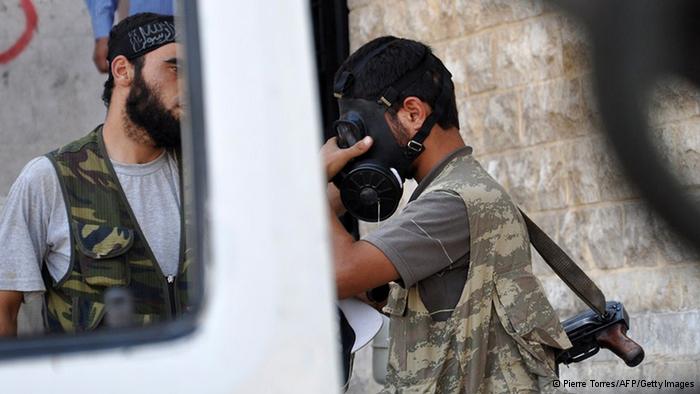
Syria committed to chemical weapons deal: Assad

President Bashar al-Assad

Syria is committed to the convention against chemical weapons it signed under a US-Russian deal and sees “no obstacles” to its implementation, President Bashar al-Assad said in an interview broadcast Thursday.

Speaking to Venezuela’s Telesur, the Syrian leader insisted that his regime was complying with a deal under which Damascus will turn over its chemical weapons for destruction.

“Syria is generally committed to all the agreements that it signs,” he said in an interview published in full by the Syrian state news agency SANA on Thursday.

He said Damascus had begun to send the required details of its chemical arsenal to the Organisation for the Prohibition of Chemical Weapons which is overseeing the deal, and that OPCW inspectors were expected to visit Syria.

“Experts (from the OPCW) will come to Syria in the coming period to look into the status of these weapons,” he said.

“As the Syrian government, there are no serious obstacles,” he said.

“But there is always the possibility that the terrorists will obstruct the work of the experts by preventing them from accessing certain places,” Assad added.

The Syrian regime calls all those fighting against it “terrorists”.

Syria agreed to turn over its chemical arsenal under a deal thrashed out following an August 21 sarin attack in the suburbs of Damascus, which killed hundreds of people.

The attack, which occurred as UN chemical weapons experts were in Syria investigating previous alleged chemical attacks, was blamed on the Syrian regime by Washington and other international backers of the Syrian opposition.

Assad’s government denies involvement, but agreed to turn over its chemical arsenal in the face of threatened US military action in response to the August 21 attack.

The UN experts, who confirmed that sarin gas was used in the attack, arrived back in Damascus on Wednesday and are to resume investigations into other previous alleged attacks.

Assad said his government would ensure the UN experts were also able to move around freely, insisting that his regime had invited them to come.

“We are the ones who invited them to come to Syria in March when the terrorists used poison gas in a suburb of the city of Aleppo,” he said. – AFP

Russia gives UN 100-page report showing Syrian rebels used sarin

russianreportRussia says a deadly March sarin attack in an Aleppo suburb was carried out by Syrian rebels, not forces loyal to President Bashar Assad, and it has delivered a 100-page report laying out its evidence to the United Nations.

A statement posted on the Russian Foreign Ministry website late Wednesday said the report included detailed scientific analysis of samples that Russian technicians collected at the site of the alleged attack, Khan al Asal in northern Syria. The attack killed 26 people.

Probes from Khan al-Assal show chemicals used in the March 19 attack did not belong to standard Syrian army ammunition, and that the shell carrying the substance was similar to those made by a rebel fighter group, the Russian Foreign Ministry stated.

A statement released by the ministry on Wednesday particularly drew attention to the “massive stove-piping of various information aimed at placing the responsibility for the alleged chemical weapons use in Syria on Damascus, even though the results of the UN investigation have not yet been revealed.”

By such means “the way is being paved for military action” against Damascus, the ministry pointed out.

But the samples taken at the site of the March 19 attack and analyzed by Russian experts indicate that a projectile carrying the deadly nerve agent sarin was most likely fired at Khan al-Assal by the rebels, the ministry statement suggests, outlining the 100-page report handed over to the UN by Russia.

The key points of the report have been given as follows:

• the shell used in the incident “does not belong to the standard ammunition of the Syrian army and was crudely according to type and parameters of the rocket-propelled unguided missiles manufactured in the north of Syria by the so-called Bashair al-Nasr brigade”;

• RDX, which is also known as hexogen or cyclonite, was used as the bursting charge for the shell, and it is “not used in standard chemical munitions”;

• soil and shell samples contain “the non-industrially synthesized nerve agent sarin and diisopropylfluorophosphate,” which was “used by Western states for producing chemical weapons during World War II.”

The findings of the report are “extremely specific,” as they mostly consist of scientific and technical data from probes’ analysis, the ministry stressed, adding that this data can “substantially aid” the UN investigation of the incident.

While focusing on the Khan al-Assal attack on March 19, in which at least 26 civilians and Syrian army soldiers were killed, and 86 more were injured, the Russian Foreign Ministry also criticized the “flawed selective approach” of certain states in reporting the recent incidents of alleged chemical weapons use in August.

The hype around the alleged attack on the eastern Damascus suburb of Ghouta showed “apparent attempts to cast a veil over the incidents of gas poisoning of Syrian army soldiers on August 22, 24 and 25,” the ministry said, adding that all the respective evidence was handed to the UN by Syria.

The condition of the soldiers who, according to Damascus, suffered poisoning after discovering tanks with traces of sarin, has been examined and documented by the UN inspectors, the ministry pointed out, adding that “any objective investigation of the August 21 incident in eastern Ghouta is impossible without the consideration of all these facts.”

UN Secretary General Ban Ki-moon on Tuesday said the UN investigators are set to return to Syria to investigate several other cases of alleged chemical weapons use, including the March 19 incident in Khan al-Assal.

White House spokeswoman Caitlin Hayden said U.S. officials were unmoved by the Russian report and held the Assad government responsible for both the Khan al Asal attack in March and the Aug. 21 attack outside Damascus.

“We have studied the Russian report but have found no reason to change our assessment,” she said.

Richard Guthrie, formerly project leader of the Chemical and Biological Warfare Project of the Stockholm International Peace Research Institute, said the Russian statement on the makeup of the sarin found at Khan al Asal, which the Russians indicated was not military grade, might reflect only that “there are a lot of different ways to make sarin.”

He added: “The messy mix described by the Russians might also be the result of an old sarin stock being used. Sarin degrades (the molecules break up) over time and this would explain a dirty mix.”

Jean Pascal Zanders, a senior research fellow at the European Union’s Institute for Security Studies, said the mix might not have been World War II vintage.

“The Western Allies were not aware of the nerve agents until after the occupation of Germany,” he wrote in an email. “The USA, for example, struggled with the sarin (despite having some of the German scientists) until the 1950s, when the CW program expanded considerably.” – RT/McClatchy

Read more here: http://www.mcclatchydc.com/2013/09/05/201269/russia-says-it-has-compiled-a.html#storylink=cpy

Fighting rages outside Goma

militia_in_eastFresh fighting raged Thursday outside the flashpoint city of Goma in eastern Democratic Republic of Congo, the M23 rebels and regular army said, blaming each other for the new hostilities.

An army officer said rebels had attacked government-held positions on Wednesday night 20 kilometres (12 miles) north of the capital of North Kivu province, sparking clashes with heavy weaponry that continued into Thursday.


The territory, near the villages of Mutaho and Kibati, has been in government hands since mid-July, he said, speaking on condition of anonymity.


M23 intelligence officer Modeste Bahati confirmed the renewed fighting but blamed the army for starting it by attacking rebel positions around Kibati.


“Our forces are holding their positions,” he told AFP.


The rebels accused the army of wanting to “broaden” an offensive against them.


“The absurd war relaunched by the Congolese government appears to be an outburst of anger after the failure of military-style diplomacy in these past weeks,” the movement’s spokesman Amani Kabasha said in a statement.


Kabasha accused the army of breaching “recent recommendations by the UN Security Council, the International Conference on the Great Lakes Region, and the SADC (Southern African Development Community) for the resumption of peace talks.”


Both sides said they were not yet able to say how many people had been killed or wounded.


The rebellion by the M23, a movement launched by Tutsi ex-soldiers who mutinied from the army in April 2012, is the latest insurgency to ravage the vast central African country’s mineral-rich but conflict-torn east.

The rebels, estimated to number about 1000, have been active in North Kivu province since May 2012. Founded by members of a previous rebel group integrated into the military under a 2009 peace deal, they left the army because they accused the government of failing to abide by the terms of the agreement.

The M23 occupied Goma – a city of about one million people and the hub around which most of the fighting has revolved for 10 days in November 2012 before withdrawing under international pressure.

The latest bout of fighting, which erupted in mid-July and has flared up periodically ever since, ended an almost two-month truce reached in May when UN chief Ban Ki-moon visited the region. – Sapa/AFP